Rising Demand For Preowned Cars In The Rs 4-6 Lakh Price Range

Spinny has witnessed rising demand for preowned cars through its contactless digital modes. As a full-stack used-car platform, Spinny sold 9,100-plus used cars till 2020, with a 38% referral purchase rate. More than 70% of used cars are purchased by those under 40 years.

Out of the 1,200 used cars sold each month since January 2021, 70% have been via home test drives and deliveries – a testimony to the trust in the quality of its cars and the information available online. In Bengaluru, about 80% of cars were sold via home drives. While almost 70% are first-time car buyers who earlier relied on public transport and shared cabs, more than 20% of car buyers have been women.

Spinny was the first to offer a completely contactless car buying and selling experience via #WithExtraCare – an initiative with home test drives and home delivery. Spinny 360 is an industry-first feature providing a 360-degree, detailed view of every Spinny Assured vehicle available in each city’s inventory. For people selling cars, Sellright by Spinny offers an assurance of the best price, instant online quotes, free doorstep inspection and instant payment without middlemen.

The new normal has seen a rise in demand for pre-owned cars priced between Rs 4 lakh and Rs 6 lakh. Compared to 2020, there has been a 400% rise in queries and a 10% jump in sales from women car buyers. Going by the Company’s survey, 71% of buyers cited its contactless experience as the key reason to choose Spinny, besides the quality as well as its fair and fixed pricing of cars.

Presently, Spinny has hubs in Noida, Delhi (two), Gurgaon, Pune, Hyderabad, Bengaluru, Mumbai, Chennai, Ahmedabad and Kolkata. One report estimates that the used-car market will reach up to 7.2 million annual units by 2022. A recent survey by Deloitte notes that 77% of consumers wish to limit public transport usage while 70% seek to altogether avoid ride-hailing options and 79% intend to own a vehicle. But trust and transparency barriers need to be overcome in the used-car segment.

According to Spinny CEO & Founder Niraj Singh, as per a survey conducted earlier, barely 4% of people were satisfied with their used-car buying experience. Such revelations spurred Spinny to keep trust, transparency and simplicity as one of the hallmarks of their customer buying experience. Its full-stack model means the platform has end-to-end ownership of every step while buying or selling a car for each customer. Beginning with a customer’s first visit to its portal to the test drive and financing options, Spinny manages all processes.

Our top-of-mind concern as we foray into new cities is to maintain and indeed further the quality of our buying and selling experience. Our emphasis on quality and the extra mile we go as a customer-centric service brand has helped us earn credibility and consumer trust. With the ongoing pandemic, it is evident that every decision needs to be backed by strong safety and social distancing measures and Spinny sets the industry standard in safety and convenience to create an delightful car buying or selling experience for our customers.”

To address quality and trust issues plus pandemic-related concerns, Spinny launched many initiatives. These include Spinny 360, Fixed-price Assurance, Spinny BuyBack, 5-Day Money-Back Guarantee and 1-Year Warranty. These have set new industry benchmarks in safe, simple, contactless car buying and selling experiences, making ownership more economical and feasible than rental/subscription models.

Fixed Price Assurance eliminates needless price negotiations, limiting the number of interactions for buying a used car. This is a game-changer as worldwide negotiations are the norm in the segment. Spinny Buyback offers a guaranteed future resale value for 6, 12 or 18 months from the purchase date. Sellers also receive the best price for their old car. Buyback values are calculated as per the car year, make, fuel type and market trends.

While customers can get finance and have the car delivered home, the first step is choosing from more than 1,200 inspected, preowned cars (2012 make or later) listed online. A virtual tour helps them make an informed choice from their home. Next, the customer books the home test drive of a fully-sanitised car, which comes with a customer safety kit. A 200-point inspection check ensures transparency and quality in car details.

Once the decision is made, the requisite documents are uploaded along with payment details. After the payment is processed, the car is delivered to the buyer’s doorstep backed by a ‘no questions asked, 5-day money-back guarantee’.

Meanwhile, tailwinds in the used-car segment have grown stronger in recent years. The auto sector’s transition to BS-VI norms in April 2020 boosted the value proposition of preowned cars. Today, social distancing requirements continue driving greater demand for used cars.

330 LMB Project: Bell Sport & Classic Remasters The Rarest Of Ferrari Racing Cars

Bell Sport & Classic is proud to unveil the ultimate expression of its exceptional in-house restoration expertise, an authentic remastering of one of the rarest period Ferrari racing cars ever: the 330 LMB.

The result of a joint development programme between Bell Sport & Classic and the business’s owner, the project’s vision was to build an authentic 330 LMB, blending originality and the utmost attention to detail with the very latest restoration techniques and sympathetic enhancements in order to create the perfect, remastered machine.

Built to be used and enjoyed on the road, this one-off car is based on a Ferrari 330 GT 2+2, and pays respectful homage to the original 330 LMB – of which only four were built in period for competition purposes – with a bespoke alloy body hand-crafted using templates taken from Chassis 4725, the only right-hand-drive example ever made.

With all components either period-correct or made from scratch by Bell Sport & Classic’s expert team, 330 LMB Project represents the perfect showcase for the company’s skills, a case study that demonstrates the new benchmark-setting levels of finish for Bell Sport & Classic’s restorations.

Rarer than a 250 GTO
The Ferrari 330 LMB (Le Mans Berlinetta) was developed by British-born Ferrari racing driver and engineer Mike Parkes to compete at the 1963 Le Mans 24 Hours. Based upon the Ferrari 250 GTO but with a more powerful 390bhp, 4.0-litre, Colombo V12 engine, it also had a 20mm-longer wheelbase and redesigned aluminium body.

With just four examples made – three left-hand drive, one right-hand drive – the 330 LMB is a highly significant Ferrari, rarer even than the hallowed 250 GTO, of which almost 10 times as many were produced. A trio of 330 LMBs competed at Le Mans in 1963. However, the example entered by Colonel Ronnie Hoare’s British Maranello Concessionaires Ltd team was the only one to go the distance, with Mike Salmon and Jack Sears finishing fifth.

As Ferrari was preparing to transition to mid-engined configuration competition cars, the 330 LMB was destined to become Maranello’s last front-engined race car of the era and did little racing in period. Today, however, the highly prized and exceptionally valuable 330 LMB can often be found at the sharp end of the historic racing field.

An unfinished vision
The origins of this remastering project can be traced back more than a decade. “The story begins with Edward Carter, an Essex farmer who was a huge Ferrari enthusiast,” explains Bell Sport & Classic Managing Director Tim Kearns. “Ed wanted to add a 250 GTO recreation to his collection but was steered away by one of the pre-eminent 330 LMB experts, Terry Hoyle. Having intimate knowledge of Chassis 4725, the original right-hand-drive LMB, Terry had another idea: ‘There are many 250 GTO recreations – you should do an LMB instead’.”

In November 2010, a donor right-hand-drive 1964 Ferrari 330 GT 2+2 was purchased by Ed and a vision formed: make the recreation more use-able on the road, but with a racer’s character. Nuneaton-based RS Panels was tasked with shortening the chassis and creating a bodywork buck. In addition to a comprehensive set of photographs Terry Hoyle had of Chassis 4725, a trip was even taken to New York to capture cardboard body patterns, measurements and more images of the original 4725 car. Tragically, Ed Carter was never to see the project completed, losing his life in a road accident in September 2015, and for the next two years, the car lay dormant.

Bell Sport & Classic picks up the baton
In 2017, the owner of Bell Sport and Classic stepped in to rescue the project and the car found a new home at the company’s workshops in Markyate, Hertfordshire. It was here that a single overarching goal was set: use the project as a test case for Bell Sport & Classic’s restoration skills, establishing a new benchmark in the industry.

With restorations of period Ferrari, Lamborghini and Aston Martin being Bell Sport & Classic’s core business, it was also agreed that the 330 LMB project represented several unmissable opportunities. Firstly, to respectfully complete one man’s vision, creating what is thought to be the only 330 LMB remastering in the world – but to sympathetically enhance it, producing a unique one-of-one road car that blended originality, authenticity and the very latest restoration techniques, a machine as close to perfection as possible.

Given its collective knowledge, experience and enthusiasm of more than sixty years for the Ferrari marque, the Bell Sport & Classic team was perfectly placed to undertake the substantial amount of work required to complete the project to the highest possible standards.

The project has been headed-up by Elliot East, who has been restoring classic cars and classic Ferraris since the early 2000s working for many of the industry’s leading Ferrari specialists. Bell Sport & Classic’s engineering department is led by Attilio Romano, a former member of the Ferrari factory technical team in Maranello, who ran HR Owen’s Ferrari technical department for 22 years.

Building the body beautiful
When the car arrived at Bell Sport & Classic, the wings and roof were already attached; however, the dashboard was not fitted, and the door skins were incomplete. “As they were, the doors were spot-on for an original LMB. They felt super-light, but they lacked the more substantial road car weight we were looking for,” explains East. “So, we reworked them again and again, but very subtly, strengthening every single aspect including the hinges, the skins and the window frames until we got the perfect weight.”

Many of the parts required to complete the body simply could not be sourced anywhere in the world, at least not to the high quality demanded by Bell Sport & Classic. So, the only solution was to fabricate them in-house.

“We spent more than a year searching for window catches; in the end we made them ourselves to ensure we were happy with the fit and finish. Our engineering department also made the aluminium fuel filler cap from scratch,” reveals East.

Other numerous items fabricated by the Bell Sport & Classic team relating to the bodywork include the straps and the bonnet’s finishers. While an off-the-shelf Lusso windscreen was perfect for the front of the car, the rear Perspex screen had to be created in-house. As with the headlamp covers, the team first cut aluminium to shape, which was used to develop a former, via which the perfectly finished Perspex items were fashioned.

“Three years of work has been lavished on this car. And, as with all our customer restoration projects, we have applied painstaking detail to every aspect. Everything is hand-built and unique,” continues East. “It was a delicate balance to achieve, deploying modern restoration techniques to make the new LMB as comfortable and as road-useable as possible, without sacrificing any of its race-bred character.”

The project was subjected to a complete ‘dry build’. This process involved the team fitting all the trim pieces, such as door handles and windscreen surrounds along with glass, to the bare metal body to ensure that the fit of these components would be perfect after the car came back from the paint shop.

Once the team was happy with the level of quality achieved, the body was painted classic Rosso Corsa red over a painstaking ten-week period. Finally, white racing roundels were added, as they would have been in period at the Maranello factory before the assault on Le Mans back in 1963, and a pair of Scuderia Ferrari emblems painstakingly hand-painted on each front wing as they would have been in period.

The heart and soul of the 330 LMB
To take the Colombo V12 engine to full LMB specification, Bell Sport & Classic’s engineering department converted it to a dry-sump specification and increased the capacity from 2953cc to 3967cc. “An extraordinary level of work was required to complete the process. Items such as the camshafts, timing case, water pump, oil and fuel tanks, oil filler tubes and caps had to be specially created for the car,” explains Attilio Romano.

The six carburettors are bespoke commissions in place of the Weber 42s fitted to the engine in period. The fuel rail and linkages are also bespoke creations. Once complete, the fully rebuilt engine was run-in and tuned on the dyno, and the result is 390bhp at 7000 rpm and 300 lb/ft of torque at 6000 rpm – precisely the same as in period. The only specification change has been the addition of a cooling fan, a modification that reflects the car’s road-bias.

At the start of the project, a five-speed transmission from a Mk2 330GT in Switzerland had already been sourced. While the original race cars were equipped with four-speed gearboxes, Bell Sport & Classic retained the five-speed unit as a sympathetic enhancement to improve the car’s road manners and use-ability.

The transmission was fully rebuilt using specially-manufactured selector forks and fitting all new synchros and hubs while Bell Sport & Classic’s engineers have also equipped the car with a bespoke prop shaft. The entire suspension system was stripped down and fully refurbished. The configuration features upper and lower wishbones with coil springs and telescopic dampers at the front.

A more road-focused set-up is deployed at the rear, featuring a five-bar linkage with leaf springs and a coil-over ‘helper’ damper, compared with the Panhard rod and Watts linkage of the period competition car. A rebuilt limited-slip differential completes the package.

Competition Lusso interior
As the original LMB 330s were built to race twice around the clock at Le Mans, few concessions were made to comfort. Their functional cabins were bare-painted in silver Hammerite with a wrinkle finish dashboard and black Corduroy seats. In keeping with Ed Carter’s vision for a ‘GT version’ of the 330 LMB, Bell Sport & Classic’s team strove to create a correct interior that would still be authentic but provide a touch more comfort for road use.

“In the 1980s, the original 330 LMBs were retrimmed in ‘Competition Lusso’ style,” reveals East. “So, we selected this specification, keeping the black Corduroy seats and ‘wrinkle’ dash but adding carpets and trim detail. With race-focussed instruments and dials, the car retains a very period motorsport feel, while delivering a true GT experience on the road.”

The car’s beautifully fashioned aluminium gear lever turret, featuring the classic open-gate and tall gear lever, looks exactly as it would have when it left Maranello in 1963. However, like so many other components on the car, this exquisite cabin centrepiece was made entirely from scratch, on-site.

Sympathetic upgrades include a high torque starter motor, electronic ignition, electric fuel pumps and an electric cooling fan. The 330 LMB project also benefits from hidden modern voltage regulator and electric washer motor, along with a full fire system and welded, leak-free fuel tank inside an external riveted tank.

Tim Kearns, Managing Director of Bell Sport and Classic,said:“This remarkable 330 LMB remastering is an outstanding showcase for the incredible talent that lies within Bell Sport & Classic. The dedication they have put into this very special project over the last three years is outstanding, with every component either restored, rebuilt or created from scratch, blending the very latest restoration and engineering techniques with a selection of sympathetic upgrades.

“The result is a unique case study that pays homage to the original and demonstrates the new benchmark-setting levels of finish for Bell Sport & Classic restorations. I am also proud that we have, at long last, completed one man’s original vision. For us, this 330 LMB project is very much a one-off but it represents so much more than a remarkable car: it is a rolling showcase for the attention to detail and craftsmanship we put into every restoration, and one thing is for sure, we will be revealing many more of those in the coming months.”

Volvo Car India Announces Price Hike

Swedish luxury car maker Volvo Car India today announced that it would be increasing the ex-showroom prices of its luxury sedan S90 and premium SUVs, XC40, XC60 and XC90. Effective May 3, 2021, these models will see an upward price change ranging from Rs. 1 lakh to Rs. 2 lakh.

The decision comes in the backdrop of rising input costs and weakening of the Indian currency. The last price hike by the company was announced in 2018 and thereafter it has maintained the price line for all its products. The decision comes as a result of increased cost in production, a volatile forex situation over the years and the impact of COVID-19 pandemic on the routine business set up.

Mr. Jyoti Malhotra, Managing Director, Volvo Car India “Our commitment to the Indian market and our customers is reflected in the fact that while the Indian auto industry went through price escalation across the spectrum, we at Volvo Cars maintained the prices of all our products for three years since 2018. We are however now faced with a situation where rising input costs leave us with no other option but to share some of these costs with the customer. We may have to relook at the prices and take further increase later in the year, depending on how input costs develop. As an organization focused on safety, we will continue to keep our promise towards our customers and prioritize their safety & well-being.”

Following are the new ex-showroom prices effective from May 3, 2021:

Volvo S90 D4 Inscription: Rs. 60,90,000

Volvo XC40 T4 R Design: Rs. 41,25,000

Volvo XC60 D5 Inscription: Rs. 60,90,000

Volvo XC90 D5 Inscription: Rs. 88,90,000

No change in price for the newly introduced compact luxury sedan S60 has been announced. The ex-showroom prices will continue to be as follows:

Volvo S60 T4 Inscription: Rs. 45,90,000

Skoda To Unveil The New Fabia On May 4

It’s curtain-up for the new Skoda Fabia. On Tuesday, May 4, Skoda Auto will unveil the fourth generation of its successful small car. The DOX Centre for Contemporary Art in Prague will serve as a spectacular backdrop for the entirely digital world premiere. Skoda fans worldwide can move freely through a virtual pavilion and discover fascinating details about the Skoda Fabia’s success story. From now until the start of the stream on Tuesday evening, Skoda will gradually reveal new areas of the pavilion at https://fabia-skoda-virtual-event.web.app/start. The world premiere will also be broadcast on the Skoda Storyboard and the car manufacturer’s social media channels (Youtube and Facebook).

Skoda will present the fourth generation of the Fabia, based for the first time on the Volkswagen Group’s Modular Transverse Toolkit MQB-A0, 22 years after its debut. It boasts a convincing price-performance ratio, outstanding safety and a high level of comfort and build quality. With its even more dynamic and emotive design, the Skoda Fabia has all the prerequisites to continue the model series’ success story.

The digital presentation format allows viewers to tour the show as if they were in a real exhibition; they can move freely around the virtual pavilion and view the exhibits. During their tour, guests can meet Skoda Auto Board Members including Chairman of the Board Thomas Schäfer and Martin Jahn, Board Member for Sales and Marketing, as well as experts from the Skoda Design team led by Oliver Stefani. To make these encounters as realistic as possible, the Skoda representatives have each created an avatar.

The tour leads users to the various presentation areas in the DOX. In the inner courtyard, numerous LED walls are installed for the action programme and the roof terrace becomes the ‘NEXT LEVEL’ terrace – reflecting the Czech car manufacturer’s current programme for the future. These two areas will be where the new Skoda Fabia is unveiled following Thomas Schäfer’s welcoming speech. After the show, 360-degree views of vehicles will be accessible in the virtual pavilion. Later, a recording of the presentation and additional videos will be available in the airship above the ‘NEXT LEVEL’ terrace.

A three-dimensional model of the DOX was created for the virtual pavilion to stage the world premiere of the new Skoda Fabia. This is to give visitors the impression of being at a live event. The Centre for Contemporary Art is located in the Prague district of Holešovice and is a former factory that has been architecturally transformed into an impressive and ultra-modern space. The DOX premises creatively reinterpret the core characteristics of the Skoda Fabia: user-friendliness, suitability for everyday use, Simply Clever ideas and emotive design. The premiere is rounded off by a tape art concept designed exclusively for the new Fabia. Colourful adhesive strips are used to create artistic backgrounds and illustrate the walkthrough of the location. The tape artists were inspired not only by Skoda’s design language with crystalline elements but also by the driving experience in the Fabia and Simply Clever ideas as well as the extraordinary architecture of the DOX.

Goodwood To Celebrate The Life And Career Of Sir Stirling Moss At Its 2021 Events

Sir Stirling Moss, Goodwood Revival, Goodwood Estate, Chichester, West Sussex, UK – 16.09.11

The legendary Sir Stirling Moss, who passed away at Easter 2020, will be commemorated at Goodwood’s headline motorsport events in 2021.

It was at the Goodwood Motor Circuit that Moss took part in, and won, his very first motor race, on 18 September, 1948, a day after his 19th birthday. In the years that followed, Moss contested 56 races at Goodwood, winning 21 of them and finishing on the podium a further 13 times. Goodwood was the scene of four of Moss’ seven Tourist Trophy victories; two for Ferrari and two for Aston Martin, including clinching the British marque’s world championship title in 1959. Tragically, it was also the scene of his career-ending accident on 23 April, 1962. 

One of the founding patrons of the Festival of Speed, and a regular competitor at the Revival, it’s little wonder that Moss became a favourite of the fans, who christened him ‘Mr Goodwood’. Given his racing record – winning in almost everything he drove – it is fitting that Moss should be remembered at the 2021 Festival of Speed presented by Mastercard, the theme for which is ‘The Maestros – Motorsport’s Great All-Rounders’. 

This weekend marks the anniversary of the 1955 Mille Miglia, which Moss won with the invaluable help of co-driver Denis ‘Jenks’ Jenkinson. The daring duo completed the epic 1000-mile race in 10 hours, 7 minutes and 48 seconds, at an average speed of 99mph – a record which will stand in perpetuity. Honouring this achievement at the Festival of Speed, Mercedes-Benz will be displaying the fearsome 300SLR ‘722’ in which the pair competed, and which is rarely seen outside the Mercedes-Benz Museum in Stuttgart. Mercedes-Benz will also be bringing a W196 Formula 1 car of the type Moss used to win his first Grand Prix, at Aintree in 1955.

The Goodwood Revival in September will host perhaps the largest ever gathering of Moss’ competition cars, celebrating his life and career in a way that sadly wasn’t possible in 2020. Returning for the parade will be ‘722’ in what will be one of its last public outings for many years. Assembling on the track with it will be the Lotus 18 in which Moss defeated the mighty ‘Sharknose’ Ferraris at both Monaco and the Nürburgring in 1961. Returning to Goodwood will also be the Rob Walker Racing Ferrari 250 GT SWB which Moss drove to his last Goodwood win, at the Tourist Trophy in 1961.

Many of the Moss parade cars will also be racing in earnest again during the Revival, including the Aston Martin DB3S in which he finished second at Le Mans (in the Freddie March Memorial Trophy), and the Nürburgring 1000km-winning DBR1 (Sussex Trophy). Also invited to compete in those two races respectively will be his Reims-winning Jaguar C-type and Cooper T49, while a real rarity, the Ferguson P99 four-wheel-drive Grand Prix car which Moss piloted to victory in the International Gold Cup in 1961, will join the grid for the Richmond Trophy.

The Revival will also be the setting for the second running of the Stirling Moss Memorial Trophy. Formerly the Kinrara Trophy, this race was renamed for Goodwood SpeedWeek presented by Mastercard in 2020 and will now become a permanent fixture on the Goodwood calendar. Contested by Jaguar E-types, Ferrari 250s, Aston Martin DB4 GTs and AC Cobras, this has been described as ‘the most beautiful race in the world’, taking place as the sun falls on the Friday night of the Revival weekend. 

Finally, the 78th Members’ Meeting in October will see the third running of the Moss Trophy for GT cars of a type which raced up to 1962 – a fitting way to keep the Moss name alive at Goodwood’s most exclusive race meeting. 

The Duke of Richmond said: “Stirling and his wife Susie were such an important part of the Goodwood family for so many years. All of us here felt his loss especially keenly as we weren’t able to commemorate his incredible life as we would have wanted last year. We hope that fans at our events around the world will join us in celebrating his racing career and bidding farewell to ‘Mr Goodwood’ in 2021. Stirling’s supreme skill and love for his sport will continue to be remembered at Goodwood for many years to come.”

Audi’s Le Mans Return Is Shaping Up

Audi LMDh concept

Audi will return to Le Mans and to sports prototype racing with an electrified sports car in the 2023 season. The successor to the successful Audi R18 is already taking shape.

“The new LMDh category fits perfectly with our new set-up in motorsport,” says Julius Seebach, Managing Director Audi Sport GmbH and responsible for Motorsport at Audi. “The regulations allow us to field fascinating race cars in prestigious races worldwide. In addition, we are making use of synergies inside the Volkswagen Group with our partner strategy.”

The successor to the Audi R18 is being built in close cooperation with the brands’s sister company Porsche. “A great strength of the Volkswagen Group is the collaboration of the brands in the development of road cars,” says Seebach. “We are now transferring this proven model to motorsport. Nevertheless, the new sports prototype will be just as much a genuine Audi as the Audi RS e-tron GT that was launched recently and has also been developed on a platform shared with Porsche.”

The sports prototype for the new LMDh category is currently being created at Audi Sport in parallel with the innovative SUV for the Dakar Rally. “Of course, the Dakar team is under greater time pressure, because there are only just under eight months left until our first participation in the Dakar Rally in January 2022,” says Andreas Roos, who is responsible for all factory motorsport commitments at Audi Sport. “But, we also want to be perfectly sorted for our comeback at Le Mans. That’s why we are running both projects in parallel with the highest priority.”

All the basic concept decisions have been made in the meantime. “We have selected a chassis partner and decided on an engine concept. Together with our colleagues from Audi Design, we are currently defining the look which will excite our fans,” says Andreas Roos. “Our goal is for the first prototype to be on its wheels early next year and to complete its roll-out in the first quarter.” An intensive test program will follow in 2022. The first race is planned for the Daytona 24 Hours (USA) in January 2023.

The regulations, which are trimmed for maximum cost efficiency, also make Audi’s new sports prototype interesting for customer teams. “With the LMDh project, we are continuing the philosophy of our early years in sports prototypes,” says Andreas Roos. “The Audi R8 was not only the most successful prototype of its time from 2000 to 2006, with 63 victories in 80 races, but it was also very successful in the hands of our customers and easy for the teams to handle. This is also the premise with the electrification of our new sports prototype. Our goal is to also put the car in the hands of professional customer teams right from the start, in parallel to factory entries. We are currently evaluating internally how this will work in detail.”

Being able to fight for overall victories and championship titles with an Audi at the Le Mans 24 Hours, at the Daytona 24 Hours, in the World Endurance Championship (WEC) and in the IMSA series is an attractive prospect for many teams. There is already a lot of interest in the new LMDh race car. 

Audi holds the distance record at the Le Mans 24 Hours and has won the world’s most important endurance race 13 times. Audi customer teams scored overalls victories at Le Mans in 2004 and 2005.

Way To Zero: Volkswagen Presents Roadmap For Climate-Neutral Mobility

Volkswagen CEO Ralf Brandstätter at the Way to Zero Convention.

At the first Way to Zero Convention, Volkswagen today gave details of its plans for decarbonising the company and its products. The company intends to be net carbon neutral by 2050 at the latest. A new interim milestone is the targeted 40-percent reduction in CO2 emissions per vehicle in Europe by 2030 – substantially outperforming the Group target of 30 percent (baseline: 2018). As a result, an average Volkswagen would emit around 17 tons less carbon dioxide. As well as accelerating the transition to e-mobility, the production (including supply chain) and operation of electric cars is to be made net carbon neutral. Added to this is the systematic recycling of the high-voltage batteries from old electric vehicles.

“Volkswagen stands for sustainable e- mobility for all. We’ve set out on the ‘Way To Zero’ and are consistently placing the environment at the focus of all our activities,” said Ralf Brandstätter, CEO of Volkswagen. “Our big electric offensive was just the start. We’re taking a holistic approach to decarbonisation: from production through service life to recycling. And we’re the first car maker to support the expansion of renewable energies on an industrial scale.”

Volkswagen supports the construction of wind farms and solar plants

A key factor in achieving carbon-neutral e-mobility is to be able to charge vehicles consistently with electricity generated entirely from renewable sources. This alone would reduce CO2 emissions by almost half compared with the standard EU electricity mix. Already today, Volkswagen offers its customers green electricity for charging at home (Volkswagen Naturstrom) and on the road (e.g. at IONITY charging stations). The company is now going one step further. Volkswagen is the first car maker to directly support the expansion of renewable energy on a large scale. As a result, new wind farms and solar plants are to be constructed in several regions of Europe by 2025.

Contracts for the first projects have already been signed with energy company RWE. In Germany, Volkswagen is supporting the construction of a solar plant with a total capacity of 170 million kilowatt hours each year. The associated plant will be completed in Tramm-Göthen in northeastern Germany by the end of 2021 and is being constructed without any state subsidies at all. Incorporating around 420,000 solar modules, it is the largest independent solar project in Germany.

It is planned that all projects together will generate around seven terawatt hours of additional green electricity by 2025. The amount of renewable electricity going into the grid will grow in parallel with the number of ID. vehicles. In this way, Volkswagen is improving the climate footprint of the ID. family and creating the basis for the net carbon neutral use of its electric fleet.

Green production and supply chain

As well as ensuring the green use of its vehicles, Volkswagen is also working to decarbonise both production and supply chain. Already today, the electricity used at all our European production sites comes from renewable sources. The pioneer here is the electric car factory in Zwickau, where the ID. family is produced. From 2030, all plants worldwide, other than in China, are to operate entirely on green electricity. In the future, the largest contributors to CO2 emissions in the supply chain will be systematically identified and reduced. The role model for this is the battery cell production for the ID.31 and ID.42, which already uses green electricity only and therefore has a substantially improved carbon footprint.

This year already, Volkswagen will be switching to other sustainable components in its ID. vehicles, including battery housings and wheel rims made from green aluminum and tires from low-emission production. There are more than ten focus components which will enable us to improve the carbon footprint of the ID. family by around two tons per vehicle in the years ahead. When it comes to new vehicle projects, Volkswagen will be making CO2 emissions a key criterion in awarding contracts to suppliers. In this way, the company intends to work with its suppliers to gradually improve their carbon footprint and ensure the sustainability of its supply chain. The company is also pursuing a clear decarbonisation strategy in the in-house production of components at Volkswagen Group Components. As such the giga-factories for battery cell production announced during Power Day are to be supplied with entirely green electricity.

The systematic recycling of batteries, which will allow more than 90 percent of raw materials to be reused in the future, is intended to make a further contribution to reducing CO2 emissions. The goal is a closed loop for the battery and its raw materials that the company has at its own disposal across the Group. Volkswagen Group Components is already operating an initial recycling facility in Salzgitter.

Accelerating the electric offensive

At the heart of the Way to Zero is Volkswagen’s new ACCELERATE strategy aimed at stepping up the pace of the electric offensive. The goal is the full electrification of the new vehicle fleet. By 2030, at least 70 percent of all Volkswagen’s unit sales in Europe will be all-electric vehicles – that’s substantially more than one million vehicles. This would mean that Volkswagen would significantly outperform the requirements of the EU Green Deal. In North America and China, the share of electric vehicles in sales should be at least 50 percent. In addition, Volkswagen will be launching at least one new electric car each year. One day before the Convention, Volkswagen presented the ID.4 GTX3, the next model in the all-electric ID. family.

Way to Zero Convention for an open dialog with government, industry and society

“The ‘Way to Zero’ is our roadmap for effective climate protection, with clear and ambitious milestones. We live up to our responsibility for the environment. The ‘Way to Zero’ will provide us with a real competitive advantage. In the future, employees, customers and investors will give preference to those companies which place their social and environmental responsibility at the heart of their business. Sustainability will thus become a crucial factor in corporate success,” said Ralf Brandstätter. “However, Volkswagen cannot shoulder the decarbonization of mobility on its own. Government, industry and society need to come together to develop good ideas and make courageous investments.”

With the Way to Zero Convention, Volkswagen aims to foster an open dialog with government, industry and society. The day-long event, which was entirely digital due to the coronavirus pandemic, was attended by more than 20 speakers from political parties, NGOs, scientific institutions and other companies alongside representatives of Volkswagen.

Phantom Oribe: A Bespoke Rolls-Royce Phantom In Collaboration With Hermès

Rolls-Royce Motor Cars has co-created a magnificent Bespoke Phantom in a unique collaboration with Hermès. Designed and handcrafted by a combined team of Bespoke specialists at the Home of Rolls-Royce at Goodwood, West Sussex, and Hermès in Paris, Phantom Oribe reflects the personality and passions of its owner, Japanese entrepreneur Yusaku Maezawa. The client envisioned the car as a ‘land jet’, bringing the serene exclusivity of private air travel to the road. 

The car’s striking two-tone exterior matches the characteristic green and cream glazes of antique Japanese Oribe ware, of which Maezawa-san is a prominent collector. The upper part is finished in Oribe Green, a fully Bespoke colour created exclusively for the client; in an unusual move, Rolls-Royce has made the paint available for use on the client’s private jet the Phantom will be paired with. Developed over many months by specialists in the Surface Finish Centre at Goodwood, it perfectly captures the lustrous, deep-green glaze that characterises these 16th century ceramics. The effect is beautifully completed by the cream-white lower section.

The Oribe ware-inspired colourway harmoniously continues through the interior, created and realised through a true meeting of minds between Hermès designers and craftspeople in Paris, and the Rolls-Royce Bespoke Collective of designers, engineers and craftspeople at Goodwood in West Sussex. Together, they applied their shared expertise and ingenuity to ensure every individual component embodies the finest traditions of both houses.

The interior is finished predominantly in Hermès Enea Green leather, extending to details that include the immediate touch-points of the client; for example, the steering wheel, duchess handles, gear selector and the rotary controls for the motor car’s climate settings.

The Hermès leather flows around the upper instrument panel, interior pillars and parcel shelf. It also enrobes less visible surfaces including the glove compartment and luggage compartment lining, centre console, decanter stowage compartment and Champagne cooler. In a sign of the project’s truly collaborative nature, and the two makers’ mutual esteem, the glove compartment lid is embossed with the signature Habillé par Hermès Paris.

Delicate Hermès piping adorns the headrest cushions and calf supports of the rear seats, while soft Seashell White accents and matching lambswool floor mats create a sense of light and space throughout.

The interior is also replete with examples of Rolls-Royce Bespoke design and handcraftsmanship. Wooden speaker frets, for example, are formed by meticulously perforating the Open Pore Royal Walnut veneer applied to the doors, creating a seamless, textured aesthetic and delicate haptics. Open Pore Royal Walnut is additionally applied to the centre and rear consoles and picnic table backs; in another first for Rolls-Royce, the interior features Hermès ‘Toile H’ canvas on the door armrests, centre and rear consoles and, most notably, the signature headliner.

Hermès brings its distinctive equestrian heritage and innovative craftsmanship know-how to the car, with the leather upholstery created using stitching and edge-painting techniques originally employed by master saddlers. For Phantom’s Gallery, a feature unique to Rolls-Royce, that runs the length of the motor car’s fascia, Hermès commissioned an artwork based on a design by the celebrated French artist and illustrator Pierre Péron (1905–1988) who created many of the House’s iconic scarves. The work, inspired by the famous Hermès horse motif, is hand-painted on Open Pore Royal Walnut and is presented as though staged in an art gallery, behind glass.

“This magnificent expression of our pinnacle product represents a landmark for Rolls-Royce Motor Cars, bringing together two houses with more than three centuries’ combined experience and heritage. It is the result of a deep, genuine collaboration between the Houses of Rolls-Royce and Hermès, in which designers, materials specialists and skilled craftspeople worked side by side to create a truly one-of-a-kind Phantom. It has been an extraordinary privilege to unite on such a creatively challenging, technically demanding commission and bring our client’s remarkable vision so beautifully to life”, said Torsten Müller-Ötvös, Chief Executive Officer, Rolls-Royce Motor Cars.

“We are really delighted to see this bespoke car come to life after a remarkable journey of creation and craftsmanship conducted hand in hand with both of our houses. We are proud to have contributed to creating a unique and contemporary expression of our client’s vision, thanks to our spirit of innovation, the quality of our materials and the know-how of our craftsmen, who have developed, amongst other things, unique stitching and upholstery techniques for the interior of the car and a hand painting technique for a bespoke gallery. It has been a real pleasure to work alongside the Rolls-Royce experts and to see how this car expresses all the values that Hermès cherishes every day”, commented Axel de Beaufort, Design and Engineering Director, Hermès Bespoke Division.

Torsten Müller-Ötvös added, “This majestic and tasteful Rolls-Royce Phantom demonstrates what is possible when talented people from two of the world’s great houses work closely together alongside a far-sighted, inspirational client like Maezawa-san. It is a meeting of minds, expertise, visions and skill that represents the very best of our respective craftspeople and capabilities.”

Suzuki Announces Details Of New GSX-S1000

After indicating earlier this month that a new GSX-S1000 was on the way, Suzuki has now released details of the 2021 naked.

Immediately obvious is the new GSX-S1000’s redesigned aesthetic; the bodywork and lighting is completely new, with a focus on sharp, angular, aggressive lines and a powerful stance, with a ‘mass forward’ demeanour.

Available in Suzuki’s traditional metallic triton blue, a new mechanical matt grey, and a stealthy gloss black, it’s streetfighter looks are enhanced with textured radiator shrouds, MotoGP-insipired winglets, and side panels that feature an urban camo-inspired design.

Arguably the most striking visual change is the new, vertically stacked LED headlight. As well as the practical benefits of a new mono-focus LED light source that displays a wide, bright light, the new design of two stacked hexagonal units topped by LED position lights creates a look that is lighter and tighter, and aids the desire for a more aggressive pose. There’s a new LED tail light, too, with both flanked by LED indicators.

The inline four-cylinder engine in the 2021 GSX-S1000 produces more power and a broader spread of torque in the lower rev ranges to deliver ideal naked sports bike performance. Changes include a new intake and exhaust camshaft, new valve springs, new clutch, and a new exhaust.

Compared to its predecessor, the new GSX-S1000 makes more cumulative torque across the rev range, filling in the dips in the graph with a flatter curve. It revs on to provide increased top end power, too, with peak power 152 PS at 11,000 rpm.

Thankfully, a new exhaust retains the soundtrack the outgoing model was known for, while aiding in the increase in power and the meeting of Euro 5 emissions requirements with an additional catalytic converter.

New electronic throttle bodies help achieve a more controllable engine response during the initial throttle opening. A new airbox manages to do without an internal separator, reducing intake resistance.

Reduced valve overlap also helps the new GSX-S1000 meet Euro 5 emissions standards, thanks to new a camshaft and revised cam profiles. The changes also aid engine controllability for the rider.

Added controllability and increased performance also comes thanks to Suzuki’s Clutch Assist System. The slipper clutch partially disengages to reduce negative engine torque and mitigate the effect of engine braking when downshifting from high rpm. This helps prevent the rear wheel from locking up or hopping and provides smoother deceleration, enabling the rider to shift down with greater confidence and maintain better control when downshifting into corners.

Adding an assist function increases the clutch’s clamping force under acceleration and thereby allows the use of softer springs while still efficiently transferring torque to the rear wheel, resulting in a lighter lever operation.

An advancement over the previous GSX-S1000 comes with an updated suite of electronics, courtesy of Suzuki Intelligent Ride System (SIRS).

A new ride-by-wire throttle makes it possible for riders to more accurately and finely control the relationship between throttle actuation and engine response, especially when allied to the new Suzuki Drive Mode Selector (SDMS) system, with which the new GSX-S1000 is equipped.

SDMS allows riders to choose from one of three engine maps, depending on the riding conditions or their own personal preferences. Modes A-C all deliver the same peak power, but vary the sharpness and immediacy of the delivery, with A mode the sportiest, and C mode delivering the softest power delivery.

Performance is enhanced thanks to a bi-directional quickshifter, which reduces the need to operate the clutch during gear changes or close the throttle on upshifts, or blip it on downshifts.

A new traction control system comprises five modes, while it can also be switched off. Inputs from front and rear wheel speed sensors, and crank, gear, and throttle position sensors feed into the ECU which in turn controls the throttle valve opening, ignition timing, and fuel injection rate, to reduce or prevent wheel spin.

All the information is displayed on an updated and easy-to-read LCD dash.

Topping off the electronics package is Suzuki’s always-handy easy start system – which requires only one prod of the starter button to fire the engine – and low RPM assist, which raises engine speed as the clutch lever is fed out, to aid slow speed control and prevent stalling.

The twin-spar aluminium chassis is mated to a rigid, GSX-R-derived swingarm for agile, sporty performance and handling. New, 23mm wider, tapered ‘bars help riders pitch the bike into turns with greater leverage. They are also set 20mm closer to the rider to improve comfort without compromising handling.

Suspension comes in the form of fully-adjustable KYB front forks and a preload and rebound damping adjustable rear shock, with revised settings from the previous iteration. 310mm front discs are paired with Brembo monobloc calipers.

A larger, 19 litre fuel tank and 46.3mpg equates to a tank range of 194 miles. Those miles can be undertaken in greater comfort thanks to a new seat.

Tyres are custom-engineered Roadsport 2 from Dunlop.

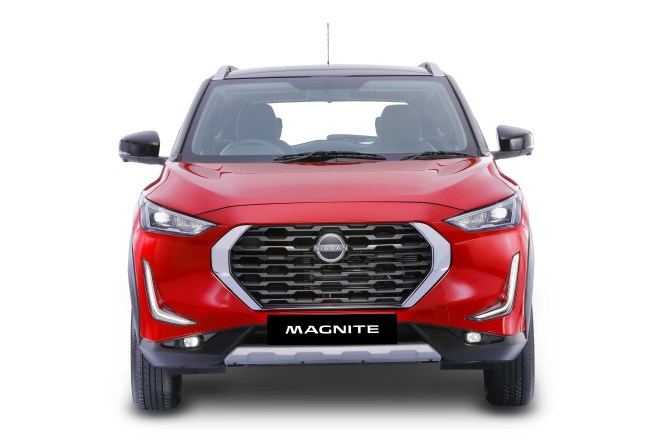
The All-New Nissan Magnite Crosses 50,000 Bookings Milestone

All-new Nissan Magnite has received a phenomenal customer response, clocking over 50,000 bookings and 10,000 wholesale deliveries.

Since its launch on December 2,2020, the all-new Nissan Magnite has received 2,78,000 plus enquiries with more than 50,000 bookings with 5,000 (10%) bookings on the digital platform and 45,000 through the on-ground bookings at the Nissan dealerships. Approximately 15% of these bookings made were on the CVT models and approximately 60% of them were top end variants that is XV and the XV Premium. As an industry first on customer delight, Nissan India has protected the prices for the already booked customers to ensure that they receive the deliveries of the all-new Nissan Magnite on the booking price despite the change in prices on account of escalation of raw material costs.

The all-new Nissan Magnite is available in 20 grade line-up and over 36 combinations, with each grade walk being carefully curated to meet the aspirations of the discerning Indian customers. The customers have been appreciative of the disruptive pricing which is great on style, safety, technology, and quality equipped with first in segment features like around view monitor, full 7-inch TFT instrument cluster, CVT automatic transmission. This package is complete with class-leading space and the peppy HRA0 turbo and B4D engine options.

Nissan India, in February, announced a special Valentine’s programme for its booked and waiting customers. Two rounds of winners have been announced, of which two lucky people, one from city of Noida and one from Bangalore, have got a 100% cash back on their all-new Nissan Magnite. 198 winners also received grade upgrades and other benefits.  Soon, the third round of winners will also be announced as a part of this programme in May 2021.

“We are extremely overwhelmed with the customer response for the Big, Bold, Beautiful Nissan Magnite. The 50,000 bookings milestone is a testament of the Customers trust of the Nissan brand and the love for the Carismatic SUV with a revolutionary value proposition as part of Nissan NEXT, the transformation plan towards building a stronger presence and future.” said Rakesh Srivastava, Managing Director, Nissan Motor India.