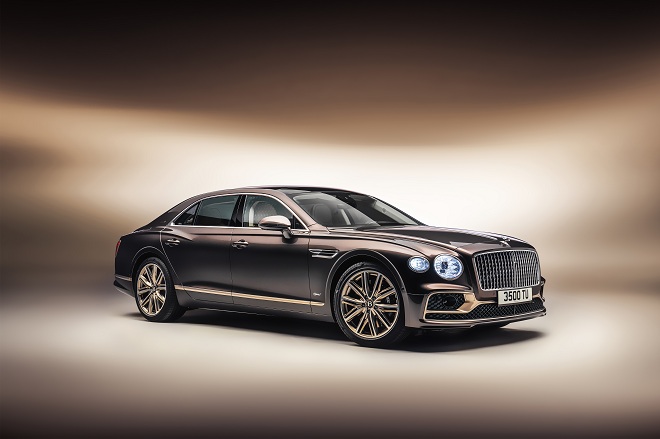
Bentley has announced details of a new limited edition to celebrate the introduction of its latest model, the Flying Spur Hybrid. Taking inspiration from the EXP 100 GT concept car that defines Bentley’s view of luxury mobility in 2035, the Flying Spur Hybrid Odyssean Edition is the first step on a journey to introduce new sustainable materials as part of its Beyond100 strategy.
The Flying Spur Hybrid Odyssean Edition not only uses an advanced hybrid powertrain delivering a combined power of 536 bhp (544 PS) and 750 Nm (553 lb.ft) of torque, but also includes new, even more sustainable materials throughout the cabin, directly reflecting design details showcased in Bentley’s centenary concept car. The cabin features panels of beautifully crafted tweed made from 100% British wool, twisting a blend of tonal colours into a bespoke yarn to create a unique natural luxury textile especially for Bentley.
With a focus on sustainability, the open pore Koa veneer fascias and waistrails use 90% less lacquer than high-gloss veneers, and allow the natural surface texture and aesthetic of the wood to be enjoyed. Selected from only the very best, most figured stock available, open-pore veneer is painted with just three ultra-thin layers of lacquer, together totalling only 0.1 mm in thickness.
The centre console is finished in a sleek, minimalist Piano Linen veneer, while a dedicated three-colour leather scheme lends the whole interior new depth. Together with new materials, sustainable leather is used widely across the cabin, thanks to its long-term durability. Indeed, Bentley’s own 1955 S1 Flying Spur was referenced during the design process, as the car still retains its original, now-66-year-old leather interior which is still in immaculate condition.
Accents to the interior are in a soft, warm hide called Autumn, with customers able to choose from five specifications that utilise Beluga, Porpoise, Cricketball, Brunel or Burnt Oak leather in tandem with light, modern Linen hide. A unique Odyssean Edition treadplate becomes apparent when entering or exiting the car, and is matched with exterior D-pillar badging.
In common with the ombré finishes seen in the EXP 100 GT interior, an exclusive new embroidery style sees thread colours blend calmly into one another across the width of each seat, defining and accentuating the “lofted diamond” pattern unique to the Flying Spur – together creating a stunning effect employed here by Bentley for the first time.
Deep pile overmats feature contrast binding, and can be upgraded to lambswool rugs – increasing the wool content of the interior yet further.
To the exterior, painted Pale Brodgar accents on the 21” ten twin-spoke wheels and lower brightware (front and rear bumpers, headlight and tail light surrounds and lower body side chrome) result in a uniquely serene character. A curated exterior palette of six colours have been recommended to harmonise with the Pale Brodgar accents, but the full Bentley palette can be chosen from.
The Flying Spur Hybrid Odyssean Edition demonstrates that hybridisation does not compromise luxury or performance. With an unperceivable blend between the internal combustion engine and electric motor, refined serenity is on offer regardless of driving mode or style.
The new powertrain combines a 2.9-litre V6 petrol engine with an advanced electric motor. With high power reserves, superior torque and quick throttle response the latest hybrid model gives little away to the Flying Spur V8 in acceleration, passing 60 mph from a standstill in 4.1 seconds (0-100 kmph in 4.3 secs).
Delivering a total of 536 bhp (544 PS) and 750 Nm (553 lb.ft) of torque – an additional 95 bhp in comparison to the Bentayga Hybrid. The Flying Spur Odyssean has the capability to cover over 700 km when fully fuelled.
The new powertrain achieves a significant reduction in fuel consumption whilst still providing the authentic Bentley character of effortless, refined performance.
French carmaker Citroën forayed into the Indian market with the launch of the new C5 Aircross SUV in April this year. However, the ongoing pandemic which created havoc with the deadly fangs of its second wave had kept us at bay for quite a while. So finally, when we received a call from the auto manufacturer to spend a day with the C5 Aircross, we jumped at the opportunity at once.
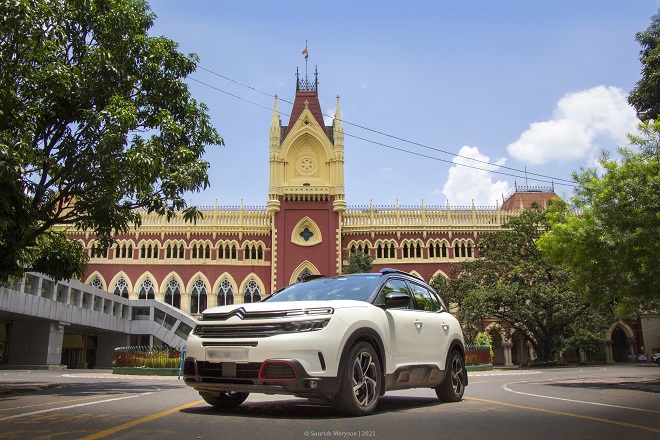
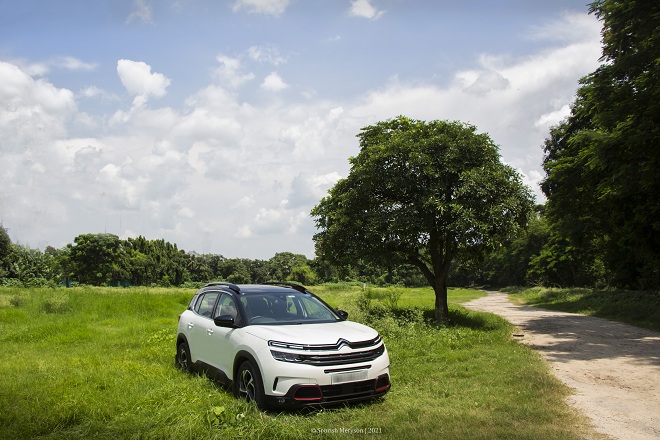
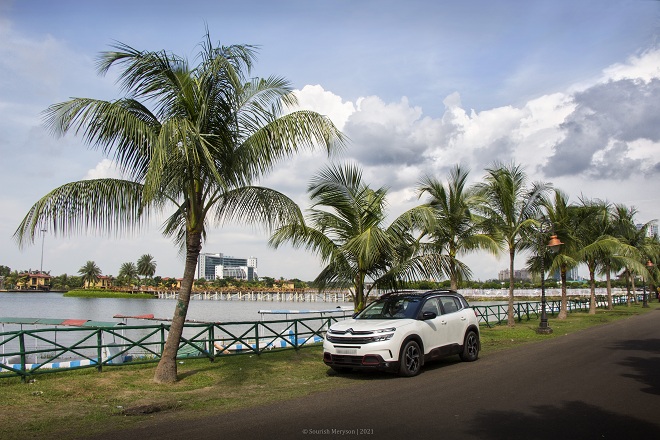
A clear blue sky on a Sunday morning was reason enough for us to set sail for a drive around the City of Joy – Kolkata. A short drive from La Maison Citroën on Park Street brought us to our first stop of the day – the Calcutta High Court. The Neo-Gothic structure of the Calcutta High Court made for a perfect backdrop for the C5 Aircross to strike a pose. With a muscular profile and plenty of swag, the New Citroën C5 Aircross SUV looks bold, and yet elegantly contemporary in every detail.
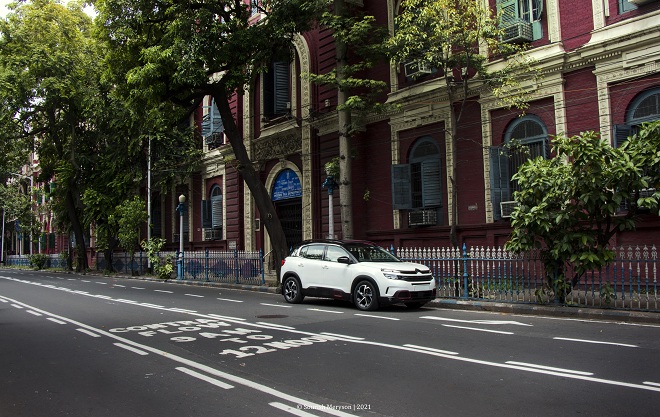
A short hop from the Calcutta High Court is the Comptroller and Auditor General’s Building where the Citroën C5 Aircross took a quick breather in front of the beautiful edifice.
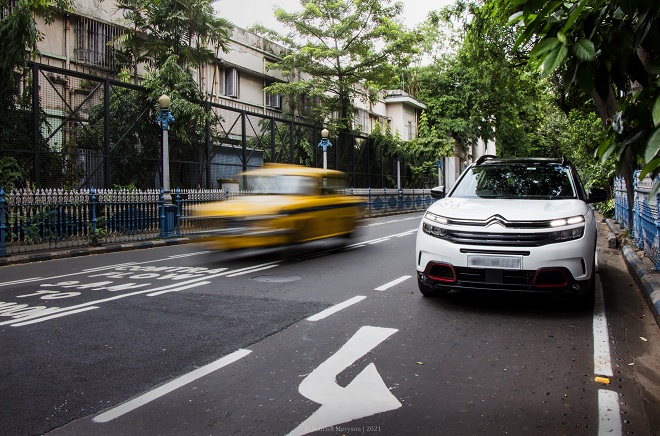
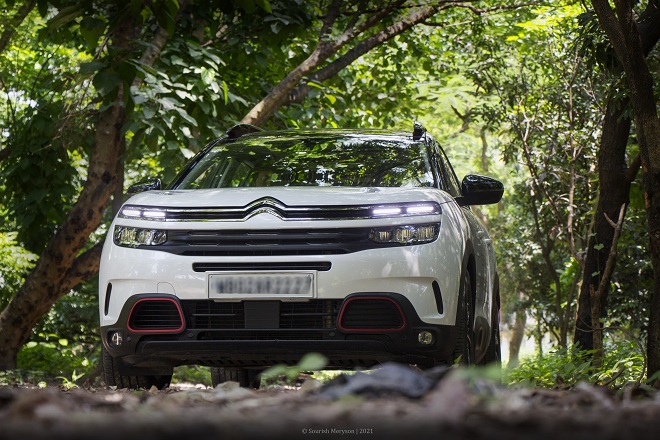
At the front of the C5 Aircross, there’s the unmistakable double chevron design and the powerful curved side panels which lends it an imposing presence, turning heads wherever it goes. The 360 degree glazed surfaces are highlighted by chromed ‘C’ motif. The rear lights feature four rectangular 3D LED modules, which emphasize the vehicle’s broad stance.
With four body colours and three bi- tone roof options, the new Citroën C5 Aircross SUV offers a myriad of options to match individual choice. The stylish alloy wheels add to the design. The three Bi-tone options are available on both Feel and Shine variants.
Time stands still as the past and future of mobility cross path on the thoroughfare of Kolkata.
The New Citroën C5 Aircross SUV is powered by a 2.0-litre diesel engine mated to an eight-speed automatic gearbox which provides smooth shifts between gears, making it a real pleasure to drive. You can also change gears manually if you want to, using the steering wheel mounted paddles, shifting seamlessly between automatic and manual modes. The diesel pot displaces 1997 cc producing 177 PS of maximum power at 3750 rpm and 400 Nm of peak torque at 2000 rpm. The engine is responsive to throttle input delivering linear power across rev range. You can also choose from multiple drive modes to suit your driving preference and mood.
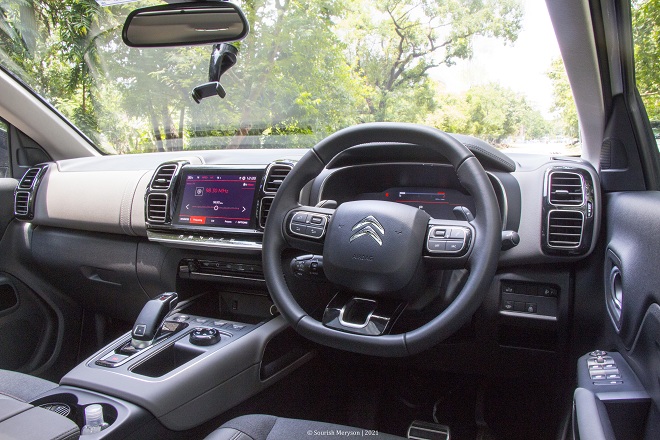
An SUV needs to take varied and difficult surfaces in its stride. The new Citroën C5 Aircross SUV does precisely that with Grip Control, which provides secure traction in all conditions. This ingenious system has five modes – Standard (ESC), Snow, All -Terrain (Mud, Damp Grass, etc.), Sand and Traction Control Off – that you can select instantly using a dial on the centre console.
For safety and control while travelling downhill there is the Hill Descent Assist feature, which minimises the risk of skidding or unwanted acceleration as you descend. It works both, in forward and reverse gears as well as in neutral.
The Citroën C5 Aircross SUV feels effortlessly at home in urban settings just as much it does in the rural surroundings.
Step inside the Citroën C5 Aircross SUV and you would be welcomed with a perfect blend of refined comfort and space. Settle in and you’ll quickly appreciate the high driving position, and great visibility. The horizontal lines of the dashboard subtly incorporate a range of useful technologies, such as the 8-inch touchscreen and 12.3-inch digital cluster. Carefully selected colours and tactile materials such as Grey Grained leather and Graphite cloth add a touch of class. Gloss black details and chrome inserts emphasize the attention to detail.
Taking inspiration from contemporary furniture, the seats in the New Citroën C5 Aircross SUV provide lounge-like comfort on the move. With broad cushions and seat backs, they combine high density foam at the heart of each seat and a thick, textured foam at the surface. Perfect support and softness is assured, whether it’s the shortest of trips or the longest of journeys.
With three independent adjustable rear seats of the same width, the New Citroën C5 Aircross SUV provides the same level of comfort and space, wherever you are sitting without being biased. With multiple reclining positions and the ability to slide up to 150 mm, they are comfortably accommodating. The modular and flexible design offers fold-away rear seats that provide a perfectly flat floor for generous luggage-carrying capacity.
The New Citroën C5 Aircross SUV has a roomy 580L boot. Move the rear seats to their furthest forward position and you’ve got up to 720L , giving you the most generous boot in its class. With the modular rear seats folded away, there’s an amazing 1630L of boot space available.
Part of being truly comfortable when you’re travelling is having a perfect place for everything you need. The New Citroën C5 Aircross SUV has plenty of useful storage solutions. The large compartment under the central armrest has a section that can carry a 1.5L bottle, whilst the glove box and door pockets are roomy too. You’ll also appreciate the large storage area at the front of the centre console.
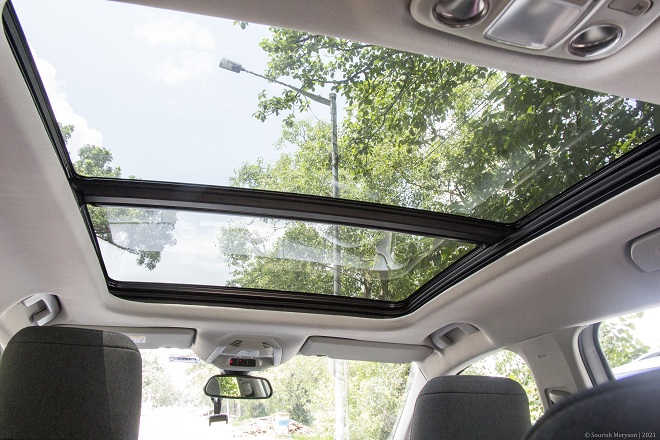
The Panoramic Glass Sunroof makes every journey special. Filling the interior with natural light, it really enhances the views enjoyed from the new Citroën C5 Aircross SUV. Powered by dual electric motors with an inbuilt auto-reverse safety function, it’s easy to use and also features a blind for adjusting brightness. The Panoramic Glass Sunroof comes as standard on the Shine variant.
From the very inception of their product campaign, Citroën has been aggressively highlighting the “flying carpet ride” quality offered by the C5 Aircross and we found out that its not without reason. Indeed the suspension set up of the Citroën C5 Aircross deserves accolades and well suited to tackle imperfections of the Indian roads which resulted in an impressive ride experience. When big bumps are encountered, the hydraulic cushions keep suspension movement controlled and progressive which effortlessly absorbs road imperfections so that you can enjoy a relaxing drive.
The C5 Aircross handles well and stays tightly gripped to the ground even at high speeds. Despite its tall boy design, there is negligible body roll even while cutting sharp corners. The steering feedback is good and the braking ability is confidence inspiring.
There is little doubt that the New Citroën C5 Aircross SUV is a well engineered and brilliantly packaged product. The C5 Aircross has a bold & imposing exterior design , spacious & classy interior, robust build quality, easy access and connectivity to your personal devices, boasts of a good driveability, impressive ride quality and safety features – it has everything that a modern day customer is looking for. The pricing certainly could have been more agressive, but then we shall park that debate for another day.
As the setting sun bid adieu for the day, we stood by the water body inside the picturesque Eco-Park with the C5 Aircross reflecting on the wonderful day spent behind its wheel.
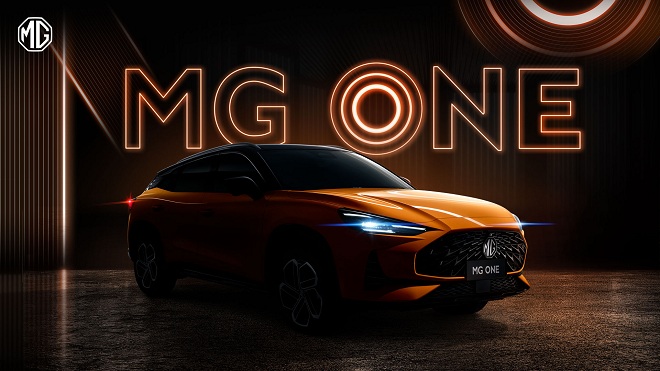
MG’s brand new SUV, MG ONE – has been today partially revealed globally. The SUV showcases the brand’s latest design and tech prowess.
The world premiere of the car will take place on July 30, 2021.
It is based on the brand’s new SIGMA architecture, an all-in-one modular designed platform. It empowers MG ONE with powerful chip technology, active digital eco system, advanced electric architecture and hard-core software technology.
It can be seen from the partial reveal images that the styling of MG ONE follows the aggressive and sporty design philosophy. In terms of exterior, MG ONE shows a strong European-style premium sporty touch with a back-seated posture and a highly resilient signature leopard jump shoulder line. The wide and lower proportions ensure a practical interior space while giving the whole car a modern and sporty look.
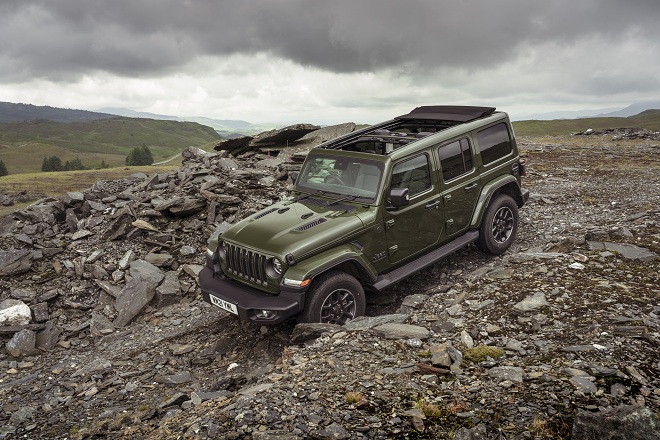
2021 is a special year for Jeep as the brand marks its 80th birthday with a celebration of eight decades of 4×4 leadership, open-air freedom and adventure. While looking back at past endeavours, Jeep is updating the Wrangler for model year 21 (MY21) with the introduction of enhanced safety features, increased off-road capabilities and a range of new colours, as well as introducing the new 80th anniversary edition.
For MY21, all Jeep Wrangler models will be fitted with the 2.0-litre 272hp petrol engine, combined with an 8-speed automatic transmission. To assist on-road driving, enhanced additional safety features are now included as standard across the Wrangler range. These include the addition of adaptive cruise control (ACC) with stop and go, accident emergency braking (AEB) and auto high beam.
Off-road driving has also been enhanced with a series of new features added to the Wrangler range as standard, making it even easier to go anywhere and do anything. Selec-Speed control, an off-road cruise control, allows the driver to maintain a steady speed during rock crawling and other types of low speed manoeuvring. A selectable tyre fill alert can now be set through the 8.4-inch touchscreen. Ideal for off-road adventurers who deflate the tyre pressures to get grip on off road courses when traversing mud and rocks, the system will give an audible warning when the desired tyre pressures have been reached.
Exclusively available on the Rubicon, the new Off-Road+ (OR+) mode provides unique powertrain and chassis tuning. Specifically tailored for high range ‘sand’ performance and low range ‘rock’ activity, OR+ adjusts the ABS, ESC, accelerator pedal, traction control and transmission calibrations . Sand mode is enabled when OR+ is activated while in 4H gear and rock mode is enabled when OR+ is activated while in 4Low.
A new range of body colours, Hydro Blue, Snazzberry and Sarge Green, are now available on the Wrangler range, paying homage to the models history. Nacho will also be available as a limited run, exclusively on the Rubicon.
Jeep Wrangler 80th Anniversary The iconic Jeep Wrangler is also available as an 80th Anniversary special-edition model, featuring Neutral Grey Metallic grille, headlight and fog light bezels and specific 18-inch two-tone alloy wheels with Granite Crystal accents. Full LED high-visibility headlights with auto high beam control, body-colour hardtop and the 80th Anniversary badge on the front wheel arches help to mark out this commemorative special-edition model, along with a commemorative plaque on the rear swing gate.
The interior features black leather seats with tungsten stitching and the 80th Anniversary badge, along with a leather wrapped dashboard featuring contrast stitching and Berber floor mats. Standard technology content includes the Uconnect 8.4 NAV system with 8.4-inch touchscreen, smartphone integration with Apple CarPlay and Android Auto, 7-inch TFT display and a 9-speaker Alpine audio system with a 552W subwoofer.
Standard safety features include blind spot monitoring with rear cross-path detection, rear camera, front and rear parking sensors, Keyless Enter ‘N Go™, forward collision warning, advanced brake assist and adaptive cruise control with stop.
Like all variants in the Wrangler line-up, the 80th anniversary edition is Trail Rated – the brand’s guarantee of a model’s superior go-anywhere capability. Featuring the Jeep Command-Trac four-wheel-drive system it uses the Selec-Trac full-time two-speed transfer case to continuously monitor and manage the torque sent to the front and rear wheels to ensure the Wrangler can master even the most challenging off-road tracks.
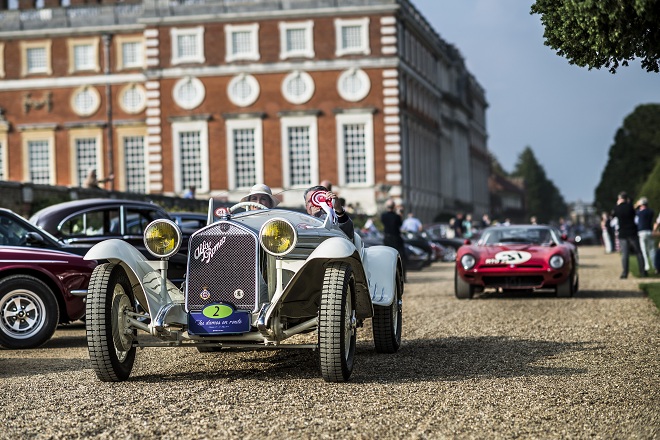
With a full line-up of the world’s rarest cars and a collection of luxury partners more impressive than ever at Concours of Elegance 2021, attention is turning to the event’s 10th anniversary in 2022. Already, spectacular plans are underway to celebrate Her Majesty The Queen’s 70th year as monarch and our important milestone.
In 2012, the Concours of Elegance was born, with an event that transformed the collector car landscape in the UK. Never before had there been a concours d’elegance with the calibre of venue and quality of automotive displays to sit shoulder-to-shoulder with the likes of Concorso d’Eleganza at Villa d’Este or the Pebble Beach Concours d’Elegance. Ever since its debut, The Concours of Elegance has had an association with Royal Palaces and the Jewels of the car world.
In 2022, The Concours of Elegance evolves once more. Returning to Hampton Court Palace’s Fountain Gardens, where it has been held since 2017, it will be a reunion of all of the finest cars to ever grace the event. Each of the winners from 2012 through to 2021 will be invited and in honour of their Patron will be called The Prince Michael of Kent Class.
Alongside them will be many of the stars of the 2012 event. Their Steering Committee of motoring experts, who each year handpick cars to be invited to the Concours of Elegance, will each invite their personal favourite from across the years to return once more.
In homage to its royal roots, with the patronage of HRH Prince Michael of Kent, and its unique royal palace venues, the Concours of Elegance will be showcasing a number of the Royal cars for official display. What’s more, royal vehicles from all over the world, past and present, will be invited to attend, including the famous Rolls-Royces of the Maharajahs. And in the year of Her Majesty The Queen’s 70th year as monarch, a unique display will be curated to showcase one example of automotive endeavour and innovation from each year of her reign.
The Concours of Elegance’s traditional feature displays, including The Club Trophy – for the UK’s finest car club concours winners – and the Junior Concours will be joined by a new 40UNDER40 feature, welcoming forty cars from a younger generation of enthusiast under 40 years old.
Away from the automotive displays, Concours of Elegance will continue to be a showcase for the finest luxury brands in the world, with Presenting Partner A. Lange & Söhne already committed to returning in 2022, alongside the Peninsula London Hotel and Chubb Insurance.
The Concours of Elegance 2022 will take place at Hampton Court Palace from the 2nd-4th September. Tickets and further details will be announced towards the end of 2021.
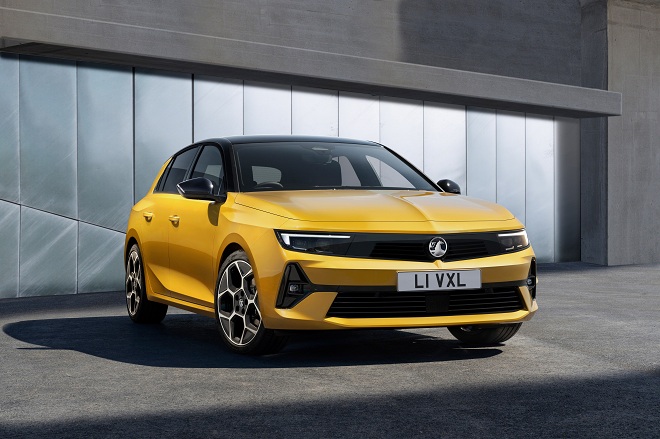
Vauxhall has today revealed the all-new, eighth generation of the Astra. The success story of Vauxhall’s bestseller began over 40 years ago. With the all-new Astra, the British manufacturer is now opening the next chapter: for the first time, the compact class model is available with electric drive.
Vauxhall will offer the new Astra in two performance levels as a plug-in hybrid. In addition, there are versions with highly efficient petrol and diesel engines in combination with friction-optimised six-speed manual and eight-speed automatic transmissions.
The new Vauxhall Astra is also a design statement for the brand. Dynamic as never before, with sheer, taut surfaces, detoxed of superfluous elements and with the new brand face – the Vauxhall Vizor. With the next compact class generation, Vauxhall shows that the Astra is ready to define a new era.
The new Vauxhall Astra will launch this year as a sporty five-door with a low-slung look and yet more space than its predecessor. With a length of 4,374mm and width of 1,860mm, it hits the sweet-spot of the compact sector.
Thanks to the especially short front overhang, the new Astra is only 4mm longer than the previous model, despite the considerably increased wheelbase of 2,675mm (+13mm). Notwithstanding the muscular, confident stance, the new Astra’s practical boot with adjustable floor still offers the driver and four passengers 422 litres of luggage volume.
Like its predecessor launched in 2015, the newcomer brings innovations to the compact class that customers previously only knew from more expensive vehicles. For example, the Astra can turn night into day: the latest evolution of the adaptive Intelli-Lux LED® Pixel light comes straight from Vauxhall’s flagship Insignia and, with 168 LED elements, leads the way in the compact and midsize market sectors.
A leap in time has taken place in the interior of the new generation Astra. With the fully digital Pure Panel, analogue instruments are consigned to history. Instead, the new human-machine-interface (HMI) with fresh, modern graphics offers customers a pure, more intuitive experience. Passengers can operate the new Astra intuitively via extra-wide touchscreens, just like a smartphone. The Vauxhall designers and engineers have taken great care to ensure that the driver receives all the necessary information and useful operating options, but is not burdened with superfluous data or functions. In addition, key settings such as climate control can still be operated via physical switches and buttons.
Typically Vauxhall is also the outstanding seating comfort of the new compact class model. The front seats, developed in-house, are AGR (“Aktion Gesunder Rücken e.V.”) certified and, with their exemplary ergonomics, are exceedingly comfortable, especially on long journeys. The driver is supported by state-of-the-art assistance systems ranging from the Intelli-HuD head-up display to the semi-automated Intelli-Drive assistance system and the Intelli-Vision 360-degree camera.
Paul Willcox, Managing Director, Vauxhall, said: “The All-New Astra arrives with sensational design and class-leading levels of technology. With the choice of an electrified powertrain, the All-New Astra has been developed with utmost precision, down to the smallest detail. We are confident the next generation Astra has all it takes to become another best seller and continue to attract new customers to the brand.”
New interpretation of bold andpure Vauxhall design philosophy
After the Mokka, Crossland and Grandland SUVs, the new Astra is Vauxhall’s first hatchback to interpret the brand’s bold and pure design philosophy. The Vauxhall Vizor (the new face of the brand first seen on the Mokka and the central exterior design element) follows the Vauxhall Compass where the vertical and horizontal axes – the sharp crease in the hood and the wing shaped graphic of the daylight running lamps – intersect with the Vauxhall Griffin emblem in the middle. Stretching across the front, making the new Astra look even wider, the Vizor also seamlessly integrates technologies such as the ultra-slim Intelli-Lux LED® headlamps and the front camera of the Intelli-Vision system. Viewed from the side, the next-generation Astra looks especially dynamic thanks to the pronounced forward rake of the C-pillar.
At the rear, the Vauxhall Compass is repeated by the centrally mounted Griffin, the vertically aligned high-mounted brake lamp and the tail lamps (energy-saving LED, as is all exterior lighting). The Griffin emblem also doubles as the latch for the tailgate, which is made of state-of-the-art composite material. This technology is not only light in weight and rigid, it also allows the precise execution of design details such as the especially slim tail lamps. The Astra is available with two-tone paint
Mark Adams, Vice President Design, Vauxhall, said: “The All-New Astra represents the exciting next step of our new design execution. With its bold Vizor front face, strong muscular wheel arch blisters and sheer surfacing, the All-New Astra has a very sporty and confident personality. The interior also takes a bold step into the future. The strong driver-orientated cockpit with seamless glass look of the new Pure Panel will bring a whole new emotional experience to our customers.”
Next-generation Pure Panel digital cockpit with fully-glazed option
The same technical precision applies throughout the interior where the absolute highlight is the next generation of the Pure Panel, first introduced in the Mokka. This expansive, digital cockpit (optionally fully glazed) features two 10-inch displays, seamlessly integrated – together with the driver’s side air vent – in a horizontal format. Thanks to a shutter-like layer that prevents upward reflections in the windscreen, the design dispenses with a hood over the displays, which further enhances the high-tech functionality and ambience.
With the physical controls reduced to the minimum in the form of finely crafted keys, the Pure Panel achieves the optimum balance between digitisation and intuitive operation, detoxed of irritating visual stimuli and without the need for sub-menus. There is no need for cables either, since the infotainment system – which can be operated by voice recognition as well as by touch – can be connected as standard on all model variants to wireless Apple CarPlay and Android Auto via compatible smartphones.
Dynamic yet composed handling, braking and stability
The new Astra is based on the third generation of the highly flexible EMP2 multi-energy architecture, with Vauxhall DNA built in from the start of development. This means that the handling is composed as well as dynamic.
The steering and lateral stiffness of the chassis – McPherson strut suspension at the front, torsion bar at the rear – are designed for high yaw control (damping of the movement around the horizontal axis). Under braking, the new model delivers strong stopping power and remains highly stable in curves as well as in a straight line. The torsional rigidity of new Astra is 14 per cent higher than its predecessor.
Advanced driver assistance systems including semi-automatic lane change
The new Astra’s architecture also incorporates the latest automated driver assistance systems. In addition to the multifunction camera in the windscreen, the technology comprises four body cameras (one at the front, one at the rear and one on each side), five radar sensors (one at the front and one at each corner), as well as ultrasonic sensors front and rear.
Cameras and sensors are integrated with e-horizon connectivity in Intelli-Drive, which extends the range of the cameras and the radar. This enables the system to adapt the speed in curves, make speed recommendations and perform semi-automatic lane changes. Hands-off detection on the steering wheel ensures the driver remains engaged at all times.
The long list of automated driver assistance systems also includes adaptive cruise control, which increases or decreases speed to follow the vehicle ahead – without exceeding the set speed – and can brake to a standstill if necessary. With the automatic transmission, driving resumes automatically thanks to “Stop & Go”.
The offer of class-leading assistance systems additionally features a large Intelli-HuD head-up display, long-range blind-spot detection, Intelli-Vision 360o camera for easier parking, extended traffic sign recognition, rear cross-traffic alert and active lane positioning, which keeps the car in the middle of the driving lane.
New Astra brings premium Intelli-Lux Pixel Light® to compact market sector
The Astra’s role as advanced technology carrier continues in lighting and seats, typical areas of expertise for the Vauxhall brand. The previous model played a pioneering role in the introduction of adaptive matrix light in 2015 and the next-generation is now bringing the newest development in lighting to the compact market sector for the first time – Intelli-Lux LED® Pixel Light. This state-of-the-art technology, already available on Vauxhall’s Grandland SUV and Insignia flagships, features a segment-leading total of 168 LED elements – 84 in each ultra-slim headlamp. The main beam adjusts seamlessly in milliseconds, without glare for other road users. Approaching or preceding traffic is “cut out” precisely. The range and direction of the light vary according to the driving situation and surroundings.
Best-in-class AGR ergonomic seats with massage and ventilation
Vauxhall’s ergonomic AGR seats enjoy an award-winning reputation and the new Astra continues this long-standing tradition. Certified by “Aktion Gesunder Rücken e. V.” (“Campaign for Healthy Backs”) the position of the front seats is 12mm lower than in the previous model, further enhancing the feeling of a “sporty” drive. Good posture is guaranteed, with the foam density of the seats optimised according to the “Sport” or “Comfort” contours.
The new Astra’s AGR front seats are the best the compact class has to offer and feature a wide range of optional adjustments, from electric tilt to electro-pneumatic lumbar support. In Nappa leather-trim, they even offer ventilation, massage for the driver and heating at the rear as well as the front. Seats trimmed in stylish Alcantara are also available.
Astra goes electric for first time with powerful plug-in hybrids
The new Astra will be available from the start of sales with powerful plug-in hybrid electric drive as well as highly efficient petrol and diesel engines, electrifying Vauxhall’s compact class model for the first time in the brand’s history. Power ranges from 81kW (110PS) to 96kW (130PS) with the petrol and diesel variants and up to 165kW (225PS) system output with the plug-in hybrid variants. A six-speed gearbox is standard on the petrol and diesel power units, with an eight-speed automatic transmission (electrified on the plug-in hybrids) optional on the more powerful engines.
Vauxhall will open the order books for the new Astra this autumn. The first customers will take delivery of their cars early next year. Further details including UK pricing and specification will be announced at the on sale date.
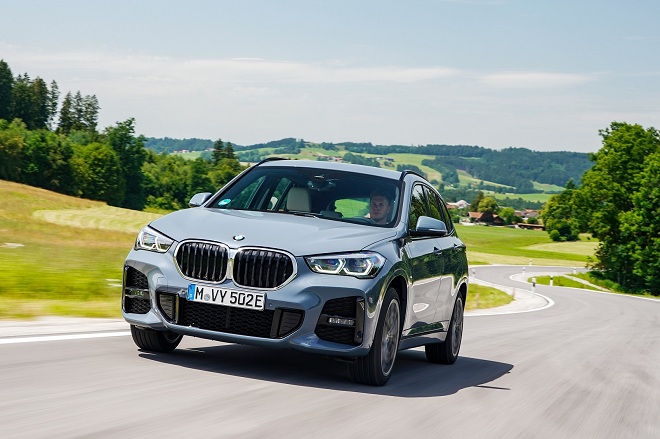
BMW India has launched the BMW X1 20i Tech Edition today at a price of INR 43,00,000 (ex-showroom). The premium compact sports activity vehicle (SAV) is locally produced at BMW Group Plant Chennai.
Mr. Vikram Pawah, President, BMW Group India said, “BMW India holds the dominant position in the premium compact sports activity vehicle (SAV) segment. With the BMW X1 20i Tech Edition, we are once again strengthening the ‘Power of Choice’ for customers looking to enter this segment. With new added features, modern technology and powerful performance, this exclusive limited edition combines the best of both worlds. It meets the varied mobility needs and fits in perfectly with the attitude and lifestyle of ambitious future leaders who are redefining success – personally and professionally.”
BMW X1 20i Tech Edition is available in two exciting colours – Alpine White, Phytonic Blue (Metallic) with Sensatec Oyster Black upholstery.
The sharper design of the new BMW X1 strengthens its authentic and powerful SAV character. With commanding proportions, high seating position and good road visibility, it has greater road presence than ever before. The exterior embodies a muscular and dominant character with precisely drawn lines and strikingly contoured surfaces. The front has an imposing appearance with larger BMW grille and air intakes as well as striking LED headlights with LED fog lamps. The athletic side view is complemented by a dynamic wedge shape formed by the roofline, eye catching character lines and window surfaces that taper towards the rear. The rear design underscores the car’s width and sporty stance with wrap around LED rear lights, inlays in body colour and bigger twin exhaust tailpipes. The new 18-inch alloys add to the sporty visual appeal of the car.
The BMW X1 has generous proportions, comfort and a feeling of spaciousness on the inside, thanks to an intelligent vehicle structure and smartly conceived interior configuration. Ample room for all occupants, along with horizontal surface design, create an ambience typical of a sports activity vehicle. Filling up the cabin with a sense of spaciousness and light is the large Panorama Glass Roof. Ambient Lighting with six dimmable designs creates an atmosphere for every mood. Comfortable seating is an important consideration for long journeys and traffic jams and the BMW X1 offers electrical seat adjustment for both driver (with memory function and passenger. The rear seat backrest can be reclined and offers centre armrest with 2 cup-holders for added comfort. Folding down the 40:20:40 split backrest increases boot capacity from 500 litres to 1,550 litres, making the versatility of BMW X1 suitable for all kinds of journeys.
The BMW TwinPower Turbo technology, the petrol engine meld best-in-class power with exemplary efficiency and offer spontaneous responsiveness even at low engine speeds. The two-litre four-cylinder petrol engine of the BMW X1 sDrive20i produces an output of 192 hp and maximum torque of 280 Nm at 1,350 – 4,600 rpm.
The seven speed Steptronic Sport automatic transmission performs smooth, almost imperceptible gearshifts. At any time, in any gear, the transmission collaborates perfectly with the engine, enabling it to develop its full power and efficiency. For even greater driving pleasure, it is available with steering wheel paddle shifters and cruise control with braking function as standard. Using Launch Control, ambitious drivers can achieve maximum acceleration with optimized traction from a standstill. Using the Driving Experience Control switch, driver can change the driving character of the vehicle by choosing between different driving modes – ECO PRO, Comfort, Sport.
A host of BMW ConnectedDrive technologies make for an entertaining and safe journey. The BMW X1 features a high-resolution new 10.25-inch Central Information Display with iDrive Controller and Navigation with touch functionality. Wireless Apple CarPlay® ensures seamless smartphone connection with the car to access navigation, contacts, messages, music and other functions. The smartphone holder integrated into the centre console allows inductive, Wireless Charging for mobile phones. Park Distance Control and Rear-View Camera make parking in tight spots easier. The new BMW Head-Up Display projects all information relevant to the journey directly into the driver’s field of vision. The car features a new 205W HiFi loudspeaker system which conjures an engrossing treat for the ears.
The new BMW X1 comes loaded with BMW Safety technologies such as six airbags, Attentiveness Assistance, Dynamic Stability Control (DSC) including Dynamic Traction Control (DTC), Cornering Brake Control (CBC), electric parking brake with auto hold, side-impact protection, electronic vehicle immobilizer and crash sensor, ISOFIX child seat mounting and integrated emergency spare wheel under the load floor.
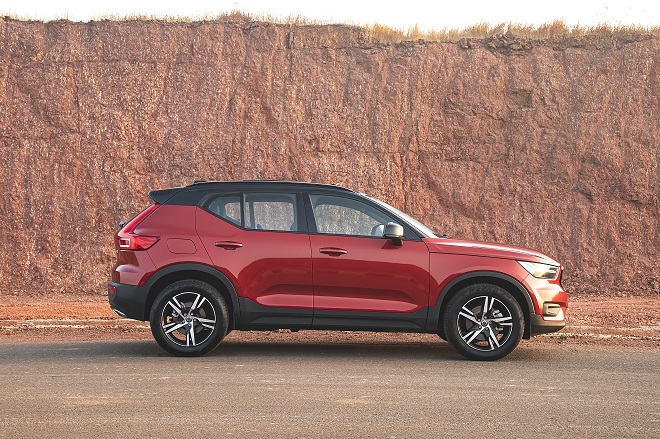
Swedish luxury car maker Volvo Car India has announced that it has recorded a 52% growth in its retail sales at 713 units in the first six months of 2021. The company had sold 469 cars during the same period last year.
Volvo’s dynamic mid-size luxury SUV XC60 contributed the most being the highest selling model in H1 2021. The company is confident and positive about a much stronger growth in the remaining part of the year as it has already announced the launch of it’s first full electric SUV ‘XC40 Recharge’ in India later this year. Volvo car India will also introduce the petrol variants of it’s premium sedan S90 and mid-size SUV XC60 in H2 2021.
Mr. Jyoti Malhotra, Managing Director, Volvo Car India said: “A 52% growth in the high-end luxury mobility during a highly depressed consumer sentiment phase and major covid restrictions in the market place shows the confidence that the Indian consumer has in Brand Volvo. Despite uncertain conditions, it has been a good first half for the company giving us a strong base as we move forward in the year and bring new products to our consumers.”
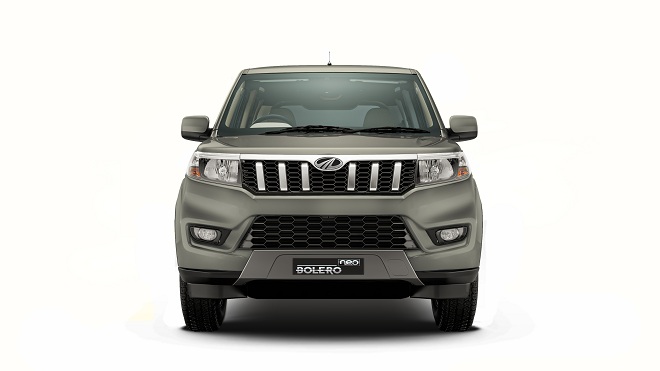
Mahindra & Mahindra Ltd. has launched the new ‘Bolero Neo’. Available at all Mahindra dealerships across India from today, the new Bolero Neo is launched at an introductory price of INR 8.48 Lakh (Ex-Showroom Price, All India) for the N4 variant.
The new Bolero Neo will cater to the evolving customers looking for an SUV that is tough and authentic yet modern and trendy. The existing Bolero will continue to sell along with the Bolero Neo in the market.
Veejay Nakra, Chief Executive Officer, Automotive Division, M&M Ltd., said, “The Bolero Neo combines the new age customer’s affinity towards a tough, powerful, go-anywhere capable SUVs with their persona and aspirations for a modern and trendy SUV. The design, performance, and engineering enhancements in the new Bolero Neo make it a modern, unmissable and authentic SUV for the bold and fearless Young India. The addition of Bolero Neo to our brand portfolio will help us retain Bolero amongst the top 10 selling SUV’s in the country.”
What makes Bolero Neo an Authentic yet modern SUV?
Modern unmissable presence design, premium Italian design interiors & host of comfort, convenience and connected features
Solid Performance with mhawk100 engine with 73.5 kW (100 BHP) power & 260 Nm torque
Tough go-anywhere capability with 3rd Gen Chassis which goes on Scorpio and Thar
Multi-Terrain Technology (MTT)
Remarkable Safety & low cost of ownership
Low cost of maintenance
Packed with modern design, powerful technology and plush features, the Bolero Neo is made for the young evolving customers. These include a stylish new design and premium interiors crafted by Italian automotive designer Pininfarina, comfortable cabin and safety technology such as standard dual airbags, anti-lock braking system (ABS) with electronic brake distribution (EBD) and cornering brake control (CBC) and ISOfix child seat. It is built on 3rd generation chassis shared with Scorpio and Thar and it comes with the proven Mahindra mHawk engine.
Velusamy R, Chief of Global Product Development, Automotive Division, M&M Ltd., said, “Built on the third-generation chassis which it shares with the Scorpio and Thar, the Bolero Neo has powerful attributes that set it apart. Its rugged body-on-frame construction, the proven Mahindra mHawk diesel engine and Multi Terrain Technology give Bolero Neo the ability and confidence to conquer rough terrain. Comprehensively loaded with all the key features, the Bolero Neo reiterates our unstinted commitment towards product quality, performance, core SUV attributes and value.”
The enhancements in the new Bolero Neo is reflected not just in design cues like an imposing stance and body cladding but also in the 100hp mHawk engine, tough built body and a go-anywhere set-up, thanks to the Body On Frame construction, rear wheel drive and multi-terrain technology.
The new Bolero Neo will offer a spacious 7-seater configuration and will be available in three variants (N4-base, N8-mid, N10- top) and seven colour options (namely Rocky Beige, Majestic Silver, Highway Red, Pearl White, Diamond White, Napoli Black and Royal Gold (coming soon). It will be available at Mahindra dealerships starting July 13, 2021.
An optional variant N10 (O) with Multi terrain technology (Manual Lock differential) will be launched subsequently.
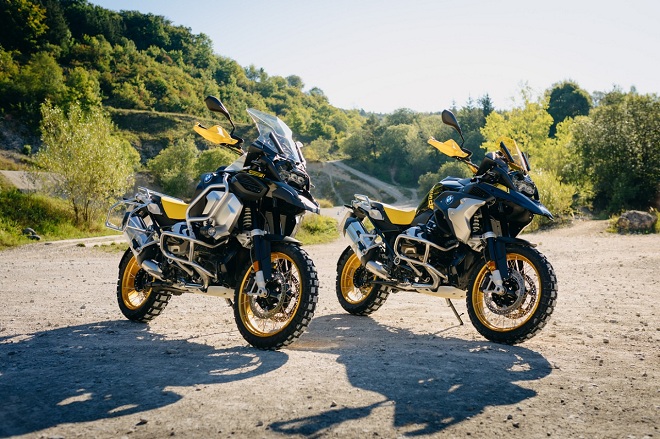
BMW Motorrad India has launched the new BMW R 1250 GS and BMW R 1250 GS Adventure motorcycles in India.
The new BMW R 1250 GS and the new BMW R 1250 GS Adventure will be available as Completely Built-up Units (CBU) and can be booked at BMW Motorrad dealerships from today onwards.
Mr. Vikram Pawah, President, BMW Group India said, “BMW Motorrad GS models are the ultimate icons of the adventure segment. GS is not just a motorcycle, it’s an attitude that always inspires. Consistent performance, an impressive range of equipment, and incomparable riding experience are the key attributes of the GS range. Built for ultimate challenges, the new BMW R 1250 GS and BMW R 1250 GS Adventure offers a perfect synthesis of road and off-road riding. It is your companion for cherishing life changing experiences, greater freedom and pure riding pleasure.”
The introductory ex-showroom prices are as follows:
BMW R 1250 GS Pro – INR 20,45,000
BMW R 1250 GS Adventure Pro – INR 22,40,000
The new BMW R 1250 GS and new BMW R 1250 GS Adventure are available in a basic colour scheme, style triple black variant and style Rallye variant. Additionally, also on offer is the limited edition special “40 Years GS” edition that celebrates the anniversary of the BMW GS family.
The design of the new BMW R 1250 GS and the new BMW R 1250 GS Adventure is authentic and purely GS. The motorcycles offer perfect ergonomics for rider and passenger for on and off-road adventures. In their respective basic colour versions, the new BMW R 1250 GS and R 1250 GS Adventure emphasise their more precise nature and universal talents in light white solid paint and ice grey solid paint.
The optional Style Triple Black enhances the masculine nature of the two motorcycles in and the Blackstorm metallic / black / agate grey colour combination. The black-coated drivetrain is surrounded by the main frame in metallic matt agate grey, a black rear frame and the black anodized tubular handlebars. In addition, front panel carrier, luggage carrier, slider tube and brake callipers are designed in black. The optional Style Rallye lends a sporty nature with the light white solid paint/ racing blue metallic / racing red solid paint colour combination, they present themselves particularly dynamically as off-road specialist touring endures. The masculine, robust nature of black elements such as the drive unit, slider tubes, tubular handlebars and front panel carrier.
The limited ‘40 Years GS’ edition scheme is dedicated to the ‘40 Years GS’ anniversary. For four decades, the GS has stood for a longing for vastness and boundless adventure. The BMW R 1250 GS Adventure in the ‘40 Years GS’ edition celebrates this #SpiritOfGS: It is a homage to the GS history. In striking black and yellow, it is reminiscent of the iconic BMW R 100 GS and impresses with its state-of-the-art technology and equipment. In the Blackstorm metallic colour for tank side panels, top front-wheel cover as well as tank centre cover and with yellow accents it is based on an icon from 40 years of BMW GS history. The graphic of the tank centre cover, the Rallye windscreen and the two-tone black and yellow low Rallye seat include yellow colour.
The new full LED adaptive headlight design lends a striking visual appeal. The X-shaped light icons included in the new headlights makes the new BMW R 1250 GS and new BMW R 1250 GS Adventure look unique when the headlight is switched on and while riding. New lighting functions, cruising light and function-integrated turn indicator bulbs are available as optional equipment. The new lighting function makes the experience even more intense and practical at the same time. The ‘Welcome’ light function is activated as soon as the ignition is switched on. The ‘Goodbye’ light function activates the front and rear lights for a short moment and then slowly dimmed after switching off the ignition. The new ‘Follow me Home’ function enables activation of the driving lights by briefly pressing the high beam button offering optimum visibility at night and for maneuvering in parking spaces. The newly developed turn indicator bulbs are standard and are state-of-the-art in terms of design and technology and generate a strikingly new appearance of the two new GS models.
Both models feature the powerful 2-cylinder in-line Boxer engine with a displacement of 1254cc, producing a power output of 100 kW (136 hp) at 7,750 rpm for dynamic performance and generates a maximum torque of 143 Nm at 6,250 rpm. The variable camshaft control BMW ShiftCam is an entirely new technology which provides supreme ridability along with an additional increase in power across the entire engine speed range, reduced emission and fuel consumption levels, optimised running smoothness and refinement.
The new BMW R 1250 GS and new BMW R 1250 GS Adventure are now equipped with the Pro riding modes. With the two ‘Rain’ and ‘Road’ riding modes, the riding characteristics can be adapted to varied conditions. The new standard ‘Eco’ riding mode increases the efficiency with soft throttle curve and moderate torque limitation. The riding mode button can be used to switch quickly and easily to a different riding mode when desired. The pro riding modes include Dynamic, Dynamic Pro, Enduro and Enduro Pro. In addition, the ‘Dynamic Pro’ and ‘Enduro Pro’ riding modes each have individualisation options for adapting the vehicle character to one’s own requirements and thus further increasing riding pleasure. The riding mode preselection can be used for quick individual selection of riding modes. The next generation optional Electronic Dynamic ESA provides higher dimension of riding safety, performance and comfort thanks to automatic and adaptive damping as per the riding conditions and manoeuvres.
The standard Dynamic Traction Control (DTC) ensures high level of riding safety due to the best possible traction. The set-off assistant Hill Start Control Pro (HSC Pro) is a standard feature in both models and noticeably improves the starting function in all conditions. The standard BMW Integral ABS Pro provides more safety when braking, even in inclined positions. The additional expansion of the riding mode concept results in more new functions. For example, the advanced adaptation of the ABS control characteristics to the respective riding mode.
Comfort features now include heated grips, two power sockets as standard for charging smartphone and other compatible devices. A 12-volts on-board socket is installed under the rider’s seat. A USB-A socket with 5-volt power supply is also available for quick charging. Both motorcycles are equipped with a 6.5 inch full-colour TFT display. Integrating operation via the BMW Motorrad multi-controller, it gives the rider quick access to vehicle and connectivity functions. Phone and media functions can be used without having to install an app. The rider can easily make telephone calls and enjoy listening to music with Bluetooth connection. In addition, the BMW Motorrad Connected app offers everyday-suitable and practice-oriented arrow navigation directly via the TFT display.
A comprehensive range of optional equipment and original BMW Motorcycle accessories is available for further individualisation of the new BMW R 1250 GS and new BMW 1250 GS Adventure.