Skoda Releases Exterior Design Sketches Of The New Fabia

Skoda Auto is building anticipation for the upcoming fourth generation of the Fabia by releasing the first official design sketches. The popular small car from the Czech car manufacturer will be significantly larger, more dynamic and more expressive than its successful predecessors. Switching over to the Volkswagen Group’s Modular Transverse Toolkit MQB-A0 has made the new proportions possible and created even more space for passengers and luggage. Additional highlights include the sharply drawn front headlights and rear lights featuring LED technology. The world premiere of the new Skoda Fabia will take place this May.

Two of the design sketches show the clear, modern and dynamically drawn lines of the new Skoda Fabia. The fourth generation will be 111 millimetres longer and 48 millimetres wider than its predecessor. This is the first time the new Fabia will be based on the Volkswagen Group’s Modular Transverse Toolkit MQB-A0. In addition to even more space for passengers, this also adds an extra 50 litres to the boot. The diagonal front view offers a first glimpse of the flat front headlights and the wide Skoda grille, which has a sporty, elegant look with a chrome frame and black ribs. Large wheels also enhance the powerful appearance.

The elongated roof spoiler with side finlets ensure excellent aerodynamics along with the aerodynamically optimised exterior mirrors and actively adjustable cooling shutters in the front bumper’s lower air inlet.

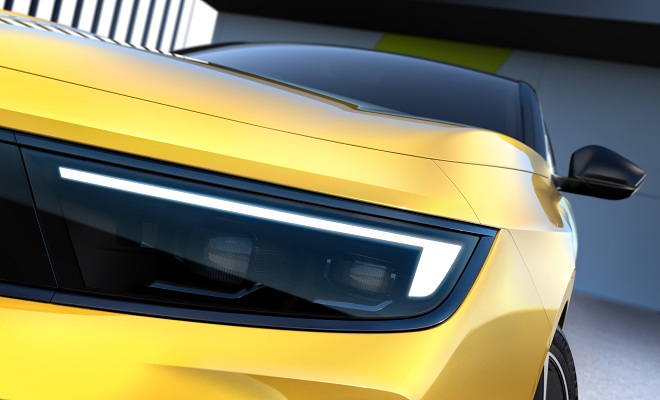
The other sketches give a more detailed impression of the new Skoda Fabia’s modern light units. The modules resemble blocks of ice in the sharply cut full-LED front headlights, which extend up to the Skoda grille. An L-shaped daytime running light module can be seen, as well. Skoda’s signature crystalline elements can also be found in the graphics of the distinctly flat rear lights that will be available in a full-LED version.

Even with the first generation, which was also presented as an estate in 2000, 1.79 million units were produced in approximately eight years, while the second generation unveiled at the Geneva Motor Show in 2007 found a total of 1,704,000 buyers. The third generation launched in 2014 continued the success story and became Skoda’s second most popular model after the Octavia, for example in 2019. The Czech manufacturer’s total production volume of more than 4.7 million Fabias to date is surpassed only by the Octavia.

Citroen Celebrates The 60th Anniversary Of AMI 6

Citroën is celebrating 60 years of the iconic AMI 6, which was first revealed on 24 April 1961. With its compact dimensions and spacious interior, the vehicle went on to be a great success for the brand with over one million models sold, half of which were the capacious estate version that arrived in 1964. At launch, the new AMI 6 completed Citroën’s vehicle line up, joining the iconic 2CV, ID and DS models. It presented a shape and style that many perceived as surprising in the automotive sector at the time.

The original design was 3.87m long and 1.52m wide, which later evolved to include rear sliding windows (from 1962), and an enhanced Club trim (from 1967). AMI 6 was originally priced from just 6,550 French Francs.

After designing Traction Avant, 2CV and DS with the Citroën design team, Flaminio Bertoni was asked to lend his talent to the design of a middle-range car, known as the ‘AM Project’. AMI 6 was the end result. Bertoni described the car to his friends and family as his masterpiece – as the model was developed without the creative input of anyone else, Bertoni was able to fully express himself with the design of the vehicle.

For AMI 6, Bertoni had the bold idea of inverting the rear window, meaning that it would remain clear when it rained. It also allowed for a well-proportioned boot with a traditional boot lid. The design also boasted spacious rear seats, whilst retaining compact dimensions. AMI 6 had a dual-cylinder 602cc engine, capable of 22hp at 4,500 rpm, the same as seen in the 2CV. In a first at the time, the car also had large rectangular headlights at the front. The model displayed a strong character, with a sloping bonnet, the pagoda-style roof and panels highlighted with clearly embossed lines – some onlookers even described the car as being in a “baroque style”.

The interior of AMI 6 was inspired directly by that of the iconic DS, which was the gold standard at the time. From its single-spoke steering wheel and stylish door handles, to its dashboard controls and seats, everything indicated that the model was a top-of-the-range Citroën. The on-road handling and compliant ride – inherited from the famous suspension setup of the 2CV – was received positively by customers and the press.

From its creation, in keeping with the Citroën spirit, AMI 6 has been regarded fondly as an original and innovative car. Its die-hard fans continue to maintain a particular interest in the Club versions of the model that came with four headlights and white trim. They were sold from September 1967. The iconic advertising slogan for AMI 6 was “the least expensive comfort mile in the world”.

The turning point for the model came in late 1964, with the arrival of a small estate version with a 320kg payload that was designed by Flaminio Bertoni’s assistant, Henri Dargent, as well as Robert Opron, who would become Bertoni’s successor after he passed away in 1964. The estate version would go on to boost sales and overtake the saloon in terms of popularity, something that has rarely happened in automotive history.

The design of the estate version offered a great amount of space for a leisure vehicle in this category, along with easy and convenient accessibility. It was a versatile model, providing just as much comfort to a family travelling on a trip, as it would for a professional using the car for business needs. In 1966, AMI 6 was named in France as the nation’s favourite car of the year.

Production of the saloon ended in March 1969, six months before production of the estate ended. The model made way for the new AMI 8 that featured a more conventional rear design. Eventually AMI 8 handed the baton on to Citroën Visa in 1978.

Hyundai Motor Showcases Heritage Series PONY As Icon of Design Innovation

Hyundai Motor Company has revealed the Heritage Series PONY, a retro-modern reconstruction of the original mass-produced PONY model that heralded the dawn of Korea’s automotive industry more than 45 years ago.

Featured at the recently opened Hyundai Motorstudio Busan in South Korea as part of its ‘Reflections in Motion’ exhibition, from April 8 through June 27, the Heritage Series PONY combines distinctive legacy design features with modern touches to offer a glimpse of the future.

Legendary automobile designer Giorgetto Giugiaro conceived the first generation of PONY. The PONY was an icon of personal mobility created by Hyundai during its mass production from 1975-1990. The hatchback car was the nation’s first mass-produced and exported vehicle.

More than 45 years later, the timeless value of the original PONY is visible in the new Heritage Series PONY, shown as part of the ‘Heritage Series – PONY’ section of the ‘Reflections in Motion’ exhibition.

The Heritage Series PONY’s exterior is marked by a matte, shimmering surface of silver throughout front to rear part of the vehicle, hatchback silhouette. Notable features include camera-based, fender-mounted exterior mirrors to the fore of the windshield, pixelated round headlights and U-shaped taillights made of LED lights. The pixelated round headlights and U-shaped taillights embody the company’s ‘Pixel Road Trip’ design approach that incorporates pixels and eight-bit graphics also utilized in the IONIQ 5 and 45 concept car.

The interior boasts a string of chic and modern accoutrements, including doors made of premium materials that exude a classic feel, a modern lighting system, a speed-gauging instrument panel made of lighted vacuum tubes as well as other stylishly retrofitted design elements.

It also contains future-oriented elements, not only retro style. The digital touch transmission, cradle space for mobile phone and voice-activated steering wheel conveys a modern sensibility that will catch people by surprise. 

In the trunk space, a last-mile mobility device, comprising a stainless steel case, is installed, representing Hyundai Motor’s human-centered design commitment. 

Polestar 1 Special Edition Unveiled

Polestar has revealed a special version of the Polestar 1 electric performance hybrid that will reach end of production later this year.

“It’s hard to believe that our beautiful halo car comes to the end of its production life later this year,” comments Thomas Ingenlath, Polestar CEO. “We pushed boundaries with this car, not only in terms of engineering but also in its design and execution. Polestar 1 set the tone for our brand and its genes are evident in Polestar 2 – as they will be in our future cars to come.”

A technical tour de force, the electric performance hybrid has a light-weight body made from carbon fibre reinforced polymer, twin rear electric motors with genuine torque vectoring and high-performance components like Akebono brakes and adjustable Öhlins dampers.

With a combined power output of 609 hp and 1,000 Nm of torque, and a purely electric driving range of 124 km (WLTP) – still the longest of any hybrid car in the world – Polestar 1 is a performance car that can be driven as a full EV in daily use, doubling as a great long-distance GT at any moment.

“This car was not designed to fit into a box,” elaborates Thomas Ingenlath. “We didn’t design it to compete with other cars, and neither did we design it to suit a specific target customer. Polestar 1 was about pushing our own boundaries, exploring a new era for Polestar and launching the brand with a strong statement – and it’s done a great job of capturing the hearts and minds of fans, press and the lucky customers who own one.”

A limited number of build slots remain for final 2021 production. The new special edition features a bespoke matte gold exterior paint job with matching callipers and black wheels. Inside, colour-matched gold stitching gives the interior an even more unique feel. A maximum of 25 will be built.

New Maserati Levante Hybrid

The Maserati Levante Hybrid is presented to the world in both a physical and digital World Premiere event. With the Brand’s first electrified SUV, Maserati takes a major step forward in its strategy for electrification, which began last year with the Ghibli Hybrid.

“Faster. Greener. Unique”, Levante Hybrid is faster than a diesel, more sustainable than diesel or gasoline, and unique in its specific characteristics.

The Maserati SUV, which has already made an impact in the history of the Brand with its record-breaking figures, now presses ahead into a future in which all new Trident models will be electrified.

Maserati is innovative by nature, and with Levante it pursues the philosophy behind its entry into the world of electrification: the aim of improving performance while staying true to the Brand’s values, delivering speed and agility while saving fuel and reinforcing the Trident’s dedication to driving pleasure and luxury. The result is a hybrid SUV that retains the distinctive roar of every Maserati.

Levante Hybrid combines the 4 cylinder, 2 litre engine with a 48 volt Hybrid system to recover energy during deceleration and braking. The hybrid car weighs less than the 6 cylinder engine equivalent (both diesel and gasoline), and above all has an even better weight distribution since the battery is placed in the rear without compromising the load capacity and optimally balancing the masses of the vehicle. All designed to make Levante Hybrid even more agile and fun to drive.

Thanks to a maximum power output of 330 hp and torque of 450 Nm delivered from just 2,250 rpm, the performance data of the new Levante Hybrid, only available with all-wheel drive, is impressive: a top speed of over 240 kmph and acceleration from 0 to 100 kmph in 6 seconds.

In terms of appearance, the Levante Hybrid launch version is characterised by a new metallic tri-coat colour called Azzurro Astro, available as part of the Brand’s customisation programme, Maserati Fuoriserie.

Other exterior and interior details contribute to this car’s immediately recognisable design: some are in blue, the shade chosen to identify hybrid cars, already used by Maserati on Ghibli Hybrid.

On the exterior, blue characterises the three iconic side air ducts, the brake calipers and the C-pillar logo. The same blue shade reappears inside the car, specifically on the embroidered seams of the seats.

Levante Hybrid is connected, thanks to the new Maserati Connect program. Having your Maserati connected at all times enables an eye to be kept on the car’s health, and Maserati Connect will alert the driver when a service is due, improving the customer care experience. With a Smartphone or Smartwatch, drivers can stay in contact with their car via the Maserati Connect App; this is also possible from home via their virtual personal assistant (Amazon Alexa & Google Assist).

Special guests at the digital premiere of Levante Hybrid were David Beckham, the new Maserati Brand Global Ambassador, and Dardust, with an exclusive soundtrack.

How Renault Developed Its Bold E-TECH Powertrains

Renault boasts over 10 years of success in developing and selling electric vehicles which, in combination with its experience in Formula One and its enthusiastic and passionate engineering, testing and control teams, has led to the development of the innovative E-TECH hybrid powertrains.

When Renault launched its first electric vehicle in 2010, it also set about gaining experience with electrified powertrains – to develop hybrid technology that would provide customers with a smooth transition towards going all-electric. To do this, the engineers needed to demonstrate that they had the ideal solution for meeting a particular set of specifications.

It needed to be accessible, light, suitable for vehicles of all sizes and offer a minimum all-electric range of 31 miles. In other words, it needed to deliver an effective hybrid solution for all. Introduced in 2020 across Clio, Captur and Megane models – and also featuring in the All-New Arkana – the story behind E-TECH’s development is both unusual and inspiring.

Nicolas Fremau, Renault’s Hybrid Architecture Expert, looks back at how the E-TECH story all started with a LEGO model.

Taking inspiration from a LEGO model
For Nicolas Fremau, it was important to consider the electric motor as the main component in the hybrid powertrain, enabling the car to start up purely in EV mode. This presented a challenge in working out what transmission should be used between the electric motor and petrol engine. With the need to keep things simple, compact and light, he imagined a radical solution. It was to use a clutchless transmission with gearbox synchronisers, utilising dog clutch technology normally found in motorsport.

“When I saw my son playing with LEGO Technic sprockets at home, I said to myself ‘well, it’s not so far from what I’d like to do’. So, I bought what I needed piece by piece to have all the assembly elements”, says Nicolas.

He used the Christmas holidays to make a model of the innovative transmission out of LEGO that he’d first imagined on paper. He explains: “I had the idea of doing this first to help me understand what to do. After about twenty hours of ‘work’ under the slightly surprised eye of my son, the model was born.”

This wasn’t a case of just fitting bricks together. Nicolas had to assemble the different axes and transmission rings, glue them and drill them to fit into a cradle, as well as motorise the whole system. It was a piece of engineering that allowed him to live-test the different modes of operation between the engines.

The process of trialing the possible modes of operation also allowed Nicolas to discover new ones that he hadn’t previously thought of in theoretical analysis. This strengthened his conviction that he was on the right track with this prototype – most likely the least expensive in Renault’s history – which is as surprising and unexpected as the technical solution was innovative.

It was a gamble presenting this model to the team, project manager Gérard Detourbet, who was the ‘father’ of the first Dacia range and knew all about simplified, low-cost solutions, and Director of Research Rémi Bastien.

“Renault has always been a very open company, especially when it comes to research. But the day I brought the model to the Gérard Detourbet and Rémi Bastien, I didn’t know how they would react. They walked around the model, they touched it and they felt that we had a real object. And I will always remember Gérard Detourbet’s remark: ‘If we can make it in LEGO, it will work!’”

This green light meant Nicolas and his colleagues had to make the commitment to bring this concept to life in a car that would be on sale in just 18 months. “It was a challenge for the entire research engineering department, with the mobilisation of the skills of people in Control, Mechanical Design etc.”, recalls Nicolas Fremau.

For the small team of enthusiasts committed to Renault’s electrified future, and this new hybrid powertrain as part of it, the hard work had just begun.

Revolution – Not Speculation, Polestar CEO Tells Industry

The electric vehicle revolution is in danger of becoming a plaything for speculators and risks losing its focus on making the most significant contribution to climate change since the car was invented, according to Thomas Ingenlath, Polestar CEO, the Swedish electric performance car brand.

Speaking at the Shanghai International Auto Show, Thomas Ingenlath welcomed the growing numbers of players in the electric vehicle industry, but urged them to get their priorities straight by putting climate change before pushing for a sky-high market valuation.

“What is at stake here is not how much financiers think a company is worth, but the chance to revolutionise the auto industry, turn it electric and at the same time make a huge contribution to protecting the climate. Put against these important themes, a market valuation is a very insubstantial and meaningless marker of success,” said Ingenlath.

Ingenlath welcomed growing investor interest in the EV sector, but cautioned that it is too easy to focus on paper value rather than industrial reality.

“The pathway to a cleaner planet passes through our design studios, our research departments, our factories, our supply chains and our boardrooms. We in the auto industry need to stay focused on what we are doing and why. The more speculative the EV sector becomes, the deeper our responsibility is to make sure that we stay grounded in the actual business of making the cars that will revolutionise the industry,” Ingenlath told his audience in Shanghai.

Polestar announced a week before the show that it had raised USD550m from a group of long-term financial investors, the first time external investors have backed Polestar’s cars, brand, industrial capability, financial ambitions and high growth potential.

Since launch three-and-a-half years ago, Polestar has developed its own high-quality manufacturing capability in China, built a global sales and distribution operation and successfully launched two vehicles, the Polestar 1 and Polestar 2, to positive customer feedback and media reviews.

“It frankly amazes me that there are companies out there that are worth billions of dollars and have never made a car. I would like to today state clearly that the electric mobility revolution needs to be grounded in reality, not dreams,” Ingenlath continued.

The market for electric cars is growing strongly, with consumers increasingly prepared to combine electric mobility with their environmental aspirations. At the same time, the technologies behind electric cars are advancing and becoming more economical.

“These powerful trends mean that the automotive industry is now in a position to make the most significant contribution to positive climate change in history,” continued  Ingenlath.

“Of course. we want to talk about growth. But by that I do not mean growth in investment levels, valuations or price-to-earnings multiples. I mean real growth. Growth in consumers switching to EVs and growth in harmful emissions being eradicated,” Ingenlath concluded.

Hyundai Motor To Unveil The All-New Kona N at ‘N Day’ Digital Event

Hyundai Motor Company will unveil the all-new Kona N at it’s first-ever Hyundai N Day, a digital showcase for its high-performance N Brand, on April 27, 2021.

Kona N is not only the latest addition to Hyundai’s growing high-performance N line-up but is also the first N model with an SUV body type. With a powerful combination of versatility, spirited acceleration, agility and racetrack capability, Kona N stands to change what people expect from an SUV. The all-new Kona N will be presented by Albert Biermann, President and Head of R&D Division at Hyundai Motor Group.

The company will use N Day as a platform for sharing the N brand high-performance philosophy, introduce the new brand claim, share news about upcoming N models, and talk about its future e-performance direction. This part will be presented by Thomas Schemera, Executive Vice President and Head of Customer Experience Division.

“We are very excited to unveil the KONA N, a true hot SUV with all the driving fun N offers,” Till Wartenberg, Vice President and Head of N Brand Management & Motorsport Sub-Division at Hyundai Motor Company said. “With our first ever N Day, we aim to continue the story of N and share our vision with this digital format to further engage with our enthusiasts.”

Hector-2021 Now Gets Climate Control Via Apple Watch

Hector now gets climate control via Apple watch as well as Android and IOS Phone app, allowing users to set car temperature remotely to a preferred temperature.

In line with MG’s commitment to be at the forefront of the Auto-Tech Space, Hector 2021 was introduced with an upgraded i-SMART with Hinglish Voice commands. MG Hector 2021 is equipped with engine start alarm and an in-car voice alert for critical tyre pressure. The internet SUV can now also understand & respond to 35+ Hinglish commands that control various in-car functions such as Sunroof (“Khul Ja Sim Sim”), FM (“FM Chalao”), AC (“Temperature Kam kar do”) & many more.

MG Hector 2021 comes with 60+ Connected car features with newly added features like i-SMART app on Apple watch, voice search for songs in Gaana app, Wi-Fi connectivity, Weather forecast by Accuweather, & many more.

MG Hector continues to come with 25+ safety and security features as standard including Electronic Stability Program, Traction Control, Hill Hold Control, Rear Wiper & Washer and Rear Defogger.

Continental GT Speed Convertible Breaks Cover

Bentley Motors introduced a new flagship version of the ultimate, open-top Grand Tourer – the Continental GT Speed Convertible. The performance-orientated Speed model is the most powerful, driver-focused interpretation of the benchmark convertible Bentley Grand Tourer.

The third generation Continental GT Speed Convertible features an enhanced version of Bentley’s renowned 6.0-litre W12 TSI engine, delivering an outstanding and increased 650 bhp (659 PS), 0-60 mph in 3.6 seconds (0‑100 kmph in 3.7 seconds) and a top speed of 208 mph (335 kmph). The new open-air Grand Tourer joins its coupe sibling – the Continental GT Speed, unveiled last month – at the pinnacle of the Continental family.

Designed, handcrafted and engineered in Bentley’s carbon neutral luxury automotive factory, the new GT Speed Convertible offers enhanced chassis technology, including All-Wheel Steering, an electronic rear differential and the option of carbon ceramic brakes. This helps deliver superior vehicle agility and confidence without impacting on the Continental GT Convertible’s acclaimed ride comfort.

The Continental GT Speed Convertible is fitted with a tailored, ‘Z-fold’ roof that can be deployed or stowed in just 19 seconds, transforming it from a luxurious coupe to an open-top Grand Tourer at the touch of a button.

Distinguishing this Grand Tourer as a pinnacle performance model, the Continental GT Speed Convertible offers unique exterior and interior detailing, including Speed sport sills, Dark Tint grilles and Speed badging. Customers can also choose from three finishes to the unique 22” forged Speed wheels.

Inside a luxuriously appointed cabin, the new Continental GT Convertible model includes Speed badging on the passenger fascia, an Alcantara steering wheel and a unique color split trim in Hide and Alcantara.

Chris Craft, Member of the Board for Sales and Marketing at Bentley Motors, comments: “The new Speed is the most driver-focused Continental GT Convertible available and unique in its ability to offer extremely refined, all-season open-top Grand Touring with the added edge of astonishing performance and dynamism.

“Combined with exquisite, handcrafted interior details, the Continental GT Speed Convertible exemplifies all Bentley knows about creating the world’s most stylish and elegant cars for roof-down motoring.”

New Technologically Advanced Chassis

Cutting-edge chassis technology gives the third generation GT Speed Convertible unrivalled control and accuracy, and inspires confidence even further.

Maintaining Bentley’s philosophy of the vehicle feeling progressive and secure, yet still be dynamic, this approach rewards drivers of all abilities. To achieve this philosophy in BENTLEY and COMFORT mode, overall grip is balanced between the front and rear wheels, in SPORT this mode was calibrated with a more rear-biased torque–split in all driving scenarios.

Improved cornering dynamics and the extra grip provided by the new systems allows the driver to exit any corner with an increased level of precision and confidence. In turn, the vehicle is able to extract the maximum performance from the available traction to deliver stunning acceleration and composure from the apex. In SPORT mode, the traction management system sends a greater proportion of power to the rear axle to allow for even greater on-throttle control of cornering line.

Working alongside these systems are the key chassis technologies that deliver body control and ride comfort with no compromise to one another – namely Bentley’s three-chamber active air suspension with adaptive damping, and Bentley Dynamic Ride – the 48V active anti-roll control system that Bentley pioneered on the Bentayga and third-generation Continental GT.

This innovative system features powerful electric motors within each anti-roll bar to resist body roll. In their firmest setting, the motors can deliver 959 lb.ft (1300 Nm) in 0.3 secs to counteract cornering forces and keep the body level.

A Carbon Ceramic Brake system was also introduced as an option on the Speed. Using the high-performance material reduces the brake force required for high-speed deceleration and lowers the risk of brake fade. Featuring Active All-Wheel Drive, the traction control and torque distribution was recalibrated in all driver modes to provide a noticeable character shift relative to the standard Continental GT convertible.

Effortless Performance

The new Continental GT Speed Convertible combines high-performance with elegance and luxury. Power is supplied by an uprated version of Bentley’s imperious W12 TSI engine, delivering an outstanding 650 bhp (659 PS) – an increase of 23 bhp (24 PS) – and a remarkable 664 lb.ft (900 Nm) of torque. Such power results in a 0-60 mph in 3.6 seconds (0-100 km/h time of 3.7 seconds) and a top speed of 208 mph (335 kmph).

Hand-built in Crewe, the 6.0-litre is the most advanced 12-cylinder engine in the world. Both engine and transmission were recalibrated for the Speed to suit the car’s powerful credentials.

This is most noticeable in SPORT driving mode, where the twin-turbocharged W12 was tuned to keep the engine in the power band longer by upshifting later, or downshifting earlier. This creates a more eager response to driver requirements.

The dual-clutch, eight-speed transmission shift is twice as fast in SPORT mode as in the standard W12 model, befitting a model that takes its place as the performance pinnacle of the Continental GT range. This combines with a greater exhaust character during start up and gear downshifts.

Muscular Exterior Design – Unique Speed Detailing

A statement of true sporting purpose, the new Continental GT Speed Convertible effortlessly blends style with performance intent. The bold presence of the world’s finest open-top Grand Tourer was enhanced even further with unique detailing.

The Speed’s tailored convertible roof can be deployed or stowed in just 19 seconds, with the car travelling at speeds of up to 30 mph (50 km/h).

Speed models add a Dark Tint radiator grille and lower bumper grille, combined with Speed sports sills, a Dark Tint radiator matrix and discreet Speed badging on the front fender.

Unique, 22” Speed wheels are offered in matching Dark Tint, with the choice of Bright Silver or Black Gloss finish. A Jewel Fuel and Oil Filler Cap, plus illuminated BENTLEY display to the outer treadplate are a nod to the Speed’s performance credentials.

Seven exterior roof colors are available, including a contemporary interpretation of traditional British tweed. Black, Blue, Claret and Grey are among the other options. Furthermore, eight interior roof liner finishes are offered, ranging from New Red to Magnolia.

The unique Z-fold convertible roof system is the most advanced of its kind. The roof, with its sealing system improvements and acoustic treatments, contributes to a three-decibel reduction in overall noise levels compared to its predecessor at typical cruising speeds. An entirely new combination of roof insulating materials and operating mechanism, combined with sealing system improvements and acoustic treatments, create a Convertible Grand Tourer that is as quiet as the previous generation Continental GT Coupe.

Exclusive Handcrafted Cabin

The Continental GT Speed Convertible’s luxurious interior offers unrivalled Grand Touring refinement blended with unique Speed detailing, fully revealed to the world when the roof is lowered.

An Alcantara steering wheel and Speed insignia on the passenger fascia are complemented by a unique color split trim in Hide and Alcantara. Customers can further choose from 15 main and 11 secondary hide choices.

Diamond-in-diamond quilting and Speed embroidered headrests hint at the performance characteristics of the most potent Continental GT Convertible, while mono-tone color split with Alcantara/Leather is a no-cost option.

Piano Black veneer is standard in the Speed, with Crown Cut, Dark Stain Burr Walnut and Dark Fiddleback Eucalyptus offered as no-cost options. Open-pore Dark Stain Burr Walnut veneer, Crown Cut Walnut and Koa are also available.

Sports pedals and Speed treadplate plaques are fitted as standard, while customers can choose the optional Dark Tint Engine Turned Aluminum console, or a leather alternative to the Speed color split trim and the Speed Colour Specification.

A neck warmer (which is both warmer and quieter than in the previous generation model), is seamlessly integrated into the heated and vented Comfort Seats, optimizing efficiency and airflow around the electrically adjustable headrests. The styling highlight of the new neck warmer is a chrome center vane that stretches the full width of the duct, echoing Bentley’s famous ‘bullseye’ vents. Combined with a heated steering wheel and heated armrests, these sophisticated comfort features create a luxurious driving experience in all environments.