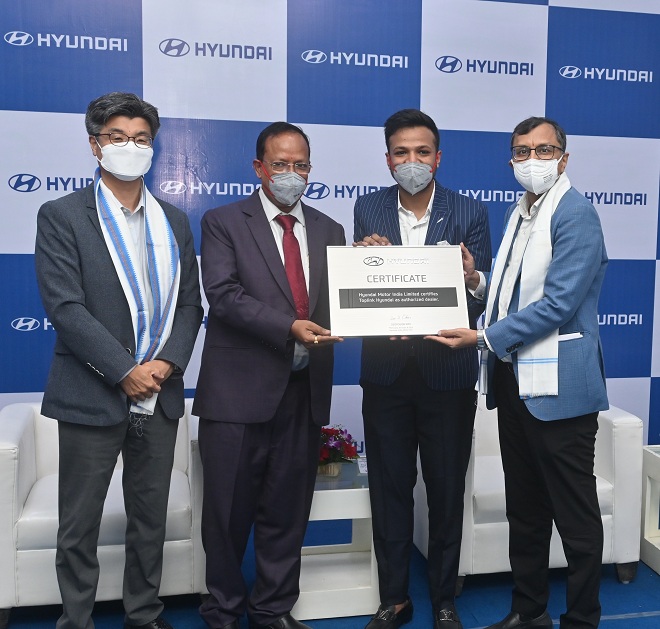
L-R Mr. DH Park, Executive Director – Sales & Marketing, Mr. Kamal Singhania & Mr. Pulak Singhania, Dealer Principal, Mr. Tarun Garg, Director – Sales, Marketing & Service, at the inauguration of Toplink Hyundai, Howrah
Hyundai Motor India Ltd. (HMIL) today inaugurated a new Dealership ‘Toplink’ situated at Howrah, West Bengal. Promoted by Mr. Pulak Singhania, TopLink Hyundai is a State-of-the-Art Dealership spread across a total built up area of 18 200 sq.ft. (4 200 sq.ft. showroom and 14 000 sq.ft. workshop).
Commenting on the opening of the new dealership, Mr Tarun Garg, Director (Sales, Marketing & Service), Hyundai Motor India Ltd., said, “West Bengal is a key market for Hyundai. We are glad to inaugurate a new Hyundai Dealership – ‘Toplink Hyundai’ in Howrah. We believe ‘Toplink Hyundai’ will further strengthen our presence to meet the growing demand for Hyundai products. Being a State-of-the-Art dealership, it will provide prompt and efficient sales & service to our valued customers adding Quality Time for a happy life”.
Hyundai Motor India Ltd. has a wide sales and service network in the country with 533 dealers and 1 323 service outlets.
Climate change is real and so is the need to reverse it. This is not news to any of us. And I know we all want to make a difference. But the question is how do we reverse climate change and also advance our development as a nation, together.
80% of the vehicles sold in India today are two wheelers and despite that only 12% of India owns a two wheeler. These vehicles consume 12,000 crore litres of fuel every year and are responsible for 40% of air pollution.
Clearly, this penetration is going to grow exponentially in the coming years and we simply cannot allow that to happen. So moving to EVs is no longer optional, it’s crucial.
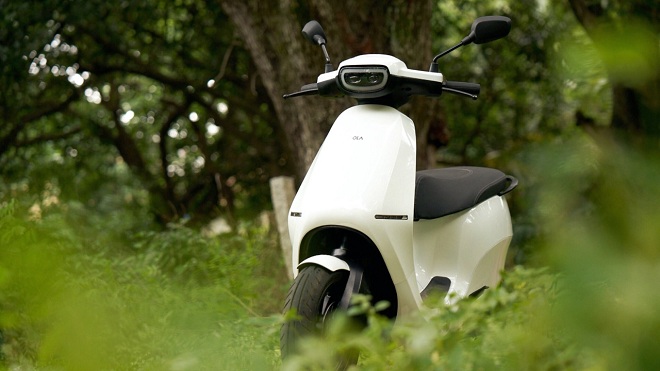
But a shift like this requires innovation and manufacturing at a global scale and quality. That’s what we have been upto with the Ola Futurefactory – the largest 2W factory in the world – and that’s what we are introducing in the market today. It’s a revolution on two wheels. It’s called the Ola S1 and it is, quite simply, the best scooter ever made.
Our goal has been to build products which are both sustainable and revolutionary and with the S1, we’ve done just that. It has the best design, best performance and best technology.
Design: Available in 10 stunning colours in satin, matte and glossy finishes, Ola S1 comes with iconic twin headlamps, ergonomic and fluidic body, superior alloy wheels, sculpted seating, and the largest boot space that fits two helmets comfortably.
Performance: It is setting new industry benchmarks with a range of 181 Kms, acceleration of 0-40 kmph in 3.0 seconds, and a top speed of 115 kmph. It has a 3.97kWh of battery capacity, more than 30% higher than the next closest EV, and the most powerful motors in the category with 8.5 KW of peak power.
Ola S1 also comes with a proprietary Battery Management System (BMS) which works actively to monitor the battery for optimal durability, performance, range and safety.
Technology: S1 brings technology that is several generations ahead of anything on the market. It has no physical key and pairs with your phone with its “digital key” feature. This enables it to know when you’re near it and unlock automatically. It will also lock itself as you move away. It has a multi-microphone array, AI speech recognition algorithms built in-house, and one of the sharpest, brightest 7-inch touchscreen displays.
With our homegrown MoveOS, customers can not only alter the look & feel of the display but also how the scooter sounds. It will have four moods at launch – Bolt, Care, Vintage and Wonder, and will offer a customised vehicle sound experience that matches your mood of the day. It will also come with three driving modes – Normal, Sport and Hyper for you to personalise how you ride.
We have introduced a lot of safety features which are rare in the two wheeler segment. Ola S1 has an anti theft alert system, geo fencing, and a battery which is flame retardant and water & dust resistant. It also has front and rear disc brakes and ‘Hill Hold’ feature which makes riding in traffic and navigating inclines easy.
The 110/70 R12 tyres, rear mono-shock suspension and front single fork suspension leads to much superior road grip and riding experience. It has a cruise mode that makes riding comfortable and convenient and a reverse mode that makes it easy to park and exit tight spaces.
With a robust grab rail for safety, a side step and sculpted seating, pillion riders too will love how comfortable their ride will be. The scooters also come with voice recognition that enables you to complete your key tasks quickly without having to bother with navigating the menu.
Ola S1 also solves one of the biggest challenges which has hampered the growth of the EV sector in India has been the upfront cost. Ola S1 comes at a revolutionary price of Rs 99,999 onwards.
In states with active subsidy grants, Ola S1 will be much more affordable than many petrol scooters. For instance, after state subsidy in Delhi, the S1 would cost just Rs 85,009 whereas in Gujarat it would be only Rs 79,000. We have also tied up with banks and financial institutes for an EMI plan starting at Rs 2,999.
The first phase of Futurefactory is near completion and our teams are busy perfecting each and every feature for you. We will officially open Ola S1 for purchase from 8th September 2021, and will start delivering across 1000 cities and towns in October. Till then, Ola S1 is available for reservation at just INR 499.
We are taking this moment to announce ‘Mission Electric’, a pledge that no petrol two wheeler will be sold in India after 2025. This is a mission that we are putting forward to the industry and to the consumers to reject petrol and fully commit to electric. It’s time for India to lead the way in electrification and build technologies of the future, here in India for the entire world!.
This is certainly not going to be easy but together we can and we must. The climate needs it, the world wants it and our country definitely deserves it.
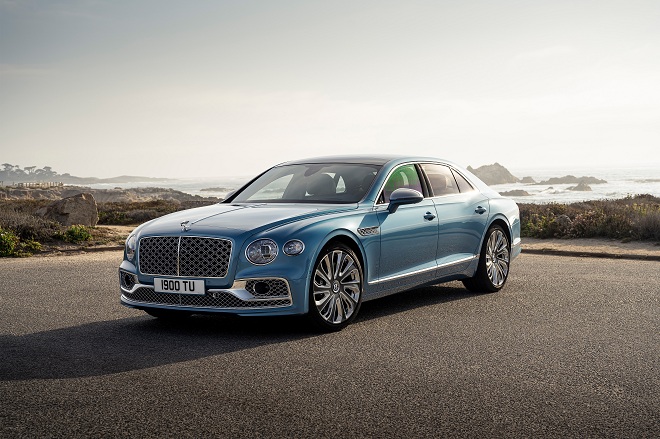
Bentley Mulliner today announces the new Flying Spur Mulliner – the ultimate in four-door luxury Grand Touring and Mulliner’s first electrified Bentley. Whether enjoying the technically advanced V6 Hybrid powertrain, the emotional V8 or endless waves of torque from the W12, customers will still benefit from the exquisite detailing offered by the latest Mulliner product.
Revealed at the prestigious Monterey Car Week in California, the elegantly appointed sedan sits at the pinnacle of the Flying Spur family, combining the very finest in modern craftsmanship and breath-taking luxury.
The most luxurious Flying Spur to date has been created and developed by Bentley Mulliner and designed, engineered and handcrafted in Great Britain. Taking its place as the flagship of the Bentley range, the new Flying Spur Mulliner will appeal to customers who desire an even greater focus on elegant details.
Beautifully appointed detailing includes exclusive Mulliner 22-inch wheels, in a grey painted and polished finish, with self-levelling wheel caps that remain upright as the wheels rotate. A “Double Diamond” front grille and chrome front lower grille are matched by bespoke Mulliner branded wing vents and Satin Silver painted mirror caps. The iconic Bentley Flying B is electronically deployed and illuminated, while the Flying Spur Mulliner also features jewel fuel and oil caps.
Mulliner illuminated outer treadplates and deep-pile Mulliner overmats welcome passengers inside the ultimate Flying Spur cabin, which offers a Mulliner curation of eight custom-made, three-colour combinations. The sumptuously trimmed cockpit is complemented by accent colour piping and unique Mulliner embroidery to the hand-stitched seats.
An example of one of the curated interiors – Ascot – is a combination of Imperial Blue leather to the instrument panel, door trims and headlining while a light tan leather called Camel, emphasises the style of the seats. White micro-piping, embroidery and accent line combines a third colour into the unique Mulliner interior.
Further combinations such as Flare and Sirius add bolder combinations including Hotspur and Beluga, and Linen and Brunel both with a silver accent.
The Mulliner Driving Specification is fitted as standard, bringing the “Diamond-in-Diamond” quilting to the seats, and three-dimensional leather to the doors. Contrast seat piping matches the accent that surrounds the occupants from the centre console, around the instrument panel and finishes beneath the door waistrail, highlighting the Bentley B chrome inlays.
The luxurious Diamond-in-Diamond interior quilting involves an embroidery process that alone took 18 months to develop. Each diamond contains exactly 712 individual stitches – each one aligned to the exact centre of the diamond it creates.
Modern craftsmanship and breath-taking luxury combine in the diamond milled technical finish that is applied to the centre and rear consoles. The centrepiece feature on the dashboard alongside chrome bullseye vents is a stunning, brushed silver Mulliner clock.
The classic Bentley theme continues in the LED driver’s instrument panel, with stylish new and exclusive Mulliner graphics. The now famous Bentley Rotating Display, sports pedals, heated duo-tone 3-spoke steering wheel and panoramic sunroof further add to the luxurious ambience.
Unique Mulliner electrically-operated picnic tables are mounted to the rear of the front seats and can be deployed with a single press of a button. The veneered tables, which feature unique overlay, lower and self-level to reveal a leather-trimmed surface with a recess for a pen or stylus. Holding the button down returns the table gracefully to its home position.
Flying Spur Mulliner customers receive leather-bound keys in a unique, Mulliner-branded handcrafted presentation box, which matches the three-colour cabin configuration of their car. The two keys are provided in similarly colour-matched cases with contrast stitching.
The Flying Spur Mulliner is available with Bentley’s V8 and W12 powertrains, as well as the new V6 Hybrid. When equipped with Bentley’s 6.0-litre, twin-turbocharged W12, the Flying Spur Mulliner accelerates from 0-60 mph in 3.7 seconds (0-100 kmph in 3.8 seconds) and is capable of a top speed of 207 mph (333 kmph). The new generation 4.0-litre, twin-turbocharged V8 delivers a top speed of 198 mph (318 kmph) and 0-60 mph in 4.0 seconds (0-100 kmph in 4.1 seconds). The new V6 Hybrid accelerates from 0-60 mph in 4.1 seconds (0-100 kmph in 4.3 seconds) with a top speed of 177 mph (285 kmph).
Bentley Mulliner Bentley Mulliner is Bentley’s highly-acclaimed, bespoke commissioning division and the oldest coachbuilder in the world. Synonymous with luxury, the new Flying Spur Mulliner is just the third member of the newly-created Bentley Mulliner Collections family alongside the sublime Continental GT and Continental GT Convertible.
In the world of Mulliner, anything is possible. Established to respond to the requirements of Bentley’s most discerning customers, the bespoke division is renowned throughout the automotive world for crafting some of the most individual Bentleys ever created.
An experienced team, supported by in-house engineers and designers at Bentley headquarters in Crewe, prides itself on a long history of fulfilling the desires and demands of every Mulliner customer.
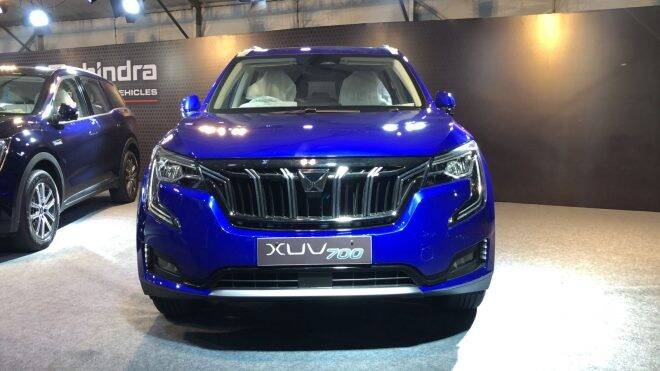
Mahindra & Mahindra Ltd., today took the wraps off the all-new XUV700 (pronounced as XUV, 7 double ‘Oh’), marking a brand-new era for the company. The XUV700 comes with impressive looks, classy interiors and commendable ride comfort. Bookings will begin before the festive season. The XUV700 will come in variants that include diesel and gasoline, manual and automatic options and with 5 and 7-Seater capacity. It will also be available in an optional All-Wheel-Drive (AWD) specification.
Speaking about Mahindra SUV focus and the unveil of XUV700, Dr. Anish Shah, MD & CEO, M&M Ltd. said, “It is sheer passion that drives our people to create advanced, adventure-ready vehicles, with an unmissable presence. We are ready to lead the core SUV segment with nine new exciting SUVs planned for launch by 2026. And our most ambitious addition, the XUV700, is throbbing and pulsating with technology, power and intelligence to let people explore the impossible.”
Rajesh Jejurikar, Executive Director, Auto & Farm Sectors, M&M Ltd, said, “Every once in a while, an automobile comes to change the future course of its manufacturer and in the process, it transforms the segment itself. The XUV700 marks the beginning of a whole new Mahindra and a new era and for the SUV segment in India. We have raised the bar on best-in-class features, technology and design. Our customers are in for a longstanding treat with the innovative new XUV700.”
Variant and features are as follows:
MX Series
AdrenoX | AX3
AdrenoX | AX5
AdrenoX | AX7
• 20.32 cm (8“) Infotainment • 17.78 cm (7“) Cluster • Android Auto • Smart Door handles • LED Taillamp • Steering mounted Switches • Power Adjust ORVM with Turn Indicator • Day Night IRVM • R17 Steel Wheels
Offered over MX • Dual HD 26.03 cm (10.25“) Infotainment and 26.03 cm (10.25“) Digital Cluster • Amazon Alexa Built-In • Wireless Android Auto and Apple Car Play • AdrenoX Connect with 60+ Connected features • 6 Speakers and Sound Staging • LED DRL and Front fog Lamps • R17 Steel Wheels with covers
Offered over AX5 • Advanced Driver Assistance System • Driver Drowsiness Alert • Smart Clean Zone • Dual Zone Climate Control • R18 Diamond Cut Alloy • Leatherette Seat • Leather Steering & Gear lever • 6-Way Power seat with Memory • Side Airbags
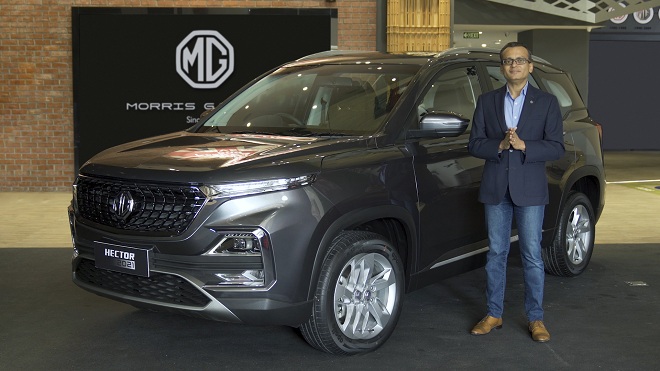
To mark the second anniversary of Hector, MG Motor India today added another variant to its line-up MG Hector Shine. Available in Petrol MT, Diesel MT, and Petrol CVT, the Hector Shine starts at Rs 14.51 lakhs (ex-showroom, New Delhi).
The new trim has an all-new electric sunroof, 17-inch alloy wheels and a 26.4cm HD touchscreen AVN System with Apple CarPlay and Android Auto. Additionally, Shine CVT is equipped with an electric parking brake, push-button start/stop and smart entry, chrome door handles and telescopic steering.
Commenting on the new trim, Gaurav Gupta, Chief Commercial Officer, MG Motor India, said, “Hector’s second anniversary in India is a perfect occasion to further strengthen it’s portfolio. The addition of the Shine variant braces Hector family range which now comprises five variants and gives customers the power of choice. This is an opportunity to welcome new members to the MG family.”
Further, MG is also offering a curated accessories package including items of high aesthetic and functional value like leatherette seat covers and steering wheel cover, window sunshades, air purifier, wireless phone charging, and 3D cabin mats at an attractive price offering. The car will also be backed by MG Shield which is a 5-5-5 offering, including five years of unlimited-kilometre warranty, five years of roadside assistance and five labour-free services.
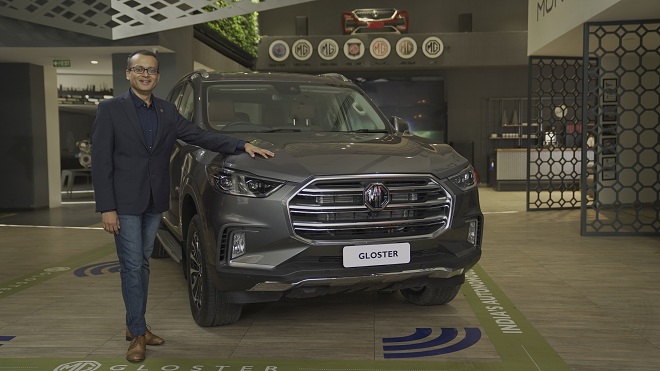
MG Motor India today introduced the new seven-seat version of the Gloster Savvy. An addition to the range of India’s first Autonomous (Level 1) Premium SUV, the new version of MG Gloster Savvy Trim will strengthen the Gloster range and provide customers with the power to choose from a broader range of MG’s top-end SUVs.
Priced at Rs 37.28 lakh (ex-showroom New Delhi), the new Gloster Savvy comes in a seven-seater (2+3+2) configuration. It features multiple driving modes enabled with the Advanced Driver Assistance System (ADAS) and a BorgWarner Transfer case aiding its off-roading abilities. It also has the i-SMART technology, 64-colour ambient lighting, three-zone climate control, a panoramic sunroof, driver seat massager, and several other exclusive features.
Speaking about the launch, Gaurav Gupta, Chief Commercial Officer, MG Motor India, said, “We are introducing the Gloster Savvy with a 7-seater configuration in response to requests from our customers. With this addition to the existing Gloster Savvy with 6-seater configuration, we are offering our customers the power to choose a vehicle as per their needs and preferences.”
Under the hood, the seven-seater MG Gloster Savvy, like its six-seat counterpart, features a 2.0 Twin Turbo Diesel Engine generating 200 PS power and 480 Nm of peak torque.
The premium SUV also comes with a unique, industry-first MY MG Shield ownership package, which has revolutionised and personalised the car ownership experience with flexible after-sales needs of customers. Besides providing customers with a choice to customise additional services and maintenance packages from 200+ options, MY MG Shield’s standard 3-3-3 package includes a warranty of three years/100,000 kilometers, three years of roadside assistance and three labour-free periodic services.
The Concours of Elegance – famed for gathering together the rarest cars ever created – will showcase some of the world’s most extraordinary Bentleys at Hampton Court Palace in this year’s ‘Main Concours’ display. Taking place from 3-5 September, the event is renowned as one of the top three concours d’elegance events in the world for the quality of cars it attracts.
Since it started manufacturing cars in 1919, Bentley has established itself as a pinnacle of both luxury and performance. Built upon the company’s racing pedigree – five victories at Le Mans in the 1920s, plus a sixth in 2003 – Bentley is known across the globe for creating cars with an unrivalled blend of speed and the finest craftsmanship and materials.
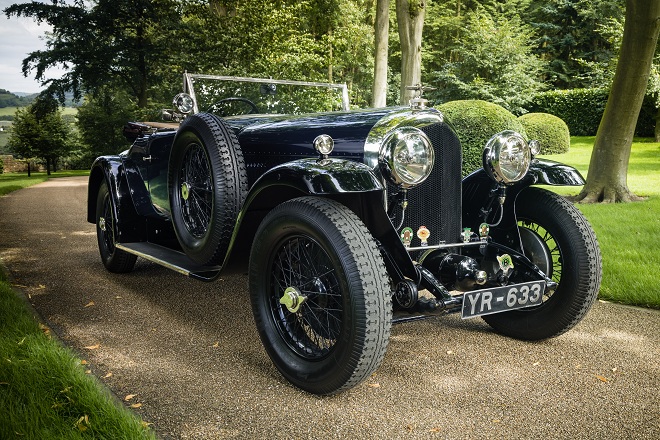
Among the earliest Bentleys on display is ‘YB 633’, a very original 1926 6 ½-litre Sports Tourer. The car is reputed to be the last 11 foot chassis with the original one-off aluminium body still on the car – a four-light drop head coupe with a dickey seat and wind-up windows, referred to as a “Simplex Coupe” by Coachbuilder H J Mulliner. In Bentley factory records the car is referred to as a “3/4 folding head coupe”. The car also features its originally installed engine.
Alongside it, is ‘YW 5758’ a 1928 Bentley 4 ½-litre Le Mans Team Car – the most decorated original-bodied car in existence – still featuring its original chassis number, engine number, body number and body. The car’s impeccable racing history includes second place in class at the 1928 Newtownards TT, fifth at the inaugural 1929 Irish International Grand Prix at Phoenix Park, and class winner and third overall, at the 1929 ‘Six Hour Race’ at Brooklands. The car also placed fourth at Le Mans in 1929. The car continued its successes into the 1930s, and is still used regularly at historic meetings today.
Also on display is another Bentley 4 ½-litre with a different kind of history. ‘GC 6002’ was originally delivered via Jack Olding & Co to a Mr Arthur Grout in 1930. Arthur was the landlord of The Southampton Arms which was at the centre of the ‘race track wars’ of the 1920s – recently made famous by the Netflix series ‘Peaky Blinders’. The car is a sports four seater by Vanden Plas with fully valanced wings finished in green. Unfortunately for Arthur, the car’s commanding looks would do nothing to ward off the creditors – his failure to keep up repayments meant the vehicle was returned to the factory in 1935, as denoted on the chassis record. The car has never been rebuilt, only maintained, and is in regular use today, having covered less than 100,000 miles in more than nine decades.
Also gracing the pathways of Hampton Court is an early example of a ‘blown’ Bentley – a 1931 Bentley 4 ½-litre supercharged. The addition of the supercharger was facilitated by then racing driver Tim Birkin who, in 1929, suddenly found himself hopelessly outclassed by the supercharged Mercedes cars that were running away on the straights. Birkin approached engineer, Charles Amherst Villiers, who had already made his name with Brescia Bugattis and the supercharged Villiers Vauxhall Special, and commissioned him to design a super-charger installation for the 4½-litre Bentley. Villiers also reworked the engine to cope with the strains imposed by the supercharger. The example on display at the Concours retains its original four-seater open sports body by Vanden Plas, and its original colour scheme of black with fine lining in red.
Rounding out the selection of 1930s Bentleys is ‘WD 4499’ which is a 1932 Bentley 8-litre, and the 64th of the 100 8-litre Bentleys built in 1930–31. The 8-litre was designed as a fast, powerful chassis capable of carrying heavy closed coachwork with sports car levels of performance. Indeed when the 8-litre was introduced at the 1930 Olympia Show it was the fastest production chassis in the world, capable of 103mph at 3,500rpm. This particular car is a long wheelbase model, with coachwork by H J Mulliner finished in black and green.
These are just some of the beautiful Bentleys that will be on display, with many more examples forming a line-up with the Bentley Drivers’ Club. This display is part of the additional content that makes up the near-1,000 cars on display during the Concours of Elegance, also including a collection of 95 British cars gathered to celebrate Her Majesty The Queen’s 95th birthday, and a 30UNDER30 Concours aimed at inspiring the next-generation of classic car enthusiast.
Special features for 2021 will also gather together a line-up of Future Classics, representing the potential concours d’elegance stars of the next 50 years, a celebration of 60 years of the Jaguar E-type and a Veteran Car Run display, gathering the pre-1905 motoring pioneers that each year make their pilgrimage from London to Brighton.
Away from the automotive displays, Concours of Elegance remains an occasion of pure luxury, with champagne provided by Charles Heidsieck, picnics by Fortnum & Mason, live stage interviews with Chubb Insurance, hosted by Jodie Kidd, and a collection of art, jewellery and fashion displays. Presenting Partner, A. Lange & Söhne, recently confirmed to support the event for a further three years, will continue to showcase some of its most intricate timepieces. New long-term partners joining the event in 2021 include The Peninsula London Hotel and Residences, Gooding & Co and McLaren.
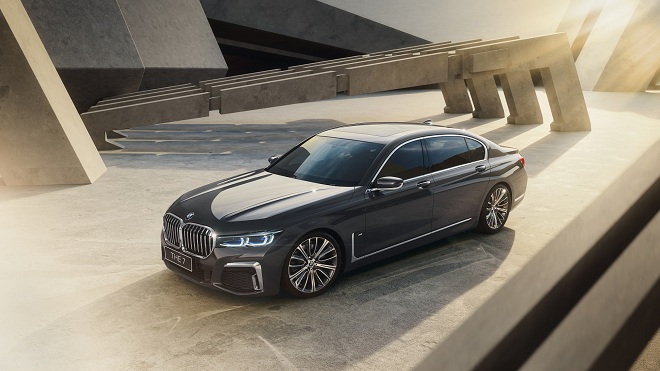
BMW India has launched the BMW Individual 740Li M Sport Edition. BMW’s flagship model is presented in a new avatar with exclusive personalization, iconic M performance and handcrafted precision. Locally produced at BMW Group Plant Chennai, limited units of the Individual Edition can now be booked at shop.bmw.in.
Mr. Vikram Pawah, President, BMW Group India said, “BMW Individual is now being locally produced in India at Plant Chennai for the first time. It represents bespoke personalization and gives a new dimension to the BMW 7 Series, an epitome of exclusivity and performance. This winning combination takes the story of contemporary luxury forward into the future by allowing customers to express their personality. The new BMW Individual 740Li M Sport Edition is an exclusive limited edition that achieves a peerless symbiosis of performance and individualization.”
Limited units of the BMW Individual 740Li M Sport Edition are available at INR 1,42,90,000.
The BMW Individual 740Li M Sport Edition is available in two exciting BMW Individual metallic colours – Tanzanite Blue and Dravit Grey with exclusive leather ‘Nappa’ with extended contents/stitching – Mocha and Black combination upholstery.
The Design Pure Excellence interior package sets brilliant accents that underline the contemporary, luxurious and aesthetic character with unique craftsmanship. M Sport exterior and powerful engine produce an adrenalin-rich combination to set the hearts of motorsport fans pounding.
The design of the BMW 7 Series is clearer, more modern and more emotional. Visually, the 7 makes a clear statement with an imposing presence, created by the distinctive front and rear design. The most striking feature is the BMW Individual special paint metallic finish in Tanzanite Blue and Dravit Grey. Adaptive LED headlights with BMW Laserlight technology enhance the commanding look. Dynamic character is emphasized by aerodynamically optimized bodywork elements of the M Sport package as standard. BMW Laserlight makes a striking impression and distributes light perfectly. An exclusive optional feature is the BMW Individual 20” light alloy wheels V-spoke style 628, painted in bicolour and 20” M light alloy wheels Star-spoke style 817 M.
Interior of the BMW Individual 740Li M Sport Edition offers unique and bespoke personalisation. Customizable embroidery on specially crafted BMW Individual Alcantara headrest and backrest cushions offer customers the chance to express their personality integrating harmoniously with the sophisticated polish of BMW Individual interior trim badging on the dashboard and centre console. The ‘BMW Individual’ emblem on the interior trims is a perfect fit with the design, signalling its special roots. The BMW Individual Alcantara headliner in Ivory White and Canberra Beige highlights the special quality that can be seen and felt. Interior trim offers a refined premium option with exclusive Nappa leather upholstery with extended contents and stitching. The new fine-wood trim with wooden inlays adds a touch to luxury to the roof handles clasp, rear seats belt clasp and rear-centre armrest cup holder and provides premium experience of the highest order. Generous levels of space, ambient lighting, ambient air package, Panoramic glass roof Sky Lounge with LED light graphics are few among the long list of features that create the perfect ambience. The Executive Lounge appointments maximize comfort with four-zone automatic climate control, electrically adjustable comfort seats, massage function and active seat ventilation. In addition to the above, the BMW Individual design composition includes the comfort access system, front and rear active seat ventilation, the front and rear seat heating, climate comfort laminated glass and windscreen, soft close function and welcome light carpet features as standard.
Thanks to the unrivalled BMW TwinPower Turbo technology, the petrol engine meld maximum power with exemplary efficiency and offer spontaneous responsiveness even at low engine speeds. The three-litre six-cylinder produces an output of 340 hp and a maximum torque of 450 Nm at 1,500 – 5,200 rpm. The car accelerates from 0 – 100 kmph in just 5.6 seconds.
BMW EfficientDynamics includes features such as 8-speed Steptronic Automatic Transmission, Auto Start-Stop, ECO PRO mode, Brake-Energy Regeneration, Electronic Power Steering, 50:50 Weight Distribution, Driving Experience Control switch. Dynamic Damper Control improves ride quality and suspension by stabilizing all irregularities of the surface. The Adaptive 2-Axle Air Suspension enables raising and lowering of vehicle at the touch of button and automatically adjusts the height of the car to suit any given driving situation.
Rear-seat Entertainment Professional allows users to access the entertainment and navigation functions from the rear seats. It now comprises two 10.2 inch full-HD touch displays with a Blu-ray player. BMW Touch Command, the innovative system, offers a fully integrated control option for entertainment and comfort functions for the rear. The 7-inch tablet with touch function, which is integrated into the centre armrest and connected to the vehicle systems, can also be used outside the vehicle. Modern cockpit concept BMW Live Cockpit Professional with BMW Operating System 7.0 includes 3D Navigation. BMW Gesture Control that recognizes six pre-defined hand movements for control of several functions. The smartphone holder integrated into the centre console allows inductive, Wireless Charging for mobile phones. Wireless Apple CarPlay / Android Auto ensures seamless smartphone connection with the car to access several functions. Harman Kardon Surround Sound System conjures an engrossing treat for the ears. High-end 16 speaker system with woofers generates an impressive audio experience in all seats that is unique worldwide in the automotive sector.
New driver assistance systems and extended functions smooth the way to automated driving. The Lane Departure Warning component of the newly introduced BMW Driving Assistant now also has the lane return function. Range of state-of-the-art driver assistance systems includes Driving Assistant with Lane Change Warning, Rear Collision Warning and Crossing Traffic Warning. Parking Assistant Plus with Surround View Camera makes parking in tight spots easier by taking over acceleration, braking and steering. The Reversing Assistant provides unmatched support in reversing out of parking or through narrow driveways. It keeps a record of the last 50 metres driven and assists by taking over the steering. With the Remote-Control Parking function, a driver can manoeuvre the vehicle into a narrow parking space from outside using the BMW Display Key.
BMW safety technologies include six airbags, Attentiveness Assistance, Dynamic Stability Control (DSC) including Cornering Brake Control (CBC), Dynamic Traction Control (DTC), electric parking brake with auto hold, side-impact protection, electronic vehicle immobilizer and crash sensor, ISOFIX child seat mounting and integrated emergency spare wheel under the load floor.
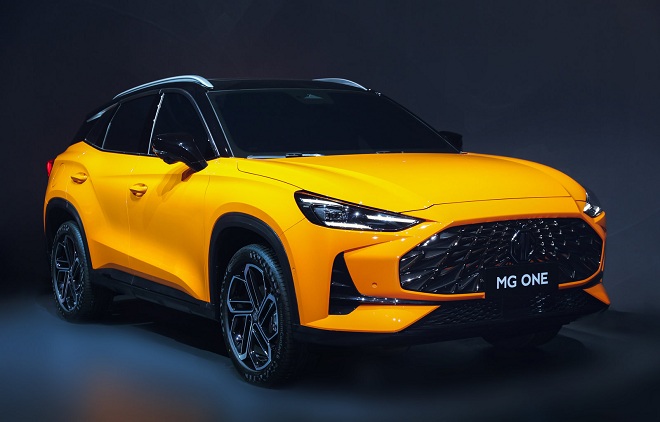
MG ONE, based on the brand’s SIGMA architecture, is a combination of functional elegance and cutting-edge digital technology. It is the debut of the brand’s new architecture and design language, majorly fashionable and sporty.
The brand’s new architecture can compress the mechanical space of the automobile to the minimum, and develop an interior space efficiency of up to 70%. SIGMA also helps balance the exterior shape and interior space from the beginning, making the interior space layout more in line with ergonomics.
SIGMA is a fusion of machinery and intelligence, which transcends the differences between horsepower and the ability of the software. Based on the concept of new-age intelligence, the SIGMA architecture has expanded the limit of automotive platforms. Through the flexible combination of more than 100 kinds of modules, the architecture design can create a variety of body types such as hatch & notch, sports car, off-roader, SUV, etc., to meet the user’s diversified needs.
SIGMA provides a larger range of power and torque powertrains, a new generation of engines and more hybrid drive methods. It also empowers MG ONE with powerful chip technology, an active digital ecosystem, advanced electric architecture, and hard-core software technology.
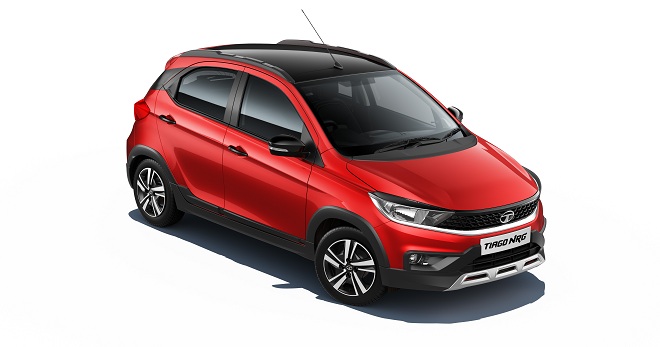
Tata Motors today launched the all-new Tiago NRG. Adding yet another exciting product to its wide range of portfolio, this vehicle has been carefully crafted for those who live differently. Positioned as the ‘Urban Toughroader’, the Tiago NRG is not only enhanced aesthetically with an SUV inspired design giving it a muscular look but is also tuned further with a higher ground clearance to give a tough road performance for the go getters. With 4 star safety rating by GNCAP, this vehicle will be launched in four attractive colours – Foresta Green, Fire Red, Snow White, Cloudy Grey, and will be available in showrooms from today at a starting price of INR 6,57,400, ex-showroom Delhi.
Commenting on NRG’s distinctive design and capabilities, Mr. Rajan Amba, Vice-President, Sales, Marketing & Customer Care, PVBU, Tata Motors said, “We are excited to bring to you this awesome version of our much-loved hatchback, the Tata Tiago. Truly energetic just like its name, the NRG fits well with the growing trend of bringing to market more SUV like vehicles. It is not only strong on the exterior but is feature-loaded & stylish in the interior, and is an absolute pleasure to drive with enhanced abilities to take over rough terrains. Crowning the Tiago range, the NRG will continue to help us increase our brand presence. We are confident that our customers will appreciate the new Tiago NRG as much as its predecessor.”