Green Goddess – Mk. I Ford Cortina

Ford-Cortina-MkI

Exclusive isn’t a word that best describes the Mk. I Ford Cortina after sales that crested one million.  Nevertheless an early, immaculate, and very original example of the 1500 GT model is a wholly different matter, having travelled an average of just one mile a day since it left the Dagenham factory 54 years ago.

Fitted with a tuned 1,498cc engine, the 1500 GT was the top specification model of the day, its zesty 78bhp (79 PS) sufficient to propel the svelte four-door to 95mph (153 kmph), with a 0-62 mph (100 kmph) acceleration time of just 14 seconds leaving the Morris Oxford of the day some five seconds in its wake.

Ford-Cortina-MkI-Interior

Despite its performance, when it appeared in the Ford showroom at a princely GBP 748, this 1963 Cortina 1500 GT would have played second fiddle on the attention stakes to the fleet of Mk.I’s that starred in the saucy ‘Carry on Cabby’ film that screened at the time, helping to secure valuable awareness for Ford’s new model.  However, since it was first registered on July 4, 1963, the fastidious care and obsessive attention paid to it by its two owners – the last acquiring the car 28 years ago – makes this 19,244 warranted mile car arguably the finest and most original Mk.1 Cortina remaining today.

This multiple concours winner, ARE 163A, features superb Goodwood Green coachwork, and the interior is utterly as-new. The dashboard, featuring the early strip speedometer and pod-mounted rev counter, has no age-related blemishes and the seating, trim and original carpets are unmarked.  Interested parties should note that the car is currently fitted with a period Les Leston Grand Prix steering wheel, and that the original is sold with the car.

The scene under-bonnet is delightful and exactly as it should be, and ditto beneath the car, where the condition is as fine as topside, with the jack and tools – spotless and polished – all present and correct.

Ford-Cortina-MkI-Rear

The garage owner who has conducted the majority of the MoT tests has re-affirmed the car’s magnificent condition, adding that he recalled a time when the previous owner refused to drive the car home after the test as it was raining, choosing to walk instead. He collected the car three days later when the roads were dry.

Extremely Rare 1928 Studebaker President 8 State Limousine FA Restored Back To Former Glory

Studebaker-President-Limousine-FA-8

The time was early 1928; the great depression was still a year away and there was a sense of prosperity among the general public. Luxury cars were selling well and auto manufacturers around the world started selling more powerful and expensive cars.

One of these was Studebaker, which introduced the new President Series FA 8 in 1928, the first Studebaker 8 cylinder series. Some of the standard features in the car were silk curtains and assist cords, upholstered arm rests, engraved jeweller’s finished hardware, moldings and door panels in two-tone American walnut or two-tone laquer, silver medallions on the door panels, an upholstered foot rest, a heavy ornamental robe rail and large pockets in all the four doors. Tyres were 31 x 6.2 inches.

Studebaker’s entry into the straight eight segment was well planned but somewhat late, as there were numerous other manufacturers who had eights in production. However, Studebaker’s close competitors, Chrysler and Buick, were even tardier and did not field eights until 1931. Packard, Duesenberg, Stearns, Sayers and Scoville, Dupont and Stutz had built eights for a number of years, but these cars were in the high price bracket and would cost hundreds or thousands of dollars more than the FA President.

Studebaker-President-Limousine-FA-8-Rear

This 1928 Studebaker President 8 State Limousine FA that we are going to read about was custom-built and sent to India in 1928 for the purpose of ‘special display’ to promote the awareness of the high quality, 8 cylinder luxury cars manufactured by the Studebaker Corporation of America during the days of British rule in India.

It is interesting to note the nomenclature of the 1928 Studebaker President 8 State Limousine (FA). The word ‘President’ denotes the top of the line of the Studebaker car models. The numerical ‘8’ stands for eight cylinders, the word ‘State’ stands for cars that have two spare tyres on both sides, wire wheels and foldable luggage rack at the rear, while ‘Limousine’ stands for cars that have a glass partition dividing the driver’s compartment and the passengers’ cabin and finally ‘FA’ denotes the first eight cylinder president engine series that were manufactured by the American carmaker.


Studebaker-President-Limousine-FA-8-Rear-Seat

The coachwork plate number is 118 FAM. This signifies it being the 118th unit of car that was manufactured in the year 1928. As mentioned earlier, ‘FA’ is the series of engine and the letter ‘M’ denotes the limousine style of body.

Pallab Roy’s grandfather Raja Kamalaranjan Roy spotted the car in the showroom and fell in love with it. Since this car had come to India as a display model which was not meant for sale, hence a special permission was sought by the dealer from Studebaker Corporation and the car was finally sold to Raja Kamalaranjan Roy. The car has ever since remained in the family. The car was kept by Raja Kamalaranjan Roy in his palace at Cossimbazar and was used by him on special occasions.

Studebaker-President-Limousine-FA-8-Steering-Wheel

The mint condition in which we find the car today is a result of four years of labour of love by Pallab Roy who has taken special care to meticulously restore this car referring to the descriptions and specifications mentioned in the original sales brochure and the owner’s manual. Studebaker limousines with series FA are recognised as ‘a full classic’ by all antique car clubs in the USA. This model has many references in several write-ups by different persons. However, even after an extensive search Roy did not find any photographs of a second existing car. The only photograph that exists of the limousine is a hand-painted one. Hence, Roy has strong reasons to believe that this is perhaps the only surviving example in the world of the 1928 Studebaker President State Limousine – a marvellous example of American automobile creation.

Studebaker-President-Limousine-FA-8-Brochure

Fact File:

• Present owner – Prosanta Kumar Roy

• Registration number – WGZ 82

• Purchased in 1928

• Price at the time of purchase – Rs 12,000 (in exchange of a family-owned Chevrolet)

• Production started in December 1927

• Production ceased in October 1928

• H. P. 100 @ 2600 rpm

• Engine displacement – 313 cubic inches

• No. of cylinders – straight 8

• Wheelbase – 131 inches

• Single carburetor

• Single butterfly

• Twin point distributor

• Broadcloth upholstery with mohair lining

• Sound proof glass partition between the front and rear seats

• One way intercom (passenger to driver)

• Cigar lighter and ashtray

• The car’s body has been built with ‘dreadnot’ steel which was used to build American warships

Jaguar Land Rover Racing Ahead With Electrification

Jaguar I-PACE eTROPHY

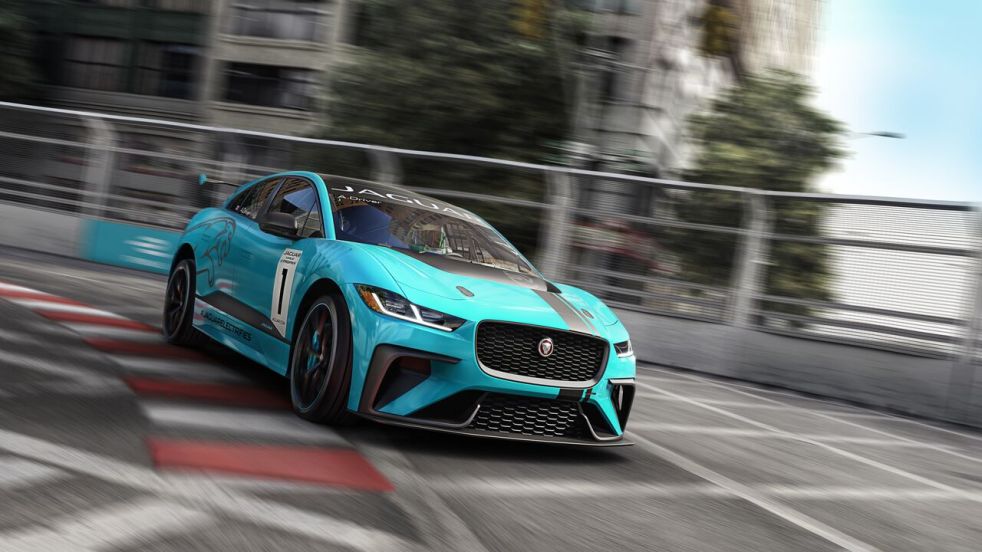
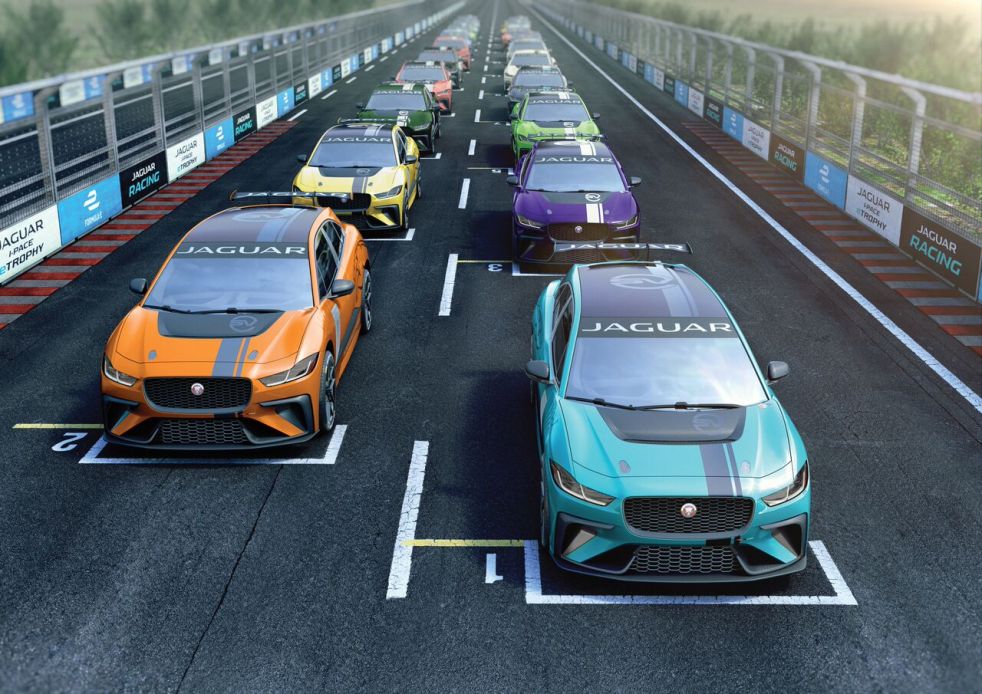
Jaguar Land Rover has unveiled the Jaguar I-PACE race car that will compete in a pioneering single-make series supporting the FIA Formula E world championship. The electric racer is based on the Jaguar I-PACE – the world’s first premium, performance, all electric SUV that launches next year and is already a hit with customers around the globe placing their deposits. The new Jaguar I-PACE eTROPHY series will join the Formula E circuit in 2018.

Jaguar I-PACE eTROPHY -01

Dr. Ralf Speth, CEO, Jaguar Land Rover, said: “The technology we are developing on the track allows us to deliver thrilling electric vehicles to our customers. The pace of change is exhilarating and we want to go above and beyond for our customers. From 2020 every new Jaguar Land Rover vehicle will be electrified. Customers will be able to choose from battery electric, plug-in hybrid and mild hybrid power as well as ultra-clean petrol and diesel engines.

“Future mobility will not be boring. Our products will have passion and emotion as well as being distinctive, desirable and capable as they have always been and will stand out from the crowd.”

Skoda Increases Global Deliveries In August

scrappage_badge

Skoda increased its global deliveries by 6.7 per cent in August to 86,100 vehicles (August 2016: 80,700 vehicles). The Czech car maker achieved strong growth rates in Europe, India and Russia in particular. The drivers of this growth are the brand’s flagship, the Skoda Superb, and the Skoda Kodiaq SUV, which was launched at the beginning of the year. The manufacturer is expecting further impetus from its new compact SUV, the Skoda Karoq, which recently celebrated its exhibition premiere at the International Motor Show (IAA) in Frankfurt and which will be introduced to the markets in October.

“Skoda has successfully continued its growth course in August,” said Alain Favey, Skoda Board Member for Sales and Marketing. “There is substantial interest in our top-of-the-range model, the Skoda Superb, and our large SUV, the Skoda Kodiaq, is also making a significant contribution to the positive development of our company. We are also expecting further growth momentum in the important SUV segment from the new Skoda Karoq which will be gradually introduced to the markets from October,” continued Favey.

As part of its 2025 Strategy, Skoda is expanding its model range with an extensive SUV campaign. The Skoda Kodiaq marked the start of this, with 48,300 deliveries already since its market launch. In August alone, deliveries of the brand’s first large SUV totalled 11,200. Skoda intends to use the Skoda Karoq, currently making its debut at the IAA in Frankfurt, to further strengthen its position in the important SUV segment. Also in Frankfurt, the Skoda Vision E electric design study is providing a glimpse of the brand’s future SUV models and technologies. The Skoda Kodiaq Sportline and Skoda Kodiaq Scout are also among the models being presented at the 2017 IAA.

In Western Europe, Skoda increased its deliveries by 4.4 per cent in August to 30,300 vehicles (August 2016: 29,000 vehicles). In Germany, the strongest individual European market, Skoda slightly surpassed last year’s strong performance with 12,200 deliveries (August 2016: 12,100 vehicles). The brand recorded double-digit increases in Austria (2,200 vehicles; +35.1 per cent), France (1,800 vehicles; +15.0 per cent), Belgium (1,300 vehicles; +31.9 per cent) and Italy (1,100 vehicles; +22.5 per cent).

In Central Europe, Skoda saw growth of 13.3 per cent to 14,800 units (August 2016: 13,100 vehicles). In its home country of the Czech Republic, Skoda recorded 7,000 deliveries (August 2016: 6,400 vehicles, +9.6 per cent). The Czech car manufacturer achieved significant growth in Poland (4,800 vehicles; +16.9 per cent), Slovakia (1,600 vehicles; +23.5 per cent), Hungary (800 vehicles; +8.0 per cent) and Slovenia (500 vehicles; +18.6 per cent).

In Eastern Europe excluding Russia, Skoda deliveries grew considerably by 27.2 per cent to 3,100 vehicles in August (August 2016: 2,400 vehicles). Double-digit growth was achieved in Romania (900 vehicles; +31.0 per cent), Serbia (400 vehicles; +19.7 per cent), Bulgaria (300 vehicles; +12.0 per cent) and Bosnia (200 vehicles; +79.1 per cent). In Russia, Skoda also saw a double-digit increase of 10.5 per cent to 5,000 vehicles (August 2016: 4,600 vehicles).

In China, the world’s biggest individual market, Skoda matched the previous year’s strong performance with 26,000 deliveries (August 2016: 26,000 vehicles).

In India, Skoda recorded an increase of 76.2 per cent with 1,700 vehicles (August 2016: 1,000 vehicles).

Deliveries by the Skoda brand in August 2017 (in units, rounded, by model; +/- in per cent compared to the same month last year):

Skoda Octavia (29,800; -3.1 per cent)

Skoda Rapid (15,700; -9.7 per cent)

Skoda Fabia (12,100; -12.6 per cent)

Skoda Kodiaq (11,200)

Skoda Superb (10,800; +17 per cent)

Skoda Yeti (4,300; -35.8 per cent)

Skoda Citigo (only sold in Europe) (2,200; -19.9 per cent)

Nissan Micra Fashion Edition Arrives In Style!

Picture

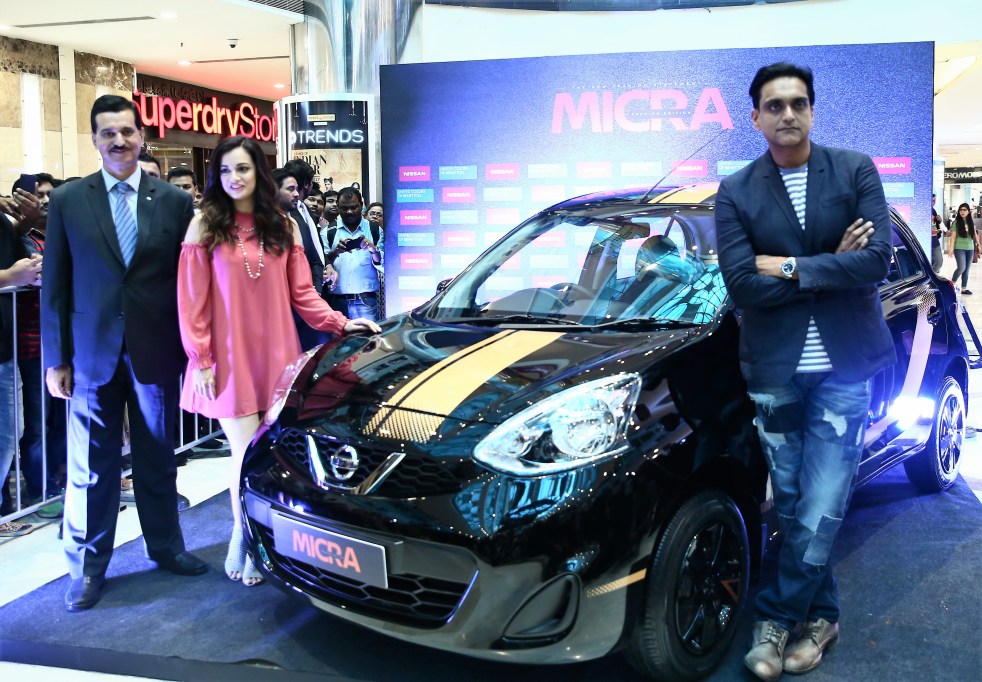
(L-R): Arun Malhotra, Managing Director, Nissan Motor India Pvt. Ltd, Dia Mirza, Bollywood Actress and Sundeep Chugh, CEO and Managing Director, Benetton India Pvt. Ltd at the launch of Nissan Micra Fashion Edition

Style took centre stage as Nissan India launched the Nissan Micra Fashion – a limited edition car with exterior and interior styling elements inspired by the leading fashion brand United Colors of Benetton. This new Micra variant was launched at the United Colors of Benetton store in Ambience Mall, Gurugram, with the car revealed by Bollywood actress Dia Mirza.

Arun Malhotra, Managing Director, Nissan Motor India Pvt. Ltd. said, “We are excited to offer our customers a new, stylish choice for the festive season. Nissan Micra Fashion Edition brings a sophisticated interior ambience with a host of new features and inspiration infused from Benetton’s rich heritage of Italian style and global research. The car combines high style and great performance thanks to the CVT automatic transmission for an engaging and comfortable driving experience.”

Sundeep Chugh, CEO & MD, Benetton India Pvt. Ltd, said, “We are honored to serve as a fashion inspiration for Nissan’s latest automotive innovation, with our long standing Italian legacy of design, innovation and sustainability. Moreover, as a brand we are strongly committed to women empowerment and their safety, through our social campaigns. Nissan’s latest edition of Micra is engineered with an automatic transmission and NissanConnect, which has over 50 safety and security features. The offering therefore truly appeals to the youth and women of today, and bears strong synergies with Benetton’s social commitments and design aesthetics.”

Colours, innovation and sustainability lie at the very foundation of Benetton’s design philosophy, creating strong synergies and making Benetton a befitting inspiration for Nissan Micra’s Fashion Edition. Adorned with sporty decals and accentuated bold stripes, with the interior crowned with Benetton signature headrests, the new Nissan Micra Fashion Edition has been designed to spice up the festive season this year. This spirited and stylish car will also feature NissanConnect, Nissan India’s integrated information and communication platform that provides an enhanced driving experience through the user’s smartphone.

The Micra Fashion limited edition will be available during the festive season at Rs 6.09 lakhs (ex-showroom, Delhi) across all Nissan dealerships in India.

Mercedes-AMG Project One Show Car Enthralls Crowd At Frankfurt

Showcar Mercedes-AMG Project ONE, 2017

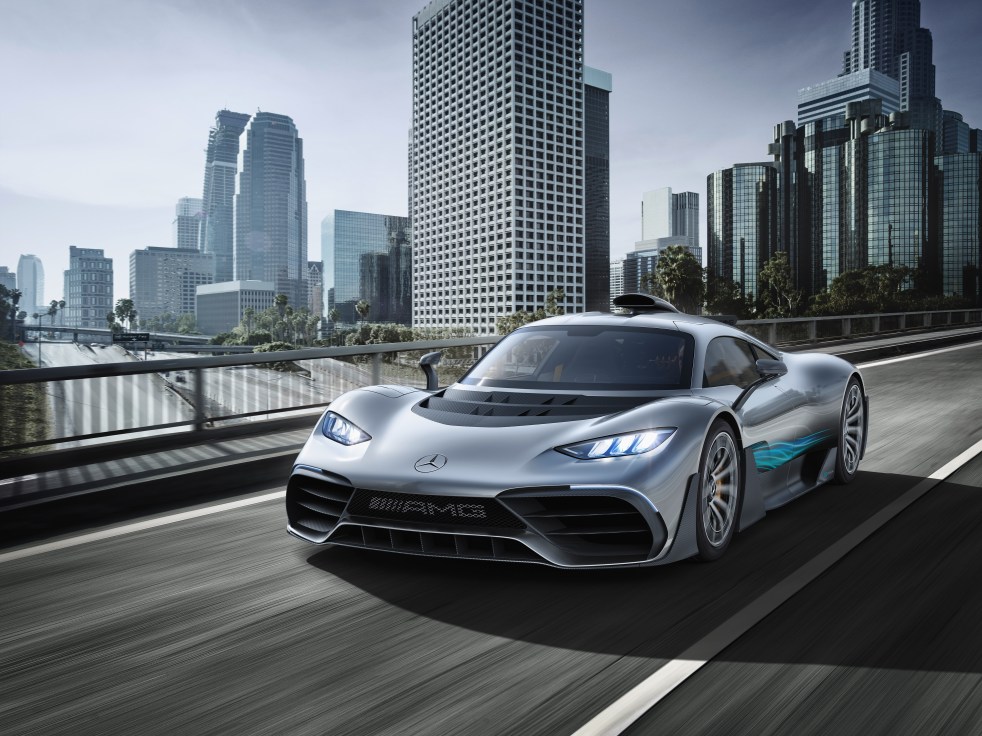
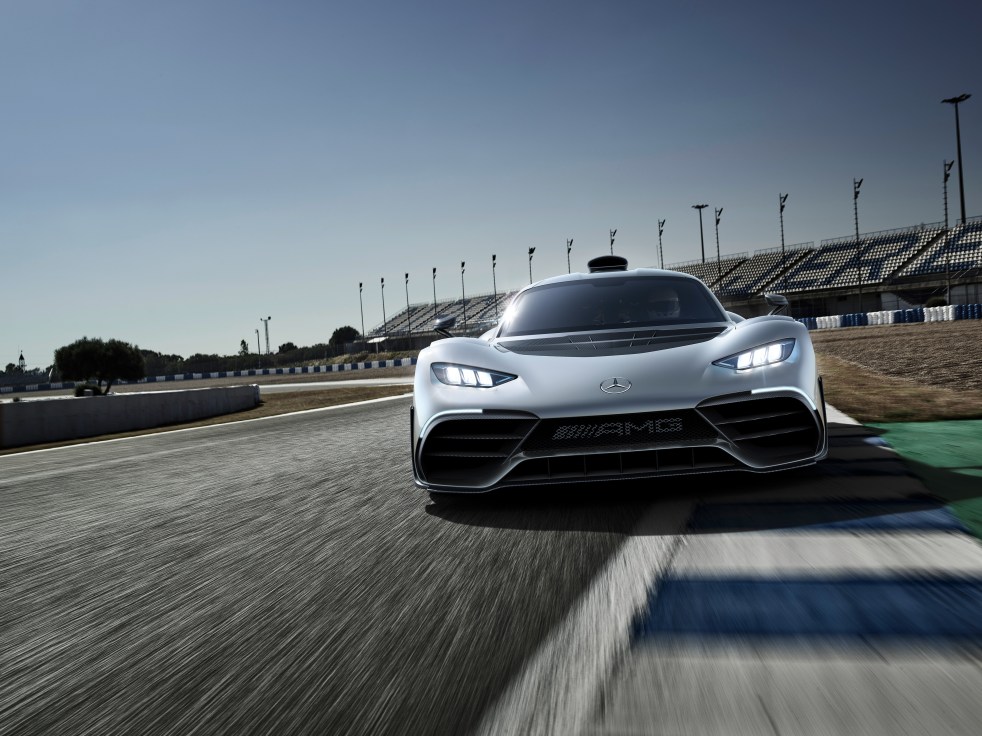
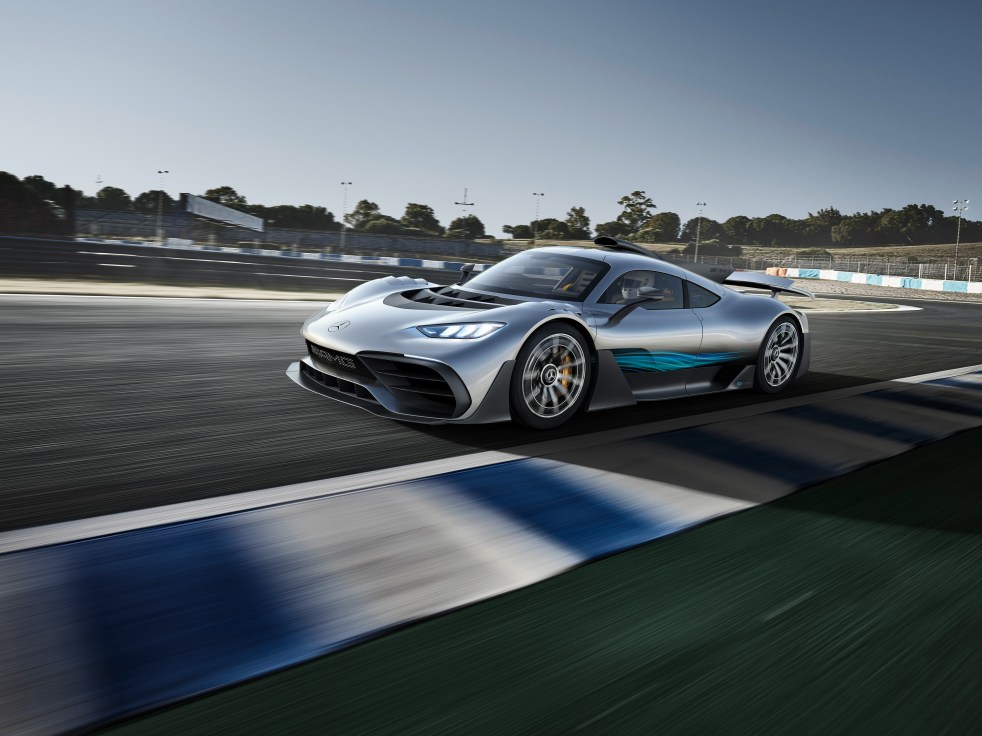
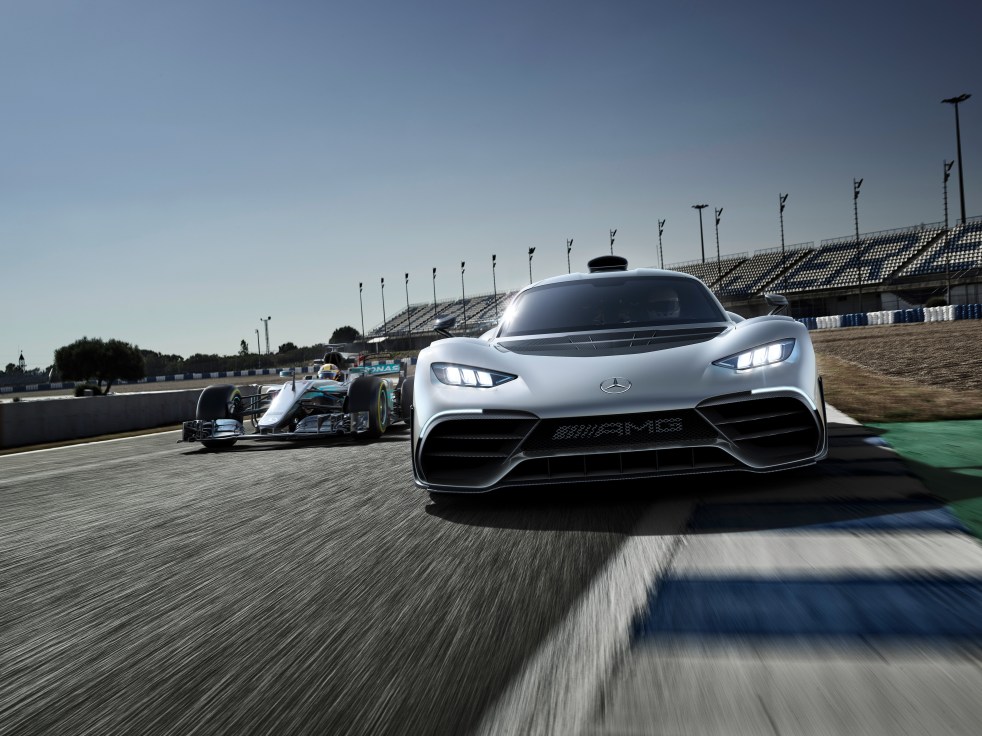
The Mercedes-AMG Project ONE celebrated its world premiere at the International Motor Show (IAA) in Frankfurt. For the first time, the two-seater supersports show car brings the very latest and efficient, fully-fledged Formula 1 hybrid technology from the race track to the road almost par for par to represent the highlight of AMG’s 50th anniversary. This high-performance hybrid is said to produce over 1,000 hp and reach top speeds beyond 350 kmph. The show car combines outstanding race track performance and day-to-day suitable Formula 1 hybrid technology with exemplary efficiency. This is a world first. The overall responsibility for the realisation of Project ONE lies with Mercedes-AMG. The complex development work was carried out in close cooperation with the Formula 1 experts at Mercedes-AMG High Performance Powertrains in Brixworth and with the Mercedes-AMG Petronas Motorsport team in Brackley. Together with the four-door AMG GT Concept, the Mercedes-AMG Project ONE provides another insight into the future performance-hybrid drive strategy of the sports car brand within Mercedes-Benz.

Ever since the early days of motorsport, engineers have dreamed of bringing motor racing technology to the road. Mercedes-AMG is now making this dream a reality at the very highest level. “Motorsport is not an end in itself for us. Faced with intense competition, we develop technologies from which our production vehicles also subsequently benefit. We are drawing on our experiences and successes from three constructors’ and drivers’ world championships to bring Formula 1 technology to the road for the first time: in Mercedes-AMG Project ONE”, says Dr Dieter Zetsche, Chairman of the Board of Management of Daimler AG and Head of Mercedes-Benz Cars.

“The Mercedes-AMG Project ONE is the first Formula 1 car with MOT approval. Our highly efficient hybrid assembly stems from motor racing and the electrically powered front axle generates a fascinating mixture of performance and efficiency. With a system output of over 1,000 hp and a top speed beyond 350 kmph this hypercar handles exactly as it looks: it takes your breath away”, Ola Kallenius says, Member of the Daimler AG Board of Management responsible for Group Research and Mercedes-Benz Cars Development.

The concept car gives specific indications of what to expect from the upcoming production model. “The hypercar is the most ambitious project we have every undertaken. It marks yet another pinnacle of the successful, strategic development of Mercedes-AMG towards a performance and sports car brand. Project ONE raises the bar in terms of what is currently technologically feasible and thanks to its combination of efficiency and performance it represents an absolute benchmark. At the same time, Project ONE provides an outlook on how AMG will define driving performance in the future”, Tobias Moers explains as the Head of Management at Mercedes-AMG GmbH.
Showcar Mercedes-AMG Project ONE, 2017

Powertrain: one turbocharged engine and four electric motors

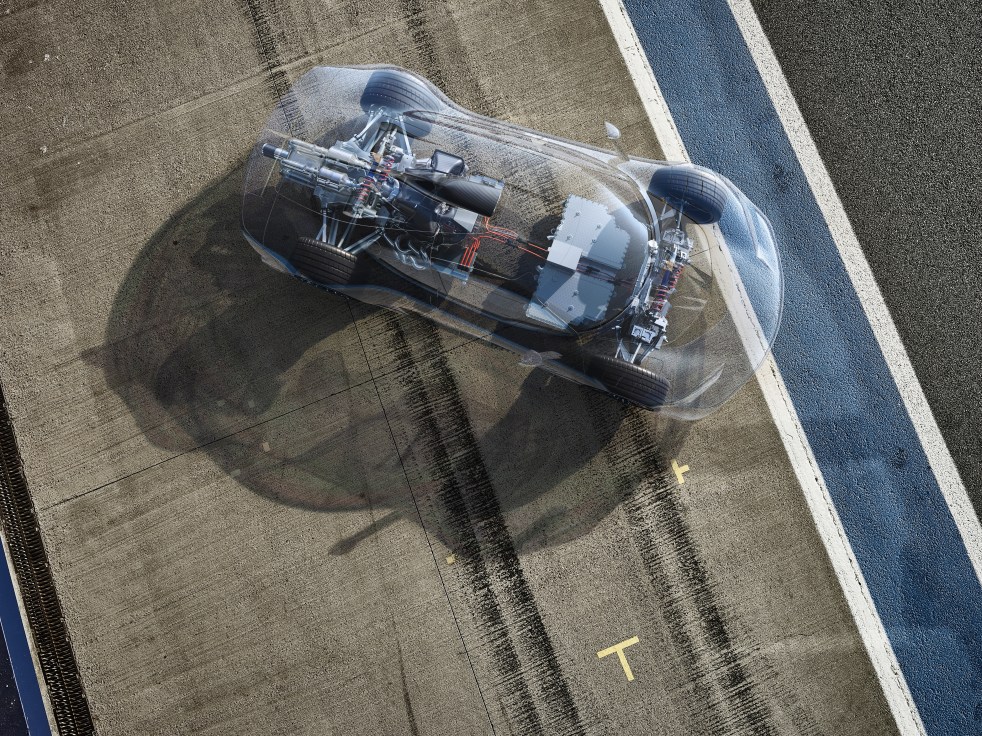
The high-performance plug-in hybrid drive system of the Mercedes-AMG Project ONE comes directly from Formula 1, and was realised in close cooperation with the motorsport experts of Mercedes-AMG High Performance Powertrains in Brixworth. It consists of a highly integrated and intelligently networked unit comprising one hybrid, turbocharged combustion engine with a total of four electric motors. One has been integrated into the turbocharger, another has been installed directly on the combustion engine with a link to the crankcase and the two remaining motors drive the front wheels.

The 1.6-litre V6 hybrid petrol engine with direct injection and electrically assisted single turbocharging comes directly from the Mercedes-AMG Petronas Formula 1 racing car. The four overhead camshafts are driven by spur gears. To achieve high engine speeds, the mechanical valve springs have been replaced by pneumatic valve springs. The vehicle is mid-engined (ahead of the rear axle) and it can easily reach speeds of 11,000 rpm, which is currently unique for a road going vehicle. However, for higher longevity and the use of commercially available Super Plus petrol instead of racing fuel, it remains significantly below the F1 engine speed limit.

The electric motors on the front axle are also true rev wonders, with rotor revolutions up to 50,000 rpm – current state of the art is a speed of 20,000 rpm.

The very high-revving engine is additionally boosted by a high-tech turbocharger. The exhaust gas and compressor turbines are separated from one another and located at an optimum position to the exhaust side and to the intake side of the V6 engine, and connected to one another by a shaft. This shaft features an electric motor with approximately 90 kW which, depending on the operating status, electrically drives the compressor turbine with up to 100,000 rpm – for instance when moving off or following load changes. The Formula 1 designation for this unit is MGU-H (Motor Generator Unit Heat).
Showcar Mercedes-AMG Project ONE, 2017

Lightning-quick response, faster than a naturally aspirated V8 engine

The major advantage: the dreaded turbo lag – the delayed response to accelerator pedal commands owing to the inertia of the large charger – is completely eliminated. The response time is greatly reduced, and is even shorter than that of a naturally aspirated V8 engine. The electric turbocharger brings about another advantage: it uses parts of the surplus energy from the exhaust system to generate electricity, and either stores it in the high-voltage lithium-ion battery as part of recuperation or provides additional drive power by feeding it to an additional electric motor. This motor produces 120 kW, has been installed directly on the engine and features a link to the crankshaft via a spur gear (MGU-K = Motor Generator Unit Kinetic) – another technology that ensures maximum efficiency and performance in Formula 1.
Showcar Mercedes-AMG Project ONE, 2017

New all-wheel drive with purely electrically driven front axle

There will also be two further 120 kW electric motors at the front axle. Each is connected to a front wheel via a reduction gear. The fully electrically driven front axle allows individual acceleration and braking of each front wheel, and therefore selective torque distribution (torque vectoring) for particularly high levels of vehicle dynamics. With the axle motors, we estimate that up to 80 per cent of the braking energy can also be optimally used for recuperation under everyday driving conditions. This energy is stored in the battery and is available for a longer electric range. Each electric motor is controlled by its own power electronics located in close proximity to the electric motors in the floor assembly.

Top marks for thermal efficiency

The thermal efficiency of the combustion engine with electric turbocharger (MGU-H) in conjunction with the electric motor on the crankshaft (MGU-K) will be over 40 per cent. This is a previously unattained peak value for series production vehicles, and confirms the dominant position of the drive system where efficiency is concerned. This means that the show car obtains significantly more drive energy from one litre of fuel than other cars. It is therefore both economical and powerful. By way of comparison, the thermodynamic efficiency of conventional series production engines is around 33 to 38 per cent.
Showcar Mercedes-AMG Project ONE, 2017

Lithium-ion battery with Formula 1 technology

The battery cells, their arrangement and the cell cooling system are the same as used in the Mercedes-AMG Petronas Formula 1 racing car. However, the quantity of battery cells in the AMG Project ONE will make it significantly more practical for everyday use. The lithium-ion, high-voltage battery and the DC/DC converter supporting and charging the 12 V onboard electrical system are space-savingly accommodated in the vehicle floor behind the front axle.

As a further innovation, the high-voltage EQ Power+ drive system operates with 800 volts instead of the usual 400 volts. Thanks to the higher voltage levels it is possible to influence elements, such as significantly reducing the cable diameters and accordingly saving design space and weight.

Intelligent operating strategies for optimum output and efficiency

Overall the high-performance EQ Power+ plug-in hybrid drive system offers numerous intelligent operating strategies which are optimally tuned to different application scenarios. The driving modes range from purely electric operation through to a highly dynamic mode which corresponds to a setting used in Formula 1 qualifying for optimum lap times. Despite the high system complexity, and depending on the current requirement, the driver will always receive the optimum combination of performance and efficiency. In this process, Mercedes-AMG engineers make use of the many years of experience and know-how from Formula 1, the SLS AMG Electric Drive and Daimler AG’s research and development.

For instance, the driver can move off purely electrically, initially with just the electric motors on the front axle driving the hypercar and the electric motor on the crankshaft supporting short-term acceleration wishes. If the driver presses the accelerator more firmly and demands more output, the V6 engine also switches on. The drive system unfolds its full power as the engine speed increases. Impressive acceleration figures are possible with the Race Start function: acceleration from zero to 200 kmph takes under six seconds.

If the driver’s foot leaves the accelerator again to let the car coast, the system switches to electric drive at the front axle – whilst braking under normal driving conditions recuperates up to 80 percent of the energy, which is fed into the battery.
Showcar Mercedes-AMG Project ONE, 2017

Completely new, automated 8-speed manual transmission

Power is transferred to the rear wheels by an 8-speed manual transmission that has been entirely developed from scratch for the Mercedes-AMG Project ONE. It is activated hydraulically and can be operated in automated mode or manually using the shift paddles.

The basis for the outstanding driving characteristics of the Mercedes-AMG Project ONE is provided by the lightweight, high-strength carbon-fibre monocoque body, the technology of which likewise comes from Formula 1. The same applies to integration of the engine and transmission: both have load-bearing functions and completely support the rear suspension.

Multi-link suspension with innovative pushrod suspension

The suspension developers also gave their utmost. Multi-link designs are used at the front and rear. The adjustable coil-over suspension has several special features: Both push-rod spring struts have been installed across the direction of travel. The innovative arrangement of the spring/damper unit replaces the function and application of conventional tubular cross members. This solution reliably prevents rolling movements even during very rapid directional changes, without being uncomfortable.

The overall setup of the springs and dampers is configured for perfectly balanced, easily controlled and above all sporty handling characteristics. These are also assisted by all-wheel drive and torque vectoring. ABS is standard equipment, with ESP adjustable in three stages as is usual for AMG. ESP ON stands for a high level of safety, ESP SPORT HANDLING MODE allows greater yaw angles before system intervention for a sporty driving style, and ESP OFF switches the system off for sporty driving on enclosed racetracks.
Showcar Mercedes-AMG Project ONE, 2017

Exclusive forged wheels with innovative carbon-fibre semi-cover

Another completely new development is the 10-spoke forged aluminium wheel with centre lock, which is exclusively reserved for the Mercedes-AMG Project ONE. This has a radial carbon-fibre semi-cover with an aerodynamically sophisticated shape: this improves the car’s aerodynamics and Cd figure by optimising the airflow around the wheels.

At the same time, three flat ventilation slots per spoke section ensure optimum heat dissipation from the brakes. This is another example of how the AMG development team pays the utmost attention to even the smallest aspects, so as to improve the efficiency of the hypercar.

At the front the Mercedes-AMG Project ONE runs on 10.0 J x 19 dimension wheels and 285/35 ZR 19 Michelin Pilot Sport Cup 2 tyres which were exclusively developed for the hypercar and at the rear the vehicle features 12.0 J x 20 wheels running on Michelin Pilot Sport Cup 2 335/30 ZR 20 tyres.

The car is equipped with an advanced, weight-optimised ceramic high-performance compound braking system. Its low weight reduces the unsprung masses, thus improving driving dynamics and agility. Furthermore, the ceramic brakes are distinguished by a longer service life, higher corrosion resistance and higher thermal stability. The “AMG Carbon Ceramic” lettering and the specially painted brake callipers visually distinguish this unique braking system.
Showcar Mercedes-AMG Project ONE, 2017

Exterior design: Beauty and the beast

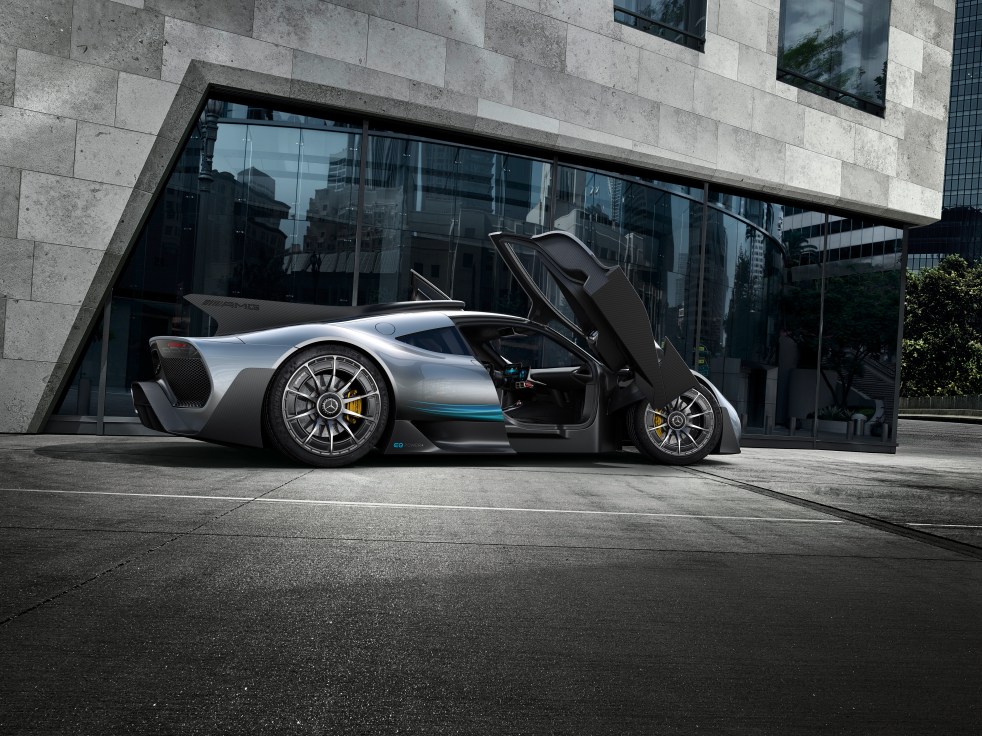
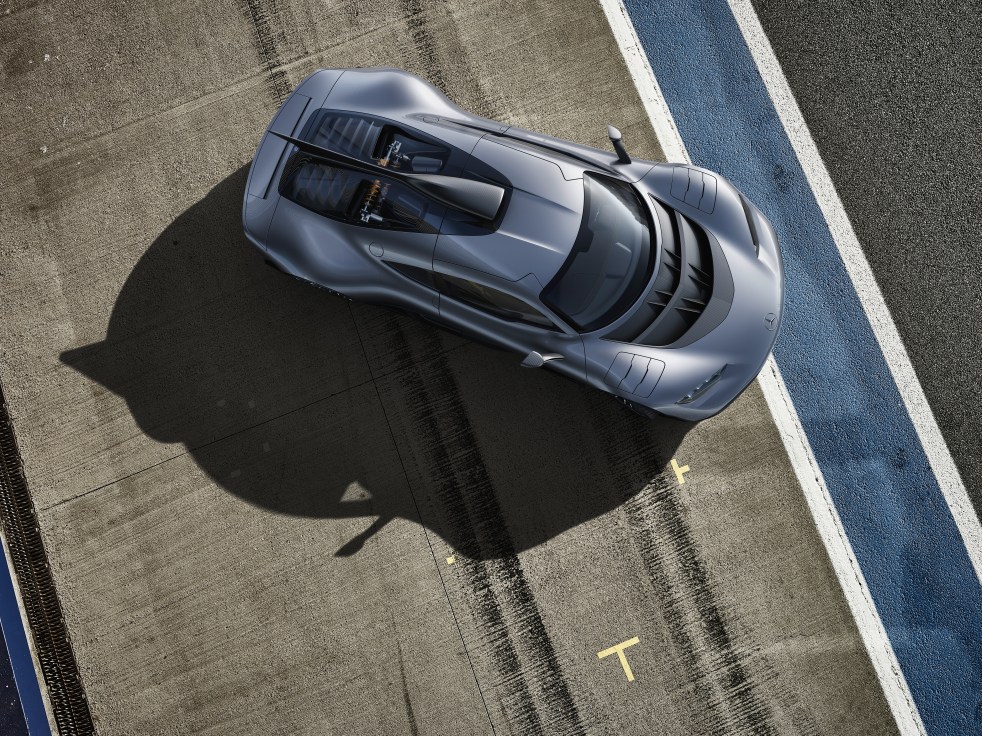
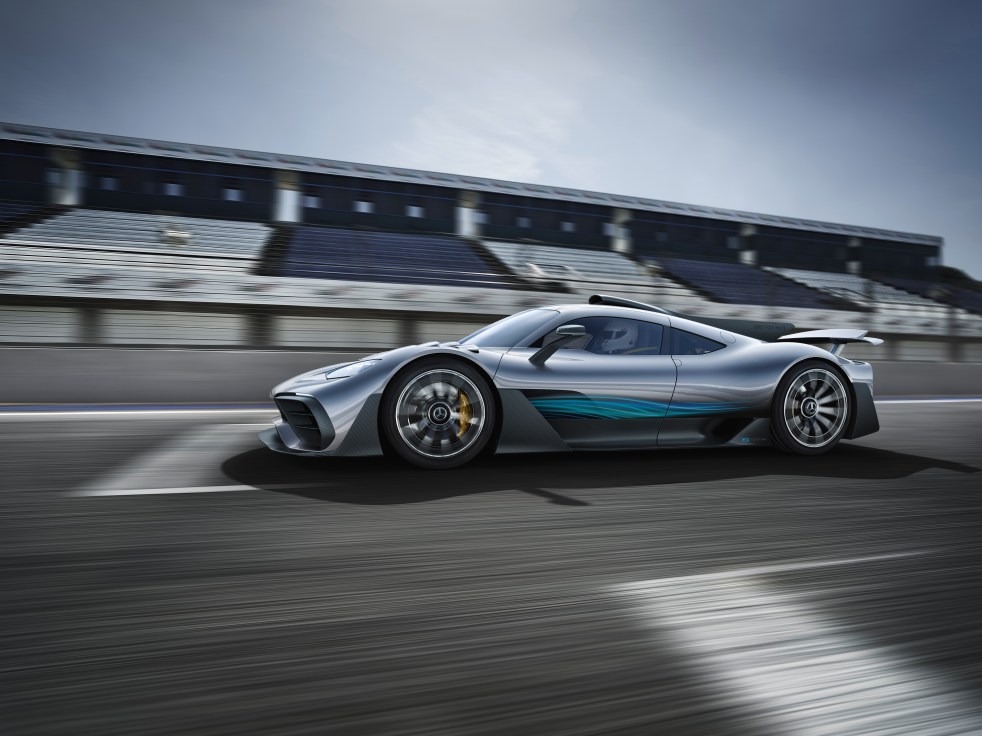
The design of the show car is very obviously inspired by the premium class in motor sport. But above all, it embodies the Mercedes-AMG principle that fascination is always linked with function. Every part has a specific purpose. The result is a mid-engine concept, extremely muscular proportions with the cockpit well forward, large wheel arches, a wasp waist and an extended rear end.

“The Mercedes-AMG Project ONE is the hottest and coolest car we have ever designed. It combines our design philosophy of Sensual Purity with the performance of our Formula 1 racing cars and is the perfect embodiment of Performance Luxury,” says Gorden Wagener, Chief Design Officer Daimler AG. “This hypercar’s extreme design marks a milestone in design ‑ there are no lines, and the interior is stripped down to the essentials.”
Showcar Mercedes-AMG Project ONE, 2017

Front view: Powerful and functional

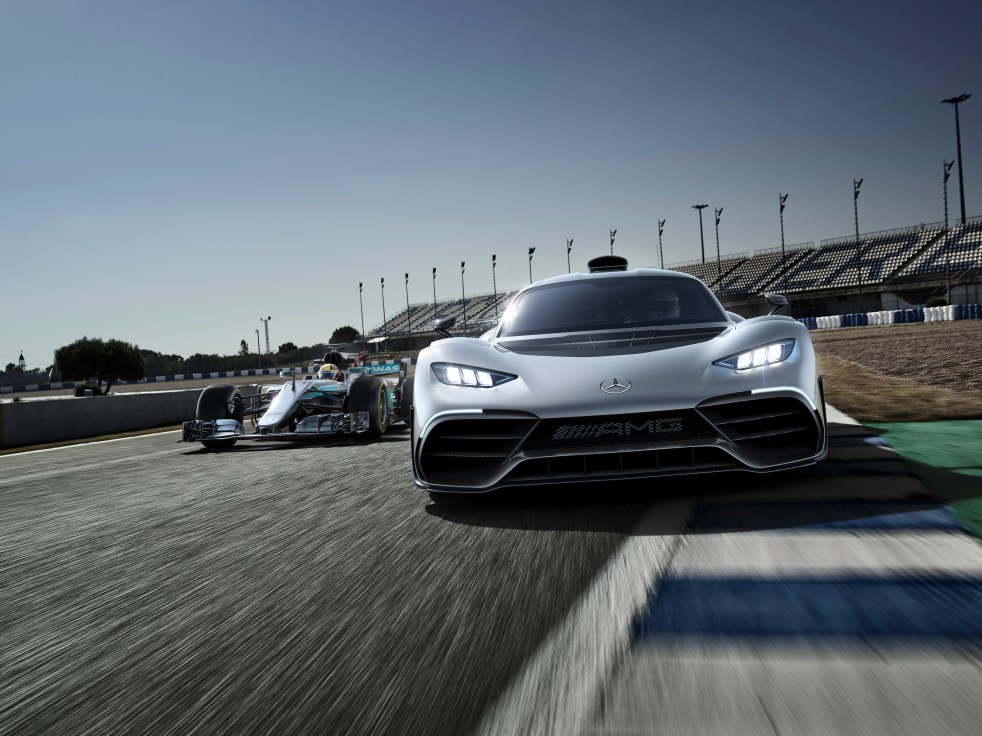
The front view is characterised by the large front apron, the various air inlets of which extend across the entire vehicle width. The trapezoidal centre section bears a large, white AMG logo. Above it, on the vehicle body, is the Mercedes star. The hallmark AMG A-wing below the centre section creates a silver-coloured highlight, and seamlessly transitions into the front wings.

On the left and right are large, prominent air inlets which are framed by U-shaped flaps and each subdivided by two black horizontal fins. Flat LED headlamps blend seamlessly into the body contours.

The black air outlets in the bonnet guide the hot airflow around the sides of the driver compartment. This allows the flow of fresh air to pass unhindered across the driver compartment and into the intake tract on the roof. The downforce at the front axle is positively influenced by the automatically extending front splitter and the active ventilation louvres in the front wheel arches, contributing to the perfect aerobalance of the car.

Taut flanks, large wings

The low, dynamic greenhouse has an unmistakable, spherical architecture with a distinctive window pattern. The large, dark area stands for important technical functions. These technical components form a visual contrast to the clean overall lines of the vehicle.

The roof line is dominated by an air intake derived from Formula 1, via which the engine takes in large volumes of air. The black intake transitions elegantly into the black, vertical shark fin, which improves lateral stability when cornering at high speed. The rear window placed well to the rear is an integral part of the intake/roof-fin unit. It allows a view of the power unit. Two large NACA air inlets ensure optimum guidance of the airflows for the engine and transmission oil coolers located at the rear end.

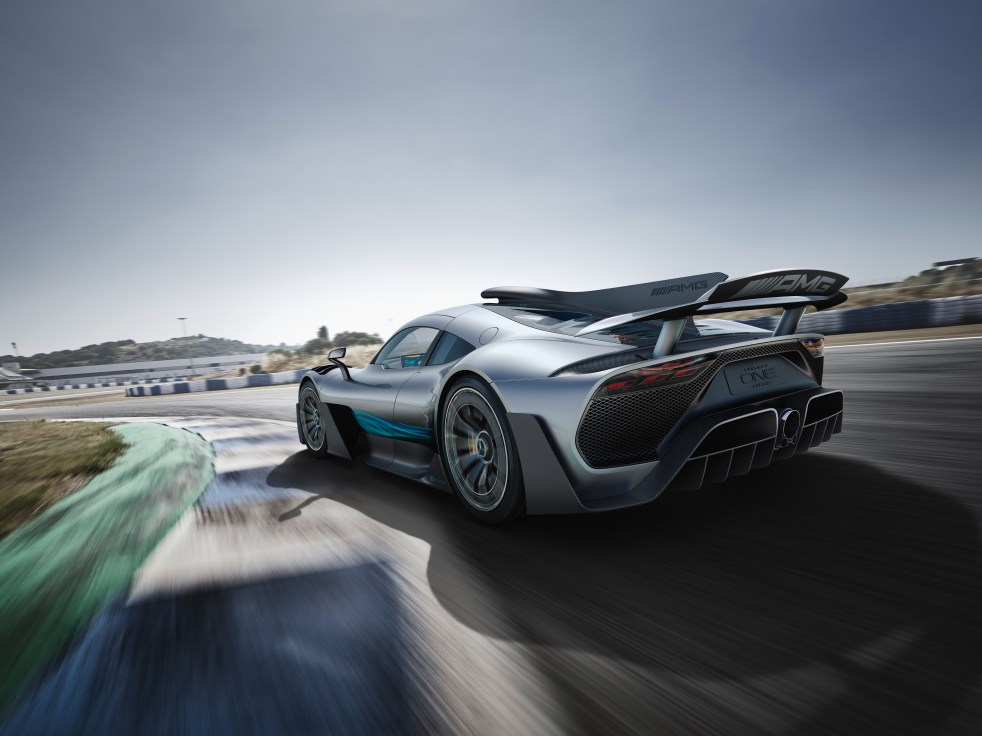
The side view also shows a sensuous, clean surface design combined with functional features. The vehicle flanks are tautly recessed, with black carbon-fibre surfaces redirecting the airflow around the vehicle body as in motor sport.

The Petronas green paintbrush design on the flanks is the work of the artist who designed the paintwork for the Formula 1 racing car. All four wheels are spanned by tight-fitting, muscular wings that appear ready to leap into action.

As in motor racing, the doors open both forwards and upwards. The fuel filler flap is at the rear right, the charge socket for the plug-in hybrid battery at the rear left.
Showcar Mercedes-AMG Project ONE, 2017

Rear end: Fascination and function

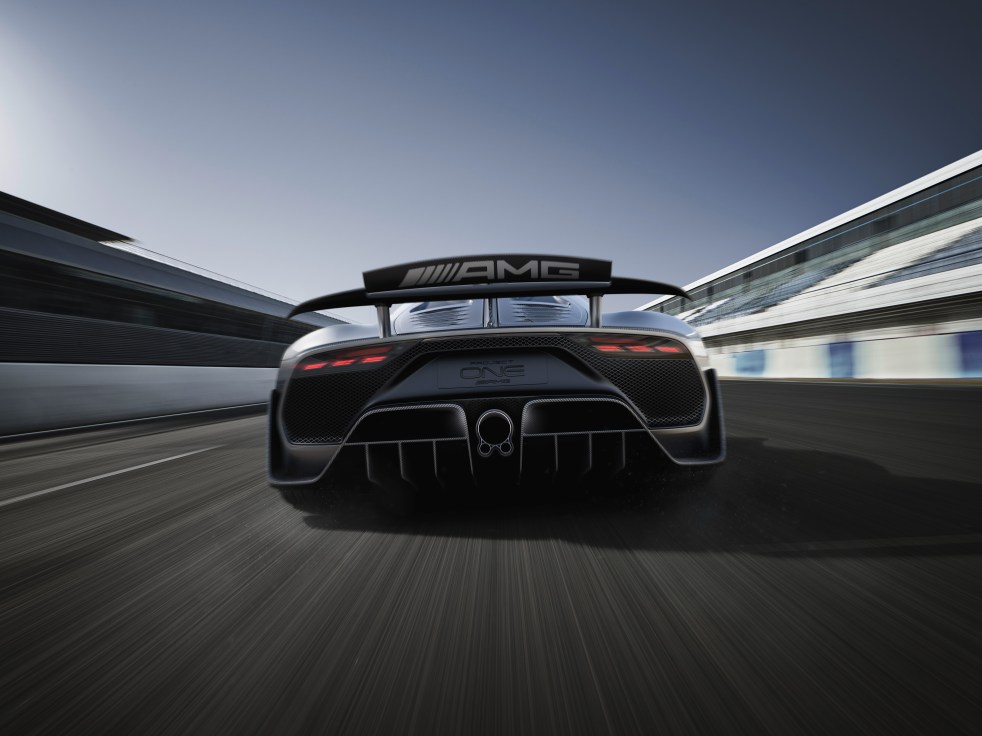
The sharp, vertical spoiler lip and the large, two-section diffuser, which is interrupted by the central exhaust tailpipe, as well as the two-stage extendible rear aerofoil, contribute to aerodynamic efficiency and performance at high speeds. The design of the exhaust tailpipe with its large, round outlet and two further small, round apertures was adopted directly from the Formula 1 cars.

The muscular appearance is further enhanced by the rear apron with its large, black mesh and carbon-fibre components. The rear lights each feature three rhomboid lighting elements to echo the graphic design of the AMG brand logo, and therefore also the design of the headlamps.
Showcar Mercedes-AMG Project ONE, 2017

Interior: Formula 1 for two

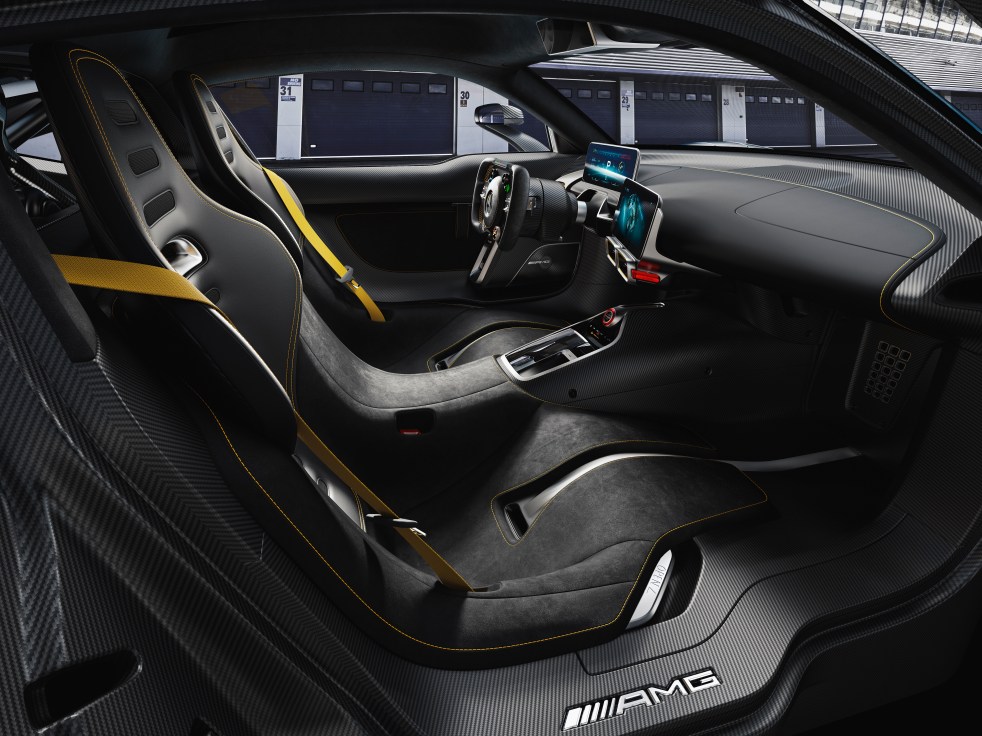
The interior design concept of this ultimate driving machine follows function on the racetrack, and this is expressed in the radical design idiom. Formula 1 technology is made authentically tangible on both the race track and the road. Here too every detail has a function, with nothing included merely for visual reasons. In the monocoque interior, the reduced components are emphasised in minimalist style both in design and functional terms.

The ergonomically contoured interior has room for two occupants. The bucket seats with adjustable backrests are integrated into the monocoque. The pedals and steering wheel are adjustable, allowing the driver to adopt the ideal driving position. The centre tunnel visually separates the driver and passenger areas from each other. It blends fully into the seat sculpture and follows the principle of minimalism with its gently rising contour.

Interior with functional structural parts

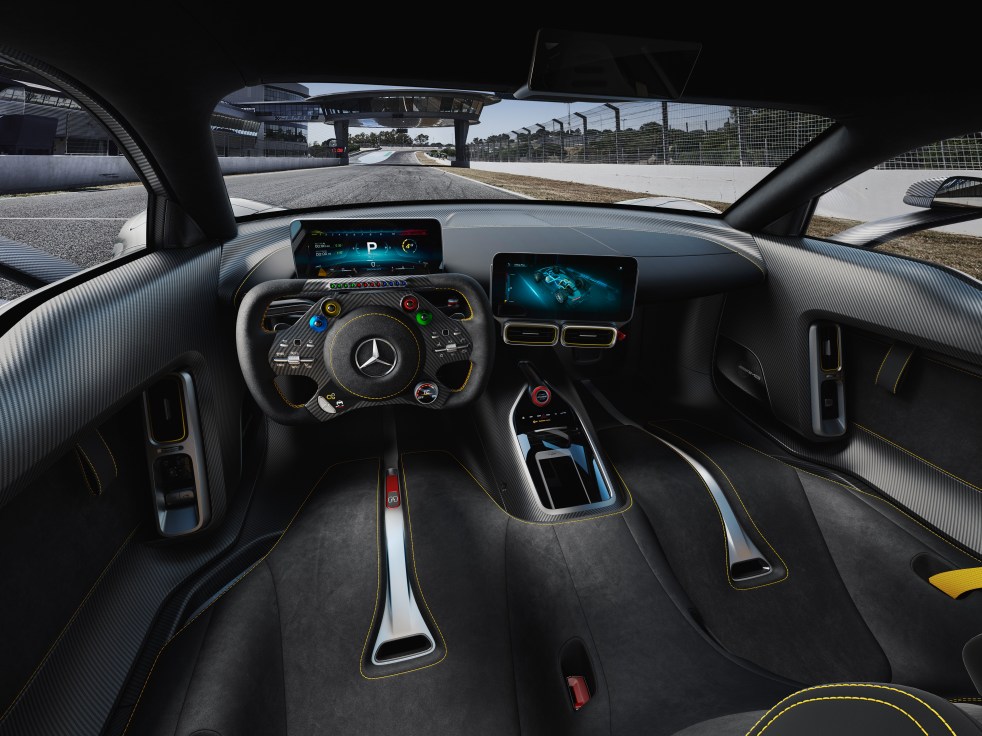
The lightweight construction is also obvious from the slim, wing-like profile of the dashboard. It appears to be light and free-floating. As a functional, structural component it also rigidifies the monocoque of the Mercedes-AMG Project ONE. The two high-resolution, free-standing 10-inch displays (one slightly raised in front of the driver, the other on the right of the centre console angled towards the driver) are adapted with high-quality and weight-optimised solid metal components.

The double-nozzle ventilation unit is suspended under the centre screen like a gondola. The screen and nozzles form a single unit, emphasising the lightweight design principle of the whole. The displays’ rectangular basic form is echoed by the ventilation nozzles, and by the centre console in which the start/stop button is located.

Also seamlessly integrated as a unit are a high-quality stowage compartment, a reduced switch array and the engine start button. The stowage compartment is fitted with a transparent lid.
Showcar Mercedes-AMG Project ONE, 2017

Formula 1-style steering wheel

The steering wheel with flattened upper and lower sections and an integrated airbag offers motorsport functionality, as do the two integrated controllers which can be used to set adjustment functions, such as the driving modes and suspension setup, or the LED shift display in the upper steering wheel area.

The door panels are in functional, high-grade carbon-fibre, and integrate smoothly into the sporty interior. As if to mirror the aero winglets of the exterior, the door panelling is visually interrupted to create space for technical implements and a generously concave door centre panel. An aluminium cassette combines the air vents and power window switches, which are integrated as deeply recessed rectangles.

Stowage compartments behind the seats, screen replaces interior mirror

Neither have the Mercedes-AMG developers forgotten suitability for everyday use and operating convenience: small items can be stowed in two compartments on the left and right behind the seats. An air conditioning system and power windows are standard equipment, while the COMAND infotainment system ensures optimum connectivity.

The user interface is integrated as an autonomous concept. The most important information is displayed on the road in the line of vision above the steering wheel, so that the driver is not distracted. To ensure optimum visibility to the rear, the rear-view mirror is replaced by a screen showing real-time images of the rear from a mirror cam. The aluminium screen housing is fully integrated into the roof, and also holds other controls.
Showcar Mercedes-AMG Project ONE, 2017

Colours and materials from the racing car

The choice of colours and materials takes its inspiration from the Mercedes-AMG Petronas Formula 1 racing car. The sculptured racing seats are in slip-resistant black microfibre, creating an unmistakable association with motor racing. The seat surfaces are interspersed with nappa leather in magma grey and inlays in a sporty textile mesh which optimally assists the air circulation of the seats. There is also yellow contrasting topstitching.

The Mercedes-AMG Project ONE: the future of driving performance

The Mercedes-AMG Project ONE will not only be an ultimate driving machine that directly brings current Formula 1 hybrid technology onto the road and combines top-class race track performance with full day-to-day suitability. Its purpose is also to obtain extensive findings about performance-oriented plug-in hybrid drive technology, further developments of suspension layouts and extended onboard electronics that will later benefit series production AMG cars. The Project ONE team is working hard on successfully bringing this vision onto the road.

New Continental GT Debuts In Frankfurt

WS8A6260

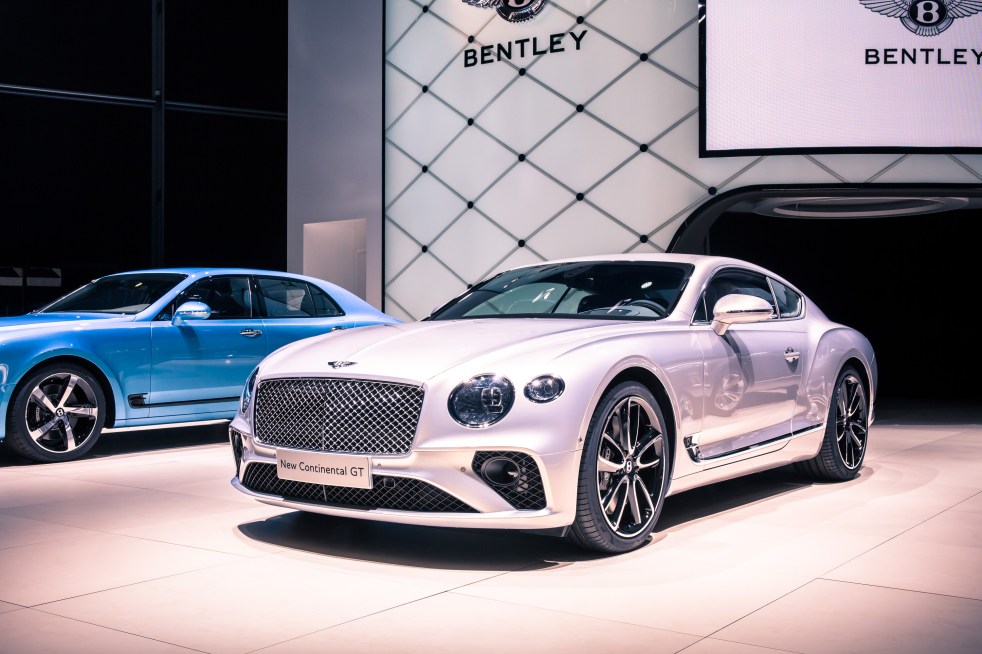
The all-new Continental GT made its global debut at the IAA 2017 in Frankfurt.

Commenting on its unveiling, Chairman and CEO, Wolfgang Durheimer, said: “Today is a defining moment for Bentley Motors. Today we build on our recent success story and look to the future with a new car that will set new standards in luxury grand touring. Today we introduce a car that is the ultimate in extraordinary design, technology and innovation.”

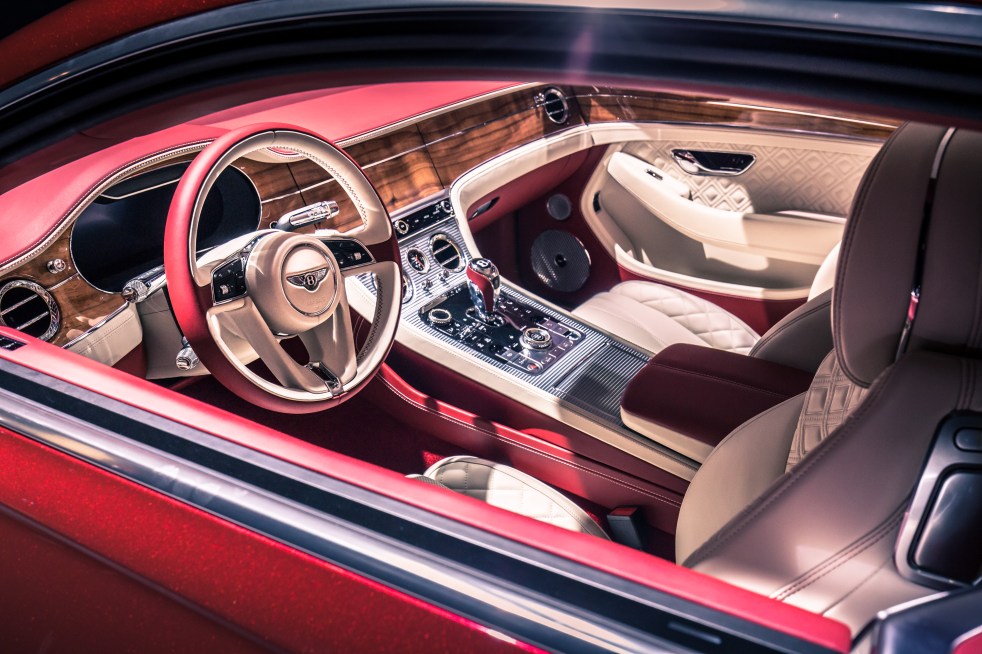
WS8A6571

“When Bentley launched the original Continental GT in 2003 it established an entirely new market segment – the modern luxury grand tourer. Today, I’m convinced that we are redefining this segment again. It is an honour to replace a car that has – for 14 years – been the benchmark against which all other grand tourers are judged.”

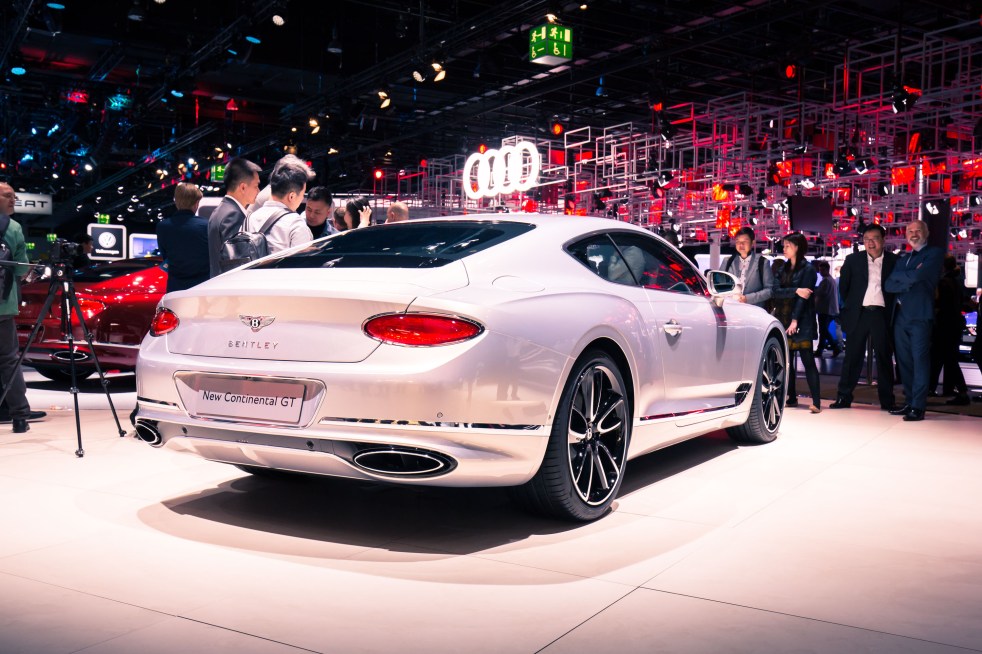
WS8A6767

The third generation of the legendary Bentley Continental GT is designed, engineered and handcrafted in Great Britain, ensuring the highest levels of attention to detail, artistry and cutting-edge technology are blended together to create the finest grand tourer ever produced.

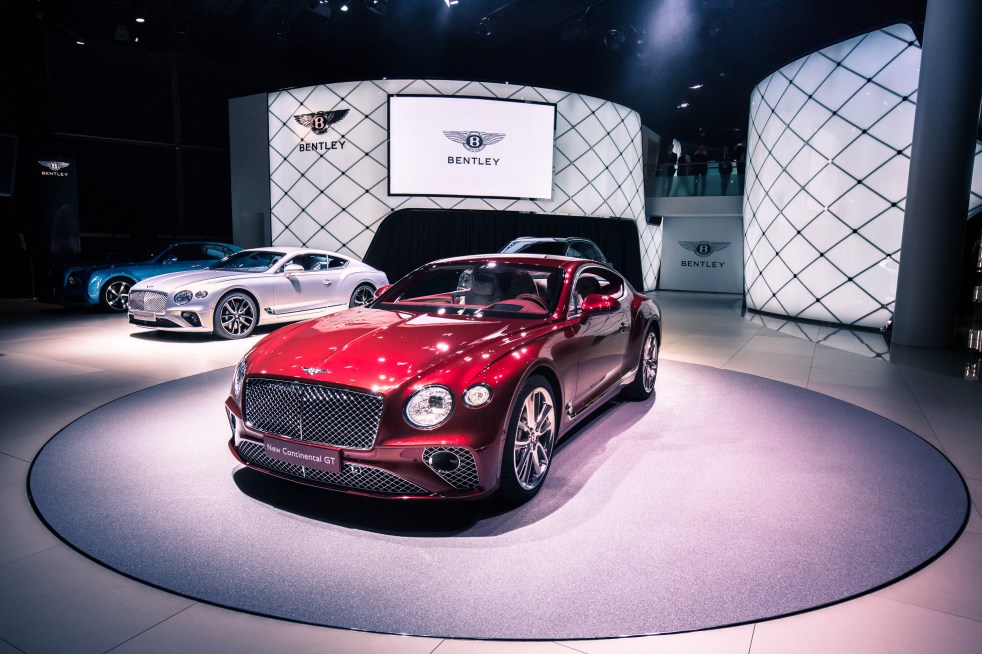
WS8A6404

The new Bentley Continental GT is available to order now with customer deliveries starting in Q2 next year and Bentley has confirmed that a plug-in hybrid model will be available in the future.

BMW At The IAA Cars 2017 In Frankfurt

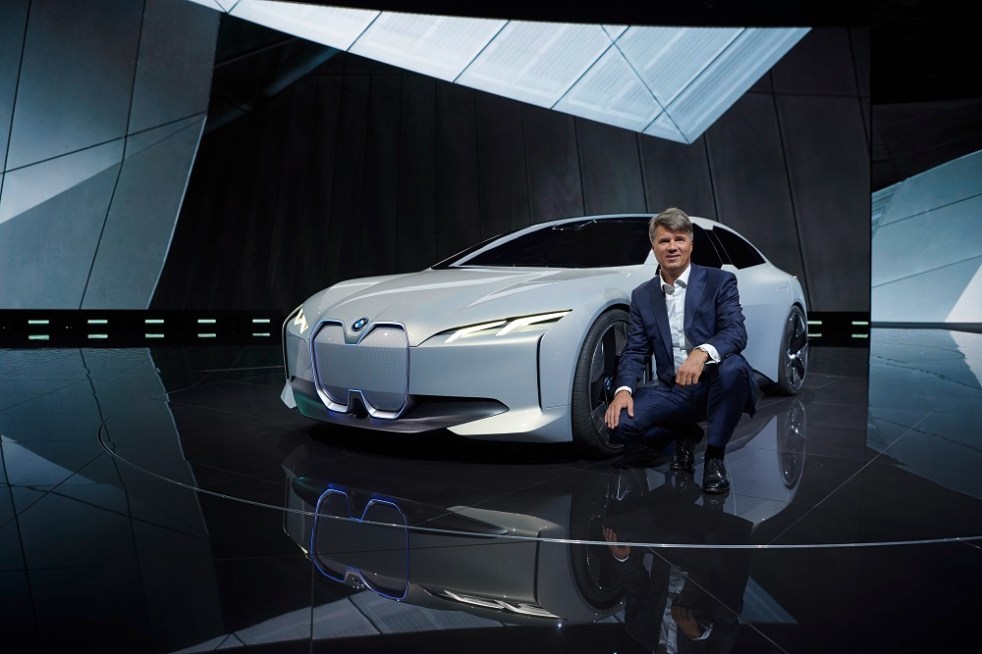
BMW i Vision Dynamics and Harald Krüger, Chairman of the Board of Management of BMW AG

BMW is firing the starting gun on the brand’s forthcoming product offensive with an extraordinary pageant of new models and concept vehicles at the IAA Cars 2017 show in Frankfurt. The company’s focus is on its expanded luxury class line-up, captivating studies and production models in numerous segments exhibited at a public trade fair for the first time.

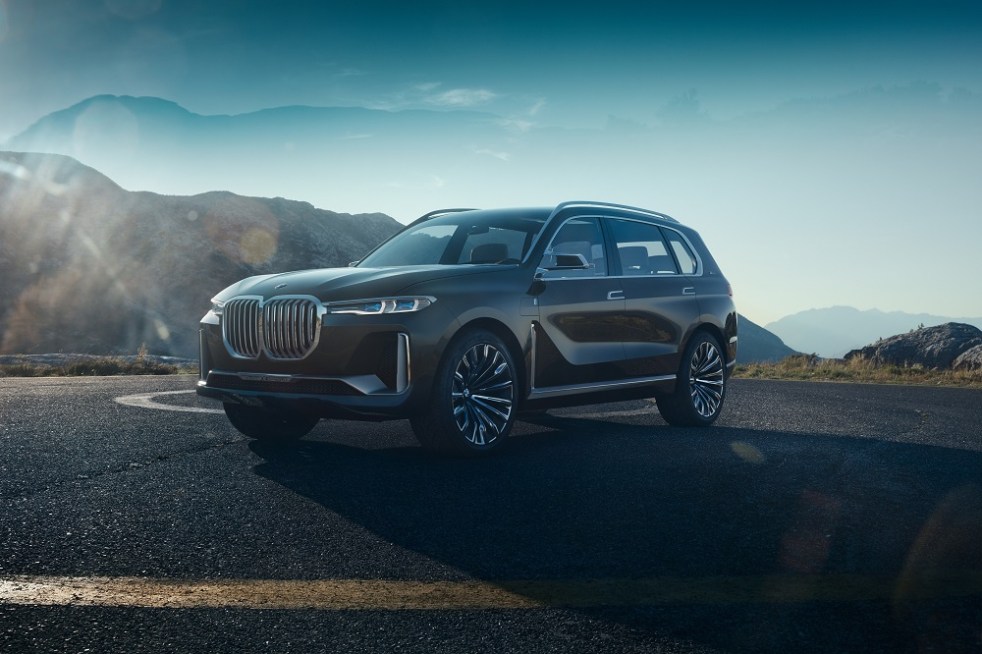
The BMW X7 Concept

The new products unveiled at the 2017 Frankfurt show highlight the status of BMW as a manufacturer of vehicles that transmit unrivalled levels of emotional appeal with their inspirational design, trailblazing innovations and the driving pleasure for which the brand is renowned. BMW is also showcasing the latest technological developments for the future of personal mobility, in which powertrain electrification, comprehensive digitalisation and other advances in the field of automated driving will play a particularly important role.

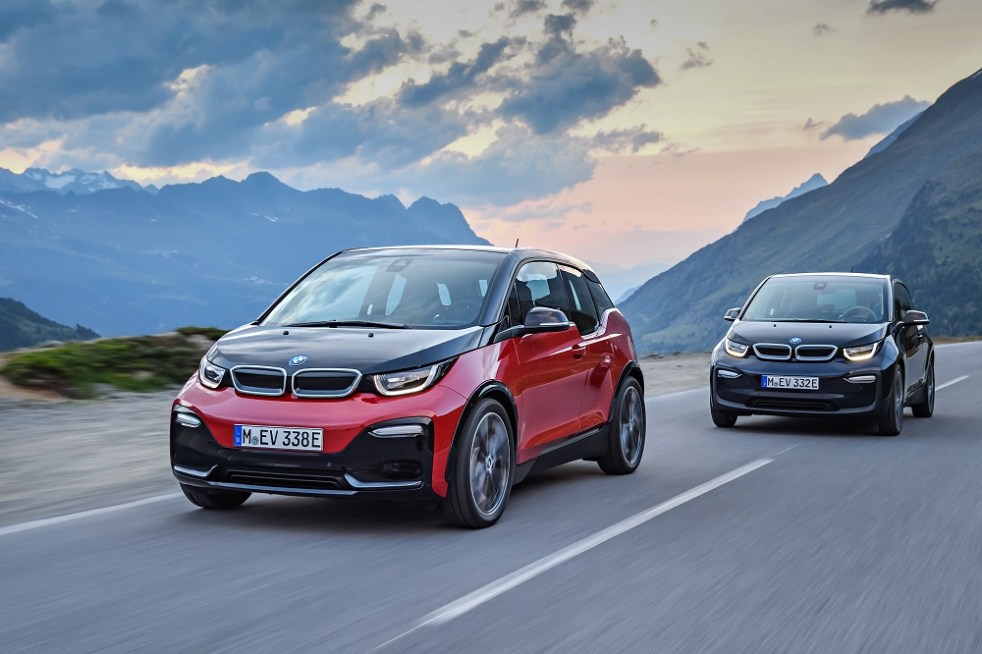
The new BMW i3 and BMW i3s

The BMW Group offers a clear image of the electric mobility of the near future with the world premiere of the BMW i Vision Dynamics. This four-door Gran Coupe study with pure-electric drive system combines electric mobility with the BMW brand values of dynamism and elegance. The BMW Concept X7 iPerformance, BMW Concept 8 Series and BMW 7 Series Edition 40 Jahre are all testimony to BMW’s expanded presence in the luxury segment.

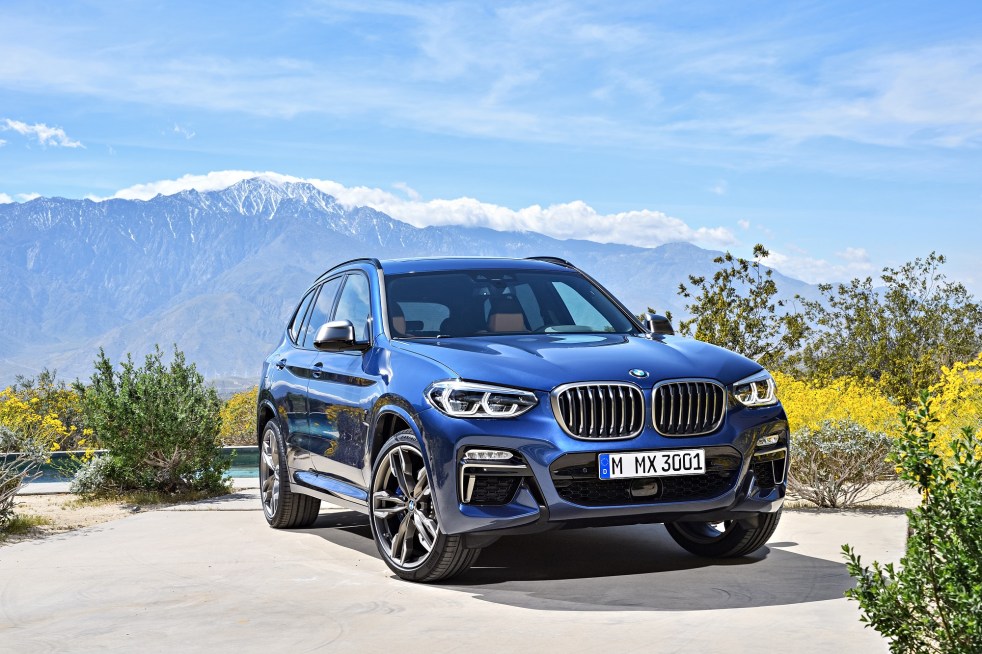
The all-new BMW X3

Other facets of driving pleasure are demonstrated at the 2017 Frankfurt show by the BMW Concept Z4, the new BMW 6 Series Gran Turismo and the new BMW X3 respectively – including exhilarating open-air fun, elegance and long-distance comfort, not to mention multi-faceted sportiness. The know-how gleaned from competing in motor sport is a traditional component of the BMW brand’s DNA, and it endows the new BMW M8 GTE with ideal credentials for endurance racing.

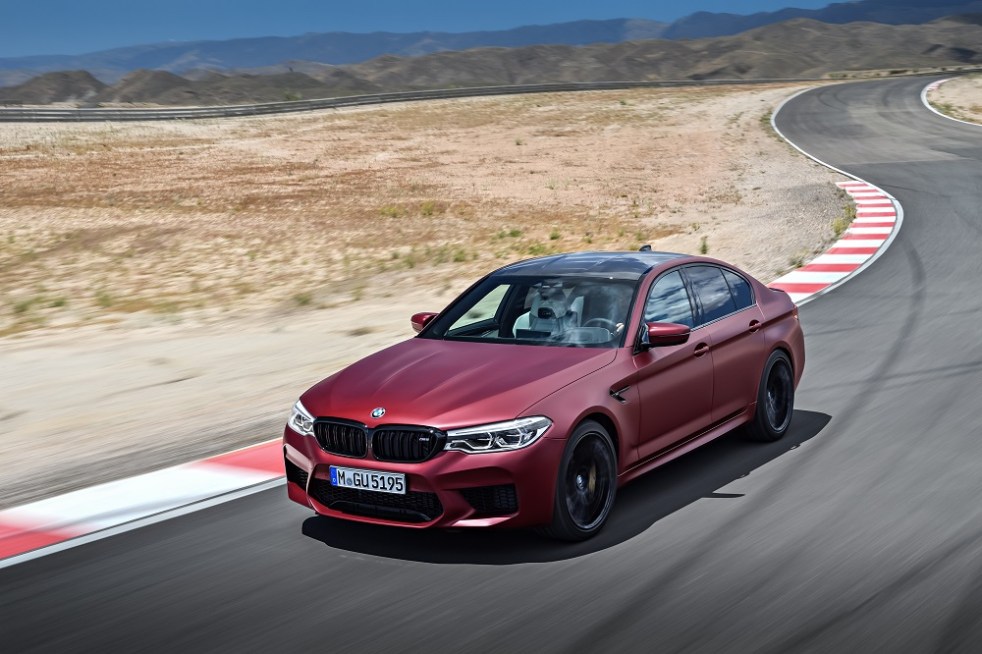
The new BMW M5

The new BMW M5 (fuel consumption combined: 10.5 l/100 km [26.9 mpg imp]; CO2 emissions combined: 241 g/km), meanwhile, transfers these high-performance genes from track to road to stunning effect. The new edition of the BMW i3 (combined fuel consumption: 0.0 l/100 km; combined electric power consumption: 13.6 – 13.1 kWh/100 km; combined CO2 emissions from petrol: 0 g/km), which is making its debut appearance at the 2017 Frankfurt Motor Show together with the new and even sportier BMW i3s (combined fuel consumption: 0.0 l/100 km; combined electric power consumption: 14.3 kWh/100 km; combined CO2 emissions from petrol: 0 g/km) illustrates just how closely the company already associates driving pleasure with sustainability.

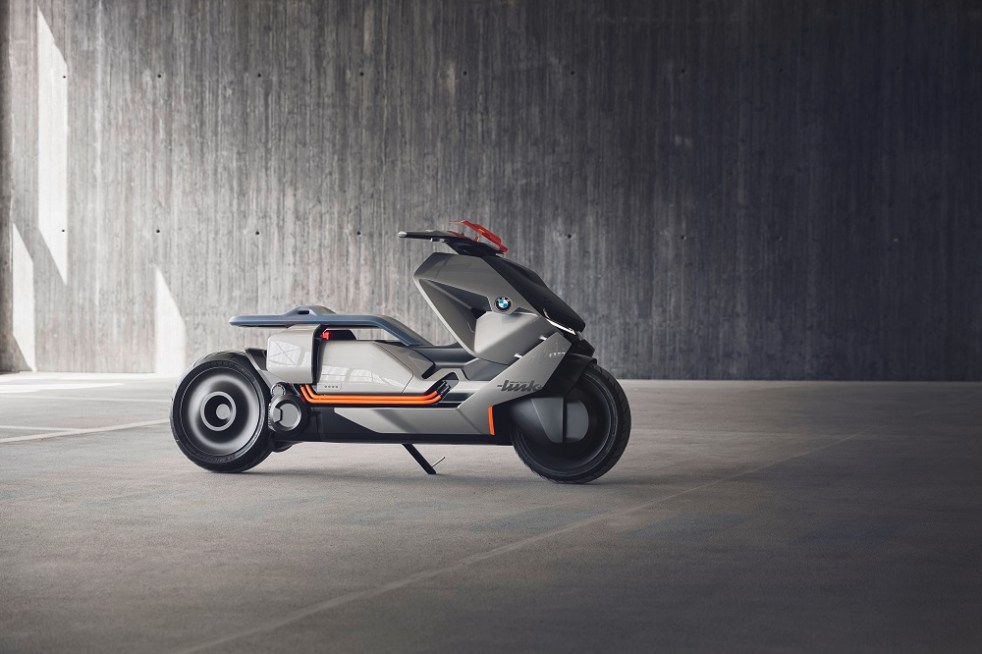
The BMW Motorrad Concept

BMW Motorrad is also placing the spotlight on the intensely emotional and sustainable sides of mobility in Frankfurt. The BMW Motorrad Concept Link boasts an all-electric drive system and state-of-the-art connectivity technology, as well as numerous other pioneering ideas for urban mobility in tomorrow’s world.

Volkswagen Brand Points The Way To The Automotive Future

Volkswagen T-Roc R-Line 1

The Volkswagen brand is pointing the way to the future at its motor show appearance at this year’s International Motor Show (IAA) in Frankfurt: along with the world premiere of the new I.D.Crozz – a zero emission SUV that will go into production in 2020 – three other premieres will be featured: the new T-Roc, the new Polo GTI and the updated Golf Sportsvan.

Dr Herbert Diess, Chairman of the Brand Board of Management Volkswagen Passenger Cars: “We will be thoroughly updating our vehicle range by 2020 and expanding into important segments. In 2025 Volkswagen Brand will already be offering 23 all-electric models and invest 6 billion euros in electric mobility over the next five years. In this process, the different drive technologies will continue to have currency for many years to come. It makes sense for diesel, petrol and electric drives to mutually complement one another.”

Volkswagen T-Roc R-Line 2

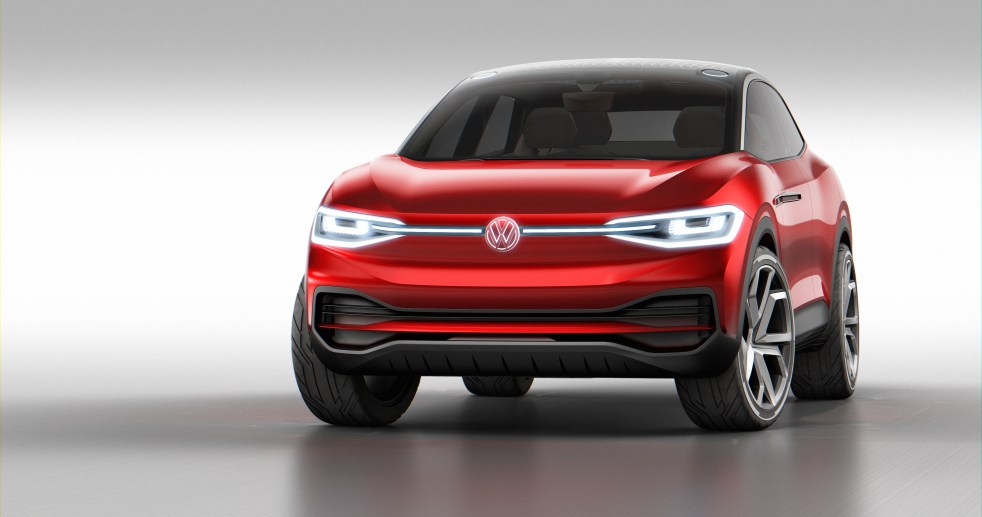
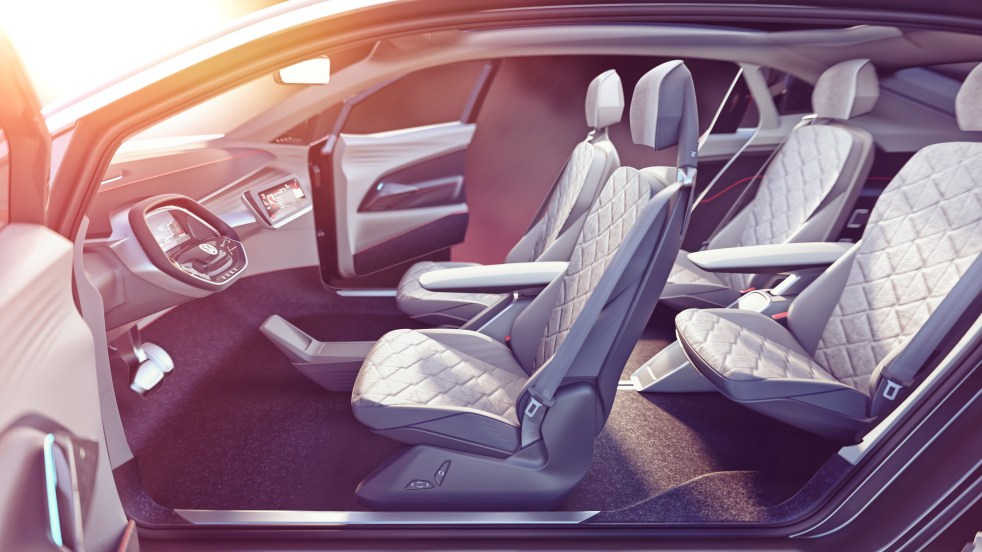
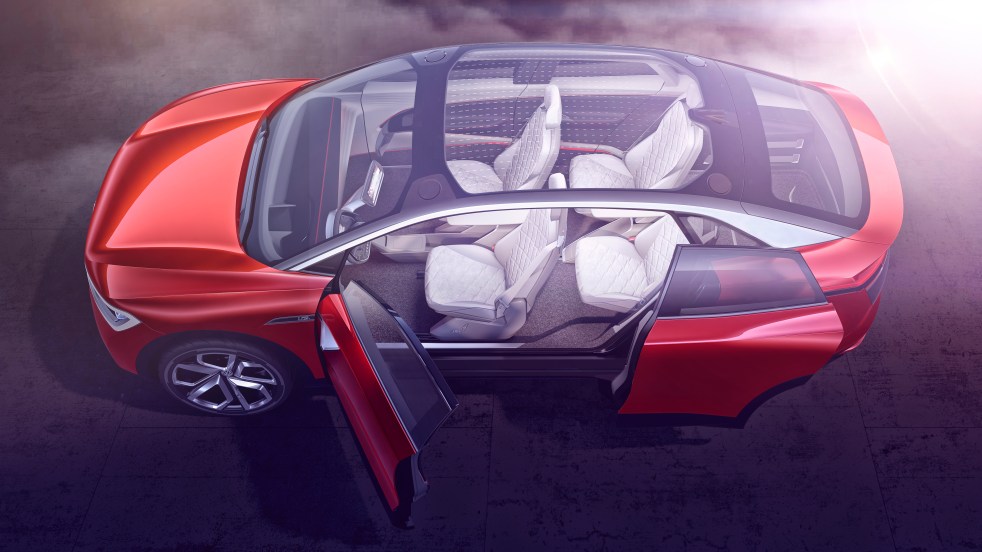
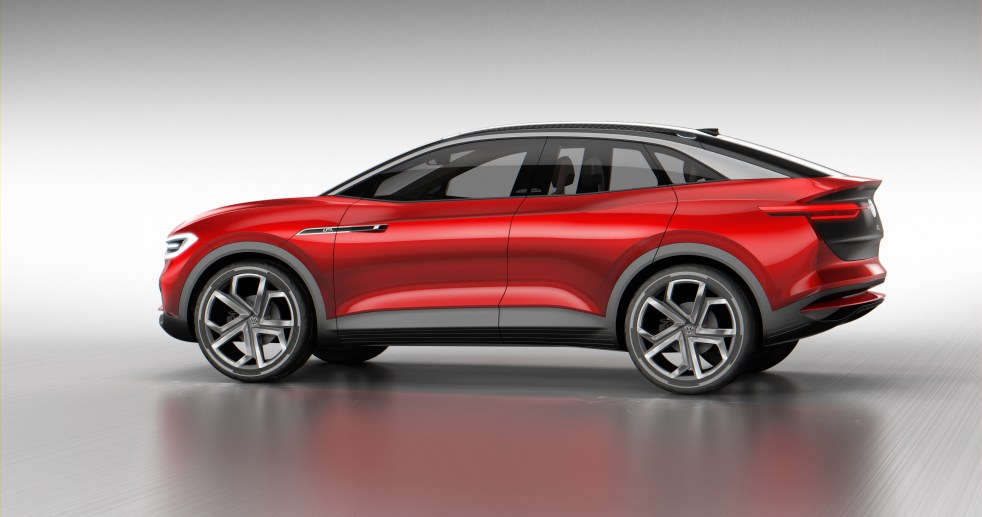
In presenting the updated I.D. Crozz, a four-door electric concept car, the Volkswagen brand is offering a look at the SUV of the future. This crossover of SUV and coupe, which makes a masculine and powerful impression, has been systematically further developed with an eye towards a production car. In its interior, the new I.D.Crozz impresses with a large amount of space and a highly versatile seating concept. B-pillars were omitted in the I.D. Crozz, so that the large swinging and sliding doors could be opened wide, and it is even possible to transport a crossbike without any trouble. The CleanAir system – a new Volkswagen development – continually supplies clean air to the interior. Now it is also possible to open and close the doors and activate the fully automated ‘I.D. Pilot’ driving mode by voice command. The front and rear axles each have one electric motor drive whose torque distribution is controlled via an ‘electric propshaft’. The driving range of the SUV that outputs 225 kW (system power) and boasts a top speed of 180 kmph (111mph) is up to 500 kilometres (310 miles) (NEDC) on one battery charge.

Showing just how broad the range of new Volkswagen products is at the IAA are the other show premieres: T-Roc, Polo GTI and the updated Golf Sportsvan.

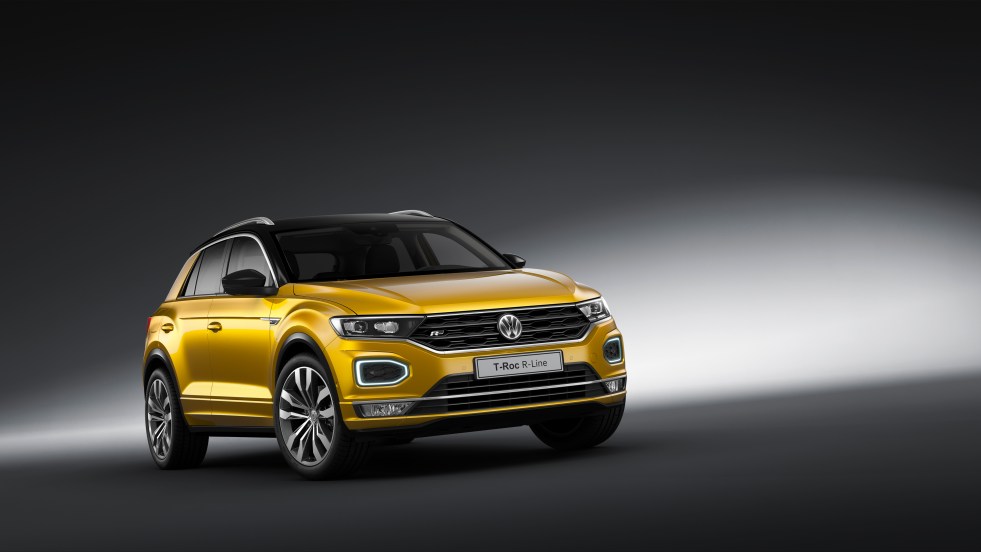
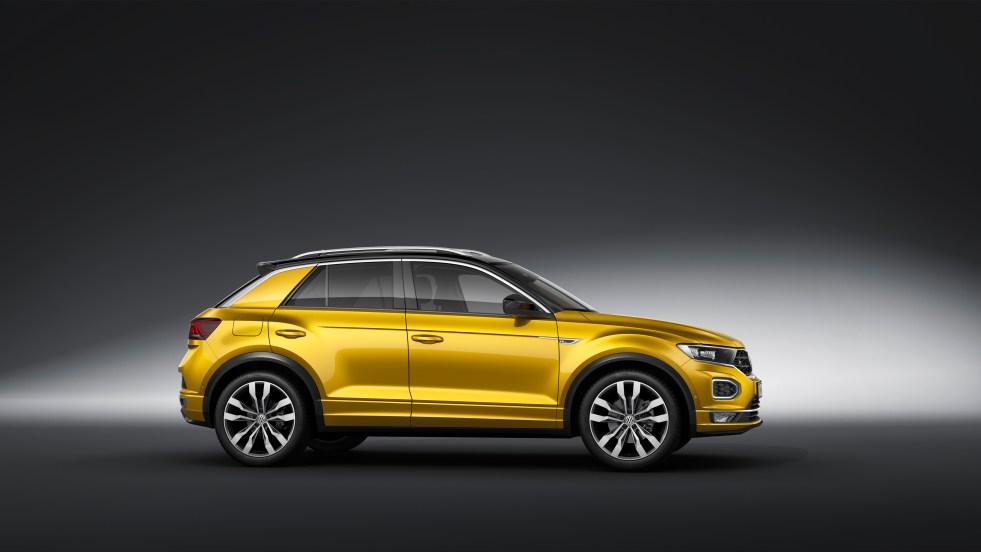
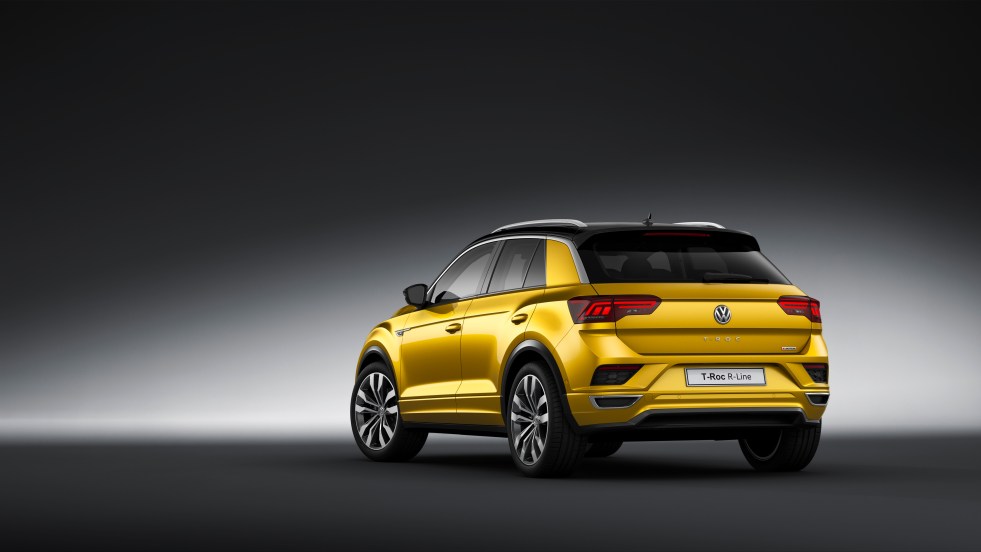
The T-Roc: as part of the largest model campaign in the brand’s history, Volkswagen will soon be extending its model line-up to include the new, expressively designed T-Roc. The crossover model, which is a completely new development, celebrated its world premiere just around three weeks ago, and it will bring fresh momentum to the class of compact SUVs. The all-round vehicle, which can be ordered with either front-wheel or all-wheel drive, combines the aplomb of an SUV with the agility of a sporty compact model. And it does indeed rock the segment – in varying ways depending on specification and above all colour combination. For the T‑Roc is the first Volkswagen SUV that will be available to order in two-tone paintwork with visually contrasting roof section (including the A‑pillars and exterior mirror housings). The overall package of the new T‑Roc is rounded out by modern assistance systems (Front Assist and Lane Assist are standard; Traffic Jam Assist is optional), a new generation of Active Info Display, agile, efficient engines, ideal connectivity and ride comfort that is on par with the Golf. Presented for the first time at the IAA is the T-Roc in an R-Line version, which offers even more exclusiveness.

Volkswagen T-Roc R-Line 3

Inseparably associated with Volkswagen is the letter combination GTI – the world’s most familiar identifier for sporty compact cars. Now a new Volkswagen GTI is launching: the next Polo GTI, which is also celebrating its show premiere in Frankfurt. This means that the Wolfsburg-based manufacturer will have three GTI models in its ‘GTI family’ line-up: the iconic Golf GTI (169 kW / 230 PS5 and 180 kW / 245 PS6), the up! GTI (85 kW / 115 PS7) that launches in 2018 and the new Polo GTI with 147 kW / 200 PS. They all share the combination of a high level of agility, low weight, stiff yet comfortable running gear, a safe front-wheel drive system and an ergonomically optimal seating position behind a grippy sport steering wheel. Added to these are GTI-specific features like the typical red stripe in the radiator grille and the legendary ‘Clark’ plaid seat covers.

Another vehicle being shown to the public for the first time at the IAA is the updated Golf Sportsvan. This is the favourite model for all of those who swear by the Golf but prefer greater seat height, versatility and space.

Technical highlights of the updated Golf Sportsvan are three new petrol engines (TSI), new infotainment systems (top system has gesture control for the first time), an extended range of assistance systems and new standard equipment features such as LED tail light clusters. The design has been sharpened with new bumpers, a new radiator grille and new LED tail light clusters. The Golf Sportsvan is one of the most versatile cars in its class with a cargo capacity of up to 1,520 litres and a rear bench seat that has 180 mm of longitudinal adjustment. Pre-sales of the updated compact MPV begin this autumn for Germany.

Volkswagen Brand Presents The New I.D. Crozz

Volkswagen I.D. CROZZ II (1)

The countdown has begun for a breakthrough in electric mobility, and 2020 could represent the turning point. That is because the Volkswagen brand is accelerating into this new era by developing a new generation of innovative electric vehicles – the I.D., I.D. Buzz and I.D. Crozz.

Dr Herbert Diess, Chairman of the Volkswagen Brand Board of Management, had this to say at the Volkswagen Group Night: “The Volkswagen Brand will be investing 6 billion euros in electric mobility over the next five years. Our task is to make modern technology available to many people. This is especially important in times of technological transformation. One thing is clear: The Golf of the future must once again be a people’s car!”

Autodesk VRED Professional 2017 SP1

Traditionally, Volkswagen hosts a Group Night event on the evening before the International Motor Show (IAA) opens in Frankfurt, at which it presents its innovative new products. On this occasion, the Volkswagen brand is presenting the new I.D. Crozz in a world premiere. The further developed electric concept vehicle is part of the electric campaign in which Volkswagen will be expanding its electric car model range – initially with three models from 2020. In 2025 the Volkswagen Brand will already be offering 23 all-electric models.

Autodesk VRED Professional 2017 SP1

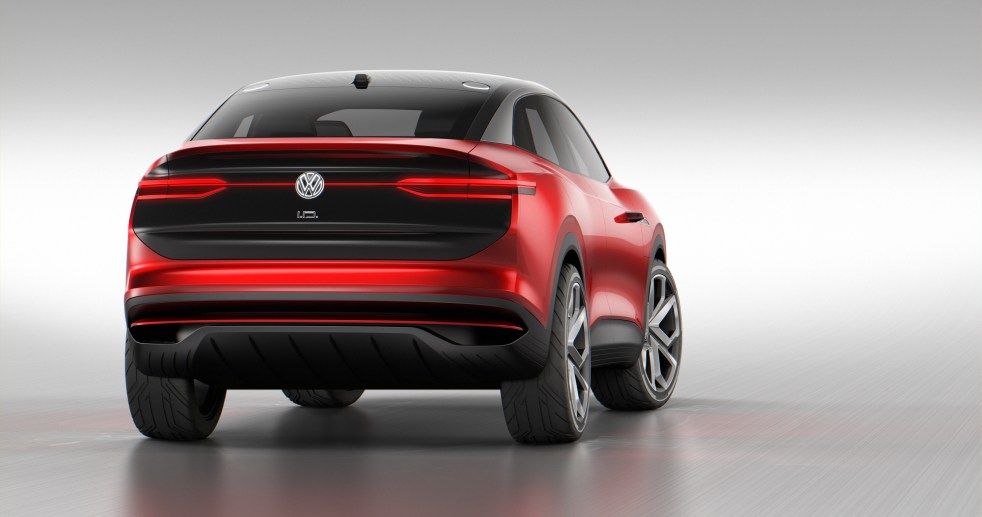
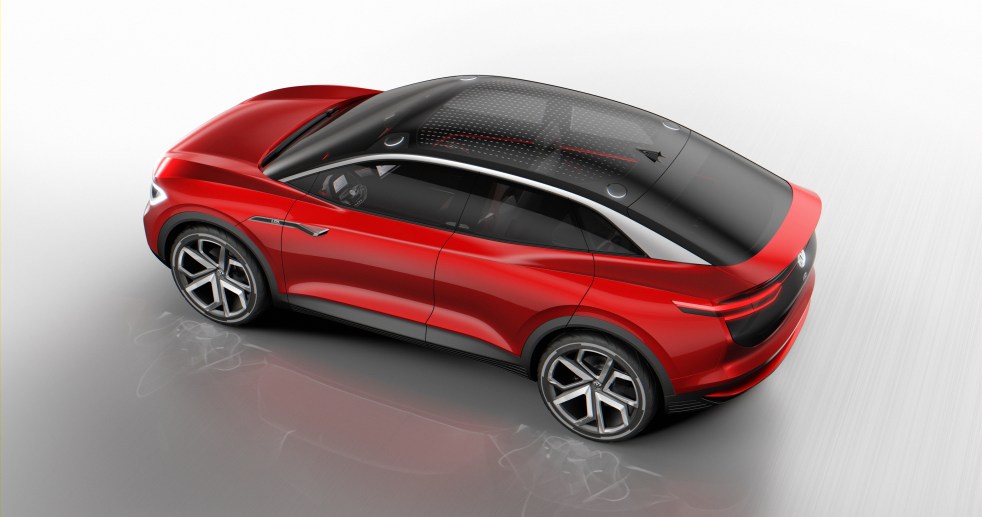
The new I.D. Crozz is a crossover of an SUV and a four-door coupe, which has been further improved towards a production implementation. This can be seen, for instance, in various design changes to the front and rear ends of the concept car that is painted in ‘Hibiscus Red Metallic’. The I.D. Crozz makes a powerful and masculine impression with its wide bonnet, cleanly contoured wings and roof with a high-gloss black exterior finish. The striking design of the LEDs of the headlights also point the way towards production and generate an unmistakable light graphic.

Volkswagen I.D. CROZZ II (5)

The interior has also been re-equipped and further developed – as an Open Space – with a superior amount of space and highly versatile seating concept. B-pillars were omitted in the I.D. Crozz, so that the large swinging and sliding doors can be opened wide, and it is even possible to transport a crossbike without any trouble.

Always ensuring a supply of clean air in the interior, regardless of ambient conditions, is the CleanAir system that has been newly developed by Volkswagen. The menu provides information on the quality of the air in the car and on the system’s current activity. In addition, the updated I.D. Crozz is equipped with a new voice assistant, which enables opening and closing of the doors via voice command. It is also possible to activate or deactivate the fully automated driving mode ‘I.D. Pilot’ by voice instruction.

Volkswagen I.D. CROZZ II (6)

The I.D. Crozz is a sporty, zero-emission all-round vehicle that is designed to be interactive, and whose electric 4MOTION all-wheel drive system is as impressive on unpaved trails as it is in adverse weather conditions. One electric motor works at the front axle and one at the rear, and torque distribution is controlled via an ‘electric propshaft’. The driving range of the SUV that outputs 225 kW (system power) and boasts a top speed of 180 kmph is up to 500 kilometres (NEDC) on one battery charge. The high-performance battery can be charged to 80 per cent of its energy capacity in 30 minutes using a fast-charging system.

An ideal weight distribution between the two axles is achieved by centrally integrating the battery within the I.D. Crozz and having the two drive system units at the front and rear. This enables the new I.D. Crozz to demonstrate handling characteristics on a par with those of a Golf GTI. Playing a significant role here are the running gear with electronically controlled dampers, a new multi-link rear suspension design and also newly developed MacPherson struts.

Autodesk VRED Professional 2017 SP1

The future generation of the I.D. family will extend the Volkswagen model range. In 2020, Volkswagen will already launch the compact, all-electric, four-door I.D. in the Golf segment, while launching the modern I.D. Crozz in the SUV segment. In addition, the I.D. Buzz – a re-interpretation of the legendary Volkswagen Bulli – will enter the market in 2022. All three I.D. concept cars share the new ‘all-electric architecture’ that was developed as a common platform and a completely new and avant-garde design. Other characteristics are zero-emission driving ranges up to 600 kilometres, a large amount of space, compact exterior dimensions and digitalisation of all displays and controls. In addition, the new and innovative ‘vw.OS’ operating system, which enables fast software updates and upgrades, will support each member of the I.D. family – in a way similar to the usual updating methods for smartphones.