Tata Nexon Arrives In Style

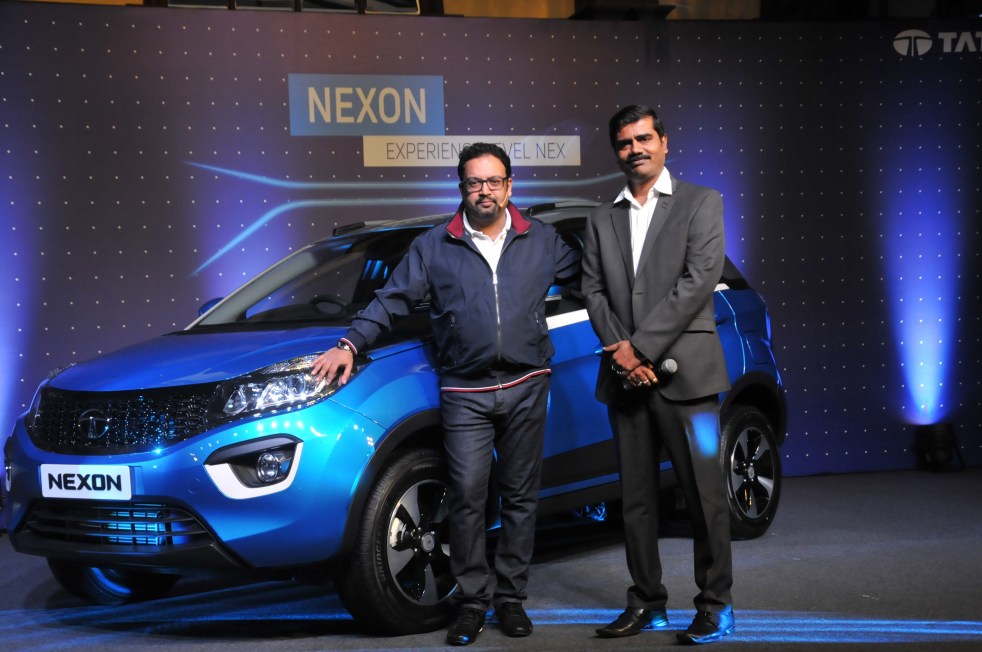
Image 1 (1)(L-R) : Reetesh Vashist, East Zone Head, Tata Motors Ltd. and Pratap Bose, Head – Design, Tata Motors at the launch the Tata Nexon in Kolkata.

Tata Motors has announced its entry into the growing Compact SUV segment with the commercial launch of its new Gen-next lifestyle SUV, the Tata Nexon.

Targeted at the personal car buyers, the Tata Nexon is the 4th product based on the ‘Impact Design’ philosophy. It brings together global and contemporary design with best-in-class technology and features for the ones who would like to express themselves with a unique style of their own. Keeping customers and their aspirations at the heart of the business, the the Tata Nexon aims to deliver an emotional elevation through more individualized experiences in the passenger vehicles market.

With an introductory price of Rs. 5,99,003 ex-showroom Kolkata, for the petrol variant and at Rs. 6,99,224, ex-showroom Kolkata, for the Diesel variant, the the Tata Nexon is the most competitively priced SUV in this segment, with class-leading features. Starting immediately, the Tata Nexon will be on sale, across 650 Tata Motors authorised sales outlets in India.

Image 2(L-R) : Pratap Bose, Head – Design, Tata Motors and Reetesh Vashist, East Zone Head, Tata Motors Ltd at the launch of the Tata Nexon in Kolkata.

Pratap Bose, Head of Design at Tata Motors said, “The Tata NEXON is a revolutionary design, “Breaking the BOX” with an aerodynamic silhouette. This design element of the car enhances its sporty character and represents the evolution of the SUV design featuring the practicality and strength of an SUV with style of a sports coupe. It is the fourth product expressing the IMPACT design philosophy and is stylishly crafted, demonstrating the optimum balance of premium craftsmanship and advanced technology.

We are confident that our relentless efforts towards design will play a pivotal role in our long-term success in this dynamic market and NEXON will further usher in a new chapter of our growth story.”

The Tata Nexon is a revolutionary design of “Breaking the Box” with an aerodynamic silhouette. This design element of the car enhances its sporty character and represents the evolution of the SUV design featuring the practicality of an SUV with style of a sports coupe.

Available in four variants – XE, XM, XT, XZ+, the Tata Nexon will come in five exciting colour options – Vermont Red, Moroccan Blue, Seattle Silver, Glasgow Grey and Calgary White and will come with a standard warranty of 75000 kms or 2 years, whichever is earlier.

Tata Nexon Introductory Prices (Ex-Showroom Kolkata):

Petrol

XE – Rs 5,99,003

XM – Rs 6,69,006

XT – Rs 7,46,489

XZ+ – Rs 8,61,493

XZ+ with dual tone roof – Rs 8,76,494

Diesel

XE – Rs 6,99,224

XM – Rs 7,65,919

XT – Rs 8,31,749

XZ+ – Rs 9,46,753

XZ+ with dual tone roof – Rs 9,61,754


Volkswagen Announces The Start Of Production For The New Passat In India

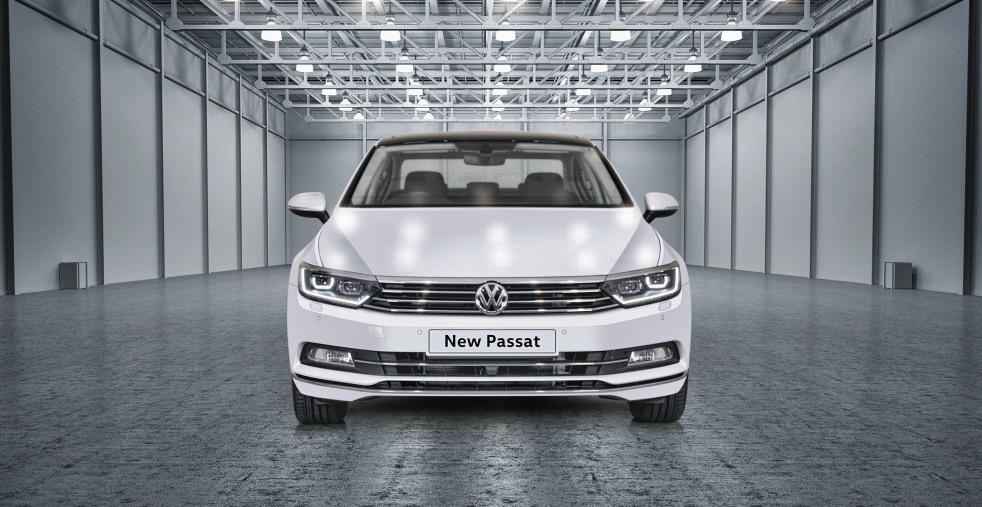
Volkswagen announces the start of production for the New Passat in India

Volkswagen today announced the start of production for its premium luxury sedan, Passat at its Aurangabad facility in Maharashtra, India. Continuing the momentum to introduce its global portfolio in India, Volkswagen will launch the New Passat later this year, the first sedan based on the MQB platform in India.

Commenting on the occasion, Steffen Knapp, Director, Volkswagen Passenger Cars, Volkswagen Group Sales India Pvt. Ltd. said, “We are happy to bring back one of our most successful premium luxury products to the Indian market, the Volkswagen Passat. With the introduction of the Passat we extend our portfolio, encompassing a wide variety of products from a hatchback to a luxury sedan. The Passat exudes style, timeless design, exemplary performance, and is symbolic of a luxurious lifestyle. We are proud to introduce this car with an iconic heritage to the Indian market.”

The Passat will be available with a 2.0L TDI, 177 PS engine mated to a 6-speed DSG automatic gearbox aiming to offer a blend of performance, efficiency, luxury and most importantly safety.

McLaren Sprecial Operations Combines Bespoke Modern Elegance And Historic Colour To Produce Striking MSO Collection 570GT

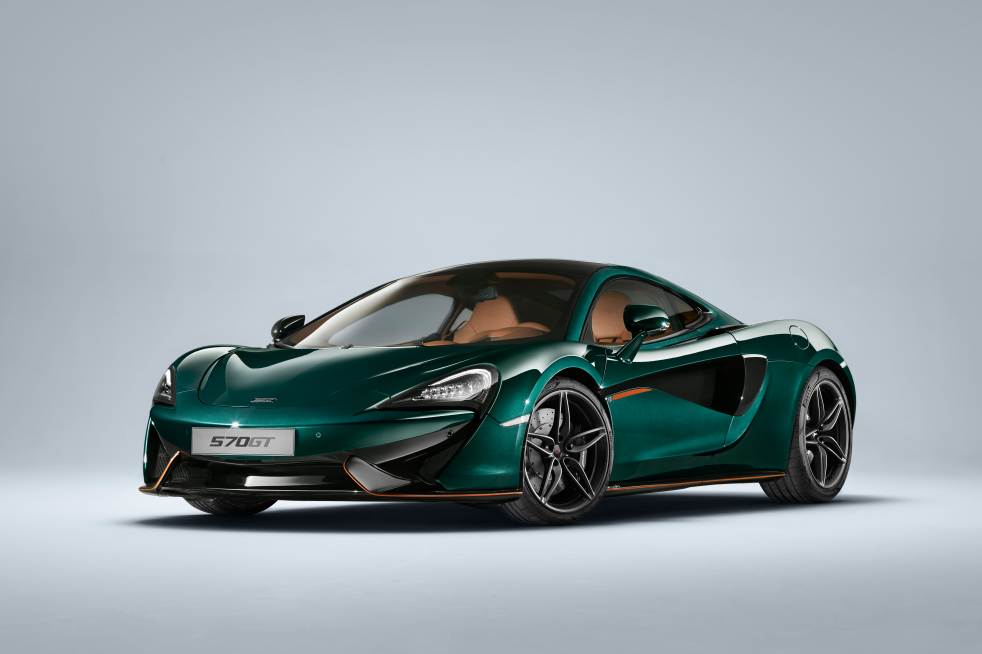
MSO McLaren 570GT in XP Green 1

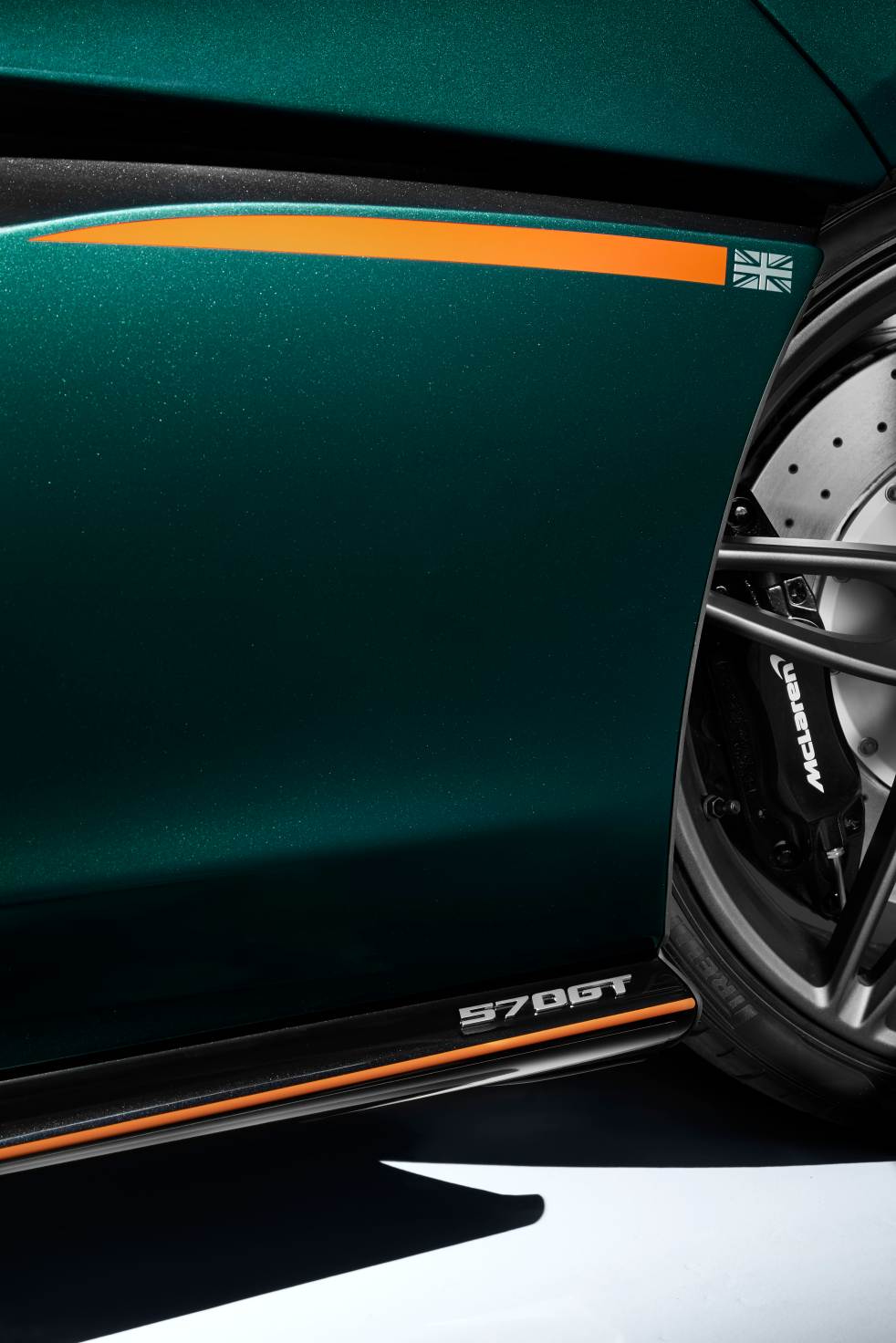
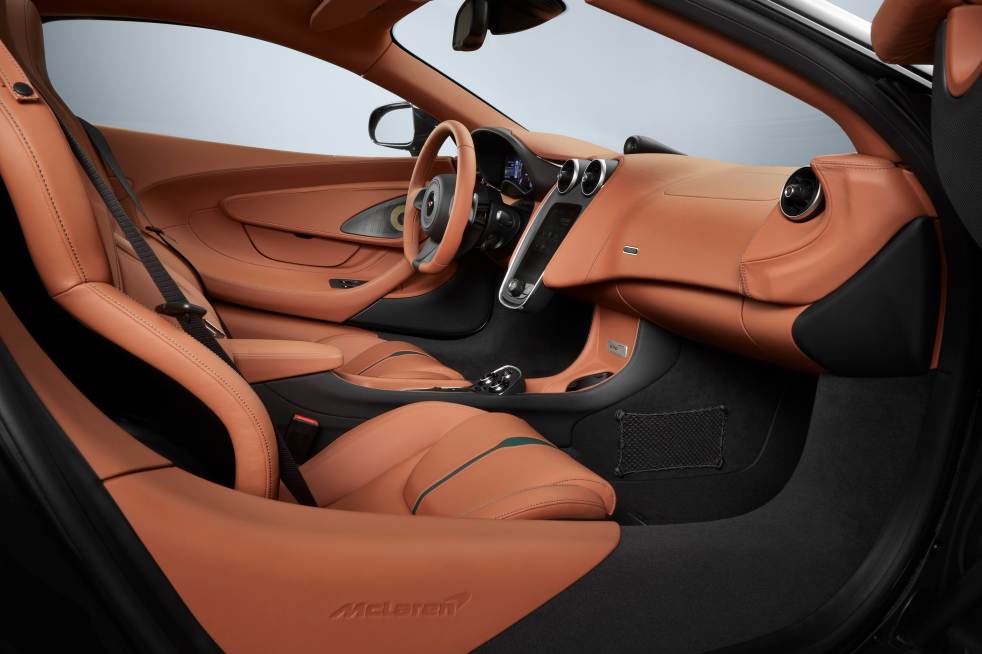
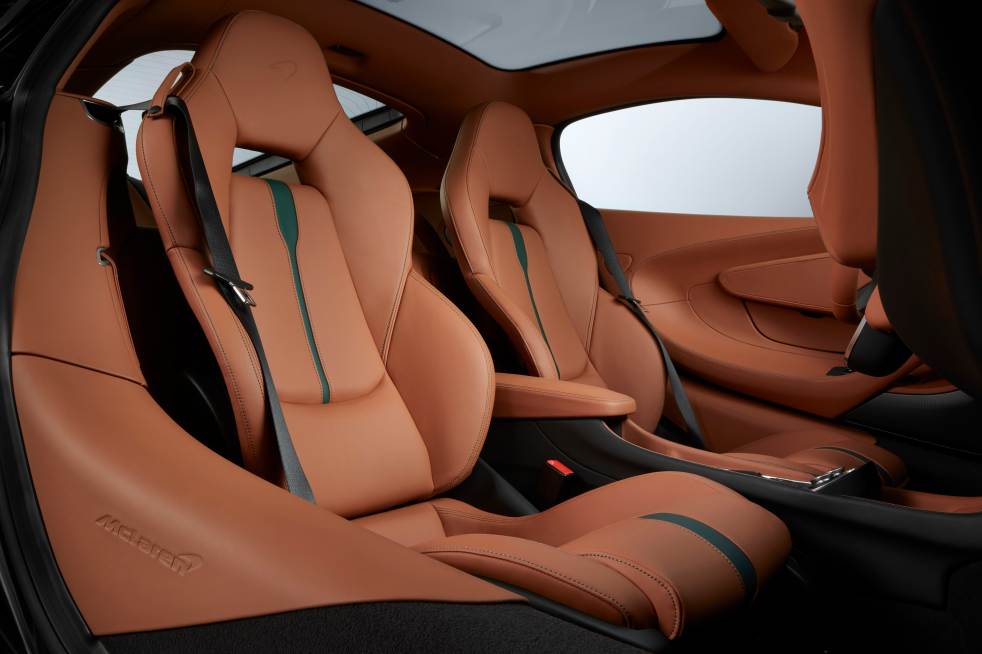
A limited number of bespoke McLaren 570GT models will this month become available to a fortunate few McLaren buyers in Europe. Commissioned from McLaren Special Operations as an MSO Collection, the six cars are finished in McLaren historic ‘XP Green’ exterior paint – the same colour as the famous F1 XP GT ‘Longtail’ homologation model built in 1997. The Saddle Tan leather interior additionally features green leather inserts in the seats and green contrast stitching, as well as a dedication plaque mounted on the centre tunnel beneath the infotainment screen identifying each car as one of six in the Collection.

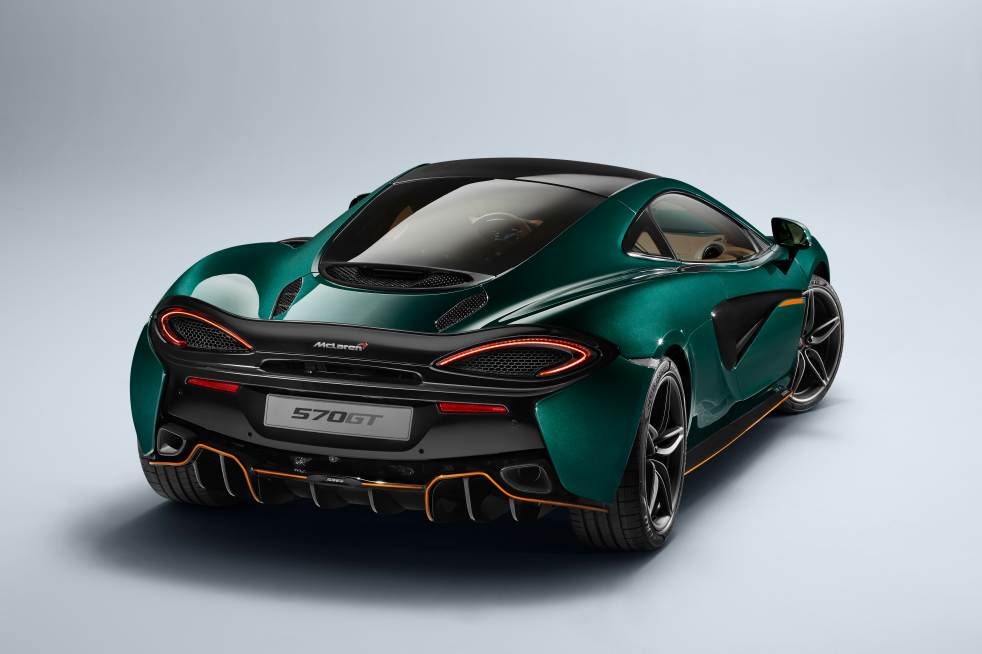
MSO McLaren 570GT in XP Green 2

The exterior of the car is adorned with Saddle Tan aero pin-striping edging the front aero blades, side skirts and rear diffuser, while each door carries a stripe of the same colour that runs rearwards from a subtle Union Jack emblem finished in silver-grey. MSO Black exterior components replace the front splitter, door inserts, side air intakes, side skirts and rear bumper, diffuser and spoiler, all of which would usually be finished in Dark Palladium or body colour.

MSO McLaren 570GT in XP Green 3

“Any McLaren is a very special vehicle, but we are also seeing an increasing number of buyers expressing a desire to personalise their cars with additional features and options as well as colour and trim choices outside of the core specification offered,” explained Jolyon Nash, McLaren Automotive Executive Director, Global Sales and Marketing. “As well as making it possible for individual McLaren owners to have exactly the McLaren they want, McLaren Special Operations will continue to create limited-volume collections such as these six 570GT models in XP Green, to further extend customer choice.”

MSO McLaren 570GT in XP Green 4

The McLaren 570GT is the most luxurious and refined Sports Series model, providing long-distance comfort and increased versatility while retaining a thrilling driving experience. Subtly visually different to the 570S Coupe, its classic GT lines sweep down into a side-opening rear glass hatch to provide an additional 220 litres of storage on the leather-lined touring deck, as well as an instantly recognisable identity. Chassis settings deliver the additional comfort expected from a car designed for touring, with spring rate stiffness reduced by 15 per cent at the front and 10 per cent at the rear compared to the 570S Coupe. The 570GT remains though a serious sports car, its 3.8-litre twin-turbocharged McLaren V8 engine producing the same outstanding 570PS and 600Nm as the Coupe, with performance to match.

The inspiration for the MSO colour and trim enhancements on the six 570GT models in the Collection is a combination of traditional British automotive hues and a very special car from McLaren’s own history – the F1 XP GT.

MSO McLaren 570GT in XP Green 5

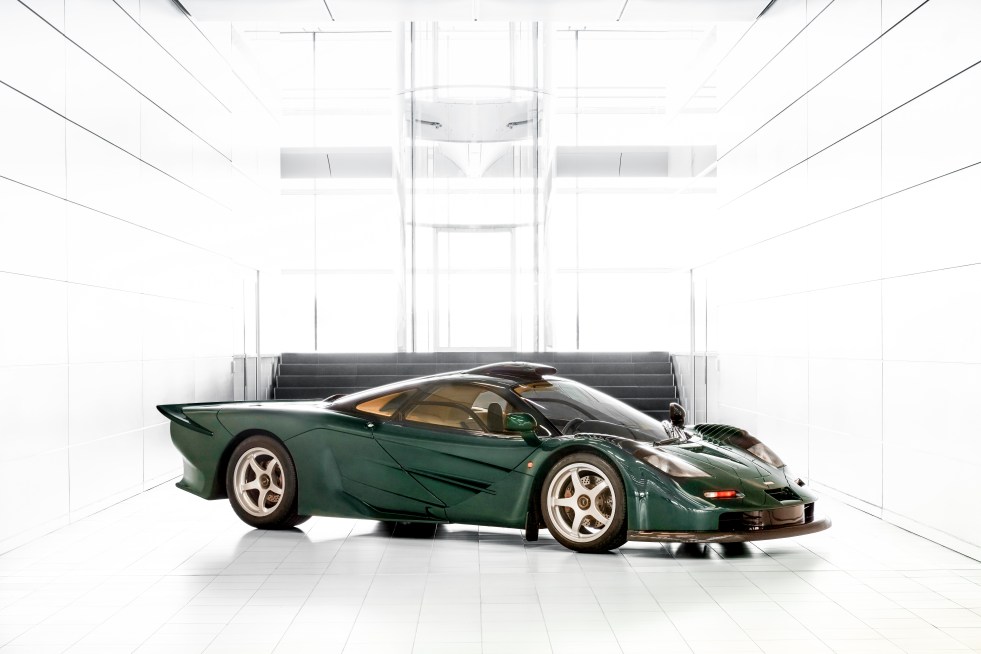
Although conceived as a road car, the McLaren F1 enjoyed significant motorsport success, including victory at the 24 Hours of Le Mans in 1995 on its first attempt. This meant that further track competition beckoned and to keep pace with dedicated racing opposition, a ‘Longtail’ GT race car was developed. F1 XP GT, instantly recognisable by the extended rear bodywork and distinctive colour, was the original road-going prototype built to satisfy the homologation requirements of motorsport governing body, the FIA. The car’s deep bottle green paint finish, cherished as XP Green in McLaren Special Operation’s historic paint palette, is now reserved for bespoke commissions.

McLaren F1 XP GT in XP Green_1997

The XP Green 570GT cars will be going to owners in the UK, Germany and the Netherlands. The MSO content in each is identical and adds £21,000 to the final price of the vehicle, which will depend on other options chosen. A specification that encompasses a By McLaren Designer Interior, GT Upgrade Pack (which includes vehicle lift, rear view camera, volumetric alarm upgrade, Bowers & Wilkins audio system and car cover) and 5-Spoke Lightweight Forged Wheels in Stealth finish among the options gives the XP Green MSO Collection McLaren 570GT a price of £188, 567.

Acharya Jagadish Chandra Bose’s 1925 Fiat Tipo 103

Jagadish-Chandra-Bose-Fiat TipoAcharya Jagadish Chandra Bose’s 1925 Fiat Tipo 103 bearing registration number WBA 3900 kept inside a glass enclosure at the Birla Industrial & Technological Museum, Kolkata.

Acharya Jagadish Chandra Bose occupies a unique position in the history of modern Indian science. Bose was the pioneer of experimental science in India and devised many instruments for his research both in physics and physiology. And while Bose’s scientific prowess led him to achieve worldwide fame, not many of us are aware of Bose’s love for his 1925 Fiat Tipo 103. Power Drive unveils the story.

Before 1919, the premise of Birla Industrial & Technological Museum, now at 19A, Gurusaday Road, was known as 18, Ballygunge Store Road. Record shows that the Tagores purchased it from Mirza Abdul Karim in 1898. Meera Devi, the fourth of Rabindranath Tagore’s five children, spent a large part of her childhood in this house. Later G.D. Birla bought the property in 1919 from Surendranath Tagore and from henceforth this premise came to be known as Birla Park.

After the Birlas took over the property, there were major changes. The house used by the Tagores was pulled down and architects N. Guin & Co. were called upon to design the main building structure as we see today. It is a colonial adaptation of a mixture of various styles of European Art. And inside this very building, in a glass enclosure stands Jagadish Bose’s 1925 Fiat Tipo 103.

BITMBirla Industrial & Technological Museum in Kolkata.

In 1916, the construction of Fiat’s Lingotto factory started under the direction of Giacomo Matte Trucco. The factory, the largest in Europe for its time, occupied five floors and had a futuristic test track on the roof. It soon became the emblem of the Italian automotive industry and was completed in 1922. It was here that the Fiat Tipo 103 was manufactured between 1925 and 1929.

The Fiat Tipo was a popular car of that era and it success led Fiat to manufacture several other variants of the Tipo. The vehicle has a coupe de ville body type (in French coach building parlance, a coupe de ville, refers to a town car that is “cut” by a division between the passenger and driver compartments) and a magneto ignition system. This four-cylinder car was capable of achieving a maximum speed of 130 kmph and could seat up to four passengers.

Bose shared a close friendship with Nobel Laureate Rabindranath Tagore and often visited his Jorasanko residence in this Fiat Tipo. The bard too had a fascination for automobile and his family owned several European and American cars including a 1933 Humber. On several occasions the poet Laureate also travelled in this car along with Bose. Jagadish Bose loved this car and continued to use this car until his death in 1937.

The authorities at Birla Industrial & Technological Museum have done a commendable job in restoring and preserving this historic car. The Fiat Tipo is on display at the Transport Gallery at BITM and worth a visit if history and classic cars stir your senses.

Rabindranath Tagore’s Humber

HumberNobel Laureate Rabindranath Tagore’s 1933 Humber bearing registration number WBA 8689 kept in a glass enclosure at Visva Bharati University in Santiniketan.

The 1933 Humber was perhaps the only car that Nobel Laureate Rabindranath Tagore ever called his own. He loved the car and used it till his last days. Beside the bard, this historic car has had illustrious passengers like Netaji Subhas Chandra Bose, Mahatma Gandhi, Acharya Jagadish Chandra Bose and Jawaharlal Nehru. Power Drive uncovers the tale of the Humber.

In the year 1938, Rabindranath Tagore’s eldest son and the first Upacharya of Visva Bharati – Rathindranath Tagore returned from the United States after completing his studies in Agricultural Science from Illinois. In the same year, Rathindranath purchased a pair of 1933 Humber sedans from HH Lilley, Rootes Ltd, which was the only Humber dealer for the whole of India, Burma and Ceylon. Its showroom stood at 42 Park Street in Calcutta. Rathindranath purchased these cars for 400 pounds each (approximately Rs 5300 in 1938). One of these two cars was kept at Tagore’s ancestral home in Jorasankho in north Calcutta, while the other was taken to Visva Bharati in Santiniketan.

Tagore was not keeping well in those days but still made it a point to walk to different ends of the campus every day. This is the reason why Rathindranath bought the car for him. Tagore just loved the car and would take a spin several times a day. It was the only motorised vehicle in those parts at that point in time and evoked a lot of awe, because the sight of it always meant that the poet was on his rounds. Tagore had also got the car customised by fixing sitalpati (handmade mats) in the interior of the car to keep it cool.

Humber was a British automobile marque which was started by Thomas Humber in 1868 and grew into one the largest and most well renowned British automobile manufacturers of all time. One of the most famous cars coming off its production lines was the 1933 Humber Snipe and Pullman sedan. The four door sedan’s power unit was a straight six of 3,948.5 c.c. with a bore and stroke 80×116 mm and over-head inlet and side exhaust valves.

Other mechanical innovations that featured in this car included:

  • A mechanical fuel pump
  • Radiator shutters operated by thermostat in the header tank
  • Engine and gearbox in one unit with silent-bloc trunnion mountings
  • A starter motor with 2-to-1 drive to ensure that the engine was spun rapidly when cold
  • A new frame with deep-section sides had an extra stiff and deep triangulated cross member in the middle
  • Suspension was, of course, non-independent with beam axles and half-elliptic springs
  • A new down draught carburetor

In 1931 when the Rootes Brothers bought a majority shareholding, the Humber lost its independent innovations, as numerous designers left Humber, lacking the freedom of work space. But eventually the 1933 Humber model regained its market share lost during the depression period and brought “the eccentricity” back into the British Automobile market.

Tagore’s 1933 Humber is currently on display at the Visva Bharati University in Santiniketan.

Vintage And Classic Car Restoration: Not Just A Hobby, But A Way Of Life

Buick1924 Buick Master McLaughlin Tourer

Vintage and classic car collection and restoration is not just a hobby; it is a way of life for many connoisseurs and car lovers across the globe. And this passion is growing with every passing year – a trend which is evident from the increasing number of participation at the vintage and classic rallies held in several parts of the country. But restoring a car to its former glory is a challenging task and a combination of a variety of factors determines your ultimate success or failure. So for those who want to tread down the part of collecting and restoring these ageless beauties, we have a few handy tips to share. Read on to find out.

Vintage or classic?                             

The one issue that needs to address at the very inception is whether one wants to acquire a vintage or a classic car. A vintage car is described as one which has been produced upto 1939, whereas a classic car is regarded to be one which has been manufactured between 1940 and 1960 with the notable exception of cars which were either produced or assembled in India. One also must bear in mind that though all the cars produced upto 1939 is a vintage, however, not all cars produced between 1940 and 1960 is a classic.


1932-Rolls-Royce-Phantom-II1932-Rolls-Royce-Phantom-II

Spotting the seller

Honestly, there is no particular source of tracing someone who is keen to sell their car. The news can be generated through almost any medium and at any given point in time. You will be surprised that sometimes, the news about vintage and classic can come from the unlikely of sources.

But generally collectors (or prospective sellers) can be categorised into three groups.

  • Firstly there are those who own a vintage or classic car but don’t desire to sell it.
  • Secondly, there are those who want to sell their cars but the ownership of the vehicle is disputed. My advice is ‘never touch these cars’ as you might get involved in uncalled for and unnecessary trouble.
  • Thirdly, there are those people who have been planning to restore their car for several years or even decades but haven’t been able to do so, mostly due to lack of funds. These are the folks who are most likely to sell their cars if you quote the right number.

1912ModelT1912 Ford Model T

Pocket Pinch

In the good old days (early 1960s to late1980s), owning a vintage or a classic wasn’t a very expensive proposition. Usually, the owner of the car would be more than happy to sell off their vehicle for merely a few thousand rupees and invest the money in buying himself a Fiat, Ambassador or a Maruti. They felt that they were selling off headaches and not cars because the new car would be more efficient and occupy less parking space.

But now the scenario has changed drastically. Today, owning a vintage or a classic car is regarded as a status symbol. Therefore, suddenly a lot of people have started buying vintage and classics not out of the love for cars but for merely for the sake of elevating their social status. Sad, but true.

Over the years, the number of cars available for sale is on the decline and the demand has witnessed a steady growth. This has led to a crisis of vintage and classic cars in the market and has made it extremely difficult for true car connoisseur and aficionados to collect more cars. Hence, if someone owns a vintage or a classic car and desires to sell it, he can charge an exorbitant sum of money for it depending upon the buyer’s profile. So if you want to pursue this hobby, make sure that you have deep pockets.

1947-MG-TC1947 MG TC

Restoration

Assuming that you have already acquired the car, it is time to discuss about restoration. While restoring a car always bear in mind that the objective is to restore the car to how it used to be in that era.

• To begin with you need to gather all available information on the car which you desire to restore. Years ago, anyone who wanted to restore a vintage or classic car had to purchase expensive books that could teach them how to achieve their vision. Tips on car restoration were few and far between. But today, virtually everything is available on the Internet. In addition, there are clubs and forums where you can meet other like minded individuals who also share your interest and can assist you in restoring your car. Best of all, you can find inexpensive e-books that can help you towards your goal in breathing new life into an old car.

• You have to put together a team of skilled mechanics. Preferably, look for people who have some prior experience and knowledge about vintage and classic cars and have a knack for restoration. The problem with modern mechanics is that they always want to replace parts and not repair them. Such souls will not serve your purpose.

• A lot of vintage and classic cars have a great amount of woodwork. So you also need to find yourself a good carpenter to get the job done.

• Chrome parts are present in almost all the vintage and classic cars. So finding an electroplating workshop is important. Unfortunately, due to lack of business, most of the electroplating workshops have wound up. Hence you have to make do with the ones which still exist, although some of them may not offer top class workmanship.

• Mechanical parts are not readily available in the market and there are very few stores which still have some old parts in their stock. So that’s a problem. Previously the spare parts used to come packed in paper boxes with details printed on them. And now that with time those paper boxes have either deteriorated or altogether vanished, identification of those spare parts has become difficult even for the shopkeepers themselves. Hence in many cases, when you are scouting for a spare in the market, you are likely to come across shopkeepers who are not aware of whether they have a certain spare in their stock or not. But if they allow you to scan through their old stock, you might just be lucky to chance upon what you are looking for.

• The good part of the story is that we have very good craftsmen in India and so you can literally fabricate almost any part you want. But this is only possible if the part to be fabricated is physically present irrespective of its condition. However, in the complete absence of the part, one has to seek guidance from an expert to find out exactly what is to be fabricated and how.

• Another major issue is getting the right set of tyres. Some of the Indian companies have the mould but they are no longer interested to manufacture an odd size tyre. So in most of the cases the tyres have to be imported from abroad at astronomical prices.

• Most of the old cars had a 6 volt battery. But at present, no reputed company manufactures 6 volt batteries any longer. So it needs to be replaced with the 12 volt battery and hence we need to throw away lot of 6 volt components and replace it with 12 volt components. 6 volt bulbs are also no longer available.

• Carpets, seat cover fabric, hood material and paint should strictly be as per the era.

VW_Beetle1962 Volkswagen Beetle

Maintenance

One you have been able to restore the car, it time to start thinking about its maintenance.

• Storing your car properly is of utmost importance. You need an exclusive covered weather proof garage to store your car. Do not park your car in the open or on the street.

• Generally, the best season to drive your vintage or classic is from November to May. Avoid taking the car out during the monsoon and jack up the car when not in use. This saves the tyre life.

• Keep your car a little above ground level to avoid damp.

• Petrol tank should be drained out when the car is not in use. This will prevent the petrol from rotting and prohibit line clogging.

• Apply a coat of wax or lacquer on the chrome parts to retain the shine and prevent chrome degeneration.

• If the car has leather seats then they have to be polished with cream to prevent the seats from creaking. Even when the car is not in use the seats should be polished at least once every month.

• Before again using the car after the departure of the monsoon, the car should be fully serviced, cleaned and polished. Oil should be checked.

• Last but by no means the least, the car should be cleaned on a regular basis and started periodically.

1935-Austin1935 Austin 7

What next?

In addition to the vintage and classic car clubs throughout the world, there are car shows, rallies, auctions and online sites dealing with these ageless beauties. Ever since cars became a part of our lives, they have been prized by their owners. And never more so than right now. So if you choose to enter your car in a car rally, then you have to pay special attention to some important point.

  • The car should be restored as per original manufacturer’s specification.
  • It should be in top mechanical condition.
  • You should not install any additional gadgets or accessories which do not conform to the era that the car belongs to; else it will lead to losing points.
  • Leaking gear boxes, differential and engine sumps if detected will result in losing points.

Mercedes-Benz 170 V: Seeped In History

Mercedes-Benz-170-V-1939

February 15, 1936 was an important day for Mercedes-Benz. At the International Automobile and Motorcycle Exhibition (IAMA) in Berlin, the brand for the first time presented the completely newly developed 170 V (W 136), an extremely modern vehicle in the upper medium class. It was to be of decisive importance for the then Daimler-Benz AG, both before and after the Second World War – production only ceased in August 1953.

With the 170 V, the developers took a completely new approach to automobile design within comparatively compact dimensions. The chassis was based on an oval-tubular X-frame which was more torsionally rigid and also 80 kilograms lighter than a comparable box-frame. All in all the total weight was reduced by 100 to 120 kilograms (depending on the body type) compared to the direct predecessor, the Mercedes-Benz 170 (W 15) of 1931.

The 170 V was powered by a new four-cylinder engine with a displacement of 1.7-litres and an output of 38 hp – it had two fewer cylinders, but considerably more power than the previous six-cylinder engine with 32 hp. This makes the newcomer a precursor to today’s downsizing. The maximum speed of the 170 V was also 18 kmph higher than that of the preceding model.

The 170 V was an extremely comfortable car. This was ensured by its independent suspension, but also by the spaciousness of the interior, which was superior to the model 170 thanks to the longer wheelbase. There were other reasons for the good ride comfort: many specialists confirm that the 170 V was very smooth-running, with good long-distance attributes. This was in some measure due to the sophisticated engine mounting. The ‘floating engine’, as it was officially known, was mounted on the frame at two points where the oscillation axis passed through the centre of mass. As a result the four-cylinder had vibration characteristics approaching those of a six-cylinder engine.

The Mercedes-Benz 170 V was available in numerous body variants, typically reflecting the popular taste at the time: two-door saloon, four-door saloon, four-door convertible, roadster, Cabriolet A, Cabriolet B and open tourer. A delivery panel van was also available for commercial applications. The 170 V was also used as a basis for sporty derivatives and military vehicles.

As a package with outstanding attributes, the Mercedes-Benz 170 V became a runaway success right from the start. 91,048 units had been produced by the time the war brought the first production period to an end in 1942. This made it the brand’s most successful passenger car to that date.

Germany lay in ruins after the Second World War, and production was at a standstill at the then Daimler-Benz AG. By as early as the end of 1945, the company was, however, granted a production permit by the occupying allied force. Panel vans, pickups and ambulances based on the 170 V already began leaving the production lines in May 1946 – a focused portfolio that shows the vehicle types to which most day-to-day importance was attached at the time. Passenger car production recommenced in July 1947, and constant further development work kept the 170 V technically up-to-date. After the war the company produced another 49,367 units of this model, before its production ceased in August 1953. The respectable total production figure was therefore 140,415 units.

A large team stood behind the 170 V presented in 1936. It was initially the brainchild of the Executive Board member for development, Dr. Hans Nibel, whose sudden death in November 1934 advanced Max Sailer to the same position. As head of engine design and senior engineer since the merger that formed Daimler-Benz AG in 1926, Albert Heeß was responsible for all vehicle engines and therefore also for the development of the four-cylinder M 136 used in the 170 V.

As head of vehicle design and senior engineer, Max Wagner had already worked under Nibel at Benz & Cie., and both were proponents of the independent suspension. Under Wagner’s aegis the early efforts culminated in the 170 V, including the oval-tubular X-frame. As head of testing at the time, Fritz Nallinger was responsible for the series production maturity of the new medium-class car. Working under him on the project was a young engineer whose name was also destined to become well-known: Rudolf Uhlenhaut.

A Truly Prized 1932 Alfa Romeo Discovered

1932-Alfa-Romeo-8C2300

It seems almost unbelievable that an example of one of the great pre-war cars, a straight eight supercharged Alfa Romeo of the type that won Le Mans four times and the Mille Miglia three times, could be lost from sight for many, many decades only to be discovered about five years ago. Even more amazing the long term owner, who is approaching his personal century, received the car as a 21st birthday present from his father back in 1937. An incredible story but absolutely true!

The car, chassis and engine number 2211079, was bodied in France by the coach building firm of Figoni, the only short chassis to be bodied by that famous house. It was completed in time for first owner Mr Weinberg to compete in the Paris-Nice rally in March 1933, an event in which he competed in 1934 as well.

According to the existing French registration records the car passed to Count Francois de Bremond in May 1935 and he ran the Grossglockner Hillclimb that year finishing 5th in class. He may have used it for other competitions but he sold it in August 1937. The agent or broker in the sale was Luigi Chinetti who was then resident in Paris but later became the first agent for Ferrari in North America based in Greenwich, Connecticut.

The new owner had just graduated and his father gave him the car as a present – and he owned the car for over 70 years. During the war, it was hidden from the occupying forces and used for some years after the war before being garaged but well looked after until being acquired by the current owner. The car was then taken to restoration specialist Blakeney Motorsport in the UK two and a half ago. The car has not been restored but has been made safe to run as far as the engine, fuel system, dry sump oil system, brakes, steering, electrics and so on are concerned.

An absolutely fantastic story.

Scotland’s Missing Jaguar E-Type Discovered In Rural Parish

Jaguar-E-Type-1961

A ‘missing’ Jaguar E-Type, one of the most sought-after early examples of the model, has been recently discovered in the depths of Scotland. The whereabouts of the 1961 Jaguar E-Type Series 1 Roadster, chassis #62, one of the first 92 right-hand models produced, has been a mystery to classic car historians for decades. With most of the first 20 cars produced being allocated for competition use, the very first road cars, distinguished by their outside bonnet locks, were supplied in July 1961 to Jaguar dealerships to be used as demonstrators. These early cars are considered to be the ‘Holy Grail’ of E-Types, and arguably of all collector’s cars.

This car was dispatched to Scotland in July 1961 via Henleys of London for use as a demonstrator vehicle in the Edinburgh area. It was expressly forbidden that the car be sold until September of the same year, when the car was indeed purchased by its first owner and registered on September 8, 1961 with its ‘3122 SR’ registration.

Passed from owner to owner over the years, all within the Edinburgh area, the car travelled north, deeper into Scotland. The car was acquired by its fifth and current owner in 2013, resident of the small parish of Deskford, Moray, who was unaware that he was in possession of this ‘Holy Grail’ car.

The car presents today in exceptional condition having been sympathetically restored and maintained by its owners over the years. Finished in Carmen Red with a black interior, the car still retains a whole myriad of original, specific, early features, such as the much revered ‘flat floor’, the split-link throttle linkage, thicker screen chrome mouldings and smooth cut-away groove at the top of the A-post cappings.

Rare 1930s Mathis Motorcar Emerges From Hiding In France

Mathis-1931

A 1931 Mathis motorcar, which was hidden in France during World War II. The now rare and collectible Mathis PY 7CV has spent the last 73 years behind lock and key at a Chateau in Northern France, having been concealed from the invading German forces who stripped the area of valuable collectibles in the early 1940s.

After years in isolation, the sleeping Mathis motorcar was discovered by the current owner in 2014, who purchased it alongside two other cars found in the private collection. The time-warp Mathis had never been moved from its secure hiding place and until recently remained sat on blocks.

Today, over eight decades after it was manufactured, it is an extremely rare and authentic example of the French marque which was founded by Emile Mathis in 1910. His contemporary, the young Ettore Bugatti designed two models for him that were marketed under the brand Hermes, before their careers took different paths. The Mathis factory in Strasbourg went on to became the fourth largest in France, making more than 20,000 cars in 1927, with Citroen being the main competition, before eventually closing in 1950.

This 1931 barn-find example proves to be in remarkable preserved condition upon inspection, showing no substantial rust, with the only deterioration being age related, having stood still in time.

Nick Whale, Managing Director of Silverstone Auctions, said, “This is such an exciting discovery. The car appears to be very authentic, and it’s extremely rare to find one in such preserved condition. Sadly there’s no paper work with the car other than a wonderful period photograph, but its story and the life this car has lived make it very special indeed.”

Presented in black and green paintwork with a grey cloth interior and black soft top, the period car has covered just over 25,000 miles in its 86 years of life.

“This car would make a wonderful edition to any period car collection” continues Nick. “It also offers the opportunity for a very fine and rewarding restoration project, as it has been left unloved for such a long time. We look forward to finding a deserving new owner for her at auction.”