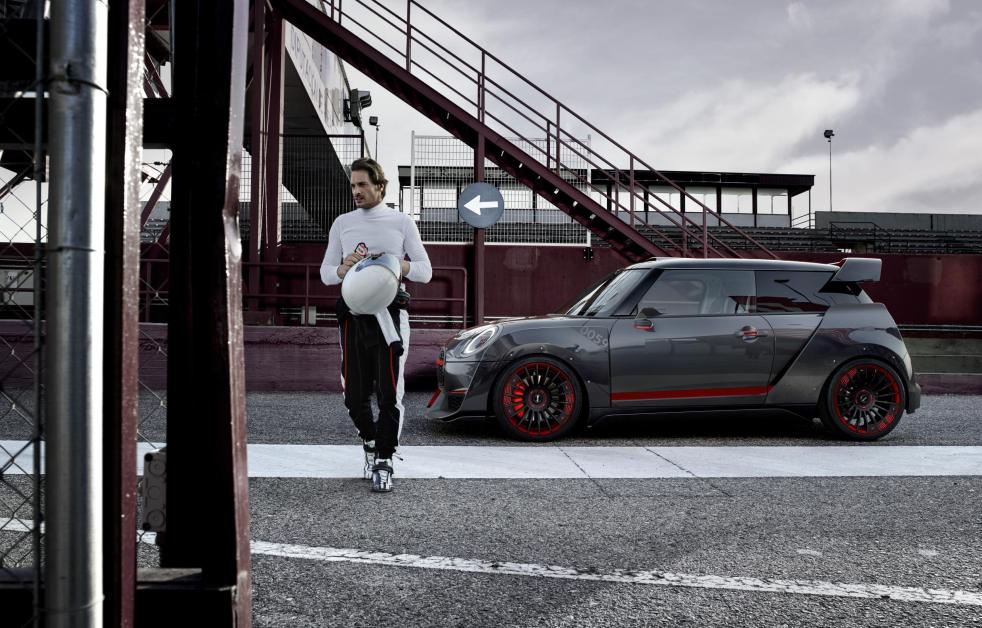
The BMW Group has chosen IAA Cars 2017 in Frankfurt to present the modern racing essence of a MINI – in the form of the MINI John Cooper Works GP Concept. Inspired by the carmaker’s legendary triumphs in the Monte Carlo Rally exactly 50 years ago, this design study embodies undiluted dynamic flair and the ultimate in driving fun – on both the race track and the road. The concept car picks up the baton from the 2012 MINI John Cooper Works GP and 2006 MINI Cooper S with John Cooper Works GP Kit. Produced in strictly limited numbers (2,000 examples worldwide for each), these two models explored the outer limits of their performance capability at the time.
“The MINI John Cooper Works GP Concept is all about the unfettered feeling of driving and levels of performance found in motor sport competition,” says Peter Schwarzenbauer, Member of the Board of Management of BMW AG, responsible for MINI, Rolls-Royce and BMW Motorrad. “This is driving fun in its purest form.”
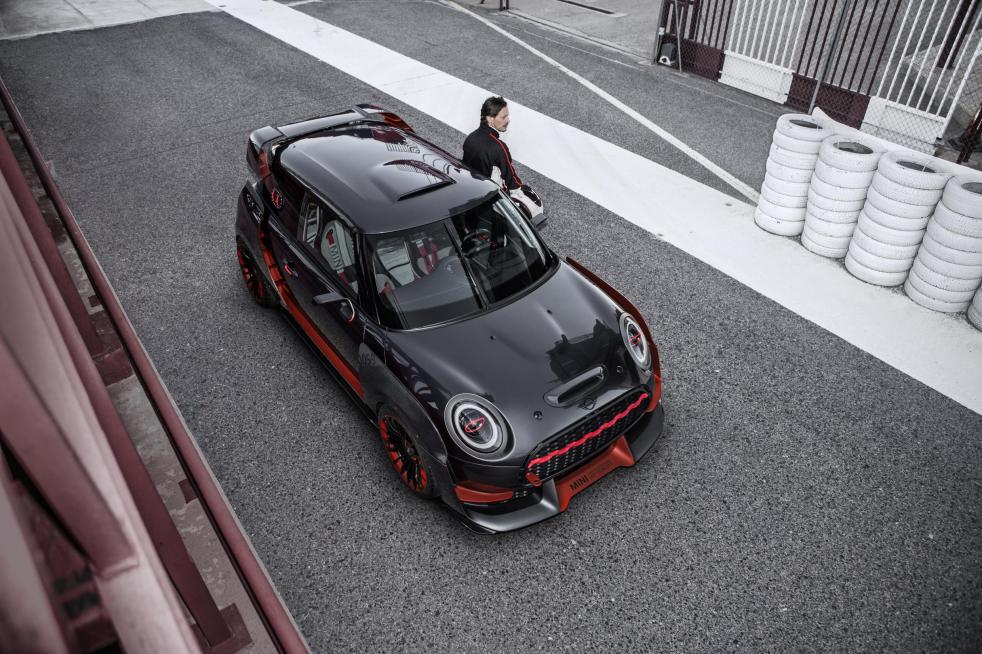
Significantly wider than the current MINI, the design study exudes dynamism and power. Large front and rear aprons, side skirts and a prominent roof spoiler create a confident appearance. The use of lightweight materials such as carbon fibre optimises the car’s power-to-weight ratio whilst evenly balanced weight distribution ensures MINI’s signature go-kart handling.
“If you know about MINI, you’ll be aware of the brand’s long and successful history in motor sport,” says Adrian van Hooydonk, Senior Vice President BMW Group Design. “The MINI John Cooper Works GP Concept brings together the full suite of defining MINI design features and showcases them at their sportiest and most exciting. What we’re looking at here is maximum performance, maximum MINI.”
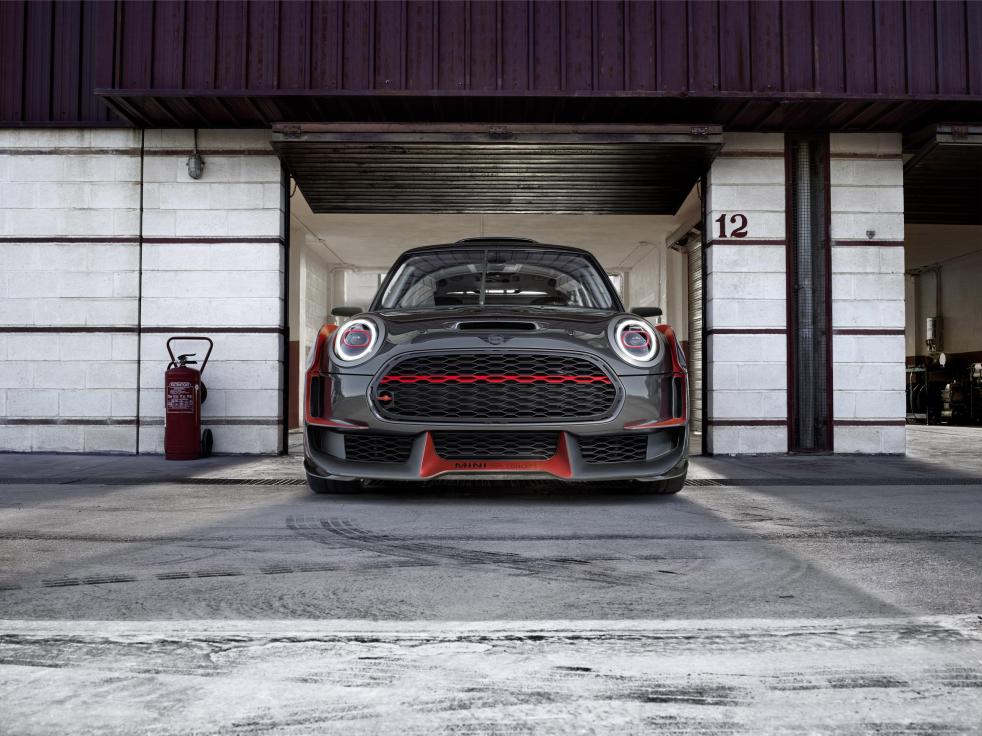
Large air intakes and precisely moulded air deflectors dominate the front end, which cuts a low-to-the-road figure. Crisply cut add-on elements frame the smooth MINI silhouette and highlight the track focus of the MINI John Cooper Works GP Concept when viewed head-on. The space between the main body of the front end and the air deflectors further strengthens the car’s presence. The exterior is finished in Black Jack Anthracite paint – which shimmers between grey and black– and the accent colour is Curbside Red metallic (a matt red shade). Curbside Red metallic provides a fresh take on the classic John Cooper Works red and visually accentuates the optimised geometry of the performance and add-on parts.
At the centre of the front end, distinctive MINI design cues such as the elliptical headlights and hexagonal radiator grille sharpen the car’s identity. Elements such as the powerdome, including the prominent air scoop in the bonnet, hexagonal honeycomb radiator grille and air intakes in the front apron intensify the car’s sporty appearance. Further colour accents in Highspeed Orange enhance the visual impact of the headlights and air intake.
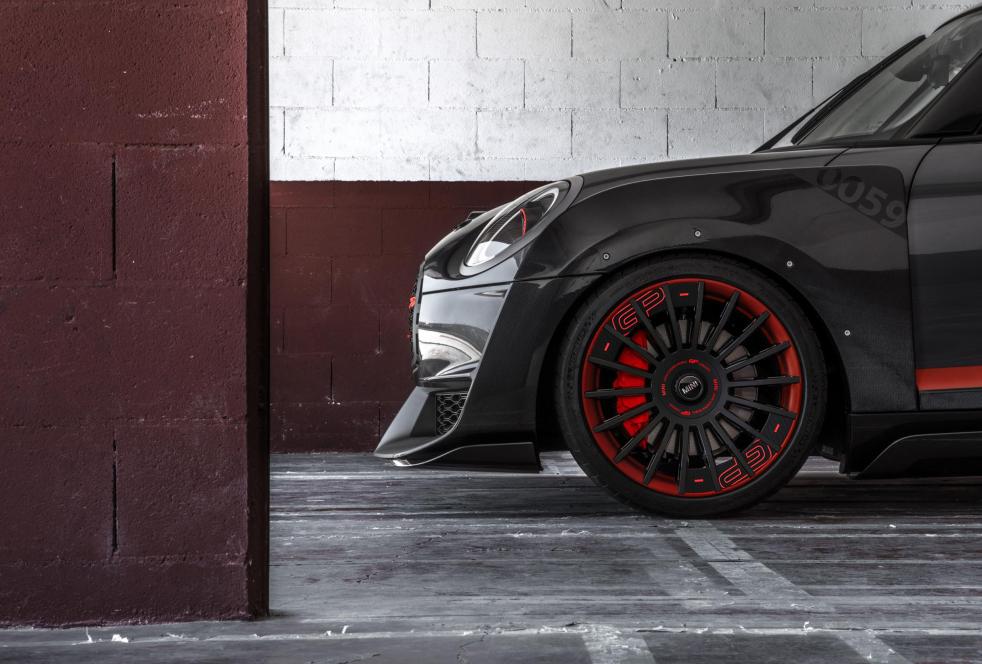
The lower edge of the large front apron reach down close to the road, while the car’s wide track and prominently flared wheel arches promise top-level handling and high cornering speeds. Another technical highlight is the front apron’s all-carbon-fibre construction, which reduces the car’s weight. The carbon matting is now directly visible and presented with a high-gloss paint finish with a red hexagon graphic.
In keeping with MINI design language, the narrowing windows and rising shoulderline creates a wedge shape from the side and gives the car the appearance of powering forward even before it turns a wheel. Lower down, voluminous surfaces fuse into a muscular body and endow the flanks with agility and dynamism. The car number 0059 references the year the classic Mini was born: 1959.
Carbon-fibre side skirts provide the body with its lowest edge. 19-inch Racetrack lightweight wheels in a classic multi-spoke design underline the design study’s performance aspirations. Contrasts in Curbside Red metallic – together with the Highspeed Orange on the inside of the rims – and the GP logo bring extra verve to the wheel design. Elsewhere, Curbside Red metallic and Highspeed Orange provide highlights to the exterior mirror bases and door handles respectively.
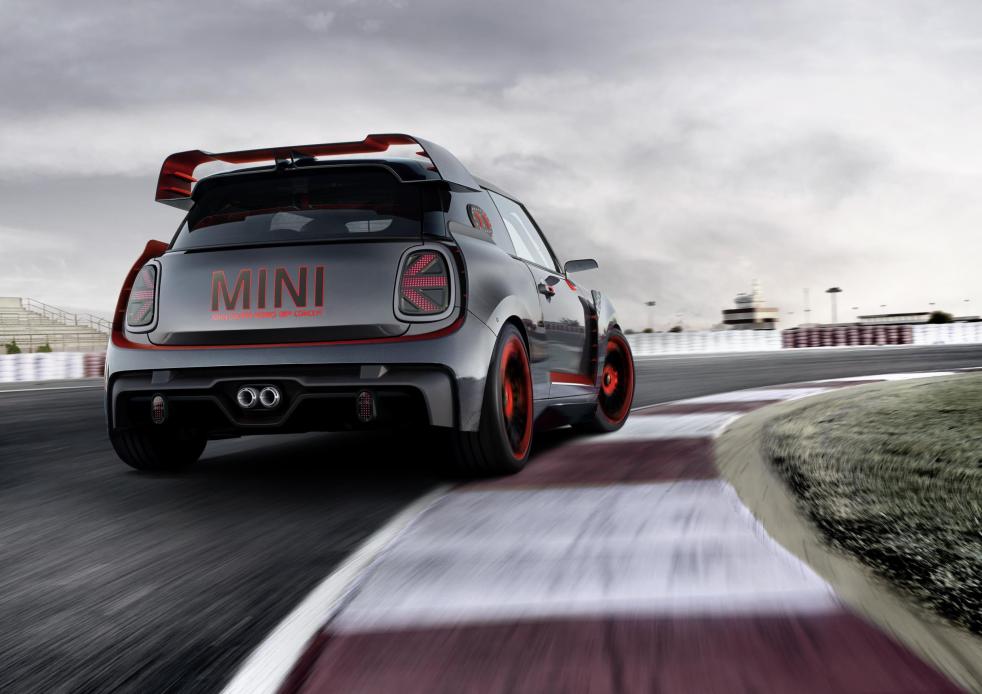
Surfaces on the rear are bordered by precisely formed air-channelling elements and the positioning of the LED rear lights on the outside underscores the car’s dynamic focus. Sophisticated touches, such as the half-Union Jack on each side, represent a nod to the concept car’s British origins, while also providing a sporty, technical flourish. The prominent roof spoiler is a visual statement of intent and slots cleanly into the geometry of the side elements.
Like the front end and flanks, the lower section of the car has a precise and dynamic design. Carbon-fibre air vents and air deflectors are in optimum positions, and the two rain lights at the outer edges at the rear improve visibility in wet races. The distinctive central twin tailpipes low down at the rear embody the John Cooper Works DNA to eye-catching effect.
The interior of the MINI John Cooper Works GP Concept is pared back to its core elements with its roll cage joined on board by little more than a pair of low-mounted bucket seats with five-point belts and a cleanly-designed instrument panel. Gearshift is by paddles on the steering wheel.
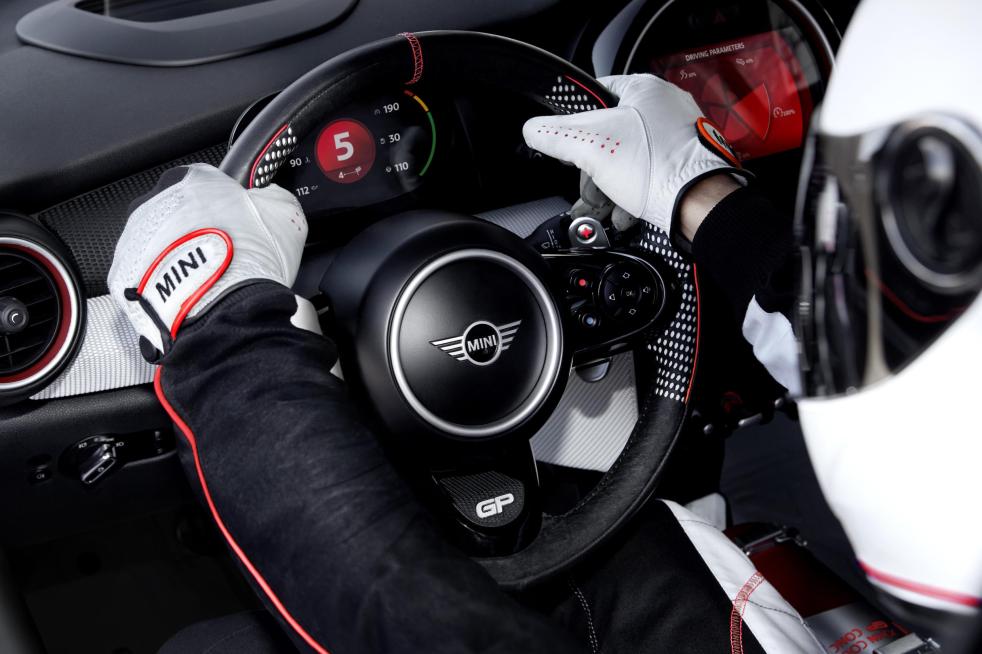
All the elements of the interior are focused directly on the driver. The display and control concept with digital instrument cluster and Head-Up Display places relevant information directly in the driver’s eye-line, allowing absolute focus on the road to be maintained. Interaction between driver and car is otherwise digital, including touch-control adjustment of suspension settings in MINI’s familiar central instrument. It is left to the large emergency cut-off button and the traditional MINI toggle switches with start/stop button to provide a bridge between the digital and analogue worlds.
A rear seat bench, headliner and conventional door trim panels are conspicuous by their absence, sacrificed in the interests of minimising weight. Instead, the surfaces between the elements of the roll cage and the rear compartment are trimmed in lightweight panels with textured details and a hexagonal pattern. This creates a transition between the unadorned rear and more design-rich front cabin. The doors are opened using recessed grips with fabric straps, leaving the driver and passenger to climb out through the roll cage in typical racing car style.
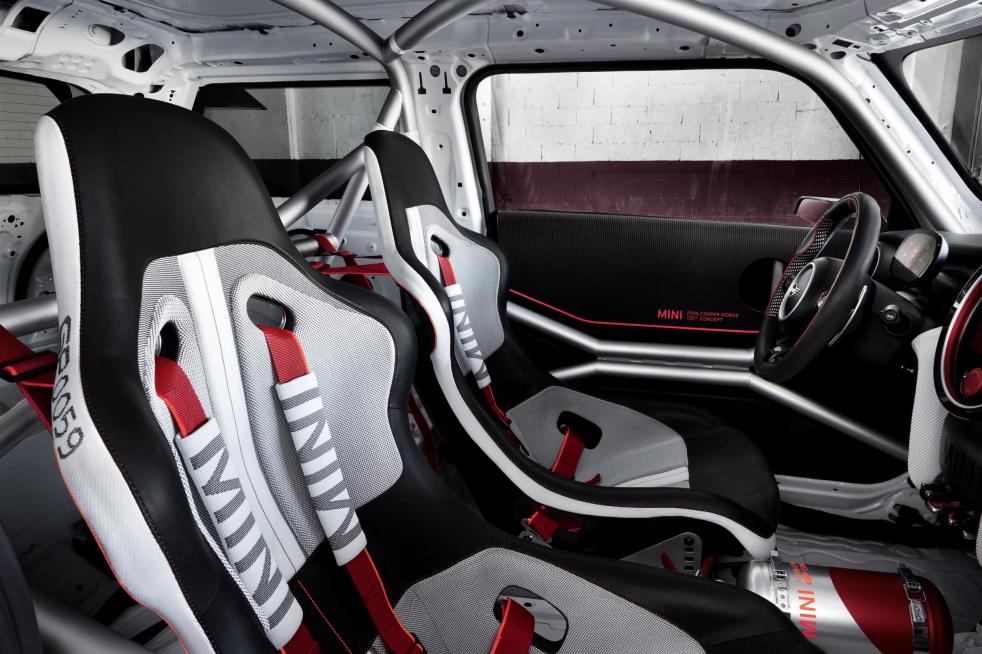
The interior combines its pared-back sporting forms with eye-catching elements and bold colour accents. The result is a face-off between the less familiar aesthetic of a racing-car bodyshell and the exclusivity of high-quality production-car appointments. Against the backdrop of the white basic space, black, patinated smooth leather on the head restraints and bolsters provides a neat contrast with the back-and-white knitted textile in the central section of the seats. A new 3D knitting technique provides a classy and modern feel, while red accents make a visual statement. The aluminium roll cage stands apart clearly from the black 3D-printed parts in the doors and instrument panel, and a lightly-structured trim element with hexagonal graphic reinforces the sporty, modern look. Curbside Red metallic adds a colour accent to selected functional components and Highspeed Orange acts as a complementary colour on the belt straps, inscriptions and the stitching of the steering wheel and seats.
With 3D printing and 3D knitting techniques, MINI is bringing technologies to the interior of the concept car which will enable both tool-free production and simple personalisation in the future.
The character of the MINI John Cooper Works GP Concept is defined by a motorsport heritage which stretches back over more than five decades. Indeed, the classic Mini was transformed by legendary sports car designer John Cooper into a byword for driving fun on the road and an extraordinarily successful competitor on the racetrack and rally scene. A motorsport career which began exactly 50 years ago included three overall victories in the Monte Carlo Rally. Today, the John Cooper Works name is synonymous with products and models where quality is rooted in established motorsport know-how and an association with the British premium small car which dates back to 1959.









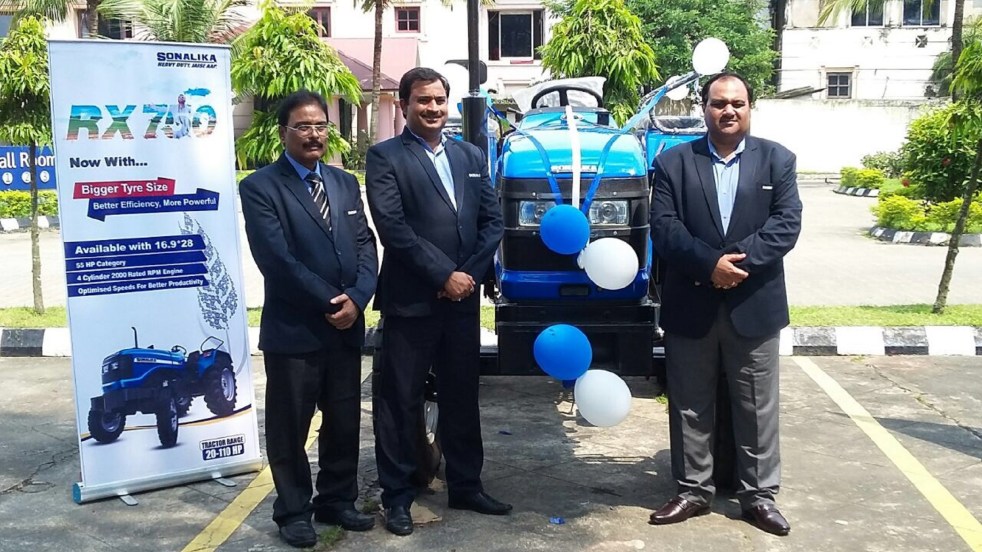 B. N Pandey (centre), Zonal Head, Sonalika ITL and Munish Kumar (right), Senior Vice President, Marketing & Sales, Sonalika ITL at Sonalika International Press Conference in Kolkata





 Power Drive