TVS Motor Company Appoints Gaurav Gupta As President – India, Two Wheeler Business

TVS Motor Company (TVSM) has announced the appointment of Gaurav Gupta as President – India Two Wheeler Business. He will be based out of Bengaluru and report to K N Radhakrishnan, Director & CEO, TVS Motor Company. Gaurav will head the India Two Wheeler Business, both ICE and EV. He has over three decades of experience and has worked in multiple geographies including India, China, Dubai, Indonesia, Vietnam, and ASEAN markets.

Announcing the appointment, K. N. Radhakrishnan, Director & CEO, TVS Motor Company said, “Gaurav has rich experience and expertise that will add significant value to the company. The company has been on a steady growth trajectory, delivering results well ahead of the industry. We are confident that under his leadership, we will further strengthen our market position and continue to set benchmarks. We wish him the very best and welcome him to the TVSM family.”

Prior to joining TVSM, Gaurav served at JSW MG Motor India (until recently as MG Motor India) in assignments as an Executive Committee member, Deputy Managing Director and Chief Growth Officer. During his tenure of 6.5 years, he played a pivotal role in establishing and leading the commercial operations for MG Motor India from the ground up, significantly impacting the Indian automotive industry.

In his previous role as Managing Director of Bridgestone Tire Indonesia, Gaurav led the company’s operations including both domestic and exports. Earlier, for two decades, he worked for General Motors in various roles across Asia Pacific operations including as Managing Director of General Motors Indonesia, General Motors Vietnam. Gaurav has also served the American Chamber of Commerce in the roles of Chair and board member. 

Gaurav is a Physics graduate and an MBA. His interests include travelling, technology, philanthropy and an occasional round of golf.

Nissan Motor India Commences Exports Of Over 10,000 Units Of The Left-Hand Drive (LHD) New Nissan Magnite

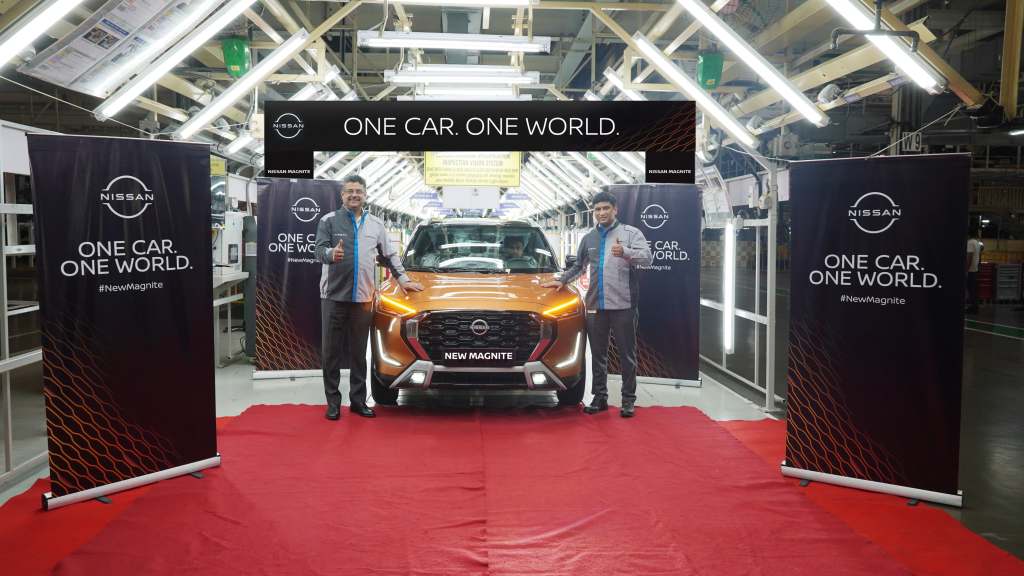
The New Nissan Magnite, launched in October 2024, is now making its way to customers in global Left-Hand Drive (LHD) markets. Nissan Motor India flagged off the first shipment of close to 2,900 units of the LHD variant of the New Nissan Magnite from Chennai from the Kamarajar Port (KPL – Ennore), India in late January 2025 to select markets in the LATAM region. This underscores Nissan’s ‘One Car One World’ strategy and highlights the Nissan Motor India’s commitment towards expanding its global footprint and transforming India into a global hub for exports.

In February 2025, Nissan Motor India will export over 7,100 units of the New Nissan Magnite in the second wave in February 2025 to markets in the Middle East, North Africa, select markets in LATAM & Asia Pacific region. By end of February, the company will have exported a total of over 10,000 units of the LHD version of the New Nissan Magnite.

Frank Torres, Divisional Vice President of AMIEO Region Business Transformation & President of Nissan India Operations, commented on the milestone, saying, “Nissan Motor India has been diligently working towards expanding its operations and reach, not just within the domestic market but also focusing on exports. In line with our export plans announced last year, we are delighted to begin exports of the New Nissan Magnite to Left-Hand Drive (LHD) markets. This is a significant achievement, and we look forward to serving new customers in these regions. The Nissan Magnite has been the cornerstone of our success in both India and global markets, and we are confident that this India-made vehicle will drive our export growth further.”

Saurabh Vatsa, Managing Director of Nissan Motor India, shared his enthusiasm, stating, “The commencement of exports of the Left-Hand Drive New Nissan Magnite is a proud moment for us, as it aligns with our ‘One Car, One World’ philosophy. The Magnite showcases the best of Japanese engineering combined with local expertise. It reinforces our ‘Make in India, Make for the World’ vision, delivering world-class innovation, safety, and value to customers globally. This also highlights India’s increasing importance as a key manufacturing and export hub for Nissan. Nissan remains committed to its operations in India, as well as to our dealers, partners, and customers. We are on track with the plans we laid out during the launches of the 4th Generation Nissan X-TRAIL and New Nissan Magnite last year.”

Keerthi Prakash, Managing Director, Renault Nissan Automotive India Pvt. Ltd., said: “The successful production and export of the New Nissan Magnite to Left-Hand Drive markets is a testament to the exceptional capabilities of our team and the world-class manufacturing standards at our Chennai plant. This achievement underscores India’s significant role in driving Nissan’s global success and further elevates the reputation of the New Nissan Magnite as a truly global vehicle.”

Manufactured at Nissan’s Alliance JV plant (RNAIPL) in Chennai, the roll-out of the Left-Hand Drive New Nissan Magnite to global markets underscores India’s crucial role as a global manufacturing and export hub for Nissan. The New Nissan Magnite will now be available in over 65+ global markets, including most LHD markets.

This initiative reflects the company’s commitment to delivering innovative, high-quality products tailored to meet global customer needs. With a growing demand for the ‘Made in India’ New Nissan Magnite, Nissan has showcased its technological innovation and manufacturing prowess to the world once again.

Recently, Nissan Motor India began exporting its recently launched New Nissan Magnite (RHD), to South Africa. In line with the announcement made during the New Nissan Magnite launch, the company rolled out this latest offering from Nissan’s Alliance JV plant in Chennai to global markets, with South Africa becoming the first country to receive the popular SUV from Nissan.

Over 2,700 units of the RHD New Nissan Magnite were shipped from the Chennai port to South Africa market within a month after its global launch in India last year. The New Nissan Magnite remains a testament to Nissan’s ‘Make in India, Make for the World’ vision, surpassing cumulative sales of 1,70,000 units till date, making a powerful impact in both Indian and global markets since its December 2020 debut.

Škoda Auto Celebrates 25 Years In India

Škoda Auto entered the highly dynamic Indian market 25 years ago: In January 2000 the Czech car manufacturer laid the foundation stone for its plant in Chhatrapati Sambhajinagar (formerly Aurangabad until 2022) and was the first Volkswagen Group brand to establish a presence on the local market. The Škoda Octavia became the first model assembled locally. To date, India has become a key market in Škoda’s internationalisation plans, helping the company to effectively leverage existing sales potential in the ASEAN region, Middle East, Australia and New Zealand. On behalf of the Volkswagen Group, Škoda Auto has been spearheading all activities in the region jointly since 2018. Today, the brand developed and produces three models locally in India for India, based on the localised MQB A0–IN platform: the Kushaq, the Slavia, and, most recently, the Kylaq compact SUV, which expands the line-up into the popular sub-4-metre segment.

Klaus Zellmer, CEO of Škoda Auto: “We have built on 25 years of experience in India to make this thriving market the cornerstone of our international growth strategy. With its tremendous talent pool, growing consumer demand, and access to other markets, India is becoming our second pillar outside Europe and helping leverage further sales potential in ASEAN, the Middle East, and the Indo-Pacific region. Škoda has been a notable brand in India since we entered the market with the Octavia in 2001. We now produce in two plants. We have launched three all-new models specifically for India, achieving localization of up to 95 per cent: the Škoda Kushaq, Slavia, and just recently the Kylaq compact SUV, which complement the Octavia and Superb we also sell through a growing dealer network. In the last two years, we have increased customer touchpoints across the country by 35%. India also contributes to the global sustainability goals of Škoda Auto. One plant already runs entirely on green energy, while the plant in Pune expanded its photovoltaic system to deliver up to 30% of its electricity needs. I want to thank all our Indian colleagues for helping power the next stage of our growth, and especially our customers for their trust in our products. With this passion, we can achieve even greater things in the next 25 years!”

The first Škoda model introduced to Indian customers was the first generation of the modern Octavia, assembled from imported parts in rented facilities alongside the construction of the plant in Chhatrapati Sambhajinagar. Over time, other Škoda models, such as the Fabia, Rapid, and later the Superb and Kodiaq, also attracted the attention of Indian customers.

A decisive step for Škoda in India came in 2018 when the Volkswagen Group entrusted the brand with jointly spearheading all Group activities on the market. As part of this, Škoda was tasked with developing the MQB-A0-IN platform, designed exclusively for the Indian market. The first vehicle built on this platform was the Kushaq, which entered production in Pune in 2021. Just a year later, the Slavia sedan was launched, with its development and manufacturing also carried out in Pune. The latest addition to Škoda’s portfolio for the Indian market is the Kylaq SUV, Škoda’s first model in the popular sub-4-metre segment, accounting for nearly 50% of car sales in the Indian market. The new model received 10,000 orders within just ten days of its launch and will contribute to the brands annual sales target of 100,000 cars in India by 2026.

The quality and reputation of Škoda’s vehicles in India is reflected not only in strong customer interest but also in numerous prestigious awards. For instance, the Škoda Slavia was named India’s Sedan of the Year in 2022 and won Car of the Year 2023 at the Acko Drive Awards.

In the meantime, the Indian market has developed into one of the key markets for Škoda and a strategic hub for the wider ASEAN region, the Middle East, Australia, and New Zealand. In addition to its assembly lines in Chhatrapati Sambhajinagar and manufacturing plant in Pune, Škoda has established a Technology Centre there. Moreover, in October 2023, Škoda opened a modern logistics facility for the export of components to Vietnam, a market the company entered in 2023.

Sustainable production is a major priority for Škoda, also in its Indian plants: The facility in Chhatrapati Sambhajinagar operates entirely on green energy, while the Chakan plant in Pune is on track to achieve CO2 neutrality by 2030. On top of that, this 500-hectare plant site provides a habitat for more than 300 species of plants, trees and animals. Furthermore, the company is involving local suppliers in India and plays an active role in infrastructure development, supporting education and social initiatives. At its plant in Pune, Škoda expanded its photovoltaic system which is now capable of producing up to 26.6 GWh of electricity annually, covering up to 30% of the site’s electricity consumption.

TVS King EV Max To Revolutionise The Electric Three-Wheeler Segment

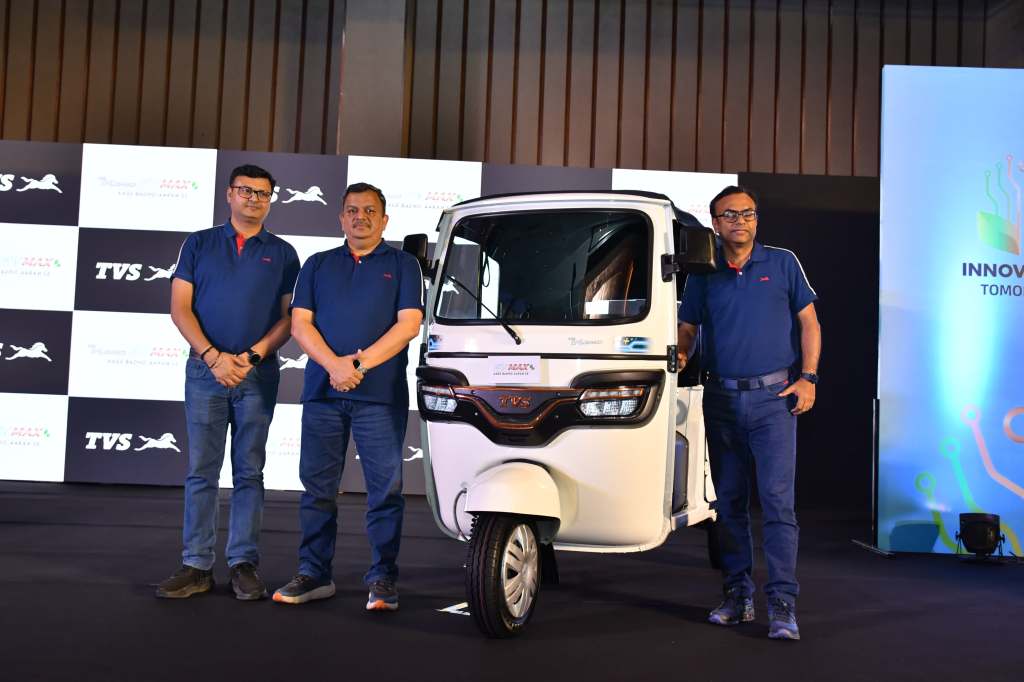
TVS Motor Company has announced the launch of its connected passenger electric three-wheeler, TVS King EV MAX. The vehicle has best-in-class features including bluetooth connectivity through TVS SmartXonnect. The TVS King EV MAX combines innovative technology with eco-friendly solutions, catering to the growing demand for sustainable urban mobility.

Speaking at the launch, Mr. Rajat Gupta, Business Head, Commercial Mobility, TVS Motor Company, said, “The launch of TVS King EV MAX is a significant step forward in our commitment to providing sustainable solutions for last-mile connectivity. As urban areas continue to grow, the demand for clean mobility options has never been more critical. The TVS King EV MAX combines advanced electric propulsion with superior comfort and connectivity. The distinctive blend of long-range, impressive acceleration and quick charging time guarantees high uptime, enabling more trips and increased earning potential for customers, including fleet operators. The vehicle is being launched in UP, Bihar, J&K, Delhi and West Bengal, right away. It will be available across the country in the coming months.”

With a range of 179 kilometres on a single charge, quick charging in just two hours and 15 minutes for 0 – 80% charge and 3.5 hours for 100% charge; smart features like TVS SmartXonnect, the King EV MAX offers users real-time navigation, alerts and vehicle diagnostics through their smartphones. It combines excellent performance, comfort and connectivity, making it a standout choice for modern urban mobility.

The TVS King EV MAX is powered by a high-performance 51.2V lithium-ion LFP battery enabling making it perfect for urban commuting. With a top speed of 60 kmph (ECO Mode: 40 kmph; City: 50 kmph; Power: 60 kmph), the vehicle ensures efficient travel while maximising passenger comfort through its spacious cabin and ergonomic seating design.

The TVS King EV MAX is now available across select dealerships in UP, Bihar, J&K, Delhi and West Bengal, at a price of INR 2,95,000 (ex-showroom). It also comes with a warranty of 6-years / 150,000 kilometres (whichever is earlier), along with 24/7 road-side-assistance for the first three years.

Volvo Drives Into India’s Latest Sensation; Partners With World Pickleball League As Luxury Mobility Partner

The World Pickleball League (WPBL) fever is gripping the country ahead of its inaugural day. Volvo Car India has announced its partnership with the league as the Official Luxury Mobility Partner.

The WPBL, conceptualised and created by Gaurav Natekar and Arati Ponnappa Natekar, aims to be a premier sporting and entertainment property that captivates audiences across demographics. The league will feature six teams competing in 48 matches over 10 days, alongside performances from some of India’s most celebrated artists.

Gaurav Natekar expressed his excitement, saying, “We are extremely proud to welcome Volvo Car India to the WPBL family. This partnership is a strong testament to the league’s wide appeal. The promise of high-octane action backed by entertainment makes the WPBL appealing to brands across the board.”

Jyoti Malhotra, MD- Volvo Car India said, “We are stoked to be the Luxury Mobility Partners for the much-awaited WPBL. I am confident that the WPBL will not only captivate Indian audiences but also contribute significantly to the growth and popularity of this dynamic sport in the country. For Volvo Cars, this is a unique platform to connect with discerning individuals who appreciate the blend of performance, luxury, and a passion for life.”

The inaugural edition of the World Pickleball League kicks off on January 24.

1.7 Million Deliveries In 2024: Audi Forges Ahead With Its Model Initiative

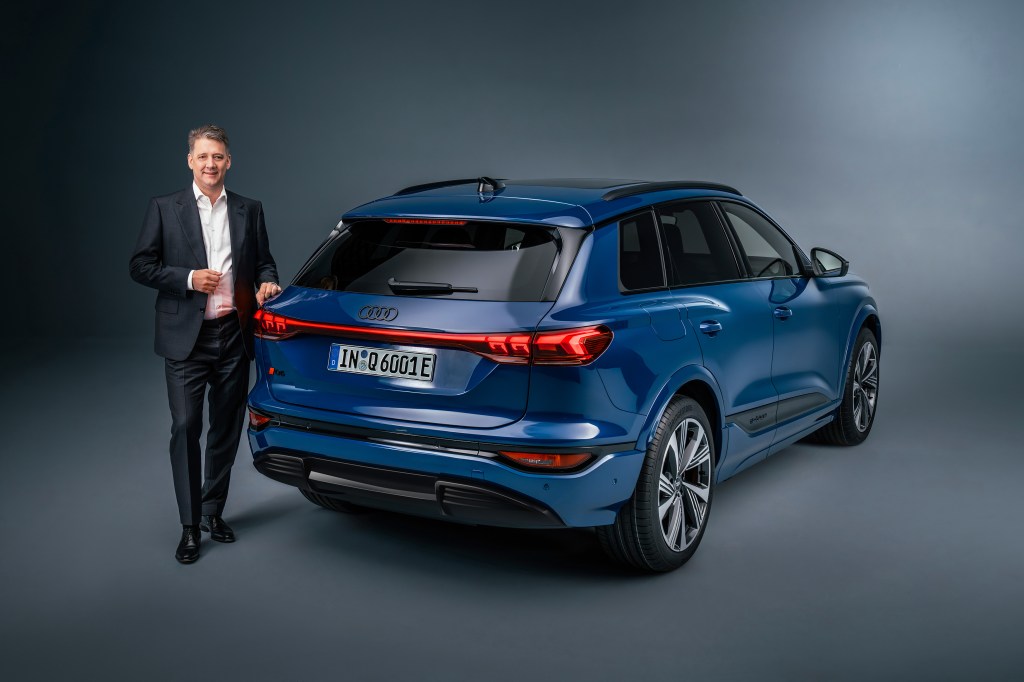
Audi CEO Gernot Döllner, the Premium Platform Electric and with it the Audi Q6 e-tron model series are the next technological leap towards electric premium quality.

Audi delivered around 1.7 million vehicles worldwide in 2024. More than 164,000 of those were fully electric models. Reasons for this overall decline of almost 12 percent (8 percent for fully electric models) compared to the previous year included the challenging economic conditions, an intensely competitive market, and limited availability of parts. In addition, the new product portfolio is only gradually having an impact on global sales volumes.

“We have a clear vision of how we are redefining Vorsprung durch Technik. Our ongoing model initiative shows the direction Audi is taking. The year 2024 was part of a transitional phase as we move towards our new product portfolio,” says Audi CEO Gernot Döllner. “Global economic uncertainties and intensified competition also shaped the past year. Despite these challenges, we are convinced that we will achieve our long-term goals. With a clear product and technology road map, Audi is systematically rejuvenating its product portfolio with over 20 new models in 2024 and 2025.” Last year, Audi already presented more than half of these, including the new battery-electric vehicles Audi Q6 e-tron and Audi A6 e-tron, plus combustion-engine vehicles such as the Audi A5 and Audi Q5. “In 2025, we will continue our model initiative and renew key model families such as the Audi A7 and the Audi Q3. Customers can look forward to numerous new plug-in hybrids as well.”

After a record year in 2023, geopolitical and industrial conditions impacted delivery figures in 2024. A general economic environment characterized by stagnation and structural problems as well as a tense political situation posed major challenges for the entire automotive industry and influenced consumer behaviour on an international scale.

“From the beginning, 2024 was considered a transitional year. We have strong models entering the markets, but they will only gradually become significant in terms of sales volume. At the same time, some models have been phased out. Challenging economic conditions and the intransparency in terms of government incentive structures are currently causing a certain reluctance to buy affecting the entire industry, especially when it comes to fully electric vehicles,” says Marco Schubert, Board Member for Sales and Marketing.

“With our three-pronged approach of electric cars, plug-in hybrids, and combustion-engine vehicles, we are positioned flexibly and robustly for the coming years and offer our customers a diverse range of premium vehicles. With our clear strategy and the strong commitment of our retail partners and international teams, we are setting ourselves up for the future.”

Sales performance in Europe, North America, and China
Audi delivered more than 164,000 fully electric models to customers worldwide (–8 percent) in 2024. Demand was notably strong for the Audi Q4 e-tron, with almost 108,000 units delivered globally. Since its market launch in the third quarter, the new Audi Q6 e-tron recorded almost 15,000 deliveries.

In addition to the all-electric models, the Audi Q5 (298,000 units), the Audi A6 (244,000 units), and the Audi Q3 (215,000 units) sold particularly well.

Audi Sport delivered more than 41,000 high-performance vehicles worldwide, a decrease of roughly 14 percent. In the USA, Audi Sport models recorded over 9,000 deliveries – their best result ever (+4 percent).

With around 466,000 vehicles, the number of deliveries in Europe (excluding Germany) was almost 6 percent below the previous year. The number of electric vehicles was just below 81,000 units (+6 percent). The most popular models in Europe were the Audi A3 (84,000 units), Audi Q3 (79,000 units), and Audi Q4 e-tron (57,000 units).

In Germany, Audi delivered over 198,000 cars (–21 percent). This figure includes roughly 22,000 fully electric vehicles (–33 percent).

In the UK, the number of deliveries was around 123,000 units (–11 percent), in France around 48,000 units (–3 percent). For electrically powered models, Audi recorded an increase of 24 percent in France compared to 2023. Audi also showed a solid result in Italy, delivering more than 67,000 units (+1 percent), including roughly 3,000 electric vehicles (+7 percent). In Spain (incl. Canary Islands), Audi delivered over 39,000 units (–4 percent) to customers.

In North America, Audi sold just below 241,000 vehicles (–13 percent) in 2024 – almost 29,000 of those were fully electric (–6 percent).

In the intensely competitive market of China, Audi delivered a total of more than 649,000 cars to customers. This represents a decline of around 11 percent compared to the previous year.

In the overseas and emerging markets, Audi delivered over 116,000 vehicles (–18 percent) in 2024.

The New Škoda Enyaq Unveiled

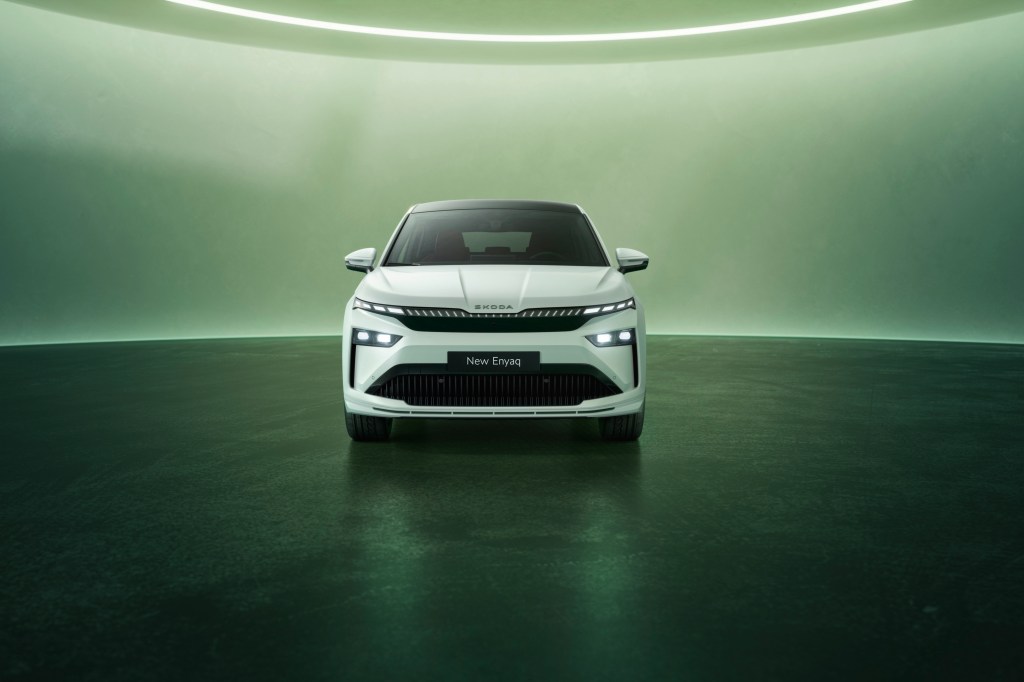
Škoda Auto is advancing its electrification strategy with the introduction of the new Enyaq family, one of Europe’s most successful all‑electric model series. Notably, both the Škoda Enyaq and the Škoda Enyaq Coupé now feature the brand’s new Modern Solid design language, reinforcing their visual appeal. The updated Enyaq boasts optimised aerodynamics, along with more sustainable materials and extensive standard equipment. Additionally, the new Enyaq family introduces enhanced digital capabilities and more advanced assistance systems.

Klaus Zellmer, CEO of Škoda Auto, says: “Since their launch in 2020, the Enyaq and Enyaq Coupé have made e-mobility a reality for over 250,000 customers, along with their families and friends. Now the new Enyaq series brings fresh options and improvements to the table, including an even more stylish design. I’m grateful to our customers for making the Enyaq one of Europe’s most popular fully electric vehicles. We want to excite the market further by building on our existing Enyaq strengths such as the generous amount of space, efficient drivetrains and excellent value proposition. Our new Modern Solid design language, more comprehensive standard equipment, and new digital features combine to make the Enyaq models even better everyday companions.”

The new Enyaq now comes with even more extensive equipment as standard, including heated front seats & steering wheel, tri-zone climate control, keyless entry with walk away function, predictive adaptive cruise control, blind spot detection, wireless charging with cooling function, rear USB-ports and an electric boot with kick activation (Virtual pedal). Remote Park Assist and Remote Trained Parking are new optional digital features. The new Enyaq offers two battery sizes and three powertrain options: the Enyaq 60 and Enyaq 85 each have one electric motor and rear-wheel drive, while the Enyaq 85x comes with an additional motor at the front and all-wheel drive.

For the interior, customers can choose between six distinct Design Selections. The new sustainable Lodge Design Selection, inspired by the Modern Solid design language, uses eco‑friendly materials and orange details that include the seat belts, whilst the new Lounge Design Selection is predominantly grey and combines artificial leather and microsuede with contrasting mint green stitching. There is also a Suite Cognac Design Selection with elegant cognac-coloured seats covered in leather that has been tanned using olive leaf extract.

Martin Jahn, Škoda Board Member for Sales and Marketing, adds: “The new Enyaq marks the next step in our e-campaign. Following its predecessor’s strong performance, surpassing overall BEV market growth in Europe in 2024, this second generation of our best-selling Enyaq series is set to build on that success. The new Enyaq charges from 10 to 80 per cent in just 28 minutes or less and features a completely new design as well as an enhanced user experience. Innovations such as Remote Park Assist and the improved functionality of the MyŠkoda app will make everyday life even more convenient for our customers.”

Honda Presents World Premiere Of Honda 0 Saloon And Honda 0 SUV Prototypes At CES 2025

Honda today presented the world premiere of two prototype models at CES 2025 – Honda 0 Saloon and Honda 0 SUV – representing two Honda 0 Series models to be introduced to global markets from 2026. The company also introduced its original vehicle operating system (OS), the ASIMO OS, to be applied to its global EV series.

  • Honda 0 Saloon

By further advancing the concept model introduced last year at CES 2024, the Honda 0 Saloon prototype was developed in preparation for a market launch in 2026. While maintaining the exact styling design of the concept model, the prototype features both the low height and sporty styling that sets the Saloon apart from other EVs, and an interior space that is more spacious than people would expect based on the exterior dimensions.

The Honda 0 Saloon, the flagship model of the Honda 0 Series, will be based on the newly developed dedicated EV architecture and will feature a number of next-generation technologies that embody the “Thin, Light and Wise” development approach.

At CES 2025, Honda is focusing on introducing certain technologies and features that contribute to the “Wise” value of the Honda 0 Saloon. This includes the highly reliable Level 3 automated driving technology, which Honda put into practical use for the first time in the world, as well as “ultra-personal optimization” that will offer a mobility experience customized for each individual user, which will become possible with the ASIMO OS. 

The production model of the Honda 0 Saloon is scheduled to be introduced first in the North American market in 2026, then in global markets, including Japan and Europe. 

  • Honda 0 SUV

Based on the Space-Hub concept model unveiled at CES 2024, proposing the new value of EVs as a “space” for people that Honda will offer with its future EV models, the company has now presented the prototype of a mid-size EV SUV – which will be the first Honda 0 Series model. By applying the “Thin, Light, and Wise” approach to an SUV, the interior space was further increased, and a spacious cabin was achieved with an outstandingly clear and unrestricted field of view with great flexibility.

Alongside the wide variety of next-generation technologies, the Honda 0 SUV will apply high-precision attitude estimation and stabilization control. This is based on 3D gyro sensors, technology Honda has amassed through the development of its original robotics technologies, to enable dynamics at the will of the driver on various road surfaces.

The production model of the Honda 0 SUV is scheduled to be introduced first in North American market in the first half of 2026, then in global markets, including Japan and Europe. 

  • ASIMO OS

Honda 0 Series models will be equipped with the ASIMO OS, an original vehicle OS developed by Honda, which will be the core technology to achieve the ‘Wise’ value of the global EV series.

ASIMO was a humanoid robot capable of autonomous walking, developed as part of Honda fundamental technology research with the aim of helping people while coexisting with those in society. Honda began robotics research and development in 1986, and introduced ASIMO in 2000, becoming an icon in the field of robotics from the 2000s through 2010s and loved by people all over the world.

Even after concluding development of ASIMO, Honda has been further advancing its robotics technologies, including those that recognize external environments and autonomous behavior control enabling ASIMO to understand the intentions of people around it. By combining such robotics technologies with advanced intelligence technologies for the Honda 0 Series, the company strives to offer a unique value for software defined vehicles (SDVs).

As a software platform, ASIMO OS will apply integrated control of electronic control units (ECUs) for vehicle systems such as automated driving / advanced driver assistance systems (AD/ADAS) and the in-vehicle infotainment (IVI) system.

By constantly updating the in-vehicle software through over the air (OTA) updates even after the purchase of the vehicle, functions and services will be continuously advanced in accordance with the preferences and needs of each user. The functions and services subject to constant updates include those which enhance the value of “space” and the digital UX, that ensures a fun and comfortable mobility experience. Also, integrated control of dynamics unique to Honda, that determines the joy of driving, enabling the driver to feel at one with the vehicle.

  • Automated driving (AD) technology

In 2021, Honda became the world’s first automaker to put Level 3 automated driving equipment into practical use with the launch of the all-new Legend equipped with Honda SENSING Elite, which qualified for Level 3 automated driving (eyes-off), and conditional driving automation in limited areas.

Honda developed Honda SENSING Elite to put this AD technology into practical use by anticipating all driving conditions and scenarios based on the premise that, in addition to reducing the number of traffic collisions in society, Honda AD must completely eliminate traffic accidents that people think a “human driver could avoid.”

Honda believes that the widespread use of eyes-off technology will lead toward the realization of zero traffic collision fatalities in the future. Based on this belief, Honda will strive to offer affordable automated driving vehicles to more customers around the world through the Honda 0 Series.

To this end, Honda has applied an original Honda AI technology that combines the unsupervised learning*1 technology of Helm.ai and the behavior models of experienced drivers, which enable AI to learn with smaller amounts of data, and efficiently expand the range of situations where automated driving and driver assistance can be available.

In addition, Honda will apply its original cooperative AI developed through research into people and mobility to further improve the precision of cooperative behavior, such as yielding the right of way to others on the road, which is difficult even for a human driver. By applying these advanced technologies, Honda will realize a highly reliable driver assistance system that can respond quickly and appropriately to unexpected situations, such as an animal darting into the lane or an object falling onto the road.

Honda 0 Series models will be equipped with a system that enables the expansion of the range of driving conditions where driver assistance and Level 3 automated driving will be available. This expansion will start with eyes-off technology available in traffic congestion on highways, and will continue through OTA updates.

With Level 3 automated driving, the vehicle will be in charge of driving, which will enable a human driver to perform a “second task” while en route to their destination, whether watching a movie or remotely joining a meeting. Honda will further advance its technologies and become the first automaker to expand the application of eyes-off functions to all driving situations, opening up new possibilities for mobility.

  • Development of SoC dedicated to Honda 0 Series

Honda and Renesas Electronics Corporation (Renesas) have announced an agreement to develop a high-performance system-on-chip (SoC) to realize the future SDVs the company aims to achieve with Honda 0 Series models.

For next generation models, which will be launched in the late 2020s, Honda will adopt a centralized E&E architecture that combines multiple ECUs, responsible for controlling vehicle systems, into a single, core ECU. This will serve as the heart of the SDV and manage various vehicle systems, such as AD/ADAS, powertrain control, and comfort features. To achieve this, the ECU requires a SoC that provides higher processing performance than traditional systems, while minimizing any increase in power consumption.

To fulfill such requirements, Honda and Renesas will realize a system that utilizes multi-die chiplet technology*2 to combine the Renesas generic fifth generation (Gen 5) R-Car X5 SoC series with an AI accelerator optimized for AI software developed independently by Honda. With this combination, the two companies aim to develop a system that achieves one of the industry’s top class AI performances of 2,000 TOPS*3 (Sparse) with 20 TOPS/W power efficiency.

*1 Unsupervised learning is one of the methods of machine learning, which supports AI. Unlike supervised learning through which AI learns the correct answers to derive from labeled input data, unsupervised learning lets AI learn without being provided with the correct answers and derives the patterns and unique characteristics of the unlabeled data on its own.
*2 Technology to build a system by combining multiple chips (dies) with different functions
*3 Tera Operations Per Second (TOPS) is a metric of AI processing performance and measures the number of operations that can be performed per second. Based on a sparse AI model. 

Kia India Achieves Record 255,038 Deliveries In 2024, Fueling Strong Growth and Nationwide Expansion

Kia India has achieved a historic milestone by delivering 255,038 vehicles in 2024. This marks a 6% increase over the 240,919 units delivered in 2023, making it the highest-ever delivery performance in the company’s history.

Throughout the year, Kia India focused on strengthening its presence across Tier-I and Tier- II cities, reflecting its commitment to reaching new customers in every corner of the country. In 2024, the company opened 126 new dealerships and 36 Certified Pre-Owned (CPO) outlets, expanding its network to 700 touchpoints across 301 cities nationwide.

The Kia Sonet was a key driver of this success, with the delivery of 102,337 units, solidifying its leadership in the highly competitive sub-compact SUV segment. The Sonet’s continued popularity was complemented by strong performances from the Seltos and Carens, further bolstering Kia India’s position in the market. Additionally, the brand set a new benchmark by delivering over 563 units of the luxurious Carnival Limousine within just two months of its launch.

Kia India’s international reach also grew, with exports totaling 25,404 units in 2024, underscoring the increasing global appeal of its vehicles.

Commenting on this landmark achievement, Mr. Hardeep Singh Brar, Senior Vice President and Head of Sales and Marketing at Kia India, said, “2024 has been a defining one for Kia India. Our focus on ensuring the timely delivery of our vehicles has not only allowed customers to enjoy their favorite Kia models but also strengthened our foundation for future growth. Expanding our touchpoints across the country is not just a strategy for immediate gains—it’s a long-term investment in building customer trust and expanding our reach. As we move into 2025, we are excited about the upcoming launch of the Syros, which promises to redefine the Indian automotive landscape. With this, we will set new industry benchmarks and reinforce our leadership position in the market.”

Volvo Cars Reports New Global Sales Record In 2024

Volvo Cars set a new global sales record as the company reports full-year sales of 763,389 cars during 2024, an increase of 8 per cent compared with the full year of 2023. For the month of December, Volvo Cars sold 73,804 cars globally, a decrease of 3 per cent compared to December 2023.

Volvo Cars also saw a significant increase in sales of its electrified cars. For the full year 2024, Volvo Cars sold 175,194 fully electric cars, an increase of 54 per cent compared with 2023, and 177,593 plug-in hybrid cars, a 16 per cent increase compared with 2023. Sales of electrified models accounted for 46 per cent of all Volvo cars sold globally during 2024. Sales of fully electric cars accounted for 23 per cent of all Volvo cars sold globally during 2024, compared with 16 per cent in 2023. 

European sales reached 369,685 cars during 2024, an increase of 25 per cent compared with 2023. Volvo Cars’ line-up of electrified models – fully electric and plug-in hybrid cars – accounted for 65 per cent of all the cars sold in the region last year.

Volvo Cars’ US sales for 2024 amounted to 125,243 cars, down 3 per cent compared to the full year of 2023. The number of electrified models sold increased by 20 per cent and accounted for 34 per cent of all cars sold in the US during the year.

Sales in China decreased 8 per cent compared to 2023, resulting in 156,370 sold cars during 2024. Overall, sales of electrified models grew 3 per cent during the January-to-December period.

For 2024, the Volvo XC60 was the top-selling model with sales of 230,853 cars (2023: 228,646), followed by the XC40/EX40 with total sales of 173,890 cars (2023: 200,670) and the XC90 at 108,621 cars (2023: 107,549).