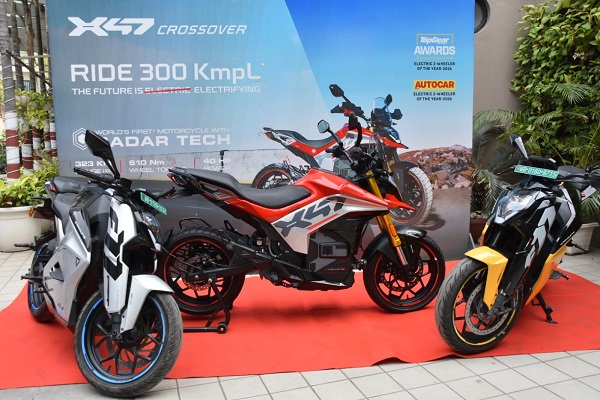
Ultraviolette Automotive today announced the launch of a new UV Space Station in Kolkata, a significant step in expanding its retail footprint across emerging mobility markets in India. The expansion follows a series of recent product and technology milestones, including the launch of the X-47 Crossover, UV Crossfade carbon-fibre helmet, and the company’s recently announced, ‘Battery Flex’ (BaaS) platform. This further emphasises Ultraviolette’s focus on building a comprehensive performance-driven electric mobility ecosystem. With this addition, the company further strengthens customer access to its performance electric motorcycles in Kolkata and reinforces its growing national presence.
The newly established UV Space Station, in partnership with dealer M/s. KGN Automobiles EV, will provide customers a comprehensive experience to explore Ultraviolette’s performance motorcycles – the X-47 Crossover and F77s. The UV Space Station is designed to offer an immersive experience, including test ride opportunities, sales consultation, and access to a range of motorcycle accessories – all under one roof. The Experience Centre will display the company’s performance motorcycles, the X-47 and F77s. The products redefine electric performance with a powertrain boasting 40.2 hp and 100 Nm of torque, accelerating from 0 to 60 kmph in just 2.8 seconds. Equipped with a 10.3 kWh battery, it boasts an IDC range of 323 kms on a single charge.
Commenting on the launch, Narayan Subramaniam, CEO & Co-founder at Ultraviolette, said, “Kolkata is a strategic market for us as we expand our national footprint. The launch of the UV Space Station in Kolkata, our second in the city, marks an important milestone as we strengthen our presence in Eastern India. It reflects a growing, aspirational audience that is increasingly aligned with performance, technology, and design in mobility. This expansion enables us to deepen our engagement with customers while making our products and brand experience more accessible. As Ultraviolette continues to scale across India, our focus remains on building a future-ready, high-quality network that supports the next generation of performance mobility while delivering a truly world-class ownership experience.”
Built on Ultraviolette’s deep engineering and platform-led innovation, the X-47 Crossover is the world’s first electric motorcycle in its segment that offers radar as a standard, marking a decisive shift in how performance electric motorcycles are designed and experienced. The motorcycle features a rider-focused interface with a 5-inch TFT display, three distinct ride modes, long-travel suspension, and industry-first radial all-terrain tyres, delivering confidence, stability and control across varied riding conditions.
Advanced safety and intelligence are delivered through Ultraviolette’s UV Radar Intelligence, powered by a 77 GHz rear radar and the UV HyperSense Advanced Rider Assistance System, enabling functions such as blind-spot monitoring, lane change assist, overtake alerts, and rear collision warnings. The X-47 also incorporates the world’s most power-dense air-cooled onboard charger, engineered, developed, and designed in-house by Ultraviolette, alongside an integrated dashcam system. This engineering-led approach has earned recognition across the automotive industry, including honours from leading automotive awards as EV Motorcycle of the Year, reinforcing Ultraviolette’s ambition to build globally competitive electric mobility solutions from India.
In line with Ultraviolette’s commitment to making advanced electric mobility more accessible, the company recently introduced its ‘Battery Flex’ (BaaS), a flexible ownership model designed to lower entry barriers for performance electric motorcycles while providing customers with greater flexibility in battery usage and ownership. With this new initiative, customers can now own an Ultraviolette X-47 starting at just ₹1,49,000, while subscribing to the battery beginning at just ₹2499 per month. This model allows customers to pay for the bike chassis while financing the battery separately under a steady monthly subscription fee. The initiative further strengthens Ultraviolette’s ecosystem-led approach to accelerating EV adoption in India.
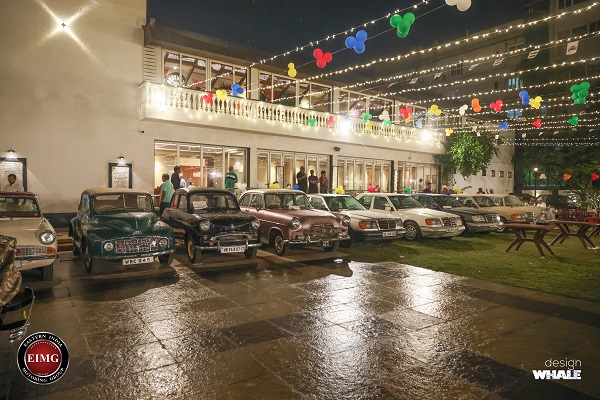
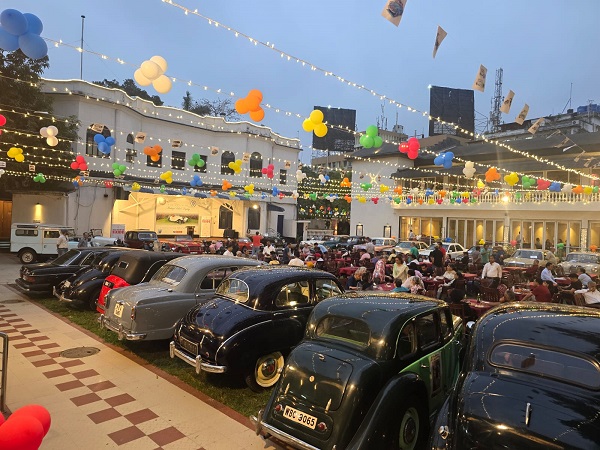
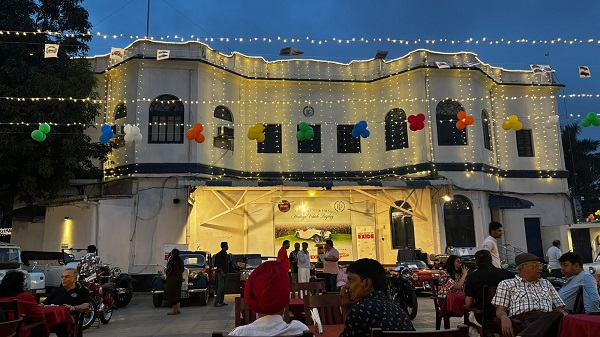
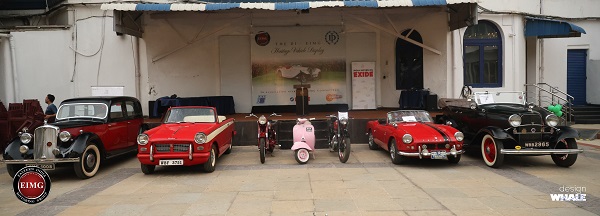
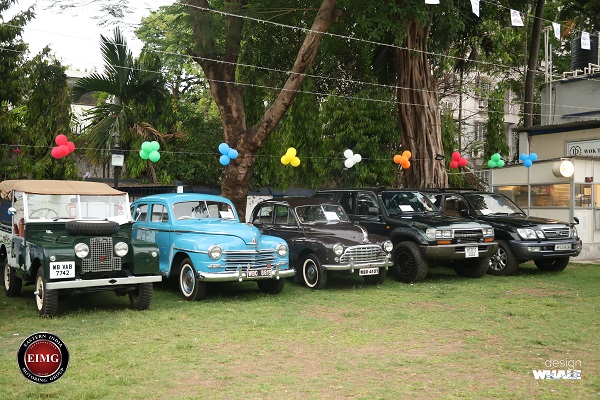
The Dalhousie Institute (DI) and Eastern India Motoring Group (EIMG) joined hands to organise THE DI EIMG HERITAGE VEHICLE DISPLAY 2026 on Sunday, March 15. The event was held at the lawn and the forecourt parking of The Dalhousie Institute where a bevy of 40 heritage vehicles including four and two wheelers and a selection of beautifully restored Fiats from Fiat Users Club of Calcutta (FUCC) were displayed. FUCC is a subsidiary of EIMG who took part in this event for the first time. While the sun kept playing hide and seek from early afternoon and the rain god threatened with an unforeseen downpour, however, it did little to dampen the spirit of the participants. Members of Dalhousie Institute along with their guests were in for a visual treat as some rare and exotic heritage wheels made the onlookers drool in admiration and envy.
Since its inception, EIMG has since been anchoring the revival of the heritage motoring movement in Kolkata. EIMG has been instrumental in organizing some of the most widely appreciated and largely admired heritage motoring events in the city. These stellar events has provided the much needed impetus to heritage vehicle owners and restorers to pursue their passion with added zest to ensure that these beauties turn up at each event looking their best.
Founded in 1859, The Dalhousie Institute is a venerable social club with a rich legacy and heritage of its own. These two iconic organisation – DI and EIMG – came together to create an evening of automobile magic. This collaboration was made possible with the effort of Mr. Shubhajit Kumar, Secretary, EIMG and a heritage car collector himself – who acted as the bridge between DI and EIMG.
Noteworthy among the participating heritage vehicles were Avik Naha’s 1947 Rover 14 P2, a beautifully maintained 1948 Plymouth Special Deluxe owned by Swapan Kumar Lahiri, a red hot 1963 Triumph Spitfire owned by Saikat Dutta, Shubhajit Kumar’s 1964 Standard Herald, Debaprem Chatterjee & PS Basha’s 1932 Ford V8 (an old Calcutta car), the 1949 MGYA owned by Sourav Sett, a beautifully restored 1953 Austin Somerset owned by Ranajit Gooptu, Sarojesh Mukherjee’s rare 1958 Ford Zephyr, Sumit Periwal’s 1953 Land Rover Series 1 (a beautiful beast), 1964 Ford Anglia owned by Amritendu Roy and Mercedes-Benz W123, W124 & W126 owned Hemraj Addhikari, Mubarak Maseeh and Srinjoy Sengupta respectively. Sengupta’s 1994 Toyota Land Cruiser also grabbed many eyeballs. The 1923 Panther Sloper owned by Hossain and Terrence Lobo’s 1940 Triumph 3HW were the head turners of the two wheeler category.
The Fiat Users Club of Calcutta (FUCC) was well represented by Deb Kumar Pal’s 1954 Milicento, the 1957 Elegant owned by Sanjeev Ganguly, Rupak Ghosh’s 1958 Milicento, Arijeet Doss Mullick’s 1963 Super Select, the 1969 Delight owned by Vikramjit Kumar and 1986 Premier Padmini owned by Mubaraq Maseeh.
EIMG Founder & President Shrivardhan Kanoria, himself a restorer & collector of national repute had carefully handpicked an enviable selection of heritage vehicles which was part of this grand display. All the vehicles selected for this event were spectacular in their own right with significant historical importance.
Bentley Motors today reports a seventh consecutive year of profitability, demonstrating resilient underlying performance amid a challenging global market environment, while continuing to self-fund significant capital investment at its historic Pyms Lane site in preparation for electrification.
While headline financial results were impacted by a number of external and non-recurring factors, Bentley’s core performance remained robust. Customer deliveries declined by five per cent during the year, driven largely by continued market contraction, particularly in China. This was partially offset by increased demand for higher-margin derivatives and a continued shift towards bespoke personalisation, resulting in a revenue decrease of just one per cent. The Bentayga continues to be Bentley’s best-selling model, with the Bentayga Speed entering key markets at the end of 2025, further reinforcing the SUV’s popularity.
Improved pricing, a favourable model mix and sustained growth in Mulliner content helped mitigate the impact of lower volumes and supported a revenue of €2.6 billion across the portfolio. Deliveries of Mulliner derivatives increased year-on-year, reinforcing Bentley’s strategy of prioritising value over volume in the upper luxury segment.
Reported operating profit amounted to €216 million, resulting in an operating return on sales of 8.3 per cent. This outcome was significantly affected by expenses related to the decision of the Volkswagen Group to discontinue a D-segment platform, as well additional pressure from U.S. tariff impacts and detrimental F/X impacts.
Bentley’s financial performance continues to support the company’s industry-leading Beyond100+ strategy, as it progresses towards self-funding its ambitious site infrastructure and future product cadence investments.
2025 represented a year of continued transition for Bentley’s product portfolio following the introduction of the fourth-generation high-performance Continental GT and high-performance Flying Spur, both featuring the brand’s new V8 hybrid powertrain. Demand remained strongest for Speed and Mulliner derivatives, reinforcing average revenue per vehicle and supporting profitability.
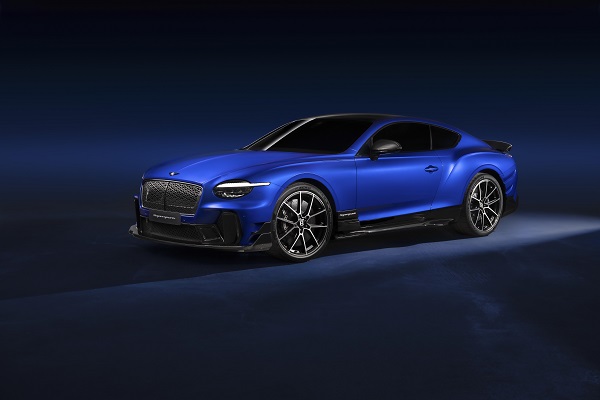
The Bentayga Speed continues to perform strongly across global markets, contributing significantly to the overall revenue of the Bentayga product line. Meanwhile, the recent New York debut of the Supersports reaffirmed Bentley’s ambition to expand its portfolio with more extreme, performance-driven variants. Customer response has been exceptional, with the model fully allocated and preparations now underway for first deliveries later this year.
As part of its ongoing focus on long-term competitiveness and operational efficiency, Bentley will implement a colleague consultation programme affecting management, agency and non-manufacturing employees. The programme reflects organisational adjustments and the overall efficiency activities could result in 275 positions being removed from the organisational structure, as the business prepares for its next phase of electrification and future product launches. Bentley is committed to managing the process responsibly and supporting affected colleagues throughout.
Commenting on the results, Dr. Frank-Steffen Walliser, Chairman and CEO, said: “2025 was a pivotal year for Bentley as we continue our preparation of the next generation of Bentleys including our upcoming all-electric model. Our high-performance Continental GT and Flying Spur have set new benchmarks for desirability, while the Bentayga remains our best-selling model with the new Speed derivative entering key markets. The all-new Bentley Supersports opened a new chapter for Bentley and underlines our sportiness and driver orientation.
“We are investing at unprecedented levels in the Pyms Lane site, including the Design Centre, opened in July last year, the near completion of the A1 building for BEV production, and the upcoming opening of the new Paint Shop later this year. At the same time, we are making some difficult decisions to ensure the long-term competitiveness of the business, including an organisational adjustment potentially impacting approximately 275 positions. I want to express my sincere appreciation to those affected – we are committed to supporting each individual with care, guidance and assistance throughout this transition.
“These actions, alongside our investments and Beyond100+ strategy, ensure Bentley remains financially resilient, strategically focused and well-positioned for the next generation of luxury vehicles.”
Axel Dewitz, Board Member for Finance and IT, added: “Bentley has delivered a seventh consecutive year of profitability, demonstrating strong underlying financial performance despite a challenging macro environment. While reported results reflect a non-recurring accounting impact and external trade effects, the underlying business remains resilient. Revenue quality is supported by disciplined pricing and a rich model mix, with Mulliner bespoke demand continuing to grow.
“These results give us confidence that Bentley’s financial foundation is solid, whilst highlighting the need to continue to invest in our future product portfolio and site transformation.”
Confirming Bentley’s long-term commitment to UK manufacturing, work continues on the transformation of the carbon-neutral Pyms Lane factory and the infrastructure required for BEV production. Progress remains ongoing on the conversion of the site’s oldest building, A1, which will become the future BEV assembly line. The Design Centre, opened in July 2025, consolidates Bentley’s design and innovation capabilities on-site.
These investments build on the recent opening of the Excellence Centre for Quality & Launch. The new Paint Shop will open later this year, offering customers close to 100 individual paint colours and further enhancing Bentley’s personalisation capabilities, while at the same time minimising its impact on the environment. Together, these developments reinforce Bentley’s commitment to the Beyond100+ strategy and to securing high-value luxury manufacturing in Crewe for generations to come.
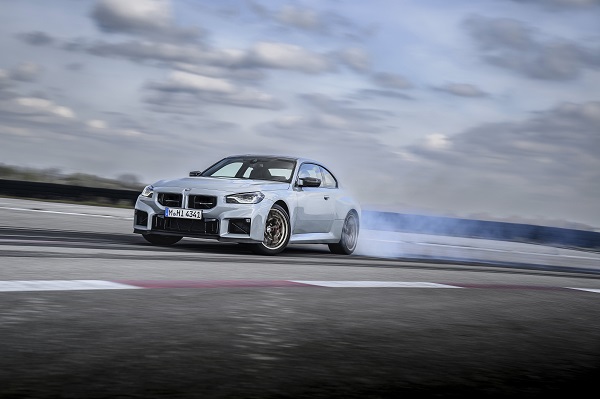
The new BMW M2 CS was launched in India today at an ex-showroom price of INR 1,66,00,000. The car will be sold in the country as a Completely Built-Up (CBU) model and will be available in limited quantities.
Mr. Hardeep Singh Brar, President and CEO, BMW Group India said, “The new BMW M2 CS is optimized for the ultimate thrill. By bringing this global track icon to Indian shores, we are catering to a growing community of enthusiasts who demand an uncompromising, pure-blooded driving experience. And while the M2 CS is born for the racetrack, it’s ready to take you wherever you need to go. It stands as a definitive driver’s machine – a bridge between peak adrenaline and the open road, offering our Indian customers a level of exclusivity and precision that only a ‘CS’ badge can deliver.
The new BMW M2 CS is based on the second generation of the BMW M2 and significantly improves what is already an extraordinary level of performance. With impressive 390 kW/530 hp in the BMW M2 CS, it matches the performance of the BMW M4 Competition Coupé sending its power to the rear wheels via the eight-speed M Steptronic transmission with Drivelogic, which comes as standard.
The new BMW M2 CS set a new benchmark on the legendary Nordschleife racetrack of the Nürburgring on 11 April 2025. Driven by Jörg Weidinger, it completed the 20.823-kilometre Nürburgring-Nordschleife circuit in 7:25.5 minutes, beating the previous best time for compact cars by a full eight seconds. This record-setting BMW M2 CS not only raises the bar in the compact car class, but also further solidifies BMW M’s reputation as a manufacturer of high-performance vehicles that excel both on the road and on the racetrack.
The punchy exterior of the new BMW M2 CS is shaped by many components made of carbon-fibre-reinforced plastic (CFRP) and other exclusive details. The standard M Carbon roof, boot lid, mirror caps and the CS-specific rear diffusor are all made from eye-catching exposed carbon fibre. The M2 CS kidney grille is made with extended air inlets and a unique geometric design. The CS-specific integrated “Ducktail” spoiler is aerodynamically designed for optimal weight distribution and stability and is an absolute head-turner. The “M2 CS” logo on the rear has a red outline. The Adaptive LED Headlights with BMW Selective Beam non-dazzling High Beam Assistant and M lights Shadowline with dark inlays are also standard. Standard equipment also includes CS-exclusive forged M light-alloy wheels with a double-spoke design and matt Gold Bronze finish. They measure 19 inches at the front and 20 inches at the rear axle and are fitted as standard with track tyres. An ultra-track tyre and a standard sport tyre (a no-cost option) in the same dimensions are available as an optional upgrade. The M Compound braking system with red brake callipers, which comes as standard, provides powerful stopping performance while the M Carbon ceramic brake system with red brake callipers is available as an option for extensive track usage. The M-specific exhaust system with electrically controlled flaps and the four exhaust pipes typical of M, which come in matt black enhance the look on the rear of the BMW M2 CS.
The chassis technology and braking system in the BMW M2 CS are precisely tailored to the improved performance characteristics of the engine and the specific weight balance of the special edition. The chassis has been lowered by eight millimetres and adapted specially for the car with bespoke tuning for its springs, dampers and chassis control systems. These modifications improve driving dynamics significantly in all scenarios – including under extremely hard driving. Indeed, the settings for the Dynamic Stability Control (DSC) and M Dynamic Mode have been optimised precisely to meet the demands of driving on the race track.
The interior of the new BMW M2 CS combines an exclusive look with the sporty feel of exquisite Alcantara and innovative lightweight design. Lightweight M Carbon Bucket Seats cacoon driver and passengers, while Merino leather and illuminated CS-specific lettering create a sophisticated look. With a soft cover and contoured thumb rests, the M Alcantara steering wheel has carbon details and M-contrasting stitching for a motorsport feel. A carbon centre console reduces weight and stuns the senses. A high-gloss sheen and red CS lettering are standout features. Additional specific details include the M seatbelts and the entry door sill plates, which are black with an “M2 CS” logo and red outline for the first time. Now illuminated with the “CS” logo, the door trim panels certainly grab the attention. The colour used here can be set individually, likewise the standard ambient lighting. Harman Kardon surround sound system provides an intense musical feast for the ears.
For the BMW M2 CS, BMW M GmbH has opted for an upgraded version of the 3.0-litre, six-cylinder in-line engine which also serves as basis for the power unit used in BMW M4 GT3 EVO racing car. This intensifies the performance experience in the special edition, particularly in highly dynamic driving situations. It further sharpens the engine’s unmistakable power characteristics and perfectly accentuates the linear power delivery – sustained into the higher reaches of the rev range – familiar from M models. The engine generates maximum output of 530hp and peak torque of 650 Nm with 0-100 kmph acceleration in just 3.8 seconds. The top speed of the special edition – which comes as standard with the M Driver’s Package – is 302 kmph.
The engine also has an array of details borrowed directly from racing car design, including its lightning-fast response, appetite for revs and high-performance capability in track use. These details include an extremely rigid crankcase with a sleeve-free, closed deck construction, a forged crankshaft with lightweight design, cylinder bores with a wire-arc sprayed iron coating and a 3D-printed core for the cylinder head.
The eight speed M Steptronic transmission enables extraordinary short shift times and fast, precise responses to every nudge of the accelerator. The driver can access three clearly distinct setups in both automatic and manual mode – comfort oriented, sports focused, or track optimized. The M-specific Setup button on the centre console provides direct access to the settings options for the engine, standard adaptive M suspension, M Servotronic steering, integrated braking system working in conjunction with the M Compound brakes, and the M Traction Control function, which allows drivers to set individual intervention thresholds for wheel slip limitation. M Drive Professional makes an ideal companion for journeys fuelled by extra adrenaline. The M mode TRACK and the ten-stage M Traction Control allow customised handling characteristics. The M Drift Analyser shows the angle and duration of drifts executed by the driver, while the M Laptimer is ideal for those striving for the perfect lap.
BMW Operating System 8.5 in the new BMW M2 CS offers a wider range of digital content for information and entertainment, faster update cycles for functions, improved information on charging points for electric vehicles and optimized access to many specific online services. The display and control system expanded to include the BMW Head-Up Display in conjunction with the BMW Live Cockpit Professional. The advanced display and operating system offers a redesigned entry screen and “QuickSelect” access with an improved menu structure oriented towards consumer electronics devices. A host of BMW ConnectedDrive technologies continue to break the innovation barrier in automotive industry – Telephony with wireless charging, Head Up Display, Smartphone Integration, Active Protection including attentiveness assistant with Park Distance Control with sensors at the front and rear and Parking Assistant. Active Cruise Control with Stop&Go function and BMW Driving Assistant can be added as optional equipment.
For utmost safety, the new BMW M2 CS comes with head and side airbags for driver and front passenger as well as head airbags for rear seats as standard. Additional standard equipment includes Dynamic Stability Control (DSC) including Anti-lock Braking System (ABS), Automatic Stability Control (ASC), M Dynamic Mode (MDM), Cornering Brake Control (CBC), Dynamic Brake Control (DBC), Dry Braking function and Active M Differential.
The new BMW M2 CS delivers maximum driving pleasure coupled with an outstanding performance and fuel consumption ratio thanks to BMW EfficientDynamics measures such as intelligent lightweight design, Auto Start-Stop function, electric power steering, differential and transfer case with optimised warm-up behaviour and aerodynamics. Adaptive M suspension as standard offers a great spread between riding comfort and sportiness.
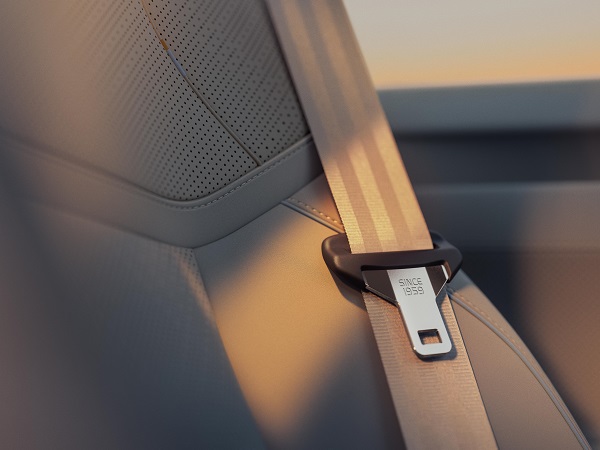
Volvo was one of the first car manufacturers to introduce seatbelts to the European market when it fitted its 1956 Amazon prototype with a two-point cross-chest diagonal belt, which was made available as an option on production models shortly afterwards. Three years later it became the first brand in the world to fit three-point belts as standard. Setting the template for the modern safety belt that’s fitted to all cars today, it was created by Volvo design engineer Nils Bohlin and consisted of a lap belt and a diagonal belt anchored at a low attachment point beside the seat.
By 1959 the three-point safety belt was installed as standard in all Swedish market Volvo cars, and later in cars across the world as the patent was made available to all car makers free of charge. As a result, seatbelt availability quickly became widespread and their fitment as a legal requirement was accelerated, helping to save millions of lives across the world.
The engineering innovation from Volvo seatbelts 70 years ago still plays a vital role in the design and engineering of modern Volvo models, with the newly launched EX60 mid-size SUV featuring the world’s first multi-adaptive safety belt.
This state-of-the-art safety belt uses real-time data input from advanced interior and exterior sensors to customise protection, adapting to the situation and individual occupant, taking into account their height, weight, seating position and crash type. For example, a larger occupant in a serious crash will receive a higher belt load setting to help reduce the risk of head injury. While a smaller occupant in a milder crash will receive a lower belt load setting to reduce the risk of rib fractures. As Volvo gathers more insights, the car can improve its understanding of the occupants, new scenarios and response strategies – and thanks to over-the-air software updates, this can be applied to the car, so the technology will continuously improve over time.
Volvo has always been at the forefront of safety evolution and innovation, and they continue to make new developments on such vital features like the seatbelt. The latest multi-adaptive seatbelt in the new EX60 is a testament to our pioneering technology and approach to safety that is continued today.
With the delivery of four million all-electric vehicles, the Volkswagen Group has reached another milestone in its successful electrification strategy. In 2025, the Group was one of the top five BEV manufacturers worldwide and was the clear BEV market leader in its home market of Europe with a market share of around 27 per cent. The Group’s first all-electric series production vehicle, the VW e-up!, was launched back in 2013, followed by the VW e-Golf in 2014. From 2019 on, a cross-brand product offensive based on the new Modular Electric Drive Matrix (MEB) drove significant volume growth. To date, around three million Group vehicles based on the MEB have been delivered, making it the Group’s leading electric platform.
With its product offensive across all brands over the past two years, the Volkswagen Group has comprehensively renewed its portfolio and launched around 60 new models. Around one-third of these have an all-electric drive. The Group brands currently offer their customers more than 30 all-electric vehicles in the passenger car segment alone, from compact cars to luxury SUVs. In addition, there are all-electric trucks and buses from the TRATON brands Scania, MAN, International, and Volkswagen Truck & Bus. This gives the Volkswagen Group one of the most comprehensive BEV portfolios in the automotive industry.
In the current year, the Group is consistently expanding its range and once again bringing more than 20 new models onto the road, around half of which are all-electric. These include pioneering new electric models in China and the Electric Urban Car Family in Europe, consisting of four all-electric vehicles in the entry-level segment.
Global BEV production network comprises more than 20 locations The Volkswagen Group manufactures its all-electric vehicles in several European markets, in China, in the USA and in Brazil. At around 77 per cent, the majority of the four million BEVs were produced in the home market of Europe. There are 11 BEV production sites here, located in Emden, Zwickau, Hanover, Bratislava, Mlada Boleslav, Ingolstadt, Neckarsulm, Leipzig, Zuffenhausen, Munich and Södertälje. With Pamplona and Martorell, two further locations are in the starting blocks, where the models of the Electric Urban Car Family from the Brand Group Core will roll off the production line in future. Preparations for the start of BEV production are also underway at the Volkswagen brand’s main plant in Wolfsburg, as well as at the Bentley plant in Crewe, England.
One in five of the Group’s BEVs was built in China, the world’s largest electric vehicle market. There are four production sites there: Anting, Foshan, Hefei and Changchun. Around three per cent of the BEVs delivered to date were produced at the Chattanooga and Tulsa plants in the USA. In Brazil, production of all-electric commercial vehicles recently started at the Sao Paulo plant.
95 per cent of BEVs were delivered in the core markets of Europe, China and the US The three core BEV markets also clearly dominate deliveries, accounting for around 95 per cent. More than two out of three all-electric vehicles were delivered to customers in Europe (68 per cent). As with production, China accounted for 20 per cent of deliveries. Around eight per cent of vehicles went to the USA. All other markets combined accounted for five per cent.
Clear brand focus in the volume segment At around 72 per cent, the clear majority of BEVs were accounted for by the Brand Group Core, which serves the volume segment. With around two million vehicles, around half came from the Volkswagen Passenger Cars brand. This was followed by Škoda with 480,000 units, SEAT/CUPRA with 230,000 units, and Volkswagen Commercial Vehicles with 140,000 units.
The Brand Group Progressive contributed around 22 per cent of all BEVs. This comprises 870,000 Audi models in the premium segment.
Around six per cent of all-electric vehicles were delivered in the Brand Group Sport Luxury. This amounted to 250,000 Porsche vehicles that the sports car brand handed over to its customers.
The Brand Group Trucks accounted for a total of around 0.3 per cent of BEV deliveries, corresponding to around 11,000 vehicles.
CompactclassandSUV/crossovermodelsmostpopularwithcustomers The most popular vehicle segment for BEVs was the compact class, accounting for around 70 per cent of deliveries. This includes vehicles the size of the VW ID.3 and ID.4 models, the Škoda Enyaq, the CUPRA Born, and the Audi Q4 e-tron.
In terms of body types, vehicles with an SUV or crossover silhouette were the most popular among buyers. More than half of all BEVs fell into this category.
The following list shows an overview of the 10 most popular BEVs from the Volkswagen Group, which together accounted for more than 80 per cent of deliveries to date (in thousand vehicles):
Turning the exhaust note into the beat of music, TVS Apache, today launched its first-ever official anthem — ‘The Apache DNA’, celebrating 20 years of the brand’s legacy. Bringing excitement to customers, especially the new generation in India and across the world, the anthem has been composed by one of India’s finest rapper and songwriter Brodha V. Launched in 6 languages – English, Hindi, Marathi, Tamil, Telugu & Kannada, the anthem marks a landmark cultural moment for an iconic racing and performance motorcycling brand like TVS Apache.
Music is a powerful motivator for motorcyclists, and TVS Apache channels that same energy through its performance-driven style. Embodying a fearless spirit, and racing DNA, TVS Apache has become synonymous with performance, technology, and innovation for over 6.5 million riders across 60+ countries. The anthem further amplifies this spirit, positioning itself as a bold expression of confidence and unmatched energy on and off the racetrack.
Commenting on the first-ever TVS Apache anthem, Mr. Vimal Sumbly, Business Head, Premium Segment, TVS Motor Company, said, “For 20 years, TVS Apache has been the living expression of our racing DNA, an attitude and legacy that has empowered 6.5 million riders globally. ‘The Apache DNA’ anthem is our tribute to every rider who embodies the philosophy of TVS Apache. As we continue to democratize racing-bred technology, we are also expanding TVS Apache’s presence into music and youth culture, creating deeper connections with the communities that live and breathe the brand every single day.”
The lyrics of ‘The Apache DNA’ reflect the core ethos of TVS Apache: speed, precision, and control. With the launch of the anthem, TVS Apache takes its racing DNA beyond motorcycles, strengthening its emotional connect with riders and expanding its presence across music genres and the community. As the brand continues to push the boundaries of performance motorcycling, it resonates a powerful expression of TVS Apache’s commitment to confidence, authenticity, and an unstoppable riding ethos that resonates with the next generation of riders.
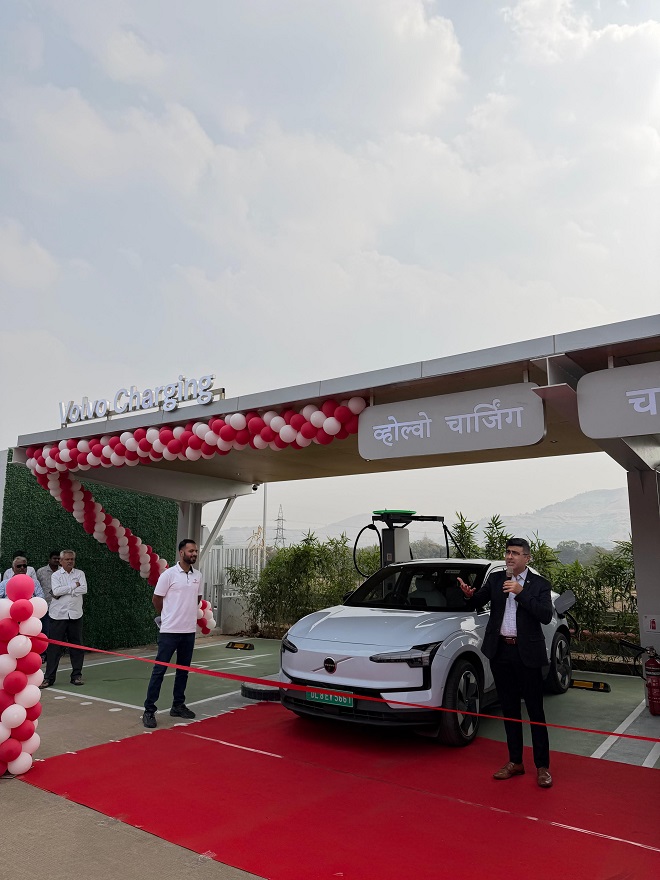
Swedish luxury car brand, Volvo Car India and ChargeZone®, India’s largest EV charging network, has inaugurated an ultra-fast charging station on the Mumbai-Nashik Highway that features a 360kW star charge power unit with two dynamic load balancing dispensers. This station is located at Food Hills, Mumbai-Nashik Highway, Near Igatpuri. This marks a significant milestone in their collaboration to build a premium nationwide supercharging network.
This intelligent configuration enables optimal power distribution, reduced waiting times and faster real-world charging experience for Volvo customers and other EV users. Strategically positioned on one of Maharashtra’s busiest intercity routes, the charging station offers dedicated bays for Volvo EVs, seamless app-based access for navigation and payments, and an elevated customer experience designed for convenience and reliability.
Jyoti Malhotra, MD, Volvo Car India, spoke during the ribbon cutting ceremony organized at the charging station today, “As a legacy brand, Volvo Cars is committed to driving the transition towards sustainable mobility, and this partnership with ChargeZone® is a testament to that vision. Together, we are ensuring that our customers not only enjoy the luxury and performance of Volvo EVs but also have access to a dependable and hassle-free charging infrastructure. The new 360kW station on the Mumbai-Nashik highway is the first step in delivering a world-class charging experience across India.”
Present at the event and speaking on the occasion, Mr. Kartikey Hariyani, Founder & CEO, ChargeZone®, said, “The launch of our first co-branded 360 kW ultra-fast charging station with Volvo Car India represents an important milestone in building a premium, future ready charging network for the country. The Mumbai Nashik hub showcases our focus on high speed, technology enabled infrastructure supported by intelligent features such as dynamic power loading that significantly improve the customer experience. As EV adoption accelerates, our priority is to ensure that long-distance travel becomes fast, predictable and seamless. We look forward to supporting India’s shift toward a cleaner and more sustainable mobility landscape.”
This installation follows the Memorandum of Understanding signed in 2025 between ChargeZone® and Volvo Car India to expand access to high-speed EV charging across key national corridors, and the plan is to get a few more charging stations added in 2026. The partnership reflects a shared commitment to improving long distance EV travel, strengthening charging availability, and advancing India’s transition to sustainable mobility, while encouraging the adoption of luxury and performance EVs across the country.
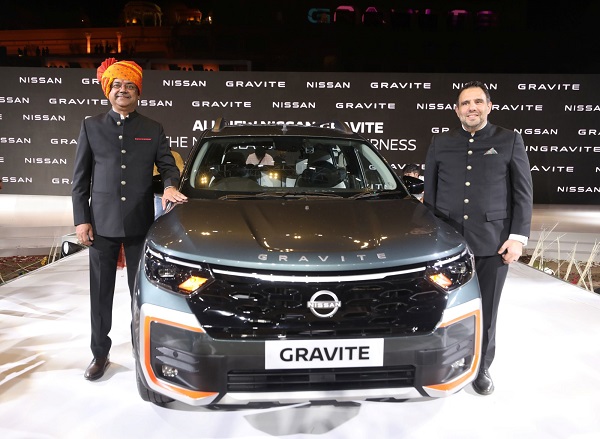
Nissan Motor India has announced the launch of the All-New Nissan Gravite at an attractive introductory price of INR 5.65 lakhs. A bold and game-changing 7-seater MPV, the Gravite marks the beginning of a new chapter in Nissan’s India journey.
The Gravite is the first product to roll out under Nissan Motor India’s renewed product offensive — underlining the company’s strengthened commitment and presence in India.
The name “Gravite” draws inspiration from 1.4 billion Indians and the 19,000 vernaculars and rituals that shape the nation’s diversity; the Gravite has been purpose-built to meet the evolving aspirations of Indian families. It combines space, versatility, comfort, and everyday practicality with a commanding road presence.
Thierry Sabbagh, Divisional Vice President and President, Middle East, KSA, CIS and India – Nissan and Infiniti, said, “India is central to Nissan’s global ambitions. Our actions over the past year strengthening operations, expanding the network and embarking on a product offensive demonstrate our long-term commitment to this market. The All-New Nissan GRAVITE is not just a product launch; it marks the beginning of a sustained growth phase for Nissan in India. With local manufacturing at our alliance partner facility in Chennai and a future-ready product roadmap, we are here to compete, grow and lead in the segments that matter.”
Saurabh Vatsa, Managing Director, Nissan Motor India, said: “The All-New Nissan GRAVITE is inspired by the diversity, scale, and ambition of Indian families. Every detail from its modular seating to its commanding stance reflects how Indian customers live, travel and grow together. For us, GRAVITE is more than a product introduction. It is a promise that Nissan will continue to design, manufacture and invest in vehicles that truly resonate with India’s mobility aspirations.”
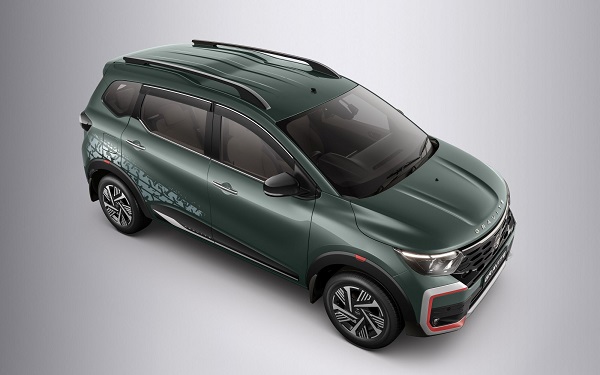
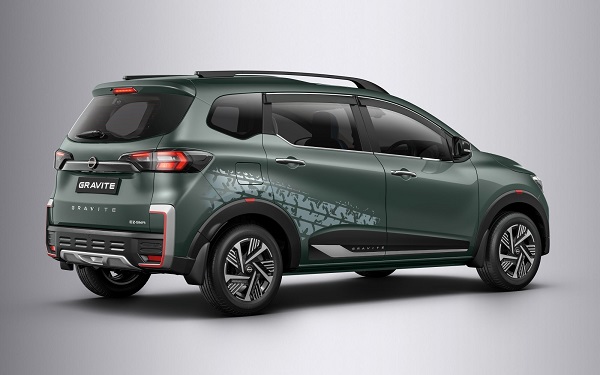
The All-New Nissan Gravite establishes a distinct and confident identity aligned with Nissan’s global design language. Its elevated proportions, muscular body lines, pronounced wheel arches and high ground clearance create a commanding road presence suited to diverse Indian driving conditions.
The Gravite is the only vehicle in its segment to feature distinctive hood branding along with unique rear-door badging — a bold design expression that reinforces exclusivity and strong visual recall.
Central to its identity is Nissan’s signature C-shaped design integration at the front and rear, ensuring instant brand recognition while delivering a premium, contemporary character.
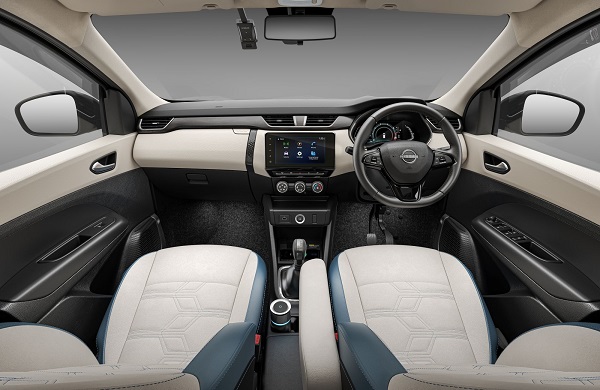
The Nissan Gravite redefines family mobility with exceptional cabin roominess and pioneering modularity. Designed to seamlessly adapt to daily commutes and long journeys alike, it delivers intuitive comfort across all three rows.
Premium suede and leatherette quilted seats enhance seating comfort, while generous shoulder and elbow room in the first row and ample headroom and knee room in the second and third rows ensure relaxed seating for all occupants.
Safety remains a core pillar of the Gravite’s value proposition, with 30+ standard safety features designed to deliver peace of mind for families.
The All-New Nissan Gravite is powered by an efficient and refined petrol engine, thoughtfully calibrated to meet the everyday mobility needs of Indian families. It is tuned to deliver smooth acceleration, comfortable cruising and predictable performance across city and highway conditions. The combination delivers a driving experience that prioritises reliability, ease of use and everyday usability – aligning with needs of modern Indian families without compromising on fuel economy and refinement.
The All-New Gravite as the second critical model in Nissan’s rejuvenated portfolio represents a decisive step in the brand’s product renaissance in India. Building on the momentum of the New Nissan Magnite – which is exported from India to markets and locally supported by an expanding dealer network across network cities, the Gravite establishes a strong foundation for sustained growth.
With the upcoming Tekton C-SUV in mid-2026 and a 7-seater C-SUV in early 2027, Nissan’s future-ready roadmap signals a confident multi-segment offensive in the Indian market.
The All-New Nissan GRAVITE is launched at an attractive introductory price of INR 5.65 Lakhs.
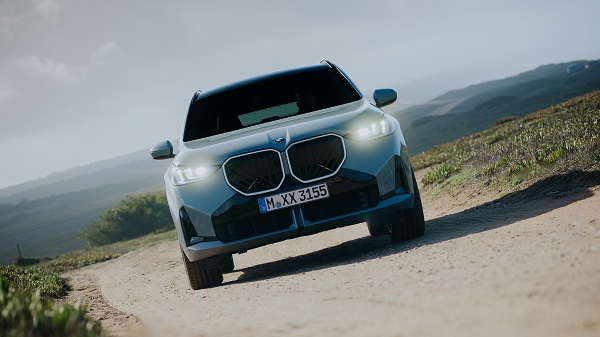
The all-new BMW X3 30 xDrive M Sport Pro was launched in India at an ex-showroom price of INR 74,50,000. Locally produced at BMW Group Plant Chennai, this new petrol variant of the BMW X3 can be booked at all BMW dealerships across the country from today onwards.
The all-new X3 30 xDrive M Sport Pro further bolsters the X3 portfolio in India, joining the existing xDrive 20 petrol and xDrive 20d diesel variants to offer a comprehensive range of performance-led choices for customers.
Mr. Hardeep Singh Brar, President and CEO, BMW Group India said, “The BMW X3 has always been the definitive choice for those who seek a perfect blend of luxury and versatility. With introduction of the new BMW X3 30 xDrive M Sport Pro, we are taking that legacy to an enhanced level of performance and presence. Power attracts power, and the new X3 30 delivers exactly that pairing a more aggressive engine with refined luxury to create a truly spirited driving experience. With this new addition, we have further expanded the X3 offering in India to cater to our modern, performance-driven customers who demand more.”
The design language of the all-new BMW X3 30 xDrive M Sport Pro gives the car a monolithic overall appearance. The exterior design is characterised by expansive surfaces and precise contours. It’s dimensions – length: 4,755 mm and wheelbase: 2,865 mm – make it the longest car in its segment. With a width of 1,920 mm and a height of 1,660 mm, the all-new X3 is also the widest and tallest car in its segment. The front end exudes great presence courtesy of its upright stature and, most notably, the large fully black BMW kidney grille with iconic glow illumination. The best-in-class adaptive LED headlights with high beam assistant and cornering lights result in peak performance and safety in low-visibility conditions. The adaptive LED lights are based on a projector lamp setup, offering much better performance than the traditionally used reflector lights. The headlights are complimented by the M lights shadow line which adds a sporty black tint making for an imposing front fascia. The M aerodynamic package with larger air intakes in the front apron guarantee an elegantly sporty appearance. Completing the exterior’s dynamic look are the standard 20-inch M alloy wheels, along with larger M Sport brakes in red with improved braking performance that create a powerful visual statement even at a standstill.
The car’s sporty silhouette features an elongated bonnet and a long wheelbase as well as a rising window graphic and a signature Hofmeister kink. The roof rails and the integrated roof spoiler in high gloss black underscore the vehicles’ athletic and adventurous character. The large wheel arches have a subtly squared-off outline in typical BMW X model style. The all-new BMW X3 30 also comes with flush-fitting door handles. The familiar BMW X proportions acquire a sporting flavour thanks to the long roofline extending deep into the rear end. The darkened split rear lights have a double L-shape lend a more assertive and modern presence to the vehicle. The rear diffuser in high gloss black enhances the bold appearance when seen from behind.
An expressive design and high-quality materials characterise the interior of the all-new BMW X3 30 xDrive M Sport Pro. The highly minimalist design lends the interior a particularly clean and modern look. The progressive and sophisticated ambience inside goes hand in hand with generous amounts of space and modern versatility for everyday use, leisure activities and trips away. The interpretation of the familiar BMW X cockpit design is shaped by the driver-oriented BMW curved display and the striking geometry of surfaces and innovative design features. The fully digital screen grouping is composed of a 12.3-inch information display and a 14.9-inch control display. The new instrument panel, elegantly wrapped in sensatec, brings a refined, high-quality finish to the cabin of the all-new BMW X3 30, enhancing the interior’s premium ambiance. Other design features include the standard BMW interaction bar integrated below the control display with control panels for the airflow and for switching on hazard warning lights, as well as the light elements in a contrasting colour that can be found in the centre console and in the front section of the door trim in both the front and rear. These form the basis for a dramatic lighting effect that further accentuates the three-dimensional character of the cockpit design. The lighting concept is further refined by the integral jewelry box located ahead of the gear selector, which uses ambient accents to spotlight stored items and reinforce the cabin’s premium feel. The all-new X3 30 also comes with a fully customizable head-up display as standard.
The M steering wheel comes with flatbottomed rims as well as control buttons providing haptic feedback. Standard shift paddles are available for manual interventions in the eight-speed steptronic transmission’s gear selection process. The sports seats come with active seat ventilation for front passengers. They also offer lumbar adjustment and backrest width adjustment for the driver, a feature unique to BMW X3. The sport seats are lapped in vegan leather ‘Veganza’ made with sustainable materials. The largest-in-segment panoramic glass sunroof gives an exceptionally elegant appearance and creates a light and airy feel inside the cabin. Travel & Comfort System, offered as standard, enables users to connect their devices to the car for a seamless entertainment experience. Rear windows also get roller sunblinds for extra privacy and protection from direct sunlight. The Harman Kardon surround sound system with 15 speakers and 750 watts of audio power provides an intense musical feast for the ears.
Thanks to BMW TwinPower Turbo technology, the X3 30 xDrive’s engine melds maximum power with exemplary efficiency and offer spontaneous responsiveness even at low engine speeds. The 2-litre 4-cylinder in-line petrol engine produces an output of 258 hp and maximum torque of 400 Nm at 1,600 – 4,600 rpm. The car accelerates from 0 -100 kmph in just 6.3 seconds. Customers also get the sport boost function for exceptionally rapid bursts of speed as well as the sport plus mode for most dynamic handling characteristics. The all-new X3 30 xDrive comes with a 48V technology as standard which significantly improves performance as well as efficiency. The 48V technology results in remarkably instantaneous response to the slightest movement of the accelerator – when pulling away and also when putting in a sudden burst of speed – as well as more comfortable operation of the automatic start / stop function.
Adaptive suspension with electronically controlled dampers is also offered as standard. It automatically adjusts damper response to the prevailing driving situation and current driving style, with a choice of two settings depending on the my mode selected. This means sport mode activates optimal damper responses for dynamic handling, creating a noticeable contrast to the more comfort-oriented damper setting in the other my modes. Adaptive suspension combines excellent handling with supreme driving safety and allows the vehicle to be effortlessly controlled up to the limit. This has the effect of maximising not just the comfort and agility of the vehicle, but also its handling precision.
The all-new BMW X3 comes with the latest version of BMW iDrive with QuickSelect to provide intuitive, easy control. Its home screen shows vertically arranged function icons on the same level. The QuickSelect feature allows functions to be activated directly without having to enter a submenu. The new BMW iDrive is geared squarely to touch and voice control. It is based on the latest BMW Operating System 9, which also paves the way for a customisable selection of additional digital services. The all-new BMW X3 offers the best and latest of BMW ConnectedDrive services with BMW Digital Premium.
MyBMW App functions include popular options for keeping an eye on the current vehicle status at all times. The innovative BMW digital key plus services turn any smartphone into a car key and can be transferred up to 18 additional users, along with their personal vehicle settings. One can remotely lock / unlock and configure top speed, engine power, audio and more. Wireless Apple CarPlay® / Android Auto for smartphone opens up access to a range of functions and apps. In addition, customers can use the MyBMW app to generate BMW digital key plus, which turns a smartphone into a digital vehicle key. It will enable customers to physically open the doors when unlocking them this way.
The spread of BMW Connected Drive and Driver Assistance Systems that support comfort and safety are more extensive than ever. The all-new BMW X3 now comes with Driving Assistant Plus as standard which includes some best-in-class features like Active Cruise Control (with Stop&Go Function), Lane Departure Warning, Lane keep assistant and much more. Parking Assistant Plus offers the highest degree of technology and accessibility to smart parking systems in the segment with features such as fully automated parking with surround view camera and segment first features such as BMW Reversing Assistant and BMW Drive Recorder.
BMW EfficientDynamics includes features such as 8-speed Steptronic Automatic Transmission, Auto Start-Stop, ECO PRO mode, Brake-Energy Regeneration, Electronic Power Steering, 50:50 Weight Distribution and many other innovative technologies.
BMW xDrive, the intelligent all-wheel drive technology, monitors the driving situation and is quick to respond to ensure maximum traction, agility and vehicle stability. Electronically controlled ‘Automatic Differential Brakes/Locks’ (ADB-X), extended ‘Dynamic Traction Control’ (DTC), Hill Start Assist and Hill Descent Control help to conquer every terrain.
BMW Safety includes eight airbags, Attentiveness Assistance, Dynamic Stability Control (DSC) including Cornering Brake Control (CBC), electric parking brake with auto hold, side-impact protection, electronic vehicle immobilizer with crash sensor and child seat mounting.


 Power Drive