Many a Bentley owner’s love of the marque begins in childhood, and the owner of the third of twelve Speed Six Continuation Series is no exception. In his case, it was a ‘Models of Yesteryear’ scale model Blower Bentley, given to him by his uncle, that sparked a lifelong fascination with the pre-war Bentley racing cars.
The owner and his wife enjoy a stable of Crewe-built Bentleys, including a first-generation Continental GT, a motorsports-inspired Continental GT3R, second-generation Continental Supersports and First Edition Bentayga. Pride of place however goes to his Continuation Series ‘Blower’ 4½ Litre Supercharged and the latest addition, a Continuation Series Speed Six. Not only has he kept that cherished scale model ‘Blower’ to this day, but it also provided the visual inspiration for his two Bentley Continuation Series cars.
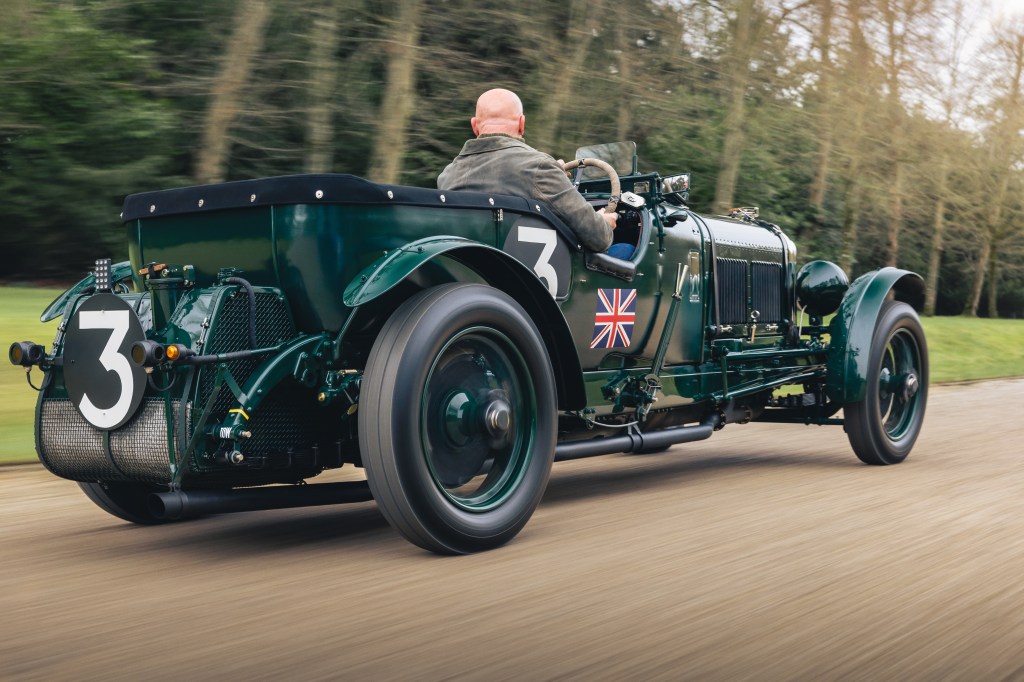
At the workshops of Mulliner Classic, realising a customer’s dreams is both their calling and their pride. Continuation Speed Six #3 (of 12) is a case in point; created with meticulous attention to detail to be identical in every respect to the original 1930s works racer, it also features several personal touches in its specification that make it truly individual, from the one-off paint finish to the racing number 3 that it carries on its flank and radiator.
Personal memories and family associations Both the Continuation Series Speed Six and the Continuation Series Blower are the third of twelve in their series, and the Speed Six also carries the racing number 3. The number that has fond associations for the owner, who played rugby to semi-pro standard as a tighthead prop, wearing the number 3 jersey, for many years.
Both the Blower and the Speed Six are finished in the same specially blended shade of green, chosen after careful consideration to be mid-way between the light green of the owner’s scale model and traditional British Racing Green. The shade was christened ‘Embelo Green’, taking the first letters of the couple’s three daughters. Like the owner’s scale model Bentley, his Speed Six Continuation Series’ interior is upholstered in red, though the couple chose a more muted shade than that of the toy.
As with all this owner’s Bentleys, the Speed Six will be regularly and enthusiastically driven. Accordingly, another special request was for the Mulliner team to provide two exhaust systems with the Speed Six: one unsilenced as the original Speed Six specification, and the other with a silencer for circuits where noise restrictions are required. Bentley Mulliner engineering developed this silencer specifically for the Speed Six Continuation series. Finishing touches include a white patch on the leading edge of the nearside front fender for easier identification when coming into the pits and a hand-painted Union Flag on the driver’s side of the car.
A hands-on experience Commissioning a Continuation Series Bentley is a highly personal process and, like many Mulliner Classic customers, the owner of the #3 Speed Six became a familiar figure in the Crewe workshops. A highly capable craftsman in his own right, he even spent a day working as part of the Mulliner team to fit the period-correct Rexine fabric of his Blower’s Weymann-style bodywork. While work commitments meant he was unable to do the same for his Speed Six, he fully intends to use it as W.O. Bentley intended – fast, reliable and capable of impressive performance.
The legendary Speed Six The Speed Six was introduced in 1928 as a more sporting version of the Bentley 6½ Litre. The engine was modified to liberate more power, with twin SU carburettors, a higher compression ratio and a high-performance camshaft.
182 Speed Six models were built between 1928 and 1930. Two wins at the Le Mans 24 Hour race, in 1929 and 1930, cemented the Speed Six’s pre-eminent place in Bentley racing history.
For the Continuation Series Speed Six, Mulliner Classic took two original Speed Sixes as its template: the company’s own Speed Six, GU409, and ‘Old Number 3’, a works Speed Six driven in the 1930 Le Mans 24 Hour race by Sammy Davis and Clive Dunfee. The latter was generously loaned by its owner and gave the Mulliner team invaluable data on dimensions, materials, and components. The Mulliner Classic team is also indebted to the W.O. Bentley Memorial Foundation, which provided 80% of the original drawings and notes used by the team.
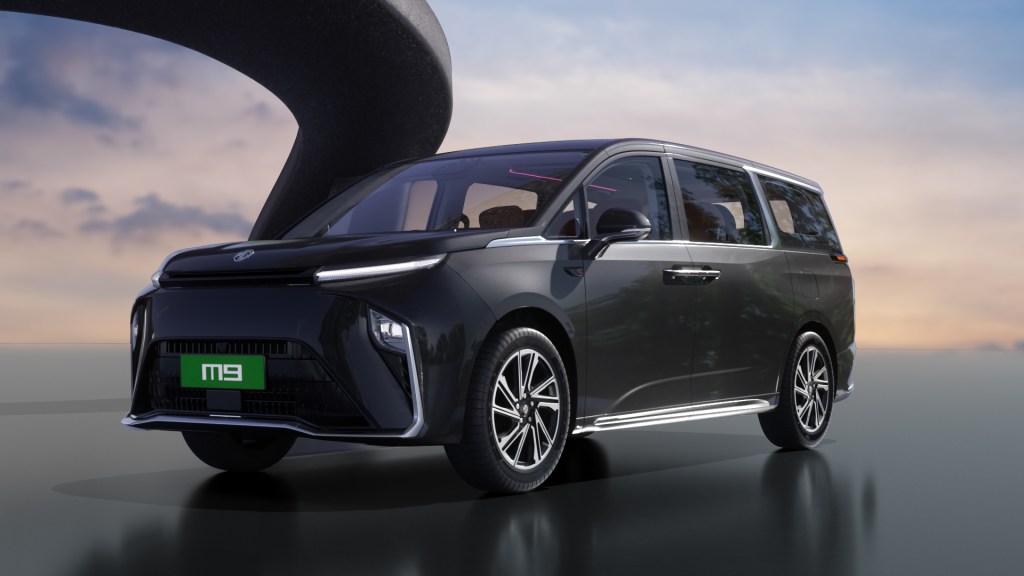
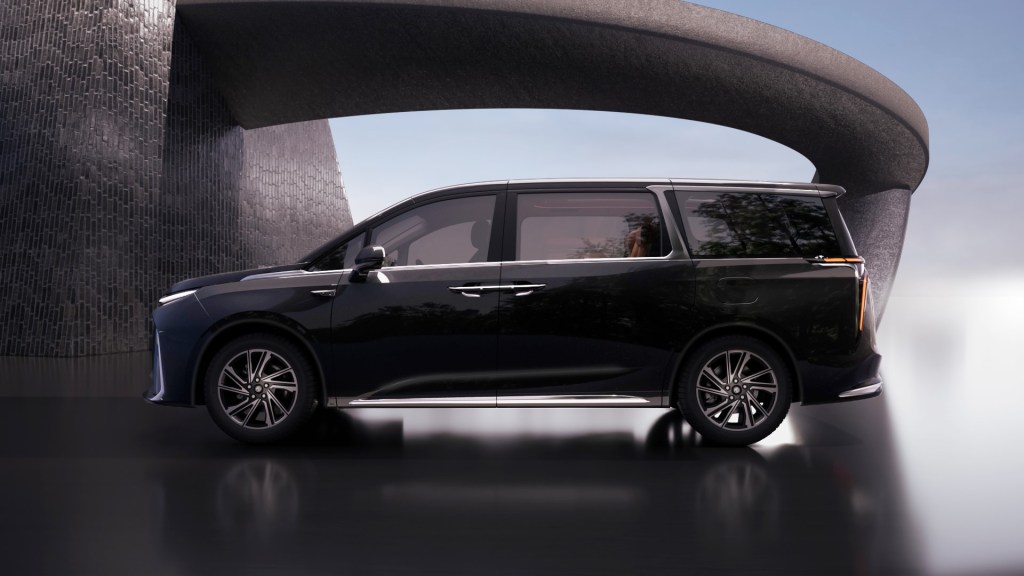
JSW MG Motor India’s newly launched luxury brand channel, MG Select, has unveiled the name of the second car from its portfolio – ‘MG M9’. An exclusive sanctuary, the M9 is a luxurious limousine designed for the discerning few. Its spacious cabin adorns opulent interiors and is equipped with advanced technology to offer supreme comfort and sophistication. The majestic limousine is set to premiere at the Bharat Mobility Global Expo 2025.
The MG M9 limousine is conceptualised to provide ultimate comfort and luxury on wheels. The Limousine is built with a charismatic blend of signature styles, from its touchscreen handrail on reclining ottoman seats in the second row to the trapezoidal front grills on the exterior. With 8 massage modes in the ottoman seats and the 3-zone climate control, it ensures an elevated sense of comfort, all of which can be controlled from the touchscreen panel on the handrail. This majestic limousine is for the discerning few who long to travel with the best amenities and can comfortably seat seven passengers across three rows.
Talking about the MG M9 EV, Gaurav Gupta, Chief Growth Officer, JSW MG Motor India, said, “A personalised masterpiece, the MG M9 offers bespoke interiors, meticulous craftsmanship, and cutting-edge technology. It is the epitome of comfort and refined luxury for those who wish to immerse themselves in the world of elegance. We envision a future where luxury mobility is a norm, and M9 is a step in that journey.”
JSW MG Motor India, known for its commitment to excellence and innovation, is redefining accessible luxury with the launch of MG Select, its luxury brand channel. It is designed for discerning customers who value purposeful experiences. With exclusive experience centres in 12 cities in phase 1, this channel blends innovation, sustainability, and curated experiences to set new benchmarks in luxury and is rooted in the rich legacy of Morris Garages.
In 2025, Rolls-Royce Motor Cars marks the centenary of the launch of the first Phantom. Throughout its long history, the Phantom nameplate has been reserved for the pinnacle model in the marque’s portfolio – the very apex of excellence.
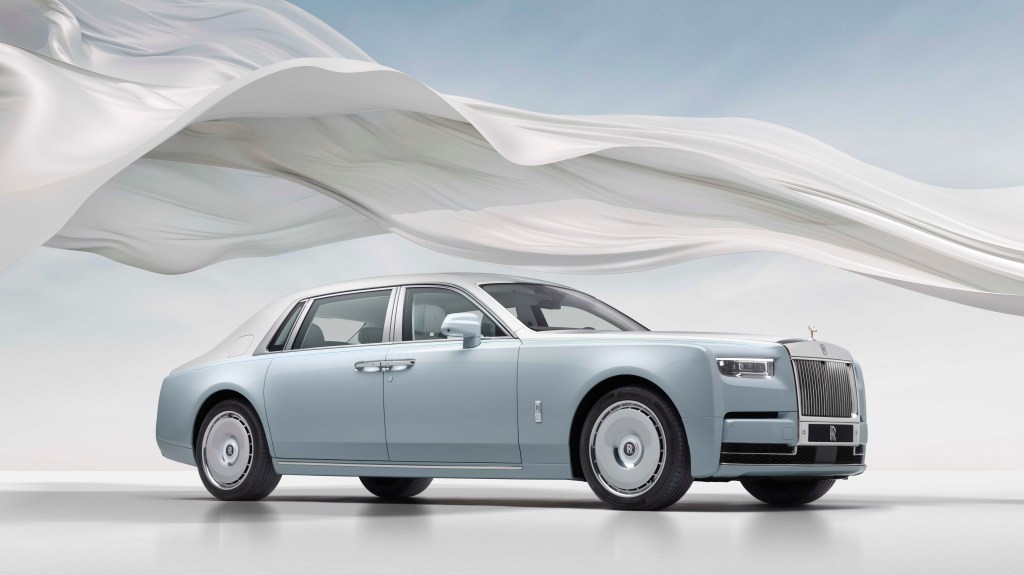
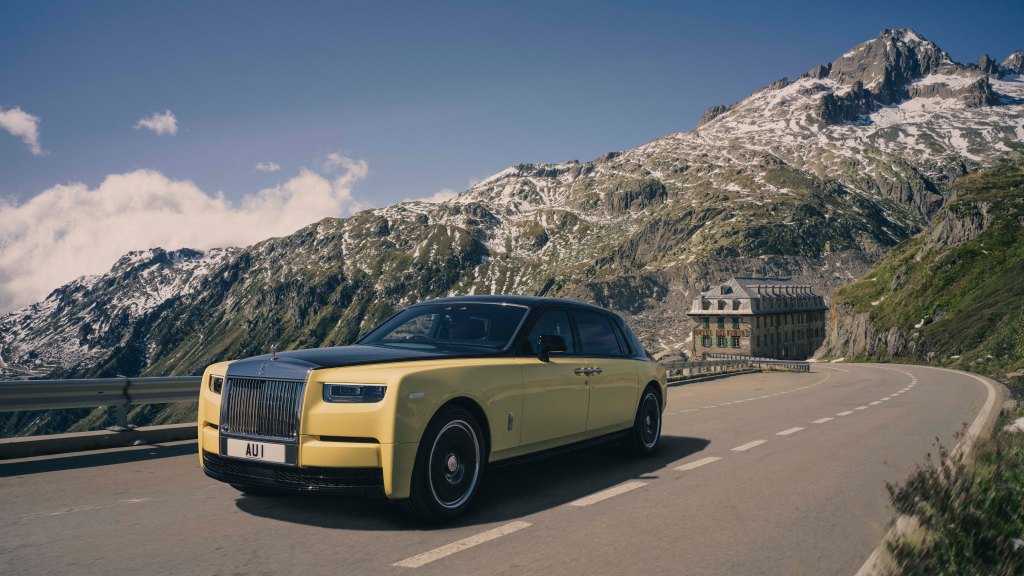
Each iteration, up to and including the eighth generation currently being handcrafted at the Home of Rolls-Royce at Goodwood, has seen advances in design, engineering, materials and technology. Today, Phantom is the ultimate blank canvas for Bespoke commissions, where clients can bring their most elaborate, imaginative and personal visions to life. Inspiration for Bespoke commissions is everywhere, and Phantom’s scale, elegance, presence and adaptability enable it to be whatever its owner wishes it to be. Recent inspirations include haute couture (Phantom Syntopia), famous films (Phantom Goldfinger), Chinese culture (Phantom Extended ‘Year of the Dragon’) and the marque’s own Spirit of Ecstasy Mascot (Phantom Scintilla).
Phantom has always had the same fundamental aim: to provide the most magnificent, desirable and, above all, effortless motor car in the world – the very best of the best. At the start of Phantom’s anniversary year, Rolls-Royce reveals the fascinating story behind its pinnacle product, and how it earned – and maintained – that reputation through a century of constant, often profound change.
Chris Brownridge, Chief Executive, Rolls-Royce Motor Cars said, “One hundred years ago, Rolls-Royce launched the first motor car to bear what would become the most evocative and enduring nameplate in its history: Phantom. Through eight generations, Phantom’s fundamental role as the pinnacle Rolls-Royce motor car has always been the same: to be the most magnificent, desirable and above all, effortless motor car in the world – the very best of the best. In many respects, the history of Phantom is the history of Rolls-Royce: always moving with the times and its clients’ needs and requirements, transcending fleeting trends and providing the setting for the most remarkable executions of craft and artistry, all while resolutely refusing to compromise its core engineering and design principles. We’re proud to continue this tradition of excellence, elegance and serenity into the next 100 years.”
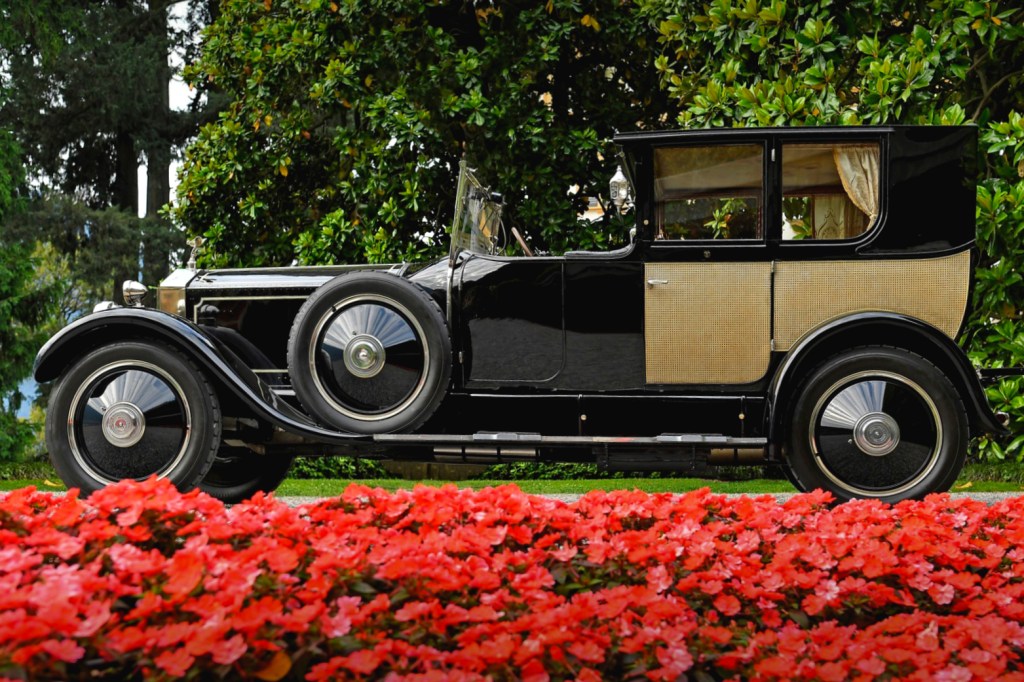
A NEW BEGINNING Rolls-Royce first earned the accolade of ‘the best car in the world’ with the 40/50 H.P., universally known as the Silver Ghost, launched in 1906. The key to its legendary reputation was Henry Royce’s principle of constant improvement to its underlying engineering, which he conducted on an almost chassis-by-chassis basis.
By 1921, Royce realised the Silver Ghost’s design was reaching the point where no further developments would be possible without compromising either smoothness or reliability – both by now essential elements of the Rolls-Royce character and legend. He therefore began work on its replacement.
Original Advertisement from The Times Newspaper, Saturday 2 May 1925 read: “Rolls-Royce Ltd beg to announce that, after prolonged tests, they can now demonstrate and accept orders for a new 40/50 H.P. chassis. The 40/50 H.P. chassis hitherto manufactured by them will be sold as before… The original chassis of this type was the famous Silver Ghost, and to prevent confusion such chassis will be known as the Silver Ghost model, whereas the new chassis will be known as the New Phantom.”
Despite being couched in terms that today seem rather quaint and stilted, this advertisement made history. It was the first public acceptance by Rolls-Royce that the outgoing model would be called Silver Ghost officially, rather than as a byname. More significantly, it was the first recorded use of the Phantom name.
COPYRIGHT JAMES LIPMAN
THE GAME OF THE NAME Although there is no specific documentary evidence, it seems safe to assume that the Phantom name was coined by Rolls-Royce’s energetic and ever-inventive Commercial Managing Director, Claude Johnson. It was he who recognised that naming the company’s products could act as a sales device, and it was his fertile imagination that produced the inspired sobriquet ‘Silver Ghost’ for the otherwise prosaically titled 40/50 H.P. in 1907. That same year, he christened another 40/50 H.P. ‘Green Phantom’, before bestowing the rather more evocative ‘Silver Phantom’ on two examples in 1909.
Johnson clearly understood the power of names like Phantom, Wraith and Ghost to convey the products’ supernatural quietness and ethereal grace; all have graced Rolls-Royce motor cars in the modern era for precisely the same reason. How different history would have been had one of his more fanciful efforts – The Dreadnought, The Cookie, Yellow Bird, The Elusive Pimpernel – been adopted instead.
THE BASIS FOR GREATNESS The Times advertisement also assured readers the New Phantom would retain the “sweet running qualities always associated with Rolls-Royce products”. At this time, Rolls-Royce supplied only rolling chassis, with the form, styling and appointment of the motor car itself in the hands of independent coachbuilders, who created bespoke bodywork to the owner’s specification. Rolls-Royce offered the New Phantom in long-wheelbase form, suitable for formal saloon and limousine designs, and with a shorter wheelbase ideal for owner-driver motor cars with closed, open and ‘sportier’ coachwork.
Then as now, Phantom’s generous proportions enabled owners to specify almost any detail or indulgence they wished. Some clients asked for concealable writing desks or swiveling occasional seats in their long-wheelbase limousines, while owner-drivers are known to have requested safes, dedicated spaces to stow golf clubs and even, in one famous instance, a secret compartment in which to carry diamonds.
On 8 May 1925, The Autocar magazine published its review of the new model. “Few are the firms engaged in the manufacture of motor cars who enjoy quite such a reputation as Rolls-Royce Ltd,” it enthused. “Almost the conjoined names have become the household word for luxury, and every novelist worthy of the name imparts a distinguished air to any character by crediting him or her with the possession of one of the firm’s cars.” With Phantom, Rolls-Royce had clearly succeeded in not only maintaining, but furthering the qualities established and made famous by the Silver Ghost.
ONWARDS AND UPWARDS Though undoubtedly gratifying, such encomiums did not distract Henry Royce. The design of the original New Phantom had closely followed that of its predecessor, Silver Ghost – so closely, in fact, that some modern enthusiasts refer to it as a ‘Super Ghost’. Over the next four years, Royce continued to refine his design until, in 1929, The Times carried a fresh advertisement announcing the arrival of Phantom II. The advertisement listed all the engineering improvements and upgraded components that justified its designation as an entirely new model.
VIVE LA DIFFÉRENCE Somewhat ironically, the only person who remained unimpressed was Royce himself, who insisted that even the short-wheelbase Phantom II was irritatingly oversized for his personal use. He therefore instructed his design team to develop a more compact, sporting Phantom II variant which he could enjoy driving across France to his winter home at Le Canadel on the Côte d’Azur.
The designers dutifully produced a close-coupled car, 26EX – ‘EX’ standing for ‘Experimental’ – on an adapted short Phantom II chassis. Records show that neither the Rolls-Royce sales department nor the factory were keen on the concept; indeed, had it not been intended as Royce’s personal transport, it might not have been built at all.
As it transpired, a highly successful continental sales tour demonstrated there was, in fact, great demand for a car capable of high-speed touring over long distances on the smooth, straight roads of Europe. Rolls-Royce successfully met this demand with the now highly prized Phantom II Continental – perhaps the only pre-Goodwood Phantom variant in which weight, wind resistance and other performance-related factors were afforded equal consideration with out-and-out passenger comfort.
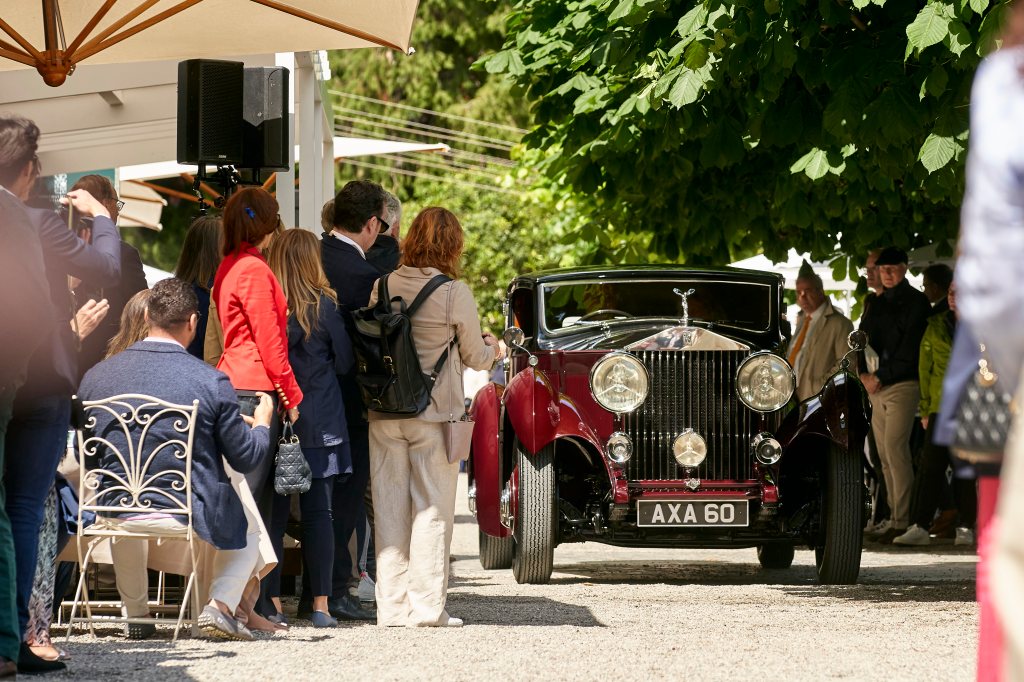
Montgomery Rolls-Royce Phantom 2
Photo: James Lipman / jameslipman.com
A NEW POWER RISING By the time of Royce’s death in 1933, the company was already only too aware that luxury car customers were seeking models that offered more power without sacrificing comfort or excellence. American competitors including Cadillac, Lincoln and Packard were responding with straight-8, V12 and even V16-cylinder engines, which were rapidly eclipsing the large-horsepower, in-line six-cylinder units that had served Rolls-Royce so well for so long.
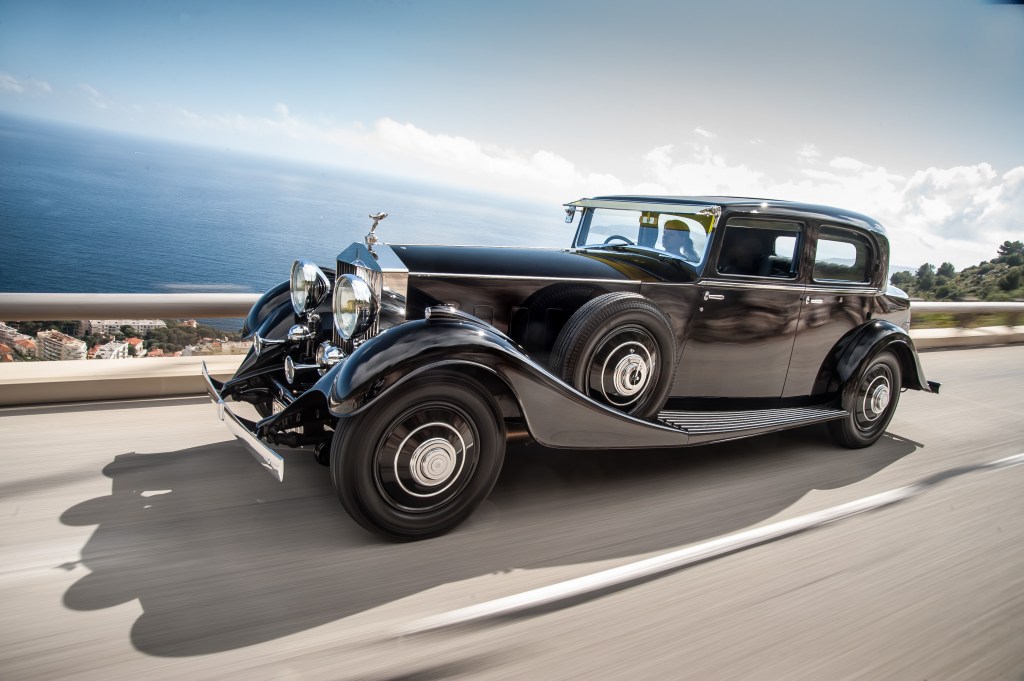
Given this commercial pressure and the company’s proven experience in designing and building aero-engines, it was inevitable that the next Phantom would have a V12 engine. In accordance with tradition, Phantom III’s arrival in 1936 was announced in The Times, which informed the public that “many outstanding features distinguish this car from its famous predecessor the Phantom II”.
Chief among these was the new engine, with 12 cylinders “giving greater engine smoothness, flexibility, silence and acceleration” – all key requirements for Rolls-Royce’s fabled effortless progress. The new V12 engine was also more compact than the old straight-6, allowing a shorter bonnet and larger passenger compartment. Most importantly, however, it delivered the increased power customers demanded – 165 H.P. against the 120 H.P. of Phantom II, rising to 180 H.P. in later cars.
Comfort was further improved with independent front wheel suspension. “This is particularly noticeable in the back seats under all road conditions and is further enhanced by remarkable road holding qualities and stability on corners even at high speeds”, the advertisement noted, while Phantom III’s new chassis frame allowed for wider, more comfortable back seats.
And it wasn’t just passengers who benefited. As the advertisement pointed out, Phantom III made life more relaxing for owner-drivers and chauffeurs, too, explaining: “A modification in the position of the change-speed [gear lever] and brake levers gives easy entrance to the driver’s seat from the offside… the steering is lighter in operation, has a larger steering lock and the car is more easily manoeuvred by reason of the shorter wheelbase.”
Phantom III was suited to all manner of coachwork styles, and both owner-driver and chauffeured use. And while it was never able to beat its American rivals on price, such was Rolls-Royce’s reputation that it remained the only choice for those who wanted to experience the greatest possible comfort and be seen to be driving the very best.
A CHANGING WORLD The Phantom name had graced the very best of the best cars in the world for some 14 years when war broke out in 1939. Rolls-Royce ceased all motor car production, and when peace returned in 1945, the company found itself in an entirely different world – but one it had anticipated and prepared for.
Rolls-Royce had correctly foreseen that under post-war austerity, it would need to make its motor cars less complex, easier to service, much less expensive to produce and able to use common parts. At the same time, it was adamant that there would be no reduction in quality.
Its solution was the Rationalised Range, which debuted in 1946 with Silver Wraith. Its new straight-6-cylinder engine was a backward step from the V12 engine of Phantom III, but relevant in straitened times. There seemed to be no place in the modern world for Phantom.
A ROYAL INTERVENTION The Phantom story might well have ended there, but for two serendipitous events.
As part of the ongoing development process for the Rationalised Range, engineers produced four experimental EX cars on a 229.5-inch chassis with a straight-8 engine. One of these, fitted with a Park Ward & Co limousine body, was officially named Silver Phantom (and unofficially known as Big Bertha). A smaller, lighter saloon version, known as the Scalded Cat, followed.
At the same time, the Royal Household was seeking to replace its ageing fleet of Daimlers – the marque it had favoured since the motor car was invented – but was unhappy with the range then on offer.
In 1950, Rolls-Royce was asked to supply a formal limousine for Royal duties. The company had long been keen to usurp Daimler in the Royal Mews, and gladly produced a ‘one-off’ straight-8 long-chassis limousine with coachwork by H J Mulliner. During manufacture, the car was given the codename Maharajah, and remains in active service at the Royal Mews under that name to this day.
When requests for similar motor cars followed from other Royalty and Heads of State, Rolls-Royce was happy to oblige. The company decided it would be fitting that for such prestigious cars to resurrect the Phantom name. Over the next seven years, the marque produced just 18 examples of Phantom IV, including a second motor car for the Royal Mews, a landaulette named Jubilee, delivered in 1954.
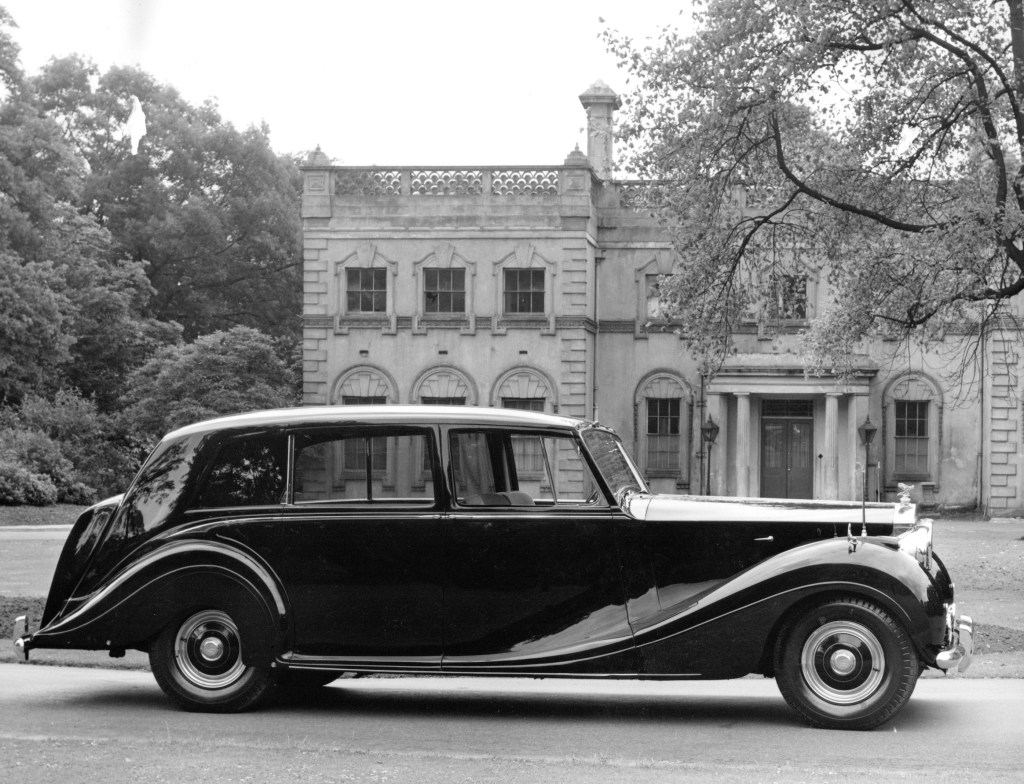
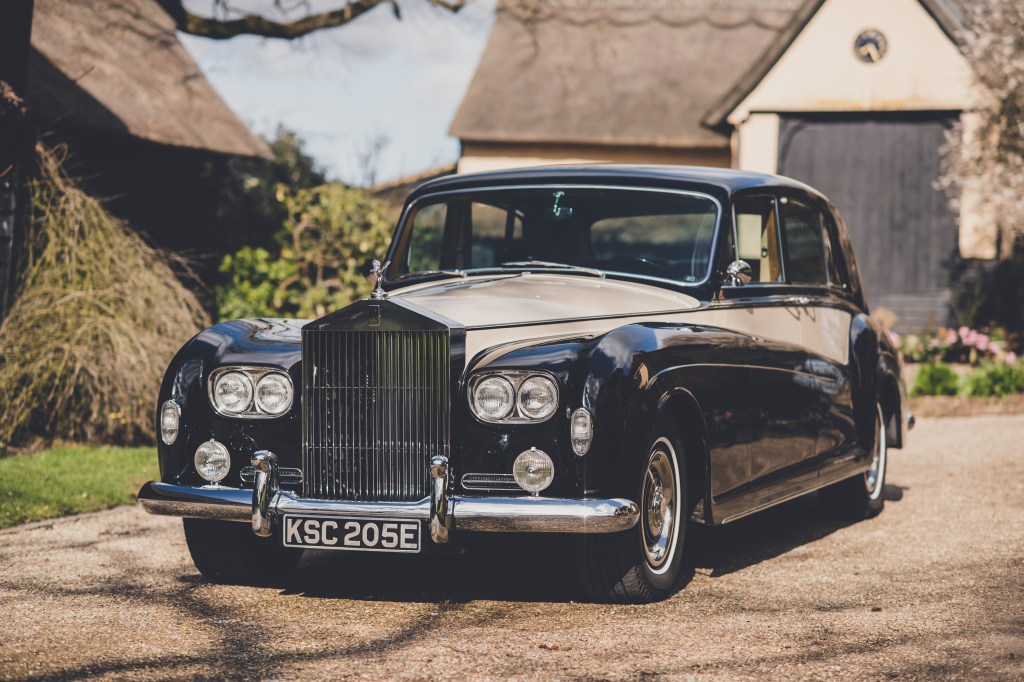
THE LAST HURRAH The pinnacle Rolls-Royce experience became somewhat more widely available once again in 1959 with the launch of Phantom V – a splendid limousine fitted with coachwork by both the marque’s in-house coachbuilder, Park Ward & Co., and other independent companies, including James Young Ltd and H. J. Mulliner & Co. (Rolls-Royce would go on to acquire the latter, merging it with their own coachbuilder to form Mulliner Park Ward). Two motor cars, known as Canberra I and Canberra II, were built for Royal service, featuring transparent Perspex cupolas over the rear compartments and concealed lighting to better view the occupants on formal occasions.
After 13 years and 832 examples, Phantom V had received enough technical upgrades to be designated as Phantom VI. As with all its forebears, this new iteration prioritised comfort, with separate air conditioning systems for the front and rear compartments. Most of the 374 examples were limousines with coachwork by in-house Mulliner Park Ward Ltd., or James Young Ltd.: the last Phantom VI, a landaulette, was delivered to the Sultan of Brunei in 1993.
Phantom VI was the final body-on-chassis model Rolls-Royce ever produced, and its discontinuation effectively ended the tradition of coachbuilding until it was revived at Goodwood in 2017 with ‘Sweptail’.
PHANTOM REBORN When the marque was relaunched at the new Home of Rolls-Royce at Goodwood, a ‘Phantom-type’ model quickly emerged as the natural and obvious choice for its inaugural motor car. The design concept, for which legendary Rolls-Royce designer John Blatchley was consulted and of which he approved, included signature elements inherited from previous generations. These included a long wheelbase with the front wheels well to the fore and a minimal front overhang of the bodywork, a long bonnet comprised of a massive expanse of metal along the side, and a rising sweep of the door edge towards the front windscreen pillars.
Rolls-Royce Motor Cars’ first Design Director of the Goodwood era, Ian Cameron, formed a specific team to create the interior design for the much-anticipated new model. Their remit was to express the ambience of past Phantoms and the traditional high-quality materials of coachbuilding – leather, wood, deep-pile carpeting – in a totally up-to-date way.
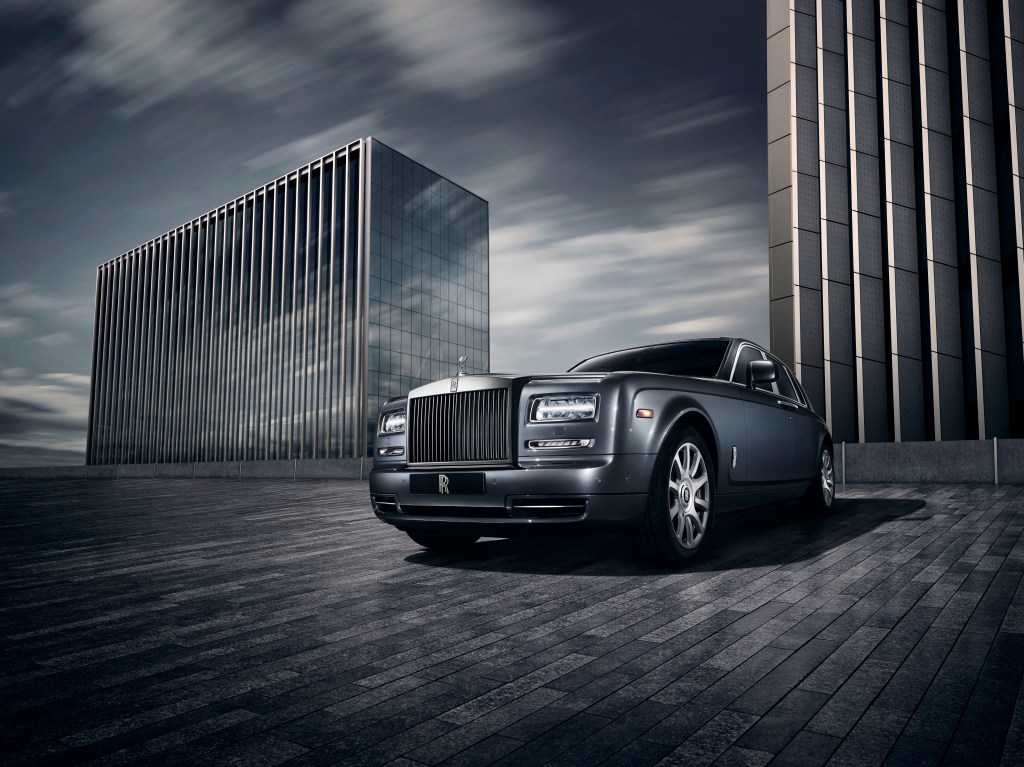
At one minute past midnight, on 1 January 2003, the first Phantom VII was handed over to its new owner. Unlike every Phantom that had gone before, it was built entirely in-house by Rolls-Royce Motor Cars, with spaceframe bodywork to a single design rather than coach built. In one important sense, however, it retained a link with its heritage, in that every car was hand-built by a team of skilled craftspeople. Furthermore, the marque’s Bespoke programme meant Phantom was effectively a blank canvas on which patrons could realise their own visions and desires.
THE EVOLUTION CONTINUES Over its 13-year lifespan, Phantom VII cemented Rolls-Royce as the world’s pre-eminent super luxury motor manufacturer, and its own place as the marque’s pinnacle product. But just like their predecessors, Rolls-Royce’s designers and engineers understood that perfection is a moving target: that Phantom was never ‘finished’.
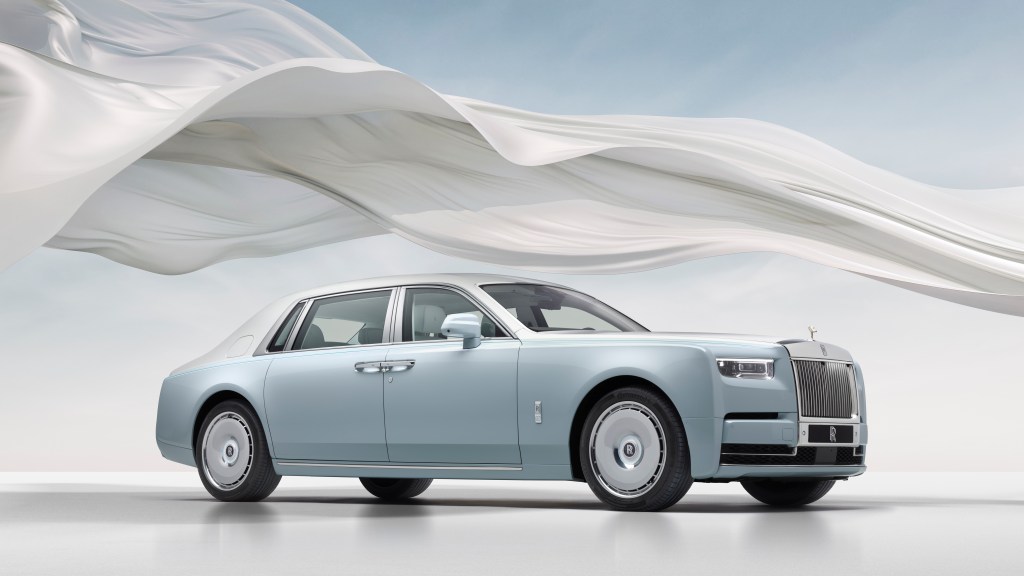
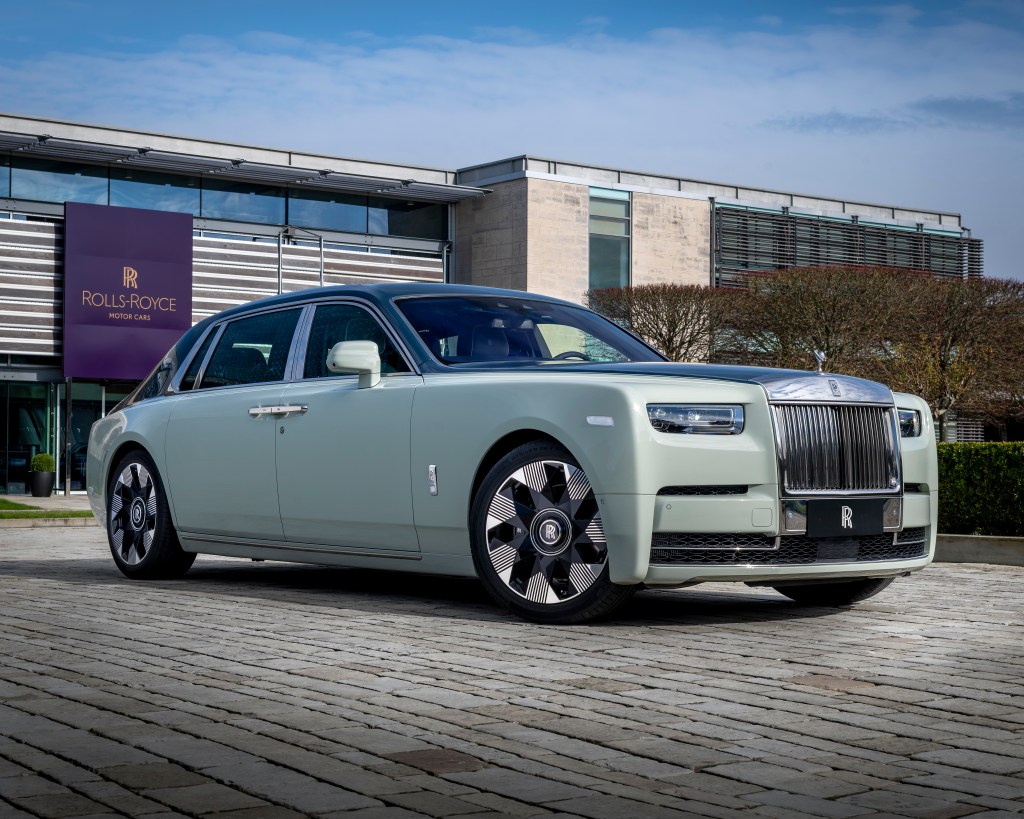
In 2017, Rolls-Royce presented Phantom VIII. This was the first Rolls-Royce to be built on the Architecture of Luxury, an advance on the all-aluminium spaceframe used on Phantom VII, and designed to underpin every future motor car produced at Goodwood.
Phantom VIII was specifically designed to be the ultimate canvas for Bespoke commissions. With this in mind, it is the only Rolls-Royce model to feature the Gallery – an uninterrupted swathe of glass that runs the full width of the fascia, behind which the client can display a commissioned work of art or design.
This singular focus has made Phantom the subject of some of the most technically ambitious and challenging Bespoke projects ever undertaken by the marque’s designers, engineers and specialist craftspeople. Commissions such as Phantom Syntopia, Phantom Oribe, Phantom Koa and Phantom ‘Inspired by Cinque Terre’ all incorporate features, materials and engineering innovations never seen before in a Rolls-Royce or any other motor car. Each is a unique, one-of-one creation that will never be repeated, echoing the very first Phantoms that were individually hand-built for their commissioning owners.
THE ESSENCE OF PHANTOM For 100 years, the Phantom name has occupied a unique position in the Rolls-Royce product family and story. While the standards of quality, engineering and design are consistent across all Rolls-Royce motor cars, Phantom has always been the grandest, most impressive and, above all, most effortless motor car being built in series production by the marque at any given moment.
Through all its eight generations, Phantom has never been compromised by existing engineering orthodoxy, fleeting trends or development costs. From Henry Royce’s original New Phantom to today’s Phantom VIII, the essential purpose behind Phantom has always remained the same: to build the motor car that offers owner-drivers and passengers alike the most comfortable, satisfying experience available in the world at that moment in time – the unassailable pinnacle of luxury and motoring excellence.
In 2024, the Rolls-Royce Bespoke Collective of designers, engineers and craftspeople brought to life some of the most creative and ambitious examples of artistry ever seen.
Client commissions comprised highly complex, hand-painted and embroidered artworks, stainless steel and gold inlays, exquisite iridescent paint finishes and much more. Driven by their pursuit of perfection and the dreams of the marque’s clients, Rolls-Royce artisans created singular graphics, such as a 869,500-stitch embroidery inspired by the Spirit of Ecstasy, and captured cultural symbols using the canvas of leather, wood and fabric. From finely executed coachline motifs to full-scale artworks within the interior, the Rolls-Royce Bespoke Collective once again stretched the breadth of luxury possibility.
The extraordinary complexity behind this year’s commissions reflects the ever-growing number of clients that trust the marque’s artisans with their boldest visions. While these inspirations are as diverse as the personalities of the clients themselves, clear themes have emerged over the year. Bespoke commissions are becoming increasingly personal, with many clients curating individual masterpieces to mark major life events and commemorate transformative moments, places and people that are meaningful to them.
Chris Brownridge, Chief Executive, Rolls-Royce Motor Cars said, “Every Rolls-Royce motor car serves as a blank canvas for an owner’s Bespoke commission. This year, we have once again been delighted and challenged by the breadth of our clients’ imagination, creativity and ambition, which presented the perfect opportunity to showcase the ingenuity and vision of our Bespoke Collective. As these commission highlights demonstrate, inspiration can come from anywhere, and increasingly we see clients requesting even more personal touches in their motor car, creating expressive works in their own right and as part of a broader legacy. It is a testimony to the skills of our Bespoke teams, and our brand’s standing in the luxury world, that clients share with us their dreams, confident in our ability to realise them in line with their ambitious creative vision.”
As 2024 comes to an end, Rolls-Royce reflects on just some of the finest examples of Bespoke possibility. The motor cars selected are owned by clients who have generously given permission for their details to be shared with the public.
PHANTOM SCINTILLA
Limited to just 10 examples worldwide, this magnificent Private Collection celebrates the ethereal beauty, grace and legacy of the Spirit of Ecstasy.
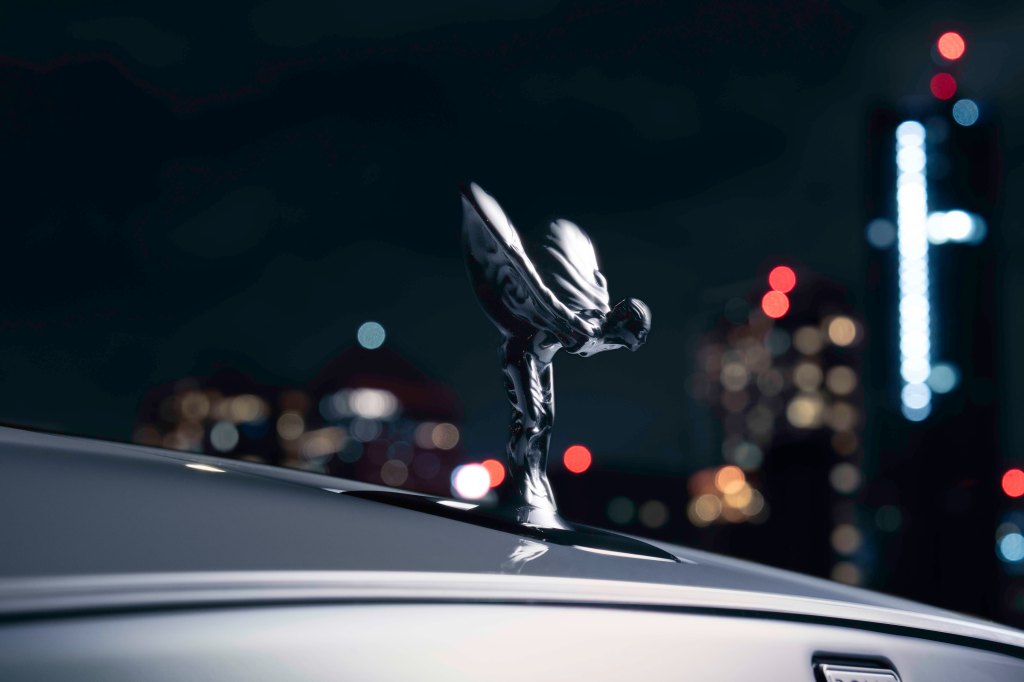
The interior is embroidered with 869,500 stitches forming a continuous graphic inspired by her expressive form. The figurine itself has a unique ceramic finish, evoking the Parian marble of The Winged Victory of Samothrace, the Greek statue that inspired Claude Johnson to commission the original mascot in 1910.
The centrepiece is the Celestial Pulse Gallery, capturing the fleeting presence of the Spirit of Ecstasy. This artwork comprises seven individually milled ribbons, cloaked in the same ceramic finish as the Spirit of Ecstasy figurine. Above, the Bespoke Starlight Headliner features an animation with 1,500 fibre-optic ‘stars’, inspired by the Spirit of Ecstasy’s flowing gown.
BLACK BADGE GHOST CITY LIGHTS
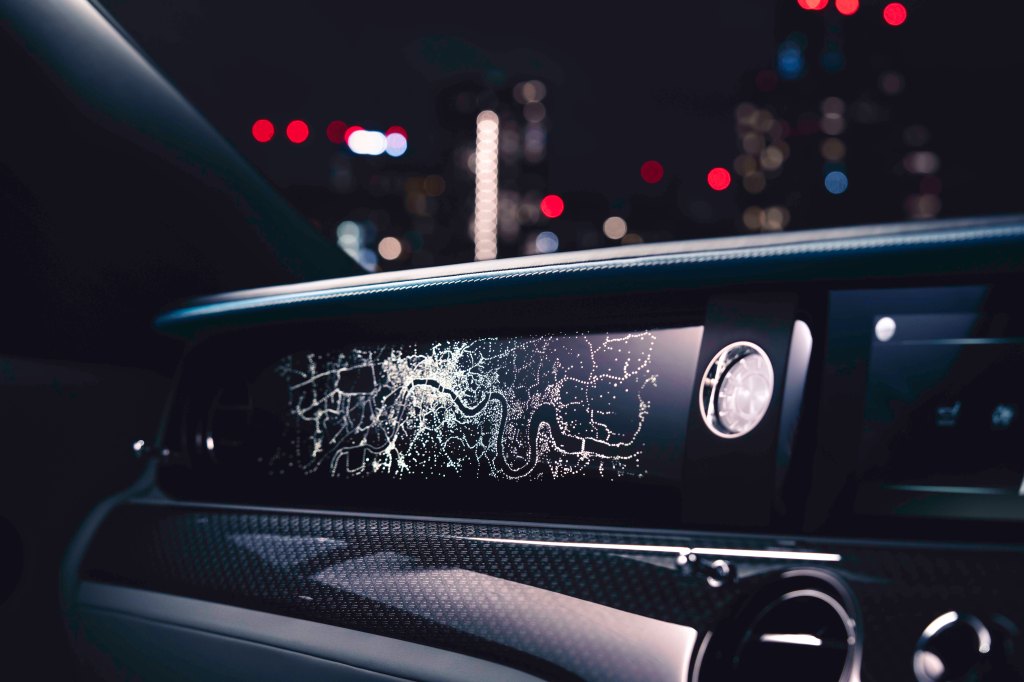
In this commission, created exclusively for the UK, the Illuminated Fascia features a Bespoke design recreating a bird’s-eye panorama of London. The graphic is inspired by the thrilling view of the city seen from an aeroplane as it makes its final approach to landing at night. The pattern is composed of 8,372 laser-etched lights, each individually placed by hand in the Piano Black veneer surface.
CULLINAN SERIES II – INSPIRED BY ROSE
This delicate, highly artistic commission was inspired by the Phantom Rose, specially bred for Rolls-Royce, which grows in the courtyard of the Home of Rolls-Royce at Goodwood and nowhere else in the world.
Bespoke designers created a stylised rose motif, which was then translated into the delicate embroidery on the front and rear headrests and incorporated into the meticulously hand-painted Coachline.
PHANTOM GOLDFINGER
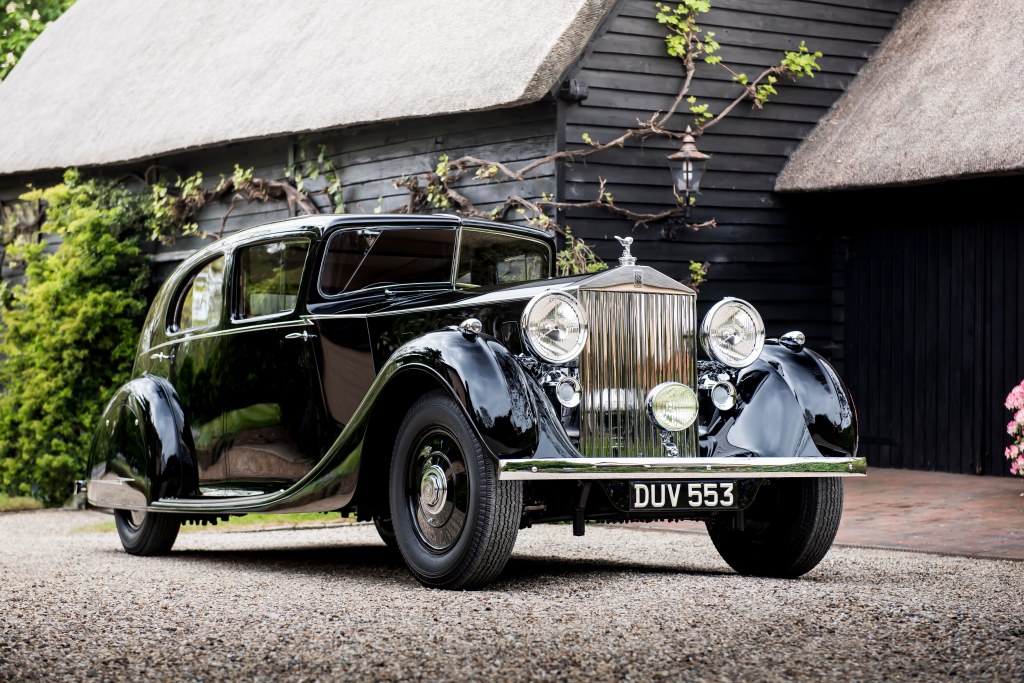
To mark the 60th anniversary of the James Bond film Goldfinger, Rolls-Royce created this intricately detailed homage to the eponymous villain’s 1937 Phantom III Sedanca de Ville.
Bespoke specialists faithfully recreated the original motor car’s famous black and yellow exterior finish, with ingenious features referencing the film’s pivotal scenes – from a gold golf putter, inspired by one used by Auric Goldfinger in his infamous match with 007, to a solid 18-carat gold speedform displayed in the centre console.
Other gold-inspired features include gold-plated treadplates embossed with the same font developed for the film in 1964, a 24-carat gold-plated VIN plaque engraved with a number ending in 007, as well as organ stops, seat bullets and speaker frets with a lustrous gold finish.
The Gallery houses a stainless-steel artwork featuring an isoline map of the Furka Pass, where 007 is seen in the film following Goldfinger to his smelting plant. As another subtle reference, the Starlight Headliner reflects the constellations as they appeared over the Furka Pass in Switzerland on the final day of filming the scene. As a finishing touch, a hidden projector was developed to display the legendary ‘007’ logo when the boot is opened.
SPECTRE LUNAFLAIR
Commissioned by a discerning client from the United States, Spectre Lunaflair draws inspiration from the optical phenomenon of a lunar halo, where moonlight refracted through high-altitude ice crystals creates a bright ring around the moon.
To capture this spectacle, the marque’s specialists spent a year developing a unique holographic paint finish, reserved exclusively for the commissioning client. The captivating ‘rainbow’ effect is achieved by applying seven layers of lacquer, including a pearlescent layer infused with fine flakes of magnesium fluoride and aluminium. This creates a deep metallic effect in low light that bursts into rainbow technicolour under bright sunshine.
The Spectre Lunaflair concept was partially inspired by another Bespoke masterpiece, the one-of-one Phantom Syntopia. Captivated by Phantom Syntopia’s iridescent Liquid Noir finish, the commissioning client asked the Bespoke Collective to create a light and luminous expression of this concept that reflected their fascination with the lunar halo phenomenon. This cross-pollination of ideas exemplifies the power of Bespoke at Rolls-Royce.
GHOST EXTENDED SERIES II – THE ENCOUNTER
This exquisite Ghost Extended Series II is designed to mark the 120th anniversary of the meeting of its founders on 4 May 1904. The celebratory commission contains numerous references to The Hon. Charles Stewart Rolls and Henry Royce, including their initials embroidered on the headrests, their signatures on the C-pillar, and the historic date of their introduction as the coachline motif.
The interior is finished in Duality Twill, a new rayon fabric made from bamboo, embroidered with a ‘Duality’ graphic – an abstract interpretation of the interlinked R initials of the marque’s founders’ names.
27/11/2023 – Ciaran McCrickard McCrickard / Mindworks – RRMC Year of the Dragon inlays.
PHANTOM YEAR OF THE DRAGON
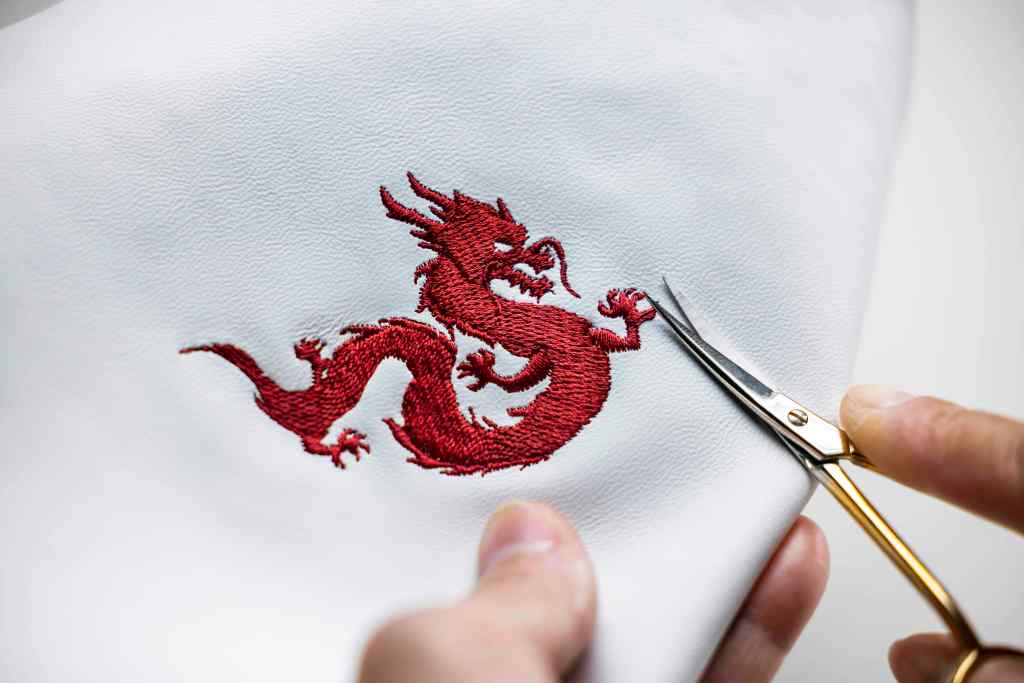
Commissioned via the Shanghai Private Office, this extraordinary Phantom Extended was created to mark the Lunar New Year, beginning on 10 February 2024. In a beautiful example of the growing trend towards blending international heritage and Chinese cultural traditions, known as guochao, the interior features meticulously crafted details inspired by a traditional dragon symbol.
These include a unique hand-painted artwork on the front passenger panel, dragon embroidery on the headrests, coachline motif and the first-ever depiction of a dragon in a Bespoke Starlight Headliner, crafted from 677 ‘stars’.
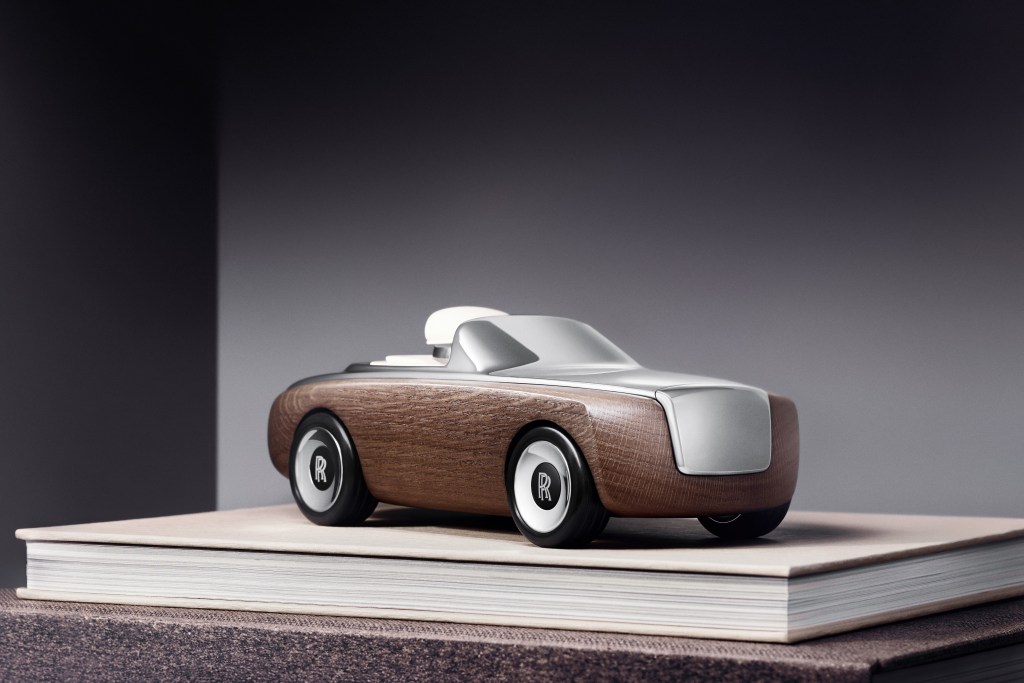
Rolls-Royce Motor Cars presents Cameo, an exquisite miniature sculpture inspired by the marque’s heritage, capturing the essence of Rolls-Royce motor cars in their most elegant form.
The silhouette of this unique collector’s item is an homage to the open-top motor cars built by Rolls-Royce in its earliest years, while the materials and construction of the model parallel the way motor cars are handcrafted at the Home of Rolls Royce at Goodwood.
The model comprises a series of individual, highly engineered pieces carefully and meticulously designed for self-assembly. Made from a number of the same materials as the marque’s full-sized motor cars, the owner can enjoy the tactile experience of assembling their very own Rolls-Royce motor car.
The body is constructed by fitting together two sections – one made from solid oak, and the other from polished aluminium – which, together, recreate the iconic Rolls-Royce two-tone finish. The oak body magnetically attaches to the aluminium chassis, emulating a seminal stage in the Home of Rolls-Royce assembly journey known as the ‘marriage’, when the body is mounted to the drivetrain. This significant moment in the creation of a Rolls-Royce motor car is one that many clients choose to view in person, therefore it was only fitting this production milestone be referenced in Cameo.
Next, the meticulously engineered interior is installed: the part is 3D-printed and painted in Rolls-Royce’s signature Grace White hue. Other authentic details include the self-levelling wheel centre caps, which allow the ‘RR’ monogram to remain upright as the wheels turn. Finally, the Cameo driver takes their rightful place in the cockpit, ready to embark on a journey in luxury and style.
Yohan Benchetrit, Bespoke Design, Rolls-Royce Motor Cars, said: “Envisioned as a celebration of Rolls-Royce design in miniature, creating Cameo was a wonderful creative challenge. The purity and abstract nature of the form empowered us to distil the fundamental principles of Rolls‑Royce styling into a playful sculptural piece. Cameo is crafted to captivate and delight, enabling our clients to enjoy the marque’s peerless craftsmanship and artistry in their own homes.”
This extraordinary expression of Rolls-Royce in miniature form is now available in Rolls-Royce showrooms and Private Office boutiques.
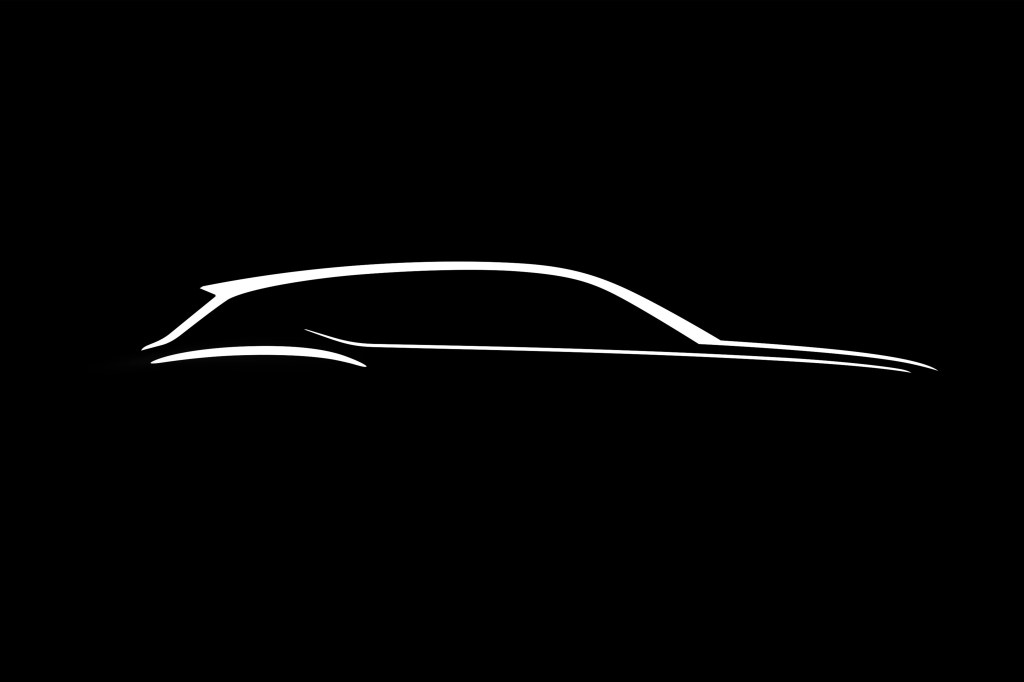
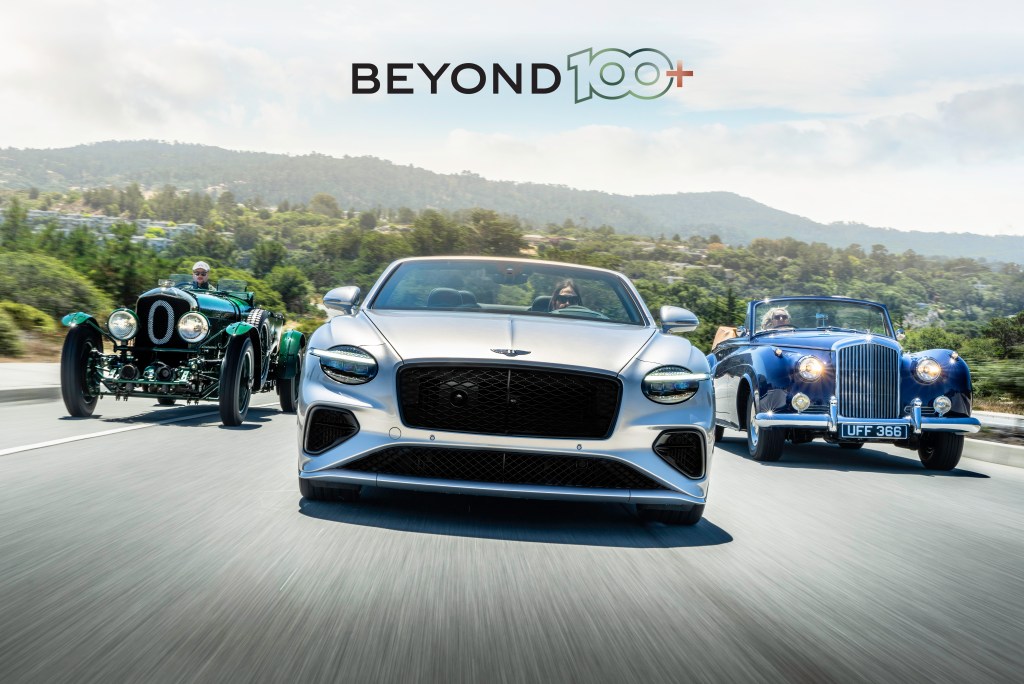
Bentley Motors has announced an extension of its forward-thinking Beyond100 business strategy, now called Beyond100+, from 2030 to 2035. Bentley has also confirmed that its first fully electric car to be revealed in 2026 promises to create an entirely new segment, the world’s first true Luxury Urban SUV. This model, designed, developed and to be produced at its headquarters in Crewe, will be the first of a new PHEV or BEV model to be launched every year over the next decade as Bentley’s product and investment offensive continues at pace with an ambition to be building only fully electric cars from 2035.
Bentley, already leading the way in the luxury hybrid car sector, will consequently further cement this position by extending the lifecycle of PHEV models beyond 2030, to 2035. And the Continental GT coupe, Convertible and Flying Spur models are now exclusively offered with an Ultra Performance plug-in V8 hybrid powertrain following the discontinuation of Bentley’s iconic W12 engine after over 20 years of production in Crewe.
Dr. Frank-Steffen Walliser, Chairman and CEO of Bentley Motors, said: “Four years almost to the day that Bentley initially outlined its Beyond100 strategy, we adapt to today’s economic, market and legislative environment to initiate a major transformative phase for tomorrow. Beyond100+ becomes our guiding light as we extend our ambitions beyond 2030, while maintaining our aim of a decarbonised future, including offering only fully electric cars from 2035, and reinforcing our credentials as the British creator of extraordinary cars for over a century and beyond.”
Beyond100+ also endures a fundamental reinvention of the Crewe manufacturing infrastructure, and helps secure Bentley’s future at Crewe for the next generation of products and colleagues.
The company has already made enormous strides in reinventing the historic Crewe site, creating an industry-leading certified carbon neutral facility, and focus now turns to building a ‘Dream Factory’ for an electric future.
The largest self-funded site investment programme in Bentley’s illustrious 105-year history continues with a new state-of-the-art Design Centre, Paint Shop and BEV assembly line, transforming an 85-year-old site for a new age of electrification, and a new benchmark in next generation, digital, flexible and high-value manufacturing operations.
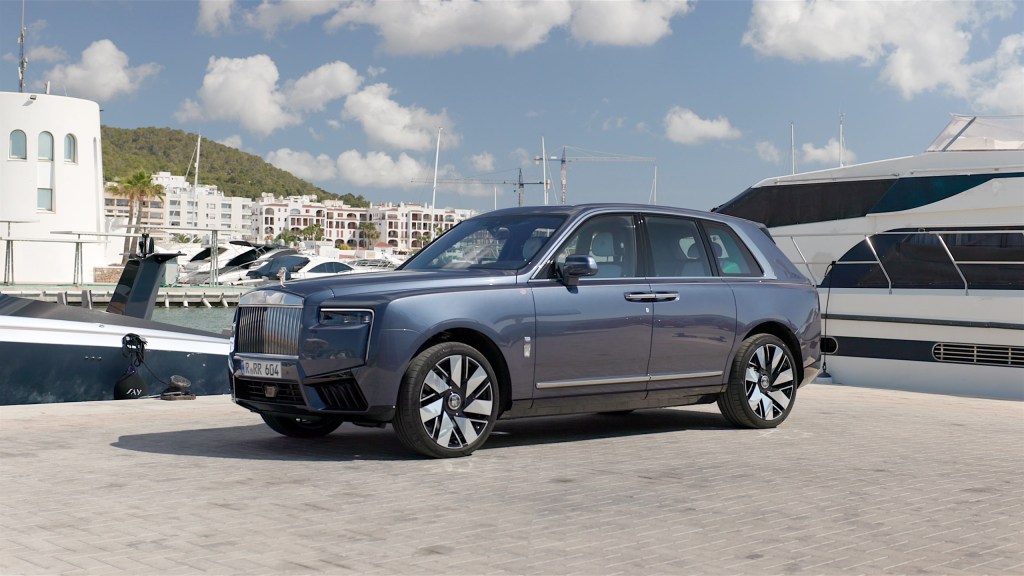
The original Cullinan, launched in 2018, was the world’s first super-luxury SUV, fulfilling a unique and exacting brief. From a performance and engineering standpoint, it had to have genuine off-road capabilities equal to the most demanding and hostile environments on earth. At the same time, it had to deliver the marque’s peerless comfort and signature ‘magic carpet ride’, regardless of the terrain. It had to be nothing less than the definitive super-luxury SUV —rugged yet refined, unstoppable yet serene: effortless, everywhere. Its success exceeded Rolls-Royce’s most ambitious expectations around the world, and today Cullinan is the most requested Rolls-Royce in the marque’s portfolio.
Given the motor car’s extraordinary success, and incredibly positive reception from clients in every region of the world, shaping a new expression of the ‘Rolls-Royce of SUVs’ was undertaken with meticulous care. The marque’s designers, engineers and craftspeople drew on half a decade of detailed client feedback, the brand’s own intelligence gathering —including their Private Offices around the world — and a raft of new technologies to advance Cullinan. In its new guise, which represents the most extensive Series II development in Rolls-Royce history, it responds to changing codes of luxury and evolving usage patterns while remaining true to the essential qualities that underpin Cullinan’s unprecedented popularity.
Clients can commission Cullinan Series II and Black Badge Cullinan Series II at Rolls-Royce Motor Cars Chennai and Rolls-Royce Motor Cars New Delhi. Pricing for Cullinan Series II in India starts from INR 10,50,00,000. Pricing for Black Badge Cullinan Series II starts from INR 12,25,00,000. First local client deliveries will commence from Q4 2024.
Since the first client deliveries, Cullinan fulfilled its purpose as a supremely accomplished off-road motor car, capable of taking its owner into locations never previously explored in a Rolls-Royce. However, versatility and the effortless everywhere essence of the model also made Cullinan a ‘daily driver’ for many owners; indeed, numerous clients have told Rolls-Royce that no other SUV offers the same effortless performance as Cullinan’s 6.75-litre V12 engine, from what is often a substantial and diverse collection. These were all significant considerations in conceiving Cullinan Series II.
It was noted by the marque’s intelligence specialists that an increasing number of Rolls-Royce clients were concentrated in urban areas – from great world metropolises to fast-growth cities in emerging regions. To that end, Cullinan increasingly serves as a super-luxury product in which clients wish to be seen and project their character – albeit with the capacity to vanish into nature at will. Specialists also observed a shift towards owners driving their motor cars themselves. When Cullinan was first launched, less than 70% were self-driven: today, almost every Cullinan is driven by its owner, with less than 10% of clients retaining the services of a chauffeur. Together with the rejuvenation of the brand and the ever-increasing Bespoke offering, Cullinan contributed to a fall in the average age of Rolls-Royce clients from 56 in 2010 to just 43.
An increasingly urban focus, a youthful cadre of clients and a decisive shift towards self-driving informs the surface treatment and detail of Cullinan Series II’s exterior. A key theme is verticality, which echoes illuminated skyscrapers in the megacities where Cullinan is increasingly at home. This is most apparent in the new lamp treatment, where tall daytime running light graphics ensure Cullinan Series II is easily identified, day and night.
“The debut of Cullinan Series II in India represents a significant milestone for Rolls-Royce in the Asia Pacific region. Since its original launch in 2018, this remarkable motor car has attracted a younger and more diverse group of clients, and today Cullinan is the most requested Rolls-Royce in the marque’s portfolio. Cullinan Series II integrates new technologies, new materials, meticulously considered design updates and innovative opportunities for self-expression through Bespoke.” Irene Nikkein, Regional Director Asia-Pacific, Rolls-Royce Motor Cars
Reflecting many clients’ desires for bolder forms of self-expression, innovative decoration and detail have been added throughout the interior of Cullinan Series II. The most substantive change to the motor car’s geometry is the pillar-to-pillar glass-panel fascia in the upper portion of the dashboard – an elegant and versatile design element that stages both digital and physical craftsmanship.
Connectivity has been refined throughout the motor car, especially for those in the rear of Cullinan Series II. Clients are able to connect up to two streaming devices to the rear screens, which now incorporate a Bespoke interface for streaming car management and seating functions such as massage, heating and cooling.
The installation of internet connectivity allows clients to enjoy a Wi-Fi hot spot connection and independent streaming for each screen. For the first time in Cullinan, Bluetooth headphones of any type can be paired with the rear seat infotainment system, or clients can enjoy the marque’s exceptional 18-speaker Bespoke Audio system, which benefits from the latest generation 18-channel 1400-watt amplifier. Cullinan Series II retains the brand’s celebrated speaker architecture wherein cavities within the motor car’s aluminium sill sections are used as resonance chambers for low frequency speakers, effectively transforming the entire motor car into a subwoofer.
Directly in front of the passenger is an Illuminated Fascia panel — a remarkable expression of modern craft that debuted with Ghost before appearing in Spectre and now, for the first time, is available within the Cullinan family. In this guise, it features an illuminated Cullinan wordmark and a unique Cityscape graphic inspired by the skyscrapers of the world’s megacities at night. This is created using a specially-developed technique whereby 7,000 dots are laser-etched onto the rear of the darkened and toughened security glass, each at minutely differing angles and dimensions to create the perception of depth. In addition to this prêt-à-porter design, clients are also able to create their own Illuminated Fascia motif in collaboration with the marque’s Bespoke designers.
Incorporating the Spirit of Ecstasy into the interior of the motor car was the product of four years of development, and a unique partnership between analogue and digital craftspeople to create a dramatic and meticulously orchestrated flow of light. This sequence begins with the illumination of the driver’s display upon entering the motor car, followed by the Central Information Display, then the Illuminated Fascia, where light sweeps inwards towards the vitrine, lighting the timepiece. The Spirit of Ecstasy is illuminated from below initially, reminiscent of a spotlight on a debut performance, before her stage lighting settles to a soft glow.
Cullinan built a new legacy for Rolls-Royce Motor Cars, shaped in collaboration with a bold and uncompromising generation of super-luxury consumers. Cullinan Series II evolves and builds on this motor car’s place in the brand, proving once more that the future of this marque will be shaped in partnership with its clients and characterised by exquisite contemporary crafts.
By 1906, just three years after its foundation, Rolls-Royce was already something of a victim of its own success. Demand for its motor cars was such that its line-up had quickly expanded from the original twin-cylinder 10 H.P. to include three-cylinder 15 H.P., four-cylinder 20 H.P. and six-cylinder 30 H.P. models. Henry Royce had even produced the first ever V8 passenger motor car, known as the ‘Legalimit’ since the 3.5-litre engine was governed to keep it below the 20mph speed limit then in force in Britain – only three of these were ever made, and it remains the only Rolls-Royce model of which no examples survive. This proliferation of models reflected a trend across the luxury automotive sector, as competing manufacturers chased an ever more finely segmented client base.
However, for Rolls-Royce, it caused major manufacturing headaches, since many parts were not interchangeable between models. The problem was compounded by Henry Royce’s entirely laudable policy of continuous improvement; his constant adjustments and refinements went all the way down to the smallest components. This created variations between – and even within – production series, to the extent that often only a handful of individual motor cars would be entirely identical.
As with almost any manufacturing process, more complexity and variability meant increased costs. This was anathema to the highly astute, commercially driven Managing Director, Claude Johnson. Having decided radical change was needed, he proposed the marque should focus all its energies on producing just one model. Charles Rolls enthusiastically agreed, but insisted it should be positioned at the top end of the market, where Rolls-Royce was already gaining a reputation as the very best motor car available.
Though a ruthless perfectionist and tireless innovator, Royce was also a pragmatist. He saw the logic of his colleagues’ single-model approach and duly produced a completely new motor car, the 40/50 H.P.
As with all Rolls-Royce models of the time – and indeed until the 1950s – the 40/50 H.P. was a rolling chassis, upon which the client commissioned bodywork from an independent coachbuilder. At its heart was a new six-cylinder, 7036cc engine (from 1910, the capacity was increased to 7428cc). Royce’s groundbreaking design effectively divided the engine into two units of three cylinders each; combined with a harmonic vibration damper on the crankshaft – a feature still used by modern manufacturers – he effectively eliminated the vibration problems caused by resonate frequencies that had bedevilled six-cylinder engines up to that point.
This technical achievement alone would have been sufficient to make the 40/50 H.P. a historically significant motor car. But it was the marketing genius of Claude Johnson that assured its immortality.
When the 40/50 H.P. was launched, new motor cars were taxed based on their horsepower. In general, this meant higher-value motor cars attracted heavier duties than lower-priced models. Since many of the more powerful motor cars on the market were imported, the tax also helped protect domestic British producers.
To provide a universal basis for these tax calculations, the Royal Automobile Club (RAC) developed the ‘tax horsepower rating’. This was derived not from actual engine output, but by an esoteric mathematical formula based on three engine measurements, all the more arcane when expressed in the prevailing imperial units: an assumed mechanical efficiency of 75%; a mean cylinder pressure of 90lbs per square inch; and a mean piston speed of 1,000 feet per minute. Since these differed from engine to engine, in reality, the resulting figure was almost entirely arbitrary, but could be applied by manufacturers and bureaucrats alike. Using this formula, the new Rolls-Royce was tax-rated by the RAC at 40 horsepower; in fact, it developed 50. Hence it was given the prosaic ‘40/50 H.P.’ designation on launch, so clients would know both the level of duty they would have to pay and how much power they could expect.
As an engineer, Royce was probably quite comfortable with this functional naming convention, but not so Claude Johnson. To his showman’s mind, it lacked distinction, resonance, romance and glamour; and it certainly failed to properly suggest the desirable, best-in-class motor car envisioned by Charles Rolls.
Accordingly, some 50 of the early motor cars were given suitably imposing names, either by Johnson or by their proud owners. In an inspired moment, Johnson dubbed the twelfth chassis, number 60551, the ‘Silver Ghost’, in homage to its almost supernatural quietness and smooth ride. Painted silver and adorned with silver-plated fittings, it was widely exhibited by Rolls-Royce at motor shows, and Silver Ghost would go on to become the name by which the 40/50 H.P. was generally known, as it is today.
But chassis 60551 was more than just a showpiece. Out on the road, it dominated the gruelling, high-profile reliability trials that represented the pinnacle of motoring endeavour at that time and were thus central to Johnson’s relentless promotional activities. In the process, it perhaps did more than any other early Rolls-Royce model to establish the marque’s international reputation for performance and engineering excellence.
Its extraordinary run of success began with the 1907 Scottish Reliability Trial, in which it covered some 2,000 miles without a single breakdown, the only delay being for a minute to re-open a closed fuel tap. Immediately afterwards, it covered 15,000 miles non-stop, driving day and night except for Sundays, setting a new world record for continuous travel.
In 1911, impelled by his own pursuit of perfection and Johnson’s insatiable appetite for publicity, Royce unveiled a new version of the Silver Ghost. Known as the ‘London to Edinburgh’ type, it was designed for the RAC’s flagship reliability trial, a return run of almost 800 miles between the two capitals. In an age long before motorways, the route consisted almost entirely of poorly surfaced A- and B-roads; to add to the challenge, cars were locked in top gear from start to finish.
Chassis number 1701 won the event at an average speed of 19.59mph, returning a then-unheard-of fuel efficiency of over 24 mpg. To prove it had not been modified in any way, it achieved 78.2mph on a half-mile speed test conducted soon after the Trial; later that year, fitted with a lightweight streamlined body, it attained 101.8mph at the fabled Brooklands circuit in Surrey, becoming the first Rolls-Royce in history to exceed 100mph.
But arguably the 40/50 H.P.’s greatest sporting triumphs came in 1913. A ‘works team’ of three Silver Ghosts, plus one privately entered car, all specially prepared to the same specification for the rigours of high-speed endurance motoring, gained first and third places in that year’s Alpine Trial, which started and finished in Austria. Customers immediately demanded a Silver Ghost offering similar performance, so Rolls-Royce released a production model of the competition cars; formally named the Continental, these were generally known as ‘Alpine Eagles’. The Continental itself then scored a landmark win in the inaugural Spanish Grand Prix, driven by the newly appointed Rolls-Royce agent for Spain, Don Carlos de Salamanca. His victory by three minutes helped Rolls-Royce break into a Spanish market that had long been dominated by French marques.
These faultless performances, together with the quietness and smoothness of operation implicit in its name, secured the Silver Ghost’s reputation as ‘the best car in the world’. It proved an enormous commercial success for Rolls-Royce, with 6,173 examples built in Britain, and a further 1,703 at the marque’s American factory in Springfield, Massachusetts, between 1907 and 1925.
Thanks to these relatively large volumes over a long production run, the Silver Ghost has one of the largest surviving populations of early Rolls-Royce models. This longevity is a testament to Royce’s engineering and the marque’s build quality. Even more impressive, however, is that some are still capable of the performances they achieved when new. In 2013, 47 Silver Ghosts, including one of the original team, retraced the 1,800-mile route of the 1913 Alpenfahrt, while in 2021, chassis 1701 repeated its record-breaking London-Edinburgh run; locked in top gear, just as it had been 110 years earlier.
Andrew Ball, Head of Corporate Relations and Heritage, Rolls-Royce Motor Cars, said: “Of all the famous nameplates borne by Rolls-Royce motor cars since 1904, few are as celebrated, significant, evocative and enduring as the ‘Silver Ghost’. Formally launched in 1906 as the 40/50 H.P., it was the first model to be awarded the soubriquet of ‘the best car in the world’ that Rolls-Royce retains to this day, setting unmatchable standards for performance and reliability, proven in the era’s toughest road trials. It was also a stupendous commercial success, with almost 8,000 examples built in the UK and US over an 18-year period – an unimaginable product lifespan in the modern age. That so many Silver Ghosts still survive in full working order – and, indeed, regularly perform the same feats they achieved more than a century ago – is a lasting monument to Henry Royce’s engineering genius.”
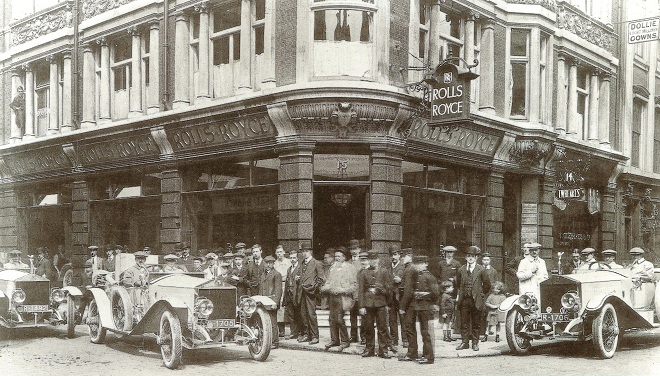
On 4 May 2024, Rolls-Royce Motor Cars marks the 120th anniversary of the first meeting between Henry Royce and The Hon. Charles Stewart Rolls. The founders’ personal stories, the history of the company they founded and its motor cars are well known and available to view elsewhere on the Rolls-Royce Press Club.
To celebrate this auspicious anniversary, Rolls-Royce considers the historical, technological and social context in which the marque came into being and the impact and influence of the Rolls-Royce name over its 120 years. But to fully understand the marque’s origins and legacy, one must first reach a little further back in time and examine the founders’ activities in the years immediately prior to that first, world-changing encounter in 1904.
HENRY ROYCE: THE ENGINEER For Henry Royce, the story really begins in late 1884, when he founded his first engineering company, F. H. Royce & Co. (he was christened Frederick Henry) in Manchester. Initially producing small items such as battery-powered doorbells, the company progressed to making heavy equipment including overhead cranes and railway shunting capstans.
But after almost two decades of expansion and success, in 1902 the company was heading for financial trouble, owing to competition from an influx of cheaper products from Germany and the USA. Royce’s perfectionism and obsession with improvement meant he was not prepared to enter a race to the bottom, or compromise the quality of his products. Habitual overwork and constant strain seriously affected his already weakened constitution, and finally his health collapsed entirely.
His doctors ordered him to take an extended break, so Royce embarked on a 10-week visit to his wife’s family in South Africa. Yet even on a medically imposed rest cure, his engineer’s mind was as active and inquisitive as ever. His choice of reading material on the long voyage was The Automobile: Its Construction and Management, originally written in French by Gérard Lavergne and translated into English that year. This was literally ‘the book’ on how to build a motor car, and Royce was clearly both enlightened and inspired by it.
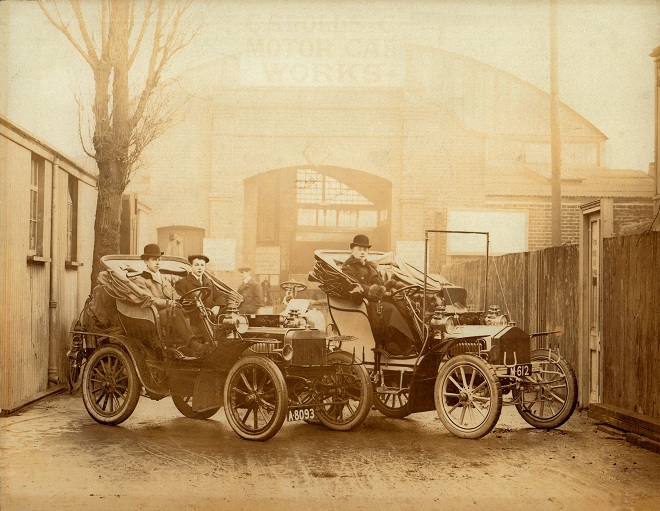
On his return to England, Royce — now physically and mentally recovered — immediately acquired his first motor car, a French 10 H.P. Decauville. It’s often been assumed that this car was so poorly made and unreliable that Royce, out of sheer frustration, set about addressing its numerous defects.
In fact, almost the opposite is true. He chose the Decauville precisely because it was an excellent, state-of-the-art machine with the express intention of dismantling it, analysing every component, then producing his own car from scratch. Any reasonably competent engineer could have upgraded a badly built, substandard product: it took a genius of Royce’s stature to, in his own words, “take the best that exists and make it better”.
THE VITAL ROLE OF ‘LITTLE ERNIE’ One of the lesser known – but nonetheless vital – contributors to the first Royce cars’ development was Ernest Wooler. Born in Manchester in 1888, 15-year-old Ernest stood five feet four inches (1.62m) tall and was nicknamed ‘Little Ernie’ when he joined Royce Limited in 1903 as an indentured premium apprentice — a position for which his father paid the very considerable sum of £100 (over £15,000 at today’s values). He worked a 56-hour week for a shilling a day (about £7.60 now) in the drawing office, learning to make blueprints — and, strictly against the rules, producing his own drawings on the draughtsmen’s boards.
One morning, he received an ominous summons: Mr Royce himself wished to see him. After severely reprimanding the unfortunate youngster for his unauthorised handiwork, Royce ordered him to go and fetch a typist’s notepad. Mystified, Ernie did as he was instructed and gave the pad to his employer. Royce waved it away. “You hold onto that and follow me,” he said and led the way to the workshops, where he climbed onto the Decauville, took off his jacket and rolled up his sleeves. Then, assisted by a fitter, he began methodically taking the car apart. Nearby, Ernie sat on a box with his notepad. “Each piece was handed to me, and I made a sketch of it and added the dimensions they quoted,” he later recalled.
As Royce correctly judged, Ernie was the ideal person to capture the basic data that would inform the design of the motor cars that followed. It’s also tempting to wonder if Royce recognised a kindred spirit; a young man starting at the bottom, but eager to better himself. If so, he was right. In 1913, Ernie emigrated to America and enjoyed a successful career as a design engineer, becoming an expert in bearings and filing a number of patents. In 1947, he retired to Hillsboro Beach, Florida, where he was elected as the town’s first mayor.
SMALL THINGS MAKE PERFECTION Royce had left school aged just 10 and his formal education consisted of evening classes in English and Mathematics that he attended in his late teens; later, as the world-renowned Sir Henry, he still self-deprecatingly described himself as being able to do no more than simple arithmetic. But he had an instinctive, intuitive talent that more than made up for his lack of academic credentials.
As noted, the Decauville was a highly evolved motor car in its own right and Royce sensibly retained some of its key features — a two-cylinder engine, live propshaft and differential rather than chain drive — in his own designs. He also introduced numerous detailed alterations and innovations: mechanically rather than atmospherically operated inlet valves; a more effective radiator; replacement main, big end and gearbox bearings; and a single gear lever replacing the Decauville’s notoriously tricky twin-lever arrangement. From the outset, he was obsessed with reducing the car’s overall weight, beginning with the simple and obvious expedient of discarding the Decauville’s bronze warning bell, which reputedly weighed around 20kg (over 40lb).
It was not only the Decauville that Royce subjected to his intricate and exacting scrutiny. Between 1902 and 1905 he repaired, investigated and test-drove various makes of cars belonging to (presumably willing) friends and acquaintances to gain additional first-hand insights. According to his own records, he covered some 11,000 miles in the course of this research; many of them undoubtedly in the Decauville, which he kept until at least 1906.
Royce the engineer was aiming to build the best car in the world. It was no vanity project or proof-of-concept exercise: he wanted his technical innovation to be commercially viable. Unfortunately, easy charm, a wide social network and a way with words were not among his many gifts. But in London, there was a young man who had these qualities in abundance.
THE HON. CHARLES STEWART ROLLS: THE SALESMAN In many respects, The Hon. Charles Stewart Rolls was Royce’s antithesis: wealthy, aristocratic, urbane, well-connected and highly (and expensively) educated. What they shared was a passion for engineering and machinery — in Rolls’s case, racing cars, hot air balloons and aeroplanes.
After graduating from Cambridge in 1898, Rolls had been briefly employed as Third Engineer on his family’s steam yacht, the Santa Maria, following a spell at the London & North-Western Railway in Crewe. But after just a few years, he realised that his considerable talents required a different outlet.
In January 1902, Rolls opened one of Britain’s first car dealerships, C. S. Rolls & Co., in Fulham, west London, partnering with the formidable Claude Johnson at the end of 1903. The enterprise, initially underwritten by Rolls’s father, Lord Llangattock, imported and sold French Panhard and Mors cars, as well as Minerva vehicles built in Belgium. The business seemingly flourished, but Rolls was frustrated that all his stock was designed and manufactured overseas. He could find no car produced domestically that met his clients’ needs, or his own standards as both a trained engineer and a lifelong enthusiast.
As 1904 dawned, the elements of a potentially transformative partnership were in place: Royce the gifted engineer in search of a market; Rolls the consummate salesman seeking a game-changing product. All that was needed was something — or someone — to bring them together.
HENRY EDMUNDS: THE CRUCIAL CONNECTION Rolls had befriended Henry Edmunds through the Automobile Club of Great Britain & Ireland (later the Royal Automobile Club). Edmunds was a director of Royce Limited and had driven one of the company’s early 10 H.P. cars. His enthusiasm for the car was such that Rolls requested a meeting with its creator, which Edmunds duly arranged. On returning to London from Manchester, Rolls told Claude Johnson that he had found “the greatest motor engineer in the world”. Rolls agreed to sell all the cars Royce could make and the rest is, literally, history.
THE WORLD IN 1904 So much for the personalities. What of the world and context in which Rolls-Royce was formed?
Much of what is taken for granted today was still decades in the future — indeed, many things now considered essential would not arrive until the following century. From the vantage point at the time of writing in 2024, 1904 feels like ancient history: a grainy, distant, black-and-white world detached from our own times and experiences.
Rolls and Royce met in a world without television, penicillin or FM radio. Construction work had just begun on the Panama Canal; The RMS Titanic wouldn’t set sail on her fateful maiden voyage for another eight years. King Edward VII was two years into his reign, having succeeded his mother, Queen Victoria, in 1902 — the year that also saw the end of the Boer War, one year prior to Wilbur and Orville Wright making the world’s first flight in a powered aircraft. Arthur Balfour was British Prime Minister, Theodore ‘Teddy’ Roosevelt was President of the United States and Franz Joseph I was Emperor of Austria-Hungary.
The motor car, too, was still in its infancy; Karl Benz had produced the first ‘true’ petrol-powered automobile — albeit with just three wheels — in 1886, and motoring remained largely a hobby for daring, well-heeled enthusiasts like Charles Rolls. The world would have to wait until 1913, when Henry Ford displayed the world’s first moving assembly line, for cars to become accessible and affordable to the majority of the population.
But the seeds of our modern life were there. This was the belle époque, an unusually protracted period of peace and political stability in Europe that gave rise to economic confidence and prosperity, which in turn encouraged a surge in innovation. The preceding 20 years alone had seen the invention of the vacuum cleaner, electric oven, dry-cell battery, ballpoint pen, cinema, pneumatic tyre, x-rays and radio. The great technical marvel of 1904 was City of Truro, the first steam locomotive in the world to exceed 100mph — a record that stood for 30 years.
There were significant social and cultural advances, too, with the appointments of Britain’s first black mayor, and first female university professor. The London Symphony Orchestra gave its inaugural concert and the Coliseum Theatre opened in the West End. Literary circles were graced by titans including Mark Twain, H. G. Wells, Jules Verne, James Joyce, Leo Tolstoy and P. G. Wodehouse; concert halls and opera houses premiered works by Debussy, Sibelius, Ravel, Elgar, Puccini, and Mahler. New types of music also bloomed, as the syncopated rhythms that would inform Jazz proliferated through Ragtime.
It was into this extraordinarily fertile, dynamic and optimistic age that Rolls-Royce was born. A time in which visionaries and pioneers would shape how the world thought, functioned and behaved for years or decades to come; exactly what Rolls and Royce did with their new motor car.
By building a machine whose engineering, performance, reliability and durability surpassed everything that had gone before, Royce and Rolls set the standard not only for all the Rolls‑Royce models that would follow, but for the motor car itself. In so doing, they shaped a technology that would transform work, travel, communications, communities, infrastructure, design, technology, materials society, politics, economics and culture in ways they could never have predicted.
A PERMANENT LEGACY Rolls and Royce fulfilled their mission to create ‘the best car in the world’. They gave their names to a dynasty of motor cars that defined, and continues to define, superluxury motoring across the world.
But perhaps their crowning achievement is to have made Rolls-Royce the global exemplar of excellence. Practically every product, service, device and technology that has been invented since 1904 has aspired to be ‘the Rolls-Royce of…’ its industry or sector. The standard they set 120 years ago is still driving innovation and improvement everywhere — including within the company they created.
AndrewBall, Head of Corporate Relations and Heritage, Rolls-Royce Motor Cars: “From a modern perspective, 1904 can feel impossibly distant from our own times. But it was an age of unprecedented invention, innovation and technological progress, in which many of the things we now take for granted first appeared. Rolls-Royce was born into this extraordinarily dynamic, creative world and would go on to shape it profoundly and irrevocably. Looking back, the meeting of Rolls and Royce seems somehow predestined, the arcs of their respective careers up to that point making it appear almost inevitable. In fact, it came about through a web of chance connections and overlapping relationships; without these, given their vastly different backgrounds and social circles, it might never have happened at all. We are proud to continue their remarkable story, to celebrate and build upon their unique legacy 120 years later.”
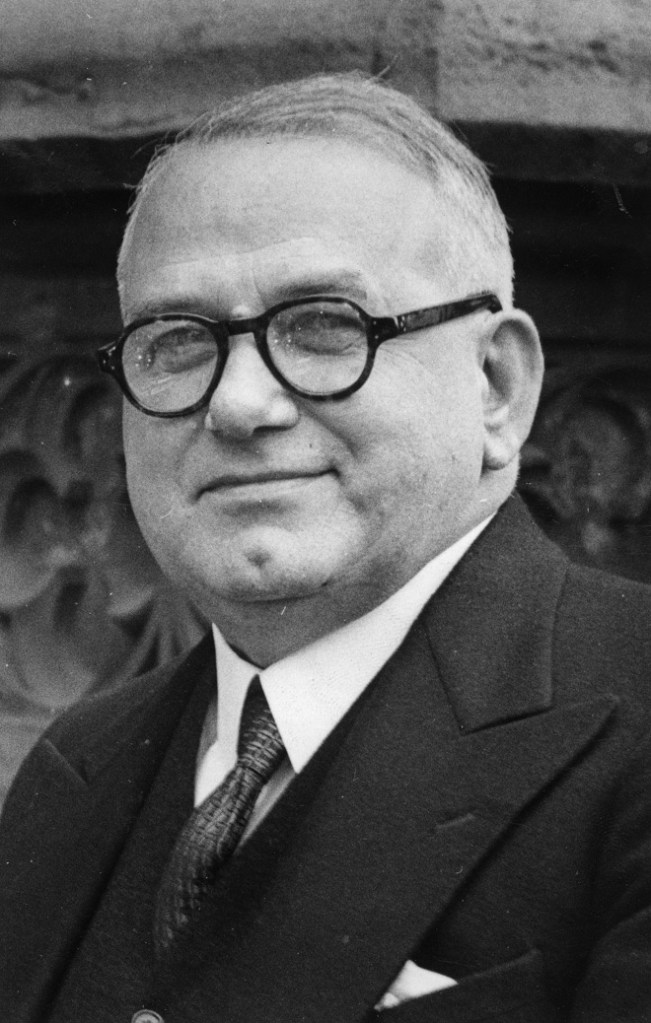
Photo by ANL/Shutterstock (1475290a) Lord Hives Managing Director Of Rolls Royce Ltd.
Ernest Walter Hives was born on 21 April 1886 in Reading, Berkshire. In 1898, aged just 12, he began a three-year apprenticeship with a local engineering company that had a sideline dealing in motor cars.
From the outset, the young Hives was captivated by these fascinating new machines. He saw his future in them and, like Henry Royce a generation earlier, he did not allow his humble background and limited formal education to impede his ambitions. He shared Royce’s unending capacity for hard work, putting in long hours and applying what was evidently a similarly lively and enquiring mind. In particular, he would watch and listen to those on the night shift, steadily building his knowledge of the motor cars’ inner workings and operation.
But his was not merely a theoretical interest, and he soon taught himself to drive by moving cars around the garage. We can assume this was with his employers’ blessing since, though still only 14, he quickly graduated to the road, where he taught clients to drive. His combination of technical understanding, an intuitive ‘feel’ for the motor car and outstanding practical skills would shape his career in the years that followed.
That nascent career took a defining turn sometime around 1903 (the precise date is not known) when Hives rendered assistance to a motorist who was having trouble with one of his motor cars (likewise, history does not record whether this was at the Reading garage or out on the open road). What is certain is the motorist’s identity: The Hon. Charles Stewart Rolls.
Whenever and wherever this encounter occurred, Rolls was so impressed that he promptly took Hives on as his personal chauffeur. The young man’s star continued to rise with a swift promotion to the position of mechanic at C S Rolls & Co, the prestigious London motor car dealership established by his new employer at the start of 1903.
But driving remained Hives’ true calling. He left C S Rolls & Co to work first at Owens and then Napier, for whom he drove in the gruelling Scottish Reliability Trials of 1907 and 1908, and also at the 1908 Brooklands meeting, where he sported jockey’s racing colours of yellow and white (which he described as looking like ‘a poached egg’).
In 1908, he made what would be the most pivotal move of his career; taking a job at Rolls-Royce, by now in its fourth year, as an experimental tester. His own account suggests he was less than overjoyed at the prospect, at least initially. “When I got to Derby in 1908 and walked out of the station it was raining hard,” he wrote later. “Looking up Midland Road, it was so drab that I spun a coin to decide whether to go on to Rolls-Royce or catch the next train home.” By such small chances, momentary decisions and tiny margins for error are careers, lives and history itself so often determined.
Rolls-Royce had created the new role of experimental tester following its showing at the 1907 Scottish Reliability Trial. Not that the event had gone badly for the fledgling marque, on the contrary: the 40/50 H.P. – better known as the Silver Ghost – had comprehensively beaten the opposition, including the Napier driven by Hives; even more impressively, the punishing 15,000-mile test had been the motor car’s first competitive endurance run. Never one to rest on his laurels, however, Henry Royce saw this overwhelming success as conclusive proof of the need for continued testing to, in his own words, ‘take the best that exists and make it better’.
Hives joined the company’s newly formed experimental department, and immediately proved a natural at this highly structured, technically exacting work. His insights into the subtleties of a motor car’s performance and responses – that it developed a resonance noise at a certain speed, that the chassis felt either too stiff or not stiff enough under cornering, or that the engine seemed to have a ‘flat spot’ at a particular rpm (revolutions per minute) – would have been invaluable to Royce and his design team. Indeed, such were his gifts that when the Royal Automobile Club (RAC) announced its headline 1911 endurance trial from London to Edinburgh and back, Hives was automatically chosen to drive Rolls-Royce’s entry: Silver Ghost 1701.
Designed as an ‘Experimental Speed Car’, 1701 easily won the event, in which entrants completed the entire 794-mile trip between the two capitals locked in top gear. Under Hives’ expert handling, the vehicle averaged almost 20mph and returned a then unheard‑of fuel efficiency of over 24mpg – genuinely astonishing figures given the parlous state of Edwardian Britain’s roads, and a testament to Hives’ skills, courage and powers of concentration behind the wheel, as well as Royce’s engineering.
Rolls-Royce followed up this performance by contesting the even more daunting Alpine Trials, held over eight days and 2,600km on some of the highest roads in Europe. After an embarrassing underperformance by a ‘privateer’ car in 1912, Managing Director Claude Johnson was eager to set the record straight and approached the 1913 event in typically energetic and uncompromising fashion. He assembled an official ‘works’ team of three specially prepared Silver Ghosts, each with a hand-picked driver and mechanic, plus a fourth car built to the same specification driven by private owner James Radley. Hives was one of the company’s top drivers – as proven by his being the first to exceed 100mph in a Silver Ghost – and therefore an obvious selection for Johnson’s new crack team. Piloting the Number Two car, accompanied by mechanic George Hancock, he completed a near-faultless run (he was docked a single point for stalling on leaving the parking area in Salzburg) that earned him one of the team’s three silver medals, in an overall performance that saw the Silver Ghosts generally accepted as ‘the fastest, quietest and strongest cars in the event’.
Alongside his racing exploits, Hives continued to make a vital contribution to Rolls-Royce’s research and development efforts as an experimental tester, introducing the first ‘chassis bump rig’, that could test chassis’ components to destruction. He also undertook the still potentially hazardous work of testing Royce’s latest designs on the open road. Having settled on France as the ideal place to carry out high-speed road testing, he made regular sorties along a route he devised between Paris and Royce’s winter home at Le Canadel, near Nice. For someone who had adored motor cars since childhood, this must have been as close to the perfect job as it is possible to get.
The natural-born talent and sheer love of driving that Hives first demonstrated as a teenager never left him. Many who knew him spoke of a ‘sixth sense’ he had when driving, seeming to know instinctively if the road ahead was clear and when he could take the fastest line through a corner or needed to ease off.
As his career progressed, Hives became increasingly involved with developing Rolls-Royce’s aero engines as well as its automotive products. In 1937, he became a Board Director and General Works Manager; his most significant act was to split the company’s motor car (chassis) and aero engine operations into two independent entities, which remains the case to this day.
In 1946, he became Managing Director, and in 1950, Chairman of the Board: that same year, he received a peerage and, as 1st Baron Hives, completed an extraordinary journey from working as Charles Rolls’s chauffeur to leading the great company his late employer had co-founded almost 50 years earlier. Yet the man who had doggedly worked his way up from a Reading garage to the House of Lords always remained modest, describing himself with an understatement worthy of Royce’s equally understated self-characterisation as ‘just a mechanic’. Respectfully, Rolls-Royce Motor Cars begs to differ.
Andrew Ball, Head of Corporate Relations and Heritage, Rolls-Royce Motor Cars, said:“Even for so gifted an engineer as Henry Royce, there’s a limit to how far theory can take you: there comes a point where someone has to determine whether your design actually works in practice. In the early days of Rolls-Royce, that was Ernest Hives. From humble origins, Hives turned his fascination for motor cars and outstanding self-taught driving skills into a glittering career with Rolls-Royce, first as an experimental test driver, then as one of the ‘works’ team contesting the great motor trials of the day. His observations and hands-on experiences from the road would have been crucial to Royce’s continuous improvement process, making him a key figure in the technical development of the ‘best car in the world’.




 Power Drive