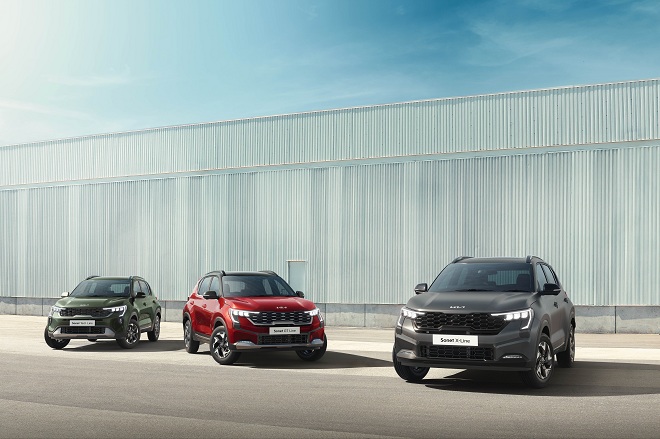
In the highly competitive compact SUV market, the Kia Sonet remains popular for its exceptional design, impressive features, and premium driving experience. While there are multiple trim levels to choose from, the Kia Sonet HTK+ delivers a blend of advanced features, a safer driving experience and technological prowess with a substantial value-for-money proposition.
1.Power & Efficiency
The 1.2L engine strikes a great balance between dynamic city driving (82 bhp) and responsible fuel consumption thanks to its BS6 Phase 2 compliance. Paired with a smooth-shifting 5-speed manual transmission, you get the most value-driven experience while still enjoying budget-friendly mileage.
2.Hi-tech Safety
With the HTK+, you get impressive segment-best features including 6 airbags, an Electronic Stability Program, Hill Hold Control, and Brake Assist. This level of safety equipment is a welcome bonus in this price range. Additional features like a Tyre Pressure Monitoring System and Over-Speed Warning systems add an extra layer of protection.
3.Elevated Comfort Features
Automatic climate control takes the hassle out of finding the perfect temperature, letting you focus on the road. Rear passengers stay comfortable on longer and shorter commutes, thanks to rear AC vents. Cruise control makes those highway trips less tiring and helps you stay alert.
4.Tech-Savvy Convenience Enhancements
The HTK+ makes manoeuvring easier with both parking sensors and a rear camera with guidance lines. Keyless Start adds high-tech convenience to your routine, giving the Sonet HTK+ a premium feel.
5.Exceptional Value Proposition
With a starting price of Rs. 9.90 Lakh, the Kia Sonet HTK+ is a testament to Kia’s commitment to making a feature-rich car accessible to a wider range of buyers. It is the SUV that proves style, safety, and savings can go hand-in-hand.
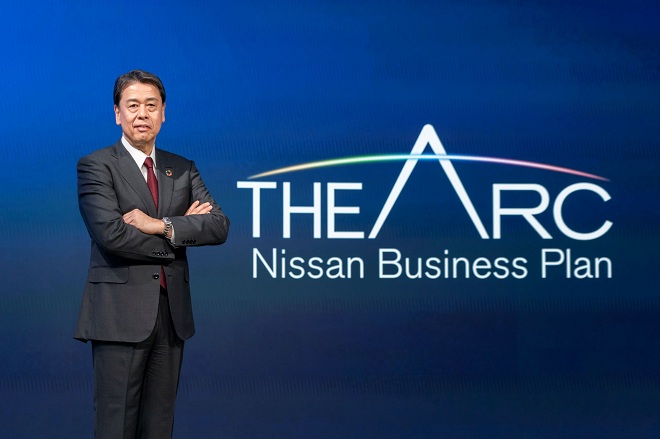
Nissan Motor Co., Ltd, has launched The Arc, its new business plan to drive value and strengthen competitiveness. The plan is focused on a broad-based product offensive, increased electrification, new approaches to engineering and manufacturing, the adoption of new technologies, and the use of strategic partnerships to increase global unit sales and improve profitability.
The plan is positioned as a bridge between the Nissan NEXT business transformation plan running from fiscal 2020 through fiscal 2023 and Nissan Ambition 2030, the company’s long-term vision. The new plan is split into mid-term imperatives for fiscal years 2024 through 2026, and mid-long-term actions to be carried out through 2030.
Nissan President and Chief Executive Officer Makoto Uchida said: “The Arc plan shows our path to the future. It illustrates our continuous progression and ability to navigate changing market conditions. This plan will enable us to go further and faster in driving value and competitiveness. Faced with extreme market volatility, Nissan is taking decisive actions guided by the new plan to ensure sustainable growth and profitability.”
Under the two-part plan, Nissan will first take actions to ensure volume growth through a tailored regional strategy and prepare for an accelerated transition to EVs, supported by a balanced electrified/ICE product portfolio, volume growth in major markets and financial discipline. Through these initiatives Nissan aims to lift annual sales by 1 million units and increase its operating profit margin to more than 6%, both by the end of fiscal year 2026. This will pave the way for the second part of the plan aimed to enable the EV transition and realize long-term profitable growth, supported by smart partnerships, enhanced EV competitiveness, differentiated innovations and new revenue streams. By fiscal year 2030, Nissan sees a revenue potential of 2.5 trillion yen from new business opportunities.
Balanced product portfolio
Nissan plans to launch 30 new models over the next three years, of which 16 will be electrified, and 14 will be ICE models, to meet the diversified customer needs in markets where the pace of electrification differs. Nissan plans to launch a total of 34 electrified models from fiscal year 2024 and 2030 to cover all segments, with the model mix of electrified vehicles expected to account for 40% globally by fiscal year 2026 and rise to 60% by the end of the decade.
Ensuring market growth through a tailored regional strategy
In key regions and markets, Nissan’s actions by fiscal year 2026 (unless otherwise indicated) include:
Americas:
Increase across-region sales by 330,000 units (in fiscal year 2026 and compared to fiscal year 2023) and invest 200 million USD in integrated customer experience in the U.S.
In the U.S. and Canada: Launch seven all-new models
In the U.S.: Refresh 78% of passenger vehicle line-up for Nissan brand and launch e-POWER and plug-in hybrid models
China:
Refresh 73% of Nissan-brand models and launch eight new-energy vehicles (NEVs), including four Nissan-branded models
Target 1-million-unit sales in fiscal year 2026, representing an increase of 200,000 units
Start vehicle exports in 2025; Aim for 100,000 unit level
Continue to optimize production capacity with local partners
Japan:
Refresh 80% of passenger model line-up, launching five all-new models
Achieve a 70% electrified level in passenger vehicle line-up
Increase sales by 90,000 units (compared to fiscal year 2023) to 600,000 units in fiscal year 2026
Africa, Middle East, India, Europe and Oceania:
Increase across-region sales units by 300,000 units (in fiscal year 2026 and compared to fiscal year 2023)
In Europe: Launch six all-new models; achieve 40% EV passenger-vehicle sales mix
In the Middle East: Launch five all-new SUVs
In India: Launch three all-new models and become a hub for exports, at a level of 100,000 units
In Oceania: Launch a 1-ton pickup and introduce a C crossover EV
In Africa: Launch two all-new SUVs and expand A-segment ICE vehicle
EV competitiveness
The product offensive will be supported by new development and manufacturing approaches aimed to make EVs more affordable and increase profitability. By developing EVs in families, integrating powertrains, utilizing next-generation modular manufacturing, group sourcing, and battery innovations, Nissan aims to reduce the cost of next-generation EVs by 30% (when compared to the current model Ariya crossover) and achieve cost-parity between EVs and ICE models by fiscal year 2030.
In the area of family development alone, the cost of subsequent vehicles – those developed based on the main vehicle in the family – can be reduced by 50%, the variation of trim parts reduced by 70% and development lead time shortened by four months. By adopting modular manufacturing, the vehicle production line will be shortened, reducing the production time per vehicle by 20%.
Under the Arc plan, more plants in Japan and overseas will adopt the Nissan Intelligent Factory concept, with the Oppama and Nissan Motor Kyushu plants in Japan, the Sunderland Plant in the UK and Canton and Smyrna plants in the U.S. starting the adoption from fiscal year 2026 through 2030. Meanwhile the EV36Zero production approach will be extended from Sunderland in the UK to plants including Canton, Decherd and Smyrna in the U.S., and Tochigi and Kyushu in Japan from fiscal year 2025 through 2028.
New technologies
The plan includes proposals to accelerate the evolution of vehicle intelligence technologies such as next-generation ProPILOT driver-assistance system, which realize door-to-door autonomous driving technology from on-highway to off-highway, private premises, and parking.
Nissan will offer enhanced NCM li-ion, LFP and all solid-state batteries to provide diversified EVs to meet different customer needs. Nissan will significantly enhance NCM li-ion batteries, reducing quick-charging time by 50% and increasing energy density by 50% compared to the Ariya. LFP batteries, to be developed and produced in Japan, will be launched that will reduce cost by 30% compared to the Sakura EV minivehicle. New EVs with enhanced NCM li-ion, LFP and all-solid-state batteries will be launched in fiscal year 2028.
Strategic partnerships
Nissan will harness strategic partnerships to stay competitive and offer a global portfolio of products and technology. Nissan will continue to leverage the alliance with Renault and Mitsubishi Motors in Europe, LATAM, ASEAN and India. In China, Nissan will fully utilize its local assets to meet the needs of China and beyond; and explore new partnerships in Japan and the U.S. Batteries will be developed and sourced with partners to bring 135 gigawatt hours of global capacity.
Financial discipline to deliver resilient, profitable performance
Underpinning the plan is firm financial discipline, enabling stable CAPEX and R&D investment ratio versus net revenue of between 7% to 8% excluding battery capacity investment. Additionally, Nissan plans to invest more than 400 billion yen in battery capacity. Meanwhile, investment in electrification will increase progressively, becoming more than 70% by fiscal year 2026.
Managing these investments is aimed to allow delivering benefits to all stakeholders, with Nissan maintaining positive free cash flow before M&A – even after electrification investments. This is to secure total shareholder return at more than 30%. Nissan aims to maintain net cash at a healthy level of 1 trillion yen throughout the Arc plan period.
“Under this comprehensive plan we will enhance Nissan’s competitiveness and achieve sustainable profitability,” added Uchida. “Nissan is confident that it has what it takes to properly execute this plan, which will provide us with the firm foundation we need to bridge to our Nissan Ambition 2030 vision.”
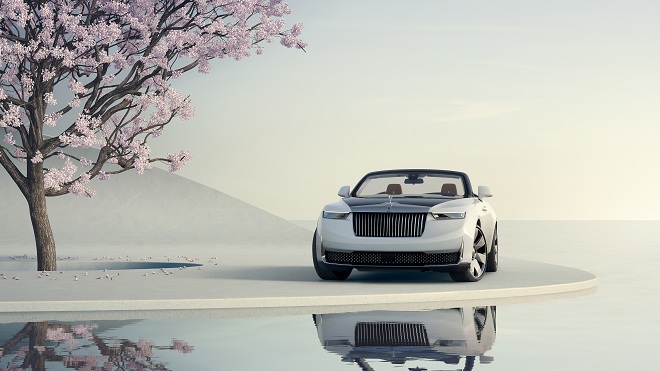
Rolls-Royce Motor Cars is delighted to present Rolls-Royce Arcadia Droptail, an exquisite coachbuilt expression of tranquillity. Arcadia Droptail is the epitome of quiet irreverence, celebrating purity of form and natural materials while serving as a bold statement of the client’s personal taste. Commissioned by an individual who possesses a distinct affinity for architecture and design, Arcadia Droptail is a testimony to the patron’s sensibilities and personal codes of luxury, defined by purity and subtle restraint, reflecting their firm belief in distilling complexity to reveal the inherent, fundamental essence.
This coachbuilt commission takes its name from the mythical realm of Arcadia, a place depicted in Ancient Greek mythology as ‘Heaven on Earth’ – a land renowned for its extraordinary natural beauty and perfect harmony. Like the haven that inspires its name, Arcadia Droptail was envisioned by the client as a serene space characterised by reduction, material depth and tactility that would serve as a refuge from the complexities of their business life.
In capturing the theme of tranquillity, Coachbuild designers embarked on an exploration of design, sculpture and architecture from the client’s favourite regions around the world. This included the precision and richness of modernist tropical sky gardens seen in Singapore, Indonesia and Vietnam as well as British ‘Biomimetic’ architecture, where organic forms and material honesty are celebrated.
In addition to these references, the client was also inspired by the motor car itself and the purity of the Droptail design concept. The commissioning client insisted that their Coachbuild motor car should be absolutely faithful to the earliest hand-drawn sketch they were first presented with in 2019.
It was the profile of this highly contemporary projection of the roadster body type that resonated so strongly with the commissioning client. They were particularly compelled by the motor car’s bold, low stance, ensconcing cabin design and dramatic body lines. They also immediately recognised the nautical inspiration behind Droptail’s ‘sail cowls’: named after their resemblance to a yacht’s jib, these sharp, angular forms rise behind the doors and curve gently inwards, subtly directing the eye to the motor car’s occupants.
EXTERIOR: A TRIBUTE TO DROPTAIL In order to fulfil the client’s ambition to honour Droptail’s form, Rolls-Royce Coachbuild designers developed a calm, natural duotone colourway for the motor car’s coachwork. The client’s aspiration was to define a timeless white, appearing as a solid colour at first glance, but creating a level of intrigue upon further study under natural light. To achieve this, the main body colour is a solid white infused with aluminium and glass particles. This not only creates an effervescent shimmer when the light strikes the coachwork but, upon close inspection, creates the illusion of unending depth in the paint. Rolls-Royce specialists developed a more faceted, striking metallic using larger sizing of aluminium particles. The client was very particular and involved in their request for the Bespoke silver to contrast against the white, not only in colour, but also in terms of intensity.
In a key departure from the other three coachbuilt Droptails in this series, the carbon fibre used to construct the lower sections of Droptail is painted in the solid Bespoke silver colour rather than left fully or partially exposed, visually ‘lifting’ the motor car in profile to intensify its lithe, dynamic intent.
In tribute to the brilliant mirror finish of brightwork on historical Rolls-Royces, which particularly fascinate the client, the exterior grille surround, ‘kinked’ vane pieces and 22-inch alloy wheels have been fully mirror-polished.
While Arcadia Droptail’s exterior palette is rich in subtle detail, its primary intention is to celebrate the form and proportions of the coachwork. The client was particularly compelled by Droptail’s clean, monolithic surfacing and bold use of negative sculpture – features that are amplified by the motor car’s muted paint colours, which reflect sunlight and cast dramatic shadows, highlighting Droptail’s many subtle design gestures.
INTERIOR: THE CENTRALITY OF WOOD As the exterior of Rolls-Royce Arcadia Droptail celebrates the motor car’s form, the interior is a deeply personal reflection of the client’s individual aesthetic, reflective of the style they have curated in their residences and business spaces around the world. Arcadia Droptail’s colour palette and material treatment was envisioned to be a truly personal statement and instantly recognisable as a personal signature of the commissioning client.
Wood development was central to Arcadia Droptail’s interior and the client’s focus, whose very specific expectations concentrated on the texture, grain, colour and richness of the material itself. The client shared many examples of preferences and inspiration from architecture, residences and classic cars, to guide Rolls-Royce Coachbuild designers and material specialists.
Santos Straight Grain was eventually selected as the most modern statement, based upon its rich texture and visual intrigue, which is derived from its unique, interlocking grain pattern.
Using this high-density hardwood on Droptail’s interior posed a significant challenge for the marque’s craftspeople. Santos Straight Grain has one of the finest grain types of all the wood species used within a Rolls-Royce – if not handled with the greatest care, it easily tears when machined and ‘checks’ (a crack that appears parallel to the grain) during the drying process. Despite the challenges of working with this delicate material, Santos Straight Grain is used throughout Droptail, including the aerodynamically functional rear deck section, where the grain of the open pore veneer is laid at a perfect 55° angle. To achieve a perfect composition over complex geometry, Rolls-Royce artisans used a total of 233 wood pieces throughout Arcadia Droptail, with 76 pieces applied to the rear deck alone.
Given that Arcadia Droptail will be used internationally, including some tropical climates, specific attention was paid to developing a protection system and testing process for the exterior wood surfaces. Coatings used on superyachts were initially considered but rejected given that they require regular servicing and re-application. Instead, a Bespoke lacquer was developed that requires just one application for the lifetime of the motor car.
To validate this coating, Rolls-Royce specialists conceived a unique testing protocol wherein veneer pieces were subject to a punishing cycle inside a specialist machine simulating global weather extremes. This involved spraying sample wood pieces with water intermittently, between periods of leaving them to dry in darkness and exposing them to heat and bright light.
This was repeated for 1,000 hours on 18 different samples before the marque’s specialists were satisfied with the endurance of the pieces. In total, the wood pieces and protective coating required more than 8,000 hours of development.
INTERIOR: A STUDY IN WHITE The leather interior is finished in two entirely Bespoke hues, named after the client and reserved exclusively for their use. The main leather colour is a Bespoke White hue, continuing the exterior paint theme, while the contrast leather is a Bespoke tan colour, developed to perfectly complement the selected wood.
The interior also includes the exquisite shawl panel that unites all four Droptail motor cars and is the largest continuous wood section ever seen on a Rolls-Royce motor car. In Arcadia Droptail, it is made in the same Santos Straight Grain open pore veneer as the rear deck, book-matched at the same 55° angle, with individually shaped leave stripes running seamlessly into the door linings. CAD tools were used to map the placement of each wood piece, and although it appears to be constructed from just two mirrored sections of veneer, this panel alone is made up of 40 sections, each digitally mapped before being fixed to the motor car.
Applying wood to the complex curvatures of Droptail’s interior required Rolls-Royce engineers to develop an entirely new substructure for several components. The dramatic geometry of the dashboard, door linings and central cantilevered ‘plinth’ armrest had to be incredibly rigid to ensure the stability of the wood pieces once they were laid in place. Engineers called on carbon fibre layering techniques used in Formula 1 motor racing to develop an incredibly stiff base onto which the wood could be applied, ensuring that it remained secure regardless of the dynamic extremes the motor car experienced.
BESPOKE TIMEPIECE: A PRECISION INSTRUMENT The Santos Straight Grain veneer fascia incorporates a clock conceived and developed by Rolls-Royce Coachbuild designers and craftspeople. This expression of haute horlogerie is the most complex Rolls-Royce clock face ever created: the assembly alone was a five-month process, which was preceded by more than two years of development.
The clock incorporates an exquisite geometric guilloché pattern in raw metal with 119 facets. This is a symbolic nod to the marque’s heritage; as the client first saw a preview of the motor car in late 2023 – the year when Rolls-Royce celebrated its 119-year anniversary. The specially designed clock face also includes partly polished, partly brushed hands and 12 ‘chaplets’ – or hour markers – each just 0.1mm thick. To ensure the readability of the timepiece, specialists gave each chaplet an infill bridge and painted them by hand using a camera capable of magnifying an image by up to 100x.
While many haute horlogerie methods were used to develop the timepiece, the testing and validation standards at Rolls-Royce are higher than those of the watch world. This required the marque’s specialists to draw on an expansive palette of materials. For example, instead of anodizing the timepiece’s minute marker, which is common practice in watch manufacturing, it is finished in a ceramic coating chosen because of its stability over time as well as its aesthetic merits. Small areas of the coating were laser-etched away to reveal the mirror finish of the aluminium material beneath it. Like every piece within the timepiece, including the Bespoke ‘double R’ monogram, they were individually machined from solid stainless-steel billet and polished by hand prior to assembly.
Themes from the clock are paired with the instrument dials, sharing materials, techniques and execution. They feature the same repeated guilloché pattern, as well as brushed and polished brightwork and frosted white inserts, recalling the colourway of the motor car.
STATEMENT OF A COSMOPOLITAN LIFESTYLE Reflecting the patron’s international lifestyle, the motor car is specified with left-hand drive to facilitate its use around the world. This international dimension was so important to the commissioning client that the Coachbuild Collective wanted them to experience the motor car in multiple locations around the world before it was built. Coachbuild designers used the marque’s ‘holodeck’ to facilitate this – a unique virtual 3D environment in which the client uses an advanced virtual reality (VR) headset to view the motor car as it would appear in specific locations around the world.
ARCADIA DROPTAIL: AN ELEGANT SPACE IN THE DROPTAIL CANON While every Rolls-Royce client is different, they each share a powerful strength of conviction, and this individual’s requirements were clearly stated from the outset. However, translating these complex, highly personal sensibilities into a coherent, workable design was the product of a significant body of work. It was here that the Coachbuild process, with its unprecedented investment of time – over four years in total – and uniquely close relationship between the client and the marque, paid incalculable dividends.
Coachbuild designers invested many months examining and interrogating the client’s tastes in everything from clothes and furnishings to food and travel destinations. From this, they defined and codified an aesthetic rooted in the client’s truth and experience; an objective portrait of their internal world and external surroundings, backed by the certainty and authority of the design team’s own discernment, understanding and professional judgment. Other family members, notably the client’s daughter, also become engaged with the process. When the final design was ready, the client’s wider family were invited to review it: all agreed that it perfectly captured the client’s aesthetic and character.
The client derived enormous pleasure from having their tastes and identity so clearly rationalised and projected back to them. Indeed, the process revealed the client had a far more modern outlook than they realised, defined by lightness, the use of natural materials and a clear passion for precision. Arcadia Droptail has since become a reference point for the client’s commissions from other luxury houses and architects.
This unique expression of Rolls-Royce Droptail reflects this remarkable client’s confidence, clarity of vision and long-term relationship with Rolls-Royce Motor Cars. Its significance lies both in its exquisitely minimal execution and the unique skill of Rolls-Royce Coachbuild designers in capturing the sensibilities and soul of an individual.
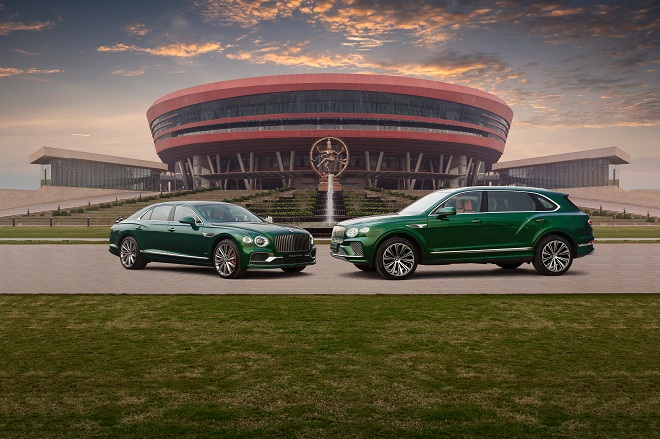
Five individually curated Bentley models, commissioned by a Bentley retailer, comprise the first Mulliner Bespoke Edition created exclusively for the Indian Market. All feature an extensive specification, with unique exterior and interior finishes inspired by the colours of the Indian flag. Each example is handcrafted in Crewe, England, by Mulliner, Bentley’s in-house personalisation and bespoke department.
The Opulence Edition for India is limited to just five vehicles: a Continental GT Speed, a Flying Spur Speed and three Bentayga EWB Azure models. All five are presented in Scarab Green exterior finish, an exclusive Mulliner development inspired by the iridescent green exo-skeleton of the Scarab beetle. Complemented by bespoke interior colourways of Mandarin and Cumbrian Green hide, each car is a tribute to India’s national colours.
Bespoke elements of the Opulence Edition Although different in character, all five models in the Opulence Edition have key bespoke elements in common. All feature the lustrous Scarab Green exterior finish that was first developed for Bentley’s first coachbuilt barchetta, the Bacalar. Inside, the orange and green of India’s national colours are represented by upholstery of Mandarin main hide and Cumbrian Green secondary hide. The mirror-like Piano veneer of the fascia and trim is also finished in Cumbrian Green, with an inset chrome motif on the fascia of wild horses and mountain peaks. From the initial brief, designers and artisans painstakingly produced multiple depictions until the perfect composition was achieved. The design was ultimately hand-drawn, and carefully applied to the fascia using a chrome overlay technique. This unique colour and trim specification is the outcome of close collaboration between Bentley Mumbai and the Mulliner team, and celebrates the first-ever Mulliner bespoke edition created for the Indian market.
Performance delivered by the Opulence Edition Continental GT Speed The 659 PS Continental GT Speed is the ultimate performance-focused iteration of the world’s benchmark luxury Grand Tourer, and the Opulence Edition complements its character perfectly. The Scarab Green exterior and 22” Speed wheels in dark tint finish focus one’s attention on its poised and muscular lines, while the LED welcome lamps, and self-levelling wheel centre badges are typical of Mulliner’s perfectionist attention to detail.
Open the driver’s door, and the full drama of the two-colour interior is revealed, with knurled switchgear and instrument bezels set on a fascia of Cumbrian Green in a piano finish. Contrast stitching in Mandarin picks out the lines of the upholstery and the diamonds of the quilted sections. The Opulence Edition Continental GT Speed was limited to one example, and this has already been delivered to its delighted owner.
Opulence Edition Flying Spur Speed’s bespoke craftsmanship The Opulence Edition Flying Spur Speed’s lavish specification includes diamond knurling on bezels and switchgear, Naim for Bentley audio and the unique Bentley rotating display. Throughout the cabin, the perforated, quilted seat upholstery is bordered by side bolsters with Mandarin contrast stitching and Speed-embroidered headrests.
This Bentley’s performance focus finds the perfect expression in the Opulence Edition’s Scarab Green exterior finish, complemented by 22” dark tint Speed wheels with self-levelling wheel centre badges. The illuminated Flying B radiator mascot is finished in polished stainless steel, providing a contrast to the dark tint brightwork of the Speed specification.
The pinnacle performance model of the Flying Spur line up is powered by a 626 bhp 6.0-litre twin turbocharged W12 engine, with Electronic All Wheel Steering, Torque Vectoring by Brake technology and Bentley Dynamic Ride as standard. Just one Opulence Edition Flying Spur Speed will be produced.
The Opulence Edition Bentayga EWB Azure While the Bentayga EWB is more than capable of soul-stirring performance, the emphasis with the Opulence Edition is on space, wellbeing and abundant luxury. The Opulence Edition Bentayga, of which three examples will be made, comes in four-seat configuration with the Mulliner console bottle cooler separating the two rear seats. Contrast stitching in Mandarin runs around the lip of the fascia top roll, and around the edge of the Cumbrian Green seat bolsters, while contrast stitching in Cumbrian Green can be seen in the outer diamonds of the quilted seat inner areas and the Azure-embroidered headrests.
With the Bentley Dynamic Ride 48V active anti-roll control system providing the optimum balance between ride comfort, handling and body control, the Opulence Edition Bentayga EWB Azure provides a haven of calm and comfort.
The countdown to the Concours of Elegance Germany starts, with event set to commence in just under 150 days. Home to the world’s most revered and historic motoring brands, the first truly international Concours of Elegance will open with its Bavarian Tour on 22 July, with 25 stunning cars embarking on a meticulously curated four-day exploration of the very best that Bavaria has to offer.
Presented by prestigious German watchmaker A. Lange & Söhne, Concours of Elegance Germany will build on the success of the prestigious Concours of Elegance at Hampton Court Palace and the London Concours events, welcoming an exquisite array of automobiles to Gut Kaltenbrunn on the shores of Lake Tegernsee from 22-27 July 2024.
Among the cars on display will be truly exceptional examples of the 1971 Ferrari 365 GTB4 and the 1967 AC Frua. Designed by Pininfarina and constructed by Scaglietti, two icons of the Italian automotive industry, there were just 156 right-hand drive models of the GTB4 ever made. Fusing US V8 horsepower and Italian styling, the AC Frua was also made in remarkably small numbers, with just 29 convertibles leaving the production line.
Detailed arrangements for the spectacular new international event continue at pace, with many more of the world’s rarest and finest collectible cars to be announced in the coming weeks.
Concours of Elegance Germany has already secured a line-up of prestigious partnerships that will contribute the extraordinary event. RM Sotheby’s, the esteemed Official Auction Partner, has confirmed that it will hold a highly anticipated sale on 27 July at the exquisite Gut Kaltenbrunn. Hospitality will be provided throughout the event by Official Hospitality Partner, Käfer – Germany’s most renowned purveyor of food and beverages.
Classic Driver, the German-founded platform, will serve as the Official Digital Media Partner, providing extensive coverage of the Concours of Elegance Germany across various digital and social channels. Automotive & Collectibles Media Partner, Octane Germany, will contribute comprehensive coverage in print, capturing the essence of the event from the run-up to the final moments. These partnerships, along with several others, underscore the significance of Concours of Elegance Germany, promising an unforgettable showcase of automotive excellence at Lake Tegernsee. In upcoming weeks, several other partners to the concours will be revealed.
Head of the event’s Hospitality Partner, Michael Käfer, commented: “We are truly thrilled to be supporting and hosting the internationally renowned Concours of Elegance in Germany, where the world’s biggest automotive collectors can congregate against the stunning backdrop of Lake Tegernsee. The event will be a celebration of the rare and exceptional, showcasing some of the world’s most elusive collectible cars. All of us at Käfer are very much looking forward to welcoming enthusiasts to witness a truly unforgettable showcase of automotive beauty and elegance, celebrated in true Bavarian style here at Gut Kaltenbrunn.”
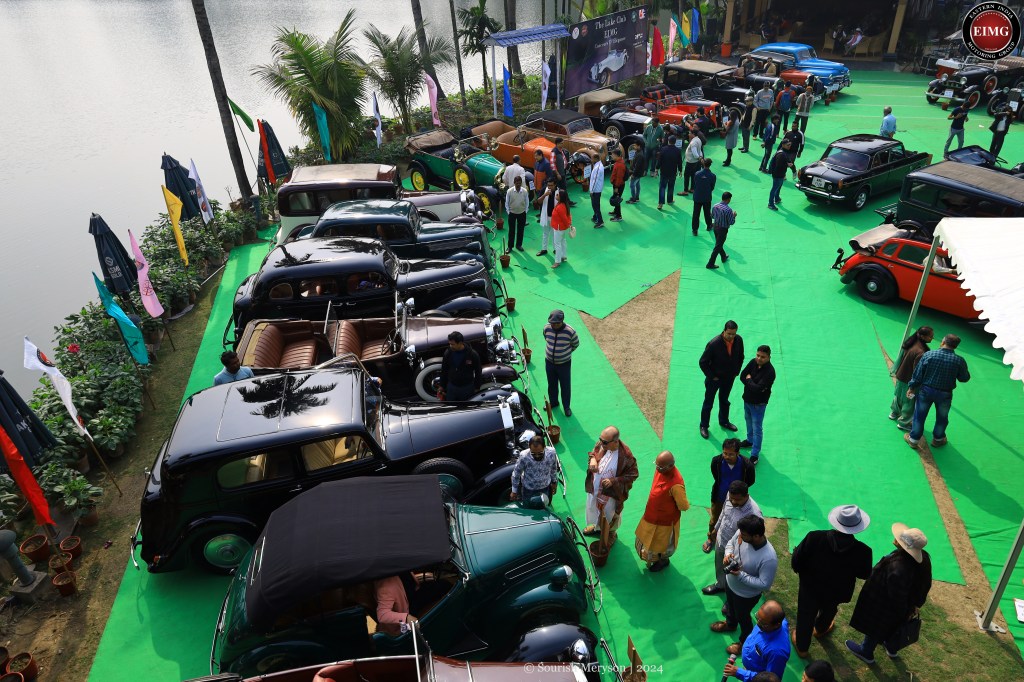
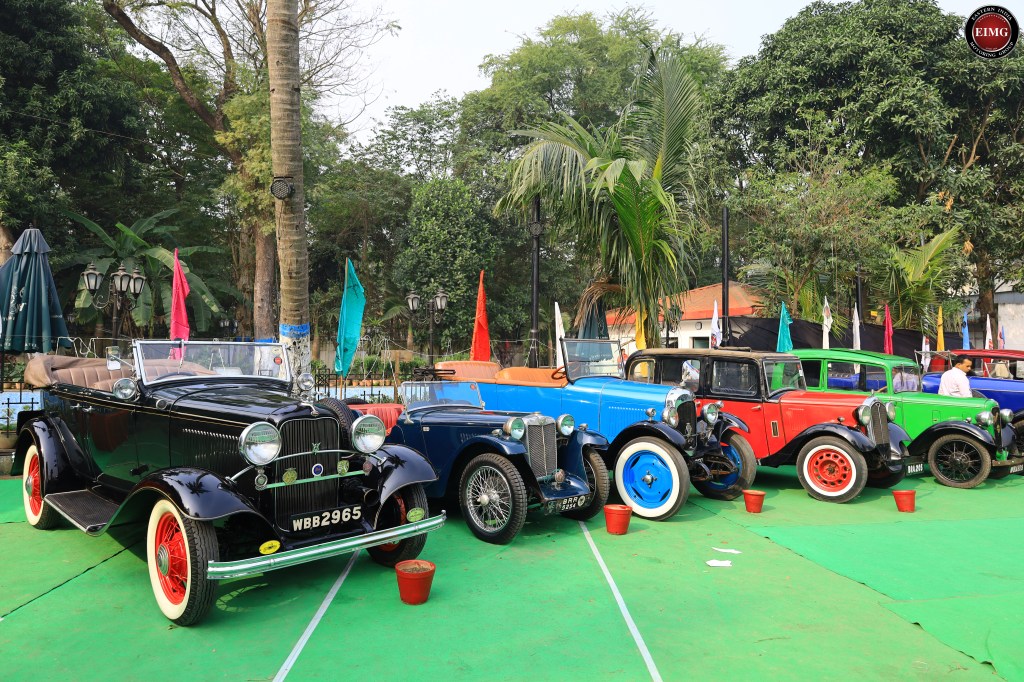
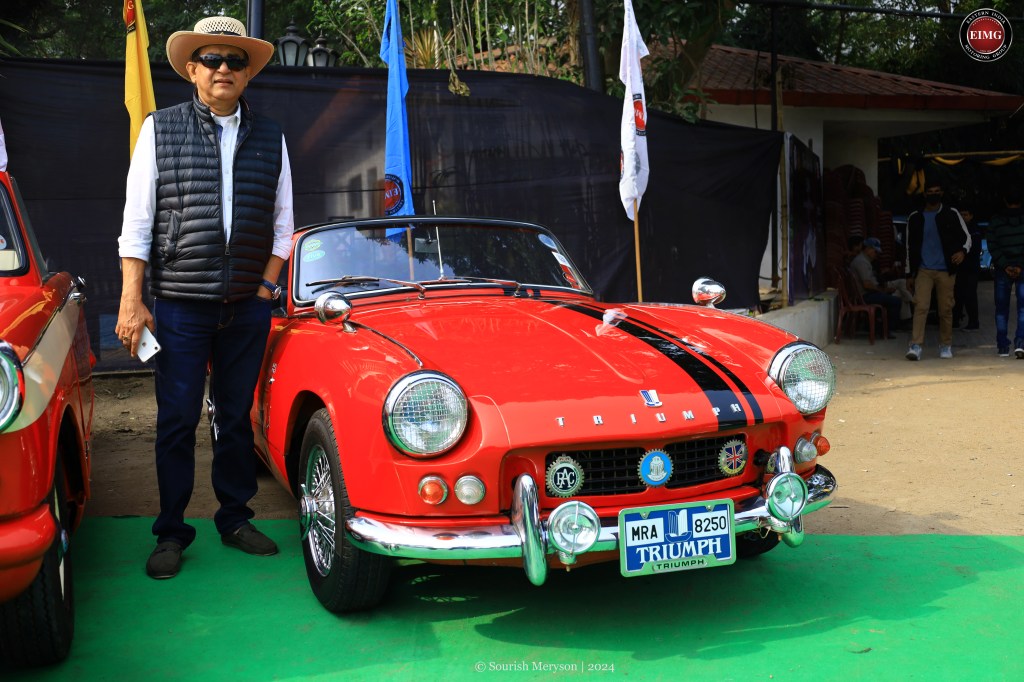
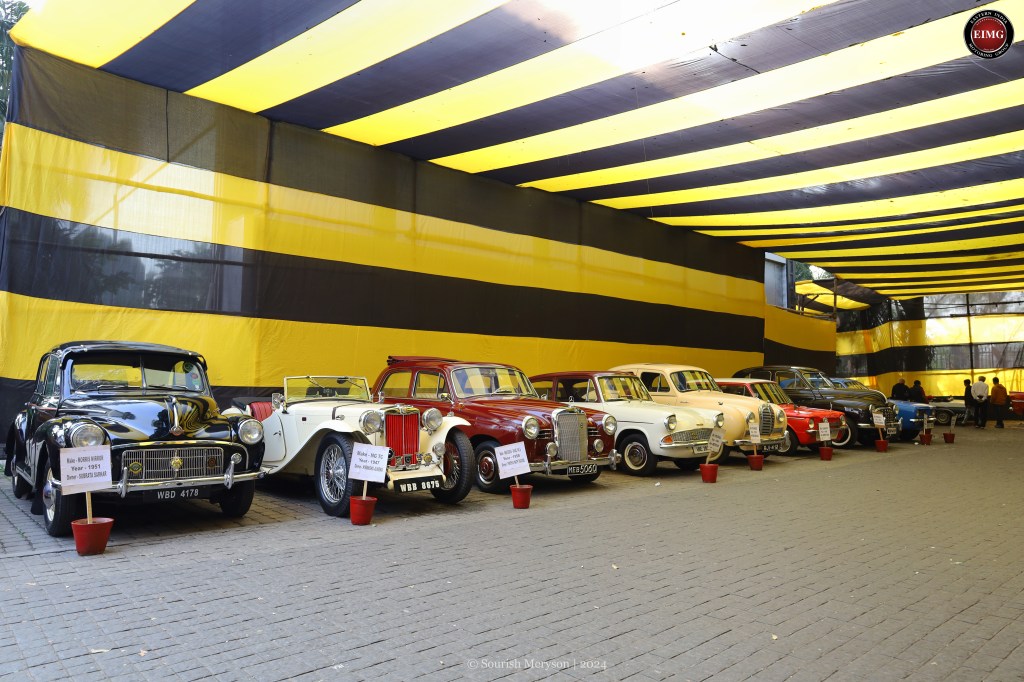
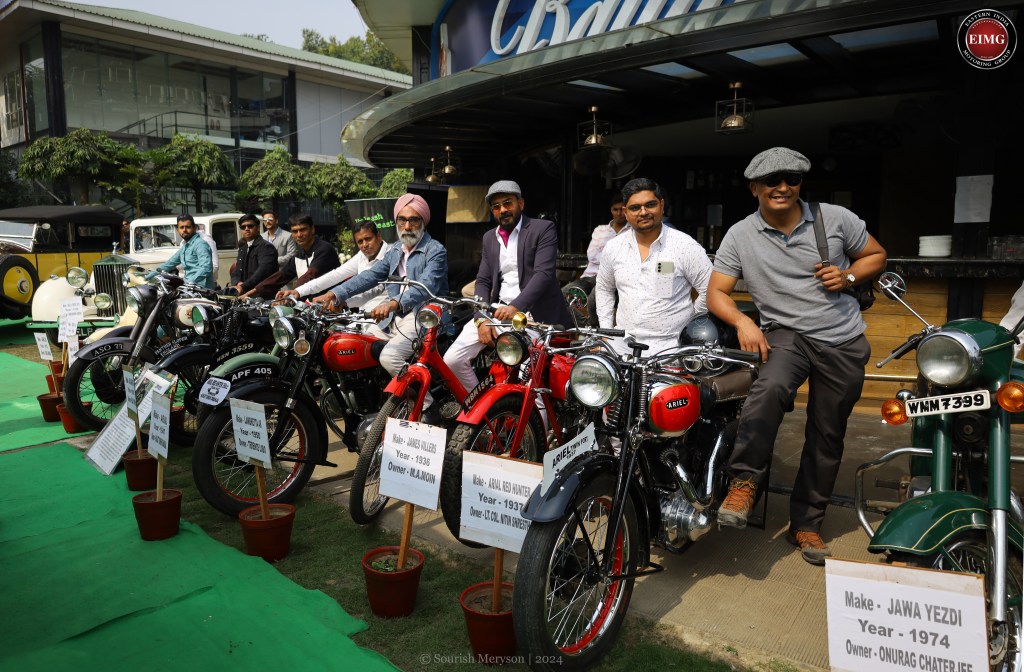
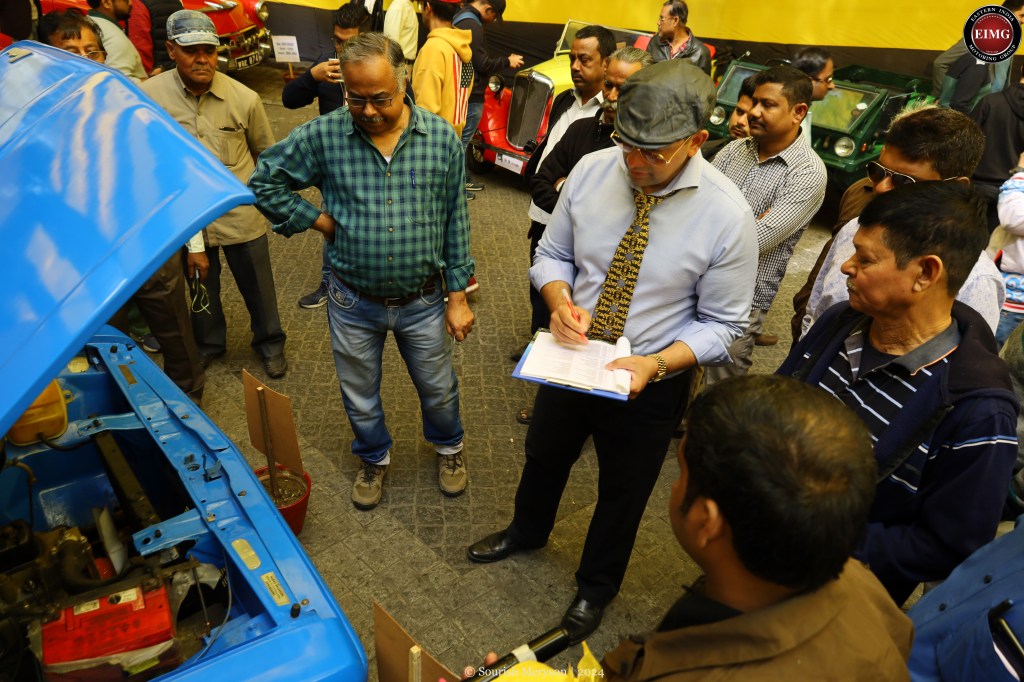
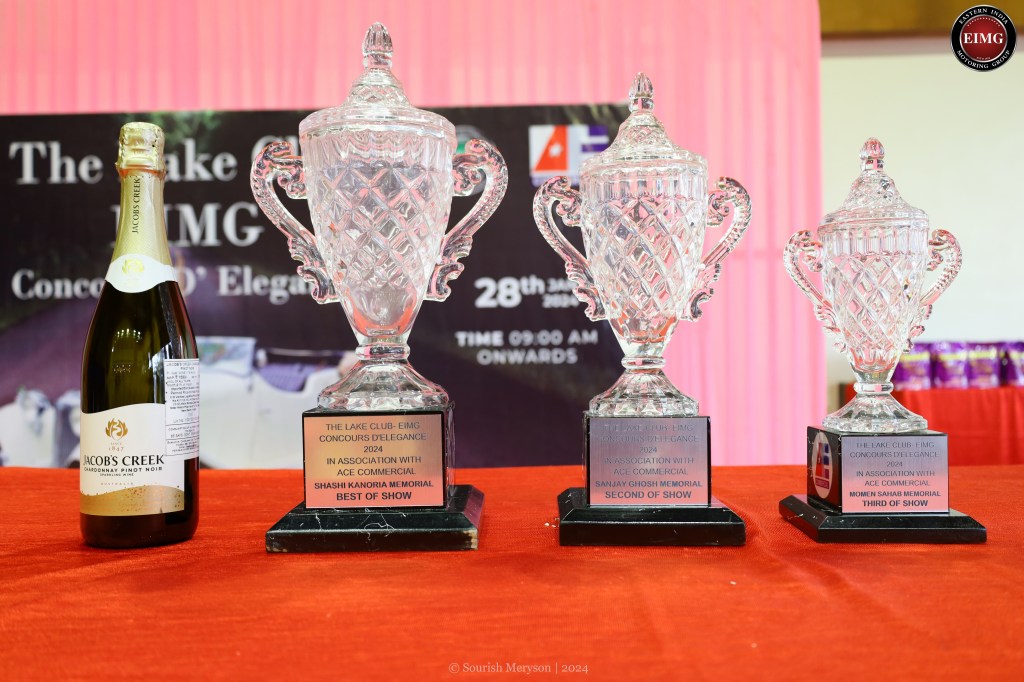
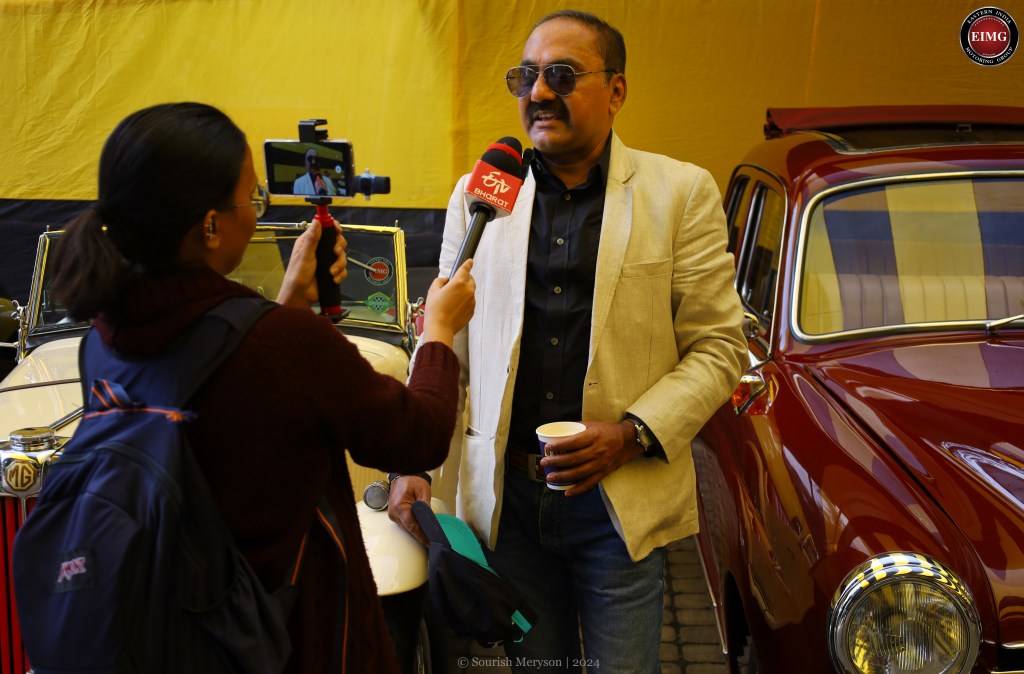
On Sunday, January 28, all roads led to The Lake Club as the EIMG Concours d’Elegance 2024 set the City of Joy ablaze with 95 scintillating exotic vehicles which took part in this annual heritage event. Now in this third edition, the event was organised by Eastern India Motoring Group (EIMG) in collaboration with The Lake Club and supported by ACE Commercial.
With the majestic Rabindra Sarobar in the backdrop, clear blue sky above, the sprawling green lawn of the The Lake Club made for the perfect setting for a memorable rendezvous with motoring heritage.
The icing on the cake was the seven beautiful Rolls-Royces which adorned the club lawns like seven spectacular jewels. Keeping them company was a century old Stoewer, the oldest entrant of this year’s Concours. The car has served four generations of Chowdhury family, namely Ishwar Chandra, Shantinath, Pratap and now Ananda who has maintained this car in pristine condition.
A 1938 Rolls-Royce 20/25 owned by vintage car connoisseur Avik Naha made its debut at this year’s Concours d’Elegance. This stunningly beautiful car had everyone drooling in admiration. This Rolls is a real stunner and prized possession of its owner.
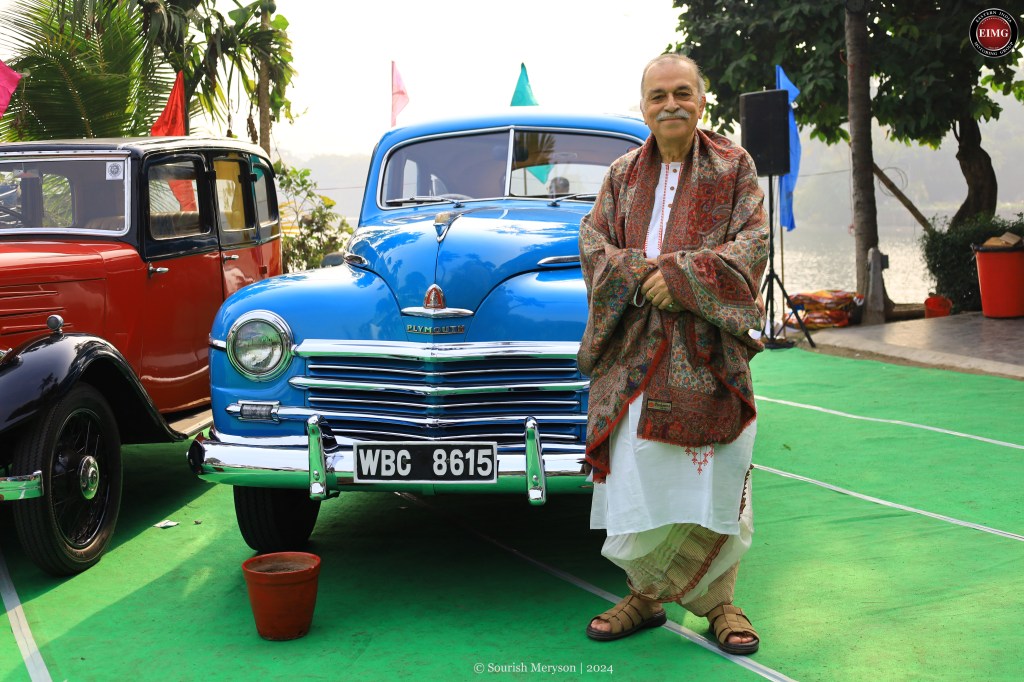
The 1948 Plymouth Special Deluxe once driven by legendary singer and composer Hemanta Mukhopadhyay and now owned by SK Lahiri was another beauty on display. The Lahiri family bought this car in the early 1970s and thoroughly restored it. Fondly referred to as ‘Nilu’, the car is meticulously maintained till date.
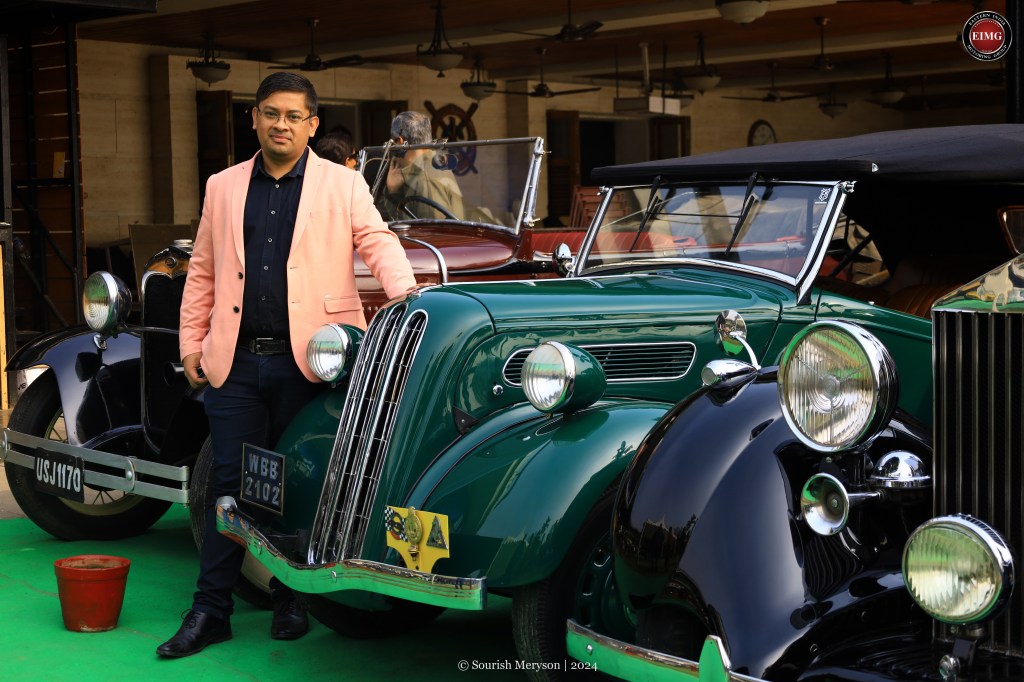
Saurjya Pratim Mitra’s brilliantly restored 1937 Ford 7W10 invited admiration and envy in equal measure. Rajiv Ghosh’s 1932 Ford V8, also referred to as The Ladybird also participated in this year’s Concours. A brilliant car which once belonged to Justice JP Mitter has been the proud possession of the Ghosh family and immaculately restored by the legendary Sanjay Ghosh.
A rare German car Adler manufactured in 1938 was proved to be a huge crowd puller. Presently owned by former top cop Mr. Gadai Chandra Dey, this car has a fascinating history. It was buried after the owner of the vehicle heard in 1939 that it would be acquisitioned by the American Army for its officers serving USA during World War II. It was later salvaged in 1965 and completely restored.
A 1963 Triumph Spitfire which was once owned by Bollywood actor Jackie Shroff has always been a popular car in the Kolkata circuit, much like its debonair owner Saikat Dutta. A Ford Anglia whose reference one gets in the writings of JK Rowling’s Harry Potter also evoked admiration from the visitors. Once owned by ace footballer Subhas Bhowmick, this car is presently the prized possession of Amritendu Roy.
Other noteworthy vehicles which took part in The Lake Club EIMG Concours d’Elegance 2024 were Avik Naha’s 1948 Buick Super 8, Siddharth Swarup’s 1947 Wolseley 14, Indrajit Sircar’s 1957 Wolseley 6/90, Sourajit Pal Choudhuri’s 1928 Ford Model A, Sarmistha Hazra’s 1965 Hillman Imp, Prithvi Nath Tagore’s 1958 Mercedes-Benz 180 A and Sarojesh Mukerjee’s 1959 Ford Zephyr.
The two-wheeler section had as many as 14 participants among which Terence Lobo’s 1940 Triumph 3HW, Chandan Basu Mallik’s 1950 Norton Dominator, Lt. Col. Nitin Shrestha’s 1937 Arial Red Hunter deserve special mention.
Four immaculately restored Rolls-Royces along with a 1931 Chevrolet belonging to the Shrivardhan Kanoria Collection were also exhibited in the Concours. While these beauties weren’t entered in the competition, however, they added a touch of elegance and aristocracy to the event.
The heritage vehicles were judged by Shrivardhan Kanoria and his Concourz Restoration Team on the basis of Authenticity, Restoration, Maintenance, Historical Importance, and Rarity.
List of Winners:
Cars Built Upto 1930 – 1930 Plymouth Type 30U – Arijit Dutta
Cars Built From 1931 to 1940 – 1932 Ford V8 – Rajiv Ghosh
Cars Built From 1941 to 1950 – 1948 Plymouth Special Deluxe – SK Lahiri
Cars Built From 1951 to 1975 – 1958 Mercedes-Benz 180 A- Prithvi Nath Tagore
Vintage Two Door Cars – 1937 Opel Cabrio – Rajiv Ghosh
Classic Two Door Cars – 1947 MG TC – Himanshu Ajmera
Indian Heritage Cars – 1958 Standard Vanguard – Sarojesh Mukerjee
Two Wheelers – 1937 Arial Red Hunter – Lt. Col. Nitin Shrestha
Oldest Car Award – 1913 Stoewer – Ananda Chowdhury
Oldest Two Wheeler Award – 1923 Panther Sloper – Afzal Hossain
Preservation Award – 1947 Wolseley 14 – Siddharth Swarup
Restoration Award – 1937 Ford 7W10 – Saurjya Pratim Mitra
Resurrection Award – 1957 Wolseley 6/90 – Indrajit Sircar
Admirable Award – 1938 Rolls-Royce 25/30 – Avik Naha
Judge’s Choice Award – 1968 Fiat Delight – Rajiv Ghosh
Special Car Award – 1937 Rolls-Royce 25/30 – S.K. Karnani & ORS (HUF)
The latest in an iconic bloodline, Aston Martin is proud to introduce the new Vantage. The quintessential Aston Martin sports car and the most driver focused and fastest Vantage in the famous nameplate’s 74-year history, it is an authentic, unadulterated celebration of pure performance, engineered to deliver maximum thrills with maximum confidence.
A design refocused through a contemporary lens, Vantage champions the qualities that have gripped enthusiasts for generations but are increasingly hard to find in today’s sports car market. As such Vantage makes a stand for disenfranchised devotees of breathtaking power, razor-sharp handling and the perfect balance of a finely-tuned front-engine, rear-wheel drive chassis.
The announcement of a new Vantage follows the successful introduction last year of the acclaimed DB12 Coupe and Volante. Further strengthening Aston Martin’s next generation of sports cars, Vantage reaffirms the brands position in the ultra-luxury, performance sports car market alongside its leading roles in the ultra-luxury sporting GT, SUV and hypercar arenas, and the highest echelons of world championship motorsport.
The new generation Vantage continues a remarkable lineage that can be traced back to 1950, when the Vantage name was first used to denote an uprated engine package for the race-proven DB2. The first time Vantage was applied as a model designation was in 1964, when a high-performance Vantage-badged version of the DB5 became the new flagship of the range. A standalone Vantage model was introduced in the early 1970s, from which point the nameplate has played an increasingly prominent role in Aston Martin’s model line-up. Synonymous with immaculate style, unforgettable performance and inimitable character, Vantage embodies the sporting qualities for which this evocative name has become renowned.
This new Vantage reflects the most dynamic period in Aston Martin’s 111-year history. A formidable force in the 2023 Formula One season, a dominant presence in international GT racing, where Vantage has a rich history as the most successful endurance GT racer and – with the recent announcement of Aston Martin’s quest for outright victory in the Le Mans 24 Hours race with the Valkyrie AMR in 2025 – a front-line challenger in the World Endurance Championship.
Aston Martin Chief Executive Officer, Amedeo Felisa, said: “As we enter a period of pivotal change in the world of high-performance cars it is essential to remain true to those qualities upon which a legendary marque has been built. Any car bearing the Vantage name has much to live-up to, which is why this newest model makes an unwavering commitment to high-performance in its purest and most explicit form. Class-leading power and speed establish its credentials, but it is through expert application of the latest technologies to the Vantage’s perfectly balanced front-engine rear-drive chassis that we have created a sports car with addictive capability. Together with assertive styling, all-new interior and state-of-the-art infotainment, Vantage is world-class in every respect”.
Performance – huge gains in engine output deliver next-level potency Powered by a heavily reworked, hand-built 4.0 Twin-Turbo V8 engine the new Vantage is the fastest in the nameplate’s history. With peaks of 665PS and a colossal 800Nm of torque it also makes the biggest-ever jump in power and torque compared to the model it succeeds, those increases of 155PS and 115Nm equating to gains of 30% and 15% respectively.
These higher outputs have been achieved through extensive tuning by Aston Martin engineers, the adoption of modified cam profiles, optimised compression ratios, larger turbos, and increased cooling yielding the impressive new figures and creating an engine with a sharper, more visceral and more vocal character.
Mated to an 8-speed ZF automatic transmission this is enough to propel the two-seater sports car to a top speed of 202mph and punch it from a standstill to 60mph in just 3.4sec. Both the shortened Final Drive Ratio (3.083:1) and transmission shift calibration have been honed to maximise response and enjoyment, the former delivering punchier in-gear acceleration, while the latter reduces shift speeds and offers different shift characteristics to suit each of the Vantage’s dynamic modes.
Standing start acceleration has been perfected with the introduction of a new Launch Control system. Fully integrated with the powertrain, transmission and Electronic Stability Programme (ESP), when engaged by the driver, Launch Control allows the car to deploy as much torque as conditions allow, using the E-Diff, ESP slip control and engine torque management to keep wheel slip in the optimal range throughout the launch. The driver can also dial-in the precise amount of slip they desire during the launch by making changes via the Adjustable Traction Control (ATC) system – reducing or increasing the amount of controlled wheelspin permitted by the Launch Control System or allowing themselves full throttle control by setting the ATC to Traction Control (TC) Off.
Liberating additional engine performance has increased thermal load, which has required a complete redesign of the engine cooling system. To ensure stable intake air temperatures are achieved in all conditions, an additional low temperature radiator has been fitted to the charge cooler water circuit, with a further two auxiliary coolers added to the existing central main radiator to further increase thermal capacity.
The oil system has also benefitted from extensive upgrades, with the auxiliary outboard engine oil cooler now boasting twice the face area of its predecessor. Thermal airflow has also been boosted with a 50% increase in the volume of cold air reaching the radiators.
Handling & dynamics Part 1: – Highly evolved bonded aluminium structure, perfect 50:50 weight distribution and state-of-the-art suspension provide the foundation for a definitive driving experience
Highly evolved aluminium structure, perfect 50:50 weight distribution and state-of-the-art suspension provide the foundation for a definitive driving experience. Built around Aston Martin’s latest generation bonded aluminium construction, Vantage features an enhanced body structure to deliver more focused and engaging dynamics thanks to additional underbody stiffening components for increased overall torsional rigidity.
Amongst these changes are a re-engineered and re-positioned front body cross member, which has been moved rearwards to increase mounting point stiffness for the double-wishbone front suspension for improved on and off-centre steering feel. Further improvements have been achieved with the fitment of a stiffer-yet-lighter front engine cross brace for increased torsional rigidity and lateral stiffness between the front suspension towers.
At the rear, Vantage benefits from a 29% increase in stiffness under cornering load due to increased lateral strengthening between the rear suspension towers. Together with revisions to front and rear undertrays for greater lateral stiffness, the combined improvements in front and rear mounting stiffness for the dampers mean tangible gains in precision, handling balance and driver feedback, together with an overall uplift in refinement.
This feeling of immediacy, control and connection is further boosted by new intelligent adaptive dampers. With a 500% increase in bandwidth of force distribution over previous generation hardware these state-of-the-art dampers have an immense range of control and speed of response, which has allowed Aston Martin’s vehicle attributes engineers to sharpen the Vantage’s dynamics to their keenest possible edge.
Precise calibration of the dampers has given the Vantage an inherently sporting feel while leaving room to introduce progressive tighter body control as the driver explores the range of dynamic modes. Combined with the E-Diff and Electronic Stability Program (ESP) Vantage has the capability to adapt from the demands of a challenging alpine road to wide-open race track at the push of a button and twist of a switch.
Obsessive attention has been paid to the Vantage’s Electronic Power Assisted Steering system (EPAS). The fitment of a non-isolated steering column means steering inputs from the driver are direct and uncorrupted, while the flow of information from the road is granular in detail and pleasingly tactile.
The EPAS has a constant 12.8:1 ratio rack with variable, speed sensitive assistance and 2.27 turns lock-to-lock. This variable level of assistance is integrated with the Vantage’s dynamic mode programmes, the level of assistance reducing incrementally as the driver works their way towards the most aggressive mode (Track).
Steering response and front-end grip has been further enhanced by ‘AML’ coded Michelin Pilot Sport S 5 tyres made specifically for the Vantage. Measuring 275/35 R21 (103Y) front and 325/30 R21 (108Y) rear they feature a bespoke compound and have been tuned by the Aston Martin dynamics team to suit the super-sharp response, high grip levels and progressive breakaway characteristics expected from the most driver-focussed model in the Aston Martin range.
Vantage features 21” forged alloy wheels as standard. Measuring 9.5J front and 11.5J rear the structure of these lightweight wheels has been designed using simulation tools to remove every gram of excess mass without compromising strength or aesthetics. There is a choice of three different designs – standard Five-Spoke and optional Multi-Spoke and Y-Spoke – in a range of colours and finishes, including Satin Bronze, first introduced on DB12.
Vantage is fitted as standard with cast-iron 400mm front discs and 360mm rear discs with drilled faces for improved heat management and fade resistance. The brake booster has also been re-tuned compared to the outgoing mode to give the driver greater confidence thanks to a firm pedal, with a perfect blend of immediate stopping power and progressive response.
Carbon Ceramic Brakes (CCB) can be specified on Vantage as an option. Offering increased braking performance and reduced brake fade at temperatures of up to 800 °C, fitting CCB also saves 27kg in unsprung mass compared to the cast-iron braking system, which in turn improves ride quality and steering response.
Handling & dynamics Part 2: State-of-the-art Active Vehicle Dynamics control system for exceptional control and unmistakable character
As befits its role as the most sporting model in the range, Aston Martin engineers have maximized the benefits of the Vantage’s outstanding chassis architecture with the very latest electronic systems to maximise performance and create an unmistakable dynamic character. Focused on achieving increased agility and sharper steering response while bringing more precision, consistency and more detailed feedback for greater confidence and connection, the result is a car that welcomes real drivers in and invites them to explore the limits. It will reward skilled driving but doesn’t depend upon it to deliver a thrilling experience.
Key to the Vantage’s intensified handling character is an advanced vehicle dynamics control system. This takes information from multiple car and driver sensors such as the 6-axis accelerometer, powertrain, braking system and E-Diff sensors to build a detailed picture of exactly what the car is doing and apply it to overall management of the ESP system. Taking that information and comparing it against model-based Integrated Vehicle Dynamics Estimation (IVE) parameters, the ESP can then actively control the three key pillars of the vehicle dynamics system (ride, handling and steering) to optimise vehicle response and handling behaviour in all weathers, on road and track.
This new generation system employs a state-of-the-art 6D-IMU, or Inertial Measurement Unit, which combines monitoring of Surge (moving forward/backward), Heave (moving up/down) and Sway (moving left/right) with Roll (tilting side-to-side), Pitch (tilting forward/backwards) and Yaw (turning left/right). By simultaneously tracking the car’s movements and rate of acceleration in all six axes the degree and rate of ESP intervention is always perfectly judged.
Power is fed through a ZF 8-speed automatic transmission and Electronic Rear Differential (E-Diff). Unlike a conventional Limited Slip Differential, it actively augments stability in conjunction with the ESP, allowing precise and immediate control for optimized traction, consistent handling and enhanced agility. The E-Diff can go from zero to full lock in 135ms and can react as quickly as 60ms when needed as a vehicle dynamics modifier.
Integrated Brake Slip Control (IBC) uses the latest generation ABS control system to not only optimize stopping distances but apply Brake Slip Vectoring to get the car poised for corner entry. Integrated Traction Control (ITC) combines management of engine, brake and E-Diff to provide predictive slip control for optimum traction together with Traction Slip Vectoring for the perfect amount of traction on corner exit. Finally, Integrated Vehicle Dynamics Control (IVC) acts on the brakes, powertrain and E-Diff to manage the ESP to optimize balance and handling at the limits of driving dynamics, improve dynamic characteristics for all driving styles and provide predictive activation for smoother ESP interventions.
Working in harmony with the latest generation ESP the E-Diff adapts its behaviour according to the type of corner, helping the Vantage rotate into tighter turns to exploit its super-sharp front-end response, but remain composed and confidence inspiring through high-speed curves when stability is paramount.
Although there is an obvious safety function, the new ESP is tuned to serve as a performance aid, not a performance limiter. A perfect example of this – and something new for the Vantage – is Adjustable Traction Control (ATC). In addition to a choice of Wet, On and Track ESP modes, ATC disables the ESP’s yaw control function, so there is no off-throttle assistance, but a level of traction control is maintained – the precise amount being selected by the driver via ATC’s rotary switch.
Once accessed, ATC starts in mid-position 5 as a default but the driver can incrementally reduce or increase the amount of permitted wheel slip. Stepping down from 4 to 1 helps to keep the car more stable on-throttle. Typical use scenarios would be to help manage hot tyres on a track or in more difficult track conditions (i.e. wet), but it is equally effectively in helping the driver to build confidence with ESP Off before moving to the higher slip settings accessed in positions 5-8.
When position 5 is selected engine torque is modulated to control slip at a level to allow a fast clean lap to be driven. Oversteer can be achieved and driver should react accordingly. Levels 6-8 allow the driver to increase the wheel slip with the yaw control off and therefore reducing on-throttle stability. The modes enable a driver to develop their skills to gradually learn the vehicle behaviour in high slip angles before switching to TC Off, which allows the driver complete freedom to control the car with their throttle and steering inputs alone.
Roberto Fedeli, Aston Martin Chief Technical Officer, said “The art of creating a truly great sports car in 2024 is applying cutting-edge technology in a way that enhances and intensifies the driving experience yet does nothing to remove the driver from the process of driving. Vantage will make headlines for the huge increases in power and torque over the outgoing model, but it’s the vivid way in which it deploys such immense performance that will seduce enthusiasts and purists. With a perfectly balanced front-engined rear-wheel drive chassis aided by industry-leading Active Vehicle Dynamics, it combines outright capability with progression and exploitability. Matched by muscular styling and completed by an all-new ultra-luxury interior packed with the latest connected technology and infotainment, it is the perfect contemporary interpretation of a time-honoured legend”.
Exterior styling – A muscular physique and unmistakable presence From the first glimpse you know the new generation Vantage is a game-changer. A body standing 30mm wider with a more muscular stance is accentuated by a completely redesigned front-end featuring a 38% larger recontoured veined grille aperture, offering 29% increase in mass airflow for additional cooling. Further cooling intakes set into the bumper either side of the grille sharpen the front-end’s features, while the new integrated splitter, with a wider and lower stance, adds drama as well as aerodynamic function, providing high speed stability through lift reduction. This distinctive front-end treatment is completed by all-new Matrix LED headlamp design with integrated DRLs, featuring Aston Martin’s new light signature.
Elsewhere the new Vantage sees a return of the iconic Aston Martin side strake, which now forms the sharp focal point of revised vents in each flank. Standard-fit 21in forged alloy wheels fill the wider wheel arches to perfection, creating a purposeful stance that exudes power and poise in equal measure. Frameless door mirrors and presenting door handles are also new to Vantage, while a wider rear bumper incorporating side vents and larger diameter quad exhaust tailpipes ensure the Vantage looks as dramatic from the rear as it does from the front.
Vantage owners can enhance the sporting character of Vantage even further, by selecting one of three core livery designs. Available in 21 colors, a client can choose to add a Pinstripe, Pinstripe and Lipstick or Pinstripe, Lipstick and Rear infill.
Marek Reichman, Aston Martin Chief Creative Officer, adds: “Aston Martin is blessed with many evocative model names, but none conjure excitement and dynamism like Vantage. To capture the new car’s huge uplift in power and performance we have accentuated its physique, increasing its muscularity and sharpening its sculptural form. We took some inspiration from the One-77 supercar, but we wanted Vantage to express its intent and potency more explicitly. One look and you know it packs a real punch, but there’s an elegance of form and proportion that hints at the sophistication that underpins its raw power. This balance of instant visual impact and slow-burn charisma mirrors the driving experience and perfectly captures the essence of Vantage”.
Like all Aston Martin models, Vantage customers can explore endless bespoke and customisation possibilities via the Q by Aston Martin personalisation service. Enlisting the skills of Q’s designers and crafts people, customers take an unforgettable personal commissioning journey that can encompass everything from a single small distinguishing detail to full-scale engineering and production of entirely bespoke components to create a true one-off.
Interior craft & technology – sporting ambience, supreme luxury Vantage is a hardcore sports car at heart, but this doesn’t mean it makes sacrifices when it comes to design, comfort or equipment levels. The new generation Vantage makes a breathtaking statement with an all-new ultra-luxury interior defined by flawless architectural lines, swathed in the finest materials and packed with state-of-the-art connected technology and a stunning surround sound system developed by audio partner, Bowers & Wilkins.
Clean, unbroken lines create a striking yet elegant environment inside the Vantage cockpit, delivering a sense of space and clarity for the driver. From the slender air vents and perfectly integrated infotainment screen to the clearly defined array of physical switches on the lower section of the centre console, the new Vantage interior is a triumph of functional beauty and tactile quality.
Supple, aromatic hand-stitched Bridge of Weir hides create a cosseting, comfortable space, but the driving position, super-supportive sports seats and driver-focused ergonomics add an effortless functionality that underpins the opulence and adds to the enjoyment of every journey.
Vantage is fitted as standard with the Aston Martin 390w 11 speaker audio system. Developed utilising advanced hardware, this system features a Surround sound mode with QuantumLogic® surround sound processing for an immersive soundscape.
However, true audiophiles will delight in the optional system developed with Aston Martin’s audio partner, Bowers & Wilkins. Acoustically engineered to the Vantage’s interior volume and shape, this exceptional system uses technologies and innovations found in Bowers & Wilkins’ acclaimed world-class loudspeakers.
Aluminium Double Dome tweeters and Continuum® midrange speakers give this 15-speaker, double amplified 1,170W surround sound system a balanced and accurate sound. Dedicated 3D headline speakers and a powerful subwoofer deliver a sound experience as dynamic and potent as the Vantage itself.
Vantage is the second model to feature Aston Martin’s next-generation infotainment. Created in-house and first introduced in DB12, it is entirely bespoke and developed in-house from scratch. Supplemented by a new Aston Martin customer connectivity app which supports iOS and Android devices, it allows interaction, control and feedback to and from the customer’s Vantage via their personal device.
A fully integrated multi-screen system with full online connectivity, it features 10.25” Pure Black touchscreen technology with full capacitive single and multi-finger gesture control. Touchscreen commands are balanced with the positive tactility of physical switches, with buttons retained for the key mechanical operations of gear selection, drive selection, heating and ventilation. There are also override switches for Chassis, ESP and Exhaust, Lane Assist and Park Distance Control, ensuring the most used controls can be operated intuitively and without the need to take your eyes off the road.
The Vantage navigation system features online connectivity for a smarter, quicker and more informative experience. Online connection enables the driver to simply look up their favourite restaurant, read the reviews and chose it as a destination. Or, if more convenient, choose a destination in the Aston Martin app and simply send it to their Vantage ahead of travel.
The new 3D mapping gives intuitive, clear instruction with lane guidance and real time traffic overlays. Connected dynamic routing ensures unnecessary delays. Satellite view dynamically downloaded to visualise the surrounding area as you drive.
For pinpoint accuracy anywhere in the world, Vantage’s navigation system and the new Aston Martin connected app are both set up to feature fully integrated WHAT3WORDS destination input. Wireless Apple CarPlay will also be supported by Vantage for drivers who prefer to use navigation apps via their mobile device.
The Vantage’s infotainment system is built around online connectivity and an all-new companion Aston Martin app; functionality that enables Vantage owners to communicate, interact and engage with their car.
Online connectivity will assist the ownership experience through increased ease of use, peace of mind and opportunity to update and upgrade vehicle features from the comfort and safety of their mobile phone. An ever-expanding system, Aston Martin Connected Car will continue to evolve as Products, Services and support for vehicles evolves.
This all-new connected car ecosystem utilises three key elements – the Vantage, the Aston Martin app and Aston Martin’s secure data servers. These three elements connect through globally roaming 4G LTE / GSM cellular networks via the embedded e-SIM in Vantage, which is provided and funded by Aston Martin. The Aston Martin app is hosted by an onboard personal device and associated data contract. Personal data is protected by the latest industry standards of cyber security and cloud protection.
When purchasing their new Vantage, owners are invited to enroll in the new Aston Martin app and create their own unique AML ID. Available on iOS and Android, the app offers a range of connected car subscription packages that are free for the first 3-years and designed to maximise the Aston Martin ownership experience.
Personalised content specific to their vehicle is presented in clear and intuitive screens that seamlessly match the new UI/UX of the infotainment system. From the app, customers can monitor, locate and protect their vehicle and they can also manage their account details and share in the community of Aston Martin owners through integrated media feeds.
Production of the Vantage is due to commence in Q1 of 2024, with first deliveries scheduled to begin during Q2 2024. The second of Aston Martin’s Next Generation of sportscars, new Vantage sets a new benchmark of driving purity, for drivers who relish in a challenge a fast sports car represents. Aston Martin Vantage, Engineered for Real Drivers.




 Power Drive