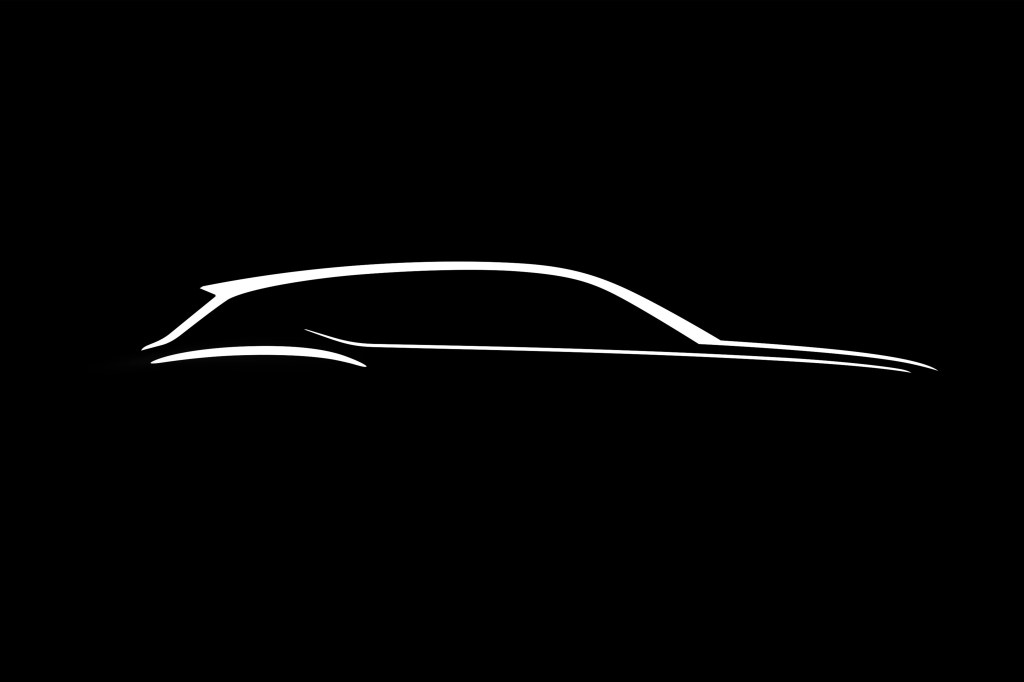
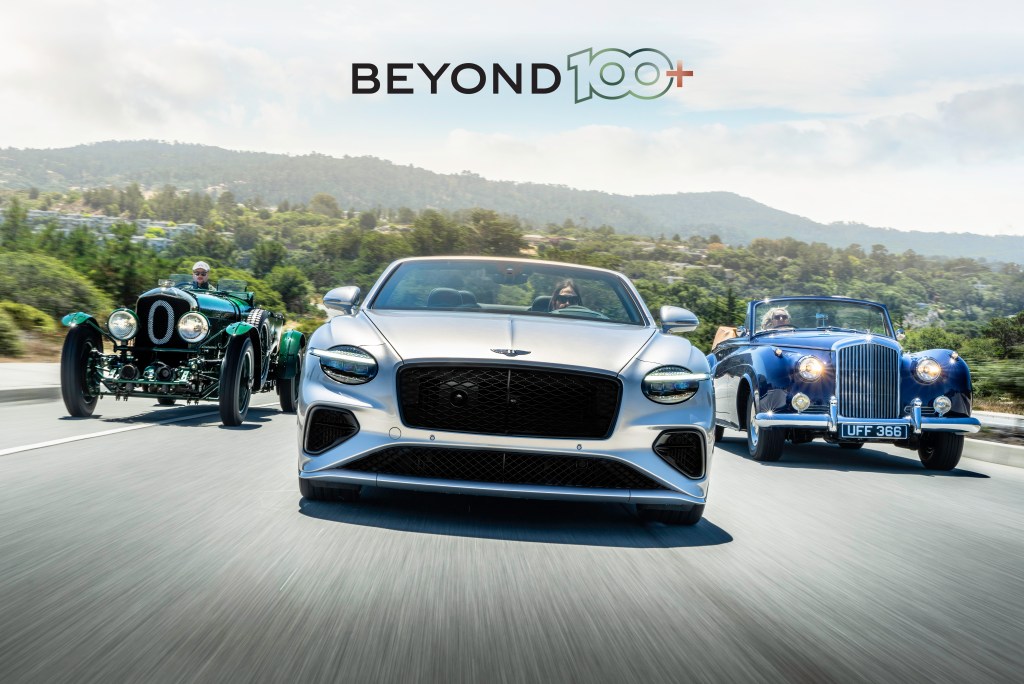
Bentley Motors has announced an extension of its forward-thinking Beyond100 business strategy, now called Beyond100+, from 2030 to 2035. Bentley has also confirmed that its first fully electric car to be revealed in 2026 promises to create an entirely new segment, the world’s first true Luxury Urban SUV. This model, designed, developed and to be produced at its headquarters in Crewe, will be the first of a new PHEV or BEV model to be launched every year over the next decade as Bentley’s product and investment offensive continues at pace with an ambition to be building only fully electric cars from 2035.
Bentley, already leading the way in the luxury hybrid car sector, will consequently further cement this position by extending the lifecycle of PHEV models beyond 2030, to 2035. And the Continental GT coupe, Convertible and Flying Spur models are now exclusively offered with an Ultra Performance plug-in V8 hybrid powertrain following the discontinuation of Bentley’s iconic W12 engine after over 20 years of production in Crewe.
Dr. Frank-Steffen Walliser, Chairman and CEO of Bentley Motors, said: “Four years almost to the day that Bentley initially outlined its Beyond100 strategy, we adapt to today’s economic, market and legislative environment to initiate a major transformative phase for tomorrow. Beyond100+ becomes our guiding light as we extend our ambitions beyond 2030, while maintaining our aim of a decarbonised future, including offering only fully electric cars from 2035, and reinforcing our credentials as the British creator of extraordinary cars for over a century and beyond.”
Beyond100+ also endures a fundamental reinvention of the Crewe manufacturing infrastructure, and helps secure Bentley’s future at Crewe for the next generation of products and colleagues.
The company has already made enormous strides in reinventing the historic Crewe site, creating an industry-leading certified carbon neutral facility, and focus now turns to building a ‘Dream Factory’ for an electric future.
The largest self-funded site investment programme in Bentley’s illustrious 105-year history continues with a new state-of-the-art Design Centre, Paint Shop and BEV assembly line, transforming an 85-year-old site for a new age of electrification, and a new benchmark in next generation, digital, flexible and high-value manufacturing operations.
SAIC Motor, a global Fortune 500 company with a presence in over 100 countries and JSW Group, a revered Indian corporate with varied business interests entered into a joint venture – JSW MG Motor India Pvt. Ltd. in 2023.
At the time of formation of the joint venture, JSW MG Motor India announced that their goal will be to build a smart and sustainable automotive ecosystem while continuing to stay focused on developing a diverse portfolio of vehicles to give car buyers better access to advanced technologies and futuristic products with attractive value propositions.
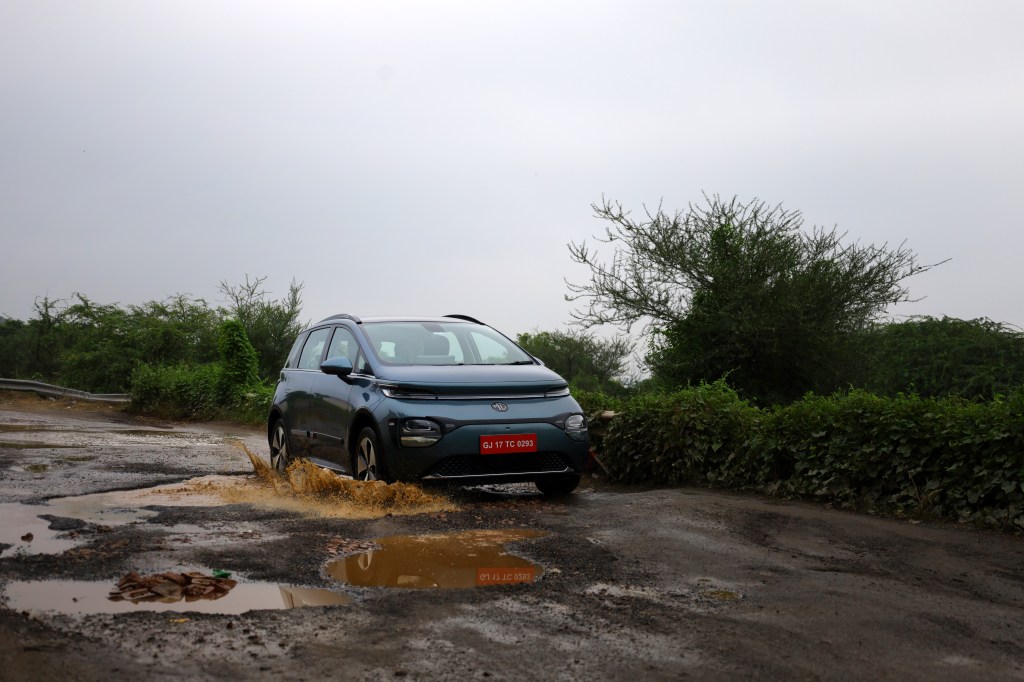
Fast forward to September 2024 and JSW MG Motor India has launched their first car since the formation of the JV – the MG Windsor EV. Launched at the price of a manual compact SUV, the Windsor, combining the comfort of a sedan and the expanse of an SUV, will be offered with innovative aerodynamic design, spacious and premium interiors, smart connectivity, driving comfort, and many hi-tech features.
Built on a ‘Pure EV Platform’ with BaaS – a unique ownership program, MG Windsor is being offered at an industry disrupting price of Rs 9.99 lakhs + Rs 3.5 per kilometre of battery usage – a path-breaking ownership concept introduced by a carmaker for the very first time in India.
And for the conventional purists who believe in the age-old concept of outright purchase, the Windsor comes at an unbeatable ex-showroom price of Rs. 13.49 lakhs for the base variant going upto Rs 15.49 lakhs for the top trim.
Recently, we were invited for the national media drive of the MG Windsor. Read on to find out all that you want to know about the newest kid in the block.
Design and Engineering
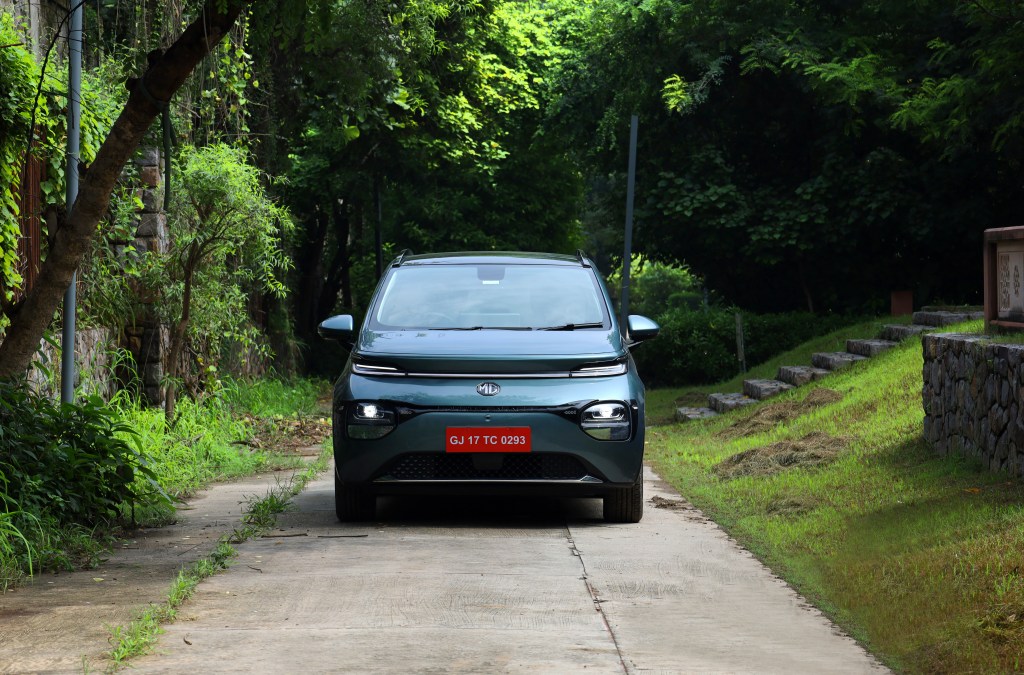
The MG Windsor is being positioned as a CUV or Crossover Utility Vehicle. It is an interesting cross between a sedan and a compact SUV. From the engineering standpoint, balancing and blending two different body styles isn’t an easy task, however, the designers at MG deserves a pat on their back for pulling it off well.
The MG Windsor measures 4,295mm in length, 2,126mm in width, and stands 1,677mm tall. The best-in-segment 2,700mm wheelbase ensures that the MG Windsor offers a great balance between ride & handling and comes with a specious passenger cabin.
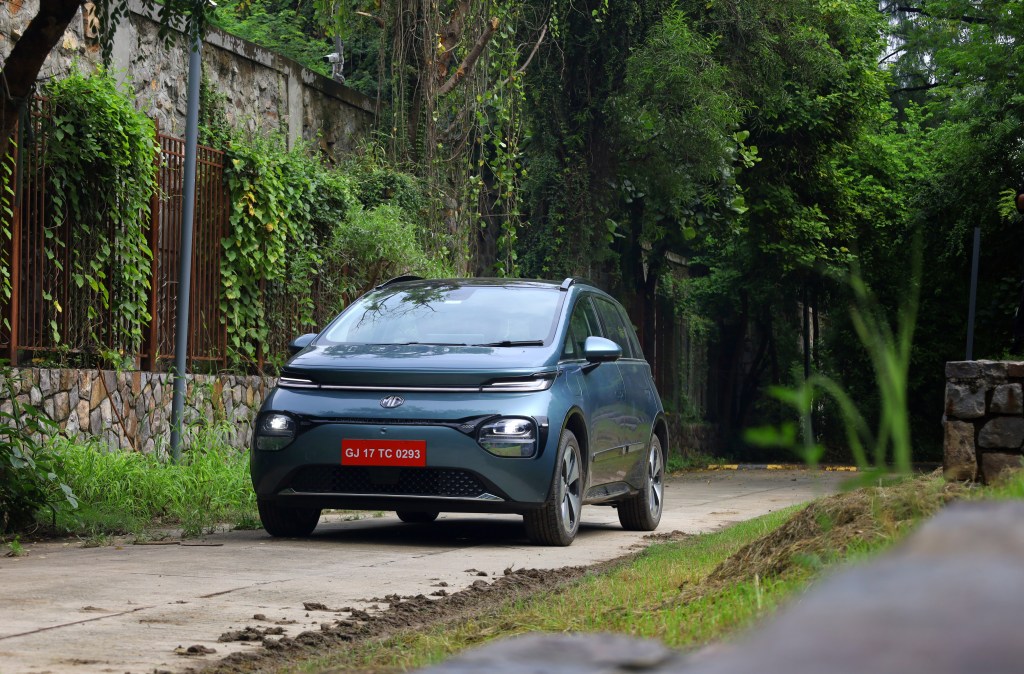
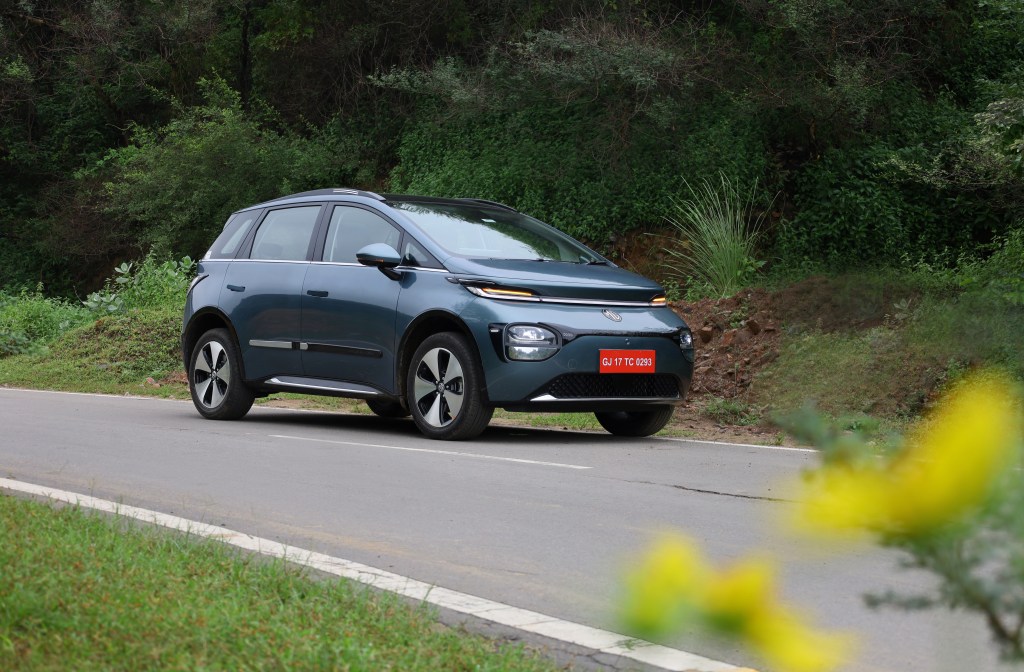
The MG Windsor features an AeroGlide design language, which is futuristic and transcends the concept of traditional segmentation. The nose and bonnet have a distinct two-deck layout. The horizontal daytime running lamps strip forms the base of the bonnet, while the headlights sit below in the bumper. Integrated into the headlight area is a mirror-like panel that reflects images with clarity. MG has added some black trim bits bracketing the headlights, with the one inside connecting the two units and carrying the Morris Garages lettering, above which sits an illuminated MG logo.
MG’s AeroGlide design language is more prominently visible when viewed from the side. The MG Windsor features smart flush door handles which look very trendy. The R18 diamond cut alloy wheels further enhances the striking good looks of the MG Windsor. At the top, the roof rails add to the aesthetics.
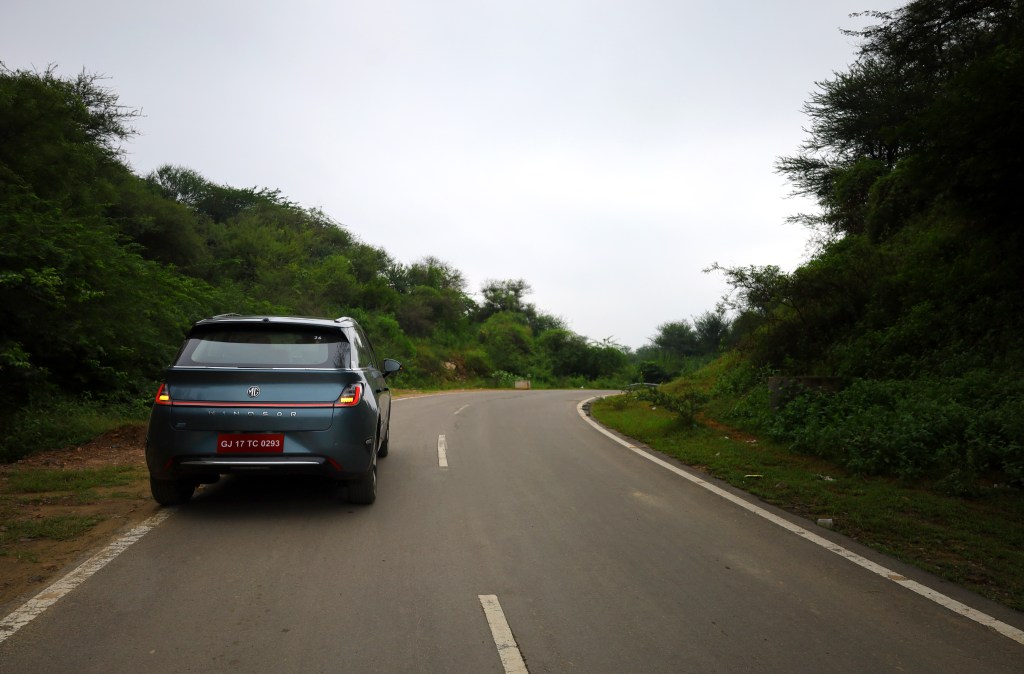
At the rear, the LED tail lights look sleek, and the lower bumper edge is finished off with a nice diffuser-style contrasting black panel. Topping the rear is a spoiler with an integrated stop light. Overall, the MG Windsor EV looks impressive and is sure to turn heads on the road.
The NVH levels are also well contained. The MG Windsor is being offered in three variants: base trim Excite, mid-level variant Exclusive, and top-of-the-line Essence; and four colours: Starburst Black, Pearl White, Clay Beige, and Turquoise Green.
Interior and Comfort
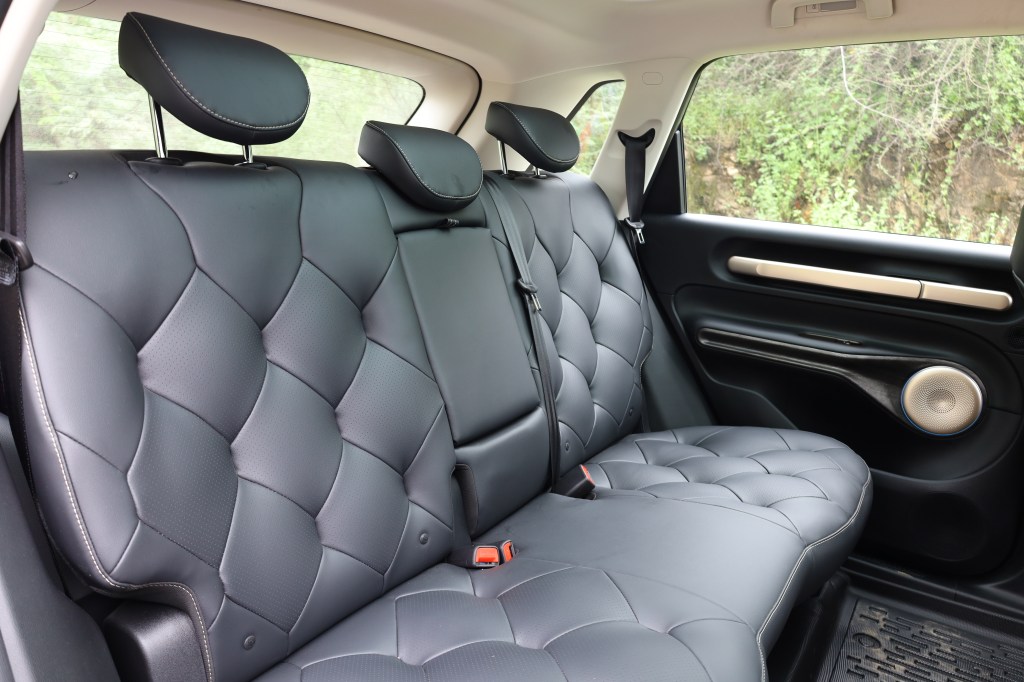
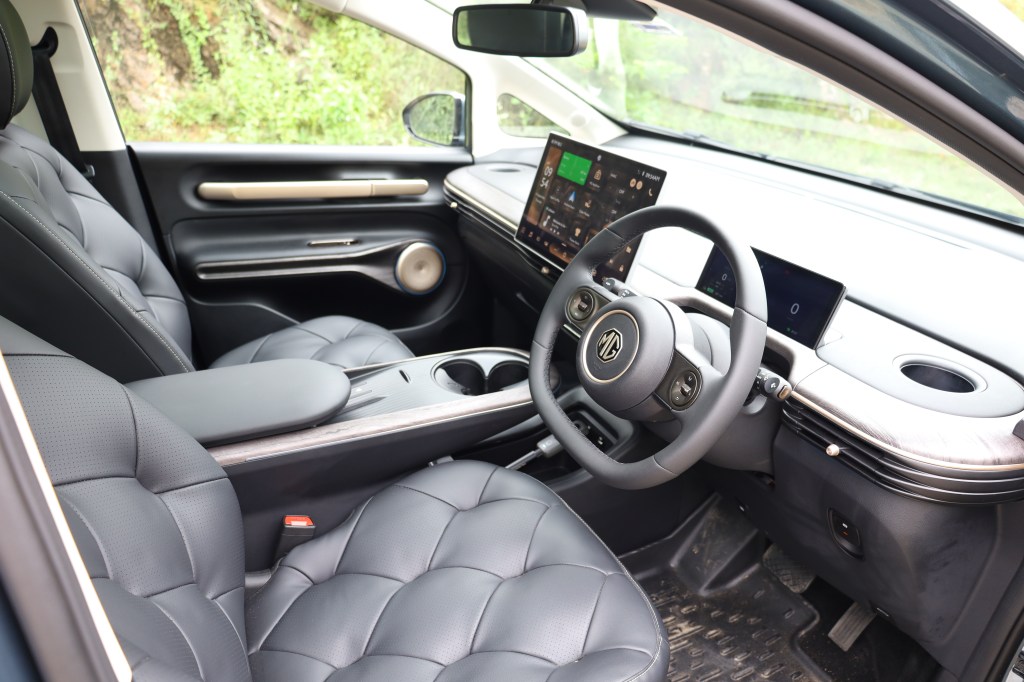
Step inside the MG Windsor EV and you will be welcomed into a premium passenger cabin with aero lounge seats that can be reclined upto 135 degrees, coupled with the expansive infinity view glass roof, adding to the business class experience.
The cabin is spacious with adequate head, shoulder and knee room for both front and rear passengers along with easy ingress and egress. The seats are well bolstered & comfortable and wear an opulent look. The front seats are ventilated with the driver’s seat coming with a 6-way adjustable option.
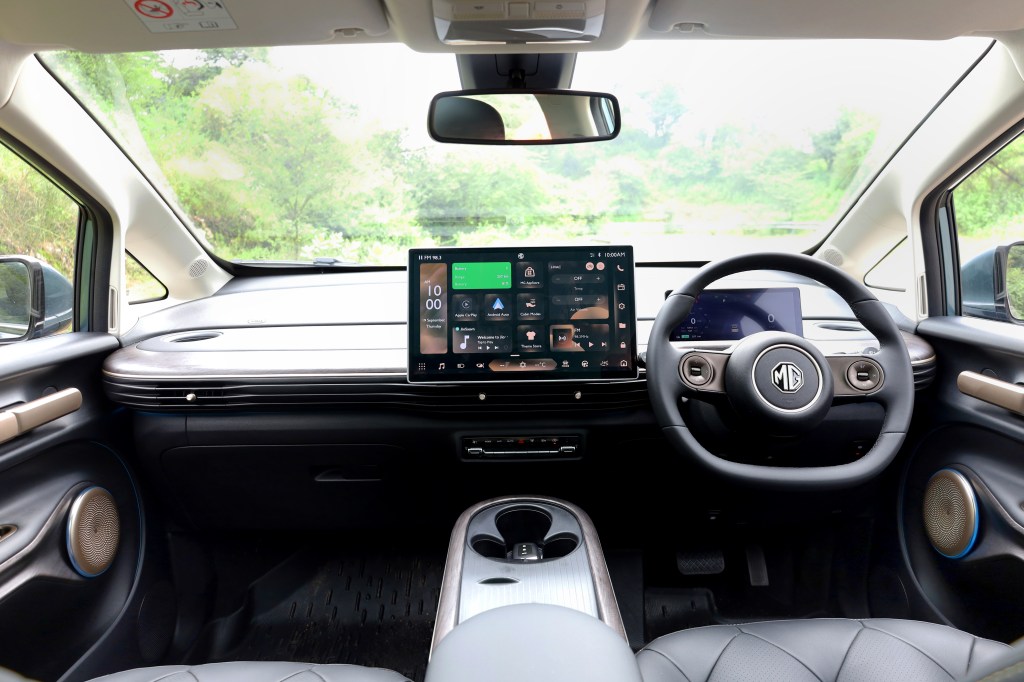
Immersive entertainment and smart connectivity features are powered by a massive 15.6-inch Grand View Touch Display in the central console. For music lovers, the MG Windsor also comes equipped with nine speakers (4 speakers, 4 tweeters, 1 subwoofer) that make your listening experience more pleasurable.
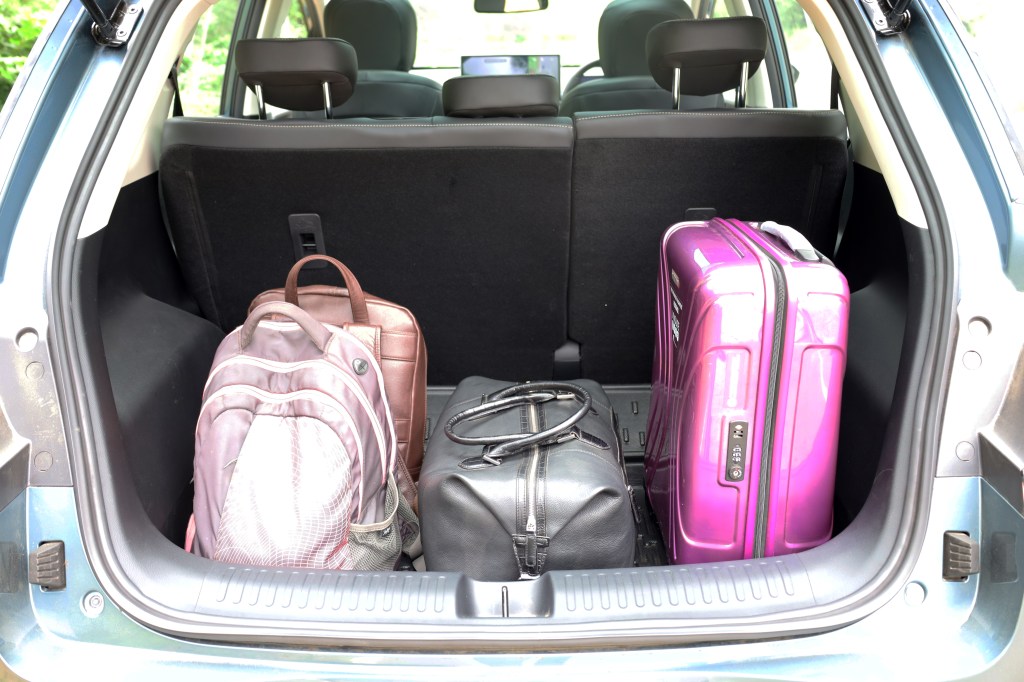
The MG Windsor also allows you to choose from an array of 256 ambient lighting options with auto change technology and make your drives express the way you feel. Other features in the MG Windsor includes Wireless Android Auto & Apple CarPlay, multi-function steering controls, wireless smartphone charger, wooden finish highlights, driver armrest storage, rear-centre armrest with cupholders, and 604 litres of boot space – all of which makes the MG Windsor an attractive proposition.
Performance and Handling
The MG Windsor comes equipped with the powerful PMS Motor which is IP67 certified. Impressive performance is derived through a 38 kWh Li-ion battery pack and four driving modes (Eco+, Eco, Normal and Sport) that deliver 100KW (136PS) power and 200Nm of instant torque, offering a range of 331 kilometres. The battery can be charged in 40 minutes at any DC fast charger. The prismatic cells battery meets the optimal safety standards and is certified to operate with durability and stability.
The throttle response in great with almost no power lag. Driving the Windsor both within the city or on the highway feels like a breeze. The MG Windsor stays firmly planted on the ground even while navigating tight corners. The engineers at MG has achieved a commendable balance between good ride and handling. The suspension set up featuring MacPherson strut in the front and torsion beam at the rear is well tuned for Indian road conditions and absorbs the undulation on the road with relative ease. On the whole, the MG Windsor promises to be a good city car while also proving its worthiness on the highway.
Safety
With growing awareness among consumers, safety has emerged as one of the top priorities of carmakers around the world. The MG Windsor comes with 6 airbags (dual front, side & curtain) as standard across all variants. It also features 360° surround view cameras and rear parking sensors to ease your parking woes in tight spaces especially in the crowded neighbourhood within the city. Electronic stability programme, electric parking brake auto hold, hill-start assist control, auto dimming inside rear view mirror, hill descent control, rain sensing wipers, and tyre pressure monitoring system are some of the other features in the MG Windsor EV which assures you of great all around safety.
Battery-as-a-Service (BaaS)
For the first time in India’s passenger vehicle segment, JSW MG Motor India is introducing an innovative ownership plan through Battery-as-a-Service (BaaS) offering, which makes owning an electric CUV at the price of a manual engine-based compact SUV possible. This flexible ownership program eliminates the upfront cost of the battery, enabling customers to pay only for its usage. Essentially, buyers pay a nominal fee per kilometre driven, which is 40% of the fuel costs of conventional vehicles. This model significantly reduces the initial acquisition cost and lowers the per-kilometre expense, ensuring an economical and hassle-free ownership experience.
In addition, the company is offering a first-of-its-kind lifetime battery warranty to the first owner of MG Windsor. With the eHUB by MG app, the company is offering one year of free public charging, making it easier than ever for Windsor owners to power up anytime, anywhere. JSW MG Motor India is also introducing its 3-60 assured buyback plan for the Windsor which ensures that it will retain 60% of its value after 3 years/45,000kms.
Verdict
The MG Windsor is the first car that has come out of the JV between JSW & MG Motor India. The whole team has worked very hard to bring this car to India. As a crossover utility vehicle, the Windsor successfully manages in merging the comfort of a sedan with the expanse of an SUV, making it an ideal car for the Indian household. With its delightful features and easy to drive dynamics, MG Windsor will certainly invite newer sets of customers to try EVs. It is an ideal vehicle for customers looking to beat the bustling urban roads and tighter spaces in smaller towns, in comfort and style. With its advanced features, innovative design, and disruptive pricing, the Windsor most definitely sets a new benchmark.
The most powerful W12-engined Bentley – the highly exclusive Batur Convertible – has begun its final suite of sign-off testing. Created by Mulliner, Bentley’s in house bespoke division and the longest standing coachbuilder in the world, the Batur Convertible is the third car in Mulliner’s Coachbuilt family, following the Bacalar barchetta and the Batur coupe. Strictly limited to just 16 units, the Batur Convertible is the most powerful W12-powered drop-top Grand Tourer in Bentley’s history.
Bentley announced the retirement of the W12 engine earlier this year, with the last engine leaving the production line in July. The 16 customer examples of the Batur Convertible will be among the recipients of the final W12 engines, each producing 750 PS as the most powerful iteration of the engine ever developed.
The validation activities include durability for both the engine and whole vehicle, environmental compatibility and sunlight simulation, high speed stability, aerodynamics, noise and vibration, and driving dynamics. More than 120 individual tests in all cover everything from the quality of the surface finish of the gold “organ stop” ventilation controls to the new W12 engine hardware and software. Over 58 weeks of vehicle validation have been scheduled across a pair of pre-series cars – Batur Convertible Car Zero and the Batur Convertible Engineering Car.
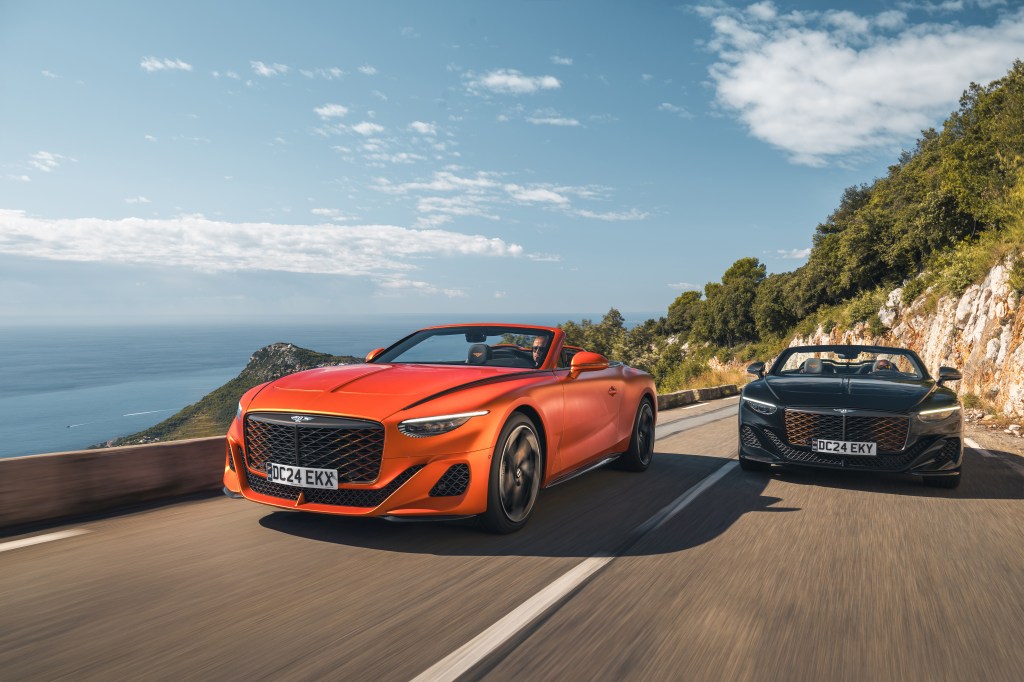
The real-world testing campaign started with an extensive 3,000 kilometre , five-country drive across Europe to simulate real world conditions. The route left Germany and travelled through Italy, France and Spain, across mountains, highways and cities, with the cars pausing briefly for an afternoon in Monaco for photography before continuing their journey to Idiada in Spain, where high speed testing will begin on private test tracks.
Paul Williams, Chief Technical Officer for Mulliner, comments: “The purpose of an engineering validation public road drive is to test a vehicle’s performance, safety, and reliability under real-world conditions. It allows our engineers to assess how the vehicle operates in a variety of environments, traffic scenarios, and weather conditions that cannot be fully replicated in controlled testing environments. This stage is critical for identifying potential issues, validating system integration, and ensuring the vehicle meets regulatory standards and customer expectations as part of the engineering development test program. At the start of the project it was clear that this car had to be the ultimate open-air Grand Tourer and so every element from the exterior design, engine power and hand-crafted interior has been created without compromise.”
At the proving grounds, the Batur Convertibles will begin seven weeks of durability work on handling tracks, mixed road conditions, high speed testing and abusive surface conditions. During all of these activities data and feedback are collated ensuring the technical targets are being met.
The Final W12 Grand Tourer The Batur Convertible furthers the innovative design DNA introduced by its coupe sibling that will ultimately guide the design of Bentley’s future cars.
Created by Mulliner, the Batur Convertible follows the exquisitely hand-crafted Bacalar barchetta and Batur coupe. With the Batur Convertible, Mulliner continues its long tradition of crafting truly individual cars, tailored to the wishes of each of its extraordinary clients.
The Batur Convertible retains the most powerful version of Bentley’s iconic W12, with a 750 PS, hand-assembled 6.0-litre twin-turbocharged engine that has metaphorically and literally powered Bentley’s success for the last two decades. The Batur Convertible will be the last ever Bentley to use this incredible powertrain.
The convertible roof delivers an aesthetic of beauty as a modern, tactile alternative to a hardtop roof. A combination of insulation material, sealing system refinements and acoustic treatments create a cossetting environment in a system which can be deployed or stowed in just 19 seconds, with the car travelling at speeds of up to 30 mph (50 km/h), transforming the car from a luxurious coupe into an open-top Grand Tourer at the touch of a button.
Mulliner’s in-house design team will help co-create every Batur Convertible with its customer, working together through a specially created Mulliner visualiser that allows any part of the car to be customised in colour and surface finish. Endless samples of unique materials bring texture to the process, and the resulting designs will be truly individual and created by the customer – limited only by their imagination.
Batur Convertible Car Zero Like all Mulliner Coachbuilt vehicles, the Batur Convertible is infinitely customisable – with each customer able to specify the colour and finish of literally every single surface of both the exterior and cabin of the car.
The engineering development car – Batur Convertible Car Zero – has had the same level of attention to detail as a customer’s own specification. The exterior paintwork is a bespoke colour – Vermillion Gloss over Vermillion Satin Duo tone – that provides a vibrant colour across the contemporary surfaces. The bodywork is underscored by front splitters, side skirts and rear diffuser in high gloss carbon fibre.
The front of the car features a grille of exceptional art – with the main matrix finished in Gloss Dark Titanium, accented with contrast chevrons in a horizontal ombré pattern that flows from Beluga in the centre and lighten to the vibrant sides in Vermillion Gloss. The “endless bonnet” line is finished in Gloss Dark Titanium paint, as are the 22” wheels – with the spokes in Gloss and Satin Black Titanium with Vermillion Gloss accents.
The second development car – known simply as the ‘Engineering Car’, features an entirely different specification. Midnight Emerald exterior paintwork is finished with a high gloss carbon fibre body kit and Satin Dark Titanium finished bonnet brightware and lower bumper meshes The wheels are tri-tone – with a Satin Dark Titanium body, gloss Porpoise accent faces and gloss Mandarin pinstripe. The same combination of Satin Dark Titanium and Mandarin is joined by gloss Beluga for the three-colour ombré fade to the front grille. The cabin echoes the exterior, with Cumbrian Green and Porpoises leather being accented with Mandarin stitching and piping, complemented with machined titanium Organ Stops and Bullseye vents. The veneer is Mulliner’s exquisite “guitar fade”, where the colour across the width of the cabin changes gradually from gloss Beluga, to high gloss carbon fibre, and back to gloss Beluga, and finished with a laser-etched audio signature of the W12 engine.
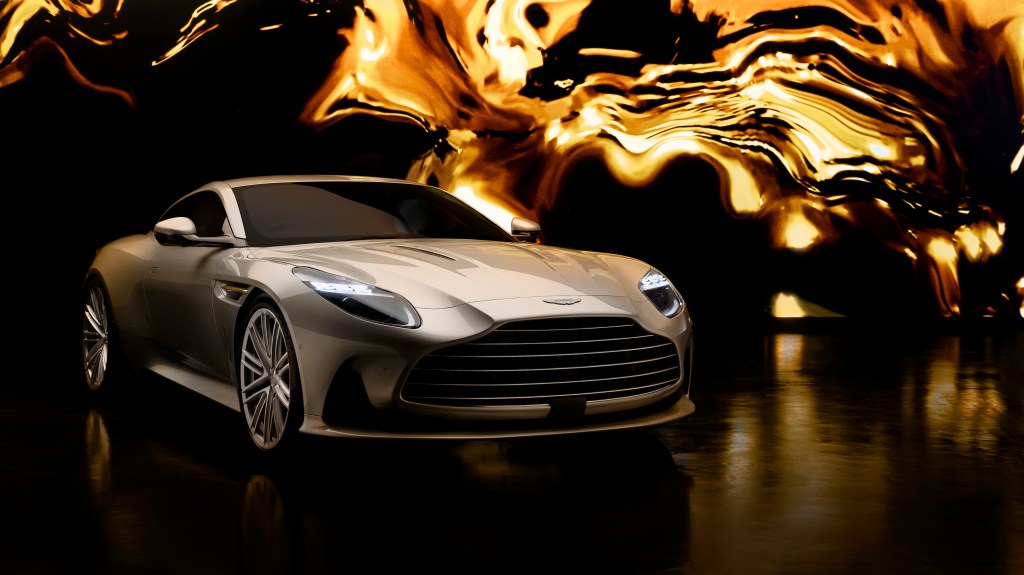
Aston Martin is proud to present the DB12 Goldfinger Edition, crafted by the ultra-luxury marque’s bespoke personalisation service, Q by Aston Martin, in celebration of 60 years of the iconic association between Aston Martin and the James Bond film franchise.
What has become one of the most notable partnerships in cinematic history began with the release of Goldfinger in 1964, when the Aston Martin DB5 made its silver screen debut. The DB5 went on to become one of the world’s most recognisable cars and a crucial step in the brand’s illustrious ‘DB’ bloodline. Now, the latest evolution in that lineage is getting the 007 treatment.
To mark this historic milestone, just 60 DB12 Goldfinger Editions will be released worldwide, paying tribute to a relationship that has spanned over half of Aston Martin’s illustrious 111-year history.
DB12 Goldfinger Edition Whilst the DB5 that featured in Goldfinger was equipped with all the gadgets needed to escape Bond’s adversaries, the DB12 Goldfinger Edition is focused on providing a more indulgent James Bond driving experience, incorporating subtle touches from the Goldfinger film.
Presented in the iconic Silver Birch paint colour synonymous with the DB5 in Goldfinger, the DB12 Goldfinger Edition establishes an immediate statement. Striking 21-inch multi-spoke wheels with a unique silver colour with a diamond treatment finish are complemented by black brake calipers, bespoke gold side strakes and a unique Aston Martin logo in silver with a black enamel. Crowned with a bright chrome ‘Q’ fender badge gives confirmation that this DB12 has received some truly special touches.
Inside this special edition, the leather Sports Plus seats are finished in the classic DB5 fluted style with an intricate Prince of Wales check perforation pattern, in a nod to a classic James Bond suit. This pattern extends to both the door inserts and the headliner, as well as being etched onto a unique treadplate. A polished sill plaque adorns the Goldfinger 60th anniversary logo.
Adding an elevated level of ultra-luxury to the interior of the car and awaiting the driver’s touch is 18k Gold Plated interior accents, decorating the drive mode rotary dial and the roller controls, as well as the notched gear selector which takes design inspiration from the golden tracking device used by Bond in the film. This theme is also continued through the trim inlays, as gold metal fibres are weaved into the 2X2 Twill Gloss Carbon Fibre.
A subtle nod for Bond aficionados is the ’eight of hearts’ embroidered onto the drivers’ sun visor, which references the playing card seen in last draw during the famous Miami pool scene in Goldfinger.
Unique gifting for DB12 Goldfinger Edition owners Each Aston Martin DB12 Goldfinger Edition is presented with an array of gifts that are as exclusive as the car itself. Owners will receive a custom car cover and luxury key presentation box, along with a Silver Birch Speedform model and for something truly unique, a section of the iconic Furka Pass scene in Goldfinger in 35mm film. A 1/60 golden limited edition Aston Martin magazine will also be gifted to the new owners of the DB12 Goldfinger Edition. This selection of bespoke gifts will be presented in a Globe-Trotter attaché case, which replicates the design of the car; a Silver Birch body and a Prince of Wales check interior.
Owners can also enjoy a magnum of 2007 vintage Champagne Bollinger, individually numbered, with four exclusive Bollinger 007 glasses, elegantly presented in a bespoke Globe-Trotter Air Cabin Case.
Q by Aston Martin DB12 Goldfinger Edition has been created by the marques in-house design experts at Q by Aston Martin; a personalisation and bespoke service – much like ‘Q Branch’ in the Bond films, that delivers endless possibilities. By accessing the skills of Q by Aston Martin’s designers and craftspeople, customers are invited to take a unique personal commissioning journey; one that encompasses everything from a single small distinguishing detail to full-scale engineering and production of entirely bespoke components. Nothing is out of reach with the design team with endless possibilities to make their car a true one of a kind.
“The relationship between Aston Martin and the James Bond franchise is something that is always treasured”, said Marco Mattiacci, Global Chief Brand and Commercial Officer. “It is an incredible occasion to be able to recognise six decades of this partnership with an extraordinary special edition, and pay homage to the very first – and perhaps most famous Aston Martin Bond car. Incorporating these subtle but impactful touches, developed by our own ‘Q’ department has created a very unique offering; one that will be adored by Bond fans across the world.
“Q by Aston Martin allows us to create truly unique vehicles, often initiated by the imaginations of our esteemed customers and I am delighted that we are able to support these ideas, not matter how big or small”.
The Ultimate Super Tourer meets 007 The Aston Martin DB12 delivers a sublime blend of performance, ultra-luxury and style, pushing the renowned DB bloodline to new heights. Powered by a formidable 4.0-litre V8 Twin-Turbo engine, producing a best-in-class power output of 680PS/800Nm with an advanced suspension system, DB12 ensures a thrilling yet refined driving experience.
DB12 was the first of Aston Martin’s next generation of sports cars to showcase the marques new infotainment system, designed and developed in-house using state-of-the-art technology. Offering the perfect balance between touchscreen controls and tactile physical switches, this is the first infotainment system built in-house at Aston Martin, which has allowed the brand to provide a uniquely bespoke system for entertainment and navigation. When driving a Bond inspired DB12, occupants need a soundtrack to match and as such, the Goldfinger Edition also comes with the Bowers & Wilkins halo audio system as standard
The Aston Martin DB12 was the first of the next generation of sportscars from Aston Martin. Since its 2023 debut, the super tourer has been joined by the new Vantage, DBX707 and the newly-unveiled Vanquish. First deliveries of this unique offering will commence in Q2 2025.
In a globally challenging market, the BMW Group increased its sales of fully-electric vehicles by +19,1% in the first nine months of 2024, with a total of 294,054 BEVs delivered to customers. During this period, BMW brand sales of fully-electric models rose by +22.6% to 266,151 vehicles. The MINI brand also grew its fully-electric vehicle sales by +54.3% in the third quarter, delivering 16,536 BEVs to customers.
“Our fully-electric vehicles are winning over customers worldwide – as shown by the significant double-digit growth in our BEV sales during the first nine months of the year,” said Jochen Goller, member of the Board of Management of BMW AG responsible for Customer, Brands, Sales. “We also grew our sales in the Europe region. Our attractive model line-up, which is designed for technology openness, gained traction in the marketplace, despite the challenging conditions overall. The BMW brand captured market share in Europe and significantly outperformed the region’s total market,” Goller continued.
In Europe, the BMW brand delivered 577,803 vehicles to customers between January and the end of September (+7.6%), with particularly high demand in countries including the UK, Italy and France. The BMW brand’s fully-electric models also performed exceptionally well in the European region, with 121,844 vehicles delivered to customers – an increase of +35.8%.
The BMW Group delivered a total of 1,754,158 BMW, MINI and Rolls-Royce vehicles to customers in the year to the end of September (-4.5%). This downward trend can be partly attributed to delivery stops associated with the supplied Integrated Braking System (IBS), which significantly impacted the third quarter, as well as the difficult market environment in China. In light of this development, on September 10, 2024, BMW AG revised its sales targets for the financial year 2024.
Between January and September, the BMW brand experienced strong demand for its fully-electric models, with a total of 266,151 (+22.6%) vehicles sold. Most notably, the BMW iX1 and BMW i4 showed positive sales development. The BMW brand sold a total of 1,583,485 vehicles (-2.3%) in the year to the end of September. BMW M GmbH delivered 146,574 vehicles in the first nine months of 2024 (+2.0%), with growth driven by the BMW M2 and BMW M3 Touring models, among others. The MINI brand, which is updating its entire portfolio this year, delivered a total of 166,703 (-20.9%) vehicles to customers in the year to the end of September. In the third quarter, fully-electric MINI models were particularly in demand, with 16,536 vehicles delivered to customers, representing growth of +54.3%. In the first nine months of this year, the Rolls-Royce brand presented a total of 3,970 motor cars to their new owners worldwide (-12.8%).
Between January and September, BMW Motorrad delivered 163,436 (-0.9%) motorcycles and scooters to customers.
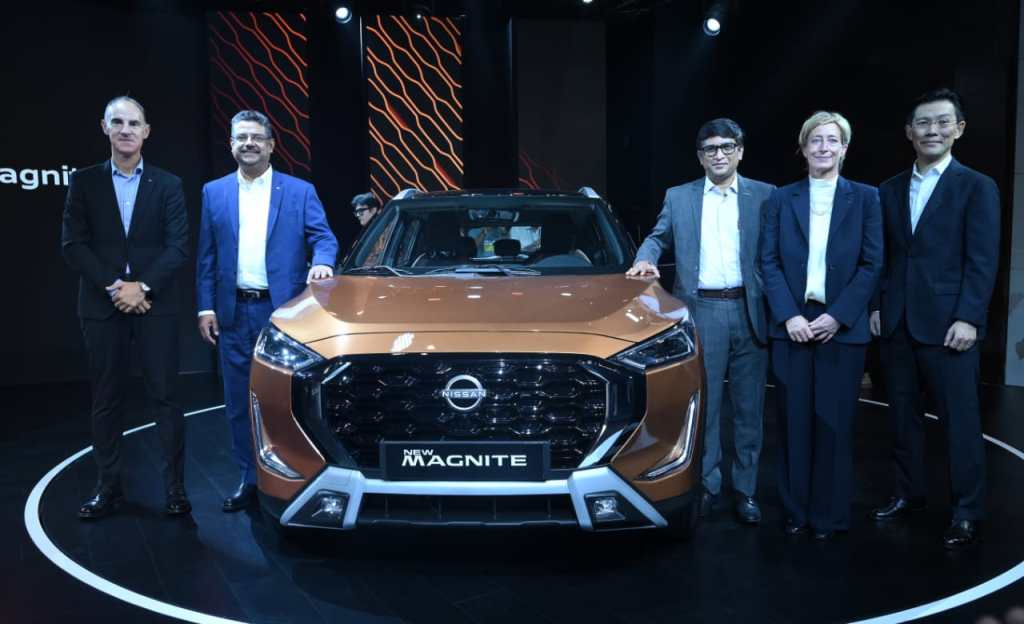
Nissan Motor India has launched the New Nissan Magnite with bold aesthetics, enhanced safety, and advanced tech. The Magnite’s bold presence is accentuated by a tougher, more robust exterior that exudes confidence and enhances its already impressive road presence. The New Magnite continues its commitment to innovation and customer-centric design, hitting the market at an introductory price of INR 5.99 lakhs. The Magnite is a testament to Nissan’s ‘Make-in-India, Make for the World’ vision, surpassing cumulative sales of 150,000+ units till date and making a powerful impact in both Indian and international markets since its December 2020 debut.
The introduction of the new Nissan Magnite marks a significant step in expanding the brand’s export markets. The continuing demand and popularity of the ‘Made in India’ Magnite across international markets has allowed the company to expand its export footprint to 47 new markets taking the total export footprint to over 65 international markets now including Left-Hand Drive markets.
With this new development, the export markets for Nissan now stand at 65+ countries. Speaking at the launch, Mr Frank Torres, Divisional Vice President-AMIEO Region Business Transformation & President-Nissan India Operations, said, “India has a critical role in our global strategy and we are glad to roll out the Magnite from our Chennai facility to more markets across the globe. It not only strengthens our export goal but also cements our customer-first philosophy. The Nissan Magnite’s success since its 2020 launch, both in India and international markets, embodies the enduring value of our ‘One Car, One World’ philosophy.”
Mr. Saurabh Vatsa, Managing Director, Nissan Motor India Pvt. Ltd. (NMIPL), said,“The Magnite has redefined market expectations, earning unwavering customer loyalty and setting new standards in the segment. The new Magnite delivers value on all fronts-safety, premium features, with a powerful yet efficient CVT Turbo powertrain. This launch showcases our unwavering commitment to excellence and plays a pivotal role in our product offensive approach for the country.We are grateful for the love and trust shownby customers in India and thank them for making the Magnite a resounding success in the country. We are confident that the New Nissan Magnite will also resonate with international customers in the same way.”
Building on its previous success, the New Nissan Magnite exemplifies Magnite-ness with a tougher, bolder and more robust exterior that enhances its commanding road-presence. The Magnite has sleek LED Headlamps with lightsaber-style turn indicator, Best-in-Class LED Taillamps with 3D Gradient “Honeycomb” pattern, and Magnite’s signature L-Shape Daytime Running Lights (DRL).
Additionally, the new model boasts a new floating uplifted skid plate at front, bigger & bolder new imposing grille, all new dual tone R16 Diamond Cut Alloy wheel, functional roof rails (50kg capacity) and best-in-class ground clearance, giving a differentiated design appeal.
To cater for all preferences and customer needs, the New Nissan Magnite comes in 11 body colours, six monotones and five dual-tones available – all expertly created and crafted to suit customer tastes and ensure their car is as unique as they are.
Inside, the New Nissan Magnite sets new benchmarks with its refined interior, offering an impressive array of colour themes and advanced features. With unique 360 leather pack –including a Brownish Orange leatherette wrapped dashboard, leatherette seat upholstery with unique “Honeycomb”quilting pattern, leatherette all door trim, parking brake lever, steering, and front armrest–the New Nissan Magnite provides a no compromise premium package that is sure to impress.
The New Nissan Magnite also boasts of largest in cabin storage, improved seat comfort, standard expandable boot space from 336L to 540L with standard 60:40 rear seat split, largest rear knee room, high command driving position, best-in-class front seat couple distance, front armrest with storage, and cooled glove box, making interiors a perfect amalgamation of comfort and design.
The New Nissan Magnite comes loaded with 20+ first & Best-In-Segment features including premium quilted leatherette seat with Heat Guard Tech, continuous multi colour Ambient Light with memory function, Plasma Cluster air ionizer, new global smart key with Remote Engine Start with 60m range, Walk Away Lock (WAL) & Approach Unlock (AUL) function, biggest electronic bezel-less auto dimming IRVM, Full LED Exterior pack including LED Headlamp, LED Taillamp, LED Day time Running Light, LED Indicator, and LED Front Fog Lamp.
The new model also features Around View Monitor, 17.78 cm full digital advanced multi-functional cluster with dark theme, floating 20.32 cm (8) touchscreen infotainment system with Wireless Android Auto & Apple CarPlay, 3D sound by ARKAMYS, and cruise control, making Nissan Magnite the most premium car in the category ready to pamper the new age customers.
Along with these, the New Nissan Magnite also provides consumers with a option of a unique tech pack which has a dashcam, wireless charger, premium speakers (JBL powered by Harman), puddle lamps and LED scuff plates.
New Nissan Magnite continues to offer a range of sporty and fun-to-drive powertrains that provide a thrilling driving experience for customers. The HRA0 1.0 turbo engine is one of the most fuel-efficient engines (ARAI certified 20 kmpl) among B-SUVs in the market, delivering higher torque at lower speed, giving a dynamic feel with strong acceleration at take-off.
The HRA0 1.0-litre comes with Mirror Bore Coating Cylinder Block technology which is used in Nissan’s world class sports cars such as Nissan GT-R, cylinder head with integrated exhaust manifold, split cooling, forged crank shaft, electric turbo actuators, improving performance and fuel efficiency and reducing NVH & emissions.The HRA0 1.0-litreturbo engine will be available with 5 Speed and X-TRONIC CVT gearbox.
The automatic gearbox, is the 3rd generation XTRONIC-CVT transmission, offering wider gear range that delivers seamless performance even in peak city traffic, better fuel economy, and acceleration thanks to improvements including a twin oil pump system with new electrical oil pump. Its D-step logic control computer software uses dynamic inputs like vehicle speed, accelerator pedal position and application speed to determine the ideal gear ratio needed to deliver an exhilarating drive and smooth cruises on the highways.
New Nissan Magnite to also come with a B4D 1.0-litre which is a naturally aspirated engine with manual or EZ-Shift (AMT) option.
As safety is paramount for Nissan, the New Magnite has further pushed the envelope to ensure Best-in-Class Safety – with 40+ standard active & safety feature and 55+ total safety features. These include; 6 Airbags (2 Front Airbags/2 Side Airbags/2 Curtain Airbags), Vehicle Dynamic Control (VDC), Traction Control System (TCS), Hill Start Assist (HAS), Hydraulic Brake Assist (HBA), Anti-Lock Braking System (ABS), Electronic Brake-force Distribution (EBD), Tyre Pressure Monitoring System (TPMS).
In addition to the above, customers can enjoy driving friends and families with complete peace of mind thanks to further safety features such 3 point seat-belt for all seats, seat-belt reminder for all seats, child lock, ISOFIX child seat anchorages, and rear parking sensor now coming as standard fitment across all variants – ensuring that every journey is not just comfortable, but more secure than ever. This comprehensive safety suite is complemented with improved body structure with 67% advanced and High Tensile Strength Steel. In addition, the New Magnite also comes with a 3-year / 100K kms warranty as standard, ensuring the peace of mind and enhancing the ownership experience for customers.
The New Magnite doesn’t just meet expectations; it exceeds them by offering a strong and modern presence on the road, best-in-class technology, and safe driving experience – all at an unbeatable price. This facelift underscores Nissan’s commitment to delivering exceptional value, making the New Magnite a great value proposition for customers seeking a vehicle that stands out in every aspect.
The launch of the New Magnite, and expansion to additional markets thanks to left-hand drive, highlights Nissan India’s role as a key automotive manufacturing hub. Combining Japanese design with efficient local production, the Magnite delivers great features and impressive performance to customers worldwide.
The state-of-the-art Nissan-Renault alliance plant in Chennai is a prime example of Nissan’s commitment to the India market. From this flagship facility, Nissan retains its firm focus on constant innovation – in order to meet the evolving requirements of today’s customers, while strengthening its presence in the region. This approach, and India as market, sit at the heart of The Arc, Nissan’s global business transformation plan based around strengthening its product portfolio, advancing electrification across key markets, exploring new approaches to engineering and manufacturing, the adoption of new technology, and harnessing strategic partnerships to drive value and strengthen competitiveness.
In an innovative move towards sustainable development and community empowerment, Škoda Auto Volkswagen India (SAVWIPL) is supporting Škoda Auto a.s. ‘Curiosity Fuel’ initiative by connecting with Indian coffee planters. This unique project endorses the nation’s ‘Make-in-India’ initiative by enabling Indian coffee to reach European markets directly.
Focus on sustainability and circular economy principles:
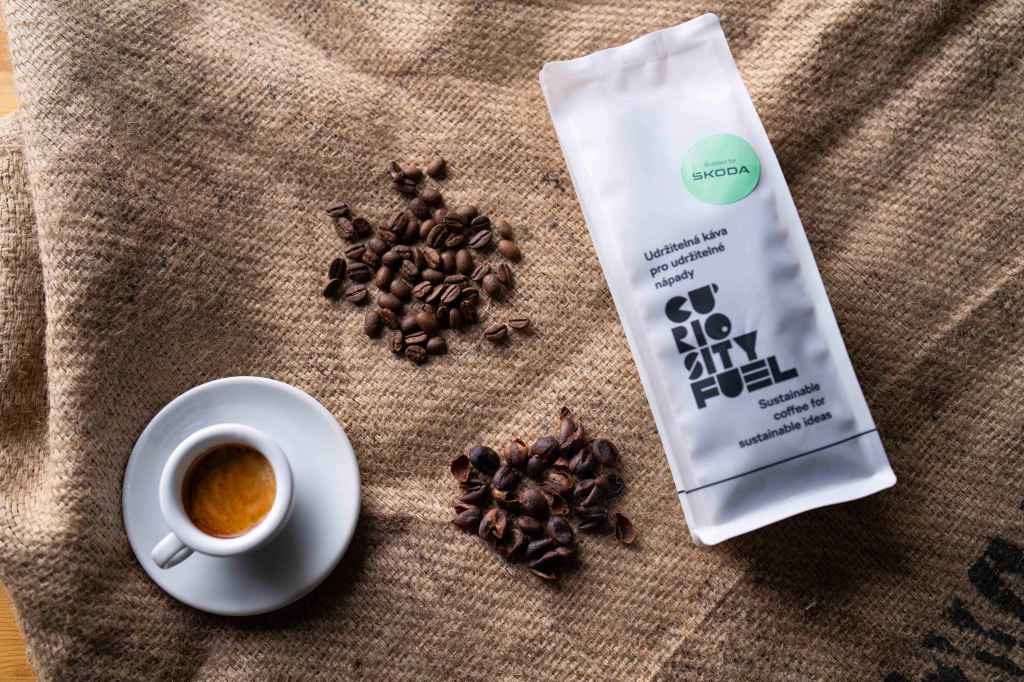
Škoda Auto a.s. is using coffee bean husks as a tanning agent for leather seats in Škoda’s Kodiaq and Octavia models, leading the way in eco-friendly automotive manufacturing. This innovative use of an agricultural by-product exemplifies the group’s commitment to the circular economy, transforming what was once considered waste into a valuable resource.
Empowering family-owned coffee farms in Coorg (Karnataka, India):
India, the world’s eighth-largest coffee producer with an export value of close to USD 1.25 billion, is known for its unique coffee flavours,. The annual coffee consumption at Škoda Auto Volkswagen India’s headquarters in the Czech Republic amounts to approximately 25 tonnes. Recognising India’s rich coffee heritage, the brand strategically chose to directly source the coffee and, in turn, support family-owned coffee farms in Coorg. The ‘Curiosity Fuel’ initiative is redefining the coffee supply chain by directly engaging with local farmers and eliminating multiple intermediaries. This approach not only ensures fair trade practices certified by the Rainforest Alliance but also promotes permaculture farming, emphasizing ecological and social responsibility.
Škoda Curiosity Fuel Initiative:
Škoda Auto a.s. has rolled out a new coffee called ‘Curiosity Fuel’ across the company in the Czech Republic. This special blend is grown, roasted, and packaged in a way that is friendly to both nature and farmers. Specially created for Škoda Auto a.s., ‘Curiosity Fuel’ is designed to inspire staff with fresh ideas and further the group’s sustainability objectives as outlined in Strategy 2030.
Karsten Schnake, Board Member for Procurement at Škoda Auto a.s. commented, “Our ‘Curiosity Fuel’ initiative highlights Škoda Auto’s commitment to innovative sustainability by integrating social, environmental, and circular economy principles into our supply chain. From ethically sourced coffee for our employees to utilizing coffee byproducts in our vehicles, we’re setting new sustainability standards in the automotive sector.”
Piyush Arora, Managing Director & CEO, Škoda Auto Volkswagen India Private Limited, added, “Our ‘Curiosity Fuel’ project demonstrates Škoda Auto Volkswagen India’s commitment to holistic sustainability. By bridging the gap between Coorg’s coffee planters and our global operations, we’re fostering community development. This initiative exemplifies our belief that true progress in the automotive sector must encompass environmental responsibility and community empowerment. It’s about creating a symbiotic relationship between our industry and India’s rich agricultural heritage.”
By connecting agriculture and automotive innovation, Škoda is showcasing how cross-sector collaboration can drive sustainable development and rural prosperity, promoting a more regenerative and inclusive economic model.
The original Cullinan, launched in 2018, was the world’s first super-luxury SUV, fulfilling a unique and exacting brief. From a performance and engineering standpoint, it had to have genuine off-road capabilities equal to the most demanding and hostile environments on earth. At the same time, it had to deliver the marque’s peerless comfort and signature ‘magic carpet ride’, regardless of the terrain. It had to be nothing less than the definitive super-luxury SUV —rugged yet refined, unstoppable yet serene: effortless, everywhere. Its success exceeded Rolls-Royce’s most ambitious expectations around the world, and today Cullinan is the most requested Rolls-Royce in the marque’s portfolio.
Given the motor car’s extraordinary success, and incredibly positive reception from clients in every region of the world, shaping a new expression of the ‘Rolls-Royce of SUVs’ was undertaken with meticulous care. The marque’s designers, engineers and craftspeople drew on half a decade of detailed client feedback, the brand’s own intelligence gathering —including their Private Offices around the world — and a raft of new technologies to advance Cullinan. In its new guise, which represents the most extensive Series II development in Rolls-Royce history, it responds to changing codes of luxury and evolving usage patterns while remaining true to the essential qualities that underpin Cullinan’s unprecedented popularity.
Clients can commission Cullinan Series II and Black Badge Cullinan Series II at Rolls-Royce Motor Cars Chennai and Rolls-Royce Motor Cars New Delhi. Pricing for Cullinan Series II in India starts from INR 10,50,00,000. Pricing for Black Badge Cullinan Series II starts from INR 12,25,00,000. First local client deliveries will commence from Q4 2024.
Since the first client deliveries, Cullinan fulfilled its purpose as a supremely accomplished off-road motor car, capable of taking its owner into locations never previously explored in a Rolls-Royce. However, versatility and the effortless everywhere essence of the model also made Cullinan a ‘daily driver’ for many owners; indeed, numerous clients have told Rolls-Royce that no other SUV offers the same effortless performance as Cullinan’s 6.75-litre V12 engine, from what is often a substantial and diverse collection. These were all significant considerations in conceiving Cullinan Series II.
It was noted by the marque’s intelligence specialists that an increasing number of Rolls-Royce clients were concentrated in urban areas – from great world metropolises to fast-growth cities in emerging regions. To that end, Cullinan increasingly serves as a super-luxury product in which clients wish to be seen and project their character – albeit with the capacity to vanish into nature at will. Specialists also observed a shift towards owners driving their motor cars themselves. When Cullinan was first launched, less than 70% were self-driven: today, almost every Cullinan is driven by its owner, with less than 10% of clients retaining the services of a chauffeur. Together with the rejuvenation of the brand and the ever-increasing Bespoke offering, Cullinan contributed to a fall in the average age of Rolls-Royce clients from 56 in 2010 to just 43.
An increasingly urban focus, a youthful cadre of clients and a decisive shift towards self-driving informs the surface treatment and detail of Cullinan Series II’s exterior. A key theme is verticality, which echoes illuminated skyscrapers in the megacities where Cullinan is increasingly at home. This is most apparent in the new lamp treatment, where tall daytime running light graphics ensure Cullinan Series II is easily identified, day and night.
“The debut of Cullinan Series II in India represents a significant milestone for Rolls-Royce in the Asia Pacific region. Since its original launch in 2018, this remarkable motor car has attracted a younger and more diverse group of clients, and today Cullinan is the most requested Rolls-Royce in the marque’s portfolio. Cullinan Series II integrates new technologies, new materials, meticulously considered design updates and innovative opportunities for self-expression through Bespoke.” Irene Nikkein, Regional Director Asia-Pacific, Rolls-Royce Motor Cars
Reflecting many clients’ desires for bolder forms of self-expression, innovative decoration and detail have been added throughout the interior of Cullinan Series II. The most substantive change to the motor car’s geometry is the pillar-to-pillar glass-panel fascia in the upper portion of the dashboard – an elegant and versatile design element that stages both digital and physical craftsmanship.
Connectivity has been refined throughout the motor car, especially for those in the rear of Cullinan Series II. Clients are able to connect up to two streaming devices to the rear screens, which now incorporate a Bespoke interface for streaming car management and seating functions such as massage, heating and cooling.
The installation of internet connectivity allows clients to enjoy a Wi-Fi hot spot connection and independent streaming for each screen. For the first time in Cullinan, Bluetooth headphones of any type can be paired with the rear seat infotainment system, or clients can enjoy the marque’s exceptional 18-speaker Bespoke Audio system, which benefits from the latest generation 18-channel 1400-watt amplifier. Cullinan Series II retains the brand’s celebrated speaker architecture wherein cavities within the motor car’s aluminium sill sections are used as resonance chambers for low frequency speakers, effectively transforming the entire motor car into a subwoofer.
Directly in front of the passenger is an Illuminated Fascia panel — a remarkable expression of modern craft that debuted with Ghost before appearing in Spectre and now, for the first time, is available within the Cullinan family. In this guise, it features an illuminated Cullinan wordmark and a unique Cityscape graphic inspired by the skyscrapers of the world’s megacities at night. This is created using a specially-developed technique whereby 7,000 dots are laser-etched onto the rear of the darkened and toughened security glass, each at minutely differing angles and dimensions to create the perception of depth. In addition to this prêt-à-porter design, clients are also able to create their own Illuminated Fascia motif in collaboration with the marque’s Bespoke designers.
Incorporating the Spirit of Ecstasy into the interior of the motor car was the product of four years of development, and a unique partnership between analogue and digital craftspeople to create a dramatic and meticulously orchestrated flow of light. This sequence begins with the illumination of the driver’s display upon entering the motor car, followed by the Central Information Display, then the Illuminated Fascia, where light sweeps inwards towards the vitrine, lighting the timepiece. The Spirit of Ecstasy is illuminated from below initially, reminiscent of a spotlight on a debut performance, before her stage lighting settles to a soft glow.
Cullinan built a new legacy for Rolls-Royce Motor Cars, shaped in collaboration with a bold and uncompromising generation of super-luxury consumers. Cullinan Series II evolves and builds on this motor car’s place in the brand, proving once more that the future of this marque will be shaped in partnership with its clients and characterised by exquisite contemporary crafts.
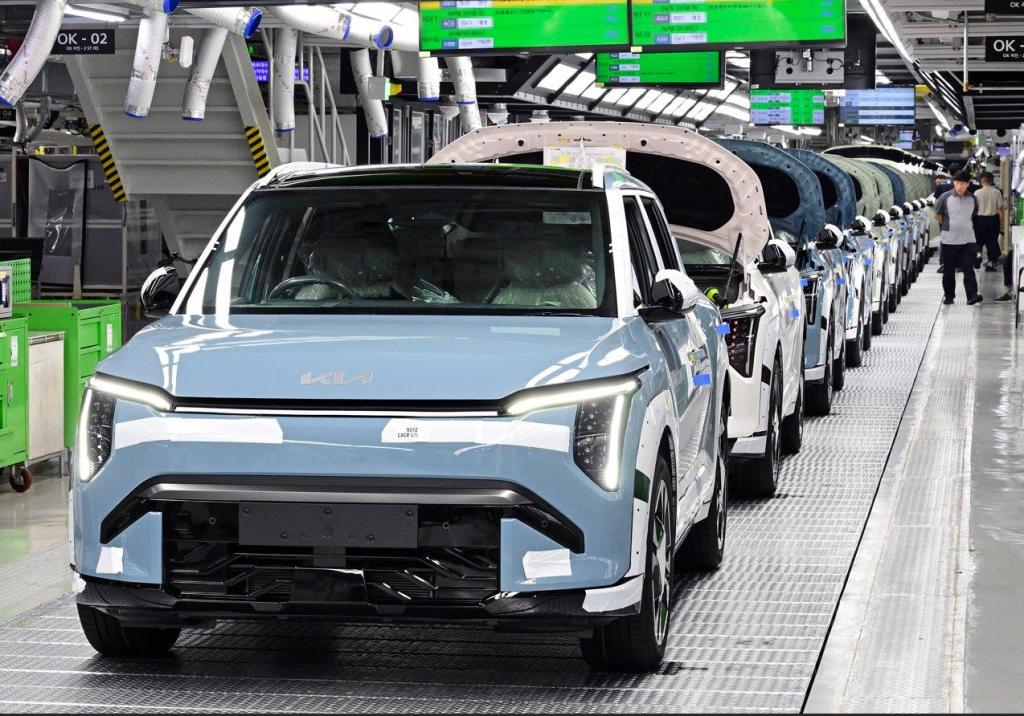
Kia Corporation has celebrated the opening of Kia Gwangmyeong EVO Plant, Hyundai Motor Group’s (the Group) first dedicated EV manufacturing facility.
Located at Kia Autoland Gwangmyeong, the new South Korean facility has an annual production capacity of 150,000 units and started production of the Kia EV3 in the first half of this year, to be followed by the EV4 in the first half of 2025. Derived from the term ‘Evolution’, the Kia Gwangmyeong EVO Plant demonstrates how Kia will continue to change and move forward as it aims to become a leader in the future of mobility.
To celebrate the completion of the project, Kia hosted around 150 guests during a ceremony at the new Kia Gwangmyeong EVO Plant, including Jun Young Choi, Executive Vice President and Head of Domestic Production Division at Kia; Seung Won Park, Mayor of Gwangmyeong City; and O Kyeong Lim and Nam Hee Kim, Members of the 22nd National Assembly of the Republic of Korea.
“The completion of the Kia Gwangmyeong EVO Plant solidifies Kia’s first step as an EV leader following the company’s brand relaunch in 2021. With the goal of providing sustainable mobility solutions, we will lead innovation in the EV market and fulfil our responsibilities in helping to deliver a sustainable future”, said Jun Young Choi, Executive Vice President and Head of Domestic Production Division at Kia, during a welcoming speech at the event.
Seung Won Park, Mayor of Gwangmyeong City also added, “The completion of the Kia Gwangmyeong EVO Plant will help Gwangmyeong City to establish itself at the center of the EV industry in Korea. Through this we will strive to promote sustainable development of the local economy and create more jobs.”
In order to flexibly respond to changes in global demand for EVs, Kia has been steadily preparing for EV production at its global facilities. The Gwangmyeong EVO Plant is a dedicated EV facility, with an investment total of KRW 401.6 billion over approximately 60,000 square meters and will serve as an outpost for production of Kia’s popular EV models.
Kia has spent approximately one year transforming Gwangmyeong Plant 2, which was completed in 1987 to produce small internal combustion engine vehicles such as the Kia Pride, Avella and Stonic. The Kia Gwangmyeong EVO Plant is also meaningful in that it is the Group’s first dedicated EV plant and a facility that has been completely rebuilt on an existing plant site to become a hub for next-generation vehicle production.
Opening a new era for of EVs with full-fledged electrification
Kia Gwangmyeong EVO Plant is characterized under the theme of ‘pursuing maximum change through minimal expansion’ in consideration of its city center location and other environmental factors, such as protection of green spaces.
In addition, the plant has been constructed with a full-scale conversion to electrification in mind, focusing on ‘eco-friendly’ and ‘worker-friendly’ processes.
The body shop is now a high-tech logistics factory thanks to the introduction of automated guided (AGV) forklifts, and the green credentials of the paint shop have been increased by applying the water-based 3C1B method instead of the previous oil-based 3C2B method. New equipment has also been introduced to improve wellbeing and reduce the workload of plant employees, including machinery which can automatically install high-voltage batteries, wheels and tires on the vehicles.
Following the completion ceremony of the Gwangmyeong EVO Plant, Kia will ramp up EV production. Mass production of the EV3, the brand’s compact all-electric SUV, began in the first half of this year. The EV3 is Kia’s third dedicated EV model after the Kia EV6, the brand’s all-electric crossover SUV launched in 2021, and the Kia EV9 all-electric flagship SUV launched in 2023.
In the first half of 2025, Kia plans to introduce the EV4, the brand’s mid-sized electric sedan. Kia plans to utilize the Gwangmyeong EVO Plant as a key production base for the company’s EV models, including the EV3 and EV4, with an annual production capacity of 150,000 units.
Through the production of the brand’s high-quality EV models, the Kia Gwangmyeong EVO Plant will begin a new era for Kia’s move towards electrification.
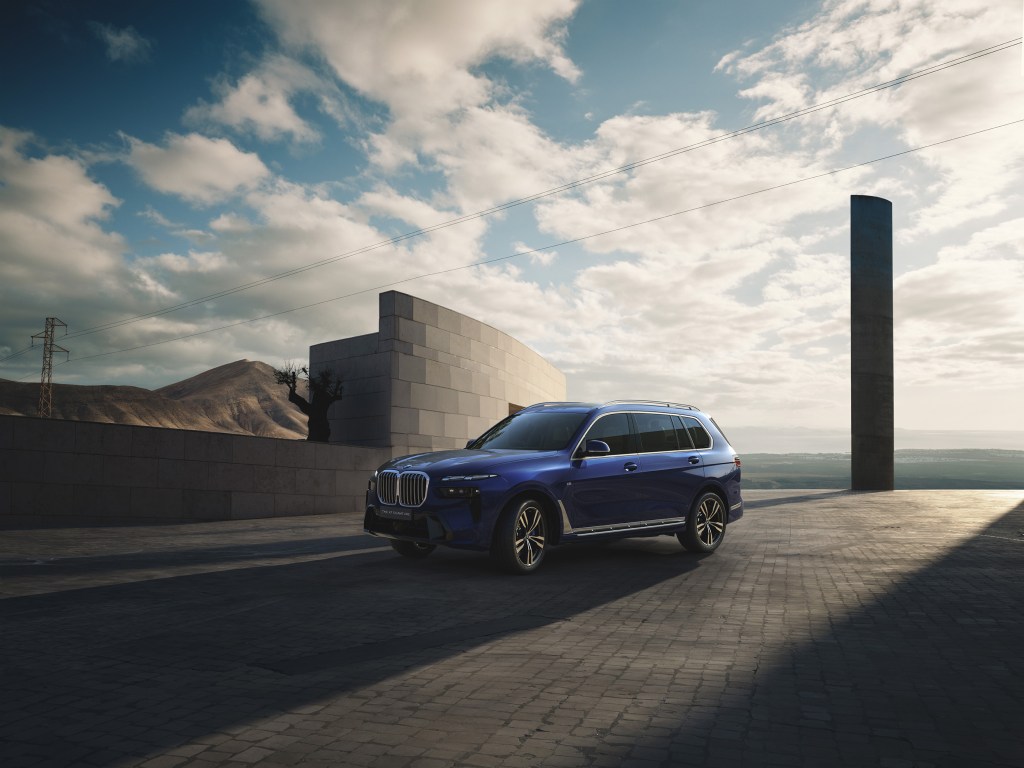
BMW India launched the new BMW X7 Signature Edition. Locally produced at BMW Group Plant Chennai, the car will be available exclusively in the petrol xDrive40i variant. The new BMW X7 xDrive40i M Sport Signature Edition will be available in limited units and can be exclusively booked via the BMW Online Shop. The car is available at an ex-showroom price of INR 1,33,00,000.
The car is available in two exclusive BMW Individual paintworks: Tanzanite Blue and Dravit Grey. Upholstery features the exquisite BMW Individual Leather ‘Merino’ upholstery in Tartufo and Ivory White shades.
The generous exterior dimensions and expansive surfaces of the new BMW X7 radiate an expression of grandeur. The new imposing yet progressive front clearly differentiates it from its predecessor and other X models. The large kidney grille comes with a newly designed intricate double bars with chrome highlight. The crystal headlamps with Swarovski glass cut crystals in the front create a unique light effect. The aluminium satinated roof rails and aluminium satinated exterior elements add to the luxury appeal of this Sports Activity Vehicle. The central air intake is framed by two eye-catching chrome air vents. Modern impulses such as 3D taillights with a new inner graphic and connecting chrome bar covered by smoked glass are real eye-catchers.
The interior of the new BMW X7 M Sport Signature makes for an innovative and exclusive ambience. The first element to catch attention is the new digital BMW Curved Display which is harmoniously unified into the cockpit area, so it almost looks like it is floating. It’s typical BMW driver-orientation, clear reduced design along with an interplay of eye-catching graphics, modern colours and futuristic textures create an immersive visual appearance. The individual instrument panel lapped in genuine leather brings a particularly progressive feel to the modern premium ambience. Another premium feature is the ambient light bar extending from the centre stack to the passenger side. It beautifully elevates the overall ambient lighting effect available in 14 colours. Moreover, its crystalline appearance and prismatic structure perfectly complement the crafted clarity components such as the gear selector, iDrive control wheel, audio control button and start/stop button.
The overall experience of the occupants of the new BMW X7 M Sport Signature is further enhanced by the ambient air package. Filling up the cabin with a sense of space and natural light flow is the large sky lounge panoramic glass sunroof extending till the third row. The sky lounge comes with over 15,000 individual light points which can be altered via the ambient light setting to create a stunning light pattern. Crystal door pins add to the overall aesthetic appeal inside the car. Also available as standard are backrest cushions in Alcantara for the rear seat passengers. Captain seats lapped in genuine leather Merino offer the perfect individual luxury experience for rear seat passengers. Harman Kardon surround sound system with 16 speakers provides an intense musical feast for the ears. Handsfree operation of split tailgate gives easy access to a boot capacity of up to 2,120 litres.
Thanks to unrivalled BMW TwinPower turbo technology, the petrol engine melds maximum power with exemplary efficiency and offer spontaneous responsiveness even at low engine speeds. The 3-litre 6-cylinder in-line petrol engine of the new BMW X7 xDrive40i M Sport Signature Edition produces an output of 381 hp and maximum torque of 520 Nm at 1,800 – 5,000 rpm. The car accelerates from 0 -100 kmph in just 5.8 seconds. Additionally, the engine features a 48V electrical motor that with a power output of 12 hp and torque output of 200 Nm, helping achieve even better efficiency and dynamics.
The eight-speed steptronic transmission performs smooth, almost imperceptible gearshifts. At any time, in any gear, the transmission collaborates perfectly with the engine, enabling it to develop its full power and efficiency. The driver can access distinct driving setups in both automatic and manual mode – Comfort, Efficient, Sport and Sport Plus.
BMW xDrive, the intelligent all-wheel drive technology monitors the driving situation and is quick to respond to ensure maximum traction, agility and vehicle stability. Electronically controlled ‘Automatic Differential Brakes/Locks’ (ADB-X), extended ‘Dynamic Traction Control’ (DTC), Hill Start Assist and Hill Descent Control help to conquer every terrain. Adaptive 2-axle air suspension enables raising and lowering of vehicle at the touch of button and automatically adjusts the height of the car to suit any given driving situation.
BMW ConnectedDrive technology breaks the innovation barrier and turns the car into an interconnected digital device. Host of connected drive features include BMW ID, BMW App, digital key, emergency call, real-time traffic information, remote services and smartphone parking. BMW Live Cockpit Professional includes the freestanding BMW curved display with navigation with real-time traffic information and augmented view, a 12.3-inch digital information display behind the steering wheel, a 14.9-inch control display and BMW head-up display.
The latest BMW iDrive with Operating System 8.5, offers all the possibilities for interaction between occupants and the vehicle – using touch, gesture or speech. It is complemented by the BMW Intelligent Personal Assistant system which has a self-learning intelligence that adopts a driver’s individual habits, proactively provides useful tips on new driving functions and seamlessly integrates smartphone apps. Wireless smartphone integration and regular remote software upgrades ensure that the car is always up to date.
My BMW app functions include popular options for keeping an eye on the current vehicle status at all times as well as Learning Navigation, which offers destination suggestions and traffic information based on the owner’s driving habits. In addition, customers can use the My BMW app to generate the BMW Digital Key Plus, which turns a smartphone into a digital vehicle key. It will enable customers to physically open the doors when unlocking them this way. If the Digital Key Plus is activated, it’s also possible to perform automated parking manoeuvres.
The spread of Driver Assistance Systems is more extensive than ever. They support and relieve the driver, thus increasing comfort and safety. Standard equipment includes functions like Cruise Control, the Attentiveness Assistant, Parking Assistant Professional with Surround View Camera, Drive Recorder, remote parking via smartphone and Reversing Assistant.