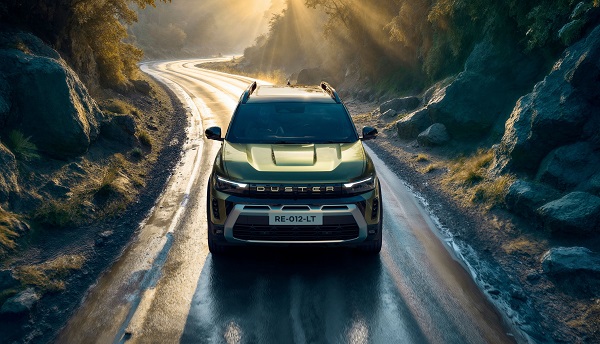
Renault India has unveiled the new Renault Duster, marking the return of a nameplate that helped establish the mid-size SUV category in the country.
New Renault Duster marks the first product unveil under Renault Group’s International Game Plan in India, where the brand is prioritising targeted investment and product expansion as part of a broader global strategy.
“As part of the Renault International Game Plan 2027, we are making India a key pillar of our growth outside Europe. We now have a strong ecosystem in Chennai, bringing together design, engineering, manufacturing, and local operations at the highest level – making India one of the most complete and powerful hubs in Renault’s global network. Today, we have the means to fully support our ambitions in India, to better understand customer expectations, and to deliver products truly adapted to this market. The new Renault Duster is the first step in Renault’s renewal in India”, said Fabrice Cambolive, Chief Growth Officer Renault Group & CEO Renault brand.
New Renault Duster is made for India, with close to 90% of the car made specifically for India. It underpins the new Renault Group Modular Platform (RGMP). The platform is ultra-flexible in terms of dimensions, powertrains suited to google automotive system.
New Renault Duster is powered by a full range of powertrain options to access every Indian road and making the “unreachable reachable”. It is powered by a Turbo TCe 160 engine which churns out 163 PS of power and 280 Nm of torque, while Turbo TCe 100 is meant for smart and accessible segment.
New Renault Duster also marks the debut of the strong Hybrid E-Tech 160 engine, powered by 1.8L engine along with a 1.4 kWh battery, making it the most efficient and powerful hybrid, allowing up to 80% EV mode in city drive conditions.
The Turbo TCe 160 and Turbo TCe 100 petrol engines come paired with the 6-speed DCT with wet clutch available with Turbo TCe 160, delivers lightning fast‑ gear shifts for maximum performance and is utmost suitable for Indian driving condition. On the other hand, the 6-speed manual offers precise mechanical control with direct gear engagement for maximum driver command. Both options are engineered to bring out the best in the Duster combining performance, confidence, and driving pleasure.
“With the new Renault Group Modular Platform, Renault brings an advanced hybrid technology and top-tier safety engineering. With Renault Forever program, we also offer our customers a significantly improved ownership experience. New Renault Duster is the start of a renewed product cycle and for an exciting trajectory for Renault in India. Renault is back”, said Stéphane Deblaise, CEO, Renault Group India.
“New Renault Duster marks the rebirth of an icon. It is more than just a bold, authentic SUV; it’s a powerful statement of our design philosophy, meticulously shaped through the seamless collaboration of our design teams in India and in France. Every confident line, every modern and sculpted detail has been crafted to embody the spirit and aspirations of India, while resonating with Duster’s unique DNA”, said Laurens van den Acker, Chief Design Officer, Renault Group.
Customers can pre-book new Renault Duster by purchasing R Pass for INR 21,000. While the price of new Renault Duster will be announced mid-March, customer deliveries will begin in April 2026. The Strong Hybrid E-Tech 160 deliveries to commence during Diwali 2026. New Renault Duster will be offered with seven years warranty for enhanced trust and peace of mind, thanks to Renault Forever programme.
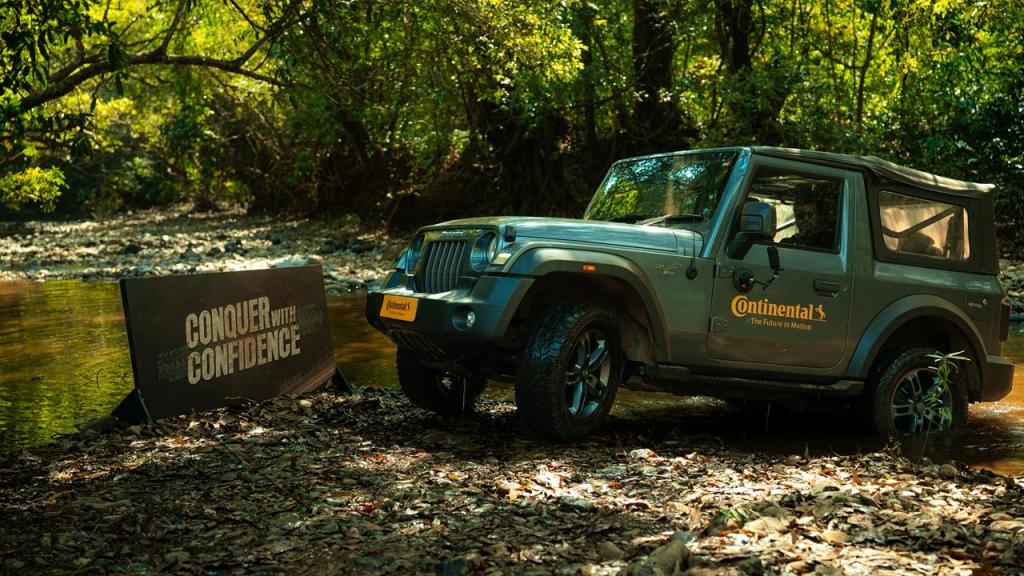
Continental Tires, a leading global tyre manufacturer, marked the Indian launch of its new all-terrain product, the CrossContact A/T², with an adventurous Continental Tires’ Track Day at Dot Goa 4X4. With this, the country becomes one of the first few markets globally to introduce this next-generation product, which blends German engineering precision with rugged versatility to ensure a smooth ride across challenging terrains.
The highly anticipated launch of the CrossContact A/T² reiterates Continental’s growing commitment to the Indian market.
“India’s 4×4 vehicle segment is experiencing sharp growth, driven by a growing passion for adventure and long-distance travel. With our ‘In the Market, For the Market’ approach, we continually innovate to meet the demands of Indian road conditions and deliver enhanced driving experiences. The CrossContact A/T² delivers high performance across the diverse terrains and topographies that India offers,” said Samir Gupta, Managing Director, Continental Tires India.
He further added, “India is the first market globally to introduce the CrossContact A/T². This decision is a testament to Continental’s commitment to the Indian market. We remain committed to delivering cutting-edge solutions tailored to our Indian customers.”
CrossContact A/T²: Engineered for Performance. Designed for Adventure
Built for power, performance, and precision, the CrossContact A/T² is engineered for SUVs and 4x4s, offering superior grip across all surfaces: mud, gravel, sand, wet highways or rocky trails. Designed for modern, adventurous lifestyles, it brings a confident on-road feel and unshaken off-road capability. Key Technologies in CrossContact A/T²:
● BlackPaw™ Compound: Adaptive traction tech that maintains elasticity and control across hot, cold, dry, and wet surfaces.
● Self-Cleaning Shoulders: Open tread patterns and stone ejectors dislodge slush, mud, and debris to keep you moving clean and steady.
● Rigid Tread Block Geometry: Reduces hydroplaning and enhances braking efficiency with precisely angled groove design.
● Reinforced Sidewalls: Built tough to resist cuts, abrasions, and trail damage, ensuring long-term durability and control.
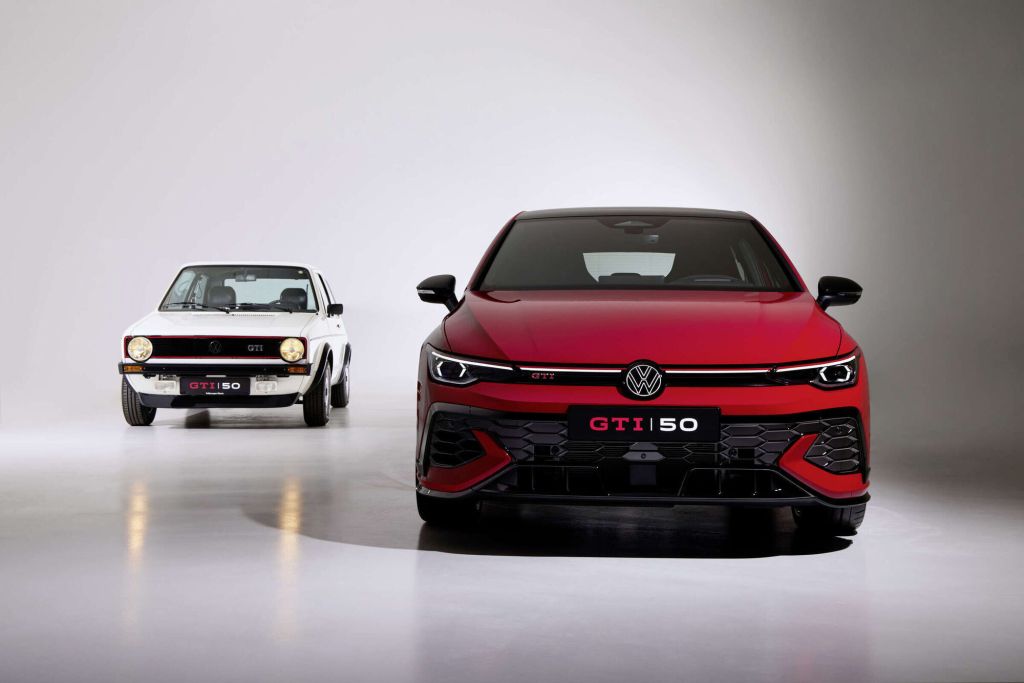
It is the world’s most successful compact sports car: the Golf GTI. The original in its class. More than 2.5 million units have been produced to date. In 2026, the Golf GTI will turn 50 – and this will be celebrated with a variety of national and international classic events, the exclusive anniversary model Golf GTI EDITION 501, and the world premiere of the first all-electric GTI.
A success story since 1976. When the Golf GTI was launched in 1976, no one could have guessed that the 81 kW (110 PS) Volkswagen, with its red grille surround, black wheel arch extensions and golf ball gear knob, would soon become the world’s most successful compact sports car. Only 5,000 units were planned, but in the first year alone dealers sold 10 times as many vehicles. In total, 461,690 first-generation Golf GTI cars were built.
It was the unusual overall package that struck a chord: a highly precise sports car for lonely Alpine passes and, at the same time, a practical companion for every day of the year, extremely economical and instantly a timeless style icon. The price was also a hit: 13,850 Deutschmarks in Germany. The media spoke of the democratisation of the sports car. And indeed, the performance of the 182 kmph Volkswagen was impressive: with a sprint from 0 to 100 kmph in just 9.0 seconds, the 1976 Golf GTI left behind numerous sports cars and coupés that were easily 10,000 Deutschmarks more expensive.
The DNA for the past 50 years – and for tomorrow. The unique interplay of agile engine, lightweight front-wheel drive, balanced chassis, perfectly fitting sports seats and crisp, no-frills design still characterises the Golf GTI today. It is this synthesis that Volkswagen has continuously refined over 50 years – making the Golf GTI an authentic sports car and the original in its class. The fact is: today, when people say GTI, they mean Volkswagen. The crowning glory of this world-famous product brand in the anniversary year 2026 is the Golf GTI EDITION 50 – the most powerful production Golf GTI to date, with 239 kW (325 PS). The anniversary model is already available to order in some European markets, with the first units to be delivered in 2026. Volkswagen has also proven that the GTI philosophy is successful in other model series, especially with the Polo GTI. In 2026, a new Polo GTI will take off: the ID. Polo GTI. With 166 kW (226 PS), it will transfer the GTI philosophy into the electric drive era for the first time – there could not have been a better debut year for the first electric GTI.
Classic GTI in Paris and Bremen. The first five decades of GTI will be the focus of various major classic events in 2026. The celebrations kick off from January 28 to February 1 in Paris at Rétromobile. The classic car show at the Port de Versailles will celebrate its 50th birthday in 2026, just like the Golf GTI. Almost simultaneously, the first German show for classic vehicles begins in the Hanseatic city of Bremen: the Bremen Classic Motorshow. Here, the Golf GTI will be in the spotlight from January 30 to February 2. Both shows are therefore not only the opening events for the European classic season 2026, but also for the GTI year 2026.
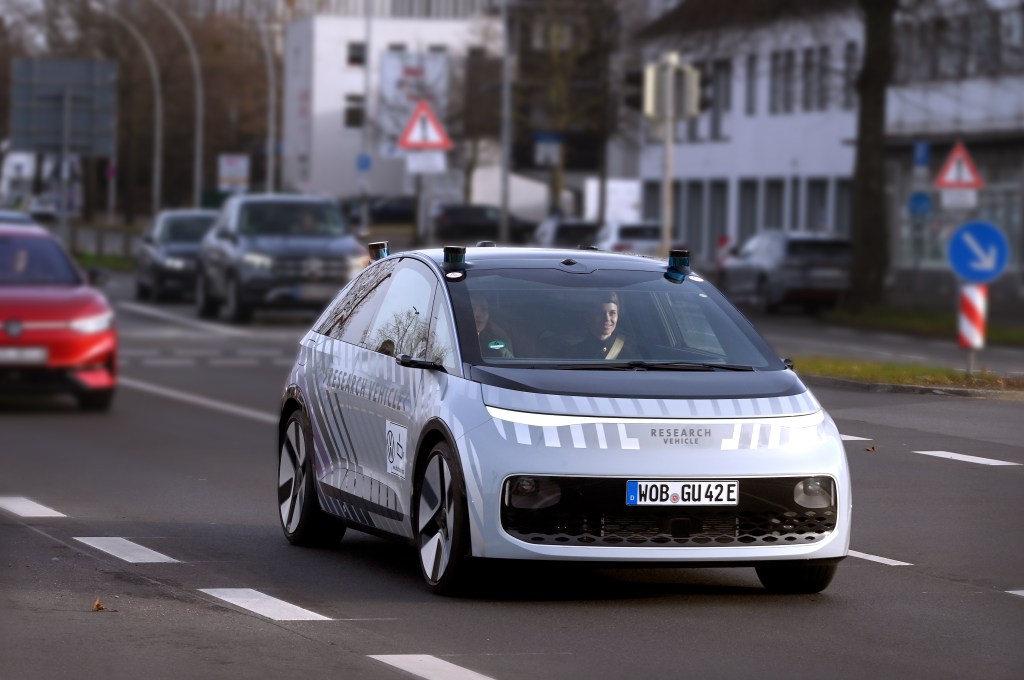
The Volkswagen Group is starting the next testing phase in Wolfsburg with its self-driving research vehicle Gen.Urban1. After intensive trials, the Gen.Urban can now drive autonomously in real urban traffic. The research project aims to explore how passengers experience riding in a self-driving vehicle without a traditional steering wheel or pedals – and what requirements this creates for future vehicle concepts.
An interdisciplinary team from Volkswagen Group Innovation, including designers, human factors specialists, software engineers, and materials experts, is gathering comprehensive data on user behaviour and interaction with the Gen.Urban. These findings will contribute to the development of future interior and user experience (UX) concepts across the Group’s brands.
Key questions include: How do people spend their time in a self-driving vehicle? Which digital features best support work, entertainment, or relaxation? How should interaction between the vehicle and passengers be designed, particularly for older people or children? Simply put: Do people feel comfortable?
Gen.Urban delivers a personalised driving experience even before the journey begins Even before departure, passengers can customise their preferences – via app or directly in the vehicle – from cabin temperature to ambient lighting. Upon entering, the Gen.Urban greets the passenger, and the seat automatically adjusts to the desired position. In addition, the vehicle’s digital interior can be tailored to individual preferences using artificial intelligence (AI). The wide front display with its information, light, and sound is then adapted to an individual theme.
Gen.Urban is designed without a traditional steering wheel or pedals. The test participant sits in the driver’s seat, while a trained safety driver monitors the vehicle from the passenger seat. If necessary, the safety driver can intervene at any time using a specially developed control panel with a joystick.
The current test phase initially involves Volkswagen Group employees and will last for a period of several weeks.
Dr. Nikolai Ardey, Head of Volkswagen Group Innovation, explains: “The technology for autonomous driving is making rapid progress. With our Gen.Urban research vehicle, we want to understand exactly how passengers experience autonomous driving. Why? Because the key to a positive customer experience is to build trust – through meaningful interaction, a relaxed atmosphere, and intelligent assistance systems that respond precisely to the needs of passengers. Ultimately, technology should fit people, not the other way around. We will benefit from these insights across the entire Group in the long term.”
Test route in Wolfsburg city area with typical traffic scenarios The starting point of the test route is the visitor parking lot at the HQ building. From there, the nearly ten-kilometre loop runs through Wolfsburg’s city area, passing the Sandkamp factory gate, Saar and Lessing streets, Brandenburger Platz, Breslauer Street, Grauhorststraße, and finally returning via Heinrich-Nordhoff-Street. Traffic light intersections, roundabouts, current construction sites, residential areas, industrial sections, and possibly congested traffic: the route is chosen to correspond to typical challenges of urban traffic. Each test drive lasts approximately 20 minutes.
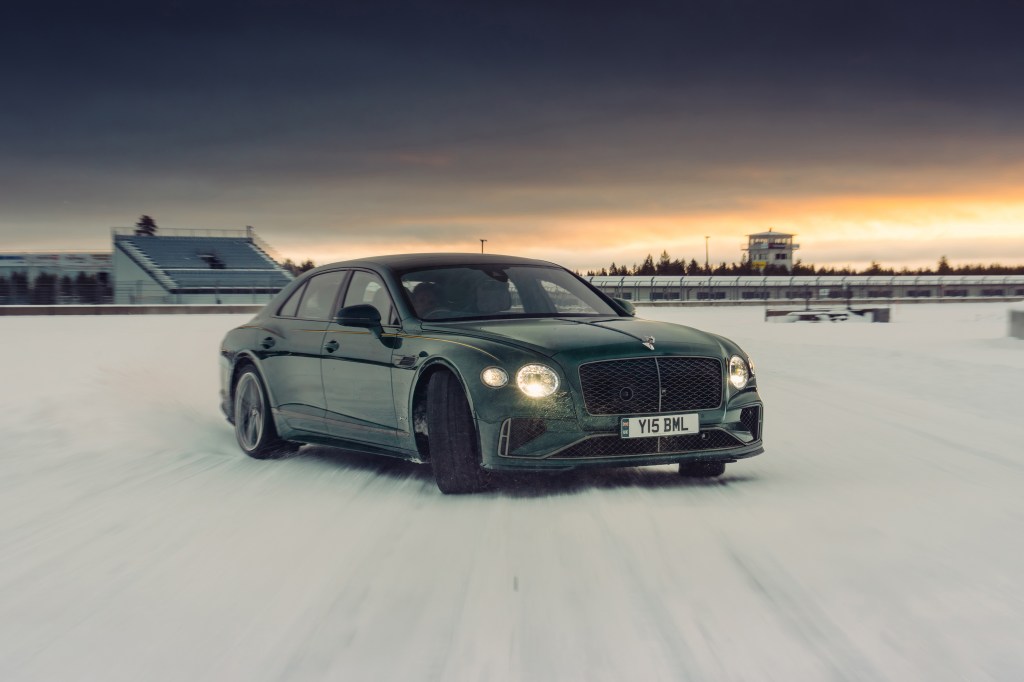
The Flying Spur Speed has again demonstrated its exceptional performance in all conditions by setting a new ‘winter lap record’ at the world’s most northerly active race circuit.
The record was set at the Drivecenter Arena circuit in Fällfors, northern Sweden – just 100 miles from the Arctic Circle, and a former military airbase. Despite the entirety of the 2.05-mile track being covered in 12-inch of ice and snow, the Flying Spur Speed was able to complete laps in under three minutes, with the best time standing at 2:58 – the quickest any vehicle has lapped the facility in winter conditions, ever. The Flying Spur’s variable four-wheel drive system and rear-wheel steering combined to give the car outstanding agility in the conditions, and peak speed was 120 mph during the record run despite the longest straight being only 450 metres long and covered in sheet ice.
The record was inspired by a combination of previous events from Bentley’s history – the two Ice Speed Records captured by Bentley in 2007 and 2011, and the one-hour endurance record set by a Turbo R at Millbrook Proving Ground in the UK in 1986 where 140 mph was averaged around the banked bowl. While the conditions mirrored those of the Ice Speed Records, the car that was used – registration Y15 BML – has a specification matched to the Turbo R in Bentley’s Heritage Collection. Identical Brooklands Green paintwork, yellow fine lines, and an interior in Linen, Cumbrian Green and Open Pore Walnut were specified to mark the Turbo R’s 40th birthday this year.
The Flying Spur Speed is a car designed to deliver exceptional driving performance in all conditions, thanks to its Ultra Performance Hybrid powertrain and advanced chassis systems. An advanced 600 PS 4.0-litre twin-turbo V8 is combined with a 190 PS electric motor that is neatly integrated within the 8-speed dual clutch transmission. In Sport Mode this powertrain deploys a full 782 PS and 1,000 Nm, with the instant torque of the E-motor complementing the charismatic cross-plane beat of the V8.
In pure EV mode, the E-motor provides 190 PS and 450 Nm of torque, more than enough to keep up with the traffic in most situations, while the 25.9 kWh battery offers up to 47 miles (76 km) of usable electric-only range (on the EU drive cycle). Together, the V8 and E-motor provide the new Flying Spur with a total range of 515 miles (829 km). Full electric mode can be deployed at speeds of up to 87 mph / 140 kmph, with throttle applications of up to 75 per cent.
The Bentley Performance Active Chassis comes as standard with the Flying Spur Speed. Features of the sophisticated new setup include Bentley Dynamic Ride and All-Wheel Steering, along with an electronically controlled Limited Slip Differential, while a new generation of ESC software permits a range of driving styles to be accessed and provides reliable traction in all conditions – though the record was asset with the system completely switched off.
With the new car’s rear-biased weight distribution of 48.3 : 51.7, the chassis systems and ESC have a mechanically-optimised platform in which to provide the final refinement. The system uses active torque vectoring front to rear through a centre differential, and precision vectoring across each axle using the brakes, to provide exceptional traction in all conditions – vital for a fast lap on snow-covered sheet ice.
Celebrating its 46th year, the 60 judges of Japan Car of the Year convened at Bosch’s recently established Japan headquarters in Center Kita, Yokohama City to select the country’s best cars of 2025-2026. In addition to the jurors, some 41 representatives from the country’s most influential automotive and lifestyle publications, who run the Japan COTY organisation, and dozens of car industry executives gathered to witness the vote-counting and prize-giving ceremony.
In a major change to previous voting methods, the Japan COTY organization decided to employ a new Formula 1 style voting system for 2025-26 in which judges had to allocate their votes across all of the top 10 finalists. In the same way as F1 race winners receive 25 points, each juror was required to give their best car 25 votes, their second best 18 votes, their third best 15 votes, fourth 12, fifth 10, sixth 8, seventh 6, eighth 4, ninth 2 and tenth 1 vote. The VW ID. Buzz, which finished in fifth place and ranked the highest among imported vehicles, picked up the Import Car of the Year award as well as the Best Design award.
In early polling, the Forester jumped to an early lead with the Prelude holding a close second. When all votes were counted, the Forester came home with 1149 votes, the Prelude 1076 votes, Toyota Crown (Estate) 654, Nissan Leaf 622, VW ID.Buzz 578, Hyundai Inster 477, BMW 2-Series 416, Peugeot 3008 393, Suzuki eVitara 357 and the Daihatsu Move finishing with 338 votes. After receiving his COTY trophy, the Forester’s chief engineer Katsuro Tadaki commented, “In addition to creating the highly lauded new strong hybrid powertrain, we finely tuned the car’s safety systems, packaging, handling, comfort levels, ride quality and cost performance to make the Forester the best in class.”
In addition, Porsche Japan—in the midst of celebrating its 30th anniversary in the country, saw its 911 Carrera GTS capture the Technology Award of the Year for its powerful new T-Hybrid powertrain which combines a new 3.6-liter boxer engine with an integrated electric motor for enhanced performance and minimal turbo lag, while the Porsche Experience Center took home the Japan COTY’s organizing committee’s special award for its ‘coexistence with the local community’ as well as its efforts to revitalize the Kisarazu region of Chiba. A second special award was given to the Super Endurance Organization (STMO) for its work in prototype vehicles working towards the realization of a carbon-neutral society, in addition to its efforts to open up a new stage of international exchange, including a demo run of NASCAR in Japan, a symbol of American motorsports, and promote cultural exchange between Japan and the United States through motorsport.
A DB5 bought for less than £1,000 in the early 1970s has just completed a full restoration at Aston Martin Works – realising the dream of its long-time owner and representing one of the most remarkable pieces of automotive appreciation in the process.
Welshman John Williams – a welder and garage owner by trade – was just 18 when, in 1972, he set himself the target of buying his dream car: an Aston Martin DB5. Saving hard for upwards of a year as well as working overtime whenever he could, John conscientiously gathered together the £900 cash – the equivalent of around £15,000 in today’s money – and, in September 1973 aged just 19, made the hours-long train journey from his home in North Wales to London to view the 1965 DB5.
The Vantage-engined model, complete with Weber carburettors, wire wheels, Sundym electrically operated windows and, according to the advert in Motorsport magazine “many bills” proved to be the car for John and he acquired it for £900.
Returning in it to Wales and proudly using the DB5 as his daily drive for upwards of four years, John only mothballed the car on his driveway when he secured a job in the Middle East in 1977.
John explained: “Then… ‘life’ happened. I’d had offers to buy her, and times when I could have done with the money, but I resisted and, as Sue [John’s wife] said ‘you’ll never get another one’.”
Sue Williams added: “The neighbours’ kids used to come round to play, and they’d play on her. Bouncing on the bonnet. One balanced on the exhaust pipe and snapped it off!”
John said: “As time went on it became a goal of mine to get her restored; to be able to drive her again. Being a garage man, I was a bit ashamed that I’d let her get into that state. I worked hard to buy her, and we’ve worked hard to get her repaired.”
Naturally, the Williams’ elected to use Aston Martin Works in Newport Pagnell, the heritage home of the marque and the place where more than 13,000 of the most iconic Aston Martin sports cars were built over 50 years, to carry out the restoration which began in late 2022.
Now, around three years on from its arrival, the couple have returned to Buckinghamshire to view the completed DB5, having regularly visited the Works site to view the car’s progress through its bare metal restoration journey.
Universally acknowledged to be the most desired specification of all DB5s, the Williams car is a right-hand drive 1965 DB5 saloon with the sought-after Vantage engine. It was originally specified in what remains, today, the most desirable exterior colour – Silver Birch – and boasts an interesting provenance that includes an original owner from the St George’s Hill area of Surrey, a gated community that, at the time, was home to many celebrities including The Beatles’ John Lennon and Ringo Starr.
Of the 1,022 DB5 models built by Aston Martin between 1963 and 1965, fewer than 1,000 (887) were built in the saloon bodystyle and, of those, only 39 originally boasted the Silver Birch paintwork, higher output Vantage engine, and right-hand drive configuration of the Williams car, making this a particularly rare and desirable example of ‘the most famous car in the world’.
Back in 2023, seeing their car part way through its restoration in the Works’ Panel Shop where the chassis and Superleggera frame were restored, and where each aluminium body panel was being hand formed, Sue said: “Wow! She looks amazing, doesn’t she? You’ve done such a lot of work!”
John commented: “It looks like an Aston Martin now. I’m thrilled. It’s great to see all the old ways of building a car have been passed on, and younger people here are keeping up the tradition.”
Paul Spires, President of Aston Martin Works, said: “This really is a lovely story. We’re delighted that Mr and Mrs Williams brought the car back to the place where it was built for us to restore.
“Although the car was in a profoundly run-down condition when it arrived, we always relish a challenge and I knew we have the skills, dedication and expertise to return the car to a better-than-new condition.
“After more than 2,500 hours of dedicated work by our teams in the Panel, Paint, Trim and Heritage Workshops – along with vital support from our in-house Parts Department – the car is now finished and, to my eye at least, looks absolutely stunning.
“While it might be uncouth to speculate on values for the car I think it’s reasonable to suppose that if it ever were to be offered to the market once more, and bearing in mind its specification and provenance, a value of up to £1m would be in order.
“In this 70th anniversary year of Aston Martin’s presence here at Newport Pagnell it is inspiring to see the dedication, commitment and pride of owners such as the Williams family. I know it has been understandably emotional to see the car that they have owned for more than half a century restored so meticulously, and I know that every member of the team here hopes they can enjoy many years of happy motoring in their ‘new’ DB5.”
On seeing his fully restored DB5 for the first time just a few days ago, John Williams said: “Well, it’s been a long time coming, a long time saving, but it’s been worth every penny. It’s just amazing.
“It’s probably almost 50 years since I have driven this car, but the experience is phenomenal. It’s just… unbelievable. My girl’s back and up and running! Back to her former glory.”
BMW India’s premium electric Sports Activity Vehicle – the BMW iX1 Long Wheelbase – now features a new colour and additional choices for luxurious upholstery options.
The car is locally produced and can be booked at all BMW India dealerships in the country from today onwards.
The striking Night Dusk Blue metallic paint option joins the existing palette, adding a deep, sophisticated aesthetic to the iX1 Long Wheelbase’s commanding presence. In all, the model is now available in four colours – Night Dusk Blue, Carbon Black, Mineral White and Skyscraper Grey.
The interior receives a luxurious refresh with the introduction of high-quality Veganza Smoke White + Atlas Grey Dual Tone and Veganza Castanea upholstery choices, crafted from sustainably sourced vegan leather. Furthermore, the distinctive 3D stitching pattern on the upholstery elevates the premium feel inside the cabin. These new options imply a high level of craftsmanship and provide exceptional comfort, contributing to a sense of modern, eco-conscious luxury.
A defining ‘Cocooning Effect’ philosophy seamlessly extends the chosen upholstery colour beyond the seats to other key interior elements, creating a harmonious and immersive cabin environment. The effect wraps the interior, including the door panels, dashboard, and even the speaker mesh in upholstery color, providing a continuous and plush feel throughout the vehicle.
The BMW iX1 has achieved significant success in the Indian market, becoming the brand’s top-selling electric model and a key driver of BMW’s leadership in the luxury EV segment. BMW India has constantly focused on enhancing the value offered by BMW iX1 LWB to the customers by adapting the product to the market needs such as introducing features like Surround View Camera and now coming up with a refreshed paint and upholstery palette. In less than a year of its introduction, BMW iX1 LWB is already the highest sold electric vehicle in premium segment.
The BMW iX1 Long Wheelbase is a premium offering that offers practicality and sustainability, all in one package. With a length of 4,616 mm and wheelbase of 2,800 mm, it is not just the biggest car in its segment, but also one of the longest 5-seater SUVs offered in India. Its modern design and bold, dominant stance highlight the SUV character. In the interior, a large and open feeling of space meets modern design, superior craftsmanship and innovative functionality. At the heart of the iX1 LWB lies fifth‑generation BMW eDrive technology, with its compact, integrated drive unit engineered for maximum efficiency, agile driving dynamics, and dependable reliability. It produces an output of 204 hp and a maximum torque of 250 Nm. The compact high-voltage lithium-ion battery integrated in the floor has a gross capacity of 66.4 kWh providing an attractive driving range of up to 531 kms (MIDC). The adaptive recuperation and one-pedal driving enhance the driving convenience and recover kinetic energy and feed it into the high-voltage battery, resulting in even higher efficiency.
100 years after the birth of the first Bentley ‘Super Sports’, the nameplate returns to Bentley for only the fourth Supersports model in history. The new Bentley Supersports is the most driver-focused Continental GT ever, with rear-wheel drive, a two-seat cabin and a gross weight below two tonnes. A non-hybrid, pure internal combustion powertrain has a new 666 PS (657 bhp), 800 Nm twin-turbo 4.0-litre V8 at its heart, with power fed through an eight-speed double clutch gearbox to the rear wheels only. Carbon ceramic brakes, new 22-inch lightweight forged wheels developed with Manthey Racing and an Akrapovič full-length titanium exhaust system are standard, while Pirelli Trofeo RS tyres are available.
The exterior represents the most purposeful Continental GT ever, with a series of form-following-function developments to maximise downforce and save weight. A new front bumper integrates the biggest front splitter ever fitted to a Bentley road car, and feeds cooling air to the engine and front brakes. Carbon fibre dive planes, side sills, fender blades and a rear diffuser and fixed rear wing combine to generate more than 300 kg more downforce than a Continental GT Speed. The weight saving regime extends to the roof, which is now a carbon fibre panel to also lower centre of gravity whilst maintaining structural stiffness.
Inside, the two-seat cabin features new, highly bolstered sports seats, positioned lower in the car, with the rear cabin environment replaced with a carbon fibre and leather shell. Monotone, duo-tone and tri-tone interiors are available, with extensive use of leather, Dinamica and carbon fibre for a performance-focused space.
Bentley’s Chairman and CEO, Dr Frank-Steffen Walliser, comments: “The new Supersports is more than just the most driver-focused Bentley yet. It signifies a return to Bentley making more extreme cars – ones that combine extraordinary breadth of ability with true driver engagement, while remaining pieces of automotive artwork unique and bespoke to each customer. Bentley has always thrived when revealing a more daring side, and the new Supersports is a statement of our intent while celebrating 100 years of the name. This is the first project developed from start-to-finish since I joined Bentley Motors, and I’m proud of our team and the speed at which we’ve created a car so different to the GT on which it’s based.”
Project Mildred The new Supersports is the product of an idea that was first proposed in September 2024, when a small engineering team theorised how a rear-wheel drive, sub-two-tonne Continental GT might behave dynamically. Approval was given for them to build one test mule, which took to the track only six weeks later, to prove their concept. The performance of this key demonstrator was convincing, and the project to create the new Supersports was born – albeit under close guard and with a small and focused engineering team.
It was immediately recognised that the project needed a codename to keep it secret. For this, the team turned to inspiration from Bentley’s past, and the story of Mildred Mary Petre. Born in 1895, she was a record breaker on land, and sea and in the air as a racing driver, a powerboat racer and a pilot. In 1929, she drove a Bentley 4½ Litre around the Montlhery circuit in France, solo, for 24 hours. In so doing, she averaged almost 90 mph and established a new endurance record – a phenomenal achievement by today’s standards but even more incredible in the 1920s. She pushed the boundaries of what was possible with a fearless spirit, and so in her honour, the development team christened their new project: Mildred.
A Lineage of Performance The word Supersports is a modern amalgamation of one of the most evocative names from Bentley history – “Super Sports” – first applied to a Bentley 100 years ago this year. The first Super Sports was launched in 1925 and based on the 3 Litre, with an uprated engine and shorter (and therefore lighter) chassis meaning it was the first Bentley capable of exceeding 100 mph. It also established the second aspect that defines “Super Sports” – rarity, with only 18 examples built.
Dormant for decades, the Supersports name – now one word – roared back to life in 2009 with a 204-mph revival, defining the pinnacle model of the first-generation Continental GT. This was the first two-seat variant of the Continental family, was 100 kg lighter than the standard car, and the most driver-focused Bentley of the day.
It was eclipsed in 2017 by an even faster, more thrilling successor, based on the second-generation Continental GT. Like the first generation Continental Supersports it was powered by a 6.0-litre twin-turbo W12, but now generating 710 PS – making it then the most powerful Bentley ever. 710 examples were produced, to match the power output.
The previous generations of Supersports all defined the ultimate performance version of their respective model families. The new Supersports takes this approach in a different direction; rather than focusing on top speed, the target is maximum driver engagement, through a combination of weight reduction – the most extreme in Bentley’s history – and a new powertrain.
The First RWD Continental GT The powertrain of the new Supersports is non-hybrid and purely Internal Combustion Engine (ICE). A new, strengthened 4.0-litre twin-turbo V8 is the heart of the car – with a stronger crankcase, uprated cylinder heads and larger turbos. The changes yield the highest power density of any Bentley engine – 666 PS / 657 bhp (166.5 PS per litre), with 800 Nm of torque. Coupled to the engine is the ZF eight-speed double clutch transmission used across the Bentley model range, but redeveloped for the Supersports with uprated clutches and a new shifting strategy. Gear shifts are now sharper and more responsive, while the downshift strategy during braking has been precisely calibrated to deliver optimal stability and driver confidence.
The engine breathes though a full-length titanium exhaust which is tuned to be significantly more characterful than any previous Bentley. Developed in conjunction with Bentley partners Akrapovič and unique to Supersports, the complete system amplifies and tunes the cross-plane V8 note to be extremely compelling – deep, powerful and completely authentic, with no artificial in-cabin enhancement.
The sprint to 62 mph / 100 kmph will be dispatched in 3.7 seconds, and top speed will be circa 192 mph / 310 kmph (official verified figures will follow in due course). More important that the headline figures though, will be how the Supersports behaves dynamically.
For that, Bentley’s chassis engineers have enjoyed the opportunity for a new level of driver engagement, by making the new Supersports the first rear-wheel drive Continental – except for the Continental GT3 race cars – in history. Power is fed exclusively to the rear wheels through an eLSD, out to rear wheels that have an increased track of 16 mm over a Continental GT. The eLSD is assisted by torque vectoring by brake, with the systems working together to make turn-in as sharp as possible and to give maximum traction. Rear-wheel steering is retained for maximum agility and stability, while the calibrations for the steering, suspension, traction management and ESC systems are all-new.
ESC settings allow the driver to select how much independence or assistance they would prefer – from fully-on, through a Dynamic Mode that allows a level of slip and oversteer within reactive limits, to fully-off – where the driver has complete control of the rear axle, and can provoke the Supersports into significant but highly controllable oversteer.
There are three new configurations to the Drive Dynamics Controller:
Touring mode matches the performance character of the Sport mode in a Continental GT Speed, but pairs it with increased ride height, softer damping and a more discrete exhaust character.
Bentley mode increases the performance character beyond Touring mode, with gearbox strategy, throttle pedal and chassis settings all uplifted. Exhaust system valves open to enhance sound character, and launch control becomes available.
Sport mode goes even further, with ultimate optimisation for driver engagement and tuned for maximum chassis and powertrain response.
The chassis system uses aluminium double wishbones at the front with a multi-link rear axle, air springs, and new twin chamber dampers – ECU-controlled in bump and rebound independently. Bentley Dynamic Ride, the proprietary 48V electric anti-roll control system, can apply up to 1300 Nm of anti-roll reaction torque in 0.3 seconds. Braking is by the largest automotive braking system in the world – 440 mm Carbon-Silicon-Carbide (CSiC) discs on the front axle, clamped by 10-piston calipers, and 410 mm discs with four-piston calipers at the rear – fitted as standard. Calipers are black as standard, with a red-painted option available.
The Supersports comes with new, 22-inch forged and machined aluminium allow wheels developed in conjunction with specialists Manthey Racing, available in two finishes – Black Painted, and Black Painted and Machined (introducing a silver metal accent). Uniquely for the Supersports, two tyre options are available: a standard Pirelli P-Zero tyre, and a new Trofeo RS performance tyre as an option. With Trofeo RS tyres fitted, the chassis changes and weight savings mean that the Supersports can corner approximately 30% quicker than a Continental GT Speed, with up to 1.3g peak lateral force.
The Lightest Bentley in 85 Years – With the Most Downforce The new Supersports is nearly half a tonne lighter than the Continental GT, and will weigh less than 2000 kg. The most significant weight saving comes from the powertrain, with a reduction commensurate with the conversion to ICE-only propulsion and rear-wheel drive. The roof – usually aluminium – has been replaced with a carbon fibre panel, which saves weight and lowers the overall centre of gravity.
The rear cabin environment has been deleted, saving a significant amount of weight. Along with the seats and seatbelts, rear cabin sound insulation has been reduced, and the audio system has been reconfigured for the front cabin only. Additional weight savings come the deletion of certain driver assistance systems, not required on a driver-focused GT.
The new exterior details of the car combine to make this the most aggressive Bentley Grand Tourer ever. Crafting new elements in carbon fibre helped reduce weight further to meet the target, with new pieces including:
A new lower front bumper, with an integrated front splitter (the largest aerodynamic splitter ever fitted to a road-going Bentley). The bumper includes two new cooling channels each side, that feed cool air to the front brakes and engine respectively. Above the bumper, a new lightweight mesh grille, with a design unique to Supersports, is laser cut in extremely fine aluminium
Two pairs of stacked dive planes sit at the corners of the front bumper, working in conjunction with the splitter to reduce front lift
New side sills, running the length of the wheelbase
Behind the front wheels, new B-shaped fender blades manage the airflow from the front wheel arches, aiding both extraction of high-pressure air and managing its flow along the body side.
A new rear diffuser, built into an all-new rear bumper construction that includes vents for the rear wheel arches
A one piece, fixed rear spoiler to the top of the boot lid
These aerodynamic pieces are all the result of extensive testing, with form following function, and no elements included just for aesthetic purposes. Together, the additions generate more than 300 kg more downforce than a Continental GT Speed, while maintaining lift balance along the car and helping to achieve a dynamic weight distribution, which starts at 54:46 when the car is stationary and gradually moves rearward with speed.
The final finishing carbon fibre touches are the wing mirrors and engine cover.
A Sporting Cabin The interior of the new Supersports is as purposeful as the rest of the car, inspired by the energy and precision of motorsport. Two-seat only, it completes the focus on driver engagement that is the singular mission statement of the car. Every details is engineering to elevate the driving experience, redefining performance-focused luxury.
New lightweight sports seats are provided for the driver and one passenger, with increased lateral bolstering, a lower position in the car and carbon elements across the shoulder area. The seats feature 11-way electric adjustment and retain seat heating. The rear cabin is replaced by a lightweight and precision engineering carbon fibre tub that wraps around the space. Finished with a leather wraparound design, the tub integrates into the rest of the cabin and delivers a cleaner, more purposeful interior layout.
Lightweight and high gloss carbon fibre veneers to the waistrails and fascia panels are standard, joined by a blend of leather and Dinamica, with the latter technical material to the centres of the seat backs and seat cushions, the centre panels of the doors and the headlining. Supersports embroidery and badging completes the cabin, together with an individually numbered badge to the centre console.
Numbered, Individual, Bespoke Every Supersports will be individually numbered before it leaves the factory, with customers able to request specific numbers from the 500 examples that will be handcrafted in Crewe.
Paint options start with a core range of 24 performance-focused colours, with additional paint finishes including Supersports logos and matte paint available via Mulliner. Beyond single-tone exteriors, Bentley’s design team has developed five ‘Design Themes’, which include either a small section of vertical striping and a Supersports name in a contrasting colour on the lower body side behind the front wheel, or a series of painted stripes in two contrasting colours across the rear quarters of the car.
Exterior carbon fibre is available in high gloss finish, and the lower elements can be fully painted or pinstriped.
For the cabin, 22 Main Hide colours are accompanied by 11 Secondary Hide and nine Accent Hide colours. Single tone, duo-tone (as standard) and a new and unique tri-tone colour split are all available, and Dark Chrome Specification is standard.
In place of interior carbon fibre, customers can also choose from Diamond Brushed or Engine Turned Aluminium in a Dark Tint finish, or the clean and elegant simplicity of Piano Black.
The launch imagery for Supersports is in a Design Theme called “Nightfall”, which blends Anthracite gloss exterior paint with a Camel accent to the lower bodywork along with Camel lower striping and a contrast number 8 to the grille. The interior is in Beluga and Camel, with Bronze accents.
Meanwhile, the car unveiled in New York at the global debut is in a specification called ‘Daybreak’, in Jetstream Matte with a Design Theme livery in Arctica and Portofino. The interior is Damson with Light Blue and Pillar Box Red accents.
Ordering, Production and Deliveries The launch of the new Supersports will be celebrated with the most dynamic and exciting film in Bentley’s history, which will be revealed with a premiere in Dubai in January. Order opening follows in March, with production beginning in Q4 2026 ahead of first deliveries at the start of 2027. The new Supersports will be available in the following countries and areas: UK, Europe (EU27 plus Switzerland and Turkey), USA, Canada, Australia, New Zealand, Malaysia, Oman, Bahrain, UAE, Qatar and Kuwait.
Vehicle currently in pre-production state. Supersports will only be available in specified markets.CO2 emissions and fuel consumption information for EU27 pending and subject to individual vehicle approval.
The new MINI Countryman SE All4 was launched in India today at an ex-showroom price of INR 66,90,000. The car will be available in the country as a completely built-up unit (CBU) and can be booked at all MINI India authorized dealerships from today onwards. Deliveries for the same will commence immediately.
Mr. Hardeep Singh Brar, President and CEO, BMW Group India said, “The new MINI Countryman SE All4 is a car that’s full of confidence and adventure. It’s electric, it’s fun to drive, and it’s perfect for exploring the city and the great outdoors. With its spacious interior, eco-friendly tech, and signature MINI style, every drive is a special experience. The sporty design and John Cooper Works trim make it a great choice for those who love performance and sustainability.”
The new all-electric, all-wheel-drive MINI Countryman SE All4 is the epitome of versatility and driving pleasure. The modern, minimalistic design with clear surfaces and wider wheel arches reinforces the look of the new MINI Countryman SE All4. The character of this SUV is underlined through the vertical orientation of body details. Its distinctive front grille, striking headlights and the very sculptural bonnet enhance the overall appeal. Short overhangs and slim contouring give the vehicle’s silhouette an elegant definition. The visual three-part division into the vehicle body, surrounding window area and a Jet Black roof ensure the MINI is instantly recognizable. The surfaces look particularly exciting thanks to an integrative treatment of details. Flush door handles and absence of side scuttles underline the clear and modern overall impression. A clearly defined shoulder area gives a decidedly athletic body. A wide stance on the rear, characteristic charisma and a modern minimalist design with clearly designed surfaces ensure the new MINI Countryman SE All4 has a significantly enhanced presence.
With its dynamic, sporty exterior and exclusive JCW trim, the new MINI Countryman SE All4 stands out as the epitome of driving fun and individuality. The exterior colour options Legend Grey or Midnight Black are complemented by roof and mirror caps and Sport Stripes in Black. The John Cooper Works trim stands out with unique design features of the Grille, Bumpers, Side Skirts, Rear Spoiler and Door Entry Sills. The JCW Aerodynamic styling, JCW Sports stripes in Black, Black Roof rails offer a dynamic appearance. The Piano Black Exterior Trim and wheel arches add to the sporty look of the car. The 19-inch JCW Runway Spoke Black alloy wheels further elevate the sharp character.
The striking appearance of the car is enhanced by three selectable Signatures Modes (Classic, Favoured and John Cooper Works) for the Daytime Running Lights (DRLs) of the LED headlights and the redesigned matrix rear lights. All three modes begin and end with a specially orchestrated welcome and goodbye animation. The intelligent High Beam Assistant takes care not to blind oncoming traffic during night-time driving.
Minimalist design, digital innovations and immersive user experience are the hallmarks of the interior. The sportiness is elevated with JCW Sports Seats, Vescin/Cord combination JCW Black upholstery and JCW Dashboard Trim. Electric seat adjustment with Active Seat for the driver is available as standard. The JCW Steering Wheel with paddle shifters adds to the hallmark MINI go-kart feeling. The Headliner Anthracite elevates aesthetics inside the cockpit. The dashboard and door panels are completely chrome-free and leather-free, using recycled 2D knitted fabric lining. The textile surface is made luminescent by ambient lighting and projections from the MINI Interaction Unit that make even rush hour relaxing. The panoramic glass roof adds to the bright and spacious atmosphere.
The focal point of the cockpit in the MINI Countryman SE All4 is the round OLED display. The central instrument with a diameter of 240 mm and a high-quality glass surface simultaneously controls the infotainment and assistance systems. With the new MINI Operating System 9, all vehicle functions can be operated intuitively via touch or voice assistant. The innovative MINI Digital Key Plus turns the smartphone into a car key via the MINI App and can be transferred to different users, along with their personal vehicle settings. Head-up Display projects all relevant information directly in the driver’s line of sight. A Fisheye Camera can capture selfies, fun moments and videos with sound, inside the cabin and is capable of transfers via a QR code. Harman Kardon Surround Sound System is an aural treat. Other features include Navigation, Remote Services, Remote Software Upgrades, Apple CarPlay / Android Auto, Teleservices, In-Car Weather and Intelligent Emergency Call.
With the MINI Experience Modes, one can choose from several immersive driving experiences, from the race-inspired ‘Go-Kart Mode’ to the energy-saving ‘Green Mode’ or the lively ‘Vivid Mode’ and more. MINI Experience Modes extend the indoor experience by tuning the light, sound and graphics settings.
A distinctive Toggle Bar Island gives access to the important driving functions including start/stop, gear selector, parking brake, experience modes and volume control. General storage area below the toggle bar provides space for a smartphone to be wirelessly charged.
The versatile and powerful electric drive makes it a perfect companion for unbridled driving fun even off the beaten track. With 313 hp and a maximum torque of 494 Nm, the new MINI Countryman SE All4 sprints from 0-100 km in just 5.6 seconds. It has a top speed of 180 kmph. The standard all-wheel drive system distributes its power precisely and reliably, providing the sporty SUV with sufficient grip and traction even in challenging conditions. It is powered by a lithium-ion battery with gross capacity of 66.45 kWh and has ample WLTP* driving range (combined) of up to 440 kms. The new MINI Countryman SE All4 also ensures fast and hassle-free charging. Charging time is – 130 kW DC Charger – 10 to 80% in 29 min (100 km top up range in 8 min) and 22kW AC – 0 to 100% in 3 hrs 45 min. (*WLTP = Worldwide harmonised Light Vehicles Test Procedure). JCW Sport Brakes impress with direct response and a better pedal feel.
Advanced assistance systems such as Cruise Control and Parking Assistant Plus with 360 degree Camera increase comfort, control and safety and relieve the driver from monotonous and less demanding aspects of driving. With Comfort Access, the car is locked / unlocked automatically as it recognises the key is at a distance of less than 1.5 meters.
The standard MINIMALISM technology includes auto start/stop function, brake energy recuperation, active cooling air ducts and electromechanical power steering. The wide range of alloy wheels depending on the variant, radiate confidence while reducing carbon footprint thanks to their lightweight design and use of recycled Aluminium.
The standard SAFETY equipment comprises of front passenger airbags and side curtain airbags, Brake Assist, 3-Point Seat Belts, Dynamic Stability Control, Crash Sensor, Anti-lock Braking System, Cornering Brake Control, Rear View Camera, and Tubeless Tyres with Tyre Pressure Indicator.