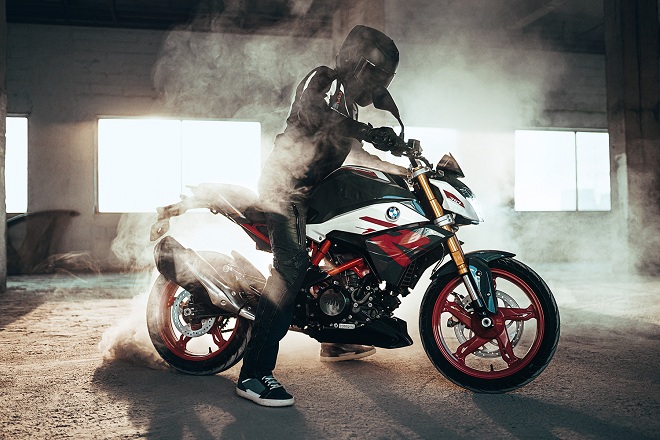
BMW Motorrad India has recorded the highest ever annual sales by a premium motorcycle brand in India. In 2021, BMW Motorrad India sold 5,191 motorcycles, posting a remarkable growth of 102.5 per cent as compared to 2020.
Mr. Vikram Pawah, President, BMW Group India said, “Since entering the Indian market five years ago, BMW Motorrad has outperformed itself every year and consistently raised the bar for the premium segment. In 2021, BMW Motorrad has recorded the highest annual sales by a premium motorcycle brand in India. We are proud of this feat! The main factor behind this overwhelming success is the unmatched emotional experience which is unique to the brand. BMW Motorrad has shaped a world of pure motorcycling that thrives on the thrill of riding, being one with the road and creating priceless memories with fellow comrades. We will continue to serve our customers with the same passion and keep on growing the BMW Motorrad family.”
Throughout 2021, BMW Motorrad India kept up the pace with a strong product offensive. A slew of new launches such as the all-new BMW C 400 GT, the BMW R 1250 GS and BMW R 1250 GS Adventure, the BMW R nine T and BMW R nine T Scrambler, the BMW S 1000 R, the all-new BMW M 1000 RR and the BMW R 18 Classic excited the motorcycling community with feature-rich, performance driven bikes with best-in-class riding dynamics.
The BMW G 310 R and BMW G 310 GS were important drivers of sales along with other popular models such as BMW S 1000 RR, BMW R 1250 GS / GSA, BMW F 900 R / XR and BMW R 18. The BMW C 400 GT scooter launched in last quarter was also in great demand.
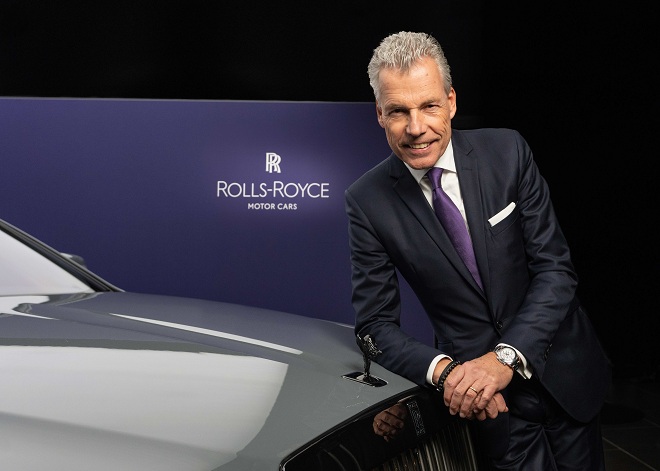
In 2021, Rolls-Royce Motor Cars delivered the highest-ever annual sales results in the marque’s 117-year history.
The company delivered 5,586 motor cars to clients around the world, up 49 per cent on the same period in 2020. This overall figure includes all-time record sales in most regions, including Greater China, the Americas and Asia-Pacific, and in multiple countries across the globe.
Torsten Müller-Ötvös, Chief Executive Officer, Rolls-Royce Motor Cars said, “2021 was a phenomenal year for Rolls-Royce Motor Cars. We delivered more cars than at any time in the marque’s 117-year history with unprecedented demand for all products in every global market. Our extremely strong product portfolio, an exceptional Bespoke offering, together with the first full year of availability of Ghost, the launch of Black Badge Ghost in October and the continuing record demand for Bespoke personalisation, has contributed meaningfully to our extremely strong performance. This is hugely encouraging as we prepare for the historic launch of Spectre, our first all-electric car. Building on this year’s success, we will continue to evolve as a true luxury brand, beyond the realms of automotive manufacturing.”
All Rolls-Royce models performed extremely strongly. Growth has been driven principally by Ghost, with demand surging further, following the launch of Black Badge Ghost in October 2021. This, together with the continuing pre-eminence of Cullinan and the marque’s pinnacle product, Phantom, has ensured order books are full well into the third quarter of 2022. The company’s Provenance (pre-owned) programme also enjoyed exceptional sales results in 2021, achieving an all-time record.
Bespoke commissions remain at record levels, with magnificent individual examples including the spectacular Phantom Oribe co-created with Hermès, alongside the Phantom Tempus, and Black Badge Wraith and Black Badge Dawn Landspeed Collection cars. The company signalled its commitment to leading a new contemporary coachbuilding movement with Rolls‑Royce Coachbuild becoming a permanent fixture in its future portfolio, and with it the unveiling of its latest coachbuilt masterpiece, Boat Tail.
Rolls-Royce also announced its first all-electric car, Spectre, during 2021. The extraordinary undertaking of bringing Spectre to market by the fourth quarter of 2023 has now begun, and the most punishing testing protocol ever conceived for a Rolls‑Royce is underway. This 2.5‑million-kilometre journey, which extends to all four corners of the world, will simulate more than 400 years of use for a Rolls‑Royce.
While preparations are made for the marque’s all-electric future, Rolls-Royce continues to meet the surge in demand for its current portfolio through a flexible manufacturing process and the dedication of the over 2,000 people who work at the Home of Rolls-Royce in Goodwood, West Sussex and around the world. The Rolls-Royce factory at Goodwood is currently running at near-maximum capacity, on a two-shift pattern to fulfil orders from clients around the world.
Rolls-Royce will continue to invest in its manufacturing plant in readiness for electrification, and in future talent, with a record 37 new apprentices set to join the company in September 2022.
Reflecting on the results, CEO Torsten Müller-Ötvös said, “This has been a truly historic year for Rolls-Royce Motor Cars. In the past 12 months, we have recorded our highest-ever annual sales, launched the latest addition to our Black Badge family, stunned the world with our coachbuilding capabilities and made huge strides into our all-electric future.
As always, it has been made possible by the dedication and commitment of the extraordinary people at the Home of Rolls-Royce, our international team and our global dealer network. I wish to extend my thanks and congratulations to each and every one of them: it is my privilege and pleasure to work alongside them every day.”
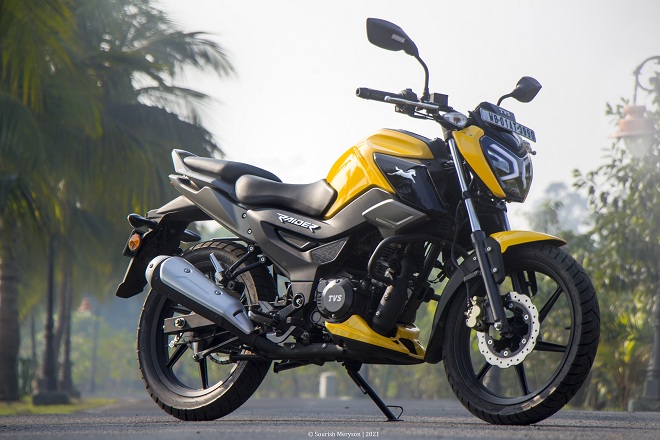
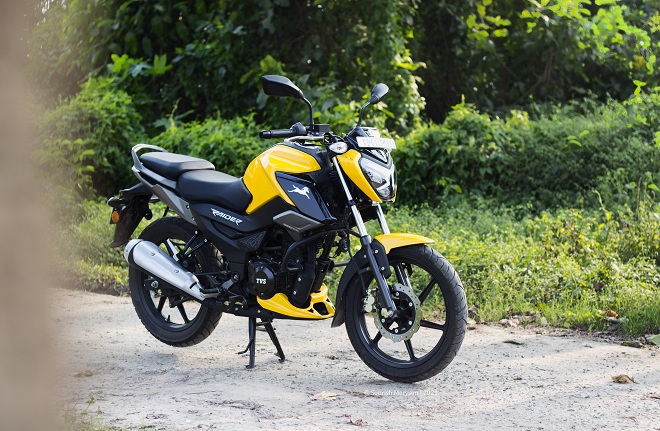
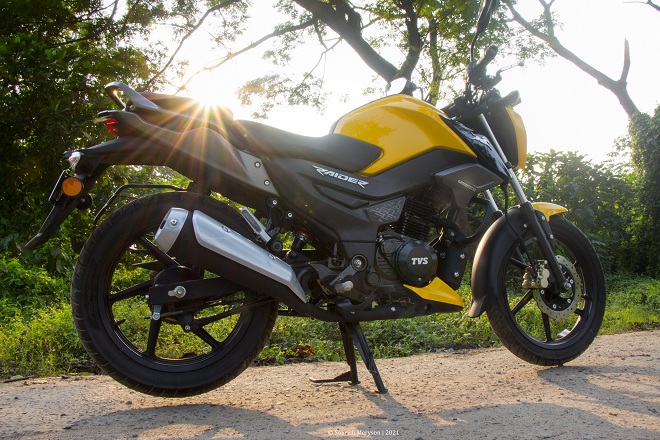
In September 2021, TVS Motor Company announced the launch of a new offering in the 125cc segment – the TVS Raider – aimed at the aspirational, young customers in India and abroad. The arrival of this new-kid-in-the-block stirred up the 125cc motorcycle segment in India and made everyone take notice of its presence, whether on the road or in the digital space.
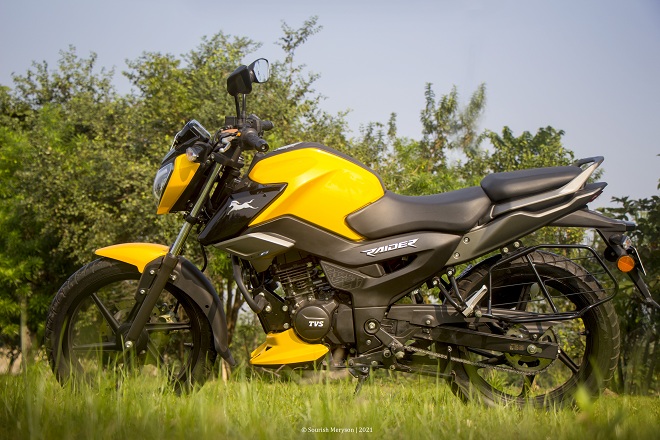
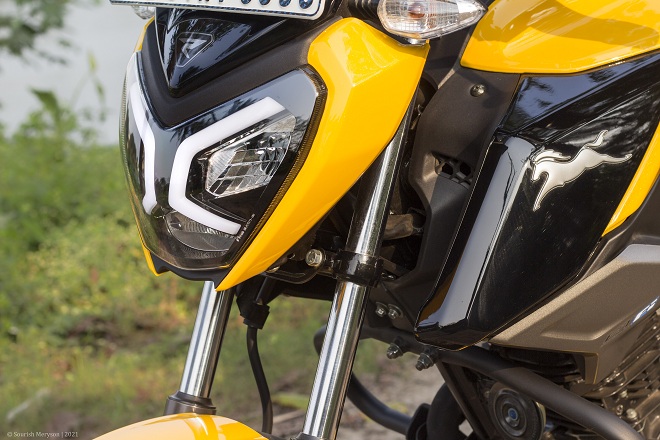
TVS Raider embodies a unique and bold design theme. The motorcycle has a distinctive macho personality and a special logo to symbolise this theme. The strong and sculpted tank profile lends TVS Raider muscular, solid appeal. At the same time, it is a sporty, compact and agile motorcycle for your everyday ride.
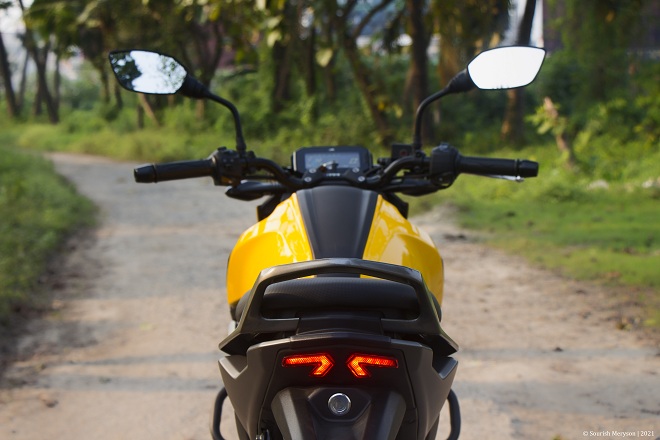
Signature design elements of the TVS Raider are its distinctive and aggressive looking headlamp and tail-lamp that also provides excellent visibility. The youthful colour schemes with specially designed textures and finishes accentuates its sporty and energetic design.
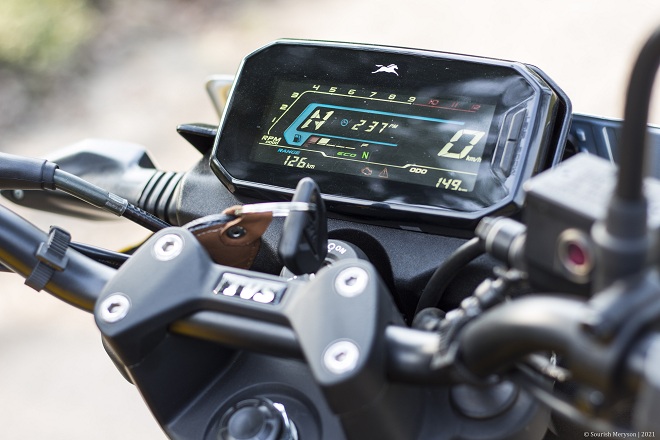
A reverse LCD digital speedometer with ride modes is an advanced hi-tech gadget with accurate and easy to read details. TVS Raider also comes with an optional 5-inch TFT cluster with TVS SMARTXONNECTTM variant, which offers Bluetooth connectivity and voice assist. The switch cluster, foot pegs, and mechanical details are designed in harmony with the motorcycle for functional benefits.
TVS Raider is powered by an advanced 124.8 cc air and oil-cooled 3V engine which churns a 8.37 kW (11.38 PS) of maximum power at 7,500 rpm and 11.2 Nm of peak torque at 6,000 rpm. The motorcycle can sprint from 0-60 kmph in 5.9 secs and attain a top speed of 99 kmph. The comfort and handling can be attributed to the gas-charged 5-step adjustable mono-shock suspension, low friction front suspension and split seat, 5-speed gearbox and 17-inch alloy chunky wide tyres.
The ergonomics of the TVS Raider is developed with focus on the comfort and convenience of the rider. The configuration of low seat height balanced on a long wheelbase, perfect ergonomics triangle, and a mono-shock delivers engaging ride and handling.
The exhaust design, with its distinct note, is tuned to perfection as it reverberates the spirit of the motorcycle. Features such as first-in-segment easy access under-seat storage for all your essential belongings, side stand indicator with engine inhibitor, helmet reminder, and the optional USB charger are focused on creating a fulfilling ride experience.
The Raider 125 is a well engineered and packaged product from TVS Motor Company. Its spirited performance, impressive fuel efficiency and dynamic design come together to make the Raider a more youthful, trendier, engaging and fun to ride motorcycle than any of the competitors in its segment. With the Raider 125, TVS has come up with a clear winner.
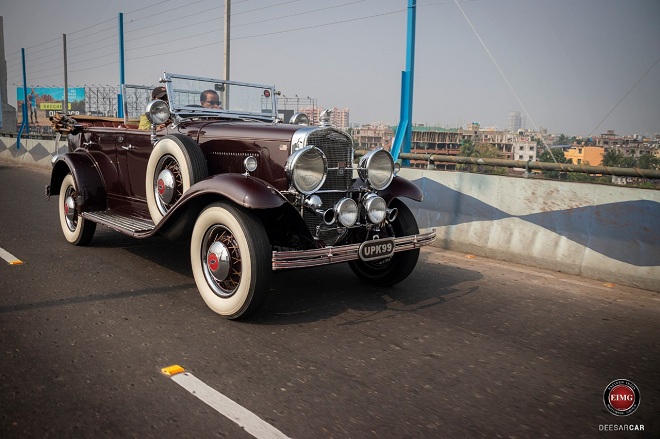
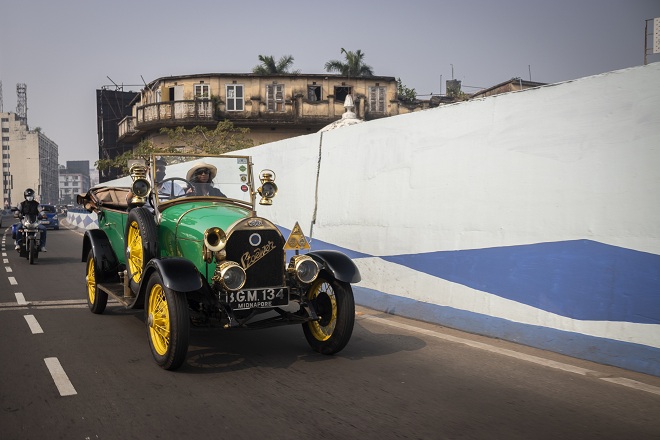
On December 12, Kolkata woke up to a very special Sunday as a convoy of historic cars drove across the city leaving the onlookers completely bewildered. Organised by the Eastern India Motoring Group (EIMG) – an active body of historic car enthusiasts – the EIMG Goodbye 2021 Breakfast Meet was an absolute visual treat for automobile aficionados as a bevy of vintage and classic four & two wheelers traversed the length of the city.
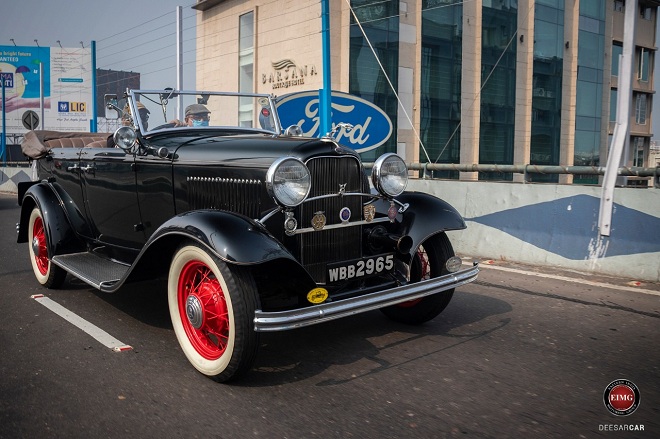
Rajiv Ghosh’s 1932 Ford V8
This fabulous drive of historic vehicles was flagged off from the iconic Town Hall in Kolkata and culminated at the Eco Park Golf Course Café in New Town. The non-competitive event witnessed participation spanning several decades of automotive history.
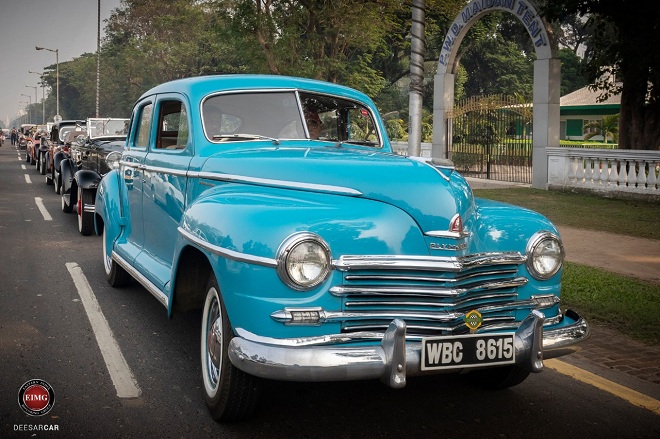
S.K. Lahiri’s 1948 Plymouth leading the convey of historic vehicles
More than 50 historic four and two wheelers were in attendance on this December winter morning among which were Ananda Chowdhury’s 1913 Gebruder Stoewer, Shrivardhan Kanoria’s 1931 Chevrolet Big 6, Pradeep Gooptu’s 1931 Austin 7, Rajiv Ghosh’s 1932 Ford V8, Aninda Sardar’s 1938 Austin 7 Tourer, Avik Naha’s 1947 Rover 12, S.K. Lahiri’s 1948 Plymouth, Rupak Ghosh’s 1948 MG TC, Darshan Sanghvi’s 1955 MG ZA Magnette, Saikat Dutta’s 1963 Triumph Spitfire and Amritendu Roy’s 1964 Ford Anglia just to name a few.
Members of the Fiat Users Club Of Calcutta turned up with their beautifully restored Fiats
It was pretty impressive to see the lineup of HM Ambassadors along with some really well restored Fiats being represented by members of the Fiat Users Club of Calcutta (FUCC) – a sister club of EIMG. In fact, there was a special corner earmarked for the FUCC entrants specially acknowledging their presence.
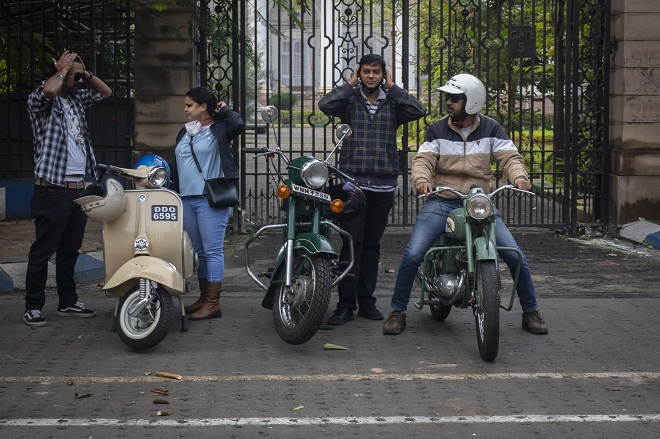
Participants of the two-wheeler category
The two-wheeler participation was also praiseworthy and included a rare 1965 Gilera Guibileo, a BSA Bantam and a Triumph among others.
Amritendu Roy’s 1964 Ford Anglia
The cars were flagged off from Town Hall and drove past the Raj Bhavan before hitting the majestic Red Road. The convoy continued straight before turning left onto Hospital Road and then embarking on the AJC Bose Road flyover.
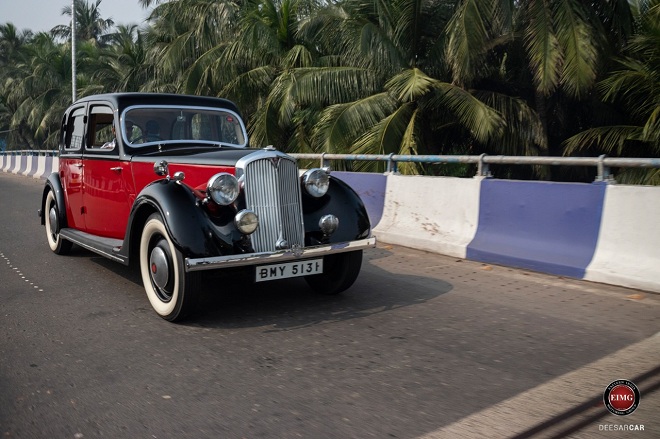
Avik Naha’s 1947 Rover 12
The convoy traversed the entire stretch of the Maa flyover before alighting just ahead of the JW Marriot. After a quick regrouping, the convoy continued ahead embarking onto the Chingrihata flyover and then onward towards Nicco Park.
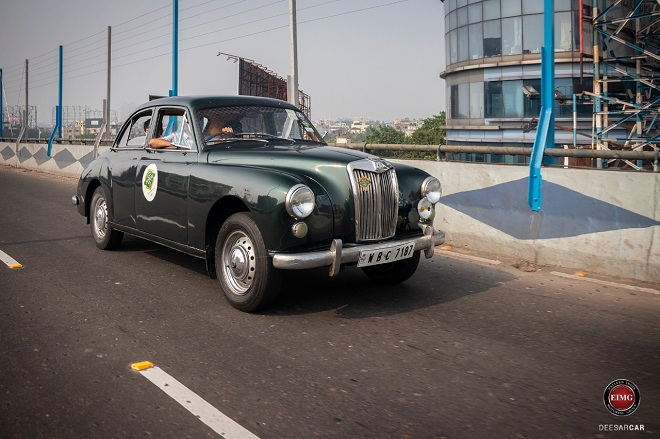
Darshan Sanghvi’s 1955 MG ZA Magnette
The historic vehicles drove past Wipro, Technopolis and Fairfield by Marriot before making the left turn from Biswa Bangla Gate. A short drive from there saw the convoy arriving at the picturesque Eco Park where the drive culminated at the Eco Park Golf Course Café. All the participants and officials later joined for breakfast and shared a great camaraderie over tales and laughter.
Pradeep Gooptu’s 1931 Austin 7 being tailed by Sarojesh Mukherjee’s Land Rover
Eager onlookers were spotted catching a glimpse of these timeless beauties. And as each car, with considerable historic importance, toured the city and completed the route, you could see how the time gap between history and modernity was bridged in style and elegance.
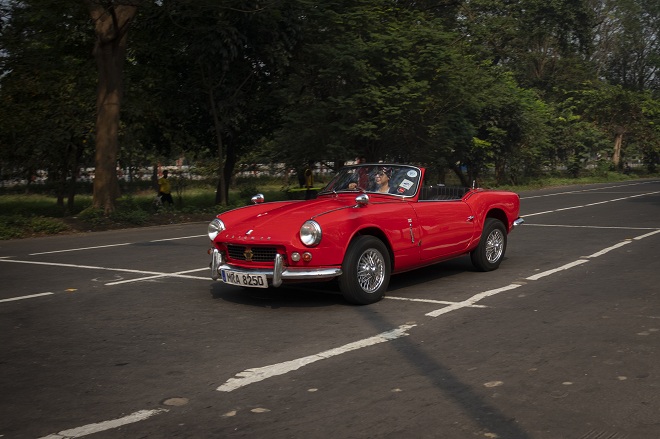
Saikat Dutta’s 1963 Triumph Spitfire
“I started EIMG at the beginning of 2020. The objective was to create a group like-minded individuals and work towards a common cause of creating awareness about these historic cars and encouraging more vintage and classic car owners to restore and preserve their vehicles. Two years later, we have over 150 members and have successfully organised six events under the EIMG banner.
Ananda Chowdhury’s 1913 Gebruder Stoewer
“The year-end Goodbye Drive has become one of our signature events and is eagerly awaited by our members. In the coming year, EIMG will be organising several other events including a Concours which has never been organised in Kolkata before. Through these events and activities EIMG hope bring back the glory days when Calcutta was looked upon as the mine of the best vintage and classics cars of the country”, said Shrivardhan Kanoria, President, Eastern India Motoring Group.
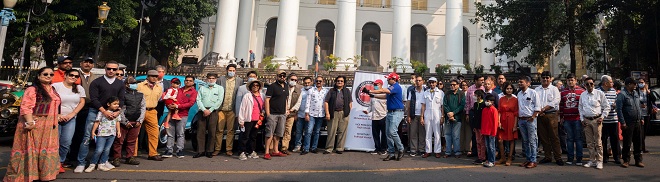
Members of EIMG pose for a group photograph in front of the iconic Town Hall of Kolkata
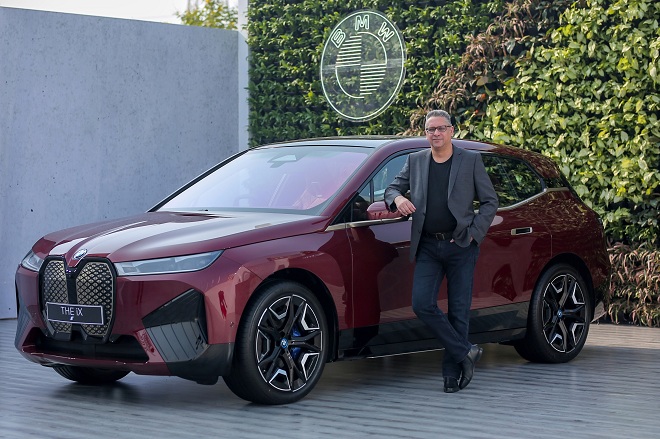
Mr. Vikram Pawah, President, BMW Group India with the BMW iX
The first-ever BMW iX has been launched in India at an introductory price of INR 1,15,90,000.
The BMW iX is the BMW Group’s new technology flagship. It is the first BMW without any numerals in its designation. ‘iX’ stands for the first BMW electric all-wheel drive vehicle (SAV – Sports Activity Vehicle). It effortlessly combines premium mobility with zero-emissions, sporting agility and a long operating range with luxurious spaciousness.
The car will be available as a completely-built-up unit (CBU) and can be booked through BMW dealerships across major metropolitan cities in India as well as shop.bmw.in. Deliveries will start by beginning of April 2022.
Mr. Vikram Pawah, President, BMW Group India said, “In a rapidly changing world, the first-ever BMW iX is the ‘Ultimate Driving Machine’ for a new generation. Latest BMW eDrive technology, combined with the functionality of X5, dynamics of X6 and striking appearance of X7, has given birth to the symbol of a new age. Born Electric, the BMW iX imbibes the principles of sustainability throughout its lifecycle, right from production to usage to end-of-life, making comprehensive use of natural and recyclable materials. It is so much more than a car – it’s a modern way of life. It is Joy, born again!”
The first-ever BMW iX is available in exciting metallic paintworks Mineral White, Phytonic Blue, Black Sapphire and Sophisto Grey. It is also optionally available in BMW Individual Aventurine Red metallic paint finish. Exclusive olive-leaf tanned natural leather upholstery ‘Interior Design Suite’ comes in Castanea color scheme.
‘Shy Tech’ (or stealth technology) is technology that remains out of sight with exterior and interior features that only become visible when actually in use – Intelligent BMW kidney grille with sensors, camera and radar tech, proximity sensors in body edging, flush door openers, washer under front logo, camera with washer in rear logo, integrated speakers, BMW Head-Up Display’s projector recessed into the instrument panel among others.
Characterised by sculptural and monolithic design, the iX represents a new face that makes mobility easier and comfortable while creating powerful presence and dynamics rarely seen in a vehicle – large BMW kidney grille, narrowest BMW headlights ever, frameless windows, 3-D bonnet, rectangular wheel arches, flared shoulder area and slim one-piece rear-lights. Interior is minimalist yet spacious due to absence of central tunnel and a flat floor that leaves one surrounded with a feeling of ease and relaxation with freedom of movement giving it a lounge-like atmosphere.
The most striking features include the longest ever single-piece BMW Curved Glass Display angled towards the driver, race car inspired hexagonal steering wheel making entry / exit easier, electrochromic BMW Sky Lounge Panorama Glass Roof, multi-functional seats with integral head restraints and massage function, bespoke leather upholstery, Ambient Lighting for every mood and luggage capacity of up to 1,750 litres with 40/20/40 split.
Fifth generation BMW eDrive technology features a highly integrated drive unit within a single housing that is powered by two electric motors (for front and rear axles), single-speed transmission and power electronics. The iX instantly accelerates from 0 to 100 kilometres/hour in 6.1 seconds with an output of 326 hp. The intelligent all-wheel drive is quick to respond and distributes the right amount of torque between the front and rear wheels to suit the driving situation and road surface. ‘My Modes’ switch changes driving character to Personal, Sport or Efficient. BMW IconicSounds Electric creates engaging driving sounds and pedestrian alerts.
Two high-voltage batteries integrated in the floor have a combined capacity of 76.6 kWh and provide a range of up to 425 kilometres.
The first-ever BMW iX ensures fast and hassle-free charging. Charging time is –
150 kW DC Charger – 80% in 31 min / 95 kms added range in 10 min
50 kW DC Charger – 80% in 73 min / 100 kms added range in 21 min
11 kW AC Charger – 100% in about 7 hrs / 100 kms added range in 2.5 hrs
As an introductory offer, the BMW iX will come with a complimentary smart BMW Wallbox charger. It can be integrated at home to enable safe and convenient charging up to 11kW.
BMW Group India aims to build one of the best charging networks in the luxury segment with fast chargers at BMW dealer network in 35 cities across India.
A host of BMW ConnectedDrive technologies continue to break the innovation barrier. BMW Live Cockpit Professional includes the freestanding BMW Curved Display with Navigation, a 12.3-inch digital information display behind the steering wheel, a 14.9-inch Control Display and BMW Head-up Display. The occupants can operate a number of car functions simply by speaking to their BMW Virtual Assistant. Hands do the talking with BMW Natural Interaction that recognizes six pre-defined hand movements for control of a number of functions. The smartphone holder integrated into the centre console allows inductive, Wireless Charging for mobile phones. Wireless Apple CarPlay® / Android Auto ensure seamless smartphone connection with the car to access several functions. Harman Kardon Surround Sound System with 18 speakers conjures an engrossing treat for the ears. Parking Assistant Plus with Surround View Camera makes parking in tight spots easier. The Reversing Assistant provides unmatched support in reversing out of a parking spot or narrow driveways. It records the last 50 metres driven and assists by taking over the steering.
Sustainability is in the DNA of BMW long before Sheer Driving Pleasure begins. BMW principle of Circular Economy – ‘RE:THINK, RE:DUCE, RE:USE, RE:CYCLE’ cuts down use of primary raw materials and increases secondary materials. Reduction of carbon footprint is achieved throughout the value chain and all stages of lifecycle by making comprehensive use of natural and recyclable materials and production with 100% green electricity.
The first-ever BMW iX comes with standard two-year warranty for unlimited kilometres. The batteries are covered by a warranty valid for eight years or up to 160,000 kilometres. Repair Inclusive can extend warranty benefits from third year of operation to maximum fifth year without any mileage limitation.
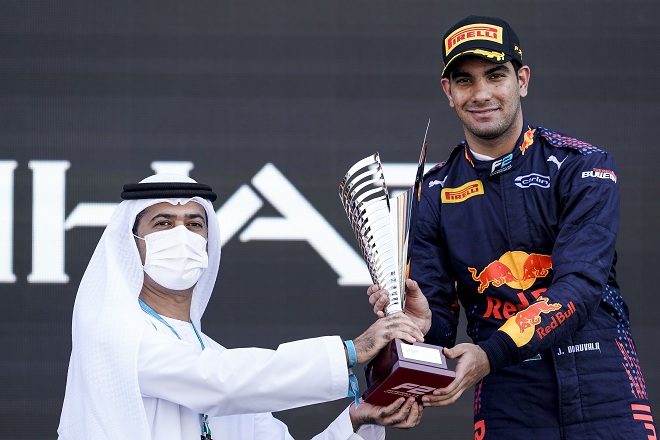
India’s racing star Jehan Daruvala, part of the Red Bull Racing Junior Team, pulled off a sensational victory in Formula 2 at the Yas Marina Circuit on Saturday.
The main support race for the Formula 1 Abu Dhabi Grand Prix saw Jehan start on Pole (first), soak up immense pressure and eventually script his second victory and fifth podium in Formula 2 this year.
Jehan got off to an excellent start and held his lead in the short run down to Corner 1 of the 5.281km circuit. Behind, Dan Tictum slipped to fourth while Felipe Drugovich, starting third, gained a position to get into second.
Drugovich, then, started piling the pressure on Jehan. Twice on the first lap, the Brazilian managed to pull alongside Jehan, but the Indian held him at bay with some clever positioning of his car.
“After struggling in the early part of the weekend, it is fantastic to win here. I was under a lot of pressure in the first few laps as well as later on. But I remained confident and really enjoyed the racing. It’s a good result for the team, so thank you to everyone who has worked hard to make this happen. Starting tenth in the next race is going to be tough, but I will do my best,” said Jehan after his third win in Formula 2 races in two years.
Midway through the race, Drugovich again started piling on the pressure. He lunged down the inside of Jehan and almost shot ahead too. But Jehan stayed by his side till the corner, where he emerged ahead once again.
Initially, it seemed like Jehan had pushed his car and tyres too hard too early in the race to break the DRS opportunity for the drivers behind. But Jehan had, in fact, managed to absorb the immense pressure and repeated attacks while also preserving his tyre life. Towards the end of the race, Jehan opened up a small gap to Drugovich and kept increasing it.
Jehan comfortably won the race with a 2-second margin over Drugovich to earn his fifth podium of the season. Championship leader Oscar Piastri climbed up the order and finished third to win the 2021 Formula 2 title comfortably. The top ten from this race will be reversed for the start of Race 2, which means that Jehan will have to start tenth.
After showing tremendous pace and overtaking skills in Jeddah last weekend on the fastest street circuit on the F1 calendar, due to penalties in races, Jehan had missed out on a podium last weekend. This race was a strong comeback from the Indian star.
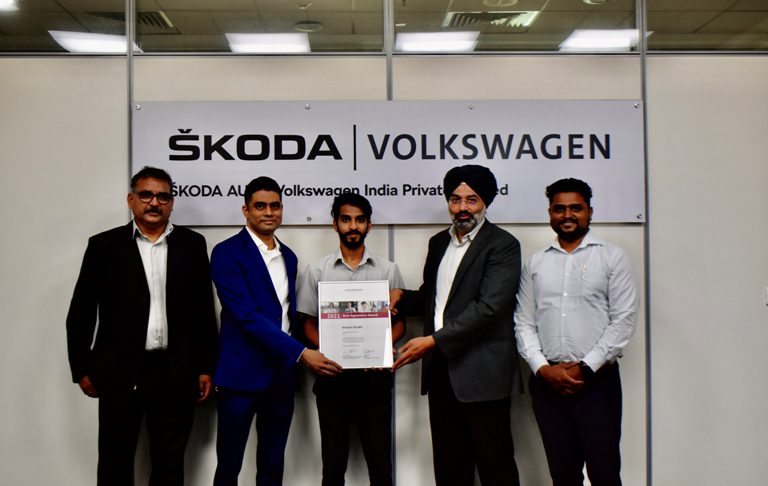
19-year-old Mechatronics Technician Amaan Shaikh from Pune, Maharashtra bagged top honours for India at the 21st edition of the Volkswagen Group’s Best Apprentice Award 2021. With this achievement, Amaan joined the ranks of up-and-coming professionals, who completed their vocational training last year and are among the 50 best apprentices in the Group worldwide.
Every year, the Volkswagen Group presents the Best Apprentice Award to the 50 most talented apprentices, honouring their outstanding professional competence and performance. Keeping up with its annual tradition, the Volkswagen Group presented the ‘Best Apprentice Award’ to 50 trainees from 19 countries, globally. This year, Amaan Shaikh impressed the panel with his skills and competencies in Work planning, Machining, PLC & robotic programming, Installation & commissioning, Troubleshooting of Mechatronics systems.
Sarma Chillara, Group Head of HR and Administration ŠKODA AUTO Volkswagen India Private Limited said, “It gives me great pride to witness our apprentice Amaan Shaikh win Volkswagen Group’s coveted Best Apprentice Award 2021. I congratulate Amaan and his batchmates from the graduating batch for their excellent performance and for upskilling their technical capabilities especially on future-oriented technologies in this Dual Vocational training program of the Volkswagen Academy.”
The Mechatronics 2021 program is part of ŠAVW’s global initiative based on the unique training methodology using advanced technology to upskill and re-skill talent. The program gave apprentices an opportunity for global exposure in economies including Germany, China, and Brazil.
Receiving the Best Apprentice Award 2021, Amaan Shaikh said, “I am delighted on being recognized as the Best Apprentice from India for 2021. I would like to thank ŠAVWIPL for giving me this transformational opportunity through the Mechatronics program. I am confident that these learnings and skills will play an important role in my career progression and I am also hoping that I can make a meaningful contribution to the future of mobility.”
Hailing from Thane, A Trainee-Machine Shop, Amaan has received training in Metal working, Electrical & Electronics, Industrial Automation, Hydraulics and Pneumatics, Robotics, Welding, Auto CAD & CATIA, CNC, and 3D printing. He has learned competencies across Work planning, Machining, PLC & robotic programming, Installation & commissioning, Troubleshooting of Mechatronics systems.
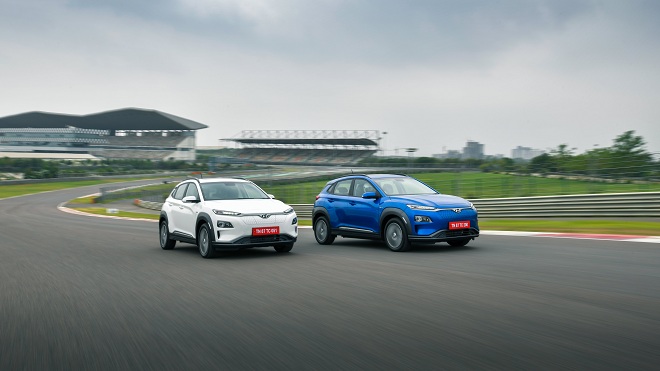
Hyundai Motor India Limited (HMIL), today announced its roadmap to drive the electric mobility revolution in India with the expansion of its line-up to six Battery Electric Vehicles (BEV) for the Indian market by 2028. Further, Hyundai will also introduce its dedicated BEV Platform – E-GMP in India, showcasing its commitment towards smart Indian customers.
Commenting on the corporate announcement, Mr. S S Kim, MD & CEO, Hyundai Motor India Ltd., said, “Hyundai has been at the forefront of the electric mobility revolution in India, with the introduction of India’s 1st Electric SUV – KONA Electric in 2019. Hyundai Motor India has been delighting customers with the most innovative and technologically advanced mobility solutions over the last two and a half decades. As we continue to redefine the mobility space, today we are yet again showcasing our commitment towards Indian customers with the announcement of expanding our BEV line-up to 6 vehicles for the Indian Market by 2028. At Hyundai, we are taking experiences Beyond Mobility and are strongly focusing on Intelligent Technology, Sustainability and Innovation. Keeping in line with this thought, we will introduce our dedicated BEV Platform – E-GMP as well as modified platforms for battery electric vehicles in India. By driving the adoption of electric mobility at scale in India, Hyundai will become the fulcrum for transformation of a brighter and better tomorrow.”
ELECTRIC GLOBAL MODULAR PLATFORM (E-GMP)
Hyundai Motor Group globally showcased its E-GMP dedicated BEV platform for future electric vehicles, marking a new era for the brand. Driving the pump-to-plug revolution, Hyundai will pioneer the development of future electric vehicles with this dedicated BEV platform that comprises of vehicle chassis that includes the battery, motor and power electric system. With scalable dimensions, this platform will form the backbone of different types of vehicles. With an innovative interior packaging vehicles developed on E-GMP will feature a flat floor, slim cockpit and a flexible & spacious cabin.
E-GMP has been developed on 4 Key Pillars of:
· Modularity – With one platform that can facilitate many body types, feature a modularised battery system and create greater synergies with BEV component sharing.
· Reliability – Featuring a low centre of gravity, use of Ultra High Strength Steel and 8-point battery mounting, E-GMP will pave the way to highly reliable BEVs of the future.
· Usability – With a flat floor and flexible seating layout as well as an innovative interior space that offers sliding console and sliding 2nd row seats, E-GMP will usher in a new dimension of usability.
· Performance – Featuring a large battery capacity up to 77.4 kWh, 2WD/ 4WD capabilities, improved handling and capability to achieve a top speed of 260 km/h, E-GMP will drive in a new age of fun-to-drive electric vehicles.
LINE-UP OF 6 BEVs BY 2028
Catering to the diversity of the Indian market, Hyundai’s line-up of six Battery Electric Vehicles will cater to multiple segments including Mass market and Mass Premium segments in India. To further delight customers, Hyundai will introduce these BEVs in different body styles including SUV body shape by 2028, thereby offering a wide range of models for customers to choose from.
25 YEARS OF COMMITMENT TO MAKE-IN-INDIA
Over the last two and a half decades, Hyundai Motor India has been fueling the Make-in-India movement by leading the automotive industry with excellence in manufacturing. Aligning with the Government’s vision of Electrification, Hyundai has worked towards the development of a concrete BEV roadmap that will breathe life into the Electrification ecosystem in India, focusing on localization of manufacturing synergies for Battery Electric Vehicles.
ELECTRIC VEHICLE INFRASTRUCTURE
Hyundai Motor India to work towards the development of BEV infrastructure in India with strategic collaborations to drive a widespread adoption of BEVs in India. Hyundai Motor India will work towards the development of a customer centric BEV charging solutions with a focus on:
Audi today announced a new variant of the Audi A4 – the Audi A4 Premium to celebrate a successful 2021. The Audi A4, in its fifth generation, boasts a new design and a powerful 2.0-litre petrol engine that generates 140 kW (190 hp) of power and 320 Nm of torque.
The Audi A4 Premium is an addition to the existing line up – including the A4 Premium Plus and A4 Technology variants. The Audi A4 Premium is priced at INR 39,99,000 ex-showroom.
Commenting on the introduction, Mr. Balbir Singh Dhillon, Head of Audi India, said, “The Audi A4 since its launch in January has garnered great response – this is a car that has historically been a volume seller for the brand. Today, we are happy to introduce a new variant – the Audi A4 Premium to mark the success of our brand in 2021. This is a time to celebrate and we couldn’t be happier that we are able to give our customers a choice of three trim levels to choose from. I am confident this will bring in more customers to the ever-growing Audi family.”
The Audi A4 Premium with its multi-dimensional design is perfect for both everyday driving and a thrilling, fun drive. Built for comfort, safety, and practicality, the car is equipped with multiple state-of-the-art features that make it a combination of power, technology, and efficiency.
The Audi A4 is now on offer in three trims: Premium, Premium Plus and Technology, and customers can choose from five exterior colours and two interior colours.
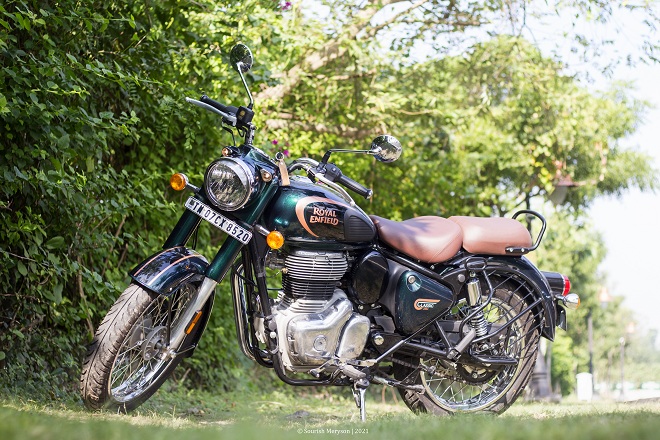
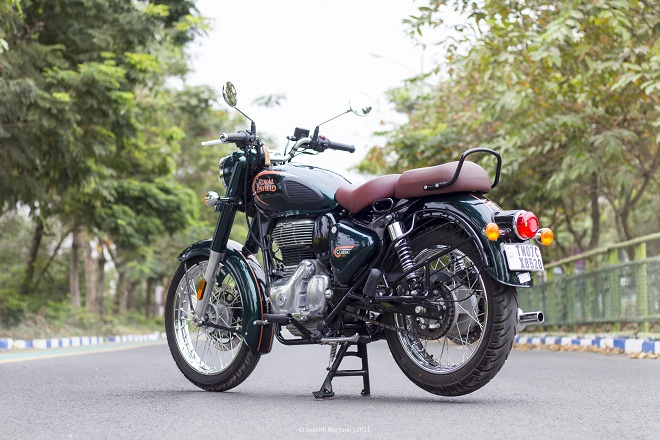
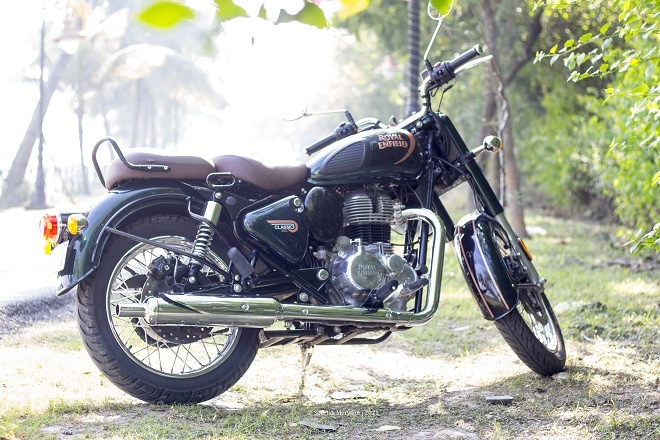
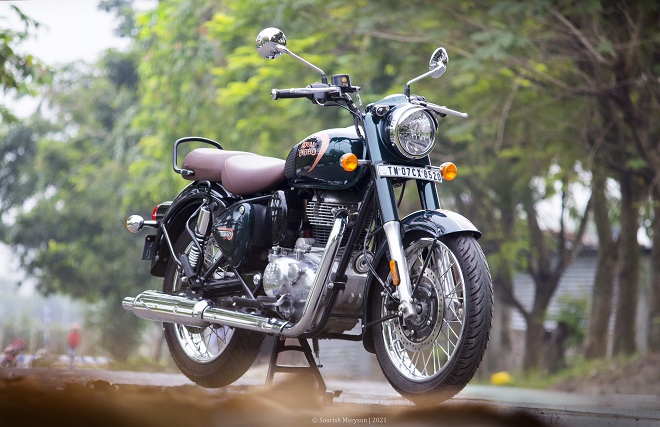
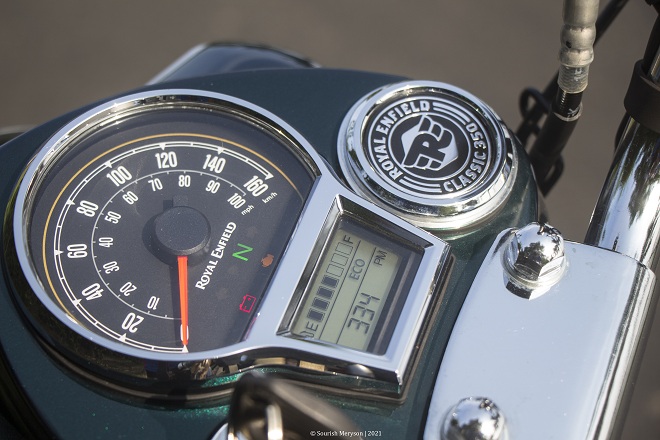
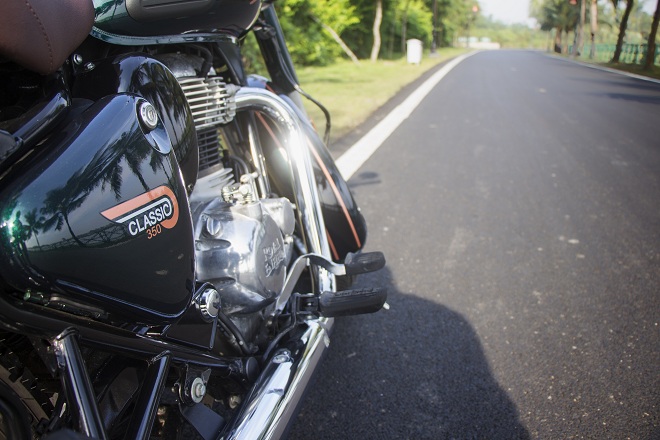
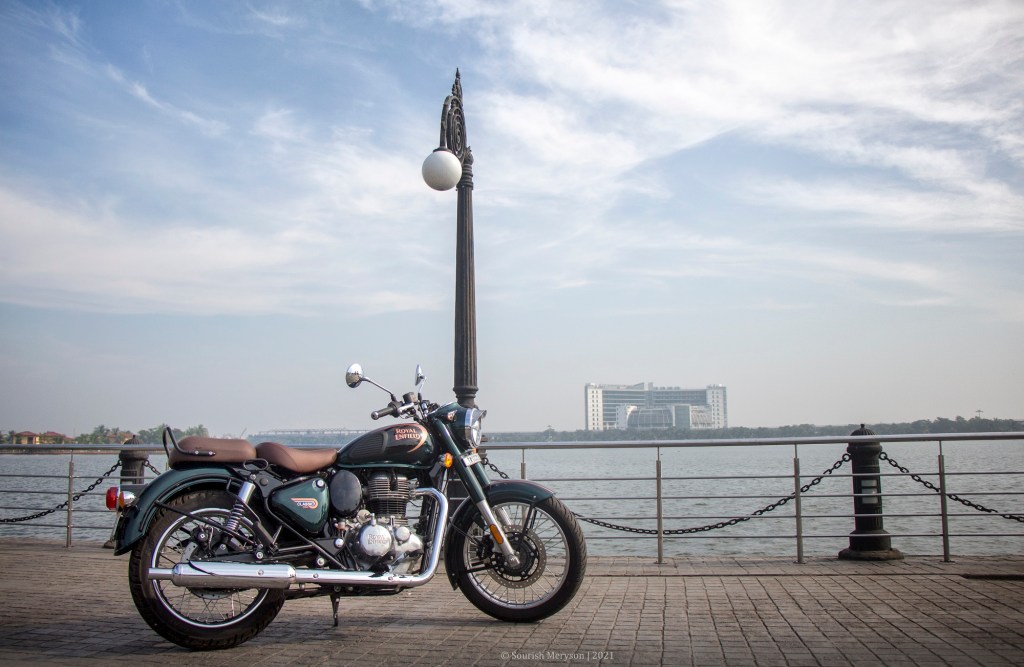
The All-New Royal Enfield Classic 350 continues to embody the traditions and craftsmanship of the past as it is reborn. Inspired by the post war G2 model, first born in 1950’s, the all new Classic 350 continues to be a testament to the timeless design which took the motorcycling world with an awe back in the heydays of British motorcycling.
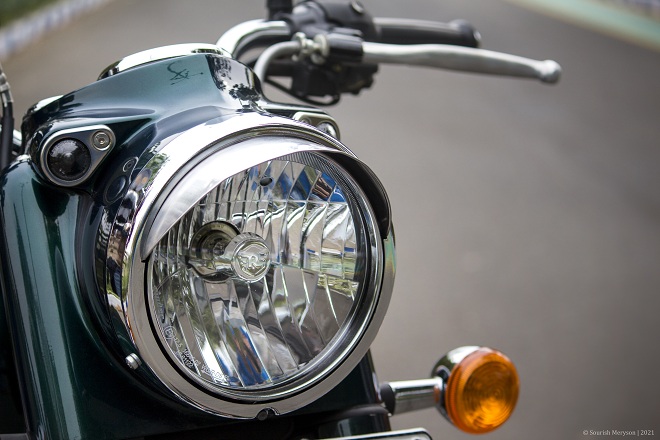
The Classic teardrop fuel tank, the distinctive thump and the hallmark casquette headlamp – all harmonise as one, rejoicing in the masterpiece that is the timeless Royal Enfield Classic.
At the heart of the All-New Royal Enfield Classic is a 350 cc, single cylinder, fuel injected, air cooled engine that offers a responsive ride experience. The engine delivers 20.2 hp of maximum power at 6100 rpm and churns out 27 Nm of peak torque at 4,000 rpm.
The the twin downtube spine frame ensures that the ride on the Royal Enfield Classic 350 is comfortable, stable and coupled with the almost vibe-free engine that makes for a very relaxed yet engaging ride.
The Royal Enfield Classic 350 comes with a fuel tank capacity of 13 litres which ensures that you can enjoy peaceful long rides. The 170 mm ground clearance results in a comfortable ride across terrains. The single & dual channel ABS assures reliable and confident braking on your rides.
The All-New Royal Enfield Classic 350 is available in 11 attractive colour schemes which is sure to turn heads while on the move -Chrome Bronze, Gunmetal Grey, Dark Stealth Black, Halcyon Black, Halcyon Green, Halcyon Grey, Signals Marsh Grey, Signals Desert Sand, Redditch Sage Green, Redditch Grey and Redditch Red.
It is no mean job to take an iconic bike like the Classic 350 and try to make it better without losing any of its timeless charm which forms the very basis of it global fan following. Kudos to Royal Enfield for finding that fine balance in retaining everything that was fabulous about the Classic 350, but at the same time upgrading the bike with modern levels of engineering and design enhancements which has significantly improved the riding experience.
The all new Royal Enfield Classic 350 is now better in all aspects- more refined performance, better dynamics, a myriad of attractive colour options and looks solidly built as well. This new Classic 350 is all set to spearhead the segment of single cylinder modern classics.
Few cult classics can retain their timeless appeal like this Royal Enfield has. The Classic 350 has been the top-selling retro-styled motorcycle not just in our country but across the world. So if you aspire to own an easy to ride, comfortable, affordable, solidly-built and pure modern retro motorcycle, then your quest ends here. Look no further than the All-New Royal Enfield Classic 350 – a legend is truly reborn. Whether parked in your garage or on the move, it is bound to make a strong statement.






 Power Drive