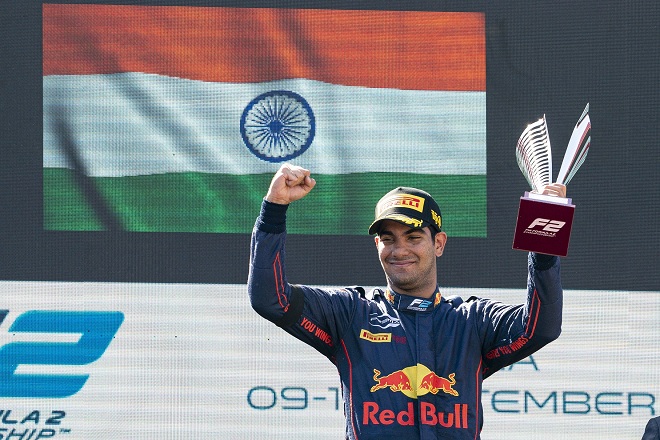
Jehan Daruvala, Prema Racing. FIA Formula 2 Championship, Autodromo Nazionale Monza, Monza, Italy. 11th September 2022.
India’s Jehan Daruvala raced to his fourth Formula 2 win in the championship’s main Feature race at Italy’s Monza race track on Sunday.
The 23-year-old started sixth on the grid but used a mix of strategy, race craft and tyre management to capitalise on a safety car and red flag-interrupted race and clinch a comfortable win around the hallowed ‘Temple of Speed’.
The win was Jehan’s first this season. It comes after the Red Bull-backed racer went from fifth to third in Saturday’s Sprint race, making it two podiums from two races for Jehan this weekend and eight this year.
It was also his sixth top-three finish at Monza and second win at the track after the Indian won there last year.
“What a weekend,” said Jehan. “It’s been a long time coming. “We’ve had the win taken away from us for one reason or another on more than one occasion this year. “But we’ve kept our heads down, kept believing, kept pushing and we’ve finally done it.
“And what a venue to do it at too! “Monza is up there with one of my all-time favourite tracks and standing on the top step of this incredible podium, out over the main straight with the Indian national anthem playing out, feels so, so special.”
Jehan made a good getaway, but starting on the dirty side of the grid got bogged down after the initial start.
Nevertheless, he kept sixth as the field went through the first chicane but lost a place to Juri Vips as he lifted in anticipation of a safety car after an opening-lap shunt involving Ralph Boschung and Theo Pourchaire.
The safety car wasn’t deployed until later, however, and Jehan was forced to defend from Jack Doohan on the run to the second Roggia chicane.
The pair went wheel-to-wheel in the braking zone with Logan Sargeant making it three-wide into the chicane. Doohan, with Jehan on the inside and Sargeant on the outside had nowhere to go and ended up colliding with Jehan.
The Red Bull-backed racer however suffered only minor damage and carried on as the safety car was finally deployed.
Racing resumed at the end of Lap 5 with Jehan running seventh. But a crash for Calan Williams at the Ascari chicane brought the safety car back out on Lap 8.
Jehan seized the opportunity to pit, with the perfectly timed stop eventually moving him up to third once his other rivals had pitted.
That left him perfectly placed to battle for the win as the red flag was deployed to allow track workers to clear away Williams’ stranded Trident and carry out repairs to the barriers.
The race resumed after a ten-minute stoppage. Jehan went on to put on a masterclass of tyre management and race craft as he bided his time at first before piling the pressure on to race leader Richard Verschoor and second-placed Marino Sato.
He passed Sato on Lap 18 of 30 and was hot on Verschoor’s heels. But the Trident racer, struggling with tyre wear, dived into pits with just five laps to go, handing Jehan a lead he would keep until the chequered flag.
“This weekend’s result couldn’t have come at a better time as we now head to Abu Dhabi for the season-finale,” added Jehan.
“The Yas Marina track is another venue I like and I won there last year. So going there on the back of a weekend like this one gives us a major boost.”
The Formula 2 championship, which acts as a support series for Formula One, will have the chance for a bit of a break as F1 embarks on its Asian and American swing.
The championship will return for it’s last and final round of the season on the Nov. 18-20th weekend alongside the Formula One season-ending Abu Dhabi Grand Prix.
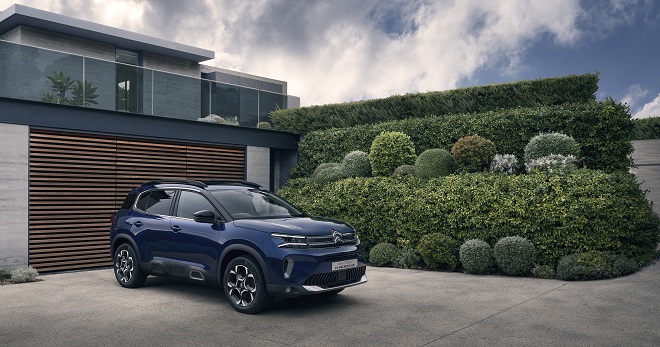
Citroën India has announced the launch of the new C5 Aircross SUV with a special introductory price of INR 36,67,000 (ex-showroom Delhi). The new C5 Aircross SUV gets a design makeover, which gives it a more distinguished, modern, and dynamic personality. In its 2022 avatar, the car is now more attractive and dynamic, with a sharper design that is complemented by high-quality colours as well as interior materials that fortify the SUV’s comfort and spaciousness.
The new C5 Aircross SUV retains characteristics that make it stand out in its segment, contributing to an overall experience focused on well-being and ease of use. The progressive hydraulic cushions suspension, exclusive to Citroën, enhances absorption of imperfections in the road and ensures that passengers travel in absolute comfort, with a real “flying carpet” effect. The only SUV in the segment to offer three individual sliding, reclining and retractable rear seats, allowing you to enjoy people carrier-level modularity in a real SUV. The boot volume is a record for the segment: from 580 L to 1630 L. Finally, special attention has been paid to the acoustic characteristics with the option of benefiting from acoustic laminated front windows which amplify the cocoon effect within the car.
The New Citroën C5 Aircross SUV is now available for retail at 20 La Maison Citroën phygital showrooms in 19 cities, namely, New Delhi, Gurgaon, Mumbai, Pune, Ahmedabad, Kolkata, Bangalore, Hyderabad, Kochi, Chennai, Chandigarh, Jaipur, Lucknow, Bhubaneswar, Surat, Nagpur, Vizag, Calicut, and Coimbatore.
Citroën will also extend its 100 per cent direct online buying – BUY ONLINE – for the New Citroën C5 Aircross SUV. Customers in over 90 Indian cities, including those outside the dealer network, will be covered through this direct online initiative and can order directly from the factory.
As a part of the New Citroën C5 Aircross SUV’s Warranty Programme, Citroën has services like a standard vehicle warranty for 36 months or 100,000 kilometres, from the date of delivery whichever is earlier. This includes a warranty on spare parts & accessories and 24/7 Roadside Assistance for maximum comfort and mobility. Extended warranty and maintenance packages are also available across the network.
To make the Citroën ownership experience more comfortable, the company will also offer the Citroën Future Sure package for New Citroën C5 Aircross SUV customers. This comprehensive package allows customers to own a Citroën with an attractive EMI and the package also includes Routine Maintenance, Extended Warranty, Roadside Assistance, and an on-road financing for up to five years.
Roland Bouchara, CEO & Managing Director, Stellantis India, said, “We are excited to launch the new C5 Aircross SUV in India, our flagship SUV in the Citroën portfolio and it embodies all the elements of the Citroën Advanced Comfort® program. C5 Aircross, recognised since its launch as the most comfortable and flexible SUV in its category, has now been given a makeover to assert a more prestigious, modern and dynamic personality. It is becoming more aspirational and will appeal to Indian customers waiting for a more distinctive character.”
Saurabh Vatsa, Brand Head, Citroën India, remarked, “While building on its strengths of comfort, on-board spaciousness and modularity, the new C5 Aircross SUV has matured to become more elegant and dynamic with sharper exterior styling and more modern, high-quality colours and materials for the interior. C5 Aircross introduces a new design language at the front, with curves giving way to more structured lines. A new three-dimensional light signature at the rear, a new 18” diamond-cut alloy wheel and a new design of the 10” touchscreen and centre console will certainly appeal to customers in this C-SUV segment.”
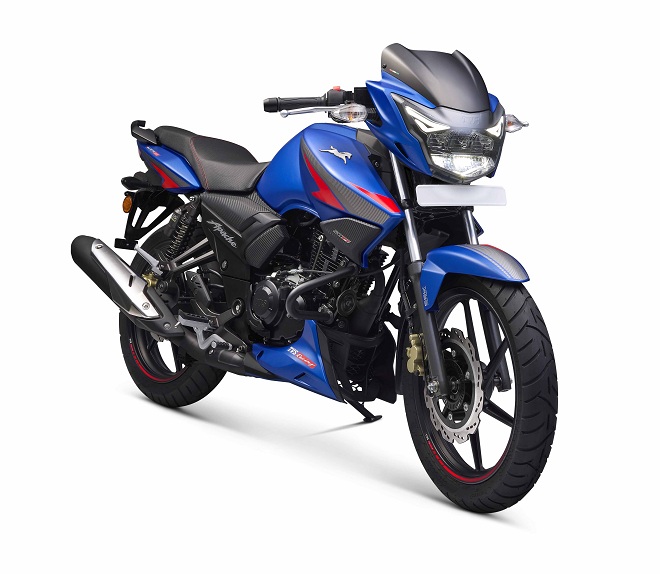
Building on 40 years racing pedigree and 4.8 million TVS Apache customer base, TVS Motor Company, has launched the all new 2022 TVS Apache RTR 180 and TVS Apache RTR 160 motorcycles today. They now come packaged with new exciting styling and feature updates for an uncompromised ride experience. The power increase coupled with weight reduction of 2 kgs in TVS Apache RTR 160 and 1 kg in TVS Apache RTR 180 has resulted in an enhanced power-to-weight ratio for both motorcycles, offering an unravelling riding experience.
The TVS Apache Series have always been at the forefront of technology & innovation since their launch in 2005, and continue to set a benchmark in the performance segment. The vehicles under the stable of TVS Apache have offered multiple first-in-segment & best-in-class features & technology to the customers, starting from Fuel injection, ABS, Dual Channel ABS, Slipper Clutch, to the most recent SmartXonnectTM, Ride Modes, LED Headlamp.
Commenting on the launch, Mr Vimal Sumbly, Head Business – Premium, TVS Motor Company, said, “The TVS Apache series has been built on the racing heritage of TVS Racing to bring superior products into the market that connect with our customers and racing enthusiasts. The introduction of the 2022 range of TVS Apache RTR 160 and TVS Apache RTR 180 is a testament to our commitment towards delighting the Apache community and loyalists globally, with a true racing experience. These motorcycles will continue their legacy of offering class leading race technologies to transform performance biking, and further strengthening our premiumisation journey.”
Designed as “The All-New Racer’s Choice”, the new 2022 TVS Apache RTR 160 and 2022 TVS Apache RTR 180 are updated with striking style elements and new attractive graphics that are in line with its racing DNA. The two motorcycles also get segment leading features like an all-new LED headlamp, offering superior range and light penetration, as well as an all-new LED tail lamp.
Stepping up the convenience quotient for the riders, the 2022 TVS Apache RTR 160 and TVS Apache RTR 180 will come equipped with an advanced Bluetooth enabled fully digital instrument cluster and SmartXonnectTM technology with Voice Assist, to further enhance their ride experience. As a segment first, these motorcycles get three ride modes namely – Rain, Urban and Sport, showcasing their adaptability to different conditions.
These motorcycles also get a X-ring chain, wider 120mm rear tyre, gear position indicator and TVS Connect App with new a UI/UX.
Specifications
2022 TVS Apache RTR 160
2022 TVS Apache RTR 180
Engine cc
159.7 cc
177.4 cc
Engine Cooling
Air-cooled
Oil-cooled
Power
16.04 PS @ 8750 rpm
17.02 PS @ 9000 rpm
Torque
13.85 Nm @ 7000 rpm
15.5 Nm @ 7000 rpm
Gear box
5 speed
5 speed
The 2022 TVS Apache RTR 180 series is available in two stunning colours – Gloss Black and Pearl White; while the 2022 TVS Apache RTR 160 series is available in five colours namely Gloss Black, Pearl White, Racing Red, Matte Blue and T-Grey.
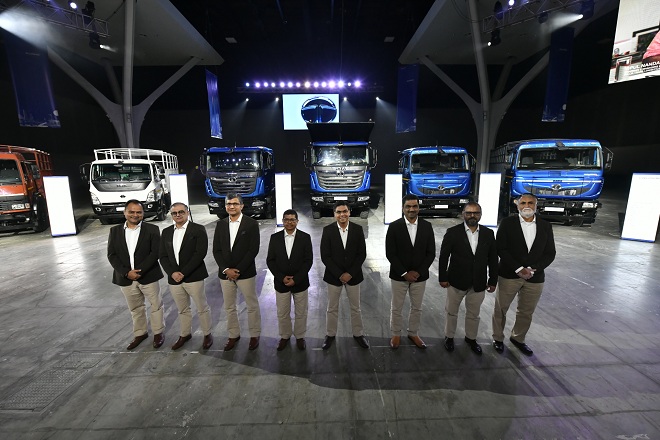
Mr Girish Wagh, Executive Director, Tata Motors with his senior leadership team launching India’s smartest trucks
Tata Motors has announced the launch of India’s first CNG-powered Medium & Heavy Commercial Vehicle (M&HCV) truck; introduction of a new-age, Advanced Driver Assistance System (ADAS), and enrichment of its bestselling range of Prima, Signa and Ultra trucks with world-class features to enhance driving comfort. A new series of advanced Intermediate & Light Commercial Vehicle (I&LCV) tippers and trucks were also launched to service the evolving multi-application needs, especially of the rapidly growing logistics and infrastructure sectors.
Speaking at India’s largest commercial vehicle launch, Mr. Girish Wagh, Executive Director, Tata Motors, said, “Our trucks connect India and power the engine of the nation’s economy. As the industry leader, we are creating new paradigms of functionality, productivity, connectivity, safety and performance by continually introducing future-ready products, services and solutions. The trucks that we are launching today address the growing need for safer transportation with an Advanced Driver Assistance System (ADAS) offering collision mitigation system, lane departure warning, electronic stability control, driver alerts and tyre pressure monitoring. They also provide cleaner mobility solutions with a richer offering of alternate fuel powertrains. Every aspect of these trucks has been purposefully augmented to cater to varied duty cycles and special applications. We are delighted to further strengthen our unmatched portfolio of commercial vehicles with these smart trucks that are designed to deliver best-in-class operating economics and superior comfort with enhanced connectivity. We continue to redefine transportation by ‘Delivering Progress’ to our customers, their drivers, the shippers and our country by making the logistics chain more efficient.”
Developed and innovatively engineered to cater to the evolving needs of cargo and construction transportation across segments and applications, the state-of-the-art trucks launched has further enhance Tata Motors’ established ‘Power of 6’ benefit proposition aimed at delivering higher productivity and lower total cost of ownership (TCO) driving fleet profitability.
Tata Motors Advantage: The M&HCV and I&LCV range of trucks from Tata Motors come equipped with Fleet Edge, the next-gen digital solution for optimal fleet management. A bouquet of service offerings, Sampoorna Seva provides on-site support, Uptime Assurance, Breakdown Assistance, Insurance and Accidental Repair, Extended Warranty and other add-on services for vehicle maintenance and lifecycle management.
Tata Motors continues to redefine transportation with innovations and introduction of new-age technologies, powertrains and aggregates to deliver maximum value to customers. Available in many fully-built body options of load bodies, tippers, tankers, bulkers and trailers, these M&HCV and I&LCV trucks cater to a wide range of goods movement and applications across diverse sectors – agriculture, cement, iron & steel, container, vehicle carrier, petroleum, chemical, water tankers, LPG, FMCG, white goods, perishables, construction, mining, municipal applications etc.
Following the success of its CNG portfolio of SCV, I&LCV and buses, Tata Motors introduces India’s first CNG-powered M&HCVs in the 28 and 19 tonne nodes. The all-new Signa CNG trucks offer the optimal combination of low operational costs, high durability and multiple-use applications resulting in higher profitability. These environment-friendly CNG models are also available with varied wheelbase and load deck length options and cowl option for cabin customisation. These models are powered by the proven 5.7-litre SGI engine generating peak power of 180hp and torque of 650Nm, come with a modular architecture and offer a range of up to 1,000 km.
Tata Motors is the pioneer in introducing safer and smarter vehicles in India. Since its launch in 2010, the top-of-the-line Tata Prima range has continually set benchmarks for comfort, styling, safety, ergonomics and ease of operations. Introduced in the new Prima is India’s first advanced driver active and passive safety features of Collision Mitigation System (CMS), Lane Departure Warning System (LDWS) developed with extensive validation, especially for Indian operating conditions. Vehicle also offers additional safety features like Driver Monitoring System (DMS), Electronic Stability Control (ESC), Tyre Pressure Monitoring System (TPMS).
The new Prima range also comes with a more ergonomically redesigned cabin offering better driving comfort and with best-in-class conveniences and features for enhanced driver and vehicle safety. These purposeful enhancements were made in collaboration with stakeholders across the entire logistics value chain with the objective of enabling higher productivity, especially during long hauls. An in-depth study was conducted to curate insights from transporters, drivers as well as end customers following which the design and engineering teams at Tata Motors worked holistically to add a range of cutting-edge technologies to create another new benchmark.
These enhancements will significantly lower accidents, increase driving comfort and facilitate safer cargo movement across the country.
7 new I&LCVs launched
1. LPK 610 with high ground clearance and H2LS brakes for effective braking with short stop distance
2. LPT 709g XD with 5 sq.ft. added deck area and up to 10 per cent higher fuel efficiency
3. SK 710 tipper – 4 m³ body on trusted SFC platform
4. Ultra T.12g with reliable 3.8-litre SGI turbocharged engine
5. Ultra K.14 best-in-class comfort, air-conditioned cabin with highest grade-ability of 37 per cent
6. LPT 1512g with up to 10 per cent better fuel efficiency along with highest CNG capacity
7. Ultra T.16 Cx with proven 3.3-litre engine and comfortable Ultra cabin
Since conceptualising light trucks for the Indian market in 1986, Tata Motors I&LCV range has significantly grown in size, scale, presence and popularity. Renowned for their robust build, efficiency and the variety of applications they can be used for, Tata Motors I&LCV vehicles have helped enhance profit potential for customers. Offered with 4-18 tonne GVW, this range is the ideal choice for both last mile as well as medium to long haul with a variety of engine & cabin options befitting the duty cycle requirement.
The 7 new fuel-efficient diesel and CNG trucks and tippers, under the FE Series, offer better application-oriented solutions with more options of vehicle weight and deck lengths. Designed to enhance the profit potential of their owners as well as to improve the driveability and durability, these trucks incorporate key technological advancements including optimised drivelines, low viscous rear axle oil, e-viscous radiator fan, gearshift advisor and low rolling resistance tyres.
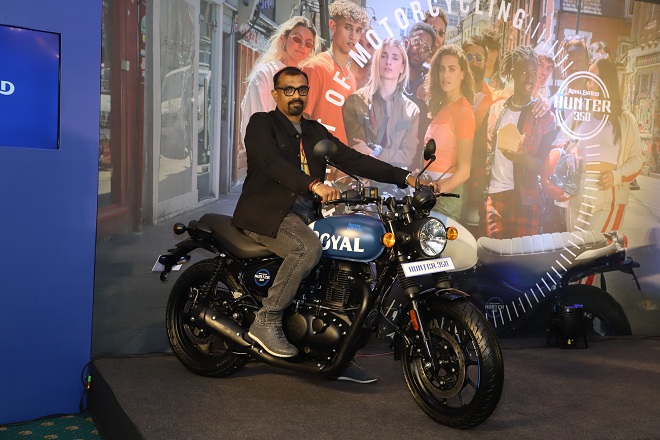
Royal Enfield has launched the new Hunter 350 in Kolkata. Engineered and designed for the urban hustle, the new Hunter 350 is a remixed roadster with the character of a Royal Enfield reimagined in a stylish, compact-yet-muscular geometry, that can tackle crowded city streets, suburban backroads and beyond, with aplomb.
West Bengal continues to be one of the key growth markets for Royal Enfield with a significant customer base in the roadster segment. Over the last few years, Royal Enfield motorcycles have built a strong riding community in the state and enjoys a substantial market share in the mid-size motorcycle segment (>250cc-750cc). The Hunter 350 will open up new audiences for Royal Enfield in the state, thanks to its functional and simplistic design ingenuity that’s refreshingly new but exudes old school cool and retains that essential Royal Enfield DNA. The Royal Enfield Hunter 350 will be available across all its around 99 touch points in the state of West Bengal.
Commenting on the inspiration of the new Hunter 350, Royal Enfield CEO, B Govindarajan, said, “At Royal Enfield we are closely engaged with our consumers and community. Their desires and aspirations shape the motorcycles we make and we are always looking to create newer experiences and newer formats of pure motorcycling for them. There were always a set of passionate motorcyclists that loved our brand, but did not find the right kind of attitude within our portfolio. The Hunter 350 is for them. It is a motorcycle that combines the strengths of seemingly different species, and brings it together in a super stylish and fun package that is an all-new flavour of pure motorcycling with the unmistakable Royal Enfield character.”
The Hunter 350 is distinctly unique within the Royal Enfield line-up. Built on the award-winning 350cc J-series platform, combined with a highly flickable Harris Performance chassis, the Hunter delivers agility without fragility on city streets and sheer, grin-inducing pleasure on the open road.
Walk up to the Hunter 350 and you’ll long to jump on this fun, tactile motorcycle with its old school analogue meets new age vibes. Fire it up and you’ll be greeted with an appealing burble that transforms into a spine-tingling growl as you accelerate away. Cut through congested streets thanks to its compact geometry, nimble steering and confident braking. Take it beyond the city limits and this remixed roadster will glide along the straights on wide alloys and tubeless tyres. Then, angle it into twists and turns and its firm and ultra-responsive chassis and torquey 350cc engine will light up your senses.
Commenting on the launch of the Hunter 350 in Kolkata, V Jayapradeep, India Business Head, said, “The Hunter 350 is an outcome of several years of insight gathering and consumer studies from across the world. It is a motorcycle that feels right at home in big metropolises and is exciting for the experienced rider, and easy and accessible for a new rider. Its shorter wheelbase, more compact geometry and lighter weight makes it very nimble and maneuverable within the urban context. In West Bengal. we are very confident that this new reimagined roadster will usher in a whole new set of consumers, into our world of pure motorcycling.”
Sound, colour, styling, handling, performance – everything about the fleet-footed Hunter 350 is designed to wake you up with an experience like no other.
It comes in two distinct editions – Retro Hunter and Metro Hunter – both finished with on-trend, blacked-out engines and components. The Retro Hunter runs on 17-inch spoked wheels and has a 300mm front disc brake combined with a 6-inch rear drum brake, single channel ABS, an uncluttered retro-styled digital-analogue instrument cluster that displays just the right amount of essential information and a choice of two classical, single-colour tanks.
The Metro Hunter has a more contemporary look with dual-colour liveries, cast alloy wheels, wide tubeless tyres, and rounded rear lights. There are five colourways across two editions on the Metro Hunter. A selection of three chic tank colour and graphics options on one edition, and the top of the range edition, finished with a choice of three of the most distinctive and disruptive petrol tank designs ever to adorn a Royal Enfield. It is also compatible with Royal Enfield’s acclaimed Tripper TBT navigation which is available to order as a Genuine Motorcycle Accessory.
Both Metro editions are equipped with alloy wheels and wider 110/70 x 17-inch front and 140/70 x 17-inch rear tubeless tyres for superior handling and muscular good looks, 300mm front and 270mm rear disc brakes, dual channel ABS, and a handy centre stand. An LED tail lamp and premium digital-analogue instrument cluster that displays odometer, tripmeter, gear indicator, fuel graph bar with low fuel warning, clock and a service reminder complete this stylish package. All Hunter editions feature uncluttered handlebar controls, their rotary power and lighting switches giving a gentle nod to the past, and are fitted with a USB charging port.
The Hunter was conceived and developed by the talented designers and engineers at Royal Enfield’s two state-of-the-art technology centers, in India and the UK, and renowned chassis experts, Harris Performance. Their mission – to deliver an exhilarating ride experience; a fusion of the superlative J-series engine with refreshed chassis proportions for enhanced agility and responsiveness.
The chassis geometry on the Hunter 350 is designed to give the optimal height-to-weight ratio while offering superior comfort, thanks to its wide, long, one-piece seat. With revised rake and trail angles, a lower 800mm seat height and shorter wheelbase, the Hunter’s exceptional maneuverability encourages greater confidence when carving through cramped streets and feels planted and stable in every location and situation.
The Hunter is powered by the modern, globally acclaimed 349cc air-oil cooled single cylinder J-series engine, recently launched on the Meteor and Classic 350. Fuel-injected, it produces 20.2 bhp at 6100 rpm and 27 Nm of torque at 4000 rpm resulting in strong, low-end grunt, super smooth linear power delivery with an engine calibration to give a lively throttle response and a distinctive exhaust note to suit the character of the Hunter. With a primary balancer shaft to cut down vibrations, it feels both responsive and refined while its gear shifting is crisp and smooth thanks to an optimized 5-speed gearbox.
The Hunter is supported by an ecosystem of Genuine Motorcycle Accessories. These can be added when ordering the bike, on Royal Enfield’s user-friendly App and MiY (Make It Yours) personalisation platform or at a later date. The Suburban range features protective and functional attachments, such as engine and sump guards, pannier mounts and luggage, custom seat and touring mirrors. Options in the Urban range include a signature bench seat, black LED indicators, a tinted flyscreen and a minimalist ‘tail tidy’ rear end. All have a premium finish and are a hassle-free fit straight onto your motorcycle. For further self-expression, a selection of superior riding gear, including gorgeous helmets in complementary colours, t-shirts and smart personal accessories are available.
Aimed at young riders, the Hunter is available for test ride and bookings in West Bengal. The new Hunter 350 starts at INR 1,49,900/- for the Factory Series, INR 1,63,900 /- for the Dapper Series and INR 1,68,900 for the Rebel Series (ex-showroom, West Bengal). Available in exciting colour options such as Rebel Blue, Rebel Red, Rebel Black, Dapper Ash, Dapper White, Dapper Grey, Factory Black and Factory Silver.
Customers can discover, book a test ride, book and customize their Hunter 350 via the Royal Enfield App, on the company website at royalenfield.com or at their nearest Royal Enfield dealership.
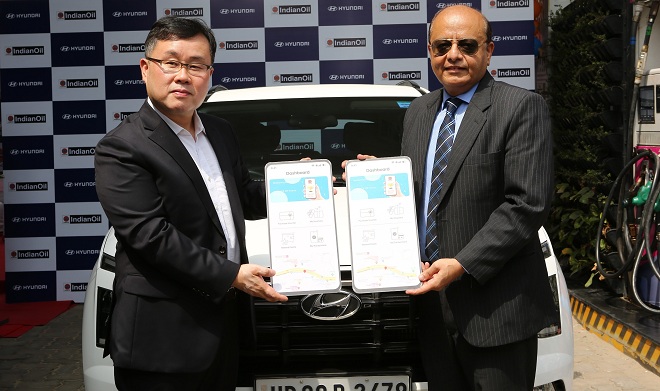
Hyundai Motor India Ltd. has announced the launch of Industry First In-App innovative digital services through its connected technology platform- Bluelink™. Hyundai has partnered with Indian Oil Corporation Limited and Park+ to provide a complete range of end-to-end timesaving fuel and parking services. These newly introduced In-App Value-added Services are innovative feature on Bluelink™ offering customers seamless services and contactless payment options for services like Fuel & Parking in just a few clicks.
Commenting on the announcement of the Bluelink In-App Value-added Services, Jae Wan Ryu, Executive Director – Corporate Planning, Hyundai Motor India said, “Strengthening our brand philosophy of “Beyond Mobility”, we are delighted to share another strong move towards offering the most advanced technology with more exciting features, that will enrich and augment the future mobility experience of our customers. We have leveraged our tech prowess to take customer convenience a notch higher and realize our goal of delivering the connected mobility solutions of the future.With the rollout of these In-App service through Hyundai Bluelink™ connected technology platform, HMIL has become the First OEM in India to offer one-stop solution of contactless payment services for Fuel & Parking.”
Commenting on the announcement, Mr. V Satish Kumar, Director (Marketing), IndianOil, said, “IndianOil true to its continuous pursuit for innovative processes and superior customer experience, has brought another path breaking offering for the customers by partnering with Hyundai by leveraging their Bluelink In-App payment solution. We are quite excited about this partnership which is expected to unfold a unique digital payment experience and would further enhance the culture of digitization in our retail business processes.”
“Park+ has been making conscious efforts to partner with like-minded automobile OEMs, to enhance car ownership experiences for users. As part of this strategy, we are excited to collaborate with Hyundai Motor India Ltd and offer our smart parking services to its users. We at Park+ have taken something that has historically been painful & intimidating – finding a parking spot and made it effortless. Hyundai car owners will now be able to discover, book and pay for a parking spot, with a smile. We look forward to a long and fruitful partnership, to bring car ownership delight to as many Hyundai car owners as possible”, said Mr. Amit Lakhotia, Founder & CEO, Park+, on the partnership with Hyundai Motor India Ltd.
Hyundai Bluelink™ is a connected technology platform that combines intelligent automotive and IT technologies in order to provide greater comfort, safety, and convenience for customers. Bluelink™ will now offer the In-App services with Hyundai only exclusive benefits such as rewards and discounts, contactless payment option, savings on refuelling and parking, as well as easy and secure transactions for utmost convenience.
The first step to accessing the In-App Value-added Services feature is downloading the Hyundai Bluelink™ App (available for both Android & iOS Mobile devices). After signing up through the smartphone application, the customers will be navigated to the Value-Added Services of IndianOil and Park+, followed by account registration, and purchasing of fuel and booking of parking slots, post which the customers will be directed to the payment portal within the app. All these transactions happening in the same platform to provide seamless Customer experience.
In-App Service – Fuel purchase
Hyundai’s partnership with Indian Oil Corporation Limited has made IndianOila pioneer to launch innovative and convenient prepaid fuel payment options. Customers will avail complete fuelling solution with ease of search, navigation, and advance payment options for refuelling before even visiting the fuel outlet. The partnership will also provide a dedicated customer base for IndianOil and reduce the turnaround time at the station.
In-App Service – Parking slot booking
Hyundai’s partnership with Park+ and its integrated solution with Bluelink™ offers users seamless parking solutions with an easy search of parking slots, hassle-free digital payment solutions, and timesaving before even visiting the Park+ enabled outlets for utmost comfort and convenience.
The In-app services on Hyundai Bluelink™ is an innovation in connected technology that has the potential to improve the lives of Hyundai customers. The customer centric platform enables Hyundai customers to make payments without switching to a different payment application platform thus enhancing the overall user experience.
These 2 In-App services are only the beginning and with this innovative platform, Hyundai aims to regularly introduce new services to provide utmost convenience to daily lives of customers.
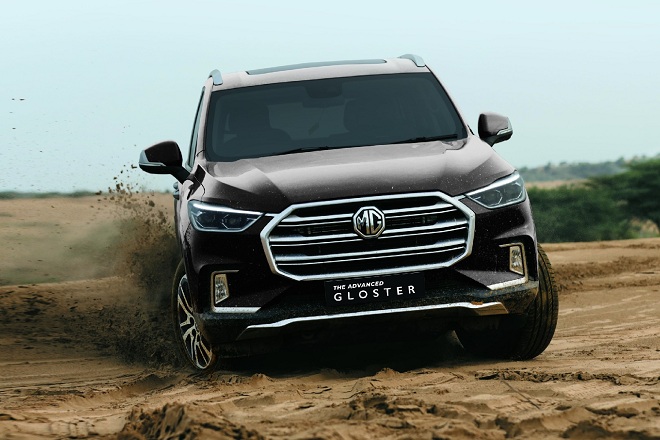
MG Motor India has announced new i-SMART features in the upcoming Advanced Gloster. The ‘Advanced Gloster’ will now offer more than 75 Connected Car features.
The i-SMART intelligent system enables customers to connect with their car thus enhancing their overall driving experience. They will be able to monitor their car much more easily, activate any features they wish, and smoothly connect to their lifestyle choices.
Customers of the “Advanced Gloster” will be able to utilise the app as an in-car remote for the audio, air conditioning, and mood light in addition to the current i-SMART functions. Moreover, in addition to the current Apple Watch users, the i-SMART app will be made accessible for Android watch users as well, providing connectivity to a vast audience.
The navigation experience, powered by MapmyIndia, is further enhanced with live weather and AQI information on the navigation screen. The Advanced Gloster puts convenience at the forefront with the integrated ‘Discover App’, an inbuilt feature of MapmyIndia co-powered by Dineout, and Kogo. It simplifies and customises search results for restaurants, hotels, and more for customers. Additionally, the new Park+ headunit App will enable users to pre-book and pre-pay for parking slots even before they reach their destination.
The Advanced Gloster also features an advanced VR system, a distinguishing feature of i-SMART, that offers 100+ commands to control the Sunroof, AC, Music, Navigation, and newly added 35+ Hinglish commands. Customers can also personalise their in-car experience with customisable lock screen wallpaper.
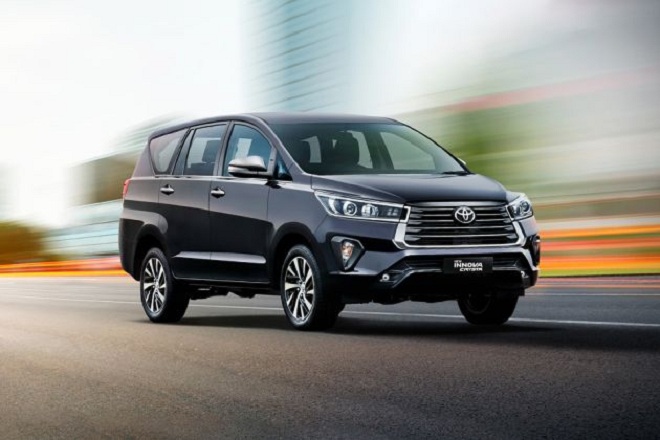
Due to very high demand and increased waiting period for the diesel variant of Innova Crysta, TKM has decided to temporarily stop manufacturing. As a customer centric company, TKM are making efforts to supply the vehicles to customers who have already made bookings with their dealers. However, TKM will continue to take orders for the petrol variant of Innova Crysta.
The Toyota Innova, TKM’s flagship offering in India has come a long way ever since its introduction in 2005. Having created a niche of its own, the versatile segment leading Innova has always remained a notch above when compared to other models in the segment. Over the years, the vehicle has undergone several enhancements be it luxury, comfort or performance features , in order to meet the ever-changing needs of the Indian customers. Similarly, the second generation Innova Crysta, continues to win customer hearts , being a segment leader itself. Having found its home in close to 1 million households in India.
The first episode of ‘Beyond the Visible’, the new docuseries that takes the public behind-the-scenes of Alfa Romeo’s F1 Team ORLEN, is now live. For the first time ever, F1 enthusiasts and newcomers can discover the adrenaline-fuelled daily routine of over 500 experts who work tirelessly to excel in the world’s most watched motorsport competition.
‘Before we hit the ground’, the series’ opening episode, reveals the intensity and concentration involved in the preparation for a new season, whilst shedding light on the meticulous detail Team Managers put into their race strategies to maximise performance and keep the focus on the obvious goal: moving as fast as possible.
The opening episode displays the abundance of emotion, anticipation, and mental and physical preparation, which is rarely seen outside the F1 world. Daring to go ’beyond the visible’, Alfa Romeo has provided fans with a report of everything that precedes the highly anticipated inaugural race of the world championship.
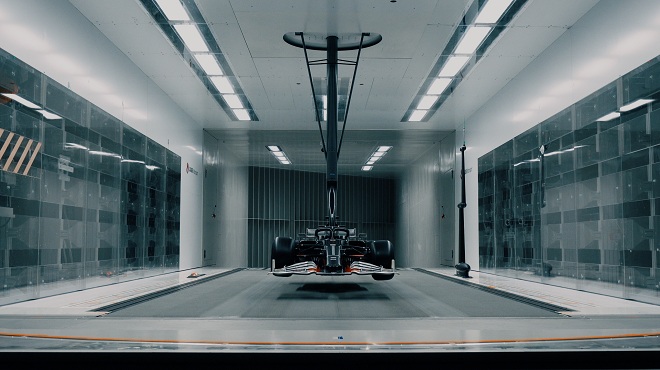
Viewers will be able to gain an understanding of the perfect alchemy linking Alfa Romeo and Sauber, which goes far beyond the F1. These two brands have always focused on sporting and technological excellence, on and off the track. Alfa Romeo has been known as a ‘manifesto of noble sportsmanship since 1910’, actively working with the Sauber factory in Hinwil. Drivers, mechanics and engineers all collaborate in refining constantly evolving strategies and everchanging technical solutions, vital to competing at this level. This includes work on Alfa Romeo’s aerodynamic solutions, which will hopefully lead to the design of a single seater for exceptional performance levels.
Cristiano Fiorio, Alfa Romeo F1 Manager said: “Beyond the Visible” is an ambitious project that perfectly represents the values of the brand. Alfa Romeo represents noble Italian sportiness and has always distinguished itself throughout its history by a bold attitude capable of transferring visceral emotions to all car and performance enthusiasts. The “Beyond the Visible” project is no exception: engaging and inclusive, true to the brand’s DNA.”
Away from the limelight, more than 500 professionals of the Alfa Romeo F1 Team ORLEN work tirelessly every day to chase perfection in strategic, mechanical and engineering decisions, to give their team the best chance to compete in Formula 1. The new ‘Beyond the Visible’ series allows fans to have the opportunity to feel part of all this.
“Before we hit the ground” is only the first of the five episodes to be posted on the Alfa Romeo’s official social media pages and YouTube channel throughout the 2022 racing season. Multitudes of behind-the-scenes stories will be told in the five episodes of the all-digital project: from strategic choices and driver training to the very complicated logistics; from innovative technological solutions to the endless resources invested in research and development. Stay tuned!
British luxury supercar maker McLaren Automotive has confirmed its imminent entry into the major Indian market, the brand’s 41st global territory.
With the opening of first retail outlet McLaren Mumbai in October, McLaren’s arrival in India forms a key part of the marque’s global expansion plans and extends the brand’s already well-established and growing presence in the Asia Pacific region.
McLaren’s range of supercars and hypercars are the ultimate in personalisation, high-technology and super lightweight engineering, combined with cutting-edge design and innovation to deliver breath-taking experiences. They are designed at the iconic McLaren Technology Centre opened by Her Majesty The Queen with every supercar hand-build at the adjoining McLaren Production Centre, both in Woking, Surrey south of London.
Racer, engineer and entrepreneur Bruce McLaren’s dream was to build the world’s most iconic supercars. Now almost six decades on, McLaren remain pioneers at the forefront of high-performance automotive engineering who hand-build every supercar and hypercar.
McLaren’s racing DNA has naturally led the brand to continuously showcase innovation with an exciting product range of race and road cars. None more so than the all-new McLaren Artura, a distillation of every attribute inherent in a McLaren. A blend of thrilling performance, driving dynamics, and engagement with EV driving capability.
Set to formally open in Mumbai in the third quarter for 2022, the first retail presence in the country will offer the ultimate immersive McLaren brand experience with a direct window into Woking, where every McLaren is created by hand.
It will also provide customers with full levels of support, offering sales, aftersales and servicing on the complete range of McLaren models.
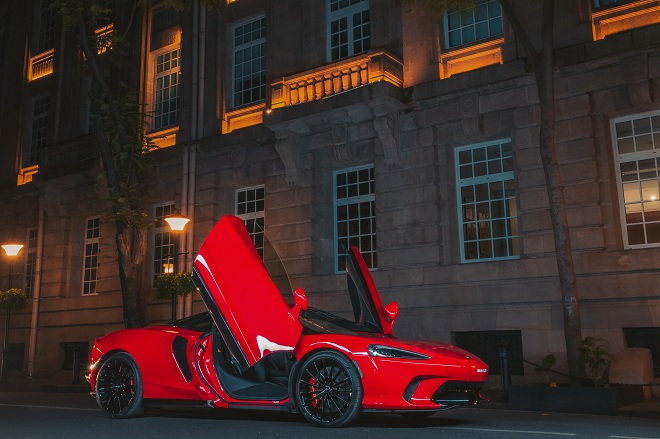
The supercar manufacturer will offer the breadth of its model range to Indian customers, including the Everyday McLaren GT and the marque’s first ever high-performance hybrid – the Artura. The core supercar range also includes the universally acclaimed 720S coming in Coupe and Spider variants, along with the 765LT Coupe and Spider as the latest addition to the legendary LT product family.
“We welcome Lalit Choudary of McLaren Mumbai to the expanding retailer network here in the Asia Pacific region. India remains an important market where our fans and select clientele can enjoy the best of McLaren in Mumbai. Looking ahead, we will shortly welcome the Artura to India, the all-new high-performance hybrid supercar.” Paul Harris, Managing Director – APAC and China, McLaren Automotive
With the launch of the country’s inaugural retailer, Indian customers will now be able to enjoy the McLaren ownership experience through an official retail partner, McLaren Mumbai. An event commemorating the opening will be set for the second half of 2022.
Lalit Choudary, McLaren Mumbai said, “It is an honour to be appointed as McLaren Automotive’s first retail partner in India – McLaren Mumbai. As a globally renowned supercar manufacturer, McLaren is the pinnacle of modern supercar luxury. We look forward to opening the McLaren Mumbai retail experience and offering McLaren customers an outstanding opportunity to engage with the brand and to be part of the McLaren owners’ community.”

 Power Drive