The world’s first mass-market electric vehicle has secured its place among some of the world’s greatest transport innovations according to a survey conducted by Nissan to mark its 90th birthday this week.
Since the company was founded, on 26th December 1933, Nissan has established a storied history of pioneering electric vehicles, legendary performance cars and revolutionary crossovers that demonstrate its own daring spirit of innovation over the last nine decades.
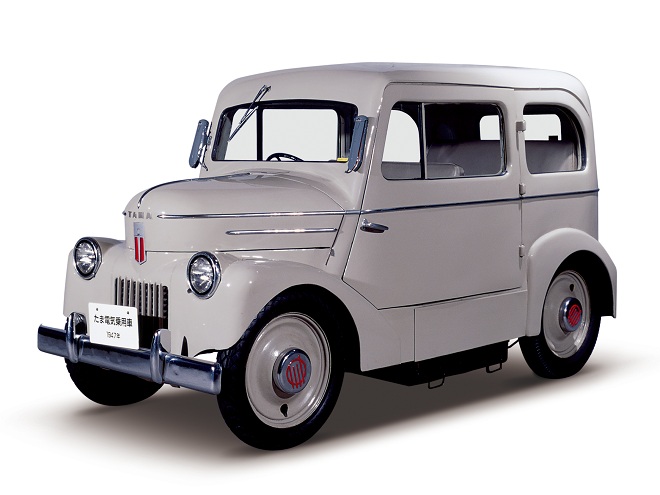
From the 1947 Tama electric vehicle, via the LEAF – the world’s first mass-market EV in 2010 – to recently revealed future EV concepts like the Hyper Punk and Hyper Urban, the company strives to enrich people’s lives with thrilling journeys and pioneering technology that help to create a cleaner, safer and more inclusive world.
To mark its 90 years of automotive success, Nissan commissioned a OnePoll survey of 2,000 UK adults to find out people’s opinions on a list of other significant transport innovations of the last 90 years – with the opening of the Channel Tunnel, Concorde’s first flight and the invention of satnav coming out on top. The electrification of the London Underground, the first modern hovercraft and the first zebra crossing also ranked in the top 30.
Looking to the future, the study showed that 69 per cent think that new technologies will play a big part in reducing the environmental impact of transportation in this country.
The survey also revealed that 27 per cent are in favour of introducing artificial intelligence into the car industry, while 29 per cent hold the same views for public transport.
With artificial intelligence (AI) becoming increasingly commonplace in day-to-day life, Nissan has utilised the technology to bring its 90-year heritage to life by imagining transport scenes that compare the Tama, its first ever electric car in 1947, to the modern-day Ariya EV.
Andrew Humberstone, managing director of Nissan GB, said: “Over the last 90 years, we’ve always dared to do things differently at Nissan and have delivered some truly ground-breaking innovations along the way.
“We’re so proud of this pioneering spirit and the people who make up our incredible global team at Nissan – I look forward to sharing more automotive design, technology and driving excitement with our customers in the future.”
The Nissan LEAF featured at number 19 on the list, while EVs specifically were voted as the innovation that holds the most promise for the future of UK sustainability. A third of those polled also believe the motor industry has undergone the most exciting changes over the past nine decades – compared to aviation, rail, and cycling.
More sustainable road travel (38 per cent), scientific advancement (16 per cent), and employment opportunities (11 per cent) were also seen as the biggest opportunities within the EV industry.
Seventy percent of those surveyed believe transport innovations have had a positive impact on their own lives, and 54 per cent claim it has made travelling easier for them.
Almost three quarters (71 per cent) agree it has improved their ability to travel and commute up and down the country, and staying connected with family and friends has become easier for 30 per cent.
What’s more, 41 per cent of those polled have been able to save time on their journeys, and 43 per cent are able to travel to longer distance locations thanks to the various innovations.
TRANSPORT INNOVATIONS OF THE LAST 90 YEARS
1976 – Concorde makes first passenger-carrying supersonic flight
1957 – First flight of a commercial jet airliner
1994 – The opening of the channel tunnel
1958 – First commercial jet airliner
1981 – Maiden flight of the space shuttle
1960 – Launch of the first Sat Nav
1951 – Creation of power steering
1988 – First airbag
1934 – Introduction of the Driving Test
1955 – Creation of the Hovercraft
1959 – The first three-point seat belt
2022 – First zero-emissions electric flight takes place
1939 – First practical helicopter built
1949 – First zebra crossing
1971 – The Lunar Roving vehicle is used on the moon
1964 – Launch of the Bullet Train
1939 – Creation of automatic transmission
1967 – Automatic Train Operation: London Underground
2010 – Launch of the world’s first mass-produced electric car
1984 – Driverless Cars
1953 – First air conditioning in a car
2022 – First railway line run by hydrogen-powered trains
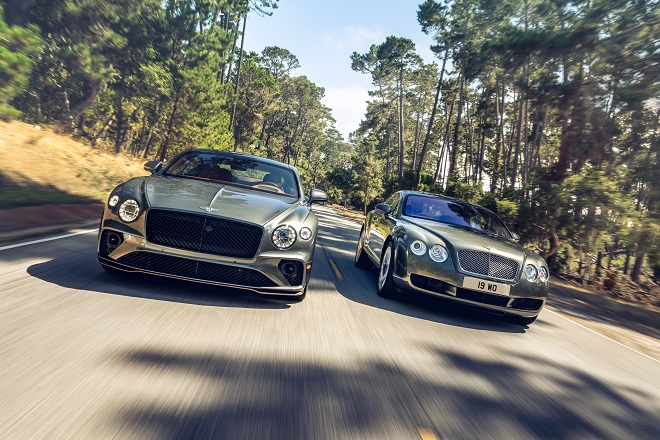
A unique global relay, marking 20 years of the Continental GT, has reached its conclusion with the arrival in Crewe of the specially-made 20th anniversary baton. The baton’s lap of the world included stops in Europe, the Middle East, China, Asia Pacific, the US and UK, visiting 20 journalists and content creators in the process as part of 20 memorable drives – one for each year of Continental GT production.
The launch of the first-generation Continental GT in 2003 marked a seismic change in the fortunes of Bentley Motors. The first all-new Bentley of the modern era, the first with all-wheel drive and the first to feature the innovative W12 engine, the Continental GT swiftly propelled Bentley to its current status as the most sought-after luxury car brand in the world.
Designed and crafted in Crewe The design of the 20th anniversary baton was developed in the Crewe design studio and received the same level of meticulous refinement as any production model feature. Finished in Cypress Green (the exterior finish of the first-ever production Continental GT) the baton has an intriguing, asymmetrical twist, like the blade of an aircraft propellor. A knurled cap, modelled on the Continental GT’s drive mode selector, allows access to the baton’s interior where the scroll is carried.
Head of Bentley Design Collaborations, Chris Cooke takes a deep dive into the details: “Every element of the baton sculpture was inspired by the Continental GT, and there is purpose in every form. For example, the end cap shows a simplified graphic of the Continental GT with its three feature lines; the Bentley powerline from the front wheel arch along the car’s flanks; the flyline of the roof; and the muscular ‘haunch’ over the rear wheel. Hold the baton horizontally, and as you turn it in your hands you will see each of those lines in the contours of the sculpture.” In the subtlest of touches, each profile also lines up perfectly with its corresponding line on the cap graphic.
The 20th anniversary baton will now find its home in Bentley’s Heritage Garage, together with the very first Continental GT, as a highly significant year in the company’s history draws to a close.
Evolution of a modern icon At the time of its launch in 2003, the first-generation Continental GT offered a unique combination of stunning design, supercar performance and unrivalled craftsmanship. It was hailed as the fastest genuine four seat coupé in the world with a top speed in excess of 190 mph (300 kmph), and a 0-60 mph time of 4.7 seconds (0-100 kmph in 4.8 seconds). With no comparable rivals at its price point, the Continental GT became a global sensation, defining a new market sector.
Now in its third generation, the Continental GT and its stablemate the Continental GTC continue to garner awards and accolades. In 2022 the Continental GT Speed won the respected Robb Report Car of the Year award; remarkably, the Continental GT V8 S succeeds it as Car of the Year winner for 2023. The Continental GT also achieved back-to-back wins at the Auto Motor und Sport awards in February 2023, winning the luxury class import category for the second year in a row in a poll of more than 101,000 readers.
Continental GT 20th anniversary celebrations Bentley celebrated the 20th anniversary of the Continental GT family with a six-month programme of events and launches, beginning in April at the Shanghai Motor Show with the debut of a one-of-one Continental GT S. Bespoke Mulliner features of this model, which was finished in Magnetic dark grey metallic, included commemorative badging, inlays and a 20th anniversary design motif comprising superposed silhouettes of the first- and the third-generation Continental GT.
2023 is also the 20th anniversary of Bentley’s mighty 6.0-litre twin-turbo W12, the engine that powered Bentley to global success over the past two decades. July’s Goodwood Festival of Speed saw a moving showcase of W12-powered Bentleys, including the Continental GT Le Mans Collection, a bespoke Continental GTC Speed and the 750PS limited edition Batur by Mulliner.
Across the Atlantic at Monterey Car week in August, another one-of-one Continental GT Speed by Mulliner was revealed. Its Cypress Green finish, Saddle leather interior and Burr Walnut veneer were inspired by the first production Continental GT from 2003, and that very car – VIN 200001 – was displayed alongside it.
Meanwhile the 20th anniversary baton continued its progress around the world, giving 20 invited guest drivers the opportunity to experience a succession of models from the Continental GT stable. At the conclusion of their time behind the wheel, each signed the scroll as a record of a unique journey before passing it on to the next participant.
At the inception of the 19th century, Calcutta was flourishing as a young city. As the seat of the British East India Company’s Government, it was regarded as worthy capital, both for its business potential and its magnificent edifices. Yet, the city sadly missed a hall to meet and make merry.
In 1804, the decision was taken to construct the Town Hall, which was to serve as a venue for public gatherings. In 1807, the construction work began under the supervision of the then Chief Engineer Col. John Garstin. In 1813,the construction was completed at a cost of Rupees seven lakhs only.
The Town Hall of Calcutta threw opened its doors to the public on March 22, 1814.The Roman Doric style two-storied building, which stood in a rectangular block with two porticos, supported by rows of pillars had suddenly became the centre-piece of attraction.
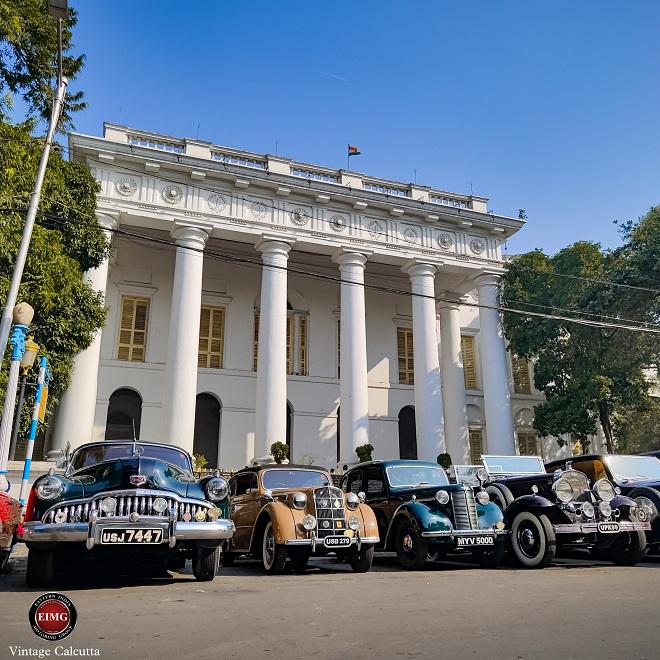
Since that day, the Town Hall has remained witness to innumerable important gatherings of historic importance. Fast forward to a pleasant Sunday morning of November 26 and this grand edifice stood testament to yet another marquee event – the flag off of the EIMG Vintage Fiesta 2023.
Organised by Eastern India Motoring Group (EIMG) – a community of serious heritage vehicle collectors from all across Eastern India – the line up for the EIMG Vintage Fiesta 2023 included as many as 50 rare heritage two and four wheelers which were selectively handpicked by EIMG Founder & President Shrivardhan Kanoria, himself a restorer and collector of national repute.
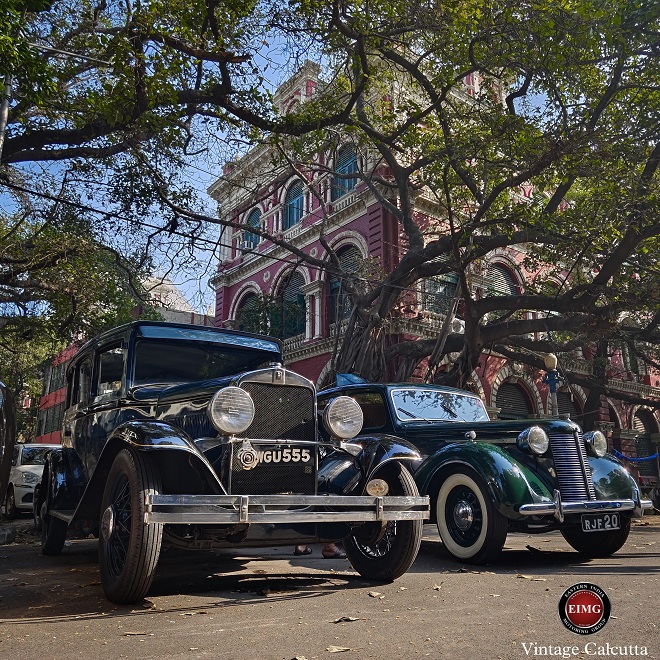
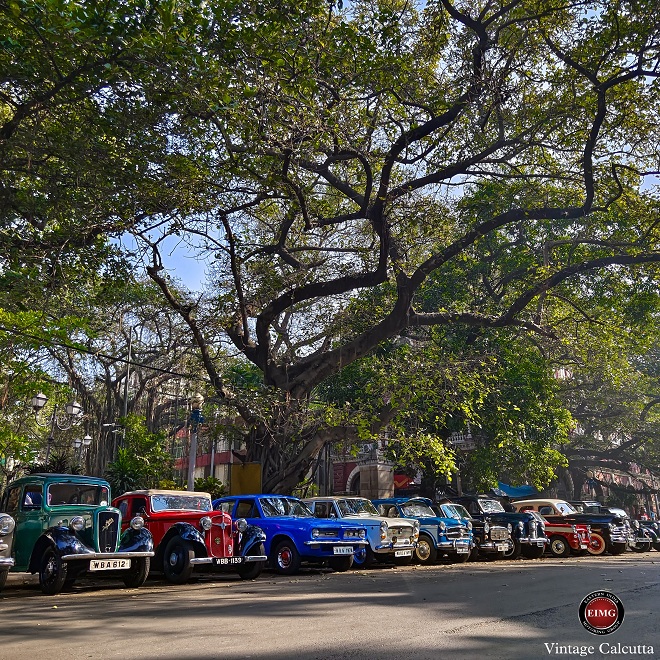
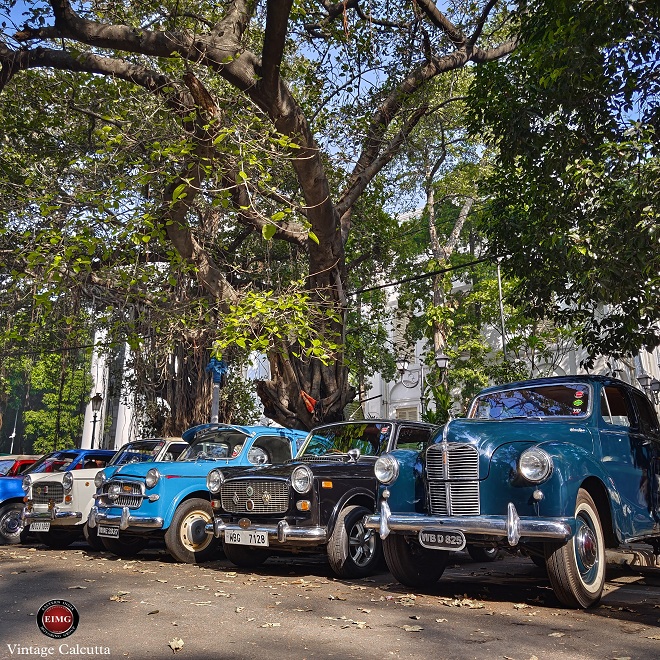
By 8 AM, the vehicles started to arrive and aided by the EIMG marshals, these vehicles were parked in a predetermined sequence in front of the majestic Town Hall. What a sight it was to behold with these horseless carriage basking in the winter sun.
Once the lining up of these heritage vehicles concluded, it was time for the group members to share some camaraderie, exchanging notes & valuable information about these ageless beauties, over a hot cuppa and some delicious packed breakfast.
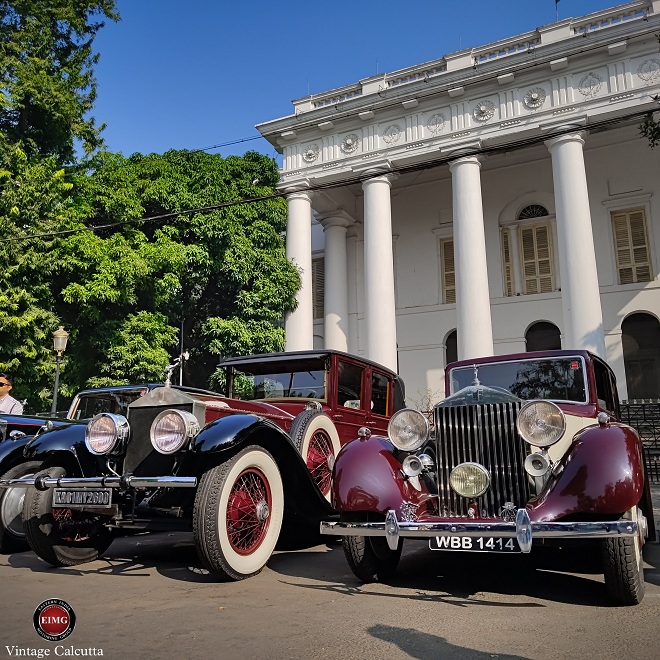
There were several noteworthy heritage vehicles which participated in this vintage gala. Few worth mentioning were Shrivardhan Kanoria’s 1931 Chevrolet Big 6, Avik Naha’s 1938 Rolls-Royce 25/30 (making its Kolkata debut and a real stunner), Rajiv Ghosh’s 1947 Chevrolet Fleetmaster & 1949 Buick Super, Subhajit Kumar’s 1962 Standard Herald, Sumit Periwal’s 1956 Land Rover, Kunal Banerji’s 1926 Studebaker Erskine, Sourav Sett’s 1947 MGY, Karnani Family’s 1938 Rolls-Royce 25/30, Debaprem Chatterji’s 1950 Austin A40, Terrance Lobo’s 1940 Triumph, Harjit Singh Dhanjal’s 1956 Ariel, Afzul Hossain’s 1923 Panther Sloper and Onurag Chatterji’s 1974 Yezdi to name a few. Amongst other exotic vintage and classic cars were the Italian Fiats, a part of the ‘Fiat Users Club Calcutta (FUCC)’, a subsidiary of EIMG.
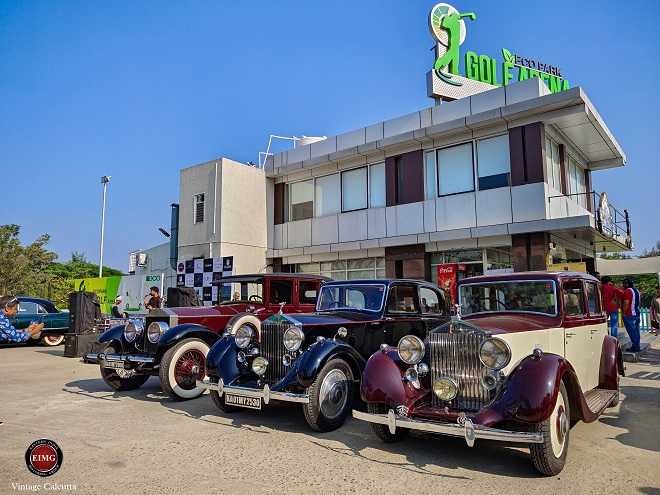
But the one that really stood out among the galaxy of heritage stars was Kanoria’s Rolls-Royce Silver Ghost. This particular example is a 1926 (oldest car in the show) year of manufacture, and what makes this car more special is that it was built in the America’s Springfield factory. This design termed as the ‘Tilbury Sedan’ under the hallmark of ‘Rolls-Royce Custom Coachwork’ was their catalogue design. This beauty is powered by a 7.3 litre engine. A real headturner!
Post some important announcements and a quick briefing session by the EIMG President; it was time for these heritage motors to be flagged off from Town Hall for the final destination – Club De Golf.
Imagine a convoy of 50 heritage vehicle driving down the majestic Red Road flanked by the Maidan on one side. It was a sight for the City of Joy to watch as these beauties elegantly rolled together towards New Town.
It is worth mentioning that on this day alone, each of these heritage vehicles clocked around 60-70 kilometres on their odometers (garage to garage) which is an incredibly great deal for these vehicles and a testimony for the superlative effort put in by the owners who have kept the fire burning in their hearts.
After reaching Club De Golf located inside the picturesque New Town Golf Club, the heritage vehicles were displayed for a vintage rendezvous with their Club members and visitors. A thanks giving ceremony followed where each of the owners were felicitated with a specially curated memento for upholding the legacy of heritage motoring. Present on this special occasion was Mr. Debashis Sen, Chairman of NKDA & CEO of HIDC; Col. Indrajit Roy, GM – New Town Business Club; Ms. Akansha Pandey, Owner – Club De Golf; Mr. Vineet Choudhury, Owner – Bombay Beach Resort and Mr. Shrivardhan Kanoria, Founder & President – EIMG.
This was followed by a sumptuous beer luncheon which was hosted by Club De Golf for all the members of EIMG.
Volvo Car India has appointed Jyotsana Singh Kaushik as Director – Marketing & PR. With the two decades of experience in the fields of brand management, performance marketing, PR & communication, product strategy, and customer experience (CX), Jyotsana brings a wealth of expertise to her new role. She has previously held Marketing roles in GE Money, Tetra Pak, Aviva, Roca and Canara HSBC Life Insurance.
Jyotsana is a Post-Graduate in Marketing & Communications, known for her innovative and strategic approach to marketing and public relations. She has successfully navigated the intricacies of both B2C and B2B environments and will now be a valuable addition to the Volvo Car India team. In her new role as Director – Marketing & PR at Volvo Car India, Jyotsana will play a pivotal role in strengthening the brand’s presence in the Indian market, crafting innovative marketing strategies, enhancing public relations initiatives, and driving customer engagement through creative campaigns.
“We are thrilled to welcome Jyotsana Singh Kaushik to Volvo Car India. Her extensive experience and remarkable track record in marketing and public relations will be invaluable to our team as we continue to strengthen our brand presence in the Indian market. We look forward to the innovative strategies and fresh perspectives she will bring to our organization. Jyotsana’s joining represents a significant step forward in our journey towards excellence, and we are excited about the opportunities that lie ahead with her on board.” said Mr. Jyoti Malhotra Managing Director, Volvo Car India.
“I am truly delighted to join the Volvo Car India family. Volvo is synonymous with innovation, safety, and sustainability, and I am excited to be a part of a brand that embodies these values. I look forward to working with the talented team at Volvo Car India and contributing to the continued success and growth of this renowned brand in the Indian market. Together, we will create new milestones and deliver exceptional experiences to our customers.” said Jyotsana Singh Kaushik.
The Hon Charles Stewart Rolls first met Henry Royce in Manchester on 4 May 1904. On his return to London, the first person he told about his historic encounter was his business partner, Claude Johnson.
Large-framed, broad-shouldered and extrovert, Johnson was 13 years Rolls’ senior. A gifted marketer and organiser, he began his career running scientific and trade exhibitions, then spent six lively years as the very first Secretary of the Automobile Club of Great Britain and Ireland, which would become the Royal Automobile Club (RAC).
In 1903, he joined C S Rolls & Co, one of Britain’s first-ever car dealerships, which Rolls had established in January of the previous year. When Rolls and Royce set up their new company following their 1904 meeting, Johnson brought much-needed commercial acumen and financial backing to the fledgling enterprise.
MAKING HIS MARK
In 1906 Johnson became the first Commercial Managing Director of Rolls-Royce Limited, taking on the job of sales and marketing. A natural showman with a prodigious talent for generating publicity (for himself, as well as the company) it was a task to which he was ideally suited, and applied himself with both great zeal and tremendous success. It was he who persuaded Royce to refine the company’s offering to a single model, the 40/50 H.P., which became world-famous under the name Johnson coined for it – the Silver Ghost. It was Johnson who also overcame Royce’s numerous objections and convinced him of the virtues of offering to supply every Rolls-Royce motor car with an official mascot. More than a century later, the Spirit of Ecstasy, designed by the sculptor Charles Sykes, remains one of the world’s most recognisable and desirable brand emblems.
A FRIEND INDEED
In 1911, after years of accumulated stress and overwork, Royce’s health collapsed. As part of his recuperation, Johnson took him on an extended road trip through Europe to Egypt. During a stop in the South of France on the return journey, Royce became enchanted with the tiny hamlet of Le Canadel, near Nice. Johnson knew his man, and promptly bought a parcel of land, where he commissioned a new house for Royce, plus a smaller villa for visiting draughtsmen and assistants. For the rest of his life, Royce (very sensibly) spent his winters working from home at Le Canadel, and from 1917, summers at his beloved Elmstead in West Wittering, West Sussex.
‘THE HYPHEN IN ROLLS-ROYCE’
Johnson remained in charge of Rolls-Royce until his death in 1926, at the age of 61. His 20 years at the helm make him the longest-serving chief executive in the company’s history. His influence on the marque was wide-ranging, profound and indelible; indeed, such was his pivotal importance to its growth and success, he is still known today as ‘the hyphen in Rolls-Royce’.
WORTHY SUCCESSORS
The job title of Rolls-Royce’s most senior executive changed over time. Johnson was Commercial Managing Director; those who followed him were referred to as Chairman, then Chief Executive Officer (CEO) – the designation still in use today. Of Claude Johnson’s successors in the years prior to the present-day Goodwood era, two in particular stand out for their lasting contributions to the company’s identity and commercial success.
DRIVEN TO SUCCEED
Ernest Hives worked as Charles Rolls’ chauffeur, then in the workshop at C S Rolls & Co, before joining Rolls-Royce as an experimental tester in 1908. In this capacity, he took part in the 15,000-mile endurance test of 1907, and the famous 1911 London to Edinburgh run with the cars locked in top gear only; in the same year, he became the first to exceed 100mph in a Silver Ghost (chassis 1701). He also headed up the Rolls-Royce works team, again with Silver Ghost cars, on the legendary 1913 Alpine Trial, which cemented Rolls-Royce’s reputation as ‘the best car in the world’.
Armed with the in-depth engineering knowledge he gained on these events, Hives set up a fully-fledged experimental department, which helped develop Rolls-Royce’s aero engines as well as its automotive products. In 1937 he was appointed a Board Director and General Works Manager; his most significant act was to split the company’s car (chassis) and aero engine operations into two independent entities, which remains the case to this day. During the Second World War, Hives oversaw production of some 160,000 Merlin aero engines; he was also a staunch and early champion of the emerging jet-engine technology.
In 1946, Hives became Managing Director and in 1950, Chairman of the Board. The man who at 17 had been Charles Rolls’ chauffeur was now head of his former employer’s eponymous company. He retired in 1957.
A COMPLETE CHANGE
In 1945, Dr Frederick Llewellyn Smith – known simply as ‘Doc’ – was given the daunting job of converting Rolls-Royce’s factory in Crewe from its wartime role making Merlin aero engines to civilian car production. To his role as a Main Board Director and Managing Director of the Motor Car Division, he brought not only great organisational skills, but an uncanny knack of foreseeing future trends.
On a visit to the USA in 1950, he became convinced that the traditional British coachwork still being fitted to many Rolls-Royce chassis was hopelessly outdated, and that a ‘new look’ was urgently needed. Under his auspices, the marque produced the Silver Dawn and highly successful Silver Cloud, the first complete cars (chassis plus bodies) ever to be designed and built in a Rolls-Royce factory. Even these pioneering models were fairly conventional: it would be with the Silver Shadow that his bold vision was finally realised with its chassis-less, semi-monocoque design. The advanced engineering was ahead of its time, and the Silver Shadow became the best-selling Rolls-Royce of the entire pre-Goodwood era. Popular with the workforce, Doc succeeded Ernest Hives as Chairman, a post he held until his retirement in 1967.
INTO THE MODERN ERA
In 2010, the baton passed to Torsten Müller-Ötvös, who has led Rolls-Royce Motor Cars for almost 14 years – the second-longest tenure of any Chief Executive since Johnson himself. Like his 20th Century predecessors, Torsten has overseen a complete transformation of the brand and its products. Dawn, Wraith, Cullinan and the Black Badge family have all been introduced under his leadership, which has also seen a huge expansion in Bespoke and the renaissance of coachbuilding as a permanent capability. In 2022, Torsten guided the company into the future originally prophesied by Rolls in 1900 with the launch of the first all-electric Rolls-Royce, Spectre.
Torsten Müller-Ötvös retires on 30 November 2023. His successor is Chris Brownridge, who joins Rolls‑Royce having previously served as CEO of BMW UK.
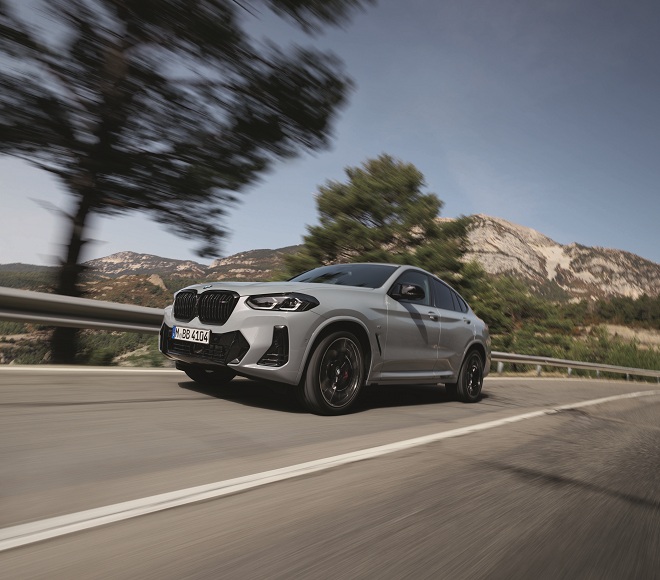
The first-ever BMW X4 M40i was launched in India at an ex-showroom price of INR 96,20,000. The car will be available as a Completely Built-Up (CBU) model effective immediately in limited units only.
Mr. Vikram Pawah, President, BMW Group India said, “The BMW X4 popularized the distinctive Sports Activity Coupe concept in India. It instantly became the vehicle of choice for customers who have a unique style that stands out from rest of the crowd. Now, we are really excited to announce the first-ever BMW X4 M40i and its introduction is a testimony to the enormous success of M powered vehicles and the growing popularity of exclusive M Editions in India. Engineered to outperform and designed to outlast, the BMW X4 M40i is a daring disruptor. With its performance-oriented style, distinctive aesthetics and heightened power, you will be sure to set yourself apart from the pack.”
The first-ever BMW X4 M40i is available in following metallic paintworks – Brooklyn Grey and Black Sapphire. It features the standard leather Vernasca in Black and Tacora Red options.
The distinctive sports activity coupe design of the first-ever BMW X4 M40i is a guaranteed head turner. The Dark BMW M kidney grille with chrome frame, double kidney bars in high-gloss black and M logo shows off the vehicle’s athletic prowess. Its slim Adaptive LED Headlamps create a more focused face. The M Shadow Line lights offer a dark tint around the headlamps. Fitted with the M High Gloss Shadow Line with extended features, the window graphics and roof rails, frame and the bars of the BMW kidney grille are finished in high-gloss black. Towards the rear, the X4 M40i features the free-form tailpipe trims in black chrome with the two “teeth” that emphasise the modernity of this progressive Sports Activity Coupé. The car is fitted as standard with 20-inch Jet Black M light alloy wheels double-spoke 699M with the mixed tyres 245/45 R20 at the front and 275/40 R20 at the rear. M Sport brakes are available with red-high gloss brake calipers.
The interior boasts an exceptional level of comfort and functionality in a sporty ambience. The interior has clearly structured surfaces and an ergonomically impeccable cockpit design that ensures the driver’s focus remains one hundred per cent on the intense driving experience. The M interior trim finishers carbon fibre ensures an exclusive motorsport atmosphere in the cockpit of the first-ever BMW X4 M40i. Driver and front passenger enjoy the superior flair of a premium SAC with Sports Seats which impress with numerous electrical adjustment options and memory function. The M Seat belts add to the powerful look of the car’s interiors. Exclusive galvanic embellish on control elements for power windows, multifunction buttons on steering wheel, the door control panel and door lock switch create a high quality impression. A relaxed and harmonious lounge atmosphere is created thanks to a large electrically operated panoramic sunroof. Ambient lighting with six selectable light designs creates an atmosphere for every mood. Welcome light carpet, projected from the side sill, welcomes passengers in glamorous style. The leather upholstery spells exclusivity inside the cabin.
The 3.0-litre BMW M TwinPower Turbo inline 6-cylinder petrol engine produces an output of 360hp and a maximum torque of 500 Nm at 1,900 – 5,000 rpm. The car accelerates from 0-100 kmph in just 4.9 seconds with a top speed of 250 kmph. The 48-volt mild hybrid technology ensures even better driving performance with lower fuel consumption and increased driving comfort.
The 8-speed Steptronic automatic transmission performs smooth, almost imperceptible gear shifts. At any time, in any gear, the transmission collaborates perfectly with the engine, enabling it to develop its full power and efficiency. For even greater driving pleasure, the 8-speed Steptronic sport transmission is available with steering wheel paddle shifters.
BMW xDrive, the intelligent all-wheel drive technology monitors the driving situation and is quick to respond to ensure maximum traction, agility and vehicle stability. The standard M Sport differential enhances traction and cornering by electronically controlling the distribution of power to each individual wheel. It helps to avoid understeer and oversteer in situations involving multiple changes of direction and load. An Adaptive M suspension is available offering a great spread between riding comfort and sportiness. The variable sport steering is precise and responsive even when only a slight steering input is applied. The M Sport brakes provide excellent braking performance and intuitive feel, whether negotiating city streets or driving around a circuit on a track day. The brake calipers are painted red and display the M logo. The BMW Performance Control System increases the stability of the car by targeted braking of the wheels.
BMW EfficientDynamics doubles ‘Sheer Driving Pleasure’ with features such as Auto Start-Stop, ECO PRO mode, Brake-Energy Regeneration, Electronic Power Steering, 50:50 Weight Distribution and many other innovative technologies. By using the Driving Experience Control switch, driver is able to choose between different driving modes (ECOPRO, COMFORT, SPORT/ SPORT+) to suit diverse driving conditions.
The first-ever BMW X4 M40i features cutting-edge safety technologies. It provides optimal support in any situation with six airbags, Attentiveness Assistance, Dynamic Stability Control (DSC) including Cornering Brake Control (CBC), electric parking brake with auto hold, side-impact protection, electronic vehicle immobilizer and crash sensor, ISOFIX child seat mounting and integrated emergency spare wheel under the load floor.
The modern cockpit concept BMW Live Cockpit Professional includes 3D Navigation, a 12.3-inch digital information display behind the steering wheel, a 12.3-inch Control Display and BMW Head-up Display. The occupants can operate a number of car functions simply by speaking to their BMW Virtual Assistant. Hands do the talking with BMW Gesture Control that recognizes six pre-defined hand movements for control of a number of functions. Wireless Apple CarPlay / Android Auto ensure seamless smartphone connection with the car to access several functions. Harman Kardon Surround Sound System with 16 speakers conjures an engrossing treat for the ears. The spread of driver assistance systems is more extensive than ever. Park Assistant Plus with Surround View Camera makes parking in tight spots easier by taking over acceleration, braking as well as steering. The Reversing Assistant provides unmatched support in reversing out of a parking spot or through narrow driveways.
Ashok Leyland has announced its strategic plans to strengthen its LCV presence in Eastern India, with a strong emphasis on the West Bengal market. The move is a part of Ashok Leyland’s mission to position itself as a dynamic and reliable player in the Eastern region while reaffirming its commitment to providing best-in-class Light Commercial Vehicle (LCV) products and services.
Ashok Leyland plans to harness the burgeoning economic growth, expanding infrastructure projects, and rising demand for commercial vehicles in the region, thereby fortifying its market presence and effectively meeting the unique transportation needs of the region. The West Bengal market offers an exciting and thriving business environment, a substantial customer base, and a hospitable climate for investments. Recognizing these factors, Ashok Leyland has undertaken several strategic steps to grow significantly in this promising region.
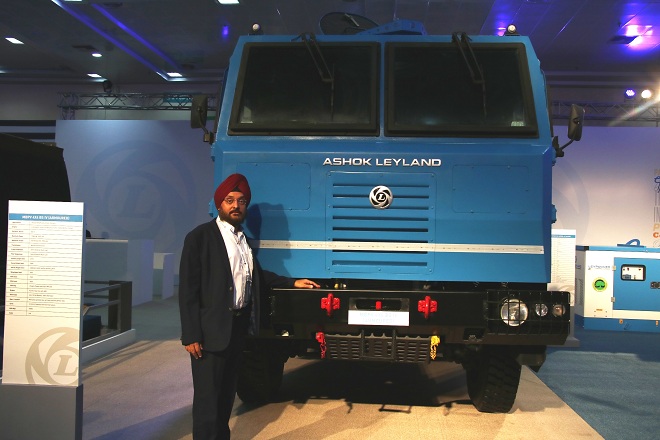
Mr. Amandeep Singh, President LCV, International Operations, Defence & Power Solutions, Ashok Leyland, said “West Bengal and the Eastern India region have always been a prime market for us. We have consistently seen the potential here and look forward to the opportunities that lie ahead. We are committed to strengthening our presence in Eastern India, particularly in West Bengal, which is a key market for us, and remain steadfast to delivering top-quality LCV products and services that cater to the specific requirements of this region.”
With a rich heritage and a strong reputation for manufacturing world-class commercial vehicles, Ashok Leyland is poised to make a significant impact in the Eastern region, contributing to the development of the state’s economy and offering transport solutions that cater to a wide range of industries.
As Ashok Leyland continues to evolve and expand its footprint, the company remains dedicated to delivering exceptional products and services to meet the growing demands of customers in Eastern India, thereby reinforcing its position as a leading player in the LCV market.
BMW India has launched the first-ever BMW i7 M70 xDrive along with the diesel variant of the all-new BMW 7 Series – 740d M Sport. The BMW 740d M Sport is locally produced at BMW Group Plant Chennai while the all-electric BMW i7 M70 xDrive is available as a completely built-up unit (CBU). Both these cars are available at all BMW India dealerships from today onwards.
Mr. Vikram Pawah, President, BMW Group India said, “The all-new BMW 7 Series defines the ultimate luxury sedan and sets new standards of luxury and exclusivity. The 7 has bedazzled the high-end segment with its new design language, powerful dynamics, comfort and trailblazing digital experience. With the addition of the BMW i7 M70 xDrive and the BMW 740d M Sport, our flagship is now available as a petrol, diesel, electric and an all-electric performance model. This diversification allows us to cater to all customer preferences and meet the overwhelming demand for the 7 Series in the Indian market. As the vehicle of choice of leaders and luminaries with next-level style and substance, the 7 will continue to shape forwardism.”
Mr. Pawah added, “The BMW i7 M70 xDrive marks another milestone for BMW M GmbH in its electric mobility transformation. This all-electric performance model that now spearheads the BMW 7 Series range has a highly individual aura that signals outstanding dynamic performance and reveals its power potential at first glance. It delivers the perfect combination of electric mobility and performance, resulting in a driving experience unique in the luxury segment.”
The powerfully expressive design features for the exterior of the new BMW 7 Series authentically reflect its central product attributes and the associated on-board experience. The headlights are divided into two parts. At the top are the daytime running lights, complete with the BMW Crystal Headlights. Their sparkling Swarovski crystals reflect ambient light in a multi-faceted way even when not illuminated, resulting in an impressive shimmering effect. Underneath are the LED headlights for high beam and low beam. Another distinguished feature is the strikingly illuminated BMW Iconic Glow kidney grille surround that lends an unmistakeable appearance.
The first-ever BMW i7 M70 xDrive features the BMW kidney grille which sports an M logo, underlining the range-topping model’s dynamic character. It is bordered by Black high-gloss surfaces, giving it even greater visual prominence. M-specific design features along the flanks and at the rear clearly showcase the performance character of the top-of-the-range model variant. Eye-catching M side skirts, M logos with embellished borders on the front side panels, M High-gloss Shadowline trim, black M exterior mirrors with twin-stalk design and M Sport brakes in blue add sporting flourishes. The car is specified with the standard M Performance package that features a black M rear spoiler, a black accent strip between the rear lights and an inlay – also in black – for the rear apron. The standard 21-inch M light-alloy wheels on the BMW i7 M70 xDrive feature an exclusive, aerodynamically optimised design.
In the interior, the innovative BMW Interaction Bar defines the revolutionary cockpit design. This backlit bar looks like a piece of crystal jewelry where air vents are integrated almost invisibly. Using this touch-enabled bar, passengers can also adjust ambient lighting, air conditioning as well as its appearance. Unique and innovative features in the rear take comfort to a new level. A key feature here is Rear Seat Entertainment Experience with BMW Theatre Screen. The 31.3-inch touch screen with 8K resolution extends down from the ceiling to turn the car into a mobile home cinema as the windows blinds and panorama glass roof automatically close. The Bowers & Wilkins Diamond Surround Sound System adds an extremely high-quality and multi-faceted sound experience to film watching in the rear of the new BMW 7 Series. It sets new standards in its segment not only with up to 36 speakers, of which four are integrated into the headliner, and amplifier output of 1,965 watts, but also in terms of sound quality. Another highlight is the 5.5-inch smartphone-style touchscreen control panels in the rear doors. The cars also offer the comfort-enhancing feature of automatic door opening and closing via just a touch on the door handles, the buttons in the BMW Interaction Bar or the rear door trim or the car key.
The BMW i7 M70 xDrive also gets the Carbon Fibre M interior trim with silver stitching/Piano Finish Black that adds to the overall experience inside the cabin. The BMW i7 M70 xDrive comes as standard with M-specific equipment details that accentuate its sporting flair and enhance its concentrated sense of driving pleasure. These include illuminated M door sills, M Merino leather trim in Black/Atlas Grey available as an option, an M leather steering wheel, M-specific content on the BMW Curved Display and an M driver’s footrest. The electric all-wheel drive, the steering, the dampers and the driving stability systems are each underpinned by the M-specific application of all control systems, ensuring superbly judged driving characteristics in all situations.
The Executive Lounge Seating behind the front passenger reclines to 42.5 degrees, offering a true first-class experience thanks to multifunction seats, massage function, active seat ventilation and rear console. My Modes can be used to turn every journey into an individual experience by combining sound, light, temperature, suspension settings and seat functions to create a particular mood. Other than Personal Mode, Sport Mode and Efficient mode, the new BMW 7 Series is offered with multiple new modes: My Mode Relax, My Mode Theatre and My Mode Expressive. My Mode Relax combines calm images in the Control Display, seat massage and a gentle soundscape to encourage occupants to unwind. In addition, drivers can black out the window areas and the panoramic glass roof. In My Mode Theatre, the BMW Theatre Screen folds down, the interior is dimmed, and the seat moved into a comfortable viewing position. My Mode Expressive accentuates the driving experience with lively colours and patterns as well as BMW IconicSounds Electric.
Thanks to the unrivalled BMW TwinPower Turbo technology, the diesel engine melds maximum power with exemplary efficiency and offers spontaneous responsiveness even at low engine speeds. The three-litre six-cylinder diesel engine of the all-new BMW 740d M Sport produces an output of 210 kW / 286 hp and a maximum torque of 650 Nm at 1,500 – 2,500 rpm. The car accelerates from 0 -100 km / hr in just 6.0 seconds with a top speed of 250 kmph.
An M-specific configuration of the drive system enables the BMW i7 M70 xDrive’s rear-axle motor, in particular, to achieve unprecedented levels of power density. The drive unit has a six-phase design with a dual inverter. This forms the basis for a very substantial increase in peak output that remains on tap up to high speeds, endowing the BMW i7 M70 xDrive with the power delivery characteristic of M models. The car instantly accelerates from 0 to 100 km/hr in 3.7 seconds with a top speed of 250 km/hr. It produces an output of 660 hp and a class-leading maximum torque of 1100 Nm. The extremely slim and high-voltage lithium-ion recyclable battery integrated in the floor has a net capacity of 101.7 kWh providing a range of up to 560 kms (WLTP). The BMW i7 M70 xDrive comes with a complimentary BMW Wallbox charger with installation. It can be integrated at home to enable safe and convenient charging up to 22kW.
The BMW i7 M70 xDrive is one of the brand’s first models to feature the latest generation of BMW iDrive with “QuickSelect” and BMW Operating System 8.5. The advanced display and operating system offers a redesigned entry screen and “QuickSelect” access with an improved menu structure oriented towards consumer electronics devices. The new entry screen permanently shows the map view of the navigation system or other displays that can be individually configured. The cloud-based navigation system BMW Maps now not only offers an Augmented View display on the Information Display behind the steering wheel, but also improved functions for even more precise and charging station optimised navigation.
BMW ConnectedDrive technology includes BMW ID, MyBMW App, Digital Key Plus, Emergency Call, Real-time Traffic Information, Remote Services, smartphone parking and Amazon Fire TV. BMW iDrive with Operating System 8 on the BMW 740d offers all the possibilities for interaction between occupants and the vehicle – using touch, gesture or speech. It is complemented by the BMW Intelligent Personal Assistant system which has a self-learning intelligence that adopts a driver’s individual habits, proactively provides useful tips on new driving functions and seamlessly integrates smartphone apps.
The spread of Driver Assistance Systems is more extensive. They support the driver and also increase comfort and safety. Standard equipment includes functions like Cruise Control, Attentiveness Assistant, Parking Assistant Professional with remote parking via smartphone and Reversing Assistant. In the BMW i7 M70 xDrive, Integral Active Steering and the Executive Drive Pro suspension package including Active Roll Stabilisation with Active Roll Comfort also feature as standard equipment.
BMW EfficientDynamics includes features such as 8-speed Steptronic Automatic Transmission, Auto Start-Stop, ECO PRO mode, Brake-Energy Regeneration, Electronic Power Steering, 50:50 Weight Distribution, Driving Experience Control switch and many other innovative technologies. The M Launch Control function in the BMW i7 M70 xDrive ensures the power generated by the electric motors is metered extremely precisely, allowing the drive system’s M-typical performance characteristics to be instantly converted into stunning acceleration without any loss of traction. The M Sport Boost function is activated with the shift paddle on the left of the steering wheel and is visualised by Performance-specific graphics in the instrument cluster. At the same time, the standard BMW IconicSounds Electric by Hans Zimmer provides a fitting acoustic accompaniment by switching to a particularly exhilarating, M Performance-specific note.
BMW Safety technologies include six airbags, Attentiveness Assistance, Dynamic Stability Control (DSC) including Cornering Brake Control (CBC), electric parking brake with auto hold, side-impact protection, electronic vehicle immobilizer and crash sensor, ISOFIX child seat mounting and integrated emergency spare wheel under the load floor.
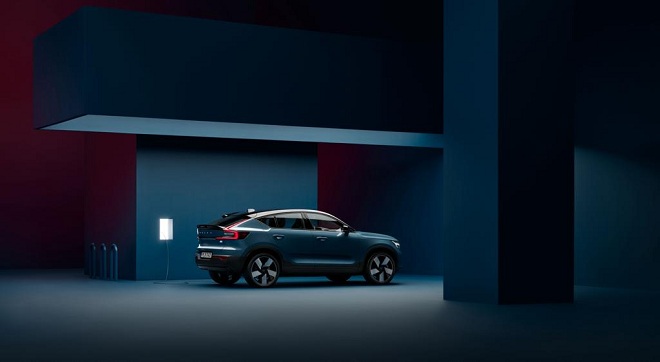
Volvo Car India’s second fully electric car C40 Recharge has got a very strong response from the Indian market. Within first month of its launch, it has crossed bookings of 100 cars. Volvo is making all efforts to deliver these cars at the earliest. C40 Recharge, first born electric car had surprised the market with the introductory price. Company has announced that the introductory price phase which was a reward for early adopters is now over. The ex-showroom price of C40 Recharge has now been revised to Rs 62.95 lakhs with immediate effect.
Seeing the great response to Volvo’s electric cars in India and connecting to Volvo Car’s electrification ambition, the company has decided to offer XC40 only in its all electric variant, “Recharge” for customers. To continue to push the electrification agenda, Volvo also announces a special “Festive Delight Offer” for customers opting to buy XC40 Recharge. The offer is valid for a limited period and limited stocks.
“Launched at an introductory price of Rs. 61,25,000, the Volvo C40 Recharge has garnered tremendous enthusiasm, with a remarkable one hundred cars booked within one month of its debut. As we remain at the forefront of the electric mobility revolution our other electric offering, the XC40 Recharge will now be available with an exclusive “Festive Delight Offer” this season. We are truly delighted to witness the overwhelming affection and steadfast support our customers have given upon our brand during this electrifying journey” said Mr. Jyoti Malhotra, Managing Director, Volvo Car India
XC40 Recharge boasts an impressive WLTP Range of 418 kms as per WLTP & 550 kms as per ICAT testing on a single charge, a comprehensive suite of safety features, and a luxurious and trendy design.
The C40 Recharge is the second EV model from Volvo in India to be assembled at the Company’s plant at Hosakote in Bengaluru, Karnataka and it comes with an 11kW charger. The C40 Recharge is only sold online directly by the Company. Customers can place orders online directly on Volvo Car India website. Bookings can be done with a refundable deposit of Rs.1,00,000 on Volvo Car India website.
Volvo Car’s commitment to sustainability is showcased in the C40 Recharge with the floor carpet set being produced from 71 recycled plastic bottles and the interiors having been made from forest waste, wine corks and plastic bottles. The interiors and seats are leather free.
Volvo Car India’s network of its pan India retail partners will continue to support customers towards sales delivery by providing on ground support. There shall be no change in customer service and after-sales service operation businesses which continue to operate as it is.
Bridgestone India and Tata Power have come together to install EV chargers for four wheelers at Bridgestone dealerships on a pan India basis. These chargers will be operational on a 24×7 basis. Tata Power is installing DC fast chargers of capacity 25/30 Kwh that are capable of charging a four wheeler within one hour allowing between 20-24 vehicles being charged in a day. The first of these installed, was inaugurated at Bridgestone’s Select Store Super Tyres at Shirur on the Pune – Ahmednagar road and is operational for all four wheeler EVs. This Bridgestone Tata joint initiative will give a boost to India’s plans for a national network of EV charging stations aimed at encouraging a higher adoption of EVs.
“The electric revolution is changing the automotive landscape and in India we are seeing a phenomenal growth in the demand for passenger EVs. At Bridgestone, being a globally trusted partner in the mobility space, we always endeavor to provide solutions for journeys. This joint initiative with Tata Power is a reflection of this commitment. By providing a viable and sustainable mobility solution, the 24×7 operations of these EV chargers also give EV owners of charging as per their convenience. said Mr. Rajarshi Moitra, Chief Commercial Officer, Bridgestone India.
“Tata Power is committed to propelling India towards a cleaner and greener tomorrow by accelerating e-mobility in the country. Our partnership with Bridgestone India exemplifies our dedication to facilitating the electric vehicle revolution by fostering innovation and collaboration,” stated Virendra Goyal, Head – Business Development (EV charging), Tata Power.
These chargers will be accessible to Bridgestone customers and all EV owners. Installation and charging support along with 24×7 service, maintenance support, remote vehicle charging monitoring and e-payments through the EZ Charge mobile application will be provided by Tata Power.
Tata Power EV Charging mobile app will provide EV owners the convenience of locating charging stations on aerial map, getting updates on charging, recommendations on paying charges online. Charging status including Units consumed & Time elapsed etc. can be seen on EV charging mobile App.
Such charging stations will help immensely the growing EV users. For instance in the first eight months of 2023 a total of 53206 passenger EVs were sold in India showing a 132 per cent increase over the same period in 2022. The EV adoption is growing and this joint initiative will help grow the charging infrastructure further.





 Power Drive