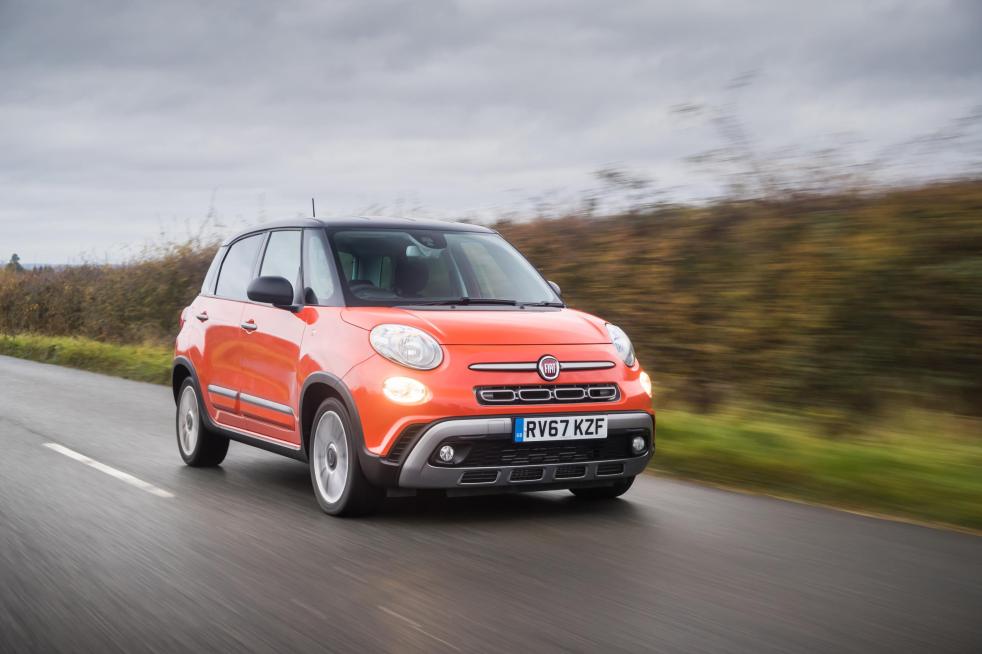
20 Tips To Get The Best Mileage From Your Car


fuel price

Rising fuel costs has become a plaguing problem for motorists. And while motorists can’t control the price of fuel, they can certainly try to get the best mileage out of their cars providing some respite to their wallet. Read on to find out.

Fuel consumption is directly related to vehicle care and driver behaviour and both can have a significant impact on how much a motorist needs to shell out at the pump. We have suggested a few handy tips that can go a long way to save a lot of bucks.

1. Keep your tyres at the right pressure

Correctly inflated tyres are safer and last longer. A tyre that is under inflated by just 1psi can reduce fuel efficiency by as much as 3 per cent. An under or over inflated tyre is also more susceptible to failing.

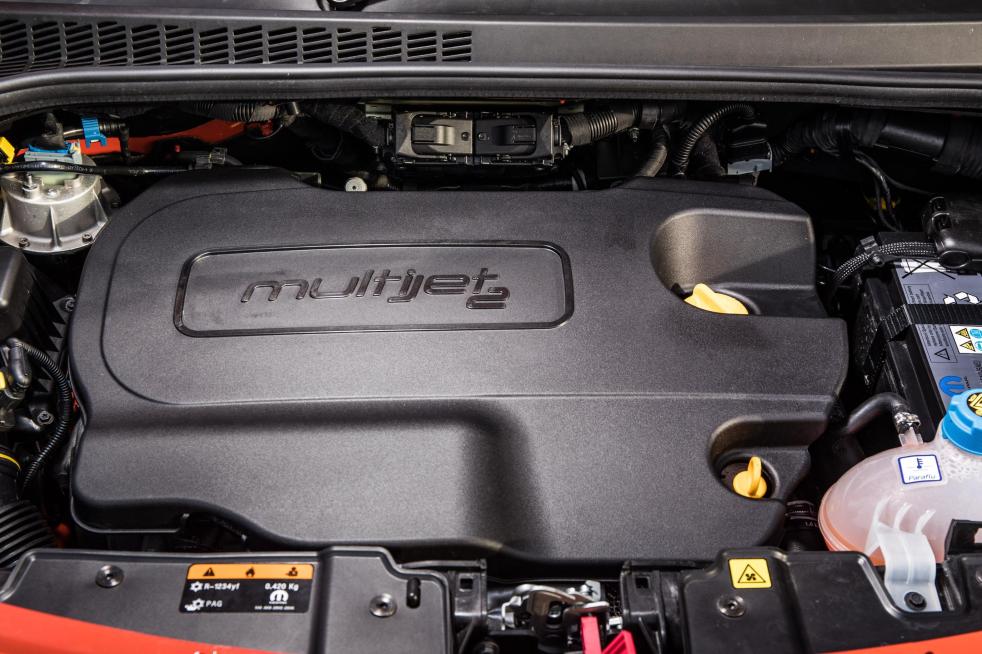
2. Tune and service your engine

A well-tuned engine can improve fuel economy by up to 4 per cent, so change your oil and clean/change air and fuel filter as recommended in your car’s service manual.

3. Drive smoothly

Aggressive driving can use as much as 33 percent more fuel than smooth driving. Avoid accelerating or braking too hard and try to keep your steering as smooth as possible.

4. Use higher gears

The higher gear you drive in the lower your engine speed is, which can improve fuel efficiency. So change up a gear whenever you can, without labouring the engine.

5. Avoid carrying excess weight

For every extra 45 kg you carry your fuel efficiency can drop by 1-2 per cent. So keep your boot or back seat clear of unnecessary items that just add weight to your vehicle.

6. Fuel matters

All fuels are not created equal. Fuel economy is maximised in the engine through a combination of good driving habits and using the best fuel; one that helps reduce friction and improve cleanliness in the engine, thereby boosting fuel efficiency.

7. Use the correct oil

Always use the recommended grade of motor oil. Using the manufacturer’s recommended lubricant can improve fuel efficiency by 1-2 per cent. Higher quality motor oils can also help your engine operate more efficiently.

8. Take the roof rack off

If you’re not using your roof rack then remove it. They affect the aerodynamic efficiency of your vehicle and create drag, reducing fuel economy by as much as 5 per cent.

9. Keep the windows closed

Wind blowing through an open window will slow you down due to wind drag. To compensate, you may put your foot down harder, using more fuel.

10. Avoid high speeds

The faster you go the more wind resistance you’ll encounter and the more fuel your vehicle will consume just to maintain speed. Driving just 10 kmph over the speed limit can affect fuel economy by up to 23 per cent.

11. Avoid excess idling

Idling gets you nowhere but still burns fuel. Turn the engine off when you’re stuck at a signal, or waiting for someone, until you need it.

12. Avoid rush hour

If you can travel outside of peak times, you’ll spend less time stuck in traffic and consume less fuel as a result.

13. Avoid over-revving

Change gear in good time when you pull away or when you’re accelerating. Never ‘redline’ the rev counter.

14. Use cruise control, if you have it

Using cruise control on highways helps you maintain a constant speed and, in many cases, will improve fuel consumption.

15. Check the air filters

Air filters keep impurities from damaging your engine. Replacing a clogged air filter can improve fuel economy by as much as 10 per cent and will help protect your engine.

16. Avoid small fuel fills

Fuel evaporates every time you open the fuel cap. To stop this, avoid repeatedly topping up your tank. Also check the seal on your fuel cap is airtight.

17. Keep your distance

Leave a sensible distance between yourself and the car ahead to give you ample time to brake evenly.

18. Conserve momentum

Think ahead when you’re driving. For example, slow down early to let traffic lights change, rather than stopping completely, or speed up a little before you reach the foot of a flyover or bridge.

19. Use air conditioning sparingly

Air conditioning puts added strain on the engine and uses fuel to operate, so limit its use to get better mileage.

20. Plan trips carefully

Cutting down on the time spent in the car is the easiest way to conserve fuel. To reduce driving time, combine all your short trips and errands into a single journey.

Ten Basic Car Care Tips

Car maintenance

Neglecting your car will almost always result in much higher costs down the line in the form of more extensive repairs or lost resale value. Whereas, following a routine maintenance program makes financial sense, extending useful vehicle life and helping avoid costly repairs down the road. Here are ten basic car care tips to keep your vehicle at its best for the long haul. Read on to find out.

  1. Check all fluids, including engine oil, power steering fluid, brake fluid and transmission oil as well as windshield washer solvent and coolant.
  2. Check the brake system twice a year and have the brake linings, rotors and drums inspected at each oil change.
  3. Check the hoses and belts to make sure they are not cracked, brittle, frayed, loose or showing signs of excessive wear.
  4. Schedule a tune-up to help the engine deliver the best balance of power and fuel economy and produce the lowest level of emissions.
  5. Check the heating, ventilating and air conditioning (HVAC) system as proper heating and cooling performance is critical for interior comfort.
  6. Inspect the exhaust system for leaks, damage and broken supports or hangers if there is an unusual noise. Exhaust leaks can be dangerous and must be corrected without delay.
  7. Check the battery and replace if necessary. Make sure the connection is clean, tight and corrosion-free.
  8. Inspect the steering and suspension system annually including shock absorbers, struts and chassis parts such as ball joints, tie rod ends and other related components.
  9. Check the wipers and lighting so that you can see and be seen. Ensure that all interior and exterior lighting is working properly and replace worn wiper blades so you can see clearly when driving in the rain.
  10. Check the tyres, including tyre air pressure and tread. Uneven wear indicates a need for wheel alignment. Tyres should also be checked for bulges and bald spots. Rotate your tyres every 6 months or 10,000 km, whichever is earlier.

The New BMW X2

1461218_P90278979_highRes_the-brand-new-bmw-x2027

With its unmistakable design and sporty, urban feel, the BMW X2 breaks new ground for BMW as a unique and exciting addition to the BMW X model range.

Even next to its bigger brothers, the BMW X4 and X6, the BMW X2 makes a distinctive impression. The car’s exterior design combines the low-slung proportions of a coupe with the robust core of a BMW X model.

The BMW X2 is two centimetres shorter and more than seven centimetres lower than the BMW X1, yet has the same wheelbase. Featuring short overhangs, it also has a stretched, coupe-style roofline and slim window graphic.

The kidney grille has always been an identifying feature of a BMW. On the X2, however, its outline is wider at its base than at its top. The X2 is the first modern BMW to feature this design cue, and it gives the new car a broader, more distinctive and sportier appearance. Below the grille, the hexagonal surface treatment in the bumper further reinforces this impression. The high-gloss black grille provides sharp contrast with its chrome surround.

1461226_P90278977_highRes_the-brand-new-bmw-x2025

Full-LED headlights as standard on Sport, M Sport and M Sport X models. The bi-LED light for low beam and high beam is highly effective at illuminating the road, while also accentuating the BMW X2’s sporty character. The headlights display precise detailing, achieved in part through 3D Icon LED daytime driving light and laser engraving.

The M Sport and M Sport X models are available with wheels in sizes up to 20-inch, a standout feature in this segment. As standard, both models are fitted with 19-inch wheels. The standard rims for the SE model are 17-inch V-Spoke style light alloy wheels, but ten other rim designs can be specified as an option.

The side skirts of the BMW X2 are among its signature features and contribute to its rugged good looks. The cladding is black on the SE and Sport models and Frozen Grey on the M Sport X. The C-pillars host two characteristic BMW features: the hallmark BMW Hofmeister kink and, for the first time on a BMW X model, the BMW roundel.

1461217_P90278978_highRes_the-brand-new-bmw-x2026

At the rear, a spoiler provides a flourish to round off the BMW X2’s roofline and contributes to the BMW X2’s drag co-efficient of just 0.28. Together with the width-enhancing rear bumper, this creates a powerful rear view.

On the SE and Sport models, the rear bumper comes in the vehicle colour and matt black. The M Sport models feature a diffuser-look cladding inlay in Dark Shadow metallic. M Sport X models, meanwhile, get a bespoke diffuser insert in the contrast colour Frozen Grey.

The horizontal design lines of the BMW X2’s rear-end emphasise the car’s width and its strong character, with these lines continuing into the high-set rear lights. The LED rear lights contour and the L shape familiar from BMW coupes.

The car hints at the power of its BMW TwinPower Turbo engines through the design of the tailpipes. All X2 models come with a twin exhaust arrangement 90mm diameter.

The class quality of the BMW X2 and its levels of equipment, even in the SE model, are both instantly apparent. The instrument panel has contrast stitching as standard, while the centre console features materials including Sensatec also with contrast stitching. The interior of the M Sport model is trimmed in a Micro Hexagon fabric Anthracite/Alcantara combination, with the M Sport X adding leather upholstery as standard. Eye-catching highlights can be added by opting for the new perforated Dakota leather in Magma Red or the Micro Hexagon fabric Anthracite/Alcantara combination upholstery with yellow contrast stitching to match the Galvanic Gold metallic exterior paint shade.

1461335_P90278955_highRes_the-brand-new-bmw-x2003

The new BMW X2 combines style with generous everyday practicality. The boot has a capacity of 470 litres, meaning it can handle leisure activities, from shopping sprees to a skiing weekend or mountain-bike tour. This functionality manifests itself in the passenger compartment too, thanks to features such as a door design featuring large storage pockets.

The cabin is driver-focused, with the design of features such as the instrument panel binnacle directed at the road ahead. All controls are positioned to allow the driver to assimilate their information with a single glance and operate them with ease.

The soft-finish instrument panel is pleasant to the touch and gains further visual appeal with contrast decorative stitching. The M Sport model comes with Micro Hexagon fabric Anthracite/Alcantara combination upholstery with M piping in blue or yellow with contrast stitching on the instrument panel and the centre console as standard. The M Sport X model comes with Dakota leather with contrast stitching. Further sophisticated upholstery variants are available as options, including as many as five Dakota leather variants with part-perforation and coordinated contrast stitching. The choice of trim finishers, including High-gloss Black, Aluminium and matt Oak Grain variants, underlines the high-quality credentials of the BMW X2.

1461296_P90278959_highRes_the-brand-new-bmw-x2007

Excluding SE model, all functional controls in the centre console are set in high-gloss black as standard, giving the interior a touch of sophisticated elegance. An optional lighting package within the Plus pack allows drivers to set a stylish lighting mood for the interior of their BMW X2 by choosing from the colours Orange, Lilac, Mint, Bronze, Blue and White. The LED lighting in the trim surfaces of the instrument panel and door panels forms a continuous band that extends all the way around the cabin to the rear.

One of the most distinctive options on the list is the panoramic roof, which adds to the sense of spaciousness inside the BMW X2. The front section of the panoramic roof tilts and slides open, just like a conventional sunroof.

The TwinPower Turbo engines within the BMW X2 range team with the car’s refined chassis to endow it with class-beating handling qualities, exceptional agility and superb feedback.

The common denominator of all BMW X2 models is a chassis that transfers the core responsiveness of the BMW engines to the road. The car’s driving responses can be adapted by using the Driving Experience Control switch, allowing the driver to choose between default COMFORT mode, efficiency-enhancing ECO PRO mode and SPORT mode. The pre-programmed set-up available via SPORT mode gives the car even more dynamic steering and powertrain responses.

If the optional Dynamic Damper Control is specified, the car’s suspension can be adjusted even more precisely to individual requirements. Drivers can choose between two settings – COMFORT or SPORT – using the Driving Experience Control switch. The result is sporty suspension offering solid road holding and reassuring comfort over any surface.

The M Sport suspension fitted as standard on the BMW X2 M Sport and M Sport X is a particularly good match for these two models and includes tauter spring and damper tuning. BMW X2 M Sport and M Sport X models offer suspension which is 10mm lower than the standard suspension.

1461333_P90278964_highRes_the-brand-new-bmw-x2012

At launch, the X2 xDrive20d diesel variant will be available. It generates maximum output of 190hp and 400Nm of torque enabling a zero to 62mph (0 to 100 kmph) time of 7.7 seconds. Further variants of the BMW X2 will be added to the Sports Activity Coupe’s line-up in early 2018 – in the shape of the four-cylinder X2 sDrive20i, X2 sDrive18d and X2 xDrive18d.

The 20d diesel model comes equipped with xDrive intelligent all-wheel drive as standard. The integral Hill Descent Control feature enables the BMW X2 to automatically maintain a desired speed on steep descents by taking care of brake control for the driver, who can then devote their attention to the task of steering.

All of the BMW ConnectedDrive and BMW Connected elements in the new BMW X2 have once again been designed to assist, inform or entertain the driver at the appropriate time using just the right services.

The new X2 offers its driver three different ways of interacting with their car, as the sixth generation of the iDrive control concept now supplements the familiar iDrive Controller and optional voice control (within Tech pack) with touchscreen operation as standard for the Control Display . The touchscreen can also be used comfortably by the front passenger.

Standard specification for every BMW X2 includes a 6.5-inch Touch Control Display with navigation system. The display concept is designed to provide the driver with a quick summary of the most important information at any particular time by means of, for example, the live tiles that appear in the display’s main menu. Its operation emulates the intuitive touch control principles familiar from smartphones.

1461214_P90278974_highRes_the-brand-new-bmw-x2022

For even greater safety and convenience in the BMW X2, there is the option of the full-colour BMW Head-Up Display, also featured within the Technology Pack, projects all important driving information and navigation/assistance system readouts onto the windscreen and therefore into the driver’s field of view – in high resolution.

BMW Connected+ provides a digital bridge between smartphones and the car. It delivers the next level of in-car personalisation and smartphone content integration on the Control Display of the X2. This makes display and operation in the vehicle simpler than ever. One example of a new Connected+ service is Share Live Trip Status which allows the driver to share their current location and time of arrival with business partners, friends or family.

Among the other highlight features enabling connectivity anytime, anywhere are the optional WiFi hotspot preparation (available in Tech Pack), which equips the BMW X2 to host a built-in WiFi hotspot with LTE speeds, and the optional telephony with wireless charging (available in Tech Pack) for compatible smartphones. Apple CarPlay (available retrospectively from the BMW ConnectedDrive Store), meanwhile, enables easy, wireless in-car use of selected iPhone functions.

1461233_P90278973_highRes_the-brand-new-bmw-x2021

Not only does the BMW X2 offer drivers a wide selection of driver assistance systems, it also comes with highly advanced technologies.

The camera-based assistance systems available for the new BMW X2 help to deliver assurance and safety in different driving situations. The optional Driving Assistant (within Drive Pack) includes Lane Departure Warning, Speed Limit Info with No Passing Info display, anti-dazzle High Beam Assistant, as well as Collision Warning and Pedestrian Warning with City Braking function. In addition to these functions and as an upgrade to the Driver Pack, the Driving Assistant Plus also features the Active Cruise Control system with Stop & Go function – which maintains both a desired speed between 19 and 87mph entered by the driver and the safety distance to vehicles travelling ahead – and the Traffic Jam Assistant. At speeds up to 37mph, this function takes over both proximity control and lane-keeping tasks from the driver. The Traffic Jam Assistant uses steering assistance to keep the car reliably in the middle of its lane, but the driver needs to have at least one hand on the steering wheel for the system to work.

Standard rear Park Distance Control and the rear-view camera (within Vision Pack), whose images are transferred onto the Control Display, make precise and comfortable manoeuvring that much easier. The optional Park Assist (also within Driver Pack) also helps the driver to find and make use of parallel parking spaces.

Nissan Unveils IMx Zero-Emission Concept At Tokyo Motor Show

Nissan IMx_EXT_10

The Nissan IMx, an all-electric crossover concept vehicle offering fully autonomous operation and a driving range of more than 600 kilometres (373miles), was unveiled today at the Tokyo Motor Show.

The innovative concept vehicle provides a glimpse into the future of Nissan Intelligent Mobility, Nissan’s approach to changing how cars are powered, driven and integrated with society. It’s designed to strengthen the link between car and driver as a close, reliable partner that delivers a safer, more convenient and more enjoyable drive.

Nissan IMx_EXT_03

By offering unprecedented enjoyment in motion and the ability to control the vehicle’s drive mode, the Nissan IMx aims to transform the everyday life of drivers.

“The IMx zero-emission crossover concept vehicle embodies the future of Nissan Intelligent Mobility,” said Daniele Schillaci, Executive Vice President for global marketing and sales, zero-emission vehicles and the battery business. “Through Nissan Intelligent Mobility, Nissan is committed to changing the way people and cars communicate, as well as how cars interact with society in the near future and beyond.”

At the core of the IMx’s technological features is a future version of ProPILOT that offers fully autonomous operation. When ProPILOT drive mode is selected, the system stows the steering wheel inside the dashboard and reclines all seats, giving the driver more space and allowing the vehicle’s occupants to relax and enjoy their commute. When Manual drive mode is selected, the vehicle returns the steering wheel and seats to their original position, seamlessly transferring control back to the driver.

Nissan IMx_EXT_02

The Nissan IMx zero-emission concept vehicle adopts Nissan’s new EV platform, designed for maximum efficiency. It allows the floor to be completely flat, resulting in a cavernous cabin and enhanced driving dynamics. With a low center of gravity, the chassis delivers sharp handling that promises to redefine the crossover segment.

The powerful yet quiet powertrain delivers enhanced excitement. The IMx is propelled by a pair of high-output electric motors at the front and rear, giving it all-wheel-drive capability. They combine to produce 320 kW of power and an astounding 700 Nm of torque, sourced from a high-capacity battery which has been redesigned and re-engineered for increased energy density. This new battery supports a driving range of more than 600 kilometres on a single charge, so occupants can enjoy an extended adventure without worrying about recharging.

Nissan IMx_EXT_08

The Nissan IMx can also contribute to the social infrastructure like no other vehicle before it. For example, after transporting its owner to the airport, the IMx can park itself in a spot where the vehicle can connect to the local power grid and act as a “virtual” power plant by returning electricity to the grid, an extension of its vehicle-to-home and vehicle-to-building features. Once the owner returns, the IMx can pick them up at the terminal and drive home. The whole process is carried out efficiently, thanks in part to the increased battery capacity and connected-car technologies, including Seamless Autonomous Mobility.

Until now, vehicles have been designed with a clear differentiation between exterior and interior. Exterior design provides a sense of security from the outside, while the interior design gives drivers an appropriate environment for concentrating on driving.

Nissan IMx_EXT_01

This purpose-based differentiation is likely to change with the arrival of fully autonomous vehicles. Nissan’s designers sought to redefine the interior space of the IMx to create a sense of openness, while maintaining a feeling of privacy. To achieve this, they endeavored to design a space that links up the inside and outside of the vehicle.

They also wanted to convey the key characteristics of electric vehicles – quiet and smooth with a sense of light, yet powerful and dynamic. They took inspiration from the Japanese concepts of ma, a sense of space and time, and wa (harmony), expressing the coexistence of two seemingly contradictory concepts – “stillness” and “motion.”

Nissan IMx_EXT_05

The IMx’s styling conveys its clean and sporty electric-vehicle attributes by incorporating Nissan’s signature design features. From the familiar V-motion grille, the supple character line rises and flows to the hood and rear end. The broad surfaces of the distinctively shaped front fenders start from the grille and expand seamlessly onto the body sides, creating a sense of layers.

The vermillion accent color, contrasting vividly with the pearl white-colored body, is inspired by uramasari, which describes the beauty and extravagance found on the inside of traditional Japanese kimonos.

Nissan IMx_INT_01

The IMx concept vehicle’s interior adheres to the basic concept of space that can be found in a traditional Japanese house, suggesting a sense of openness.

The car’s panoramic OLED instrument panel displays a view of the external environment in the background. A separate, wood grain-patterned display, positioned below the instrument panel and wrapping around the interior door trims, gives occupants a subtle sense of the outside, similar to a shoji, a traditional Japanese paper screen.

Nissan IMx_INT_05

The katanagare diagonalpattern on the seats has been delicately etched with a laser cutter. The head rest – patterned like kumiki, a Japanese interlocking wood puzzle – is made from silicon-material cushioning and a frame produced by a 3D printer.

Artificial intelligence enables the driver to control the instrument panel with eye movements and hand gestures. This intuitive interface results in fewer physical controls and switches, making the cabin of the IMx simple yet highly efficient and adding to its supreme comfort.

Mazda Reveals Kai Concept And Vision Coupe

1459217_04_vision_coupe_ext_fq

Mazda revealed two concepts today at the 2017 Tokyo Motor Show. The Mazda Kai Concept, a compact hatchback that heralds a new generation of inspired vehicles from the award-winning Japanese carmaker, made its world premiere.

1459322_01_Kai_EX_FrQ_Black

It was the second appearance for the Mazda Vision Coupe, a design concept that debuted yesterday evening at a pre-show event called Mazda Design Night 2017.

1459213_06_vision_coupe_ext_front

Featuring the next-generation SKYACTIV-X petrol engine, SKYACTIV-Vehicle Architecture and a more mature expression of the Kodo design language, the Kai Concept embodies the technology, engineering and styling concepts that will define the coming generation of Mazdas. Refinements in all areas of dynamic performance have produced a considerably quieter, more comfortable ride and enhanced performance. The Kai Concept features muscular, solid proportions in a form brought to life by a delicate flow of reflections over the sides of the body.

1459303_10_Kai_EX_Other2

Highlights of the Vision Coupe, meanwhile, include a Kodo – Soul of Motion exterior that embodies a minimalist Japanese aesthetic, achieving a simple “one-motion” form that conveys a sense of speed. The interior applies the concept of ma (literally “space”) from traditional Japanese architecture, combining three-dimensional depth with a strong longitudinal axis to produce a relaxed space while maintaining the feeling of motion. As for the concept’s name, it pays homage to Mazda’s tradition of design elegance represented by coupe models like the Mazda R360, Mazda’s first passenger car, and the Mazda Luce Rotary, also known as the Mazda R130.

1459236_08_vision_coupe_ext_rear

Otherwise, Mazda has spotlights on the all-new Mazda CX-8, a three-row SUV going on sale in Japan later this year, as well as the 2018 Mazda MX-5 and 2018 Mazda MX-5 RF. The latter offer a number of enhancements such as a higher quality ride, more peaceful cabin and a wider choice of body colours.

1459323_04_Kai_EX_RrQ_Gray

In line with Sustainable Zoom-Zoom 2030, Mazda’s long-term vision for technology development, the company is looking to use the fundamental appeal of the automobile – driving pleasure – to inspire people and enrich society.

The New Audi A7 Sportback Unveiled

109507Audi001

Audi has a completely new slant on the concept of the five-door coupe for the executive class – the first A7 Sportback in which the brand successfully combined the svelte lines of a classic grand tourer with the reality-ready attributes of Saloon and Avant models is about to give way to its successor. Fluent in the new Audi design language, conversant with the brand’s latest technological advances and comfortable with articulating its most recent drivetrain developments, the 2018 A7 evolves and finesses every facet of the Sportback theme without losing sight of the hallmarks behind its original appeal.

The exterior design of the A7 Sportback is an expression of the new design language that Audi introduced with the prologue study and that made its production debut in the new Audi A8. With large surfaces, sharp edges and taut, athletic lines, the A7 conveys dynamism and progressiveness from every perspective.

Up front, the Singleframe grille – wider and lower than that of the Audi A8 – the narrow headlights, the boldly contoured air inlets and the flat front end signal intent. In some versions the light signature takes up the subject of digitalisation: 12 adjacent lighting segments separated by narrow intervening spaces evoke associations with the binary digits 0 and 1. The top lighting configuration is the HD Matrix LED headlight with Audi laser light.

With its long bonnet, long wheelbase and short overhangs the A7 Sportback looks lean and muscular yet also innately elegant. Its key dimensions give more than a clue to its character: It is 4,969 millimetres long, has a wheelbase of 2,926 mm and is 1,908 mm wide, but stands only 1,422 mm high. Pronounced contours emphasise the wheels, which measure up to 21 inches in diameter, and reference Audi’s quattro genes. These genes determine the proportions of the vehicle’s body. The silhouette is defined by the dynamic roofline, which drops sharply towards the rear.

As with the previous model, the tapered rear with its long luggage compartment lid terminates in a pronounced, curved lip from which an integrated spoiler extends automatically at 74 mph and above. A flat light strip – a design feature common to all of Audi’s top models – joins the rear lights, whose tail lights are made up of 13 vertical segments. When the doors are unlocked and again when they are locked, fast-moving light animations play in the rear lights and in the headlights, highlighting the imposing coupe’s dynamics while standing still. The progressive exterior design of the new Audi A7 Sportback is largely devoid of embellishment, and is presented in a choice of 15 colours, eight of which are new. S line models further hone the look through modifications to the radiator grille and the front air inlets, the sills and the front and rear diffusers. They are trimmed in gloss black and more strongly sculpted.

109507Audi006

The cabin fuses design and technology in a unique way. The interior of the new Audi A7 Sportback has been conceived according to a reduced, clean design language, with an emphasis on horizontal lines and a sleek instrument panel creating a feeling of airy spaciousness. The centre console is oriented toward the driver, underscoring the Grand Tourer’s stated aim of combining progressive design, intuitive functionality and sophistication with inherent driver appeal. All colours, upholstery materials and inlays reflect the new aesthetic.

The 10.1-inch upper display (in combination with MMI navigation plus) is tilted towards the driver, and with its black panel optics and graphite grey aluminium clasp, almost disappears into the dashboard when switched off. The body supporting the clasp is itself a geometric sculpture. The display’s user interface appears as soon as the car is opened. In keeping with the interior design, the look is reduced and succinct. All screen content can be quickly registered.

At your fingertips: MMI touch response control system and online voice control
The new Audi A7 systematically continues the digitalisation strategy of the A8. The interior architecture melds seamlessly with Audi’s new MMI touch response operating concept. It replaces the rotary pushbutton and the conventional buttons and controls of the previous model with two large, high-resolution touch displays.

The driver controls the infotainment system from the upper display. Mounted on the asymmetric console of the centre tunnel, the 8.6-inch lower display provides access to the climate control system, comfort functions and text input. Drivers can rest their wrist on the automatic transmission’s wide selector lever knob.

Audi offers an optional head-up display that projects important information onto the windscreen. MMI navigation plus – the highest level infotainment system – also includes the fully digital Audi virtual cockpit with its rendered dials and 12.3-inch display.

The MMI touch response operating concept features haptic and acoustic feedback and is as intuitive to use as a smartphone. Users hear and feel a click as confirmation when their finger triggers a function. With its logical and flat menu structure, the system allows fast access to the various vehicle functions, and it can also be personalised thanks to configurable and movable favourites buttons.

109507Audi002

The optional voice control in the new A7 Sportback makes operation even more convenient. With MMI navigation plus, the natural speech dialogue system processes questions and commands in two ways – with information stored onboard and at the same time with detailed knowledge from the cloud.

With its comprehensive connectivity, the Audi A7 is perfectly equipped for long-distance touring. It offers customers the same broad range of convenience, safety and customisation technologies as the new Audi A8. Up to seven drivers can store their preferred settings in individual user profiles, and as many as 400 parameters can be personalised. The online services from Audi connect have been expanded to include features such as the traffic sign and hazard information Car-to-X services, which utilise the swarm intelligence of the Audi fleet.

The top MMI navigation plus package will be available with a choice of two sound system upgrades, the most sophisticated being Bang & Olufsen Advanced Sound System capable of delivering advanced 3D sound.

With the AI button, the driver will be able to activate the Audi AI remote parking pilot and the Audi AI remote garage pilot, which will be made available during 2018. They autonomously manoeuvre the A7 Sportback into and out of a parking space or garage. The driver can get out of the car before launching the function via the myAudi app on their smartphone. To monitor the manoeuvre, the driver presses and holds the Audi AI button throughout. The central driver assistance controller (zFAS) merges the data from a sophisticated set of sensors to continually compute an image of the surroundings. Depending on the equipment level, there can be as many as five radar sensors, five cameras, 12 ultrasonic sensors and a laser scanner.

109507Audi003

In addition to the Audi AI systems, the new A7 Sportback features a total of 39 driver assistance systems to make daily use easier for the driver. They are split into three packages: the Audi AI parking package (gradual introduction beginning in 2018), the City assist package with the new crossing assist, and the Tour assist package. The latter includes such things as the efficiency assistant, which facilitates a driving style conducive to reducing consumption, and the adaptive driving assistant (ADA), which supplements the adaptive cruise control (ACC) with helpful steering interventions designed to keep the car in its marked lane. All driver assistance systems feature improved control mechanisms.

The role of the Grand Tourer as a haven of comfort during effortless trans-continental journeys is also facilitated by the platform underpinning the new A7 Sportback. The new electronic chassis program (ECP) – the central controller for the chassis – and the updated air suspension make it even more comfortable yet also appreciably more nimble and agile. Its ability on challenging roads can be amplified further by the addition of optional dynamic all-wheel-steering, which not only benefits low-speed manoeuvrability but also composure at higher speeds, and by the optional sport differential, which actively distributes drive torque between the rear wheels.

Many aspects of the front and rear axles have been newly developed. The standard progressive steering, whose ratio becomes progressively more direct the further the steering wheel is turned, features a new concept for intensive road feedback. Mounted behind large wheels – up to 21 inches and 255/35 – with improved rolling comfort are aluminium fixed-caliper brakes with discs up to 400 millimetres (15.7 in) in diameter. Customers can choose between four suspension set-ups: a conventional steel spring suspension, the sport suspension that lowers ride height by 10 millimetres, electronically controlled damping and the self-levelling adaptive air suspension.

The top chassis-related innovation is dynamic-all-wheel steering. It combines remarkably direct steering response with unshakable stability, resolving the conflict of aims between agility and comfort. The steering ratio varies as a function of speed between 9.5:1 and 16.5:1 by means of active steering interventions at the front and rear axle. At the front axle, strain wave gearing is used to superimpose these in response to the driver’s steering input. At the rear axle, a spindle drive turns the wheels by as much as five degrees. At low speed, they steer counter to the front wheels to further increase the agility of the big coupe when parking or driving in urban traffic, for example. This reduces the turning circle at full lock by 1.1 metres. At 37mph and above, the rear axle steers in the same direction to increase straight-line stability and facilitate lane changes.

Like the sport differential, controlled damping and the adaptive air suspension, the dynamic all-wheel-steering is integrated into the control function of the electronic chassis platform (ECP). These systems are closely networked for maximum precision. The driver can use the Audi drive select system to activate different ride profiles in which the differentiation between comfort and dynamic options is more pronounced than in the previous model.

109507Audi004

Broad-based electrification: mild hybrid system for greater comfort and efficiency
All A7 Sportback models will be equipped with a new mild hybrid system (MHEV) for greater comfort and efficiency. With the V6 engines, this uses a 48-volt primary electrical system. A belt alternator starter (BAS) works together with a lithium-ion battery and achieves a recuperation performance of up to 12 kW when braking. At speeds of between 34 and 99mph, the large coupé can coast in freewheeling mode with the engine deactivated and then restart comfortably via the BAS.

The start-stop function has been significantly expanded and now activates at 13mph. In combination with the standard front camera, the engine is restarted predictively while at a standstill as soon as the vehicle ahead begins to move. In real-world driving, the MHEV technology reduces fuel consumption by up to 0.7 litres per 100 kilometres.

The new Audi A7 Sportback will initially launch with the 3.0 V6 TFSI petrol engine. The super-refined V6 turbo produces 340PS and 500 Nm (368.8lb-ft), propelling the elegant five-door coupe from 0 to 62 mph (0 to 100 kmph) in 5.3 seconds and on to a top speed of 155mph. In the NEDC, the entry version of the Audi A7 55 TFSI returns up to 41.5mpg, corresponding to CO2 emissions of 154 grams. The 3.0 TFSI is paired with a seven-speed S tronic twin-clutch transmission, and its output is proficiently managed by the latest iteration of the quattro drivetrain using the efficient ultra technology that activates rear-wheel drive as needed. Additional six- and four-cylinder engines, both petrol and diesel, will follow shortly after the start of production.

The A7 Sportback combines the best of all worlds for business and recreational use. It offers the design of a Coupe, the space of a Saloon and the versatility of an Avant. The interior concept of the A7 Sportback impresses with more space and more comfortable seating – and that despite having a dynamic roofline. Compared with the previous model, interior length has increased by 21 millimetres, resulting in more rear knee room. Rear passengers also enjoy more head room. The loading width has also increased compared with the previous model and now measures 1,050 millimetres.

Topping the range of all-new seats are the multi-adjustable, customised contour front seats with ventilation and massage. The three-seat rear bench (standard in the UK) offers plenty of space and comfort. New high-tech options make life with the Audi A7 Sportback even more comfortable and convenient. The air quality package improves interior air quality by means of fragrancing with subtle scents, an ioniser and an effective combination filter.

109507Audi005

The body, which features steel and aluminium composite construction with large components such as add-on parts made of aluminium, is a key factor in the improved handling and greater comfort. The four-door coupe scores top marks with respect to body stiffness, aeroacoustics and aerodynamics. Passengers benefit from improved acoustic comfort and – thanks to sophisticated aerodynamics – minimal wind noise.

The improved panoramic glass sunroof with particularly large glass elements lets more light into the cabin. The heated windscreen and wipers with integrated nozzles are additional options for more convenience.

Despite the rakish lines of the body, the luggage compartment has a base capacity of 535 litres. This increases to 1,390 litres with the rear seats folded down. The luggage compartment has been optimised so that two golf bags now fit horizontally – in addition to the optional spare tyre. The optional sensor-controlled rear hatch opens and closes automatically in response to a foot motion.

Polestar Unveils The Polestar 1, Announces Its Vision Of Being An Electric Performance Brand

1456950_Exterior_front_2_high

Polestar, Volvo Car Group’s performance brand, has revealed its future as a new standalone electric performance brand. Polestar confirmed plans for its first three models, a new purpose-built production facility in China and a customer-focussed route to market that will set a new industry benchmark for performance vehicles.

Polestar also unveiled the 600hp Polestar 1, the company’s first car, which is set to roll off the production line in mid-2019. Polestar’s technology and product offering benefits from synergies and economies of scale enabled by the Volvo Car Group, helping Polestar to accelerate design, development and production processes at a fraction of the time it takes other new entrants.

1456972_Exterior_rear_2_high

Thomas Ingenlath, Chief Executive Officer of Polestar said, “Polestar 1 is the first car to carry the Polestar on the bonnet. A beautiful GT with amazing technology packed into it – a great start for our new Polestar brand. All future cars from Polestar will feature a fully electric drivetrain, delivering on our brand vision of being the new standalone electric performance brand.”

The Polestar 1 will form a halo for the future Polestar brand. The Polestar 1 is a two-door, 2+2 seat Grand Tourer Coupe with an ‘Electric Performance Hybrid’ drivetrain. An electric car supported by an internal combustion engine, it has a range of 150 kms on pure electric power alone – the longest full electric range of any hybrid car on the market. Its output of 600hp and 1000Nm of torque places the car firmly in the performance car segment.

1456955_Exterior_front_high

The Polestar 1 is based upon Volvo’s Scalable Platform Architecture (SPA) but approximately 50 per cent is new and bespoke, created by Polestar’s engineers. To reinforce its dynamic driving characteristics, Polestar 1 benefits from a host of new technologies, all aimed at making it a true driver’s car. Polestar 1 is the world’s first car to be fitted with the all-new class-leading Ohlins Continuously Controlled Electronic Suspension (CESi) advanced chassis technology. A carbon fibre body reduces bodyweight and improves torsional stiffness by 45 per cent, as well as lowering the cars’ centre of gravity. Additionally, Polestar 1 uses a double electric rear axle which enables torque vectoring. This supports the driver with precise acceleration on each wheel to keep the maximum road grip and maintain speed while cornering.

The Polestar 1 will be built in the state-of-the-art, purpose-built Polestar Production Centre in Chengdu, China. Currently under construction, it is due for completion in mid-2018.

1456984_Interior_dashboard_high

Polestar will also move away from today’s traditional ownership model. Cars will be ordered 100 per cent online and offered on a two or three year subscription basis. The zero-deposit, all-inclusive subscription will also add features such as pick-up and delivery servicing and the ability to rent alternative vehicles within the Volvo and Polestar range, all incorporated into one monthly payment.

The flat rate subscription means that having a Polestar car becomes a hassle free experience for the customer. This is facilitated by Phone-As-Key technology. It allows the owner to share a virtual key with a third party, and also enables access to a host of other on-demand features. This concierge service ensures that the customer only needs to focus on the enjoyment of driving.

1456983_Exterior_top_high

All future cars from Polestar will have a fully electric powertrain. Polestar 2 will start production later in 2019 and will be the first battery-electric vehicle (BEV) from the Volvo Car Group. It will be a mid-sized BEV, joining the competition around the Tesla Model 3, and with consequently higher volumes than Polestar 1. The initial phase of the Polestar product roll out will then be completed by the subsequent arrival of a larger SUV-style BEV, the Polestar 3, which will create a modern expression of electric performance and driving dynamics.

The ordering and configuration of Polestar cars will be conducted online via a Polestar app or online portal. However, Polestar also recognises that customers still want to physically engage with the brand so Polestar will open a network of Polestar Spaces around the world. This is where future Polestar customers can interact with products and the brand. Polestar Spaces will be standalone facilities and not within existing Volvo retailer showrooms.

1456978_Exterior_rear_high

The order books for the new Polestar 1 open on 17 October 2017, with Polestar able to take expressions of interest from prospective customers immediately.

Caterham Sales Soar Again In 2017

Caterham Seven Series (1)

Caterham has surpassed last year’s record-breaking sales achievement.

The news comes as Caterham celebrates the 60th anniversary of the very first Seven being unveiled at the Earls Court Motor Show.

With more than two months to go until the end of 2017, Caterham has already overtaken its record haul of over 600 orders set in 2016.

It’s the second year in a row that the iconic British sports car brand has reported its best sales year, a record that had previously not been beaten since 1996.

Caterham Seven Series (3)

“This year is already another record-breaking one for Caterham and our Seven and we’ve still got a few months to go,” said Graham Macdonald, Caterham’s Chief Executive Officer.

“For the Seven to reach 60 and to continue to be such a sales success is a huge achievement. So much of this is down to the legendary Colin Chapman and his engineering ethos which still represents the core essence of every Seven that is built today.

“We continue to prove that the Seven is a timeless classic and that Caterham is a loved and cherished British brand.

“But we won’t stop here, we will continue to ensure the future of the Seven is bright.”

Caterham SuperSprint (1)

Unlike many automotive greats, the Seven has remained the distinguishable sports car which engineering legend, Colin Chapman, created six decades ago.

Providing an unrivalled, visceral driving experience, the Seven’s perfect balance between power, handling and performance is as desired on the roads around the world today, as it was back in the sixties, with evidence shown in the ever-increasing orders.

With such positive sales in 2017 the iconic British brand has taken time to toast a busy last 12 months building up to the landmark anniversary for its Seven model.

Caterham Seven 60th Anniversary

Caterham kicked off the celebrations at last year’s Goodwood Revival with the launch of a swinging sixties model, the Caterham Seven Sprint. The limited edition Seven was a retro throwback with an array of stylish yet nostalgic design cues including a wooden-rimmed steering wheel and flared front wings. With just sixty Sprints destined for the UK and Europe the car rapidly sold out in seven days.

Retro limited edition aside, Caterham took time to honour some of its most iconic Sevens from the last 60 years too. As part of the celebrations, Caterham gathered some of Colin Chapman’s mightiest Sevens in a rare event, as some of the oldest models took to the tarmac once again. Cars assembled included the original Lotus Seven Series 1 from 1957, Caterham Seven VVC (Prisoner Edition car) and the ballistic Caterham Seven Superlight R500, famed for its hair-raising speeds around the Top Gear test track.

Caterham Seven Series (2)

Caterham’s motorsport calendar also commemorated the milestone, as Donington Park played host to the Caterham 60th Anniversary Festival.

Championing the Seven’s history and popularity only last month was the Sprint’s sister model, the gentleman’s racer Seven SuperSprint. Having sold out within a near seven hours, the retro racer proved there’s still huge demand and affection for the product, becoming the fastest selling Seven ever.

Lotus Seven Series (1)

The original Lotus Seven Series 1 reached a top speed of 78mph and feature a Ford 100E engine and aluminium bodywork. The Series 1 was the ideal, lightweight sports car when it was launched by Colin Chapman in 1957.

Possibly the most iconic car was the Caterham Seven ‘Prisoner Edition’ VVC thanks to its on-screen starring role in the opening sequence of the cult 1960’s TV show, ‘The Prisoner’.

Caterham Seven Sprint (2)

Not forgetting the almighty Caterham Seven CSR 260, tuned by renowned Formula One engine suppliers, Cosworth. At the time, it was the only Seven model to feature in-board front suspension and independent rear suspension, resulting in a 25 per cent increase in torsional stiffness and a sublime ride quality.

Yet another Seven with TV credentials is the Caterham Seven Superlight R500 which set pulses racing. Piloted by tame racing driver The Stig in 2008, the absurdly fast Seven shot to fame after completing a lap of the Top Gear track in just 1m 17.9s, embarrassing a plethora of supercars with far heftier price tags and winning Top Gear’s ‘Car of the Year’ in the process.

BMW Launches The New BMW 330i Gran Turismo M Sport In India

BMW 340i GT M Sport Estorilblau

The new BMW 330i Gran Turismo M Sport was launched today in India at Rs 49, 40, 000 (ex-showroom). The new BMW 330i Gran Turismo M Sport serves up its blend of luxury-class elegance, sportiness and spaciousness in even more sophisticated form.

The new BMW 330i Gran Turismo M Sport is locally produced at BMW Plant Chennai and can be ordered from BMW dealerships from today onwards.

Vikram Pawah, President, BMW Group India said, “The BMW 3 Series Gran Turismo established a new vehicle concept in the segment and became a trailblazer with its unique and modern character. The new BMW 330i Gran Turismo M Sport with a perfect blend of sporting character, impressive performance and appealing design makes every journey an unforgettable experience. Combining the best of excellent practicality and long-distance comfort, the new BMW 3 Series Gran Turismo is the perfect vehicle for individuals with an active lifestyle”.

The M Sport package brings an extra dose of sportiness to the exteriors of the new BMW 3 Series Gran Turismo. The boldly designed kidney grille slats in black high-gloss produce an especially athletic effect for the front end. Fitted with M aerodynamic package and 18-inch M star spoke alloy wheels along with M badging on the front side panels further accentuates its dynamic character. As an exclusive feature, the vehicle key is designed with M strip. A tailpipe finisher in chrome high-gloss, define the distinctive exterior character of the new BMW 3 Series Gran Turismo.

The M Sport package interior creates a dynamic and exclusive ambience: sport seats for driver and passenger provide the perfect lateral support and great comfort. The sporty-dynamic appearance is apparent in the whole car, from the multifunction M leather steering wheel, to the BMW Individual headliner in Anthracite and the M door sill finishers. BMW Head-Up display will result in even more relaxed driving with complete concentration on the road ahead.

The latest generation BMW TwinPower Turbo petrol engine features an agile power delivery and responsiveness, even at low engine speeds. The two- litre four cylinder petrol engine of the new BMW 330i Gran Turismo M Sport produces an output of 185 kW / 252 hp and produces a maximum torque of 350 Nm at 1,450 – 4,800 rpm. The car accelerates from 0 -100 kmph in just 6.1 seconds. The new BMW 330i Gran Turismo M Sport gives impressive efficiency of 15.34 kmpl on average, equating to CO2 emissions of 155.46 g/km.

The eight-speed Steptronic Sport automatic transmission performs smooth, almost imperceptible gearshifts. At any time, in any gear, the transmission collaborates perfectly with the engine, enabling it to develop its full power and efficiency. For greater driving pleasure, the eight-speed Steptronic transmission is available with steering wheel paddle shifters. Furthermore, the new BMW 330i Gran Turismo M Sport comes with a cruise control with braking function as standard. This easy-to-operate system paves the way for ambitious drivers to achieve optimum acceleration under all conditions.

The new BMW 330i Gran Turismo M Sport provides unparalleled performance coupled with cutting-edge safety technologies. BMW’s exemplary safety provides optimal support in any situation with six air bags, Anti-Lock Braking System (ABS) with brake assist, Dynamic Stability Control (DSC) including Dynamic Traction Control (DTC), Cornering Brake Control (CBC), Side-impact Protection, ISOFIX child seat mounting, Runflat tyres with reinforced sidewalls, emergency spare wheel, electronic vehicle immobiliser and crash sensor.

EfficientDynamics doubles the Sheer Driving Pleasure of the new BMW 330i Gran Turismo M Sport with features such as Auto Start-Stop, ECO PRO mode, Brake-Energy Regeneration, Intelligent Lightweight Construction, Electronic Power Steering, 50:50 Weight Distribution and many other innovative technologies. Using the Driving Experience Control switch, the driver is able to choose between different driving modes to suit the driving conditions. (Comfort, ECO PRO, Sport, Sport+)

BMW has been setting the standard for connectivity between human, car and the outside world for many years now. The BMW ConnectedDrive features BMW iDrive (the on-board Driver Information system) with 22.3 cms display, BMW Navigation system Professional with Touch Functionality 3D maps (integrated Global Positioning System-GPS), BMW Apps, Park Distance Control (PDC), Connectivity through Bluetooth and USB/AUX IN connectivity.

The BMW 3 Series Gran Tursimo is now available in one diesel variant – BMW 320d Gran Turismo Luxury Line and two petrol variants – BMW 330i Gran Turismo Luxury Line and BMW 330i Gran Turismo M Sport Edition.

Ducati Unveils Its Updated Monster 821

41Monster821

Providing a sneak peek at 2018, Ducati presents the first of 5 new models for the coming season: the Monster 821. The iconic naked motorcycle from Borgo Panigale is presented in a updated version to celebrate the 25th anniversary of the original model – launched at the Cologne Show back in October 1992. The 821 inherits all the character and charm of the first Monster 900, the model that injected new life in the naked racers’ segment – by successfully combining high performance, agility and rider-friendliness.

DU 2017-09-07 MONSTER 1502

The Monster 821 changes its shape by adopting the design and functional features introduced in the Monster 1200: a sleek, streamlined design with completely redesigned tank and tail end, inspired by the 1992 version. A new racing silencer and headlight – both classic and contemporary, are also part of the new design. For a clear, immediately readable view of all necessary information, on the mid-size Monster a colour TFT display is also making its debut – provided with selected gear and fuel indicators. The Ducati Quick Shift up/down and the Ducati Multimedia Systems are now available as accessories, to further enhance the already excellent riding experience offered by the 821.

38Monster821

The Monster comes back in the attractive Ducati Yellow colour that charmed so many Monster fans in the past. This colour, available for the 821 only, completes the Red and assertive Matte Black colour range.

The 109 HP and 9250 rpm of the liquid-cooled twin cylinder Testastretta offer rider-friendly thrills; thanks to its 8.8 kgm (86 Nm) torque at 7750 rpm, the 821 guarantees exciting performance, easy riding and unmatched fun.

DU 2017-09-07 MONSTER 1502

The Monster 821 also features the Ducati Safety Pack, which comprises Bosch ABS and Ducati Traction Control, both of which have adjustable intervention levels. The Riding Modes ensures easy adjustment of ABS, DTC and Power Modes (controlling peak power and type of delivery), allowing the 821 to be transformed into three different motorcycles, each with a distinct personality.

DU 2017-09-07 MONSTER 1502

Completing the impressive equipment of the Monster 821 are the Brembo brakes, with dual 320 mm discs and M4-32 monobloc radial callipers at the front. The suspension system includes 43 mm forks at the front and an adjustable shock absorber at the rear.

The extensive standard equipment, long maintenance intervals, and a rich catalogue of accessories make the 821 the perfect riding partner.

DU 2017-09-07 MONSTER 1502

The new Monster 821 is just the first of the Ducati 2018 new range. The Ducati World Premiere, to be streamed live on Sunday, 5 November, will unveil four more new models designed by the Italian manufacturers, which will later be presented to the general public at EICMA – scheduled from 9 to 12 November at the Rho fair.