BMW Group Delivers Over 140,000 Electrified Vehicles In 2018

1661896_p90334001_highres_the-bmw-330e-sedan-t

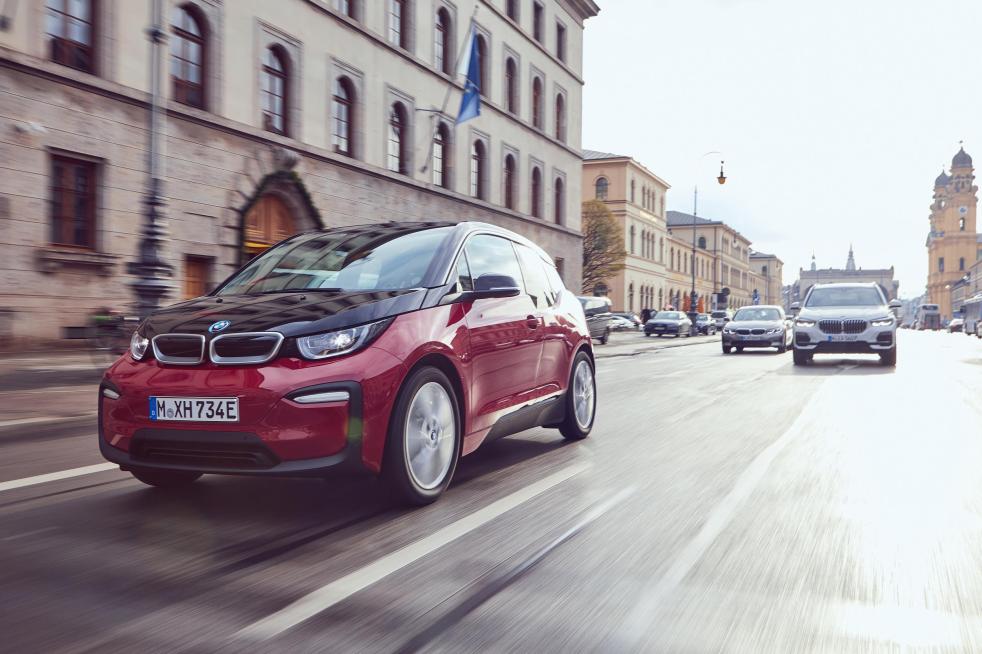
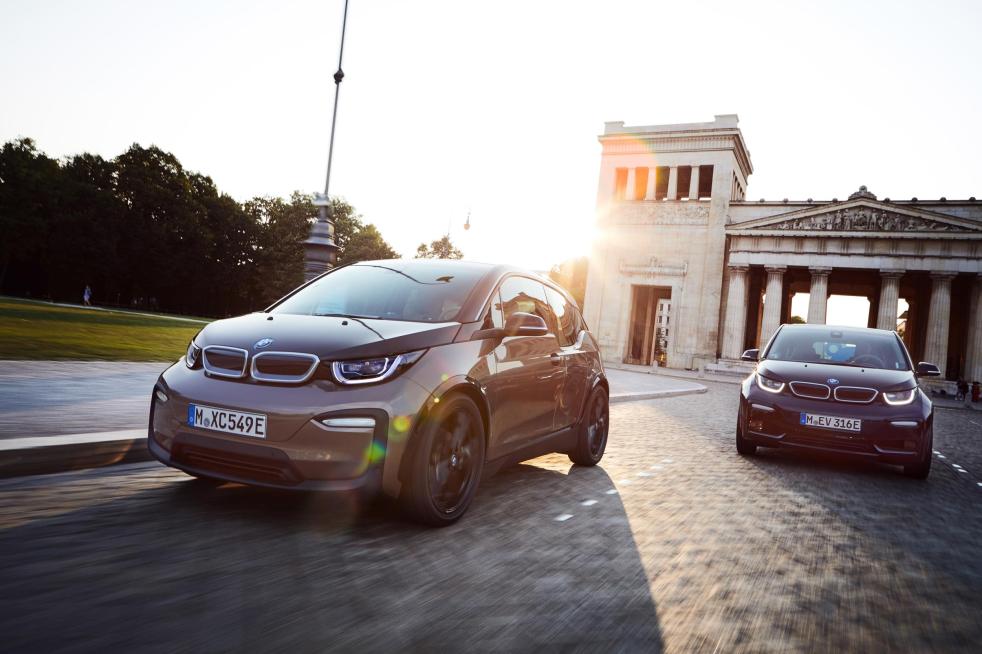
The BMW Group sold more than 140,000 electrified (battery-electric and plug-in hybrid) vehicles in 2018, thereby confirming its leading role in the field of electromobility. In total, 142,617 (+38.4%) electrified BMW and MINI vehicles were delivered to customers around the world last year.

“Since launching the BMW i3 in 2013, the BMW Group has rapidly grown its sales of electrified vehicles. With over 140,000 delivered in 2018, we have once again achieved our ambitious target,” said Harald Kruger, Chairman of the Board of Management of BMW AG. “This great sales result and our impressive market share proves our vehicles are what the customer wants. In countries which offer appropriate infrastructure and regulatory support, we see how quickly electromobility can become the norm. I’m confident that by the end of this year, there will be a total of half a million electrified BMW Group vehicles on the roads, with much more to come as we continue to extend our model line-up over the next few years,” Kruger continued.

1661900_p90320638_highres_the-bmw-i3-120-ah-an

Europe is BMW’s biggest sales region for battery and plug-in hybrid vehicles, accounting for over 50 per cent of sales in 2018. With 75,000 electrified vehicles delivered to customers in Europe last year, the BMW Group is the clear market leader in the region, with over 16 per cent market share. In the company’s home market, Germany, the BMW Group accounts for one in five electrified vehicles sold last year. Globally, the BMW Group’s market share is over 9 per cent. The company’s biggest single market for electrified vehicles is the USA, where over 25,000 electrified BMW and MINI vehicles were sold in 2018, accounting for more than 7 per cent of the BMW Group’s overall sales in that country. The BMW 530e was the year’s biggest-selling luxury plug-in hybrid in the USA. Electrified vehicles accounted for 6 per cent of total BMW and MINI sales in 2018, compared with 4 per cent in 2017.

Electromobility is an essential pillar of the BMW Group’s corporate strategy Number ONE>NEXT and one of the company’s four key future-focused ACES topics (Autonomous, Connected, Electrified and Services/Shared). Having announced record spending on R&D in 2018, Harald Kruger confirmed, “We are implementing our strategy rigorously and investing extensively in the technologies of the future; expanding our leading role in electric mobility is a clear focus. 2018 was a significant year in this regard, with the announcement of major new strategic co-operations as well as the unveiling of several key new models,” Kruger said.

Yamaha Introduces Dual Channel ABS For YZF-R15 V3.0

r15_darknight

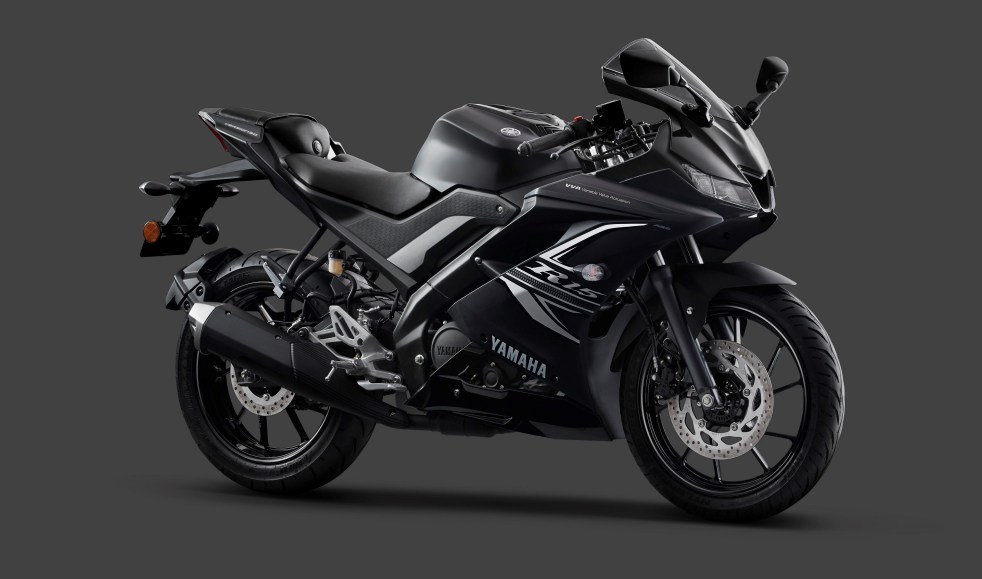
India Yamaha Motor (IYM) Pvt Ltd. has announced the introduction of dual channel ABS enabled YZF-R15 Version 3.0 in India. Yamaha YZF-R15 Version 3.0 was launched at the Auto Expo 2018 and has gained popularity from Yamaha loyalists as its first year sales doubled up the targeted production.

With the launch of the new dual channel Anti-Lock Braking System (ABS) enabled YZF-R15 Version 3.0, Yamaha has pioneered the industry by introducing the first 150 cc class model that has dual channel ABS. The motorcycle will hit the Indian roads with an all new Darknight colour along with Thunder Grey and Racing Blue while retaining all of its original features like VVA technology and A&S Clutch along with a dual channel ABS. The dual channel ‘Anti-lock Braking System’ (ABS) technology comes with adjustable fluid pressure which will further be reliable to ensure immediate braking on slippery roads. It is armed with a powerful 155 cc engine with high compression ratio resulting in maximum 19.3 PS power at 10,000 rpm and delivering 14.7 Nm of peak torque at 8500 rpm.

With its weight (wet) of 142 kg and a 170 mm ground clearance, the new YZF-R15 (Version 3.0) with dual channel ABS gets a stylish look from its fully digital instrument console, LED head and tail light and an added ABS logo.

Motofumi Shitara, Chairman, Yamaha Motor India group of companies said, “The Call of the Blue brand campaign introduced in 2018 was the beginning of a new outlook that has effectively hit the right note – Yamaha’s true DNA of style, sporty and excitement. The New Year 2019 will also be exciting in Yamaha and it is ready with the heart revving products. A brand known for leading generations of stylish ride through improved technologies, Yamaha has now engineered to implement a dual channel ABS to the YZF-R15 Version 3.0. The initiative to offer dual channel ABS in YZF-R15 Version 3.0 has endowed Yamaha as the trendsetter in the 150 cc class, by introducing it for the first time in the particular segment. Yamaha will continue to optimize the thrill of riding with its style and excitement.”

Brabham To Return To Le Mans

brabham le mans

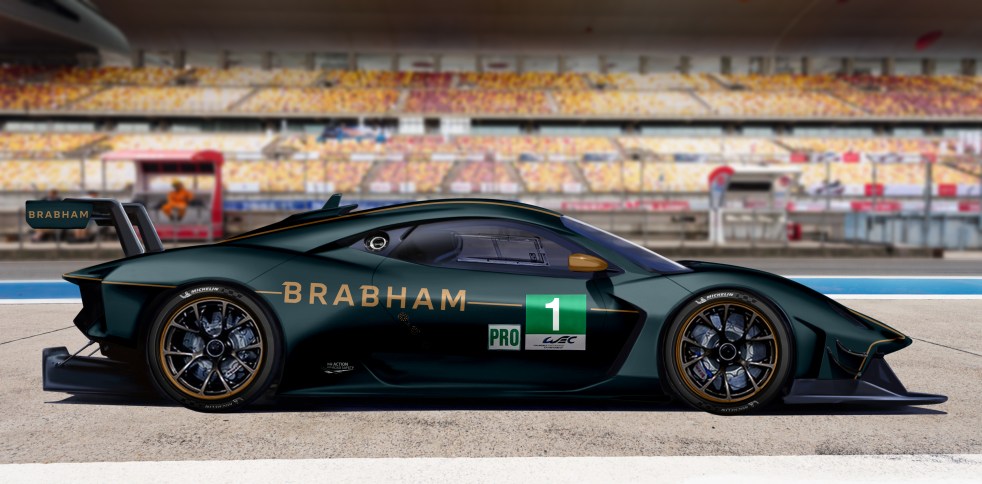
Brabham Automotive has confirmed that the brand will return to international sports car racing and the 24 Hours of Le Mans.

The Adelaide-based automotive manufacturer, which last year launched the BT62 track car, is announcing its road to Le Mans. It has committed to a factory racing team and a multi-year motorsport programme with development work already under way.

The team’s target is the 24 Hours of Le Mans and World Endurance Championship season in 2021/22, where it intends to enter the GTE class. Fans will be able to follow the journey as it’s shared openly on social media under the hashtag #brabhamroadtolemans.

Taking the road back to Le Mans has always been a desire of Brabham Automotive but can today be confirmed for the first time. The entry will be run and funded in-house by Brabham Automotive and commercial partners and sponsors. It will be directly linked to the Brabham BT62 Driver Development Programme, making early owners of the modern Brabham track car part of the test team for Le Mans and providing top level Pro-Am racing opportunities to owners.

An extensive testing schedule aimed at developing the BT62 for high-performance endurance racing has been underway for a number of months. It is being led by Brabham Automotive Managing Director, Lead Test Driver and 2009 Le Mans winner David Brabham, who said: “Returning the Brabham name to Le Mans is something I have been working on for years, so it’s fantastic to make this announcement today. Brabham Automotive only launched its first car, the BT62, in May 2018 so we have a long road to travel to earn the right to return to compete at Le Mans. That work starts now with a long-term racing commitment. We look forward to developing the BT62 and future products while building a world-class competitive race team around the leading engineering and manufacturing talent we have in the business.”

Pierre Fillon, President of the Automobile Club de l’Ouest (ACO), promoters of the 24 Hours of Le Mans, commented: “At Le Mans, the legendary Brabham name instantly conjures up memories of an outstanding family success story. It all began in July 1967 at the only French Grand Prix to be held at the Bugatti Circuit, when three-time Formula One world champion Sir Jack Brabham took the honours in a car sporting the Brabham name. Sir Jack’s sons, Geoff and David, perpetuated the family tradition by winning the 24 Hours of Le Mans in 1993 and 2009 respectively, both with Peugeot. For the Automobile Club de l’Ouest, the return of the Brabham name to endurance racing is therefore much more than symbolic. It demonstrates remarkable loyalty and an extraordinary competitive spirit.”

More details on the Brabham Automotive sports car programme, personnel and the GTE vehicle that will eventually be homologated will be released nearer the time, pending final confirmation of regulations and entries. The brand can confirm it will be an original Brabham based on developing the BT62 chassis, which has already been designed and built to comply with modern FIA safety standards.

Brabham Automotive also intends to compete in lower level series and provide customer racing opportunities as it takes the road back to Le Mans, with more information to be made available in due course.

Commenting on the development, Dan Marks, Commercial Director Brabham Automotive said: “Brabham Automotive is a racing brand so since inception we’ve always had competitive motorsport in mind. Our plan to go on the Journey Back to Le Mans is a statement of intent that Brabham Automotive is back and here to stay. In the BT62, we have already built an outstanding, unrestricted track car now with a road legal option. We will develop this car to make its mark in motor racing, along with new vehicles. Today is great news for us and will help put the Australian car industry back on the world stage.”

Mercedes-Benz Retains Number One Spot In The Premium Segment

1660301_large-3352-e-classsaloon

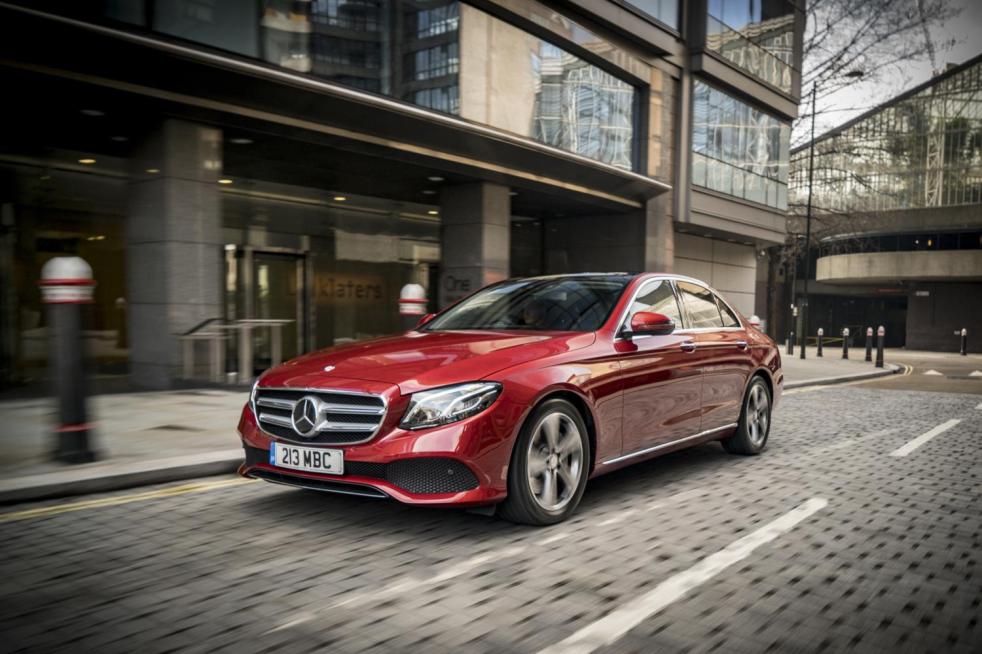
Mercedes-Benz continues to be the leading premium automobile brand in terms of unit sales. In a challenging year, the company with the three-pointed star increased its global car sales to 2,310,185 units in 2018, its eighth consecutive record year (+0.9%), making Mercedes-Benz the best-selling premium brand in the automotive industry for the third time in succession. The new sales record in the car division of Daimler AG was driven in particular by the success of Mercedes-Benz in the Asia-Pacific region and its core Chinese market there. Worldwide, models including the SUVs and the E-Class Saloon and Estate were able to generate significant sales impetus in 2018.

Dr Dieter Zetsche, Chairman of the Board of Management of Daimler AG and Head of Mercedes-Benz Cars: “In 2018, Mercedes-Benz was at the top of the premium segment in the automotive industry for the third year in a row. In a highly competitive environment, we also remained at the top from month to month, thanks in particular to double-digit growth in China and many new models that have delighted both existing and new customers worldwide. We will continue rejuvenating our portfolio systematically in 2019. We see the major successes in our core business primarily as paving the way for shaping the individual mobility of tomorrow.”

Mercedes-Benz completed its strongest-selling year also with the best quarter in the company’s history (595,098 units, +4.0%). In addition, a new December record was set last month with sales of 206,532 units (+6.7%). In 2018, Mercedes-Benz maintained its position as the premium brand with the most new registrations in many markets, and secured market leadership in markets including Germany, France, Russia, Switzerland, Poland, Portugal, Turkey, Denmark, Hungary, Romania, South Korea, Japan, Australia, Thailand, India, Malaysia, Vietnam, Singapore, USA, Canada, Brazil and Argentina.

“With more than 2.4 million vehicles delivered by Mercedes-Benz Cars in 2018, we once again surpassed our own sales record – for the eighth time in succession. In addition, despite a challenging year, we maintained our position at the top of the premium segment. The excitement for our models and the loyalty of our customers spurs us on to continue giving the best in the new year,” said Britta Seeger, Member of the Board of Management of Daimler AG responsible for Mercedes-Benz Cars Marketing and Sales. “In recent months, the strong growth of the new A-Class has shown the impetus high-calibre innovations such as MBUX can have in the market. In 2019, more than 10 Mercedes-Benz models will inspire our customers with the intuitive operating concept of MBUX and its artificial intelligence – not only in the compact car segment, but also in SUV segment.”

Volkswagen Offers First Glimpse Of Mobile Charging Station

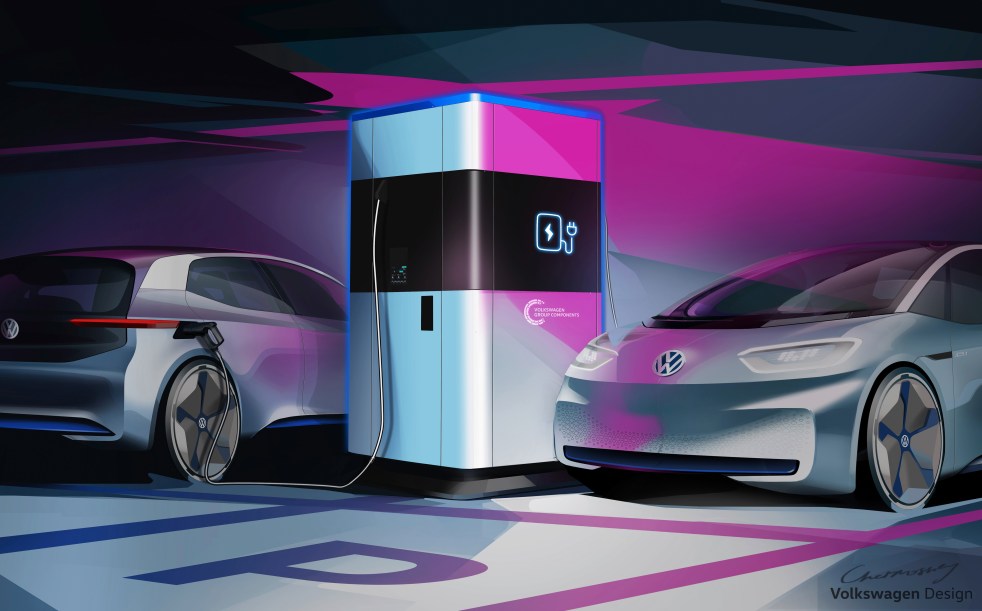
Power bank for electric cars – the mobile quick charging stati

At the turn of the year, Volkswagen is offering a glimpse of the company’s future mobile quick charging station. It can be set up flexibly and independent of the power supply wherever it is needed: for example, in public parking lots in the city, on company premises, or as a temporary charging point at large-scale events. The mobile charging station works according to the principle of a power bank – which is familiar to many people with smartphones – but for electric vehicles instead. The charging capacity of up to 360 kWh enables up to 15 e-vehicles, including members of Volkswagen’s new ID. family to be charged in stand-alone operation. Thanks to quick charging technology, the charging process only takes 17 minutes on average. If the energy content of the integrated battery set is less than 20 per cent, the depleted charging station is simply exchanged for a charged one. If, however, it is permanently attached to the power supply with up to 30 kW via alternating current, the battery pack perpetually recharges itself. In case the charging process is based on renewable power bank for electric cars – the mobile quick charging station by Volkswagen Group Components power supply, the charging station furthermore allows the temporary storage of sustainably generated power, such as solar or wind energy – and therefore CO2-neutral mobility.

The first mobile quick charging stations will be set up as early as the first half of 2019 in Volkswagen’s hometown as part of a pilot project, and will support the expansion of a charging infrastructure in the urban area. As of 2020, the charging station will also be implemented in other cities and communities.

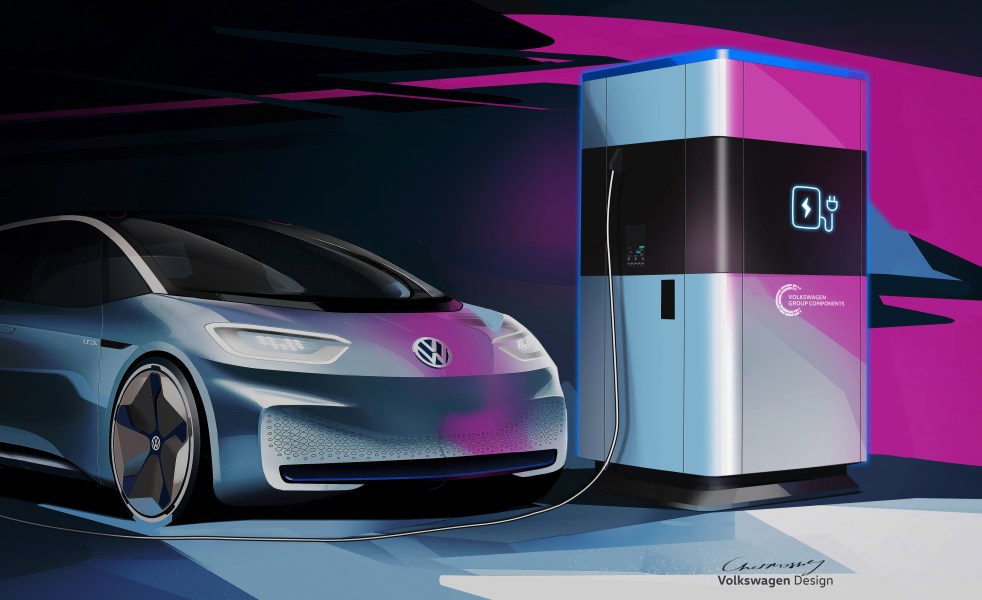
Power bank for electric cars – the mobile quick charging stati

Thomas Schmall, Chairman of the Board of Management of Volkswagen Group Components, says: “The mobile charging stations are a decisive step toward an efficient network of charging points. They can be set up anywhere as required – with or without connection to the power supply. This flexibility enables a completely new approach for the rapid expansion of the charging infrastructure. Cities can, for example, find out the most suitable places for a permanent charging point before making major investments in developing the network. In addition, it will be possible to set up a large number of charging stations temporarily – exactly when and where they are needed.”

The mobile charging stations can be set up at defined points, for example, spread out across a city. The flexible locations can be easily found via the Internet or apps. Each charging station enables DC quick charging with up to 100 kW. In addition to electric cars, e-bikes can also be charged. Up to four vehicles can be charged simultaneously: two with DC and two with AC connections. The total battery storage capacity of up to 360 kWh is sufficient for up to 15 e- vehicles. There is also the possibility of connecting to the power supply directly, allowing the station to be charged with up to 30 kW via alternating current by means of a permanent standard grid connection. This enables charging points for electric vehicles to be set up quickly and simply, without any structural changes or major financial outlay. The battery pack in the charging station can be recharged around the clock thanks to the direct power connection. This time-independent recharging, and therefore buffering of power, also considerably reduces the strain on the power supply at peak periods.

Power bank for electric cars – the mobile quick charging stati

“Our mobile charging stations offer a further crucial advantage,” says Mark Möller, Head of Technical Development at Volkswagen Group Components. “It is only when an electric car is charged with sustainably generated power that it can claim CO2-neutral mobility. Our charging station is the first to offer the possibility of temporarily storing sustainably generated power.” For example, the charging station can be charged specifically with solar or wind energy, which is then transmitted to the electric vehicles during charging. Technically, the mobile charging column is based on the battery pack of the Volkswagen Group’s Modular Electric Toolkit (MEB). On the one hand, this offers the advantage of quick scalability and, on the other hand, the charging station allows batteries from electric vehicles to have a second life. This is because a battery loses charging capacity over time. If a vehicle battery has a defined, reduced residual capacity, it is exchanged. If this battery subsequently passes a thorough analysis, it can be reused in a mobile charging station.

An efficient network of charging points is regarded as one of the basic infrastructural prerequisites for convincing customers to buy electric vehicles such as the Volkswagen brand’s future I.D. family.1 Accomplishing this is one of the major challenges Volkswagen Group Components and others must tackle to ensure the breakthrough of e-mobility. As of January 1, 2019, the Components division is an independent business unit within the Volkswagen Group. The mobile charging station is an in-house development with the goal of developing a closed life cycle for the battery. The start of production is planned for 2020.

Three Car Collection By McLaren Special Operations To Honour Bruce McLaren’s Winning Legacy

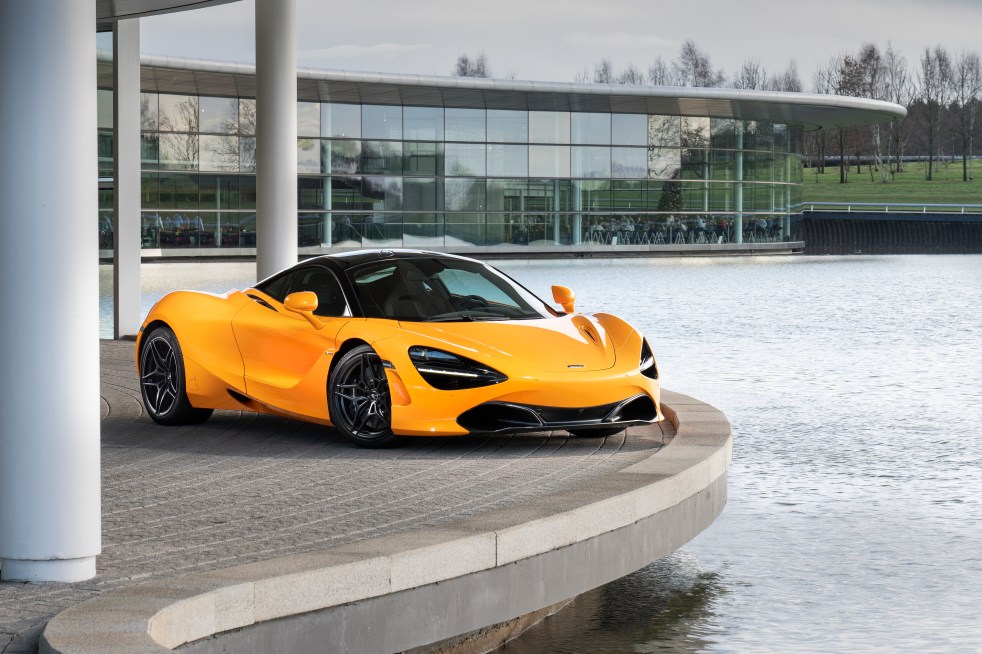
McLaren 720S Spa 68 Collection_front MTC_Leadimage

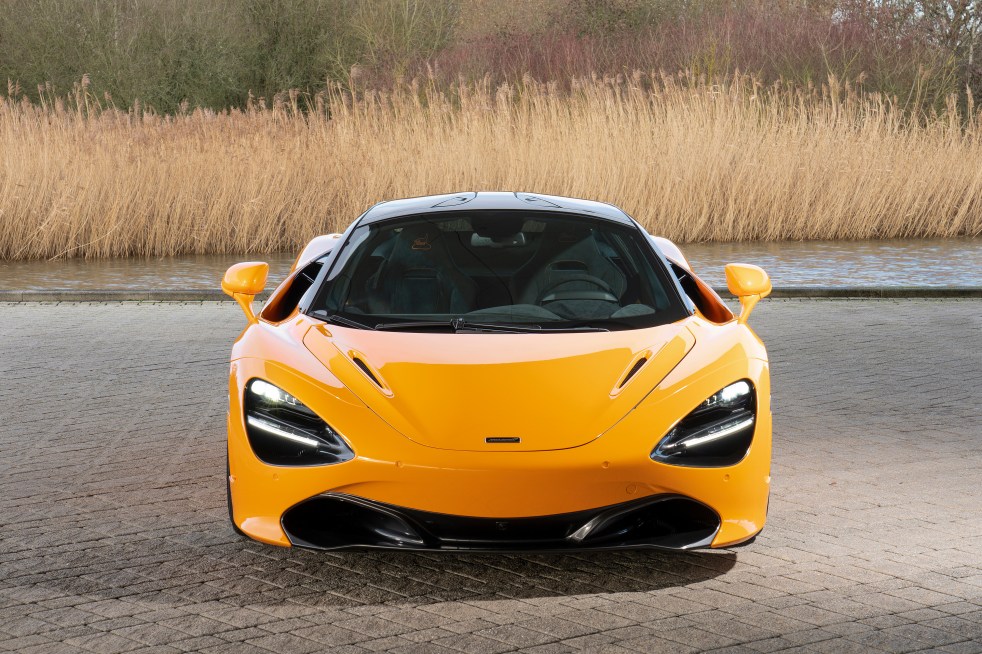
McLaren Special Operations (MSO) has completed a three-car retailer collection of bespoke McLaren 720S Coupes, commissioned by McLaren Brussels to mark a milestone in McLaren history. Among the most exclusive Super Series models to be offered by the Woking-based luxury sportscar and supercar manufacturer, the 720S trio honours McLaren’s debut Grand Prix victory 50 years ago, with company founder Bruce McLaren at the wheel.

Bruce McLaren recorded the first Formula 1 win for his fledgling team in the 1968 Belgian Grand Prix at Spa-Francorchamps, driving a McLaren M7A in signature Papaya Orange livery. Half a century on, the McLaren 720S Spa 68 Collection pays tribute to the achievement with a carefully-curated tailoring that’s sure to resonate with motorsport enthusiasts the world over.

McLaren 720S Spa 68 Collection_front

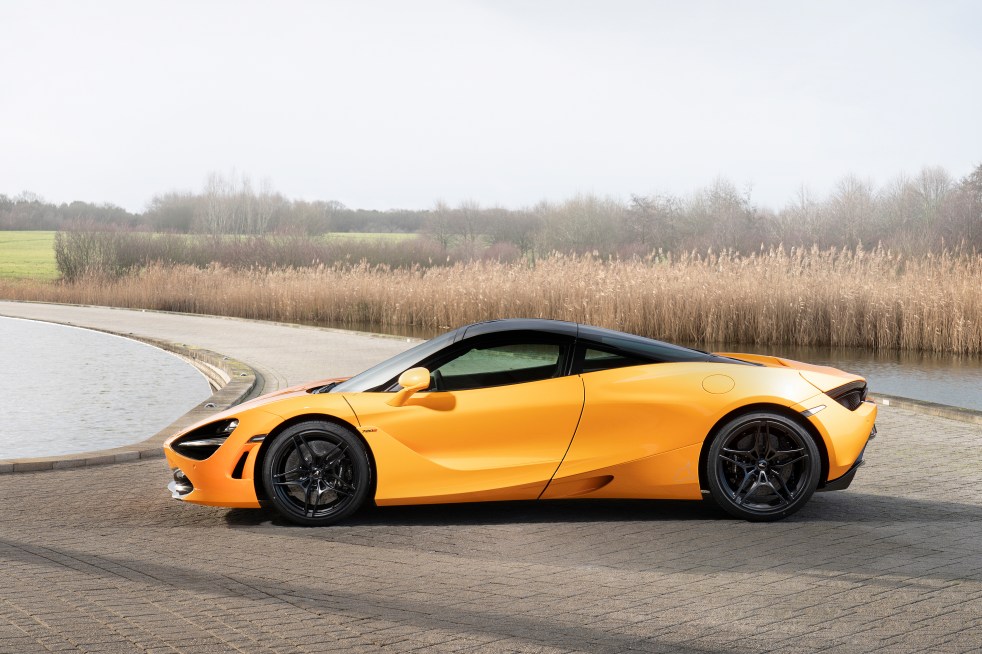
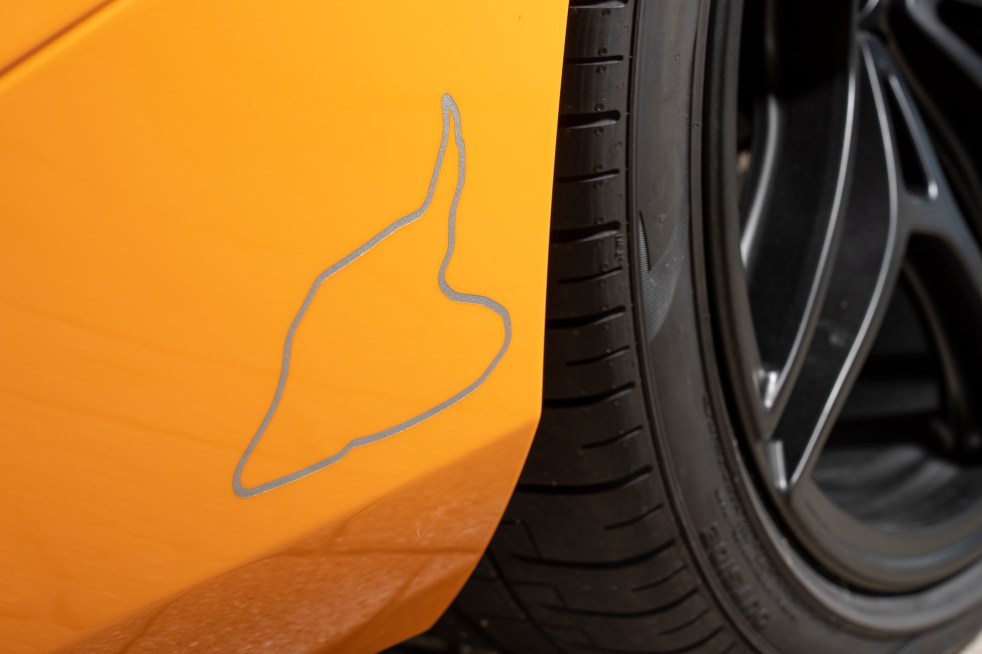
Each of the three McLaren 720S Spa 68 Collection cars is finished in MSO Bespoke Anniversary Orange paint, formulated to echo the colour of the 1968 race car. The scene of the famous victory – the first of many that would make McLaren one of the most successful teams in the history of F1 – also features on the car in the form of a silver outline of the 14km Spa-Francorchamps track – as used in 1968 – ahead of the rear wheel arch and also embroidered onto the headrest.

From the McLaren Special Operations (MSO) Defined range, Extended Carbon Fibre Sill Covers are inscribed with the legend “1st McLaren F1 victory Belgian Grand Prix 9th June 1968 – Bruce McLaren”. Even the ignition key has an echo of the win with each of the MSO bespoke keys painted Anniversary Orange and featuring silver “Spa 68” text. All three cars also have a dedication plaque with its unique number.

McLaren 720S Spa 68 Collection_side

MSO Bespoke Satin Black 5 Twin-Spoke Lightweight wheels set off the orange paintwork in dramatic fashion, while inside MSO Bespoke contrast stitching in McLaren Orange thread is specified – another nod to the colour so integral to the company’s winning heritage.

Bruce McLaren was acknowledged during the period as a master of Spa-Francorchamps. He had five top-three finishes in seven starts at the Belgian GP, but victory eluded him. That changed in 1968 when the ‘Speedy Kiwi’ returned to the challenging Belgian circuit with a car of his own construction for the first time. Dicing with drivers such as Chris Amon, John Surtees and Jackie Stewart, Bruce McLaren lasted the distance to come home first after what was a race of attrition.

McLaren 720S Spa 68 Collection_interior

It was Bruce McLaren’s fourth Formula 1 career win but his first victory driving his own McLaren car, at that time making him only the third driver to win a Grand Prix in a car of his own design and construction. The victory set the McLaren team on a path to eight World Constructors’ Championships and 12 World Drivers’ Championships.

McLaren’s motorsport achievements and its Formula 1 technology informs the design and construction of every sportscar and supercar built in Woking. Featuring carbon fibre construction for exceptional lightness and strength and innovative aerodynamics, the 212mph, multiple award-winning McLaren 720S delivers extreme dynamic performance allied to the broadest range of supercar abilities in a luxury coupe that is just as at home on the track as it is on the road.

McLaren 720S Spa 68 Collection_track layout rear wheel arch

The McLaren 720S Spa 68 Collection cars is available from McLaren Brussels, however with two of the three having already found buyers, you’ll need to hurry in order to secure the final car in the collection.

Nissan Kicks Review

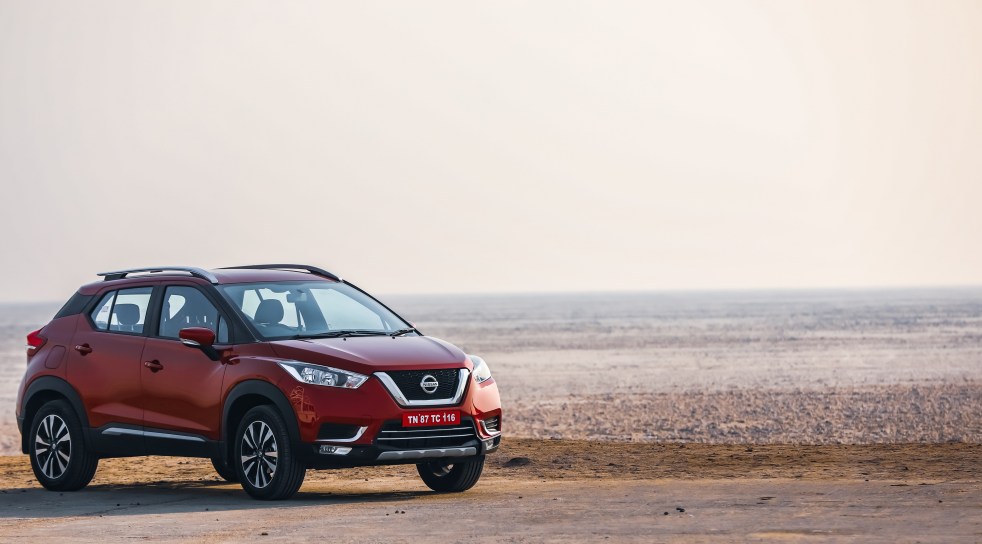
Nissan Kicks 2

Introduction

Japanese carmaker Nissan has an enviable pedigree for producing world-class SUVs. Iconic nameplates like the Patrol, Pathfinder, X-Trail, Terra and the Jonga which was once extensively used by the Indian Army are testimony to Nissan’s SUV heritage. The top management at Nissan India has articulated that they will concentrate on leveraging their stronghold in SUVs and bring their world class products to India. In line with their India strategy, Nissan India is gearing up for the launch of the Nissan Kicks scheduled for January 2019.

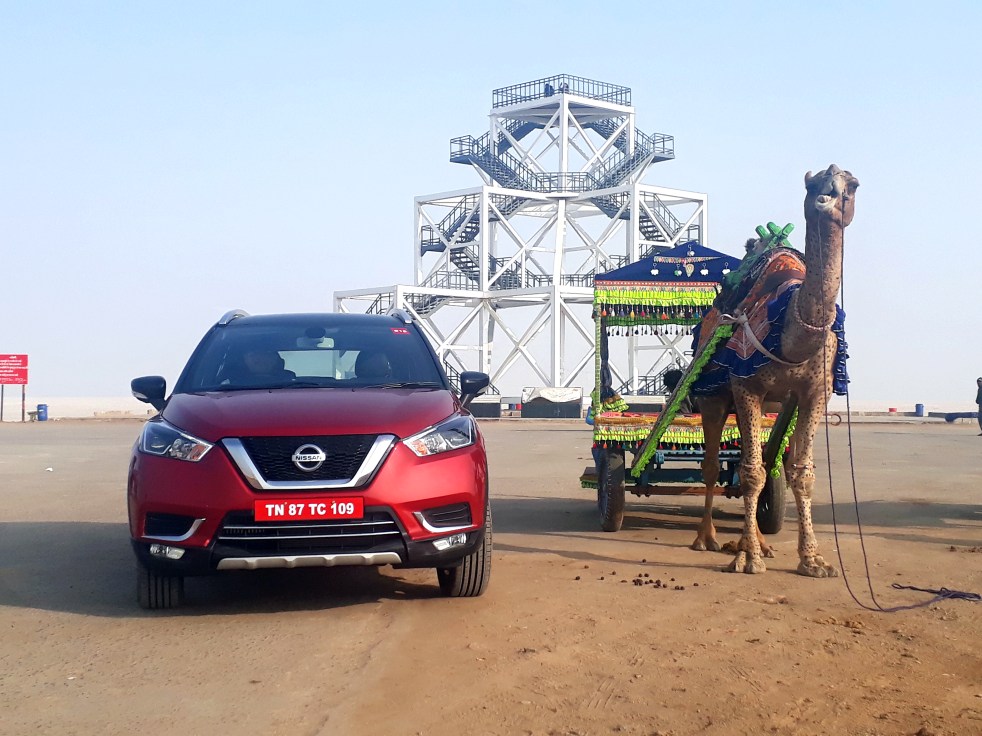
So when the invitation to get up close and personal with Nissan’s most awaited SUV came our way, we were naturally excited to check out the latest thoroughbred from Nissan’s stable and took it for a spin from Bhuj to Rann of Kutch and back. Read on to find out how it fared.
20181212_085306

Design and Engineering

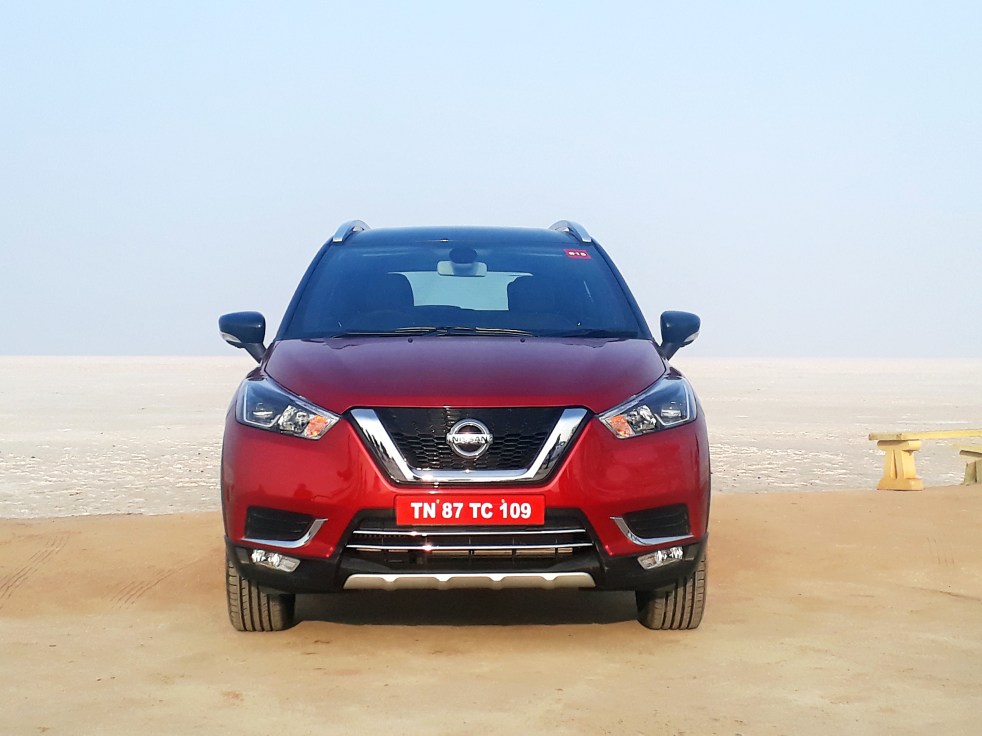
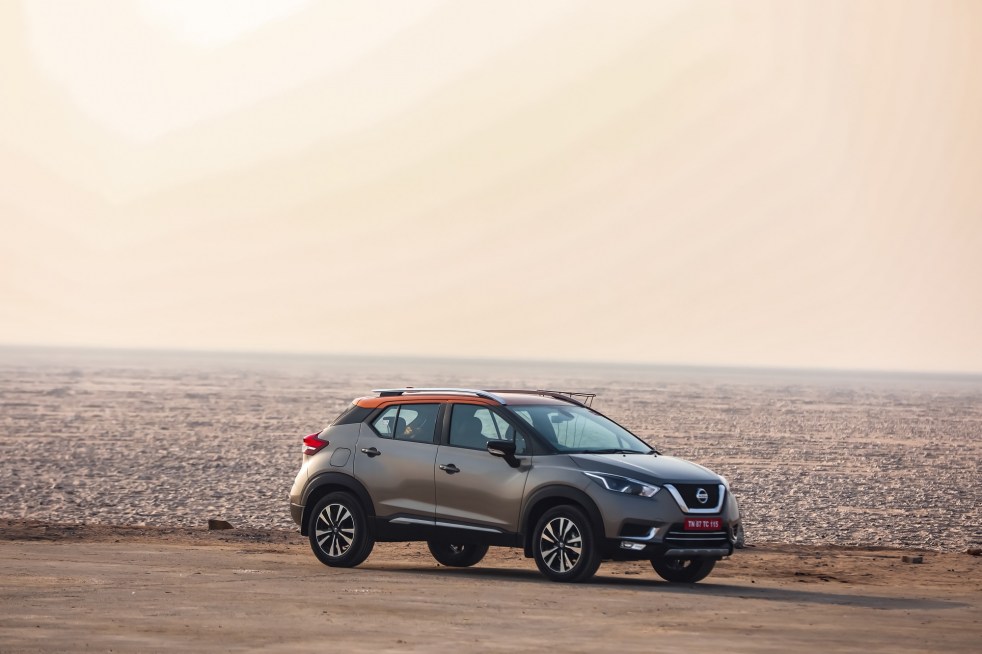
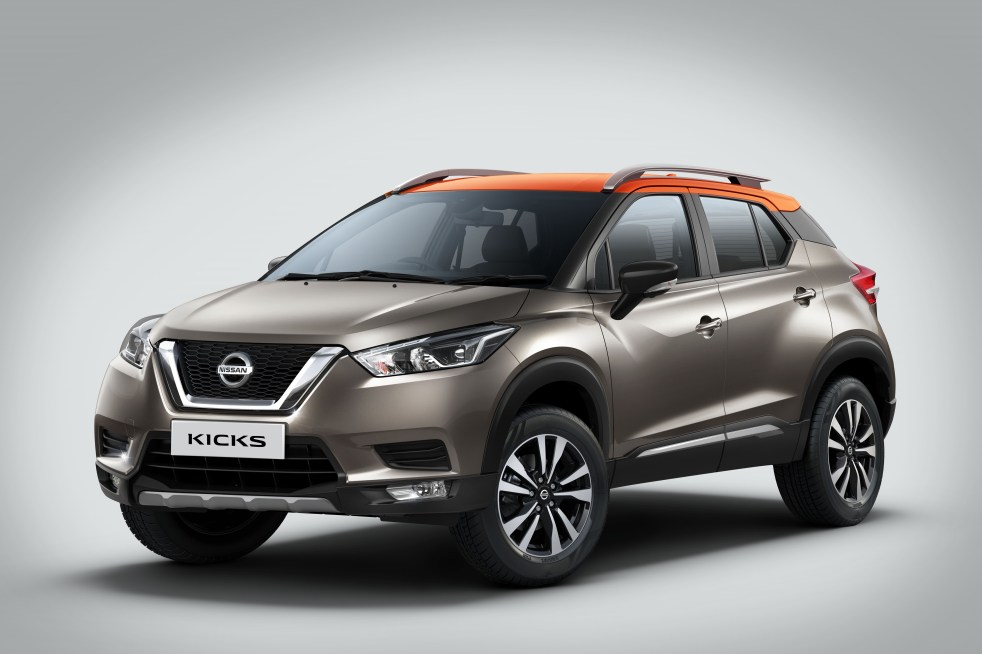
The Nissan Kicks sports a wider and robust stance. The body is designed and built with GRAPHENE (Gravity-philic Energy Absorption) body structure, which has inherent capability to absorb impact energy making the new Nissan Kicks both safer and durable on Indian road.

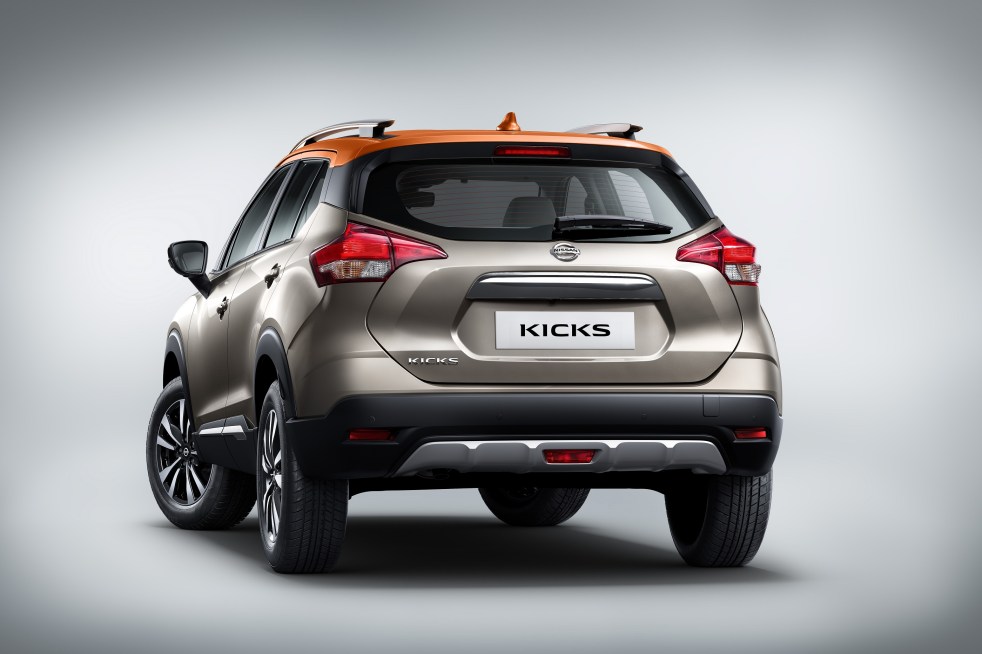
Nissan Kicks offers a host of design signatures and features like the floating roof design created by blacked out pillars with stylish roof rail andstylish LED DRL, shark fin antenna, front fog lamps and door mounted ORVMs with indicators. The bold V-motion grille, a signature motif in Nissan’s design language adds to new Kicks’ distinctive presence. The uniquely designed headlamps and tail lights feature boomerang-shaped LED lamps to add panache.
NISSAN_KICKS_REAR SHOT

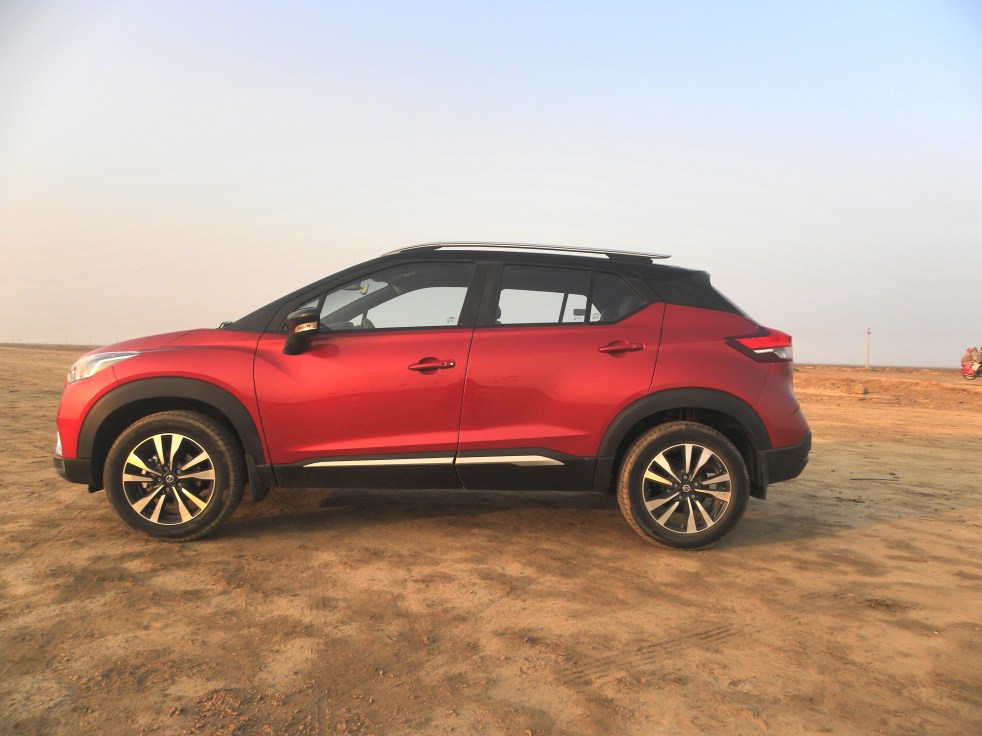
The wheel-oriented stance of the Nissan Kicks is enhanced by R17, 5-spoke machined-alloy wheels. The bold fender arch bring out the masculinity in the new Nissan Kicks, while substantial face and back style provide a rugged presence on the Indian roads. Body side moulding, skid plates and roof rails adds to the SUV character never ceasing to turn heads while on the go. NVH levels are well contained with minimal exterior noise filtering into the passenger cabin.
20181216_181522

Interior and Comfort

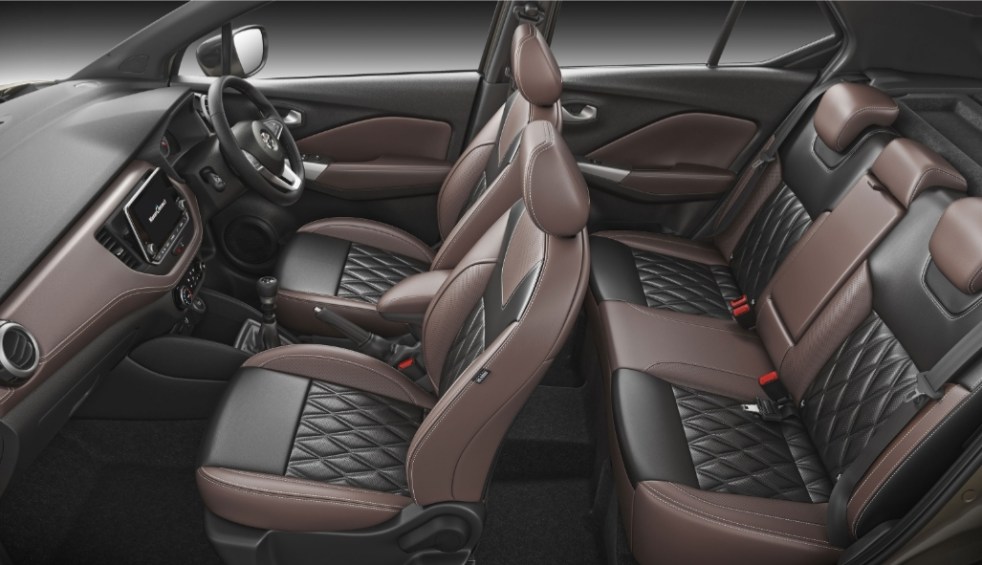
Step inside the Nissan Kicks and you will be welcomed by a spacious cabin featuring a dual-tone brown and black interior theme with carbon fiber finishing which exudes class. Leather wrapped soft touch dashboard and door trims, auto AC as standard across variant line up, well bolstered seats with good lumber support, adequate shoulder and knee room, cooled and illuminated glove box and large configurable boot with 400 litre of luggage space are just some of the interior highlights which is sure to impress the prospective buyers.

From the technological standpoint, the Nissan Kicks is features loaded and comes equipped with segment-first Around View Monitor Display (AVM) 360 Camera which proves extremely useful, an 8.0-inch floating infotainment system with Android Auto and Apple Carplay compatibility which deliver good audio experience.

With rising concerns around safety and security while driving, Nissan has offered its customers greater control over their cars. Hence, the introduction of new Nissan Intelligent Mobility features aimed at offering control, convenience, safety and security and social sharing to transform your car into a more responsive partner. The new update introduces technology to monitor vehicle status and vehicle health status remotely through app called the NissanConnect.
Nissan Kicks 1

Performance and Handling

The Nissan Kicks is available with the choice of two powertrains – 1.5H4K petrol mated to a 5-speed manual transmission and 1.5K9K dci diesel engine paired with a 6-speed manual transmission. The petrol engine produces 106 PS of maximum power at 5600 rpm and 142 Nm of peak torque at 4000 rpm. While the diesel motor churns out 110 PS at 3850 rpm and 240 Nm of torque at 1750 rpm. These are the same engines that does duty on the Renault Captur as well.

We tested the 1.5-litre diesel which pulls well from low rev range and delivers linear power with very little lag. The motor is responsive and boasts of good drivability. The suspension is well tuned for Indian road conditions with the Nissan Kicks traversing over undulations on the road with relative ease. The steering feedback is confidence inspiring and grows heavier with increase in speed. The brake bite, however, felt slightly spongy and leaves room for improvement. There is also minor body roll while navigating sharp corners at high speed, but nothing majorly unnerving.
Nissan_Kicks_Front

Safety features like intelligent trace control, ABS with EBD and braking assistance (standard across model range), cruise control, auto headlamps, cornering fog lamps and hill start assist makes the Nissan Kicks a safe SUV to drive.
20181212_093222

Verdict

The Nissan Kicks is a well engineered product from Nissan’s stable and ticks most of the right boxes. It offers combination of intelligent technology and many segment first features. Boasting a rugged and robust appearance, the Kicks looks masculine and agile. It features tastefully designed interior which exudes class and spaciousness. The ride and handling is sorted with tried and tested engines doing duty on the Nissan Kicks.

The compact SUV segment is still growing and contributing significantly to the overall sales of many carmakers. Nissan would also hope that the Kicks will script a similar growth story for them. When it is launched in January, the Nissan Kicks will take on established rivals Hyundai Creta and Ford EcoSport along with others like the Maruti Suzuki S-Cross and Renault Captur. Nissan has to undercut the competition in terms of pricing to give the Kicks a fair chance to perform well. Given the product, the right price for the Nissan Kicks should be in the range of Rs 7.5 lakhs for the base petrol going upto Rs 11.5 lakhs for the range topping diesel.
DSCN0954

Technical Specifications:

Length – 4384 mm

Width – 1813 mm

Height – 1656 mm (with roof rails)

Wheelbase – 2673 mm

Fuel tank capacity – 50 litres

Turning radius – 5.2 m

Engine – 1.5 H4K Petrol, 1.5 K9K dCi Diesel

Displacement – 1498 cc (Petrol), 1461 cc (Diesel)

Max Power – 106 PS @ 5600 rpm (Petrol), 110 PS @ 3850 rpm (Diesel)

Max Torque – 142 Nm @ 4000 rpm (Petrol), 240 Nm @ 1750 rpm (Diesel)

Ground Clearance – 210 mm

Boot space – 400 litres

First Customer Of Nissan Kicks Felicitated

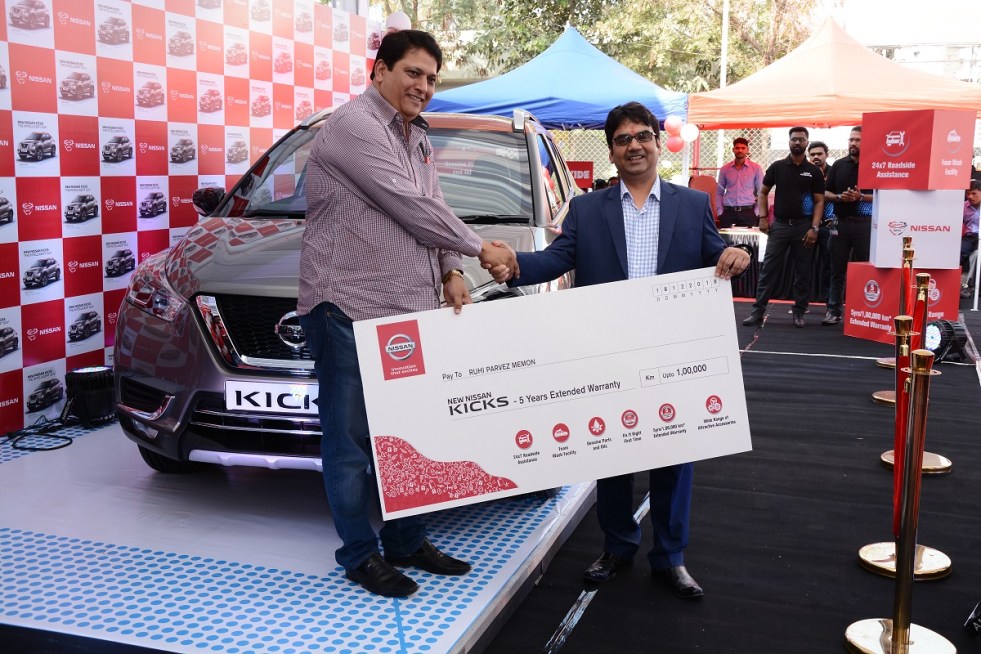
Image 1Sanjeev Aggarwal, Vice President, Aftersales, Nissan India felicitating Ruhi Parvez Memon the first new Nissan Kicks customer from Pune
It was a special moment during the 10th edition of ‘Happy with Nissan’ service camp when the first customer to book the all New Nissan Kicks was identified from Pune. During this service camp, running between 14th and 24th December, the customers can avail attractive discounts and special offers at Nissan and Datsun dealerships across the country.

On this occasion, Sanjeev Aggarwal, Vice President, Aftersales, Nissan Motor India Pvt. Ltd said, “Happy with Nissan is our after sales initiatives and showcases our commitment to providing our customers a good ownership experience. And today we are extremely delighted to felicitate the first customer of the new Nissan KICKS from Pune.”

Nissan is providing customers with a 60-point free vehicle check-up, free top wash, attractive discounts on accessories, up to 20 per cent discount on labour charges, apart from assured gifts. The one-week service camp will also provide customer-focused communications about the benefits of authorised Nissan and Datsun service centres and the use of Nissan genuine spare parts, oils and accessories.

‘Michael 50’ – A Homage To The Champion On His 50th Birthday

KEY-VISUAL_vert-rev05-cs4

The Ferrari Museum is dedicating a special exhibition to Michael Schumacher, which will open on the occasion of his 50th birthday on 3 January 2019. It is intended both as a celebration and a mark of gratitude to the most successful Prancing Horse driver ever.

Schumacher has a special place in Ferrari’s history, which has been marked by his many records. Between 1996 and 2006 the German champion won five consecutive Drivers’ titles, from 2000 to 2004, and made a major contribution to the Scuderia’s haul of six Manufacturers’ titles over those years.

The Museum’s rooms will look back over the memorable seasons that the seven-time World Champion gifted to all Ferraristi, and that created a legend now bigger than ever in the hearts of all fans.

The exhibition will also show Michael’s crucial contribution to the development of extraordinary GT cars in his years at Maranello, as a driver and later as a consultant.

The ‘Michael 50’ exhibition is in collaboration with the Keep Fighting Foundation.

Infiniti To Preview Future Fully Electric Crossover

INFINITI-previews-future-fully-electric-crossover-source

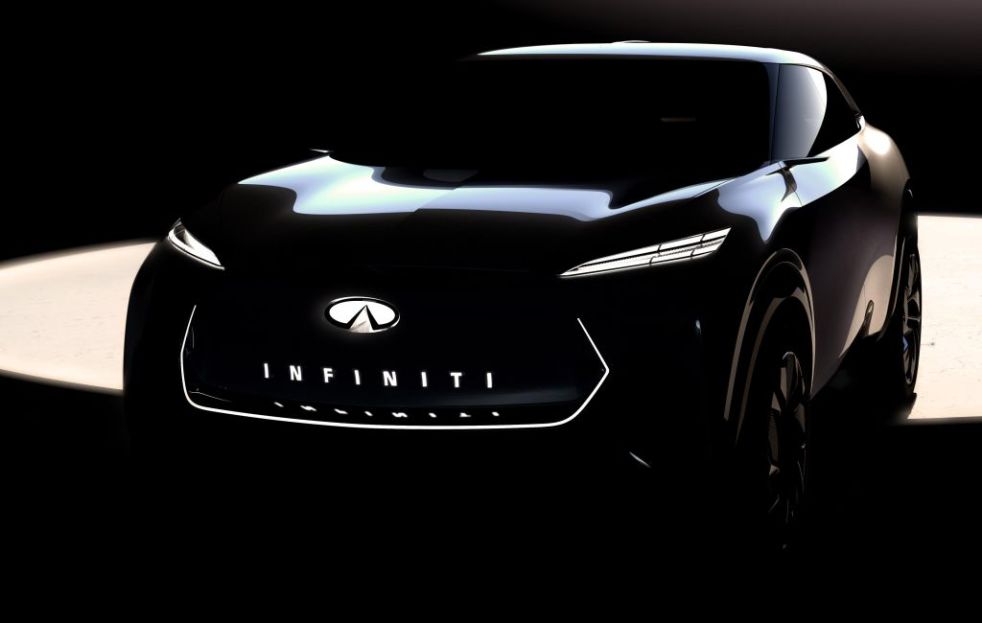
Infiniti will preview a vision of its first fully electric crossover at the North American International Auto Show (NAIAS) in Detroit in January – revealing a new form design language for electrification, infused with Japanese DNA.

“The concept car we will show in Detroit is the beginning of a new era for INFINITI, and an illustration of where we want to go with the brand. Electrification and other new technologies have given us the opportunity to evolve our design philosophy,” said Karim Habib, Executive Design Director, Infiniti.

Last January, the company announced Infiniti would electrify its portfolio from 2021 onward, using either e-power (serial hybrid) or pure EV powertrains.

The Q Inspiration – revealed at the 2018 NAIAS, and Prototype 10, seen at the 2018 Pebble Beach Concours d ’Elegance – both provided elements of a futuristic design language. At the 2019 NAIAS in January, these elements will come together to provide the clearest vision yet of the future of Infiniti in an era of electrified design.

The advent of electrified platforms heralds a fresh approach to what crossover and saloon platforms look like, both inside and out. With new exterior proportions, electrification also gifts interior space, enabling spacious and lounge-like interiors, rich in welcoming and assistive technologies.

“The industry is at a technological inflection point,” said Roland Krueger, Chairman and Global President of Infiniti Motor Co. “As such, INFINITI has a compelling vision as a luxury challenger brand to bring a full portfolio of beautifully-designed electric vehicles to customers around the world. We will focus on developing the full portfolio of e-power and EVs.”