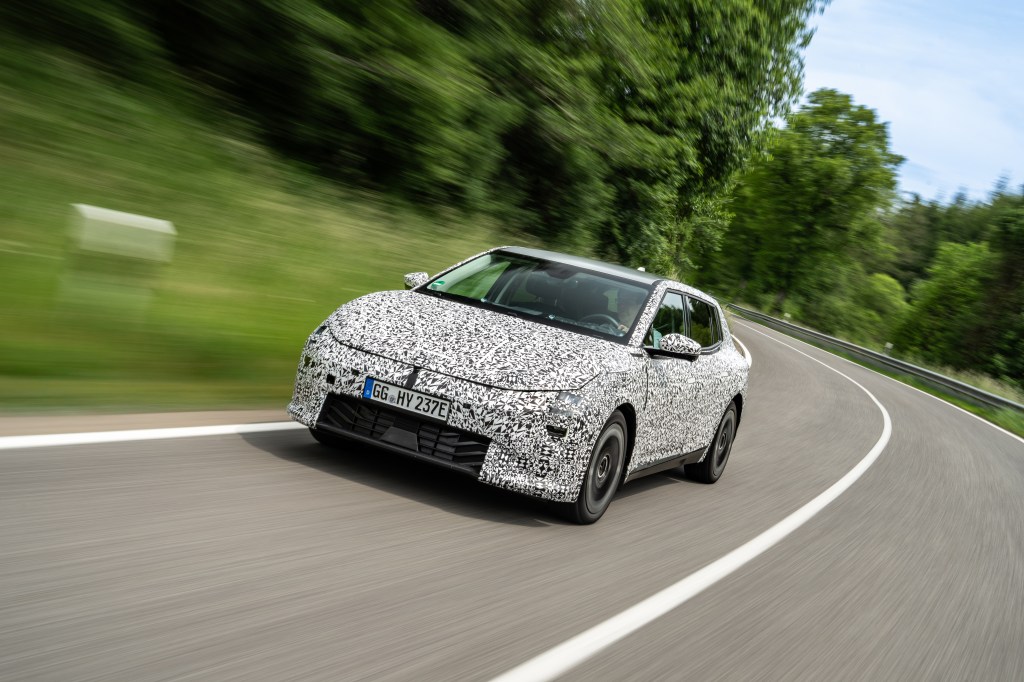
Kia continues to raise the bar for EV endurance for standard-performance models with the EV4, the company’s latest all-electric compact model. Designed with durability in mind, the EV4 features innovations that ensure stable performance over long distances, challenging climates, and extended use.
The EV4’s endurance can mostly be attributed to Kia’s fourth-generation battery system. The system combines advanced thermal management with optimised coolant distribution over all cell units. These enhancements ensure that the battery operates within safe temperature levels, even under high-stress conditions. By doing so, the system ultimately extends battery life and maintains consistent performance.
Following comprehensive endurance trials, including a 110,000-kilometre European road durability test and a 10,000-kilometre Nürburgring campaign simulating 90-to-95% of the model’s maximum performance output, the EV4 showed minimal wear and sustained battery efficiency. Repeated hypercharging sessions between laps at the Nürburgring added to the potential strain on the battery system. However, the EV4 maintained impressive performance throughout.
“To provide our customers a reliable, everyday EV, we had to validate the EV4’s durability both in real-world and extreme environments,” said Stephan Hoferer, Manager Durability Development at Hyundai Motor Europe Technical Center. “With the rigorous testing – from icy roads to racetracks, we’re confident the EV4 will deliver dependable performance well beyond everyday needs.”
Engineers confirmed a battery State-of-Health (SoH) of 95% after 10,000 kilometres of track testing and 110,000 kilometres of road testing, Kia’s extensive endurance testing programme proves the EV4 as a reliable, high-endurance EV for customers looking for confidence during long-term ownership.
On top of its battery performance, the EV4 benefits from regenerative braking. The system improves long-term efficiency by reducing battery strain and recapturing up to 25% of energy during deceleration. Thanks to its robust design and intelligent energy management, the EV4 is guaranteed to retain at least 70% of its battery capacity after 160,000 kilometres driven or eight years of regular use.
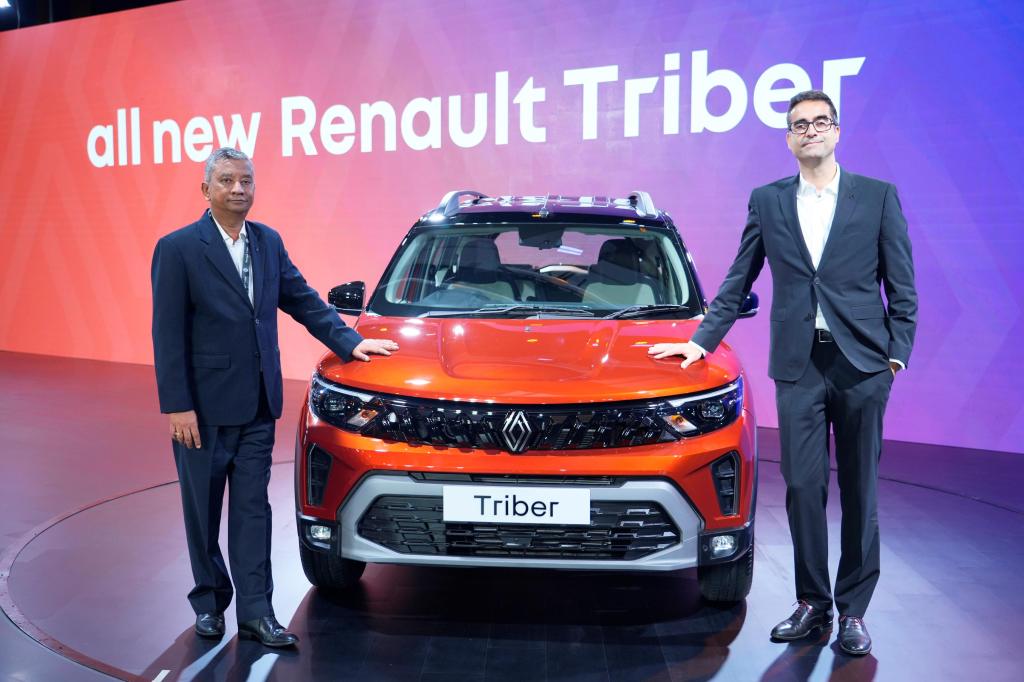
Renault India has launched the All-New Renault Triber with ex-showroom prices starting at INR 6,29,995. The new Triber comes with new and modern design language along with comfort enhancing features, while retaining its unique DNA of modularity, adopting to rethink space philosophy.
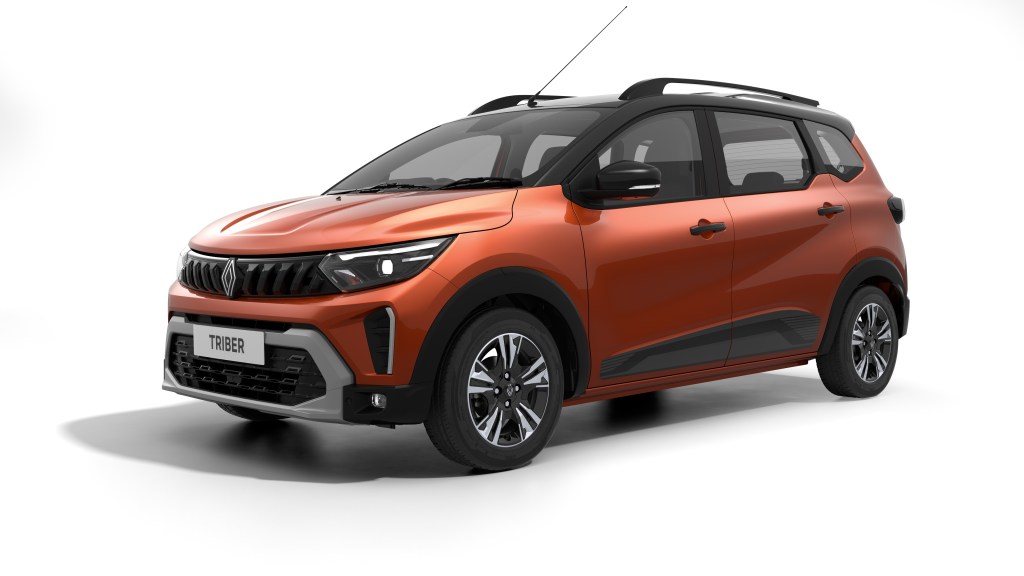
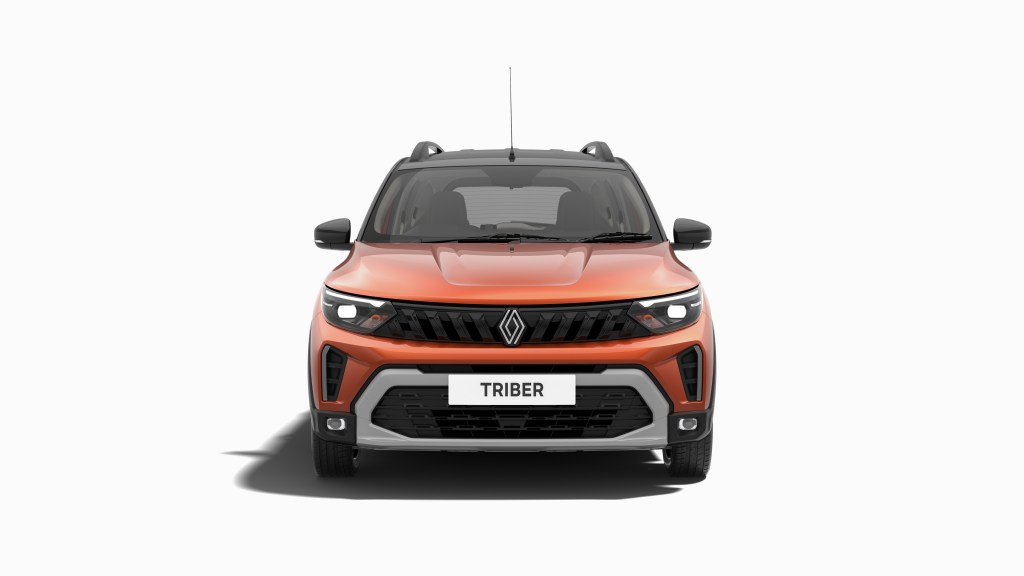
The All-New Renault Triber sports a completely redesigned front fascia, featuring a bold new grille, sculpted new hood, refreshed bumper, new sleek LED projector headlamps with integrated LED DRLs and new LED fog lamps.
Inside, the cabin has been revamped with a stylish dual-tone dashboard, seamlessly integrated with an 8-inch floating touchscreen display that supports wireless Android Auto and Apple CarPlay. The renewed interior also includes new seat upholstery, a modern LED instrument cluster, LED cabin lighting, and blacked-out door handles for a premium touch.
At the rear, the new Triber showcases a redesigned bumper, updated LED tail lamps, a new skid plate, and a stylish tail lamp connecting embellisher, completing its contemporary makeover.
The car equipped with 35 new features, is the first ever product under renault. rethink. brand transformation strategy. In line with rethink space philosophy, it offers best-in-class modular seating with 3rd row Easy-Fix seats configurable as a 5, 6, or 7-seater, complemented by a segment-leading boot space of up to 625 litre, allowing customers to use the car in unique and innovative ways to fulfil their varied lifestyle utilities.
Designed with thoughtful enhancements, the new Triber is now available in four new variants, Authentic, Evolution, Techno and Emotion.
The new Triber now comes fitted with 21 standard safety features including 6 Airbags, ESP, TPMS, EBD with Brake Assist to name a few. Further adding on the safety features is Front Parking Sensor, available for the first time in the segment.
Speaking at the launch, Mr. Venkatram Mamillapalle, Managing Director, Renault India, said, “India remains a cornerstone of Renault’s global strategy, driven by a strong product pipeline, expanding export operations, and a renewed focus on customer satisfaction — exemplified by the launch of the All-New Triber. This model is also the first in India to proudly feature Renault’s new brand logo, symbolizing the company’s bold, modern direction and deep alignment with Indian aspirations.”
He further added that “As a fully integrated operation with a manufacturing plant, R&D centre, and design studio based in India, Renault continues to develop and produce vehicles tailored specifically for Indian customers — truly by India, for India. The new Triber is over 90% localized, underscoring Renault’s long-term commitment to the Indian market.”
Asserting the significance of the new launch, Mr. Francisco Hidalgo, Vice President (Sales & Marketing), Renault India, said, “The Triber has always reflected our deep understanding of the evolving needs of Indian families — blending smart engineering, modularity, and exceptional premium value. With the All-New Triber, we continue to champion our ‘rethink space’ philosophy, offering India’s most spacious sub-four metre car, now with a fully renewed design and features. This launch brings the spirit of renault. rethink. to life in the most tangible way, and we are confident it will further accelerate our momentum and strengthen Renault’s footprint in India.”
All-New Triber delivers a maximum power output of 72 PS at 6250 rpm and a maximum torque of 96 Nm at 3500 rpm. Transmission options include a 5-speed manual transmission available across all variants. The top-end Emotion variant also offers the advanced Easy-R AMT, enhancing driving comfort and convenience. This powertrain setup ensures a smooth and responsive performance suited for both city and highway driving.
Offering an absolute peace of mind, the car comes with 3-year standard Warranty extendible up to 7 years / unlimited kilometres coverage under Renault Secure program. To enhance the accessibility, now the new Triber is available with government approved CNG retrofitment kits across country along with a 3-year warranty.
The made in India Triber already enjoys 1.84 lakhs happy customers in the country and it is exported to over a dozen countries around the world. The All-New Triber flaunts bolder looks, rich features and packed with thoughtful premium technology upgrades, reaffirming Renault’s commitment to design-led and people-centric innovation for the Indian customers.
The brand is well entrenched in the country with over 350+ sales and 450+ service touchpoints across the country. The introduction of the All-New Triber marks an important milestone in Renault’s product renewal strategy, aimed at claiming its due position in the dynamic and competitive Indian automobile market.
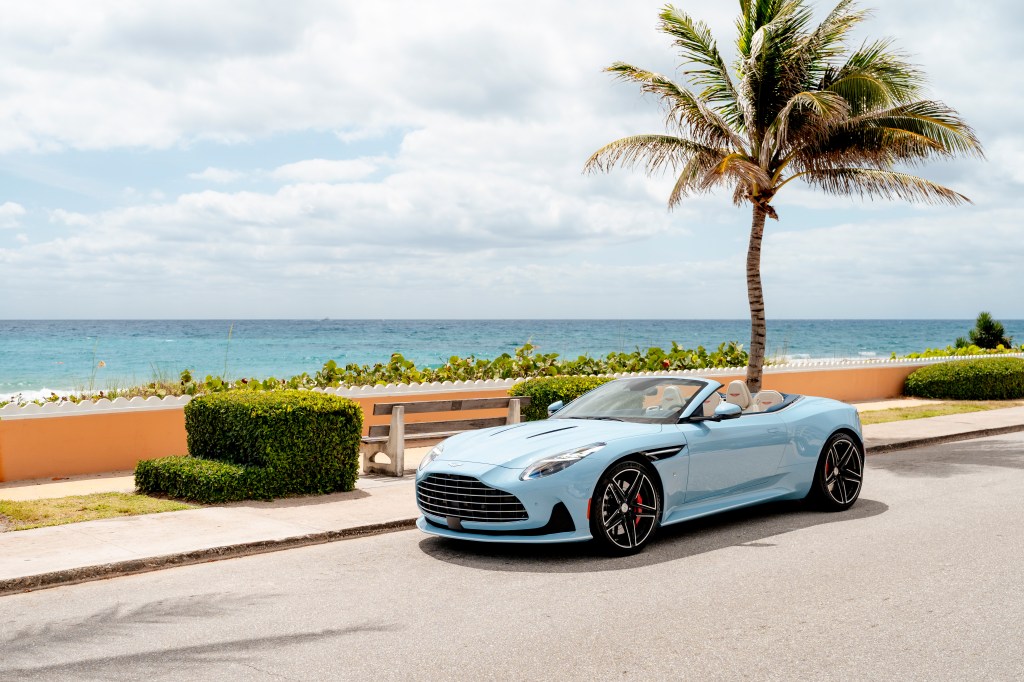
Aston Martin Palm Beach, in partnership with the ultra-luxury performance brand’s bespoke service Q by Aston Martin, commissioned a one-of-a-kind DB12 Volante that blends renowned British craftsmanship with Palm Beach-inspired design themes. The DB12 Volante incorporates unique patterns and materials to celebrate Palm Beach and further elevates the elegance of Aston Martin’s 680PS open-top Super Tourer.
The Palm Beach Edition DB12 Volante is a tribute to oceanic blue, featuring an exclusive Q by Aston Martin Frosted Glass Blue exterior paint. The exclusive paint color exhibits qualities unique to the use of glass flakes within the topcoat, creating the unmistakeably mesmerising shimmer effect that perfectly encapsulates the south Florida sun. This is only achievable through hand spray application due to the complexity and delicate nature of this colour. The open-top Super GT also features a Club Sport White pinstripe applied to the front splitters, side sills and rear bumpers, highlighting the DB12 Volante’s firmly planted sportscar stance, as well as Gloss Jet Black diamond-turned five-spoke wheels.
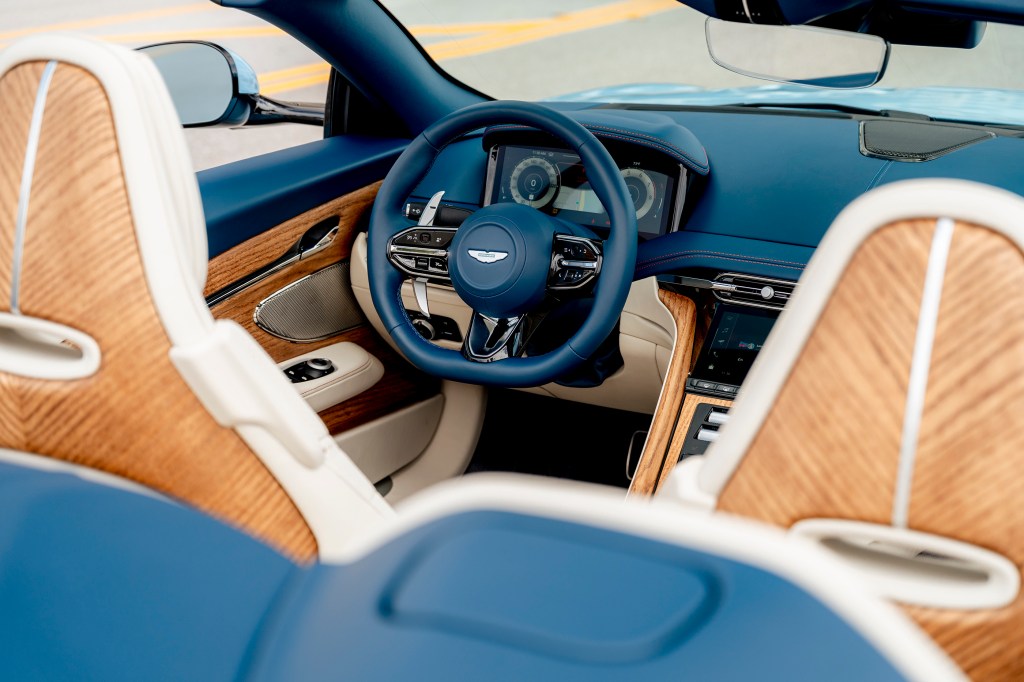
With the convertible top dropped, the cabin’s custom features and nautically themed duotone colorways are on display, so even those beyond the cabin may appreciate the custom commission. The Palm Beach Edition DB12 Volante features a bespoke palm-leaf motif incorporated throughout, including on the complementary Aurora Blue and Ivory leather and Spicy Red contrast stitching. Seats include palm-inspired embroidery, which extends to the center armrest and door-sill panels; even custom engraved polished aluminum Palm Beach Edition sill plaques feature the same palm pattern. The palm motif continues to the exterior, where the aluminum side strakes were milled to reflect the palm-style stripe. The DB12 Volante features open-pore Linear Light Olive Ash book-matched wood trim throughout, specifically chosen to emulate the rich texture of palm wood. With a nod to the coastal location, the vehicle has Palm Beach’s latitude and longitude coordinates embossed onto the leather dashboard. Diagonally book-matched veneers on the rear of the front seats mimic the palm motif and include metal inlays engraved with “Palm Beach.” The DB12 Volante is also fitted with Gloss Jet Black Diamond Turned Vantage wheels, which offers a more dynamic and sporty treatment.
“This extraordinary DB12 Volante model perfectly encapsulates the understated elegance of both Palm Beach and Aston Martin,” said Pedro Mota, Regional President of Aston Martin The Americas. “Through a collaboration with Q by Aston Martin and Aston Martin Palm Beach, we have created an exceptional sportscar that merges stunning performance, artistry and luxury. This Q commissions is bound to entice more customers to create a unique specification with Q by Aston Martin, where peerless creativity and British craftsmanship generate vehicles as unique and special for their owners.”
The in-house design and craftspeople at Q by Aston Martin are renowned for their exceptional skills to create truly bespoke Aston Martins, with the Palm Beach Editions serving as testaments. Offering limitless customisation opportunities, Q by Aston Martin invites customers to embark on a distinct commissioning experience, where every detail from subtle accents to fully tailored components, can be designed to their exact specifications, offering discerning collectors the opportunity to own a piece of automotive artistry at their unique tastes. The possibilities are endless from the dedicated team, ensuring no request is too ambitious.
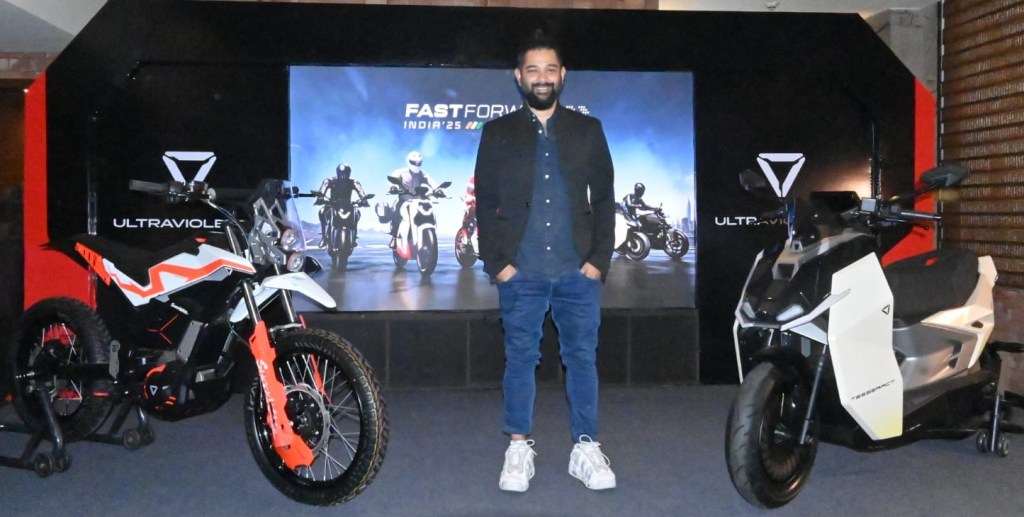
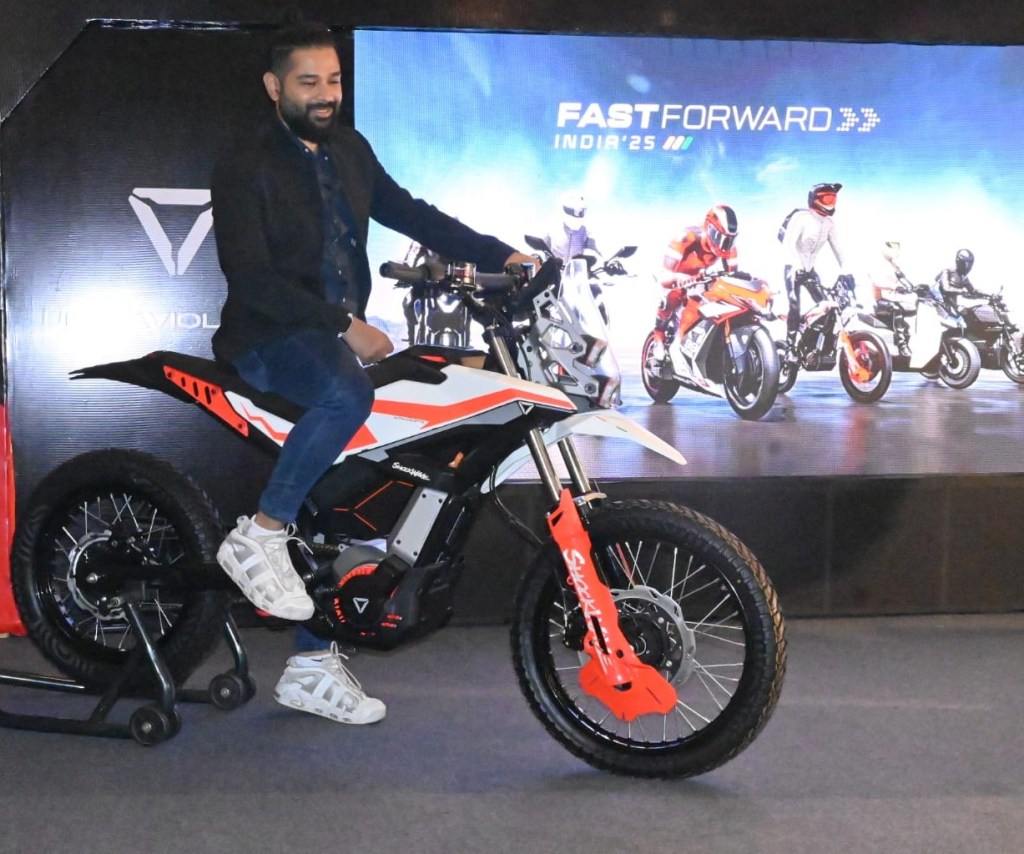
Ultraviolette, makers of the ‘Fastest Indian Motorcycle’, proudly announced the debut of its cutting-edge product range in Kolkata. With a strong presence across thirteen cities, this showcase marks yet another milestone in Ultraviolette’s remarkable journey and underscores its dedication to serving customers across India.
Kolkata will now be able to experience Ultraviolette’s technologically advanced and performance-driven two-wheelers that have long captivated customers across the country. As part of its commitment to enhancing customer service, Ultraviolette is also set to establish its state-of-the-art experience centre in Kolkata this year. The 3S Experience Centre will offer comprehensive ownership services, ensuring an unparalleled experience for customers in Kolkata and its surrounding regions in West Bengal.
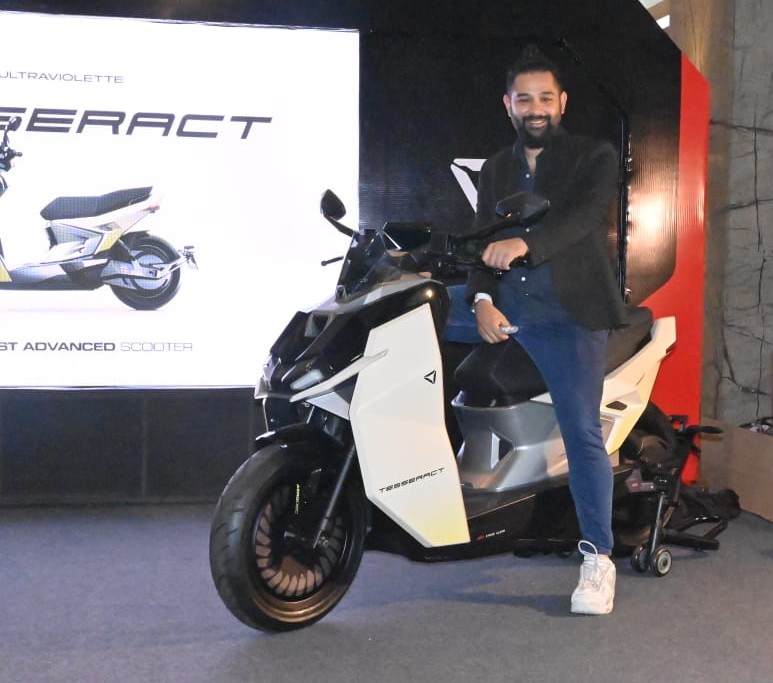
Narayan Subramaniam, CEO & Co-founder of Ultraviolette, said “Kolkata has always stood out with its passion for cutting-edge design and its embrace of future-forward technology. Over the years, we have seen a strong and growing interest in high-performance, next-generation two-wheelers here. Today marks a significant milestone as we launch our full product portfolio in this dynamic city – underscoring our commitment to pushing the boundaries of innovation, design excellence, and user experience. With the launch of our Electric Scooter Tesseract, which boasts several world-first features, we are not just introducing a new product – we are ushering in a new era of intelligent and connected mobility. This is a bold step towards reshaping the urban mobility narrative, not only for Kolkata but for the wider West Bengal region.”
The F77 MACH 2 and F77 SuperStreet redefine electric performance, accelerating from 0 to 60 kph in just 2.8 seconds. Equipped with a 10.3 kWh battery pack and delivering a peak power output of 30 kW (40.2 hp), the motorcycles offer a staggering 100 Nm of peak torque. It accelerates swiftly from 0 to 60 km/hr in just 2.8 seconds and reaches a top speed of 155 km/hr with an impressive IDC range of 323 kms. Ultraviolette’s ongoing optional packages are also available to all F77 customers, aimed at magnifying the riding experience further.
F77 Mach 2 and F77 SuperStreet are priced at ₹ 2,99,000. Bookings for F77 Mach 2 and F77 SuperStreet are open on the company website- http://www.ultraviolette.com.
The company also unveiled two new mainstream products – The World’s Most Advanced Electric Scooter -‘Tesseract’ and a Disruptive Electric Motorcycle- ‘Shockwave’. The Tesseract features a segment first integrated radar and dashcam, seamlessly coupled with Omnisense mirrors, providing advanced safety technologies such as Blindspot Detection, Lane Change, Overtaking Assist, and Collision Alerts. It is also equipped with Traction control and Dynamic regen for enhanced safety and optimizing energy consumption. In addition, Tesseract boasts a 7″ touchscreen TFT display, and multi-colour LED displays embedded in the ORVMs.
Shockwave – a meticulously designed and engineered motorcycle that meets the demands of riders who seek an exhilarating riding experience and reigniting the joy in riding. It promises the same iconic thrill of the ‘2-stroke’ motorcycling era that represented the lightweight, fun, and accessible motorcycles.
The Tesseract is priced at ₹ 1,45,000 and the Shockwave is priced at ₹ 1,75,000. Pre-bookings for Tesseract and Shockwave are open on the company website for ₹ 999.
“Kolkata represents a fascinating blend of heritage and forward-looking innovation, making it a compelling destination for our next-generation mobility solutions. The city’s rapid advancements in technology and its growing inclination toward smart infrastructure reflect a strong appetite for intelligent, sustainable transportation. We are excited to bring our performance two-wheeler portfolio to this evolving landscape – designed with cutting-edge engineering and a deep commitment to redefining mobility”, said Niraj Rajmohan, CTO & Co-founder of Ultraviolette.
By FY 2026, the company aims to extend its reach to fifty cities across India, with a strategic focus on fast-paced global markets such as UK, Germany, Spain, Portugal, and France.
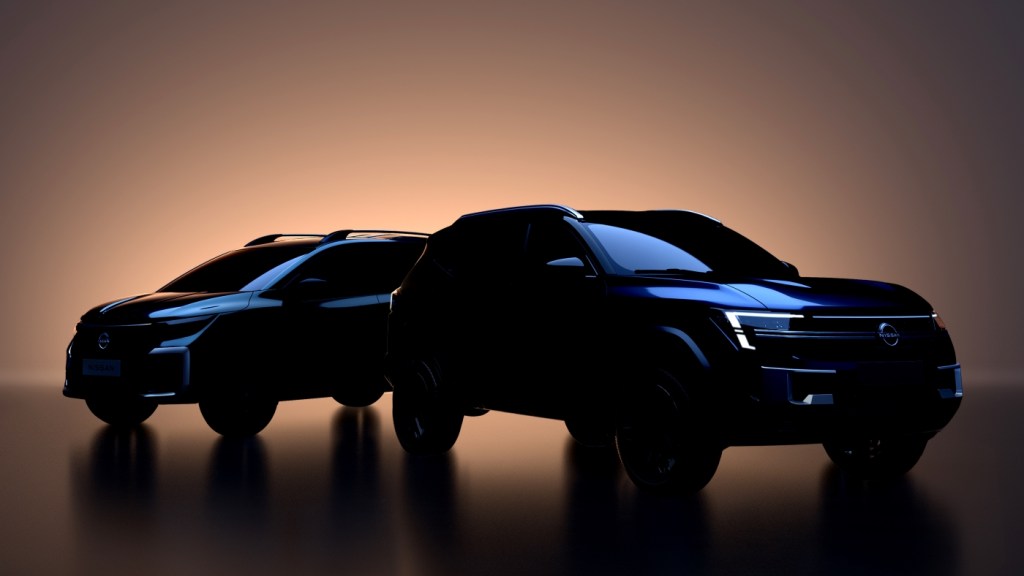
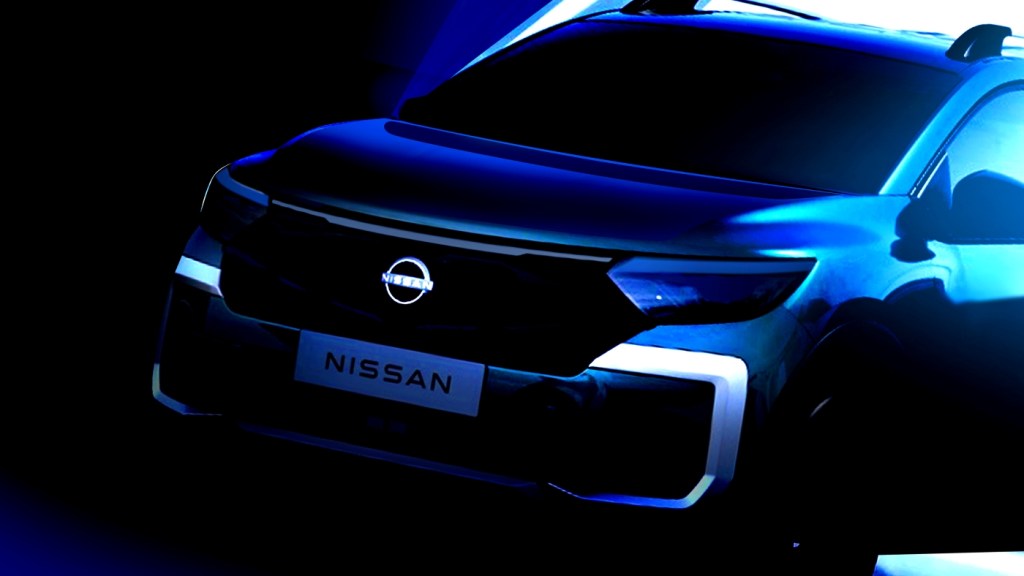
Nissan Motor India has announced an all-new 7-seater B-MPV (multi-purpose vehicle) to their existing line-up. The company showcased two new products slated for India at their recently concluded Global Product Showcase Event held in Yokohama, Japan. This is in line with the company’s plans for the India business to reshape its new products to meet the rising aspirations of its customers and deliver products in all high-growth segments such as the B-MPV and C-SUV segments in addition to its existing share in the B-SUV segment led by the New Nissan Magnite.
Nissan will continue to strengthen its presence in India’s rapidly growing market, enhancing domestic performance and expanding exports. Nissan’s planned product offensive has begun with the first-time global reveal of an all-new 7- seater B-MPV scheduled to launch in FY25 as a brand new addition to the India product portfolio.
This will be followed by a previously announced 5-seater C-SUV (compact sports utility vehicle) in early FY26. The company has shared two brand new teasers for Indian audiences which confirm the developments and timelines for both vehicles. Nissan Motor India remains on track to have 4 products by FY26 for Indian customers across the B/C and D-SUV segments.
The C-SUV has been designed to disrupt the segment in India. It will be feature- packed and be delivered with state-of-the-art proprietary advanced technologies. Inspired by another iconic Nissan SUV, the new C-SUV takes its design cues from the Nissan Patrol. The C-SUV will deliver true Nissan SUV DNA and deliver the same robust reliability, premium craftsmanship and technology that Nissan is renowned for globally. The C-SUV with unmistakable presence will offer a high approach and departure angle making it the perfect companion for Indian road conditions.
The Nissan 7-seater B-MPV on the other hand aims to deliver unmatched value, quality and comfort to its core customer driven by value conscious customers seeking to maximize their purchase in the segment. The Nissan B-MPV will deliver muscular styling that is unique to Nissan’s distinct design philosophy. It has been designed to ensure comfort for passengers on all rows without compromising on driving pleasure.
Nissan is setting its sights on achieving an ambitious target of 1,00,000 units in both annual domestic sales and exports from India. To support this goal, the company will locally manufacture both new products at the Alliance JV plant in Chennai. This approach ensures that every vehicle manufactured here meets global standards, catering to both domestic and international markets.
Building on the success of the New Nissan Magnite, Nissan is introducing a new C- SUV that will also be made in India and exported globally. This 5-seater C-SUV will be the second model from the Chennai plant to follow the ‘One Car, One World’ strategy, reinforcing Nissan’s commitment to expanding its presence in both domestic and international markets.
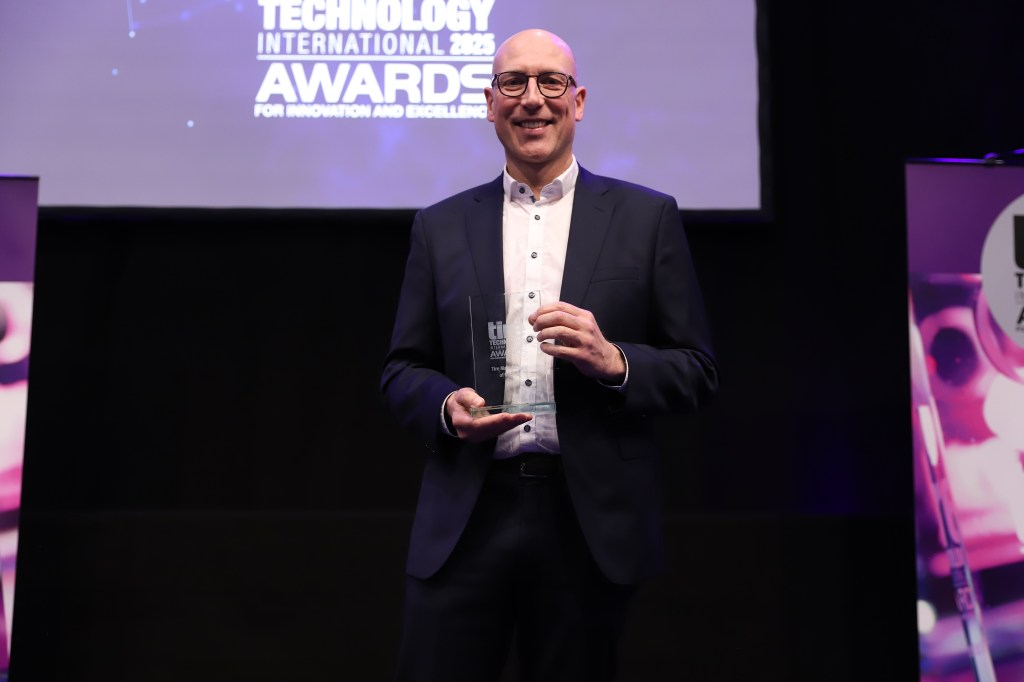
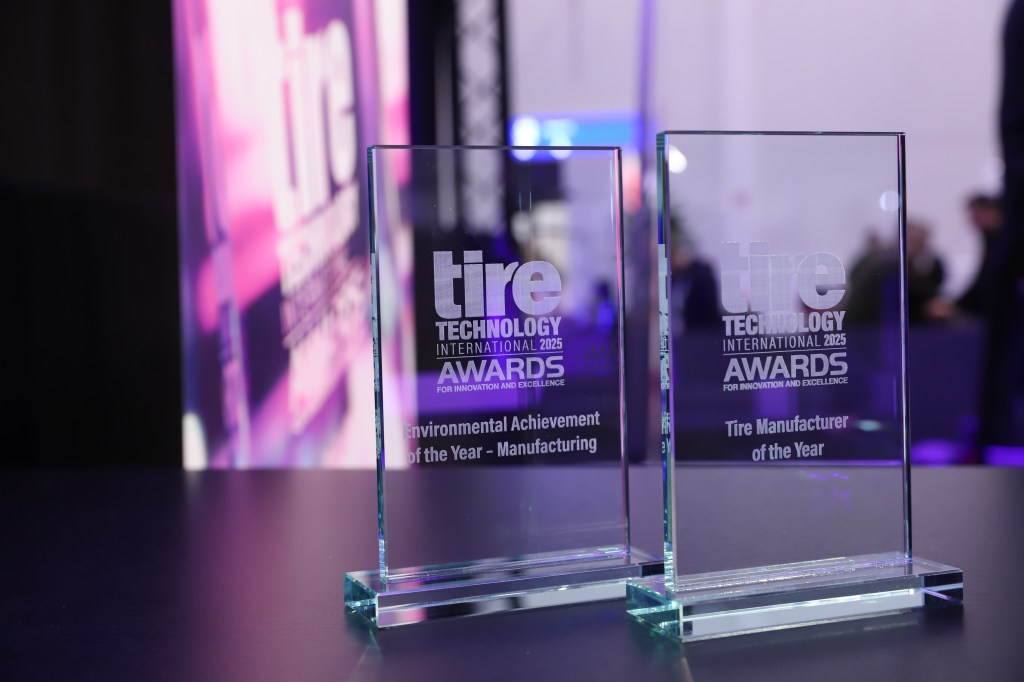
Continental has been awarded “Tire Manufacturer of the Year” at this year’s Tire Technology International Awards for Innovation and Excellence. The premium tire manufacturer received a further honour for its tire plant in Lousado, Portugal, which has produced tires CO2-neutrally since last year. This makes Continental the only tire manufacturer to win two of the prestigious awards, outperforming the competition as “Tire Manufacturer of the Year” as well as in the category “Environmental Achievement of the Year – Manufacturing”. The awards were bestowed as part of the Tire Technology Expo on March 4 at the exhibition center in Hanover. They are regarded as some of the top honours in the industry.
“We are especially proud to be the only manufacturer to be honored twice at the Tire Technology Awards in an extremely competitive field,” says Edwin Goudswaard, Head of Research and Development at Continental Tires. “Both awards highlight our strong commitment to sustainable tire development and manufacturing. In such a highly competitive market, this success demonstrates our innovative prowess and our ability to actively shape the future of the industry.”
Competition in both categories was fierce. As “Tire Manufacturer of the Year,” Continental outperformed competitors from the USA, Italy, and France. This marks the fourth time Continental has received this title – most recently in 2022. Sustainability efforts are becoming an increasingly important focus for the industry, and therefore for the awards. By naming Continental “Tire Manufacturer of the Year” for 2024, the jury of 27 independent industry experts acknowledged Continental’s ongoing achievements on the road to greater sustainability. The projects considered in their deliberations included increasing the share of sustainable materials through recycled PET bottles at further Continental plants, expanding the plant in Rayong, Thailand, according to the highest energy-efficiency standards, obtaining the international sustainability certification ISCC-PLUS for its plants in Lousado, Portugal, Puchóv, Slovakia, and Hefei, China, as well as upgrading the tire plant in Hefei with automation technology in line with state-of-the-art sustainability standards.
Continental has also repeatedly impressed the jury in award categories that specifically recognize environmentally friendly development and production measures. In 2024, for example, the company took top spot in the category “Environmental Achievement of the Year – Tire Design” with its sustainable production of the tire UltraContact NXT. This year, Continental won the prize in the “Manufacturing” category for the sustainability measures at its tire plant in Lousado, Portugal. Since 2024, the plant has been testing a CO2-neutral production process that advances the company’s ambition to achieve carbon neutrality. Thanks to a fully electric steam boiler, Continental generates the steam using both in-house produced solar power and renewable energy from the grid. Steam is needed to heat the rubber compound for the tires during the so-called vulcanization. During this process, raw rubber is turned into a flexible, elastic form. In the tire industry, a large proportion of the consumed energy is used for generating steam. Previously, the Lousado tire plant relied exclusively on natural gas for steam generation. With an annual production capacity of 18 million tires, the plant in Lousado is considered a mega plant. Continental is aiming to switch all of its tire plants to fully carbon-neutral production processes by 2040 at the latest.
The Tire Technology International Awards for Innovation and Excellence have been bestowed since 2008 as part of the Tire Technology Expo in Hanover each spring. The prizes span 13 categories honoring the latest innovations in tire technology and major advances on the road to a more sustainable tire industry. The award ceremony is coordinated by the industry magazine “Tire Technology International.”
SS Innovations, the maker of India’s first and only home-grown Surgical Robotic System – SSI Mantra, hosted the Second Global SSI Multi-Speciality Robotic Surgery Conference (SMRSC) 2025 at the Leela, Gurgaon. The two-day event saw enthusiastic participation from over 1200+ world-renowned medical professionals, who gathered on a single platform to explore the transformative potential of robotic surgery.
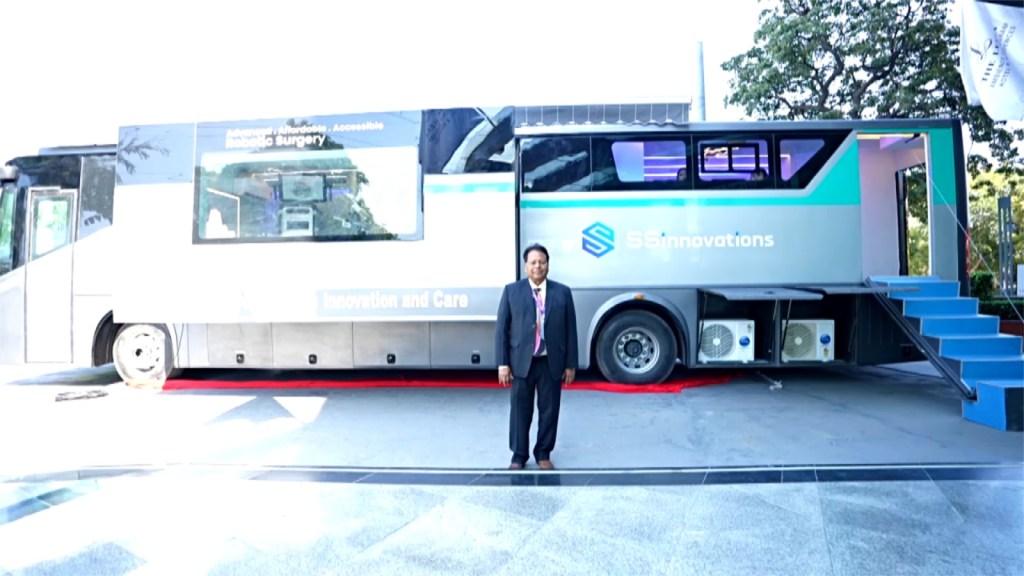
In a groundbreaking announcement at the SMRSC 2025, SS Innovations unveiled the SSI Mantra Tele-Sync Mobile Unit – “SSI MantraM”, a first-of-its-kind innovation set to transform the landscape of robotic surgery and telemedicine in India. This revolutionary mobile tele-surgical unit reflects SS Innovations’ unwavering commitment to advancing medical technology, redefining healthcare infrastructure, and expanding access to cutting-edge surgical care.
With this breakthrough, SS Innovations continues to push the boundaries of med-tech, revolutionizing surgical infrastructure and cementing India’s position as a global leader in robotic surgery and health-tech innovation.
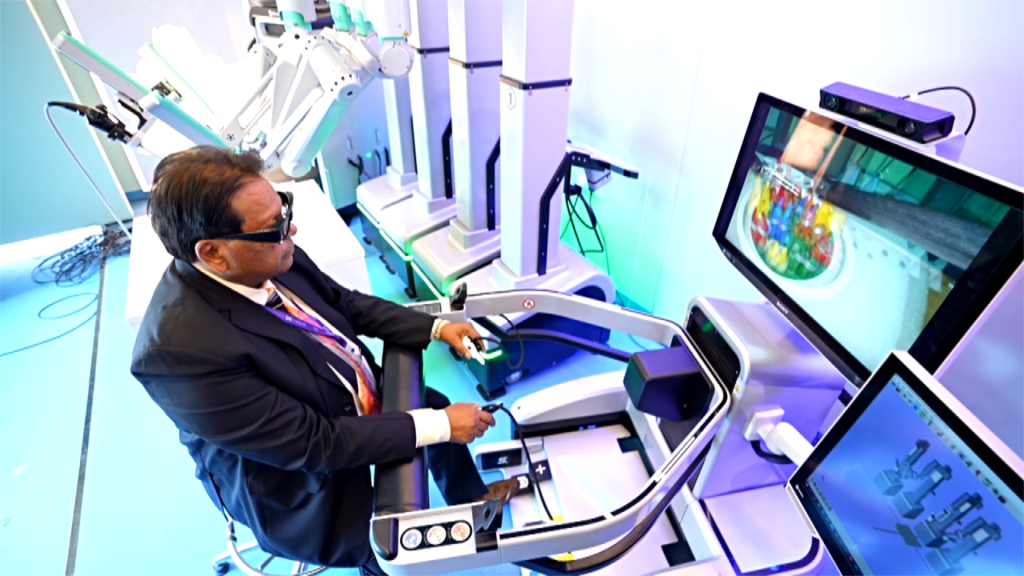
Equipped with state-of-the-art telesurgery capabilities, SSI MantraM breaks barriers in surgical care by delivering world-class robotic-assisted procedures to remote and underserved regions. The Tele-Sync Mobile Unit seamlessly integrates the SSI Mantra Surgical Robotic System, high-speed connectivity, and advanced surgical robotics to enable real-time collaboration between remote and on-site surgical teams. This innovation empowers expert surgeons to perform and guide procedures with minimal latency, making advanced surgical care more accessible than ever.
Speaking on the launch of SSI MantraM, Dr. Sudhir Srivastava, Founder & Chairman of SS Innovations said,”SSI MantraM is more than a mobile telesurgical unit, it’s a movement to democratize and decentralise world-class healthcare. With high-speed telecommunication and satellite connectivity, it breaks geographical barriers, delivering life-saving robotic-assisted surgery to underserved communities. Beyond tele-surgical procedures, SSI MantraM serves as a powerful platform for surgical education, tele-mentoring, and real-time patient data analytics. With continuous research and innovation, SSI is taking a major step toward ensuring that advanced robotic surgery reaches those who need it most.”
Building on the success of SMRSC 2024, this year’s conference elevated discussions on innovations in robotic surgery and telesurgery, with a focus on Urology, General Surgery, Gynecology, Oncology, Head & Neck, and Cardiothoracic surgery. The event served as a platform to showcase the advanced capabilities of SS Innovations’ flagship surgical robotic system- SSI Mantra 3, which continues to redefine modern surgical care. Installed in over 70 hospitals nationwide, SSI Mantra has facilitated more than 3400 multi-speciality surgeries, including complex cardiac procedures, setting new benchmarks in surgical precision and patient outcomes. SMRSC 2025 brought together an extraordinary lineup of global visionaries shaping the future of healthcare and technology.
Dr. Michio Kaku, a renowned theoretical physicist and futurist, captivated the audience with his thought-provoking insights on the future of medical technology. He highlighted how advancements in AI, quantum computing, and robotics are set to redefine surgery, making precision medicine and real-time remote procedures a reality. His presence underscored the intersection of scientific innovation and healthcare advancements. Mr. Sonam Wangchuk, acclaimed engineer, innovator, and education reformist, highlighted the critical role of infrastructure and technological breakthroughs in transforming healthcare. His insights resonated deeply with SSI MantraM’s mission to decentralize surgical care through pioneering engineering and connectivity solutions. Dr Fredric Moll, widely recognized as the Father of Surgical Robotics and Vice-Chairman of SS Innovations International Inc., shared his expertise on the evolution of robotic-assisted surgery, offering a glimpse into the next era of precision-driven medical advancements.
Dr. Michio Kaku, renowned theoretical physicist and futurist, speaking on the future of medical technology said, “Congratulations to SSI for making history by igniting the next revolution in robotic surgery. Today marks the beginning of an exciting new era, with SSI at the forefront of a transformation that will redefine the medical field. When historians look back, they will recognize that this moment set into motion a movement that will reverberate across the world, redefining the way surgery is performed. But this is only the beginning. We are witnessing the dawn of the next phase that goes beyond where we stand today. While this phase will shape the future for years to come, I can already see the emergence of something even greater: the integration of quantum mechanics into surgery. This will not just be robotic surgery; it will be quantum mechanical robotic surgery, an evolution that will once again revolutionize medicine. Years from now, history will mark SSI as the epicentre of this transformation, the place where visionaries, driven by energy and foresight, propelled this revolution forward. I eagerly await the next great leap, where quantum mechanics and robotic surgery merge, opening yet another frontier in medical innovation.”
Mr. Sonam Wangchuk, innovator and education reformist said, “Just as a doctor heals the sick, an environmental engineer heals the planet, diagnosing its ills and restoring its balance. By harnessing innovation, sustainable technology, and community-driven solutions, we can democratize environmental care, making sustainability accessible to all. A healthier planet isn’t just a vision; it’s a necessity for a just and thriving future.”
Dr. Fredric Moll, Father of Surgical Robotics, and Founder of Intuitive Surgical, said, “I am truly amazed by the progress made in developing the SSI Mantra, which is impressive both in its clinical capabilities and the remarkably short time in which it has been achieved. This accomplishment is a testament to the exceptional talent of Dr. Sudhir Srivastava and the SSI engineering team. Having lived and worked in the robotics space, I understand the immense challenges involved in such a feat. SSI’s creativity, persistence, and determination have been key to bringing this system to its current state. As robotics continue to evolve and become more intelligent, we are entering a new era of capabilities that will serve both patients and humanity in profound ways. I am incredibly excited to be a part of this journey.”
SMRSC 2025 featured insightful discussions on the transformative role of AI in robotic surgery, from pre-operative planning to intra-operative decision-making and post-operative care. The event also showcased groundbreaking live telesurgeries and tele-proctoring sessions, broadcasting real-time robotic surgeries across cardiac and multispeciality disciplines.
Furthermore, for the first time in India, telesurgery was performed across a distance of 1,700+ km, with Prof. Dr. Somashekhar S P, Surgical Oncologist, operating remotely from SS Innovations Headquarters, Gurgaon, while Dr. Kushal Agrawal, Associate Consultant – Surgical Oncology, assisted on-site at Aster CMI Hospital, Bangalore. This breakthrough, led by SSI, is a significant step toward making advanced surgical care accessible across long distances.
Acknowledging the gathering of the renowned medical fraternity at SMRSC 2025, SS Innovations Founder, Chairman, and CEO, Dr. Sudhir Srivastava, said, “SMRSC 2025 is a testament to the power of collaboration, where the brightest minds in medicine come together to shape the future of robotic surgery. With a strong ‘Made in India’ vision, we are proud to lead the charge in robotic surgery innovation, bringing world-class technologies to the forefront. Robotics is the future, and as we move forward, these technologies will play a pivotal role in redefining precision, efficiency, and accessibility in healthcare. By bridging geographical gaps, enhancing surgical outcomes, and empowering medical professionals with unparalleled capabilities, we are transforming lives and setting new benchmarks in surgical excellence, ensuring that world-class healtcare reaches every corner of the globe.”
The conference culminated on a mesmerizing note with a soulful musical evening led by Padma Vibhushan awardee and Sarod maestro, Ustad Amjad Ali Khan. His captivating performance brought a cultural touch to the event, seamlessly connecting science, technology, and the arts.
With a strong emphasis on collaboration and knowledge-sharing, SMRSC 2025 is actively redefining the future of robotic-assisted surgery. The conference serves as a premier platform for surgeons, medical professionals, healthcare leaders, and technology innovators to come together and drive advancements in surgical excellence and innovation. By bridging the gap between medical expertise and technological breakthroughs, SMRSC 2025 highlights the transformative power of robotics in modern healthcare. As the landscape of surgery continues to evolve, the event stands as a testament to the impact of cutting-edge innovation, global collaboration, and a shared vision for accessible and precision-driven healthcare.
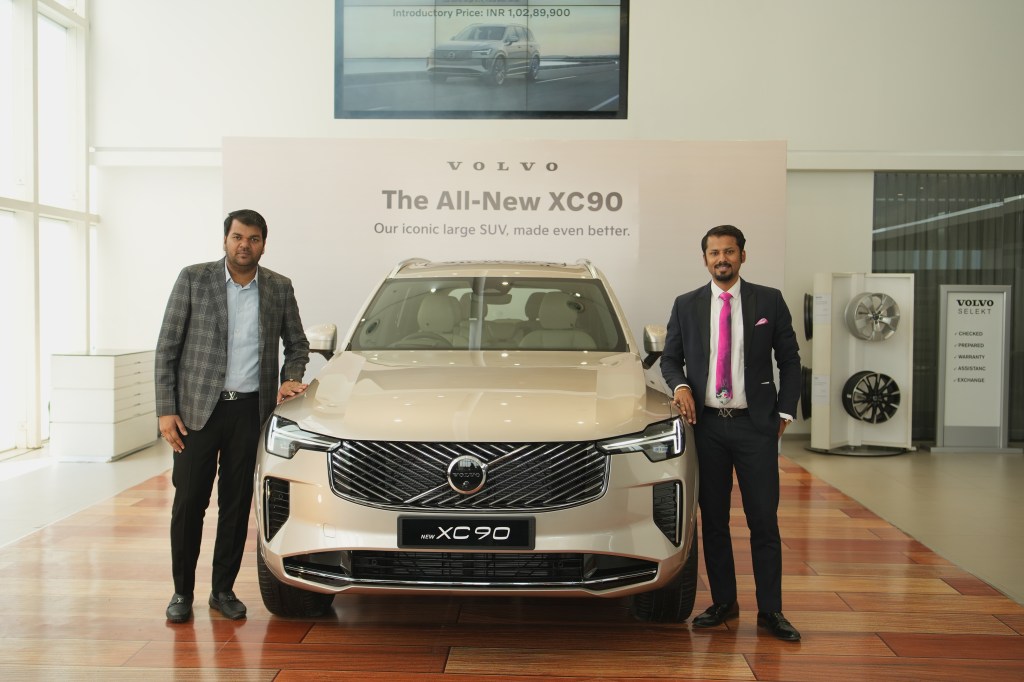
Volvo Car India has unveiled the new XC90, at SPL Volvo dealership in Kolkata, with an ex-showroom price of Rs. 1,02,89,900. The new XC90 showcases a suite of advanced technology and refined design elements, further elevating the award-winning and best-selling flagship SUV.
“This iconic SUV has long been a cornerstone of our success, and we are thrilled to unleash the new XC90 onto the Indian market,” stated Mr. Jyoti Malhotra, Managing Director, Volvo Car India. “The SUV embodies the pinnacle of Swedish luxury and design, seamlessly integrating innovation and safety, the hallmarks of the Volvo brand. This vehicle delivers unparalleled comfort, spaciousness, versatility, and efficiency. Its refreshed, contemporary exterior design reinforces its commanding presence on the road.”
As with every Volvo, the new XC90 is designed to be one of the safest vehicles on the road. It features a robust safety cage and a comprehensive array of active safety technologies, ensuring the protection of occupants and other road users.
Utilizing the radar and front camera, the new XC90 can detect unintentional lane drifts and automatically steer the vehicle back into its lane, preventing potential collisions. It also includes run-off road mitigation and collision avoidance systems that can detect and react to other vehicles, pedestrians, cyclists, and large animals.
The new XC90 delivers unparalleled driving experience, characterized by exceptional seating comfort and an upgraded standard suspension. The individual dampers now adapt mechanically to real-time road conditions, optimizing both comfort and stability for a confident and relaxed journey.
The optional air suspension system, working in conjunction with an active chassis, monitors the vehicle, road, and driver 500 times per second to ensure the most comfortable ride. This system allows ride height adjustments, lowering the vehicle by 20mm for improved aerodynamics or raising it by 40mm for challenging terrains. Enhanced insulation further reduces wind and road noise, creating a serene cabin environment.
The redesigned interior of the new XC90 reflects contemporary Scandinavian design, featuring a more horizontal dashboard with premium recycled material decorative panels and new vertical air vents. Enhanced ambient lighting adds to the luxurious ambiance.
A new 11.2-inch central touchscreen with higher resolution and an updated user interface provides seamless access to a range of features, apps, and over-the-air software updates.
“We are thrilled to unveil the new Volvo XC90 at our dealership today,” said Mr. Nikunj Sanwaria, Dealer Principal of SPL Volvo. “This iconic SUV sets a new standard for the luxury auto segment in the Indian market. We are confident that our customers will be impressed with the XC90’s advanced technology, refined interior, and unparalleled comfort. We invite everyone to visit our showroom and experience the magnificence for themselves.”
Since the Beetle, Volkswagen has been enabling affordable mobility for millions of people with compact and likeable cars. Now, with the world premiere of the ID. EVERY11 show car, the German car manufacturer is presenting an entry-level all-electric model. Volkswagen will launch the production version in 2027 – with a starting price of around 20,000 euros. The ID. 2all1 will be launched in the 25,000 euro class as early as in 2026. Both models are part of the new Electric Urban Car Family with front-wheel drive, which is being developed under the umbrella of the Core brand group in the Volkswagen Group. They are based on Volkswagen’s new modular electric drive platform: the MEB with front-wheel drive.
Maximum variety
Attractive mobility in the electric era from Europe for Europe is one of the central pillars of the brand’s plan for the future. With the European launch of the all-electric Urban Car Family from 2026, Volkswagen will offer the most diverse portfolio in the high-volume segment – from efficient combustion-engine models and advanced hybrids to future-oriented all-electric vehicles. Thomas Schäfer: “The ID. EVERY1 represents the last piece of the puzzle on our way to the widest model selection in the volume segment. We will then offer every customer the right car with the right drive system – including affordable all-electric entry-level mobility,” says Schäfer. “Our goal is to be the world’s technologically leading high-volume manufacturer by 2030. And as a brand for everyone – just as you would expect from Volkswagen.”
Focus on people
“In the future model, we talk about Customer Defined Vehicles. The ID. EVERY1 shows that we are putting our customers, their wishes, interests and preferences at the centre of vehicle development more consistently than ever,” says Kai Grünitz, member of the Volkswagen Brand Board of Management responsible for Development. The production version of the ID. EVERY1 will be the first model in the entire Group to use a fundamentally new, particularly powerful software architecture. This means that the future entry-level Volkswagen can be equipped with new functions throughout its entire life cycle if its users so wish. Even after purchase of a new car, the vehicle can still be individually adapted to their needs.
Characteristic design with charisma and identity
The up! – the immediate predecessor of the ID. EVERY1 – built until 2023 still impresses today with its clear, unmistakable design. The new Volkswagen design language also picks up on characteristic elements in the EVERY1. Volkswagen Head of Design Andreas Mindt: “Our ambition was to create something bold yet accessible. The ID. EVERY1 has a self-assured appearance but remains likeable – thanks to details such as the dynamic front lights and the ‘smiling’ rear. These design elements make it more than just a car: they give it character and an identity that people can relate to.”
New MEB with electric front-wheel drive
Following the ID. 2all and the sport version ID. Concept GTI, the ID. EVERY1 belongs to the Electric Urban Car Family and is based on the new modular electric drive platform. Thanks to the electric front-wheel drive, the MEB platform offers revolutionary space utilisation and maximum efficiency. The concept vehicle reaches a top speed of 130 km/h and is powered by a newly developed electric drive motor with 70 kW (95 PS). The range is at least 250 kilometres. With a length of 3,880 mm, the ID. EVERY1 is positioned between the former up! (3,600 mm), the ID. 2all (4,050 mm) and the current Polo (4,074 mm). Inside, it offers space for four people and a luggage compartment volume of 305 litres.
The future plan of the Volkswagen brand
With the “Future Volkswagen” agreement, Volkswagen AG agreed with the employee side at the end of December 2024 on a vision that combines economic stability, employment and technological leadership in the field of sustainable mobility. Binding targets and the measures agreed for them form the foundation for key future projects. The Volkswagen brand is pursuing a clearly defined three-phase plan for this:
Catch up
Strengthen competitiveness and expand the existing model range in a targeted manner. Coming next, the Volkswagen brand will give a further preview of the new Electric Urban Car Family in autumn 2025. There will be nine new models by 2027 including the production version of the ID.2all for less than €25,000 and the ID. EVERY1 for about €20,000. Volkswagen aims to become the technologically leading high-volume manufacturer with the safest, most innovative and best-selling cars by 2030.
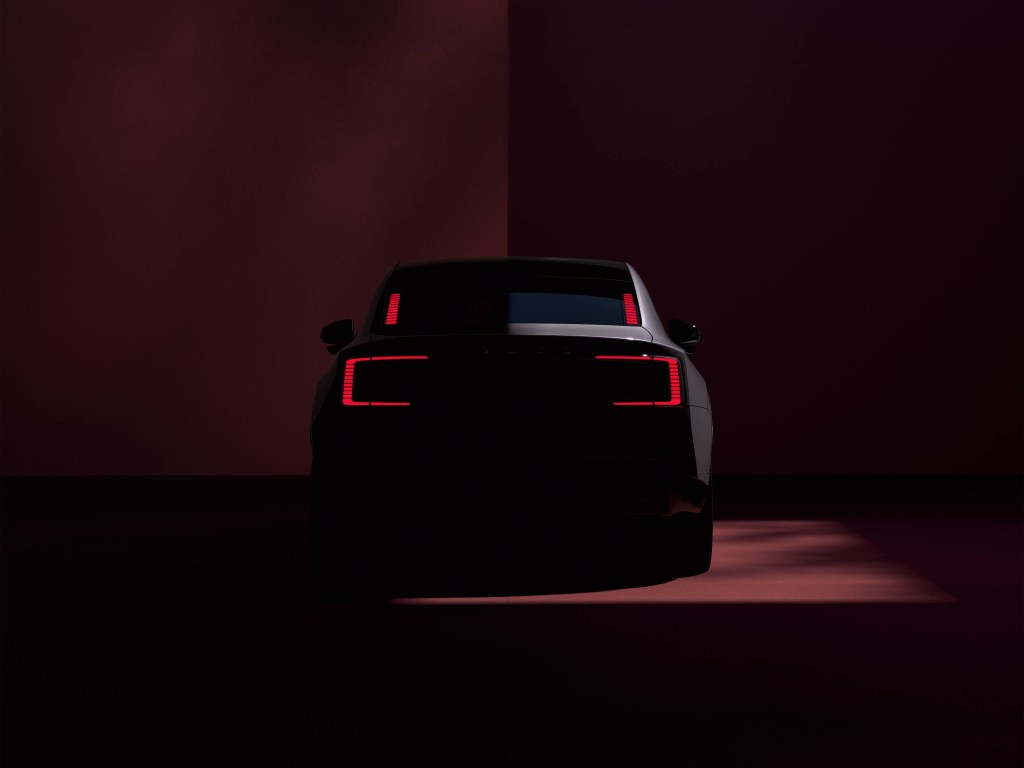
How about a new, fully electric Volvo car that can go just that little bit farther with less charging time? The upcoming Volvo ES90 does exactly that, thanks to the new 800V technology, which makes its debut in their latest fully electric model.
The benefits of an 800-volt electric system are numerous: your battery gets charged faster, your electric car gets an improved overall performance, and the electric system is more efficient compared with a 400-volt system.
Combine this with completely new battery management software and hardware, as well as a progressive design, and you get a car that goes farther and charges faster than any electric Volvo before. The ES90 can add 300 kilometres of range in just 10 minutes at 350kW fast-charging stations and offers a driving range of up to 700 kilometres under the WLTP testing cycle.
The ES90 is designed to be a premium Volvo car that gives you quality time with the people you love, providing you with peace of mind and balance, as well as a sense of convenience and control. A state-of-the-art electric system that enables faster charging and longer range is key to achieving that ambition. No matter where or how far your trip goes, the ES90 is designed to get you there reliably and comfortably.
“Our 800V technology marks another significant technological upgrade for our customers as we move towards full electrification,” says Anders Bell, Chief Engineering and Technology Officer. “It makes our electric cars even more efficient, helps you charge your electric Volvo faster and go farther on a single charge.”
To create the new 800-volt system, every component in the electric system has been upgraded to be compatible with 800 volts, including the battery cells, e-motors, inverter, charging as well as the climate and thermal systems. That creates benefits in terms of charging, efficiency and performance.
A higher-voltage system means that it can deliver more power (in kilowatts, or kW) and range with the same current as a 400-volt system. This approach generates less heat, meaning your battery can be charged faster up to 350kW without overloading the electric system.
The 800-volt system also contains lighter e-motors and other components, which reduces the car’s overall weight. This also improves the system’s efficiency, while boosting the car’s acceleration and driving range.
The brand-new in-house-developed battery management software creates a more robust charging experience. Compared to other electric Volvo cars, our new software cuts the time it takes to charge your ES90 from 10 to 80 per cent by as much as 30 per cent, down to 20 minutes. This is partly thanks to the integration of adaptive charging software from Breathe Battery Technologies, a company Volvo has invested in last year via the Volvo Cars Tech Fund, our corporate venture capital arm.
However, battery technology is not the only area in which the ES90 is a star performer. It also helps Volvo make progress in other sustainability-related areas. For example, the ES90 is packed with recycled and natural materials that contribute to lower CO2 emissions in production. 29 per cent of all aluminum and 18 per cent of all steel used in the ES90 is recycled, while the ES90 also contains 16 per cent recycled polymers and bio-based materials. The wood panels inside the ES90 are made from FSC-certified wood.
The ES90 also comes with Volvo’s battery passport. Based on blockchain technology, this allows the company to track raw materials. The passport tells you where the lithium, cobalt, nickel and graphite used in the battery originate from. It also highlights the CO2 footprint of the full battery pack and other relevant information. For customers, this provides transparency about how Volvo sources raw battery material in a responsible way.