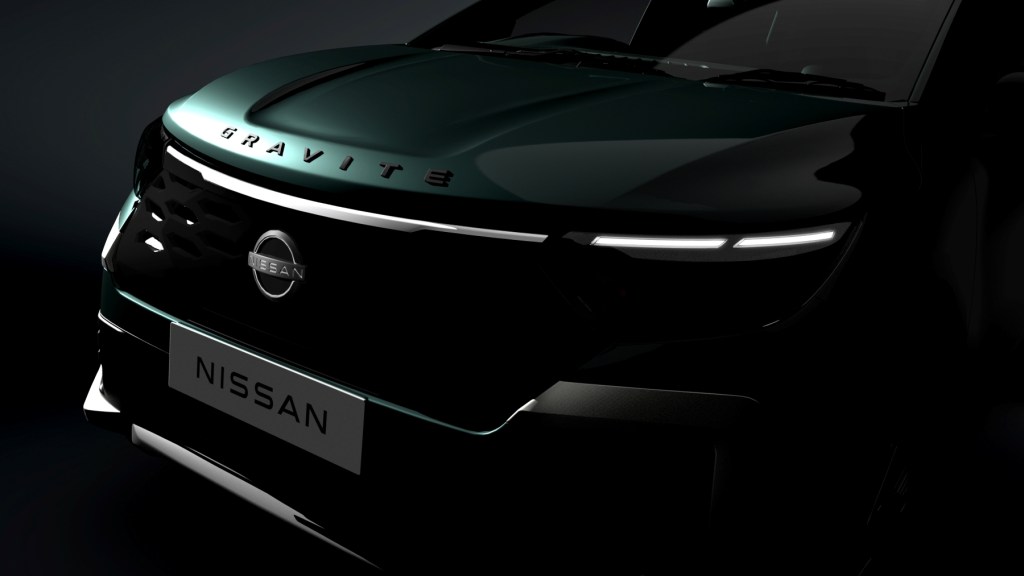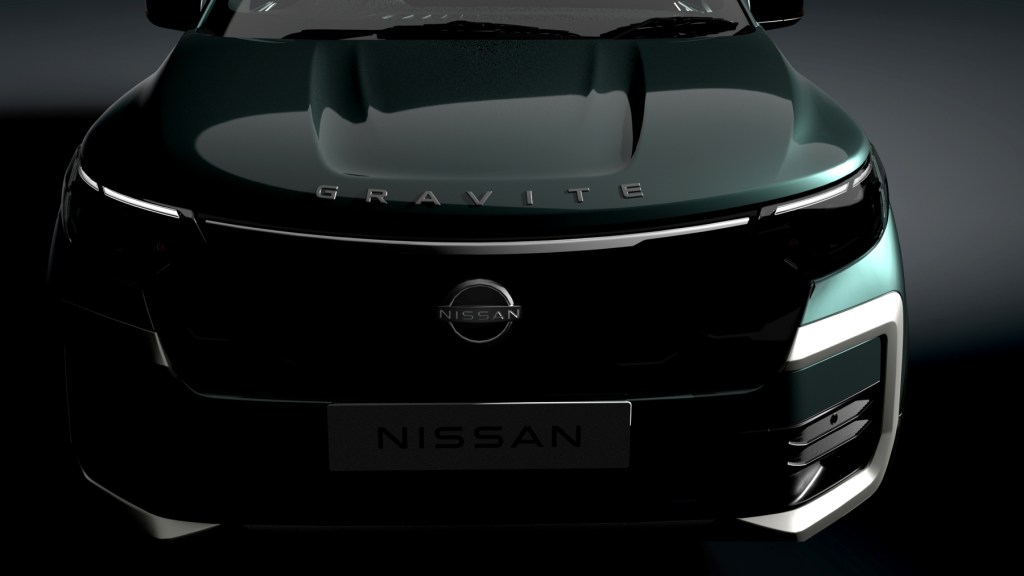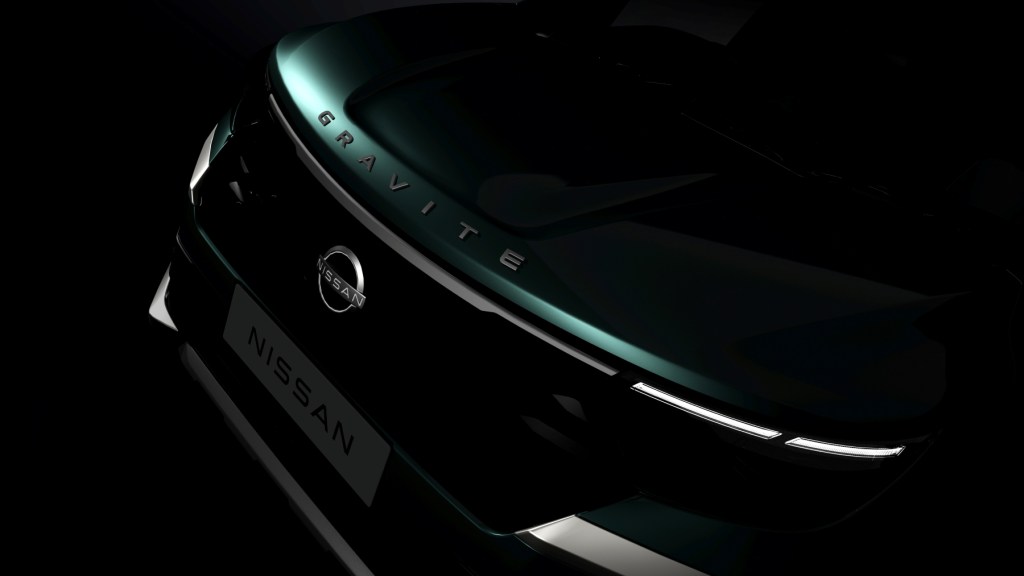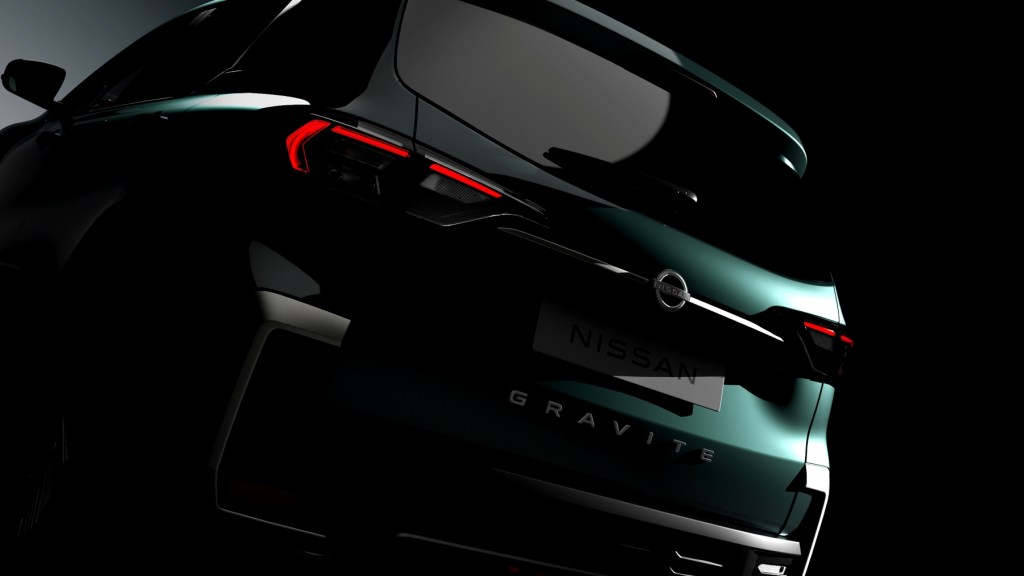
Nissan On Track For 2026 Resurgence In India; 7-Seater B-MPV Gravite Teased

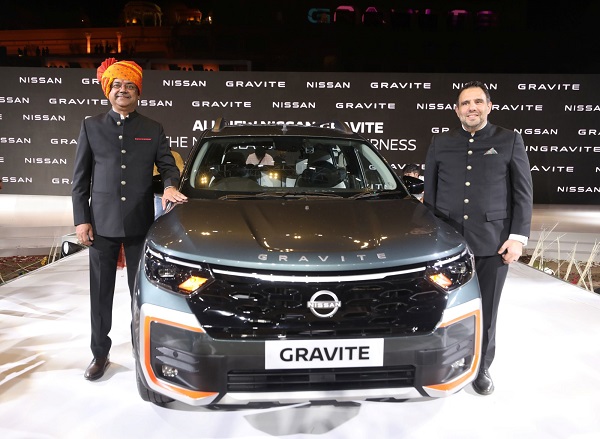
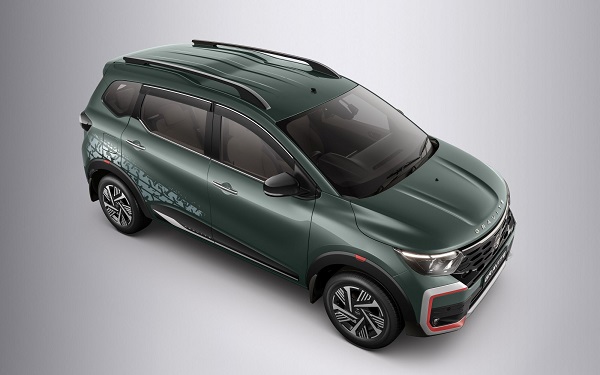
Nissan’s all-new game-changing seven-seater B-MPV will be called Gravite and will be launched in early 2026. It is the first product to be rolled out under the brand’s refreshed and strategically curated line-up for India.

Purpose-built for modern Indian families, the Gravite delivers exceptional versatility and modularity, redefining convenience for value-conscious households while accelerating the expansion of Nissan’s revitalized product portfolio.

Announced in July 2024 as the second model in Nissan Motor India’s ambitious product offensive, the Gravite underscores the company’s forward momentum. The product roadmap includes the launch of the Gravite in early 2026; followed by the Tekton in mid-2026 and a 7-seater C-SUV in early 2027 — reaffirming Nissan’s deep and ongoing commitment to diversifying, strengthening, and revitalising its offering for Indian customers.

A Name that Reflects Nissan’s Ambition

The name “Gravite” draws inspiration from the word gravity, signifying balance, inherent stability, and powerful attraction. This choice reflects Nissan’s core vision of designing vehicles that perfectly anchor families in comfort, superior versatility, and seamless connectivity. Inspired by 1.4 billion Indians and the 19,000 vernaculars and rituals that form the foundation of the nation, the Gravite is the perfect companion for the aspirational and versatile Indian.

Interior: Pioneering Modularity and Comfort

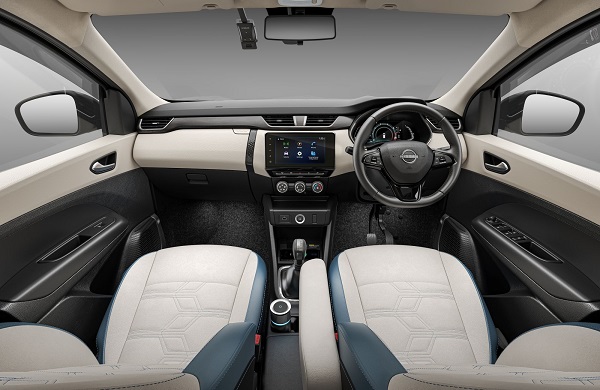
The Gravite transforms family journeys with exceptional cabin roominess and pioneering, class-leading storage innovations. Every aspect has been meticulously crafted for versatility and intuitive use—from ultra-modular seating that effortlessly adapts to changing passenger and cargo needs, to smart space utilization that makes both daily commutes and extended family road trips equally seamless.

Set for its grand debut in early 2026, the All-New Gravite will be manufactured locally in Chennai. This production milestone reinforces Nissan Motor India’s unwavering commitment to deliver vehicles specifically tailored to the evolving demands of Indian customers. As the second critical model in Nissan’s rejuvenated lineup, the Gravite represents a decisive step in the brand’s product renaissance in India.

Design and Inspiration

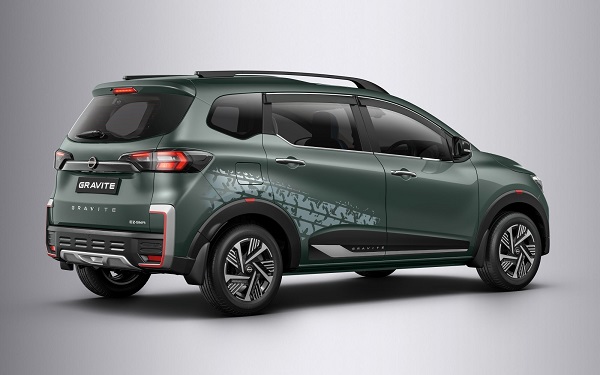
The All-New Gravite establishes a bold and distinct identity aligned with Nissan’s global design language. Its signature C-shaped front grille—a defining element of Nissan’s DNA—ensures instant recognition and a bold on-road presence. The Gravite’s sleek horizontal proportions and confident, muscular stance combine modern elegance with practical and everyday usability.

The Gravite is the only vehicle in its segment to feature distinctive hood branding along with unique rear-door badging—a bold design choice that powerfully amplifies its exclusive identity. The rear fascia continues to echo Nissan’s signature C-shaped interlock theme, ensuring the MPV’s unmistakable presence on every road.

Massimiliano Messina, Chairperson, Nissan AMIEO (Africa, Middle East, India, Europe & Oceania), commented: “India continues to be a strong contributor to AMIEO’s performance, and Nissan Motor India plays a pivotal role in our strategy. Over FY25, we have strengthened our business operations, expanded our portfolio, and delivered on every promise made under our 2024 product offensive. The upcoming line-up—shaped by global insights yet deeply attuned to the needs of Indian customers—reflects our commitment to this dynamic market. With new models developed in and for India, and exports to several international markets, India remains both a growth driver and a strategic hub for Nissan Alliance. The reveal of the GRAVITE demonstrates our continued momentum and reinforces our confidence in the road ahead.”

Saurabh Vatsa, Managing Director, Nissan Motor India, stated: “The All-New GRAVITE is a testament to Nissan Motor India’s renewed focus on the evolving Indian market. Deeply rooted in the fabric of the country, it is designed to be the perfect companion for the diverse needs of our customers. As the second model in our all-new product line-up, the GRAVITE marks a pivotal step in our transformation journey and reinforces our commitment to delivering vehicles that resonate with the aspirations of Indian consumers.”

To support this growth, Nissan is fast-tracking the expansion of its nationwide dealership network, ensuring greater accessibility and enhanced customer experience across the country.

Building on this momentum, the Nissan Magnite continues to strengthen the brand’s global footprint as one of its most successful ‘Made in India’ models. Now exported to 65 markets across South Asia, the Middle East, Africa, and Latin America, the Magnite’s strong acceptance underscores India’s pivotal role as a manufacturing and export hub for Nissan.

Further strengthening its future-ready product roadmap in India, Nissan revealed the Tekton in October 2025—its upcoming premium SUV. With its commanding design and modern technologies, the Tekton sets the tone for the brand’s next phase of growth, complementing today’s introduction of the new Gravite and signalling a robust, multi-segment offensive tailored for the Indian market.

Volkswagen Group Launches Autonomous Vehicle Testing With Its Gen.Urban In Wolfsburg

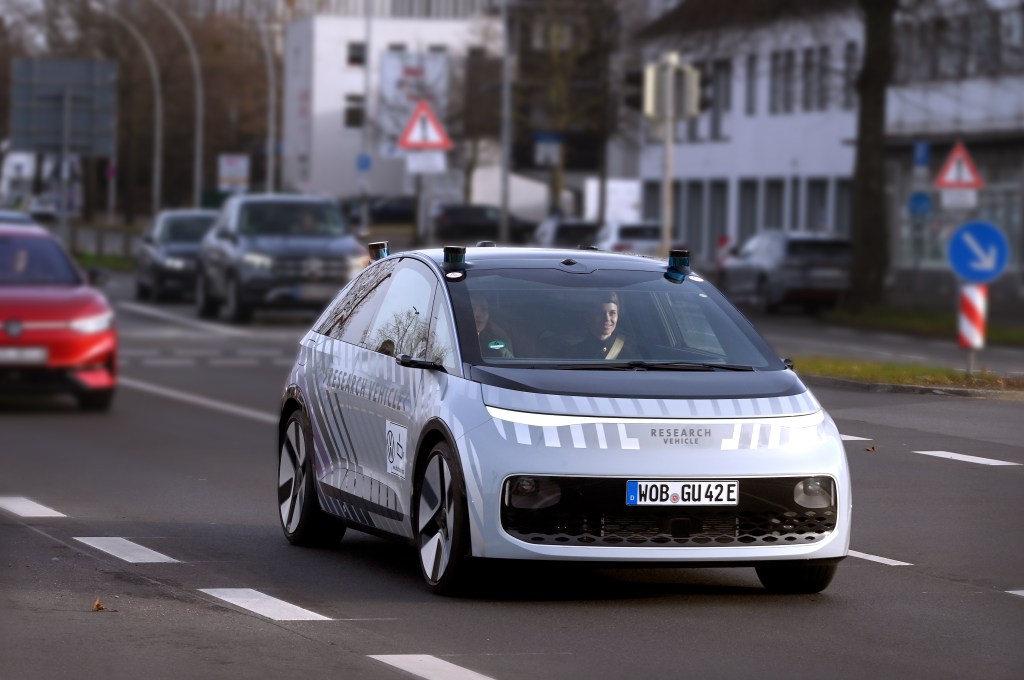
The Volkswagen Group is starting the next testing phase in Wolfsburg with its self-driving research vehicle Gen.Urban1. After intensive trials, the Gen.Urban can now drive autonomously in real urban traffic. The research project aims to explore how passengers experience riding in a self-driving vehicle without a traditional steering wheel or pedals – and what requirements this creates for future vehicle concepts.

An interdisciplinary team from Volkswagen Group Innovation, including designers, human factors specialists, software engineers, and materials experts, is gathering comprehensive data on user behaviour and interaction with the Gen.Urban. These findings will contribute to the development of future interior and user experience (UX) concepts across the Group’s brands.

Key questions include: How do people spend their time in a self-driving vehicle? Which digital features best support work, entertainment, or relaxation? How should interaction between the vehicle and passengers be designed, particularly for older people or children?
Simply put: Do people feel comfortable?

Gen.Urban delivers a personalised driving experience even before the journey begins
Even before departure, passengers can customise their preferences – via app or directly in the vehicle – from cabin temperature to ambient lighting. Upon entering, the Gen.Urban greets the passenger, and the seat automatically adjusts to the desired position. In addition, the vehicle’s digital interior can be tailored to individual preferences using artificial intelligence (AI). The wide front display with its information, light, and sound is then adapted to an individual theme.

Gen.Urban is designed without a traditional steering wheel or pedals. The test participant sits in the driver’s seat, while a trained safety driver monitors the vehicle from the passenger seat. If necessary, the safety driver can intervene at any time using a specially developed control panel with a joystick.

The current test phase initially involves Volkswagen Group employees and will last for a period of several weeks.

Dr. Nikolai Ardey, Head of Volkswagen Group Innovation, explains: “The technology for autonomous driving is making rapid progress. With our Gen.Urban research vehicle, we want to understand exactly how passengers experience autonomous driving. Why? Because the key to a positive customer experience is to build trust – through meaningful interaction, a relaxed atmosphere, and intelligent assistance systems that respond precisely to the needs of passengers. Ultimately, technology should fit people, not the other way around. We will benefit from these insights across the entire Group in the long term.”

Test route in Wolfsburg city area with typical traffic scenarios
The starting point of the test route is the visitor parking lot at the HQ building. From there, the nearly ten-kilometre loop runs through Wolfsburg’s city area, passing the Sandkamp factory gate, Saar and Lessing streets, Brandenburger Platz, Breslauer Street, Grauhorststraße, and finally returning via Heinrich-Nordhoff-Street. Traffic light intersections, roundabouts, current construction sites, residential areas, industrial sections, and possibly congested traffic: the route is chosen to correspond to typical challenges of urban traffic. Each test drive lasts approximately 20 minutes.

Flying Spur Sets New ‘Winter Lap Record’ At Most Northerly Active Racetrack In The World

The Flying Spur Speed has again demonstrated its exceptional performance in all conditions by setting a new ‘winter lap record’ at the world’s most northerly active race circuit.

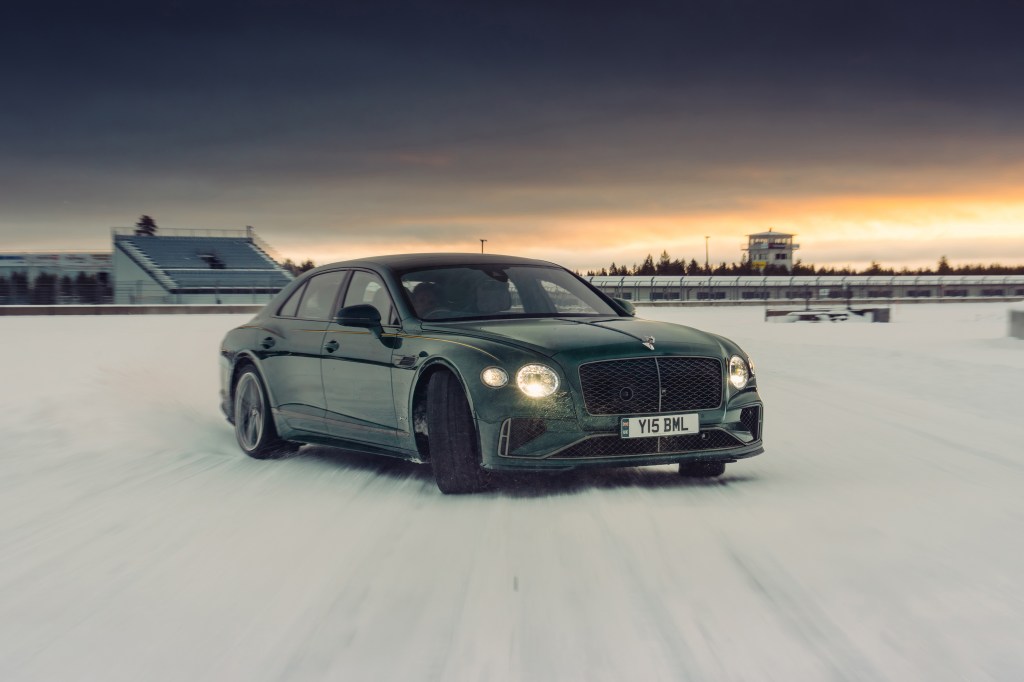
The record was set at the Drivecenter Arena circuit in Fällfors, northern Sweden – just 100 miles from the Arctic Circle, and a former military airbase. Despite the entirety of the 2.05-mile track being covered in 12-inch of ice and snow, the Flying Spur Speed was able to complete laps in under three minutes, with the best time standing at 2:58 – the quickest any vehicle has lapped the facility in winter conditions, ever. The Flying Spur’s variable four-wheel drive system and rear-wheel steering combined to give the car outstanding agility in the conditions, and peak speed was 120 mph during the record run despite the longest straight being only 450 metres long and covered in sheet ice.

The record was inspired by a combination of previous events from Bentley’s history – the two Ice Speed Records captured by Bentley in 2007 and 2011, and the one-hour endurance record set by a Turbo R at Millbrook Proving Ground in the UK in 1986 where 140 mph was averaged around the banked bowl. While the conditions mirrored those of the Ice Speed Records, the car that was used – registration Y15 BML – has a specification matched to the Turbo R in Bentley’s Heritage Collection. Identical Brooklands Green paintwork, yellow fine lines, and an interior in Linen, Cumbrian Green and Open Pore Walnut were specified to mark the Turbo R’s 40th birthday this year.

The Flying Spur Speed is a car designed to deliver exceptional driving performance in all conditions, thanks to its Ultra Performance Hybrid powertrain and advanced chassis systems. An advanced 600 PS 4.0-litre twin-turbo V8 is combined with a 190 PS electric motor that is neatly integrated within the 8-speed dual clutch transmission. In Sport Mode this powertrain deploys a full 782 PS and 1,000 Nm, with the instant torque of the E-motor complementing the charismatic cross-plane beat of the V8.

In pure EV mode, the E-motor provides 190 PS and 450 Nm of torque, more than enough to keep up with the traffic in most situations, while the 25.9 kWh battery offers up to 47 miles (76 km) of usable electric-only range (on the EU drive cycle). Together, the V8 and E-motor provide the new Flying Spur with a total range of 515 miles (829 km). Full electric mode can be deployed at speeds of up to 87 mph / 140 kmph, with throttle applications of up to 75 per cent.

The Bentley Performance Active Chassis comes as standard with the Flying Spur Speed. Features of the sophisticated new setup include Bentley Dynamic Ride and All-Wheel Steering, along with an electronically controlled Limited Slip Differential, while a new generation of ESC software permits a range of driving styles to be accessed and provides reliable traction in all conditions – though the record was asset with the system completely switched off.

With the new car’s rear-biased weight distribution of 48.3 : 51.7, the chassis systems and ESC have a mechanically-optimised platform in which to provide the final refinement. The system uses active torque vectoring front to rear through a centre differential, and precision vectoring across each axle using the brakes, to provide exceptional traction in all conditions – vital for a fast lap on snow-covered sheet ice.

BLive EZY Launches 5,000 EV Drive To Power City’s Last Mile Deliveries

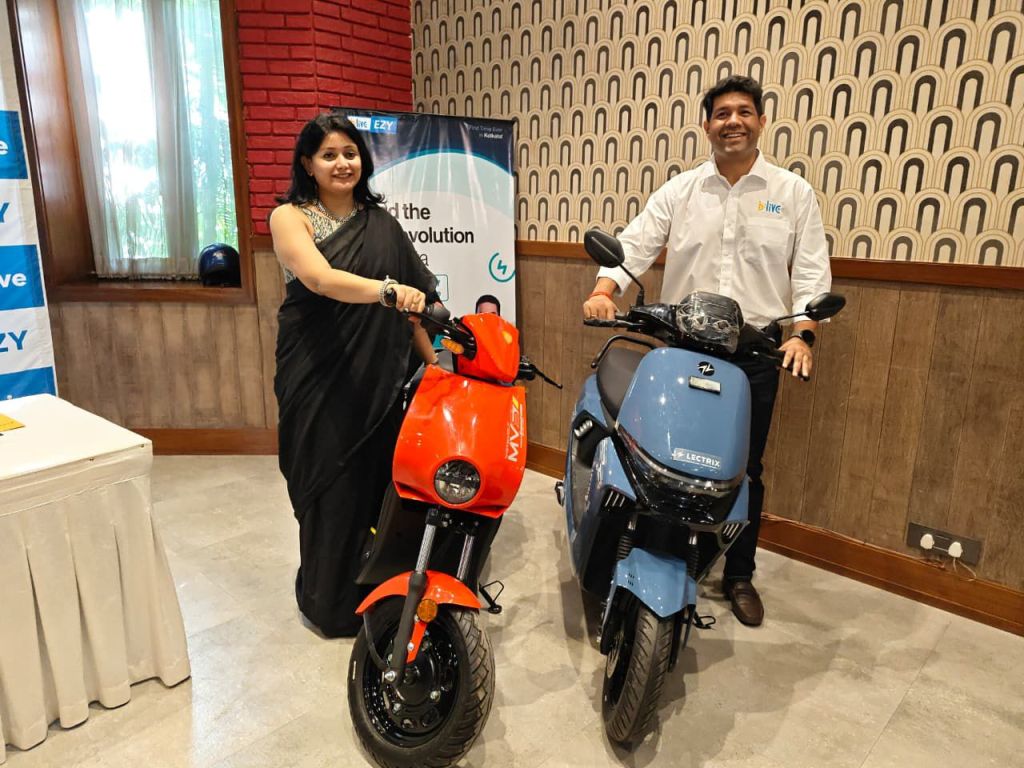
BLive EZY, India’s leading e-mobility platform offering EV as a service for last-mile delivery catering to e-commerce and quick commerce companies like Swiggy, Zomato, Zepto, and Blinkit, has announced the launch of its operation in Kolkata. The company plans to deploy 5,000 electric 2W and 3W vehicles (EVs) over the next 36 months, marking a major step toward sustainable and carbon-free deliveries in Kolkata.

With over 3 million deliveries fulfilled daily and nearly 1 lakh delivery partners on the road, Kolkata stands as one of India’s fastest-growing e-commerce markets in India. Yet, EV penetration for deliveries remains below 2%, signalling a vast opportunity for electrification. Through its successful EZY franchise model, BLive aims to create 50+ EV Franchisees, driving rapid EV adoption while enabling entrepreneurship.

Franchise Model: Profitable, Scalable, and Hassle-Free

BLive EZY’s growth is driven by its franchise model, which allows individuals and EV entrepreneurs to participate in India’s booming EV revolution. With an investment starting at INR 25 lakhs, franchisees can own a fleet of electric two-wheelers and earn assured monthly rentals. This fleet is deployed with leading delivery platforms like Zomato, Zepto, Blinkit, and Swiggy.

The model offers investors a profitable business opportunity — BLive manages end-to-end operations, including deployment, maintenance and rider management — allowing franchise partners to earn 2X return on their investment within 48 months, right from the comfort of their homes. The entire fleet operation is efficiently managed on BLive’s AI-powered “Smart Fleet” tech platform, allowing vehicle tracking, digital rider onboarding, and digital payments and real-time vehicle data.

Driving Green Deliveries and Sustainable Livelihoods

BLive EZY’s entry into Kolkata aligns with its mission to enable green deliveries and sustainable livelihoods. The platform’s end-to-end EV ecosystem ensures seamless operations for enterprises and delivery riders, combining smart fleet technology with predictive analytics and real-time tracking.

“Kolkata represents the next big leap in India’s EV growth story. With high delivery volumes and increasing demand for sustainable logistics, this is the right time for businesses and individuals to invest in clean mobility,” said Sandeep Mukherjee, CEO & Co-Founder, BLive. “Our model makes EV adoption simple, scalable, and profitable — a win for entrepreneurs, enterprises, and the environment.”

Markus Haupt confirmed as Chief Executive Officer of SEAT and CUPRA

The Supervisory Board of SEAT and CUPRA, chaired by Thomas Schäfer – Member of the Board of Management of Volkswagen AG, Brand Group Core, and CEO of the Volkswagen brand – has appointed Markus Haupt as the new Chief Executive Officer of SEAT and CUPRA, effective immediately. Haupt has been serving as interim CEO since April 1, and now, with the full support of the company’s Executive Committee, formally assumes the position on a permanent basis.

“Markus brings over two decades of experience across multiple brands and countries within the Group,” said Thomas Schäfer, Chair of the SEAT and CUPRA Supervisory Board. “His deep expertise in production, logistics, and strategic planning makes him the ideal leader to drive the company’s electrification strategy and CUPRA’s continued growth. Having successfully led the transformation of SEAT and CUPRA’s facilities in preparation for the Electric Urban Car family, he is perfectly positioned to shape the brands’ future,” he added.

Markus Haupt takes the helm at a crucial juncture as the company accelerates its electrification. Since joining as Executive Vice-President for Production and Logistics in 2022, Haupt has driven a transformative shift, including a €3 billion investment to electrify the Martorell plant. Guided by his vision and expertise, the company has led the groundbreaking Electric Urban Car family project with four models from three brands in two plants on behalf of the Brand Group Core. This initiative is set to make electromobility more accessible, with the highly anticipated CUPRA Raval -the first model to roll off the production line- launching in March 2026 and paving the way for a new era of urban electric mobility.

“My passion for cars began early and has guided my career, from working on prototypes at the Volkswagen Group to now leading SEAT and CUPRA as CEO. I am honoured to steer the company through its most significant transformation, including the launch of groundbreaking models like the CUPRA Raval and our shift toward electrification. Together with the Executive Committee and our teams, I am confident we will write a new chapter of growth in the company’s history,” said Markus Haupt upon his new appointment. “I would like to extend my sincere thanks to Oliver Blume, Thomas Schäfer, and the Board of the Volkswagen Group for placing their trust in me with this exciting challenge. I’m equally grateful to SEAT and CUPRA’s Executive Committee for being exceptional teammates and constant sources of inspiration. Together, I’m confident we will achieve remarkable things,” he added.

With over 20 years of experience within the Volkswagen Group, Markus Haupt has held leadership roles across multiple brands and countries. After studying and graduating in Barcelona, he began his career in 2001 in SEAT and quickly advanced, playing a key role in the launch of the Audi Q3 at the Martorell plant. He later led major production projects, including the Volkswagen Group’s A0 platform in Wolfsburg and the launch of the T-Roc in Palmela, actively contributing to the Group’s transition toward electric mobility.

A passionate racing enthusiast, Haupt is German with Spanish descent and has deep personal and professional ties to Spain. He previously served as President of Volkswagen Navarra and General Manager of the Landaben plant in Pamplona, where he successfully introduced a third model for the first time in the factory’s history, before returning to Barcelona in 2022.

Positioning the company for long-term success
As one of the company’s key strategic pillars, the company remains firmly focused on CUPRA’s growth, now with a fully-fledged portfolio and a growing global fanbase. CUPRA has already sold over 950,000 cars globally and is on track to reach one million total deliveries in the coming weeks. As CEO, Haupt now leads the company at a time when the sales continue to gain momentum. SEAT S.A. sales grew in the first 8 months of 2025, driven by CUPRA’s success. The brand continues to break boundaries, and between January and August 2025, CUPRA delivered 216,000 vehicles, marking a 36% increase compared to the same period last year.

This momentum comes amid a complex industry landscape. “There will be challenges ahead, but I’m sure that with a shared vision, a commitment to transformation and a unified team going in the same direction, we will be successful. We are on the cusp of exciting changes, as we transition towards electrification. That’s a future I’ve always believed in, and it’s one that we will work harder than ever to achieve.” Haupt said.

CUPRA is now preparing to take bold steps beyond its current boundaries. This announcement comes at a key moment for the company, as CUPRA builds on growth momentum -volume, markets and portfolio- ahead of the launch of the CUPRA Raval. Following its ambition to become one of Spain’s truly global brands,​ CUPRA will build on the strong success it has achieved in existing key territories and will soon expand into new high-potential markets to broaden its global footprint. The brand is investigating new growth opportunities in the Middle East, a region that offers CUPRA a unique opportunity as it is quite close to Europe and it’s one of the fastest-growing economies in the world.

Along with CUPRA, the SEAT brand remains a cornerstone of the company’s present and future strategy. As one of the most recognised Spanish brands, with over 21 million vehicles produced since 1950 and more than 172,700 units sold in 2025 (January-August), SEAT has been instrumental in shaping the company into the economic and automotive powerhouse that it is today. Now, it is poised to enter a new era in its history with the upcoming World Premiere of its bestselling models, the SEAT Ibiza and Arona.

“We stand at the beginning of an exciting new chapter for SEAT S.A. As one company with two complementary brands, we are better prepared than ever to lead the future of mobility, continuing to inspire through innovation and the passion that has always defined us,” Haupt said.

Change needs drivers and SEAT S.A. is steering the future of mobility. As the only company in Spain that designs, develops, manufactures, and markets cars, SEAT S.A. is a cornerstone of the nation’s automotive industry and the driving force behind its electrification.

As the company undertakes the biggest transformation in its 75-year history, SEAT S.A. is turning Spain into a European hub for electric vehicles. Through the Future: Fast Forward project, and in collaboration with the Volkswagen Group, PowerCo, and other partners, the company has invested €10 billion into the country’s electrification. The company is also leading the Electric Urban Car project for the Volkswagen Group’s Brand Group Core and will begin producing 100% electric vehicles, including the CUPRA Raval, at its Martorell plant from 2026.

A member of the Volkswagen Group, SEAT S.A. sells vehicles under the SEAT and CUPRA brands including the iconic SEAT Ibiza and the company’s bestselling model, the CUPRA Formentor. With 14,000 professionals and three production centres in Martorell, El Prat de Llobregat, and Barcelona, the company exports over 80% of its vehicles to more than 70 countries.

Volvo EX30 Arrives in Style: Pre-Reserve At INR 39,99,000

The wait is finally over. Volvo Car India has announced the much-anticipated price of the Volvo EX30, the brand’s most sustainable and stylish electric car. With an introductory ex-showroom price of ₹41,00,000, the EX30 is set to make luxury electric mobility more accessible than ever before.

This festive season, Volvo Car India, together with its dealers, is bringing extra delight by offering the EX30 at INR 39,99,000 for those who pre-reserve the car before October 19, 2025. This special pre-reserve price is for a limited time, and customers can reach out to their nearest dealership for further details. The car will be available in five colours, and deliveries are scheduled to begin in the first week of November 2025.

This marks the third EV model from Volvo Cars to be locally assembled at the company’s plant in Hosakote, Bengaluru. Each EX30 comes with an 11-kW charger as a standard offer. The EX30 embodies Volvo’s commitment to sustainable mobility, innovative technology, futuristic design, and uncompromising safety.

“We are thrilled to introduce the Volvo EX30 to the Indian market at such an exciting price point, with special benefits for those who pre-reserve,” said Mr. Jyoti Malhotra, Managing Director, Volvo Car India. “We believe this model will play a significant role in making luxury electric vehicles appeal to a new segment of innovators and achievers, those who appreciate power, design and sustainable luxury. With its impressive performance, extended range, sophisticated look, and the convenience of a hassle-free ownership package*, the EX30 is set to redefine the EV experience for our discerning customers.”

As the most sustainable car in Volvo’s lineup, the EX30 has the lowest carbon footprint of any fully electric Volvo to date. Its attractive interiors are made from recycled materials, including denim, PET bottles, aluminium, and PVC pipes. Incorporating Scandinavian design and cutting-edge technology, EX30 has achieved a five-star rating in the Euro NCAP safety test. The EX30 also features active safety tools such as an intersection auto-brake to mitigate collisions, a door-opening alert to prevent ‘dooring’ accidents, and the advanced Safe Space Technology, which boasts 5 cameras, 5 radars, and 12 ultrasonic sensors.

The cabin offers an immersive experience with five ambient lighting themes and sounds inspired by Scandinavian seasons. The new Harman Kardon soundbar concept, featuring a 1040W amplifier and nine high-performance speakers, delivers state-of-the-art surround sound. The intuitive 12.3-inch high-resolution center display includes Google Built-in, 5G connectivity, and Over-the-Air (OTA) updates. This head-turning design has also earned international accolades, including the prestigious Red Dot award: Best of the Best Product Design 2024 and the World Urban Car of the Year 2024.

The EX30 comes with an 8-year battery warranty and a wall box charger. The car reimagines convenience with its digital key functionality. Using NFC, one can simply tap a card to unlock the car, and with Digital Key Plus on the Volvo Car App, your phone acts as the key, providing a seamless and smarter experience.

New Naming Strategy At Volkswagen

Volkswagen is also setting the course for the future when it comes to model names: with a new naming strategy that also transfers the familiar designations of combustion-engine models to its all-electric ID. family. The first model to be launched will be the ID. Polo1 from 2026. The concept car is known as the ID. 2all.

Thomas Schäfer, CEO of the Volkswagen brand, Head of the Brand Group Core and member of the Group Board of Management: “Our model names are firmly anchored in people’s minds. They stand for a strong brand and embody characteristics such as quality, timeless design and technologies for all. That’s why we’re moving our well-known names into the future. The ID. Polo is just the beginning.”

Volkswagen will transfer more established names to the electric portfolio with each new model generation. At the same time, all vehicles with conventional drives will continue to run under their previous names. With this strategy, Volkswagen is bringing together the electric and combustion engine worlds, helping customers navigate the brand’s product range more easily in the future.

The designation ID. stands for advanced technologies and electric mobility. The Polo has always stood for quality, safety and democratisation of innovations. The new ID. Polo combines these characteristics and will be launched with its new name in the Polo’s 50th anniversary year as the first model of this strategy.

Martin Sander, Member of the Volkswagen Brand Board of Management for Sales, Marketing and Aftersales: “Our cars often accompany people for many years – they shape memories and stages of life. A model like the Polo shows just how powerful a name can be: it stands for reliability, personality and history. That’s precisely why we are again giving our ID. models names that arouse emotions and are anchored in people’s everyday lives. Electric mobility should not only be progressive, but also accessible and personal.”

The second future ID. model for the small car segment will evoke special emotions. Martin Sander: “We are bringing one of our strongest brands, the GTI, into the electric world. Also launching in 2026, the ID. GTI Concept2 model will go into production as the ID. Polo GTI. It will offer outstanding dynamics and plenty of driving pleasure.”

The still-camouflaged ID. Polo and ID. Polo GTI will make their first public appearance worldwide at the IAA MOBILITY in Munich (8 to 14 September). The day before, on 7 September, Volkswagen will unveil the concept vehicle for an electric compact SUV, the new ID. CROSS Concept, in a world premiere. The production version of this concept vehicle – the ID. Cross1 – will be launched at the end of 2026 as the electric counterpart to the T-Cross.

For Volkswagen, the premiere of the smaller and more compact vehicles in its electric family marks the start of a new era – it will make electric driving more affordable than ever, thanks to new models such as the ID. Polo and ID. Cross. These new models show clearly that Volkswagen is responding closely to customer feedback. This is evident, among other things, in the high level of quality with soft materials, the intelligent combination of digital and physical controls such as buttons and knobs in the steering wheel and cockpit, as well as the intuitive operating concept.

Volkswagen introduced the naming of the ID. family in 2018. It designates the stand-alone all-electric product range in the Volkswagen brand portfolio. The first model to be launched was the ID.3. Further models followed, which are also differentiated by model numbers depending on the vehicle segment. The largest model is the ID.7, available as a saloon and estate. This is currently the market leader in Germany and Europe.

Volvo Car India’s Latest BEV The All-Electric Volvo EX30 Unveiled In Kolkata

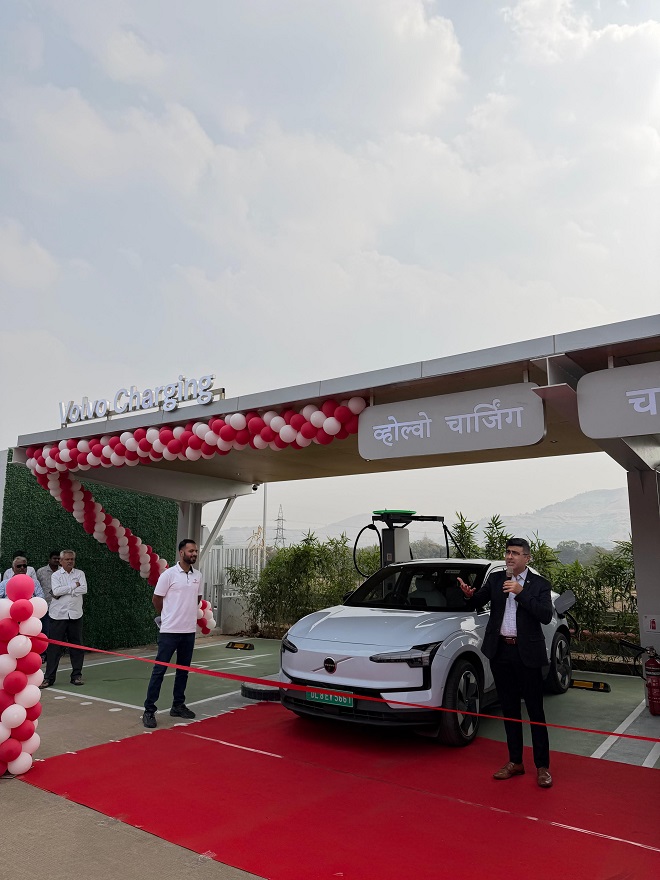
Volvo Car India has unveiled its latest BEV –the EX30, at SPL Volvo dealership in Kolkata, setting an innovative benchmark for all electric SUVs. The much-awaited all electric SUV will be officially launched, with price details, during end of September and customer deliveries will begin from October 2025. The EX30 is being assembled at the Company’s plant at Hosakote in Bengaluru, Karnataka.

The EX30 is Volvo’s most sustainable car having the lowest carbon footprint of any fully electric Volvo to date, and its attractive interiors are made from recycled denim, PET bottles, aluminium, PVC pipes etc. Incorporating Scandinavian design and cutting-edge technology, the EX30 has achieved five-star rating in the Euro NCAP safety test. The EX30 also features active safety tools like an intersection auto brake to lessen collisions, a door-opening alert to prevent “dooring” accidents, and the much-advanced Safe Space Technology that boasts of 5 cameras, 5 radars and 12 ultrasonic sensors.

The five ambient lighting themes and sounds, inspired by Scandinavian seasons and sights, give a full immersive experience. With the new Harman Kardon soundbar concept, a 1040W amplifier and nine high-performance speakers, this state-of-the-art system delivers immersive surround sound for everyone. The 12.3-inch high-res centre display is intuitive and adaptable, with Google built in, 5G connectivity, OTA updates and much more. This head-turner has a new sleek design as well and has won many international awards. These include the prestigious Red Dot award: Best of the Best Product Design 2024, and the World Urban Car of the Year 2024.

The EX30 comes with an 8-year battery warranty and includes a wall box charger as a standard fitment. The car also reimagines how one interacts with it. With the NFC (Near Frequency Card), one can just tap onto the sensor and unlock the car. Additionally, with Digital Key Plus in the Volvo Car App, the phone itself acts as a key. It’s not just convenient; it’s smarter, safer, and surprisingly seamless.

With its advanced electric drivetrain and innovative features, this model offers an unparalleled driving experience while contributing to a sustainable environment.

Kia Launches EV Production In Europe With The EV4

The five-door Kia EV4 is the brand’s first fully electric vehicle to be manufactured in Europe, as Kia begins series production of the new model. The start of production follows extensive updates to Kia’s sole European manufacturing facility in Slovakia and represents a major step forward in Kia’s electrification strategy for the region.

An electric hatchback designed specifically for the European market, the EV4 is assembled exclusively at Kia AutoLand Slovakia.

“The start of EV4 production is a huge milestone for us. It demonstrates the technical capability and flexibility of our European operations,” said Marc Hedrich, President and CEO of Kia Europe. “From 20 August, Slovakia will build fully electric cars alongside models with hybrid and internal combustion powertrains. Through the expansion of our production capabilities, we are supporting our diverse European customer base even more.”

“We have been preparing for the EV4’s production launch for a long time,” said Tomáš Potoček, spokesperson for Kia Slovakia. “By combining advanced manufacturing technology with the dedication of our skilled workforce, we have successfully begun mass production of this model.”

Built on Hyundai Motor Group’s Electric Global Modular Platform (E-GMP), the EV4 delivers a balance of performance and efficiency. It is available with two battery options: a 58.3kWh battery and a larger 81.4kWh variant, offering a range of up to 391 miles on a single charge. The EV4 boasts advanced energy innovations, such as Vehicle-to-Load (V2L) and Vehicle-to-Grid (V2G) capabilities*. The model features an aluminium bonnet to reduce weight and enhance handling, as well as the choice of five eye-catching exterior paint finishes.

The EV4’s design combines bold, sharp lines with Kia’s award-winning ‘Opposites United’ philosophy. It was first unveiled globally in February 2025 and is tailored to meet the needs of customers seeking innovation, performance, and electric mobility.

Kia’s manufacturing facility in Žilina, Slovakia, is a cornerstone of the company’s European operations. Opened in 2004, the two-square-kilometre plant is strategically located for serving key European markets. It employs around 3,700 people and operates with more than 600 advanced robots. The plant is capable of producing multiple model variants simultaneously across five main production areas: press, body, paint, engine, and assembly.

Following a €108-million investment, the production lines have been modernised with new technologies, including an EV battery conveyor at the chassis line in the assembly shop.

The Žilina plant produces other models such as the Kia XCeed and Kia Sportage. This includes hybrid and plug-in hybrid variants, which have accounted for 25% of the facility’s total annual output as of 2024.

With an annual capacity of 3,50,000 vehicles and 5,40,000 engines, the facility has produced more than five million units since opening, which are exported to 83 countries. These figures account for approximately 11% of the company’s global vehicle output.

Kia has integrated sustainability measures into the plant’s operations. Since 2014, Kia Slovakia has reduced electricity consumption per vehicle by 11%, water usage by 28%, and CO2 emissions by 13%. The factory currently runs entirely on renewable electricity and plans to meet approximately 1.5% of its total energy needs with a new photovoltaic power plant by the end of this year.

While the five-door EV4 will be manufactured at Kia’s European plant in Slovakia, its saloon-bodied sibling, the EV4 Fastback, will be manufactured in Kia’s homeland of Korea at the brand’s Autoland Gwangmyeong EVO plant.

Kia EV4 Proves Endurance With Industry-Leading Battery And Durability Testing

Kia continues to raise the bar for EV endurance for standard-performance models with the EV4, the company’s latest all-electric compact model. Designed with durability in mind, the EV4 features innovations that ensure stable performance over long distances, challenging climates, and extended use.

The EV4’s endurance can mostly be attributed to Kia’s fourth-generation battery system. The system combines advanced thermal management with optimised coolant distribution over all cell units. These enhancements ensure that the battery operates within safe temperature levels, even under high-stress conditions. By doing so, the system ultimately extends battery life and maintains consistent performance.

Following comprehensive endurance trials, including a 110,000-kilometre European road durability test and a 10,000-kilometre Nürburgring campaign simulating 90-to-95% of the model’s maximum performance output, the EV4 showed minimal wear and sustained battery efficiency. Repeated hypercharging sessions between laps at the Nürburgring added to the potential strain on the battery system. However, the EV4 maintained impressive performance throughout.

“To provide our customers a reliable, everyday EV, we had to validate the EV4’s durability both in real-world and extreme environments,” said Stephan Hoferer, Manager Durability Development at Hyundai Motor Europe Technical Center. “With the rigorous testing – from icy roads to racetracks, we’re confident the EV4 will deliver dependable performance well beyond everyday needs.”

Engineers confirmed a battery State-of-Health (SoH) of 95% after 10,000 kilometres of track testing and 110,000 kilometres of road testing, Kia’s extensive endurance testing programme proves the EV4 as a reliable, high-endurance EV for customers looking for confidence during long-term ownership.

On top of its battery performance, the EV4 benefits from regenerative braking. The system improves long-term efficiency by reducing battery strain and recapturing up to 25% of energy during deceleration. Thanks to its robust design and intelligent energy management, the EV4 is guaranteed to retain at least 70% of its battery capacity after 160,000 kilometres driven or eight years of regular use.