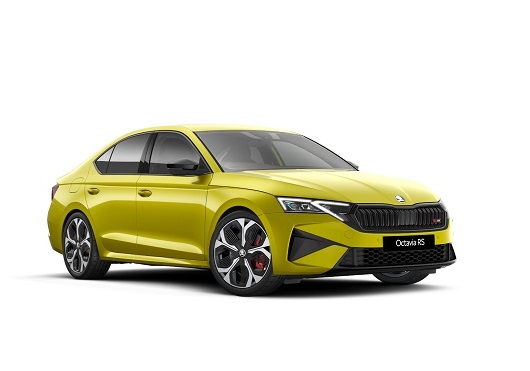
In the vote, which took place on Instagram, Facebook and LinkedIn, Dragon Skin narrowly edged out Storm Blue and Tangerine Orange to be chosen as the brand’s newest colour. Dragon Skin will be added as an option alongside two other colours that were chosen in a poll conducted last year. Waterworld Green and Space Violet were voted as favourites by vRS fans in the 2025 poll, defeating Hot Chilli Red and Plum Blue in the process.
Dragon Skin will now be offered as an exclusive paint finish on both hatch and estate variants of the Octavia vRS, adding even more visual drama to the performance-focused model. Orders open from 4 March 2026, priced at £855. The addition of Dragon Skin paint reinforces the Octavia vRS’s long-standing blend of everyday usability, strong performance and distinctive styling, now with even greater opportunity for owners to stand out on the road.
In addition to being offered on the Octavia vRS from March 4, Dragon Skin will also be introduced as a paint option on a limited-run of 130 Octavia SportLine models later this year. These will also be offered with Škoda’s three most recently introduced exclusive paint finishes: Waterworld Green, Space Violet and Royal Green. More details regarding ordering and production of these models will be announced later this year.
Celebrating 30 years since its modern debut, the Škoda Octavia has become the model that reshaped Škoda Auto. When it arrived in 1996, it offered space, practicality and value that challenged established rivals, helping change public perception of Škoda from budget outsider to smart, dependable choice.
As the company’s line-up expanded and its reputation grew, the Octavia remained the backbone of the range, becoming a benchmark for value and practicality. Now in its fourth generation, the Octavia continues to evolve with advanced technology and ever more efficient drivetrains, along with the qualities that made it successful in the first place: sector-best practicality and sensible pricing. Three decades on, the Octavia stands as the model that transformed the brand’s fortunes and continues to carry its reputation forward.
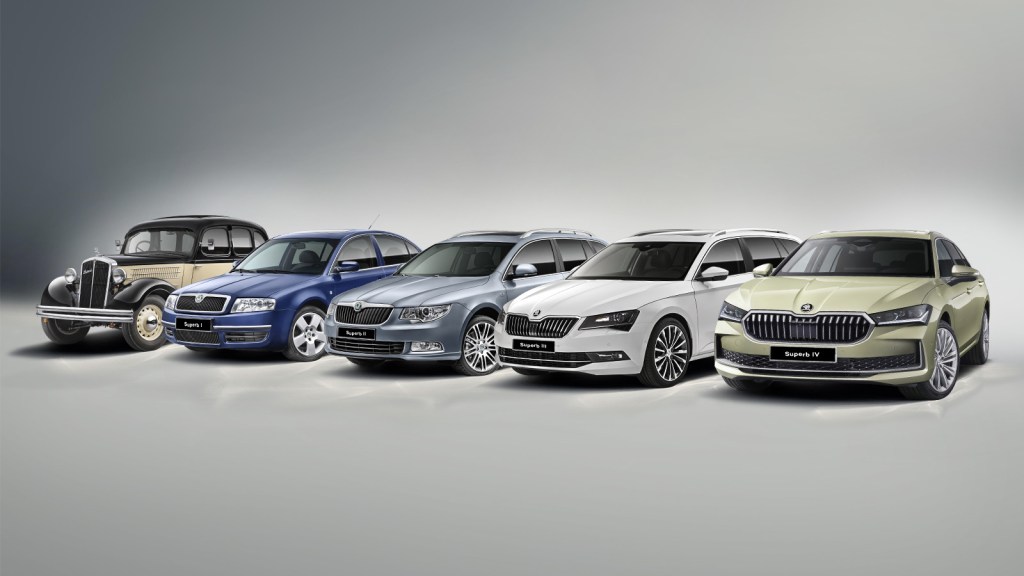
Ninety years ago, Škoda Auto began production of the Superb at its Mladá Boleslav plant. The model quickly became synonymous with a comfortable, refined, and dynamic driving experience, even on poor road surfaces. It impressed with its spacious interior – offering seating for up to seven passengers – generous equipment, and outstanding craftsmanship. Production continued until 1949. In 2001, the legendary name returned with the first modern-generation Škoda Superb. Now in its fourth generation, the Superb is available as a Hatch or Estate, featuring a choice of petrol and diesel engines, as well as mild-hybrid and plug-in hybrid powertrains. The plug-in hybrid variants, the Superb Estate iV and Superb Hatch iV, offer an electric range of more than 75 miles. Customers can also opt for front- or all-wheel drive.
Technical innovation and progress: 1934–1949 In the spring of 1934, Škoda introduced a new generation of vehicles featuring a backbone chassis frame and independent wheel suspension. By the October of that year, the company had decided to name its flagship model ‘Superb’, catering to the most demanding customers. Series production commenced in Mladá Boleslav in March 1935. The first model, the Škoda 640 Superb, was powered by a six-cylinder engine producing 55 hp (40.5 kW). Right from the start, the Superb featured hydraulic brakes and a state-of-the-art 12V electrical system. The highlight of the range was a 96 hp (70.7 kW) 4.0-litre V8 engine. Offering generous space for up to seven passengers and their luggage, the Superb was available with various wheelbase lengths and body styles, including open-top and bespoke designs. By the time production ended in 1949, approximately 890 passenger cars and 1,630 military derivatives had been built – including a unique 4×4 version.
The Superb legacy: Four generations of innovation The Superb reflects Škoda’s ongoing transformation over its 130-year history. After a 50-year hiatus, the name was revived in September 2001 with the introduction of the first modern-generation Škoda Superb. This saloon offered exceptional interior space and came with a range of engines producing between 85 kW and 142 kW (193 hp), including a range topping 2.8-litre V6 with Tiptronic automatic transmission and bi-xenon headlights for enhanced comfort and safety.
Subsequent generations, launched in 2008, 2015, and most recently in 2023, further developed the Superb’s legacy. The second generation introduced a more practical Hatch and, for the first time, an Estate version, offering more powerful yet efficient powertrains and extensive standard equipment. The third generation continued this trajectory, integrating advanced technologies and innovative design.
The Superb’s popularity has grown significantly across generations. The first modern generation, produced from 2001 to 2008, saw 137,000 units sold. Its successor, introduced in 2008 and available for the first time as both a saloon and an Estate, achieved 6,18,000 sales, with 65% of customers opting for the saloon. The third generation, launched in 2015, continued this strong growth course, with 805,000 units sold – 56% of which were Estate models.
Now in its fourth modern generation, the Superb continues to set new benchmarks. Customers can choose between Hatch and Estate body styles, with petrol, diesel, mild-hybrid, and plug-in hybrid powertrains and more than 65,000 have been sold at this time. The latest plug-in hybrid models offer an electric range of more than 75 miles (WLTP). Equipped with cutting-edge technologies, sustainable materials, and smart solutions like Smart Dials, the new Superb is designed for modern mobility.
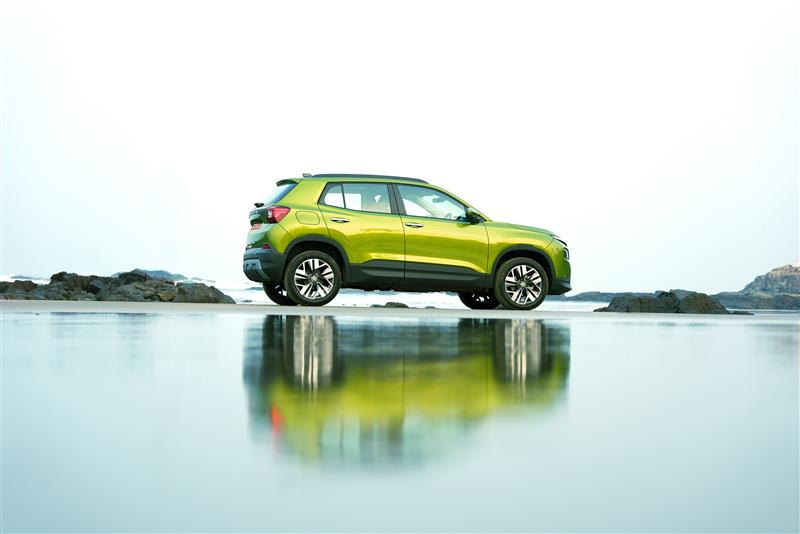
Škoda Auto entered the highly dynamic Indian market 25 years ago: In January 2000 the Czech car manufacturer laid the foundation stone for its plant in Chhatrapati Sambhajinagar (formerly Aurangabad until 2022) and was the first Volkswagen Group brand to establish a presence on the local market. The Škoda Octavia became the first model assembled locally. To date, India has become a key market in Škoda’s internationalisation plans, helping the company to effectively leverage existing sales potential in the ASEAN region, Middle East, Australia and New Zealand. On behalf of the Volkswagen Group, Škoda Auto has been spearheading all activities in the region jointly since 2018. Today, the brand developed and produces three models locally in India for India, based on the localised MQB A0–IN platform: the Kushaq, the Slavia, and, most recently, the Kylaq compact SUV, which expands the line-up into the popular sub-4-metre segment.
Klaus Zellmer, CEO of Škoda Auto: “We have built on 25 years of experience in India to make this thriving market the cornerstone of our international growth strategy. With its tremendous talent pool, growing consumer demand, and access to other markets, India is becoming our second pillar outside Europe and helping leverage further sales potential in ASEAN, the Middle East, and the Indo-Pacific region. Škoda has been a notable brand in India since we entered the market with the Octavia in 2001. We now produce in two plants. We have launched three all-new models specifically for India, achieving localization of up to 95 per cent: the Škoda Kushaq, Slavia, and just recently the Kylaq compact SUV, which complement the Octavia and Superb we also sell through a growing dealer network. In the last two years, we have increased customer touchpoints across the country by 35%. India also contributes to the global sustainability goals of Škoda Auto. One plant already runs entirely on green energy, while the plant in Pune expanded its photovoltaic system to deliver up to 30% of its electricity needs. I want to thank all our Indian colleagues for helping power the next stage of our growth, and especially our customers for their trust in our products. With this passion, we can achieve even greater things in the next 25 years!”
The first Škoda model introduced to Indian customers was the first generation of the modern Octavia, assembled from imported parts in rented facilities alongside the construction of the plant in Chhatrapati Sambhajinagar. Over time, other Škoda models, such as the Fabia, Rapid, and later the Superb and Kodiaq, also attracted the attention of Indian customers.
A decisive step for Škoda in India came in 2018 when the Volkswagen Group entrusted the brand with jointly spearheading all Group activities on the market. As part of this, Škoda was tasked with developing the MQB-A0-IN platform, designed exclusively for the Indian market. The first vehicle built on this platform was the Kushaq, which entered production in Pune in 2021. Just a year later, the Slavia sedan was launched, with its development and manufacturing also carried out in Pune. The latest addition to Škoda’s portfolio for the Indian market is the Kylaq SUV, Škoda’s first model in the popular sub-4-metre segment, accounting for nearly 50% of car sales in the Indian market. The new model received 10,000 orders within just ten days of its launch and will contribute to the brands annual sales target of 100,000 cars in India by 2026.
The quality and reputation of Škoda’s vehicles in India is reflected not only in strong customer interest but also in numerous prestigious awards. For instance, the Škoda Slavia was named India’s Sedan of the Year in 2022 and won Car of the Year 2023 at the Acko Drive Awards.
In the meantime, the Indian market has developed into one of the key markets for Škoda and a strategic hub for the wider ASEAN region, the Middle East, Australia, and New Zealand. In addition to its assembly lines in Chhatrapati Sambhajinagar and manufacturing plant in Pune, Škoda has established a Technology Centre there. Moreover, in October 2023, Škoda opened a modern logistics facility for the export of components to Vietnam, a market the company entered in 2023.
Sustainable production is a major priority for Škoda, also in its Indian plants: The facility in Chhatrapati Sambhajinagar operates entirely on green energy, while the Chakan plant in Pune is on track to achieve CO2 neutrality by 2030. On top of that, this 500-hectare plant site provides a habitat for more than 300 species of plants, trees and animals. Furthermore, the company is involving local suppliers in India and plays an active role in infrastructure development, supporting education and social initiatives. At its plant in Pune, Škoda expanded its photovoltaic system which is now capable of producing up to 26.6 GWh of electricity annually, covering up to 30% of the site’s electricity consumption.
Škoda is kicking off its 130th anniversary celebrations with the world premiere of the new Enyaq and Enyaq Coupé. Scheduled for Wednesday, January 8 at 09:00 GMT, the reveal will take place on Škoda’s official YouTube channel.
A video walkaround, including expert insights and detailed information, will showcase the new Škoda Enyaq’s updates. Highlights include enhancements to the exterior and interior design, upgraded standard equipment, and diverse powertrain options.
Both the Škoda Enyaq and the Škoda Enyaq Coupé now embody the brand’s new Modern Solid design language, featuring a striking front end with a glossy black Tech-Deck Face, Light Band, and newly designed LED Matrix beam headlights. The new Enyaq also delivers an extended range, thanks in part to optimised aerodynamics, alongside more sustainable materials and extensive standard equipment.
In an innovative move towards sustainable development and community empowerment, Škoda Auto Volkswagen India (SAVWIPL) is supporting Škoda Auto a.s. ‘Curiosity Fuel’ initiative by connecting with Indian coffee planters. This unique project endorses the nation’s ‘Make-in-India’ initiative by enabling Indian coffee to reach European markets directly.
Focus on sustainability and circular economy principles:
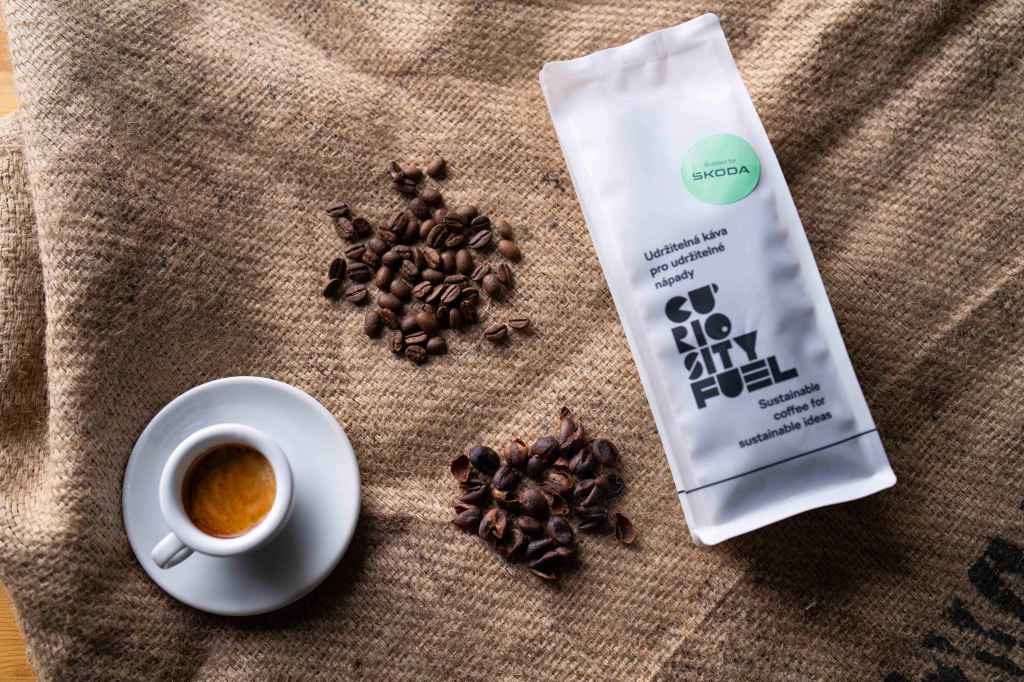
Škoda Auto a.s. is using coffee bean husks as a tanning agent for leather seats in Škoda’s Kodiaq and Octavia models, leading the way in eco-friendly automotive manufacturing. This innovative use of an agricultural by-product exemplifies the group’s commitment to the circular economy, transforming what was once considered waste into a valuable resource.
Empowering family-owned coffee farms in Coorg (Karnataka, India):
India, the world’s eighth-largest coffee producer with an export value of close to USD 1.25 billion, is known for its unique coffee flavours,. The annual coffee consumption at Škoda Auto Volkswagen India’s headquarters in the Czech Republic amounts to approximately 25 tonnes. Recognising India’s rich coffee heritage, the brand strategically chose to directly source the coffee and, in turn, support family-owned coffee farms in Coorg. The ‘Curiosity Fuel’ initiative is redefining the coffee supply chain by directly engaging with local farmers and eliminating multiple intermediaries. This approach not only ensures fair trade practices certified by the Rainforest Alliance but also promotes permaculture farming, emphasizing ecological and social responsibility.
Škoda Curiosity Fuel Initiative:
Škoda Auto a.s. has rolled out a new coffee called ‘Curiosity Fuel’ across the company in the Czech Republic. This special blend is grown, roasted, and packaged in a way that is friendly to both nature and farmers. Specially created for Škoda Auto a.s., ‘Curiosity Fuel’ is designed to inspire staff with fresh ideas and further the group’s sustainability objectives as outlined in Strategy 2030.
Karsten Schnake, Board Member for Procurement at Škoda Auto a.s. commented, “Our ‘Curiosity Fuel’ initiative highlights Škoda Auto’s commitment to innovative sustainability by integrating social, environmental, and circular economy principles into our supply chain. From ethically sourced coffee for our employees to utilizing coffee byproducts in our vehicles, we’re setting new sustainability standards in the automotive sector.”
Piyush Arora, Managing Director & CEO, Škoda Auto Volkswagen India Private Limited, added, “Our ‘Curiosity Fuel’ project demonstrates Škoda Auto Volkswagen India’s commitment to holistic sustainability. By bridging the gap between Coorg’s coffee planters and our global operations, we’re fostering community development. This initiative exemplifies our belief that true progress in the automotive sector must encompass environmental responsibility and community empowerment. It’s about creating a symbiotic relationship between our industry and India’s rich agricultural heritage.”
By connecting agriculture and automotive innovation, Škoda is showcasing how cross-sector collaboration can drive sustainable development and rural prosperity, promoting a more regenerative and inclusive economic model.
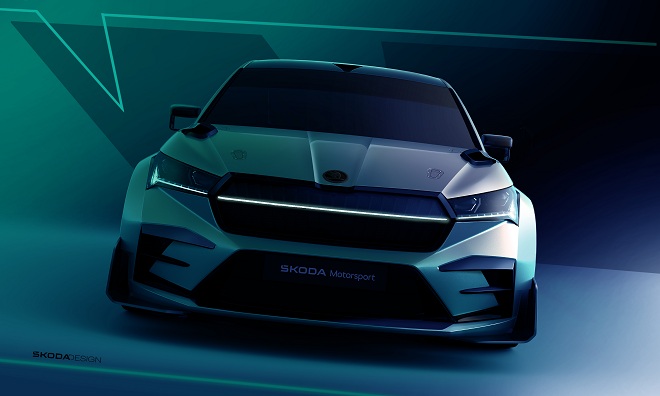
With the new Enyaq RS Race concept study, Škoda Auto is exploring new sustainability possibilities in motorsports while further enhancing the brand’s emotional appeal. Raising Škoda’s motorsport DNA to the next level, the Enyaq RS Race features an aggressive design highlighted by a massive rear wing. This concept offers insights into how motorsport technology can help accelerate the shift towards a dynamic and sustainable automotive future. It also serves as an ideal platform for the development and rigorous testing of cutting-edge electric technologies for future battery-electric production vehicles.
Michal Hrabánek, Head of Škoda Motorsport, explains: “Sustainability is a cornerstone of Škoda Motorsport’s strategy. As early as 2021, we ventured into the realm of electric rally cars with the Škoda Fabia RE-X1. The insights and expertise we gained from this have fed into the unique new Škoda Enyaq RS Race. This fascinating car proves that motorsport, which is deeply embedded in Škoda’s DNA, not only enhances the brand’s emotional impact but also contributes valuable experiences and technologies to upcoming Škoda road models.”
Powerful concept study based on the Enyaq Coupé RS The Enyaq RS Race is based on the Škoda Enyaq Coupé vRS. Equipped with all-wheel drive, the new Škoda Enyaq RS Race demonstrates the broad scope of possibilities the Volkswagen Group’s Modular electric drive matrix offers in terms of performance. With its aggressive design, the Enyaq RS Race is also a real eye-catcher, underlining its strong connection to racing and motorsport. Its broad base ensures even more stable handling, while the prominent rear wing provides the necessary downforce. The aim of the study is to gain practical knowledge through specific technical and design modifications of high-performance electric vehicles. These approaches could potentially be implemented in future production models.
Daniel Petr, Senior Designer at Škoda Auto adds: “The Škoda Enyaq RS Race is not a design study that will just remain on paper; it is going to be a real car. It will be lower, wider, lighter and most importantly more dynamic. So, it was clear from the start that the design had to be aggressive with strong racing DNA. Looking at the aerodynamics, we actually designed it similar to the current Škoda Fabia RS Rally2. It has a sharply sculpted nose, dramatically widened fenders and a massive rear wing. It looks fast, even on paper, and that’s always a good start.”
From gaming to the rally tracks, Škoda promotes sustainability in motorsport The Enyaq RS Race represents another innovative battery-electric concept study from Škoda Motorsport, following the recently presented Škoda Vision GT. Introduced in 2021, the Škoda Fabia RE-X1 was built on the chassis of the Škoda Fabia Rally2 evo and equipped with an 860-volt electric motor delivering a peak output of 260 kW. The homologation by the Austrian Motorsport Association AMF (ÖAMTC) enabled the Baumschlager Rallye&Racing team to compete in the Austrian Rally Championship. With the Vision GT, Škoda recently took an entirely different approach: The spectacular, all-electric single-seater was exclusively designed for the Gran Turismo 7 PlayStation game. The concept study, inspired by the 1100 OHC Spider from 1957, expands Škoda’s presence in the digital racing world.
All these concept vehicles underscore Škoda’s commitment to advancing sustainability within motorsport. The Fabia Rally2 already runs on 100% sustainable fossil-free fuel in the WRC2, providing an ideal testbed for evaluating the technical viability, resilience, and durability of new electromobility innovations under extreme conditions.
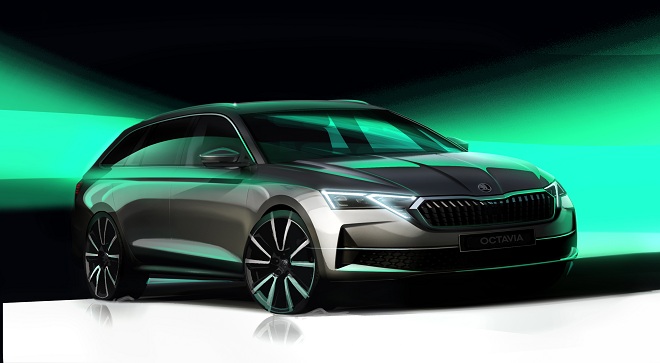
Škoda Auto has published exterior sketches of the refreshed Octavia. The fourth modern generation continues the legacy of the brand’s iconic model, which has achieved over seven million sales since its launch in 1996. This latest iteration introduces a refined exterior with new headlights, redesigned bumpers, and an updated Škoda grille. The digital global premiere is set for February 14, 2024.
For the Octavia’s latest update, Škoda has redesigned the bumpers and the grille. At the same time, the headlights come with sharpened contours, lending the bestseller an even more striking and sporty appearance. A fresh look and new features, such as second-generation LED Matrix beam headlights complement the upgrade.
Refined optical details Now in its fourth generation, the Octavia is set to receive its facelift four years after the start of production. The model will continue to be available as both a hatchback and estate. Additionally, the refreshed series will include Sportline and vRS versions. The vehicle’s enhancements include advanced, second-generation LED Matrix beam headlights with a new lighting signature, designed to provide superior illumination of the road. Additionally, they now incorporate Crystallinium, a unique crystalline element that imparts a distinctive blue hue to the interior of the headlight housing, further refining the vehicle’s aesthetic.
The Octavia’s success story The refreshed Octavia is poised to continue the success of the model range: More than seven million units have been delivered to customers since the first modern generation was launched in 1996. Holding the title of Europe’s most popular estate car since 2016, the Octavia has earned numerous awards and accolades from the international automotive press, including the renowned Red Dot Award for outstanding product design in 2020 – the third win for the series.


 Power Drive