Rolls-Royce Motor Cars Presents The Phantom Centenary Private Collection

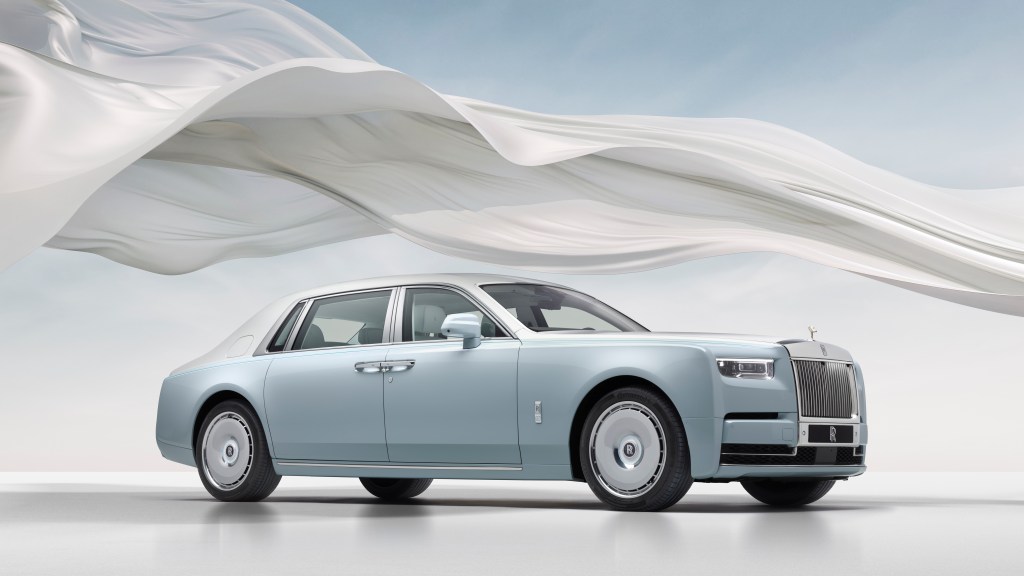
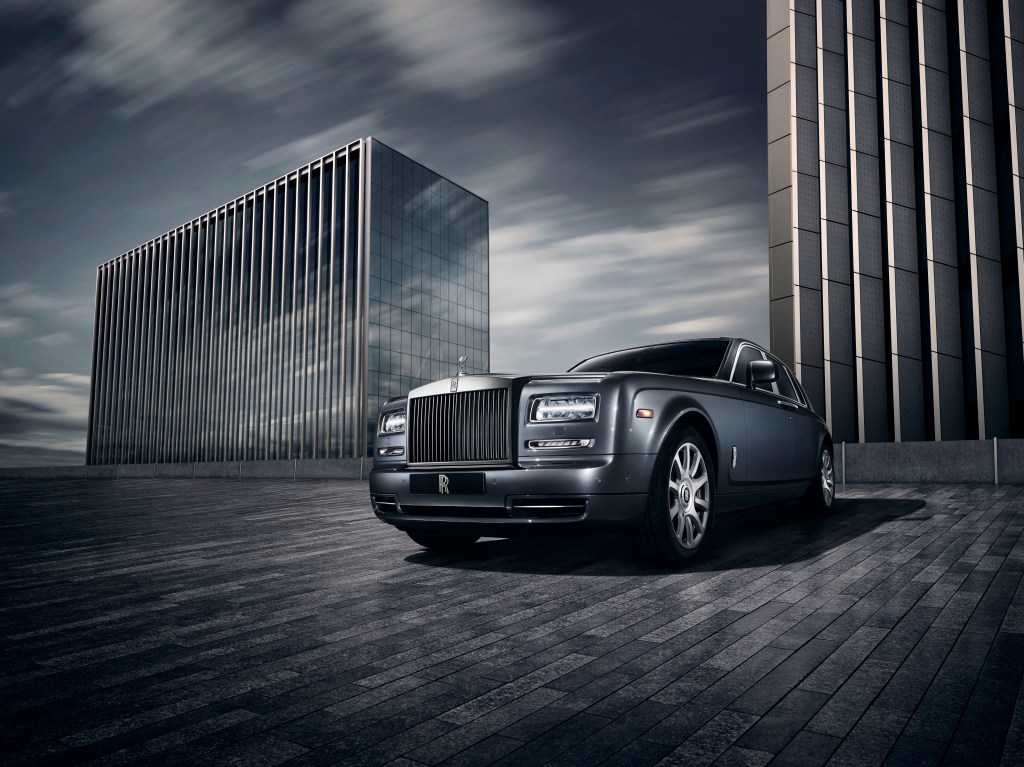
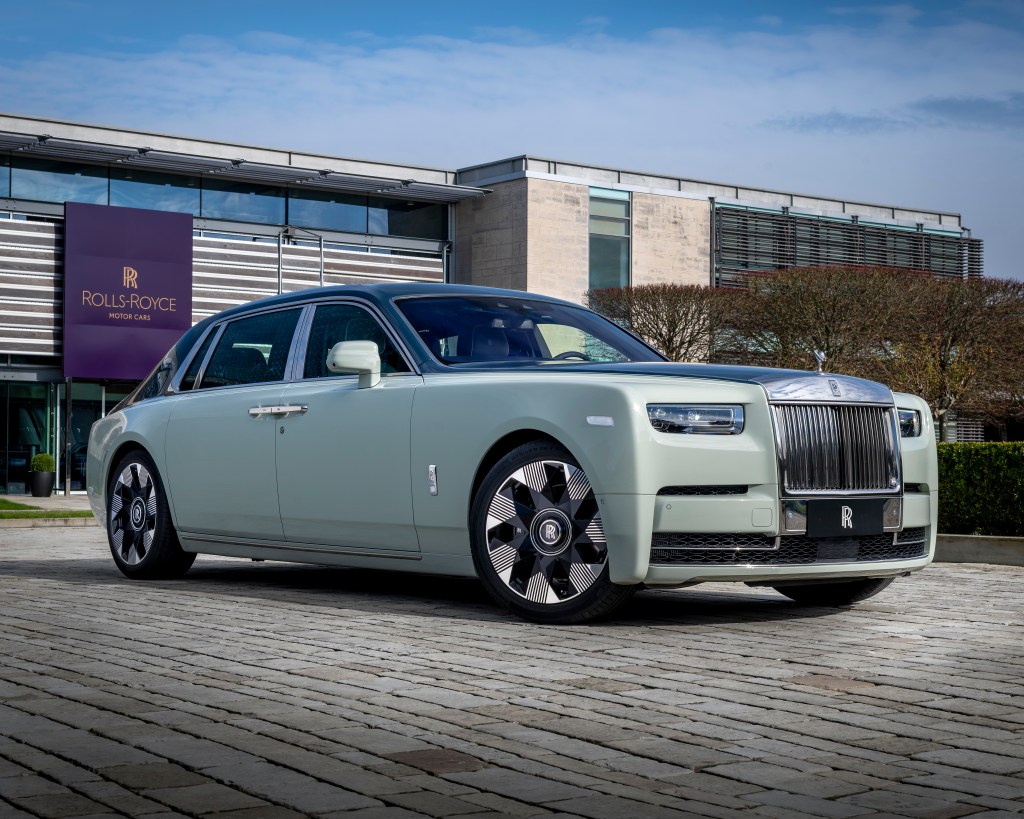
For 100 years, Phantom has been recognised as the ultimate symbol of success and discernment, chosen by the world’s most influential figures. As this legendary nameplate celebrates its 100th anniversary, Rolls-Royce Motor Cars pays tribute with the Phantom Centenary Private Collection, limited to 25 examples.

The Rolls-Royce Bespoke Collective of designers, engineers and artisans poured their skill and imagination into what has become their magnum opus. They immersed themselves in Phantom’s world, studying the spirit and identity of each generation from the 1920s to today. They explored defining owners, pivotal figures within Rolls-Royce, the places where Phantom was conceived and built, and the events that defined its times. These influences, first captured as 77 hand-sketched motifs, are woven into the Phantom Centenary Private Collection through stunningly crafted archival references, creating a statement that honours Phantom’s past, defines its present, and projects the principles that will shape the nameplate’s next 100 years and beyond.

Each historic moment is brought to life through advanced artisanal techniques, many conceived specially for this rare and collectable tribute. Inside, couturier-designed textiles, sketch-like embroidery, laser-etched leather, and groundbreaking woodcraft — including 3D marquetry, gilding, and 3D ink layering — tell Phantom’s story in stunning, intricate detail. Outside, the grille is crowned with a unique Spirit of Ecstasy figurine, reinterpreted from the very first to grace a Phantom, and presented in solid gold to mark this milestone.

Chris Brownridge, Chief Executive, Rolls-Royce Motor Cars, said: “The Rolls-Royce Phantom Centenary Private Collection is our tribute to 100 years of the world’s most revered luxury item. This uncompromising work of art uses the meticulously engineered Phantom VIII as the canvas to tell the story of Phantom’s remarkable life and the people who shaped it – from the visionaries within Rolls-Royce to the owners who helped create its legend. For a century, the Phantom nameplate has expressed the pinnacle of Rolls-Royce’s abilities. To honour that legacy, this extraordinarily ambitious Private Collection introduces new techniques and is the result of over 40,000 hours of work, culminating in a motor car which reaffirms Phantom’s status as a symbol of ambition, artistic possibility, and historical gravitas.”
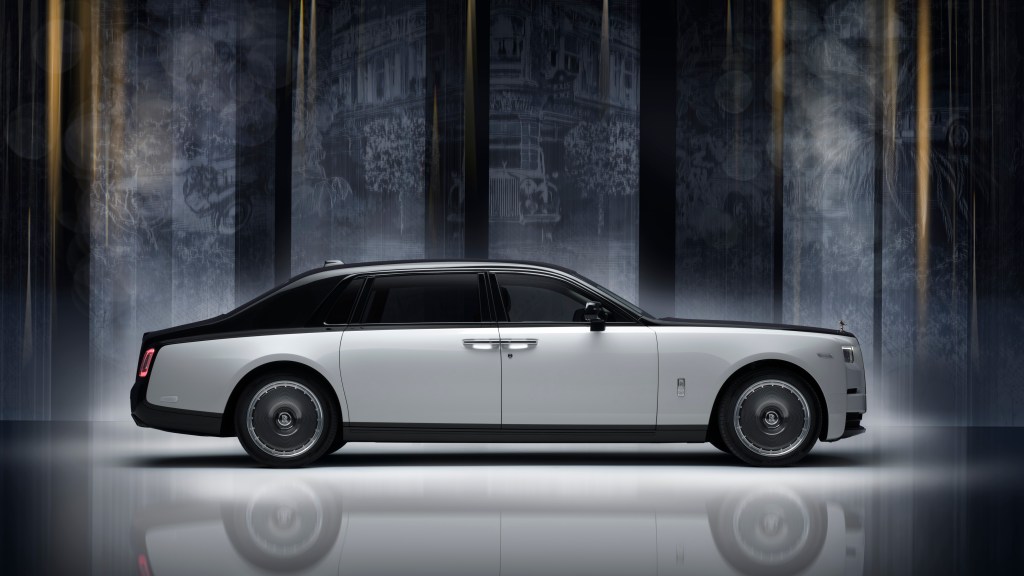
EXTERIOR: AN ELEGANT, BESPOKE STATEMENT
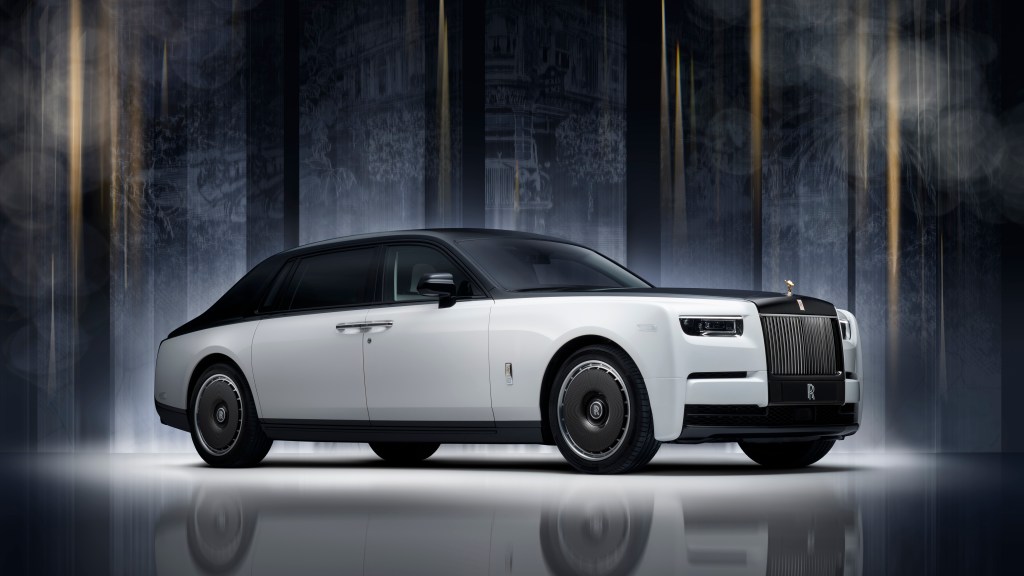
Evoking the timeless elegance of a black-and-white film star, the Phantom Centenary Private Collection’s exterior recalls the golden age of Hollywood, when Phantom graced premieres, carried screen icons, and became a symbol of the era’s glamour. The motor car is finished in a Bespoke two-tone paint, its long-sided application a nod to the flowing silhouette of 1930s Phantoms. The side body is presented in Super Champagne Crystal over Arctic White, with the upper body in Super Champagne Crystal over Black. The specially developed finish gives the exterior an extraordinary metallic shimmer, achieved by infusing the clear coat with iridescent particles of crushed glass. For this celebratory Private Collection, Rolls-Royce paint specialists replaced the clear flakes with champagne-coloured particles and doubled the quantity to create spellbinding depth.

This timeless treatment is crowned with a unique reimagining of the Spirit of Ecstasy. Using the first Spirit of Ecstasy ever fitted to a Phantom as their reference, designers created an homage to this landmark figurine, cast in solid 18-carat gold for strength, then plated in 24-carat gold for a flawless, tarnish-resistant finish. The piece was then presented to the Hallmarking & Assay Office in London, where it received a specially developed ‘Phantom Centenary’ hallmark.

The base of the figurine is finished with hand-poured white vitreous enamel delicately inscribed with the collection’s name. For the first time, the ‘RR’ Badge of Honour – positioned on the front, rear, and each side of the motor car – is presented in 24-carat gold and white enamel.

Resolving the exterior is a set of Phantom disc wheels, each engraved with 25 lines – honouring the 25 motor cars within the collection and, together, making 100 lines to celebrate the centenary year.

Martina Starke, Head of Bespoke Design, Rolls-Royce Motor Cars, said: “Having the privilege to pay a Bespoke tribute to the Phantom nameplate is a once-in-a-generation opportunity. Seizing on the significance of this moment, a record number of designers spent a year immersed in the motor car’s rich history, uncovering the stories that shaped its legend. Their research was distilled into 77 hand-sketched motifs, each capturing a defining moment in Phantom’s journey and expressed with levels of detail we have never attempted before. The result is a true collective work of art that celebrates the skill, ambition and imagination of everyone at the Home of Rolls-Royce, and the profound respect the marque’s creatives have for this extraordinary motor car.”

INTERIOR: IMMERSED IN THE PHANTOM LEGEND
A century of Phantom’s stories elegantly unfold across the many canvases of the Private Collection’s interior, through magnificent archival references – some immediately recognisable, others revealed over time.

In homage to Phantoms of the past, Phantom Centenary’s interior combines textiles and leather, recalling the marque’s foundational years when the chauffeur’s front seat was finished in hardwearing leather and the rear cabin in luxurious fabrics. This contrast is a subtle reminder that Phantom has always balanced both authority at the wheel and absolute serenity in the passenger suite.
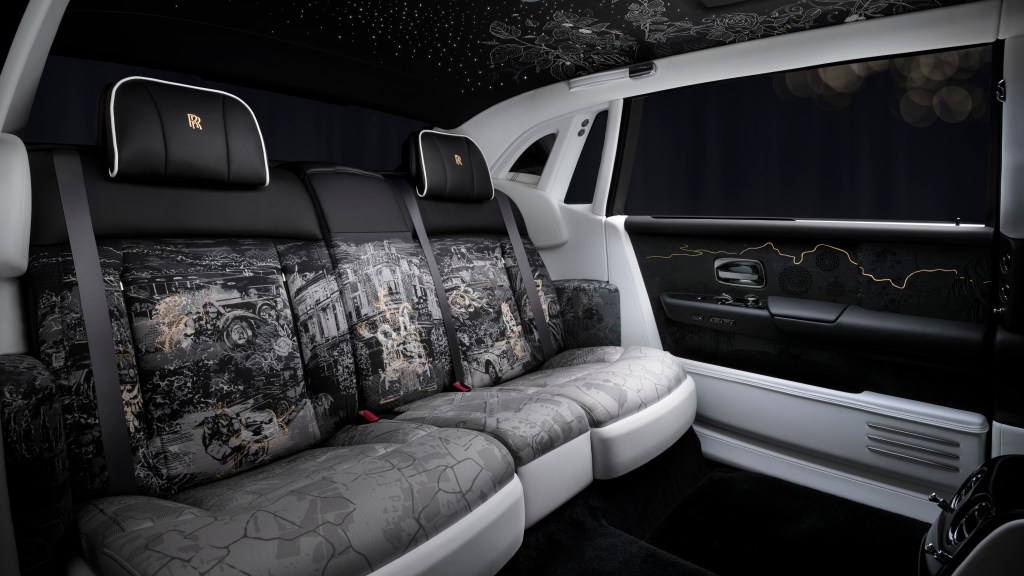
REAR SEATS: TAILORING EXCELLENCE
The rear seats of Phantom Centenary are inspired by the famed 1926 ‘Phantom of Love’, commissioned with handwoven Aubusson tapestries. The artwork on the seats unfolds across three distinct layers of storytelling. The first is the background, rendered in high-resolution print, showing places and artefacts from Phantom’s history – from the marque’s original Conduit Street premises in London to Henry Royce’s oil paintings of Southern France. The second layer, also printed in high resolution, portrays great Phantoms of the past in finely drawn detail. The third and uppermost layer is formed of embroideries, abstractly representing seven significant owners from every generation of Phantom.

This complex fabric was developed over 12 months in partnership with a fashion atelier, marking its first commission beyond the world of haute couture. To meet Rolls-Royce’s exacting longevity, tactility and aesthetic standards, the high-resolution printing process was perfected with specially adapted inks and techniques devised exclusively for the Phantom Centenary Private Collection.

The high-resolution printed fabric is completed with embroideries, designed to have a uniquely hand-drawn quality. Described by the Bespoke Collective as “sketching with thread”, this embroidery process captures the expression of a pencil line in textile form. To outline and define each image, artisans applied Golden Sands thread in sketch-like, irregular stitches, creating the illusion of lines floating lightly above the surface. Texture and depth were added with Seashell thread, applied in high-density stitches. Across the full composition, this intricate craftwork amounts to more than 160,000 stitches.

The finished artwork spans 45 individual panels, each precisely aligned and fitted around the curvatures of the seats at the Home of Rolls-Royce: a process inspired by Savile Row tailoring techniques. The result is the most intricate seat composition ever created by Rolls-Royce.

Celina Mettang, Bespoke Colour and Material Designer, Rolls-Royce Motor Cars, said: “Conceived as a contemporary interpretation of a handwoven tapestry, the rear seats tell Phantom’s story through carefully curated details, captured in textiles and embroidery. Every embroidered element was digitally re-drawn by artisans who selected specific stitch application for every stroke. For example, in the horse motif, we used spaced stitches to recreate the hair texture, then dense stitching to define the muscle. These fine details required extraordinary precision to get right: one motif went through 24 iterations before we were satisfied. This reflects the deep personal pride we felt in creating a fitting tribute to the Phantom nameplate, and the responsibility we all share in carrying its legacy forward.”
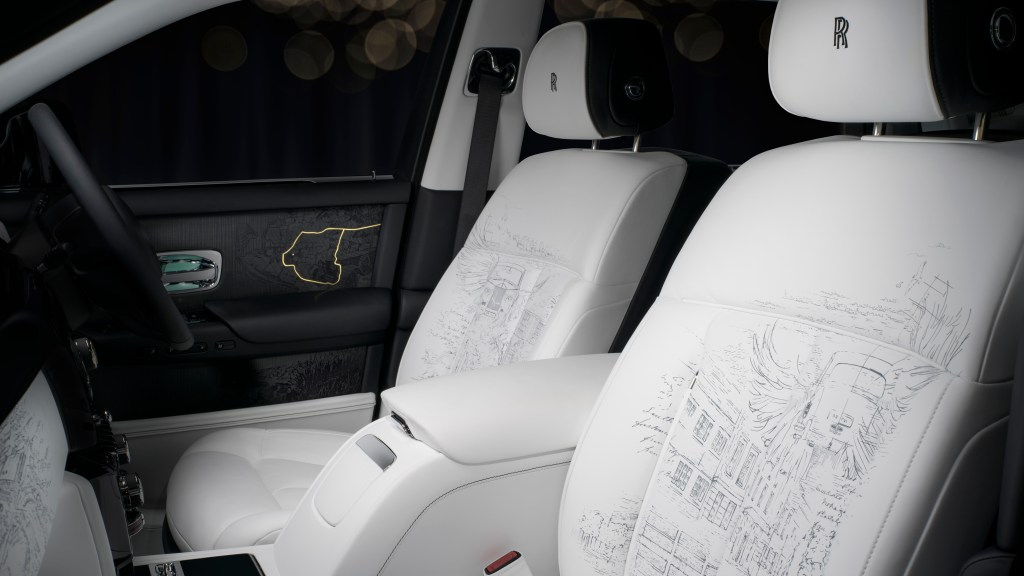
FRONT SEATS: A DESIGN STATEMENT IN THE DRIVER’S QUARTERS
The leather on the front seats features laser-etched artwork based on hand drawings by a Bespoke designer, evoking the draftsman’s craft. Among the motifs are symbolic details that elegantly carry the extraordinary weight of Phantom’s 100-year legacy, from a rabbit design – a nod to “Roger Rabbit,” the codename for the relaunch of Rolls-Royce in 2003 – to a seagull, the codename for the 1923 Phantom I prototype.

ANTHOLOGY GALLERY: A STORY OF DISTINCTION TOLD OVER 100 YEARS
The centrepiece of the Phantom Centenary Private Collection is the Anthology Gallery. This dramatic composition features 50 3D-printed, vertically brushed aluminium ‘fins’ interlaced like pages of a book. Each fin is composed of sculpted letters that can be read from both sides, forming quotes drawn from a century of press acclaim.

The sculpture is subtly lit by shifting illuminations that recall the shimmer of falling fireworks. The brushed edges of each fin create a play of reflections, changing with the viewer’s moving perspective.
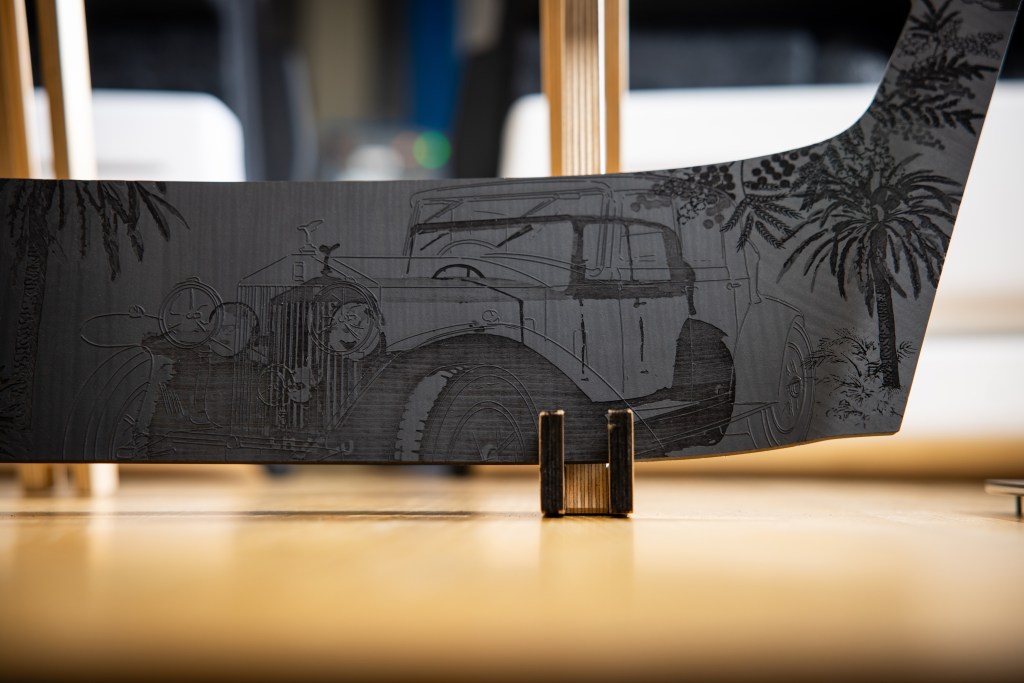
WOODWORK: A SCULPTURAL STATEMENT
The Private Collection features the most intricate woodwork ever created for a Rolls-Royce. Developed over a year and rendered in stained Blackwood, the door panels depict Phantom’s most significant and formative journeys. Within each composition, geographical maps, winding routes, sweeping landscapes, floral elements, and depictions of experimental motor cars intersect to form an artwork alive with Phantom’s heritage.

The rear doors portray the coastline of Le Rayol-Canadel-sur-Mer, where Sir Henry Royce spent his winters. The right-hand side front door shows the landscape of West Wittering, home to his summer residence, just eight miles from today’s Home of Rolls-Royce. The left-hand side front door recalls the epic 4,500-mile journey of the first-ever Goodwood-era Phantom, which crossed the Australian continent from Perth.

Each composition combines 3D multi-directional marquetry, laser etching, 3D ink layering and gold-leafing to create dimension and texture. Etched motifs, which include maps, landscapes, flowers and trees, are applied onto the wood at three different depths using a laser. The roads representing these journeys gleam in 24-carat gold, crafted from squares of gold leaf just 0.1 micrometres thick. Each road is painstakingly crafted, cut and placed.

The rear doors also incorporate depictions of flora native to Southern France — pine, cypress, ferns and palm — while a section of the rear passenger door recreates one of Sir Henry Royce’s original oil paintings of the region, translated from canvas to wood. The exact locations of Royce’s homes — Villa Mimosa in the South of France and Elmstead in West Wittering — are marked with a single gold-leaf dot just 2.76 mm in diameter.

Katrin Lehmann, Bespoke Colour and Material Designer, Rolls-Royce Motor Cars, said: “We drew on an extraordinary range of sources – original texts, diaries, photographs and paintings – to create a composition that weaves together many threads of Phantom’s story. New technology developed for this project, including 3D ink layering, allowed us to add details at a scale never before possible – some just 0.13 mm in height – from a boat sailing across the sea to location names on a map. It’s a privilege to have the time and technology to realise moments in Phantom’s history with the detail and precision the nameplate deserves.”

The wooden surfaces on the doors transform into masterfully embroidered leather panels. The 24-carat gold ‘roads’ continue as golden thread embroidery; details of the maps and landscapes are stitched in black, echoing the etched details on the veneered section of the doors.

The woodwork is completed with depictions of the original 1925 Phantom I and the current Phantom VIII, individually etched on the rear picnic tables. The models are mirrored in embroidery on the leather-finished backs of the picnic tables – another gesture uniting past and present.

The Piano Black veneer is infused with gold dust, echoing the central rotary dial, also plated with 24-carat gold.

Phil Fabre de la Grange, Head of Bespoke, Rolls-Royce Motor Cars, said: “Phantom Centenary is the most intricate and technologically ambitious Private Collection ever undertaken by the designers, engineers, production specialists and craftspeople of our Bespoke Collective. Developed over three years, this project uses new techniques to blend metal, wood, paint, fabric, leather, and embroidery into a single, stunning composition. The surfaces read like a book revealing 100 years of Phantom’s history, rich with symbolic references for clients to admire and decipher over many years to come.”

A GOLDEN LEGACY
The magnificent engineering masterpiece that is the 6.75-litre V12 engine is celebrated with a specially designed cover, finished in Arctic White. The cover has been detailed with 24-carat gold, honouring the effortless power that has helped define Phantom’s modern legend and success.
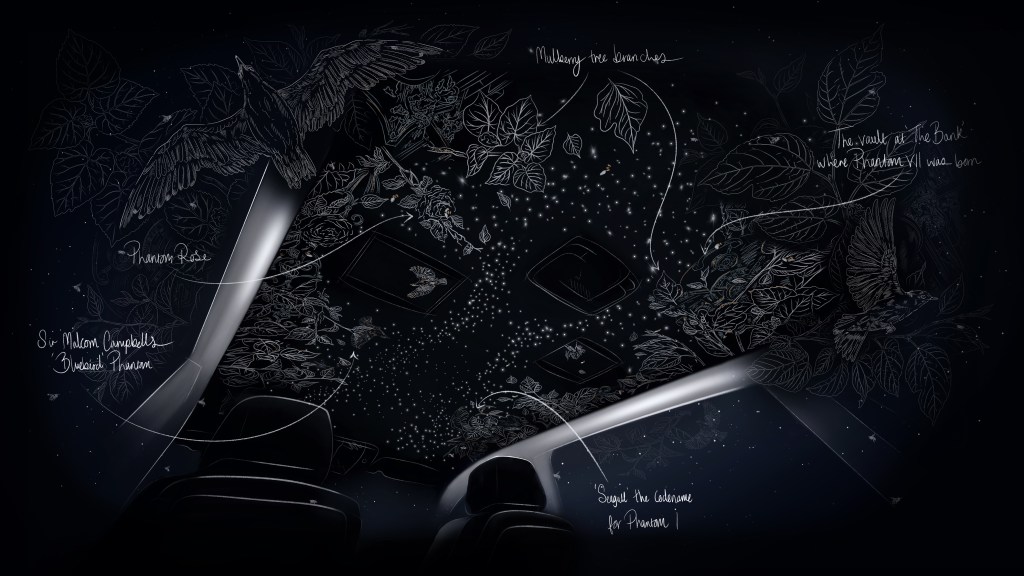
PHANTOM’S STORY IN STARLIGHT
A subtly animated and embroidered Starlight Headliner captures moments from Phantom’s history in 440,000 stitches. Its design includes references to the mulberry tree under which Henry Royce was photographed in his garden at West Wittering, seated with two close colleagues: Charles L. Jenner, the marque’s Chief Engine Draftsman, and Ernest Hives, the head of Rolls-Royce’s experimental department. Drawing on this moment, the Bespoke Collective sought to create an atmosphere of inspiration so that clients seated beneath the Starlight Headliner might experience, as Royce once did, their own flashes of imagination and possibility.

The scene unfolds to include the distinctive square-crowned trees in the courtyard of the marque’s Goodwood headquarters. The honeybees – a reference to the 250,000 residents of the Rolls-Royce Apiary – are in full flight, perhaps towards the Phantom Rose, grown exclusively on the grounds of the Home of Rolls-Royce. Interwoven within the constellations are quiet tributes to great Phantoms of the past – among them a bird motif representing Sir Malcolm Campbell’s Phantom II, known as the ‘Bluebird’. Hidden amongst the mulberry leaves is a reference to the locking mechanism on the vault door at ‘The Bank’ – the secret 1990s design studio where the first Phantom of the Goodwood era was drafted.

AN UNFORGETTABLE HERITAGE, IN MOTION
For the designers, engineers and artisans who created the Phantom Centenary Private Collection, this motor car was a once-in-a-generation responsibility. What has been achieved reflects the same spirit that gave rise to Phantom itself: the marque’s relentless pursuit of excellence and ambition to craft the best motor car in the world.
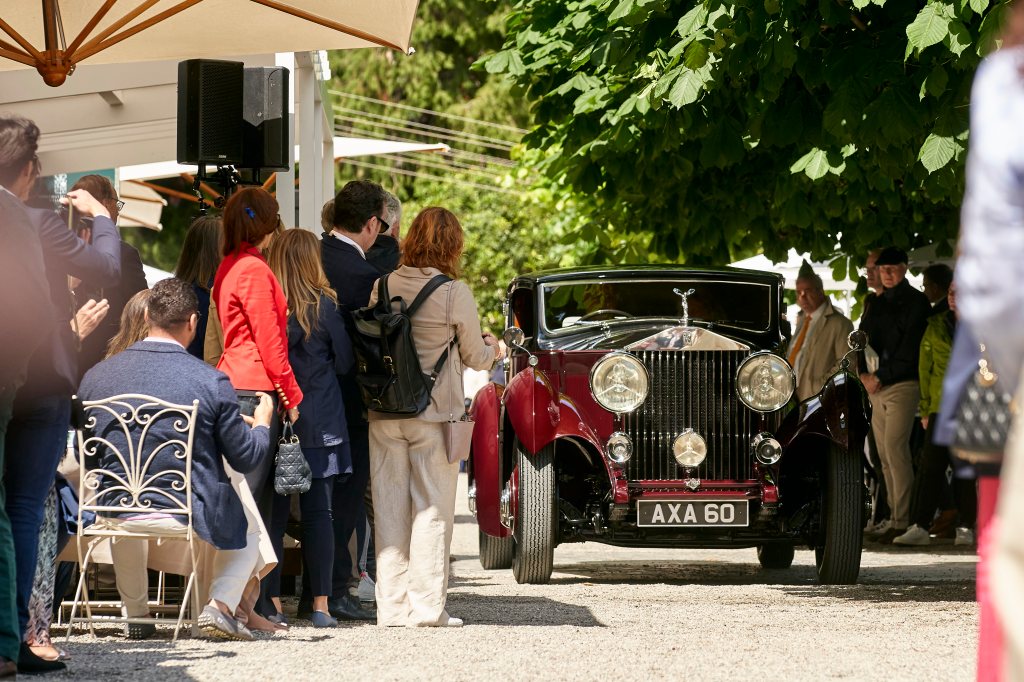
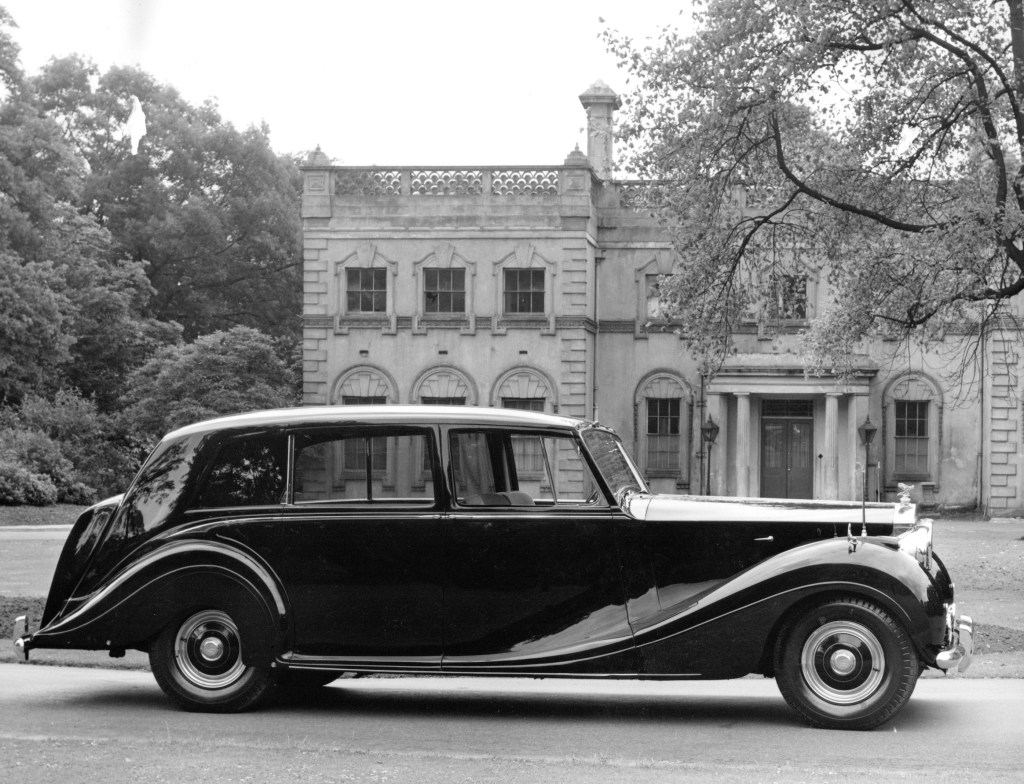
Rolls-Royce Phantom: 100 Years Of Perfection

In 2025, Rolls-Royce Motor Cars marks the centenary of the launch of the first Phantom. Throughout its long history, the Phantom nameplate has been reserved for the pinnacle model in the marque’s portfolio – the very apex of excellence.

Each iteration, up to and including the eighth generation currently being handcrafted at the Home of Rolls-Royce at Goodwood, has seen advances in design, engineering, materials and technology. Today, Phantom is the ultimate blank canvas for Bespoke commissions, where clients can bring their most elaborate, imaginative and personal visions to life. Inspiration for Bespoke commissions is everywhere, and Phantom’s scale, elegance, presence and adaptability enable it to be whatever its owner wishes it to be. Recent inspirations include haute couture (Phantom Syntopia), famous films (Phantom Goldfinger), Chinese culture (Phantom Extended ‘Year of the Dragon’) and the marque’s own Spirit of Ecstasy Mascot (Phantom Scintilla).

Phantom has always had the same fundamental aim: to provide the most magnificent, desirable and, above all, effortless motor car in the world – the very best of the best. At the start of Phantom’s anniversary year, Rolls-Royce reveals the fascinating story behind its pinnacle product, and how it earned – and maintained – that reputation through a century of constant, often profound change.

Chris Brownridge, Chief Executive, Rolls-Royce Motor Cars said, “One hundred years ago, Rolls-Royce launched the first motor car to bear what would become the most evocative and enduring nameplate in its history: Phantom. Through eight generations, Phantom’s fundamental role as the pinnacle Rolls-Royce motor car has always been the same: to be the most magnificent, desirable and above all, effortless motor car in the world – the very best of the best. In many respects, the history of Phantom is the history of Rolls-Royce: always moving with the times and its clients’ needs and requirements, transcending fleeting trends and providing the setting for the most remarkable executions of craft and artistry, all while resolutely refusing to compromise its core engineering and design principles. We’re proud to continue this tradition of excellence, elegance and serenity into the next 100 years.”

A NEW BEGINNING
Rolls-Royce first earned the accolade of ‘the best car in the world’ with the 40/50 H.P., universally known as the Silver Ghost, launched in 1906. The key to its legendary reputation was Henry Royce’s principle of constant improvement to its underlying engineering, which he conducted on an almost chassis-by-chassis basis.

By 1921, Royce realised the Silver Ghost’s design was reaching the point where no further developments would be possible without compromising either smoothness or reliability – both by now essential elements of the Rolls-Royce character and legend. He therefore began work on its replacement.

Original Advertisement from The Times Newspaper, Saturday 2 May 1925 read: “Rolls-Royce Ltd beg to announce that, after prolonged tests, they can now demonstrate and accept orders for a new 40/50 H.P. chassis. The 40/50 H.P. chassis hitherto manufactured by them will be sold as before… The original chassis of this type was the famous Silver Ghost, and to prevent confusion such chassis will be known as the Silver Ghost model, whereas the new chassis will be known as the New Phantom.”

Despite being couched in terms that today seem rather quaint and stilted, this advertisement made history. It was the first public acceptance by Rolls-Royce that the outgoing model would be called Silver Ghost officially, rather than as a byname. More significantly, it was the first recorded use of the Phantom name.

COPYRIGHT JAMES LIPMAN

THE GAME OF THE NAME
Although there is no specific documentary evidence, it seems safe to assume that the Phantom name was coined by Rolls-Royce’s energetic and ever-inventive Commercial Managing Director, Claude Johnson. It was he who recognised that naming the company’s products could act as a sales device, and it was his fertile imagination that produced the inspired sobriquet ‘Silver Ghost’ for the otherwise prosaically titled 40/50 H.P. in 1907. That same year, he christened another 40/50 H.P. ‘Green Phantom’, before bestowing the rather more evocative ‘Silver Phantom’ on two examples in 1909.

Johnson clearly understood the power of names like Phantom, Wraith and Ghost to convey the products’ supernatural quietness and ethereal grace; all have graced Rolls-Royce motor cars in the modern era for precisely the same reason. How different history would have been had one of his more fanciful efforts – The Dreadnought, The Cookie, Yellow Bird, The Elusive Pimpernel – been adopted instead.

THE BASIS FOR GREATNESS
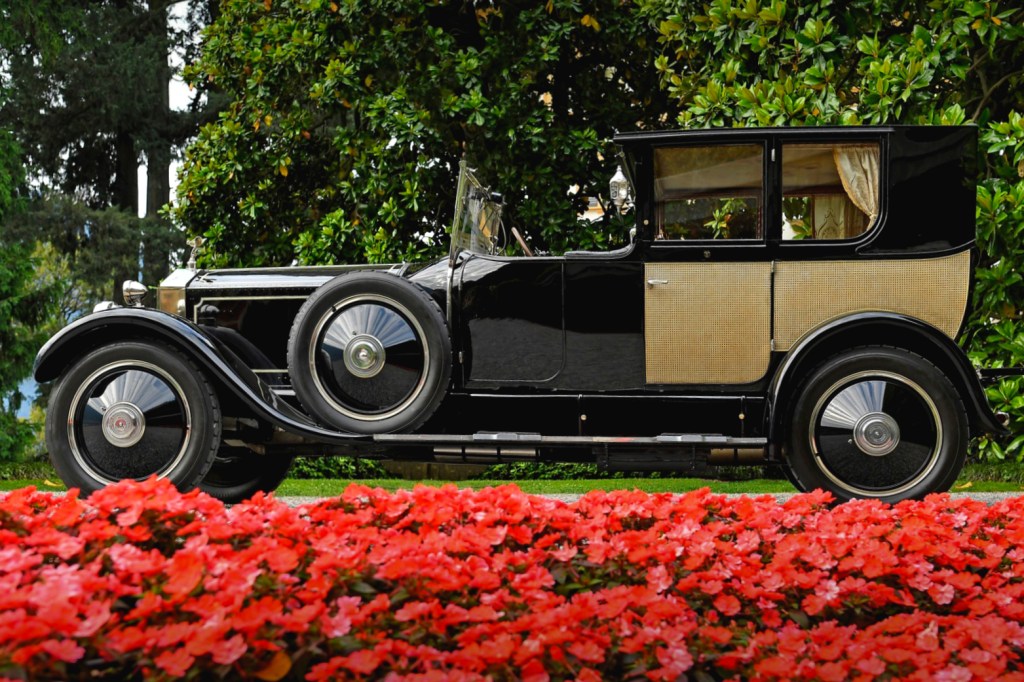
The Times advertisement also assured readers the New Phantom would retain the “sweet running qualities always associated with Rolls-Royce products”. At this time, Rolls-Royce supplied only rolling chassis, with the form, styling and appointment of the motor car itself in the hands of independent coachbuilders, who created bespoke bodywork to the owner’s specification. Rolls-Royce offered the New Phantom in long-wheelbase form, suitable for formal saloon and limousine designs, and with a shorter wheelbase ideal for owner-driver motor cars with closed, open and ‘sportier’ coachwork.

Then as now, Phantom’s generous proportions enabled owners to specify almost any detail or indulgence they wished. Some clients asked for concealable writing desks or swiveling occasional seats in their long-wheelbase limousines, while owner-drivers are known to have requested safes, dedicated spaces to stow golf clubs and even, in one famous instance, a secret compartment in which to carry diamonds.

On 8 May 1925, The Autocar magazine published its review of the new model. “Few are the firms engaged in the manufacture of motor cars who enjoy quite such a reputation as Rolls-Royce Ltd,” it enthused. “Almost the conjoined names have become the household word for luxury, and every novelist worthy of the name imparts a distinguished air to any character by crediting him or her with the possession of one of the firm’s cars.” With Phantom, Rolls-Royce had clearly succeeded in not only maintaining, but furthering the qualities established and made famous by the Silver Ghost.

ONWARDS AND UPWARDS
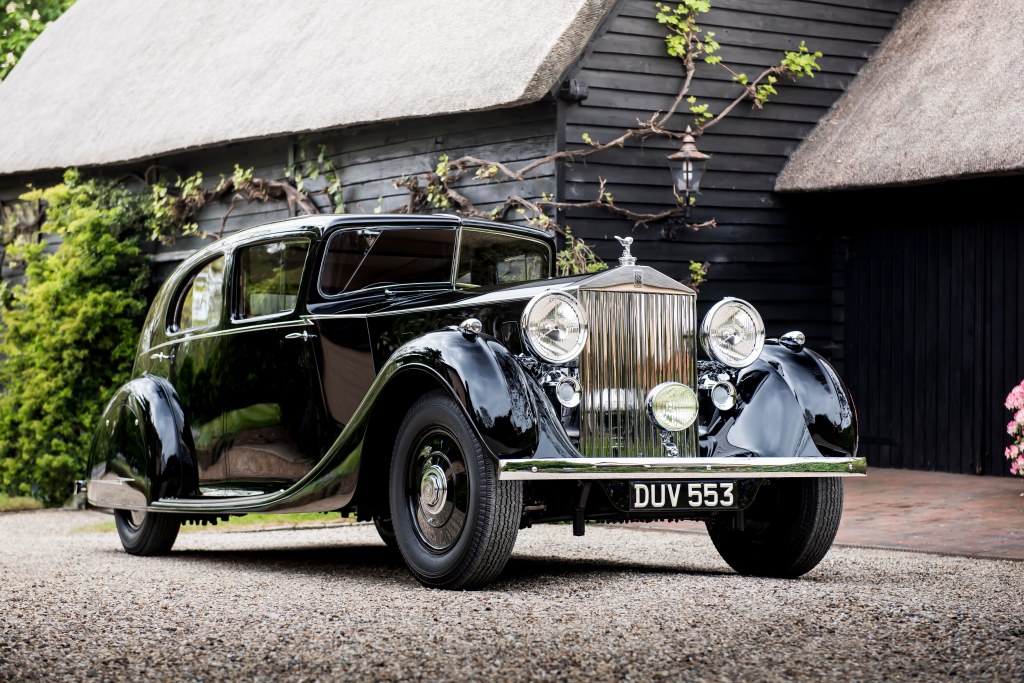
Though undoubtedly gratifying, such encomiums did not distract Henry Royce. The design of the original New Phantom had closely followed that of its predecessor, Silver Ghost – so closely, in fact, that some modern enthusiasts refer to it as a ‘Super Ghost’. Over the next four years, Royce continued to refine his design until, in 1929, The Times carried a fresh advertisement announcing the arrival of Phantom II. The advertisement listed all the engineering improvements and upgraded components that justified its designation as an entirely new model.

VIVE LA DIFFÉRENCE
Somewhat ironically, the only person who remained unimpressed was Royce himself, who insisted that even the short-wheelbase Phantom II was irritatingly oversized for his personal use. He therefore instructed his design team to develop a more compact, sporting Phantom II variant which he could enjoy driving across France to his winter home at Le Canadel on the Côte d’Azur.

The designers dutifully produced a close-coupled car, 26EX – ‘EX’ standing for ‘Experimental’ – on an adapted short Phantom II chassis. Records show that neither the Rolls-Royce sales department nor the factory were keen on the concept; indeed, had it not been intended as Royce’s personal transport, it might not have been built at all.

As it transpired, a highly successful continental sales tour demonstrated there was, in fact, great demand for a car capable of high-speed touring over long distances on the smooth, straight roads of Europe. Rolls-Royce successfully met this demand with the now highly prized Phantom II Continental – perhaps the only pre-Goodwood Phantom variant in which weight, wind resistance and other performance-related factors were afforded equal consideration with out-and-out passenger comfort.

Montgomery Rolls-Royce Phantom 2 Photo: James Lipman / jameslipman.com

A NEW POWER RISING
By the time of Royce’s death in 1933, the company was already only too aware that luxury car customers were seeking models that offered more power without sacrificing comfort or excellence. American competitors including Cadillac, Lincoln and Packard were responding with straight-8, V12 and even V16-cylinder engines, which were rapidly eclipsing the large-horsepower, in-line six-cylinder units that had served Rolls-Royce so well for so long.

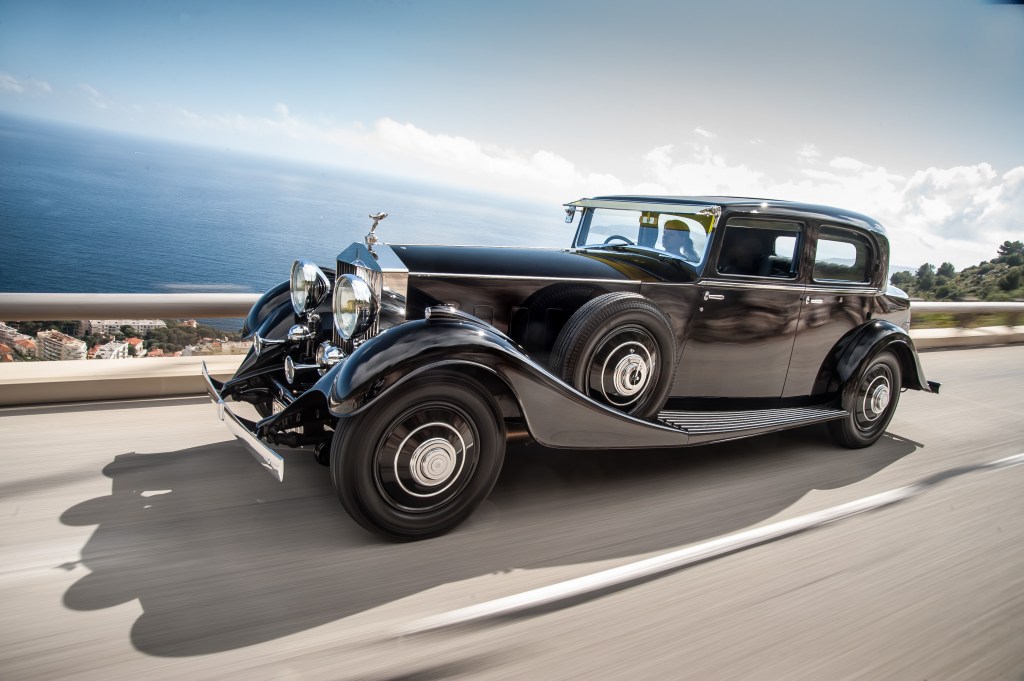
Given this commercial pressure and the company’s proven experience in designing and building aero-engines, it was inevitable that the next Phantom would have a V12 engine. In accordance with tradition, Phantom III’s arrival in 1936 was announced in The Times, which informed the public that “many outstanding features distinguish this car from its famous predecessor the Phantom II”.

Chief among these was the new engine, with 12 cylinders “giving greater engine smoothness, flexibility, silence and acceleration” – all key requirements for Rolls-Royce’s fabled effortless progress. The new V12 engine was also more compact than the old straight-6, allowing a shorter bonnet and larger passenger compartment. Most importantly, however, it delivered the increased power customers demanded – 165 H.P. against the 120 H.P. of Phantom II, rising to 180 H.P. in later cars.

Comfort was further improved with independent front wheel suspension. “This is particularly noticeable in the back seats under all road conditions and is further enhanced by remarkable road holding qualities and stability on corners even at high speeds”, the advertisement noted, while Phantom III’s new chassis frame allowed for wider, more comfortable back seats.

And it wasn’t just passengers who benefited. As the advertisement pointed out, Phantom III made life more relaxing for owner-drivers and chauffeurs, too, explaining: “A modification in the position of the change-speed [gear lever] and brake levers gives easy entrance to the driver’s seat from the offside… the steering is lighter in operation, has a larger steering lock and the car is more easily manoeuvred by reason of the shorter wheelbase.”

Phantom III was suited to all manner of coachwork styles, and both owner-driver and chauffeured use. And while it was never able to beat its American rivals on price, such was Rolls-Royce’s reputation that it remained the only choice for those who wanted to experience the greatest possible comfort and be seen to be driving the very best.

A CHANGING WORLD
The Phantom name had graced the very best of the best cars in the world for some 14 years when war broke out in 1939. Rolls-Royce ceased all motor car production, and when peace returned in 1945, the company found itself in an entirely different world – but one it had anticipated and prepared for.

Rolls-Royce had correctly foreseen that under post-war austerity, it would need to make its motor cars less complex, easier to service, much less expensive to produce and able to use common parts. At the same time, it was adamant that there would be no reduction in quality.

Its solution was the Rationalised Range, which debuted in 1946 with Silver Wraith. Its new straight-6-cylinder engine was a backward step from the V12 engine of Phantom III, but relevant in straitened times. There seemed to be no place in the modern world for Phantom.

A ROYAL INTERVENTION
The Phantom story might well have ended there, but for two serendipitous events.

As part of the ongoing development process for the Rationalised Range, engineers produced four experimental EX cars on a 229.5-inch chassis with a straight-8 engine. One of these, fitted with a Park Ward & Co limousine body, was officially named Silver Phantom (and unofficially known as Big Bertha). A smaller, lighter saloon version, known as the Scalded Cat, followed.

At the same time, the Royal Household was seeking to replace its ageing fleet of Daimlers – the marque it had favoured since the motor car was invented – but was unhappy with the range then on offer.

In 1950, Rolls-Royce was asked to supply a formal limousine for Royal duties. The company had long been keen to usurp Daimler in the Royal Mews, and gladly produced a ‘one-off’ straight-8 long-chassis limousine with coachwork by H J Mulliner. During manufacture, the car was given the codename Maharajah, and remains in active service at the Royal Mews under that name to this day.

When requests for similar motor cars followed from other Royalty and Heads of State, Rolls-Royce was happy to oblige. The company decided it would be fitting that for such prestigious cars to resurrect the Phantom name. Over the next seven years, the marque produced just 18 examples of Phantom IV, including a second motor car for the Royal Mews, a landaulette named Jubilee, delivered in 1954.

THE LAST HURRAH
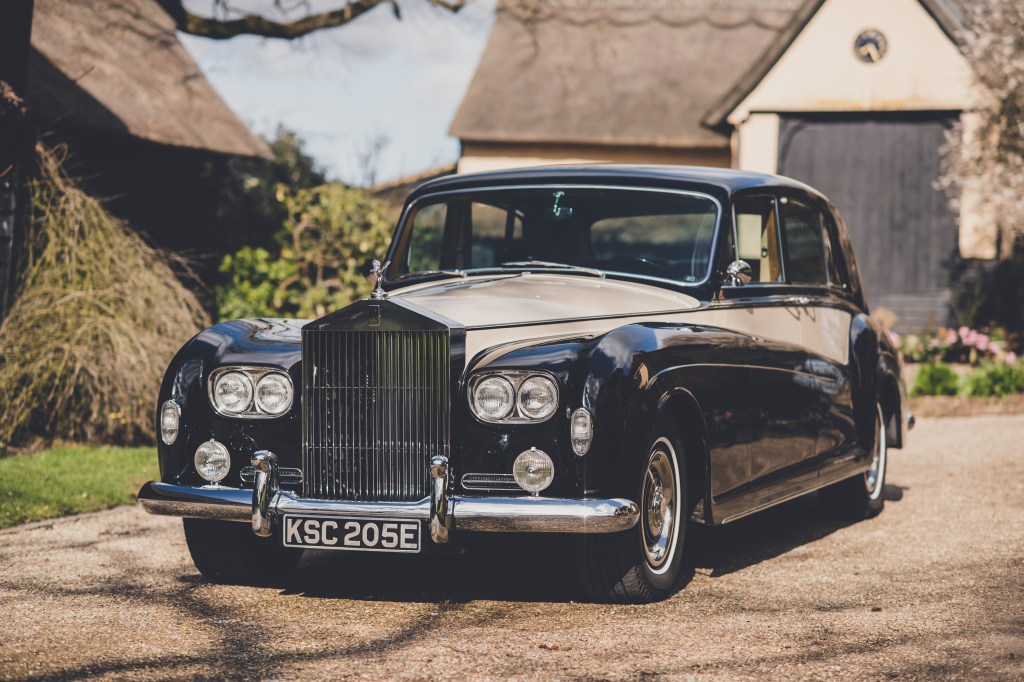
The pinnacle Rolls-Royce experience became somewhat more widely available once again in 1959 with the launch of Phantom V – a splendid limousine fitted with coachwork by both the marque’s in-house coachbuilder, Park Ward & Co., and other independent companies, including James Young Ltd and H. J. Mulliner & Co. (Rolls-Royce would go on to acquire the latter, merging it with their own coachbuilder to form Mulliner Park Ward). Two motor cars, known as Canberra I and Canberra II, were built for Royal service, featuring transparent Perspex cupolas over the rear compartments and concealed lighting to better view the occupants on formal occasions.

After 13 years and 832 examples, Phantom V had received enough technical upgrades to be designated as Phantom VI. As with all its forebears, this new iteration prioritised comfort, with separate air conditioning systems for the front and rear compartments. Most of the 374 examples were limousines with coachwork by in-house Mulliner Park Ward Ltd., or James Young Ltd.: the last Phantom VI, a landaulette, was delivered to the Sultan of Brunei in 1993.

Phantom VI was the final body-on-chassis model Rolls-Royce ever produced, and its discontinuation effectively ended the tradition of coachbuilding until it was revived at Goodwood in 2017 with ‘Sweptail’.

PHANTOM REBORN
When the marque was relaunched at the new Home of Rolls-Royce at Goodwood, a ‘Phantom-type’ model quickly emerged as the natural and obvious choice for its inaugural motor car. The design concept, for which legendary Rolls-Royce designer John Blatchley was consulted and of which he approved, included signature elements inherited from previous generations. These included a long wheelbase with the front wheels well to the fore and a minimal front overhang of the bodywork, a long bonnet comprised of a massive expanse of metal along the side, and a rising sweep of the door edge towards the front windscreen pillars.

Rolls-Royce Motor Cars’ first Design Director of the Goodwood era, Ian Cameron, formed a specific team to create the interior design for the much-anticipated new model. Their remit was to express the ambience of past Phantoms and the traditional high-quality materials of coachbuilding – leather, wood, deep-pile carpeting – in a totally up-to-date way.

At one minute past midnight, on 1 January 2003, the first Phantom VII was handed over to its new owner. Unlike every Phantom that had gone before, it was built entirely in-house by Rolls-Royce Motor Cars, with spaceframe bodywork to a single design rather than coach built. In one important sense, however, it retained a link with its heritage, in that every car was hand-built by a team of skilled craftspeople. Furthermore, the marque’s Bespoke programme meant Phantom was effectively a blank canvas on which patrons could realise their own visions and desires.

THE EVOLUTION CONTINUES
Over its 13-year lifespan, Phantom VII cemented Rolls-Royce as the world’s pre-eminent super luxury motor manufacturer, and its own place as the marque’s pinnacle product. But just like their predecessors, Rolls-Royce’s designers and engineers understood that perfection is a moving target: that Phantom was never ‘finished’.

In 2017, Rolls-Royce presented Phantom VIII. This was the first Rolls-Royce to be built on the Architecture of Luxury, an advance on the all-aluminium spaceframe used on Phantom VII, and designed to underpin every future motor car produced at Goodwood.

Phantom VIII was specifically designed to be the ultimate canvas for Bespoke commissions. With this in mind, it is the only Rolls-Royce model to feature the Gallery – an uninterrupted swathe of glass that runs the full width of the fascia, behind which the client can display a commissioned work of art or design.

This singular focus has made Phantom the subject of some of the most technically ambitious and challenging Bespoke projects ever undertaken by the marque’s designers, engineers and specialist craftspeople. Commissions such as Phantom Syntopia, Phantom Oribe, Phantom Koa and Phantom ‘Inspired by Cinque Terre’ all incorporate features, materials and engineering innovations never seen before in a Rolls-Royce or any other motor car. Each is a unique, one-of-one creation that will never be repeated, echoing the very first Phantoms that were individually hand-built for their commissioning owners.

THE ESSENCE OF PHANTOM
For 100 years, the Phantom name has occupied a unique position in the Rolls-Royce product family and story. While the standards of quality, engineering and design are consistent across all Rolls-Royce motor cars, Phantom has always been the grandest, most impressive and, above all, most effortless motor car being built in series production by the marque at any given moment.

Through all its eight generations, Phantom has never been compromised by existing engineering orthodoxy, fleeting trends or development costs. From Henry Royce’s original New Phantom to today’s Phantom VIII, the essential purpose behind Phantom has always remained the same: to build the motor car that offers owner-drivers and passengers alike the most comfortable, satisfying experience available in the world at that moment in time – the unassailable pinnacle of luxury and motoring excellence.