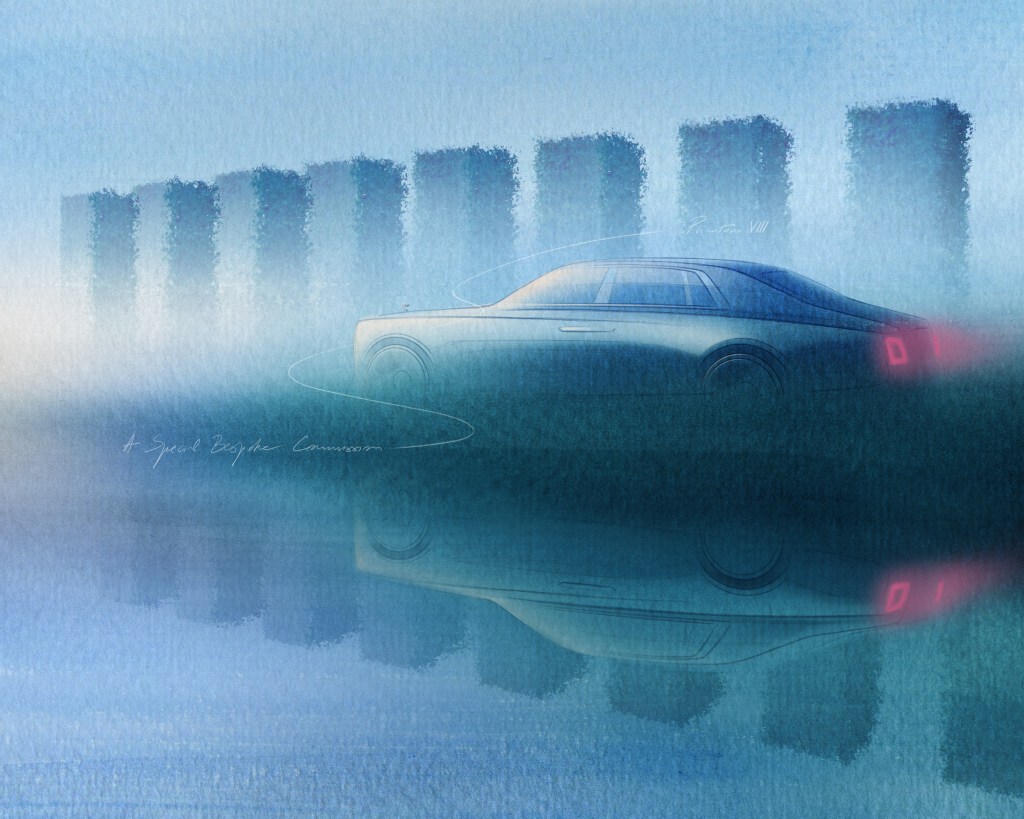
Rolls-Royce Motor Cars Presents The Phantom Centenary Private Collection

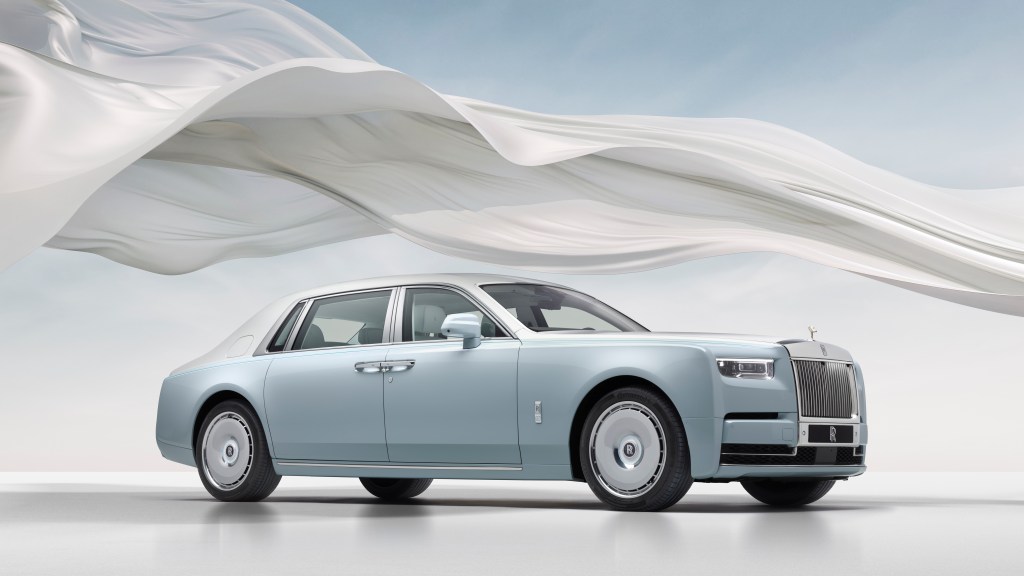
For 100 years, Phantom has been recognised as the ultimate symbol of success and discernment, chosen by the world’s most influential figures. As this legendary nameplate celebrates its 100th anniversary, Rolls-Royce Motor Cars pays tribute with the Phantom Centenary Private Collection, limited to 25 examples.

The Rolls-Royce Bespoke Collective of designers, engineers and artisans poured their skill and imagination into what has become their magnum opus. They immersed themselves in Phantom’s world, studying the spirit and identity of each generation from the 1920s to today. They explored defining owners, pivotal figures within Rolls-Royce, the places where Phantom was conceived and built, and the events that defined its times. These influences, first captured as 77 hand-sketched motifs, are woven into the Phantom Centenary Private Collection through stunningly crafted archival references, creating a statement that honours Phantom’s past, defines its present, and projects the principles that will shape the nameplate’s next 100 years and beyond.

Each historic moment is brought to life through advanced artisanal techniques, many conceived specially for this rare and collectable tribute. Inside, couturier-designed textiles, sketch-like embroidery, laser-etched leather, and groundbreaking woodcraft — including 3D marquetry, gilding, and 3D ink layering — tell Phantom’s story in stunning, intricate detail. Outside, the grille is crowned with a unique Spirit of Ecstasy figurine, reinterpreted from the very first to grace a Phantom, and presented in solid gold to mark this milestone.

Chris Brownridge, Chief Executive, Rolls-Royce Motor Cars, said: “The Rolls-Royce Phantom Centenary Private Collection is our tribute to 100 years of the world’s most revered luxury item. This uncompromising work of art uses the meticulously engineered Phantom VIII as the canvas to tell the story of Phantom’s remarkable life and the people who shaped it – from the visionaries within Rolls-Royce to the owners who helped create its legend. For a century, the Phantom nameplate has expressed the pinnacle of Rolls-Royce’s abilities. To honour that legacy, this extraordinarily ambitious Private Collection introduces new techniques and is the result of over 40,000 hours of work, culminating in a motor car which reaffirms Phantom’s status as a symbol of ambition, artistic possibility, and historical gravitas.”
EXTERIOR: AN ELEGANT, BESPOKE STATEMENT
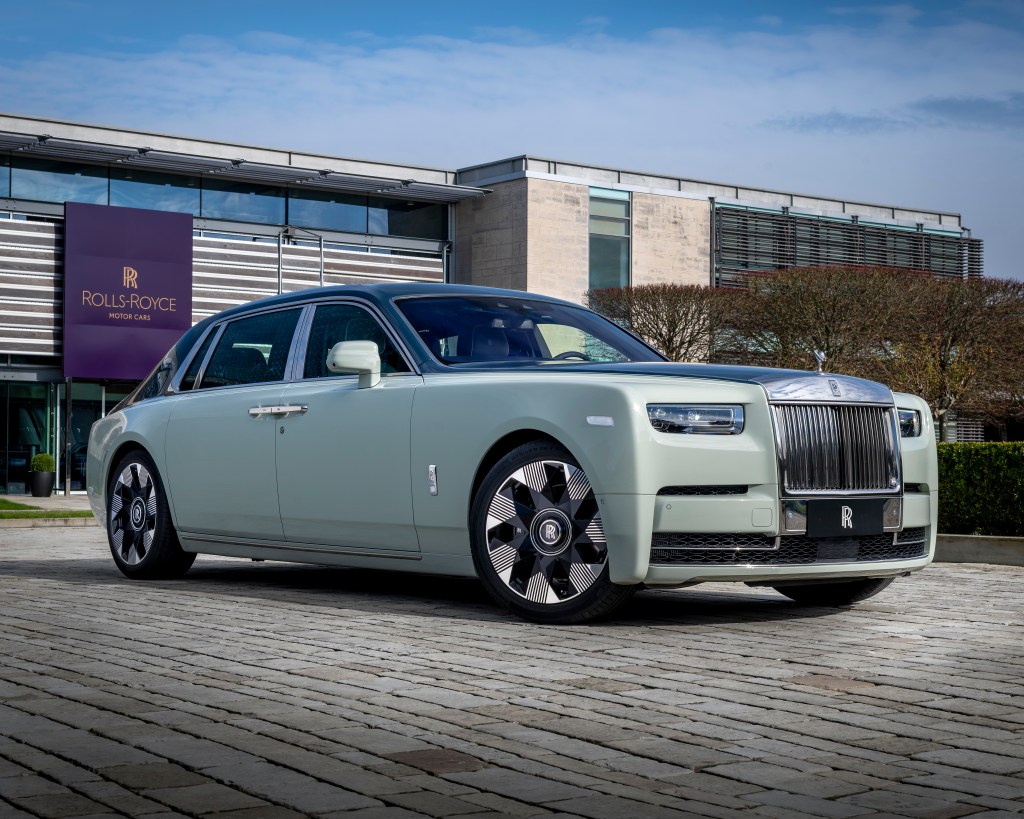
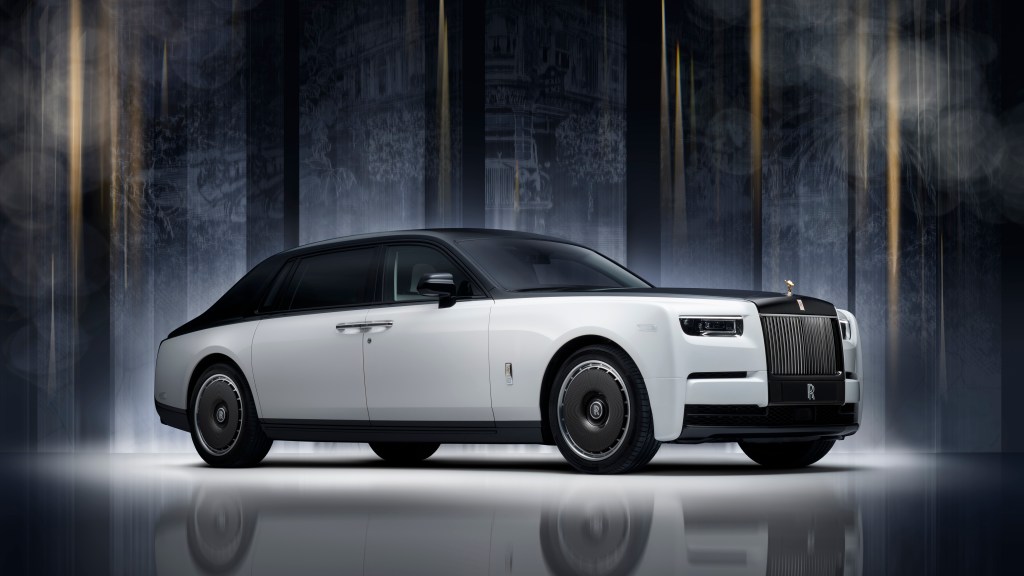
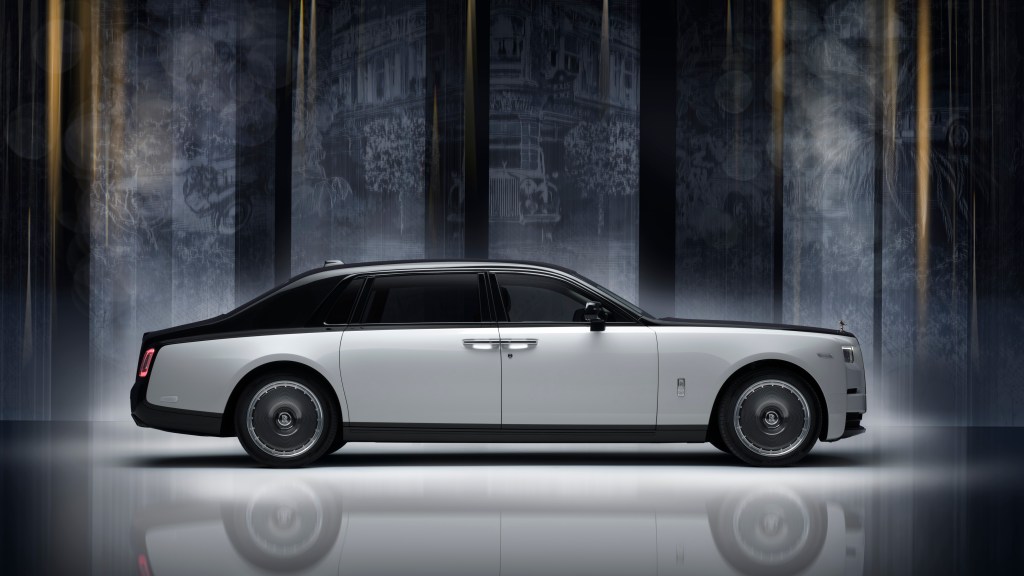
Evoking the timeless elegance of a black-and-white film star, the Phantom Centenary Private Collection’s exterior recalls the golden age of Hollywood, when Phantom graced premieres, carried screen icons, and became a symbol of the era’s glamour. The motor car is finished in a Bespoke two-tone paint, its long-sided application a nod to the flowing silhouette of 1930s Phantoms. The side body is presented in Super Champagne Crystal over Arctic White, with the upper body in Super Champagne Crystal over Black. The specially developed finish gives the exterior an extraordinary metallic shimmer, achieved by infusing the clear coat with iridescent particles of crushed glass. For this celebratory Private Collection, Rolls-Royce paint specialists replaced the clear flakes with champagne-coloured particles and doubled the quantity to create spellbinding depth.

This timeless treatment is crowned with a unique reimagining of the Spirit of Ecstasy. Using the first Spirit of Ecstasy ever fitted to a Phantom as their reference, designers created an homage to this landmark figurine, cast in solid 18-carat gold for strength, then plated in 24-carat gold for a flawless, tarnish-resistant finish. The piece was then presented to the Hallmarking & Assay Office in London, where it received a specially developed ‘Phantom Centenary’ hallmark.

The base of the figurine is finished with hand-poured white vitreous enamel delicately inscribed with the collection’s name. For the first time, the ‘RR’ Badge of Honour – positioned on the front, rear, and each side of the motor car – is presented in 24-carat gold and white enamel.

Resolving the exterior is a set of Phantom disc wheels, each engraved with 25 lines – honouring the 25 motor cars within the collection and, together, making 100 lines to celebrate the centenary year.

Martina Starke, Head of Bespoke Design, Rolls-Royce Motor Cars, said: “Having the privilege to pay a Bespoke tribute to the Phantom nameplate is a once-in-a-generation opportunity. Seizing on the significance of this moment, a record number of designers spent a year immersed in the motor car’s rich history, uncovering the stories that shaped its legend. Their research was distilled into 77 hand-sketched motifs, each capturing a defining moment in Phantom’s journey and expressed with levels of detail we have never attempted before. The result is a true collective work of art that celebrates the skill, ambition and imagination of everyone at the Home of Rolls-Royce, and the profound respect the marque’s creatives have for this extraordinary motor car.”

INTERIOR: IMMERSED IN THE PHANTOM LEGEND
A century of Phantom’s stories elegantly unfold across the many canvases of the Private Collection’s interior, through magnificent archival references – some immediately recognisable, others revealed over time.

In homage to Phantoms of the past, Phantom Centenary’s interior combines textiles and leather, recalling the marque’s foundational years when the chauffeur’s front seat was finished in hardwearing leather and the rear cabin in luxurious fabrics. This contrast is a subtle reminder that Phantom has always balanced both authority at the wheel and absolute serenity in the passenger suite.
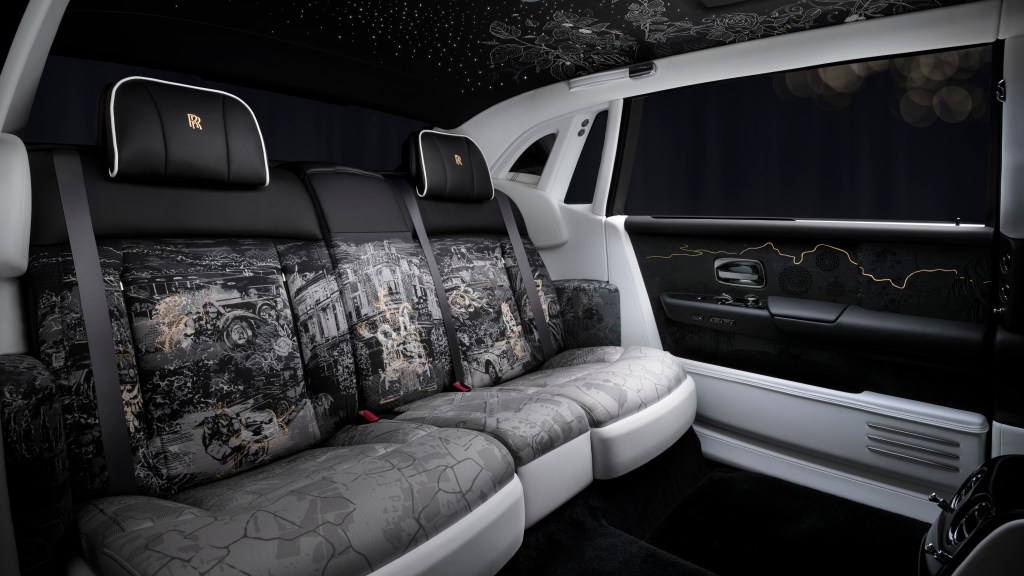
REAR SEATS: TAILORING EXCELLENCE
The rear seats of Phantom Centenary are inspired by the famed 1926 ‘Phantom of Love’, commissioned with handwoven Aubusson tapestries. The artwork on the seats unfolds across three distinct layers of storytelling. The first is the background, rendered in high-resolution print, showing places and artefacts from Phantom’s history – from the marque’s original Conduit Street premises in London to Henry Royce’s oil paintings of Southern France. The second layer, also printed in high resolution, portrays great Phantoms of the past in finely drawn detail. The third and uppermost layer is formed of embroideries, abstractly representing seven significant owners from every generation of Phantom.

This complex fabric was developed over 12 months in partnership with a fashion atelier, marking its first commission beyond the world of haute couture. To meet Rolls-Royce’s exacting longevity, tactility and aesthetic standards, the high-resolution printing process was perfected with specially adapted inks and techniques devised exclusively for the Phantom Centenary Private Collection.

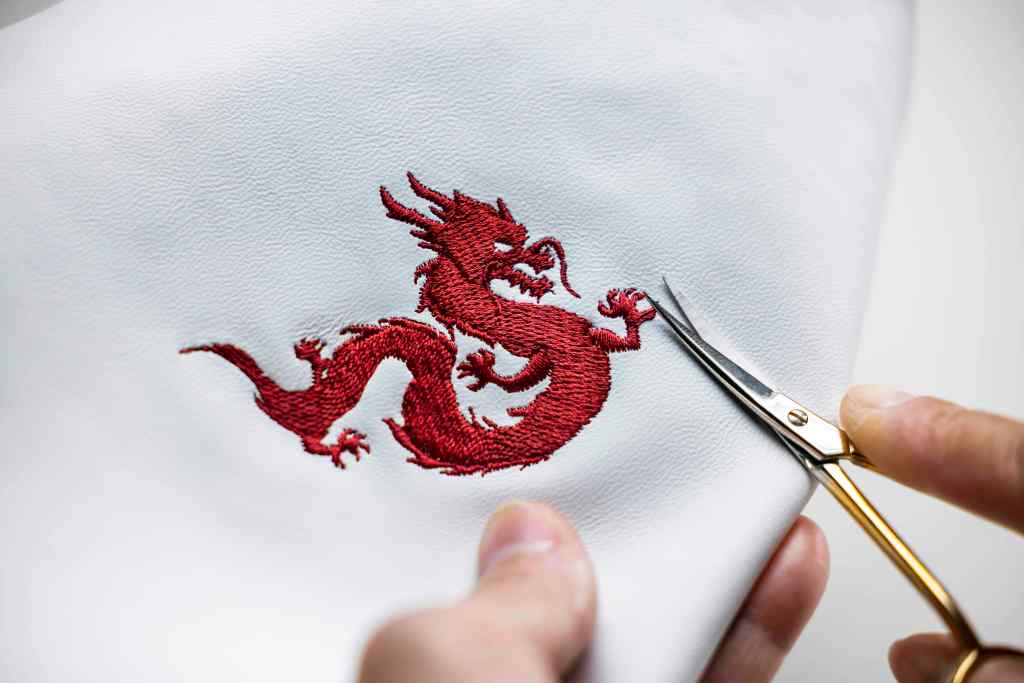
The high-resolution printed fabric is completed with embroideries, designed to have a uniquely hand-drawn quality. Described by the Bespoke Collective as “sketching with thread”, this embroidery process captures the expression of a pencil line in textile form. To outline and define each image, artisans applied Golden Sands thread in sketch-like, irregular stitches, creating the illusion of lines floating lightly above the surface. Texture and depth were added with Seashell thread, applied in high-density stitches. Across the full composition, this intricate craftwork amounts to more than 160,000 stitches.

The finished artwork spans 45 individual panels, each precisely aligned and fitted around the curvatures of the seats at the Home of Rolls-Royce: a process inspired by Savile Row tailoring techniques. The result is the most intricate seat composition ever created by Rolls-Royce.

Celina Mettang, Bespoke Colour and Material Designer, Rolls-Royce Motor Cars, said: “Conceived as a contemporary interpretation of a handwoven tapestry, the rear seats tell Phantom’s story through carefully curated details, captured in textiles and embroidery. Every embroidered element was digitally re-drawn by artisans who selected specific stitch application for every stroke. For example, in the horse motif, we used spaced stitches to recreate the hair texture, then dense stitching to define the muscle. These fine details required extraordinary precision to get right: one motif went through 24 iterations before we were satisfied. This reflects the deep personal pride we felt in creating a fitting tribute to the Phantom nameplate, and the responsibility we all share in carrying its legacy forward.”
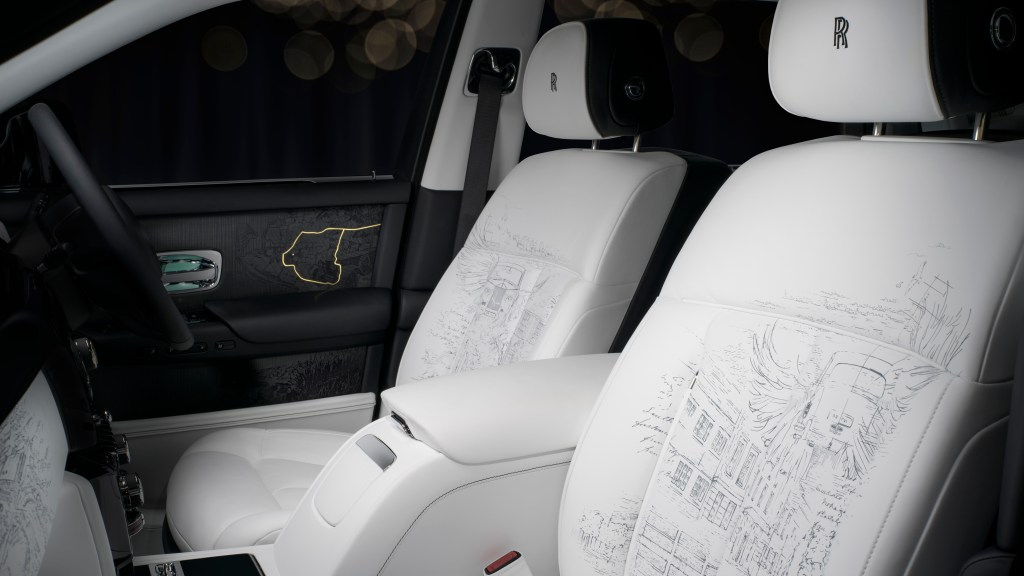
FRONT SEATS: A DESIGN STATEMENT IN THE DRIVER’S QUARTERS
The leather on the front seats features laser-etched artwork based on hand drawings by a Bespoke designer, evoking the draftsman’s craft. Among the motifs are symbolic details that elegantly carry the extraordinary weight of Phantom’s 100-year legacy, from a rabbit design – a nod to “Roger Rabbit,” the codename for the relaunch of Rolls-Royce in 2003 – to a seagull, the codename for the 1923 Phantom I prototype.

ANTHOLOGY GALLERY: A STORY OF DISTINCTION TOLD OVER 100 YEARS
The centrepiece of the Phantom Centenary Private Collection is the Anthology Gallery. This dramatic composition features 50 3D-printed, vertically brushed aluminium ‘fins’ interlaced like pages of a book. Each fin is composed of sculpted letters that can be read from both sides, forming quotes drawn from a century of press acclaim.

The sculpture is subtly lit by shifting illuminations that recall the shimmer of falling fireworks. The brushed edges of each fin create a play of reflections, changing with the viewer’s moving perspective.
WOODWORK: A SCULPTURAL STATEMENT
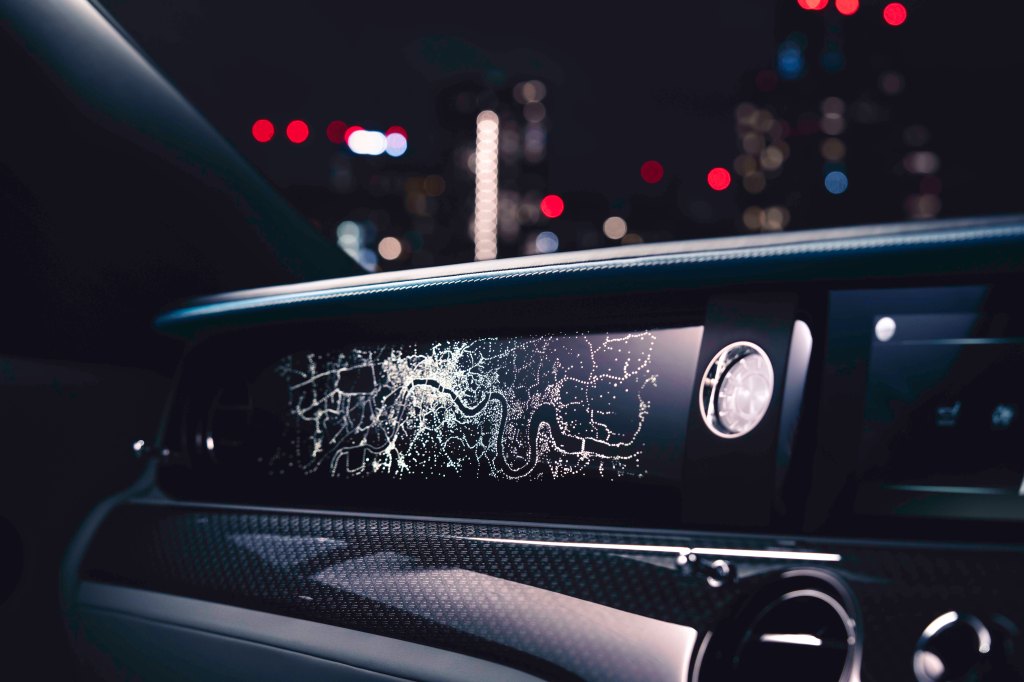
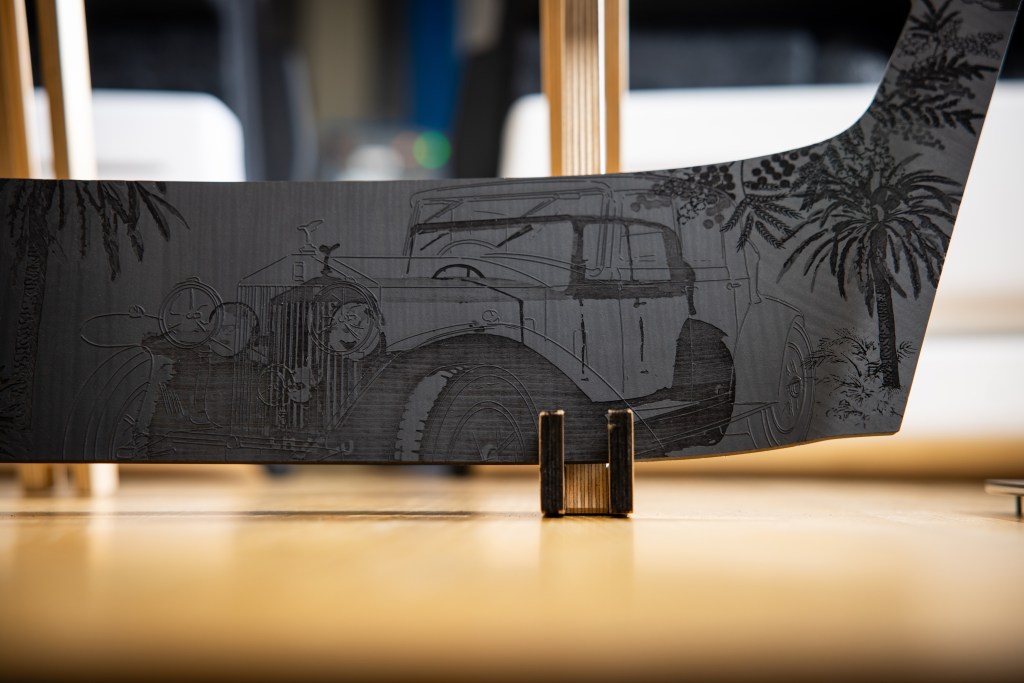
The Private Collection features the most intricate woodwork ever created for a Rolls-Royce. Developed over a year and rendered in stained Blackwood, the door panels depict Phantom’s most significant and formative journeys. Within each composition, geographical maps, winding routes, sweeping landscapes, floral elements, and depictions of experimental motor cars intersect to form an artwork alive with Phantom’s heritage.

The rear doors portray the coastline of Le Rayol-Canadel-sur-Mer, where Sir Henry Royce spent his winters. The right-hand side front door shows the landscape of West Wittering, home to his summer residence, just eight miles from today’s Home of Rolls-Royce. The left-hand side front door recalls the epic 4,500-mile journey of the first-ever Goodwood-era Phantom, which crossed the Australian continent from Perth.

Each composition combines 3D multi-directional marquetry, laser etching, 3D ink layering and gold-leafing to create dimension and texture. Etched motifs, which include maps, landscapes, flowers and trees, are applied onto the wood at three different depths using a laser. The roads representing these journeys gleam in 24-carat gold, crafted from squares of gold leaf just 0.1 micrometres thick. Each road is painstakingly crafted, cut and placed.

The rear doors also incorporate depictions of flora native to Southern France — pine, cypress, ferns and palm — while a section of the rear passenger door recreates one of Sir Henry Royce’s original oil paintings of the region, translated from canvas to wood. The exact locations of Royce’s homes — Villa Mimosa in the South of France and Elmstead in West Wittering — are marked with a single gold-leaf dot just 2.76 mm in diameter.

Katrin Lehmann, Bespoke Colour and Material Designer, Rolls-Royce Motor Cars, said: “We drew on an extraordinary range of sources – original texts, diaries, photographs and paintings – to create a composition that weaves together many threads of Phantom’s story. New technology developed for this project, including 3D ink layering, allowed us to add details at a scale never before possible – some just 0.13 mm in height – from a boat sailing across the sea to location names on a map. It’s a privilege to have the time and technology to realise moments in Phantom’s history with the detail and precision the nameplate deserves.”

The wooden surfaces on the doors transform into masterfully embroidered leather panels. The 24-carat gold ‘roads’ continue as golden thread embroidery; details of the maps and landscapes are stitched in black, echoing the etched details on the veneered section of the doors.

The woodwork is completed with depictions of the original 1925 Phantom I and the current Phantom VIII, individually etched on the rear picnic tables. The models are mirrored in embroidery on the leather-finished backs of the picnic tables – another gesture uniting past and present.

The Piano Black veneer is infused with gold dust, echoing the central rotary dial, also plated with 24-carat gold.

Phil Fabre de la Grange, Head of Bespoke, Rolls-Royce Motor Cars, said: “Phantom Centenary is the most intricate and technologically ambitious Private Collection ever undertaken by the designers, engineers, production specialists and craftspeople of our Bespoke Collective. Developed over three years, this project uses new techniques to blend metal, wood, paint, fabric, leather, and embroidery into a single, stunning composition. The surfaces read like a book revealing 100 years of Phantom’s history, rich with symbolic references for clients to admire and decipher over many years to come.”

A GOLDEN LEGACY
The magnificent engineering masterpiece that is the 6.75-litre V12 engine is celebrated with a specially designed cover, finished in Arctic White. The cover has been detailed with 24-carat gold, honouring the effortless power that has helped define Phantom’s modern legend and success.
PHANTOM’S STORY IN STARLIGHT
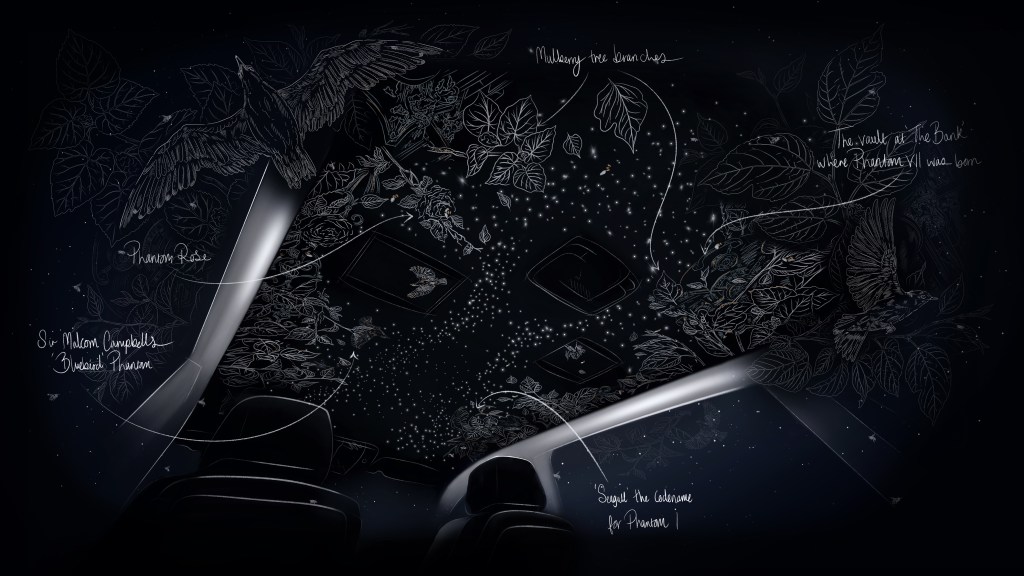
A subtly animated and embroidered Starlight Headliner captures moments from Phantom’s history in 440,000 stitches. Its design includes references to the mulberry tree under which Henry Royce was photographed in his garden at West Wittering, seated with two close colleagues: Charles L. Jenner, the marque’s Chief Engine Draftsman, and Ernest Hives, the head of Rolls-Royce’s experimental department. Drawing on this moment, the Bespoke Collective sought to create an atmosphere of inspiration so that clients seated beneath the Starlight Headliner might experience, as Royce once did, their own flashes of imagination and possibility.

The scene unfolds to include the distinctive square-crowned trees in the courtyard of the marque’s Goodwood headquarters. The honeybees – a reference to the 250,000 residents of the Rolls-Royce Apiary – are in full flight, perhaps towards the Phantom Rose, grown exclusively on the grounds of the Home of Rolls-Royce. Interwoven within the constellations are quiet tributes to great Phantoms of the past – among them a bird motif representing Sir Malcolm Campbell’s Phantom II, known as the ‘Bluebird’. Hidden amongst the mulberry leaves is a reference to the locking mechanism on the vault door at ‘The Bank’ – the secret 1990s design studio where the first Phantom of the Goodwood era was drafted.

AN UNFORGETTABLE HERITAGE, IN MOTION
For the designers, engineers and artisans who created the Phantom Centenary Private Collection, this motor car was a once-in-a-generation responsibility. What has been achieved reflects the same spirit that gave rise to Phantom itself: the marque’s relentless pursuit of excellence and ambition to craft the best motor car in the world.
Rolls-Royce Celebrates 100 Years of Phantom at Goodwood Revival 2025

Rolls-Royce Motor Cars continues its year-long programme marking the centenary of its pinnacle product, Phantom, at this weekend’s Goodwood Revival.

The centrepiece of the marque’s annual presence at the event will be a display on the Aerodrome Lawn, consisting of five magnificent Phantoms representing key moments and developments in the model’s 100-year history.

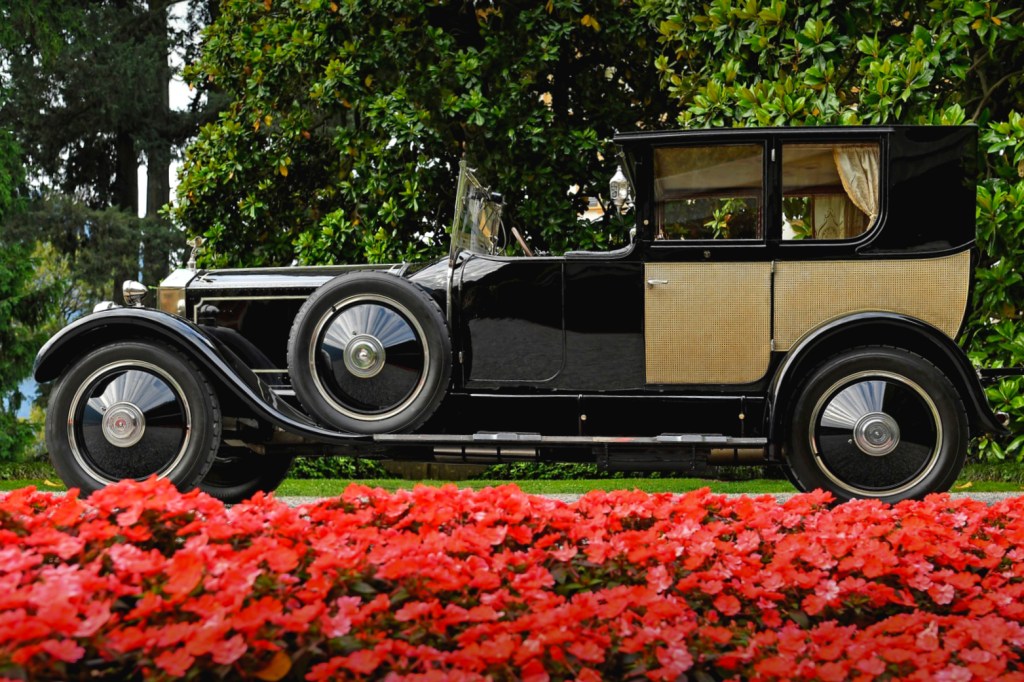
PHANTOM I BROUGHAM DE VILLE – ‘THE PHANTOM OF LOVE’
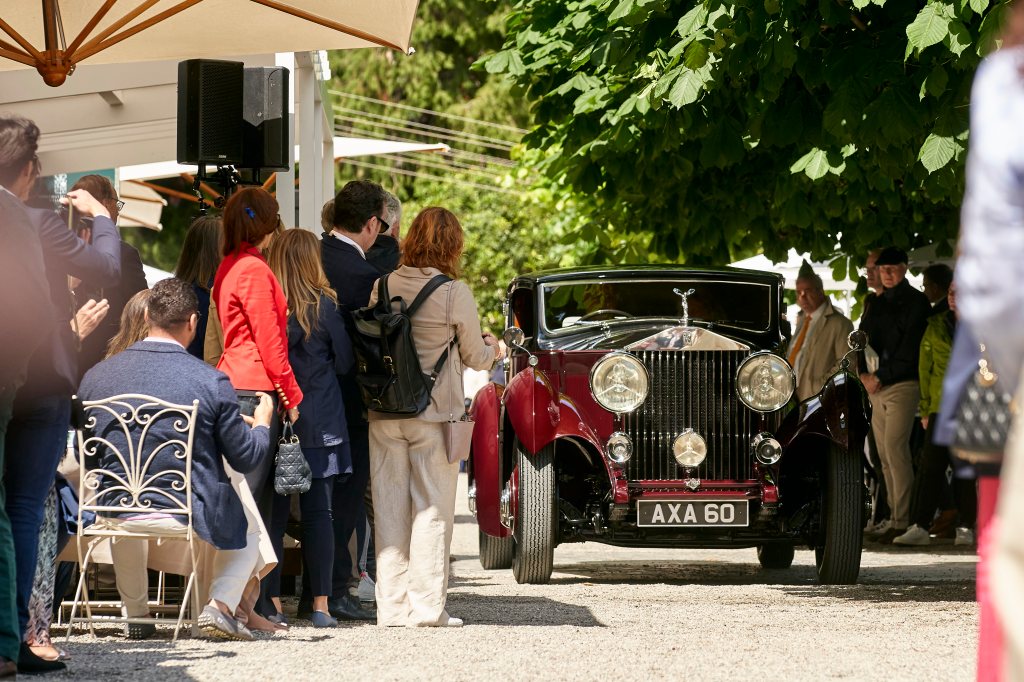
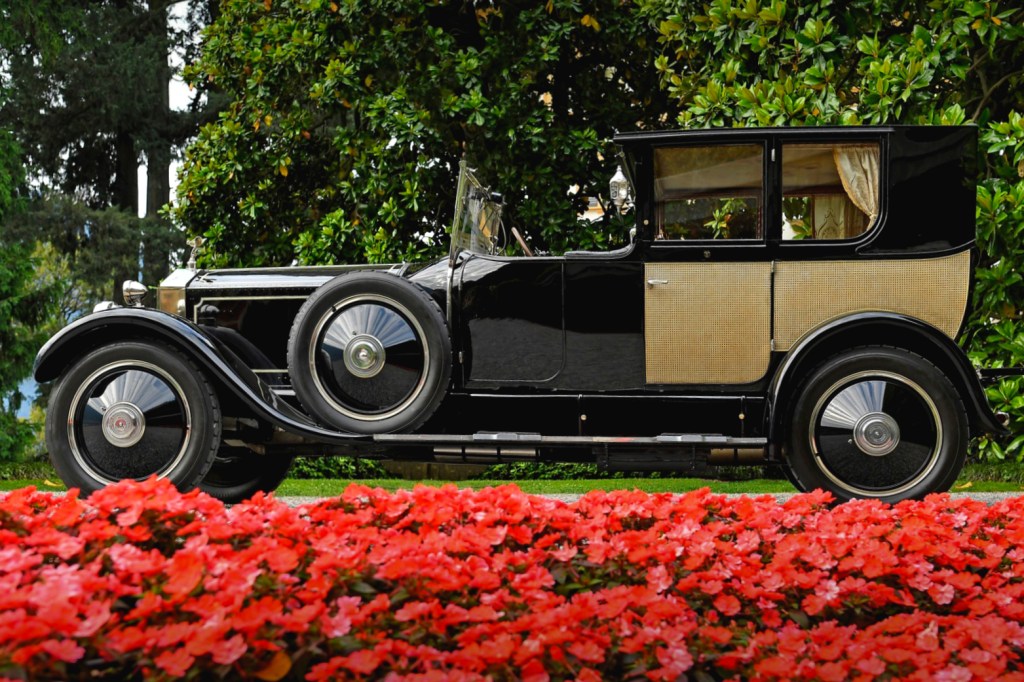
Dating from 1926 – the year after the original New Phantom was launched – this celebrated motor car is one of the finest examples of automotive art and craftsmanship ever created. It was commissioned by Clarence Warren Gasque as a gift for his wife, Maude, an heiress to the Woolworth family fortune, and was both a magnificent monument to his devotion, and an immoderate homage to her passion for 18th Century French history and design. Interior details include bespoke Aubusson tapestries, a hand-painted ceiling with gilded cornices, and a drinks cabinet topped with a French Ormolu clock and a pair of French porcelain vases filled with gilded metal and enamel flowers.

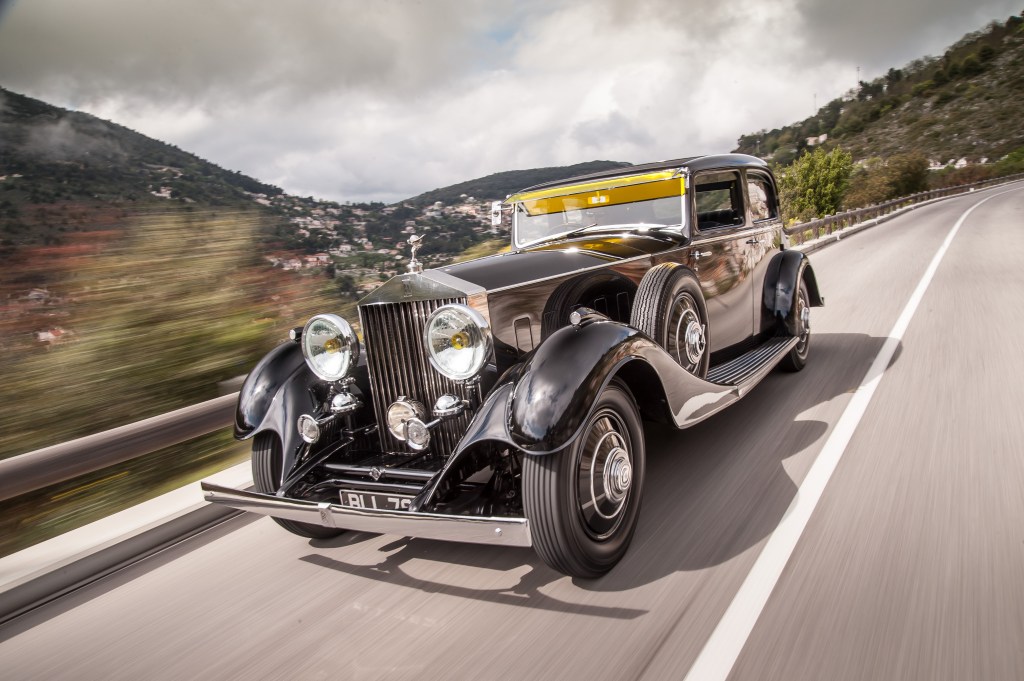
PHANTOM II CONTINENTAL TOURING PARK WARD
The now rare and highly prized Phantom II Continental was the production version of an experimental compact, sporting Phantom II variant produced for Henry Royce’s personal use. It was designed for high-speed touring over long distances on the smooth, straight roads of Europe and one of the few Phantoms of its era in which weight, wind resistance and other performance-related factors were as important as passenger comfort. This example, chassis 92PY, was commissioned by Mr A Y Gowen, an American industrialist who owned 16 Rolls-Royce motor cars during his lifetime. Intended for his travels around Europe, it’s fitted with a sunroof as well as the unique yellow tinted sun visor.

PHANTOM III
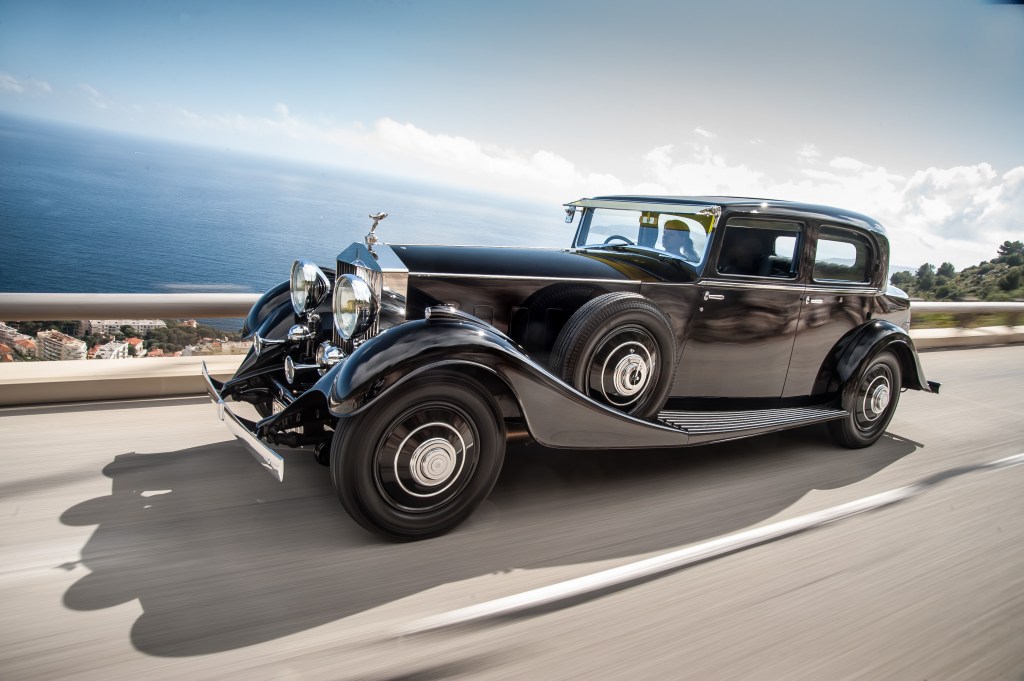
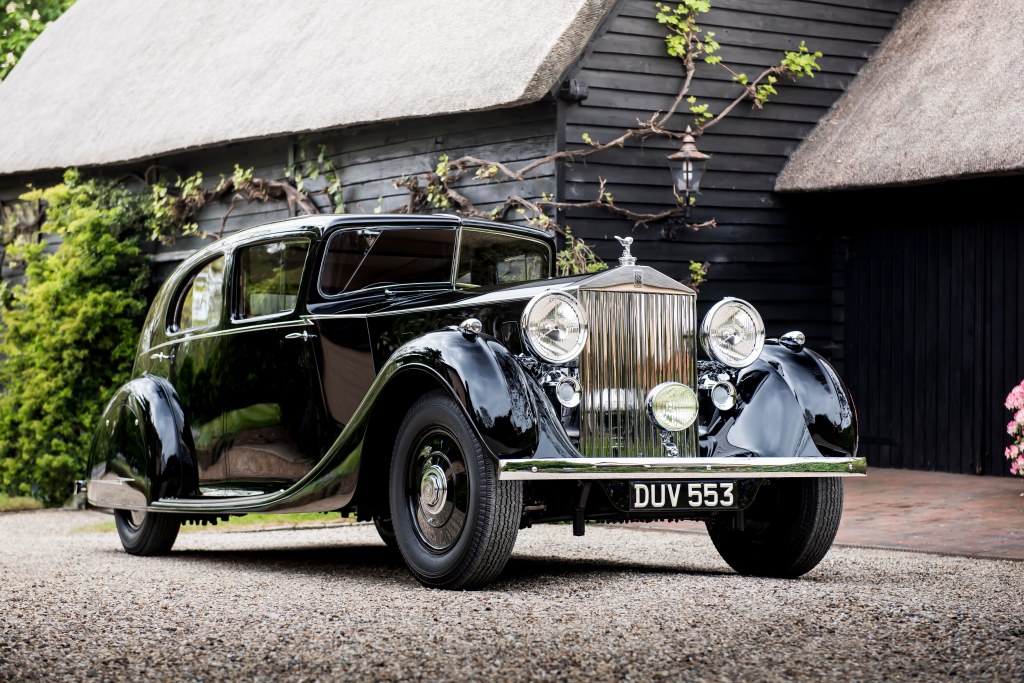
This beautiful motor car was originally ordered and delivered to Major Frederick Warren Pearl of Eaton Square, London SW1, in 1937. It passed through a number of hands before being exported to the United States. In 1989 it was repatriated to the UK and acquired by its current owner in 1995, following a comprehensive restoration.

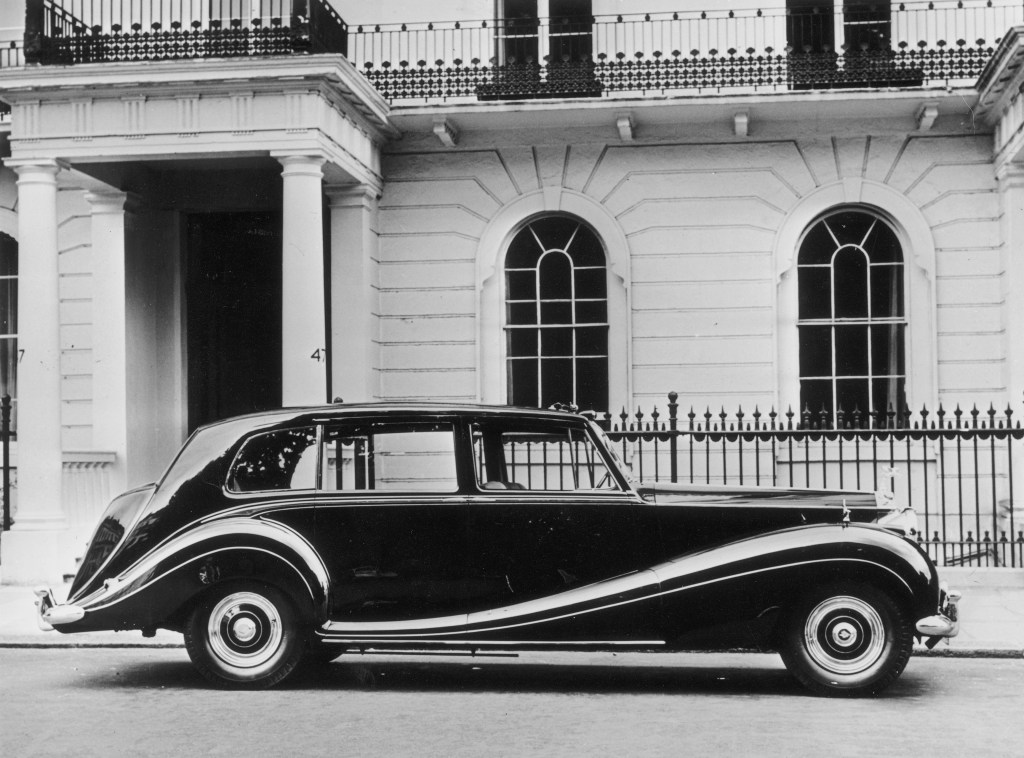
PHANTOM IV LANDAULETTE
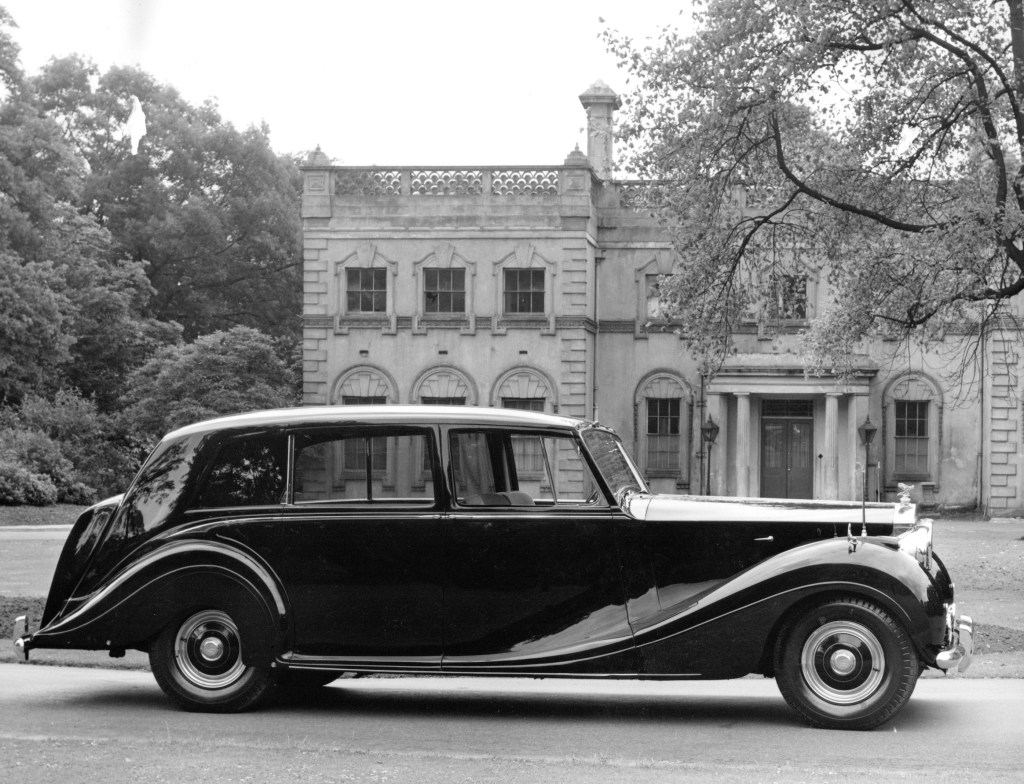
Phantom IV is the most exclusive model to bear the Phantom name: just 18 examples were produced between 1950 and 1956 and were offered only to royal families and heads of state. The chassis was 23.5 inches longer than that of the similar Silver Wraith; it was also the only Rolls-Royce to be fitted with a straight 8-cylinder engine. Phantom IV is still used by the British royal family for state occasions.

PHANTOM V
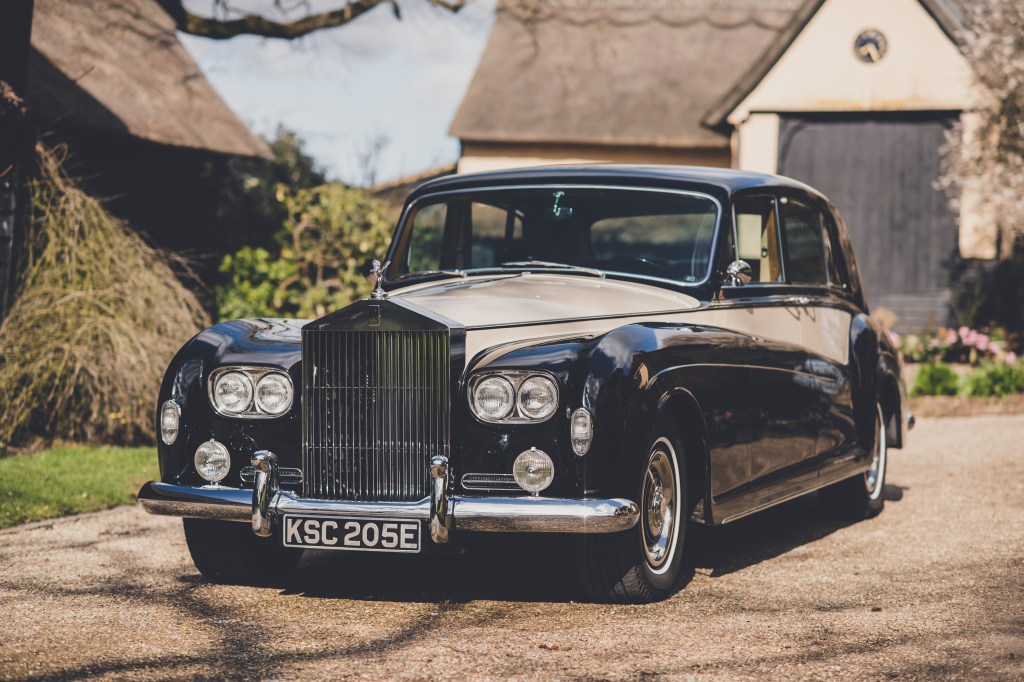
A magnificent and rare Rolls-Royce Phantom V with coachwork by James Young, this elegant PV22 model is finished in its original Midnight Blue. It was ordered by Marks & Spencer in January 1963 for the use of its chairman, Lord Marks, and delivered to him in March 1964. In perfect mechanical order, it has covered just 92,000 documented miles from new.

During the Revival, Phantom will also make regular appearances on the legendary Goodwood Motor Circuit. Four Phantom course cars will run from the assembly area between each race, demonstrating the power, precision and dynamic ability that continue to define Phantom as ‘the best car in the world’ after 100 years.

Andrew Ball, Head of Corporate Relations, Rolls-Royce Motor Cars: “No motor car has played such a pivotal role in shaping automotive and cultural history as the Rolls-Royce Phantom. Over eight generations spanning 100 years – a remarkable anniversary we’re honouring throughout 2025 – it has represented the very best in engineering, comfort and personal expression for its owners, and won admirers around the world. Goodwood Revival – on the doorstep of the Home of Rolls-Royce – is the perfect setting in which to celebrate this extraordinary motor car and its continuing legacy, with five of the most distinctive and historically important Phantoms ever created on public display. They vividly illustrate the aesthetic, technical and emotional through-lines that connect the original ‘New Phantom’ created by Henry Royce in 1925 to the highly Bespoke Phantom commissions we bring to life for our clients a century later.”

A Century of Power and Influence: The Rolls-Royce Phantom at 100

Phantom occupies a unique place in the history of Rolls-Royce. At any given time during the last 100 years, it has represented the very best in effortless luxury, engineering excellence, fine materials and exquisite, highly skilled craftsmanship. Across eight generations, each as storied as the last, Phantom has remained unrivalled – not just as the marque’s flagship motor car, but the world’s pinnacle luxury product – an icon of icons. As it enters its second century, Phantom remains an authoritative statement of connoisseurship, enjoyed by those who shape our world.

The stories of these individuals – and their motor cars – give Phantom its own place in history. Phantom has been associated with famous people and momentous events from its inception, signifying power and influence through its sheer size, dominant presence and – perhaps most significantly – its unique capacity to reflect its owner’s personality and significance.

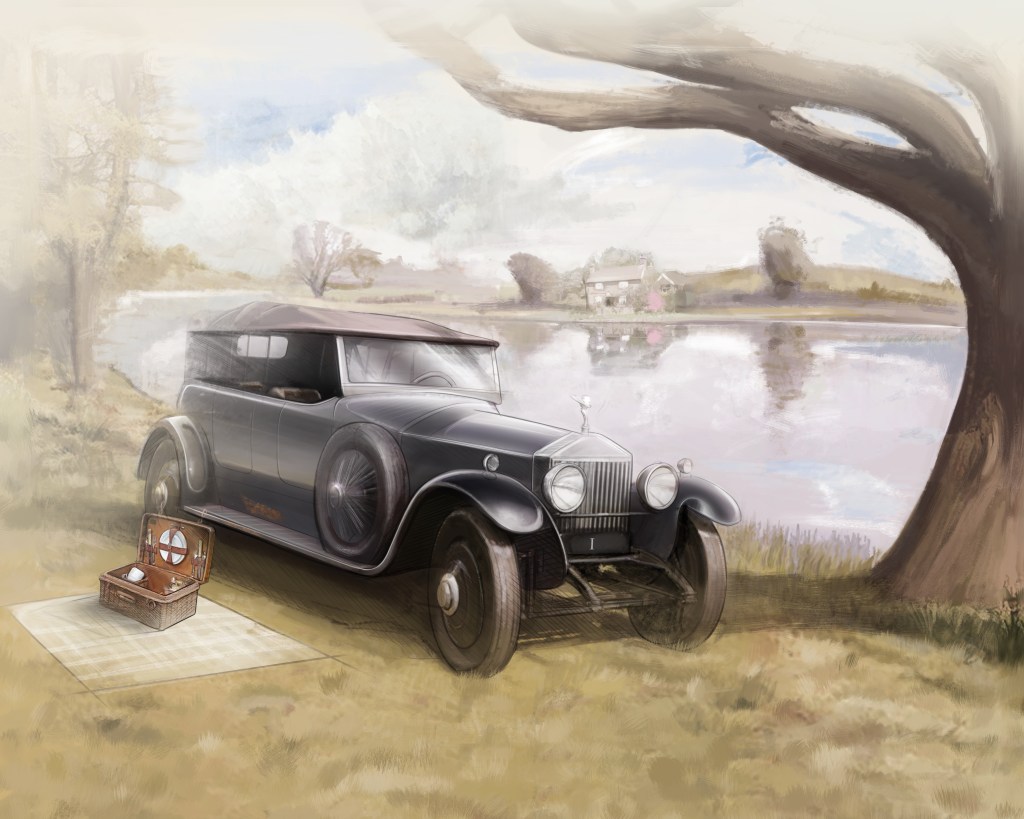
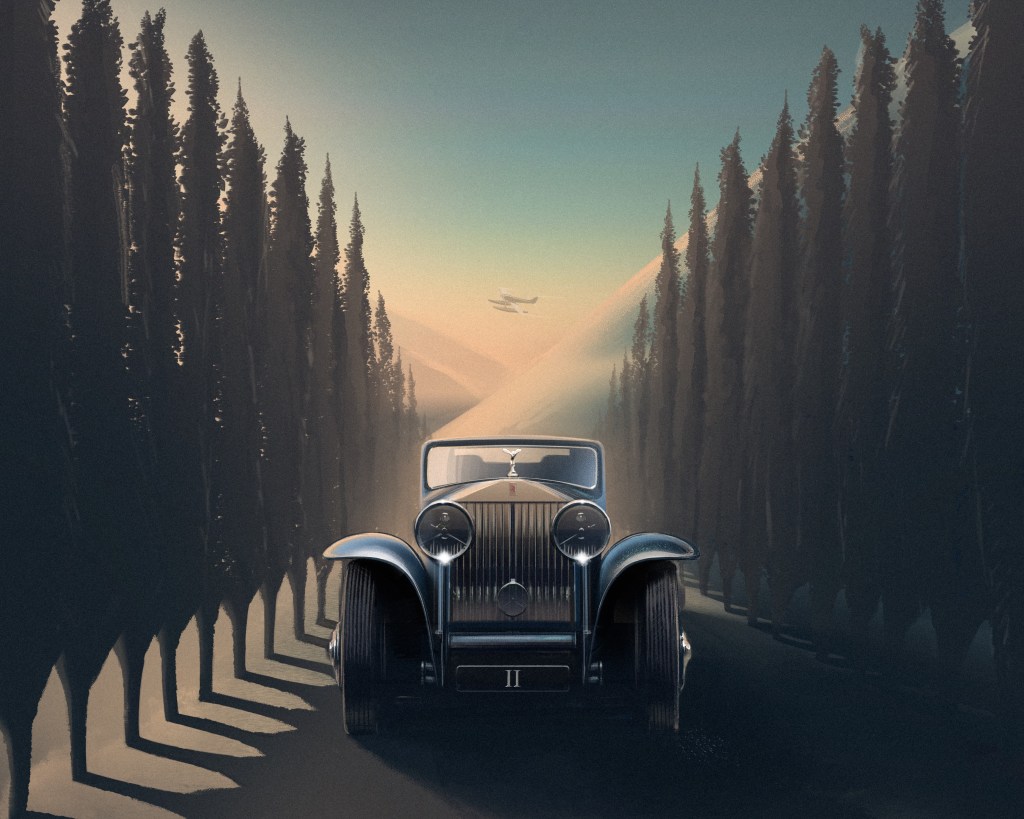
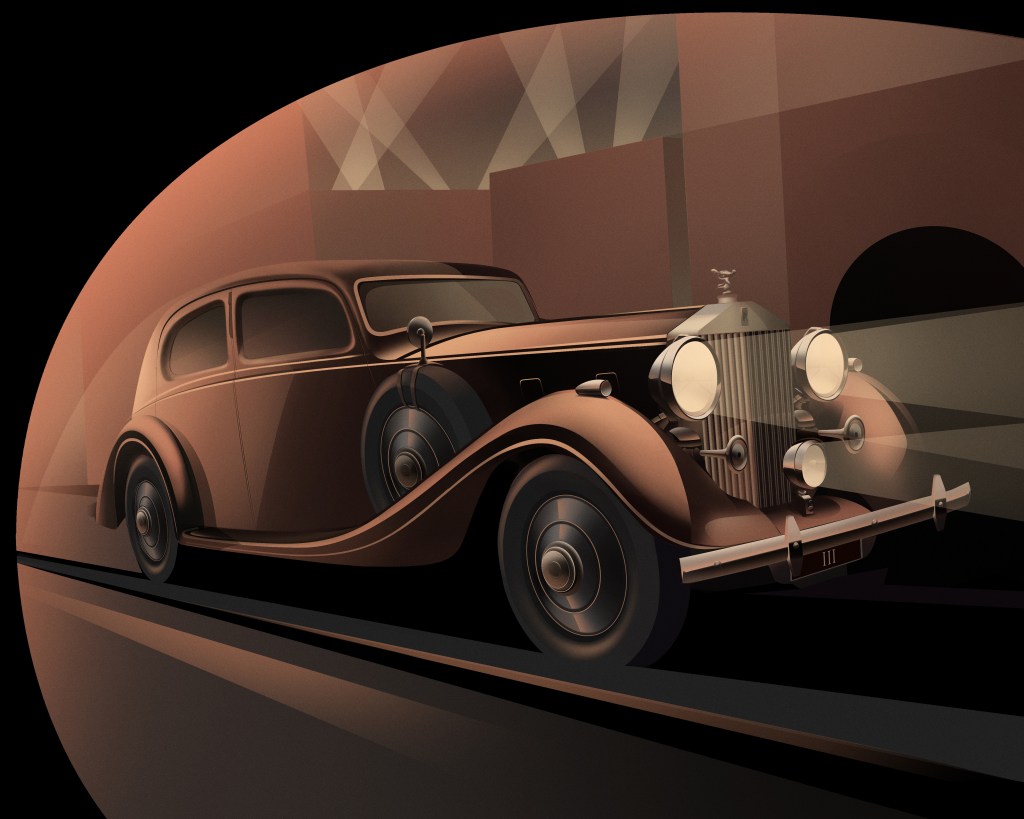
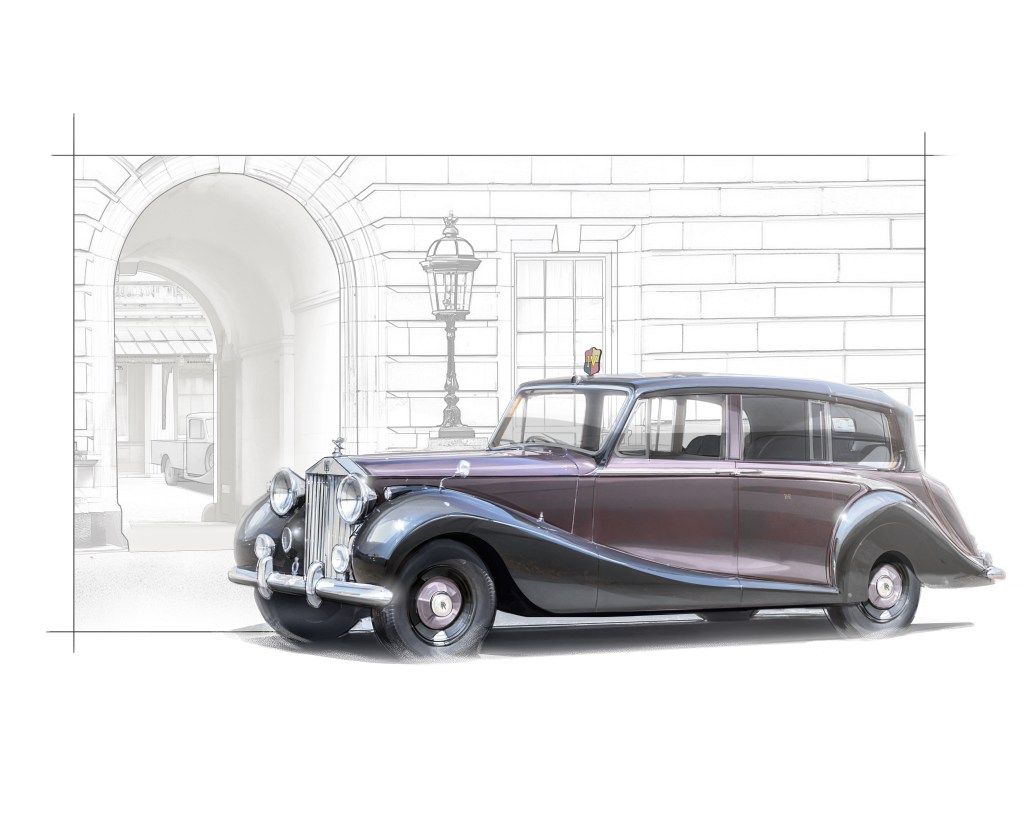
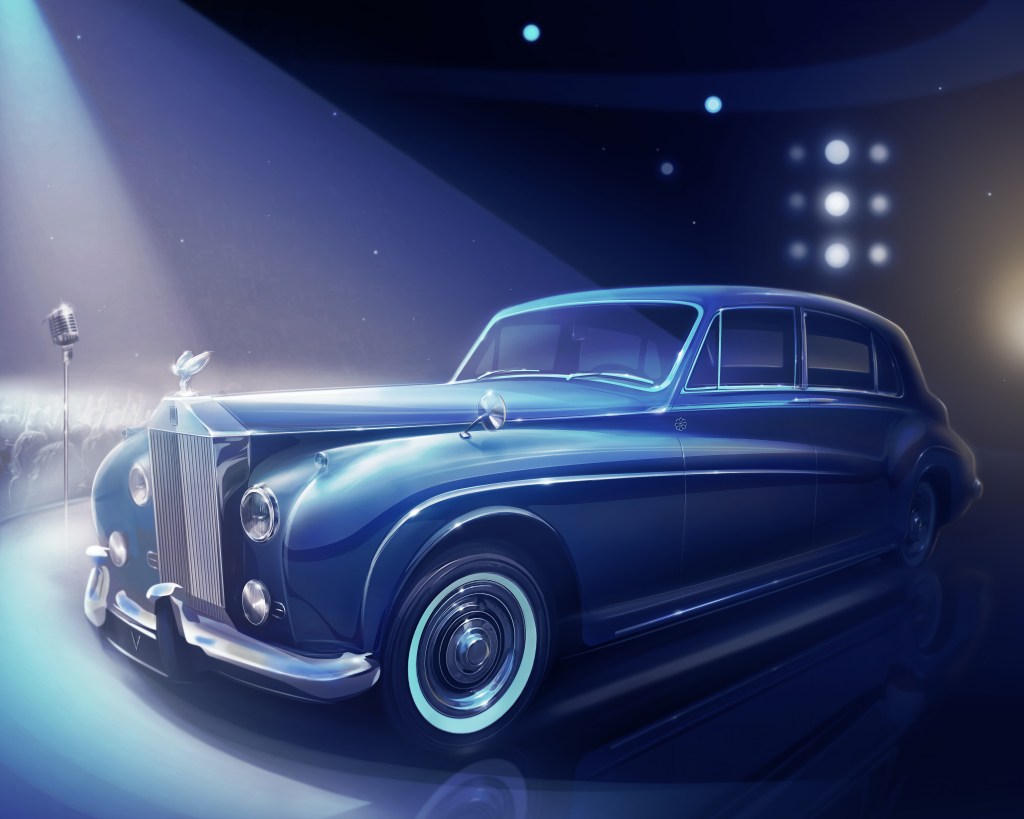
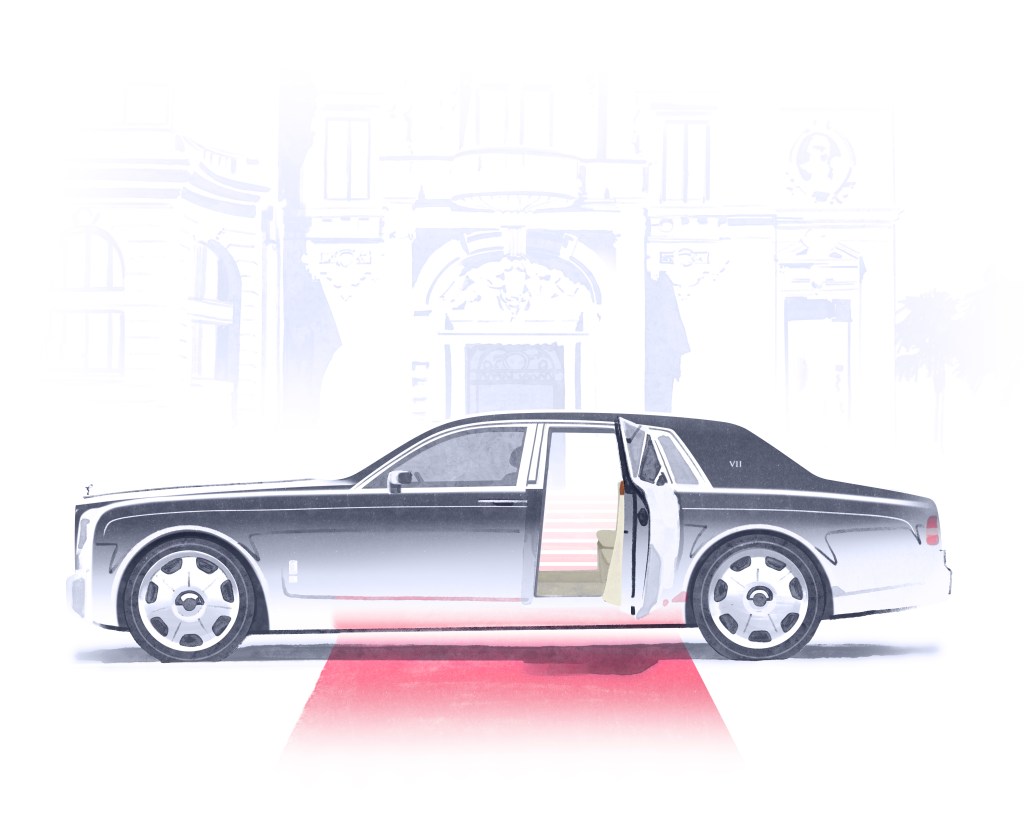
Rolls-Royce marks Phantom’s centenary by reflecting on some of the fascinating stories where Phantom has played a role. The marque’s designers have created a series of original artworks paying tribute to Phantom’s legacy, celebrating this remarkable motor car’s cultural impact through the decades and capturing the spirit of each of its eight generations.

These artworks echo a historical precedent dating back to 1910, when the artist Charles Sykes – who would later create the Spirit of Ecstasy mascot – was commissioned to produce six original oil paintings for the marque’s 80-page catalogue. These images showed Rolls-Royce motor cars arriving at the opera, a country house, the golf course and other venues, reflecting the tastes and lifestyles of its almost exclusively aristocratic owners at the time. The illustrations created by the marque’s designers in 2025 illustrate just how much that client profile has diversified over the past century.

While these contemporary illustrations celebrate Phantom’s evolving role in culture, they also echo a deeper truth: that for a century, Phantom has been present at defining moments in politics, society, and global history. From heads of state to stars of stage and screen, it has served those whose decisions and presence have helped shape the world we live in.

PHANTOM AS A STATEMENT OF AUTHORITY
One of the great commanders of the Second World War, Field Marshal Bernard Law Montgomery, 1st Viscount Montgomery of Alamein, was nicknamed ‘the Spartan General’ for his austere lifestyle. His sole concession to comfort was in his personal transport. Recognising the power of image and symbolism, ‘Monty’ used a pair of Phantoms to communicate permanence, solidity and reliability, sending a clear signal to his troops that he would stick with them through the darkest hours.

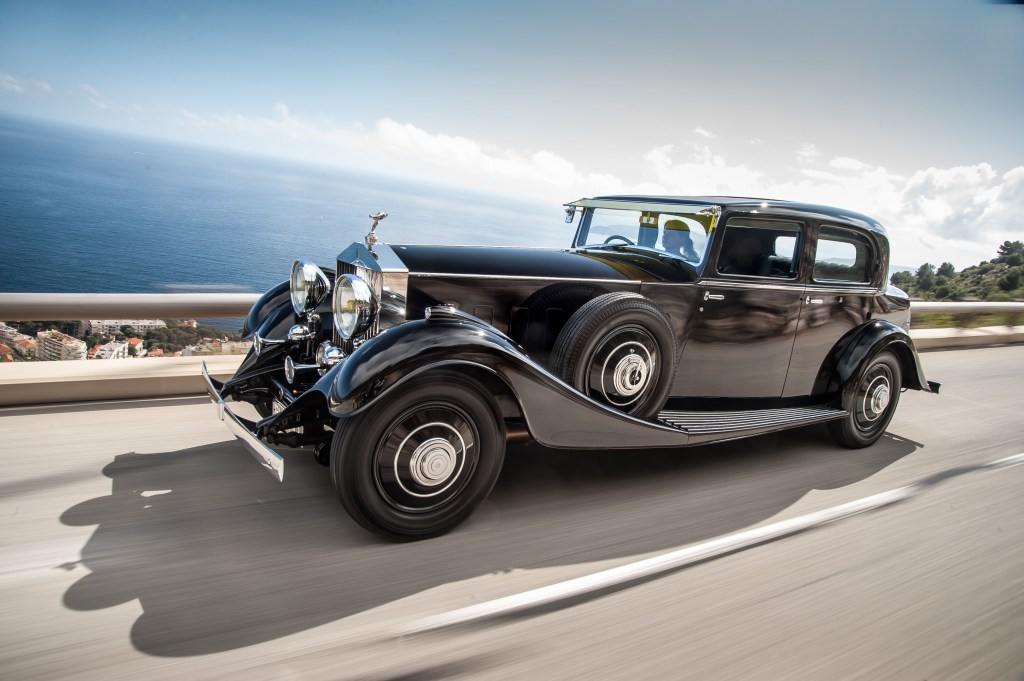
Montgomery’s day-to-day transport was a 1936 Phantom III with coachwork by Freestone & Webb, requisitioned from the head of the Talbot Motor Company, Frederick Wilcock. In the build-up to D-Day in June 1944, he used this motor car to convey Winston Churchill, General Eisenhower and even King George VI to planning sessions at the Supreme Headquarters Allied Expeditionary Force in Southwick House, Hampshire.

On occasion, during the war years, he used the ‘Butler’ Phantom III, assigned to the Chief of the Imperial General Staff. This particular motor car was so named because it was originally commissioned for Alan Samuel Butler, Chairman of the De Havilland Aircraft Company. With bodywork by HJ Mulliner, its most distinctive feature was a front-sloping windscreen that made the Phantom 15% more aerodynamic, a quality further enhanced by its swept-tail rear profile and enclosed spare wheel and tyre. Montgomery bought the motor car in 1958 and kept the ‘Butler’ until 1963, during which time it served many eminent passengers including the Prime Ministers of Canada, Australia and New Zealand.

PHANTOM AS THE ROYAL STANDARD
While Montgomery’s Phantoms were present at events that shaped the modern world, others took pride of place in royal households; none more so than in Rolls-Royce’s home of Great Britain.

In 1948, the Duke of Edinburgh, newly married to HRH Princess Elizabeth, paid a visit to Rolls-Royce. He was loaned an experimental car with a newly designed straight-eight 5.3-litre engine nicknamed ‘the Scalded Cat’ by the marque’s test drivers. Shortly after, he asked if the company could create a more formally bodied car for the use of HRH Princess Elizabeth and himself.

The Duke’s request was accepted, and the first Rolls-Royce Phantom IV chassis was laid down. With advice from Rolls-Royce, it was finished to His Royal Highness’ design. The order was confirmed on 15 November, and to preserve secrecy during its creation, it was given the code name Maharajah of Nabha. This historic motor car remains in active service at the Royal Mews under the name Maharajah to this day.

The British Royal Family subsequently commissioned another Phantom IV, two Phantom Vs, and two Phantom VIs to convey the sovereign. One of these is the renowned Silver Jubilee Phantom VI, which was presented to Queen Elizabeth II in 1977 by the British motor industry to celebrate her 25 years on the throne. Famously featuring a Bespoke raised roof, it would be used again in 2011 at the wedding of the then-Duke and Duchess of Cambridge, conveying the bride from the Goring Hotel to Westminster Abbey.

Across continents, another distinguished Phantom V became woven into the legacy of leadership, this time at the dawn of a new nation in the Middle East. Delivered in 1966 with coachwork by Mulliner Park Ward, the motor car was originally commissioned by Sheikh Zayed Bin Sultan Al Nahyan, revered as the ‘founding father’ of the United Arab Emirates. It was present at his inauguration as ruler of Abu Dhabi and played a pivotal role in his unification negotiations with the leaders of Dubai and other neighbouring Emirates. In 1971, this Phantom carried James Treadwell, the first British Ambassador to the UAE, to the ceremony that formally established the federation on 2 December.

Eight years later, that same Phantom V would return to prominence when it served as the official state conveyance for Her Majesty Queen Elizabeth II during her historic visit to the UAE in 1979 – a moment that brought the two royal legacies full circle.

Beyond ceremonial duties, Phantom has long played a quieter role in the theatre of diplomacy. In 1965, the use of Rolls-Royce motor cars by UK government departments was formally debated in Parliament, a reflection of their symbolic weight on the world stage. During this period, Phantom Vs became trusted envoys in themselves, serving British diplomats in postings as far-reaching as New York, Washington, Tokyo and New Delhi, with earlier examples used in Rome and other destinations.

Over the years, Phantom has also been used in official capacities in countries including Australia, Kuwait, Spain, Thailand and the United Arab Emirates – a testament to its role in the subtle language of statecraft. Indeed, the former British ambassador to Paris, Sir John Fretwell, told British newspaper, The Times, “My Rolls certainly helped when visiting the Élysée. The guards on the gate had no excuse for not knowing it was the British ambassador.”

Whether navigating the world stage or serving closer to home, Phantom has always been an imposing presence, as exemplified by Phantom V, launched in 1959 at 5.8m (almost 19ft) long. While no official documentation exists to prove it, some authors have posited that the minimum statutory distance between British parking meters was revised to accommodate its dimensions.

A PHANTOM FOR A BEATLE: ENTER JOHN LENNON
Not every Phantom V was destined for royal service or diplomatic ceremony. Some would come to symbolise an entirely different kind of cultural power. In December 1964, Britain’s disruptor-in-chief, John Lennon, rewarded himself for the success of The Beatles’ A Hard Day’s Night by commissioning his own Rolls-Royce motor car. In typically iconoclastic fashion, Lennon specified his Phantom V should be black everywhere, inside and out. (There are, however, lines that even a Beatle can’t overstep; the motor car’s Pantheon grille and Spirit of Ecstasy mascot retained their conventional bright finish at the marque’s insistence.) This was one of the first cars in Britain to have blacked-out windows, made from darkened, reflective Triplex Deeplight glass.

As Lennon told a Rolling Stone interviewer in 1965, these were not only for privacy, “It’s partly that, but it’s also for when you’re coming home late,” the Beatle remarked. “If it’s daylight when you’re coming home, it’s still dark inside the car – you just shut all the windows and you’re still in the club.”

But this would not be this particular Phantom’s most famous iteration. In May 1967, just days before the release of Sgt. Pepper’s Lonely Hearts Club Band, this motor car was reborn. Inspired by the Romany-style caravan at his home in Weybridge, Lennon reportedly took the advice of Marijke Koger, one of the artists behind the design collective The Fool, and commissioned a complete transformation.

The once-black Phantom was repainted in vibrant yellow and covered with swirling, floral motifs and zodiac symbols. Lennon enlisted a local artist to realise the new design; the result was an artistic manifesto for the Summer of Love the same year, and was often parked proudly outside Lennon’s Kenwood home.

Not everyone approved. As the freshly painted Phantom drove down a promenade in London’s Piccadilly area that summer, Lennon claimed that an outraged Englishwoman shouted, “How dare you do that to a Rolls-Royce!” before attacking the motor car with her umbrella – a moment that only galvanised its legendary status.

Lennon’s Phantom moved with him to New York in 1971, where it became a familiar sight on Manhattan’s Upper West Side. In 1977, he donated it to the Cooper Hewitt Museum. When it was auctioned in 1985, the Phantom sold for $2,299,000 – then a world record for any piece of rock and roll memorabilia. A year later, it was gifted to the Province of British Columbia, where it remains in the care of the Royal British Columbia Museum: a countercultural artefact and perhaps the most famous Rolls-Royce in the world.
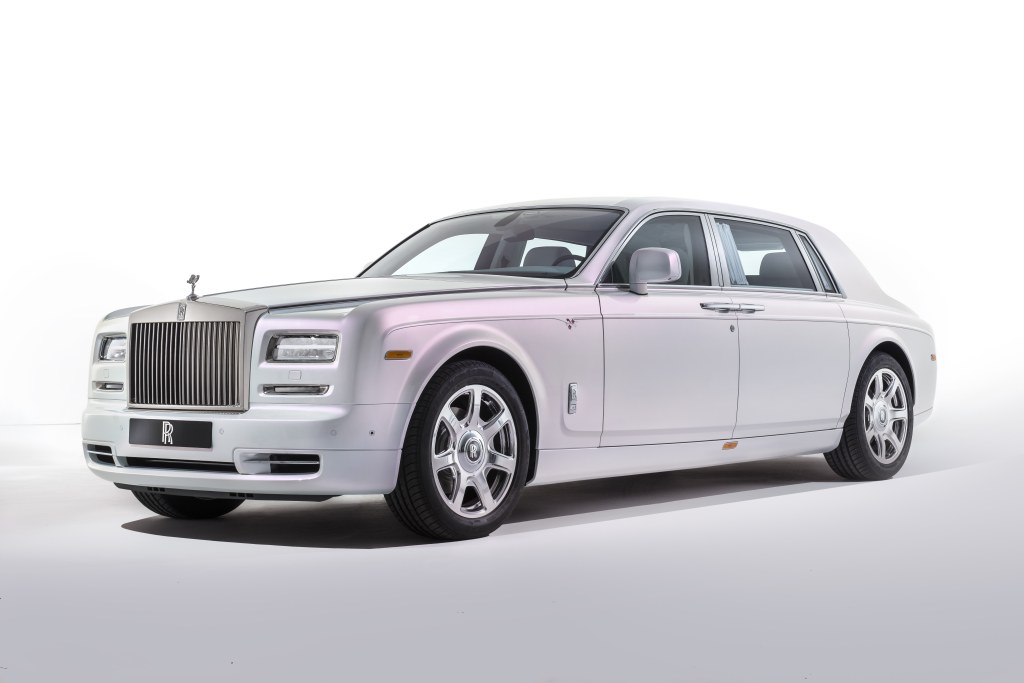
The Lennon motor car is just one example of Phantom’s deep ties to the creative industries. Since its inception, Phantom has been the reward of choice for influential figures who have shaped the cultural landscape, both as recognition for their success and as a canvas to express their own personality and vision.

TO HOLLYWOOD AND BEYOND: PHANTOM TAKES THE LEAD
The era of silent movies effectively ended in 1927 with the advent of the ‘talkies’ – feature films with both synchronised recorded music and lip-synchronised singing and speech. Among the pioneers of this transformational art form was the Warner Brothers studio, whose co-founder Jack Warner rewarded himself with a Phantom. While some ‘silent’ stars like Mary Pickford – whose Phantom was famously fitted with a hidden compartment for carrying illicit alcohol in defiance of America’s Prohibition laws – never enjoyed the same success following the advent of synchronised sound, others including Greta Garbo and Fred Astaire effortlessly embraced the new order to become global icons – and, naturally, Phantom I owners.

In the years that followed, Phantom would make numerous appearances on the silver screen. Its annus mirabilis was 1964, in which Phantom took leading roles in two of the year’s major movie releases.

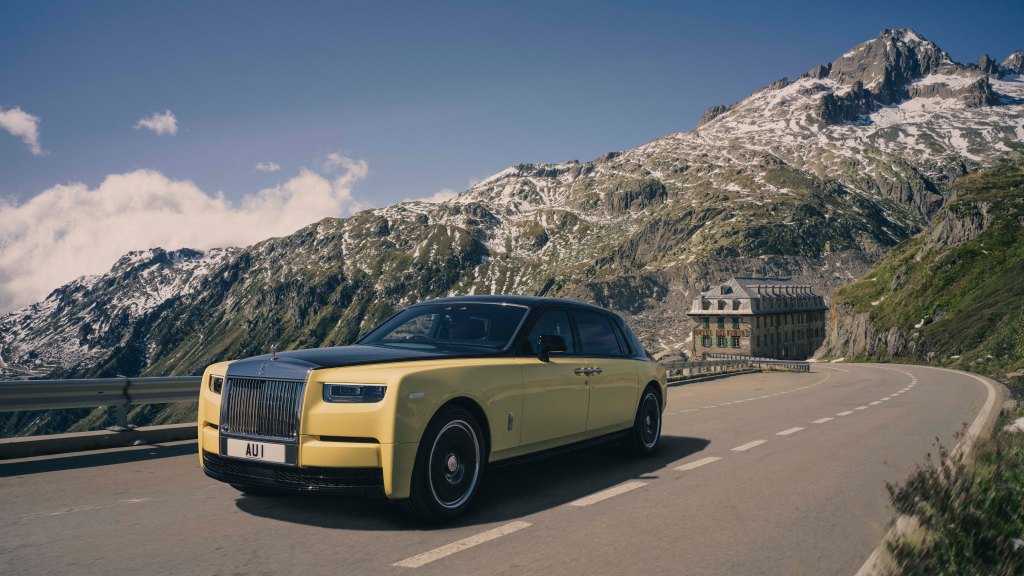
In Goldfinger, the film’s eponymous arch-villain uses his black-and-yellow 1937 Phantom III Sedanca de Ville to smuggle gold over the Furka Pass to his mountain lair, until he is finally thwarted by his nemesis, suave super-spy James Bond. This would be one of 12 appearances by Rolls-Royce motor cars in the long-running 007 franchise. In 2024, the marque commemorated the 60th anniversary of the film’s release with Phantom Goldfinger, a one-of-one Bespoke Phantom VIII, faithfully replicating the original’s distinctive finish and replete with innovative film-inspired details.

The same year also saw the premiere of The Yellow Rolls-Royce, written by legendary British dramatist Terence Rattigan and starring a 1931 Phantom II, with Sedanca de Ville coachwork by Barker. A three-part anthology film, it charts the motor car’s adventures with three different owners – an English aristocrat, a Chicago gangster, and an American socialite – and their lives and loves in the years prior to, and including, the outbreak of the Second World War. The all-star cast featured Rex Harrison, Ingrid Bergman, Shirley MacLaine, Omar Sharif, George C Scott, Alain Delon and Jeanne Moreau; the soundtrack song Forget Domani won a Golden Globe and was later recorded by both Perry Como and Frank Sinatra. The latter would also own a Rolls-Royce.

THE KING’S MOTOR CAR: A PHANTOM FOR ELVIS
Other titans of popular culture naturally gravitated to Phantom as their fame grew across the globe. Elvis Presley, the ‘The King’ himself, loved cars and in 1963 bought his first Phantom V with coachwork by James Young. The suitably rock’n’roll extras included a high fidelity Blaupunkt Köln stereo system, Firestone whitewall tyres, a microphone and a rear armrest containing a writing pad, mirror and clothes brush. It was shipped in Midnight Blue with a grey cloth interior, but in a delightful domestic detail, Elvis had it repainted after his mother’s chickens started pecking at their reflections in the mirror-polish finish. The chosen lighter Silver Blue reportedly didn’t show the blemishes in the paintwork.

In 1968, Elvis donated his Phantom to the SHARE charity – an act which later inspired the song Elvis’s Rolls-Royce by Leonard Cohen and Was (Not Was).

A NEW GENERATION
For decades, Phantom owners tended to fall into two groups: those born into wealth and those who rose to prominence in business, the arts or entertainment. Then, from the mid-1970s, a wave of personal technology began to shift this balance. The arrival of home video, personal computers, mobile phones and eventually the internet, gave individuals the tools to build influence and wealth on their own terms.

A new kind of success story was taking shape. Technology allowed people to make their own fortunes much earlier, and much faster than ever before. It also meant those who already had a public profile – sportspeople, movie stars, musicians and other celebrities – could capitalise on their own image, on their own terms.

This new generation of younger, self-made, entrepreneurial figures was new to luxury. Their tastes were eclectic, individual and unconventional; most importantly, they wanted products that would allow them to express not only their wealth and success, but also their own unique tastes, creative visions and personality.

Phantom VII arrived at the perfect time. As a true Rolls-Royce, it fully met the requirements and expectations of the marque’s traditional clients. But as an entirely new motor car, hand-crafted at the new Home of Rolls-Royce at Goodwood, West Sussex, it was the contemporary product this new generation was looking for. And while it was a complete motor car, it was explicitly positioned as the perfect blank canvas for Bespoke individualisation – just as the coachbuilt Phantoms that preceded it had been.

PHANTOM ENTERS THE SOCIAL MEDIA AGE
For these new owners, Phantom was a motor car in which to be seen; and thanks to social media, they could be – by millions, around the world. In a neat full circle, many of the people who made their fortunes via YouTube and Instagram chose to invest in a Phantom, then used their platforms to share their ownership experience with the world. As its presence grew, Phantom became a fixture at award ceremonies and gala events; in 2012, three special edition Phantom Drophead Coupés made a surprise appearance at the closing ceremony of the London Olympics. The roof of the first retracted to reveal Jessie J, who sang as the motor cars performed laps of the stadium. A suitably grand arrival for such a momentous occasion, this event, along with numerous others in more recent history, was broadcast directly to the devices of millions, making Phantom a social media star in its own right.

PHANTOM TODAY
For 100 years, Phantom has been a quiet but imposing presence in some of history’s most defining and memorable moments. Now in its eighth generation, it remains a potent symbol of power, influence, and success. As well as continuing to attract many of the highest achievers in modern culture, it transcends the automotive world, serving as both the pinnacle of luxury and a cultural icon in its own right.

Whether making cameo appearances in music videos from Calvin ‘Snoop Dogg’ Broadus and Pharrell’s Drop It Like It’s Hot to Drake’s Started From the Bottom, represented in cultural institutions like the Saatchi Gallery and the Serpentine, or serving as a collaborative canvas for brands including Hermès and Iris van Herpen, it continues to reflect and shape the world around it.

Phantom continues to serve as the ultimate canvas for personal expression, facilitating the finest creative hand craftsmanship. Since the dawn of Rolls-Royce’s Goodwood era, it has inspired some of the most extraordinary Bespoke commissions in the marque’s modern age – each a reflection of its commissioning client’s imagination, values and legacy. From intricate expressions of cultural heritage to contemporary works of art, these remarkable motor cars reaffirm Phantom’s position not only as the pinnacle of luxury, but as a medium for self-expression.

As Phantom enters its second century, its journey through culture, communities and continents continues, gathering more momentum than ever. Each new commission adds another chapter to a story still being written – one shaped by the achievements of those who commission it and the timeless commitment to excellence and individuality that have always defined Phantom. In a rapidly changing world, it remains a reassuring constant: the ultimate expression of presence, purpose and personal legacy.

Chris Brownridge, Chief Executive, Rolls-Royce Motor Cars, said: “Phantom is much more than a motor car. For 100 years, it has stood at the pinnacle of all Rolls-Royce motor cars – a cultural phenomenon that both reflects and influences the world around it. From its earliest days, Phantom has been one of the most desired rewards for success and a potent symbol of power and prestige on the world stage. Beyond status, it has always offered its owners a canvas for personal expression, transformed through Bespoke craftsmanship into a moving work of art. Across music, politics, art and beyond, Phantom has been present at many of history’s defining moments. The stories that surround it – and the images they’ve inspired our designers to create – reveal its extraordinary reach, and its enduring connection to greatness.”

Rolls-Royce Presents Black Badge Cullinan Daisy

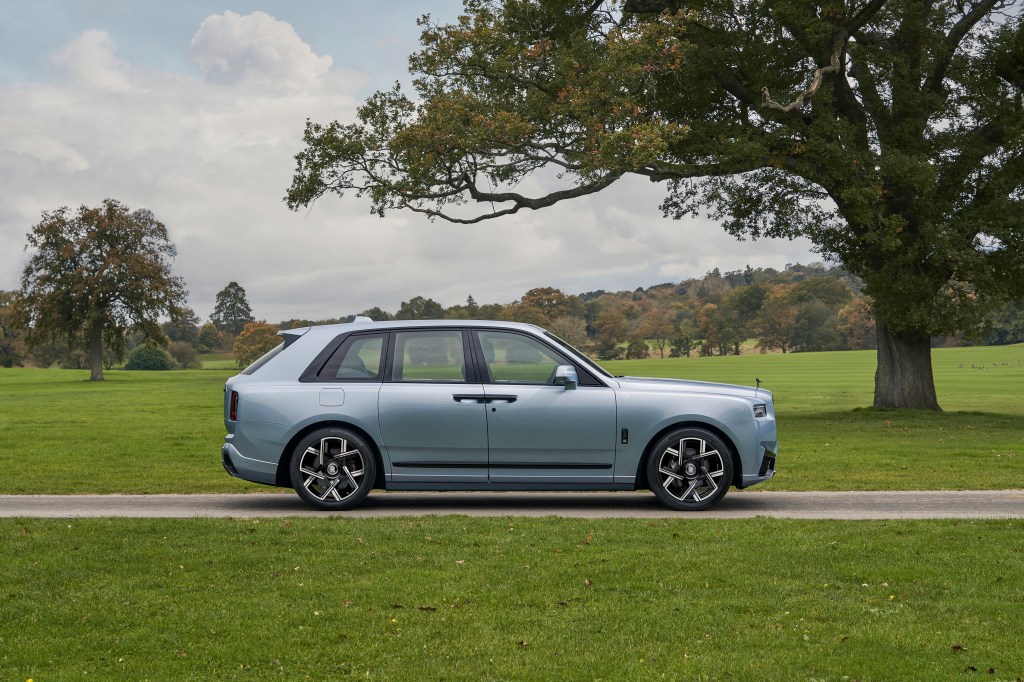
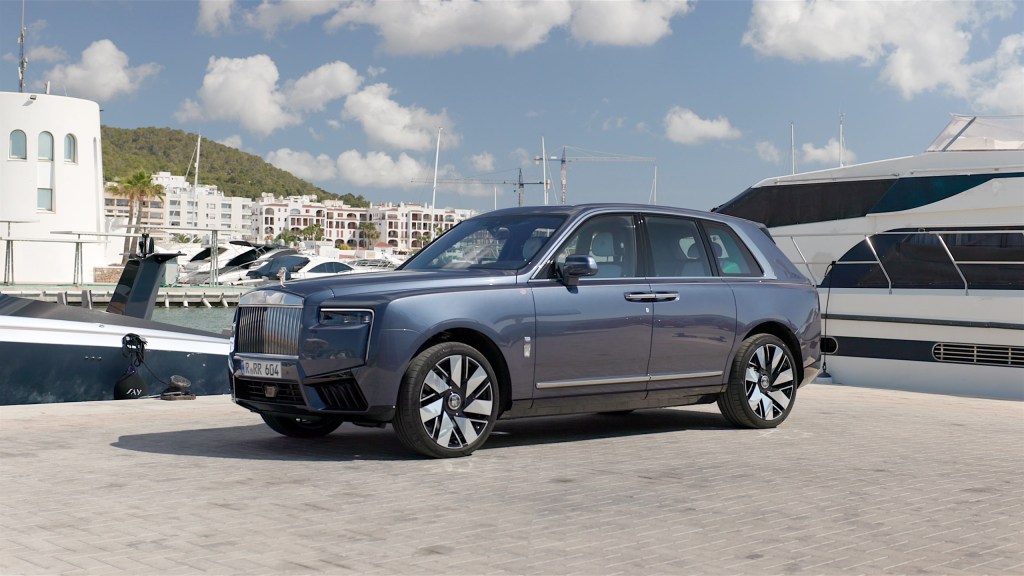
Rolls-Royce Motor Cars presents its latest Bespoke commission, Black Badge Cullinan Daisy – a striking one-of-one Black Badge Cullinan Series II reflecting the commissioning client’s love of hiking and the outdoors. Drawing inspiration from a field of daisies on the client’s favourite trail in the High Tatras mountains, Black Badge Cullinan Daisy represents resilience and perseverance – much like a daisy that thrives in a variety of conditions. Commissioned by an individual who built their success in the outdoor and adventure equipment sector, Black Badge Cullinan Daisy symbolises their path to success.

EXTERIOR: BALANCING POTENCY AND RESILIENCE
The daisy flower appears as a Coachline motif, meticulously hand-painted to complement the single Coachline applied over the Powder Blue Exterior. The subtle colour palette provides a striking contrast to the darkened Black Badge Pantheon Grille, Spirit of Ecstasy and exterior brightwork.

INTERIOR SUITE: ELEGANCE AND COMPLEXITY
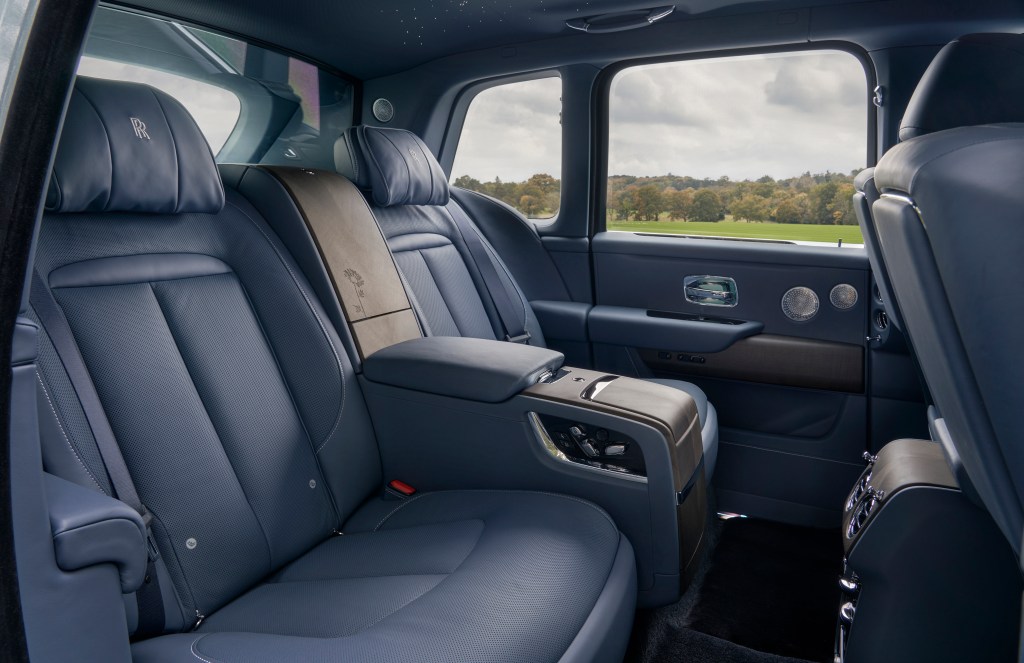
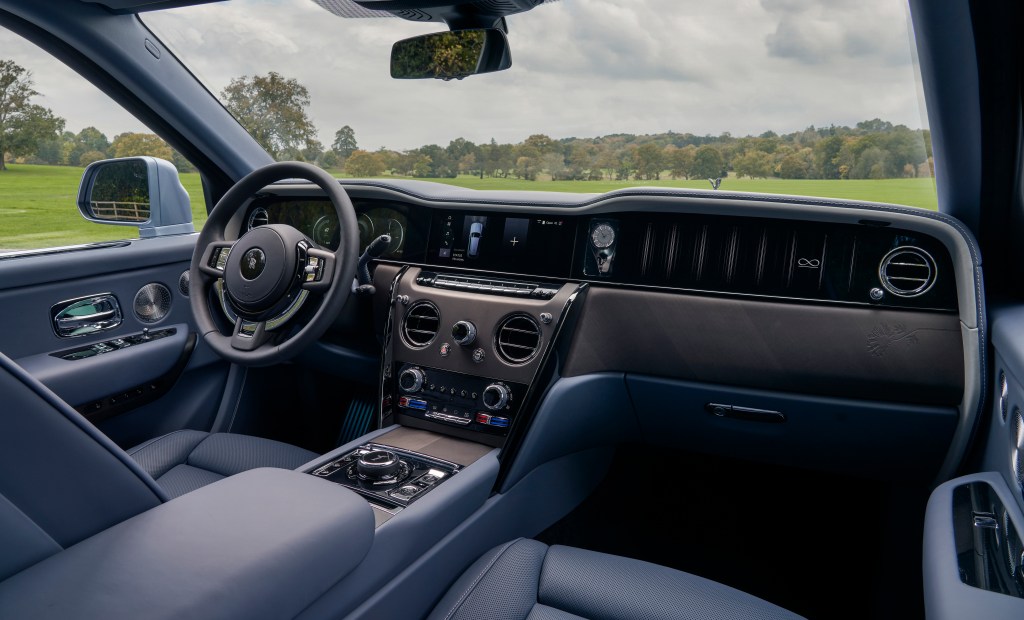
Inside, the daisy motif adorns the front fascia and the waterfall section between the rear seats. The design is meticulously applied to the Blackwood surface using a sandblasting technique. To create the design, the wood is subjected to a precision blasting process in which a stream of fine mineral particles is directed at the veneer, which delicately etches away microscopic layers of the surface. The interplay of light and shadow across the sculpted surface creates a three-dimensional effect, adding visual interest to the finished piece.

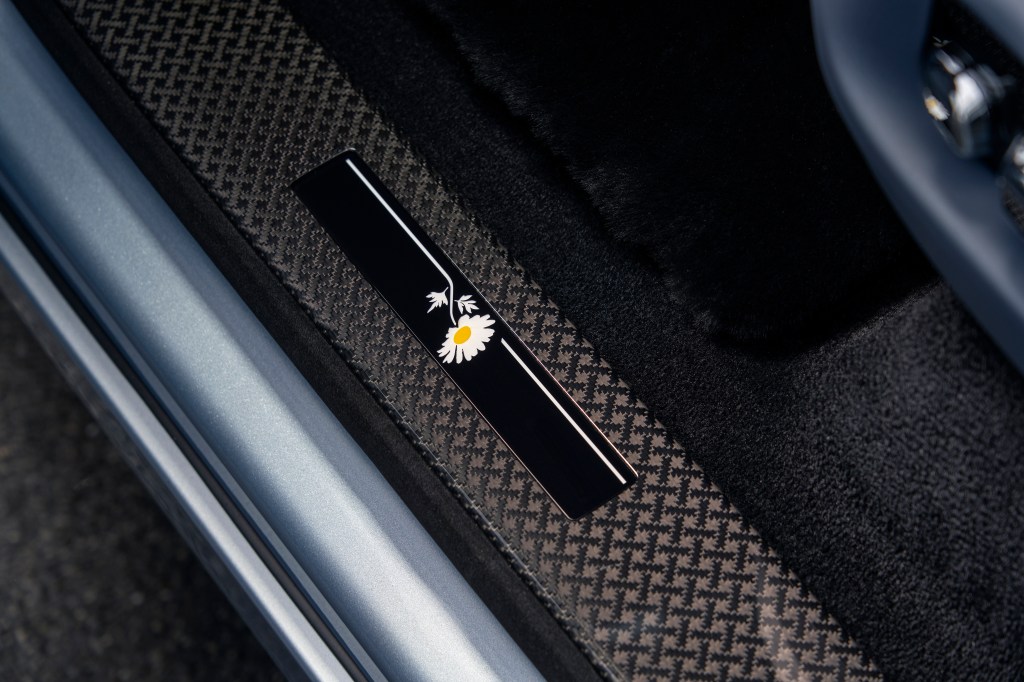
The Blackwood veneers are complemented by a subtle three-colour interior palette. The main leather hue is Fleet Blue, which extends to the Rotary Controls and B and C pillars. It is complemented by Selby Grey and Black leathers, with Fleet Blue seat piping and Selby Grey contrast stitching and headrest monograms. The interior is completed with Bespoke Illuminated Treadplates with a daisy design.

BESPOKE UMBRELLAS: FLOWERS IN THE RAIN
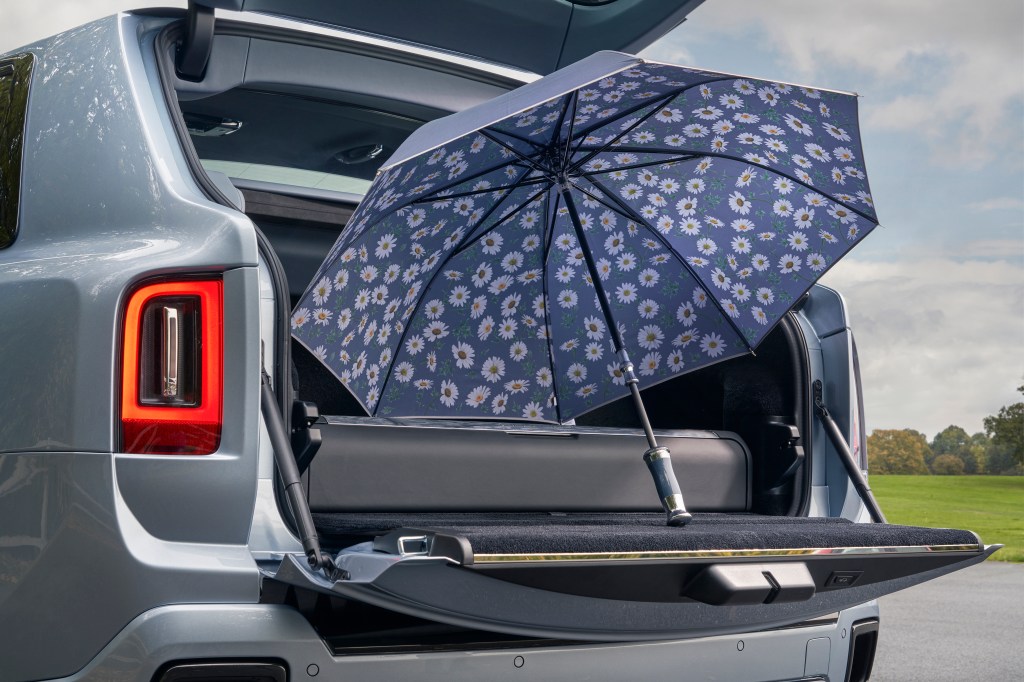
The daisy motif also graces the inside of the Bespoke umbrellas concealed in Cullinan’s rear Coach Doors. The playful pattern can only be seen on the interior of the umbrellas, recalling the ambience of a daisy field in full bloom on a rainy day.

BESPOKE STARLIGHT HEADLINER: A WINDOW INTO THE HEAVENS
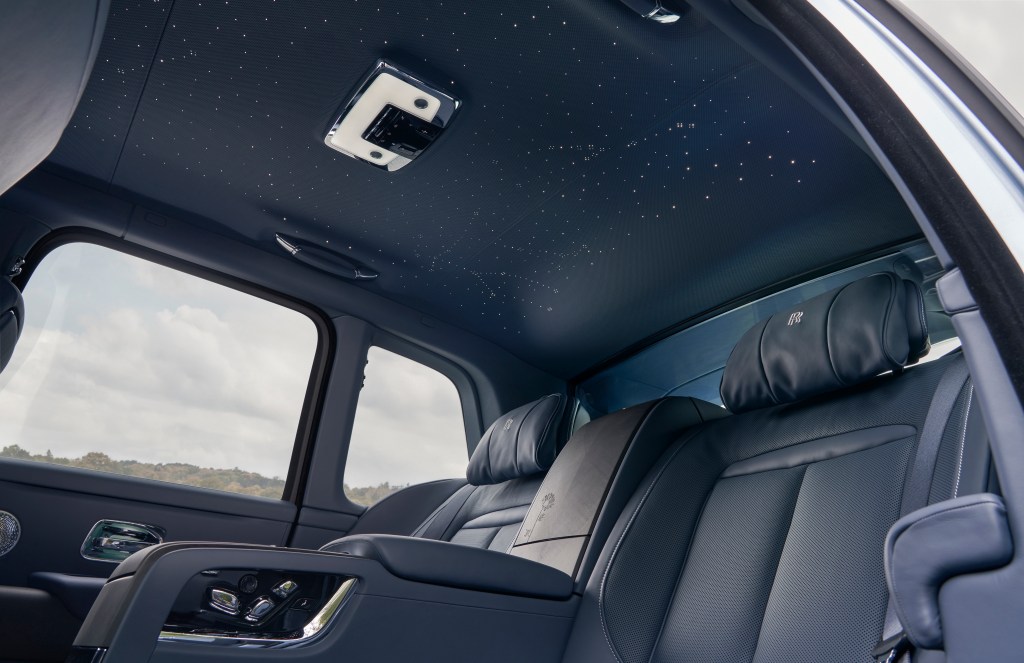
Black Badge Cullinan Daisy is fitted with a Bespoke Starlight Headliner, capturing four of the great constellations that dominate the night sky in northern latitudes: Ursa Major, also known as the Great Bear, the Plough, and the Big Dipper; Ursa Minor, which includes Polaris, or the North Star; Gemini, clearly distinguished by the bright stars, Castor and Pollux; and Taurus, ‘the Bull’, identified by the red giant Aldebaran and the Pleiades star cluster.

RECREATION MODULE: ADVENTURES AWAIT
Black Badge Cullinan Daisy is completed with a Recreation Module – an automatically-deployable storage compartment mounted on the luggage compartment floor, designed to house the client’s favourite hiking equipment.

Commissioning Client, Black Badge Cullinan Daisy said, “My love for the outdoors has been a driving force behind both my personal passions and professional success. The inspiration for this commission came from a field of daisies on my favourite trail in the High Tatras mountains – a place I return to when I need to clear my thoughts. I’m continuously amazed not only by the beauty but the resilience of this flower that seems to thrive in the face of nature’s challenges. I envisioned Black Badge Cullinan Daisy as a symbol of perseverance – balancing strength with serenity”.

Martina Starke, General Manager, Bespoke Design, Rolls-Royce Motor Cars commented: “This commission challenged us to explore how natural motifs can be translated through craft and materiality. From the delicately etched Blackwood to the daisy detail hidden inside the umbrellas, we told the client’s remarkable story through unexpected textures and an entirely new palette. Black Badge Cullinan Daisy is quietly confident, rich in symbolism, yet modern in execution. It also represents a different kind of Bespoke language where emotion is captured through restrained and thoughtful contrasts.”

The Rolls-Royce Phantom VII

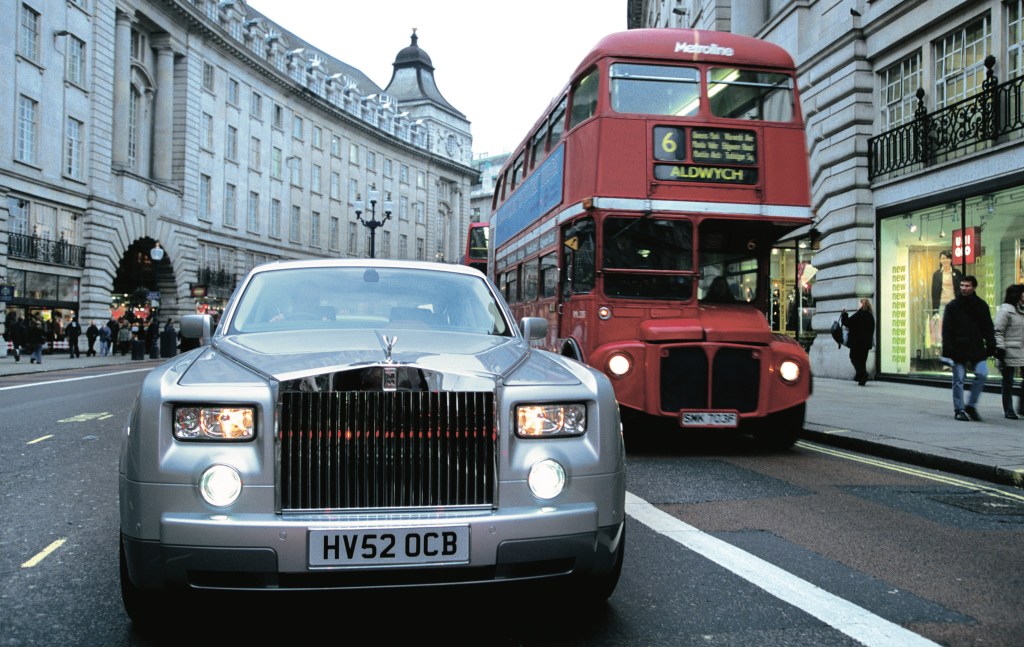
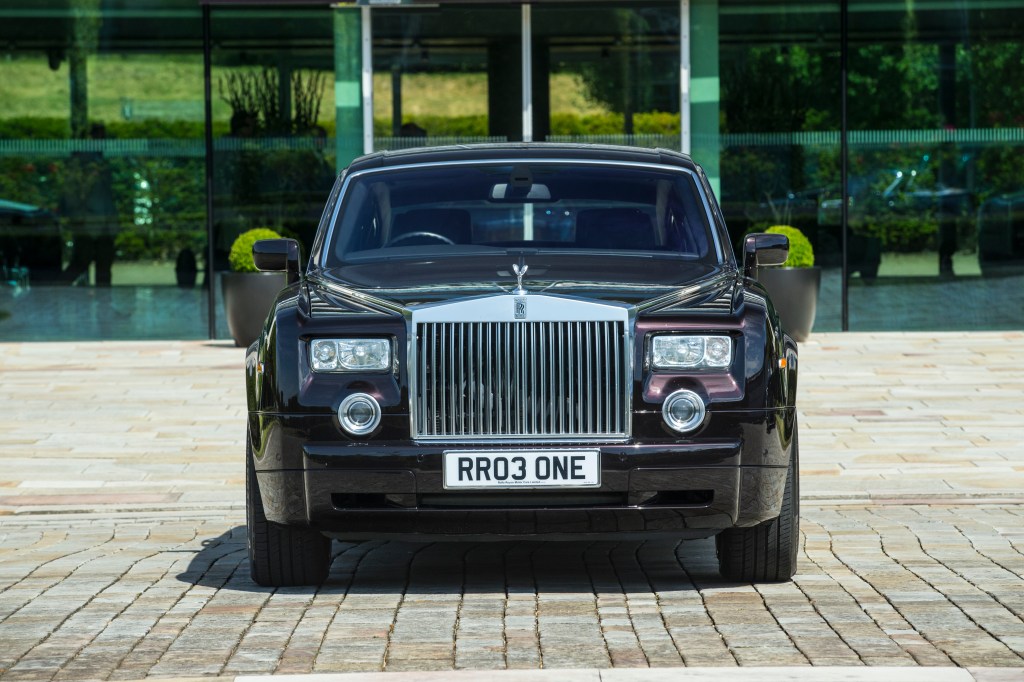
At one minute past midnight on 1 January 2003, the Chairman & Chief Executive of Rolls-Royce Motor Cars handed the keys of the first Phantom VII to its new owner. The moment marked the beginning of a new era for the brand and was the culmination of a process dubbed ‘the last great adventure in automotive history’.

In 1998, BMW Group acquired the rights to manufacture Rolls-Royce motor cars. In less than five years, it had designed and constructed a new head office and manufacturing plant, and designed, tested and built an entirely new motor car worthy of the Rolls-Royce name – a timescale almost unprecedented in the industry.

THE REBIRTH OF A LEGEND
The design for Phantom VII was initially developed in a secret studio, discreetly located in a former bank building on the north side of London’s Hyde Park. For Chief Exterior Designer, Marek Djordjevic, the project was a dream come true. He was instructed to begin with a clean sheet of paper, and was given only three stipulations: the car, codenamed RR01, should have very large wheels; the famous radiator grille; and, of course, the Spirit of Ecstasy mascot.

To understand the essence of what a Rolls-Royce should be, and the characteristics that made it so special and identifiable, Djordjevic turned to designs from the past for inspiration. Three in particular caught his eye: the classically elegant Silver Cloud; the contemporary, understated Silver Shadow; and above all, a coachbuilt Phantom II of the early 1930s.

The heritage Phantom provided him with classic Rolls-Royce signature elements that would profoundly inform the new model’s design: a roofline just over twice the height of the wheels; a long wheelbase, with the front wheels well to the fore and a minimal front overhang; a long bonnet, visually linked to the passenger cabin by an accent line of brightwork; and an imaginary line drawn rising from rear to front along the lower edge of the body, reminiscent of a motor yacht at speed – the famous ‘waft line’ still exhibited by every Rolls-Royce model today.

THE EPITOME OF COMFORT
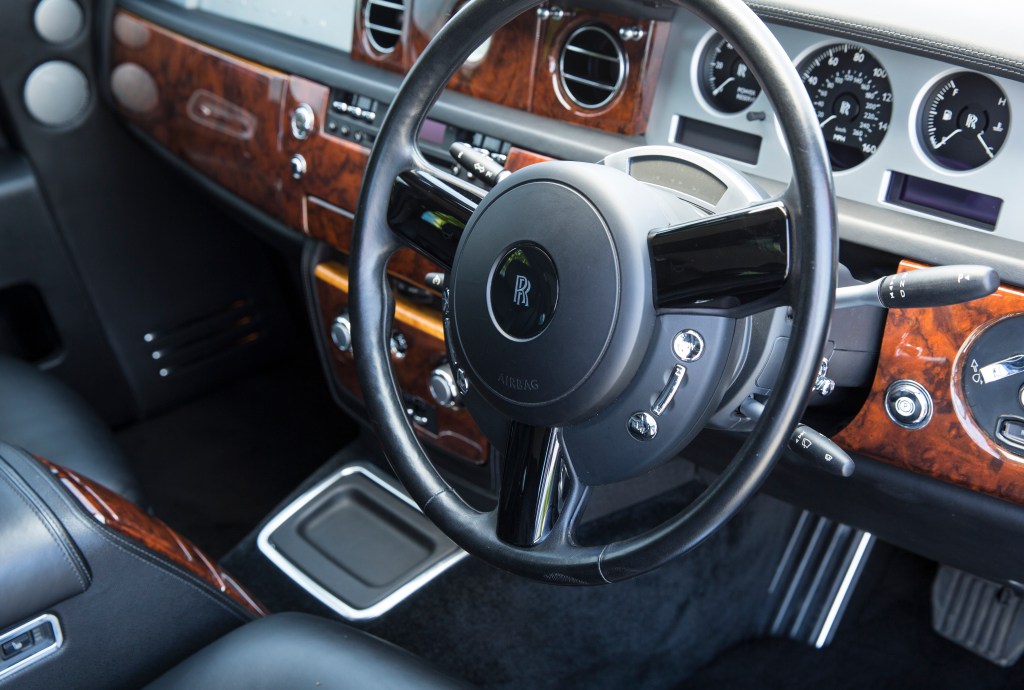
Phantom VII was designed first and foremost around the comfort of its occupants – an overarching design approach known as the Authority Concept. The driving position provided a commanding view of the road ahead, with the primary controls intuitively positioned, in groups and shapes to make them operable by touch alone so the driver could keep their eyes on the road. Secondary controls were either concealed in compartments, such as the centre armrests, or operated by the Controller. A solid metal cylindrical dial, exposed by opening part of the front-seat armrest, the Controller took care of functions including communication, navigation, entertainment and the motor car’s setting configuration, all displayed on a rotating central fascia screen.

For rear-seat passengers, the Authority Concept manifested itself in wide, rear-hinged coach doors allowing them to enter and exit the cabin easily and decorously. Once inside, the doors closed with the touch of a button. The seats themselves were offered in a choice of configurations: ‘Individual’ with a fixed centre armrest and console; or ‘Theatre’ with a raisable armrest and angled side-bolsters permitting occupants to sit at a slight angle towards one another to aid conversation. The seats were also slightly higher than the front seats, so the passengers could see through the windscreen more easily – and admire the Spirit of Ecstasy proudly crowning the long sweep of the bonnet ahead.

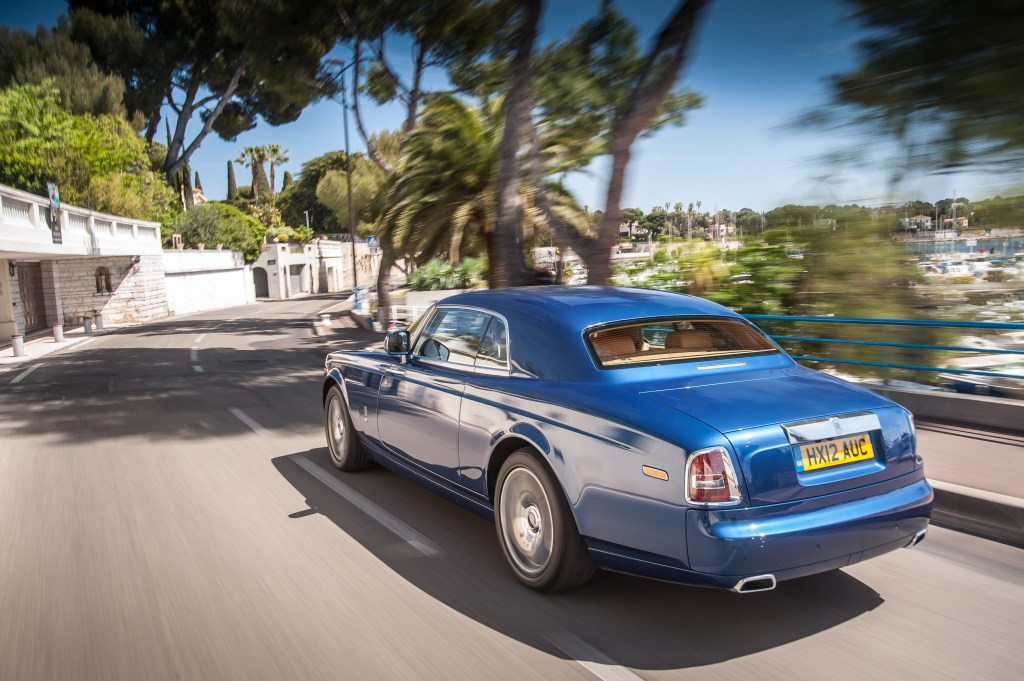
Rolls Royce Series II Phantom Coupe

WHERE PAST AND PRESENT MEET
While Phantom VII’s overall silhouette reflected traditional Rolls-Royce proportions, and its interior upheld the marque’s reputation for peerless comfort, its engineering and construction were at the leading edge of 21st Century technology.

Of all the engineering innovations introduced by Phantom VII, the most enduringly important was its construction method. Instead of the usual monocoque structure, in which the bodywork and frame are integrated into a single shell, Phantom VII was built on an aluminium spaceframe – a skeletal framework of some 200 extruded sections to which the suspension, engine and body panels are attached. This method is often used in racing and high-performance vehicles, owing to its superior strength-to-weight ratio. The Rolls-Royce version was also designed around the marque’s requirement for hand-built perfection; when measured from bumper to bumper, the length of every motor car built on it would be accurate to within 0.5mm. Achieving this precision required skilled craftspeople to hand-weld 150 metres of seams in 2,000 separate locations. The Phantom VII spaceframe provided the foundations for the contemporary Architecture of Luxury, which underpins every model built at the Home of Rolls-Royce today.

EXTENDING ITS INFLUENCE
The Architecture of Luxury harnesses another key benefit of the spaceframe. Infinitely scalable and modifiable, it gives Rolls-Royce engineers and designers the freedom to create motor cars of different shapes and dimensions on the same underpinnings. Today, that remarkable flexibility is demonstrated in models as diverse as Spectre and Cullinan; but the original Phantom VII spaceframe provided the first example of this adaptability.

At the 2004 Geneva Motor Show, Rolls-Royce unveiled an experimental car, 100EX. Four inches shorter than Phantom VII, it was a two-door drophead coupe, with a V16 cylinder engine and a fabric hood concealed by marine-style bleached teak decking, inspired by the classic J-Class racing yacht of the 1930s. It was so well received that a production version, with a V12 engine, was approved; Phantom Drophead Coupé, as it was known, is now one of the rarest and most desirable motor cars of the entire Goodwood era.

The following year, Rolls-Royce launched Phantom VII Extended Wheelbase (EWB), in which the chassis was lengthened by 250mm (9.8in) to create additional space in the rear cabin.

In 2006, another experimental Phantom, 101EX, appeared at Geneva. This was a fixed-head coupé based on the Drophead, and was the first to feature the Starlight Headliner now seen on almost every Rolls-Royce motor car. The Phantom Coupé also became a series production car, again in extremely limited numbers.

A NEW POWER RISING
Another link to the past was provided by the engine. Rolls-Royce had used a V12 engine with Phantom III in 1936, and again in Silver Seraph in the late 1990s. That Phantom VII should be similarly equipped was obvious and indisputable.

Rolls-Royce’s engineers were aware that the Phantom VII engine required a significant amount of power to deliver the effortless ‘waftability’ they wanted from their new model. Phantom VII was therefore fitted with a brand-new, specially designed engine with a capacity of 6.75 litres – the traditional displacement for a Rolls-Royce motor car engine. A derivative of this engine is still used in Rolls-Royce motor cars today – with the obvious exception of the all-electric Spectre and Black Badge Spectre.

THE ULTIMATE CANVAS FOR BESPOKE
Phantom has long been revered as the ultimate canvas for Bespoke, enabling clients to create truly singular expressions of their vision. Among the most notable Private Commissions and Collections were Phantom Aviator, which paid homage to the golden age of flight with aviation-inspired details and a cockpit-like interior; Phantom Serenity, a masterpiece of handwoven silk and delicate embroidery that redefined luxury craftsmanship; and the Art Deco Collection, which celebrated the bold geometric forms and opulent materials of the Roaring Twenties, translating the era’s glamour into a contemporary Rolls-Royce aesthetic. Each of these creations exemplified the boundless possibilities of Bespoke, reinforcing Phantom’s status as the pinnacle of individualisation.

A CRUCIAL LEGACY
Phantom VII remained in production until 2017, when it was replaced by the current eighth generation. For 14 years, it was the marque’s pinnacle product and re-established, then reinforced Rolls-Royce’s long-cherished reputation as ‘the best car in the world’. As the first – and until the launch of Ghost in 2009, the only – motor car to be handmade at Goodwood, it was the foundation on which all Rolls-Royce’s subsequent growth and success was built.

Andrew Ball, Head of Corporate Relations and Heritage, Rolls-Royce Motor Cars said: “For those of us working at the Home of Rolls-Royce today, Phantom VII is where it all began. The first motor car ever to be built at our Global Centre of Luxury Manufacturing Excellence, it ushered in our modern era in 2003 and, in terms of design, engineering, craft and manufacturing, set the template for everything we’ve done since. Though it marked a decisive new beginning for the brand, echoes of earlier Rolls-Royce models are everywhere: from one angle you see Silver Shadow, from another Silver Cloud; and elsewhere an undeniable link to the coachbuilt limousines of earlier decades. Through these inherited traits, Phantom VII represented an up-to-the-minute interpretation of the traditional, formal British saloon. At the same time, it started completely new conversations in modern luxury, and the unlimited possibilities of Bespoke.”

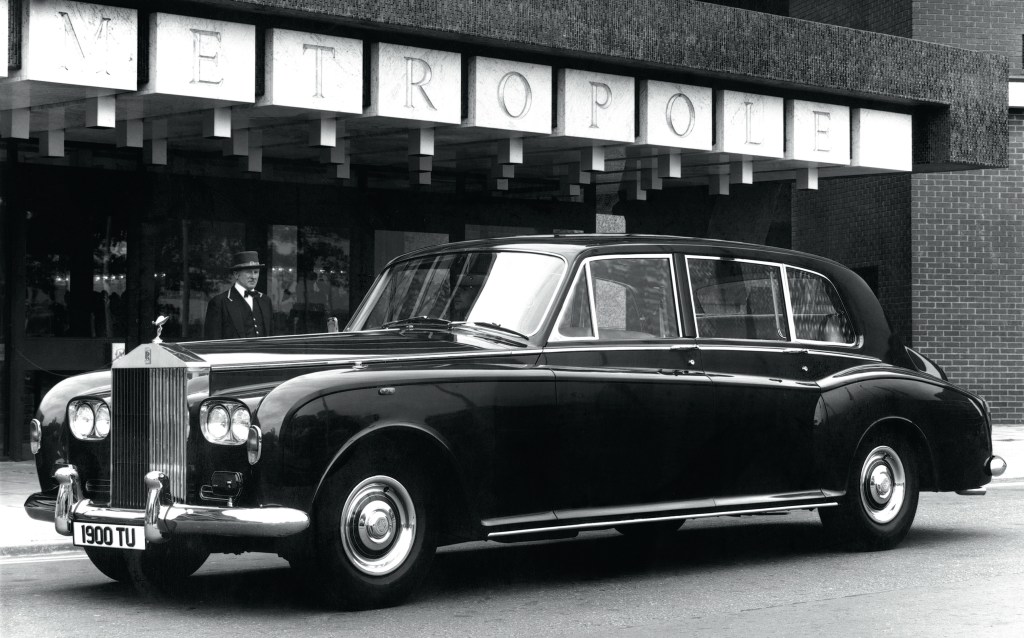
Rolls-Royce Phantom VI

From its foundation in 1904, Rolls-Royce built rolling chassis, upon which clients commissioned coachwork from an independent coachbuilder. The marque produced its first complete monocoque cars in the 1960s, but continued to offer rolling chassis until the 1980s.

Phantom VI was the last Rolls-Royce to be made available in this form. In line with standard Rolls-Royce practice, established by Sir Henry Royce himself, Phantom VI was born out of the upgrades and enhancements to its predecessor, Phantom V. The accumulated improvements reached the point where Rolls-Royce engineers judged it sufficiently evolved to be worthy of a new designation.

Even so, Phantom VI already felt like something of an anachronism. Phantom V clients had been able to choose coachwork from four great names: H. J. Mulliner, Park Ward, Hoopers and James Young. By 1961, the latter two had closed their doors, while Rolls-Royce had acquired and amalgamated the other two to create its own in-house coachbuilder, known as H. J. Mulliner Park Ward, which would provide the bodies for virtually all Phantom VI motor cars.

Like all Rolls-Royce models, Phantom VI underwent various changes during its lifecycle, including a more powerful 6.75-litre V8 engine and a modern three-speed automatic gearbox to replace the original four-speed version inherited from the Silver Cloud era. It also had specially engineered brakes, which used the Silver Shadow-style high-pressure hydraulics to operate rams connected to twin master cylinders; the brake drums were designed for improved heat dissipation and more efficient linings.

Changes in safety legislation required front-hinged doors with burst-proof locks, flush interior door handles and a steering column that would collapse upon impact. New crash-testing protocols also meant the prototype Phantom VI chassis, PRH1500, suffered the indignity of being driven into a 100-tonne concrete block at 30mph (48km/h) – a test it passed so effortlessly it was subsequently rebuilt and is still in service as a courtesy car at a Swiss hotel to this day.

Although coachbuilding was by now a niche offer even for Rolls-Royce, Phantom VI provided a fitting ‘last hurrah’ for this longstanding traditional craft. The seven ‘Special Limousines’, codenamed ‘Alpha’, for example, were superficially similar to other Phantom VIs; but close examination revealed wider, chrome-plated window trims and 16” wheels with tyres inflated to 90psi. These modifications were required to accommodate the 5mm thick glass and 7mm of armour plating that rendered the rear passenger compartment both bullet and bomb-proof. No such provision was made for the luckless chauffeur, however.

Phantom VI was also the last truly coachbuilt Rolls-Royce to offer both Sedanca de Ville and Landaulette coachwork. The Landaulette was available opening either to the B-pillar or over the rear seat, the latter variant being the choice of HM Queen Elizabeth The Queen Mother. Her daughter, HM Queen Elizabeth II, owned two Phantom VIs. The first, codenamed ‘Oil Barrel’, had its roof height raised by 13cm (5″) and a Perspex rear cupola that could be quickly covered by a two-piece, black-painted aluminium dome when the occupants required privacy. The second, delivered for the Royal fleet in July 1987, was codenamed ‘Lady Norfolk’ and had a standard roof height. Both remain in service at the Royal Mews today.

Increasing difficulty in obtaining minor chassis and coachwork components manufactured in the Silver Cloud era finally put paid to Phantom VI production. The last iteration commissioned by a client was delivered in May 1991; its 117 bespoke features included a solid silver fruit bowl to sit atop the cabinet behind the division, kept in place by concealed magnets.

In its 23-year lifecycle, just 374 Phantom VIs were built. The very last example to be completed was a Landaulette finished in black over red, with red leather in the front and red velvet in the rear compartment. Rolls-Royce had originally intended to retain the car itself, but recessionary pressures finally persuaded the company to part with it in 1993.

Phantom VI was the last Rolls-Royce model with traditional coachbuilt bodywork. It represented both the pinnacle and the swansong of the traditional coachbuilder’s art, with a purity of line and finesse of detail unequalled until Rolls-Royce embarked on its contemporary coachbuilding renaissance at Goodwood, with ‘Sweptail’, more than two decades later.

Andrew Ball, Head of Corporate Relations and Heritage, Rolls-Royce Motor Cars, said: “The launch of Phantom VI marked a significant chapter in the Rolls-Royce story; it would go on to become the marque’s final model offered as a rolling chassis, ending a line unbroken since 1904. However, the coachbuilding era ended in suitably magnificent style with Phantom VI. Launched in 1968, just 374 were built in a production cycle that extended over two decades; however, the 1980s can be regarded as its true heyday – only six examples were completed after 1990. The last fully coachbuilt Rolls-Royce, Phantom VI had coachwork by H. J. Mulliner Park Ward, then a wholly in-house operation; the best-known commissions were likely those built for the Royal fleet, which remain in service today. It would be more than 20 years before coachbuilt motor cars of comparable quality and detail would become available, when Rolls-Royce began its modern-day coachbuilding operation at Goodwood with ‘Sweptail’ in 2017. This was followed by the announcement of a dedicated department within Rolls-Royce named Coachbuild, and the unveiling of Boat Tail in 2021, then Droptail in 2023. Phantom VI is thus an important marker in the Rolls-Royce story, as both the swansong of traditional coachbuilding, and a model for the new generation that would follow.”

Rolls-Royce Phantom: 100 Years Of Perfection

In 2025, Rolls-Royce Motor Cars marks the centenary of the launch of the first Phantom. Throughout its long history, the Phantom nameplate has been reserved for the pinnacle model in the marque’s portfolio – the very apex of excellence.

Each iteration, up to and including the eighth generation currently being handcrafted at the Home of Rolls-Royce at Goodwood, has seen advances in design, engineering, materials and technology. Today, Phantom is the ultimate blank canvas for Bespoke commissions, where clients can bring their most elaborate, imaginative and personal visions to life. Inspiration for Bespoke commissions is everywhere, and Phantom’s scale, elegance, presence and adaptability enable it to be whatever its owner wishes it to be. Recent inspirations include haute couture (Phantom Syntopia), famous films (Phantom Goldfinger), Chinese culture (Phantom Extended ‘Year of the Dragon’) and the marque’s own Spirit of Ecstasy Mascot (Phantom Scintilla).

Phantom has always had the same fundamental aim: to provide the most magnificent, desirable and, above all, effortless motor car in the world – the very best of the best. At the start of Phantom’s anniversary year, Rolls-Royce reveals the fascinating story behind its pinnacle product, and how it earned – and maintained – that reputation through a century of constant, often profound change.

Chris Brownridge, Chief Executive, Rolls-Royce Motor Cars said, “One hundred years ago, Rolls-Royce launched the first motor car to bear what would become the most evocative and enduring nameplate in its history: Phantom. Through eight generations, Phantom’s fundamental role as the pinnacle Rolls-Royce motor car has always been the same: to be the most magnificent, desirable and above all, effortless motor car in the world – the very best of the best. In many respects, the history of Phantom is the history of Rolls-Royce: always moving with the times and its clients’ needs and requirements, transcending fleeting trends and providing the setting for the most remarkable executions of craft and artistry, all while resolutely refusing to compromise its core engineering and design principles. We’re proud to continue this tradition of excellence, elegance and serenity into the next 100 years.”

A NEW BEGINNING
Rolls-Royce first earned the accolade of ‘the best car in the world’ with the 40/50 H.P., universally known as the Silver Ghost, launched in 1906. The key to its legendary reputation was Henry Royce’s principle of constant improvement to its underlying engineering, which he conducted on an almost chassis-by-chassis basis.

By 1921, Royce realised the Silver Ghost’s design was reaching the point where no further developments would be possible without compromising either smoothness or reliability – both by now essential elements of the Rolls-Royce character and legend. He therefore began work on its replacement.

Original Advertisement from The Times Newspaper, Saturday 2 May 1925 read: “Rolls-Royce Ltd beg to announce that, after prolonged tests, they can now demonstrate and accept orders for a new 40/50 H.P. chassis. The 40/50 H.P. chassis hitherto manufactured by them will be sold as before… The original chassis of this type was the famous Silver Ghost, and to prevent confusion such chassis will be known as the Silver Ghost model, whereas the new chassis will be known as the New Phantom.”

Despite being couched in terms that today seem rather quaint and stilted, this advertisement made history. It was the first public acceptance by Rolls-Royce that the outgoing model would be called Silver Ghost officially, rather than as a byname. More significantly, it was the first recorded use of the Phantom name.

COPYRIGHT JAMES LIPMAN

THE GAME OF THE NAME
Although there is no specific documentary evidence, it seems safe to assume that the Phantom name was coined by Rolls-Royce’s energetic and ever-inventive Commercial Managing Director, Claude Johnson. It was he who recognised that naming the company’s products could act as a sales device, and it was his fertile imagination that produced the inspired sobriquet ‘Silver Ghost’ for the otherwise prosaically titled 40/50 H.P. in 1907. That same year, he christened another 40/50 H.P. ‘Green Phantom’, before bestowing the rather more evocative ‘Silver Phantom’ on two examples in 1909.

Johnson clearly understood the power of names like Phantom, Wraith and Ghost to convey the products’ supernatural quietness and ethereal grace; all have graced Rolls-Royce motor cars in the modern era for precisely the same reason. How different history would have been had one of his more fanciful efforts – The Dreadnought, The Cookie, Yellow Bird, The Elusive Pimpernel – been adopted instead.

THE BASIS FOR GREATNESS
The Times advertisement also assured readers the New Phantom would retain the “sweet running qualities always associated with Rolls-Royce products”. At this time, Rolls-Royce supplied only rolling chassis, with the form, styling and appointment of the motor car itself in the hands of independent coachbuilders, who created bespoke bodywork to the owner’s specification. Rolls-Royce offered the New Phantom in long-wheelbase form, suitable for formal saloon and limousine designs, and with a shorter wheelbase ideal for owner-driver motor cars with closed, open and ‘sportier’ coachwork.

Then as now, Phantom’s generous proportions enabled owners to specify almost any detail or indulgence they wished. Some clients asked for concealable writing desks or swiveling occasional seats in their long-wheelbase limousines, while owner-drivers are known to have requested safes, dedicated spaces to stow golf clubs and even, in one famous instance, a secret compartment in which to carry diamonds.

On 8 May 1925, The Autocar magazine published its review of the new model. “Few are the firms engaged in the manufacture of motor cars who enjoy quite such a reputation as Rolls-Royce Ltd,” it enthused. “Almost the conjoined names have become the household word for luxury, and every novelist worthy of the name imparts a distinguished air to any character by crediting him or her with the possession of one of the firm’s cars.” With Phantom, Rolls-Royce had clearly succeeded in not only maintaining, but furthering the qualities established and made famous by the Silver Ghost.

ONWARDS AND UPWARDS
Though undoubtedly gratifying, such encomiums did not distract Henry Royce. The design of the original New Phantom had closely followed that of its predecessor, Silver Ghost – so closely, in fact, that some modern enthusiasts refer to it as a ‘Super Ghost’. Over the next four years, Royce continued to refine his design until, in 1929, The Times carried a fresh advertisement announcing the arrival of Phantom II. The advertisement listed all the engineering improvements and upgraded components that justified its designation as an entirely new model.

VIVE LA DIFFÉRENCE
Somewhat ironically, the only person who remained unimpressed was Royce himself, who insisted that even the short-wheelbase Phantom II was irritatingly oversized for his personal use. He therefore instructed his design team to develop a more compact, sporting Phantom II variant which he could enjoy driving across France to his winter home at Le Canadel on the Côte d’Azur.

The designers dutifully produced a close-coupled car, 26EX – ‘EX’ standing for ‘Experimental’ – on an adapted short Phantom II chassis. Records show that neither the Rolls-Royce sales department nor the factory were keen on the concept; indeed, had it not been intended as Royce’s personal transport, it might not have been built at all.

As it transpired, a highly successful continental sales tour demonstrated there was, in fact, great demand for a car capable of high-speed touring over long distances on the smooth, straight roads of Europe. Rolls-Royce successfully met this demand with the now highly prized Phantom II Continental – perhaps the only pre-Goodwood Phantom variant in which weight, wind resistance and other performance-related factors were afforded equal consideration with out-and-out passenger comfort.

Montgomery Rolls-Royce Phantom 2 Photo: James Lipman / jameslipman.com

A NEW POWER RISING
By the time of Royce’s death in 1933, the company was already only too aware that luxury car customers were seeking models that offered more power without sacrificing comfort or excellence. American competitors including Cadillac, Lincoln and Packard were responding with straight-8, V12 and even V16-cylinder engines, which were rapidly eclipsing the large-horsepower, in-line six-cylinder units that had served Rolls-Royce so well for so long.

Given this commercial pressure and the company’s proven experience in designing and building aero-engines, it was inevitable that the next Phantom would have a V12 engine. In accordance with tradition, Phantom III’s arrival in 1936 was announced in The Times, which informed the public that “many outstanding features distinguish this car from its famous predecessor the Phantom II”.

Chief among these was the new engine, with 12 cylinders “giving greater engine smoothness, flexibility, silence and acceleration” – all key requirements for Rolls-Royce’s fabled effortless progress. The new V12 engine was also more compact than the old straight-6, allowing a shorter bonnet and larger passenger compartment. Most importantly, however, it delivered the increased power customers demanded – 165 H.P. against the 120 H.P. of Phantom II, rising to 180 H.P. in later cars.

Comfort was further improved with independent front wheel suspension. “This is particularly noticeable in the back seats under all road conditions and is further enhanced by remarkable road holding qualities and stability on corners even at high speeds”, the advertisement noted, while Phantom III’s new chassis frame allowed for wider, more comfortable back seats.

And it wasn’t just passengers who benefited. As the advertisement pointed out, Phantom III made life more relaxing for owner-drivers and chauffeurs, too, explaining: “A modification in the position of the change-speed [gear lever] and brake levers gives easy entrance to the driver’s seat from the offside… the steering is lighter in operation, has a larger steering lock and the car is more easily manoeuvred by reason of the shorter wheelbase.”

Phantom III was suited to all manner of coachwork styles, and both owner-driver and chauffeured use. And while it was never able to beat its American rivals on price, such was Rolls-Royce’s reputation that it remained the only choice for those who wanted to experience the greatest possible comfort and be seen to be driving the very best.

A CHANGING WORLD
The Phantom name had graced the very best of the best cars in the world for some 14 years when war broke out in 1939. Rolls-Royce ceased all motor car production, and when peace returned in 1945, the company found itself in an entirely different world – but one it had anticipated and prepared for.

Rolls-Royce had correctly foreseen that under post-war austerity, it would need to make its motor cars less complex, easier to service, much less expensive to produce and able to use common parts. At the same time, it was adamant that there would be no reduction in quality.

Its solution was the Rationalised Range, which debuted in 1946 with Silver Wraith. Its new straight-6-cylinder engine was a backward step from the V12 engine of Phantom III, but relevant in straitened times. There seemed to be no place in the modern world for Phantom.

A ROYAL INTERVENTION
The Phantom story might well have ended there, but for two serendipitous events.

As part of the ongoing development process for the Rationalised Range, engineers produced four experimental EX cars on a 229.5-inch chassis with a straight-8 engine. One of these, fitted with a Park Ward & Co limousine body, was officially named Silver Phantom (and unofficially known as Big Bertha). A smaller, lighter saloon version, known as the Scalded Cat, followed.

At the same time, the Royal Household was seeking to replace its ageing fleet of Daimlers – the marque it had favoured since the motor car was invented – but was unhappy with the range then on offer.

In 1950, Rolls-Royce was asked to supply a formal limousine for Royal duties. The company had long been keen to usurp Daimler in the Royal Mews, and gladly produced a ‘one-off’ straight-8 long-chassis limousine with coachwork by H J Mulliner. During manufacture, the car was given the codename Maharajah, and remains in active service at the Royal Mews under that name to this day.

When requests for similar motor cars followed from other Royalty and Heads of State, Rolls-Royce was happy to oblige. The company decided it would be fitting that for such prestigious cars to resurrect the Phantom name. Over the next seven years, the marque produced just 18 examples of Phantom IV, including a second motor car for the Royal Mews, a landaulette named Jubilee, delivered in 1954.

THE LAST HURRAH
The pinnacle Rolls-Royce experience became somewhat more widely available once again in 1959 with the launch of Phantom V – a splendid limousine fitted with coachwork by both the marque’s in-house coachbuilder, Park Ward & Co., and other independent companies, including James Young Ltd and H. J. Mulliner & Co. (Rolls-Royce would go on to acquire the latter, merging it with their own coachbuilder to form Mulliner Park Ward). Two motor cars, known as Canberra I and Canberra II, were built for Royal service, featuring transparent Perspex cupolas over the rear compartments and concealed lighting to better view the occupants on formal occasions.

After 13 years and 832 examples, Phantom V had received enough technical upgrades to be designated as Phantom VI. As with all its forebears, this new iteration prioritised comfort, with separate air conditioning systems for the front and rear compartments. Most of the 374 examples were limousines with coachwork by in-house Mulliner Park Ward Ltd., or James Young Ltd.: the last Phantom VI, a landaulette, was delivered to the Sultan of Brunei in 1993.

Phantom VI was the final body-on-chassis model Rolls-Royce ever produced, and its discontinuation effectively ended the tradition of coachbuilding until it was revived at Goodwood in 2017 with ‘Sweptail’.

PHANTOM REBORN
When the marque was relaunched at the new Home of Rolls-Royce at Goodwood, a ‘Phantom-type’ model quickly emerged as the natural and obvious choice for its inaugural motor car. The design concept, for which legendary Rolls-Royce designer John Blatchley was consulted and of which he approved, included signature elements inherited from previous generations. These included a long wheelbase with the front wheels well to the fore and a minimal front overhang of the bodywork, a long bonnet comprised of a massive expanse of metal along the side, and a rising sweep of the door edge towards the front windscreen pillars.

Rolls-Royce Motor Cars’ first Design Director of the Goodwood era, Ian Cameron, formed a specific team to create the interior design for the much-anticipated new model. Their remit was to express the ambience of past Phantoms and the traditional high-quality materials of coachbuilding – leather, wood, deep-pile carpeting – in a totally up-to-date way.

At one minute past midnight, on 1 January 2003, the first Phantom VII was handed over to its new owner. Unlike every Phantom that had gone before, it was built entirely in-house by Rolls-Royce Motor Cars, with spaceframe bodywork to a single design rather than coach built. In one important sense, however, it retained a link with its heritage, in that every car was hand-built by a team of skilled craftspeople. Furthermore, the marque’s Bespoke programme meant Phantom was effectively a blank canvas on which patrons could realise their own visions and desires.

THE EVOLUTION CONTINUES
Over its 13-year lifespan, Phantom VII cemented Rolls-Royce as the world’s pre-eminent super luxury motor manufacturer, and its own place as the marque’s pinnacle product. But just like their predecessors, Rolls-Royce’s designers and engineers understood that perfection is a moving target: that Phantom was never ‘finished’.

In 2017, Rolls-Royce presented Phantom VIII. This was the first Rolls-Royce to be built on the Architecture of Luxury, an advance on the all-aluminium spaceframe used on Phantom VII, and designed to underpin every future motor car produced at Goodwood.

Phantom VIII was specifically designed to be the ultimate canvas for Bespoke commissions. With this in mind, it is the only Rolls-Royce model to feature the Gallery – an uninterrupted swathe of glass that runs the full width of the fascia, behind which the client can display a commissioned work of art or design.

This singular focus has made Phantom the subject of some of the most technically ambitious and challenging Bespoke projects ever undertaken by the marque’s designers, engineers and specialist craftspeople. Commissions such as Phantom Syntopia, Phantom Oribe, Phantom Koa and Phantom ‘Inspired by Cinque Terre’ all incorporate features, materials and engineering innovations never seen before in a Rolls-Royce or any other motor car. Each is a unique, one-of-one creation that will never be repeated, echoing the very first Phantoms that were individually hand-built for their commissioning owners.

THE ESSENCE OF PHANTOM
For 100 years, the Phantom name has occupied a unique position in the Rolls-Royce product family and story. While the standards of quality, engineering and design are consistent across all Rolls-Royce motor cars, Phantom has always been the grandest, most impressive and, above all, most effortless motor car being built in series production by the marque at any given moment.

Through all its eight generations, Phantom has never been compromised by existing engineering orthodoxy, fleeting trends or development costs. From Henry Royce’s original New Phantom to today’s Phantom VIII, the essential purpose behind Phantom has always remained the same: to build the motor car that offers owner-drivers and passengers alike the most comfortable, satisfying experience available in the world at that moment in time – the unassailable pinnacle of luxury and motoring excellence.

A Year Of Marvels And Masterpieces: Rolls-Royce Reflects On 2024 Bespoke Highlights

In 2024, the Rolls-Royce Bespoke Collective of designers, engineers and craftspeople brought to life some of the most creative and ambitious examples of artistry ever seen.

Client commissions comprised highly complex, hand-painted and embroidered artworks, stainless steel and gold inlays, exquisite iridescent paint finishes and much more. Driven by their pursuit of perfection and the dreams of the marque’s clients, Rolls-Royce artisans created singular graphics, such as a 869,500-stitch embroidery inspired by the Spirit of Ecstasy, and captured cultural symbols using the canvas of leather, wood and fabric. From finely executed coachline motifs to full-scale artworks within the interior, the Rolls-Royce Bespoke Collective once again stretched the breadth of luxury possibility.

The extraordinary complexity behind this year’s commissions reflects the ever-growing number of clients that trust the marque’s artisans with their boldest visions. While these inspirations are as diverse as the personalities of the clients themselves, clear themes have emerged over the year. Bespoke commissions are becoming increasingly personal, with many clients curating individual masterpieces to mark major life events and commemorate transformative moments, places and people that are meaningful to them.

Chris Brownridge, Chief Executive, Rolls-Royce Motor Cars said, “Every Rolls-Royce motor car serves as a blank canvas for an owner’s Bespoke commission. This year, we have once again been delighted and challenged by the breadth of our clients’ imagination, creativity and ambition, which presented the perfect opportunity to showcase the ingenuity and vision of our Bespoke Collective. As these commission highlights demonstrate, inspiration can come from anywhere, and increasingly we see clients requesting even more personal touches in their motor car, creating expressive works in their own right and as part of a broader legacy. It is a testimony to the skills of our Bespoke teams, and our brand’s standing in the luxury world, that clients share with us their dreams, confident in our ability to realise them in line with their ambitious creative vision.”

As 2024 comes to an end, Rolls-Royce reflects on just some of the finest examples of Bespoke possibility. The motor cars selected are owned by clients who have generously given permission for their details to be shared with the public.

PHANTOM SCINTILLA

Limited to just 10 examples worldwide, this magnificent Private Collection celebrates the ethereal beauty, grace and legacy of the Spirit of Ecstasy.

The interior is embroidered with 869,500 stitches forming a continuous graphic inspired by her expressive form. The figurine itself has a unique ceramic finish, evoking the Parian marble of The Winged Victory of Samothrace, the Greek statue that inspired Claude Johnson to commission the original mascot in 1910.

The centrepiece is the Celestial Pulse Gallery, capturing the fleeting presence of the Spirit of Ecstasy. This artwork comprises seven individually milled ribbons, cloaked in the same ceramic finish as the Spirit of Ecstasy figurine. Above, the Bespoke Starlight Headliner features an animation with 1,500 fibre-optic ‘stars’, inspired by the Spirit of Ecstasy’s flowing gown.

BLACK BADGE GHOST CITY LIGHTS

In this commission, created exclusively for the UK, the Illuminated Fascia features a Bespoke design recreating a bird’s-eye panorama of London. The graphic is inspired by the thrilling view of the city seen from an aeroplane as it makes its final approach to landing at night. The pattern is composed of 8,372 laser-etched lights, each individually placed by hand in the Piano Black veneer surface.

CULLINAN SERIES II – INSPIRED BY ROSE

This delicate, highly artistic commission was inspired by the Phantom Rose, specially bred for Rolls-Royce, which grows in the courtyard of the Home of Rolls-Royce at Goodwood and nowhere else in the world.
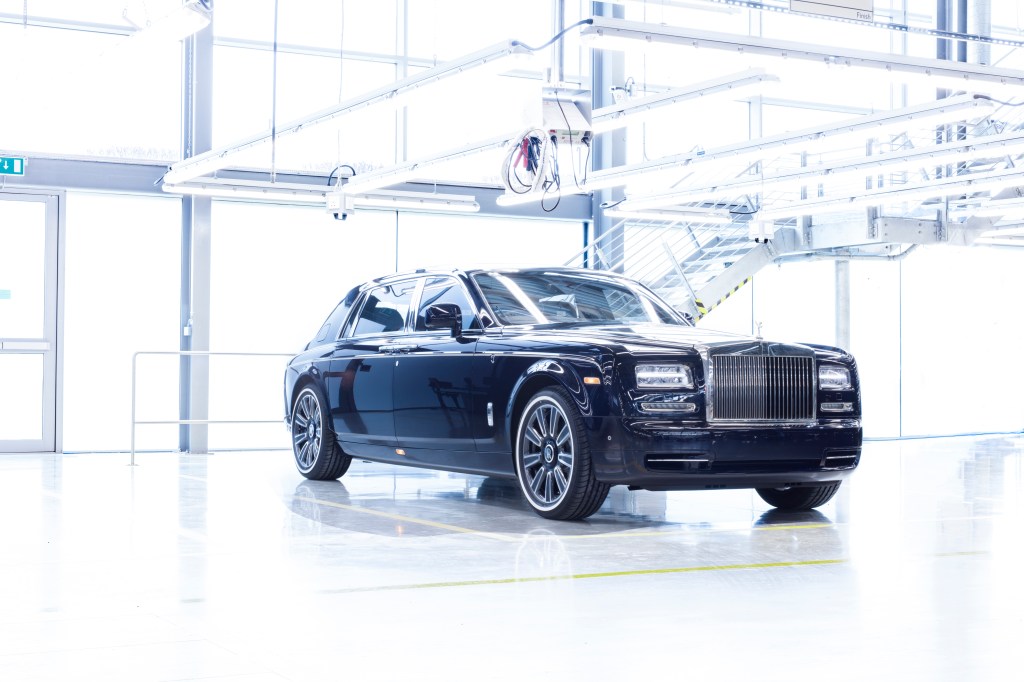
Bespoke designers created a stylised rose motif, which was then translated into the delicate embroidery on the front and rear headrests and incorporated into the meticulously hand-painted Coachline.

PHANTOM GOLDFINGER

To mark the 60th anniversary of the James Bond film Goldfinger, Rolls-Royce created this intricately detailed homage to the eponymous villain’s 1937 Phantom III Sedanca de Ville.

Bespoke specialists faithfully recreated the original motor car’s famous black and yellow exterior finish, with ingenious features referencing the film’s pivotal scenes – from a gold golf putter, inspired by one used by Auric Goldfinger in his infamous match with 007, to a solid 18-carat gold speedform displayed in the centre console.

Other gold-inspired features include gold-plated treadplates embossed with the same font developed for the film in 1964, a 24-carat gold-plated VIN plaque engraved with a number ending in 007, as well as organ stops, seat bullets and speaker frets with a lustrous gold finish.

The Gallery houses a stainless-steel artwork featuring an isoline map of the Furka Pass, where 007 is seen in the film following Goldfinger to his smelting plant. As another subtle reference, the Starlight Headliner reflects the constellations as they appeared over the Furka Pass in Switzerland on the final day of filming the scene. As a finishing touch, a hidden projector was developed to display the legendary ‘007’ logo when the boot is opened.
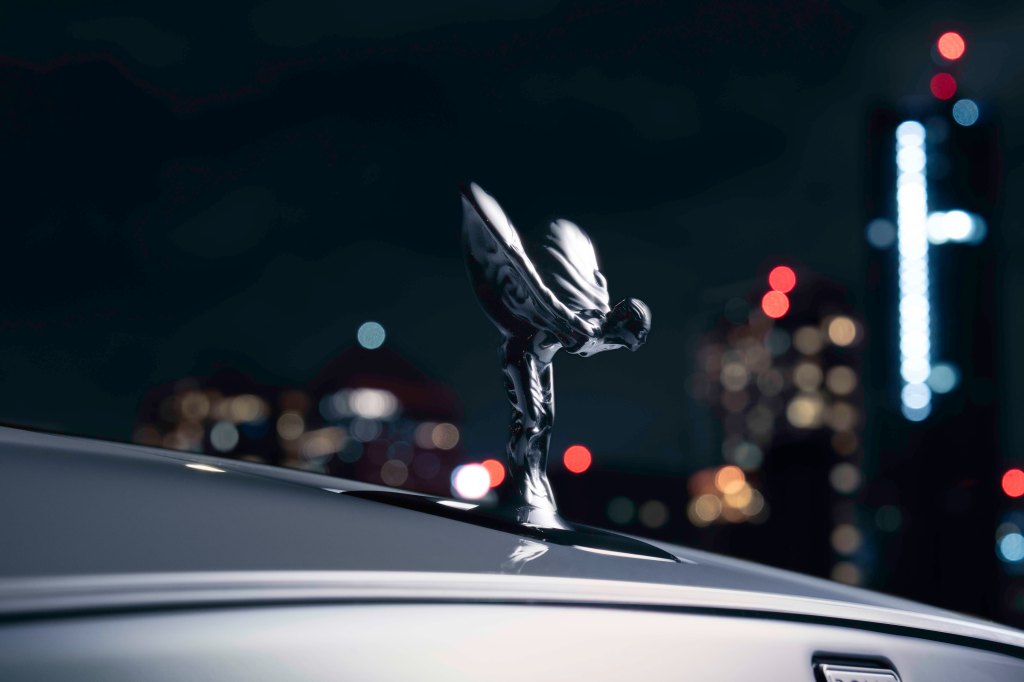
SPECTRE LUNAFLAIR

Commissioned by a discerning client from the United States, Spectre Lunaflair draws inspiration from the optical phenomenon of a lunar halo, where moonlight refracted through high-altitude ice crystals creates a bright ring around the moon.
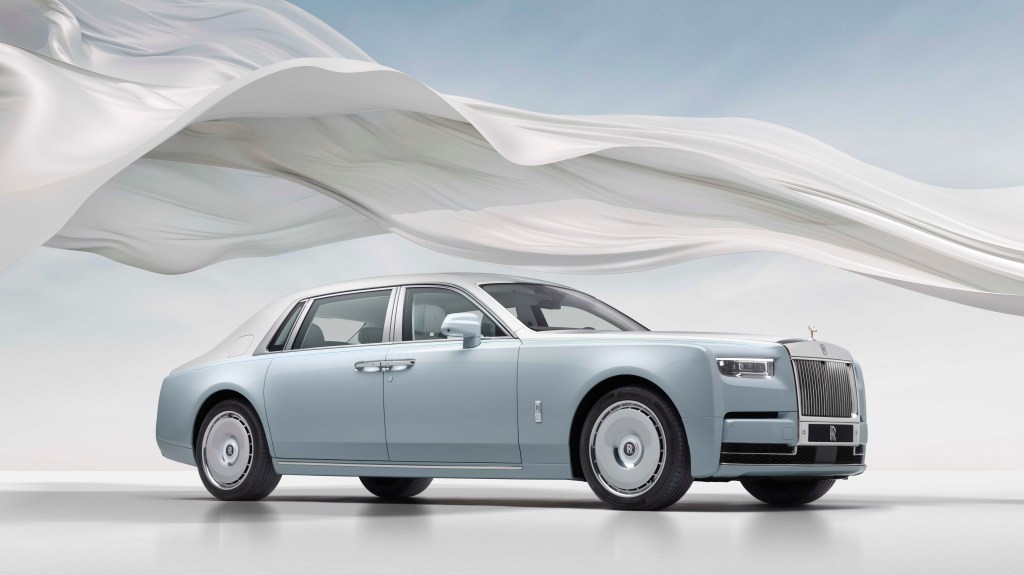
To capture this spectacle, the marque’s specialists spent a year developing a unique holographic paint finish, reserved exclusively for the commissioning client. The captivating ‘rainbow’ effect is achieved by applying seven layers of lacquer, including a pearlescent layer infused with fine flakes of magnesium fluoride and aluminium. This creates a deep metallic effect in low light that bursts into rainbow technicolour under bright sunshine.

The Spectre Lunaflair concept was partially inspired by another Bespoke masterpiece, the one-of-one Phantom Syntopia. Captivated by Phantom Syntopia’s iridescent Liquid Noir finish, the commissioning client asked the Bespoke Collective to create a light and luminous expression of this concept that reflected their fascination with the lunar halo phenomenon. This cross-pollination of ideas exemplifies the power of Bespoke at Rolls-Royce.

GHOST EXTENDED SERIES II – THE ENCOUNTER

This exquisite Ghost Extended Series II is designed to mark the 120th anniversary of the meeting of its founders on 4 May 1904. The celebratory commission contains numerous references to The Hon. Charles Stewart Rolls and Henry Royce, including their initials embroidered on the headrests, their signatures on the C-pillar, and the historic date of their introduction as the coachline motif.

The interior is finished in Duality Twill, a new rayon fabric made from bamboo, embroidered with a ‘Duality’ graphic – an abstract interpretation of the interlinked R initials of the marque’s founders’ names.

27/11/2023 – Ciaran McCrickard McCrickard / Mindworks – RRMC Year of the Dragon inlays.

PHANTOM YEAR OF THE DRAGON

Commissioned via the Shanghai Private Office, this extraordinary Phantom Extended was created to mark the Lunar New Year, beginning on 10 February 2024. In a beautiful example of the growing trend towards blending international heritage and Chinese cultural traditions, known as guochao, the interior features meticulously crafted details inspired by a traditional dragon symbol.

These include a unique hand-painted artwork on the front passenger panel, dragon embroidery on the headrests, coachline motif and the first-ever depiction of a dragon in a Bespoke Starlight Headliner, crafted from 677 ‘stars’.

Rolls-Royce Cameo

Rolls-Royce Motor Cars presents Cameo, an exquisite miniature sculpture inspired by the marque’s heritage, capturing the essence of Rolls-Royce motor cars in their most elegant form.

The silhouette of this unique collector’s item is an homage to the open-top motor cars built by Rolls-Royce in its earliest years, while the materials and construction of the model parallel the way motor cars are handcrafted at the Home of Rolls Royce at Goodwood.

The model comprises a series of individual, highly engineered pieces carefully and meticulously designed for self-assembly. Made from a number of the same materials as the marque’s full-sized motor cars, the owner can enjoy the tactile experience of assembling their very own Rolls-Royce motor car.

The body is constructed by fitting together two sections – one made from solid oak, and the other from polished aluminium – which, together, recreate the iconic Rolls-Royce two-tone finish. The oak body magnetically attaches to the aluminium chassis, emulating a seminal stage in the Home of Rolls-Royce assembly journey known as the ‘marriage’, when the body is mounted to the drivetrain. This significant moment in the creation of a Rolls-Royce motor car is one that many clients choose to view in person, therefore it was only fitting this production milestone be referenced in Cameo.

Next, the meticulously engineered interior is installed: the part is 3D-printed and painted in Rolls-Royce’s signature Grace White hue. Other authentic details include the self-levelling wheel centre caps, which allow the ‘RR’ monogram to remain upright as the wheels turn. Finally, the Cameo driver takes their rightful place in the cockpit, ready to embark on a journey in luxury and style.

Yohan Benchetrit, Bespoke Design, Rolls-Royce Motor Cars, said: “Envisioned as a celebration of Rolls-Royce design in miniature, creating Cameo was a wonderful creative challenge. The purity and abstract nature of the form empowered us to distil the fundamental principles of Rolls‑Royce styling into a playful sculptural piece. Cameo is crafted to captivate and delight, enabling our clients to enjoy the marque’s peerless craftsmanship and artistry in their own homes.”

This extraordinary expression of Rolls-Royce in miniature form is now available in Rolls-Royce showrooms and Private Office boutiques.

Rolls-Royce Debuts Cullinan Series II In India

The original Cullinan, launched in 2018, was the world’s first super-luxury SUV, fulfilling a unique and exacting brief. From a performance and engineering standpoint, it had to have genuine off-road capabilities equal to the most demanding and hostile environments on earth. At the same time, it had to deliver the marque’s peerless comfort and signature ‘magic carpet ride’, regardless of the terrain. It had to be nothing less than the definitive super-luxury SUV —rugged yet refined, unstoppable yet serene: effortless, everywhere. Its success exceeded Rolls-Royce’s most ambitious expectations around the world, and today Cullinan is the most requested Rolls-Royce in the marque’s portfolio.

Given the motor car’s extraordinary success, and incredibly positive reception from clients in every region of the world, shaping a new expression of the ‘Rolls-Royce of SUVs’ was undertaken with meticulous care. The marque’s designers, engineers and craftspeople drew on half a decade of detailed client feedback, the brand’s own intelligence gathering —including their Private Offices around the world — and a raft of new technologies to advance Cullinan. In its new guise, which represents the most extensive Series II development in Rolls-Royce history, it responds to changing codes of luxury and evolving usage patterns while remaining true to the essential qualities that underpin Cullinan’s unprecedented popularity.

Clients can commission Cullinan Series II and Black Badge Cullinan Series II at Rolls-Royce Motor Cars Chennai and Rolls-Royce Motor Cars New Delhi. Pricing for Cullinan Series II in India starts from INR 10,50,00,000. Pricing for Black Badge Cullinan Series II starts from INR 12,25,00,000. First local client deliveries will commence from Q4 2024.

Since the first client deliveries, Cullinan fulfilled its purpose as a supremely accomplished off-road motor car, capable of taking its owner into locations never previously explored in a Rolls-Royce. However, versatility and the effortless everywhere essence of the model also made Cullinan a ‘daily driver’ for many owners; indeed, numerous clients have told Rolls-Royce that no other SUV offers the same effortless performance as Cullinan’s 6.75-litre V12 engine, from what is often a substantial and diverse collection. These were all significant considerations in conceiving Cullinan Series II.

It was noted by the marque’s intelligence specialists that an increasing number of Rolls-Royce clients were concentrated in urban areas – from great world metropolises to fast-growth cities in emerging regions. To that end, Cullinan increasingly serves as a super-luxury product in which clients wish to be seen and project their character – albeit with the capacity to vanish into nature at will. Specialists also observed a shift towards owners driving their motor cars themselves. When Cullinan was first launched, less than 70% were self-driven: today, almost every Cullinan is driven by its owner, with less than 10% of clients retaining the services of a chauffeur. Together with the rejuvenation of the brand and the ever-increasing Bespoke offering, Cullinan contributed to a fall in the average age of Rolls-Royce clients from 56 in 2010 to just 43.

An increasingly urban focus, a youthful cadre of clients and a decisive shift towards self-driving informs the surface treatment and detail of Cullinan Series II’s exterior. A key theme is verticality, which echoes illuminated skyscrapers in the megacities where Cullinan is increasingly at home. This is most apparent in the new lamp treatment, where tall daytime running light graphics ensure Cullinan Series II is easily identified, day and night.

“The debut of Cullinan Series II in India represents a significant milestone for Rolls-Royce in the Asia Pacific region. Since its original launch in 2018, this remarkable motor car has attracted a younger and more diverse group of clients, and today Cullinan is the most requested Rolls-Royce in the marque’s portfolio. Cullinan Series II integrates new technologies, new materials, meticulously considered design updates and innovative opportunities for self-expression through Bespoke.” Irene Nikkein, Regional Director Asia-Pacific, Rolls-Royce Motor Cars

Reflecting many clients’ desires for bolder forms of self-expression, innovative decoration and detail have been added throughout the interior of Cullinan Series II. The most substantive change to the motor car’s geometry is the pillar-to-pillar glass-panel fascia in the upper portion of the dashboard – an elegant and versatile design element that stages both digital and physical craftsmanship.

Connectivity has been refined throughout the motor car, especially for those in the rear of Cullinan Series II. Clients are able to connect up to two streaming devices to the rear screens, which now incorporate a Bespoke interface for streaming car management and seating functions such as massage, heating and cooling.

The installation of internet connectivity allows clients to enjoy a Wi-Fi hot spot connection and independent streaming for each screen. For the first time in Cullinan, Bluetooth headphones of any type can be paired with the rear seat infotainment system, or clients can enjoy the marque’s exceptional 18-speaker Bespoke Audio system, which benefits from the latest generation 18-channel 1400-watt amplifier. Cullinan Series II retains the brand’s celebrated speaker architecture wherein cavities within the motor car’s aluminium sill sections are used as resonance chambers for low frequency speakers, effectively transforming the entire motor car into a subwoofer.

Directly in front of the passenger is an Illuminated Fascia panel — a remarkable expression of modern craft that debuted with Ghost before appearing in Spectre and now, for the first time, is available within the Cullinan family. In this guise, it features an illuminated Cullinan wordmark and a unique Cityscape graphic inspired by the skyscrapers of the world’s megacities at night. This is created using a specially-developed technique whereby 7,000 dots are laser-etched onto the rear of the darkened and toughened security glass, each at minutely differing angles and dimensions to create the perception of depth. In addition to this prêt-à-porter design, clients are also able to create their own Illuminated Fascia motif in collaboration with the marque’s Bespoke designers.

Incorporating the Spirit of Ecstasy into the interior of the motor car was the product of four years of development, and a unique partnership between analogue and digital craftspeople to create a dramatic and meticulously orchestrated flow of light. This sequence begins with the illumination of the driver’s display upon entering the motor car, followed by the Central Information Display, then the Illuminated Fascia, where light sweeps inwards towards the vitrine, lighting the timepiece. The Spirit of Ecstasy is illuminated from below initially, reminiscent of a spotlight on a debut performance, before her stage lighting settles to a soft glow.

Cullinan built a new legacy for Rolls-Royce Motor Cars, shaped in collaboration with a bold and uncompromising generation of super-luxury consumers. Cullinan Series II evolves and builds on this motor car’s place in the brand, proving once more that the future of this marque will be shaped in partnership with its clients and characterised by exquisite contemporary crafts.