With more than 2.7 million cars sold, the Volvo XC60 has surpassed the iconic Volvo 240 as the best-selling Volvo model ever.
Since its debut in 2008, Volvo Cars’ mid-size SUV has remained a favourite among customers, appealing to a wide range of drivers who value safety, quality and a premium driving experience. Initially built exclusively in Europe, the XC60 later became the first global Volvo model to also be produced in China, supporting local sales. In 2018, it was named World Car of the Year.
The current generation XC60 introduced plug-in hybrid drivetrains to a broader audience, and it was the best-selling plug-in hybrid in Europe last year.
For the 2026 model year, the XC60 has undergone a significant refresh with a modernised design, more intuitive user experience, improved comfort, and a more responsive infotainment system.
“Growing up in Sweden in the 1980s, the Volvo 240 was the iconic family car – you could spot one in almost every driveway,” says Susanne Hägglund, head of Global Offer at Volvo Cars. “Today the XC60 has taken over that position in two ways. Not only as the family favourite, but also becoming our all-time top-seller, which in itself is the ultimate proof point of a successful car. And now, with the latest updates, it gets even better.”
The perfect family car The XC60 is the ideal all-rounder for families, effortlessly combining cutting-edge safety features, Scandinavian design and SUV practicality into one confident package. It has rightfully earned its position as a cornerstone in Volvo Cars’ proud tradition of building cars that families trust.
For years, the Volvo 240 estate was the most popular choice for families all over the world, loved for its safety qualities and fine driving characteristics. In many people’s eyes, it defined what an estate car should be. Today, the SUV has replaced the estate as the obvious family pick, and the XC60’s new status as Volvo Cars’ best-selling model of all time clearly reflects this shift in what customers want and need.
Many who grew up with the Volvo 240 are now choosing the XC60 for their own families. And just like the 240 helped shape their childhoods, today’s XC60 is creating memories for a new generation.
Two cars, one safety heritage When the Volvo 240 was introduced in 1974, it set safety benchmarks that would remain relevant for decades. For its time, it featured an advanced body design with front and rear crumple zones, along with a reinforced passenger compartment. This kind of safety cage continues to protect Volvo occupants on the road today.
The 240 was also among the first cars to incorporate enhanced side-impact protection, which later evolved into Volvo’s patented Side-Impact Protection System (SIPS). Additionally, the introduction of the Child Booster Cushion in 1978 marked a world-first innovation.
The Volvo XC60 has continued to introduce numerous advanced safety technologies, such as City Safety – the world’s first standard low-speed automatic emergency braking system designed to help avoid or mitigate a collision at speeds up to 30 km/h. Launched in 2008, this feature has since become commonplace on new cars around the world.
In another world-first, the XC60 introduced Oncoming Lane Mitigation in 2017 with a system capable of steering you back into your lane if you drift into oncoming traffic. These innovations have earned the car several independent safety awards.
Just as the 240 was at the time, the refreshed Volvo XC60 is one of the safest cars on the road. With its advanced safety cage and the latest active safety and driver support tech, it’s designed to help protect you and your passengers.
Bridging the gap to a fully electric future The refreshed XC60, along with other recent upgrades across the lineup, also play a key role in Volvo Cars’ electrification strategy, offering pure electric driving with the reassurance of a combustion engine for those not quite ready to go fully electric. Volvo Cars’ data shows that around half of the distance covered by the latest plug-in hybrid Volvo cars globally is powered purely by electricity.*
SAIC Motor, a global Fortune 500 company with a presence in over 100 countries and JSW Group, a revered Indian corporate with varied business interests entered into a joint venture – JSW MG Motor India Pvt. Ltd. in 2023.
At the time of formation of the joint venture, JSW MG Motor India announced that their goal will be to build a smart and sustainable automotive ecosystem while continuing to stay focused on developing a diverse portfolio of vehicles to give car buyers better access to advanced technologies and futuristic products with attractive value propositions.
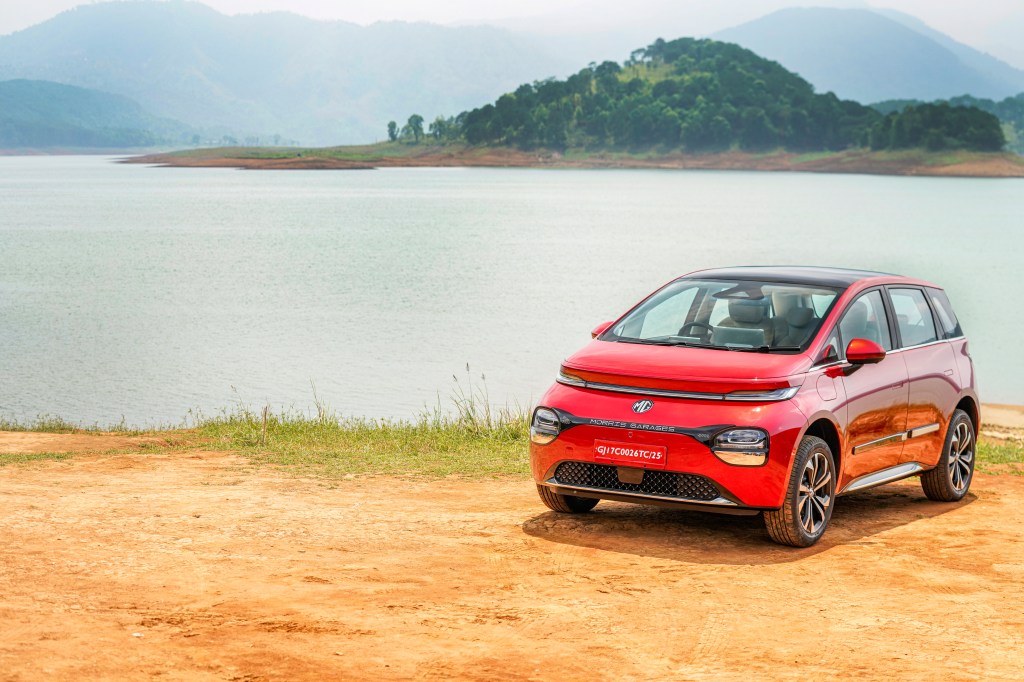
In September 2024, JSW MG Motor India launched their first car since the formation of the JV – the MG Windsor EV. Launched at the price of a manual compact SUV, the Windsor, combining the comfort of a sedan and the expanse of an SUV, was offered with innovative aerodynamic design, spacious and premium interiors, smart connectivity, driving comfort, and many hi-tech features.
Built on a ‘Pure EV Platform’ with Battery as a Service (BaaS) – a unique ownership program introduced by a carmaker for the very first time in India, the MG Windsor EV immediately caught the imagination of the urban car buyer and became an overnight success. City roads, especially in the Indian metros are virtually filled with Windsor EVs wherever you look.
Fast forward to May 2025, JSW MG Motor India packed another punch by announcing the launch of Windsor PRO – the long-range stablemate of the Windsor EV. So, the million-dollar question is, what is new in the MG Windsor PRO? Recently, we were invited to participate in the national media drive where we got an opportunity to get up close, and personal with the MG Windsor PRO. Read on to find out what we discovered.
Design and Engineering
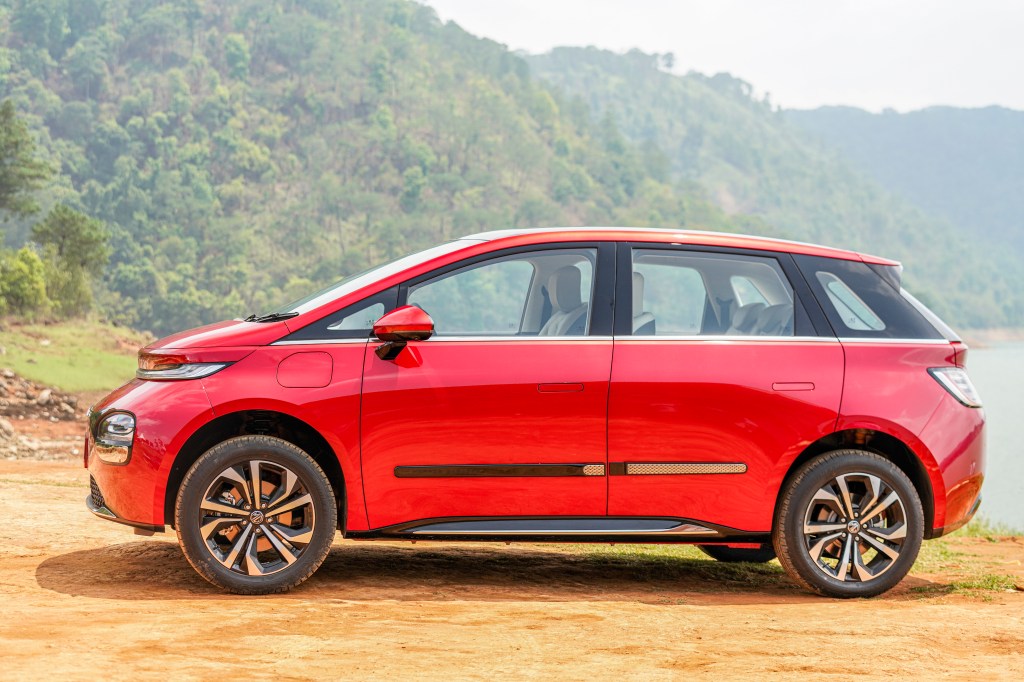
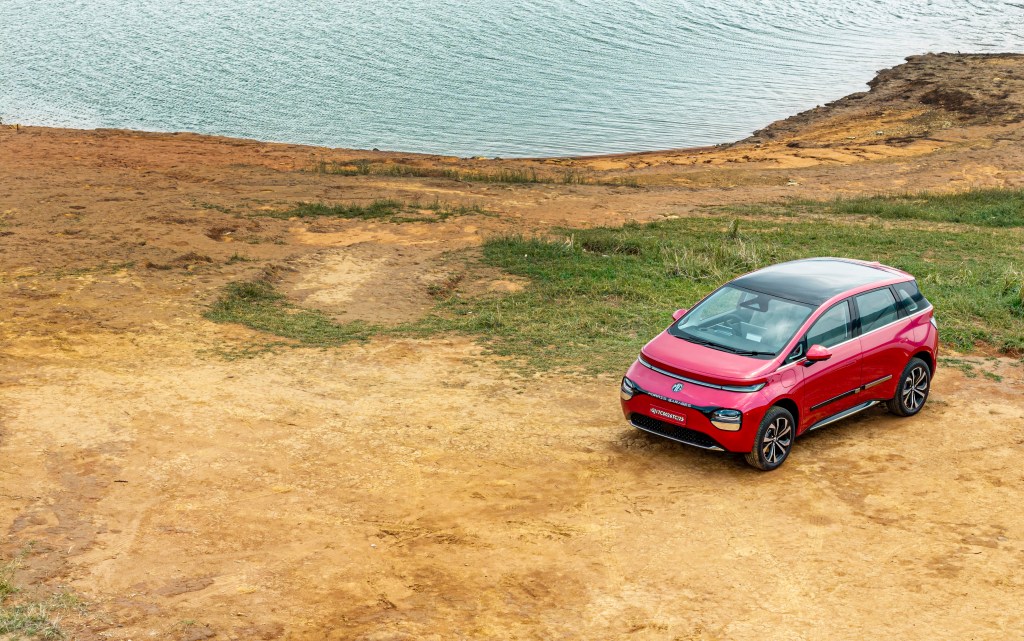
The MG Windsor is an interesting cross between a sedan and a compact SUV. Similar to its stablemate, the Windsor PRO measures 4,295mm in length, 2,126mm in width, and stands 1,677mm tall. The best-in-segment 2,700mm wheelbase ensures that the MG Windsor PRO offers a great balance between ride & handling and comes with a spacious passenger cabin.
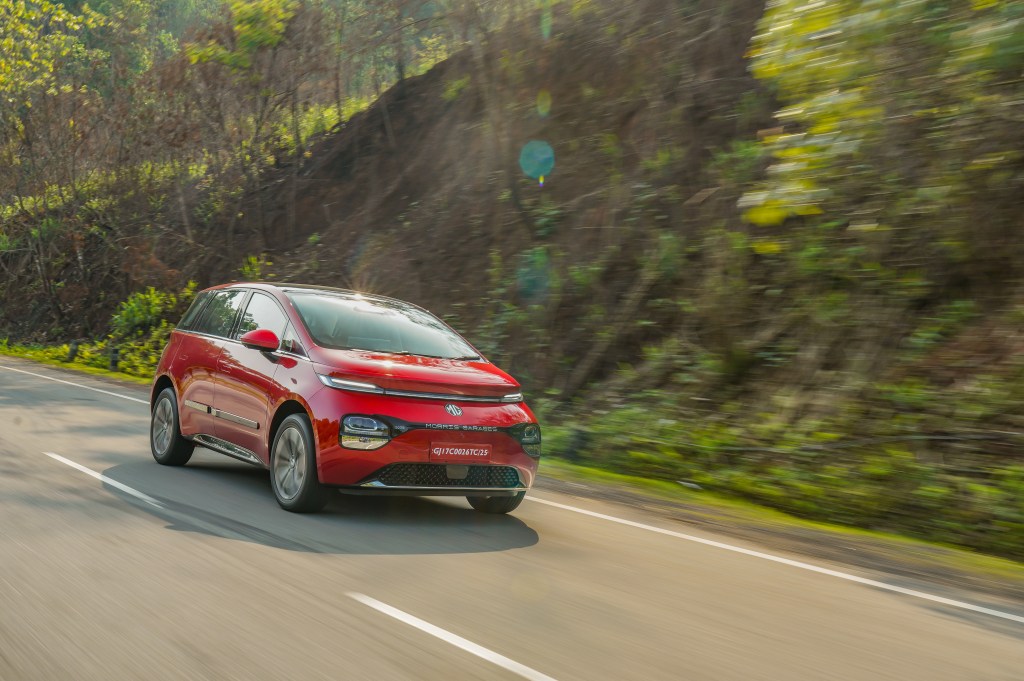
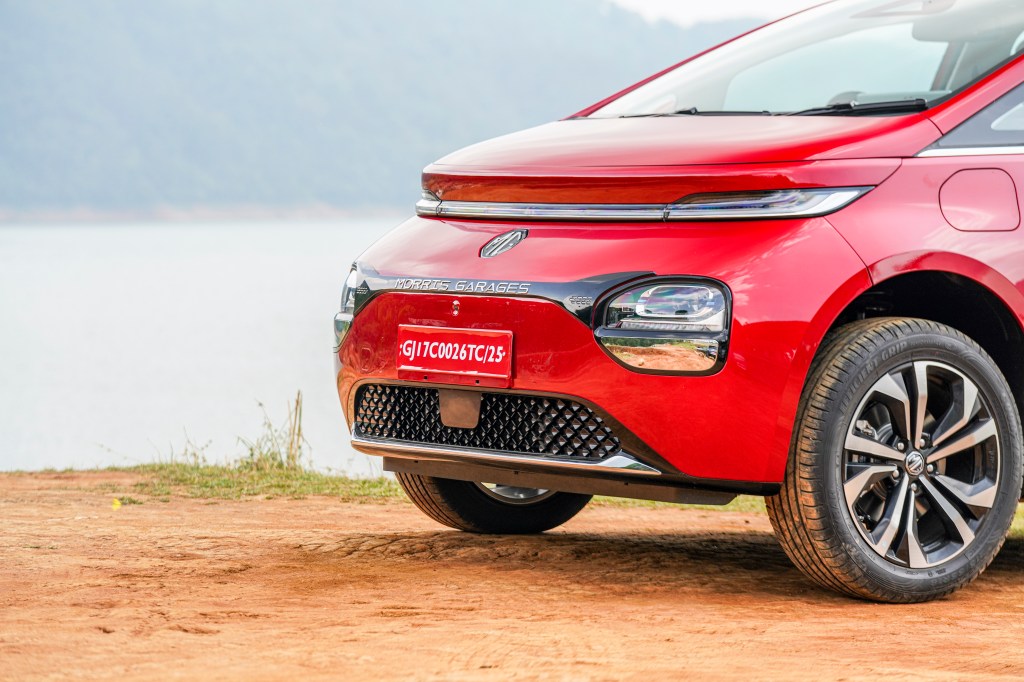
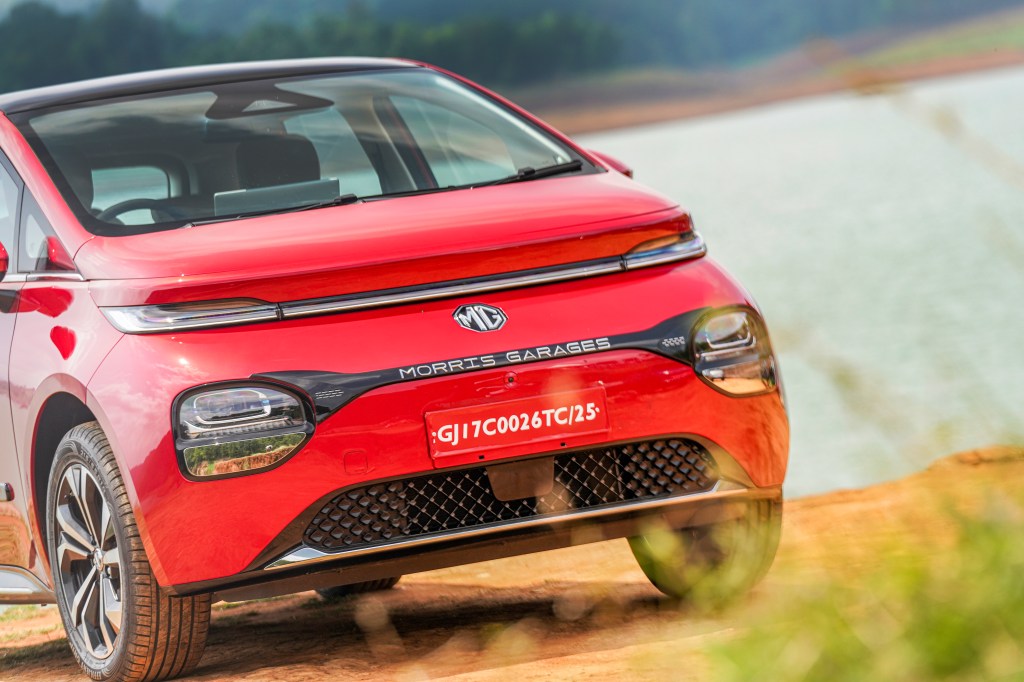
The MG Windsor PRO features an AeroGlide design language, which is futuristic and transcends the concept of traditional segmentation. The nose and bonnet have a distinct two-deck layout. The horizontal daytime running lamps strip forms the base of the bonnet, while the headlights sit below in the bumper. Integrated into the headlight area is a mirror-like panel that reflects images with clarity. MG has added some black trim bits bracketing the headlights, with the one inside connecting the two units and carrying the Morris Garages lettering, above which sits an illuminated MG logo.
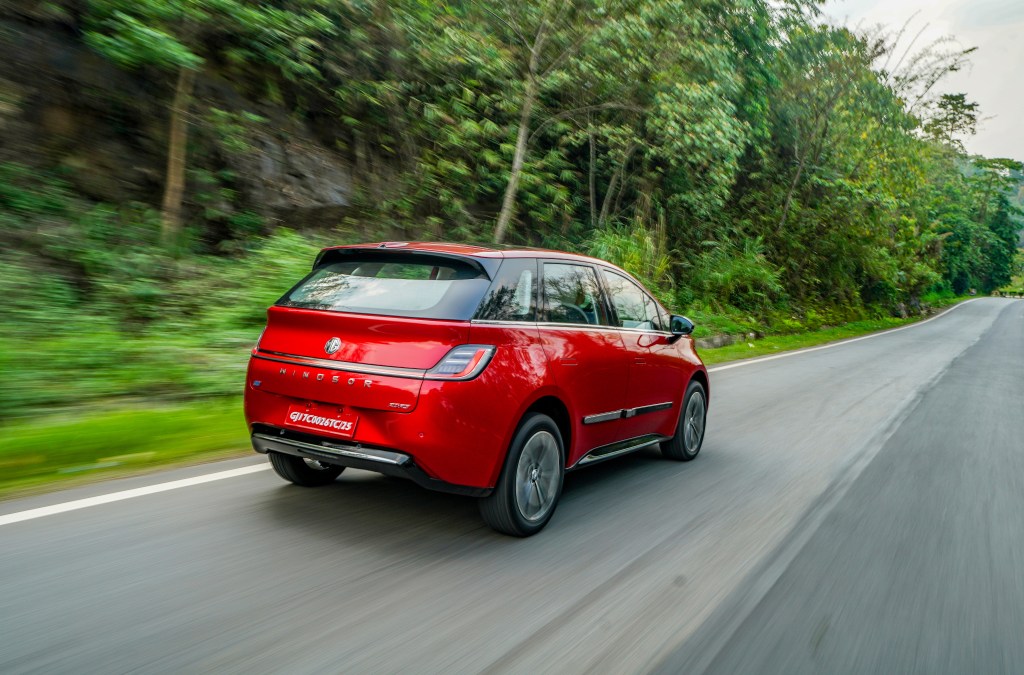
MG’s AeroGlide design language is more prominently visible when viewed from the side. The MG Windsor PRO features smart flush door handles which look very trendy. The R18 diamond cut alloy wheels further enhance the striking good looks of the MG Windsor. At the top, the roof rails add to the aesthetics.
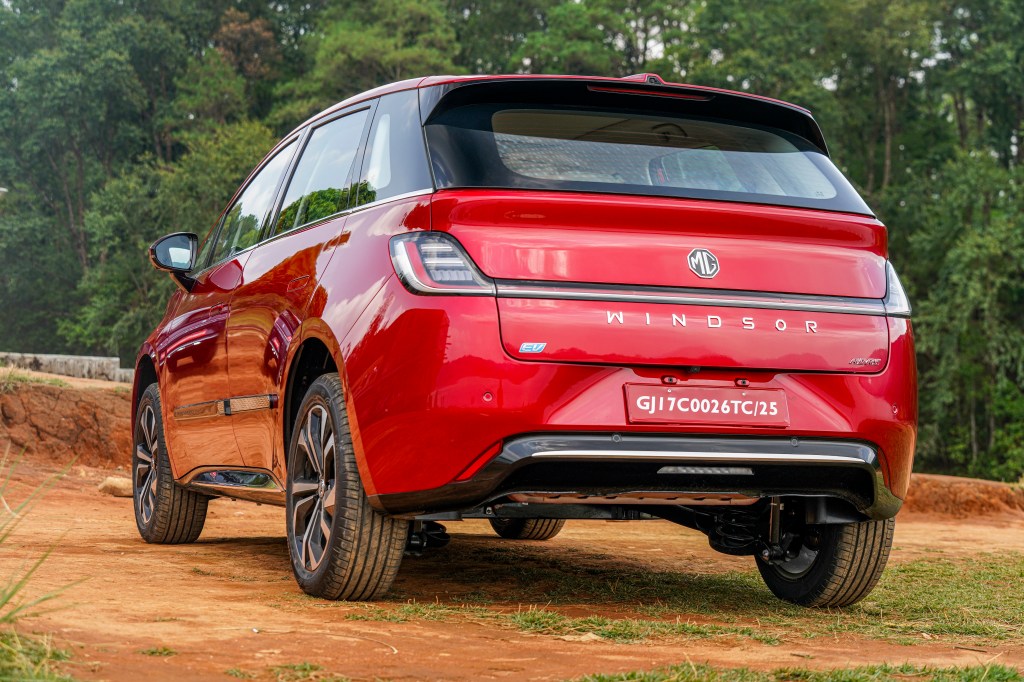
At the rear, the LED tail lights look sleek, and the lower bumper edge is finished off with a nice diffuser-style contrasting black panel. Topping the rear is a spoiler with an integrated stop light. In terms of design, the MG Windsor PRO remains largely unchanged from the standard Windsor EV barring its new diamond-cut alloy wheels and ADAS badging on the tailgate.
The MG Windsor PRO is being offered in only two variants: Exclusive PRO and Essence PRO; and three new colour schemes namely Celadon Blue, Aurora Silver and Glaze Red.
Interior and Comfort
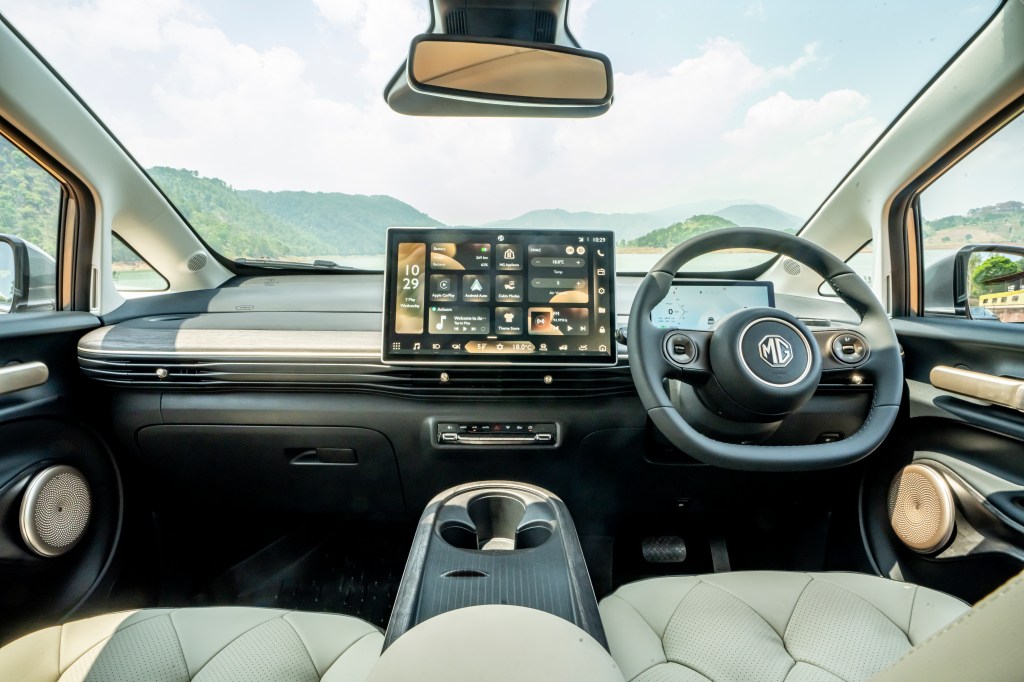
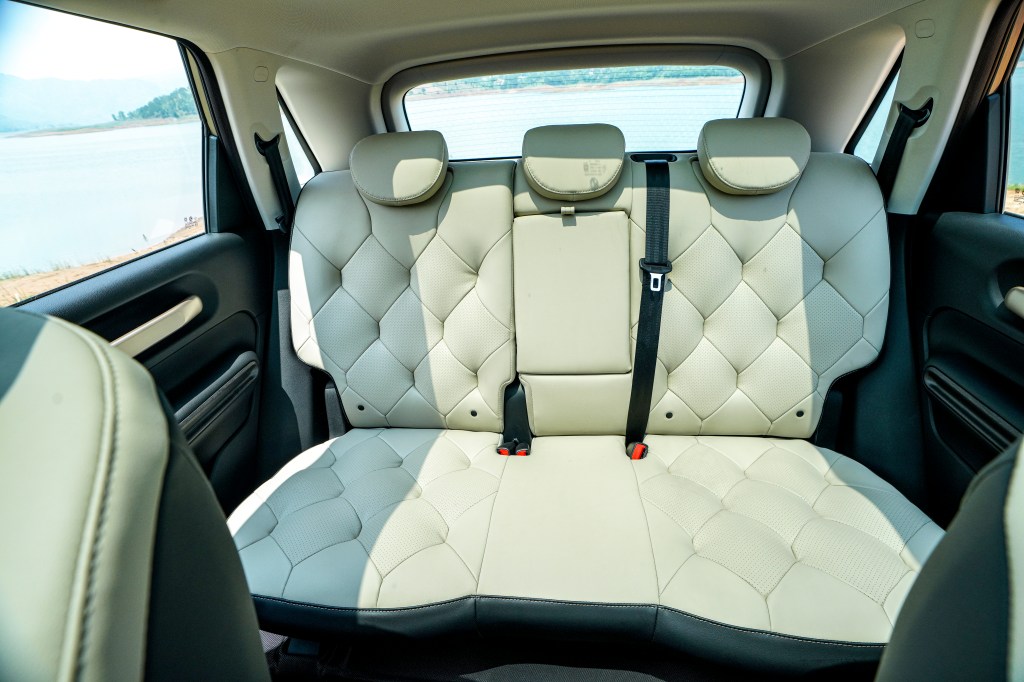
Step inside the MG Windsor EV PRO and you will be welcomed into a premium passenger cabin with aero lounge seats that can be reclined up to 135 degrees, coupled with the expansive infinity view glass roof, adding to the business class experience.
The cabin is spacious with adequate head, shoulder and knee room for both front and rear passengers along with easy ingress and egress. The seats are well bolstered & comfortable and wear an opulent look. The front seats are ventilated with the driver’s seat coming with a 6-way adjustable option.
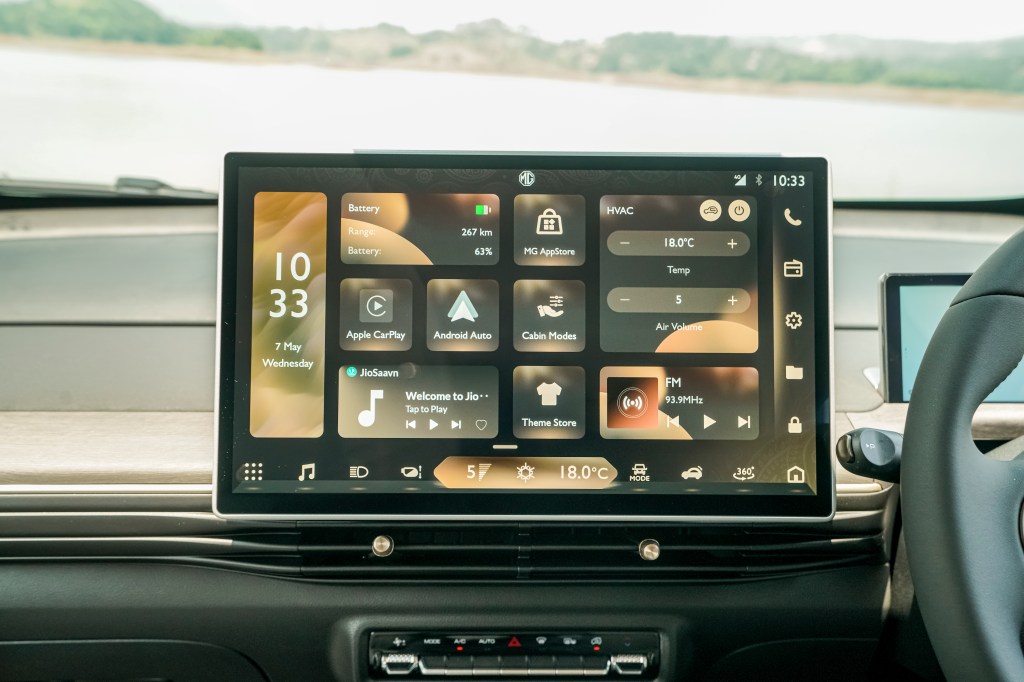
Immersive entertainment and smart connectivity features are powered by a massive 15.6-inch Grand View Touch Display in the central console. For music lovers, the MG Windsor PRO also comes equipped with nine speakers (4 speakers, 4 tweeters, 1 subwoofer) that make your listening experience more pleasurable.
The MG Windsor PRO also allows you to choose from an array of 256 ambient lighting options with auto change technology and make your drives express the way you feel. Other features in the MG Windsor PRO includes Wireless Android Auto & Apple CarPlay, multi-function steering controls, wireless smartphone charger, wooden finish highlights, driver armrest storage, and rear-centre armrest with cupholders – all of which makes the MG Windsor PRO an attractive proposition.
Over the standard MG Windsor EV, the Windsor PRO also gets additional features such as a powered tailgate and capabilities including vehicle-to-load (V2L enables you to use your vehicle to power appliances) and vehicle-to-vehicle (with V2V, your vehicle can juice up another EV).
Performance and Handling
The biggest update on the MG Windsor PRO is under the skin. The standard Windsor EV’s 38kWh battery makes way for a new 52.9kWh battery on the PRO. Consequently, the ARAI-tested range figure jumps to 449km on a single charge from 332km on the standard Windsor EV. Impressive performance is derived through four driving modes (Eco+, Eco, Normal and Sport) that deliver 100KW (136PS) power and 200Nm of instant torque, similar to the standard Windsor EV. The estimated charge time from 0-100% is around 9.5 hours. The prismatic cell battery meets the optimal safety standards and is certified to operate with durability and stability.
The throttle response is great with almost no power lag. Driving the Windsor PRO both within the city and on the highway feels like a breeze. The MG Windsor PRO stays firmly planted on the ground even while navigating tight corners. The engineers at MG have achieved a commendable balance between good ride and handling. The suspension set up featuring MacPherson strut in the front and torsion beam at the rear is well tuned for Indian road conditions and absorbs the undulation on the road with relative ease. Like the standard Windsor EV, the Windsor PRO promises to be a good city car while also proving its worthiness on the highway.
Safety
With growing awareness among consumers, safety has emerged as one of the top priorities of carmakers around the world. The MG Windsor PRO comes with 6 airbags (dual front, side & curtain) as standard across all variants. It also features 360° surround view cameras and rear parking sensors to ease your parking woes in tight spaces especially in the crowded neighbourhood within the city. Electronic stability programme, electric parking brake auto hold, hill-start assist control, auto dimming inside rear-view mirror, hill descent control, rain sensing wipers, and tyre pressure monitoring system are some of the other features in the MG Windsor PRO EV which assures you of great all-around safety. In addition to the aforementioned, the Windsor PRO builds on the standard Windsor EV with radar-based advanced driver assistance systems (ADAS). The ADAS suite includes intelligent light assist, lane keep assist, emergency braking and adaptive cruise control.
Battery-as-a-Service (BaaS)
For the first time in India’s passenger vehicle segment, JSW MG Motor India has introduced an innovative ownership plan through Battery-as-a-Service (BaaS) offering, which makes owning an electric CUV at the price of a manual engine-based compact SUV possible. This flexible ownership program eliminates the upfront cost of the battery, enabling customers to pay only for its usage. Essentially, buyers pay a nominal fee per kilometre driven, which is 40% of the fuel costs of conventional vehicles. This model significantly reduces the initial acquisition cost and lowers the per-kilometre expense, ensuring an economical and hassle-free ownership experience.
In addition, the company is offering a first-of-its-kind lifetime battery warranty to the first owner of MG Windsor. With the eHUB by MG app, the company is offering one year of free public charging, making it easier than ever for Windsor owners to power up anytime, anywhere. JSW MG Motor India is also introducing its 3-60 assured buyback plan for the Windsor which ensures that it will retain 60% of its value after 3 years/45,000kms.
Verdict
If you were attracted by MG Windsor PRO’s tempting INR 17.49 lakh launch price, you should know that you have missed the bus as the introductory price was only valid for the first 8,000 customers. JSW MG Motor India has hiked the Windsor PRO’s ex-showroom price to INR 18.10 lakh, which is INR 2.1 lakh higher than the standard Windsor EV. While the Windsor PRO gets a few additional features, however, the real hook is the enhanced 117km drive range over the standard Windsor EV which has got everyone talking. Therefore, for any car buyer intending to use their vehicle for intercity commutes or weekend getaways, the Windsor PRO is the natural choice.
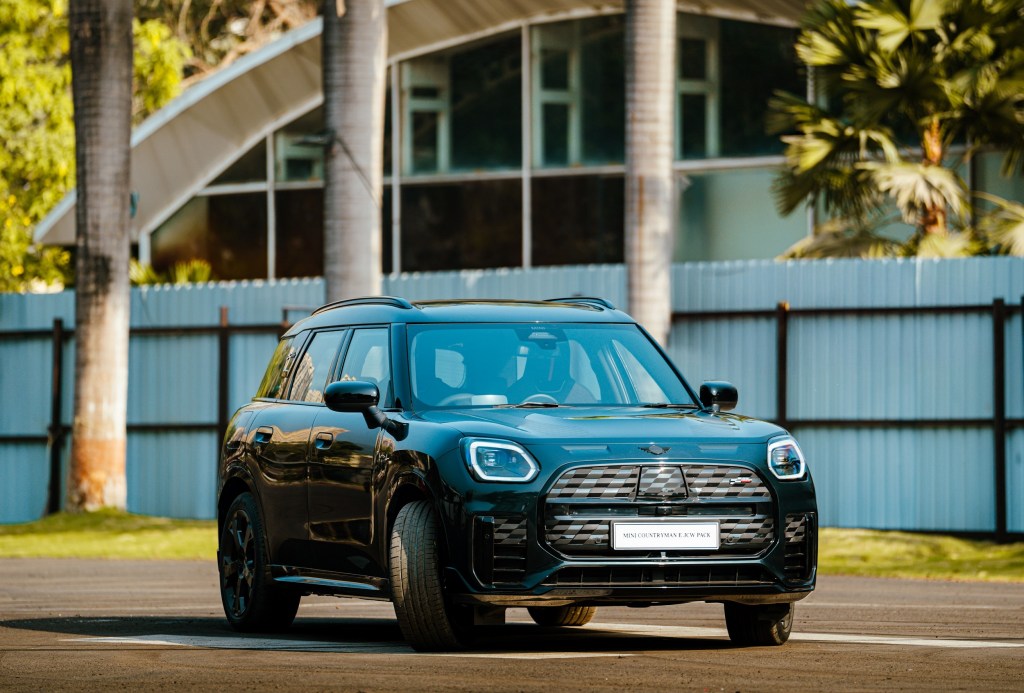
MINI India announced the launch of the new MINI Countryman E John Cooper Works Pack at an ex-showroom price of INR 62,00,000. The car will be available as a completely built-up unit (CBU) and can exclusively be booked on the MINI Online Shop (shop.mini.in). Only 20 units of this limited edition MINI will be available for sale with deliveries beginning on June 10, 2025.
The electrified third generation MINI Countryman, now with the John Cooper Works Pack combines progressive technology with sportiness of the JCW Pack, along with the basic principles of MINI body language and origins. It packs an innovative punch with a new personality and hallmark driving dynamics.
The new MINI Countryman E John Cooper Works represents the comprehensive transformation that is reflected in the new design language ‘Charismatic Simplicity’. It combines the traditional MINI values with progressive innovations in a particularly authentic way, reducing the vehicle design to the essentials. With its dynamic, sporty exterior and exclusive JCW trim, the special edition MINI Countryman E John Cooper Works Pack stands out as the epitome of driving fun and individuality.
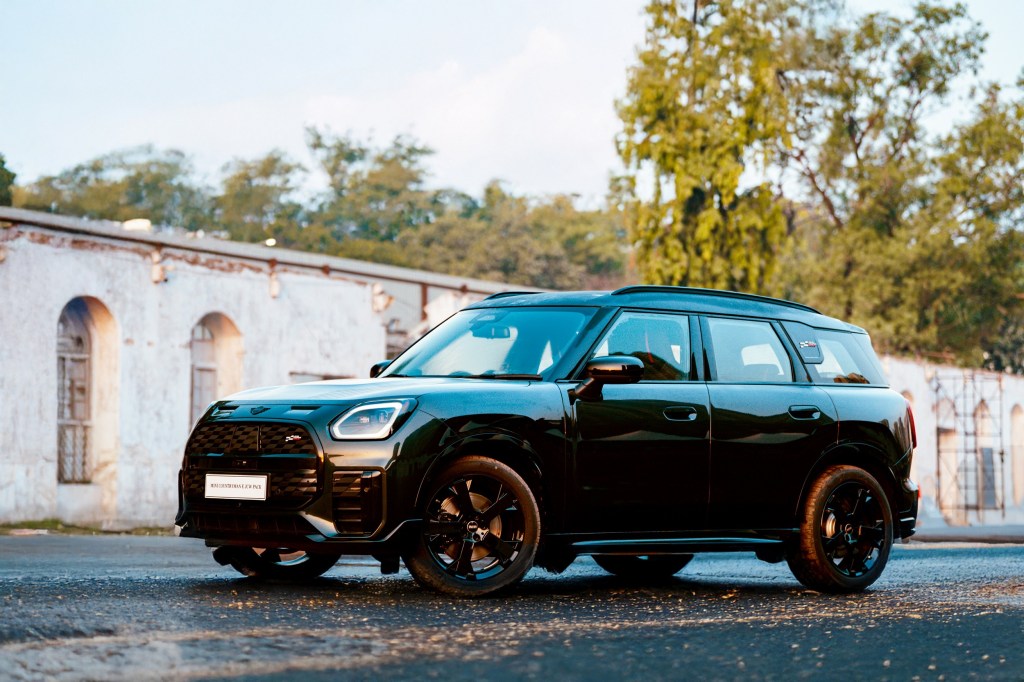
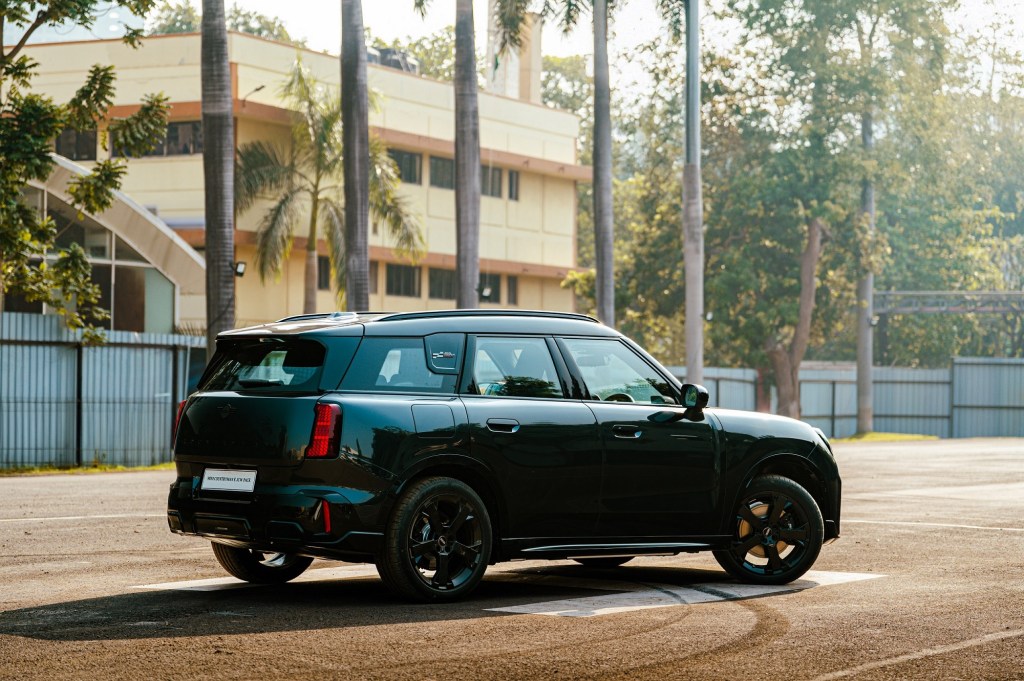
The new MINI Countryman E John Cooper Works JCW Pack is the vehicle for the whole family, with sporty details on the exterior as well as interior. The exterior color options Legend Grey or Midnight Black are complemented by roof and mirror caps and Sport Stripes in Black. The John Cooper Works trim stands out with unique design features of the Grille, Bumpers, Side Skirts, Rear Spoiler and Door Entry Sills. The JCW Aerodynamic styling, JCW Sports stripes in Black, Black Roof rails offer a dynamic appearance. The Piano Black Exterior Trim and wheel arches add to the sporty look of the car. The 19-inch JCW Runway Spoke Black alloy wheels further elevates the sharp character. The visual three-part division into the vehicle body, surrounding window area and contrasting roof ensure the MINI is instantly recognizable. The surfaces look particularly exciting thanks to an integrative treatment of details. Absence of side scuttles and flush door handles underline the clear and modern overall impression. A clearly defined shoulder area gives a decidedly athletic body. A wide stance on the rear, characteristic charisma and a modern minimalist design with clearly designed surfaces ensure the new MINI Countryman E John Cooper Works Pack has a significantly enhanced presence.
The striking appearance of the car is enhanced by three selectable Signatures Modes (Classic, Favoured and John Cooper Works) for the Daytime Running Lights (DRLs) of the LED headlights and the redesigned matrix rear lights. All three modes begin and end with a specially orchestrated welcome and goodbye animation. The intelligent High Beam Assistant takes care not to blind oncoming traffic during night-time driving.
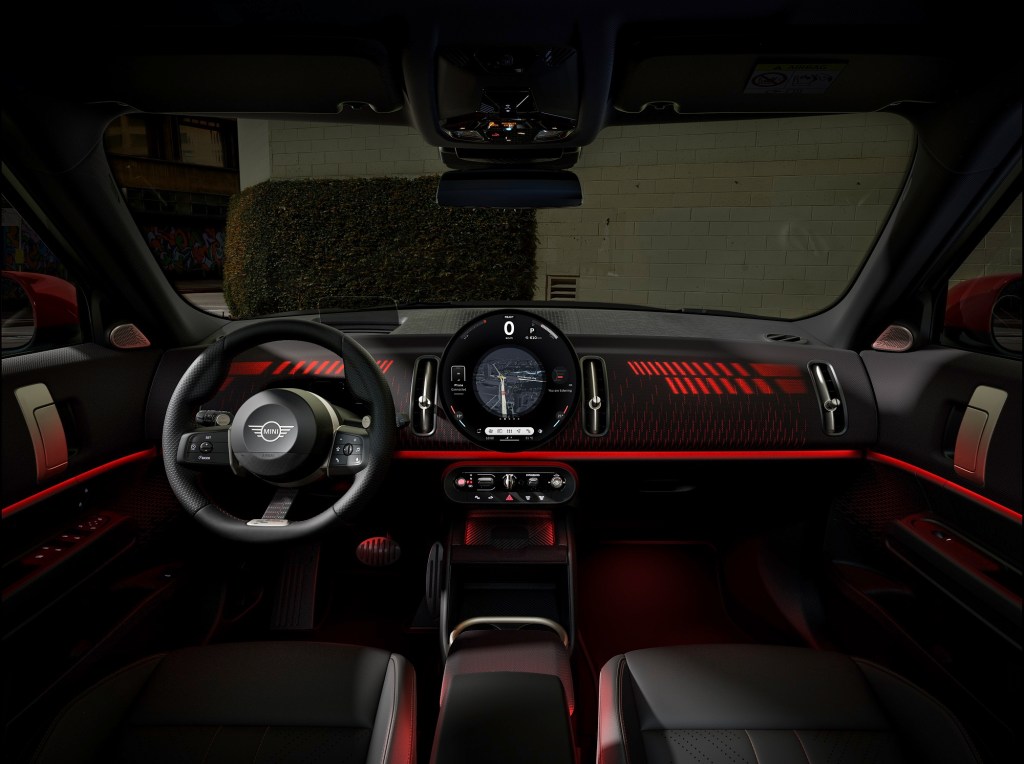
Minimalist design, digital innovations and an immersive user experience are the hallmarks of the interior. The sportiness is elevated with JCW Sports Seats, Vescin/Cord combination JCW Black upholstery and JCW Dashboard Trim. The JCW Steering Wheel with paddle shifters adds to the hallmark MINI go-kart feeling. The Headliner Anthracite elevates aesthetics inside the cockpit. The dashboard and door panels are completely chrome-free and leather-free, using recycled 2D knitted fabric lining. The textile surface is made luminescent by ambient lighting and projections from the MINI Interaction Unit that make even rush hour relaxing.
The MINI Interaction Unit takes a quantum leap into the digital age with the hi-resolution 240mm Circular OLED touchscreen display. It is the defining feature of the interior with a completely new feel and versatile functions. It has moved closer to the driver and can be operated similar to a smartphone. The new MINI Operating System 9 is optimized for touchscreen and voice control and provides advanced connectivity for maximum ease of use. The new MINI Intelligent Personal Assistant (IPA) can be activated by saying “Hey MINI” to control a wide range of functions such as navigation, telephony, entertainment and others. The innovative MINI Digital Key Plus turns the smartphone into a car key via the MINI App and can be transferred to different users, along with their personal vehicle settings. Head-up Display projects all relevant information directly in the driver’s line of sight. A Fisheye Camera can capture selfies, fun moments and videos with sound, inside the cabin and is capable of transfers via a QR code. Harman Kardon Surround Sound System is an aural treat. Other features include Navigation, Remote Services, Remote Software Upgrades, Apple CarPlay / Android Auto, Teleservices, In-Car Weather and Intelligent Emergency Call.
With the MINI Experience Modes, one can choose from several immersive driving experiences, from the race-inspired ‘Go-Kart Mode’ to the energy-saving ‘Green Mode’ or the lively ‘Vivid Mode’ and more. MINI Experience Modes extend the indoor experience by tuning the light, sound and graphics settings.
A distinctive Toggle Bar Island gives access to the important driving functions including start/stop, gear selector, parking brake, experience modes and volume control. General storage area below the toggle bar provides space for a smartphone to be wirelessly charged.
JCW Sport Seats are covered in Vescin Black- a high-quality, perforated, artificial leather-free upholstery made from recycled materials The panoramic glass roof adds to the bright and spacious atmosphere. Electric seat adjustment with Active Seat for the driver is available as standard.
The versatile and powerful electric drive make it a perfect companion for unbridled driving fun even off the beaten track. With 150 kW/204 hp and a maximum torque of 250 Nm, the all-electric MINI Countryman sprints from 0-100 km in 8.6 seconds. It is powered by a lithium-ion battery with gross capacity of 66.45 kWh and has ample WLTP* driving range (combined) of up to 462 kms. The all-electric MINI Countryman ensures fast and hassle-free charging. Charging time is – 130 kW DC Charger – 10 to 80% in 29 min (100 km top up range in 8 min) and 11 kW AC – 0 to 100% in 6 hrs 45 min. (*WLTP = Worldwide harmonised Light Vehicles Test Procedure). JCW Sport Brakes impress with direct response and a better pedal feel.
Advanced assistance systems such as Cruise Control and Parking Assistant Plus with 360 degree Camera increase comfort, control and safety and relieve the driver from monotonous and less demanding aspects of driving. With Comfort Access, the car is locked / unlocked automatically as it recognises the key is at a distance of less than 1.5 meters.
The standard MINIMALISM technology includes auto start/stop function, brake energy recuperation, active cooling air ducts and electromechanical power steering. The wide range of alloy wheels depending on the variant, radiate confidence while reducing carbon footprint thanks to their lightweight design and use of recycled Aluminium.
The standard SAFETY equipment comprises of front passenger airbags and side curtain airbags, Brake Assist, 3-Point Seat Belts, Dynamic Stability Control, Crash Sensor, Anti-lock Braking System, Cornering Brake Control, Rear View Camera, and Tubeless Tyres with Tyre Pressure Indicator.
Features exclusive to the new MINI Countryman E JCW Pack.
Legend Grey/ Midnight Black Exterior Colour
Sport Stripes in Black (Only with Legend Grey Exterior Colour)
JCW Trim: Grille, Bumpers, Side Skirts, Piano Black Exterior Trim, Door Entry Sills
19” JCW Runway Spoke Black
JCW Sport Brakes
JCW Steering Wheel with Boost Mode
JCW Sport Seats
Vescin/Cord Combination | JCW Black Upholstery
JCW Dashboard Trim
Mr. Vikram Pawah, President and CEO, BMW Group India said, “The MINI Countryman E John Cooper Works Pack is the more elusive version of the MINI Countryman E. It is a perfect fit for someone who likes to stand out from the rest and wants the racetrack flair in the urban setting. With exclusive design attributes, the MINI Countryman E JCW Pack is the uncompromisingly dynamic edition that takes inspiration from MINI’s motorsport genes and legendary racing successes. It surely makes driving the MINI even more exciting.”
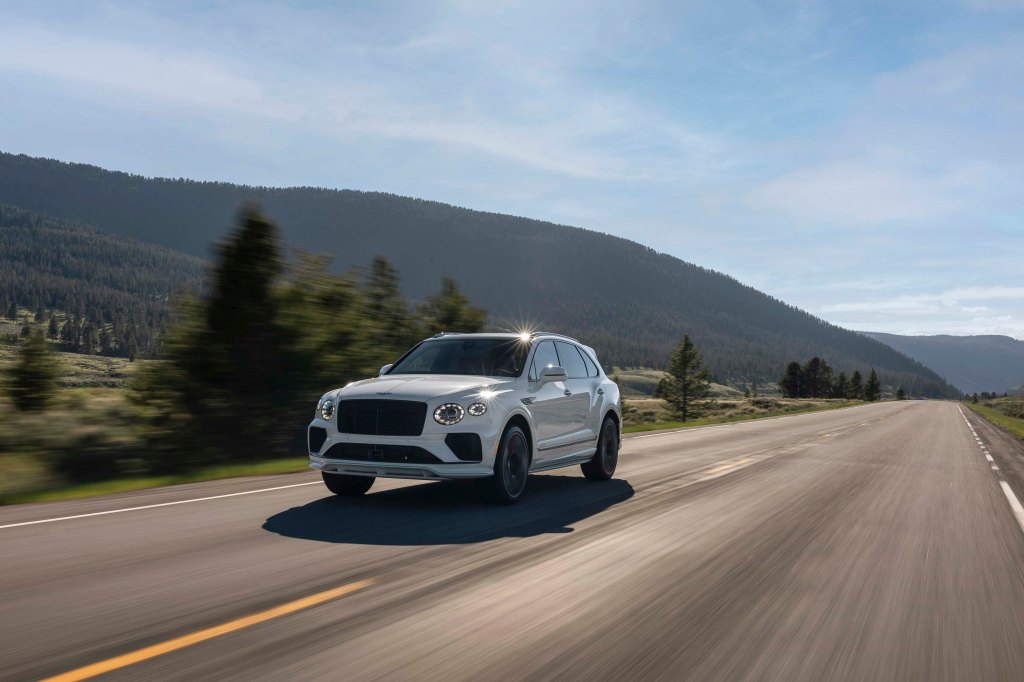
The new Bentayga Speed is the most powerful, most dynamic and most exhilarating Bentley SUV yet. It eclipses even its acclaimed W12-engined predecessor, delivering increased power and performance along with the most dynamic chassis set-up ever offered on a Bentayga – including, for the first time, the ability to generate on-throttle slip angles in Bentley’s pinnacle performance SUV.
At its heart is a new twin-turbo 4.0-litre V8 engine that produces 650 PS and 850 Nm of torque. This new powertrain is capable of accelerating Bentley’s SUV performance flagship from 0-62 mph in just 3.4 seconds and delivers a top speed of 193mph (310km/h)*. The new Bentayga Speed also features significant advances in dynamic capability – with an enhanced SPORT chassis mode and a new ESC Dynamic setting that brings maximum driver involvement and the choice between enhanced road-holding or the ability to slide the car on-power. The new chassis set up and powerful engine confirm the Bentayga Speed’s position as a new performance pinnacle for the luxury SUV.
New 4.0-litre twin-turbo V8 and a thrilling soundtrack The Bentayga Speed’s new 4.0-litre twin-turbo V8 engine delivers exceptional performance, with peak power of 650 PS / 641 bhp / 478 kW and a 0-60 mph time of just 3.4 seconds. These figures comprehensively surpass those of the Bentayga V8 S (4.4 seconds) as well as the 3.9 second mark set by the previous W12-engined Bentayga Speed. Peak torque of 850 Nm (627 lb.ft) is delivered between 2,250-4,500 rpm, with the characteristic Bentley “torque plateau” delivering the effortless wave of acceleration that’s a constant of Bentley performance.
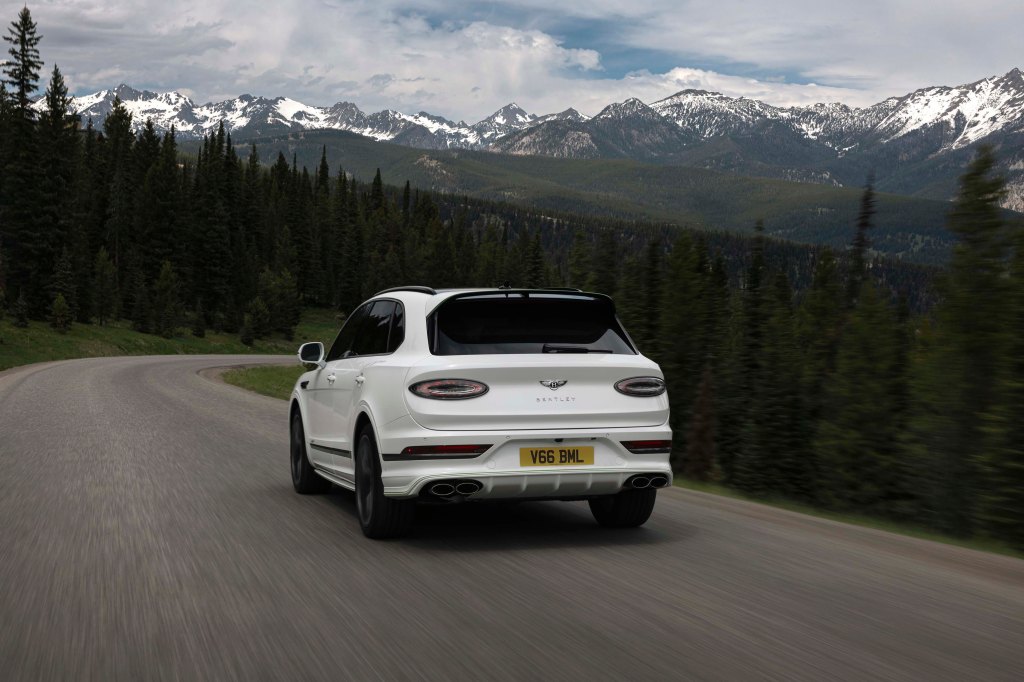
The engine isn’t just more powerful than its predecessors – it’s also more characterful. As standard the Bentayga Speed is fitted with a Sports exhaust system, which delivers a rich, powerful engine note that complements the eager character of the High Powered V8 and promotes a deep sense of driver engagement. This exhaust can be distinguished externally by two elliptical tailpipes emerging through the rear diffuser. For an even more thrilling soundtrack, the optional Titanium Akrapovic Exhaust accentuates the power, drama and potency of the V8, with its aural expression of the performance that awaits at the merest flex of the throttle. This system features quad tailpipes.
Enhanced dynamic capabilities Of the three driving modes available to drivers of the new Bentayga Speed, both COMFORT and BENTLEY modes remain unchanged in calibration compared with other Bentayga models, to retain exceptional day-to-day and grand touring competency. SPORT mode however is significantly enhanced, delivering increased steering response, roadholding and driver connection, enhanced by a 15% increase in suspension damping stiffness. Enhanced SPORT mode enables the driver to exploit the power of the V8 engine more fully when cornering and to experience the exceptionally agile turn-in capabilities of brake torque vectoring.
For the ultimate in braking capability and driver engagement, optional carbon ceramic brakes allow the selection of ESC Dynamic in SPORT mode, which relaxes ESC intervention to permit exhilarating drift angles or power-on oversteer where appropriate. Torque vectoring by brake allows for a sharper turn-in, and more power to be put to the road during corner exit – with improved driver confidence going hand-in-hand with the extra agility. Also included in ESC Dynamic programming is Launch Control, a first for any Bentayga model.
The Bentayga Speed now includes all-wheel steering. At low and medium speeds, the rear wheels are steered in the opposite direction to the front wheels to aid a rapid change of direction, noticeably increasing the feeling of agility and reducing the turning circle. The steering feels sharper, and a commensurate increase in steering feel provides greater driver confidence. At high speeds, the rear wheels steer in the same direction as the front, to improve stability.
Taken together, the new SPORT mode enhancements, optional carbon ceramic brakes, ESC Dynamic software and all-wheel steering set new levels of agility, roadholding and driver engagement. As the performance flagship of the line-up, Bentayga Speed simply recalibrates all one’s expectations of handling, roadholding, acceleration and steering response for a luxury SUV.
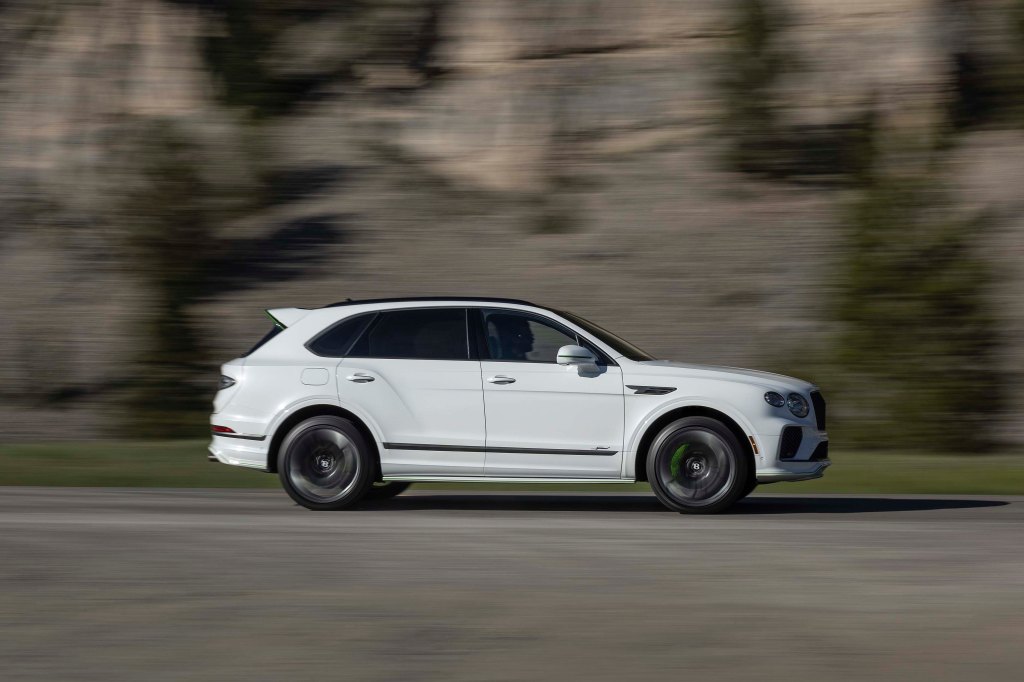
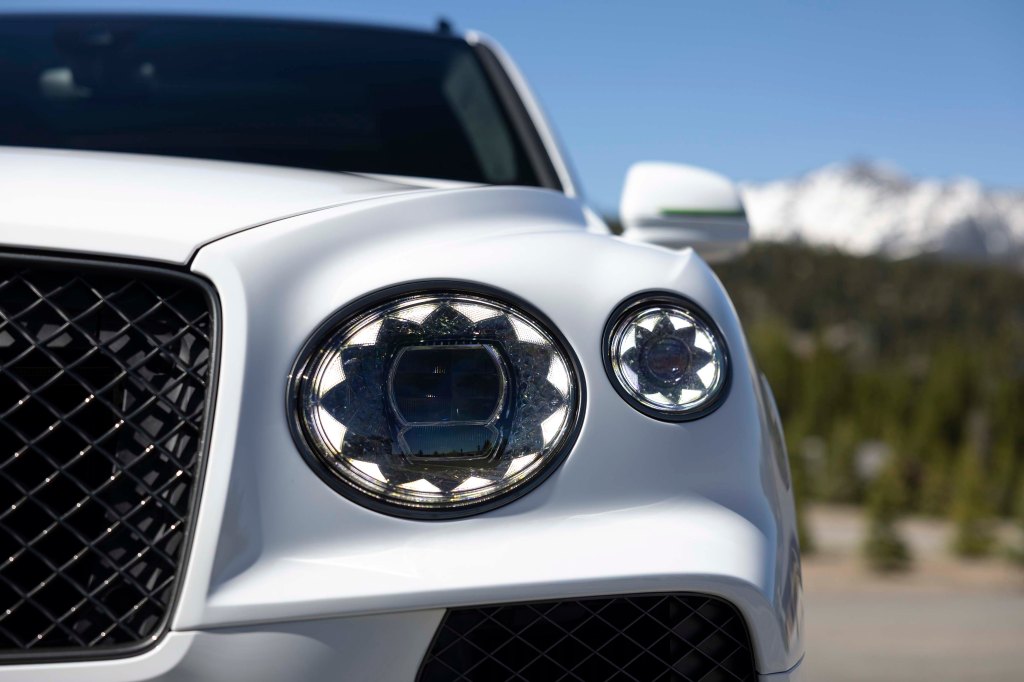
Powerful design statement Distinctive exterior features of the new Bentayga Speed include dark tint brightware, bright chrome Speed badges on the leading edge of the front doors, and 22” Speed wheels in either dark tint or silver (the latter being a no cost option). Unique Speed headlamps feature dark tint internals and a dark tint bezel, while tail lamps are grey, again with a dark tint bezel. For the first time in Bentley’s history, a 23” Speed wheel is optionally available when carbon ceramic brakes are specified, and these come in a choice of grey satin, black or black and bright machined finishes. Painted calipers in a choice of seven striking colours are also available standard brakes and when choosing the carbon ceramic brake option.
Another option offered exclusively for the Bentayga Speed is the Speed black roof, which is finished in either gloss or satin, depending on the chosen body finish. The black roof, which includes the lower section of the tailgate spoiler, makes a powerful, assertive visual impact.
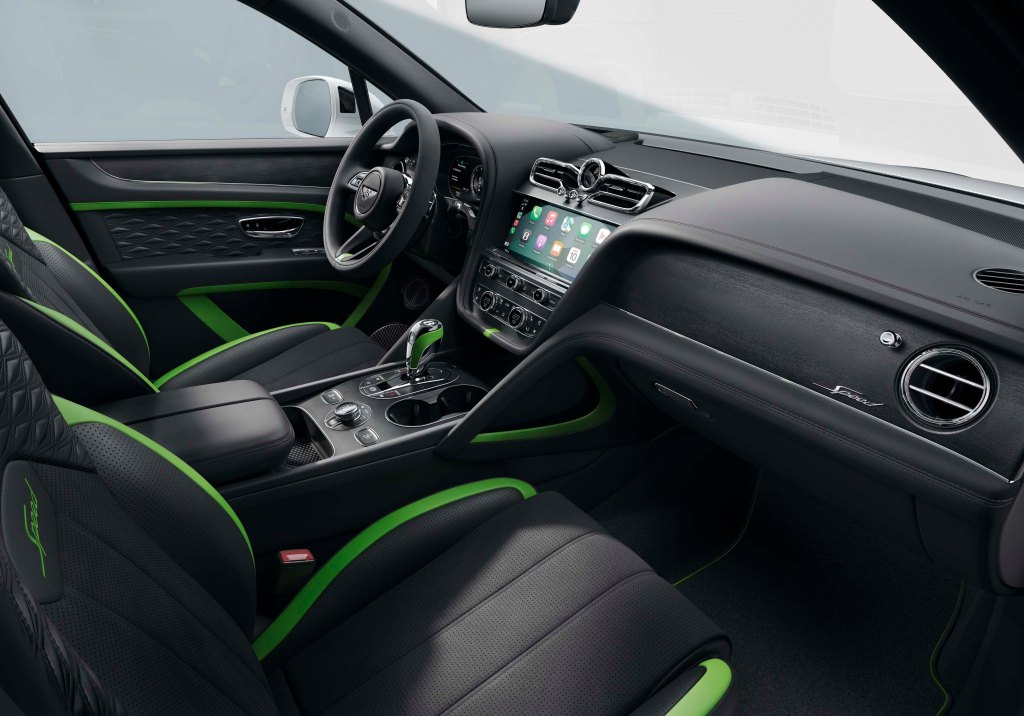
Performance focused interior The interior design of the Bentayga Speed reflects its singular performance focus. Standard features include the Speed-specific driver information display, Speed badging to the passenger fascia and treadplates, and Speed embroidered emblem on the seat uppers. The familiar Bentley ‘bullseye’ air vents, organ stops, and central air vents can be finished in dark tint as well as the standard chrome. Seat shoulder panels, door inners and backboard (four-seat models) all feature a new Precision Diamond quilt design. For the upholstery, the Speed colour split features a darker secondary hide as the predominant colour, relieved by flashes of the main hide colour on seat outers, door and the instrument panel side cheeks.
Extending the limits The new Bentayga Speed offers an extraordinary breadth of capabilities, with COMFORT and BENTLEY modes offering the perfect blend of pace, refinement, and relaxation for most driving conditions. Select SPORT mode however, and a new, more visceral and thrilling side to its character emerges. Through careful chassis enhancements and the adoption of the new High Powered 4.0 V8, Bentley’s engineers have created the most powerful and dynamic Bentayga ever, without losing an iota of what makes a Bentley, a Bentley.
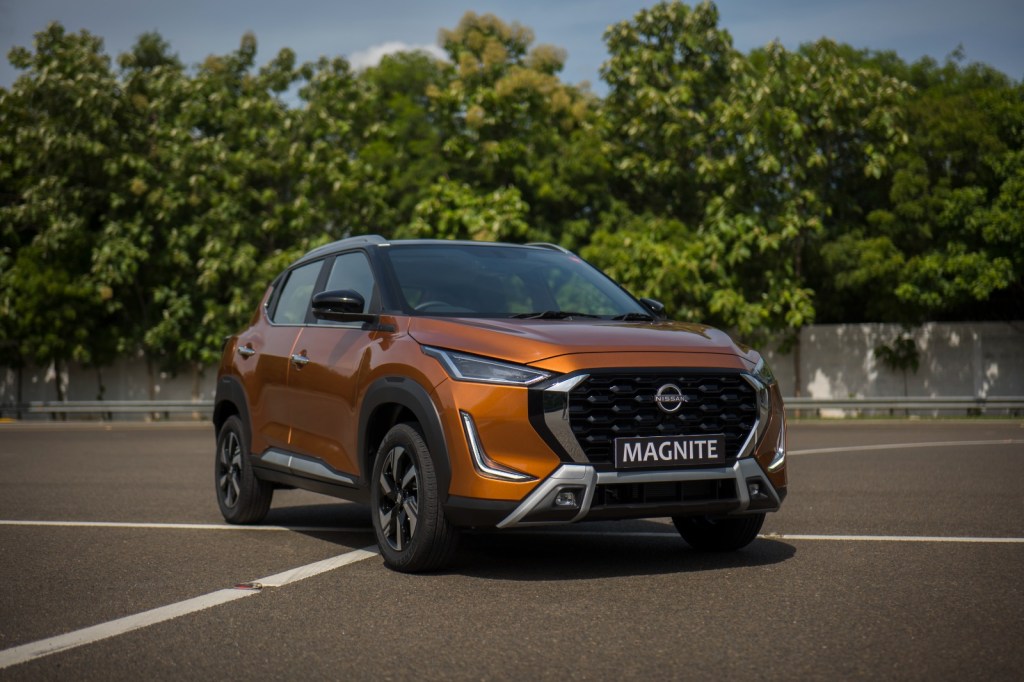
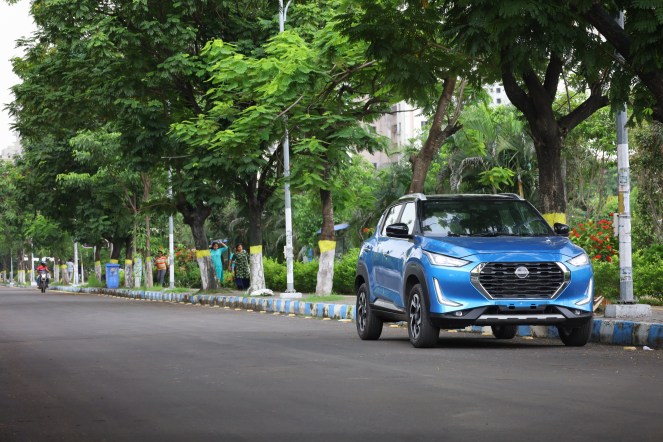
Nissan Motor India Pvt. Ltd. (NMIPL) today announced a significant milestone for its popular compact SUV – the Nissan Magnite, which has surpassed 2,00,000 cumulative sales across domestic and export markets since its launch in 2020. This achievement marks a significant moment in Nissan’s journey in India and underscores the Magnite’s strong resonance with customers worldwide. The Nissan Magnite has disrupted the B-SUV segment by offering an unmatched combination of bold design, safety, class-leading features, and exceptional value. Its success in both domestic and international markets highlights its universal appeal and the strength of Nissan’s ‘One Car, One World’ philosophy.
Saurabh Vatsa, Managing Director, Nissan Motor India, said: “The 200,000 global sales milestone is a proud moment for the entire Nissan Motor India family! The New Nissan Magnite continues to capture the imagination of customers around the world with its dynamic design, superior quality, value, and innovative features. We are grateful to our customers in India and across global markets for their continued trust and belief in the Magnite and love for the Nissan brand. We are fully committed to the Indian market, our customers, dealer partners and stakeholders as we work towards expanding our domestic and export product portfolio under the ‘Make in India, Make for the World’ vision.”
Nissan Motor India has also recently introduced a government-approved CNG retro-fitment kit for the New Nissan Magnite, catering to the growing customer demand fuel alternatives. Manufactured and quality assured by Motozen, the kit will be installed at government-authorised fitment centres and is priced at an additional INR 74,999. The kit is compatible with the 1.0-litre naturally aspirated petrol engine (manual transmission) variant of the New Magnite.
The New Magnite SUV’s bold and stylish design, 20+ first & best-in-segment features, and 55+ safety features make it a standout choice in the compact SUV segment. With its bold road presence, premium features, and expanding global reach, the New Nissan Magnite is now present in over 65 countries, including both the Right-Hand Drive and Left-Hand Drive markets.
Nissan Motor India continued consistent and sustainable growth in India with a consolidated sale of 99,000+ units for FY2024-25, delivering best single year performance for in the last seven years. The year was marked by the continued success of the New Nissan Magnite, which remains a key pillar for Nissan’s domestic business, selling 28,000+ units annually, and expanding export operations from 20 markets to 65+ international markets, resulting in an unprecedented export sale of 71,000+ units, making India an export hub.
The New Nissan Magnite will now be available with a government-approved CNG retrofitment kit. The CNG Kit is fully developed, manufactured and quality assured by Motozen (3rd Party) as per country Regulatory Standards. Motozen will provide warranty for kit components. This initiative reflects focus on providing customer-focused solutions. The fitment of these kits will be carried out at government-authorised fitment centres. The complete retrofitment will be available at competitive additional price of INR 74,999 only.
The rollout of this eco-friendly CNG kit fitment for the sustainability-aware and environment-conscious customer will be done in a phased manner across the country. In the first phase, Nissan customers can order the CNG kit installation via Nissan authorised dealerships in seven states, namely Delhi-NCR, Haryana, Uttar Pradesh, Maharashtra, Gujarat, Kerala and Karnataka. It will later be expanded to other states across the country as part of Phase 2.
The CNG kit option is available only with the New Nissan Magnite 1.0-litre naturally aspirated petrol engine with the manual gearbox. The customers will get enhanced fuel economy with the CNG retrofitted kit. All CNG kits will be retrofitted by government-approved vendors, offering a certified homologated kit that complies with current local regulations and safety standards.
Mr. Saurabh Vatsa, Managing Director, Nissan Motor India, commented: “The New Nissan Magnite has been a phenomenal product for us and has led the success story in India. With a view to meet the requirements of customers, Nissan Dealers will provide an alternate fuel option in the form of a government-approved CNG retrofitment kit which will be carried out at the authorised fitment centres for customers. We are confident that this move will enhance the popular compact SUV’s value proposition and practicality.”
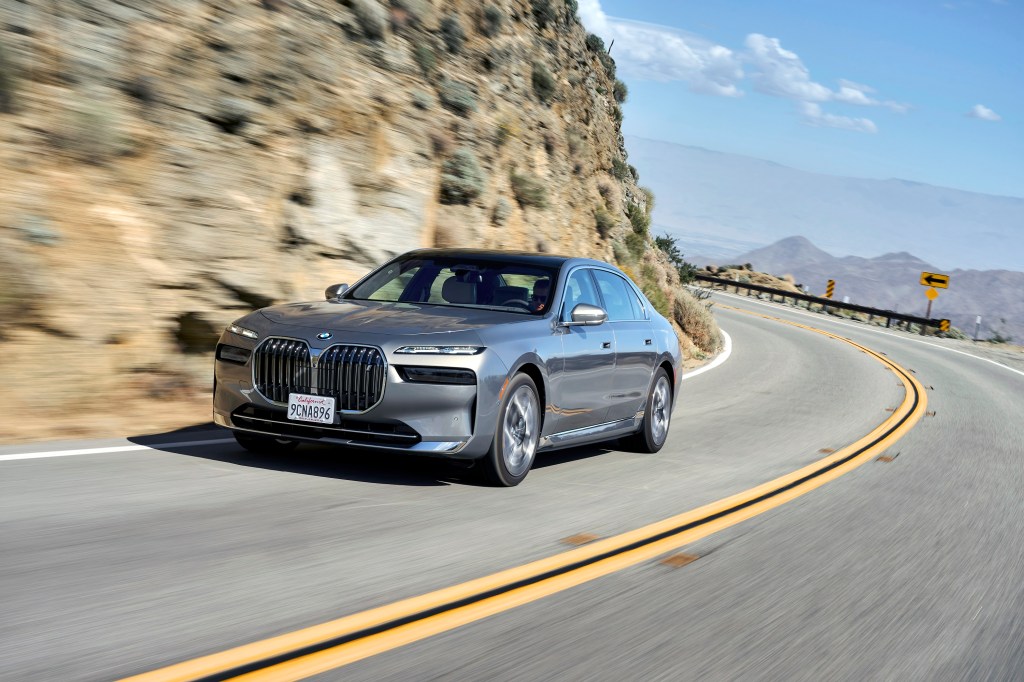
BMW India has introduced a unique offer on its flagship electric limousine – the BMW i7 – for benefit of customers across the nation. The first-of-its-kind offer provides a uniform pricing for the BMW i7 regardless of the registration location. In the specially designed new pricing, the customers do not need to incur the registration cost for BMW i7, as such cost will be borne by BMW India and administered by the authorized dealership.
Mr. Vikram Pawah, President and CEO, BMW Group India said,” BMW India has always looked as electric mobility as a holistic concept. We are the pioneers and leaders in the luxury electric mobility space with a novel approach to electric products and services. The introduction of a uniform price for the customers of BMW i7 will ensure price parity for our valuable customers regardless of which location they want to register their vehicle in. With this innovative offer, our focus is on customer centricity and encouraging the adoption of electric mobility with added benefits. As the vehicle of choice of leaders and luminaries with next-level style and substance, the i7 will continue to shape forwardism in every way.”
The current ex-showroom price of the BMW i7 is INR 2,05,00,000.
The first-ever BMW i7 is a true all-electric luxury sedan that clearly demonstrates how an exclusive driving experience can be combined with an unwavering commitment to sustainability. The i7 offers all-electric innovation, visionary design, and powerful driving dynamics that make a striking impression.
It makes a visual statement by taking a considerable leap forward in terms of design and dimensions. The headlights are divided into two parts. At the top are the daytime running lights, complete with the BMW Crystal Headlights. Another distinguished feature is the strikingly illuminated BMW Iconic Glow kidney grille surround that lends an unmistakeable appearance.
In the interior, the innovative BMW Interaction Bar defines the revolutionary cockpit design. BMW Live Cockpit Professional includes the freestanding BMW Curved Display with Navigation with real-time traffic information and augmented view. Unique and innovative features in the rear take comfort to a new level. A key feature here is Rear Seat Entertainment Experience with BMW Theatre Screen.
The Executive Lounge Seating behind the front passenger reclines to 42.5 degrees, offering a true first-class experience thanks to multifunction seats, massage function, active seat ventilation and rear console. My Modes can be used to turn every journey into an individual experience by combining sound, light, temperature, suspension settings and seat functions to create a particular mood.
BMW ConnectedDrive technology breaks the innovation barrier and turns the car into an interconnected digital device. It includes BMW ID, MyBMW App, Digital Key Plus, Emergency Call, Real-time Traffic Information, Remote Services, smartphone parking and Amazon Fire TV.
The spread of Driver Assistance Systems is more extensive than ever and includes Cruise Control, Attentiveness Assistant, Parking Assistant Professional with remote parking via smartphone and Reversing Assistant, Steering and Lane Control Assistant.
Fifth generation BMW eDrive technology in the BMW i7 eDrive50 features a highly integrated drive unit. The car instantly accelerates from 0 to 100 kmph in 5.5 seconds. It produces an output of 449 hp and a maximum torque of 650 Nm. The car has a range of up to 603 kms (WLTP).
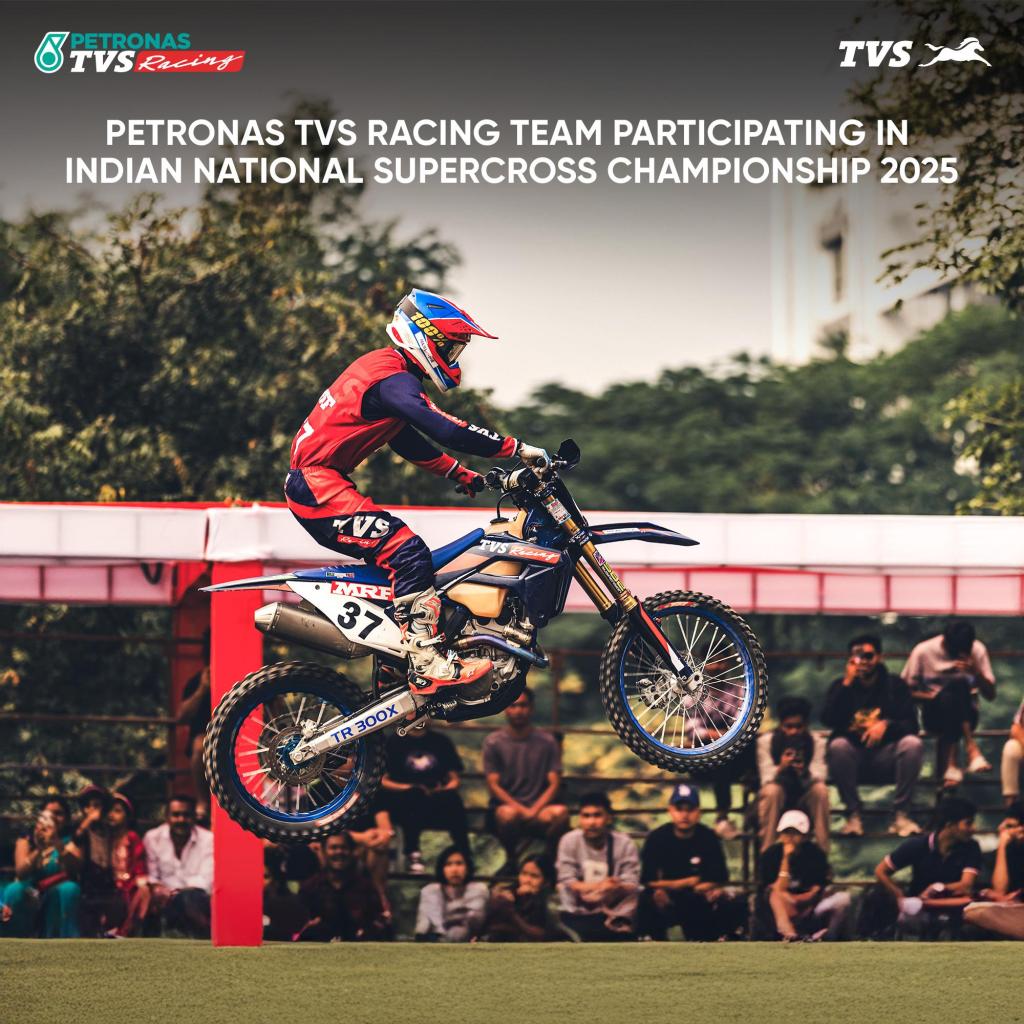
Backed by a rich racing pedigree since 1982, PETRONAS TVS Racing is set to ignite the track once again at the 2025 season of the FMSCI Indian National Supercross Championship (INSC), which begins in Vadodara on May 23–24, 2025. After a dominant 2024 season that reaffirmed its leadership in Indian two-wheeler racing, India’s first factory racing team returns with renewed focus, upgraded machines, and a powerful 8-rider line-up. The squad includes seasoned champions and expert riders like Rugved Barguje, Ikshan Shanbhag, and Prajwal V, who will compete in Group A – Foreign Open SX1, along with Imran Pasha, Banteilang Jyrwa, and D Sachin, who will race in Group B – Indian Expert category. They are joined by rising talents Jayden Wandame Nongkhlaw and Shailesh Kumar, who will compete in the Indian Novice Group B.
PETRONAS TVS Racing will field its state-of-the-art TR 300X (Group A – up to 500cc) and TR 200X (Group B – up to 260cc) race machines this season. These upgraded bikes feature advanced camshaft and cylinder head designs that deliver superior mid-range torque and high-RPM performance. With improved suspension systems and refined ergonomics, the machines promise enhanced control, traction, and cornering agility giving TVS racers a competitive edge on the track.
Vimal Sumbly, Head Business – Premium, TVS Motor Company said, “Building on last year’s championship triumph, PETRONAS TVS Racing is geared up to set new benchmarks in 2025. All upgrade to our machines and every hour dedicated to rider development reflects our unwavering commitment to excellence and innovation. Our 8-rider line-up is a perfect blend of experience and emerging talent, ready to push the limits. We are proud of the incredible momentum we’ve built over the years — from consistent podium finishes to nurturing India’s finest Supercross champions. This year is even more special as we celebrate 20 years of our flagship performance brand, TVS Apache, which perfectly embodies our ‘Track to Road’ philosophy. As we charge into the new season, we aim not just to race, but to raise the bar for motorsports in India once again.”
Underscoring its long-standing commitment to developing Indian motorsport talent, PETRONAS TVS Racing continues to invest heavily in training of the racers. For the new season of INSC, TVS Racing has invested in Advanced SX training sessions, especially for SX1-class riders, aimed at enhancing endurance, agility, and tactical skills to equip athletes for the rigorous physical and strategic demands of elite Supercross racing.
PETRONAS TVS Racing team’s racer line up for INSC 2025:
S. No.
Racer Name
Participation Group
Bikes
1
Rugved Barguje
Group A – Foreign Open SX 1 (up to 500cc)
2
Ikshan Shanbhag
TR300 X
3
Prajwal V
4
Imran Pasha
Group B – Indian Expert(up to 260 cc)
5
Banteilang Jyrwa
TR200 X
6
D Sachin
7
Jayden Wandame Nongkhlaw
Group B – Indian Novice(up to 260 cc)
TR200 X
8
Shailesh Kumar
For over 43 years, TVS Racing has been at the forefront of Indian motorsports, continuously pushing the boundaries of racing excellence. This commitment to innovation and performance extends beyond the racetrack into TVS Motor Company’s flagship motorcycle brand, TVS Apache, which celebrates 20 years of engineering excellence this year. The TVS Apache series embodies TVS Racing’s ‘Track to Road’ philosophy, integrating race-derived technology into high-performance motorcycles. Spanning 160cc, 180cc, 200cc, and 310cc models, the lineup features segment-first innovations, from ride-by-wire technology to race-tuned fuel injection.
With over 400,000 riders in the Apache Owners Group (AOG), TVS Apache has built a passionate global community, bringing the thrill of racing to streets and track enthusiasts alike. As it enters its next chapter, TVS Apache remains dedicated to offering cutting-edge performance, redefining what it means to ride with power and precision.
Hero MotoSports Team Rally has added promising young talent Tobias Ebster to its international rider line-up, following a highly successful 2024 season.
Tobias Ebster, 27, from Zillertal, Austria, is widely recognised as one of rally racing’s most promising rising stars. He entered his first rally just four years ago — the Hellas Rally Raid — after establishing a solid background in motocross and enduro. His breakthrough came in 2022, when he won the prestigious FIM Bajas World Cup in Dubai. He continued to impress by securing victory in the Rally 2 category at the Abu Dhabi Desert Challenge, outperforming a field of seasoned competitors.
A trained mechanical engineering technician, Tobias has taken on a range of freelance jobs — including landscaper, taxi driver, plumber, pizza delivery rider, and carpenter — to maintain a flexible schedule that supports his intense training and racing commitments.
In his debut Dakar Rally last year — Tobias delivered a remarkable performance. Displaying exceptional grit and endurance, he claimed victory in the grueling “Original by Motul” category without any assistance and finished an impressive 20th overall, earning the coveted title of Best Rookie. His determination and talent also secured him a Dakar entry through the “Road to Dakar” program, a dream he pursued and achieved despite significant setbacks. In Dakar 2025, competing once again as a privateer — but this time with assistance — Tobias raised the bar even higher. He finished an astonishing 9th overall, emerging as the top privateer in the field.
Tobias is set to make his debut race appearance with Hero MotoSports later this month at the South African Safari Rally. This event, making its first appearance on the World Rally-Raid Championship (W2RC) calendar, serves as the third round of the 2025 season. Tobias will line up alongside teammates Ross Branch and Nacho Cornejo for the rally.
Wolfgang Fischer, Team Manager, Hero MotoSports Team Rally, said: “We are absolutely thrilled to welcome Tobias Ebster to the Hero MotoSports family! His addition comes at a truly exciting time for us, following our historic World Championship victory led by our star rider Ross Branch. In just over nine years, Hero MotoSports has firmly established itself among the top teams in rally racing, and the arrival of a world-class talent like Tobias – current leader of the Rally2 championship – marks another major milestone in our journey.”
“Tobias already shares a strong bond with several of our riders, and we are excited to see that camaraderie come alive once again under the Hero MotoSports banner. His impressive will to work upwork his career to where he stands now, and true spirit of sportsmanship perfectly align with our team’s values and ambitions. We are confident Tobias will play a significant role in elevating our performance even further this season and beyond. With new energy, renewed determination, and exciting new talent, we look forward to an incredible season ahead!”
Tobias Ebster, Rider, Hero MotoSports Team Rally, said: “I’m thrilled and deeply honoured to be joining Hero MotoSports, a team that has been making headlines for all the right reasons. I’ve followed the team’s incredible rise over the past few years and have always admired how quickly they’ve become a force to reckon with in rally racing. It’s an exciting time to join, and I’m fully committed to giving my best and contributing to the team’s continued success.”
“I look forward to racing alongside some of the most talented and promising riders in the sport, many of whom I also consider close friends. I sincerely thank Hero MotoSports for placing their trust in me — it’s a true privilege to represent the world’s largest manufacturer of motorcycles and scooters at some of the toughest and most iconic races around the world!”
Born into a family deeply rooted in motorsport, Tobias found his passion for two wheels at an early age, receiving his first bike at just four years old. Guided by his uncle Heinz Kinigadner — a two-time Motocross World Champion and rally-raid legend — Tobias developed his skills across motocross and desert racing, laying the foundation for what promises to be an outstanding career in rally-raid. With an already impressive trajectory early in his career, Tobias brings immense talent and resilience to the Hero MotoSports squad.
The MG ZS EV was first launched in India on January 23, 2020. Positioned as the country’s first pure electric internet SUV, the ZS EV instantly found patronage among those customers who desired an electric SUV with premium features and competitive pricing.
On March 7, 2022, a little over two years since its inaugural launch, the face-lifted version of the ZS EV drove in with revised styling, added features and most importantly, an extended drive range that set the Indian car market on fire.
Very recently, the MG ZS EV came to visit us at Power Drive where we got an opportunity to get up close and personal with the ZS EV. Did the MG ZS EV live up to our expectations? Does the ZS EV offer the best value proposition in its segment? Read on to find out what we discovered.
Design & Engineering
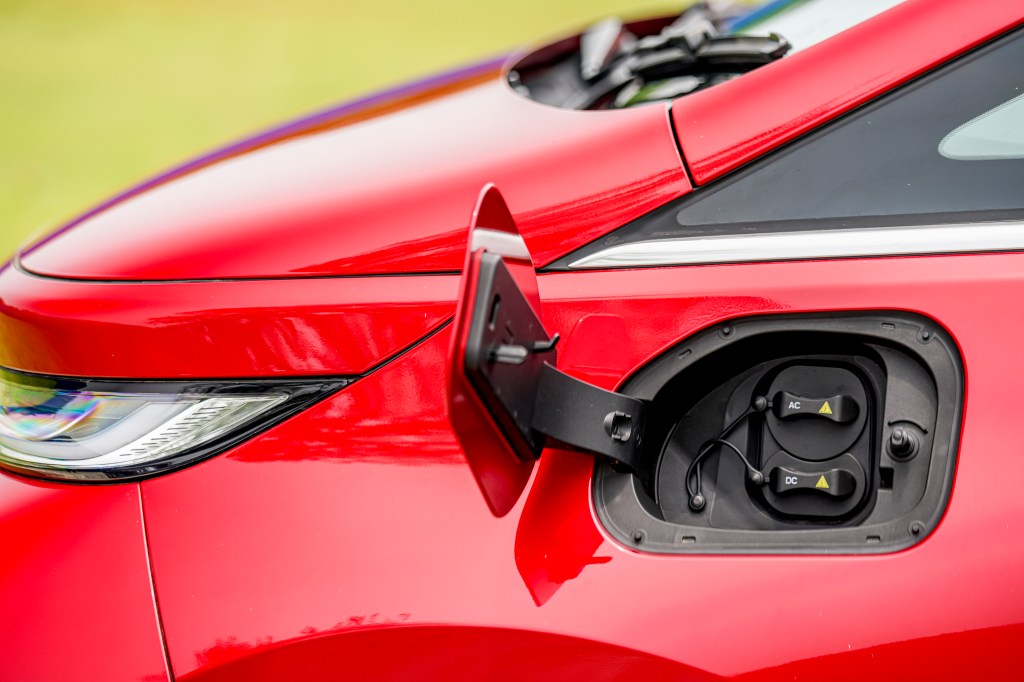
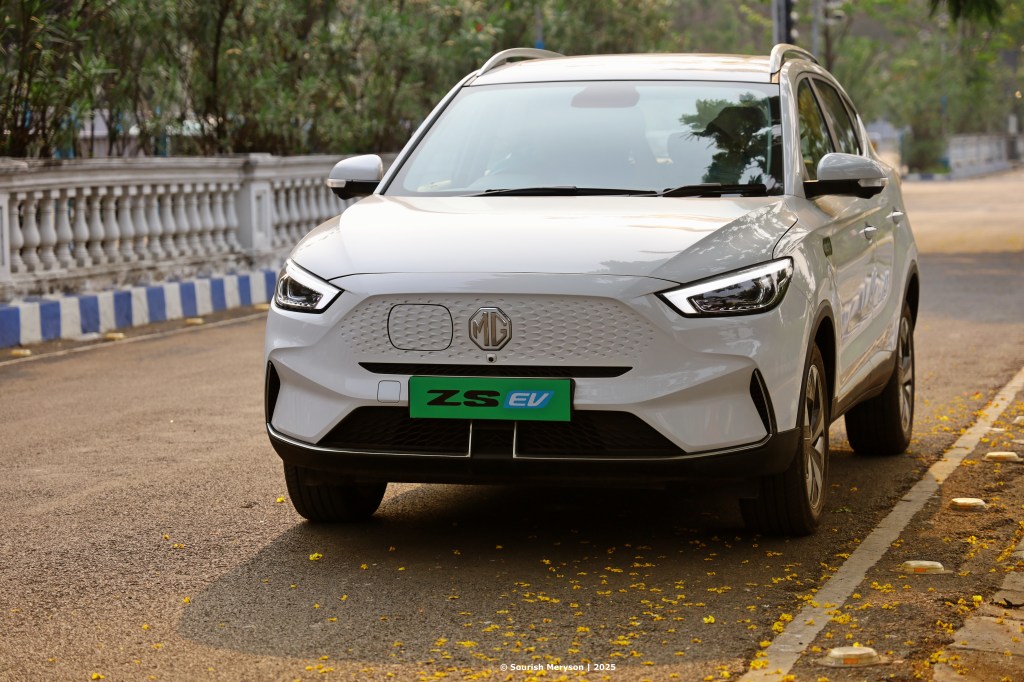
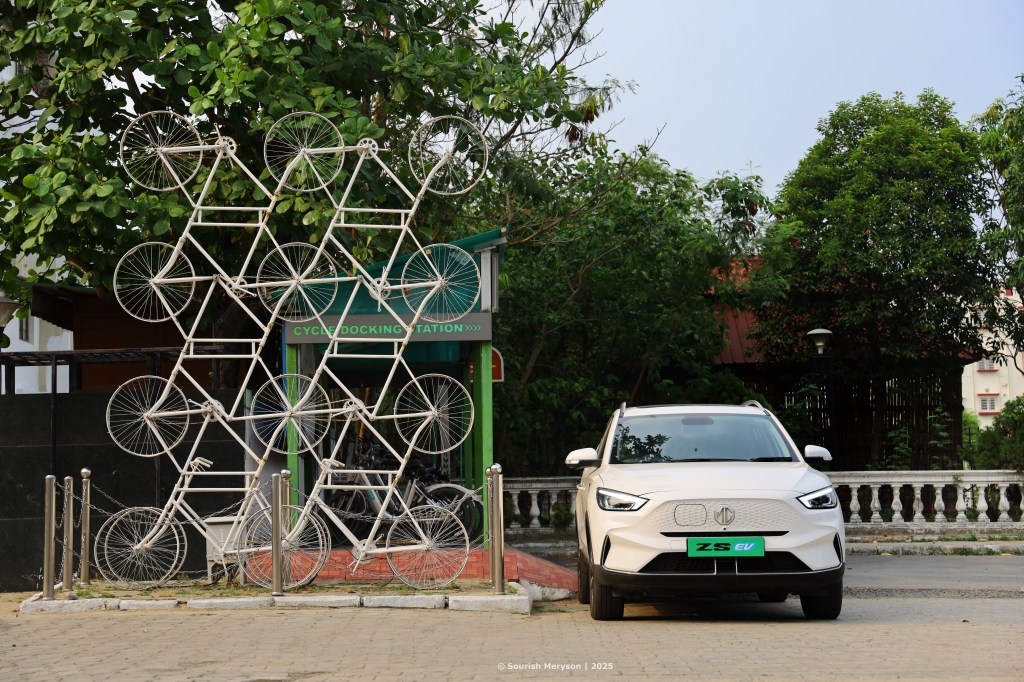
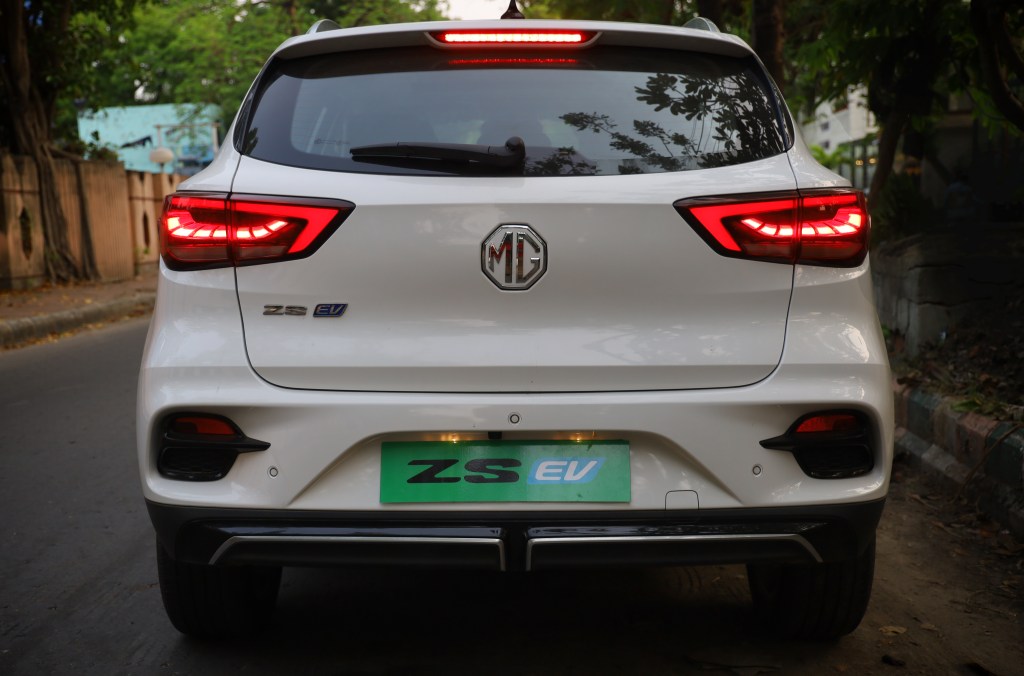
The new MG ZS EV still very much looks like the earlier ZS from every angle, but now features a closed-off grille at the front. The charging port that was earlier under the big MG logo has been shifted to the side and the new stylish bumpers are the most prominent revisions that catches the eye and offers the ZS EV a highly distinctive appearance on the road.
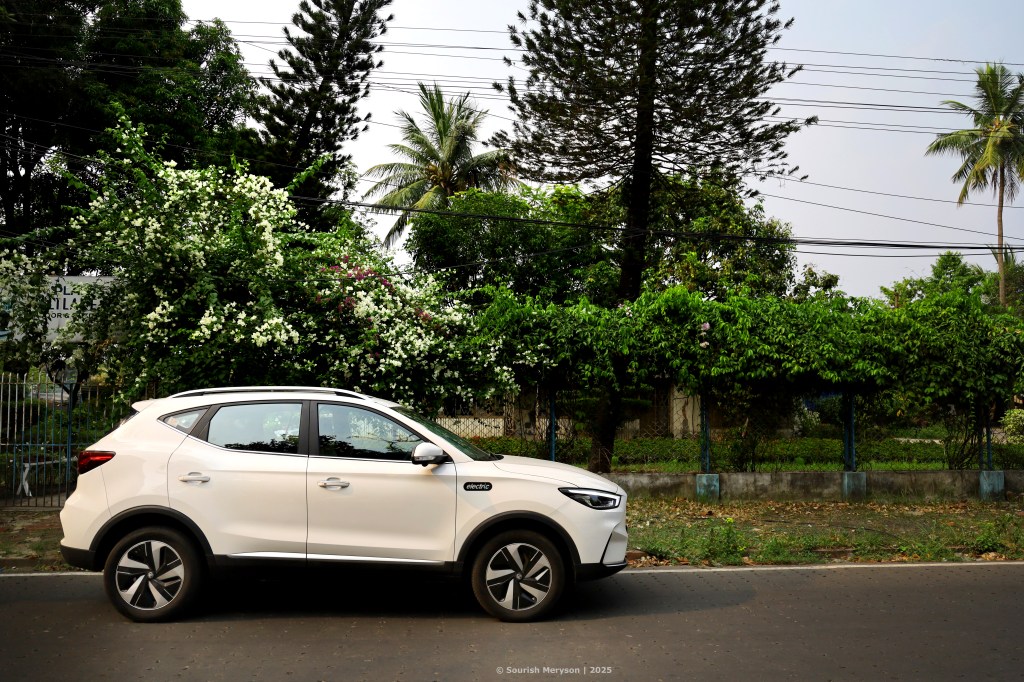
The dynamic lines and a unique style combined with the wide SUV stance gives the ZS EV its progressive look. The MG ZS EV also features full LED Hawkeye headlamps in addition to full LED tail lamps that accentuate its overall look.
The MG ZS EV also comes with 17-inch alloy wheels (43.18cm) with Tomahawk hub design adding to the bold look to the SUV. Overall, these tweaks in the external design and styling have added value to the MG ZS EV.
The MG ZS EV is available across four trim levels – Executive, Excite Pro, Exclusive Plus and Essence and comes in four attractive colour schemes which include Glaze Red, Aurora Silver, Starry Black and Candy White.
Interior & Comfort
Step inside the new MG ZS EV and you will be welcomed into a spacious and premium passenger cabin with plush interiors in dark grey interior theme or the new dual tone iconic ivory interior theme. The ZS EV is far roomier inside than many electric cars in this price bracket. Thanks to intelligent packaging, space up front is good, with plenty of head and leg room for the driver and passenger. Rear space too is excellent. There’s also more than enough head room for a six-footer despite the sky roof. The seats are well bolstered and comfortable resulting in a relaxing ride.
The interior boasts of superb build and quality, and an overall fit & finish that is worthy of a car in this price segment. The new MG ZS EV also features a panoramic sky roof that lets you enjoy the ride in the comfort of extra light and fresh air.
The MG ZS EV comes loaded with the largest-in-segment 25.7 cm HD touchscreen infotainment that gives you all the information at a single glance and allows you to manage complete vehicle settings with just a touch. The ZS EV features a full digital cluster with the largest-in-segment 17.78 cm embedded LCD screen that makes your drive more seamless.
The i-SMART technology combines hardware, software, services and applications to make your driving experience easier and smoother. The MG ZS EV offers 75+ connected car features, ushering in an era of convenient connected drives.
Performance and Handling
The MG ZS EV is powered by a 50.3 kWh battery with a permanent magnet synchronous motor mated to an automatic transmission. It produces 176.75 PS of maximum power and 280 Nm of peak torque delivering a company claimed range of up to 461 kilometres in a single charge. The estimated 7.4 kWH charge time from 0-100% ranges between 8.5 to 9 hours.
The MG ZS EV is excellent to drive within the city making is an ideal choice for the urban daily commute. The electric motor is quite responsive to throttle inputs with sufficient power in the tap for overtaking when necessary.
Despite its tall design, the body roll is well contained as the ZS EV stays well planted to the tarmac while navigating sharp turns at reasonable speeds. The suspension set up with MacPherson Strut in the front and Torsion Beam in the rear, is well tuned for Indian road conditions with the ZS EV absorbing undulations on the roads with relative ease resulting in a comfortable ride.
17 Autonomous Level-2 Features
Advanced Driver Assistance System or ADAS, like it’s popularly known now, is a group of safety and convenience functions intended to improve comfort and safety for drivers. The MG ZS EV is equipped with 17 ADAS features which work on three levels of sensitivity – low, medium and high and three levels of warning – haptic, audio and visual.
ADAS implements possible safeguards in the vehicle and automates driving controls. Autonomous Level-2 features not just makes driving more comfortable but also keeps your safety at the forefront. With level-2, the system can not only perform acceleration/ braking functions but can also activate steering control to assist the driving.
Safety
MG ZS EV comes with 6 airbags, which include dual front airbags, front-seat side-impact airbags, and side-curtain airbags that work together with the seatbelts. It also comes equipped with Electronic Stability Control, ABS + EBD + Brake Assist, Emergency Stop Signal (ESS), Hill Climb Assist, Hill Descent Control (HDC), Electric Parking Brake with Auto Hold, Tyre Pressure Monitoring System (TPMS) and Reverse Parking Camera as standard across all trim levels.
Verdict
The problem with electric SUVs is that, while they are economical to run, however, they can be rather expensive to buy in the first place. There is one notable exception, though – the MG ZS EV which has decimated this myth, despite its premium positioning. The MG ZS EV looks dynamic, is spacious, well-equipped and extremely well priced for what MG is offering in the car. Shortcomings if any, when pitted against rival electric SUVs, the MG ZS EV makes up for that with its competitive price tag, high levels of equipment, impressive electric range and great practicality. This is the car to add in your garage and a fantastic daily runner, especially within the city and occasionally during weekend escapades.









 Power Drive