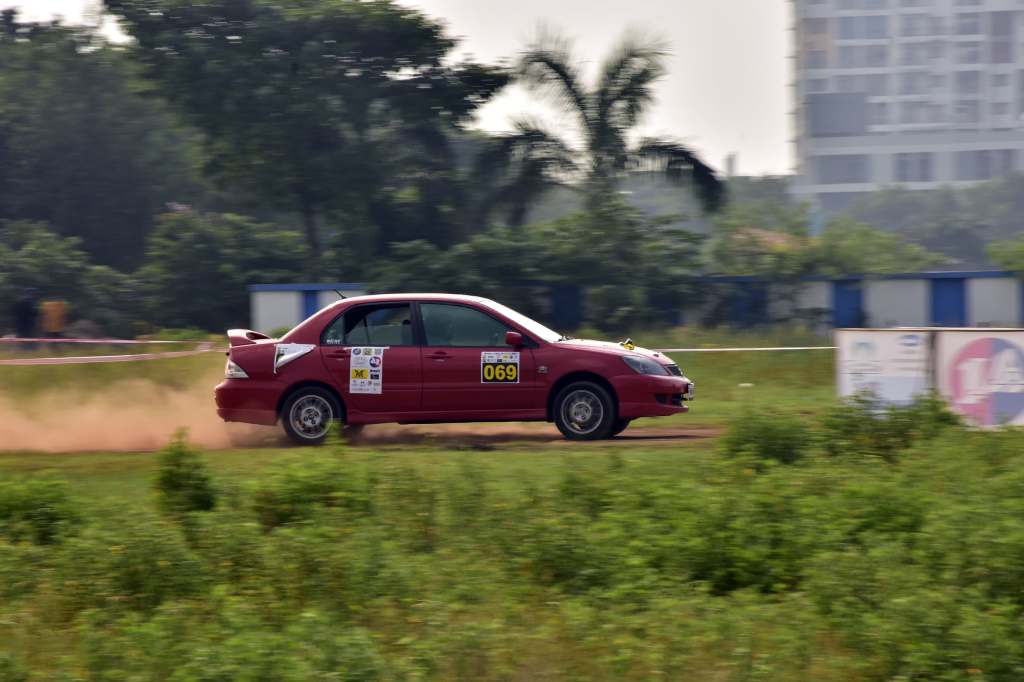
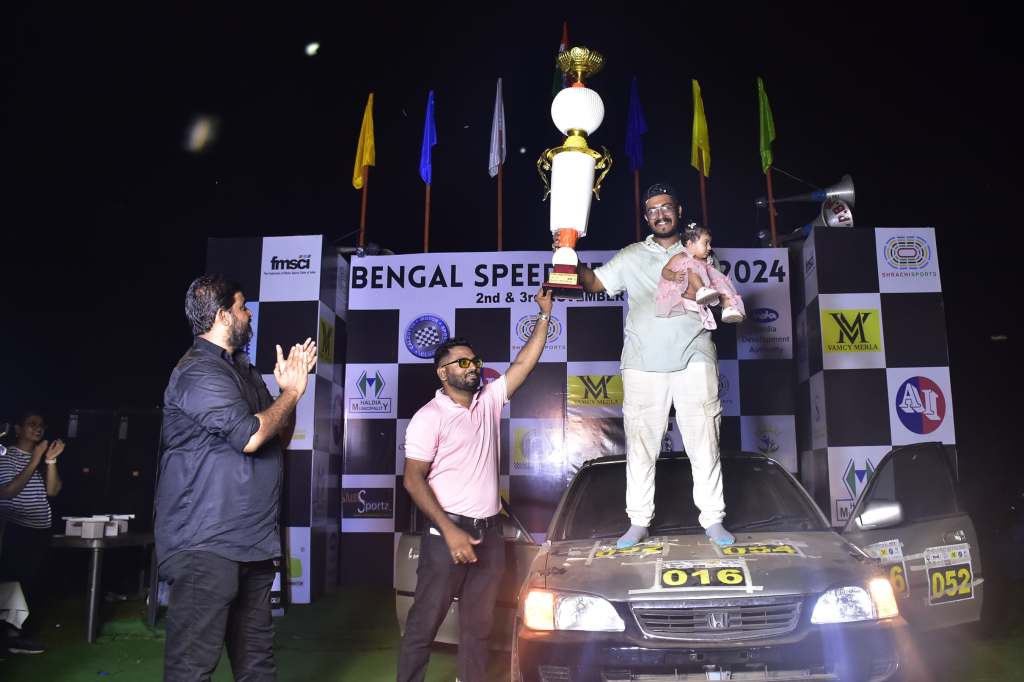
Bengal Speed Festival 2024 put the industrial town of Haldia on India’s motorsports map as automobile enthusiasts, motorsports fans, and local residents made up a 5,000 strong crowd to witness the thrilling autocross action during the 2-3 November weekend.
This was the fifth year of the National Autocross Championship qualifier with other supporting 4W Autocross being held in Haldia which witnessed a neck-to-neck competition amongst the top drivers of the eastern zone.
With the support of Shrachi Sports as Title Sponsor, this event got a great boost. Other sponsors such as Vamcy Merla, Haldia Municipality and Haldia Development Authority among many other organizations also extended their patronage to make this event a grand success.
The event was a combination of 4Wheeler Autocross and East Zone Qualifier of Indian National Autocross Championship 2024. The total number of entries registered for the event was a staggering 146 amongst which there were two lady participants.
In 4W Indian National Autocross Championship Qualifier, Karan Chaudhury clocked the best timing of the event with 1 minute 56.337 seconds followed by Saujatya Kole, Areeb Rahman, Nilanjan Banerjee and Uday Ganguly.
Saujatya Kole registered the fastest time with 1 minute 37.636 seconds in Open Autocross followed by Karan Chaudhury, Raunak Jana, Uday Ganguly and Sourabh Choudhury.
Speaking on the occasion, Saurav Chatterjee & Sk. Ajgar Ali, the main organisers of this event explained that autocross is not only about raw speed; one has to match that with driving acumen and physical stamina as well. They also added that the aim of the event is to woo the youth away from road racing to regulated motorsports, where safety of the drivers is of paramount importance.
The goal of FMSCI, the apex body of Indian Motorsports, is to identify young budding talents from the regional zones and thus Bengal Speed Festival 2024 is a big step forward to the eminent goal.
Calcutta Motor Sports Club and Kolkata Automotive Sports Association along with Motor Sports Association of Eastern India, the organising motorsports clubs of Bengal Speed Festival 2024 shall together be the guiding force of raw talents in the near future.
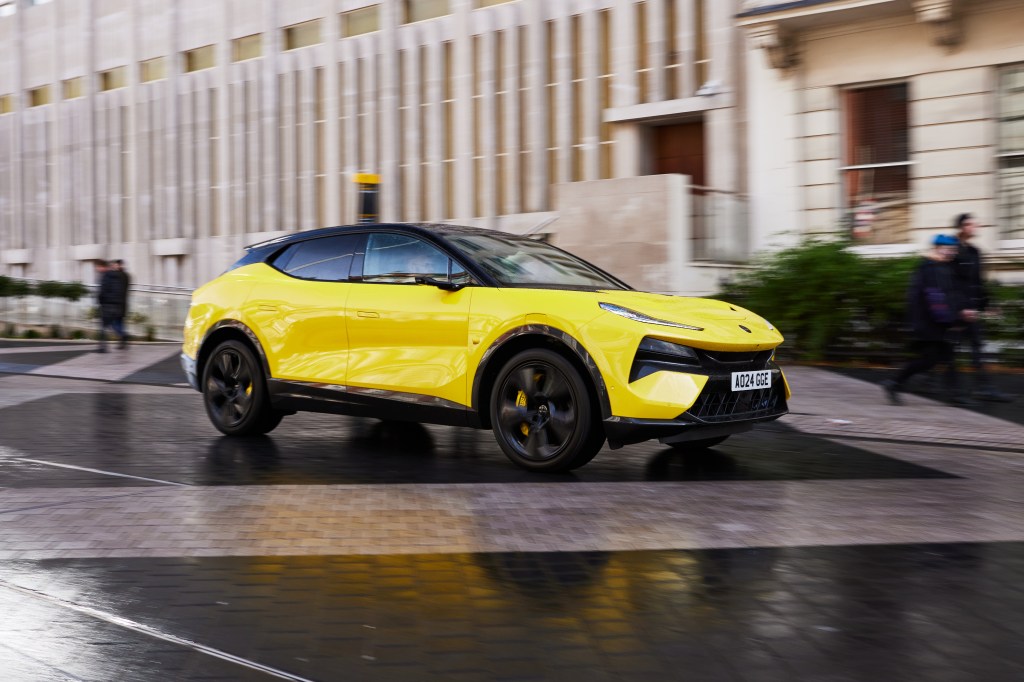
This October, Uber riders in London will have the chance to experience high-end luxury and sustainability in one ride, as a fleet of ultra-luxurious Lotus Eletre Hyper-SUVs joins the Uber Green fleet for a limited time. Riders can book these cutting-edge electric vehicles via the Uber app’s Uber Green option and experience the future of zero-emission transport.
With nearly 30% of Uber’s miles in London now fully electric, the initiative supports the city’s journey toward a cleaner, greener future. To encourage more riders to go electric, Uber has launched a special competition: the rider who saves the most emissions by the end of November by taking Uber Green trips will win free Uber Green rides for a decade.
Riders will have until November 30 to rack up their electric miles. All Uber riders can track the emissions they’ve saved by taking Uber Green using the in-app Emissions Savings tool, which launched earlier this year.
Andrew Brem, General Manager for Uber UK, said: “We’re thrilled to team up with Lotus to combine cutting-edge luxury with sustainable travel. Uber drivers are already leading the way, going electric far quicker than regular motorists – making London Uber’s global capital for electrification. Now we’re excited to allow our riders to experience one of the world’s most exciting electric cars.”
Conor Horne, Commercial Director of UK and Ireland at Lotus said: ”We are incredibly excited to partner with Uber to have a fleet of our all-electric Lotus Eletre available in London via the app for passengers to experience and enjoy. We hope this initiative will not only enhance the riding experience for Uber customers but also contribute to a greener city, something we at Lotus are very passionate about.”
Uber Green, which first launched in central London in 2021, allows riders to book a zero-emissions ride for the same price as an UberX, since its launch Uber has saved 55,000 tonnes of carbon emissions in London. Drivers taking Uber Green trips also earn 10% more on those trips compared to an UberX. Uber drivers are making the switch five times quicker than regular motorists.
The Eletre, Lotus’ first all-electric Hyper-SUV, redefines the passenger experience by combining luxurious comfort with cutting-edge technology. Passengers can enjoy a spacious interior designed for relaxation, featuring premium materials and a world-class infotainment system.
Through the combination of exceptional aerodynamics, outstanding comfort, and true Lotus performance, the Eletre is the perfect option for those seeking an exceptional drive with a new luxury experience.
The cars will be licensed and managed via Otto Cars, London’s largest private hire provider. Gurinder Dhillon, Otto Cars CEO, said: “We are delighted to power-up this concept for Uber and Lotus. Let’s prove that a sustainable ride can be a thrilling experience, without the smoke.”
SAIC Motor, a global Fortune 500 company with a presence in over 100 countries and JSW Group, a revered Indian corporate with varied business interests entered into a joint venture – JSW MG Motor India Pvt. Ltd. in 2023.
At the time of formation of the joint venture, JSW MG Motor India announced that their goal will be to build a smart and sustainable automotive ecosystem while continuing to stay focused on developing a diverse portfolio of vehicles to give car buyers better access to advanced technologies and futuristic products with attractive value propositions.
Fast forward to September 2024 and JSW MG Motor India has launched their first car since the formation of the JV – the MG Windsor EV. Launched at the price of a manual compact SUV, the Windsor, combining the comfort of a sedan and the expanse of an SUV, will be offered with innovative aerodynamic design, spacious and premium interiors, smart connectivity, driving comfort, and many hi-tech features.
Built on a ‘Pure EV Platform’ with BaaS – a unique ownership program, MG Windsor is being offered at an industry disrupting price of Rs 9.99 lakhs + Rs 3.5 per kilometre of battery usage – a path-breaking ownership concept introduced by a carmaker for the very first time in India.
And for the conventional purists who believe in the age-old concept of outright purchase, the Windsor comes at an unbeatable ex-showroom price of Rs. 13.49 lakhs for the base variant going upto Rs 15.49 lakhs for the top trim.
Recently, we were invited for the national media drive of the MG Windsor. Read on to find out all that you want to know about the newest kid in the block.
Design and Engineering
The MG Windsor is being positioned as a CUV or Crossover Utility Vehicle. It is an interesting cross between a sedan and a compact SUV. From the engineering standpoint, balancing and blending two different body styles isn’t an easy task, however, the designers at MG deserves a pat on their back for pulling it off well.
The MG Windsor measures 4,295mm in length, 2,126mm in width, and stands 1,677mm tall. The best-in-segment 2,700mm wheelbase ensures that the MG Windsor offers a great balance between ride & handling and comes with a specious passenger cabin.
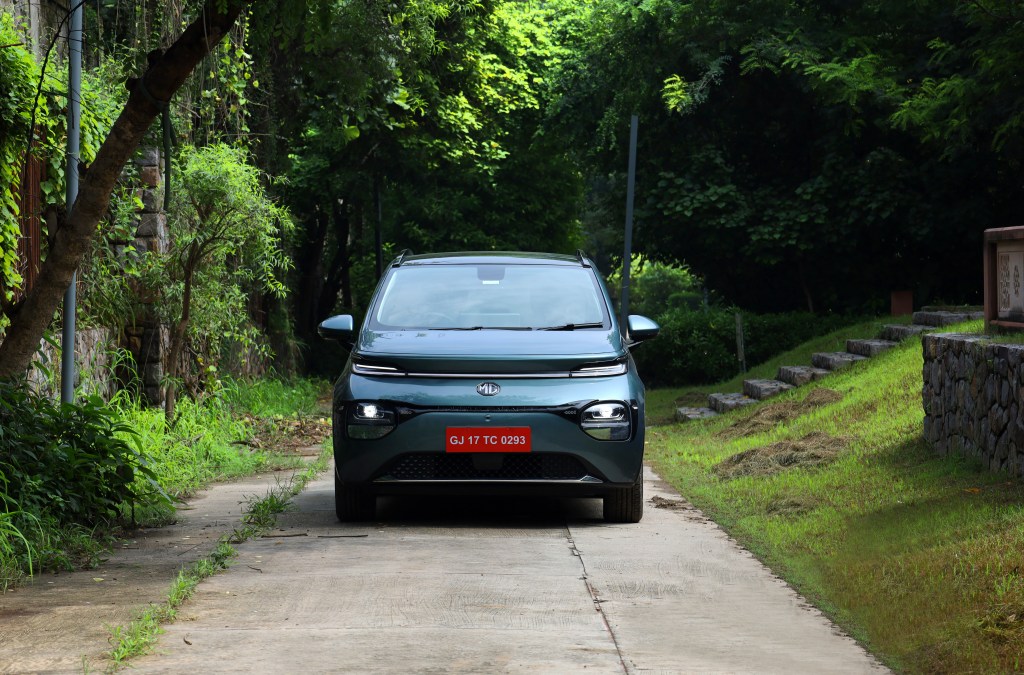
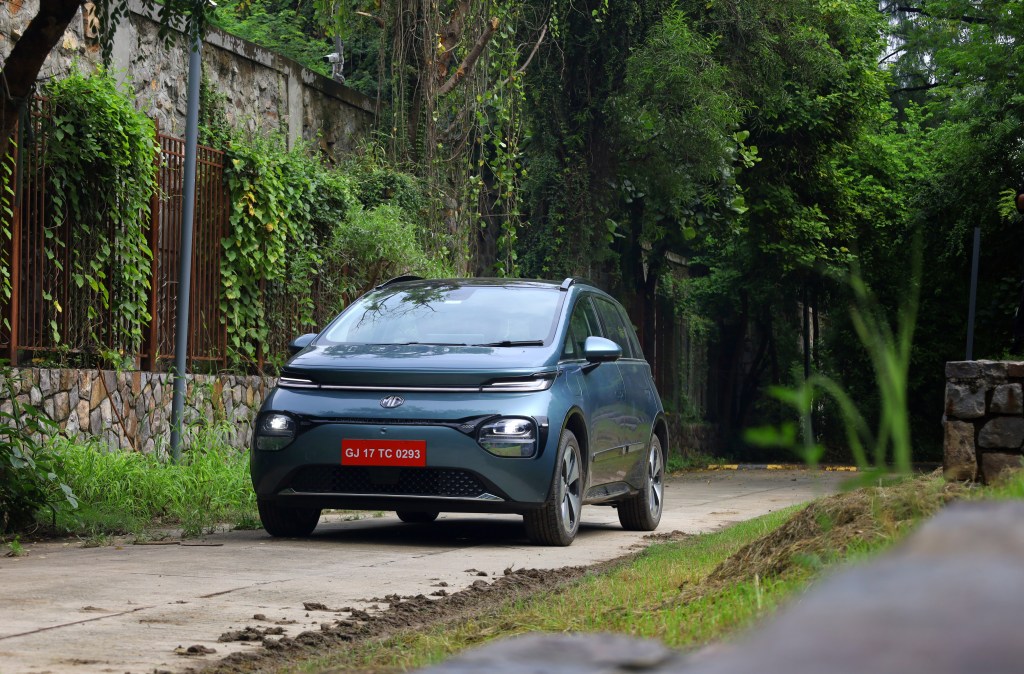
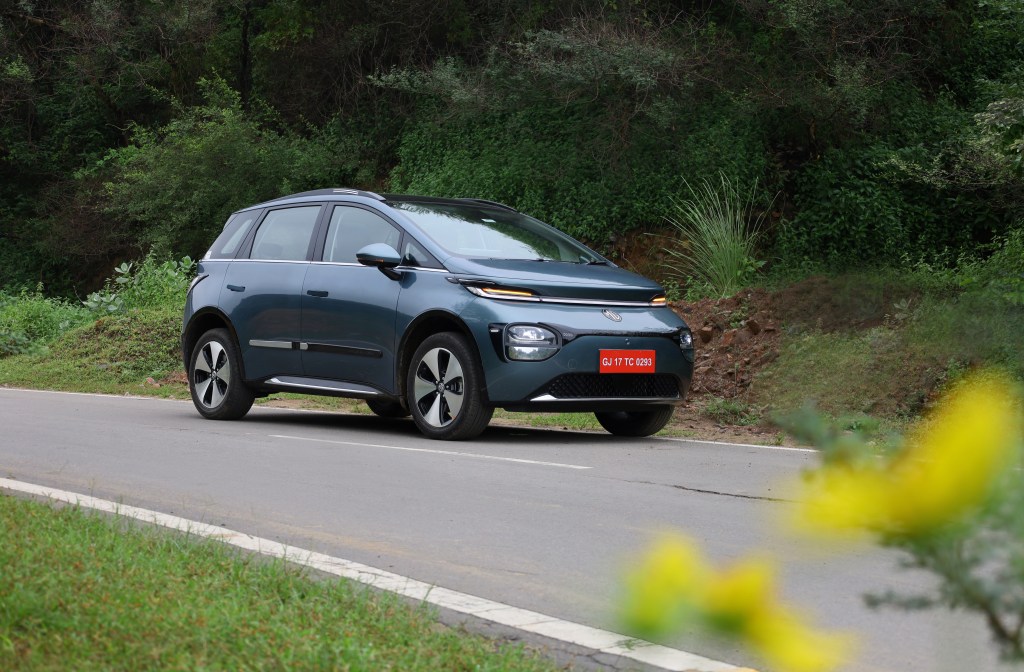
The MG Windsor features an AeroGlide design language, which is futuristic and transcends the concept of traditional segmentation. The nose and bonnet have a distinct two-deck layout. The horizontal daytime running lamps strip forms the base of the bonnet, while the headlights sit below in the bumper. Integrated into the headlight area is a mirror-like panel that reflects images with clarity. MG has added some black trim bits bracketing the headlights, with the one inside connecting the two units and carrying the Morris Garages lettering, above which sits an illuminated MG logo.
MG’s AeroGlide design language is more prominently visible when viewed from the side. The MG Windsor features smart flush door handles which look very trendy. The R18 diamond cut alloy wheels further enhances the striking good looks of the MG Windsor. At the top, the roof rails add to the aesthetics.
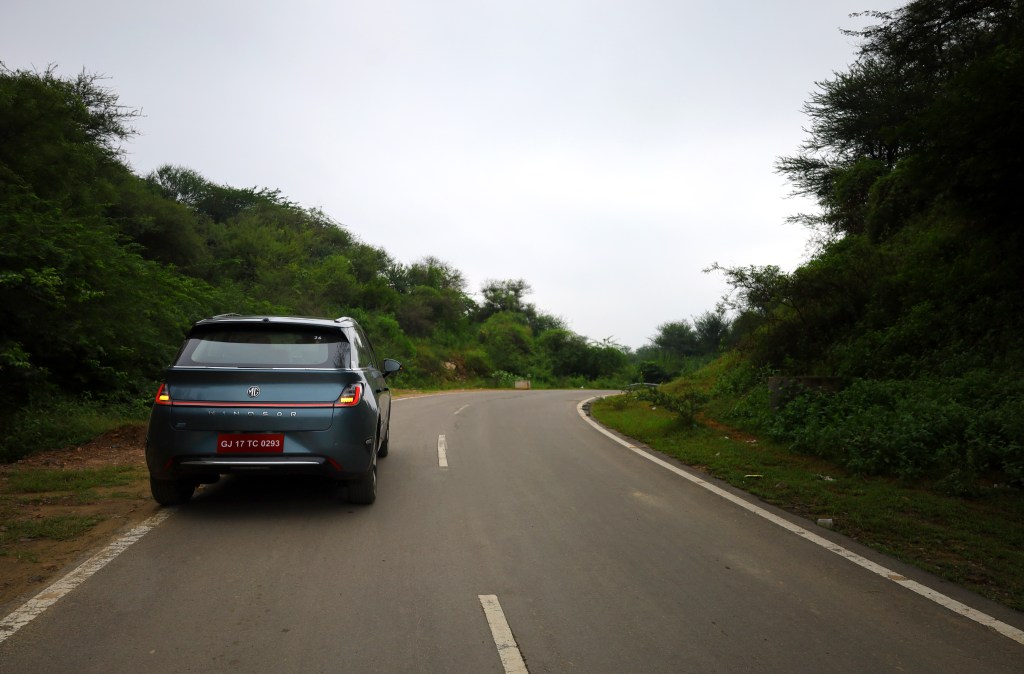
At the rear, the LED tail lights look sleek, and the lower bumper edge is finished off with a nice diffuser-style contrasting black panel. Topping the rear is a spoiler with an integrated stop light. Overall, the MG Windsor EV looks impressive and is sure to turn heads on the road.
The NVH levels are also well contained. The MG Windsor is being offered in three variants: base trim Excite, mid-level variant Exclusive, and top-of-the-line Essence; and four colours: Starburst Black, Pearl White, Clay Beige, and Turquoise Green.
Interior and Comfort
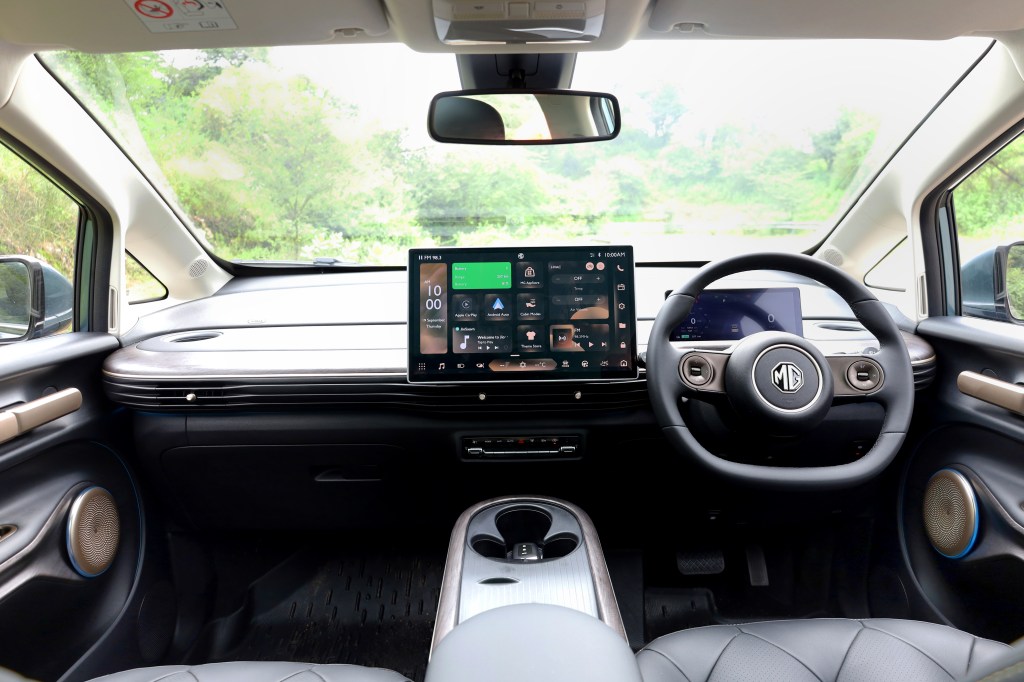
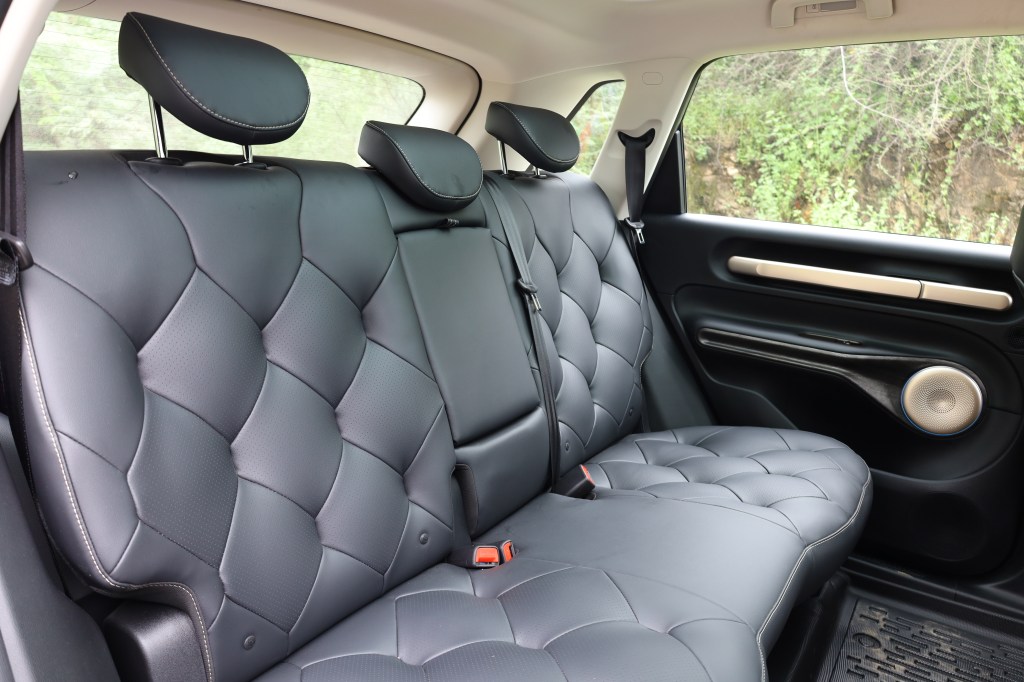
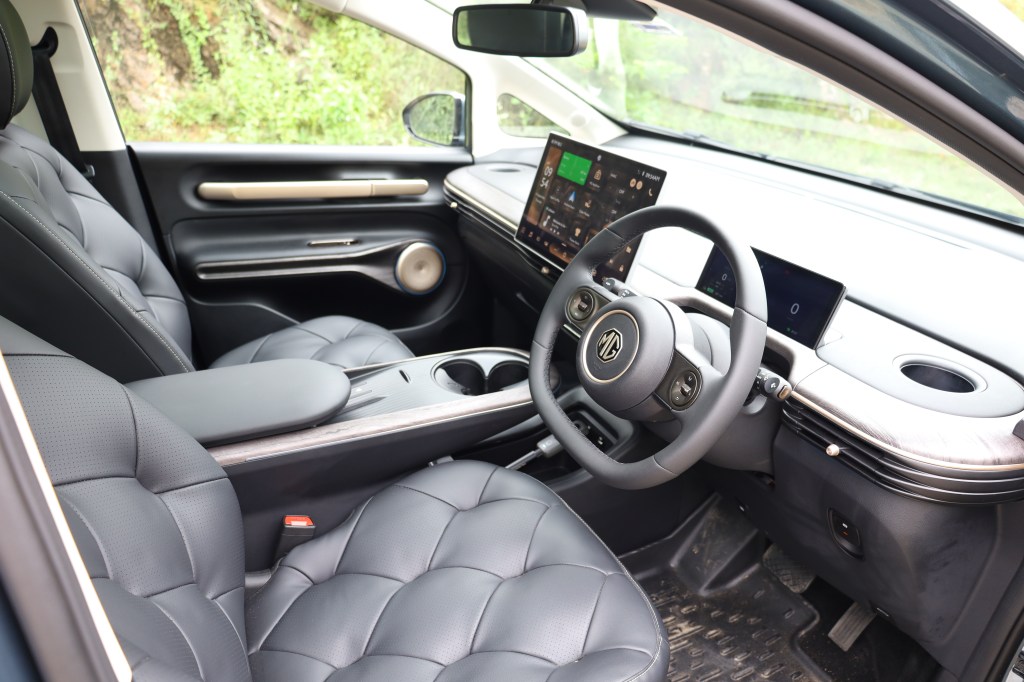
Step inside the MG Windsor EV and you will be welcomed into a premium passenger cabin with aero lounge seats that can be reclined upto 135 degrees, coupled with the expansive infinity view glass roof, adding to the business class experience.
The cabin is spacious with adequate head, shoulder and knee room for both front and rear passengers along with easy ingress and egress. The seats are well bolstered & comfortable and wear an opulent look. The front seats are ventilated with the driver’s seat coming with a 6-way adjustable option.
Immersive entertainment and smart connectivity features are powered by a massive 15.6-inch Grand View Touch Display in the central console. For music lovers, the MG Windsor also comes equipped with nine speakers (4 speakers, 4 tweeters, 1 subwoofer) that make your listening experience more pleasurable.
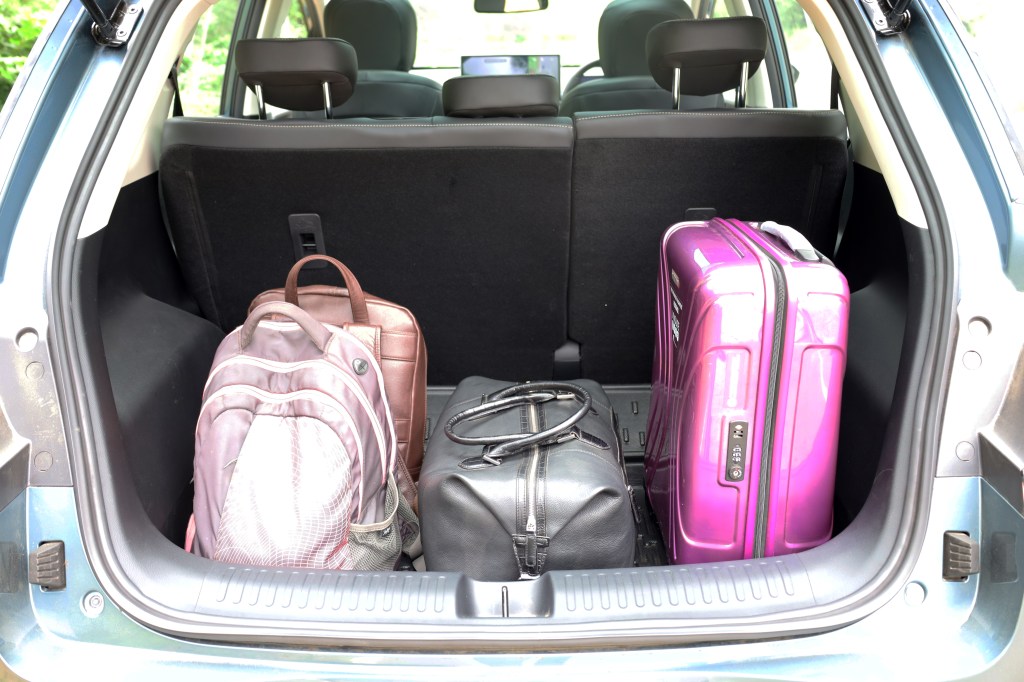
The MG Windsor also allows you to choose from an array of 256 ambient lighting options with auto change technology and make your drives express the way you feel. Other features in the MG Windsor includes Wireless Android Auto & Apple CarPlay, multi-function steering controls, wireless smartphone charger, wooden finish highlights, driver armrest storage, rear-centre armrest with cupholders, and 604 litres of boot space – all of which makes the MG Windsor an attractive proposition.
Performance and Handling
The MG Windsor comes equipped with the powerful PMS Motor which is IP67 certified. Impressive performance is derived through a 38 kWh Li-ion battery pack and four driving modes (Eco+, Eco, Normal and Sport) that deliver 100KW (136PS) power and 200Nm of instant torque, offering a range of 331 kilometres. The battery can be charged in 40 minutes at any DC fast charger. The prismatic cells battery meets the optimal safety standards and is certified to operate with durability and stability.
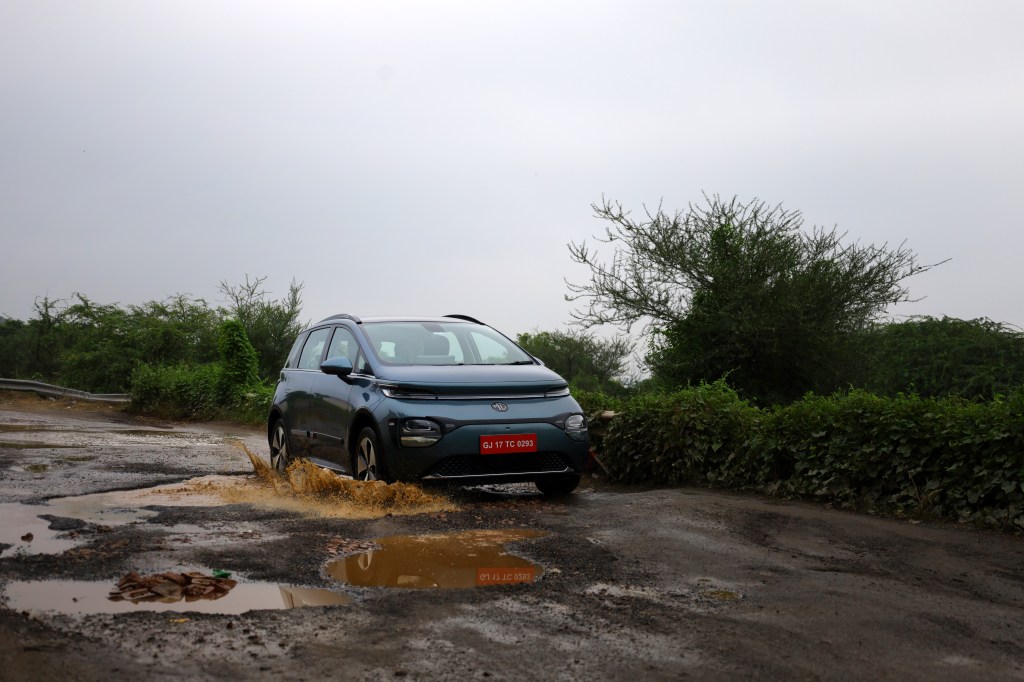
The throttle response in great with almost no power lag. Driving the Windsor both within the city or on the highway feels like a breeze. The MG Windsor stays firmly planted on the ground even while navigating tight corners. The engineers at MG has achieved a commendable balance between good ride and handling. The suspension set up featuring MacPherson strut in the front and torsion beam at the rear is well tuned for Indian road conditions and absorbs the undulation on the road with relative ease. On the whole, the MG Windsor promises to be a good city car while also proving its worthiness on the highway.
Safety
With growing awareness among consumers, safety has emerged as one of the top priorities of carmakers around the world. The MG Windsor comes with 6 airbags (dual front, side & curtain) as standard across all variants. It also features 360° surround view cameras and rear parking sensors to ease your parking woes in tight spaces especially in the crowded neighbourhood within the city. Electronic stability programme, electric parking brake auto hold, hill-start assist control, auto dimming inside rear view mirror, hill descent control, rain sensing wipers, and tyre pressure monitoring system are some of the other features in the MG Windsor EV which assures you of great all around safety.
Battery-as-a-Service (BaaS)
For the first time in India’s passenger vehicle segment, JSW MG Motor India is introducing an innovative ownership plan through Battery-as-a-Service (BaaS) offering, which makes owning an electric CUV at the price of a manual engine-based compact SUV possible. This flexible ownership program eliminates the upfront cost of the battery, enabling customers to pay only for its usage. Essentially, buyers pay a nominal fee per kilometre driven, which is 40% of the fuel costs of conventional vehicles. This model significantly reduces the initial acquisition cost and lowers the per-kilometre expense, ensuring an economical and hassle-free ownership experience.
In addition, the company is offering a first-of-its-kind lifetime battery warranty to the first owner of MG Windsor. With the eHUB by MG app, the company is offering one year of free public charging, making it easier than ever for Windsor owners to power up anytime, anywhere. JSW MG Motor India is also introducing its 3-60 assured buyback plan for the Windsor which ensures that it will retain 60% of its value after 3 years/45,000kms.
Verdict
The MG Windsor is the first car that has come out of the JV between JSW & MG Motor India. The whole team has worked very hard to bring this car to India. As a crossover utility vehicle, the Windsor successfully manages in merging the comfort of a sedan with the expanse of an SUV, making it an ideal car for the Indian household. With its delightful features and easy to drive dynamics, MG Windsor will certainly invite newer sets of customers to try EVs. It is an ideal vehicle for customers looking to beat the bustling urban roads and tighter spaces in smaller towns, in comfort and style. With its advanced features, innovative design, and disruptive pricing, the Windsor most definitely sets a new benchmark.
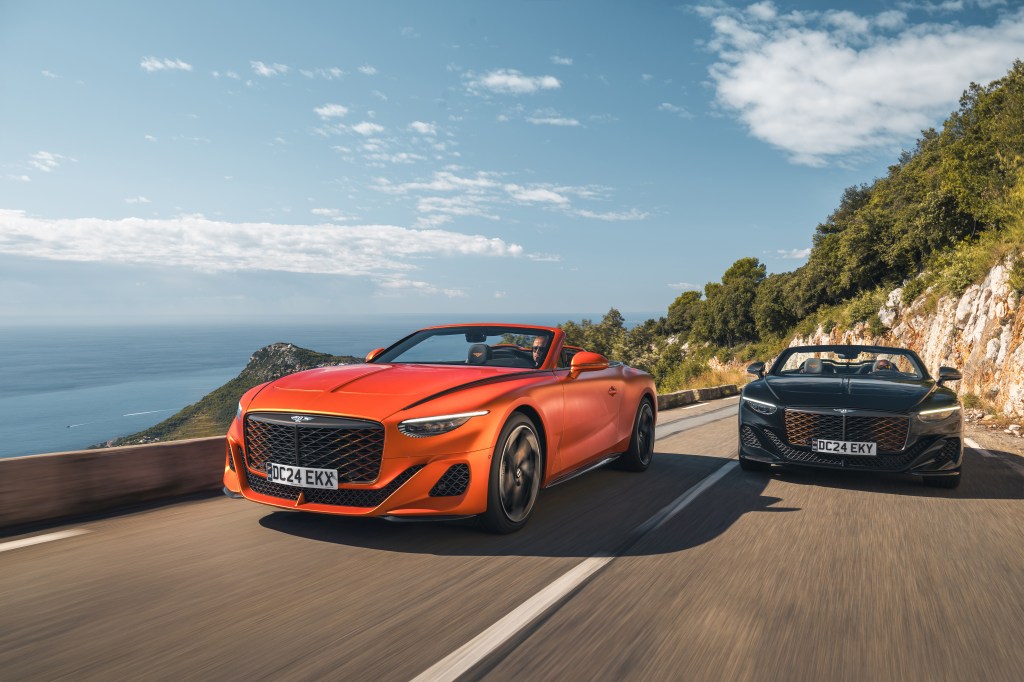
The most powerful W12-engined Bentley – the highly exclusive Batur Convertible – has begun its final suite of sign-off testing. Created by Mulliner, Bentley’s in house bespoke division and the longest standing coachbuilder in the world, the Batur Convertible is the third car in Mulliner’s Coachbuilt family, following the Bacalar barchetta and the Batur coupe. Strictly limited to just 16 units, the Batur Convertible is the most powerful W12-powered drop-top Grand Tourer in Bentley’s history.
Bentley announced the retirement of the W12 engine earlier this year, with the last engine leaving the production line in July. The 16 customer examples of the Batur Convertible will be among the recipients of the final W12 engines, each producing 750 PS as the most powerful iteration of the engine ever developed.
The validation activities include durability for both the engine and whole vehicle, environmental compatibility and sunlight simulation, high speed stability, aerodynamics, noise and vibration, and driving dynamics. More than 120 individual tests in all cover everything from the quality of the surface finish of the gold “organ stop” ventilation controls to the new W12 engine hardware and software. Over 58 weeks of vehicle validation have been scheduled across a pair of pre-series cars – Batur Convertible Car Zero and the Batur Convertible Engineering Car.
The real-world testing campaign started with an extensive 3,000 kilometre , five-country drive across Europe to simulate real world conditions. The route left Germany and travelled through Italy, France and Spain, across mountains, highways and cities, with the cars pausing briefly for an afternoon in Monaco for photography before continuing their journey to Idiada in Spain, where high speed testing will begin on private test tracks.
Paul Williams, Chief Technical Officer for Mulliner, comments: “The purpose of an engineering validation public road drive is to test a vehicle’s performance, safety, and reliability under real-world conditions. It allows our engineers to assess how the vehicle operates in a variety of environments, traffic scenarios, and weather conditions that cannot be fully replicated in controlled testing environments. This stage is critical for identifying potential issues, validating system integration, and ensuring the vehicle meets regulatory standards and customer expectations as part of the engineering development test program. At the start of the project it was clear that this car had to be the ultimate open-air Grand Tourer and so every element from the exterior design, engine power and hand-crafted interior has been created without compromise.”
At the proving grounds, the Batur Convertibles will begin seven weeks of durability work on handling tracks, mixed road conditions, high speed testing and abusive surface conditions. During all of these activities data and feedback are collated ensuring the technical targets are being met.
The Final W12 Grand Tourer The Batur Convertible furthers the innovative design DNA introduced by its coupe sibling that will ultimately guide the design of Bentley’s future cars.
Created by Mulliner, the Batur Convertible follows the exquisitely hand-crafted Bacalar barchetta and Batur coupe. With the Batur Convertible, Mulliner continues its long tradition of crafting truly individual cars, tailored to the wishes of each of its extraordinary clients.
The Batur Convertible retains the most powerful version of Bentley’s iconic W12, with a 750 PS, hand-assembled 6.0-litre twin-turbocharged engine that has metaphorically and literally powered Bentley’s success for the last two decades. The Batur Convertible will be the last ever Bentley to use this incredible powertrain.
The convertible roof delivers an aesthetic of beauty as a modern, tactile alternative to a hardtop roof. A combination of insulation material, sealing system refinements and acoustic treatments create a cossetting environment in a system which can be deployed or stowed in just 19 seconds, with the car travelling at speeds of up to 30 mph (50 km/h), transforming the car from a luxurious coupe into an open-top Grand Tourer at the touch of a button.
Mulliner’s in-house design team will help co-create every Batur Convertible with its customer, working together through a specially created Mulliner visualiser that allows any part of the car to be customised in colour and surface finish. Endless samples of unique materials bring texture to the process, and the resulting designs will be truly individual and created by the customer – limited only by their imagination.
Batur Convertible Car Zero Like all Mulliner Coachbuilt vehicles, the Batur Convertible is infinitely customisable – with each customer able to specify the colour and finish of literally every single surface of both the exterior and cabin of the car.
The engineering development car – Batur Convertible Car Zero – has had the same level of attention to detail as a customer’s own specification. The exterior paintwork is a bespoke colour – Vermillion Gloss over Vermillion Satin Duo tone – that provides a vibrant colour across the contemporary surfaces. The bodywork is underscored by front splitters, side skirts and rear diffuser in high gloss carbon fibre.
The front of the car features a grille of exceptional art – with the main matrix finished in Gloss Dark Titanium, accented with contrast chevrons in a horizontal ombré pattern that flows from Beluga in the centre and lighten to the vibrant sides in Vermillion Gloss. The “endless bonnet” line is finished in Gloss Dark Titanium paint, as are the 22” wheels – with the spokes in Gloss and Satin Black Titanium with Vermillion Gloss accents.
The second development car – known simply as the ‘Engineering Car’, features an entirely different specification. Midnight Emerald exterior paintwork is finished with a high gloss carbon fibre body kit and Satin Dark Titanium finished bonnet brightware and lower bumper meshes The wheels are tri-tone – with a Satin Dark Titanium body, gloss Porpoise accent faces and gloss Mandarin pinstripe. The same combination of Satin Dark Titanium and Mandarin is joined by gloss Beluga for the three-colour ombré fade to the front grille. The cabin echoes the exterior, with Cumbrian Green and Porpoises leather being accented with Mandarin stitching and piping, complemented with machined titanium Organ Stops and Bullseye vents. The veneer is Mulliner’s exquisite “guitar fade”, where the colour across the width of the cabin changes gradually from gloss Beluga, to high gloss carbon fibre, and back to gloss Beluga, and finished with a laser-etched audio signature of the W12 engine.
Nissan today announced it will launch affordable on-board bi-directional charging on selected electric vehicles from 2026. The initiative forms a key step towards its vision of creating a sustainable energy ecosystem.
The project progresses the commitment made in Nissan’s business plan, The Arc, delivering differentiated innovation that enables the EV transition, while unlocking new revenue streams. It also supports the company’s long-term vision, Ambition 2030, to create a cleaner, safer, and more inclusive world.
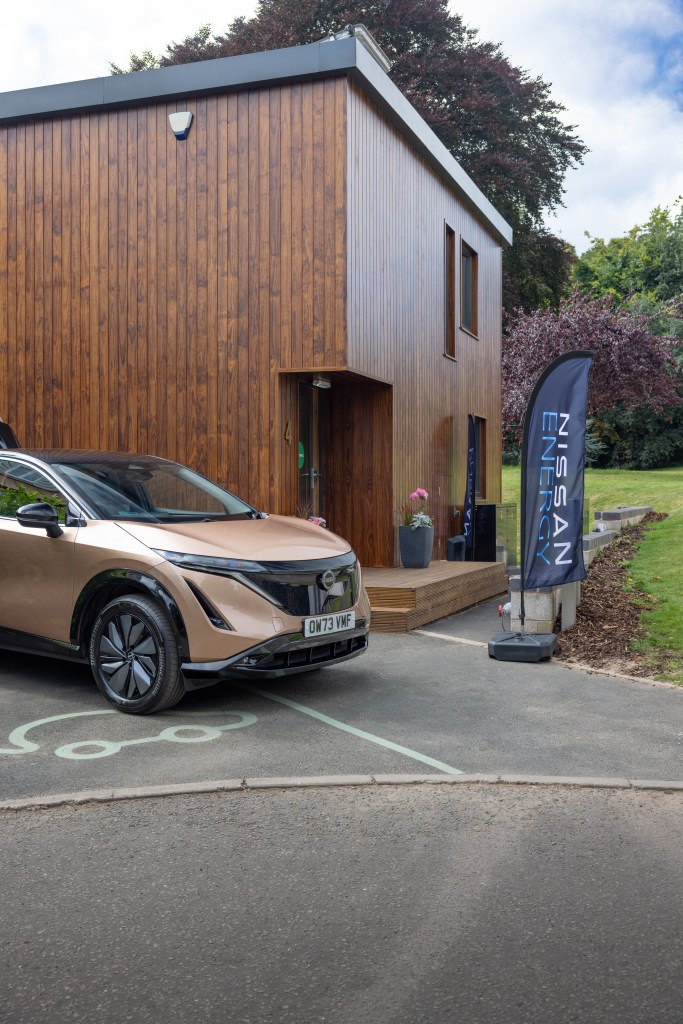
The Vehicle to Grid (V2G) technology, which allows EV owners to use electricity stored in their car’s battery to power their homes, or sell it back into the grid, will launch in the UK initially, followed by other markets in Europe.
The project is underpinned by Nissan’s extensive experience in V2G, with around 40 pilot projects conducted worldwide throughout the past decade.
Following a successful year-long project at The University of Nottingham, UK, Nissan has become the first car company to gain G99 Grid code certification with an AC-based solution, needed to supply electricity into the UK national energy supply.
Under the banner of Nissan Energy, the company’s aim is to roll-out V2G technology across markets in Europe and beyond, empowering consumers with either AC or DC-based V2G solutions, in alignment with local infrastructure and regulatory requirements.
Benefits of Vehicle-to-grid technology By using Nissan’s on-board bi-directional V2G technology, customers can cut the annual cost of powering an EV by 50%. The same technology can also reduce net CO2 emissions from charging by 30% per year, per EV for the average UK household.
EVs equipped with V2G technology can play a crucial role in integrating and increasing the mix of renewables into the energy supply, by storing electricity generated by wind or solar, and directing it back into the grid when needed, reducing dependency on fossil fuels.
As one of the bi-directional systems Nissan plans to offer, this AC-bidirectional system certified in the UK will leverage an integrated on-board charger to deliver a lower cost of entry, allowing the technology to be accessible to more people. Nissan aims to offer its AC bi-directional charger at a price comparable to a mono-directional charger available today.
As well as lowering the cost of entry, Nissan’s V2G system will give customers complete control and flexibility over their energy via a dedicated App.
The launch forms part of Nissan’s strategy to create a fully integrated energy ecosystem – sustainably manufactured EVs providing zero emission motoring, charged using clean energy and capable of providing power back to the home as well as to the grid.
Hugues Desmarchelier, Nissan Vice President, Global Electrification Ecosystem & EV Programs, said: “The technology we are bringing to customers is a potential game-changer for how we view the car. Not just as a means of getting from A to B, but as a mobile energy storage unit, capable of saving people money, supporting the transition of our energy systems away from fossil fuels and bringing us closer to a carbon-free future.
“Nissan is proud to democratise technology for the benefit of society. The breakthrough in an on-board solution for two-way charging will be a substantial reduction in the cost of integrating a future EV into your energy supply, and the ability to leverage the car as a source of income over its lifecycle.”
Nissan aims to become a truly sustainable company, and in the Africa, Middle East, India, Europe and Oceania region (AMIEO) is using its unique diversity to drive locally-focussed action and scalable solutions that contribute to a cleaner, safer and more inclusive world for everyone.
Strong partnerships support successful UK trial The V2G UK trial has been partly funded by the UK Government’s Advanced Propulsion Centre, a body established to support and accelerate the automotive industry’s transition towards net zero. The V2G UK trial has been partly funded by the UK Government’s Advanced Propulsion Centre UK (APC), a body established to support and accelerate the automotive industry’s transition towards net zero.
APC Chief Executive, Ian Constance, said: “This is a significant milestone for the collaborative research and development project, led by Nissan Technical Centre Europe and supported by the Department for Business and Trade through the APC. Investing in pioneering vehicle-to-grid technology and R&D in the UK is part of a system-level approach to decarbonisation.”
Future of Roads Minister Lilian Greenwood, said: “Vehicle to grid technology is a fantastic innovation which has the potential to save people money and accelerate the UK’s transition to electric vehicles.
“A greener transport network is a key priority for this Government, and by working together with industry we will boost consumer confidence and achieve our shared goal of getting more EVs on the road.”
During the trial, Nissan worked with several partners including Dreev and Enovates. Dreev, a joint venture between EDF and NUVVE, was responsible for data collection, customer profiling and setting the charging and discharging plan by analysing information from the wall box.
Eric Mévellec, CEO for Dreev commented: “We have been working alongside Nissan for years on this revolutionary technological adventure, and we are thrilled to be a part of this new chapter. We are convinced that, by reducing the electricity bill for the customers while providing huge storage capabilities for the electrical system, V2x technology has a major role to play in the energy transition”
Enovates, a Belgian-based mobility technology company, developed the wall box, or Electric Vehicle Supply Equipment (EVSE), including set-up and test certification.
The wall box acts as the system hub, sending and receiving information on energy demand and supply from the Dreev cloud, and directing the car to charge or discharge electricity at a set amount to the home or grid.
Bart Vereecke, CEO of Enovates, said: “Enovates is proud to partner with Nissan in demonstrating through the Field Operating Test the real-world benefits of AC V2G technology. This test marks an important step in creating a sustainable, interconnected energy future where electric vehicles play a central role in sustainable mobility solutions and resolving energy grid congestions.”
“Enovates has always been committed to pushing the boundaries of V2G technology, and we are excited to bring our expertise in AC charging to this project,” added Stijn Vispoel, R&D Manager. “Our certified AC V2G chargers represent the next generation of energy technology, offering accessible, efficient, and smart solutions for the future of transportation and energy.”
The University of Nottingham was also pivotal in the trial, providing a base of operations at its on-campus Creative Energy Homes and supporting academic research.
Nissan is continuing to work with these, and other partners, to achieve the necessary grid certification in other markets, develop a seamless user experience and expand the technology availability to more customers.
Chairperson of Nissan’s Africa, Middle East, India, Europe and Oceania region, Guillaume Cartier, commented: “One of the big challenges faced by society today is energy supply – how do we make it affordable, reliable and clean.
“At Nissan, we see a future for our customers where their energy comes from the car on the driveway – not only the power station – fully integrated, flexible and cleaner.”
Hyundai Motor Company is marking its historic achievement of producing 100 million vehicles worldwide with the grand opening of its ‘One step further’ exhibition at Hyundai Motorstudio Seoul. The exhibition showcases the driving forces behind the 100-million-unit production milestone and conveys Hyundai’s gratitude to those customers who have been part of the journey.
This exhibition is a continuation of the 100 million production celebration held at Hyundai Motor’s Ulsan Plant on September 30. At that event, the company delivered the 100 million and first vehicle, an IONIQ 5, to its new owner, representing the brand’s gratitude to its customers for their unwavering support.
“It takes thousands of parts and pieces to build a car, with combined efforts of millions of people involved in R&D, design and manufacturing over many years,” said Sungwon Jee, Senior Vice President and Global Chief Marketing Officer at Hyundai Motor Company. “We wanted to shed light on these behind-the-scenes efforts that went into producing 100 million vehicles and tell the story of Hyundai Motor’s transformation from a traditional automaker to a leading smart mobility solutions provider.”
Spanning five floors, the exhibition begins on the first floor by introducing the journey to 100 million units, featuring the Cortina Mark 2, Hyundai Motor’s first production model; and the Pony, Hyundai Motor’s first independently developed model.
The second floor offers a retrospective on how Hyundai has helped its customers’ lives and showcases the history of major Hyundai Motor plants, including the evolution of production processes over time.
The exhibition’s third floor highlights key drivers in achieving the production milestone of 100 million vehicles globally, focusing on three iconic models: the first-generation Sonata, the first-generation Elantra and Scoupe. These vehicles exemplify Hyundai Motor’s relentless pursuit to go ‘one step further’ in driving its incredible achievement.
The first-generation Sonata showcased Hyundai’s craftsmanship and dedication to enhancing product quality. The first-generation Elantra, a steady seller, laid the foundation for the company’s 100-million-unit production capability with the introduction of an automated production line. The Scoupe – equipped with the Alpha series, Hyundai’s first proprietary engine – pioneered the sports car segment in Korea and demonstrated the company’s engineering prowess.
The exhibition’s fourth and fifth floors feature the brand’s modern SUV lineup – Santa Fe, Kona and Inster; and electric vehicle (EV) lineup – IONIQ 5, IONIQ 5 N and IONIQ 6. This final section looks ahead to Hyundai Motor’s future as it moves ‘one step further’, transforming from a traditional automaker to a smart mobility solutions provider.
The exhibition is testament to Hyundai Motor’s unwavering commitment to innovation, customer satisfaction and a future of continued growth and success. Held from October 10 to November 10, admission is free to all visitors.
In a globally challenging market, the BMW Group increased its sales of fully-electric vehicles by +19,1% in the first nine months of 2024, with a total of 294,054 BEVs delivered to customers. During this period, BMW brand sales of fully-electric models rose by +22.6% to 266,151 vehicles. The MINI brand also grew its fully-electric vehicle sales by +54.3% in the third quarter, delivering 16,536 BEVs to customers.
“Our fully-electric vehicles are winning over customers worldwide – as shown by the significant double-digit growth in our BEV sales during the first nine months of the year,” said Jochen Goller, member of the Board of Management of BMW AG responsible for Customer, Brands, Sales. “We also grew our sales in the Europe region. Our attractive model line-up, which is designed for technology openness, gained traction in the marketplace, despite the challenging conditions overall. The BMW brand captured market share in Europe and significantly outperformed the region’s total market,” Goller continued.
In Europe, the BMW brand delivered 577,803 vehicles to customers between January and the end of September (+7.6%), with particularly high demand in countries including the UK, Italy and France. The BMW brand’s fully-electric models also performed exceptionally well in the European region, with 121,844 vehicles delivered to customers – an increase of +35.8%.
The BMW Group delivered a total of 1,754,158 BMW, MINI and Rolls-Royce vehicles to customers in the year to the end of September (-4.5%). This downward trend can be partly attributed to delivery stops associated with the supplied Integrated Braking System (IBS), which significantly impacted the third quarter, as well as the difficult market environment in China. In light of this development, on September 10, 2024, BMW AG revised its sales targets for the financial year 2024.
Between January and September, the BMW brand experienced strong demand for its fully-electric models, with a total of 266,151 (+22.6%) vehicles sold. Most notably, the BMW iX1 and BMW i4 showed positive sales development. The BMW brand sold a total of 1,583,485 vehicles (-2.3%) in the year to the end of September. BMW M GmbH delivered 146,574 vehicles in the first nine months of 2024 (+2.0%), with growth driven by the BMW M2 and BMW M3 Touring models, among others. The MINI brand, which is updating its entire portfolio this year, delivered a total of 166,703 (-20.9%) vehicles to customers in the year to the end of September. In the third quarter, fully-electric MINI models were particularly in demand, with 16,536 vehicles delivered to customers, representing growth of +54.3%. In the first nine months of this year, the Rolls-Royce brand presented a total of 3,970 motor cars to their new owners worldwide (-12.8%).
Between January and September, BMW Motorrad delivered 163,436 (-0.9%) motorcycles and scooters to customers.
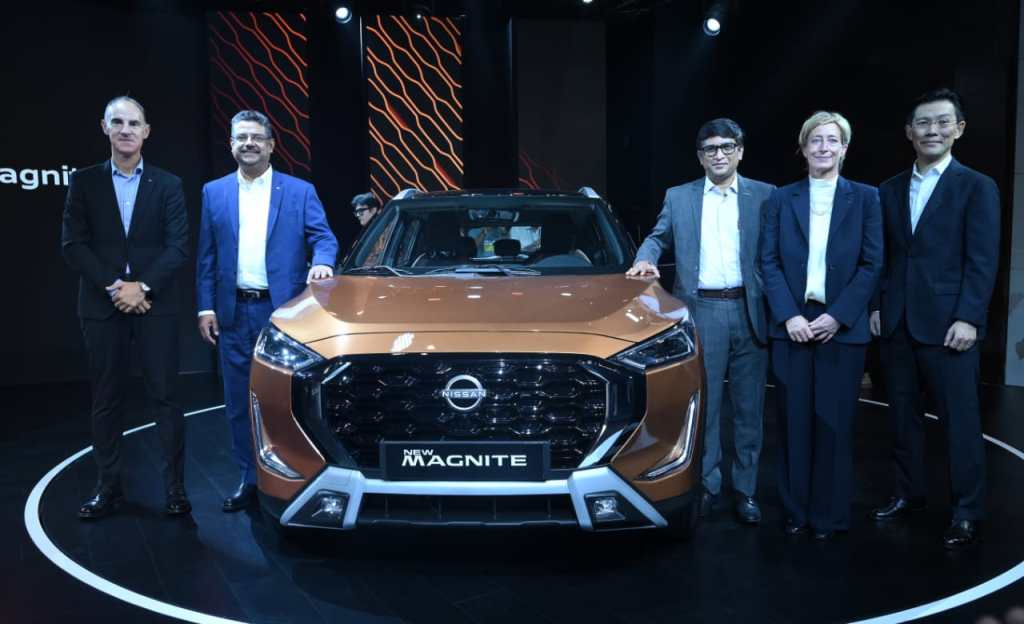
Nissan Motor India has launched the New Nissan Magnite with bold aesthetics, enhanced safety, and advanced tech. The Magnite’s bold presence is accentuated by a tougher, more robust exterior that exudes confidence and enhances its already impressive road presence. The New Magnite continues its commitment to innovation and customer-centric design, hitting the market at an introductory price of INR 5.99 lakhs. The Magnite is a testament to Nissan’s ‘Make-in-India, Make for the World’ vision, surpassing cumulative sales of 150,000+ units till date and making a powerful impact in both Indian and international markets since its December 2020 debut.
The introduction of the new Nissan Magnite marks a significant step in expanding the brand’s export markets. The continuing demand and popularity of the ‘Made in India’ Magnite across international markets has allowed the company to expand its export footprint to 47 new markets taking the total export footprint to over 65 international markets now including Left-Hand Drive markets.
With this new development, the export markets for Nissan now stand at 65+ countries. Speaking at the launch, Mr Frank Torres, Divisional Vice President-AMIEO Region Business Transformation & President-Nissan India Operations, said, “India has a critical role in our global strategy and we are glad to roll out the Magnite from our Chennai facility to more markets across the globe. It not only strengthens our export goal but also cements our customer-first philosophy. The Nissan Magnite’s success since its 2020 launch, both in India and international markets, embodies the enduring value of our ‘One Car, One World’ philosophy.”
Mr. Saurabh Vatsa, Managing Director, Nissan Motor India Pvt. Ltd. (NMIPL), said,“The Magnite has redefined market expectations, earning unwavering customer loyalty and setting new standards in the segment. The new Magnite delivers value on all fronts-safety, premium features, with a powerful yet efficient CVT Turbo powertrain. This launch showcases our unwavering commitment to excellence and plays a pivotal role in our product offensive approach for the country.We are grateful for the love and trust shownby customers in India and thank them for making the Magnite a resounding success in the country. We are confident that the New Nissan Magnite will also resonate with international customers in the same way.”
Building on its previous success, the New Nissan Magnite exemplifies Magnite-ness with a tougher, bolder and more robust exterior that enhances its commanding road-presence. The Magnite has sleek LED Headlamps with lightsaber-style turn indicator, Best-in-Class LED Taillamps with 3D Gradient “Honeycomb” pattern, and Magnite’s signature L-Shape Daytime Running Lights (DRL).
Additionally, the new model boasts a new floating uplifted skid plate at front, bigger & bolder new imposing grille, all new dual tone R16 Diamond Cut Alloy wheel, functional roof rails (50kg capacity) and best-in-class ground clearance, giving a differentiated design appeal.
To cater for all preferences and customer needs, the New Nissan Magnite comes in 11 body colours, six monotones and five dual-tones available – all expertly created and crafted to suit customer tastes and ensure their car is as unique as they are.
Inside, the New Nissan Magnite sets new benchmarks with its refined interior, offering an impressive array of colour themes and advanced features. With unique 360 leather pack –including a Brownish Orange leatherette wrapped dashboard, leatherette seat upholstery with unique “Honeycomb”quilting pattern, leatherette all door trim, parking brake lever, steering, and front armrest–the New Nissan Magnite provides a no compromise premium package that is sure to impress.
The New Nissan Magnite also boasts of largest in cabin storage, improved seat comfort, standard expandable boot space from 336L to 540L with standard 60:40 rear seat split, largest rear knee room, high command driving position, best-in-class front seat couple distance, front armrest with storage, and cooled glove box, making interiors a perfect amalgamation of comfort and design.
The New Nissan Magnite comes loaded with 20+ first & Best-In-Segment features including premium quilted leatherette seat with Heat Guard Tech, continuous multi colour Ambient Light with memory function, Plasma Cluster air ionizer, new global smart key with Remote Engine Start with 60m range, Walk Away Lock (WAL) & Approach Unlock (AUL) function, biggest electronic bezel-less auto dimming IRVM, Full LED Exterior pack including LED Headlamp, LED Taillamp, LED Day time Running Light, LED Indicator, and LED Front Fog Lamp.
The new model also features Around View Monitor, 17.78 cm full digital advanced multi-functional cluster with dark theme, floating 20.32 cm (8) touchscreen infotainment system with Wireless Android Auto & Apple CarPlay, 3D sound by ARKAMYS, and cruise control, making Nissan Magnite the most premium car in the category ready to pamper the new age customers.
Along with these, the New Nissan Magnite also provides consumers with a option of a unique tech pack which has a dashcam, wireless charger, premium speakers (JBL powered by Harman), puddle lamps and LED scuff plates.
New Nissan Magnite continues to offer a range of sporty and fun-to-drive powertrains that provide a thrilling driving experience for customers. The HRA0 1.0 turbo engine is one of the most fuel-efficient engines (ARAI certified 20 kmpl) among B-SUVs in the market, delivering higher torque at lower speed, giving a dynamic feel with strong acceleration at take-off.
The HRA0 1.0-litre comes with Mirror Bore Coating Cylinder Block technology which is used in Nissan’s world class sports cars such as Nissan GT-R, cylinder head with integrated exhaust manifold, split cooling, forged crank shaft, electric turbo actuators, improving performance and fuel efficiency and reducing NVH & emissions.The HRA0 1.0-litreturbo engine will be available with 5 Speed and X-TRONIC CVT gearbox.
The automatic gearbox, is the 3rd generation XTRONIC-CVT transmission, offering wider gear range that delivers seamless performance even in peak city traffic, better fuel economy, and acceleration thanks to improvements including a twin oil pump system with new electrical oil pump. Its D-step logic control computer software uses dynamic inputs like vehicle speed, accelerator pedal position and application speed to determine the ideal gear ratio needed to deliver an exhilarating drive and smooth cruises on the highways.
New Nissan Magnite to also come with a B4D 1.0-litre which is a naturally aspirated engine with manual or EZ-Shift (AMT) option.
As safety is paramount for Nissan, the New Magnite has further pushed the envelope to ensure Best-in-Class Safety – with 40+ standard active & safety feature and 55+ total safety features. These include; 6 Airbags (2 Front Airbags/2 Side Airbags/2 Curtain Airbags), Vehicle Dynamic Control (VDC), Traction Control System (TCS), Hill Start Assist (HAS), Hydraulic Brake Assist (HBA), Anti-Lock Braking System (ABS), Electronic Brake-force Distribution (EBD), Tyre Pressure Monitoring System (TPMS).
In addition to the above, customers can enjoy driving friends and families with complete peace of mind thanks to further safety features such 3 point seat-belt for all seats, seat-belt reminder for all seats, child lock, ISOFIX child seat anchorages, and rear parking sensor now coming as standard fitment across all variants – ensuring that every journey is not just comfortable, but more secure than ever. This comprehensive safety suite is complemented with improved body structure with 67% advanced and High Tensile Strength Steel. In addition, the New Magnite also comes with a 3-year / 100K kms warranty as standard, ensuring the peace of mind and enhancing the ownership experience for customers.
The New Magnite doesn’t just meet expectations; it exceeds them by offering a strong and modern presence on the road, best-in-class technology, and safe driving experience – all at an unbeatable price. This facelift underscores Nissan’s commitment to delivering exceptional value, making the New Magnite a great value proposition for customers seeking a vehicle that stands out in every aspect.
The launch of the New Magnite, and expansion to additional markets thanks to left-hand drive, highlights Nissan India’s role as a key automotive manufacturing hub. Combining Japanese design with efficient local production, the Magnite delivers great features and impressive performance to customers worldwide.
The state-of-the-art Nissan-Renault alliance plant in Chennai is a prime example of Nissan’s commitment to the India market. From this flagship facility, Nissan retains its firm focus on constant innovation – in order to meet the evolving requirements of today’s customers, while strengthening its presence in the region. This approach, and India as market, sit at the heart of The Arc, Nissan’s global business transformation plan based around strengthening its product portfolio, advancing electrification across key markets, exploring new approaches to engineering and manufacturing, the adoption of new technology, and harnessing strategic partnerships to drive value and strengthen competitiveness.
In an innovative move towards sustainable development and community empowerment, Škoda Auto Volkswagen India (SAVWIPL) is supporting Škoda Auto a.s. ‘Curiosity Fuel’ initiative by connecting with Indian coffee planters. This unique project endorses the nation’s ‘Make-in-India’ initiative by enabling Indian coffee to reach European markets directly.
Focus on sustainability and circular economy principles:
Škoda Auto a.s. is using coffee bean husks as a tanning agent for leather seats in Škoda’s Kodiaq and Octavia models, leading the way in eco-friendly automotive manufacturing. This innovative use of an agricultural by-product exemplifies the group’s commitment to the circular economy, transforming what was once considered waste into a valuable resource.
Empowering family-owned coffee farms in Coorg (Karnataka, India):
India, the world’s eighth-largest coffee producer with an export value of close to USD 1.25 billion, is known for its unique coffee flavours,. The annual coffee consumption at Škoda Auto Volkswagen India’s headquarters in the Czech Republic amounts to approximately 25 tonnes. Recognising India’s rich coffee heritage, the brand strategically chose to directly source the coffee and, in turn, support family-owned coffee farms in Coorg. The ‘Curiosity Fuel’ initiative is redefining the coffee supply chain by directly engaging with local farmers and eliminating multiple intermediaries. This approach not only ensures fair trade practices certified by the Rainforest Alliance but also promotes permaculture farming, emphasizing ecological and social responsibility.
Škoda Curiosity Fuel Initiative:
Škoda Auto a.s. has rolled out a new coffee called ‘Curiosity Fuel’ across the company in the Czech Republic. This special blend is grown, roasted, and packaged in a way that is friendly to both nature and farmers. Specially created for Škoda Auto a.s., ‘Curiosity Fuel’ is designed to inspire staff with fresh ideas and further the group’s sustainability objectives as outlined in Strategy 2030.
Karsten Schnake, Board Member for Procurement at Škoda Auto a.s. commented, “Our ‘Curiosity Fuel’ initiative highlights Škoda Auto’s commitment to innovative sustainability by integrating social, environmental, and circular economy principles into our supply chain. From ethically sourced coffee for our employees to utilizing coffee byproducts in our vehicles, we’re setting new sustainability standards in the automotive sector.”
Piyush Arora, Managing Director & CEO, Škoda Auto Volkswagen India Private Limited, added, “Our ‘Curiosity Fuel’ project demonstrates Škoda Auto Volkswagen India’s commitment to holistic sustainability. By bridging the gap between Coorg’s coffee planters and our global operations, we’re fostering community development. This initiative exemplifies our belief that true progress in the automotive sector must encompass environmental responsibility and community empowerment. It’s about creating a symbiotic relationship between our industry and India’s rich agricultural heritage.”
By connecting agriculture and automotive innovation, Škoda is showcasing how cross-sector collaboration can drive sustainable development and rural prosperity, promoting a more regenerative and inclusive economic model.
Kia Corporation has celebrated the opening of Kia Gwangmyeong EVO Plant, Hyundai Motor Group’s (the Group) first dedicated EV manufacturing facility.
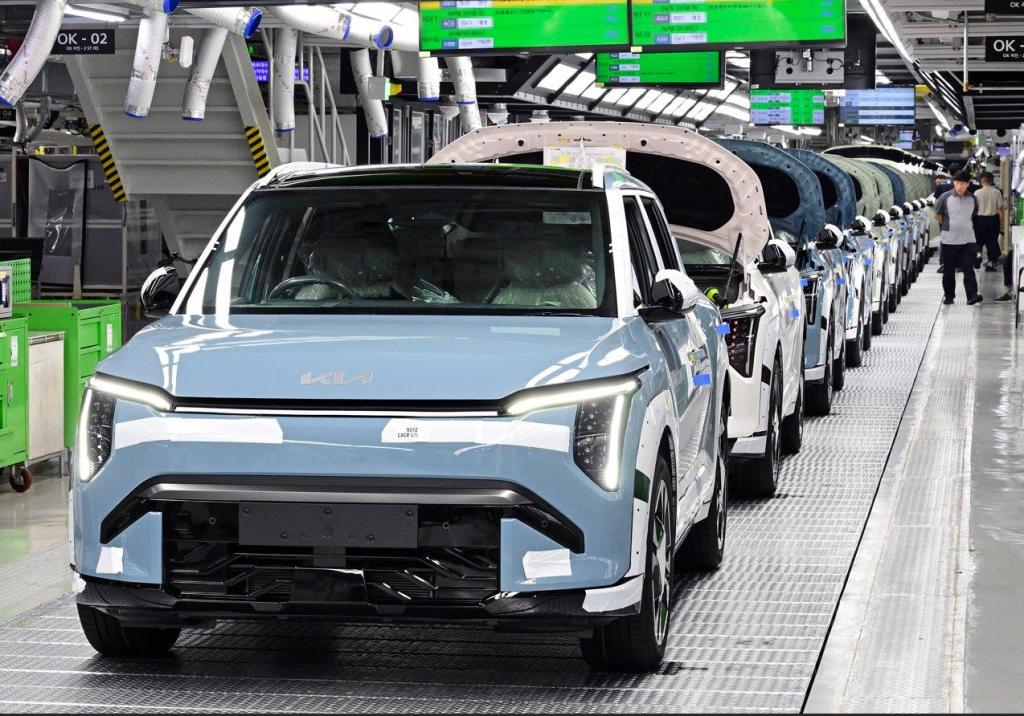
Located at Kia Autoland Gwangmyeong, the new South Korean facility has an annual production capacity of 150,000 units and started production of the Kia EV3 in the first half of this year, to be followed by the EV4 in the first half of 2025. Derived from the term ‘Evolution’, the Kia Gwangmyeong EVO Plant demonstrates how Kia will continue to change and move forward as it aims to become a leader in the future of mobility.
To celebrate the completion of the project, Kia hosted around 150 guests during a ceremony at the new Kia Gwangmyeong EVO Plant, including Jun Young Choi, Executive Vice President and Head of Domestic Production Division at Kia; Seung Won Park, Mayor of Gwangmyeong City; and O Kyeong Lim and Nam Hee Kim, Members of the 22nd National Assembly of the Republic of Korea.
“The completion of the Kia Gwangmyeong EVO Plant solidifies Kia’s first step as an EV leader following the company’s brand relaunch in 2021. With the goal of providing sustainable mobility solutions, we will lead innovation in the EV market and fulfil our responsibilities in helping to deliver a sustainable future”, said Jun Young Choi, Executive Vice President and Head of Domestic Production Division at Kia, during a welcoming speech at the event.
Seung Won Park, Mayor of Gwangmyeong City also added, “The completion of the Kia Gwangmyeong EVO Plant will help Gwangmyeong City to establish itself at the center of the EV industry in Korea. Through this we will strive to promote sustainable development of the local economy and create more jobs.”
In order to flexibly respond to changes in global demand for EVs, Kia has been steadily preparing for EV production at its global facilities. The Gwangmyeong EVO Plant is a dedicated EV facility, with an investment total of KRW 401.6 billion over approximately 60,000 square meters and will serve as an outpost for production of Kia’s popular EV models.
Kia has spent approximately one year transforming Gwangmyeong Plant 2, which was completed in 1987 to produce small internal combustion engine vehicles such as the Kia Pride, Avella and Stonic. The Kia Gwangmyeong EVO Plant is also meaningful in that it is the Group’s first dedicated EV plant and a facility that has been completely rebuilt on an existing plant site to become a hub for next-generation vehicle production.
Opening a new era for of EVs with full-fledged electrification
Kia Gwangmyeong EVO Plant is characterized under the theme of ‘pursuing maximum change through minimal expansion’ in consideration of its city center location and other environmental factors, such as protection of green spaces.
In addition, the plant has been constructed with a full-scale conversion to electrification in mind, focusing on ‘eco-friendly’ and ‘worker-friendly’ processes.
The body shop is now a high-tech logistics factory thanks to the introduction of automated guided (AGV) forklifts, and the green credentials of the paint shop have been increased by applying the water-based 3C1B method instead of the previous oil-based 3C2B method. New equipment has also been introduced to improve wellbeing and reduce the workload of plant employees, including machinery which can automatically install high-voltage batteries, wheels and tires on the vehicles.
Following the completion ceremony of the Gwangmyeong EVO Plant, Kia will ramp up EV production. Mass production of the EV3, the brand’s compact all-electric SUV, began in the first half of this year. The EV3 is Kia’s third dedicated EV model after the Kia EV6, the brand’s all-electric crossover SUV launched in 2021, and the Kia EV9 all-electric flagship SUV launched in 2023.
In the first half of 2025, Kia plans to introduce the EV4, the brand’s mid-sized electric sedan. Kia plans to utilize the Gwangmyeong EVO Plant as a key production base for the company’s EV models, including the EV3 and EV4, with an annual production capacity of 150,000 units.
Through the production of the brand’s high-quality EV models, the Kia Gwangmyeong EVO Plant will begin a new era for Kia’s move towards electrification.









 Power Drive