A Year Of Marvels And Masterpieces: Rolls-Royce Reflects On 2024 Bespoke Highlights

In 2024, the Rolls-Royce Bespoke Collective of designers, engineers and craftspeople brought to life some of the most creative and ambitious examples of artistry ever seen.

Client commissions comprised highly complex, hand-painted and embroidered artworks, stainless steel and gold inlays, exquisite iridescent paint finishes and much more. Driven by their pursuit of perfection and the dreams of the marque’s clients, Rolls-Royce artisans created singular graphics, such as a 869,500-stitch embroidery inspired by the Spirit of Ecstasy, and captured cultural symbols using the canvas of leather, wood and fabric. From finely executed coachline motifs to full-scale artworks within the interior, the Rolls-Royce Bespoke Collective once again stretched the breadth of luxury possibility.

The extraordinary complexity behind this year’s commissions reflects the ever-growing number of clients that trust the marque’s artisans with their boldest visions. While these inspirations are as diverse as the personalities of the clients themselves, clear themes have emerged over the year. Bespoke commissions are becoming increasingly personal, with many clients curating individual masterpieces to mark major life events and commemorate transformative moments, places and people that are meaningful to them.

Chris Brownridge, Chief Executive, Rolls-Royce Motor Cars said, “Every Rolls-Royce motor car serves as a blank canvas for an owner’s Bespoke commission. This year, we have once again been delighted and challenged by the breadth of our clients’ imagination, creativity and ambition, which presented the perfect opportunity to showcase the ingenuity and vision of our Bespoke Collective. As these commission highlights demonstrate, inspiration can come from anywhere, and increasingly we see clients requesting even more personal touches in their motor car, creating expressive works in their own right and as part of a broader legacy. It is a testimony to the skills of our Bespoke teams, and our brand’s standing in the luxury world, that clients share with us their dreams, confident in our ability to realise them in line with their ambitious creative vision.”

As 2024 comes to an end, Rolls-Royce reflects on just some of the finest examples of Bespoke possibility. The motor cars selected are owned by clients who have generously given permission for their details to be shared with the public.
PHANTOM SCINTILLA

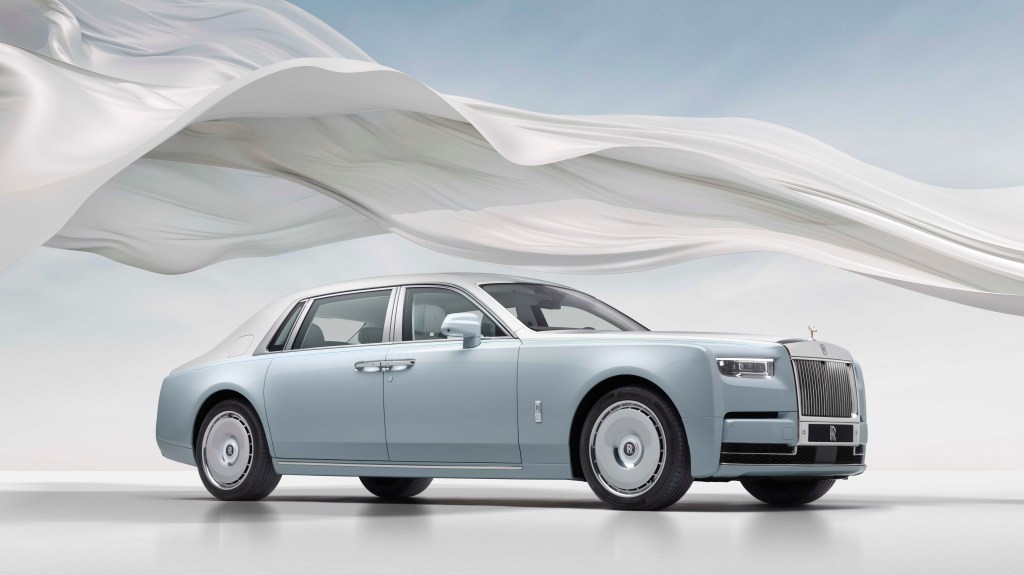
Limited to just 10 examples worldwide, this magnificent Private Collection celebrates the ethereal beauty, grace and legacy of the Spirit of Ecstasy.

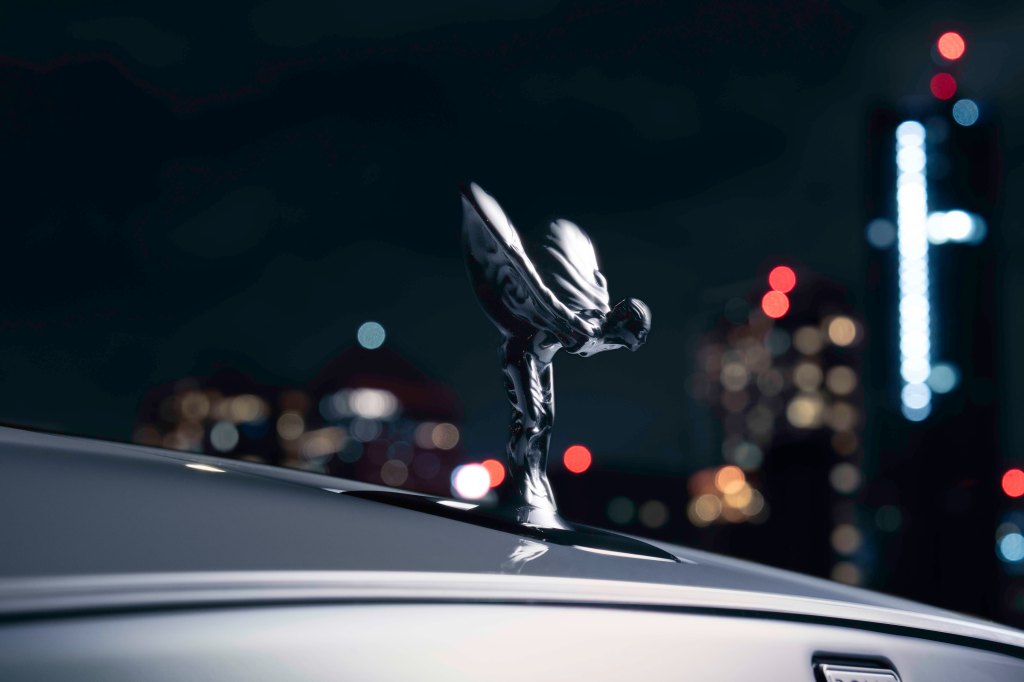
The interior is embroidered with 869,500 stitches forming a continuous graphic inspired by her expressive form. The figurine itself has a unique ceramic finish, evoking the Parian marble of The Winged Victory of Samothrace, the Greek statue that inspired Claude Johnson to commission the original mascot in 1910.

The centrepiece is the Celestial Pulse Gallery, capturing the fleeting presence of the Spirit of Ecstasy. This artwork comprises seven individually milled ribbons, cloaked in the same ceramic finish as the Spirit of Ecstasy figurine. Above, the Bespoke Starlight Headliner features an animation with 1,500 fibre-optic ‘stars’, inspired by the Spirit of Ecstasy’s flowing gown.
BLACK BADGE GHOST CITY LIGHTS

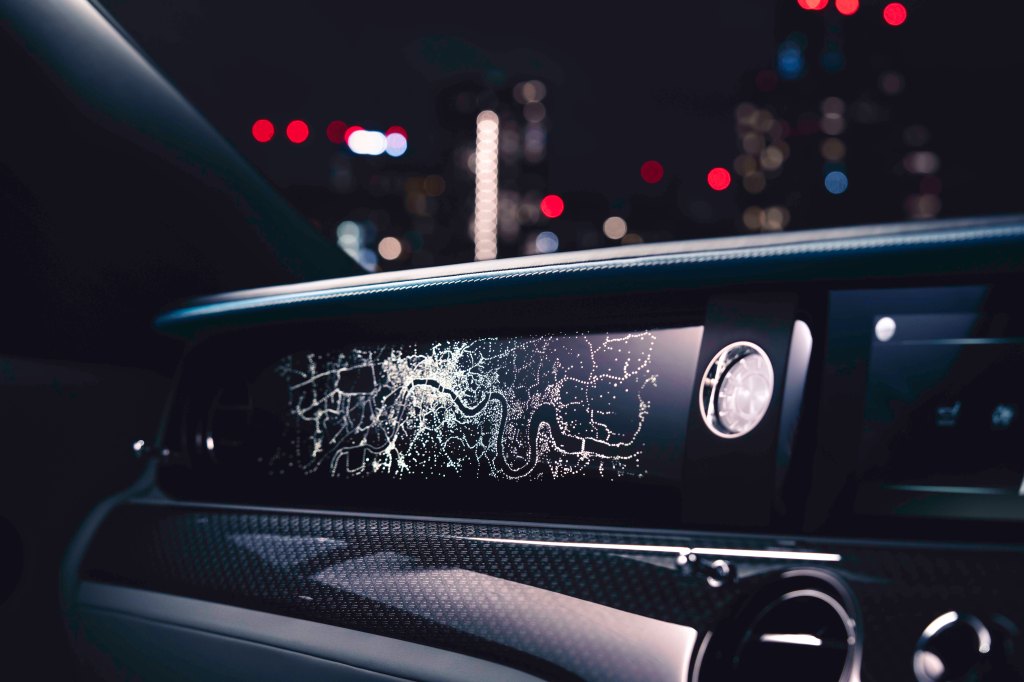
In this commission, created exclusively for the UK, the Illuminated Fascia features a Bespoke design recreating a bird’s-eye panorama of London. The graphic is inspired by the thrilling view of the city seen from an aeroplane as it makes its final approach to landing at night. The pattern is composed of 8,372 laser-etched lights, each individually placed by hand in the Piano Black veneer surface.
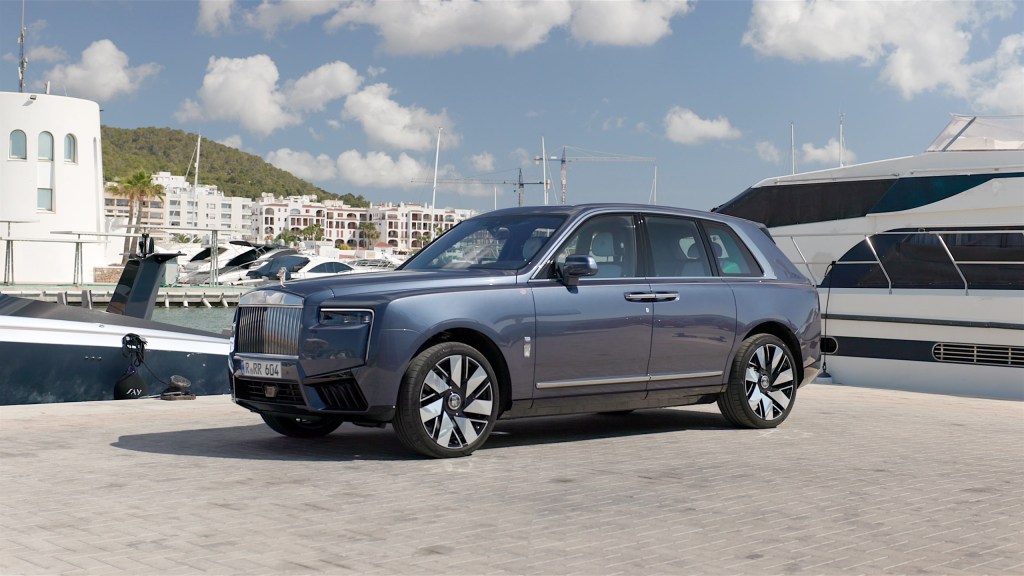
CULLINAN SERIES II – INSPIRED BY ROSE

This delicate, highly artistic commission was inspired by the Phantom Rose, specially bred for Rolls-Royce, which grows in the courtyard of the Home of Rolls-Royce at Goodwood and nowhere else in the world.

Bespoke designers created a stylised rose motif, which was then translated into the delicate embroidery on the front and rear headrests and incorporated into the meticulously hand-painted Coachline.
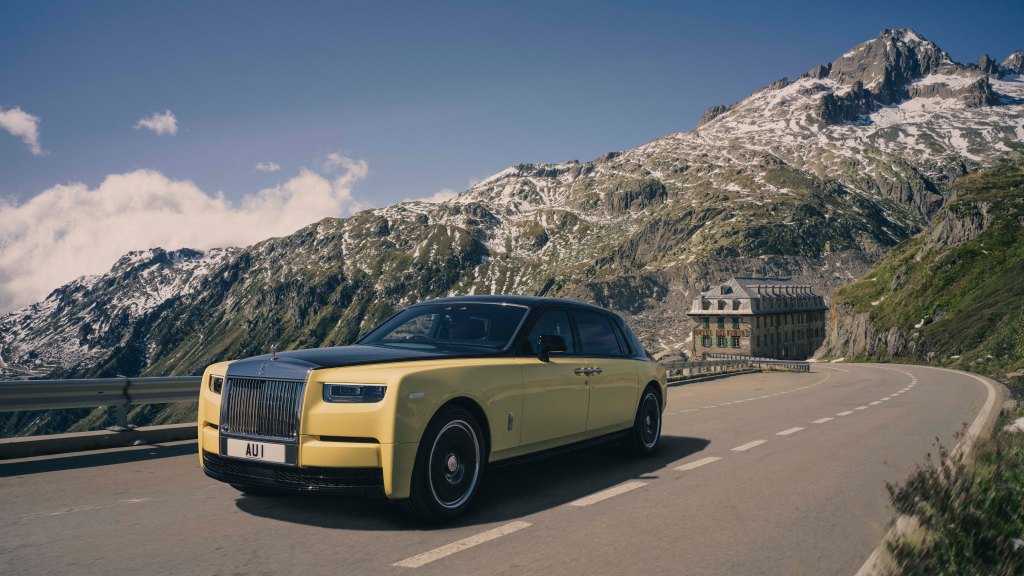
PHANTOM GOLDFINGER

To mark the 60th anniversary of the James Bond film Goldfinger, Rolls-Royce created this intricately detailed homage to the eponymous villain’s 1937 Phantom III Sedanca de Ville.

Bespoke specialists faithfully recreated the original motor car’s famous black and yellow exterior finish, with ingenious features referencing the film’s pivotal scenes – from a gold golf putter, inspired by one used by Auric Goldfinger in his infamous match with 007, to a solid 18-carat gold speedform displayed in the centre console.

Other gold-inspired features include gold-plated treadplates embossed with the same font developed for the film in 1964, a 24-carat gold-plated VIN plaque engraved with a number ending in 007, as well as organ stops, seat bullets and speaker frets with a lustrous gold finish.

The Gallery houses a stainless-steel artwork featuring an isoline map of the Furka Pass, where 007 is seen in the film following Goldfinger to his smelting plant. As another subtle reference, the Starlight Headliner reflects the constellations as they appeared over the Furka Pass in Switzerland on the final day of filming the scene. As a finishing touch, a hidden projector was developed to display the legendary ‘007’ logo when the boot is opened.

SPECTRE LUNAFLAIR

Commissioned by a discerning client from the United States, Spectre Lunaflair draws inspiration from the optical phenomenon of a lunar halo, where moonlight refracted through high-altitude ice crystals creates a bright ring around the moon.

To capture this spectacle, the marque’s specialists spent a year developing a unique holographic paint finish, reserved exclusively for the commissioning client. The captivating ‘rainbow’ effect is achieved by applying seven layers of lacquer, including a pearlescent layer infused with fine flakes of magnesium fluoride and aluminium. This creates a deep metallic effect in low light that bursts into rainbow technicolour under bright sunshine.

The Spectre Lunaflair concept was partially inspired by another Bespoke masterpiece, the one-of-one Phantom Syntopia. Captivated by Phantom Syntopia’s iridescent Liquid Noir finish, the commissioning client asked the Bespoke Collective to create a light and luminous expression of this concept that reflected their fascination with the lunar halo phenomenon. This cross-pollination of ideas exemplifies the power of Bespoke at Rolls-Royce.

GHOST EXTENDED SERIES II – THE ENCOUNTER

This exquisite Ghost Extended Series II is designed to mark the 120th anniversary of the meeting of its founders on 4 May 1904. The celebratory commission contains numerous references to The Hon. Charles Stewart Rolls and Henry Royce, including their initials embroidered on the headrests, their signatures on the C-pillar, and the historic date of their introduction as the coachline motif.

The interior is finished in Duality Twill, a new rayon fabric made from bamboo, embroidered with a ‘Duality’ graphic – an abstract interpretation of the interlinked R initials of the marque’s founders’ names.
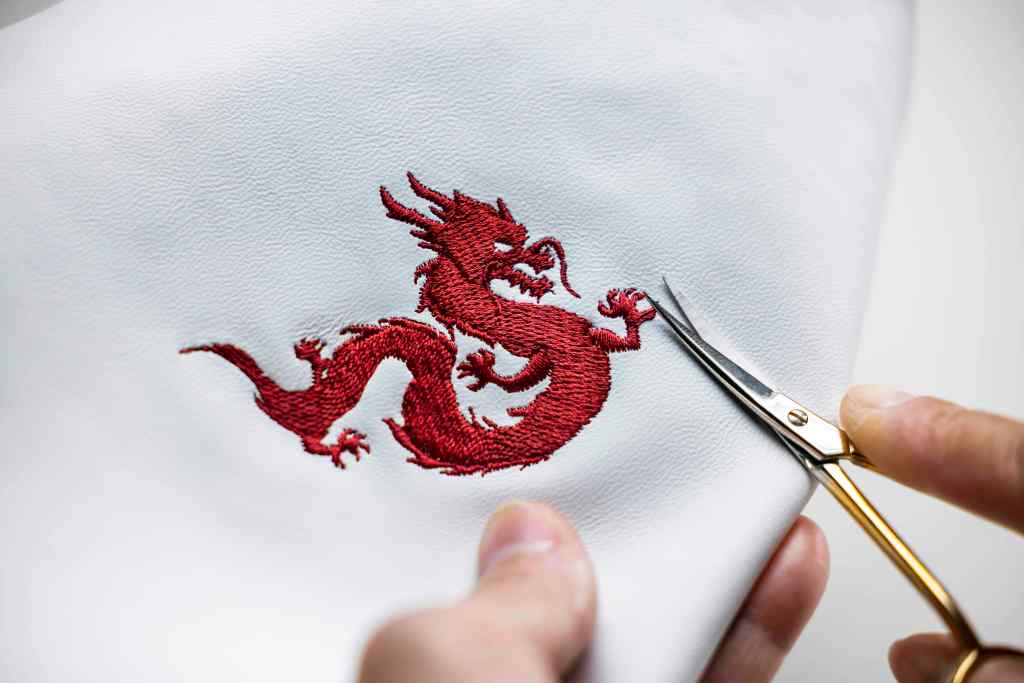
27/11/2023 – Ciaran McCrickard McCrickard / Mindworks – RRMC Year of the Dragon inlays.

PHANTOM YEAR OF THE DRAGON

Commissioned via the Shanghai Private Office, this extraordinary Phantom Extended was created to mark the Lunar New Year, beginning on 10 February 2024. In a beautiful example of the growing trend towards blending international heritage and Chinese cultural traditions, known as guochao, the interior features meticulously crafted details inspired by a traditional dragon symbol.

These include a unique hand-painted artwork on the front passenger panel, dragon embroidery on the headrests, coachline motif and the first-ever depiction of a dragon in a Bespoke Starlight Headliner, crafted from 677 ‘stars’.
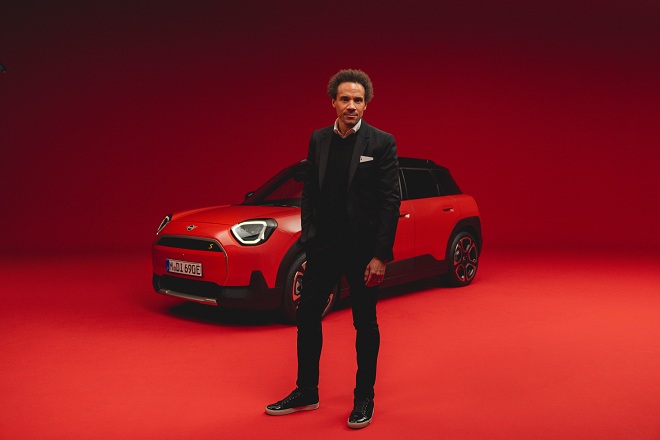
In Conversation With Oliver Heilmer – Head Of Design, MINI

The latest addition to the new MINI family, the MINI Aceman is the brand’s mid-size all-electric crossover, which combines compact exterior dimensions with a creative use of interior space. In a candid conversation with Oliver Heilmer, Head of Design, MINI, he talks about his vision, challenges and joy in designing the MINI Aceman. Read on to find out more.

Mr. Heilmer, when you joined MINI in 2017, how did you set about developing a vision to lead the models into the future?
Given that MINI is a very traditional brand, the question was: how do you evolve a brand like this into the future? To answer that, we went right back to the birth of the classic Mini to understand the spirit of Sir Alec Issigonis and derive from this where the MINI brand is heading in today’s context. The next step was to explore the essence of the original Mini together with our very diverse team and derive our own creative mindset. This was our foundation to develop an overall brand design vision to serve as a guiding principle in designing the new products.

What was your biggest challenge in developing a completely new design language?
The biggest challenge was and still is the profound engagement with the brand’s strong history. The first MINI was an absolute disruption – but that is also part of the story. We could just say that MINI is disruption and let everything that happened before stay in the history books. But that would be to discard the heart of the brand. Instead, we now talk about independent characters – and the MINI Cooper immediately shone as the icon in our eyes. You get closer to the quintessential ethos of the original model: a powerful character, but with as few fancy frills as possible – “Charismatic Simplicity” expresses this.

What does the new MINI “Charismatic Simplicity” design language represent and how is this reflected in the new MINI Aceman?
It’s about strong characters and about each family member having their own individual place within the MINI family. For example, the MINI Aceman has a unique design language when viewed from the side, and a unique graphic for the wheel arch trims. It is compact, agile and exudes a determination to forge ahead. That is what highlights this charismatic aspect. At the same time, we have consciously kept away from superfluous stylistic elements. Our challenge was to define a distinctive character with as few design elements as possible.

How would you describe the MINI Aceman character?
The MINI Aceman is both a practical and expressive, unique companion in everyday life. It steps out into the world fresh and carefree and takes up its place at the centre of the MINI family. It is an independent character that can be quite ‘edgy’ and appeals to customers who – irrespective of their age – value individuality and distinctiveness in urban spaces.

The MINI Aceman is the first of its kind. What makes the MINI Aceman the signature vehicle for the urban environment?
The MINI Aceman fits perfectly into the urban environment as it reinterprets the classic MINI values in a modern, all-electric crossover format. It offers an elevated seating position that conveys a feeling of safety and a generous amount of space without losing the compactness and manoeuvrability that are the MINI hallmarks.

Where do you draw fresh inspiration to develop new MINI models?
Inspiration never happens by chance but comes from a regular and targeted exchange of views within our team, in which each member contributes their inspiring and fascinating experiences. One team member builds skateboards, for example, while another lived on a sailing boat for two years. I would say it is roughly split between direct and indirect inspiration. Indirect inspiration involves everything that fuels a spirit, which comes across in the materials we use as well as in the surfaces and the digital aspects. Direct inspiration is in the architecture or fashion, for example. However, creative debate within the team throughout is crucial.

How do new, sustainably produced materials influence the design process at MINI?
Our brand design vision is based on our “creative mindset”, which consists of four guiding values: heartbeat, curiosity, responsibility and daredevil. These values stand for our basic principles such as heritage, curiosity for the new, sustainability and the courage to stand out from the crowd. For us, sustainability and the responsible use of resources have nothing to do with compromise, but rather exploring new possibilities in our creative process. Instead of materials such as leather, we use alternative technologies that allow more design freedom and individualisation, for example through using patterns or two-tone colours. The 3D knit is an example of one of the central design elements inspired by the sneaker industry. We are also replacing elements: for example, chrome with our new Vibrant Silver colour for aesthetic reasons.

Which of the MINI Aceman design innovations are you particularly proud of?
Two things in particular, and they are both about size. The MINI Aceman is very compact because of its very short overhangs at the front and rear. Even so, the vehicle is extremely safe. This is the result of truly outstanding engineering work. But it’s not just the things you can see that make it special. I would also make particular mention of how the sense of space is brought throughout the interior to achieve maximum lightness.

Are there any hidden design element that you would only see on closer inspection?
The idea behind us hiding little Easter eggs was knowing that people love discovering surprises. Not always in plain sight, but a little further down the line. Digital innovation allows for this sort of playfulness: for example, the navigation arrow can be depicted as a small MINI, or a large spinning record can be displayed on the central interface. And that’s how Spike was born, an animal friend who has always been a loyal companion to the brand. This gave rise to the idea of offering a kind of digital companion. That’s how Spike got on board the MINI and now lives in the display, so to speak.

What direction do you want the MINI design to take in the future?
As a team, we believe that our “creative mindset” will remain just as relevant to us as a guiding principle for future products. At the same time, we will focus even more strongly on the value of responsibility. Curiosity and responsibility – these are the values that we are introducing into the minds of the next generation.

If there was a product outside the car segment that you could design – what would it be?
Many things come to mind, but if I had to choose one, I would say: a sailing boat. I’ve only been sailing maybe five times in my life, but I still have a fascination for open water and dealing with the natural forces that prevail there. I designed a trimaran together with a fellow student for my degree dissertation, with the question of whether it is possible to design “automotive” in an area of mobility that is not necessarily confined to the road – I believe that there is still enormous potential there.

Rolls-Royce Unveils Arcadia Droptail

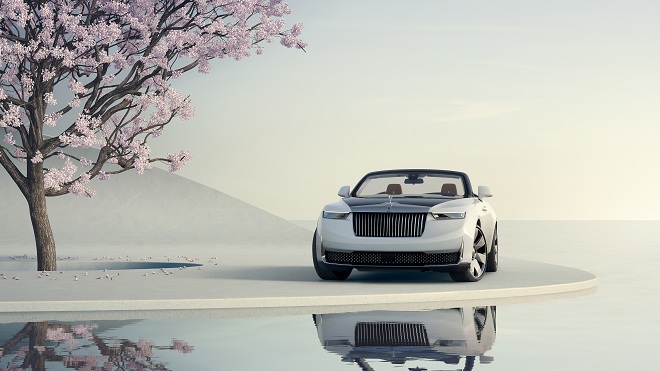
Rolls-Royce Motor Cars is delighted to present Rolls-Royce Arcadia Droptail, an exquisite coachbuilt expression of tranquillity. Arcadia Droptail is the epitome of quiet irreverence, celebrating purity of form and natural materials while serving as a bold statement of the client’s personal taste. Commissioned by an individual who possesses a distinct affinity for architecture and design, Arcadia Droptail is a testimony to the patron’s sensibilities and personal codes of luxury, defined by purity and subtle restraint, reflecting their firm belief in distilling complexity to reveal the inherent, fundamental essence.

This coachbuilt commission takes its name from the mythical realm of Arcadia, a place depicted in Ancient Greek mythology as ‘Heaven on Earth’ – a land renowned for its extraordinary natural beauty and perfect harmony. Like the haven that inspires its name, Arcadia Droptail was envisioned by the client as a serene space characterised by reduction, material depth and tactility that would serve as a refuge from the complexities of their business life.

In capturing the theme of tranquillity, Coachbuild designers embarked on an exploration of design, sculpture and architecture from the client’s favourite regions around the world. This included the precision and richness of modernist tropical sky gardens seen in Singapore, Indonesia and Vietnam as well as British ‘Biomimetic’ architecture, where organic forms and material honesty are celebrated.

In addition to these references, the client was also inspired by the motor car itself and the purity of the Droptail design concept. The commissioning client insisted that their Coachbuild motor car should be absolutely faithful to the earliest hand-drawn sketch they were first presented with in 2019.

It was the profile of this highly contemporary projection of the roadster body type that resonated so strongly with the commissioning client. They were particularly compelled by the motor car’s bold, low stance, ensconcing cabin design and dramatic body lines. They also immediately recognised the nautical inspiration behind Droptail’s ‘sail cowls’: named after their resemblance to a yacht’s jib, these sharp, angular forms rise behind the doors and curve gently inwards, subtly directing the eye to the motor car’s occupants.

EXTERIOR: A TRIBUTE TO DROPTAIL
In order to fulfil the client’s ambition to honour Droptail’s form, Rolls-Royce Coachbuild designers developed a calm, natural duotone colourway for the motor car’s coachwork. The client’s aspiration was to define a timeless white, appearing as a solid colour at first glance, but creating a level of intrigue upon further study under natural light. To achieve this, the main body colour is a solid white infused with aluminium and glass particles. This not only creates an effervescent shimmer when the light strikes the coachwork but, upon close inspection, creates the illusion of unending depth in the paint. Rolls-Royce specialists developed a more faceted, striking metallic using larger sizing of aluminium particles. The client was very particular and involved in their request for the Bespoke silver to contrast against the white, not only in colour, but also in terms of intensity.

In a key departure from the other three coachbuilt Droptails in this series, the carbon fibre used to construct the lower sections of Droptail is painted in the solid Bespoke silver colour rather than left fully or partially exposed, visually ‘lifting’ the motor car in profile to intensify its lithe, dynamic intent.

In tribute to the brilliant mirror finish of brightwork on historical Rolls-Royces, which particularly fascinate the client, the exterior grille surround, ‘kinked’ vane pieces and 22-inch alloy wheels have been fully mirror-polished.

While Arcadia Droptail’s exterior palette is rich in subtle detail, its primary intention is to celebrate the form and proportions of the coachwork. The client was particularly compelled by Droptail’s clean, monolithic surfacing and bold use of negative sculpture – features that are amplified by the motor car’s muted paint colours, which reflect sunlight and cast dramatic shadows, highlighting Droptail’s many subtle design gestures.

INTERIOR: THE CENTRALITY OF WOOD
As the exterior of Rolls-Royce Arcadia Droptail celebrates the motor car’s form, the interior is a deeply personal reflection of the client’s individual aesthetic, reflective of the style they have curated in their residences and business spaces around the world. Arcadia Droptail’s colour palette and material treatment was envisioned to be a truly personal statement and instantly recognisable as a personal signature of the commissioning client.

Wood development was central to Arcadia Droptail’s interior and the client’s focus, whose very specific expectations concentrated on the texture, grain, colour and richness of the material itself. The client shared many examples of preferences and inspiration from architecture, residences and classic cars, to guide Rolls-Royce Coachbuild designers and material specialists.

Santos Straight Grain was eventually selected as the most modern statement, based upon its rich texture and visual intrigue, which is derived from its unique, interlocking grain pattern.

Using this high-density hardwood on Droptail’s interior posed a significant challenge for the marque’s craftspeople. Santos Straight Grain has one of the finest grain types of all the wood species used within a Rolls-Royce – if not handled with the greatest care, it easily tears when machined and ‘checks’ (a crack that appears parallel to the grain) during the drying process. Despite the challenges of working with this delicate material, Santos Straight Grain is used throughout Droptail, including the aerodynamically functional rear deck section, where the grain of the open pore veneer is laid at a perfect 55° angle. To achieve a perfect composition over complex geometry, Rolls-Royce artisans used a total of 233 wood pieces throughout Arcadia Droptail, with 76 pieces applied to the rear deck alone.

Given that Arcadia Droptail will be used internationally, including some tropical climates, specific attention was paid to developing a protection system and testing process for the exterior wood surfaces. Coatings used on superyachts were initially considered but rejected given that they require regular servicing and re-application. Instead, a Bespoke lacquer was developed that requires just one application for the lifetime of the motor car.

To validate this coating, Rolls-Royce specialists conceived a unique testing protocol wherein veneer pieces were subject to a punishing cycle inside a specialist machine simulating global weather extremes. This involved spraying sample wood pieces with water intermittently, between periods of leaving them to dry in darkness and exposing them to heat and bright light.

This was repeated for 1,000 hours on 18 different samples before the marque’s specialists were satisfied with the endurance of the pieces. In total, the wood pieces and protective coating required more than 8,000 hours of development.

INTERIOR: A STUDY IN WHITE
The leather interior is finished in two entirely Bespoke hues, named after the client and reserved exclusively for their use. The main leather colour is a Bespoke White hue, continuing the exterior paint theme, while the contrast leather is a Bespoke tan colour, developed to perfectly complement the selected wood.

The interior also includes the exquisite shawl panel that unites all four Droptail motor cars and is the largest continuous wood section ever seen on a Rolls-Royce motor car. In Arcadia Droptail, it is made in the same Santos Straight Grain open pore veneer as the rear deck, book-matched at the same 55° angle, with individually shaped leave stripes running seamlessly into the door linings. CAD tools were used to map the placement of each wood piece, and although it appears to be constructed from just two mirrored sections of veneer, this panel alone is made up of 40 sections, each digitally mapped before being fixed to the motor car.

Applying wood to the complex curvatures of Droptail’s interior required Rolls-Royce engineers to develop an entirely new substructure for several components. The dramatic geometry of the dashboard, door linings and central cantilevered ‘plinth’ armrest had to be incredibly rigid to ensure the stability of the wood pieces once they were laid in place. Engineers called on carbon fibre layering techniques used in Formula 1 motor racing to develop an incredibly stiff base onto which the wood could be applied, ensuring that it remained secure regardless of the dynamic extremes the motor car experienced.

BESPOKE TIMEPIECE: A PRECISION INSTRUMENT
The Santos Straight Grain veneer fascia incorporates a clock conceived and developed by Rolls-Royce Coachbuild designers and craftspeople. This expression of haute horlogerie is the most complex Rolls-Royce clock face ever created: the assembly alone was a five-month process, which was preceded by more than two years of development.

The clock incorporates an exquisite geometric guilloché pattern in raw metal with 119 facets. This is a symbolic nod to the marque’s heritage; as the client first saw a preview of the motor car in late 2023 – the year when Rolls-Royce celebrated its 119-year anniversary. The specially designed clock face also includes partly polished, partly brushed hands and 12 ‘chaplets’ – or hour markers – each just 0.1mm thick. To ensure the readability of the timepiece, specialists gave each chaplet an infill bridge and painted them by hand using a camera capable of magnifying an image by up to 100x.

While many haute horlogerie methods were used to develop the timepiece, the testing and validation standards at Rolls-Royce are higher than those of the watch world. This required the marque’s specialists to draw on an expansive palette of materials. For example, instead of anodizing the timepiece’s minute marker, which is common practice in watch manufacturing, it is finished in a ceramic coating chosen because of its stability over time as well as its aesthetic merits. Small areas of the coating were laser-etched away to reveal the mirror finish of the aluminium material beneath it. Like every piece within the timepiece, including the Bespoke ‘double R’ monogram, they were individually machined from solid stainless-steel billet and polished by hand prior to assembly.

Themes from the clock are paired with the instrument dials, sharing materials, techniques and execution. They feature the same repeated guilloché pattern, as well as brushed and polished brightwork and frosted white inserts, recalling the colourway of the motor car.

STATEMENT OF A COSMOPOLITAN LIFESTYLE
Reflecting the patron’s international lifestyle, the motor car is specified with left-hand drive to facilitate its use around the world. This international dimension was so important to the commissioning client that the Coachbuild Collective wanted them to experience the motor car in multiple locations around the world before it was built. Coachbuild designers used the marque’s ‘holodeck’ to facilitate this – a unique virtual 3D environment in which the client uses an advanced virtual reality (VR) headset to view the motor car as it would appear in specific locations around the world.

ARCADIA DROPTAIL: AN ELEGANT SPACE IN THE DROPTAIL CANON
While every Rolls-Royce client is different, they each share a powerful strength of conviction, and this individual’s requirements were clearly stated from the outset. However, translating these complex, highly personal sensibilities into a coherent, workable design was the product of a significant body of work. It was here that the Coachbuild process, with its unprecedented investment of time – over four years in total – and uniquely close relationship between the client and the marque, paid incalculable dividends.

Coachbuild designers invested many months examining and interrogating the client’s tastes in everything from clothes and furnishings to food and travel destinations. From this, they defined and codified an aesthetic rooted in the client’s truth and experience; an objective portrait of their internal world and external surroundings, backed by the certainty and authority of the design team’s own discernment, understanding and professional judgment. Other family members, notably the client’s daughter, also become engaged with the process. When the final design was ready, the client’s wider family were invited to review it: all agreed that it perfectly captured the client’s aesthetic and character.

The client derived enormous pleasure from having their tastes and identity so clearly rationalised and projected back to them. Indeed, the process revealed the client had a far more modern outlook than they realised, defined by lightness, the use of natural materials and a clear passion for precision. Arcadia Droptail has since become a reference point for the client’s commissions from other luxury houses and architects.

This unique expression of Rolls-Royce Droptail reflects this remarkable client’s confidence, clarity of vision and long-term relationship with Rolls-Royce Motor Cars. Its significance lies both in its exquisitely minimal execution and the unique skill of Rolls-Royce Coachbuild designers in capturing the sensibilities and soul of an individual.

First Iconic Classic Entrants Revealed For Germany’s First Truly International Concours of Elegance

The countdown to the Concours of Elegance Germany starts, with event set to commence in just under 150 days. Home to the world’s most revered and historic motoring brands, the first truly international Concours of Elegance will open with its Bavarian Tour on 22 July, with 25 stunning cars embarking on a meticulously curated four-day exploration of the very best that Bavaria has to offer.

Presented by prestigious German watchmaker A. Lange & Söhne, Concours of Elegance Germany will build on the success of the prestigious Concours of Elegance at Hampton Court Palace and the London Concours events, welcoming an exquisite array of automobiles to Gut Kaltenbrunn on the shores of Lake Tegernsee from 22-27 July 2024.

Among the cars on display will be truly exceptional examples of the 1971 Ferrari 365 GTB4 and the 1967 AC Frua. Designed by Pininfarina and constructed by Scaglietti, two icons of the Italian automotive industry, there were just 156 right-hand drive models of the GTB4 ever made. Fusing US V8 horsepower and Italian styling, the AC Frua was also made in remarkably small numbers, with just 29 convertibles leaving the production line.

Detailed arrangements for the spectacular new international event continue at pace, with many more of the world’s rarest and finest collectible cars to be announced in the coming weeks.

Concours of Elegance Germany has already secured a line-up of prestigious partnerships that will contribute the extraordinary event. RM Sotheby’s, the esteemed Official Auction Partner, has confirmed that it will hold a highly anticipated sale on 27 July at the exquisite Gut Kaltenbrunn. Hospitality will be provided throughout the event by Official Hospitality Partner, Käfer – Germany’s most renowned purveyor of food and beverages.

Classic Driver, the German-founded platform, will serve as the Official Digital Media Partner, providing extensive coverage of the Concours of Elegance Germany across various digital and social channels. Automotive & Collectibles Media Partner, Octane Germany, will contribute comprehensive coverage in print, capturing the essence of the event from the run-up to the final moments. These partnerships, along with several others, underscore the significance of Concours of Elegance Germany, promising an unforgettable showcase of automotive excellence at Lake Tegernsee. In upcoming weeks, several other partners to the concours will be revealed.

Head of the event’s Hospitality Partner, Michael Käfer, commented: “We are truly thrilled to be supporting and hosting the internationally renowned Concours of Elegance in Germany, where the world’s biggest automotive collectors can congregate against the stunning backdrop of Lake Tegernsee. The event will be a celebration of the rare and exceptional, showcasing some of the world’s most elusive collectible cars. All of us at Käfer are very much looking forward to welcoming enthusiasts to witness a truly unforgettable showcase of automotive beauty and elegance, celebrated in true Bavarian style here at Gut Kaltenbrunn.”