Bentley Motors today announced a series of updates to its forward-thinking Beyond100+ strategy, reflecting current market and customer perspectives. In a press conference streamed live from Bentley’s home in Crewe, and the future assembly line of Bentley’s first fully-electric car, Chairman and CEO, Dr. Frank-Steffen Walliser, outlined a revised product cadence plan that includes extending the offer of internal combustion-engined as well as plug-in hybridised models.
Creating an entirely new segment with the world’s first true Luxury Urban SUV, the all-new Bentley – designed, developed and produced in Crewe – is on track to be launched towards the end of 2026, with deliveries to markets during 2027. The as yet unnamed model will be incremental to Bentley’s current offering, less than five metres in length and promises a true Bentley driving experience and the craftsmanship expected of the marque, with industry-leading technology that includes the capability of charging from 0 – 100 miles in less than seven minutes. Development of the car continues at pace with pre-series, or prototype, vehicles embarking on a global performance programme.
Furthermore, hybridised Bentley models, today offered in both High and Ultra-Performance Engines in Continental GT coupe, Convertible and Flying Spur, would be available until at least 2035 meaning that Bentley’s previous target of being exclusively electric by that milestone could be extended. Another internal combustion engined model, the Bentayga Speed, was added to the range earlier in 2025 and in the same conference, Bentley revealed that a new non-hybridised and limited production performance model would be announced before the end of this year. It also didn’t rule out further similarly-engined cars to follow as it continues to maintain powertrain flexibility in line with customer demand across its global markets.
Commenting following the announcement, Dr. Frank-Steffen Walliser, Chairman and CEO of Bentley Motors, said: “Today’s updates to our Beyond100+ strategy reaffirm Bentley’s commitment to progress — responsibly and sustainably. We are evolving our product cadence to reflect the realities of a changing world and a dynamic marketplace. By extending introducing new internal combustion engined models, and offering hybrid powertrains until at least 2035, we are ensuring that every Bentley customer can continue to experience the full breadth of our performance and craftsmanship.
“Our first fully electric Bentley, the world’s first true Luxury Urban SUV, represents a bold step forward, it embodies our vision for sustainable luxury and technological excellence. With industry-leading charging capability and unmistakable Bentley character and design, it marks the beginning of an exciting new era for our brand – a future defined by innovation, craftsmanship, and sustainability.”
Beyond100+ also endures a fundamental reinvention of the Crewe manufacturing infrastructure, and helps secure Bentley’s future at Crewe for the next generation of products and colleagues.
The company has already made enormous strides in reinventing the historic Crewe site, creating an industry-leading certified carbon neutral facility, and as the oldest building, named A1, prepares to assemble Bentley’s first electric car, the Dream Factory is closer to nearing completion.
The largest self-funded site investment programme in Bentley’s history continues with a new state-of-the-art Paint Shop due to open in 2026. This follows a new Design Centre and Integrated Logistics Centre, both opened earlier this year, transforming an 87-year-old site for a new age of electrification, and a new benchmark in next generation, digital, flexible and high-value manufacturing operations.
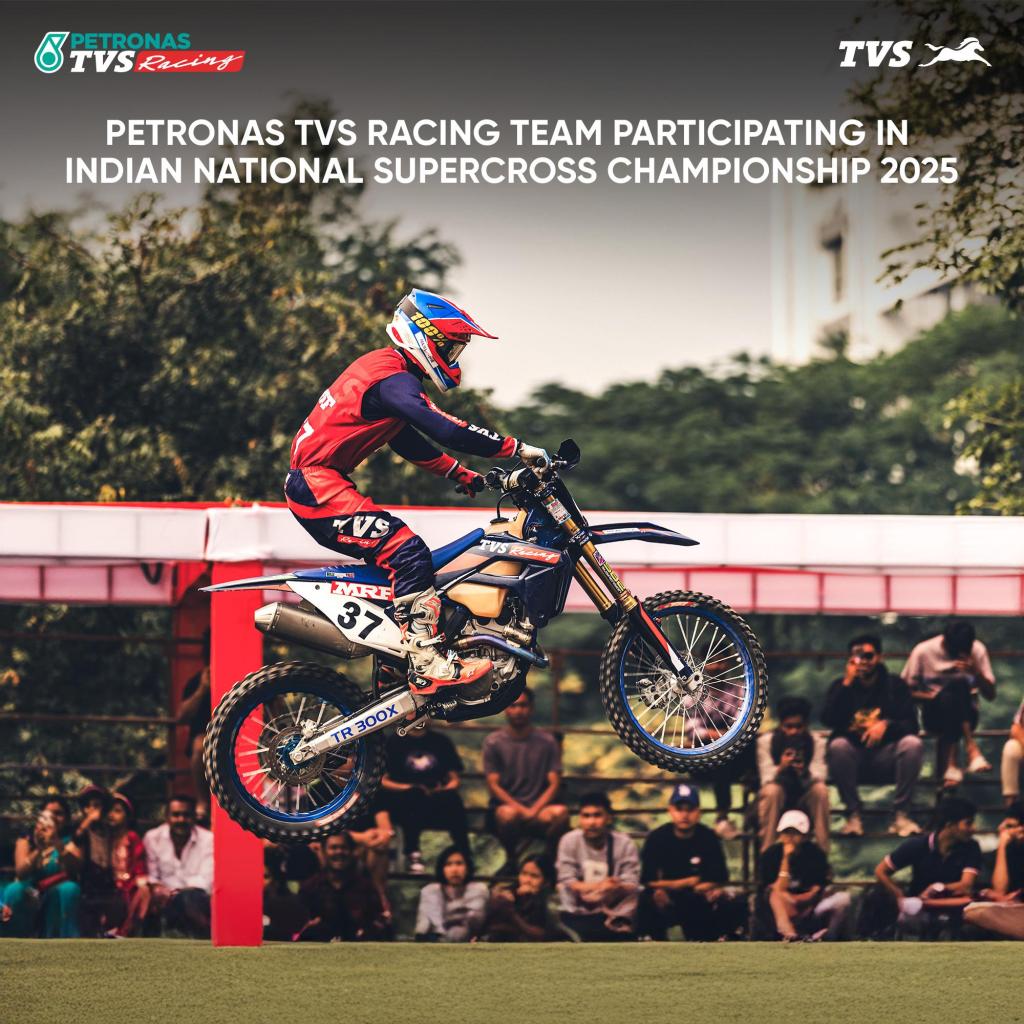
Backed by a rich racing pedigree since 1982, PETRONAS TVS Racing is set to ignite the track once again at the 2025 season of the FMSCI Indian National Supercross Championship (INSC), which begins in Vadodara on May 23–24, 2025. After a dominant 2024 season that reaffirmed its leadership in Indian two-wheeler racing, India’s first factory racing team returns with renewed focus, upgraded machines, and a powerful 8-rider line-up. The squad includes seasoned champions and expert riders like Rugved Barguje, Ikshan Shanbhag, and Prajwal V, who will compete in Group A – Foreign Open SX1, along with Imran Pasha, Banteilang Jyrwa, and D Sachin, who will race in Group B – Indian Expert category. They are joined by rising talents Jayden Wandame Nongkhlaw and Shailesh Kumar, who will compete in the Indian Novice Group B.
PETRONAS TVS Racing will field its state-of-the-art TR 300X (Group A – up to 500cc) and TR 200X (Group B – up to 260cc) race machines this season. These upgraded bikes feature advanced camshaft and cylinder head designs that deliver superior mid-range torque and high-RPM performance. With improved suspension systems and refined ergonomics, the machines promise enhanced control, traction, and cornering agility giving TVS racers a competitive edge on the track.
Vimal Sumbly, Head Business – Premium, TVS Motor Company said, “Building on last year’s championship triumph, PETRONAS TVS Racing is geared up to set new benchmarks in 2025. All upgrade to our machines and every hour dedicated to rider development reflects our unwavering commitment to excellence and innovation. Our 8-rider line-up is a perfect blend of experience and emerging talent, ready to push the limits. We are proud of the incredible momentum we’ve built over the years — from consistent podium finishes to nurturing India’s finest Supercross champions. This year is even more special as we celebrate 20 years of our flagship performance brand, TVS Apache, which perfectly embodies our ‘Track to Road’ philosophy. As we charge into the new season, we aim not just to race, but to raise the bar for motorsports in India once again.”
Underscoring its long-standing commitment to developing Indian motorsport talent, PETRONAS TVS Racing continues to invest heavily in training of the racers. For the new season of INSC, TVS Racing has invested in Advanced SX training sessions, especially for SX1-class riders, aimed at enhancing endurance, agility, and tactical skills to equip athletes for the rigorous physical and strategic demands of elite Supercross racing.
PETRONAS TVS Racing team’s racer line up for INSC 2025:
S. No.
Racer Name
Participation Group
Bikes
1
Rugved Barguje
Group A – Foreign Open SX 1 (up to 500cc)
2
Ikshan Shanbhag
TR300 X
3
Prajwal V
4
Imran Pasha
Group B – Indian Expert(up to 260 cc)
5
Banteilang Jyrwa
TR200 X
6
D Sachin
7
Jayden Wandame Nongkhlaw
Group B – Indian Novice(up to 260 cc)
TR200 X
8
Shailesh Kumar
For over 43 years, TVS Racing has been at the forefront of Indian motorsports, continuously pushing the boundaries of racing excellence. This commitment to innovation and performance extends beyond the racetrack into TVS Motor Company’s flagship motorcycle brand, TVS Apache, which celebrates 20 years of engineering excellence this year. The TVS Apache series embodies TVS Racing’s ‘Track to Road’ philosophy, integrating race-derived technology into high-performance motorcycles. Spanning 160cc, 180cc, 200cc, and 310cc models, the lineup features segment-first innovations, from ride-by-wire technology to race-tuned fuel injection.
With over 400,000 riders in the Apache Owners Group (AOG), TVS Apache has built a passionate global community, bringing the thrill of racing to streets and track enthusiasts alike. As it enters its next chapter, TVS Apache remains dedicated to offering cutting-edge performance, redefining what it means to ride with power and precision.
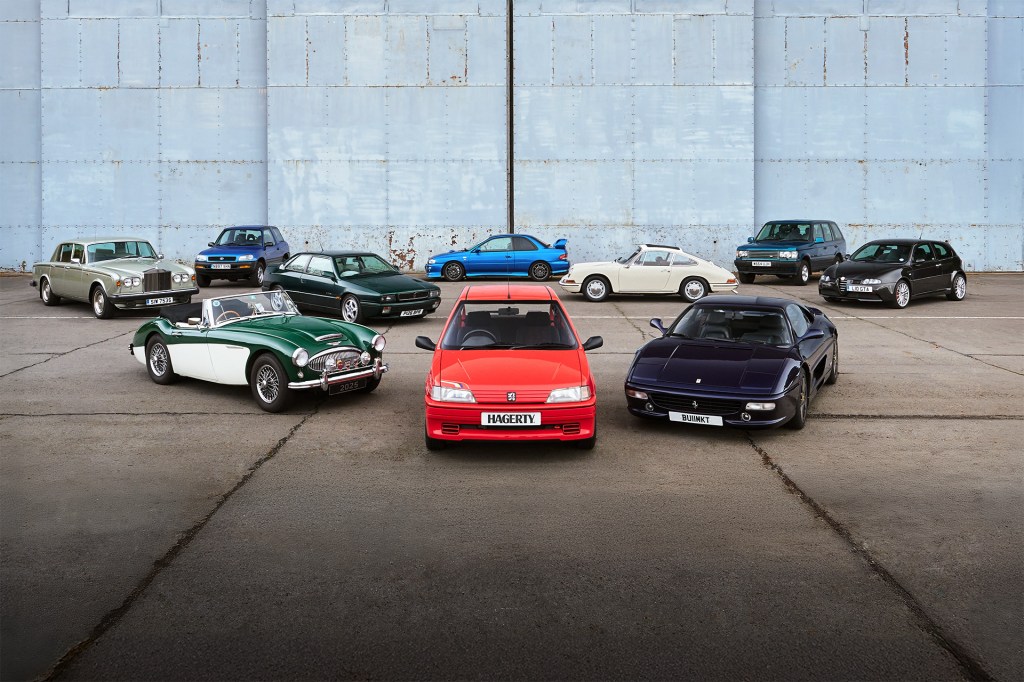
Hagerty UK is announcing its 2025 UK Bull Market List, a selection of ten cars that are set to be great buys in 2025. Some are predicted to rise in value in the future, others have been selected for their superb value for money and rewarding ownership experience.
The cars in the Hagerty UK Bull Market List have all been selected as a result of intense research into changes in vehicle values by the valuation specialists at Hagerty UK. These specialists compile the highly respected Hagerty Price Guide, ensuring they are uniquely qualified to provide insight into prices and trends in the classic and modern classic car market in the UK.
For 2025 they have chosen a wide selection of models, from the humble Peugeot 106 to the cult status Subaru Impreza P1. There’s opulence in the Rolls-Royce Silver Shadow II and driving adventures in the Austin-Healey 3000 and Porsche 912.
“The 2025 cohort is, I think, my favourite yet,” says John Mayhead, editor of the Price Guide. “The models span nearly every era of motoring and range from up-and-coming classics to those that were once top dog and now maybe offer a huge amount of car for the money.”
2001-2005 Alfa Romeo 147 GTA The Alfa Romeo 147 GTA takes the Hagerty Hot Hatch Pick for its understated looks and incredible performance. Values have risen steadily in recent years with the very best examples fetching well over £20,000.
The 147 GTA is every bit the Alfa Romeo, with Italian character and performance to match. Its 3.2-litre six-cylinder Busso engine is now considered to be one of the finest engines ever produced. The interior reflects the Italian craftsmanship of the era with exemplary materials and comfort combined with sporty details.
This hot hatch continues to increase in popularity, with many younger buyers seeking it out in order to enjoy one of the best Alfa Romeo experiences.
What the Hagerty Valuation Team says: The main reason the 147 GTA was chosen for this year’s Bull Market is that it offers an extraordinary driving experience for a relatively sensible price. It’s the spiritual successor to the 105 series Alfa Romeo GTA coupes that made such an impact on both road and racetrack back in the 1960s and ‘70s.
Hagerty Price Guide valuation – £8,500 to £20,500
1959-1967 Austin-Healey 3000 The Austin-Healey 3000 is the Hagerty Bull Market Best of British Index Pick, a quintessential British sports car, loved by multiple generations since it first entered production in 1959. One of the most popular big Healey models, it continued in production until 1967, with four major model variations during that time.
The Austin-Healey 3000 not only won hearts for its roadster character and charm, but it also performed well on some of the world’s great race tracks, including Le Mans and Sebring. It’s a true usable classic, with plenty of clubs offering support for owners and a vast number of events to take part in. It continues to be an affordable classic that in recent years has also found favour with many younger buyers.
What the Hagerty Valuation Team says: In value terms, the Austin-Healey 3000 has been very flat over a long period of time: since May 2015, UK Hagerty Price Guide values for an excellentexample have varied by less than ten percent, and currently sit at £45,400, although it’s recently dipped. In real terms, accounting for inflation, that means the model is much more affordable than it was a few years ago.
Hagerty Price Guide valuation – £22,900 to £87,500
1994 – 1999 Ferrari F355 The Ferrari F355 is the Hagerty Gold Index Pick for 2025, with values rising significantly in recent years. This mid-1990s Italian sports car ticks all the right boxes, with the famous Maranello badge, pop-up headlights, a beautiful design and a superb mid-mounted 3.5-litre hand built V8.
Manufactured between 1994-1999, the F355 was based on the Ferrari 348 with improved performance, aerodynamics and usability. Its five-valve cylinder head helped to generate more power and changes to the transmission made it more reliable than the 348. Six-speed manual models are the more collectible, but the F355 also goes down in history as the first road car to feature an F1-style automated manual paddle-shift.
The F355 was available as a Berlinetta coupé, Spider and GTS targa-top. Those who wanted even more performance could opt for a Fiorano handling pack, with these models proving a rare find these days. Highly collectible, the F355 is also a comfortable sports car to enjoy on a regular basis.
What the Hagerty Valuation Team says: Some consider the F355 to be a peak driver’s Ferrari, mixing 1980s-inspired design and analogue engineering. A relatively new addition to the UK Hagerty Price Guide, values have risen recently, up 6.2 percent in the past three years to £73,300 for a standard Berlinetta in excellent condition. In the US, growth has been even more extreme, and the Guide price for the same model there is now $196,000 (£152,000) although this includes a 25 percent premium for manual gearbox examples.
Hagerty Price Guide valuation – £50,600 to £105,000
1992-1998 Maserati Ghibli Maserati has used the Ghibli name on three models since the 1960s, the Hagerty 2025 Bull Market Italian Pick being the AM336, produced between 1992-1998. Designed by the legendary car designer, the late Marcello Gandini, the 90s Ghibli was an evolution of the Maserati Biturbo.
The flared wheel arches, high boot and handcrafted interior gave this two-door coupé more presence and style than its predecessor. The engines were the real attraction though, with a 2.0-litre or 2.8-litre twin-turbo V6 on offer. At the time, the Ghibli Cup with its 325bhp pushed out more bhp per litre than a McLaren F1.
What the Hagerty Valuation Team says: The attraction of the Maserati Ghibli model range is that there’s a car for many different price points. Standard, base Biturbos with middling miles are still for sale for under £10,000, a good Spyder is double that, all the way up to the Shamal, currently valued at £53,000 in excellent condition in the UK Hagerty Price Guide. Those with the cheapest price on the windscreen may be more expensive to maintain though, and for a 1980s/ 1990s-era Maserati, the bills may be significant.
Hagerty Price Guide valuation £9,400 to £54,900
1991-2003 Peugeot 106 The Peugeot 106 has often been overshadowed by its sibling 1990s boy racer favourite, the Citroen Saxo. Produced between 1991-2003, the Hagerty Quirky Pick was available in anything from a very basic 1.0-litre petrol version to the entertaining GTi and Rallye variants.
Many people have a story to tell of their experience with a Peugeot 106, either as the car they learned to drive in, their first car or a rental that took them on holiday with their friends. It might be a small car, but it had a big personality with an interior that combined French quirkiness with practical simplicity. They were also easy to work on and many were the subject of extensive modifications, making pristine original examples increasingly sought after today.
What the Hagerty Valuation Team says: Hagerty considers the Peugeot 106 to be great value compared with some of its rivals. The Series 1 106 Rallye in excellent condition is listed in the Hagerty Price Guide at £12,400, around 32 percent less than its older relative the Peugeot 205 Rallye. With their homologation credentials, limited numbers and instantly recognisable looks, they tick many of the requirements of a collectable car, although originality is critical.
Hagerty Price Guide valuation – £8,900 to £16,400
1965-1969 Porsche 912 In the 1960s Porsche wanted a car that fitted between the 356 and the 911. That car was the 912, a sports car that had all the looks of the 911 and the same level of build quality and comfort, but at a much lower price. It was also cheaper to run, thanks in part to the use of the four-cylinder 616 engine from the 356.
Today the 912 is becoming more sought after, not just for its great value but because it is both dynamic and usable, with easier to manage handling and performance compared to the 911. Prices for the 912, which is the Hagerty 2025 Classic Pick, remain stable and are not expected to rise dramatically. The UK Hagerty Price Guide values excellent left-hand drive examples at £57,800 with right-hand drive models attracting a large premium.
What the Hagerty Valuation Team says: With a Porsche 912 you get the early 911 experience for a fraction of the price. Other than very early 912s, the vast majority of the car is identical to its six-cylinder sibling, sharing the same interiors, bodywork, suspension and electrics, only the engine is different.
Hagerty Price Guide values – £26,900 to £90,100
1994-2001 Range Rover P38 The Range Rover P38 arrived in 1994 as the successor to the original classic model. It featured a more rounded exterior design, while the interior had all the hallmarks of the model, including lots of wood and leather and an elevated driving position that made occupants feel as though they were above everyone else.
The P38 was available with an updated version of the traditional Rover V8 or a turbo-diesel engine from BMW. The combination of opulent luxury and legendary off-road capability ensured it remained a popular choice. In recent years they have become well-known for reliability issues, but a good example of the car that is the Hagerty Off-Road Pick can still deliver that true Range Rover experience.
What the Hagerty Valuation Team says: The P38 Range Rover is a car that is currently extremely affordable, with the cheapest runners advertised for under £1000 and even top-spec, limited edition models with extremely low mileage in concours condition rarely reaching over £15,000. Plus, they are getting rarer: social media groups are full of cars being broken for parts or heavily modified for off-road use. Find an original, well-maintained example, and it could offer a lot of value for money.
Hagerty Price Guide values – £800 to £15,800
1977-1980 Rolls-Royce Silver Shadow II Rolls-Royce introduced the Silver Shadow in 1965 but then it updated the model for the final few years of its life, creating the Silver Shadow II in 1977. Loved by everyone from wheeler dealers to wedding planners and the world’s wealthy, the Silver Shadow II delivered the ultimate in luxury motoring of the time.
Today they remain wonderful cars to own and enjoy, providing an element of glamour as well as superb ride comfort and all the status of driving a car with the famous Spirit of Ecstasy leading the way. Values vary immensely but so too do the maintenance costs, making the Hagerty 2025 Luxury Pick one to choose carefully.
What the Hagerty Valuation Team says: Prices for the Silver Shadow II have been relatively static, only £100 higher today for an excellent example than in December 2021. The big difference has been in the top examples, with a concours condition value up over 20 percent during the same period to £31,900. This is a good sign as a rise in top examples often encourages more to be spent on maintaining other, less pristine cars
Hagerty Price Guide values – £5,700 to £28,700
2000-2001 Subaru Impreza P1 First generation Subaru Impreza prices are increasing, but none more so than some of the most revered models. These include the flagship 22B and the Hagerty 2025 RADwood Pick, the Prodrive 1 or P1. Only 1000 examples were built, each fettled by famous motorsport company, Prodrive. This included design changes by the designer of the McLaren F1, Peter Stevens and engine upgrades to produce 276bhp.
The P1 was only available in Sonic Blue and its chassis and suspension were specifically tailored for British roads while ABS was added for the first time. Electrically adjustable Recaro seats sported the P1 logo, which also adorned the iconic rear wing. Compared to prices for the 22B, the P1 represents a great value way to get into a legendary rally-bred sports saloon.
What the Hagerty Valuation Team says: Prices have risen a lot in the last few years – the UK Hagerty Price Guide ‘Excellent’ value was £32,000 in September 2022 and two years later was £50,500 but Hagerty believes that prices may well increase further still. Many of these cars have been driven hard, and the gulf between top and bottom values is huge: Hagerty’s ‘fair’ price is 61 percent lower than its top concours’value. Pristine, low mileage cars will probably increase most, but regularly driven cars that are a little rough around the edges will be much more affordable and great fun.
Hagerty Price Guide values – £25,000 to £72,500
1994-2000 Toyota RAV4 The Toyota RAV4 is the model that started the modern era of compact crossovers and small SUVs. Introduced in 1994, over ten million have since been sold, but version that receives the Festival of the Unexceptional Pick in the 2025 Hagerty Bull Market is the first generation.
The Recreational Active Vehicle with 4-wheel drive (RAV4) provided all the passenger and luggage space people needed, together with more ground clearance, a higher driving position, improved visibility over regular cars and the option of full-time four-wheel drive. Short and long wheelbase models were available and there was even a fully electric version, the RAV4 EV, although these are the rarest of all.
What the Hagerty Valuation Team says: Legendary Toyota build quality, combined with an instantly recognisable design and very low current prices mean that Hagerty believes the RAV4 is a great entry-level classic, plus you’ll be welcome at any future edition of Hagerty’s Festival of the Unexceptional. Even in top GX spec, a concours-ready example should set you back under £5,000 – if you can find one, these early cars are now very rare.
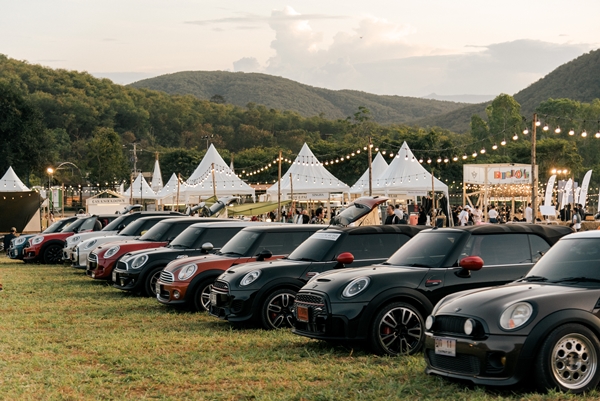
MINI India is all set to bring its global legacy to life with the very first edition of MINI United, a one-of-a-kind celebration of BIG LOVE and all things MINI. MINI United will be held in Bengaluru on December 7, 2024. This milestone event will mark the largest-ever congregation of MINI owners in the country, creating an unparalleled platform for the vibrant MINI community to come together in style.
Mr. Vikram Pawah, President and CEO, BMW Group India said, “MINI has always been more than a car – it’s an attitude, a bond, and a celebration of self-expression. Since 1959, MINI has inspired generations with its unmistakable design, agile performance, and pioneering spirit. With MINI United, we’re bringing this legacy to life in a way only MINI can. This event is about more than gathering MINIs, it’s about uniting people. It’s about discovering the new MINI family, sharing stories, and celebrating the bold, adventurous spirit that every MINI embodies. MINI United is where individuality thrives, and community comes alive.”
MINI United India will host MINI owners across India, driving their iconic cars to create the largest MINI convoy in India’s history. Scheduled to take place in Bengaluru, the event promises a day filled with excitement, camaraderie, and unforgettable memories.
The event will see participation from MINI enthusiasts hailing from Bengaluru, Chennai, Hyderabad, Kochi, and other key cities in South India. The meetup point will feature engaging activities designed to foster connections among MINI owners, celebrating the spirit of unity that defines the MINI family.
MINI United is a celebrated global event that has brought together MINI enthusiasts from around the world, creating iconic moments for the brand and its fans. This Indian edition will carry forward the legacy, uniting the country’s MINI community in an unparalleled celebration of passion, individuality, and connection.
The most powerful W12-engined Bentley – the highly exclusive Batur Convertible – has begun its final suite of sign-off testing. Created by Mulliner, Bentley’s in house bespoke division and the longest standing coachbuilder in the world, the Batur Convertible is the third car in Mulliner’s Coachbuilt family, following the Bacalar barchetta and the Batur coupe. Strictly limited to just 16 units, the Batur Convertible is the most powerful W12-powered drop-top Grand Tourer in Bentley’s history.
Bentley announced the retirement of the W12 engine earlier this year, with the last engine leaving the production line in July. The 16 customer examples of the Batur Convertible will be among the recipients of the final W12 engines, each producing 750 PS as the most powerful iteration of the engine ever developed.
The validation activities include durability for both the engine and whole vehicle, environmental compatibility and sunlight simulation, high speed stability, aerodynamics, noise and vibration, and driving dynamics. More than 120 individual tests in all cover everything from the quality of the surface finish of the gold “organ stop” ventilation controls to the new W12 engine hardware and software. Over 58 weeks of vehicle validation have been scheduled across a pair of pre-series cars – Batur Convertible Car Zero and the Batur Convertible Engineering Car.
The real-world testing campaign started with an extensive 3,000 kilometre , five-country drive across Europe to simulate real world conditions. The route left Germany and travelled through Italy, France and Spain, across mountains, highways and cities, with the cars pausing briefly for an afternoon in Monaco for photography before continuing their journey to Idiada in Spain, where high speed testing will begin on private test tracks.
Paul Williams, Chief Technical Officer for Mulliner, comments: “The purpose of an engineering validation public road drive is to test a vehicle’s performance, safety, and reliability under real-world conditions. It allows our engineers to assess how the vehicle operates in a variety of environments, traffic scenarios, and weather conditions that cannot be fully replicated in controlled testing environments. This stage is critical for identifying potential issues, validating system integration, and ensuring the vehicle meets regulatory standards and customer expectations as part of the engineering development test program. At the start of the project it was clear that this car had to be the ultimate open-air Grand Tourer and so every element from the exterior design, engine power and hand-crafted interior has been created without compromise.”
At the proving grounds, the Batur Convertibles will begin seven weeks of durability work on handling tracks, mixed road conditions, high speed testing and abusive surface conditions. During all of these activities data and feedback are collated ensuring the technical targets are being met.
The Final W12 Grand Tourer The Batur Convertible furthers the innovative design DNA introduced by its coupe sibling that will ultimately guide the design of Bentley’s future cars.
Created by Mulliner, the Batur Convertible follows the exquisitely hand-crafted Bacalar barchetta and Batur coupe. With the Batur Convertible, Mulliner continues its long tradition of crafting truly individual cars, tailored to the wishes of each of its extraordinary clients.
The Batur Convertible retains the most powerful version of Bentley’s iconic W12, with a 750 PS, hand-assembled 6.0-litre twin-turbocharged engine that has metaphorically and literally powered Bentley’s success for the last two decades. The Batur Convertible will be the last ever Bentley to use this incredible powertrain.
The convertible roof delivers an aesthetic of beauty as a modern, tactile alternative to a hardtop roof. A combination of insulation material, sealing system refinements and acoustic treatments create a cossetting environment in a system which can be deployed or stowed in just 19 seconds, with the car travelling at speeds of up to 30 mph (50 km/h), transforming the car from a luxurious coupe into an open-top Grand Tourer at the touch of a button.
Mulliner’s in-house design team will help co-create every Batur Convertible with its customer, working together through a specially created Mulliner visualiser that allows any part of the car to be customised in colour and surface finish. Endless samples of unique materials bring texture to the process, and the resulting designs will be truly individual and created by the customer – limited only by their imagination.
Batur Convertible Car Zero Like all Mulliner Coachbuilt vehicles, the Batur Convertible is infinitely customisable – with each customer able to specify the colour and finish of literally every single surface of both the exterior and cabin of the car.
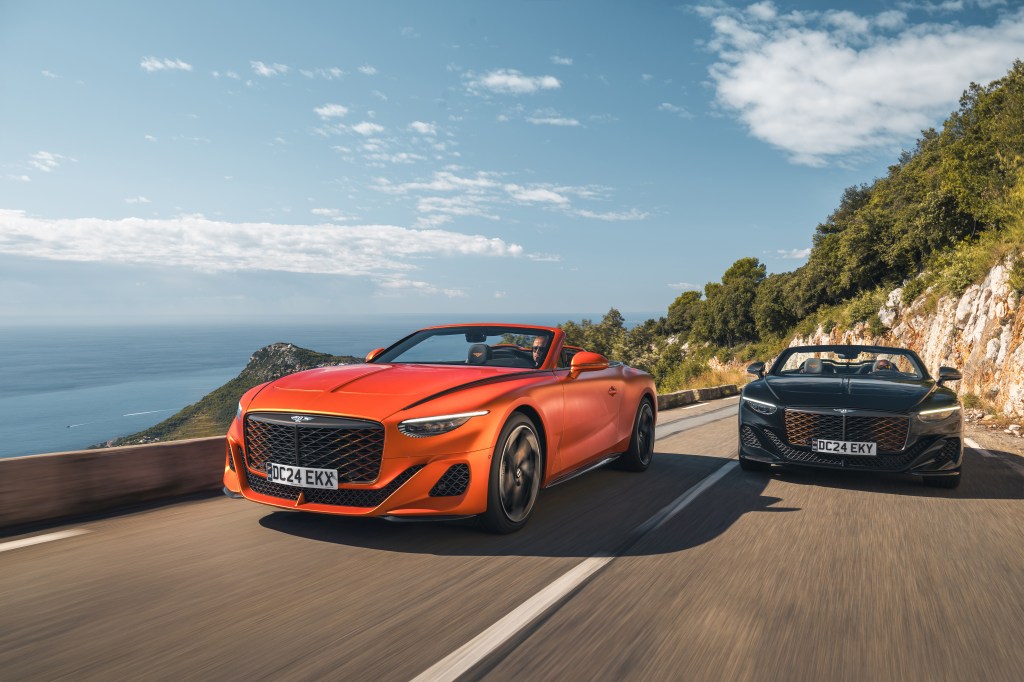
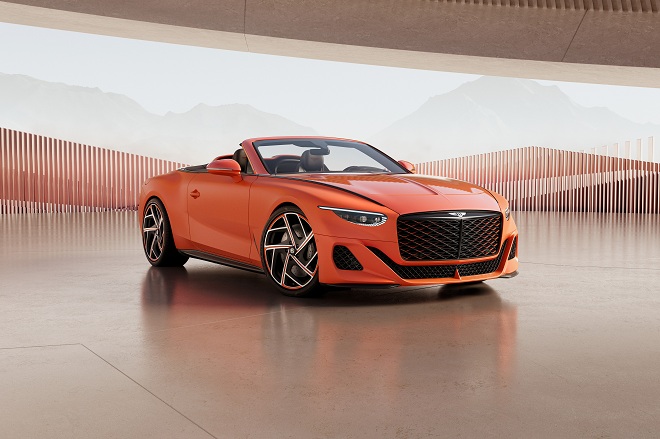
The engineering development car – Batur Convertible Car Zero – has had the same level of attention to detail as a customer’s own specification. The exterior paintwork is a bespoke colour – Vermillion Gloss over Vermillion Satin Duo tone – that provides a vibrant colour across the contemporary surfaces. The bodywork is underscored by front splitters, side skirts and rear diffuser in high gloss carbon fibre.
The front of the car features a grille of exceptional art – with the main matrix finished in Gloss Dark Titanium, accented with contrast chevrons in a horizontal ombré pattern that flows from Beluga in the centre and lighten to the vibrant sides in Vermillion Gloss. The “endless bonnet” line is finished in Gloss Dark Titanium paint, as are the 22” wheels – with the spokes in Gloss and Satin Black Titanium with Vermillion Gloss accents.
The second development car – known simply as the ‘Engineering Car’, features an entirely different specification. Midnight Emerald exterior paintwork is finished with a high gloss carbon fibre body kit and Satin Dark Titanium finished bonnet brightware and lower bumper meshes The wheels are tri-tone – with a Satin Dark Titanium body, gloss Porpoise accent faces and gloss Mandarin pinstripe. The same combination of Satin Dark Titanium and Mandarin is joined by gloss Beluga for the three-colour ombré fade to the front grille. The cabin echoes the exterior, with Cumbrian Green and Porpoises leather being accented with Mandarin stitching and piping, complemented with machined titanium Organ Stops and Bullseye vents. The veneer is Mulliner’s exquisite “guitar fade”, where the colour across the width of the cabin changes gradually from gloss Beluga, to high gloss carbon fibre, and back to gloss Beluga, and finished with a laser-etched audio signature of the W12 engine.
Hyundai N returns to the Nürburgring Nordschleife aiming for its fourth consecutive TCR class victory at the Nürburgring 24 Hours (N24) race.
At the event, the company has also unveiled its IONIQ 5 N TA (Time Attack) Spec variant for the upcoming The Broadmoor Pikes Peak International Hill Climb (hereafter Pikes Peak International Hill Climb or PPIHC) and shared its collaboration plans with Gran Turismo, the popular sim-racing video game franchise made for PlayStation consoles.
“We are thrilled to return to the Nürburgring 24 Hours with drivers from Europe, North America and China, showing the growth of our motorsport program around the world,” said Till Wartenberg, Vice President and Head of N Brand and Motorsport at Hyundai Motor Company. “We are investing in the future of motorsport with our first ever electric Pikes Peak racer and collaboration with Gran Turismo. Motorsport passion continues to be at Hyundai N’s core as we move into the future.”
Hyundai N to run three-car TCR team at Nürburgring 24 Hours Hyundai N heads back to the Nordschleife with three ELANTRA N TCR cars, chasing a fourth consecutive class win.
Drivers from three continents, including defending class winners and champion Hyundai Motorsport customer drivers from the competitive TCR series, are competing in the #830, #831 and #832 cars. The #830 crew of Mikel Azcona, Marc Basseng and Manuel Lauck return after claiming TCR-class victories in 2022 and 2023. Basseng and Lauck also won the TCR class at the 2021 N24 during the ELANTRA N TCR’s debut.
The Bryan Herta Autosport team, supported by Hyundai Motor America, achieved a third straight one-two finish in class for Hyundai Motorsport in 2023. The #831 team returns in 2024 with drivers Mason Filippi, Harry Gottsacker, Mark Wilkins and Bryson Morris.
The #832 entry for 2024 is driven by TCR China stars Martin (Hongwei) Cao, Rainey He, Andy Yan and Zhang Zhen Dong. Cao is the reigning 2023 national series champion.
Hyundai N’s entrants into the 2024 N24 also includes the Hyundai Driving Experience i30 Fastback N in the VT2 Front-Wheel-Drive class. In 2023, this team secured a class victory by nine laps despite a late technical issue. The 2024 crew features last year’s winners, including Marcus Willhardt and Michael Bohrer, journalist-racer Jens Dralle, and Korean Junior driver Gyumin Kim, who demonstrated his talent by winning the Hyundai N Festival and helping his team achieve podium finishes in their class at the first two NLS races of the season.
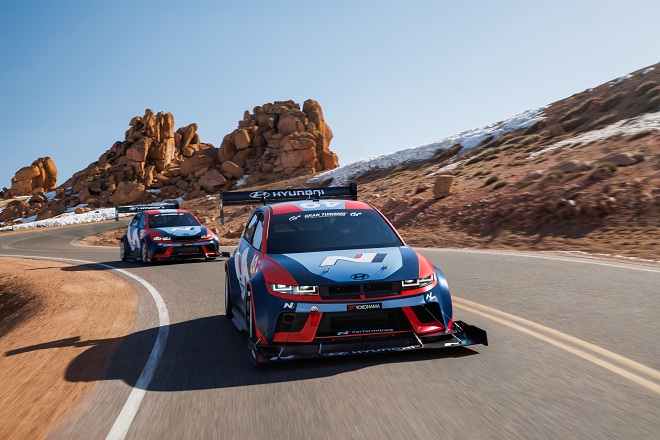
IONIQ 5 N TA Spec showcases award-winning high-performance EV prowess At its N24 showcase, Hyundai Motor today unveiled the IONIQ 5 N TA Spec. Two of these specially equipped models will join two IONIQ 5 N production vehicles as part of an all-electric four-car effort at the 102nd running of America’s legendary Pikes Peak International Hill Climb in Colorado Springs, CO, on June 23, 2024. The team is targeting Electric Production SUV/Crossover and Electric Modified SUV/Crossover records.
The 687 PS IONIQ 5 N TA Spec is designed to highlight the production-spec IONIQ 5 N’s strengths without fundamentally altering the car. Notably, the production IONIQ 5 N’s standard high-performance power electric (PE) system is carried over. The IONIQ 5 N TA Spec’s maximum output has been increased through software tuning to maximize performance. This was implemented by increasing the output of the rear motor by 37 horsepower (27 kW).
In addition, Hyundai N has chosen to utilize N Active Sound+ with modified speakers (over 120 dB) to both enhance feedback for the driver and replace sirens typical of electric Pikes Peak race cars.
To adapt the car for Pikes Peak, new shock absorbers, motorsport-spec brakes, 18-inch Yokohama ADVAN 005 slick tires, and a unique high-downforce aerodynamic package have been specially applied. Additional safety enhancements include a Recaro Pro Racer SPA Hans seat, Sabelt six-point Hans safety harness, a PPIHC specification roll cage and an EV fire suppression system.
At PPIHC, the two IONIQ 5 N and two IONIQ 5 N TA Spec entrants will make the grueling ascent along a twisting 12.42-mile (20 km) course that climbs over 4,700 feet (1,438 meters) to the summit of Pikes Peak. They will face 156 turns, rapidly changing weather and high-altitude conditions that can affect both drivers and vehicles.
The IONIQ 5 N TA Spec models — wrapped in a special ‘N’ design livery — will be driven by Robin Shute, a four-time overall winner at Pikes Peak and current ‘King of the Mountain’ title holder, and Dani Sordo, a Spanish World Rally Championship driver for Hyundai Motorsport. The IONIQ 5 N production models — wrapped in a special N performance colour livery — will be driven by Paul Dallenbach, 11-time PPIHC winner and three-time ‘King of the Mountain,’ and Ron Zaras, a PPIHC rookie and automotive media personality.
Hyundai Motor first competed in the PPIHC in 1992. Rod Millen won the 2-Wheel Drive Showroom Stock division with a time of 13:21.17, driving a Hyundai Scoupe equipped with the company’s then-new turbocharged dual overhead camshaft Alpha engine. Another highlight of Hyundai’s history at Pikes Peak came in 2012 when the brand set a course record of 9:46.164 with a Hyundai Genesis Coupe driven by Rhys Millen.
Hyundai N plans to collaborate with Gran Turismo Hyundai N also announced today that it plans to collaborate with Gran Turismo (GT), the popular sim-racing video game franchise made for PlayStation consoles.
Hyundai N has a long history with Gran Turismo with the Hyundai N 2025 Vision Gran Turismo released back in 2015. And this time, Hyundai N and Gran Turismo will collaborate again for various sim-racing activities including Pikes Peak International Hill Climb (PPIHC) participation. More details will come later in this year.
In the meantime, visitors to Hyundai’s N24 booth can also experience 10 Gran Turismo simulators. Hyundai will also be holding an on-site competition event for visiting customers during the N24 period.
Bentley Motors today reveals the third coachbuilt Bentley of the modern era – the Batur Convertible. Created by Mulliner, Bentley’s in house bespoke division and the longest standing coachbuilder in the world, the Batur Convertible follows the exquisitely hand-crafted Bacalar barchetta and Batur coupe. With the Batur Convertible, Mulliner continues its long tradition of crafting truly individual cars, tailored to the wishes of each of its extraordinary clients.
The Batur Convertible furthers the innovative design DNA introduced by its coupe sibling that will ultimately guide the design of Bentley’s future cars. The Batur Convertible retains the most powerful version of Bentley’s iconic W12, with a 750 PS, hand-assembled 6.0-litre twin-turbocharged engine that has metaphorically and literally powered Bentley’s success for the last two decades. With the engine to finish production this summer, the Batur Convertible will be one of the last ever Bentleys to use this incredible powertrain.
Bespoke two-seat grand touring Bentley has a rich history of open-cockpit cars, from the very first Bentley of 1919, through the company’s foundation years in the 1920s, to the most recent – the Bacalar. The architecture of the Batur Convertible has allowed Mulliner’s designers to seize the opportunity to create a theme that not only blends the design of the Bacalar and Batur but includes the usability of a convertible. The designers also chose to highlight the two-seater character with a ‘wraparound’ cockpit inspired by the design of the Bacalar.
The dramatic ‘airbridge’ behind the seats and tapered cowls at the rear hark back to the barchetta sports cars of old, whilst underlining the promise of a dynamic, driver-focused adventure in a cosseting, cocooned environment. The airbridge and tapered cowls are not only aesthetic, but also provide a semi-enclosed luggage compartment behind the two front seats.
The convertible roof delivers an aesthetic of beauty as a modern, tactile alternative to a hardtop roof. A combination of insulation material, sealing system refinements and acoustic treatments create a cossetting environment in a system which can be deployed or stowed in just 19 seconds, with the car travelling at speeds of up to 30 mph (50 km/h), transforming the car from a luxurious coupe into an open-top Grand Tourer at the touch of a button.
Personal and uniquely commisioned Mulliner’s in-house design team will help co-create every Batur Convertible with its customer, working together through a specially created Mulliner visualiser that allows any part of the car to be customised in colour and surface finish. Endless samples of unique materials bring texture to the process, and the resulting designs will be truly individual and created by the customer – limited only by their imagination.
Customers will be able to specify the colour and finish of practically every surface of the Batur Convertible, to create a car as individual as they are. Beyond the exterior form of the car lies an almost endless array of choices for each car’s future owner to make.
Paint choice is infinite – starting with the full Mulliner colour palette and travelling beyond into fully bespoke paint and even hand-painted graphics. The exterior brightware can be any mix of light and dark, satin or gloss or even titanium. Another subtle option available is a graduated contrast colour to the front grille, for a vibrant ombre effect.
The Batur Convertible offers further areas to personalise with the unique Airbridge, tonneau cover and roof materials being able to be specified to complement the rest of the cabin and exterior.
In the cabin, the highly exclusive option of 3D printed rose gold includes key driver touch points, such as the Bentley Drive Mode Selector, encircling the start/stop button and used to change chassis modes. The centrepiece of an exquisite cabin, the dial complements the design of the front grille. Rose gold can also applied to Bentley’s iconic Organ Stop vent controls in the dashboard, as well as a rose gold insert marker on the steering wheel itself.
Bentley Mulliner has collaborated with expert goldsmiths based in the historic Jewellery Quarter of Birmingham, England, where jewellery has been made for centuries, to craft the unique parts. This special collaboration highlights Bentley’s ability to combine new, advanced manufacturing technologies with more traditional materials and finishing techniques.
Exclusive and powerful Each Batur Convertible will be handcrafted over the course of several months in Mulliner’s workshop at Bentley’s carbon neutral factory in Crewe, England. Production will be limited to just 16 pieces, each among the last ever Bentleys to be powered by the company’s iconic W12 engine, in its most potent iteration.
For the W12 powertrain that the Batur Convertible shares with its coupe counterpart, a revised intake system, upgraded turbochargers, new intercoolers and extensive recalibration enables 750 PS and 1,000 Nm of torque, to deliver exceptional performance for this pinnacle grand tourer. This development of the engine is in celebration of its achievements over 20 years, over which time it has been developed to produce nearly 40% more power while fuel economy has improved by 25%. The W12 is paired with Bentley’s eight-speed double-clutch transmission, and a sports exhaust to provide a soundtrack in keeping with the level of performance. The entire exhaust system is in titanium, while the finishers are 3D-printed in titanium.
Batur Convertible Car #0 The engineering development car – Batur Convertible Car #0 – has had the same level of attention to detail as a customer’s own specification. The exterior paintwork is a bespoke colour – Vermillion Gloss over Vermillion Satin Duo tone – that provides a vibrant colour across the contemporary surfaces. The bodywork is underscored by front splitters, side skirts and rear diffuser in high gloss carbon fibre.
The front of the car features a grille of exceptional art – with the main matrix finished in Gloss Dark Titanium, accented with contrast chevrons in a horizontal ombré pattern that flows from Beluga in the centre and lighten to the vibrant sides in Vermillion Gloss. The “endless bonnet” line is finished in Gloss Dark Titanium paint, as are the 22” wheels – with the spokes in Gloss and Satin Black Titanium with Vermillion Gloss accents.
On 4 May 2024, Rolls-Royce Motor Cars marks the 120th anniversary of the first meeting between Henry Royce and The Hon. Charles Stewart Rolls. The founders’ personal stories, the history of the company they founded and its motor cars are well known and available to view elsewhere on the Rolls-Royce Press Club.
To celebrate this auspicious anniversary, Rolls-Royce considers the historical, technological and social context in which the marque came into being and the impact and influence of the Rolls-Royce name over its 120 years. But to fully understand the marque’s origins and legacy, one must first reach a little further back in time and examine the founders’ activities in the years immediately prior to that first, world-changing encounter in 1904.
HENRY ROYCE: THE ENGINEER For Henry Royce, the story really begins in late 1884, when he founded his first engineering company, F. H. Royce & Co. (he was christened Frederick Henry) in Manchester. Initially producing small items such as battery-powered doorbells, the company progressed to making heavy equipment including overhead cranes and railway shunting capstans.
But after almost two decades of expansion and success, in 1902 the company was heading for financial trouble, owing to competition from an influx of cheaper products from Germany and the USA. Royce’s perfectionism and obsession with improvement meant he was not prepared to enter a race to the bottom, or compromise the quality of his products. Habitual overwork and constant strain seriously affected his already weakened constitution, and finally his health collapsed entirely.
His doctors ordered him to take an extended break, so Royce embarked on a 10-week visit to his wife’s family in South Africa. Yet even on a medically imposed rest cure, his engineer’s mind was as active and inquisitive as ever. His choice of reading material on the long voyage was The Automobile: Its Construction and Management, originally written in French by Gérard Lavergne and translated into English that year. This was literally ‘the book’ on how to build a motor car, and Royce was clearly both enlightened and inspired by it.
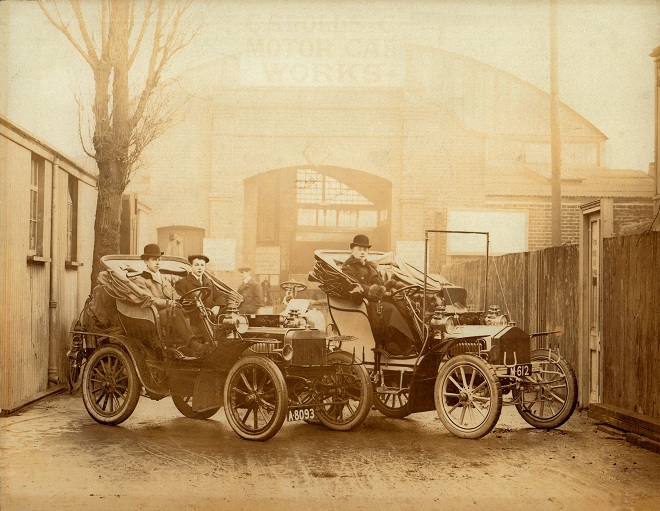
On his return to England, Royce — now physically and mentally recovered — immediately acquired his first motor car, a French 10 H.P. Decauville. It’s often been assumed that this car was so poorly made and unreliable that Royce, out of sheer frustration, set about addressing its numerous defects.
In fact, almost the opposite is true. He chose the Decauville precisely because it was an excellent, state-of-the-art machine with the express intention of dismantling it, analysing every component, then producing his own car from scratch. Any reasonably competent engineer could have upgraded a badly built, substandard product: it took a genius of Royce’s stature to, in his own words, “take the best that exists and make it better”.
THE VITAL ROLE OF ‘LITTLE ERNIE’ One of the lesser known – but nonetheless vital – contributors to the first Royce cars’ development was Ernest Wooler. Born in Manchester in 1888, 15-year-old Ernest stood five feet four inches (1.62m) tall and was nicknamed ‘Little Ernie’ when he joined Royce Limited in 1903 as an indentured premium apprentice — a position for which his father paid the very considerable sum of £100 (over £15,000 at today’s values). He worked a 56-hour week for a shilling a day (about £7.60 now) in the drawing office, learning to make blueprints — and, strictly against the rules, producing his own drawings on the draughtsmen’s boards.
One morning, he received an ominous summons: Mr Royce himself wished to see him. After severely reprimanding the unfortunate youngster for his unauthorised handiwork, Royce ordered him to go and fetch a typist’s notepad. Mystified, Ernie did as he was instructed and gave the pad to his employer. Royce waved it away. “You hold onto that and follow me,” he said and led the way to the workshops, where he climbed onto the Decauville, took off his jacket and rolled up his sleeves. Then, assisted by a fitter, he began methodically taking the car apart. Nearby, Ernie sat on a box with his notepad. “Each piece was handed to me, and I made a sketch of it and added the dimensions they quoted,” he later recalled.
As Royce correctly judged, Ernie was the ideal person to capture the basic data that would inform the design of the motor cars that followed. It’s also tempting to wonder if Royce recognised a kindred spirit; a young man starting at the bottom, but eager to better himself. If so, he was right. In 1913, Ernie emigrated to America and enjoyed a successful career as a design engineer, becoming an expert in bearings and filing a number of patents. In 1947, he retired to Hillsboro Beach, Florida, where he was elected as the town’s first mayor.
SMALL THINGS MAKE PERFECTION Royce had left school aged just 10 and his formal education consisted of evening classes in English and Mathematics that he attended in his late teens; later, as the world-renowned Sir Henry, he still self-deprecatingly described himself as being able to do no more than simple arithmetic. But he had an instinctive, intuitive talent that more than made up for his lack of academic credentials.
As noted, the Decauville was a highly evolved motor car in its own right and Royce sensibly retained some of its key features — a two-cylinder engine, live propshaft and differential rather than chain drive — in his own designs. He also introduced numerous detailed alterations and innovations: mechanically rather than atmospherically operated inlet valves; a more effective radiator; replacement main, big end and gearbox bearings; and a single gear lever replacing the Decauville’s notoriously tricky twin-lever arrangement. From the outset, he was obsessed with reducing the car’s overall weight, beginning with the simple and obvious expedient of discarding the Decauville’s bronze warning bell, which reputedly weighed around 20kg (over 40lb).
It was not only the Decauville that Royce subjected to his intricate and exacting scrutiny. Between 1902 and 1905 he repaired, investigated and test-drove various makes of cars belonging to (presumably willing) friends and acquaintances to gain additional first-hand insights. According to his own records, he covered some 11,000 miles in the course of this research; many of them undoubtedly in the Decauville, which he kept until at least 1906.
Royce the engineer was aiming to build the best car in the world. It was no vanity project or proof-of-concept exercise: he wanted his technical innovation to be commercially viable. Unfortunately, easy charm, a wide social network and a way with words were not among his many gifts. But in London, there was a young man who had these qualities in abundance.
THE HON. CHARLES STEWART ROLLS: THE SALESMAN In many respects, The Hon. Charles Stewart Rolls was Royce’s antithesis: wealthy, aristocratic, urbane, well-connected and highly (and expensively) educated. What they shared was a passion for engineering and machinery — in Rolls’s case, racing cars, hot air balloons and aeroplanes.
After graduating from Cambridge in 1898, Rolls had been briefly employed as Third Engineer on his family’s steam yacht, the Santa Maria, following a spell at the London & North-Western Railway in Crewe. But after just a few years, he realised that his considerable talents required a different outlet.
In January 1902, Rolls opened one of Britain’s first car dealerships, C. S. Rolls & Co., in Fulham, west London, partnering with the formidable Claude Johnson at the end of 1903. The enterprise, initially underwritten by Rolls’s father, Lord Llangattock, imported and sold French Panhard and Mors cars, as well as Minerva vehicles built in Belgium. The business seemingly flourished, but Rolls was frustrated that all his stock was designed and manufactured overseas. He could find no car produced domestically that met his clients’ needs, or his own standards as both a trained engineer and a lifelong enthusiast.
As 1904 dawned, the elements of a potentially transformative partnership were in place: Royce the gifted engineer in search of a market; Rolls the consummate salesman seeking a game-changing product. All that was needed was something — or someone — to bring them together.
HENRY EDMUNDS: THE CRUCIAL CONNECTION Rolls had befriended Henry Edmunds through the Automobile Club of Great Britain & Ireland (later the Royal Automobile Club). Edmunds was a director of Royce Limited and had driven one of the company’s early 10 H.P. cars. His enthusiasm for the car was such that Rolls requested a meeting with its creator, which Edmunds duly arranged. On returning to London from Manchester, Rolls told Claude Johnson that he had found “the greatest motor engineer in the world”. Rolls agreed to sell all the cars Royce could make and the rest is, literally, history.
THE WORLD IN 1904 So much for the personalities. What of the world and context in which Rolls-Royce was formed?
Much of what is taken for granted today was still decades in the future — indeed, many things now considered essential would not arrive until the following century. From the vantage point at the time of writing in 2024, 1904 feels like ancient history: a grainy, distant, black-and-white world detached from our own times and experiences.
Rolls and Royce met in a world without television, penicillin or FM radio. Construction work had just begun on the Panama Canal; The RMS Titanic wouldn’t set sail on her fateful maiden voyage for another eight years. King Edward VII was two years into his reign, having succeeded his mother, Queen Victoria, in 1902 — the year that also saw the end of the Boer War, one year prior to Wilbur and Orville Wright making the world’s first flight in a powered aircraft. Arthur Balfour was British Prime Minister, Theodore ‘Teddy’ Roosevelt was President of the United States and Franz Joseph I was Emperor of Austria-Hungary.
The motor car, too, was still in its infancy; Karl Benz had produced the first ‘true’ petrol-powered automobile — albeit with just three wheels — in 1886, and motoring remained largely a hobby for daring, well-heeled enthusiasts like Charles Rolls. The world would have to wait until 1913, when Henry Ford displayed the world’s first moving assembly line, for cars to become accessible and affordable to the majority of the population.
But the seeds of our modern life were there. This was the belle époque, an unusually protracted period of peace and political stability in Europe that gave rise to economic confidence and prosperity, which in turn encouraged a surge in innovation. The preceding 20 years alone had seen the invention of the vacuum cleaner, electric oven, dry-cell battery, ballpoint pen, cinema, pneumatic tyre, x-rays and radio. The great technical marvel of 1904 was City of Truro, the first steam locomotive in the world to exceed 100mph — a record that stood for 30 years.
There were significant social and cultural advances, too, with the appointments of Britain’s first black mayor, and first female university professor. The London Symphony Orchestra gave its inaugural concert and the Coliseum Theatre opened in the West End. Literary circles were graced by titans including Mark Twain, H. G. Wells, Jules Verne, James Joyce, Leo Tolstoy and P. G. Wodehouse; concert halls and opera houses premiered works by Debussy, Sibelius, Ravel, Elgar, Puccini, and Mahler. New types of music also bloomed, as the syncopated rhythms that would inform Jazz proliferated through Ragtime.
It was into this extraordinarily fertile, dynamic and optimistic age that Rolls-Royce was born. A time in which visionaries and pioneers would shape how the world thought, functioned and behaved for years or decades to come; exactly what Rolls and Royce did with their new motor car.
By building a machine whose engineering, performance, reliability and durability surpassed everything that had gone before, Royce and Rolls set the standard not only for all the Rolls‑Royce models that would follow, but for the motor car itself. In so doing, they shaped a technology that would transform work, travel, communications, communities, infrastructure, design, technology, materials society, politics, economics and culture in ways they could never have predicted.
A PERMANENT LEGACY Rolls and Royce fulfilled their mission to create ‘the best car in the world’. They gave their names to a dynasty of motor cars that defined, and continues to define, superluxury motoring across the world.
But perhaps their crowning achievement is to have made Rolls-Royce the global exemplar of excellence. Practically every product, service, device and technology that has been invented since 1904 has aspired to be ‘the Rolls-Royce of…’ its industry or sector. The standard they set 120 years ago is still driving innovation and improvement everywhere — including within the company they created.
AndrewBall, Head of Corporate Relations and Heritage, Rolls-Royce Motor Cars: “From a modern perspective, 1904 can feel impossibly distant from our own times. But it was an age of unprecedented invention, innovation and technological progress, in which many of the things we now take for granted first appeared. Rolls-Royce was born into this extraordinarily dynamic, creative world and would go on to shape it profoundly and irrevocably. Looking back, the meeting of Rolls and Royce seems somehow predestined, the arcs of their respective careers up to that point making it appear almost inevitable. In fact, it came about through a web of chance connections and overlapping relationships; without these, given their vastly different backgrounds and social circles, it might never have happened at all. We are proud to continue their remarkable story, to celebrate and build upon their unique legacy 120 years later.”
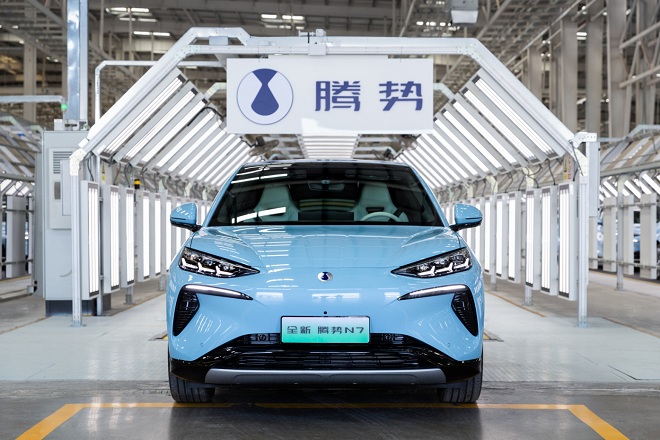
On March 25, BYD, the world’s leading manufacturer of new energy vehicles and power batteries, became the world’s first automaker to roll off its 7 millionth new energy vehicle, the DENZA N7, which was unveiled at its Jinan factory in China, symbolizing another groundbreaking accomplishment for the brand.
BYD reached the production of 1 millionth NEV in May 2021 and rapidly multiplied this figure threefold within 18 months, then surpassed 5 million units in merely 9 additional months. In just 7 months from this mark, BYD accelerated to the 7 million milestone, showcasing a robust end-to-end supply chain and the effect of scale. In 2023, BYD’s cumulative annual sales of NEV soared to 3.02 million units, solidifying its status as the global leader in NEV sales. A variety of models from its extensive brand portfolio consistently led sales rankings within their individual categories.
Proactively engaging with the international market, BYD quickly expanded its global footprint in 2023, witnessing a surge in overseas new energy passenger car sales that exceeded 240,000 units—a 337% year-on-year growth—making it the top Chinese exporter of NEVs in 2023. Up to now, BYD’s new energy passenger vehicles have been introduced to 64 countries and regions globally, with strategic investments in manufacturing facilities in Thailand, Brazil, Uzbekistan, and Hungary. This year, BYD also becomes the official partner of UEFA European Football Championship 2024™, showcasing its new energy vehicles on the world stage.
Looking ahead, BYD commits to broadening and deepening localization strategies for its products, technologies, and brand presence across international markets, continuing to drive the global automotive industry towards a greener era.
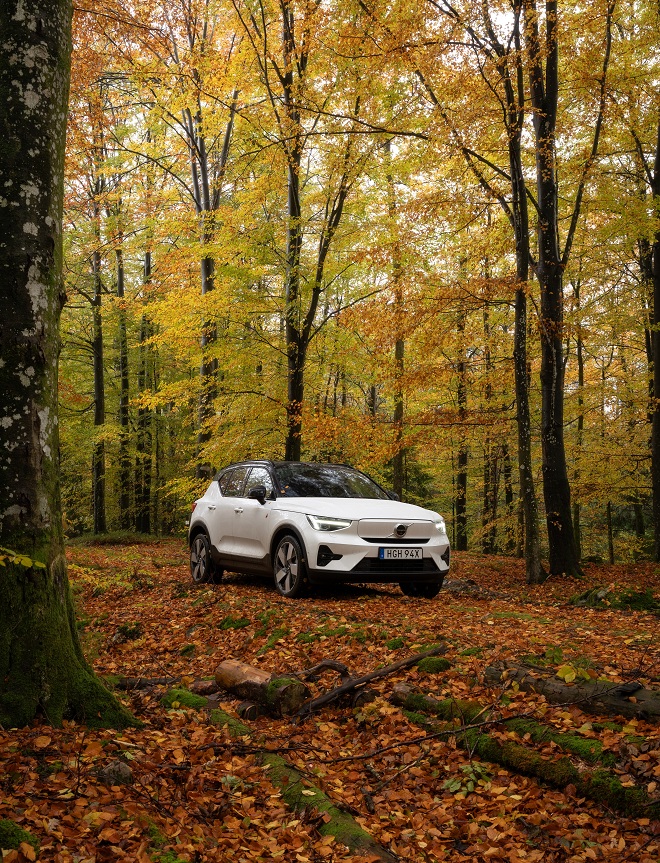
Volvo Car India has announced commencement of bookings for its recently launched new variant of XC40 Recharge. Starting from March 19, 2024, bookings for the XC40 Recharge will be exclusively online and can be done on the Volvo Car India Website with a booking amount of one Lakh. This is the third EV model from Volvo in India to be assembled at the Company’s plant at Hosakote in Bengaluru, Karnataka and offered exclusively online.
Setting new benchmarks in performance and range, the XC40 Recharge Single Motor Variant offers a remarkable driving experience. With a range of 475 kilometers as per WLTP standards and 592 kilometers under ICAT testing conditions on a single charge, this EV empowers drivers to explore with confidence. Boasting a power output of 238hp and a torque of 420Nm, the XC40 Recharge comes with an 8-year battery warranty and includes a wall box charger as a standard fitment.
The XC40 Recharge Single Motor Variant represents a significant milestone in Volvo’s commitment to sustainable mobility. With its advanced electric drivetrain and innovative features, this model offers an unparalleled driving experience while contributing to a sustainable environment.


 Power Drive