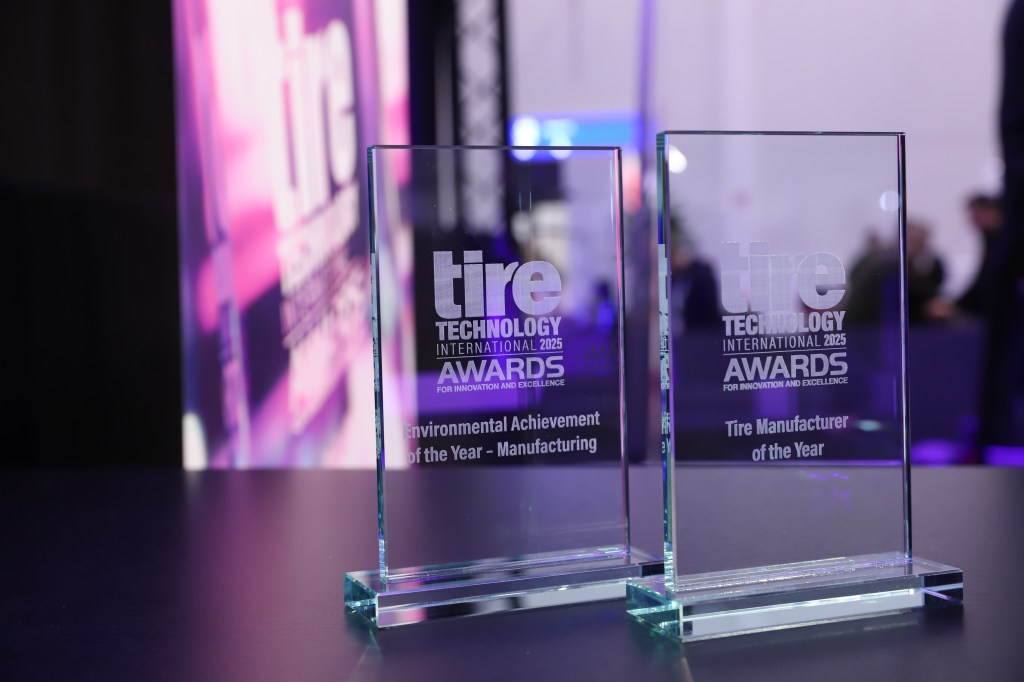
Continental has been awarded “Tire Manufacturer of the Year” at this year’s Tire Technology International Awards for Innovation and Excellence. The premium tire manufacturer received a further honour for its tire plant in Lousado, Portugal, which has produced tires CO2-neutrally since last year. This makes Continental the only tire manufacturer to win two of the prestigious awards, outperforming the competition as “Tire Manufacturer of the Year” as well as in the category “Environmental Achievement of the Year – Manufacturing”. The awards were bestowed as part of the Tire Technology Expo on March 4 at the exhibition center in Hanover. They are regarded as some of the top honours in the industry.
“We are especially proud to be the only manufacturer to be honored twice at the Tire Technology Awards in an extremely competitive field,” says Edwin Goudswaard, Head of Research and Development at Continental Tires. “Both awards highlight our strong commitment to sustainable tire development and manufacturing. In such a highly competitive market, this success demonstrates our innovative prowess and our ability to actively shape the future of the industry.”
Competition in both categories was fierce. As “Tire Manufacturer of the Year,” Continental outperformed competitors from the USA, Italy, and France. This marks the fourth time Continental has received this title – most recently in 2022. Sustainability efforts are becoming an increasingly important focus for the industry, and therefore for the awards. By naming Continental “Tire Manufacturer of the Year” for 2024, the jury of 27 independent industry experts acknowledged Continental’s ongoing achievements on the road to greater sustainability. The projects considered in their deliberations included increasing the share of sustainable materials through recycled PET bottles at further Continental plants, expanding the plant in Rayong, Thailand, according to the highest energy-efficiency standards, obtaining the international sustainability certification ISCC-PLUS for its plants in Lousado, Portugal, Puchóv, Slovakia, and Hefei, China, as well as upgrading the tire plant in Hefei with automation technology in line with state-of-the-art sustainability standards.
Continental has also repeatedly impressed the jury in award categories that specifically recognize environmentally friendly development and production measures. In 2024, for example, the company took top spot in the category “Environmental Achievement of the Year – Tire Design” with its sustainable production of the tire UltraContact NXT. This year, Continental won the prize in the “Manufacturing” category for the sustainability measures at its tire plant in Lousado, Portugal. Since 2024, the plant has been testing a CO2-neutral production process that advances the company’s ambition to achieve carbon neutrality. Thanks to a fully electric steam boiler, Continental generates the steam using both in-house produced solar power and renewable energy from the grid. Steam is needed to heat the rubber compound for the tires during the so-called vulcanization. During this process, raw rubber is turned into a flexible, elastic form. In the tire industry, a large proportion of the consumed energy is used for generating steam. Previously, the Lousado tire plant relied exclusively on natural gas for steam generation. With an annual production capacity of 18 million tires, the plant in Lousado is considered a mega plant. Continental is aiming to switch all of its tire plants to fully carbon-neutral production processes by 2040 at the latest.
The Tire Technology International Awards for Innovation and Excellence have been bestowed since 2008 as part of the Tire Technology Expo in Hanover each spring. The prizes span 13 categories honoring the latest innovations in tire technology and major advances on the road to a more sustainable tire industry. The award ceremony is coordinated by the industry magazine “Tire Technology International.”
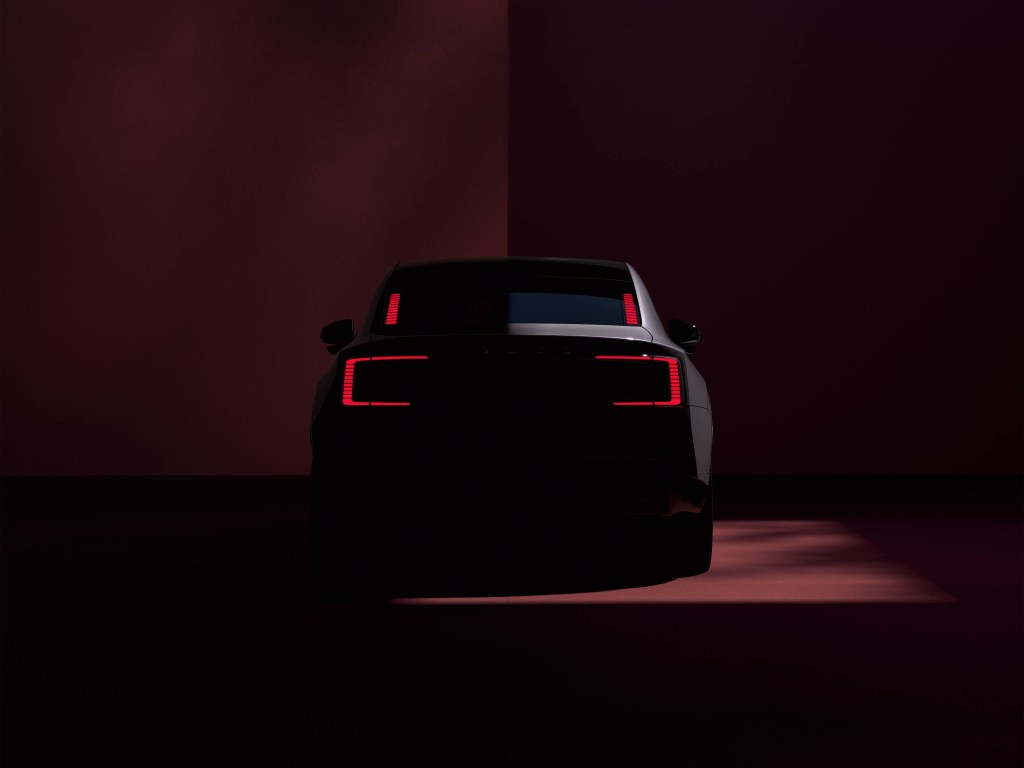
How about a new, fully electric Volvo car that can go just that little bit farther with less charging time? The upcoming Volvo ES90 does exactly that, thanks to the new 800V technology, which makes its debut in their latest fully electric model.
The benefits of an 800-volt electric system are numerous: your battery gets charged faster, your electric car gets an improved overall performance, and the electric system is more efficient compared with a 400-volt system.
Combine this with completely new battery management software and hardware, as well as a progressive design, and you get a car that goes farther and charges faster than any electric Volvo before. The ES90 can add 300 kilometres of range in just 10 minutes at 350kW fast-charging stations and offers a driving range of up to 700 kilometres under the WLTP testing cycle.
The ES90 is designed to be a premium Volvo car that gives you quality time with the people you love, providing you with peace of mind and balance, as well as a sense of convenience and control. A state-of-the-art electric system that enables faster charging and longer range is key to achieving that ambition. No matter where or how far your trip goes, the ES90 is designed to get you there reliably and comfortably.
“Our 800V technology marks another significant technological upgrade for our customers as we move towards full electrification,” says Anders Bell, Chief Engineering and Technology Officer. “It makes our electric cars even more efficient, helps you charge your electric Volvo faster and go farther on a single charge.”
To create the new 800-volt system, every component in the electric system has been upgraded to be compatible with 800 volts, including the battery cells, e-motors, inverter, charging as well as the climate and thermal systems. That creates benefits in terms of charging, efficiency and performance.
A higher-voltage system means that it can deliver more power (in kilowatts, or kW) and range with the same current as a 400-volt system. This approach generates less heat, meaning your battery can be charged faster up to 350kW without overloading the electric system.
The 800-volt system also contains lighter e-motors and other components, which reduces the car’s overall weight. This also improves the system’s efficiency, while boosting the car’s acceleration and driving range.
The brand-new in-house-developed battery management software creates a more robust charging experience. Compared to other electric Volvo cars, our new software cuts the time it takes to charge your ES90 from 10 to 80 per cent by as much as 30 per cent, down to 20 minutes. This is partly thanks to the integration of adaptive charging software from Breathe Battery Technologies, a company Volvo has invested in last year via the Volvo Cars Tech Fund, our corporate venture capital arm.
However, battery technology is not the only area in which the ES90 is a star performer. It also helps Volvo make progress in other sustainability-related areas. For example, the ES90 is packed with recycled and natural materials that contribute to lower CO2 emissions in production. 29 per cent of all aluminum and 18 per cent of all steel used in the ES90 is recycled, while the ES90 also contains 16 per cent recycled polymers and bio-based materials. The wood panels inside the ES90 are made from FSC-certified wood.
The ES90 also comes with Volvo’s battery passport. Based on blockchain technology, this allows the company to track raw materials. The passport tells you where the lithium, cobalt, nickel and graphite used in the battery originate from. It also highlights the CO2 footprint of the full battery pack and other relevant information. For customers, this provides transparency about how Volvo sources raw battery material in a responsible way.
On 4 May 2024, Rolls-Royce Motor Cars marks the 120th anniversary of the first meeting between Henry Royce and The Hon. Charles Stewart Rolls. The founders’ personal stories, the history of the company they founded and its motor cars are well known and available to view elsewhere on the Rolls-Royce Press Club.
To celebrate this auspicious anniversary, Rolls-Royce considers the historical, technological and social context in which the marque came into being and the impact and influence of the Rolls-Royce name over its 120 years. But to fully understand the marque’s origins and legacy, one must first reach a little further back in time and examine the founders’ activities in the years immediately prior to that first, world-changing encounter in 1904.
HENRY ROYCE: THE ENGINEER For Henry Royce, the story really begins in late 1884, when he founded his first engineering company, F. H. Royce & Co. (he was christened Frederick Henry) in Manchester. Initially producing small items such as battery-powered doorbells, the company progressed to making heavy equipment including overhead cranes and railway shunting capstans.
But after almost two decades of expansion and success, in 1902 the company was heading for financial trouble, owing to competition from an influx of cheaper products from Germany and the USA. Royce’s perfectionism and obsession with improvement meant he was not prepared to enter a race to the bottom, or compromise the quality of his products. Habitual overwork and constant strain seriously affected his already weakened constitution, and finally his health collapsed entirely.
His doctors ordered him to take an extended break, so Royce embarked on a 10-week visit to his wife’s family in South Africa. Yet even on a medically imposed rest cure, his engineer’s mind was as active and inquisitive as ever. His choice of reading material on the long voyage was The Automobile: Its Construction and Management, originally written in French by Gérard Lavergne and translated into English that year. This was literally ‘the book’ on how to build a motor car, and Royce was clearly both enlightened and inspired by it.
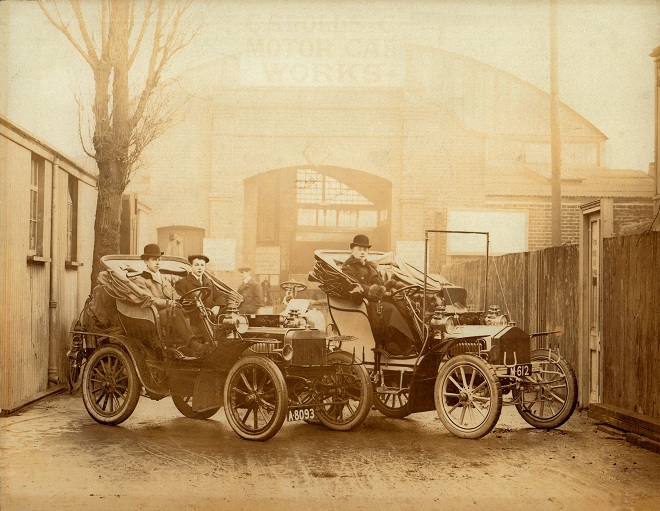
On his return to England, Royce — now physically and mentally recovered — immediately acquired his first motor car, a French 10 H.P. Decauville. It’s often been assumed that this car was so poorly made and unreliable that Royce, out of sheer frustration, set about addressing its numerous defects.
In fact, almost the opposite is true. He chose the Decauville precisely because it was an excellent, state-of-the-art machine with the express intention of dismantling it, analysing every component, then producing his own car from scratch. Any reasonably competent engineer could have upgraded a badly built, substandard product: it took a genius of Royce’s stature to, in his own words, “take the best that exists and make it better”.
THE VITAL ROLE OF ‘LITTLE ERNIE’ One of the lesser known – but nonetheless vital – contributors to the first Royce cars’ development was Ernest Wooler. Born in Manchester in 1888, 15-year-old Ernest stood five feet four inches (1.62m) tall and was nicknamed ‘Little Ernie’ when he joined Royce Limited in 1903 as an indentured premium apprentice — a position for which his father paid the very considerable sum of £100 (over £15,000 at today’s values). He worked a 56-hour week for a shilling a day (about £7.60 now) in the drawing office, learning to make blueprints — and, strictly against the rules, producing his own drawings on the draughtsmen’s boards.
One morning, he received an ominous summons: Mr Royce himself wished to see him. After severely reprimanding the unfortunate youngster for his unauthorised handiwork, Royce ordered him to go and fetch a typist’s notepad. Mystified, Ernie did as he was instructed and gave the pad to his employer. Royce waved it away. “You hold onto that and follow me,” he said and led the way to the workshops, where he climbed onto the Decauville, took off his jacket and rolled up his sleeves. Then, assisted by a fitter, he began methodically taking the car apart. Nearby, Ernie sat on a box with his notepad. “Each piece was handed to me, and I made a sketch of it and added the dimensions they quoted,” he later recalled.
As Royce correctly judged, Ernie was the ideal person to capture the basic data that would inform the design of the motor cars that followed. It’s also tempting to wonder if Royce recognised a kindred spirit; a young man starting at the bottom, but eager to better himself. If so, he was right. In 1913, Ernie emigrated to America and enjoyed a successful career as a design engineer, becoming an expert in bearings and filing a number of patents. In 1947, he retired to Hillsboro Beach, Florida, where he was elected as the town’s first mayor.
SMALL THINGS MAKE PERFECTION Royce had left school aged just 10 and his formal education consisted of evening classes in English and Mathematics that he attended in his late teens; later, as the world-renowned Sir Henry, he still self-deprecatingly described himself as being able to do no more than simple arithmetic. But he had an instinctive, intuitive talent that more than made up for his lack of academic credentials.
As noted, the Decauville was a highly evolved motor car in its own right and Royce sensibly retained some of its key features — a two-cylinder engine, live propshaft and differential rather than chain drive — in his own designs. He also introduced numerous detailed alterations and innovations: mechanically rather than atmospherically operated inlet valves; a more effective radiator; replacement main, big end and gearbox bearings; and a single gear lever replacing the Decauville’s notoriously tricky twin-lever arrangement. From the outset, he was obsessed with reducing the car’s overall weight, beginning with the simple and obvious expedient of discarding the Decauville’s bronze warning bell, which reputedly weighed around 20kg (over 40lb).
It was not only the Decauville that Royce subjected to his intricate and exacting scrutiny. Between 1902 and 1905 he repaired, investigated and test-drove various makes of cars belonging to (presumably willing) friends and acquaintances to gain additional first-hand insights. According to his own records, he covered some 11,000 miles in the course of this research; many of them undoubtedly in the Decauville, which he kept until at least 1906.
Royce the engineer was aiming to build the best car in the world. It was no vanity project or proof-of-concept exercise: he wanted his technical innovation to be commercially viable. Unfortunately, easy charm, a wide social network and a way with words were not among his many gifts. But in London, there was a young man who had these qualities in abundance.
THE HON. CHARLES STEWART ROLLS: THE SALESMAN In many respects, The Hon. Charles Stewart Rolls was Royce’s antithesis: wealthy, aristocratic, urbane, well-connected and highly (and expensively) educated. What they shared was a passion for engineering and machinery — in Rolls’s case, racing cars, hot air balloons and aeroplanes.
After graduating from Cambridge in 1898, Rolls had been briefly employed as Third Engineer on his family’s steam yacht, the Santa Maria, following a spell at the London & North-Western Railway in Crewe. But after just a few years, he realised that his considerable talents required a different outlet.
In January 1902, Rolls opened one of Britain’s first car dealerships, C. S. Rolls & Co., in Fulham, west London, partnering with the formidable Claude Johnson at the end of 1903. The enterprise, initially underwritten by Rolls’s father, Lord Llangattock, imported and sold French Panhard and Mors cars, as well as Minerva vehicles built in Belgium. The business seemingly flourished, but Rolls was frustrated that all his stock was designed and manufactured overseas. He could find no car produced domestically that met his clients’ needs, or his own standards as both a trained engineer and a lifelong enthusiast.
As 1904 dawned, the elements of a potentially transformative partnership were in place: Royce the gifted engineer in search of a market; Rolls the consummate salesman seeking a game-changing product. All that was needed was something — or someone — to bring them together.
HENRY EDMUNDS: THE CRUCIAL CONNECTION Rolls had befriended Henry Edmunds through the Automobile Club of Great Britain & Ireland (later the Royal Automobile Club). Edmunds was a director of Royce Limited and had driven one of the company’s early 10 H.P. cars. His enthusiasm for the car was such that Rolls requested a meeting with its creator, which Edmunds duly arranged. On returning to London from Manchester, Rolls told Claude Johnson that he had found “the greatest motor engineer in the world”. Rolls agreed to sell all the cars Royce could make and the rest is, literally, history.
THE WORLD IN 1904 So much for the personalities. What of the world and context in which Rolls-Royce was formed?
Much of what is taken for granted today was still decades in the future — indeed, many things now considered essential would not arrive until the following century. From the vantage point at the time of writing in 2024, 1904 feels like ancient history: a grainy, distant, black-and-white world detached from our own times and experiences.
Rolls and Royce met in a world without television, penicillin or FM radio. Construction work had just begun on the Panama Canal; The RMS Titanic wouldn’t set sail on her fateful maiden voyage for another eight years. King Edward VII was two years into his reign, having succeeded his mother, Queen Victoria, in 1902 — the year that also saw the end of the Boer War, one year prior to Wilbur and Orville Wright making the world’s first flight in a powered aircraft. Arthur Balfour was British Prime Minister, Theodore ‘Teddy’ Roosevelt was President of the United States and Franz Joseph I was Emperor of Austria-Hungary.
The motor car, too, was still in its infancy; Karl Benz had produced the first ‘true’ petrol-powered automobile — albeit with just three wheels — in 1886, and motoring remained largely a hobby for daring, well-heeled enthusiasts like Charles Rolls. The world would have to wait until 1913, when Henry Ford displayed the world’s first moving assembly line, for cars to become accessible and affordable to the majority of the population.
But the seeds of our modern life were there. This was the belle époque, an unusually protracted period of peace and political stability in Europe that gave rise to economic confidence and prosperity, which in turn encouraged a surge in innovation. The preceding 20 years alone had seen the invention of the vacuum cleaner, electric oven, dry-cell battery, ballpoint pen, cinema, pneumatic tyre, x-rays and radio. The great technical marvel of 1904 was City of Truro, the first steam locomotive in the world to exceed 100mph — a record that stood for 30 years.
There were significant social and cultural advances, too, with the appointments of Britain’s first black mayor, and first female university professor. The London Symphony Orchestra gave its inaugural concert and the Coliseum Theatre opened in the West End. Literary circles were graced by titans including Mark Twain, H. G. Wells, Jules Verne, James Joyce, Leo Tolstoy and P. G. Wodehouse; concert halls and opera houses premiered works by Debussy, Sibelius, Ravel, Elgar, Puccini, and Mahler. New types of music also bloomed, as the syncopated rhythms that would inform Jazz proliferated through Ragtime.
It was into this extraordinarily fertile, dynamic and optimistic age that Rolls-Royce was born. A time in which visionaries and pioneers would shape how the world thought, functioned and behaved for years or decades to come; exactly what Rolls and Royce did with their new motor car.
By building a machine whose engineering, performance, reliability and durability surpassed everything that had gone before, Royce and Rolls set the standard not only for all the Rolls‑Royce models that would follow, but for the motor car itself. In so doing, they shaped a technology that would transform work, travel, communications, communities, infrastructure, design, technology, materials society, politics, economics and culture in ways they could never have predicted.
A PERMANENT LEGACY Rolls and Royce fulfilled their mission to create ‘the best car in the world’. They gave their names to a dynasty of motor cars that defined, and continues to define, superluxury motoring across the world.
But perhaps their crowning achievement is to have made Rolls-Royce the global exemplar of excellence. Practically every product, service, device and technology that has been invented since 1904 has aspired to be ‘the Rolls-Royce of…’ its industry or sector. The standard they set 120 years ago is still driving innovation and improvement everywhere — including within the company they created.
AndrewBall, Head of Corporate Relations and Heritage, Rolls-Royce Motor Cars: “From a modern perspective, 1904 can feel impossibly distant from our own times. But it was an age of unprecedented invention, innovation and technological progress, in which many of the things we now take for granted first appeared. Rolls-Royce was born into this extraordinarily dynamic, creative world and would go on to shape it profoundly and irrevocably. Looking back, the meeting of Rolls and Royce seems somehow predestined, the arcs of their respective careers up to that point making it appear almost inevitable. In fact, it came about through a web of chance connections and overlapping relationships; without these, given their vastly different backgrounds and social circles, it might never have happened at all. We are proud to continue their remarkable story, to celebrate and build upon their unique legacy 120 years later.”


 Power Drive