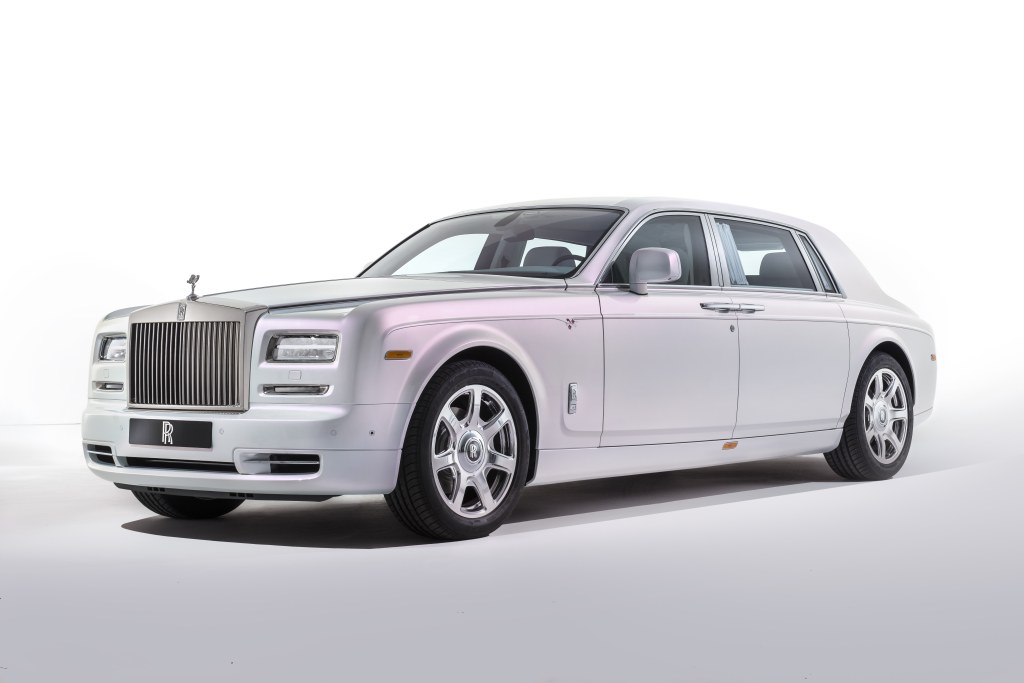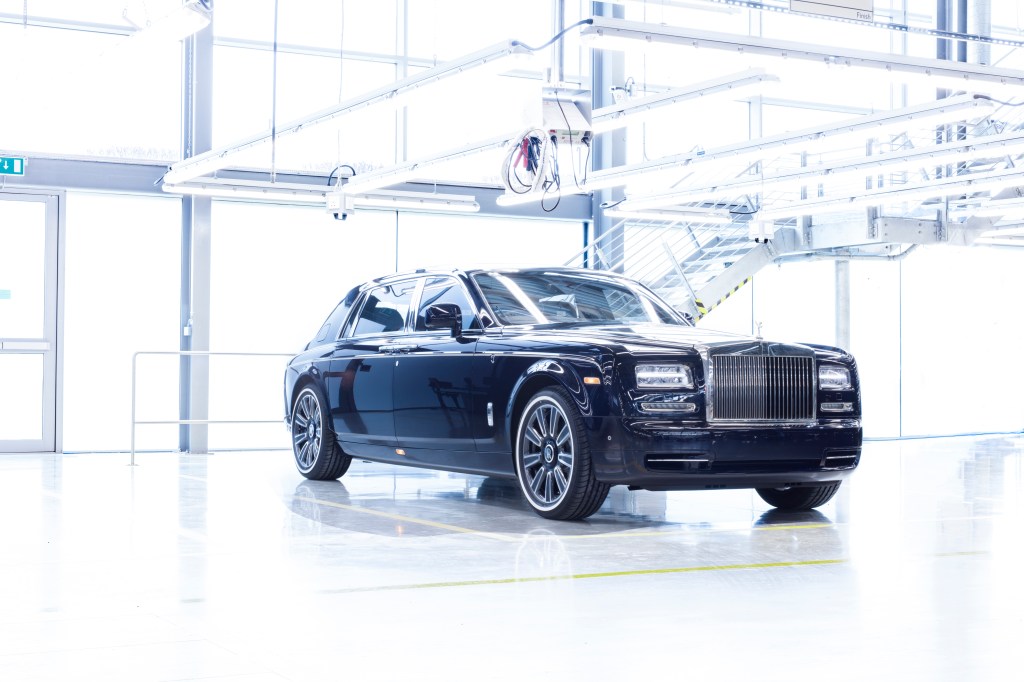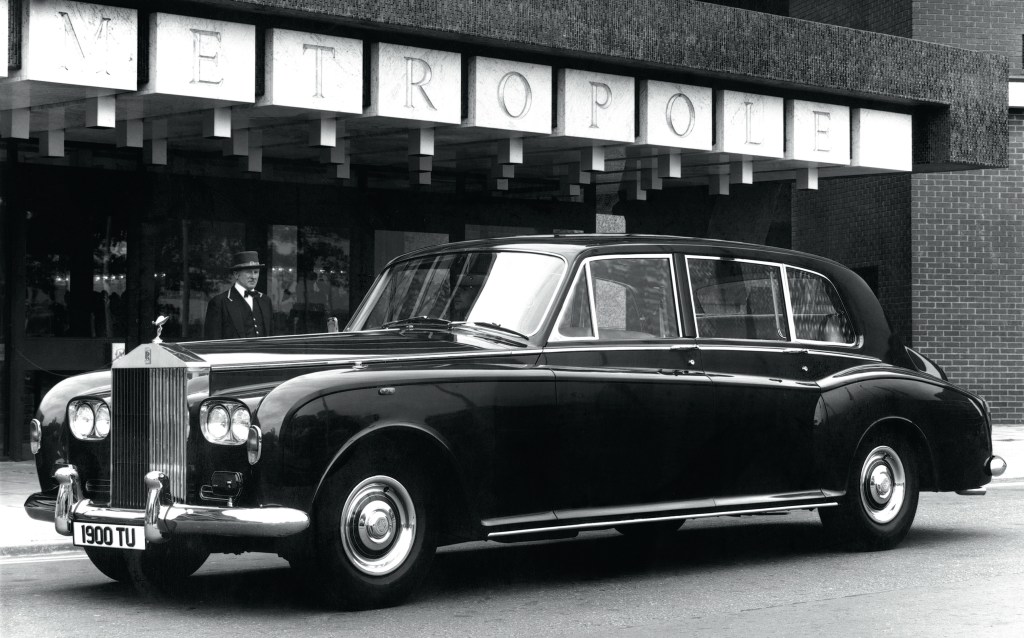
Rolls-Royce Phantom VI

From its foundation in 1904, Rolls-Royce built rolling chassis, upon which clients commissioned coachwork from an independent coachbuilder. The marque produced its first complete monocoque cars in the 1960s, but continued to offer rolling chassis until the 1980s.

Phantom VI was the last Rolls-Royce to be made available in this form. In line with standard Rolls-Royce practice, established by Sir Henry Royce himself, Phantom VI was born out of the upgrades and enhancements to its predecessor, Phantom V. The accumulated improvements reached the point where Rolls-Royce engineers judged it sufficiently evolved to be worthy of a new designation.

Even so, Phantom VI already felt like something of an anachronism. Phantom V clients had been able to choose coachwork from four great names: H. J. Mulliner, Park Ward, Hoopers and James Young. By 1961, the latter two had closed their doors, while Rolls-Royce had acquired and amalgamated the other two to create its own in-house coachbuilder, known as H. J. Mulliner Park Ward, which would provide the bodies for virtually all Phantom VI motor cars.

Like all Rolls-Royce models, Phantom VI underwent various changes during its lifecycle, including a more powerful 6.75-litre V8 engine and a modern three-speed automatic gearbox to replace the original four-speed version inherited from the Silver Cloud era. It also had specially engineered brakes, which used the Silver Shadow-style high-pressure hydraulics to operate rams connected to twin master cylinders; the brake drums were designed for improved heat dissipation and more efficient linings.

Changes in safety legislation required front-hinged doors with burst-proof locks, flush interior door handles and a steering column that would collapse upon impact. New crash-testing protocols also meant the prototype Phantom VI chassis, PRH1500, suffered the indignity of being driven into a 100-tonne concrete block at 30mph (48km/h) – a test it passed so effortlessly it was subsequently rebuilt and is still in service as a courtesy car at a Swiss hotel to this day.

Although coachbuilding was by now a niche offer even for Rolls-Royce, Phantom VI provided a fitting ‘last hurrah’ for this longstanding traditional craft. The seven ‘Special Limousines’, codenamed ‘Alpha’, for example, were superficially similar to other Phantom VIs; but close examination revealed wider, chrome-plated window trims and 16” wheels with tyres inflated to 90psi. These modifications were required to accommodate the 5mm thick glass and 7mm of armour plating that rendered the rear passenger compartment both bullet and bomb-proof. No such provision was made for the luckless chauffeur, however.

Phantom VI was also the last truly coachbuilt Rolls-Royce to offer both Sedanca de Ville and Landaulette coachwork. The Landaulette was available opening either to the B-pillar or over the rear seat, the latter variant being the choice of HM Queen Elizabeth The Queen Mother. Her daughter, HM Queen Elizabeth II, owned two Phantom VIs. The first, codenamed ‘Oil Barrel’, had its roof height raised by 13cm (5″) and a Perspex rear cupola that could be quickly covered by a two-piece, black-painted aluminium dome when the occupants required privacy. The second, delivered for the Royal fleet in July 1987, was codenamed ‘Lady Norfolk’ and had a standard roof height. Both remain in service at the Royal Mews today.

Increasing difficulty in obtaining minor chassis and coachwork components manufactured in the Silver Cloud era finally put paid to Phantom VI production. The last iteration commissioned by a client was delivered in May 1991; its 117 bespoke features included a solid silver fruit bowl to sit atop the cabinet behind the division, kept in place by concealed magnets.

In its 23-year lifecycle, just 374 Phantom VIs were built. The very last example to be completed was a Landaulette finished in black over red, with red leather in the front and red velvet in the rear compartment. Rolls-Royce had originally intended to retain the car itself, but recessionary pressures finally persuaded the company to part with it in 1993.

Phantom VI was the last Rolls-Royce model with traditional coachbuilt bodywork. It represented both the pinnacle and the swansong of the traditional coachbuilder’s art, with a purity of line and finesse of detail unequalled until Rolls-Royce embarked on its contemporary coachbuilding renaissance at Goodwood, with ‘Sweptail’, more than two decades later.

Andrew Ball, Head of Corporate Relations and Heritage, Rolls-Royce Motor Cars, said: “The launch of Phantom VI marked a significant chapter in the Rolls-Royce story; it would go on to become the marque’s final model offered as a rolling chassis, ending a line unbroken since 1904. However, the coachbuilding era ended in suitably magnificent style with Phantom VI. Launched in 1968, just 374 were built in a production cycle that extended over two decades; however, the 1980s can be regarded as its true heyday – only six examples were completed after 1990. The last fully coachbuilt Rolls-Royce, Phantom VI had coachwork by H. J. Mulliner Park Ward, then a wholly in-house operation; the best-known commissions were likely those built for the Royal fleet, which remain in service today. It would be more than 20 years before coachbuilt motor cars of comparable quality and detail would become available, when Rolls-Royce began its modern-day coachbuilding operation at Goodwood with ‘Sweptail’ in 2017. This was followed by the announcement of a dedicated department within Rolls-Royce named Coachbuild, and the unveiling of Boat Tail in 2021, then Droptail in 2023. Phantom VI is thus an important marker in the Rolls-Royce story, as both the swansong of traditional coachbuilding, and a model for the new generation that would follow.”

Goodwood Revival To Celebrate Alfa Romeo

The Goodwood Revival will bring together a collection of cars from Alfa Romeo’s competitive history to celebrate the centenary of the marque’s victory in the inaugural Manufacturer’s World Championship.

Taking place across the weekend, the demonstration will feature Grand Prix cars, sports cars, touring cars and prototypes, including the machines that became renowned for competing at races including the 24 Hours of Le Mans, Mille Miglia and Targa Florio. Visitors can expect to see the likes of the first Formula 1 Championship-winning car, the 158 ‘Alfetta’, Tipo 308C, TZ2 and Tipo 33 prototypes – each telling a story of bold innovation and mechanical artistry from 1925 through to 1975.

The celebration will reflect on Alfa Romeo’s domination of motorsport – including celebrating the 50th anniversary of the marque’s victory at the 1975 World Sportscar Championship. The Revival will remember the legendary drivers who piloted these machines, including four-time Grand Prix winner Antonio Ascari; five-time World Champion Juan Manuel Fangio; five-time Grand Prix winner and first World Drivers’ Champion Giuseppe Farina; and Alfa Romeo’s most famous and celebrated pre-war driver Tazio Nuvolari.

Earlier in the year, the Festival of Speed will also recognise the centenary of the Manufacturers’ World Championship. The Prologue class, which forms part of the F1 75 celebrations at the event, will showcase the cars that predate the World Championship, with examples from Alfa Romeo.

The New Volvo EX30 Cross Country

Volvo EX30 Cross Country with Swedish winter cabin

Sweden is home to deep lakes, endless forests, great mountain ranges, some of the harshest winters on the planet – and some of the best and most enjoyable cars ever made. So today Volvo unveils not only the new Volvo EX30 Cross Country, but a whole new experience to go with it.

Revealed today as part of a literal fireside chat including outdoors equipment brand Fjällräven at a secluded winter cabin in the north of Sweden, the EX30 Cross Country is designed for people who want big experiences from their small, fully electric SUV.

It takes the successful recipe of the EX30 and adds rugged ingredients, making it perfect for the growing number of people who want to explore beyond their crowded cities – come rain, come shine, or when everything is covered in snow and ice.

We think that ‘Cross Country’ should be an experience, not just a car, so alongside the EX30 Cross Country we’re also launching a new experience package for customers who buy the car, with access to accessories, gear and information aimed at giving you the full potential to explore the great outdoors.

“We launched our first Cross Country car more than 25 years ago, and this concept of durable and all-weather cars is core to the Volvo brand,” said Jim Rowan, Volvo Cars’ CEO. “In Sweden we face harsh winters, but we also like to make the most of them by getting out and exploring our amazing nature, even when it’s minus 20 Celsius outside. That’s why we want to deliver a fully rounded experience, not simply a car, to our EX30 Cross Country customers.”

From city to trail
As a small SUV, the EX30 Cross Country is perfect for the city. It is fully electric, with a range of up to 427 kilometres and zero tailpipe emissions, and can be charged from 10-80 per cent in as little as 26 minutes. But it also has several extra features that enable a seamless switch from one natural EX30 habitat to another.

For example, we’ve raised the car higher off the ground compared with the standard EX30, to help you navigate rough terrain more easily. It also has special, bigger wheels, with the option of an 18-inch all-terrain accessory tyre to make those regular countryside outings even easier.

Naturally, the EX30 Cross Country also comes with all-wheel drive, making it more than capable of handling the tough and slippery conditions that are part and parcel of life outside the city.

A style to match ability
The first model in our Cross Country range was introduced in 1997. Designed to cope with the demanding Scandinavian climate, Volvo’s Cross Country cars perform in a wide variety of road conditions – from muddy tracks and ankle-deep snow to highway driving – with the comfort and convenience elements that Volvo drivers have come to expect.

While its real-world capabilities come first, the EX30 Cross Country is also designed to excel in more diverse conditions – and to look good while doing so.

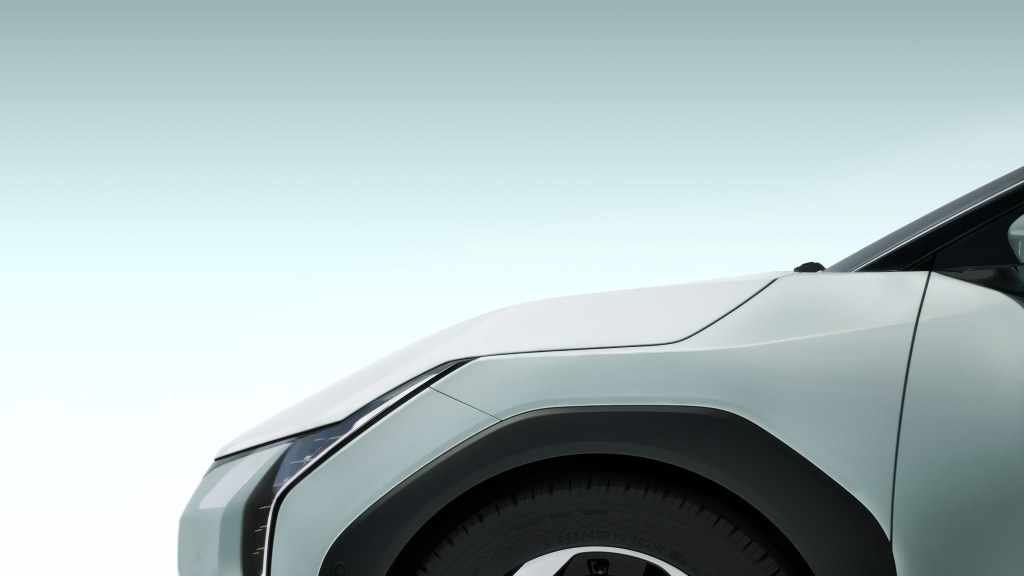
The front shield of the car and the boot lid get a special dark colour, with the front featuring a unique piece of artwork showing the topography of the Kebnekaise mountain range in Arctic Sweden – an inspiration for many of our designers. Chunky front and rear skidplates as well as wheelarch extensions complete the more rugged look and underline that this car is ready to get out into the wild.

Functional and as safe as you’d expect from a Volvo car
Inside, the EX30 Cross Country is highly functional and contains all the clever tech, storage and design that made the original EX30 such a hit from the moment Volvo revealed it. The doors contain large storage compartments, because the company removed the speakers and incorporated them into the soundbar on the dashboard.

A versatile central storage tunnel between driver and passenger can be slid out as a cupholder for your morning coffee or your travel mug, or back if you need to store more things. There’s also a big storage compartment on the floor between driver and passenger. The glove compartment has been placed beneath the centre console, providing easy access for both driver and passenger.

Rear passengers get a neat storage box that slides out from beneath the central tunnel. This box is also removable and washable, so can double up as a waste bin. At the rear, on the boot lid, we included a handy ‘Will it fit?’ guide, so you know exactly how much of your gear you can get in.

Like every new Volvo car, the EX30 Cross Country has Google built in. That means you get a variety of Google products as standard – including Google Maps, one of the best mapping systems in the world. Finding your way to the most remote nature locations was never easier. To make sure you can get straight into a nice warm car, the Volvo EX30 app allows you to precondition your car while you’re still exploring nature.

And naturally, the EX30 Cross Country is as safe as you’d expect a Volvo car to be. Volvo have applied their high standards of protective safety should you need it, but aim to help prevent you getting into a collision in the first place with some clever tech. Braking and steering support will help you avoid collisions with oncoming vehicles, pedestrians and cyclists, while a driver-monitoring sensor will give you a nudge if it seems like you are distracted or tired.

Embrace the experience
To further bring the Cross Country concept to life, Volvo is also launching a Cross Country Experience, to create concrete, tangible benefits that will help you to embrace your inner explorer even more. This means that EX30 Cross Country owners will benefit from an array of bespoke offers. Think of a dedicated, discounted ‘Cross Country Experience’ package of accessories for your car, which includes a load carrier, a roof basket, 18-inch all-terrain tyres and mudflaps.

“We know that more and more people are seeking ways to get closer to nature,” says Jim Rowan. “This is why with our new Cross Country Experience, we aim to create an entire ecosystem around those models, supporting our customers as they embrace adventure.”

In short, the new Volvo EX30 Cross Country is an all-road car that delivers safety, comfort and performance in a capable and adventurous package. The Volvo EX30 Cross Country is available to order now in selected markets, with deliveries starting later this spring.

A Very Special Bentley Speed Six

Many a Bentley owner’s love of the marque begins in childhood, and the owner of the third of twelve Speed Six Continuation Series is no exception. In his case, it was a ‘Models of Yesteryear’ scale model Blower Bentley, given to him by his uncle, that sparked a lifelong fascination with the pre-war Bentley racing cars.

The owner and his wife enjoy a stable of Crewe-built Bentleys, including a first-generation Continental GT, a motorsports-inspired Continental GT3R, second-generation Continental Supersports and First Edition Bentayga. Pride of place however goes to his Continuation Series ‘Blower’ 4½ Litre Supercharged and the latest addition, a Continuation Series Speed Six. Not only has he kept that cherished scale model ‘Blower’ to this day, but it also provided the visual inspiration for his two Bentley Continuation Series cars.    

At the workshops of Mulliner Classic, realising a customer’s dreams is both their calling and their pride. Continuation Speed Six #3 (of 12) is a case in point; created with meticulous attention to detail to be identical in every respect to the original 1930s works racer, it also features several personal touches in its specification that make it truly individual, from the one-off paint finish to the racing number 3 that it carries on its flank and radiator.

Personal memories and family associations
Both the Continuation Series Speed Six and the Continuation Series Blower are the third of twelve in their series, and the Speed Six also carries the racing number 3. The number that has fond associations for the owner, who played rugby to semi-pro standard as a tighthead prop, wearing the number 3 jersey, for many years.

Both the Blower and the Speed Six are finished in the same specially blended shade of green, chosen after careful consideration to be mid-way between the light green of the owner’s scale model and traditional British Racing Green. The shade was christened ‘Embelo Green’, taking the first letters of the couple’s three daughters. Like the owner’s scale model Bentley, his Speed Six Continuation Series’ interior is upholstered in red, though the couple chose a more muted shade than that of the toy.

As with all this owner’s Bentleys, the Speed Six will be regularly and enthusiastically driven. Accordingly, another special request was for the Mulliner team to provide two exhaust systems with the Speed Six: one unsilenced as the original Speed Six specification, and the other with a silencer for circuits where noise restrictions are required.  Bentley Mulliner engineering developed this silencer specifically for the Speed Six Continuation series. Finishing touches include a white patch on the leading edge of the nearside front fender for easier identification when coming into the pits and a hand-painted Union Flag on the driver’s side of the car. 

A hands-on experience
Commissioning a Continuation Series Bentley is a highly personal process and, like many Mulliner Classic customers, the owner of the #3 Speed Six became a familiar figure in the Crewe workshops. A highly capable craftsman in his own right, he even spent a day working as part of the Mulliner team to fit the period-correct Rexine fabric of his Blower’s Weymann-style bodywork. While work commitments meant he was unable to do the same for his Speed Six, he fully intends to use it as W.O. Bentley intended – fast, reliable and capable of impressive performance.

The legendary Speed Six
The Speed Six was introduced in 1928 as a more sporting version of the Bentley 6½ Litre. The engine was modified to liberate more power, with twin SU carburettors, a higher compression ratio and a high-performance camshaft.

182 Speed Six models were built between 1928 and 1930. Two wins at the Le Mans 24 Hour race, in 1929 and 1930, cemented the Speed Six’s pre-eminent place in Bentley racing history.

For the Continuation Series Speed Six, Mulliner Classic took two original Speed Sixes as its template: the company’s own Speed Six, GU409, and ‘Old Number 3’, a works Speed Six driven in the 1930 Le Mans 24 Hour race by Sammy Davis and Clive Dunfee. The latter was generously loaned by its owner and gave the Mulliner team invaluable data on dimensions, materials, and components. The Mulliner Classic team is also indebted to the W.O. Bentley Memorial Foundation, which provided 80% of the original drawings and notes used by the team.  

Maserati At The I.C.E. St. Moritz

At the traditional and exclusive “The I.C.E.” event, to be held in St. Moritz, Switzerland on Friday, February 21 and Saturday, February 22, Maserati is ready to “break the ice” and play a leading role with its range and two exclusive world premieres, in the spirit of the “Italian grand touring” and the Trident’s performance.

Maserati is synonymous with Italian luxury all over the world: its iconic heritage and its cars’ performance will be standing out at one of the most glamorous events in the winter season, a showcase amidst the magnificent scenery of the famous frozen lake in the Swiss region of the Engadin, where collectors and enthusiasts come together from all over the world.

The I.C.E. St. Moritz is not only a competition, it is a unique event of its kind, combining culture, entertainment and driving in extreme conditions, serving as an unmissable opportunity for car enthusiasts, collectors and mere fans of the automotive world.

Maserati will be there at the 2025 event, accompanied by the Fuoriserie customisation programme, with two world premieres. All the spotlights will be on the GranTurismo and GranCabrio ranges, available with both an internal combustion engine and a 100% electric motor, with all-wheel drive (AWD) as standard and air suspension, to ensure the utmost performance without sacrificing comfort in full “granturismo” spirit, even in the open air.

The all-wheel drive will excel in driving activities on snowy and icy roads, demonstrating the technological excellence, great dynamic qualities and uncompromising driving pleasure typical of the House of the Trident, even in difficult conditions.

The Grecale range will also be invading the Swiss town, whereas the MCXtrema and the new Maserati GT2 Stradale will emphasise the brand’s racing and competitive DNA to complete Maserati’s inclusion in the event.

In terms of participation in the Concours d’Élégance, some of the brand’s iconic models – sporty and luxurious classics – will go down onto the frozen lake: a Maserati 6CM and Maserati 200 SI will bring out their iconic design amidst the reflections in the snow and ice.

The abbreviation “I.C.E.” indeed refers to the winter magic and the surface of the snow-covered lake where the event takes place, but is also an acronym for “International Concours of Elegance”, where classic Maserati cars will tell the Trident’s story.

Nissan Motor India Commences Exports Of Over 10,000 Units Of The Left-Hand Drive (LHD) New Nissan Magnite

The New Nissan Magnite, launched in October 2024, is now making its way to customers in global Left-Hand Drive (LHD) markets. Nissan Motor India flagged off the first shipment of close to 2,900 units of the LHD variant of the New Nissan Magnite from Chennai from the Kamarajar Port (KPL – Ennore), India in late January 2025 to select markets in the LATAM region. This underscores Nissan’s ‘One Car One World’ strategy and highlights the Nissan Motor India’s commitment towards expanding its global footprint and transforming India into a global hub for exports.

In February 2025, Nissan Motor India will export over 7,100 units of the New Nissan Magnite in the second wave in February 2025 to markets in the Middle East, North Africa, select markets in LATAM & Asia Pacific region. By end of February, the company will have exported a total of over 10,000 units of the LHD version of the New Nissan Magnite.

Frank Torres, Divisional Vice President of AMIEO Region Business Transformation & President of Nissan India Operations, commented on the milestone, saying, “Nissan Motor India has been diligently working towards expanding its operations and reach, not just within the domestic market but also focusing on exports. In line with our export plans announced last year, we are delighted to begin exports of the New Nissan Magnite to Left-Hand Drive (LHD) markets. This is a significant achievement, and we look forward to serving new customers in these regions. The Nissan Magnite has been the cornerstone of our success in both India and global markets, and we are confident that this India-made vehicle will drive our export growth further.”
Saurabh Vatsa, Managing Director of Nissan Motor India, shared his enthusiasm, stating, “The commencement of exports of the Left-Hand Drive New Nissan Magnite is a proud moment for us, as it aligns with our ‘One Car, One World’ philosophy. The Magnite showcases the best of Japanese engineering combined with local expertise. It reinforces our ‘Make in India, Make for the World’ vision, delivering world-class innovation, safety, and value to customers globally. This also highlights India’s increasing importance as a key manufacturing and export hub for Nissan. Nissan remains committed to its operations in India, as well as to our dealers, partners, and customers. We are on track with the plans we laid out during the launches of the 4th Generation Nissan X-TRAIL and New Nissan Magnite last year.”

Keerthi Prakash, Managing Director, Renault Nissan Automotive India Pvt. Ltd., said: “The successful production and export of the New Nissan Magnite to Left-Hand Drive markets is a testament to the exceptional capabilities of our team and the world-class manufacturing standards at our Chennai plant. This achievement underscores India’s significant role in driving Nissan’s global success and further elevates the reputation of the New Nissan Magnite as a truly global vehicle.”

Manufactured at Nissan’s Alliance JV plant (RNAIPL) in Chennai, the roll-out of the Left-Hand Drive New Nissan Magnite to global markets underscores India’s crucial role as a global manufacturing and export hub for Nissan. The New Nissan Magnite will now be available in over 65+ global markets, including most LHD markets.

This initiative reflects the company’s commitment to delivering innovative, high-quality products tailored to meet global customer needs. With a growing demand for the ‘Made in India’ New Nissan Magnite, Nissan has showcased its technological innovation and manufacturing prowess to the world once again.

Recently, Nissan Motor India began exporting its recently launched New Nissan Magnite (RHD), to South Africa. In line with the announcement made during the New Nissan Magnite launch, the company rolled out this latest offering from Nissan’s Alliance JV plant in Chennai to global markets, with South Africa becoming the first country to receive the popular SUV from Nissan.

Over 2,700 units of the RHD New Nissan Magnite were shipped from the Chennai port to South Africa market within a month after its global launch in India last year. The New Nissan Magnite remains a testament to Nissan’s ‘Make in India, Make for the World’ vision, surpassing cumulative sales of 1,70,000 units till date, making a powerful impact in both Indian and global markets since its December 2020 debut.

Škoda Auto Celebrates 25 Years In India

Škoda Auto entered the highly dynamic Indian market 25 years ago: In January 2000 the Czech car manufacturer laid the foundation stone for its plant in Chhatrapati Sambhajinagar (formerly Aurangabad until 2022) and was the first Volkswagen Group brand to establish a presence on the local market. The Škoda Octavia became the first model assembled locally. To date, India has become a key market in Škoda’s internationalisation plans, helping the company to effectively leverage existing sales potential in the ASEAN region, Middle East, Australia and New Zealand. On behalf of the Volkswagen Group, Škoda Auto has been spearheading all activities in the region jointly since 2018. Today, the brand developed and produces three models locally in India for India, based on the localised MQB A0–IN platform: the Kushaq, the Slavia, and, most recently, the Kylaq compact SUV, which expands the line-up into the popular sub-4-metre segment.

Klaus Zellmer, CEO of Škoda Auto: “We have built on 25 years of experience in India to make this thriving market the cornerstone of our international growth strategy. With its tremendous talent pool, growing consumer demand, and access to other markets, India is becoming our second pillar outside Europe and helping leverage further sales potential in ASEAN, the Middle East, and the Indo-Pacific region. Škoda has been a notable brand in India since we entered the market with the Octavia in 2001. We now produce in two plants. We have launched three all-new models specifically for India, achieving localization of up to 95 per cent: the Škoda Kushaq, Slavia, and just recently the Kylaq compact SUV, which complement the Octavia and Superb we also sell through a growing dealer network. In the last two years, we have increased customer touchpoints across the country by 35%. India also contributes to the global sustainability goals of Škoda Auto. One plant already runs entirely on green energy, while the plant in Pune expanded its photovoltaic system to deliver up to 30% of its electricity needs. I want to thank all our Indian colleagues for helping power the next stage of our growth, and especially our customers for their trust in our products. With this passion, we can achieve even greater things in the next 25 years!”

The first Škoda model introduced to Indian customers was the first generation of the modern Octavia, assembled from imported parts in rented facilities alongside the construction of the plant in Chhatrapati Sambhajinagar. Over time, other Škoda models, such as the Fabia, Rapid, and later the Superb and Kodiaq, also attracted the attention of Indian customers.

A decisive step for Škoda in India came in 2018 when the Volkswagen Group entrusted the brand with jointly spearheading all Group activities on the market. As part of this, Škoda was tasked with developing the MQB-A0-IN platform, designed exclusively for the Indian market. The first vehicle built on this platform was the Kushaq, which entered production in Pune in 2021. Just a year later, the Slavia sedan was launched, with its development and manufacturing also carried out in Pune. The latest addition to Škoda’s portfolio for the Indian market is the Kylaq SUV, Škoda’s first model in the popular sub-4-metre segment, accounting for nearly 50% of car sales in the Indian market. The new model received 10,000 orders within just ten days of its launch and will contribute to the brands annual sales target of 100,000 cars in India by 2026.

The quality and reputation of Škoda’s vehicles in India is reflected not only in strong customer interest but also in numerous prestigious awards. For instance, the Škoda Slavia was named India’s Sedan of the Year in 2022 and won Car of the Year 2023 at the Acko Drive Awards.

In the meantime, the Indian market has developed into one of the key markets for Škoda and a strategic hub for the wider ASEAN region, the Middle East, Australia, and New Zealand. In addition to its assembly lines in Chhatrapati Sambhajinagar and manufacturing plant in Pune, Škoda has established a Technology Centre there. Moreover, in October 2023, Škoda opened a modern logistics facility for the export of components to Vietnam, a market the company entered in 2023.

Sustainable production is a major priority for Škoda, also in its Indian plants: The facility in Chhatrapati Sambhajinagar operates entirely on green energy, while the Chakan plant in Pune is on track to achieve CO2 neutrality by 2030. On top of that, this 500-hectare plant site provides a habitat for more than 300 species of plants, trees and animals. Furthermore, the company is involving local suppliers in India and plays an active role in infrastructure development, supporting education and social initiatives. At its plant in Pune, Škoda expanded its photovoltaic system which is now capable of producing up to 26.6 GWh of electricity annually, covering up to 30% of the site’s electricity consumption.

Volvo Drives Into India’s Latest Sensation; Partners With World Pickleball League As Luxury Mobility Partner

The World Pickleball League (WPBL) fever is gripping the country ahead of its inaugural day. Volvo Car India has announced its partnership with the league as the Official Luxury Mobility Partner.

The WPBL, conceptualised and created by Gaurav Natekar and Arati Ponnappa Natekar, aims to be a premier sporting and entertainment property that captivates audiences across demographics. The league will feature six teams competing in 48 matches over 10 days, alongside performances from some of India’s most celebrated artists.

Gaurav Natekar expressed his excitement, saying, “We are extremely proud to welcome Volvo Car India to the WPBL family. This partnership is a strong testament to the league’s wide appeal. The promise of high-octane action backed by entertainment makes the WPBL appealing to brands across the board.”

Jyoti Malhotra, MD- Volvo Car India said, “We are stoked to be the Luxury Mobility Partners for the much-awaited WPBL. I am confident that the WPBL will not only captivate Indian audiences but also contribute significantly to the growth and popularity of this dynamic sport in the country. For Volvo Cars, this is a unique platform to connect with discerning individuals who appreciate the blend of performance, luxury, and a passion for life.”

The inaugural edition of the World Pickleball League kicks off on January 24.

1.7 Million Deliveries In 2024: Audi Forges Ahead With Its Model Initiative

Audi CEO Gernot Döllner, the Premium Platform Electric and with it the Audi Q6 e-tron model series are the next technological leap towards electric premium quality.

Audi delivered around 1.7 million vehicles worldwide in 2024. More than 164,000 of those were fully electric models. Reasons for this overall decline of almost 12 percent (8 percent for fully electric models) compared to the previous year included the challenging economic conditions, an intensely competitive market, and limited availability of parts. In addition, the new product portfolio is only gradually having an impact on global sales volumes.

“We have a clear vision of how we are redefining Vorsprung durch Technik. Our ongoing model initiative shows the direction Audi is taking. The year 2024 was part of a transitional phase as we move towards our new product portfolio,” says Audi CEO Gernot Döllner. “Global economic uncertainties and intensified competition also shaped the past year. Despite these challenges, we are convinced that we will achieve our long-term goals. With a clear product and technology road map, Audi is systematically rejuvenating its product portfolio with over 20 new models in 2024 and 2025.” Last year, Audi already presented more than half of these, including the new battery-electric vehicles Audi Q6 e-tron and Audi A6 e-tron, plus combustion-engine vehicles such as the Audi A5 and Audi Q5. “In 2025, we will continue our model initiative and renew key model families such as the Audi A7 and the Audi Q3. Customers can look forward to numerous new plug-in hybrids as well.”

After a record year in 2023, geopolitical and industrial conditions impacted delivery figures in 2024. A general economic environment characterized by stagnation and structural problems as well as a tense political situation posed major challenges for the entire automotive industry and influenced consumer behaviour on an international scale.

“From the beginning, 2024 was considered a transitional year. We have strong models entering the markets, but they will only gradually become significant in terms of sales volume. At the same time, some models have been phased out. Challenging economic conditions and the intransparency in terms of government incentive structures are currently causing a certain reluctance to buy affecting the entire industry, especially when it comes to fully electric vehicles,” says Marco Schubert, Board Member for Sales and Marketing.

“With our three-pronged approach of electric cars, plug-in hybrids, and combustion-engine vehicles, we are positioned flexibly and robustly for the coming years and offer our customers a diverse range of premium vehicles. With our clear strategy and the strong commitment of our retail partners and international teams, we are setting ourselves up for the future.”

Sales performance in Europe, North America, and China
Audi delivered more than 164,000 fully electric models to customers worldwide (–8 percent) in 2024. Demand was notably strong for the Audi Q4 e-tron, with almost 108,000 units delivered globally. Since its market launch in the third quarter, the new Audi Q6 e-tron recorded almost 15,000 deliveries.

In addition to the all-electric models, the Audi Q5 (298,000 units), the Audi A6 (244,000 units), and the Audi Q3 (215,000 units) sold particularly well.

Audi Sport delivered more than 41,000 high-performance vehicles worldwide, a decrease of roughly 14 percent. In the USA, Audi Sport models recorded over 9,000 deliveries – their best result ever (+4 percent).

With around 466,000 vehicles, the number of deliveries in Europe (excluding Germany) was almost 6 percent below the previous year. The number of electric vehicles was just below 81,000 units (+6 percent). The most popular models in Europe were the Audi A3 (84,000 units), Audi Q3 (79,000 units), and Audi Q4 e-tron (57,000 units).

In Germany, Audi delivered over 198,000 cars (–21 percent). This figure includes roughly 22,000 fully electric vehicles (–33 percent).

In the UK, the number of deliveries was around 123,000 units (–11 percent), in France around 48,000 units (–3 percent). For electrically powered models, Audi recorded an increase of 24 percent in France compared to 2023. Audi also showed a solid result in Italy, delivering more than 67,000 units (+1 percent), including roughly 3,000 electric vehicles (+7 percent). In Spain (incl. Canary Islands), Audi delivered over 39,000 units (–4 percent) to customers.

In North America, Audi sold just below 241,000 vehicles (–13 percent) in 2024 – almost 29,000 of those were fully electric (–6 percent).

In the intensely competitive market of China, Audi delivered a total of more than 649,000 cars to customers. This represents a decline of around 11 percent compared to the previous year.

In the overseas and emerging markets, Audi delivered over 116,000 vehicles (–18 percent) in 2024.

Rolls-Royce Phantom: 100 Years Of Perfection

In 2025, Rolls-Royce Motor Cars marks the centenary of the launch of the first Phantom. Throughout its long history, the Phantom nameplate has been reserved for the pinnacle model in the marque’s portfolio – the very apex of excellence.

Each iteration, up to and including the eighth generation currently being handcrafted at the Home of Rolls-Royce at Goodwood, has seen advances in design, engineering, materials and technology. Today, Phantom is the ultimate blank canvas for Bespoke commissions, where clients can bring their most elaborate, imaginative and personal visions to life. Inspiration for Bespoke commissions is everywhere, and Phantom’s scale, elegance, presence and adaptability enable it to be whatever its owner wishes it to be. Recent inspirations include haute couture (Phantom Syntopia), famous films (Phantom Goldfinger), Chinese culture (Phantom Extended ‘Year of the Dragon’) and the marque’s own Spirit of Ecstasy Mascot (Phantom Scintilla).

Phantom has always had the same fundamental aim: to provide the most magnificent, desirable and, above all, effortless motor car in the world – the very best of the best. At the start of Phantom’s anniversary year, Rolls-Royce reveals the fascinating story behind its pinnacle product, and how it earned – and maintained – that reputation through a century of constant, often profound change.

Chris Brownridge, Chief Executive, Rolls-Royce Motor Cars said, “One hundred years ago, Rolls-Royce launched the first motor car to bear what would become the most evocative and enduring nameplate in its history: Phantom. Through eight generations, Phantom’s fundamental role as the pinnacle Rolls-Royce motor car has always been the same: to be the most magnificent, desirable and above all, effortless motor car in the world – the very best of the best. In many respects, the history of Phantom is the history of Rolls-Royce: always moving with the times and its clients’ needs and requirements, transcending fleeting trends and providing the setting for the most remarkable executions of craft and artistry, all while resolutely refusing to compromise its core engineering and design principles. We’re proud to continue this tradition of excellence, elegance and serenity into the next 100 years.”

A NEW BEGINNING
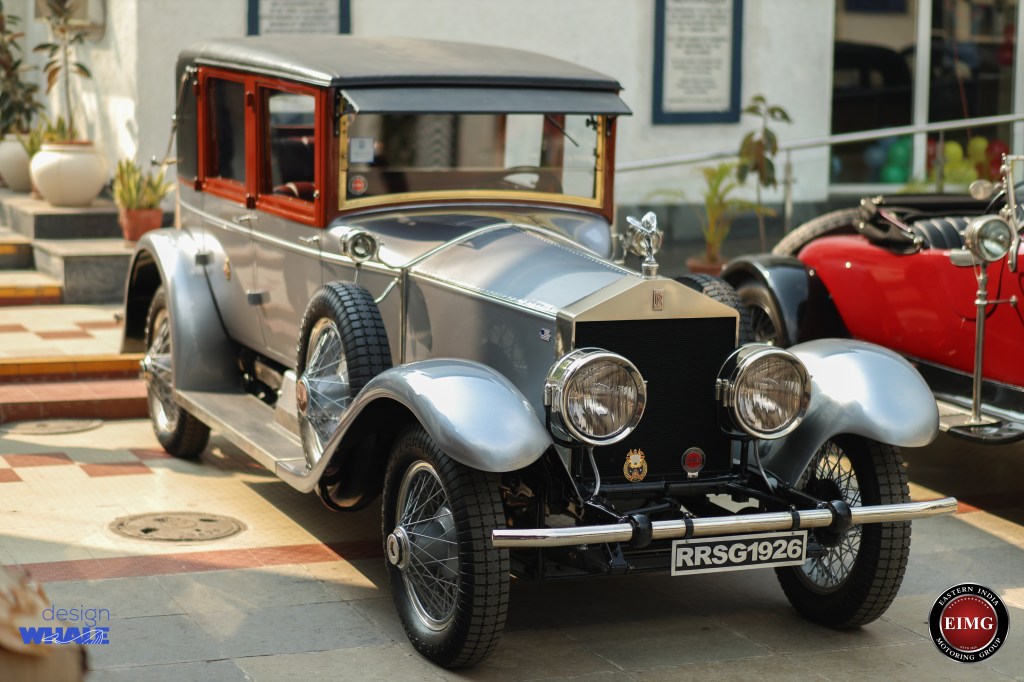
Rolls-Royce first earned the accolade of ‘the best car in the world’ with the 40/50 H.P., universally known as the Silver Ghost, launched in 1906. The key to its legendary reputation was Henry Royce’s principle of constant improvement to its underlying engineering, which he conducted on an almost chassis-by-chassis basis.

By 1921, Royce realised the Silver Ghost’s design was reaching the point where no further developments would be possible without compromising either smoothness or reliability – both by now essential elements of the Rolls-Royce character and legend. He therefore began work on its replacement.

Original Advertisement from The Times Newspaper, Saturday 2 May 1925 read: “Rolls-Royce Ltd beg to announce that, after prolonged tests, they can now demonstrate and accept orders for a new 40/50 H.P. chassis. The 40/50 H.P. chassis hitherto manufactured by them will be sold as before… The original chassis of this type was the famous Silver Ghost, and to prevent confusion such chassis will be known as the Silver Ghost model, whereas the new chassis will be known as the New Phantom.”

Despite being couched in terms that today seem rather quaint and stilted, this advertisement made history. It was the first public acceptance by Rolls-Royce that the outgoing model would be called Silver Ghost officially, rather than as a byname. More significantly, it was the first recorded use of the Phantom name.

COPYRIGHT JAMES LIPMAN

THE GAME OF THE NAME
Although there is no specific documentary evidence, it seems safe to assume that the Phantom name was coined by Rolls-Royce’s energetic and ever-inventive Commercial Managing Director, Claude Johnson. It was he who recognised that naming the company’s products could act as a sales device, and it was his fertile imagination that produced the inspired sobriquet ‘Silver Ghost’ for the otherwise prosaically titled 40/50 H.P. in 1907. That same year, he christened another 40/50 H.P. ‘Green Phantom’, before bestowing the rather more evocative ‘Silver Phantom’ on two examples in 1909.

Johnson clearly understood the power of names like Phantom, Wraith and Ghost to convey the products’ supernatural quietness and ethereal grace; all have graced Rolls-Royce motor cars in the modern era for precisely the same reason. How different history would have been had one of his more fanciful efforts – The Dreadnought, The Cookie, Yellow Bird, The Elusive Pimpernel – been adopted instead.

THE BASIS FOR GREATNESS
The Times advertisement also assured readers the New Phantom would retain the “sweet running qualities always associated with Rolls-Royce products”. At this time, Rolls-Royce supplied only rolling chassis, with the form, styling and appointment of the motor car itself in the hands of independent coachbuilders, who created bespoke bodywork to the owner’s specification. Rolls-Royce offered the New Phantom in long-wheelbase form, suitable for formal saloon and limousine designs, and with a shorter wheelbase ideal for owner-driver motor cars with closed, open and ‘sportier’ coachwork.

Then as now, Phantom’s generous proportions enabled owners to specify almost any detail or indulgence they wished. Some clients asked for concealable writing desks or swiveling occasional seats in their long-wheelbase limousines, while owner-drivers are known to have requested safes, dedicated spaces to stow golf clubs and even, in one famous instance, a secret compartment in which to carry diamonds.

On 8 May 1925, The Autocar magazine published its review of the new model. “Few are the firms engaged in the manufacture of motor cars who enjoy quite such a reputation as Rolls-Royce Ltd,” it enthused. “Almost the conjoined names have become the household word for luxury, and every novelist worthy of the name imparts a distinguished air to any character by crediting him or her with the possession of one of the firm’s cars.” With Phantom, Rolls-Royce had clearly succeeded in not only maintaining, but furthering the qualities established and made famous by the Silver Ghost.

ONWARDS AND UPWARDS
Though undoubtedly gratifying, such encomiums did not distract Henry Royce. The design of the original New Phantom had closely followed that of its predecessor, Silver Ghost – so closely, in fact, that some modern enthusiasts refer to it as a ‘Super Ghost’. Over the next four years, Royce continued to refine his design until, in 1929, The Times carried a fresh advertisement announcing the arrival of Phantom II. The advertisement listed all the engineering improvements and upgraded components that justified its designation as an entirely new model.

VIVE LA DIFFÉRENCE
Somewhat ironically, the only person who remained unimpressed was Royce himself, who insisted that even the short-wheelbase Phantom II was irritatingly oversized for his personal use. He therefore instructed his design team to develop a more compact, sporting Phantom II variant which he could enjoy driving across France to his winter home at Le Canadel on the Côte d’Azur.

The designers dutifully produced a close-coupled car, 26EX – ‘EX’ standing for ‘Experimental’ – on an adapted short Phantom II chassis. Records show that neither the Rolls-Royce sales department nor the factory were keen on the concept; indeed, had it not been intended as Royce’s personal transport, it might not have been built at all.

As it transpired, a highly successful continental sales tour demonstrated there was, in fact, great demand for a car capable of high-speed touring over long distances on the smooth, straight roads of Europe. Rolls-Royce successfully met this demand with the now highly prized Phantom II Continental – perhaps the only pre-Goodwood Phantom variant in which weight, wind resistance and other performance-related factors were afforded equal consideration with out-and-out passenger comfort.

Montgomery Rolls-Royce Phantom 2 Photo: James Lipman / jameslipman.com

A NEW POWER RISING
By the time of Royce’s death in 1933, the company was already only too aware that luxury car customers were seeking models that offered more power without sacrificing comfort or excellence. American competitors including Cadillac, Lincoln and Packard were responding with straight-8, V12 and even V16-cylinder engines, which were rapidly eclipsing the large-horsepower, in-line six-cylinder units that had served Rolls-Royce so well for so long.

Given this commercial pressure and the company’s proven experience in designing and building aero-engines, it was inevitable that the next Phantom would have a V12 engine. In accordance with tradition, Phantom III’s arrival in 1936 was announced in The Times, which informed the public that “many outstanding features distinguish this car from its famous predecessor the Phantom II”.

Chief among these was the new engine, with 12 cylinders “giving greater engine smoothness, flexibility, silence and acceleration” – all key requirements for Rolls-Royce’s fabled effortless progress. The new V12 engine was also more compact than the old straight-6, allowing a shorter bonnet and larger passenger compartment. Most importantly, however, it delivered the increased power customers demanded – 165 H.P. against the 120 H.P. of Phantom II, rising to 180 H.P. in later cars.

Comfort was further improved with independent front wheel suspension. “This is particularly noticeable in the back seats under all road conditions and is further enhanced by remarkable road holding qualities and stability on corners even at high speeds”, the advertisement noted, while Phantom III’s new chassis frame allowed for wider, more comfortable back seats.

And it wasn’t just passengers who benefited. As the advertisement pointed out, Phantom III made life more relaxing for owner-drivers and chauffeurs, too, explaining: “A modification in the position of the change-speed [gear lever] and brake levers gives easy entrance to the driver’s seat from the offside… the steering is lighter in operation, has a larger steering lock and the car is more easily manoeuvred by reason of the shorter wheelbase.”

Phantom III was suited to all manner of coachwork styles, and both owner-driver and chauffeured use. And while it was never able to beat its American rivals on price, such was Rolls-Royce’s reputation that it remained the only choice for those who wanted to experience the greatest possible comfort and be seen to be driving the very best.

A CHANGING WORLD
The Phantom name had graced the very best of the best cars in the world for some 14 years when war broke out in 1939. Rolls-Royce ceased all motor car production, and when peace returned in 1945, the company found itself in an entirely different world – but one it had anticipated and prepared for.

Rolls-Royce had correctly foreseen that under post-war austerity, it would need to make its motor cars less complex, easier to service, much less expensive to produce and able to use common parts. At the same time, it was adamant that there would be no reduction in quality.

Its solution was the Rationalised Range, which debuted in 1946 with Silver Wraith. Its new straight-6-cylinder engine was a backward step from the V12 engine of Phantom III, but relevant in straitened times. There seemed to be no place in the modern world for Phantom.

A ROYAL INTERVENTION
The Phantom story might well have ended there, but for two serendipitous events.

As part of the ongoing development process for the Rationalised Range, engineers produced four experimental EX cars on a 229.5-inch chassis with a straight-8 engine. One of these, fitted with a Park Ward & Co limousine body, was officially named Silver Phantom (and unofficially known as Big Bertha). A smaller, lighter saloon version, known as the Scalded Cat, followed.

At the same time, the Royal Household was seeking to replace its ageing fleet of Daimlers – the marque it had favoured since the motor car was invented – but was unhappy with the range then on offer.

In 1950, Rolls-Royce was asked to supply a formal limousine for Royal duties. The company had long been keen to usurp Daimler in the Royal Mews, and gladly produced a ‘one-off’ straight-8 long-chassis limousine with coachwork by H J Mulliner. During manufacture, the car was given the codename Maharajah, and remains in active service at the Royal Mews under that name to this day.

When requests for similar motor cars followed from other Royalty and Heads of State, Rolls-Royce was happy to oblige. The company decided it would be fitting that for such prestigious cars to resurrect the Phantom name. Over the next seven years, the marque produced just 18 examples of Phantom IV, including a second motor car for the Royal Mews, a landaulette named Jubilee, delivered in 1954.

THE LAST HURRAH
The pinnacle Rolls-Royce experience became somewhat more widely available once again in 1959 with the launch of Phantom V – a splendid limousine fitted with coachwork by both the marque’s in-house coachbuilder, Park Ward & Co., and other independent companies, including James Young Ltd and H. J. Mulliner & Co. (Rolls-Royce would go on to acquire the latter, merging it with their own coachbuilder to form Mulliner Park Ward). Two motor cars, known as Canberra I and Canberra II, were built for Royal service, featuring transparent Perspex cupolas over the rear compartments and concealed lighting to better view the occupants on formal occasions.

After 13 years and 832 examples, Phantom V had received enough technical upgrades to be designated as Phantom VI. As with all its forebears, this new iteration prioritised comfort, with separate air conditioning systems for the front and rear compartments. Most of the 374 examples were limousines with coachwork by in-house Mulliner Park Ward Ltd., or James Young Ltd.: the last Phantom VI, a landaulette, was delivered to the Sultan of Brunei in 1993.

Phantom VI was the final body-on-chassis model Rolls-Royce ever produced, and its discontinuation effectively ended the tradition of coachbuilding until it was revived at Goodwood in 2017 with ‘Sweptail’.

PHANTOM REBORN
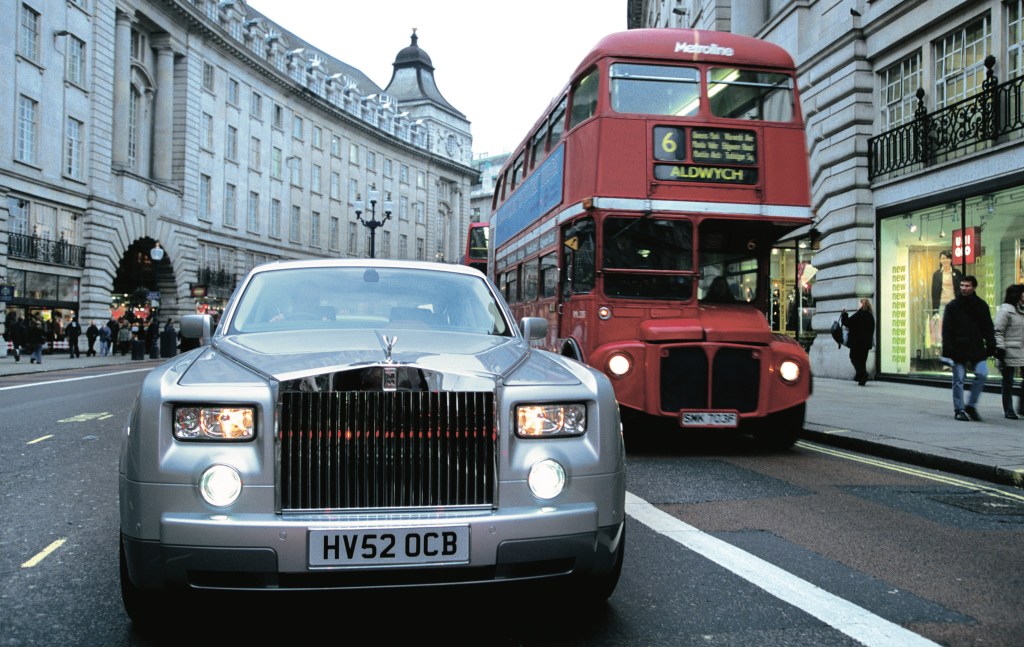
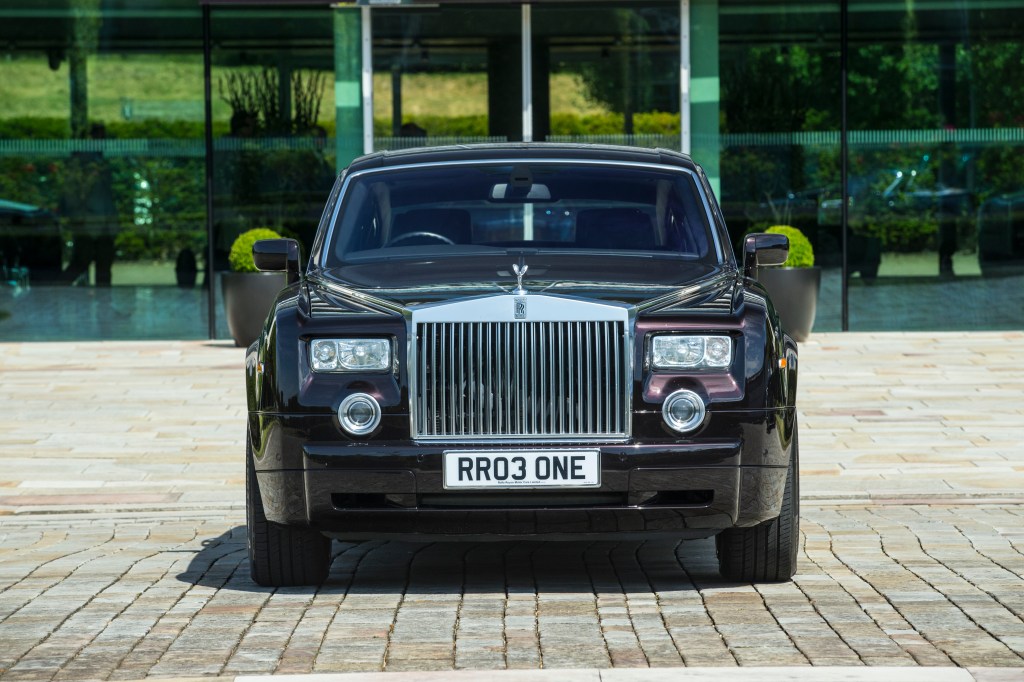
When the marque was relaunched at the new Home of Rolls-Royce at Goodwood, a ‘Phantom-type’ model quickly emerged as the natural and obvious choice for its inaugural motor car. The design concept, for which legendary Rolls-Royce designer John Blatchley was consulted and of which he approved, included signature elements inherited from previous generations. These included a long wheelbase with the front wheels well to the fore and a minimal front overhang of the bodywork, a long bonnet comprised of a massive expanse of metal along the side, and a rising sweep of the door edge towards the front windscreen pillars.

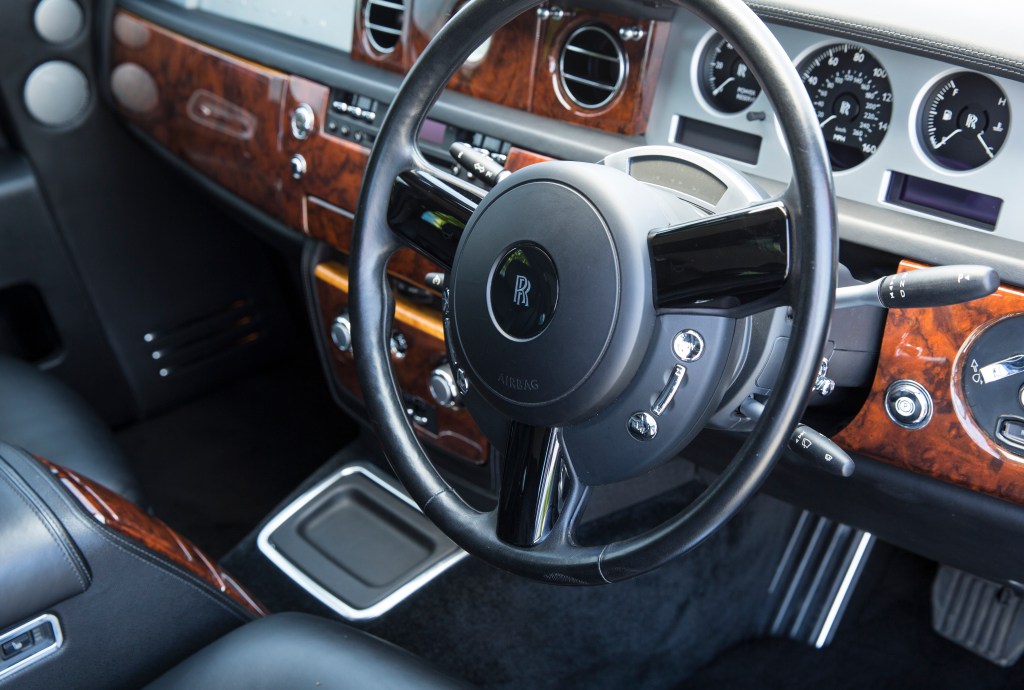
Rolls-Royce Motor Cars’ first Design Director of the Goodwood era, Ian Cameron, formed a specific team to create the interior design for the much-anticipated new model. Their remit was to express the ambience of past Phantoms and the traditional high-quality materials of coachbuilding – leather, wood, deep-pile carpeting – in a totally up-to-date way.

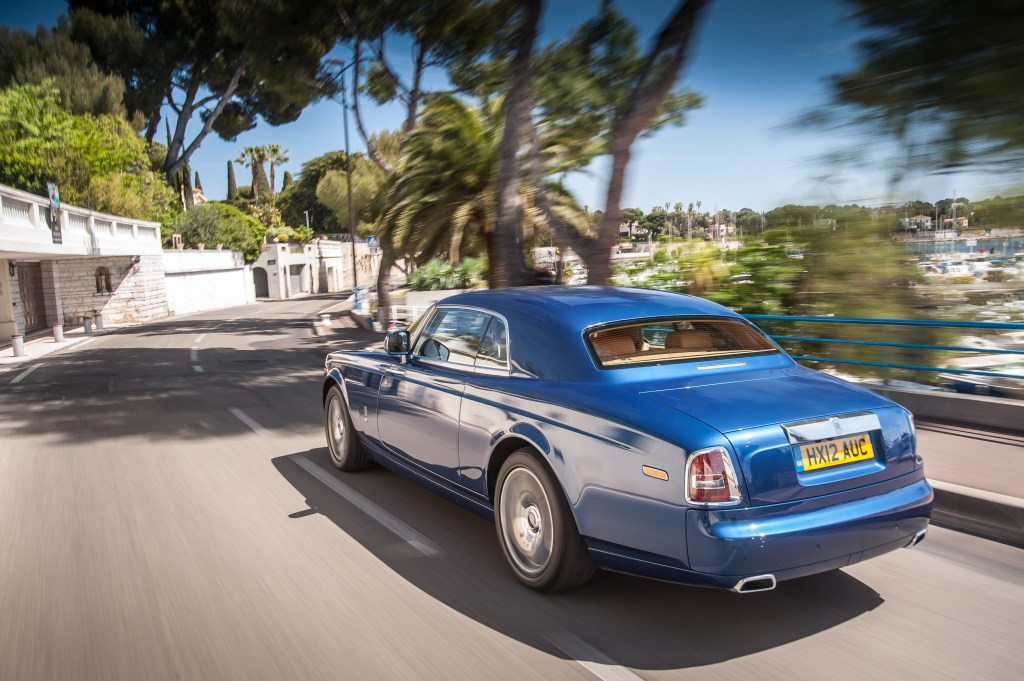
At one minute past midnight, on 1 January 2003, the first Phantom VII was handed over to its new owner. Unlike every Phantom that had gone before, it was built entirely in-house by Rolls-Royce Motor Cars, with spaceframe bodywork to a single design rather than coach built. In one important sense, however, it retained a link with its heritage, in that every car was hand-built by a team of skilled craftspeople. Furthermore, the marque’s Bespoke programme meant Phantom was effectively a blank canvas on which patrons could realise their own visions and desires.

THE EVOLUTION CONTINUES
Over its 13-year lifespan, Phantom VII cemented Rolls-Royce as the world’s pre-eminent super luxury motor manufacturer, and its own place as the marque’s pinnacle product. But just like their predecessors, Rolls-Royce’s designers and engineers understood that perfection is a moving target: that Phantom was never ‘finished’.

In 2017, Rolls-Royce presented Phantom VIII. This was the first Rolls-Royce to be built on the Architecture of Luxury, an advance on the all-aluminium spaceframe used on Phantom VII, and designed to underpin every future motor car produced at Goodwood.

Phantom VIII was specifically designed to be the ultimate canvas for Bespoke commissions. With this in mind, it is the only Rolls-Royce model to feature the Gallery – an uninterrupted swathe of glass that runs the full width of the fascia, behind which the client can display a commissioned work of art or design.

This singular focus has made Phantom the subject of some of the most technically ambitious and challenging Bespoke projects ever undertaken by the marque’s designers, engineers and specialist craftspeople. Commissions such as Phantom Syntopia, Phantom Oribe, Phantom Koa and Phantom ‘Inspired by Cinque Terre’ all incorporate features, materials and engineering innovations never seen before in a Rolls-Royce or any other motor car. Each is a unique, one-of-one creation that will never be repeated, echoing the very first Phantoms that were individually hand-built for their commissioning owners.

THE ESSENCE OF PHANTOM
For 100 years, the Phantom name has occupied a unique position in the Rolls-Royce product family and story. While the standards of quality, engineering and design are consistent across all Rolls-Royce motor cars, Phantom has always been the grandest, most impressive and, above all, most effortless motor car being built in series production by the marque at any given moment.

Through all its eight generations, Phantom has never been compromised by existing engineering orthodoxy, fleeting trends or development costs. From Henry Royce’s original New Phantom to today’s Phantom VIII, the essential purpose behind Phantom has always remained the same: to build the motor car that offers owner-drivers and passengers alike the most comfortable, satisfying experience available in the world at that moment in time – the unassailable pinnacle of luxury and motoring excellence.