120 Years Of Rolls-Royce Motor Cars

On 4 May 2024, Rolls-Royce Motor Cars marks the 120th anniversary of the first meeting between Henry Royce and The Hon. Charles Stewart Rolls. The founders’ personal stories, the history of the company they founded and its motor cars are well known and available to view elsewhere on the Rolls-Royce Press Club.

To celebrate this auspicious anniversary, Rolls-Royce considers the historical, technological and social context in which the marque came into being and the impact and influence of the Rolls-Royce name over its 120 years. But to fully understand the marque’s origins and legacy, one must first reach a little further back in time and examine the founders’ activities in the years immediately prior to that first, world-changing encounter in 1904.

HENRY ROYCE: THE ENGINEER
For Henry Royce, the story really begins in late 1884, when he founded his first engineering company, F. H. Royce & Co. (he was christened Frederick Henry) in Manchester. Initially producing small items such as battery-powered doorbells, the company progressed to making heavy equipment including overhead cranes and railway shunting capstans.

But after almost two decades of expansion and success, in 1902 the company was heading for financial trouble, owing to competition from an influx of cheaper products from Germany and the USA. Royce’s perfectionism and obsession with improvement meant he was not prepared to enter a race to the bottom, or compromise the quality of his products. Habitual overwork and constant strain seriously affected his already weakened constitution, and finally his health collapsed entirely.

His doctors ordered him to take an extended break, so Royce embarked on a 10-week visit to his wife’s family in South Africa. Yet even on a medically imposed rest cure, his engineer’s mind was as active and inquisitive as ever. His choice of reading material on the long voyage was The Automobile: Its Construction and Management, originally written in French by Gérard Lavergne and translated into English that year. This was literally ‘the book’ on how to build a motor car, and Royce was clearly both enlightened and inspired by it.

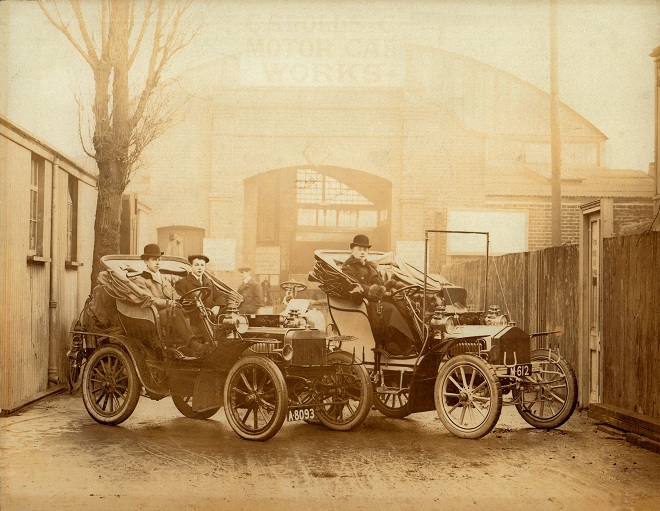
On his return to England, Royce — now physically and mentally recovered — immediately acquired his first motor car, a French 10 H.P. Decauville. It’s often been assumed that this car was so poorly made and unreliable that Royce, out of sheer frustration, set about addressing its numerous defects.

In fact, almost the opposite is true. He chose the Decauville precisely because it was an excellent, state-of-the-art machine with the express intention of dismantling it, analysing every component, then producing his own car from scratch. Any reasonably competent engineer could have upgraded a badly built, substandard product: it took a genius of Royce’s stature to, in his own words, “take the best that exists and make it better”.

THE VITAL ROLE OF ‘LITTLE ERNIE’
One of the lesser known – but nonetheless vital – contributors to the first Royce cars’ development was Ernest Wooler. Born in Manchester in 1888, 15-year-old Ernest stood five feet four inches (1.62m) tall and was nicknamed ‘Little Ernie’ when he joined Royce Limited in 1903 as an indentured premium apprentice — a position for which his father paid the very considerable sum of £100 (over £15,000 at today’s values). He worked a 56-hour week for a shilling a day (about £7.60 now) in the drawing office, learning to make blueprints — and, strictly against the rules, producing his own drawings on the draughtsmen’s boards.

One morning, he received an ominous summons: Mr Royce himself wished to see him. After severely reprimanding the unfortunate youngster for his unauthorised handiwork, Royce ordered him to go and fetch a typist’s notepad. Mystified, Ernie did as he was instructed and gave the pad to his employer. Royce waved it away. “You hold onto that and follow me,” he said and led the way to the workshops, where he climbed onto the Decauville, took off his jacket and rolled up his sleeves. Then, assisted by a fitter, he began methodically taking the car apart. Nearby, Ernie sat on a box with his notepad. “Each piece was handed to me, and I made a sketch of it and added the dimensions they quoted,” he later recalled.

As Royce correctly judged, Ernie was the ideal person to capture the basic data that would inform the design of the motor cars that followed. It’s also tempting to wonder if Royce recognised a kindred spirit; a young man starting at the bottom, but eager to better himself. If so, he was right. In 1913, Ernie emigrated to America and enjoyed a successful career as a design engineer, becoming an expert in bearings and filing a number of patents. In 1947, he retired to Hillsboro Beach, Florida, where he was elected as the town’s first mayor.

SMALL THINGS MAKE PERFECTION
Royce had left school aged just 10 and his formal education consisted of evening classes in English and Mathematics that he attended in his late teens; later, as the world-renowned Sir Henry, he still self-deprecatingly described himself as being able to do no more than simple arithmetic. But he had an instinctive, intuitive talent that more than made up for his lack of academic credentials.

As noted, the Decauville was a highly evolved motor car in its own right and Royce sensibly retained some of its key features — a two-cylinder engine, live propshaft and differential rather than chain drive — in his own designs. He also introduced numerous detailed alterations and innovations: mechanically rather than atmospherically operated inlet valves; a more effective radiator; replacement main, big end and gearbox bearings; and a single gear lever replacing the Decauville’s notoriously tricky twin-lever arrangement. From the outset, he was obsessed with reducing the car’s overall weight, beginning with the simple and obvious expedient of discarding the Decauville’s bronze warning bell, which reputedly weighed around 20kg (over 40lb).

It was not only the Decauville that Royce subjected to his intricate and exacting scrutiny. Between 1902 and 1905 he repaired, investigated and test-drove various makes of cars belonging to (presumably willing) friends and acquaintances to gain additional first-hand insights. According to his own records, he covered some 11,000 miles in the course of this research; many of them undoubtedly in the Decauville, which he kept until at least 1906.

Royce the engineer was aiming to build the best car in the world. It was no vanity project or proof-of-concept exercise: he wanted his technical innovation to be commercially viable. Unfortunately, easy charm, a wide social network and a way with words were not among his many gifts. But in London, there was a young man who had these qualities in abundance.

THE HON. CHARLES STEWART ROLLS: THE SALESMAN
In many respects, The Hon. Charles Stewart Rolls was Royce’s antithesis: wealthy, aristocratic, urbane, well-connected and highly (and expensively) educated. What they shared was a passion for engineering and machinery — in  Rolls’s case, racing cars, hot air balloons and aeroplanes.

After graduating from Cambridge in 1898, Rolls had been briefly employed as Third Engineer on his family’s steam yacht, the Santa Maria, following a spell at the London & North-Western Railway in Crewe. But after just a few years, he realised that his considerable talents required a different outlet.

In January 1902, Rolls opened one of Britain’s first car dealerships, C. S. Rolls & Co., in Fulham, west London, partnering with the formidable Claude Johnson at the end of 1903. The enterprise, initially underwritten by Rolls’s father, Lord Llangattock, imported and sold French Panhard and Mors cars, as well as Minerva vehicles built in Belgium. The business seemingly flourished, but Rolls was frustrated that all his stock was designed and manufactured overseas. He could find no car produced domestically that met his clients’ needs, or his own standards as both a trained engineer and a lifelong enthusiast.

As 1904 dawned, the elements of a potentially transformative partnership were in place: Royce the gifted engineer in search of a market; Rolls the consummate salesman seeking a game-changing product. All that was needed was something — or someone — to bring them together.

HENRY EDMUNDS: THE CRUCIAL CONNECTION
Rolls had befriended Henry Edmunds through the Automobile Club of Great Britain & Ireland (later the Royal Automobile Club). Edmunds was a director of Royce Limited and had driven one of the company’s early 10 H.P. cars. His enthusiasm for the car was such that Rolls requested a meeting with its creator, which Edmunds duly arranged. On returning to London from Manchester, Rolls told Claude Johnson that he had found “the greatest motor engineer in the world”. Rolls agreed to sell all the cars Royce could make and the rest is, literally, history.

THE WORLD IN 1904
So much for the personalities. What of the world and context in which Rolls-Royce was formed?

Much of what is taken for granted today was still decades in the future — indeed, many things now considered essential would not arrive until the following century. From the vantage point at the time of writing in 2024, 1904 feels like ancient history: a grainy, distant, black-and-white world detached from our own times and experiences.

Rolls and Royce met in a world without television, penicillin or FM radio. Construction work had just begun on the Panama Canal; The RMS Titanic wouldn’t set sail on her fateful maiden voyage for another eight years. King Edward VII was two years into his reign, having succeeded his mother, Queen Victoria, in 1902 — the year that also saw the end of the Boer War, one year prior to Wilbur and Orville Wright making the world’s first flight in a powered aircraft. Arthur Balfour was British Prime Minister, Theodore ‘Teddy’ Roosevelt was President of the United States and Franz Joseph I was Emperor of Austria-Hungary.

The motor car, too, was still in its infancy; Karl Benz had produced the first ‘true’ petrol-powered automobile — albeit with just three wheels — in 1886, and motoring remained largely a hobby for daring, well-heeled enthusiasts like Charles Rolls. The world would have to wait until 1913, when Henry Ford displayed the world’s first moving assembly line, for cars to become accessible and affordable to the majority of the population.

But the seeds of our modern life were there. This was the belle époque, an unusually protracted period of peace and political stability in Europe that gave rise to economic confidence and prosperity, which in turn encouraged a surge in innovation. The preceding 20 years alone had seen the invention of the vacuum cleaner, electric oven, dry-cell battery, ballpoint pen, cinema, pneumatic tyre, x-rays and radio. The great technical marvel of 1904 was City of Truro, the first steam locomotive in the world to exceed 100mph — a record that stood for 30 years.

There were significant social and cultural advances, too, with the appointments of Britain’s first black mayor, and first female university professor. The London Symphony Orchestra gave its inaugural concert and the Coliseum Theatre opened in the West End. Literary circles were graced by titans including Mark Twain, H. G. Wells, Jules Verne, James Joyce, Leo Tolstoy and P. G. Wodehouse; concert halls and opera houses premiered works by Debussy, Sibelius, Ravel, Elgar, Puccini, and Mahler. New types of music also bloomed, as the syncopated rhythms that would inform Jazz proliferated through Ragtime.

It was into this extraordinarily fertile, dynamic and optimistic age that Rolls-Royce was born. A time in which visionaries and pioneers would shape how the world thought, functioned and behaved for years or decades to come; exactly what Rolls and Royce did with their new motor car.

By building a machine whose engineering, performance, reliability and durability surpassed everything that had gone before, Royce and Rolls set the standard not only for all the Rolls‑Royce models that would follow, but for the motor car itself. In so doing, they shaped a technology that would transform work, travel, communications, communities, infrastructure, design, technology, materials society, politics, economics and culture in ways they could never have predicted.

A PERMANENT LEGACY
Rolls and Royce fulfilled their mission to create ‘the best car in the world’. They gave their names to a dynasty of motor cars that defined, and continues to define, superluxury motoring across the world.

But perhaps their crowning achievement is to have made Rolls-Royce the global exemplar of excellence. Practically every product, service, device and technology that has been invented since 1904 has aspired to be ‘the Rolls-Royce of…’ its industry or sector. The standard they set 120 years ago is still driving innovation and improvement everywhere — including within the company they created.

Andrew Ball, Head of Corporate Relations and Heritage, Rolls-Royce Motor Cars: “From a modern perspective, 1904 can feel impossibly distant from our own times. But it was an age of unprecedented invention, innovation and technological progress, in which many of the things we now take for granted first appeared. Rolls-Royce was born into this extraordinarily dynamic, creative world and would go on to shape it profoundly and irrevocably. Looking back, the meeting of Rolls and Royce seems somehow predestined, the arcs of their respective careers up to that point making it appear almost inevitable. In fact, it came about through a web of chance connections and overlapping relationships; without these, given their vastly different backgrounds and social circles, it might never have happened at all. We are proud to continue their remarkable story, to celebrate and build upon their unique legacy 120 years later.”
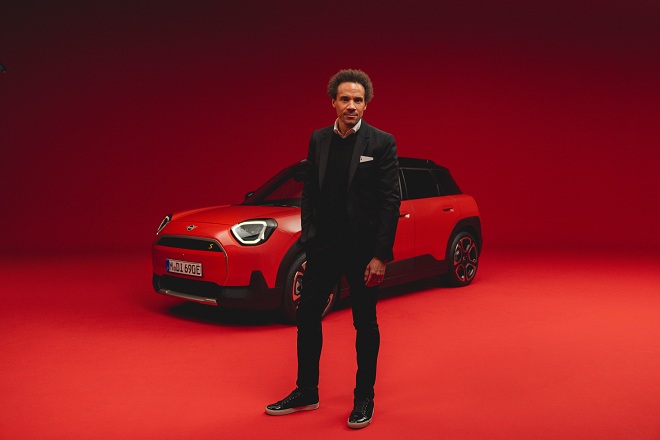
In Conversation With Oliver Heilmer – Head Of Design, MINI

The latest addition to the new MINI family, the MINI Aceman is the brand’s mid-size all-electric crossover, which combines compact exterior dimensions with a creative use of interior space. In a candid conversation with Oliver Heilmer, Head of Design, MINI, he talks about his vision, challenges and joy in designing the MINI Aceman. Read on to find out more.

Mr. Heilmer, when you joined MINI in 2017, how did you set about developing a vision to lead the models into the future?
Given that MINI is a very traditional brand, the question was: how do you evolve a brand like this into the future? To answer that, we went right back to the birth of the classic Mini to understand the spirit of Sir Alec Issigonis and derive from this where the MINI brand is heading in today’s context. The next step was to explore the essence of the original Mini together with our very diverse team and derive our own creative mindset. This was our foundation to develop an overall brand design vision to serve as a guiding principle in designing the new products.

What was your biggest challenge in developing a completely new design language?
The biggest challenge was and still is the profound engagement with the brand’s strong history. The first MINI was an absolute disruption – but that is also part of the story. We could just say that MINI is disruption and let everything that happened before stay in the history books. But that would be to discard the heart of the brand. Instead, we now talk about independent characters – and the MINI Cooper immediately shone as the icon in our eyes. You get closer to the quintessential ethos of the original model: a powerful character, but with as few fancy frills as possible – “Charismatic Simplicity” expresses this.

What does the new MINI “Charismatic Simplicity” design language represent and how is this reflected in the new MINI Aceman?
It’s about strong characters and about each family member having their own individual place within the MINI family. For example, the MINI Aceman has a unique design language when viewed from the side, and a unique graphic for the wheel arch trims. It is compact, agile and exudes a determination to forge ahead. That is what highlights this charismatic aspect. At the same time, we have consciously kept away from superfluous stylistic elements. Our challenge was to define a distinctive character with as few design elements as possible.

How would you describe the MINI Aceman character?
The MINI Aceman is both a practical and expressive, unique companion in everyday life. It steps out into the world fresh and carefree and takes up its place at the centre of the MINI family. It is an independent character that can be quite ‘edgy’ and appeals to customers who – irrespective of their age – value individuality and distinctiveness in urban spaces.

The MINI Aceman is the first of its kind. What makes the MINI Aceman the signature vehicle for the urban environment?
The MINI Aceman fits perfectly into the urban environment as it reinterprets the classic MINI values in a modern, all-electric crossover format. It offers an elevated seating position that conveys a feeling of safety and a generous amount of space without losing the compactness and manoeuvrability that are the MINI hallmarks.

Where do you draw fresh inspiration to develop new MINI models?
Inspiration never happens by chance but comes from a regular and targeted exchange of views within our team, in which each member contributes their inspiring and fascinating experiences. One team member builds skateboards, for example, while another lived on a sailing boat for two years. I would say it is roughly split between direct and indirect inspiration. Indirect inspiration involves everything that fuels a spirit, which comes across in the materials we use as well as in the surfaces and the digital aspects. Direct inspiration is in the architecture or fashion, for example. However, creative debate within the team throughout is crucial.

How do new, sustainably produced materials influence the design process at MINI?
Our brand design vision is based on our “creative mindset”, which consists of four guiding values: heartbeat, curiosity, responsibility and daredevil. These values stand for our basic principles such as heritage, curiosity for the new, sustainability and the courage to stand out from the crowd. For us, sustainability and the responsible use of resources have nothing to do with compromise, but rather exploring new possibilities in our creative process. Instead of materials such as leather, we use alternative technologies that allow more design freedom and individualisation, for example through using patterns or two-tone colours. The 3D knit is an example of one of the central design elements inspired by the sneaker industry. We are also replacing elements: for example, chrome with our new Vibrant Silver colour for aesthetic reasons.

Which of the MINI Aceman design innovations are you particularly proud of?
Two things in particular, and they are both about size. The MINI Aceman is very compact because of its very short overhangs at the front and rear. Even so, the vehicle is extremely safe. This is the result of truly outstanding engineering work. But it’s not just the things you can see that make it special. I would also make particular mention of how the sense of space is brought throughout the interior to achieve maximum lightness.

Are there any hidden design element that you would only see on closer inspection?
The idea behind us hiding little Easter eggs was knowing that people love discovering surprises. Not always in plain sight, but a little further down the line. Digital innovation allows for this sort of playfulness: for example, the navigation arrow can be depicted as a small MINI, or a large spinning record can be displayed on the central interface. And that’s how Spike was born, an animal friend who has always been a loyal companion to the brand. This gave rise to the idea of offering a kind of digital companion. That’s how Spike got on board the MINI and now lives in the display, so to speak.

What direction do you want the MINI design to take in the future?
As a team, we believe that our “creative mindset” will remain just as relevant to us as a guiding principle for future products. At the same time, we will focus even more strongly on the value of responsibility. Curiosity and responsibility – these are the values that we are introducing into the minds of the next generation.

If there was a product outside the car segment that you could design – what would it be?
Many things come to mind, but if I had to choose one, I would say: a sailing boat. I’ve only been sailing maybe five times in my life, but I still have a fascination for open water and dealing with the natural forces that prevail there. I designed a trimaran together with a fellow student for my degree dissertation, with the question of whether it is possible to design “automotive” in an area of mobility that is not necessarily confined to the road – I believe that there is still enormous potential there.

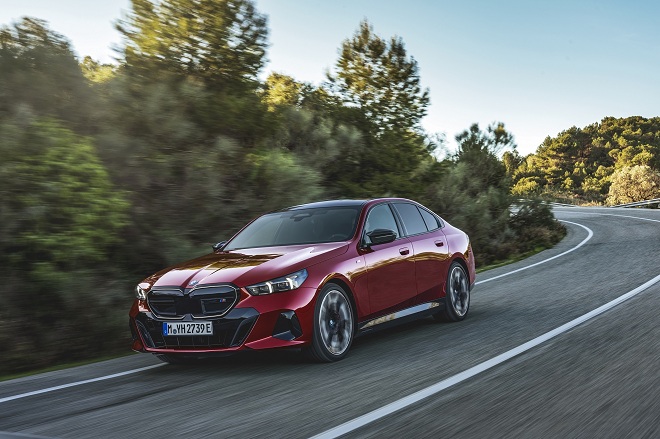
The First-Ever All-Electric BMW i5 M60 xDrive Launched In India

The first-ever BMW i5 was launched in India and will be available as an exclusive BMW M Performance model, BMW i5 M60 xDrive.

This all-electric sporty executive sedan leads with elegant presence, innovative technology, and dynamic performance. As a performance model from BMW M GmbH, the all-electric BMW i5 M60 xDrive comes as standard with specific exterior features that also visually underline its outstanding sport potential.

The first-ever BMW i5 M60 xDrive is available at all BMW dealerships across India as a Completely Built-Up Unit (CBU) model from today onwards.

Mr. Vikram Pawah, President, BMW Group India said, “With the first-ever BMW i5 M60 xDrive, you can expect nothing short of a completely electrifying experience. It brings together the legacy of eight generations of the sportiest executive sedan – the ‘5’, adrenaline laden performance of ‘M’ and the sustainability of ‘i’. As the sixth electric offering from BMW Group India, the BMW i5 M60 xDrive will further reinforce our leadership in the Indian luxury electric mobility segment. With uncompromised performance that defines exhilaration for the modern era, it is an experience engineered for unbridled excitement and unparalleled thrills.”

The first-ever BMW i5 M60 xDrive is available at an ex-showroom price of INR 1,19,50,000.

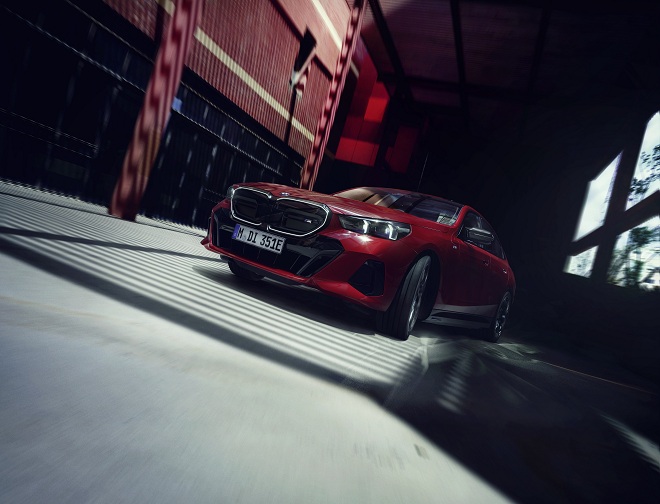
The exterior of the first-ever BMW i5 M60 xDrive is designed to be as innovative as you. The Illuminated BMW kidney grille sets the scene with its unique radiance. Stylistically inspired by the so-called “Sharknose” and projecting far forward, the BMW kidney grille functions as the visual centre of the vehicle front. The range of functions of the standard Adaptive LED Headlights includes the cornering light and the Matrix High Beam including the glare-free High Beam Assist BMW Selective Beam. In addition, blue design elements below the LED units stage the light sources impressively. The LED headlights show the hallmark four-eye face in a modern and reduced form. Daytime driving lights and turn indicators are each generated by two nearly vertical LED elements arranged on the outside. Just like the headlights and the BMW kidney grille, the other areas of the front apron also feature precisely defined contours and tightly designed surfaces. The clear and reduced design language is also expressed in the side view of the BMW i5. Its dynamically elongated proportions, long bonnet and almost upright BMW kidney grille are clearly visible from this perspective. At the transition to the rear, the shoulder and roof lines flow harmoniously into the contours of the lights. The flat rear lights interpret the brand’s hallmark L-shaped lights with modern appeal.

Individual design features give the BMW i5 M60 xDrive a striking look, which emphasise its dynamic performance. A front apron with black surfaces in its centre and large air intakes, a BMW kidney grille with contour line lighting, horizontal slats and M logo, side skirts and exterior mirror caps finished in high-gloss black, 20-inch M light alloy wheels and a rear apron with a pronounced diffuser insert signal the sporty character of the performance sedan.

Thanks to the standard M Sport Pro Package, the first-ever BMW i5 M60 xDrive features host of M specific design features, most notably the large air intakes at the front, strikingly flared side skirts in high-gloss black and a rear apron with diffuser insert and the M high-gloss Shadow Line. Further, the illuminated BMW kidney grille with black surround, the dynamic light carpet, high-gloss black exterior mirror caps and a black-painted M rear spoiler is also available. In addition, there are also the M Shadow Line lights for the front and rear and red-painted brake calipers.

BMW M Performance Accessories offer customers the ability to bring their personality to the vehicles. To enhance the sporty appearance and character of the car, customers have the option to choose from a wide range of individual accessories including wheel size upgrades or curated accessory packages.

Generous space, modern functionality, a high level of acoustic comfort as well as high-quality, precisely processed materials, fine workmanship and advanced digital services characterise the ambience in its interior. In the first-ever BMW i5 M60 xDrive, the emotional performance experience is supported by M specific displays on the BMW Curved Display. The bands of the main displays and associated design elements in the instrument cluster appear in a platinum silver finish. The typography and graphics are based on the display in the cockpit of high performance cars from BMW M GmbH.

The BMW Interaction Bar combines modern functionality and fascinating design. The strikingly backlit functional unit with crystalline surface structure extends below the trim strip across the entire width of the instrument panel far into the door panels and includes touch-sensitive control panels for controlling ventilation and air conditioning and for activating the hazard warning lights. My Modes provides for a customizable driving and interior experience. A large-surface Carbon Fibre interior trim strip for the instrument panel highlights the BMW Curved Display and the optional BMW Interaction Bar. As an alternative to the standard Carbon Fibre trim, Dark Silver Accent combined with fine-wood trim is also optionally available in dark oak high gloss or open pored. The new gear selector switch on the centre console control panel, also features a particularly modern and high-quality design.

The Panorama Skyroof connects almost the entire roof surface, extends without interruption from just behind the windscreen to almost the rear window and, with its dark glass surface, gives the vehicle a particularly elegant appearance. Sport seats, whose height and inclination can be adjusted electrically, are standard equipment. Comfort Seats can be made available optionally. Active Seat Ventilation is also available as standard. With 18 speakers and an amplifier output boosted to 655 watts, the Bowers & Wilkins Surround Sound System guarantees an outstanding acoustic experience. Further, the optimized functionality of the M leather steering wheel is combined with a classic three-spoke design. Contrast stitching in BMW M GmbH colours and a red centre marker for the steering wheel of the Performance model emphasise the sporty character of this model. Exclusive seat surfaces in Veganza/Alcantara finish with unique perforation in the shoulder area and translucent accents in red and blue is also available. In addition, an anthracite-coloured roof lining adds to the sporty flair.

The first-ever BMW i5 M60 xDrive combines a particularly powerful electric drive with hallmark M performance characteristics. Two highly integrated drive units on the front and rear axles, in which the electric motor, power electronics and transmission are very compactly combined in a common housing, form an electric all-wheel drive system that enables the BMW i5 M60 xDrive to deliver fascinating dynamic performance. The car instantly accelerates from 0 to 100 km/hr in 3.8 seconds with a top speed of 230 km/hr. It produces an output of 601 hp and a maximum torque of 795 Nm. The high-voltage battery combines compact dimensions with high energy density and it provides a usable energy content of 81.2 kWh. The BMW i5 M60 xDrive has a range of up to 516 kilometres determined in the WLTP test cycle. The BMW i5 M60 xDrive comes with a complimentary BMW Wallbox charger with installation. It can be integrated at home to enable safe and convenient charging up to 11 kW. The 22 kW AC Charging Professional is also available as an option.

BMW Operating System 8.5 in the first-ever BMW i5 M60 xDrive offers a wider range of digital content for information and entertainment, faster update cycles for functions, improved information on charging points for electric vehicles and optimised access to many specific online services. The display and control system expanded to include the BMW Head-Up Display in conjunction with the BMW Live Cockpit Professional. The advanced display and operating system offers a redesigned entry screen and “QuickSelect” access with an improved menu structure oriented towards consumer electronics devices. The new entry screen permanently shows the map view of the navigation system or other displays that can be individually configured. The cloud-based navigation system BMW Maps now not only offers an Augmented View display on the Information Display behind the steering wheel, but also improved functions for even more precise and charging station optimised navigation.

The spread of Driver Assistance Systems is more extensive. They support the driver and also increase comfort and safety. Standard equipment includes functions like Cruise Control, Attentiveness Assistant, Parking Assistant Professional with remote parking via smartphone and Reversing Assistant. The optional Driving Assistant Professional, including Distance Control with Stop & Go function and Steering and Lane Control Assistant, provides the driver with maximum support on long journeys and in city traffic.

The Adaptive Suspension Professional with electronically controlled shock absorbers is offered as standard. Infinitely adjustable valves enable wheel-specific regulation of the damper forces, which is adaptive to the driving style, the road conditions and also the load condition. The advanced Integral Active Steering makes manoeuvring more comfortable, enhances agility at medium speeds and conveys confidence when changing lanes and cornering at higher speeds. Optionally, customers can choose the Adaptive M Suspension Professional with additional Active Roll Stabilisation that uses the new control logic to optimise sportiness and comfort. The damper forces are controlled using an M specific characteristic.

The newly designed Travel & Comfort System is also available to provide customised entertainment in the rear. BMW Safety technologies include six airbags, Attentiveness Assistance, Dynamic Stability Control (DSC) including Cornering Brake Control (CBC), electric parking brake with auto hold, side-impact protection, electronic vehicle immobilizer and crash sensor, ISOFIX child seat mounting and integrated emergency spare wheel under the load floor.

Rolls-Royce ‘Makers of the Marque’: Ernest Hives

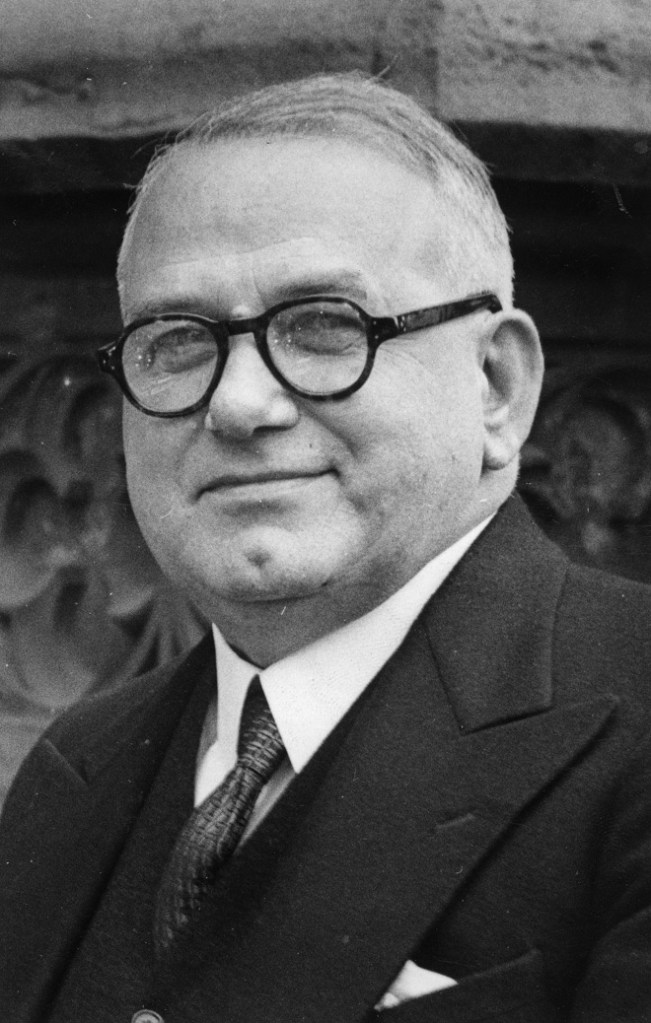
Photo by ANL/Shutterstock (1475290a)
Lord Hives Managing Director Of Rolls Royce Ltd.

Ernest Walter Hives was born on 21 April 1886 in Reading, Berkshire. In 1898, aged just 12, he began a three-year apprenticeship with a local engineering company that had a sideline dealing in motor cars.

From the outset, the young Hives was captivated by these fascinating new machines. He saw his future in them and, like Henry Royce a generation earlier, he did not allow his humble background and limited formal education to impede his ambitions. He shared Royce’s unending capacity for hard work, putting in long hours and applying what was evidently a similarly lively and enquiring mind. In particular, he would watch and listen to those on the night shift, steadily building his knowledge of the motor cars’ inner workings and operation.

But his was not merely a theoretical interest, and he soon taught himself to drive by moving cars around the garage. We can assume this was with his employers’ blessing since, though still only 14, he quickly graduated to the road, where he taught clients to drive. His combination of technical understanding, an intuitive ‘feel’ for the motor car and outstanding practical skills would shape his career in the years that followed.

That nascent career took a defining turn sometime around 1903 (the precise date is not known) when Hives rendered assistance to a motorist who was having trouble with one of his motor cars (likewise, history does not record whether this was at the Reading garage or out on the open road). What is certain is the motorist’s identity: The Hon. Charles Stewart Rolls.

Whenever and wherever this encounter occurred, Rolls was so impressed that he promptly took Hives on as his personal chauffeur. The young man’s star continued to rise with a swift promotion to the position of mechanic at C S Rolls & Co, the prestigious London motor car dealership established by his new employer at the start of 1903.

But driving remained Hives’ true calling. He left C S Rolls & Co to work first at Owens and then Napier, for whom he drove in the gruelling Scottish Reliability Trials of 1907 and 1908, and also at the 1908 Brooklands meeting, where he sported jockey’s racing colours of yellow and white (which he described as looking like ‘a poached egg’).

In 1908, he made what would be the most pivotal move of his career; taking a job at Rolls-Royce, by now in its fourth year, as an experimental tester. His own account suggests he was less than overjoyed at the prospect, at least initially. “When I got to Derby in 1908 and walked out of the station it was raining hard,” he wrote later. “Looking up Midland Road, it was so drab that I spun a coin to decide whether to go on to Rolls-Royce or catch the next train home.” By such small chances, momentary decisions and tiny margins for error are careers, lives and history itself so often determined.

Rolls-Royce had created the new role of experimental tester following its showing at the 1907 Scottish Reliability Trial. Not that the event had gone badly for the fledgling marque, on the contrary: the 40/50 H.P. – better known as the Silver Ghost – had comprehensively beaten the opposition, including the Napier driven by Hives; even more impressively, the punishing 15,000-mile test had been the motor car’s first competitive endurance run. Never one to rest on his laurels, however, Henry Royce saw this overwhelming success as conclusive proof of the need for continued testing to, in his own words, ‘take the best that exists and make it better’.

Hives joined the company’s newly formed experimental department, and immediately proved a natural at this highly structured, technically exacting work. His insights into the subtleties of a motor car’s performance and responses – that it developed a resonance noise at a certain speed, that the chassis felt either too stiff or not stiff enough under cornering, or that the engine seemed to have a ‘flat spot’ at a particular rpm (revolutions per minute) – would have been invaluable to Royce and his design team. Indeed, such were his gifts that when the Royal Automobile Club (RAC) announced its headline 1911 endurance trial from London to Edinburgh and back, Hives was automatically chosen to drive Rolls-Royce’s entry: Silver Ghost 1701.

Designed as an ‘Experimental Speed Car’, 1701 easily won the event, in which entrants completed the entire 794-mile trip between the two capitals locked in top gear. Under Hives’ expert handling, the vehicle averaged almost 20mph and returned a then unheard‑of fuel efficiency of over 24mpg – genuinely astonishing figures given the parlous state of Edwardian Britain’s roads, and a testament to Hives’ skills, courage and powers of concentration behind the wheel, as well as Royce’s engineering.

Rolls-Royce followed up this performance by contesting the even more daunting Alpine Trials, held over eight days and 2,600km on some of the highest roads in Europe. After an embarrassing underperformance by a ‘privateer’ car in 1912, Managing Director Claude Johnson was eager to set the record straight and approached the 1913 event in typically energetic and uncompromising fashion. He assembled an official ‘works’ team of three specially prepared Silver Ghosts, each with a hand-picked driver and mechanic, plus a fourth car built to the same specification driven by private owner James Radley. Hives was one of the company’s top drivers – as proven by his being the first to exceed 100mph in a Silver Ghost – and therefore an obvious selection for Johnson’s new crack team. Piloting the Number Two car, accompanied by mechanic George Hancock, he completed a near-faultless run (he was docked a single point for stalling on leaving the parking area in Salzburg) that earned him one of the team’s three silver medals, in an overall performance that saw the Silver Ghosts generally accepted as ‘the fastest, quietest and strongest cars in the event’.

Alongside his racing exploits, Hives continued to make a vital contribution to Rolls-Royce’s research and development efforts as an experimental tester, introducing the first ‘chassis bump rig’, that could test chassis’ components to destruction. He also undertook the still potentially hazardous work of testing Royce’s latest designs on the open road. Having settled on France as the ideal place to carry out high-speed road testing, he made regular sorties along a route he devised between Paris and Royce’s winter home at Le Canadel, near Nice. For someone who had adored motor cars since childhood, this must have been as close to the perfect job as it is possible to get.

The natural-born talent and sheer love of driving that Hives first demonstrated as a teenager never left him. Many who knew him spoke of a ‘sixth sense’ he had when driving, seeming to know instinctively if the road ahead was clear and when he could take the fastest line through a corner or needed to ease off.

As his career progressed, Hives became increasingly involved with developing Rolls-Royce’s aero engines as well as its automotive products. In 1937, he became a Board Director and General Works Manager; his most significant act was to split the company’s motor car (chassis) and aero engine operations into two independent entities, which remains the case to this day.

In 1946, he became Managing Director, and in 1950, Chairman of the Board: that same year, he received a peerage and, as 1st Baron Hives, completed an extraordinary journey from working as Charles Rolls’s chauffeur to leading the great company his late employer had co-founded almost 50 years earlier. Yet the man who had doggedly worked his way up from a Reading garage to the House of Lords always remained modest, describing himself with an understatement worthy of Royce’s equally understated self-characterisation as ‘just a mechanic’. Respectfully, Rolls-Royce Motor Cars begs to differ.

Andrew Ball, Head of Corporate Relations and Heritage, Rolls-Royce Motor Cars, said: “Even for so gifted an engineer as Henry Royce, there’s a limit to how far theory can take you: there comes a point where someone has to determine whether your design actually works in practice. In the early days of Rolls-Royce, that was Ernest Hives. From humble origins, Hives turned his fascination for motor cars and outstanding self-taught driving skills into a glittering career with Rolls-Royce, first as an experimental test driver, then as one of the ‘works’ team contesting the great motor trials of the day. His observations and hands-on experiences from the road would have been crucial to Royce’s continuous improvement process, making him a key figure in the technical development of the ‘best car in the world’.

New MG Cyberster To Lead 100 Years Of MG Celebrations At Salon Privé London

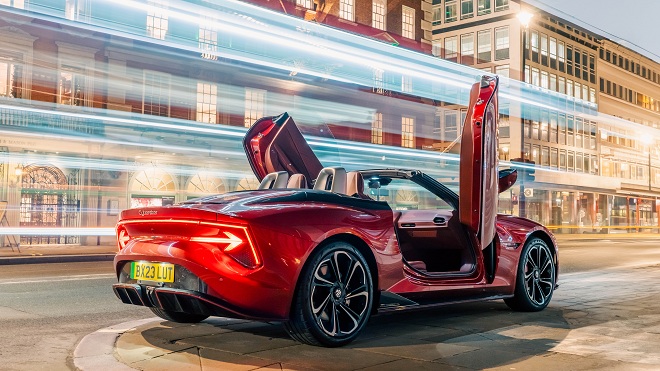
The dramatic new MG Cyberster electric sports car will lead celebrations for 100 years of the famous MG brand at this week’s Salon Privé London Royal Hospital Chelsea spectacular, which runs from 18-20 April. It will be one of the first public opportunities to officially see the new car up close, ahead of its official market launch this summer.

The new MG Cyberster is the spiritual successor to the famous MGB Roadster of the 1960s. A two-door, two-seater convertible, its all-electric powertrain takes MG into its second century in head-turning style. The Chelsea showcase is particularly fitting as the MG Cyberster was designed just a few miles away, at the firm’s London design centre in Marylebone.

Overseen by chief designer Carl Gotham, the MG Cyberster draws from the company’s heritage with a flourish, with key features including a low nose and distinctive rear haunches, plus ultra-modern touches such as a Kammback tail and striking scissor doors.

The new MG Cyberster will be offered in two guises. Even the single motor version produces a fiery 340PS, for 0-62mph in just 5.2 seconds – performance the original MGB Roadster could only dream of. The range-topping dual motor all-wheel drive MG Cyberster will produce a ferocious 544PS, for 0-62mph in just 3.2 seconds.

The MG Cyberster in dual-motor all-wheel drive guise will easily become the fastest-accelerating, most powerful production car ever to have worn the iconic MG badge.

Even the choice of colours will be evocative. The vivid Dynamic Red launch colour will be joined by New English White – a contemporary interpretation of Old English White – plus Camden Grey and Cosmic Silver. There will also be a premium option, an intense Inca Yellow.

“Like the original MGB Roadster of the 60s, the MG Cyberster is a two-door, two-seater convertible with a design inspired by MG’s sporting history,” said Guy Pigounakis, MG Motor UK commercial director. “However, its fully electric drivetrain and high-tech interior marks a new era for the brand and is a figurehead for the next generation of electric motoring.

“Salon Privé is the perfect setting to introduce the MG Cyberster to a wider audience and allow guests to closer inspect our halo model. We’re looking forward to being part of this prestigious event and joining some of the world’s greatest marques on display.”

Other attractions at Salon Privé London include a tantalising selection of new cars from the world’s finest manufacturers, and a series of themed days that celebrate 50 years of the Porsche 911 Turbo, Magnificent McLarens, a world record parade of Aston Martin Valkyrie with AMV Owners Club and Supercar Saturday in partnership with SCC Private Members club.

The famous Salon Privé London Concours de Vente – where every classic car being judged is for sale – also returns for its third year, showcasing rare cars from some of the world’s finest dealers. This year’s celebrity judges include Yasmin Le Bon, Amanda Stretton, Edd China and James Elliott, who will decide the class winners and the Prix d’Honneur on Friday. On Saturday, the People’s Choice and Pensioner’s Choice will also be decided, and there will be a special public celebration for the Prix d’Honneur winner.

Naturally, the traditional Salon Privé lifestyle and luxury will be evident throughout the Royal Hospital Chelsea event, with the best in high-end jewellery, boats, helicopters, food and drink plus plenty more to fascinate its elite guests.

Pre-Launch Bookings Open For The First-Ever All-Electric BMW i5 M60 xDrive

BMW India will open bookings for the first-ever all-electric BMW i5 from 04 April 2024 onwards. The car will be available in the country as a Completely Built-Up (CBU) model and can be booked at the BMW dealership network and through BMW Online Shop.

Mr. Vikram Pawah, President, BMW Group India said, “We are very excited to announce the pre-launch bookings of the first-ever BMW i5 M60 xDrive in India. The BMW i5 M60 xDrive is an epic athlete – it captivates from start to finish, and leads with elegant design, innovative technology and dynamic performance. BMW Group India has been a leader in the electric luxury car segment for two consecutive years, offering the most versatile portfolio – BMW i7, BMW iX, BMW i4, BMW iX1 and MINI SE. With the introduction of the first-ever BMW i5 M60 xDrive, we will further enhance the exceptionally diverse and innovative lineup of electric vehicles, and strengthen BMW Group India’s position in the Indian electric luxury car segment.”

The first-ever BMW i5 M60 xDrive combines the power of BMW M and the innovation of BMW i, and is precision-built for action and adrenaline. The BMW i5 M60 xDrive combines an output of up to 442 kW/601 hp drive with hallmark M performance and specific design features. The system torque generated of 820 Nm enables the BMW i5 M60 to accelerate from zero to 100 km/h in just 3.8 seconds, while delivering a WLTP range of up to 516 km.

Deliveries will be starting from May 2024.

5 Reasons Why The Kia Sonet HTK+ Represents A Great Value Proposition

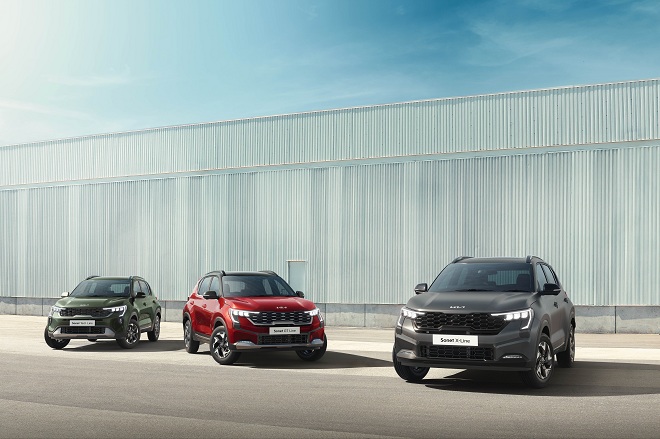
In the highly competitive compact SUV market, the Kia Sonet remains popular for its exceptional design, impressive features, and premium driving experience. While there are multiple trim levels to choose from, the Kia Sonet HTK+ delivers a blend of advanced features, a safer driving experience and technological prowess with a substantial value-for-money proposition. 

1.   Power & Efficiency

The 1.2L engine strikes a great balance between dynamic city driving (82 bhp) and responsible fuel consumption thanks to its BS6 Phase 2 compliance. Paired with a smooth-shifting 5-speed manual transmission, you get the most value-driven experience while still enjoying budget-friendly mileage. 

2.   Hi-tech Safety

With the HTK+, you get impressive segment-best features including 6 airbags, an Electronic Stability Program, Hill Hold Control, and Brake Assist. This level of safety equipment is a welcome bonus in this price range. Additional features like a Tyre Pressure Monitoring System and Over-Speed Warning systems add an extra layer of protection. 

3.   Elevated Comfort Features

Automatic climate control takes the hassle out of finding the perfect temperature, letting you focus on the road. Rear passengers stay comfortable on longer and shorter commutes, thanks to rear AC vents.  Cruise control makes those highway trips less tiring and helps you stay alert. 

4.   Tech-Savvy Convenience Enhancements

The HTK+ makes manoeuvring easier with both parking sensors and a rear camera with guidance lines. Keyless Start adds high-tech convenience to your routine, giving the Sonet HTK+ a premium feel. 

5.   Exceptional Value Proposition

With a starting price of Rs. 9.90 Lakh, the Kia Sonet HTK+ is a testament to Kia’s commitment to making a feature-rich car accessible to a wider range of buyers. It is the SUV that proves style, safety, and savings can go hand-in-hand.

Nissan Launches The Arc Business Plan

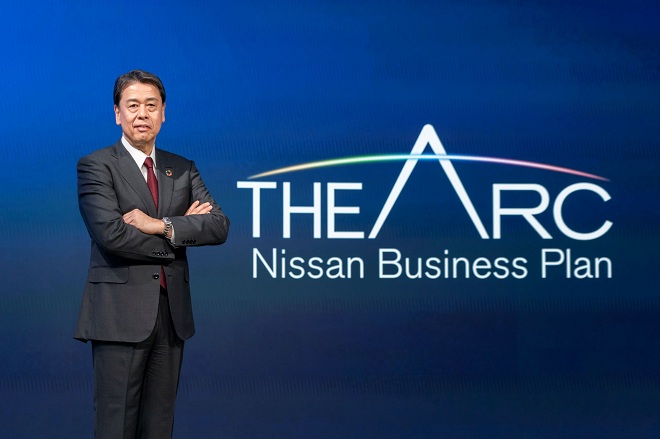
Nissan Motor Co., Ltd, has launched The Arc, its new business plan to drive value and strengthen competitiveness. The plan is focused on a broad-based product offensive, increased electrification, new approaches to engineering and manufacturing, the adoption of new technologies, and the use of strategic partnerships to increase global unit sales and improve profitability.

The plan is positioned as a bridge between the Nissan NEXT business transformation plan running from fiscal 2020 through fiscal 2023 and Nissan Ambition 2030, the company’s long-term vision. The new plan is split into mid-term imperatives for fiscal years 2024 through 2026, and mid-long-term actions to be carried out through 2030.

Nissan President and Chief Executive Officer Makoto Uchida said: “The Arc plan shows our path to the future. It illustrates our continuous progression and ability to navigate changing market conditions. This plan will enable us to go further and faster in driving value and competitiveness. Faced with extreme market volatility, Nissan is taking decisive actions guided by the new plan to ensure sustainable growth and profitability.”

Under the two-part plan, Nissan will first take actions to ensure volume growth through a tailored regional strategy and prepare for an accelerated transition to EVs, supported by a balanced electrified/ICE product portfolio, volume growth in major markets and financial discipline. Through these initiatives Nissan aims to lift annual sales by 1 million units and increase its operating profit margin to more than 6%, both by the end of fiscal year 2026. This will pave the way for the second part of the plan aimed to enable the EV transition and realize long-term profitable growth, supported by smart partnerships, enhanced EV competitiveness, differentiated innovations and new revenue streams. By fiscal year 2030, Nissan sees a revenue potential of 2.5 trillion yen from new business opportunities.

Balanced product portfolio

Nissan plans to launch 30 new models over the next three years, of which 16 will be electrified, and 14 will be ICE models, to meet the diversified customer needs in markets where the pace of electrification differs. Nissan plans to launch a total of 34 electrified models from fiscal year 2024 and 2030 to cover all segments, with the model mix of electrified vehicles expected to account for 40% globally by fiscal year 2026 and rise to 60% by the end of the decade.

Ensuring market growth through a tailored regional strategy

In key regions and markets, Nissan’s actions by fiscal year 2026 (unless otherwise indicated) include:

Americas:

  • Increase across-region sales by 330,000 units (in fiscal year 2026 and compared to fiscal year 2023) and invest 200 million USD in integrated customer experience in the U.S.
  • In the U.S. and Canada: Launch seven all-new models
  • In the U.S.: Refresh 78% of passenger vehicle line-up for Nissan brand and launch e-POWER and plug-in hybrid models

China:

  • Refresh 73% of Nissan-brand models and launch eight new-energy vehicles (NEVs), including four Nissan-branded models
  • Target 1-million-unit sales in fiscal year 2026, representing an increase of 200,000 units
  • Start vehicle exports in 2025; Aim for 100,000 unit level
  • Continue to optimize production capacity with local partners

Japan:

  • Refresh 80% of passenger model line-up, launching five all-new models
  • Achieve a 70% electrified level in passenger vehicle line-up
  • Increase sales by 90,000 units (compared to fiscal year 2023) to 600,000 units in fiscal year 2026

Africa, Middle East, India, Europe and Oceania:

  • Increase across-region sales units by 300,000 units (in fiscal year 2026 and compared to fiscal year 2023)
  • In Europe: Launch six all-new models; achieve 40% EV passenger-vehicle sales mix
  • In the Middle East: Launch five all-new SUVs
  • In India: Launch three all-new models and become a hub for exports, at a level of 100,000 units
  • In Oceania: Launch a 1-ton pickup and introduce a C crossover EV
  • In Africa: Launch two all-new SUVs and expand A-segment ICE vehicle

EV competitiveness

The product offensive will be supported by new development and manufacturing approaches aimed to make EVs more affordable and increase profitability. By developing EVs in families, integrating powertrains, utilizing next-generation modular manufacturing, group sourcing, and battery innovations, Nissan aims to reduce the cost of next-generation EVs by 30% (when compared to the current model Ariya crossover) and achieve cost-parity between EVs and ICE models by fiscal year 2030.

In the area of family development alone, the cost of subsequent vehicles – those developed based on the main vehicle in the family – can be reduced by 50%, the variation of trim parts reduced by 70% and development lead time shortened by four months. By adopting modular manufacturing, the vehicle production line will be shortened, reducing the production time per vehicle by 20%.

Under the Arc plan, more plants in Japan and overseas will adopt the Nissan Intelligent Factory concept, with the Oppama and Nissan Motor Kyushu plants in Japan, the Sunderland Plant in the UK and Canton and Smyrna plants in the U.S. starting the adoption from fiscal year 2026 through 2030. Meanwhile the EV36Zero production approach will be extended from Sunderland in the UK to plants including Canton, Decherd and Smyrna in the U.S., and Tochigi and Kyushu in Japan from fiscal year 2025 through 2028.

New technologies

The plan includes proposals to accelerate the evolution of vehicle intelligence technologies such as next-generation ProPILOT driver-assistance system, which realize door-to-door autonomous driving technology from on-highway to off-highway, private premises, and parking.

Nissan will offer enhanced NCM li-ion, LFP and all solid-state batteries to provide diversified EVs to meet different customer needs. Nissan will significantly enhance NCM li-ion batteries, reducing quick-charging time by 50% and increasing energy density by 50% compared to the Ariya. LFP batteries, to be developed and produced in Japan, will be launched that will reduce cost by 30% compared to the Sakura EV minivehicle. New EVs with enhanced NCM li-ion, LFP and all-solid-state batteries will be launched in fiscal year 2028.

Strategic partnerships

Nissan will harness strategic partnerships to stay competitive and offer a global portfolio of products and technology. Nissan will continue to leverage the alliance with Renault and Mitsubishi Motors in Europe, LATAM, ASEAN and India. In China, Nissan will fully utilize its local assets to meet the needs of China and beyond; and explore new partnerships in Japan and the U.S. Batteries will be developed and sourced with partners to bring 135 gigawatt hours of global capacity.

Financial discipline to deliver resilient, profitable performance

Underpinning the plan is firm financial discipline, enabling stable CAPEX and R&D investment ratio versus net revenue of between 7% to 8% excluding battery capacity investment. Additionally, Nissan plans to invest more than 400 billion yen in battery capacity. Meanwhile, investment in electrification will increase progressively, becoming more than 70% by fiscal year 2026.

Managing these investments is aimed to allow delivering benefits to all stakeholders, with Nissan maintaining positive free cash flow before M&A – even after electrification investments. This is to secure total shareholder return at more than 30%. Nissan aims to maintain net cash at a healthy level of 1 trillion yen throughout the Arc plan period.

“Under this comprehensive plan we will enhance Nissan’s competitiveness and achieve sustainable profitability,” added Uchida. “Nissan is confident that it has what it takes to properly execute this plan, which will provide us with the firm foundation we need to bridge to our Nissan Ambition 2030 vision.”

Rolls-Royce Unveils Arcadia Droptail

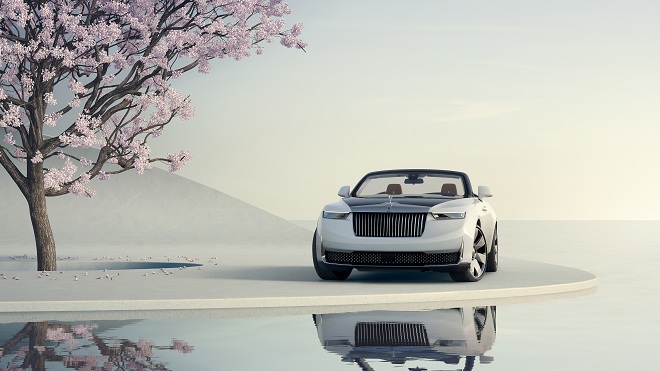
Rolls-Royce Motor Cars is delighted to present Rolls-Royce Arcadia Droptail, an exquisite coachbuilt expression of tranquillity. Arcadia Droptail is the epitome of quiet irreverence, celebrating purity of form and natural materials while serving as a bold statement of the client’s personal taste. Commissioned by an individual who possesses a distinct affinity for architecture and design, Arcadia Droptail is a testimony to the patron’s sensibilities and personal codes of luxury, defined by purity and subtle restraint, reflecting their firm belief in distilling complexity to reveal the inherent, fundamental essence.

This coachbuilt commission takes its name from the mythical realm of Arcadia, a place depicted in Ancient Greek mythology as ‘Heaven on Earth’ – a land renowned for its extraordinary natural beauty and perfect harmony. Like the haven that inspires its name, Arcadia Droptail was envisioned by the client as a serene space characterised by reduction, material depth and tactility that would serve as a refuge from the complexities of their business life.

In capturing the theme of tranquillity, Coachbuild designers embarked on an exploration of design, sculpture and architecture from the client’s favourite regions around the world. This included the precision and richness of modernist tropical sky gardens seen in Singapore, Indonesia and Vietnam as well as British ‘Biomimetic’ architecture, where organic forms and material honesty are celebrated.

In addition to these references, the client was also inspired by the motor car itself and the purity of the Droptail design concept. The commissioning client insisted that their Coachbuild motor car should be absolutely faithful to the earliest hand-drawn sketch they were first presented with in 2019.

It was the profile of this highly contemporary projection of the roadster body type that resonated so strongly with the commissioning client. They were particularly compelled by the motor car’s bold, low stance, ensconcing cabin design and dramatic body lines. They also immediately recognised the nautical inspiration behind Droptail’s ‘sail cowls’: named after their resemblance to a yacht’s jib, these sharp, angular forms rise behind the doors and curve gently inwards, subtly directing the eye to the motor car’s occupants.

EXTERIOR: A TRIBUTE TO DROPTAIL
In order to fulfil the client’s ambition to honour Droptail’s form, Rolls-Royce Coachbuild designers developed a calm, natural duotone colourway for the motor car’s coachwork. The client’s aspiration was to define a timeless white, appearing as a solid colour at first glance, but creating a level of intrigue upon further study under natural light. To achieve this, the main body colour is a solid white infused with aluminium and glass particles. This not only creates an effervescent shimmer when the light strikes the coachwork but, upon close inspection, creates the illusion of unending depth in the paint. Rolls-Royce specialists developed a more faceted, striking metallic using larger sizing of aluminium particles. The client was very particular and involved in their request for the Bespoke silver to contrast against the white, not only in colour, but also in terms of intensity.

In a key departure from the other three coachbuilt Droptails in this series, the carbon fibre used to construct the lower sections of Droptail is painted in the solid Bespoke silver colour rather than left fully or partially exposed, visually ‘lifting’ the motor car in profile to intensify its lithe, dynamic intent.

In tribute to the brilliant mirror finish of brightwork on historical Rolls-Royces, which particularly fascinate the client, the exterior grille surround, ‘kinked’ vane pieces and 22-inch alloy wheels have been fully mirror-polished.

While Arcadia Droptail’s exterior palette is rich in subtle detail, its primary intention is to celebrate the form and proportions of the coachwork. The client was particularly compelled by Droptail’s clean, monolithic surfacing and bold use of negative sculpture – features that are amplified by the motor car’s muted paint colours, which reflect sunlight and cast dramatic shadows, highlighting Droptail’s many subtle design gestures.

INTERIOR: THE CENTRALITY OF WOOD
As the exterior of Rolls-Royce Arcadia Droptail celebrates the motor car’s form, the interior is a deeply personal reflection of the client’s individual aesthetic, reflective of the style they have curated in their residences and business spaces around the world. Arcadia Droptail’s colour palette and material treatment was envisioned to be a truly personal statement and instantly recognisable as a personal signature of the commissioning client.

Wood development was central to Arcadia Droptail’s interior and the client’s focus, whose very specific expectations concentrated on the texture, grain, colour and richness of the material itself. The client shared many examples of preferences and inspiration from architecture, residences and classic cars, to guide Rolls-Royce Coachbuild designers and material specialists.

Santos Straight Grain was eventually selected as the most modern statement, based upon its rich texture and visual intrigue, which is derived from its unique, interlocking grain pattern.

Using this high-density hardwood on Droptail’s interior posed a significant challenge for the marque’s craftspeople. Santos Straight Grain has one of the finest grain types of all the wood species used within a Rolls-Royce – if not handled with the greatest care, it easily tears when machined and ‘checks’ (a crack that appears parallel to the grain) during the drying process. Despite the challenges of working with this delicate material, Santos Straight Grain is used throughout Droptail, including the aerodynamically functional rear deck section, where the grain of the open pore veneer is laid at a perfect 55° angle. To achieve a perfect composition over complex geometry, Rolls-Royce artisans used a total of 233 wood pieces throughout Arcadia Droptail, with 76 pieces applied to the rear deck alone.

Given that Arcadia Droptail will be used internationally, including some tropical climates, specific attention was paid to developing a protection system and testing process for the exterior wood surfaces. Coatings used on superyachts were initially considered but rejected given that they require regular servicing and re-application. Instead, a Bespoke lacquer was developed that requires just one application for the lifetime of the motor car.

To validate this coating, Rolls-Royce specialists conceived a unique testing protocol wherein veneer pieces were subject to a punishing cycle inside a specialist machine simulating global weather extremes. This involved spraying sample wood pieces with water intermittently, between periods of leaving them to dry in darkness and exposing them to heat and bright light.

This was repeated for 1,000 hours on 18 different samples before the marque’s specialists were satisfied with the endurance of the pieces. In total, the wood pieces and protective coating required more than 8,000 hours of development.

INTERIOR: A STUDY IN WHITE
The leather interior is finished in two entirely Bespoke hues, named after the client and reserved exclusively for their use. The main leather colour is a Bespoke White hue, continuing the exterior paint theme, while the contrast leather is a Bespoke tan colour, developed to perfectly complement the selected wood.

The interior also includes the exquisite shawl panel that unites all four Droptail motor cars and is the largest continuous wood section ever seen on a Rolls-Royce motor car. In Arcadia Droptail, it is made in the same Santos Straight Grain open pore veneer as the rear deck, book-matched at the same 55° angle, with individually shaped leave stripes running seamlessly into the door linings. CAD tools were used to map the placement of each wood piece, and although it appears to be constructed from just two mirrored sections of veneer, this panel alone is made up of 40 sections, each digitally mapped before being fixed to the motor car.

Applying wood to the complex curvatures of Droptail’s interior required Rolls-Royce engineers to develop an entirely new substructure for several components. The dramatic geometry of the dashboard, door linings and central cantilevered ‘plinth’ armrest had to be incredibly rigid to ensure the stability of the wood pieces once they were laid in place. Engineers called on carbon fibre layering techniques used in Formula 1 motor racing to develop an incredibly stiff base onto which the wood could be applied, ensuring that it remained secure regardless of the dynamic extremes the motor car experienced.

BESPOKE TIMEPIECE: A PRECISION INSTRUMENT
The Santos Straight Grain veneer fascia incorporates a clock conceived and developed by Rolls-Royce Coachbuild designers and craftspeople. This expression of haute horlogerie is the most complex Rolls-Royce clock face ever created: the assembly alone was a five-month process, which was preceded by more than two years of development.

The clock incorporates an exquisite geometric guilloché pattern in raw metal with 119 facets. This is a symbolic nod to the marque’s heritage; as the client first saw a preview of the motor car in late 2023 – the year when Rolls-Royce celebrated its 119-year anniversary. The specially designed clock face also includes partly polished, partly brushed hands and 12 ‘chaplets’ – or hour markers – each just 0.1mm thick. To ensure the readability of the timepiece, specialists gave each chaplet an infill bridge and painted them by hand using a camera capable of magnifying an image by up to 100x.

While many haute horlogerie methods were used to develop the timepiece, the testing and validation standards at Rolls-Royce are higher than those of the watch world. This required the marque’s specialists to draw on an expansive palette of materials. For example, instead of anodizing the timepiece’s minute marker, which is common practice in watch manufacturing, it is finished in a ceramic coating chosen because of its stability over time as well as its aesthetic merits. Small areas of the coating were laser-etched away to reveal the mirror finish of the aluminium material beneath it. Like every piece within the timepiece, including the Bespoke ‘double R’ monogram, they were individually machined from solid stainless-steel billet and polished by hand prior to assembly.

Themes from the clock are paired with the instrument dials, sharing materials, techniques and execution. They feature the same repeated guilloché pattern, as well as brushed and polished brightwork and frosted white inserts, recalling the colourway of the motor car.

STATEMENT OF A COSMOPOLITAN LIFESTYLE
Reflecting the patron’s international lifestyle, the motor car is specified with left-hand drive to facilitate its use around the world. This international dimension was so important to the commissioning client that the Coachbuild Collective wanted them to experience the motor car in multiple locations around the world before it was built. Coachbuild designers used the marque’s ‘holodeck’ to facilitate this – a unique virtual 3D environment in which the client uses an advanced virtual reality (VR) headset to view the motor car as it would appear in specific locations around the world.

ARCADIA DROPTAIL: AN ELEGANT SPACE IN THE DROPTAIL CANON
While every Rolls-Royce client is different, they each share a powerful strength of conviction, and this individual’s requirements were clearly stated from the outset. However, translating these complex, highly personal sensibilities into a coherent, workable design was the product of a significant body of work. It was here that the Coachbuild process, with its unprecedented investment of time – over four years in total – and uniquely close relationship between the client and the marque, paid incalculable dividends.

Coachbuild designers invested many months examining and interrogating the client’s tastes in everything from clothes and furnishings to food and travel destinations. From this, they defined and codified an aesthetic rooted in the client’s truth and experience; an objective portrait of their internal world and external surroundings, backed by the certainty and authority of the design team’s own discernment, understanding and professional judgment. Other family members, notably the client’s daughter, also become engaged with the process. When the final design was ready, the client’s wider family were invited to review it: all agreed that it perfectly captured the client’s aesthetic and character.

The client derived enormous pleasure from having their tastes and identity so clearly rationalised and projected back to them. Indeed, the process revealed the client had a far more modern outlook than they realised, defined by lightness, the use of natural materials and a clear passion for precision. Arcadia Droptail has since become a reference point for the client’s commissions from other luxury houses and architects.

This unique expression of Rolls-Royce Droptail reflects this remarkable client’s confidence, clarity of vision and long-term relationship with Rolls-Royce Motor Cars. Its significance lies both in its exquisitely minimal execution and the unique skill of Rolls-Royce Coachbuild designers in capturing the sensibilities and soul of an individual.

First Bespoke Limited Edition In India Curated By Bentley Mulliner

Five individually curated Bentley models, commissioned by a Bentley retailer, comprise the first Mulliner Bespoke Edition created exclusively for the Indian Market. All feature an extensive specification, with unique exterior and interior finishes inspired by the colours of the Indian flag. Each example is handcrafted in Crewe, England, by Mulliner, Bentley’s in-house personalisation and bespoke department.

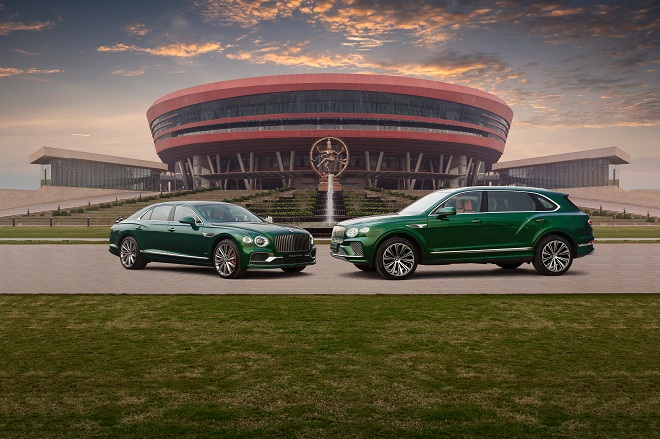
The Opulence Edition for India is limited to just five vehicles: a Continental GT Speed, a Flying Spur Speed and three Bentayga EWB Azure models. All five are presented in Scarab Green exterior finish, an exclusive Mulliner development inspired by the iridescent green exo-skeleton of the Scarab beetle. Complemented by bespoke interior colourways of Mandarin and Cumbrian Green hide, each car is a tribute to India’s national colours.

Bespoke elements of the Opulence Edition
Although different in character, all five models in the Opulence Edition have key bespoke elements in common. All feature the lustrous Scarab Green exterior finish that was first developed for Bentley’s first coachbuilt barchetta, the Bacalar. Inside, the orange and green of India’s national colours are represented by upholstery of Mandarin main hide and Cumbrian Green secondary hide. The mirror-like Piano veneer of the fascia and trim is also finished in Cumbrian Green, with an inset chrome motif on the fascia of wild horses and mountain peaks. From the initial brief, designers and artisans painstakingly produced multiple depictions until the perfect composition was achieved. The design was ultimately hand-drawn, and carefully applied to the fascia using a chrome overlay technique. This unique colour and trim specification is the outcome of close collaboration between Bentley Mumbai and the Mulliner team, and celebrates the first-ever Mulliner bespoke edition created for the Indian market.

Performance delivered by the Opulence Edition Continental GT Speed
The 659 PS Continental GT Speed is the ultimate performance-focused iteration of the world’s benchmark luxury Grand Tourer, and the Opulence Edition complements its character perfectly. The Scarab Green exterior and 22” Speed wheels in dark tint finish focus one’s attention on its poised and muscular lines, while the LED welcome lamps, and self-levelling wheel centre badges are typical of Mulliner’s perfectionist attention to detail.

Open the driver’s door, and the full drama of the two-colour interior is revealed, with knurled switchgear and instrument bezels set on a fascia of Cumbrian Green in a piano finish. Contrast stitching in Mandarin picks out the lines of the upholstery and the diamonds of the quilted sections. The Opulence Edition Continental GT Speed was limited to one example, and this has already been delivered to its delighted owner.

Opulence Edition Flying Spur Speed’s bespoke craftsmanship
The Opulence Edition Flying Spur Speed’s lavish specification includes diamond knurling on bezels and switchgear, Naim for Bentley audio and the unique Bentley rotating display. Throughout the cabin, the perforated, quilted seat upholstery is bordered by side bolsters with Mandarin contrast stitching and Speed-embroidered headrests.

This Bentley’s performance focus finds the perfect expression in the Opulence Edition’s Scarab Green exterior finish, complemented by 22” dark tint Speed wheels with self-levelling wheel centre badges. The illuminated Flying B radiator mascot is finished in polished stainless steel, providing a contrast to the dark tint brightwork of the Speed specification.

The pinnacle performance model of the Flying Spur line up is powered by a 626 bhp 6.0-litre twin turbocharged W12 engine, with Electronic All Wheel Steering, Torque Vectoring by Brake technology and Bentley Dynamic Ride as standard. Just one Opulence Edition Flying Spur Speed will be produced.

The Opulence Edition Bentayga EWB Azure
While the Bentayga EWB is more than capable of soul-stirring performance, the emphasis with the Opulence Edition is on space, wellbeing and abundant luxury. The Opulence Edition Bentayga, of which three examples will be made, comes in four-seat configuration with the Mulliner console bottle cooler separating the two rear seats. Contrast stitching in Mandarin runs around the lip of the fascia top roll, and around the edge of the Cumbrian Green seat bolsters, while contrast stitching in Cumbrian Green can be seen in the outer diamonds of the quilted seat inner areas and the Azure-embroidered headrests.

With the Bentley Dynamic Ride 48V active anti-roll control system providing the optimum balance between ride comfort, handling and body control, the Opulence Edition Bentayga EWB Azure provides a haven of calm and comfort.