
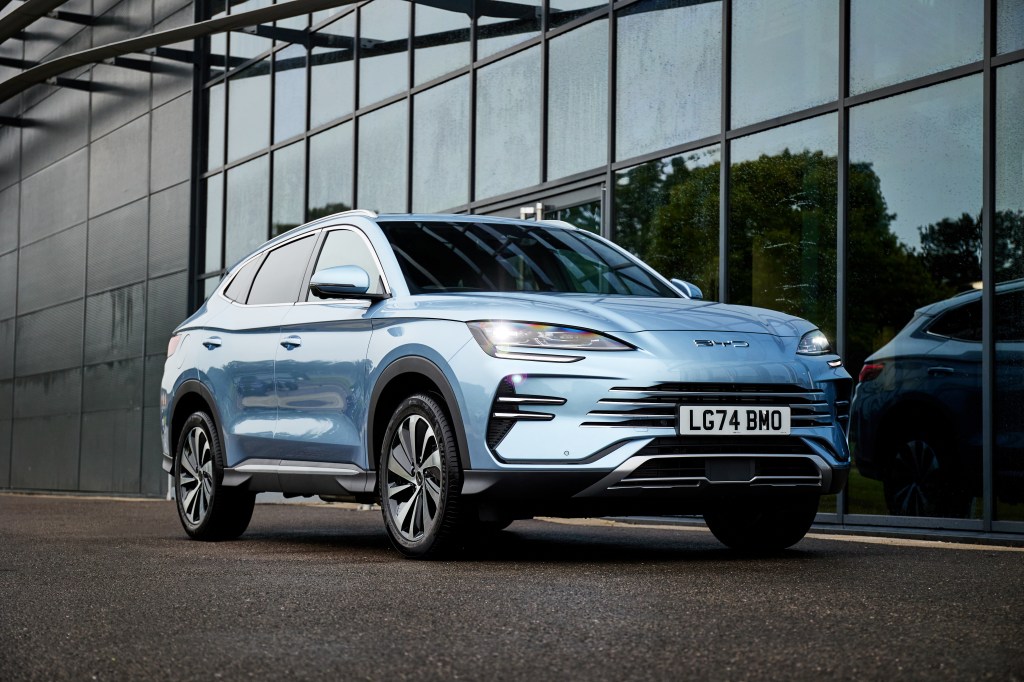
Almost one in five (18%) Brits believe that you cannot take an electric vehicle (EV) charger with you when moving house, according to new research by BYD UK. EVs are shaping the future of motoring, but the manufacturer’s latest research reveals that myths surrounding EVs remain prevalent across the UK.
To address these misconceptions, BYD surveyed 2,000 people in the UK via OnePoll to identify the most common EV myths. Steve Beattie, Sales and Marketing Director at BYD UK, debunks these myths as part of the company’s mission to accelerate the shift to sustainable mobility.
The most widely believed myth is that you cannot take an EV charger with you when moving house, with 18% of respondents agreeing. Steve explains: “While EV chargers are fixed to homes, they can be professionally uninstalled and reinstalled at a new address. Many people don’t realise this, but with professional help, moving a charger is straightforward. It’s worth considering the cost, though, as installation is often included with new chargers.”
Another misconception, believed by 17% of people, is that an EV can be manual. Steve adds: “EVs are automatic by design, thanks to their consistent power delivery, which removes the need for a clutch or gearbox. They’re built for simplicity and efficiency, making them easier and smoother to drive.”
Almost one in six (14%) respondents think an EV cannot drive through water.
Steve comments: “Modern EVs are built to rigorous safety standards, with waterproofed components that allow them to drive through water just as safely as petrol or diesel cars. Whether it’s rain, puddles, or car washes, EVs are thoroughly tested for water resistance, so drivers don’t need to worry.”
One in seven (13%) people believe that EVs will not last as long as internal combustion engine (ICE) cars. Steve explains: “EVs typically have fewer moving parts, which reduces wear and tear over time. Long warranties, like BYD’s 8 year or 125,000 mile battery guarantee, highlight their durability, and reflect manufacturers’ confidence in their longevity.”
Another 13% believe that EVs can charge themselves. Steve clarifies: “This could be due to confusion around regenerative braking. Regenerative braking does recover energy during deceleration, but it doesn’t fully charge the battery. It’s an efficient way to extend range and improve performance, but EVs still need to be plugged in for a complete charge.”
The survey also revealed that 11% of respondents think EVs cannot be towed.
Steve adds: “EVs can be safely towed, as long as the correct method is used. Flatbed tow trucks are the safest option for any vehicle, including EVs. Dolly towing is also possible for some EVs if they can be placed in neutral gear. It’s just about using the right approach.”
Finally, 7% of people believe EVs cannot go through a car wash or get wet.
Steve reassures: “This misconception comes from concerns about water and electricity, but EVs are built to meet stringent safety standards. Rain, puddles, and car washes are perfectly safe for electric cars.”
Older generations are the most sceptical of these myths, according to BYD’s research, with nearly nine in ten (89%) over-55s rejecting all misconceptions.
In contrast, younger generations are more likely to believe EV myths. Only 17% of 18 to 24 year-olds rejected all misconceptions, followed closely by 25 to 34 year-olds, where 23% dismissed them.
Steve summarises: “Our research shows that while electric vehicles are changing the way we drive, there are still a lot of misconceptions out there. Clearing up these myths is key to building trust and helping drivers feel confident about EV technology as we move towards a zero-emission future.
“At BYD, we’re focused on helping drivers understand the realities of electric vehicles and making sustainable transport more accessible to everyone. By tackling these myths head-on, we hope to encourage more people to see the benefits of EVs and make the switch.”
 Power Drive