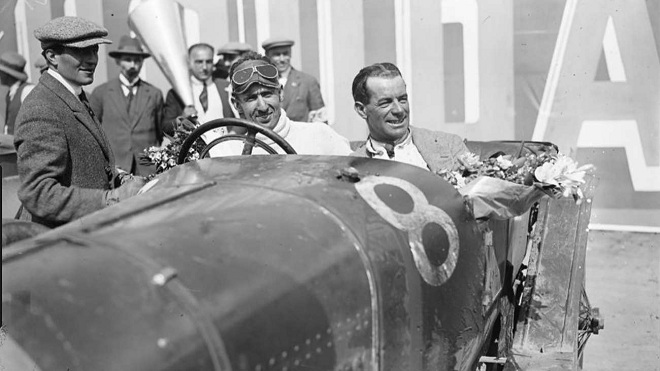
100 years ago, John Duff set off from Brooklands Circuit destined for Le Mans in the Bentley 3 Litre Sport. Alongside teammate Frank Clement, they would go on to triumph in the 24-hour endurance race, becoming the first Bentley to do so.
Fast forward to the present day and that same journey in that very same car is to be reinacted. Alongside the Automobile Club de L’Ouest (ACO), Vintage Bentley are thrilled to be driving the 1924 Bentley 3 Litre Sport Le Mans winning car from Brooklands to Le Mans to mark the beginning of her centenary celebrations.
Setting off from Brooklands circuit, the Bentley 3 Litre Sport will cross over to France and navigate south travelling through, Boulogne, Berck, Dieppe, Rouen, Evreux, Mortagne, and Mamers before reaching Le Mans.
This historic return will culminate in the 1924 Bentley 3 Litre Sport leading the procession at the end of Saturdays scrutineering session. Featuring nine Hypercars, one LMP2 and seven LMGT3s, the Bentley 3 Litre Sport will lead the cars through the streets of Le Mans City Centre before remaining in Le Mans as an exhibit at the 24 Hours of Le Mans Museum (from June 9).
The Bentley 3 Litre will feature across the Le Mans race weekend (June 14-16) with further details being announced imminently.
As the world’s leading specialist in W.O Bentleys, Vintage Bentley are proud to be supporting the ACO in these celebrations. A small yet well-established business with over 25 years knowledge and experience, Vintage Bentley offer workshop services, parts, sales, and event support across the world. Vintage Bentley are a verifiable nature positive organisation that are leading the way for sustainability within the classic car world.
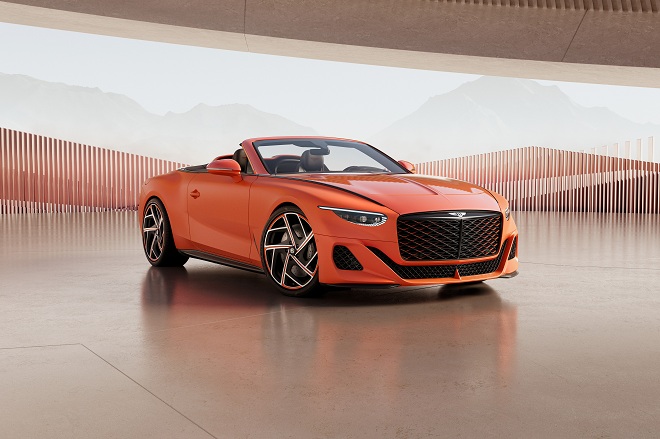
Bentley Motors today reveals the third coachbuilt Bentley of the modern era – the Batur Convertible. Created by Mulliner, Bentley’s in house bespoke division and the longest standing coachbuilder in the world, the Batur Convertible follows the exquisitely hand-crafted Bacalar barchetta and Batur coupe. With the Batur Convertible, Mulliner continues its long tradition of crafting truly individual cars, tailored to the wishes of each of its extraordinary clients.
The Batur Convertible furthers the innovative design DNA introduced by its coupe sibling that will ultimately guide the design of Bentley’s future cars. The Batur Convertible retains the most powerful version of Bentley’s iconic W12, with a 750 PS, hand-assembled 6.0-litre twin-turbocharged engine that has metaphorically and literally powered Bentley’s success for the last two decades. With the engine to finish production this summer, the Batur Convertible will be one of the last ever Bentleys to use this incredible powertrain.
Bespoke two-seat grand touring Bentley has a rich history of open-cockpit cars, from the very first Bentley of 1919, through the company’s foundation years in the 1920s, to the most recent – the Bacalar. The architecture of the Batur Convertible has allowed Mulliner’s designers to seize the opportunity to create a theme that not only blends the design of the Bacalar and Batur but includes the usability of a convertible. The designers also chose to highlight the two-seater character with a ‘wraparound’ cockpit inspired by the design of the Bacalar.
The dramatic ‘airbridge’ behind the seats and tapered cowls at the rear hark back to the barchetta sports cars of old, whilst underlining the promise of a dynamic, driver-focused adventure in a cosseting, cocooned environment. The airbridge and tapered cowls are not only aesthetic, but also provide a semi-enclosed luggage compartment behind the two front seats.
The convertible roof delivers an aesthetic of beauty as a modern, tactile alternative to a hardtop roof. A combination of insulation material, sealing system refinements and acoustic treatments create a cossetting environment in a system which can be deployed or stowed in just 19 seconds, with the car travelling at speeds of up to 30 mph (50 km/h), transforming the car from a luxurious coupe into an open-top Grand Tourer at the touch of a button.
Personal and uniquely commisioned Mulliner’s in-house design team will help co-create every Batur Convertible with its customer, working together through a specially created Mulliner visualiser that allows any part of the car to be customised in colour and surface finish. Endless samples of unique materials bring texture to the process, and the resulting designs will be truly individual and created by the customer – limited only by their imagination.
Customers will be able to specify the colour and finish of practically every surface of the Batur Convertible, to create a car as individual as they are. Beyond the exterior form of the car lies an almost endless array of choices for each car’s future owner to make.
Paint choice is infinite – starting with the full Mulliner colour palette and travelling beyond into fully bespoke paint and even hand-painted graphics. The exterior brightware can be any mix of light and dark, satin or gloss or even titanium. Another subtle option available is a graduated contrast colour to the front grille, for a vibrant ombre effect.
The Batur Convertible offers further areas to personalise with the unique Airbridge, tonneau cover and roof materials being able to be specified to complement the rest of the cabin and exterior.
In the cabin, the highly exclusive option of 3D printed rose gold includes key driver touch points, such as the Bentley Drive Mode Selector, encircling the start/stop button and used to change chassis modes. The centrepiece of an exquisite cabin, the dial complements the design of the front grille. Rose gold can also applied to Bentley’s iconic Organ Stop vent controls in the dashboard, as well as a rose gold insert marker on the steering wheel itself.
Bentley Mulliner has collaborated with expert goldsmiths based in the historic Jewellery Quarter of Birmingham, England, where jewellery has been made for centuries, to craft the unique parts. This special collaboration highlights Bentley’s ability to combine new, advanced manufacturing technologies with more traditional materials and finishing techniques.
Exclusive and powerful Each Batur Convertible will be handcrafted over the course of several months in Mulliner’s workshop at Bentley’s carbon neutral factory in Crewe, England. Production will be limited to just 16 pieces, each among the last ever Bentleys to be powered by the company’s iconic W12 engine, in its most potent iteration.
For the W12 powertrain that the Batur Convertible shares with its coupe counterpart, a revised intake system, upgraded turbochargers, new intercoolers and extensive recalibration enables 750 PS and 1,000 Nm of torque, to deliver exceptional performance for this pinnacle grand tourer. This development of the engine is in celebration of its achievements over 20 years, over which time it has been developed to produce nearly 40% more power while fuel economy has improved by 25%. The W12 is paired with Bentley’s eight-speed double-clutch transmission, and a sports exhaust to provide a soundtrack in keeping with the level of performance. The entire exhaust system is in titanium, while the finishers are 3D-printed in titanium.
Batur Convertible Car #0 The engineering development car – Batur Convertible Car #0 – has had the same level of attention to detail as a customer’s own specification. The exterior paintwork is a bespoke colour – Vermillion Gloss over Vermillion Satin Duo tone – that provides a vibrant colour across the contemporary surfaces. The bodywork is underscored by front splitters, side skirts and rear diffuser in high gloss carbon fibre.
The front of the car features a grille of exceptional art – with the main matrix finished in Gloss Dark Titanium, accented with contrast chevrons in a horizontal ombré pattern that flows from Beluga in the centre and lighten to the vibrant sides in Vermillion Gloss. The “endless bonnet” line is finished in Gloss Dark Titanium paint, as are the 22” wheels – with the spokes in Gloss and Satin Black Titanium with Vermillion Gloss accents.
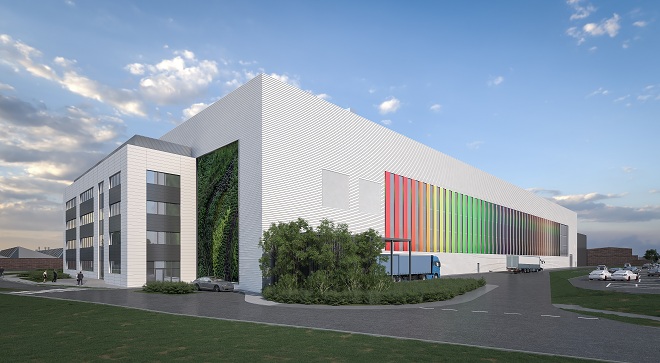
Bentley Motors has taken the next step on its journey to become fully electric and the world’s most sustainable luxury automotive manufacturer with a ground-breaking ceremony for a new Paint Shop in Crewe. This investment transforms an 85 year old site for a new age of electrification and confirms Bentley’s commitment to Crewe, England.
The new facility at Bentley’s carbon neutral headquarters will be integral to the brand’s preparations for future Battery-Powered Electric Vehicle production and to set a new benchmark in next generation, digital, flexible and high-value manufacturing operations.
To mark the occasion, Andreas Lehe, Bentley’s Board Member for Manufacturing, and Jan-Henrik Lafrentz, Bentley’s Board Member for Finance and IT, officially started construction by breaking ground.
The new 12,460 sqm. Paint Shop will be completed in 2025 and will offer an expanded paint colour choice of near 100 individual colours to customers, uniquely celebrated as part of the exterior building design. Additionally, there will be a four storey office building which in total will be home to more than 370 Bentley colleagues.
The new building forms part of a £2.5 billion investment programme in future products and at the Pyms Lane factory in Crewe, where all Bentley models are handcrafted.
Commenting on the developments, Andreas Lehe, said: “Breaking ground on this new state-of-the-art building is a milestone moment and supports our aim for a benchmark position in new innovative technologies, skills and facilities to enable a truly digital, highly-flexible benchmark for luxury car manufacturing.
“While also modernising our site, it is a clear demonstration of our ambition and long-term commitment to Crewe as we transform Bentley into the leader of sustainable luxury mobility.”
Bentley’s industry-leading Beyond100 strategy will see the company reinvent its entire product range to support an electrified future, while achieving end-to-end carbon neutral status by 2030. The company’s digital, zero environmental impact, manufacturing facility will introduce a go-to-zero approach on the environmental impacts of manufacturing and lead the luxury car industry in next generation digital applications.
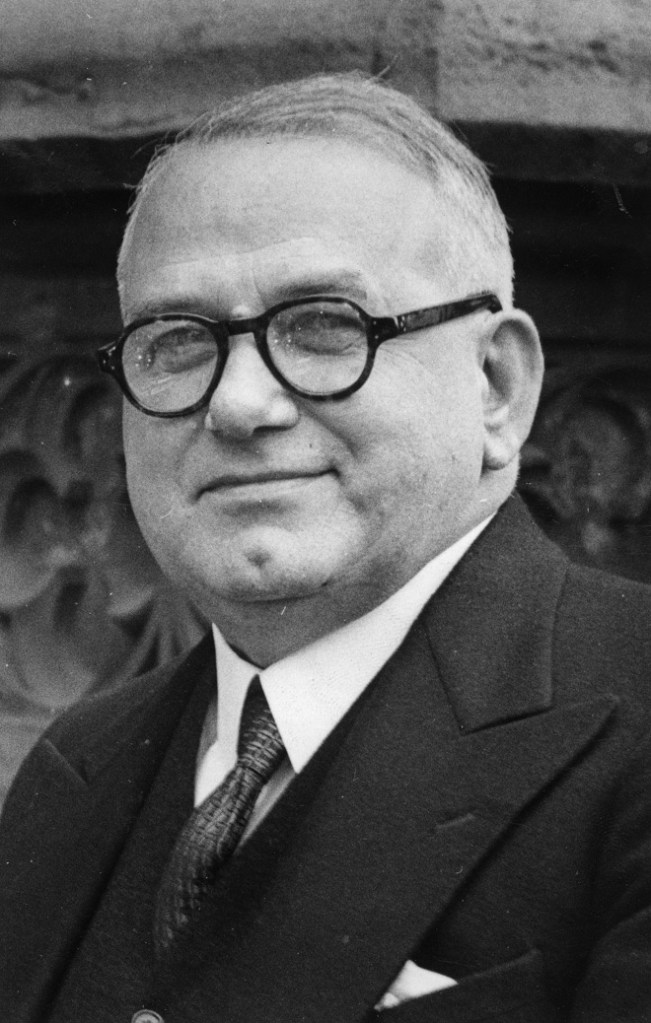
Photo by ANL/Shutterstock (1475290a) Lord Hives Managing Director Of Rolls Royce Ltd.
Ernest Walter Hives was born on 21 April 1886 in Reading, Berkshire. In 1898, aged just 12, he began a three-year apprenticeship with a local engineering company that had a sideline dealing in motor cars.
From the outset, the young Hives was captivated by these fascinating new machines. He saw his future in them and, like Henry Royce a generation earlier, he did not allow his humble background and limited formal education to impede his ambitions. He shared Royce’s unending capacity for hard work, putting in long hours and applying what was evidently a similarly lively and enquiring mind. In particular, he would watch and listen to those on the night shift, steadily building his knowledge of the motor cars’ inner workings and operation.
But his was not merely a theoretical interest, and he soon taught himself to drive by moving cars around the garage. We can assume this was with his employers’ blessing since, though still only 14, he quickly graduated to the road, where he taught clients to drive. His combination of technical understanding, an intuitive ‘feel’ for the motor car and outstanding practical skills would shape his career in the years that followed.
That nascent career took a defining turn sometime around 1903 (the precise date is not known) when Hives rendered assistance to a motorist who was having trouble with one of his motor cars (likewise, history does not record whether this was at the Reading garage or out on the open road). What is certain is the motorist’s identity: The Hon. Charles Stewart Rolls.
Whenever and wherever this encounter occurred, Rolls was so impressed that he promptly took Hives on as his personal chauffeur. The young man’s star continued to rise with a swift promotion to the position of mechanic at C S Rolls & Co, the prestigious London motor car dealership established by his new employer at the start of 1903.
But driving remained Hives’ true calling. He left C S Rolls & Co to work first at Owens and then Napier, for whom he drove in the gruelling Scottish Reliability Trials of 1907 and 1908, and also at the 1908 Brooklands meeting, where he sported jockey’s racing colours of yellow and white (which he described as looking like ‘a poached egg’).
In 1908, he made what would be the most pivotal move of his career; taking a job at Rolls-Royce, by now in its fourth year, as an experimental tester. His own account suggests he was less than overjoyed at the prospect, at least initially. “When I got to Derby in 1908 and walked out of the station it was raining hard,” he wrote later. “Looking up Midland Road, it was so drab that I spun a coin to decide whether to go on to Rolls-Royce or catch the next train home.” By such small chances, momentary decisions and tiny margins for error are careers, lives and history itself so often determined.
Rolls-Royce had created the new role of experimental tester following its showing at the 1907 Scottish Reliability Trial. Not that the event had gone badly for the fledgling marque, on the contrary: the 40/50 H.P. – better known as the Silver Ghost – had comprehensively beaten the opposition, including the Napier driven by Hives; even more impressively, the punishing 15,000-mile test had been the motor car’s first competitive endurance run. Never one to rest on his laurels, however, Henry Royce saw this overwhelming success as conclusive proof of the need for continued testing to, in his own words, ‘take the best that exists and make it better’.
Hives joined the company’s newly formed experimental department, and immediately proved a natural at this highly structured, technically exacting work. His insights into the subtleties of a motor car’s performance and responses – that it developed a resonance noise at a certain speed, that the chassis felt either too stiff or not stiff enough under cornering, or that the engine seemed to have a ‘flat spot’ at a particular rpm (revolutions per minute) – would have been invaluable to Royce and his design team. Indeed, such were his gifts that when the Royal Automobile Club (RAC) announced its headline 1911 endurance trial from London to Edinburgh and back, Hives was automatically chosen to drive Rolls-Royce’s entry: Silver Ghost 1701.
Designed as an ‘Experimental Speed Car’, 1701 easily won the event, in which entrants completed the entire 794-mile trip between the two capitals locked in top gear. Under Hives’ expert handling, the vehicle averaged almost 20mph and returned a then unheard‑of fuel efficiency of over 24mpg – genuinely astonishing figures given the parlous state of Edwardian Britain’s roads, and a testament to Hives’ skills, courage and powers of concentration behind the wheel, as well as Royce’s engineering.
Rolls-Royce followed up this performance by contesting the even more daunting Alpine Trials, held over eight days and 2,600km on some of the highest roads in Europe. After an embarrassing underperformance by a ‘privateer’ car in 1912, Managing Director Claude Johnson was eager to set the record straight and approached the 1913 event in typically energetic and uncompromising fashion. He assembled an official ‘works’ team of three specially prepared Silver Ghosts, each with a hand-picked driver and mechanic, plus a fourth car built to the same specification driven by private owner James Radley. Hives was one of the company’s top drivers – as proven by his being the first to exceed 100mph in a Silver Ghost – and therefore an obvious selection for Johnson’s new crack team. Piloting the Number Two car, accompanied by mechanic George Hancock, he completed a near-faultless run (he was docked a single point for stalling on leaving the parking area in Salzburg) that earned him one of the team’s three silver medals, in an overall performance that saw the Silver Ghosts generally accepted as ‘the fastest, quietest and strongest cars in the event’.
Alongside his racing exploits, Hives continued to make a vital contribution to Rolls-Royce’s research and development efforts as an experimental tester, introducing the first ‘chassis bump rig’, that could test chassis’ components to destruction. He also undertook the still potentially hazardous work of testing Royce’s latest designs on the open road. Having settled on France as the ideal place to carry out high-speed road testing, he made regular sorties along a route he devised between Paris and Royce’s winter home at Le Canadel, near Nice. For someone who had adored motor cars since childhood, this must have been as close to the perfect job as it is possible to get.
The natural-born talent and sheer love of driving that Hives first demonstrated as a teenager never left him. Many who knew him spoke of a ‘sixth sense’ he had when driving, seeming to know instinctively if the road ahead was clear and when he could take the fastest line through a corner or needed to ease off.
As his career progressed, Hives became increasingly involved with developing Rolls-Royce’s aero engines as well as its automotive products. In 1937, he became a Board Director and General Works Manager; his most significant act was to split the company’s motor car (chassis) and aero engine operations into two independent entities, which remains the case to this day.
In 1946, he became Managing Director, and in 1950, Chairman of the Board: that same year, he received a peerage and, as 1st Baron Hives, completed an extraordinary journey from working as Charles Rolls’s chauffeur to leading the great company his late employer had co-founded almost 50 years earlier. Yet the man who had doggedly worked his way up from a Reading garage to the House of Lords always remained modest, describing himself with an understatement worthy of Royce’s equally understated self-characterisation as ‘just a mechanic’. Respectfully, Rolls-Royce Motor Cars begs to differ.
Andrew Ball, Head of Corporate Relations and Heritage, Rolls-Royce Motor Cars, said:“Even for so gifted an engineer as Henry Royce, there’s a limit to how far theory can take you: there comes a point where someone has to determine whether your design actually works in practice. In the early days of Rolls-Royce, that was Ernest Hives. From humble origins, Hives turned his fascination for motor cars and outstanding self-taught driving skills into a glittering career with Rolls-Royce, first as an experimental test driver, then as one of the ‘works’ team contesting the great motor trials of the day. His observations and hands-on experiences from the road would have been crucial to Royce’s continuous improvement process, making him a key figure in the technical development of the ‘best car in the world’.
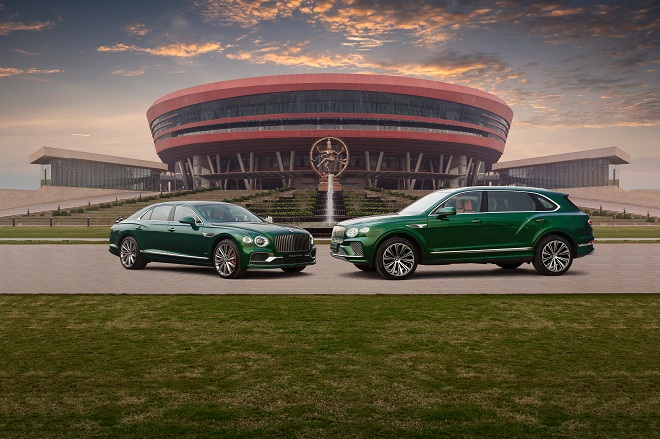
Five individually curated Bentley models, commissioned by a Bentley retailer, comprise the first Mulliner Bespoke Edition created exclusively for the Indian Market. All feature an extensive specification, with unique exterior and interior finishes inspired by the colours of the Indian flag. Each example is handcrafted in Crewe, England, by Mulliner, Bentley’s in-house personalisation and bespoke department.
The Opulence Edition for India is limited to just five vehicles: a Continental GT Speed, a Flying Spur Speed and three Bentayga EWB Azure models. All five are presented in Scarab Green exterior finish, an exclusive Mulliner development inspired by the iridescent green exo-skeleton of the Scarab beetle. Complemented by bespoke interior colourways of Mandarin and Cumbrian Green hide, each car is a tribute to India’s national colours.
Bespoke elements of the Opulence Edition Although different in character, all five models in the Opulence Edition have key bespoke elements in common. All feature the lustrous Scarab Green exterior finish that was first developed for Bentley’s first coachbuilt barchetta, the Bacalar. Inside, the orange and green of India’s national colours are represented by upholstery of Mandarin main hide and Cumbrian Green secondary hide. The mirror-like Piano veneer of the fascia and trim is also finished in Cumbrian Green, with an inset chrome motif on the fascia of wild horses and mountain peaks. From the initial brief, designers and artisans painstakingly produced multiple depictions until the perfect composition was achieved. The design was ultimately hand-drawn, and carefully applied to the fascia using a chrome overlay technique. This unique colour and trim specification is the outcome of close collaboration between Bentley Mumbai and the Mulliner team, and celebrates the first-ever Mulliner bespoke edition created for the Indian market.
Performance delivered by the Opulence Edition Continental GT Speed The 659 PS Continental GT Speed is the ultimate performance-focused iteration of the world’s benchmark luxury Grand Tourer, and the Opulence Edition complements its character perfectly. The Scarab Green exterior and 22” Speed wheels in dark tint finish focus one’s attention on its poised and muscular lines, while the LED welcome lamps, and self-levelling wheel centre badges are typical of Mulliner’s perfectionist attention to detail.
Open the driver’s door, and the full drama of the two-colour interior is revealed, with knurled switchgear and instrument bezels set on a fascia of Cumbrian Green in a piano finish. Contrast stitching in Mandarin picks out the lines of the upholstery and the diamonds of the quilted sections. The Opulence Edition Continental GT Speed was limited to one example, and this has already been delivered to its delighted owner.
Opulence Edition Flying Spur Speed’s bespoke craftsmanship The Opulence Edition Flying Spur Speed’s lavish specification includes diamond knurling on bezels and switchgear, Naim for Bentley audio and the unique Bentley rotating display. Throughout the cabin, the perforated, quilted seat upholstery is bordered by side bolsters with Mandarin contrast stitching and Speed-embroidered headrests.
This Bentley’s performance focus finds the perfect expression in the Opulence Edition’s Scarab Green exterior finish, complemented by 22” dark tint Speed wheels with self-levelling wheel centre badges. The illuminated Flying B radiator mascot is finished in polished stainless steel, providing a contrast to the dark tint brightwork of the Speed specification.
The pinnacle performance model of the Flying Spur line up is powered by a 626 bhp 6.0-litre twin turbocharged W12 engine, with Electronic All Wheel Steering, Torque Vectoring by Brake technology and Bentley Dynamic Ride as standard. Just one Opulence Edition Flying Spur Speed will be produced.
The Opulence Edition Bentayga EWB Azure While the Bentayga EWB is more than capable of soul-stirring performance, the emphasis with the Opulence Edition is on space, wellbeing and abundant luxury. The Opulence Edition Bentayga, of which three examples will be made, comes in four-seat configuration with the Mulliner console bottle cooler separating the two rear seats. Contrast stitching in Mandarin runs around the lip of the fascia top roll, and around the edge of the Cumbrian Green seat bolsters, while contrast stitching in Cumbrian Green can be seen in the outer diamonds of the quilted seat inner areas and the Azure-embroidered headrests.
With the Bentley Dynamic Ride 48V active anti-roll control system providing the optimum balance between ride comfort, handling and body control, the Opulence Edition Bentayga EWB Azure provides a haven of calm and comfort.

 Power Drive