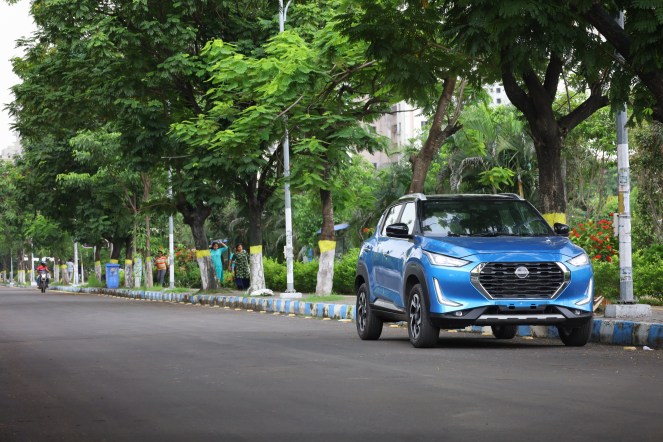
The New Nissan Magnite will now be available with a government-approved CNG retrofitment kit. The CNG Kit is fully developed, manufactured and quality assured by Motozen (3rd Party) as per country Regulatory Standards. Motozen will provide warranty for kit components. This initiative reflects focus on providing customer-focused solutions. The fitment of these kits will be carried out at government-authorised fitment centres. The complete retrofitment will be available at competitive additional price of INR 74,999 only.
The rollout of this eco-friendly CNG kit fitment for the sustainability-aware and environment-conscious customer will be done in a phased manner across the country. In the first phase, Nissan customers can order the CNG kit installation via Nissan authorised dealerships in seven states, namely Delhi-NCR, Haryana, Uttar Pradesh, Maharashtra, Gujarat, Kerala and Karnataka. It will later be expanded to other states across the country as part of Phase 2.
The CNG kit option is available only with the New Nissan Magnite 1.0-litre naturally aspirated petrol engine with the manual gearbox. The customers will get enhanced fuel economy with the CNG retrofitted kit. All CNG kits will be retrofitted by government-approved vendors, offering a certified homologated kit that complies with current local regulations and safety standards.
Mr. Saurabh Vatsa, Managing Director, Nissan Motor India, commented: “The New Nissan Magnite has been a phenomenal product for us and has led the success story in India. With a view to meet the requirements of customers, Nissan Dealers will provide an alternate fuel option in the form of a government-approved CNG retrofitment kit which will be carried out at the authorised fitment centres for customers. We are confident that this move will enhance the popular compact SUV’s value proposition and practicality.”
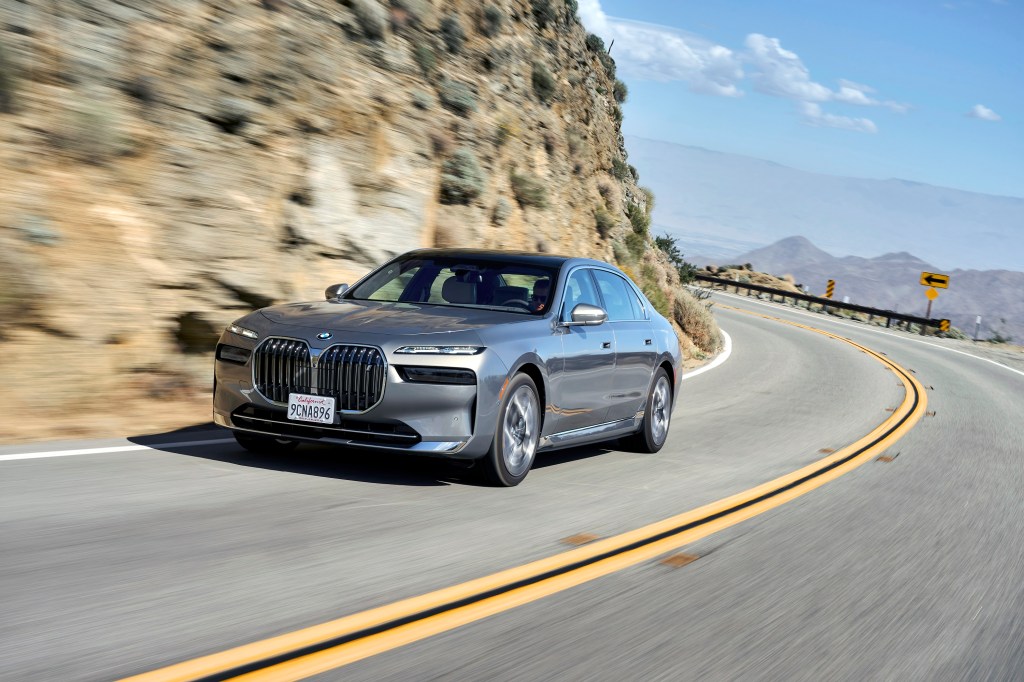
BMW India has introduced a unique offer on its flagship electric limousine – the BMW i7 – for benefit of customers across the nation. The first-of-its-kind offer provides a uniform pricing for the BMW i7 regardless of the registration location. In the specially designed new pricing, the customers do not need to incur the registration cost for BMW i7, as such cost will be borne by BMW India and administered by the authorized dealership.
Mr. Vikram Pawah, President and CEO, BMW Group India said,” BMW India has always looked as electric mobility as a holistic concept. We are the pioneers and leaders in the luxury electric mobility space with a novel approach to electric products and services. The introduction of a uniform price for the customers of BMW i7 will ensure price parity for our valuable customers regardless of which location they want to register their vehicle in. With this innovative offer, our focus is on customer centricity and encouraging the adoption of electric mobility with added benefits. As the vehicle of choice of leaders and luminaries with next-level style and substance, the i7 will continue to shape forwardism in every way.”
The current ex-showroom price of the BMW i7 is INR 2,05,00,000.
The first-ever BMW i7 is a true all-electric luxury sedan that clearly demonstrates how an exclusive driving experience can be combined with an unwavering commitment to sustainability. The i7 offers all-electric innovation, visionary design, and powerful driving dynamics that make a striking impression.
It makes a visual statement by taking a considerable leap forward in terms of design and dimensions. The headlights are divided into two parts. At the top are the daytime running lights, complete with the BMW Crystal Headlights. Another distinguished feature is the strikingly illuminated BMW Iconic Glow kidney grille surround that lends an unmistakeable appearance.
In the interior, the innovative BMW Interaction Bar defines the revolutionary cockpit design. BMW Live Cockpit Professional includes the freestanding BMW Curved Display with Navigation with real-time traffic information and augmented view. Unique and innovative features in the rear take comfort to a new level. A key feature here is Rear Seat Entertainment Experience with BMW Theatre Screen.
The Executive Lounge Seating behind the front passenger reclines to 42.5 degrees, offering a true first-class experience thanks to multifunction seats, massage function, active seat ventilation and rear console. My Modes can be used to turn every journey into an individual experience by combining sound, light, temperature, suspension settings and seat functions to create a particular mood.
BMW ConnectedDrive technology breaks the innovation barrier and turns the car into an interconnected digital device. It includes BMW ID, MyBMW App, Digital Key Plus, Emergency Call, Real-time Traffic Information, Remote Services, smartphone parking and Amazon Fire TV.
The spread of Driver Assistance Systems is more extensive than ever and includes Cruise Control, Attentiveness Assistant, Parking Assistant Professional with remote parking via smartphone and Reversing Assistant, Steering and Lane Control Assistant.
Fifth generation BMW eDrive technology in the BMW i7 eDrive50 features a highly integrated drive unit. The car instantly accelerates from 0 to 100 kmph in 5.5 seconds. It produces an output of 449 hp and a maximum torque of 650 Nm. The car has a range of up to 603 kms (WLTP).
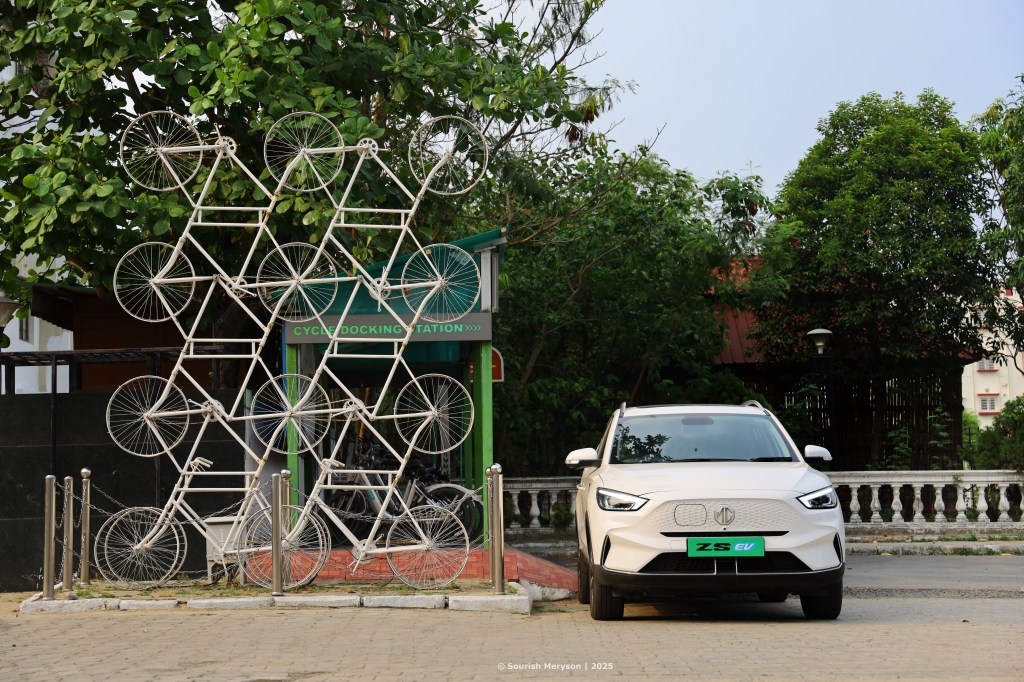
The MG ZS EV was first launched in India on January 23, 2020. Positioned as the country’s first pure electric internet SUV, the ZS EV instantly found patronage among those customers who desired an electric SUV with premium features and competitive pricing.
On March 7, 2022, a little over two years since its inaugural launch, the face-lifted version of the ZS EV drove in with revised styling, added features and most importantly, an extended drive range that set the Indian car market on fire.
Very recently, the MG ZS EV came to visit us at Power Drive where we got an opportunity to get up close and personal with the ZS EV. Did the MG ZS EV live up to our expectations? Does the ZS EV offer the best value proposition in its segment? Read on to find out what we discovered.
Design & Engineering
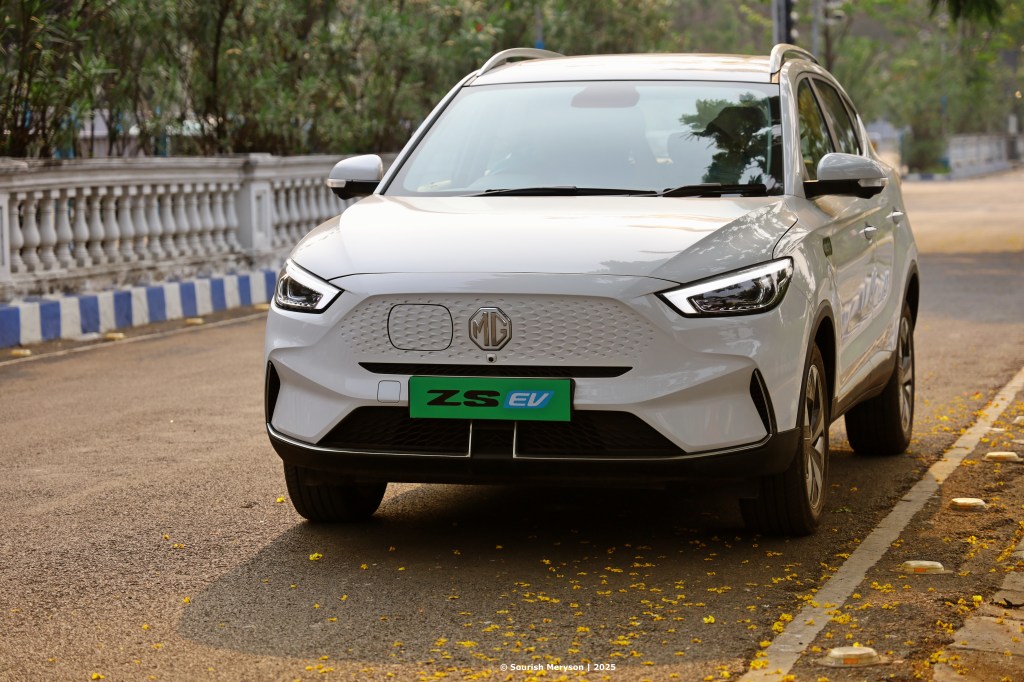
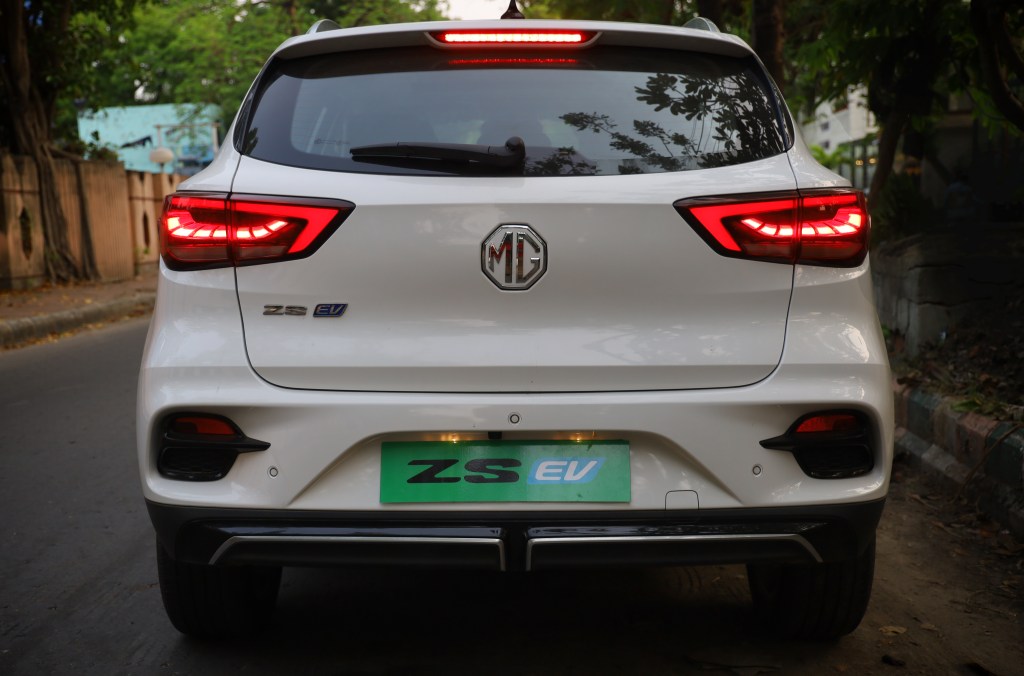
The new MG ZS EV still very much looks like the earlier ZS from every angle, but now features a closed-off grille at the front. The charging port that was earlier under the big MG logo has been shifted to the side and the new stylish bumpers are the most prominent revisions that catches the eye and offers the ZS EV a highly distinctive appearance on the road.
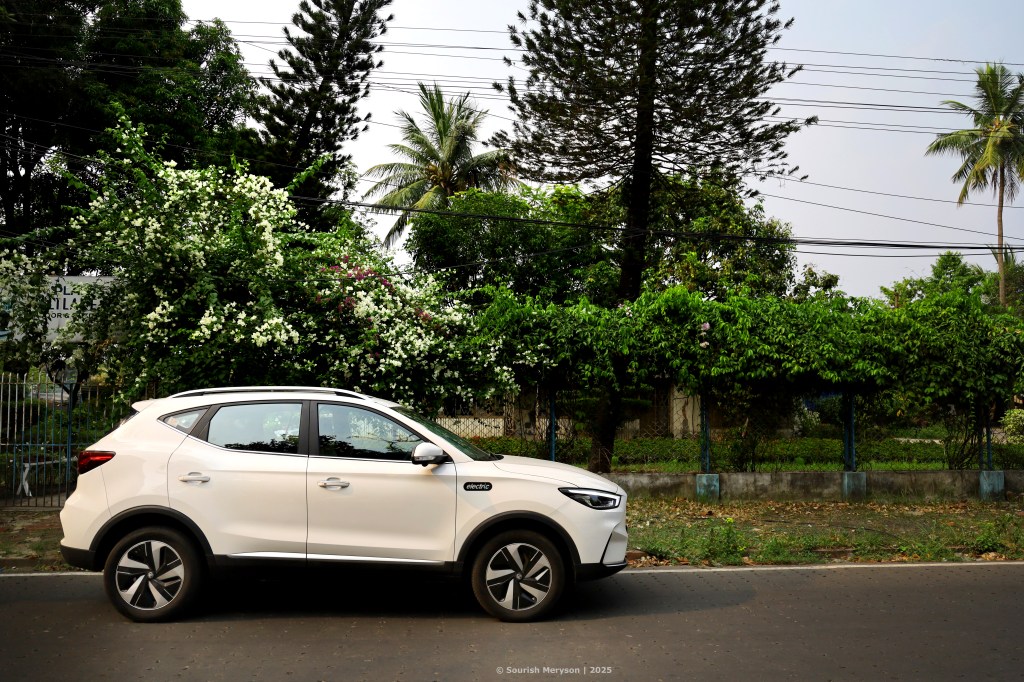
The dynamic lines and a unique style combined with the wide SUV stance gives the ZS EV its progressive look. The MG ZS EV also features full LED Hawkeye headlamps in addition to full LED tail lamps that accentuate its overall look.
The MG ZS EV also comes with 17-inch alloy wheels (43.18cm) with Tomahawk hub design adding to the bold look to the SUV. Overall, these tweaks in the external design and styling have added value to the MG ZS EV.
The MG ZS EV is available across four trim levels – Executive, Excite Pro, Exclusive Plus and Essence and comes in four attractive colour schemes which include Glaze Red, Aurora Silver, Starry Black and Candy White.
Interior & Comfort
Step inside the new MG ZS EV and you will be welcomed into a spacious and premium passenger cabin with plush interiors in dark grey interior theme or the new dual tone iconic ivory interior theme. The ZS EV is far roomier inside than many electric cars in this price bracket. Thanks to intelligent packaging, space up front is good, with plenty of head and leg room for the driver and passenger. Rear space too is excellent. There’s also more than enough head room for a six-footer despite the sky roof. The seats are well bolstered and comfortable resulting in a relaxing ride.
The interior boasts of superb build and quality, and an overall fit & finish that is worthy of a car in this price segment. The new MG ZS EV also features a panoramic sky roof that lets you enjoy the ride in the comfort of extra light and fresh air.
The MG ZS EV comes loaded with the largest-in-segment 25.7 cm HD touchscreen infotainment that gives you all the information at a single glance and allows you to manage complete vehicle settings with just a touch. The ZS EV features a full digital cluster with the largest-in-segment 17.78 cm embedded LCD screen that makes your drive more seamless.
The i-SMART technology combines hardware, software, services and applications to make your driving experience easier and smoother. The MG ZS EV offers 75+ connected car features, ushering in an era of convenient connected drives.
Performance and Handling
The MG ZS EV is powered by a 50.3 kWh battery with a permanent magnet synchronous motor mated to an automatic transmission. It produces 176.75 PS of maximum power and 280 Nm of peak torque delivering a company claimed range of up to 461 kilometres in a single charge. The estimated 7.4 kWH charge time from 0-100% ranges between 8.5 to 9 hours.
The MG ZS EV is excellent to drive within the city making is an ideal choice for the urban daily commute. The electric motor is quite responsive to throttle inputs with sufficient power in the tap for overtaking when necessary.
Despite its tall design, the body roll is well contained as the ZS EV stays well planted to the tarmac while navigating sharp turns at reasonable speeds. The suspension set up with MacPherson Strut in the front and Torsion Beam in the rear, is well tuned for Indian road conditions with the ZS EV absorbing undulations on the roads with relative ease resulting in a comfortable ride.
17 Autonomous Level-2 Features
Advanced Driver Assistance System or ADAS, like it’s popularly known now, is a group of safety and convenience functions intended to improve comfort and safety for drivers. The MG ZS EV is equipped with 17 ADAS features which work on three levels of sensitivity – low, medium and high and three levels of warning – haptic, audio and visual.
ADAS implements possible safeguards in the vehicle and automates driving controls. Autonomous Level-2 features not just makes driving more comfortable but also keeps your safety at the forefront. With level-2, the system can not only perform acceleration/ braking functions but can also activate steering control to assist the driving.
Safety
MG ZS EV comes with 6 airbags, which include dual front airbags, front-seat side-impact airbags, and side-curtain airbags that work together with the seatbelts. It also comes equipped with Electronic Stability Control, ABS + EBD + Brake Assist, Emergency Stop Signal (ESS), Hill Climb Assist, Hill Descent Control (HDC), Electric Parking Brake with Auto Hold, Tyre Pressure Monitoring System (TPMS) and Reverse Parking Camera as standard across all trim levels.
Verdict
The problem with electric SUVs is that, while they are economical to run, however, they can be rather expensive to buy in the first place. There is one notable exception, though – the MG ZS EV which has decimated this myth, despite its premium positioning. The MG ZS EV looks dynamic, is spacious, well-equipped and extremely well priced for what MG is offering in the car. Shortcomings if any, when pitted against rival electric SUVs, the MG ZS EV makes up for that with its competitive price tag, high levels of equipment, impressive electric range and great practicality. This is the car to add in your garage and a fantastic daily runner, especially within the city and occasionally during weekend escapades.
Nissan Motor India has announced an all-new 7-seater B-MPV (multi-purpose vehicle) to their existing line-up. The company showcased two new products slated for India at their recently concluded Global Product Showcase Event held in Yokohama, Japan. This is in line with the company’s plans for the India business to reshape its new products to meet the rising aspirations of its customers and deliver products in all high-growth segments such as the B-MPV and C-SUV segments in addition to its existing share in the B-SUV segment led by the New Nissan Magnite.
Nissan will continue to strengthen its presence in India’s rapidly growing market, enhancing domestic performance and expanding exports. Nissan’s planned product offensive has begun with the first-time global reveal of an all-new 7- seater B-MPV scheduled to launch in FY25 as a brand new addition to the India product portfolio.
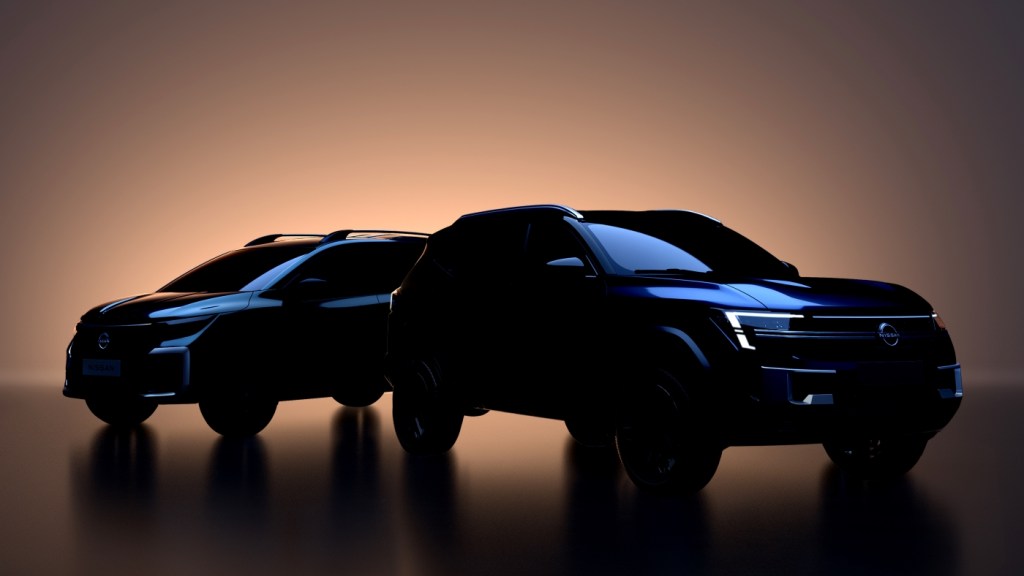
This will be followed by a previously announced 5-seater C-SUV (compact sports utility vehicle) in early FY26. The company has shared two brand new teasers for Indian audiences which confirm the developments and timelines for both vehicles. Nissan Motor India remains on track to have 4 products by FY26 for Indian customers across the B/C and D-SUV segments.
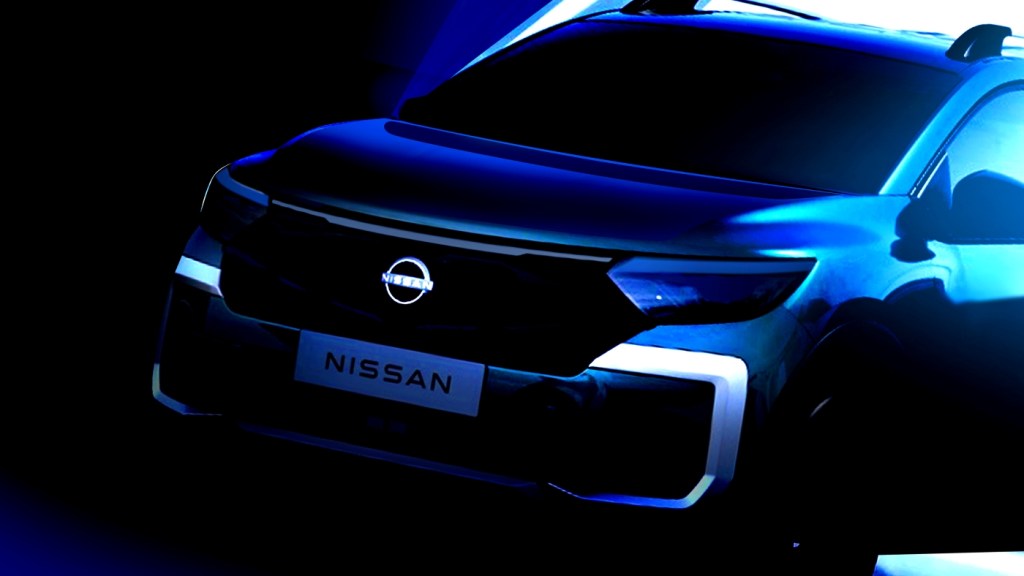
The C-SUV has been designed to disrupt the segment in India. It will be feature- packed and be delivered with state-of-the-art proprietary advanced technologies. Inspired by another iconic Nissan SUV, the new C-SUV takes its design cues from the Nissan Patrol. The C-SUV will deliver true Nissan SUV DNA and deliver the same robust reliability, premium craftsmanship and technology that Nissan is renowned for globally. The C-SUV with unmistakable presence will offer a high approach and departure angle making it the perfect companion for Indian road conditions.
The Nissan 7-seater B-MPV on the other hand aims to deliver unmatched value, quality and comfort to its core customer driven by value conscious customers seeking to maximize their purchase in the segment. The Nissan B-MPV will deliver muscular styling that is unique to Nissan’s distinct design philosophy. It has been designed to ensure comfort for passengers on all rows without compromising on driving pleasure.
Building on the success of the New Nissan Magnite, Nissan is introducing a new C- SUV that will also be made in India and exported globally. This 5-seater C-SUV will be the second model from the Chennai plant to follow the ‘One Car, One World’ strategy, reinforcing Nissan’s commitment to expanding its presence in both domestic and international markets.
Nissan Motor India Pvt. Ltd. (NMIPL) continued consistent and sustainable growth in India, delivering best single year performance for FY 2024-25 in the last seven years despite multiple headwinds faced by the domestic auto industry. The year was marked by the continued success of the New Nissan Magnite, which remains a key pillar of Nissan’s domestic business plan and a vital part of the company’s global export operations. In FY 2024-25 Nissan Motor India recorded total domestic volume of 28,000+ units led by the New Nissan Magnite introduced in October 2024. This strong performance was delivered despite the rising consumer preference for alternate fuel vehicles in the B-SUV segment in India.
On the export front, the company expanded its operations from 20 markets to 65+ international markets and registered an unprecedented and historic export sales of 71,000+ units further reinforcing India’s role as a growing manufacturing and export hub for Nissan globally. This brings the consolidated sales of the company to 99,000+ units for FY 2024-25.
Nissan is setting its sights on achieving an ambitious target of 1,00,000 units in both annual domestic sales and exports from India. To support this goal, the company will locally manufacture both new products at the Alliance JV plant in Chennai. This approach ensures that every vehicle manufactured here meets global standards, catering to both domestic and international markets.
Commenting on the performance, Frank Torres, Divisional Vice President of AMIEO Region Business Transformation & President of Nissan India Operations said, “India remains a strong pillar of growth for Nissan driven by the continued success of the Nissan Magnite. The export of the new Nissan Magnite expanded to over 65 international geographies including LHD markets this year.
On the restructuring of the India business operations as a part of the global turnaround actions, he said “Nissan remains committed to the Indian market, customers, dealer partners, employees & stakeholders. Nissan & its dealer partners will continue to provide Sales & Service to customers of existing and future new models. Nissan’s stated India product offensive remains intact, including the plan to introduce 1 all-new B-MPV & 2 new C-SUVs. We will continue our plans to export vehicles to other parts of the world as per our One Car, One World plan. This restructuring is part of our efforts worldwide to become a leaner and more agile company, as part of our global turnaround actions.”
Saurabh Vatsa, Managing Director, Nissan Motor India said, “This year has been a challenging one for the auto industry. Despite this, the New Magnite has shown and has proven that it remains a strong favorite amongst the B-SUV customers. The continued expansion of our dealership network reflects our commitment to improving accessibility and customer service. As we move forward, with the recent announcement of the additions of an All-New 7-seater B-MPV and 5-seater C-SUV and we are focused on offering an exciting product portfolio and expanding our dealer network further for enhancing customer experience.”
Nissan Motor India also announced that it will increase the price of New Nissan Magnite across all trims by up to 3 per cent from 1st April 2025 onwards. This price hike will be done to offset the rising input costs and operational expenses.
The Nissan Magnite has consistently performed well in its segment. In August 2024, the Nissan Magnite crossed a cumulative sale of 150,000 units. October 2024 marked the launch of the New Nissan Magnite after which it gained an even stronger momentum and global appeal, surpassing 10,000+ bookings milestone within three months of the launch. The New Nissan Magnite also achieved an export milestone of 50,000 units, embodying Nissan’s ‘One Car, One World’ philosophy by exporting to 65+ LHD and RHD markets.
Manufactured at the Chennai plant, the new Magnite includes 20+ Segment-first features in India and a bold new design. Strengthening its sustainability commitment, it is now fully E20 fuel compliant. The new Magnite’s success was amplified by its recent debut in Saudi Arabia as the first left-hand-drive (LHD) market.
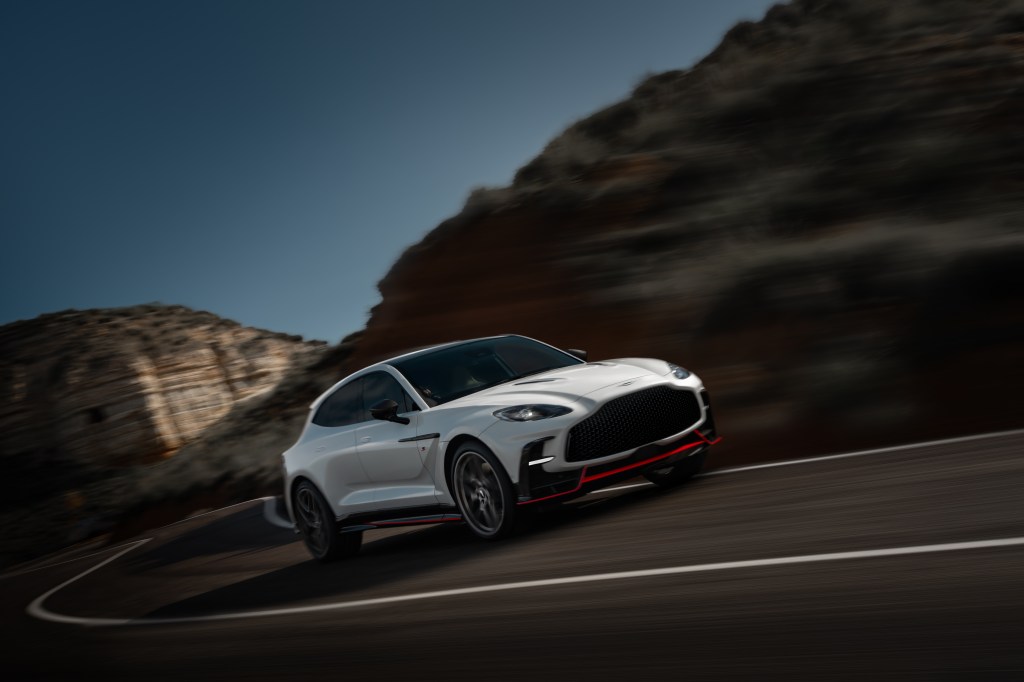
Aston Martin is proud to announce the arrival of a new DBX flagship, DBX S. With the dynamic appeal of DBX707 and an engine enhanced by technology transferred directly from the forthcoming Valhalla supercar, DBX S offers one of the most engaging and responsive driving experiences delivering even more power, reduced weight and more assertive design. With a suite of exterior and interior enhancements to match, the DBX S certainly has its own undeniable identity.
DBX S continues a long tradition of Aston Martin’s utilising the ‘S’ suffix to denote a special, high-performance version of an existing model; the first being Vanquish S which made its public debut at the Paris Motor Show in 2004. DBX S proves that lighter variants with more power and performance are still very much part of Aston Martin’s core production offering and looks to continue a lineage of notable high performing models.
Aston Martin CEO, Adrian Hallmark, said ‘Over the last two years, Aston Martin have introduced an entire core collection of next generation sports cars as well as a new DBX; all with a new, entirely bespoke infotainment system designed in-house. The marque continues its focus on class leading performance, ultra-luxury design and innovation, broadening the range of products under each core model. The introduction of DBX S not only reaffirms our commitment to producing the most exciting, rewarding and beautiful cars, it also sends a powerful statement of intent about our ambitions not just for DBX, but for the Aston Martin brand.”
At the heart of the new DBX S lies an upgraded version of the acclaimed Aston Martin 4.0-Litre Twin-Turbo V8 powerhouse. By using turbo technology transferred directly from the upcoming Valhalla supercar including its larger compressor wheel diameters and other internal improvements, power is raised by a further 20PS to 727PS and provides even greater urgency at the very top of the rev range, making DBX S’s performance even more memorable. The result is a 0-62mph time of just 3.3 seconds and reduction in acceleration time from 0-124mph (200km/h) of 0.3 seconds. Top speed remains unchanged at an impressive 193mph.
Further enhancing both performance and its perception is a modified exhaust system amplifying even more character to the natural voice of the thunderous V8 engine and exploiting the full the opportunity presented by the engine’s turbo enhancements.
As with its DBX707 stablemate, DBX S distributes its power between the front and rear wheels in variable proportion – including an ability to send 50 per cent of its torque to the front and up to 100 per cent of its torque to the rear wheels alone – through an innovative 9-speed ‘wet clutch’ transmission, which removes the need for a conventional torque converter, delivering extreme performance on launch from standstill. However, the DBX S gearbox has been further modified to provide an even more memorable driving experience. Change up points are adjusted to reflect the car’s extended rev range, while downshifts in Sport and Sport + modes when the car is in automatic are even more aggressive.
In addition to the power upgrade, a number of measures have been taken not only to significantly reduce the kerb weight of DBX S, but to do so in an intelligent and highly selective fashion that ensures that mere weight loss is just one of attributes resulting from these actions. A prime example is the new optional carbon fibre roof presented in a glorious single weave pattern which, at almost three metres square, is by far the largest such carbon element ever fitted to an Aston Martin. Specification of the carbon roof sees the removal of the roof rails, and as a combination not only saves 18kg of mass, but does so from the very highest point of the car, reducing its centre of gravity and therefore enhancing both stability and agility further.
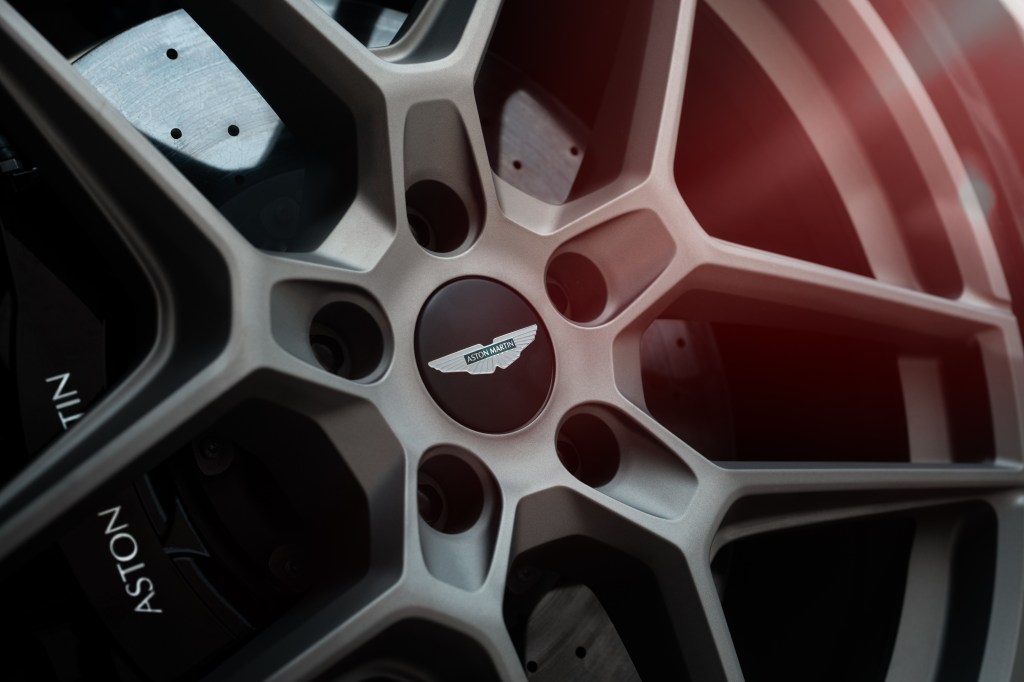
Magnesium wheels are also now available as an option for the first time on any car in the SUV segment. Magnesium is not only robust, but an incredibly lightweight material, some 75 per cent lighter than steel; half the weight of titanium and a third less even than aluminium. In selecting this 23” optional wheel, a further 19kg of unsprung mass is saved, delivering improvements in ride quality, steering precision and feel, as well the car’s more immediate reaction to direction input. DBX S is also available to order with 23” forged aluminium wheels as standard.
Specifying the magnesium wheels also sees the deletion of roof rails, offering a further weight savings. Additionally, customers can also specify a bespoke a lightweight polycarbonate honeycomb grille, intricately designed with over 25,000 individual facets which all helps shift the weight distribution rearward, aiding both handling and the car’s traction capabilities.
Steering ratio on DBX S is also faster by only 4 per cent but noticeably improves agility making the car feel even more sporting and responsive while stopping well short of introducing any sense of nervousness into its handling. It also reduces the turning circle by almost half a metre to just 12.0 metres, improving the urban driving experience.
DBX S benefits from the full suite of suspension enhancements introduced last year, which saw a revised calibration of both the air springs and electronic dampers, increasing transient body control in order to reduce weight transference and therefore improve primary ride quality and overall stability. Even right at the limit, its standard electronic roll control means the DBX S rolls by no more 1.5 degrees; enough to create the natural feel of the car cornering but still keeping the car flatter than many purpose built, two seat sports cars. The spring rate also changes depending upon selected drive mode, actively moving the roll stiffness balance through a corner to enhance grip and steering response. Near inexhaustible braking performance is provided by mighty carbon ceramic disc brakes at each corner, measuring no less than 420mm at the front and 390mm at the back.
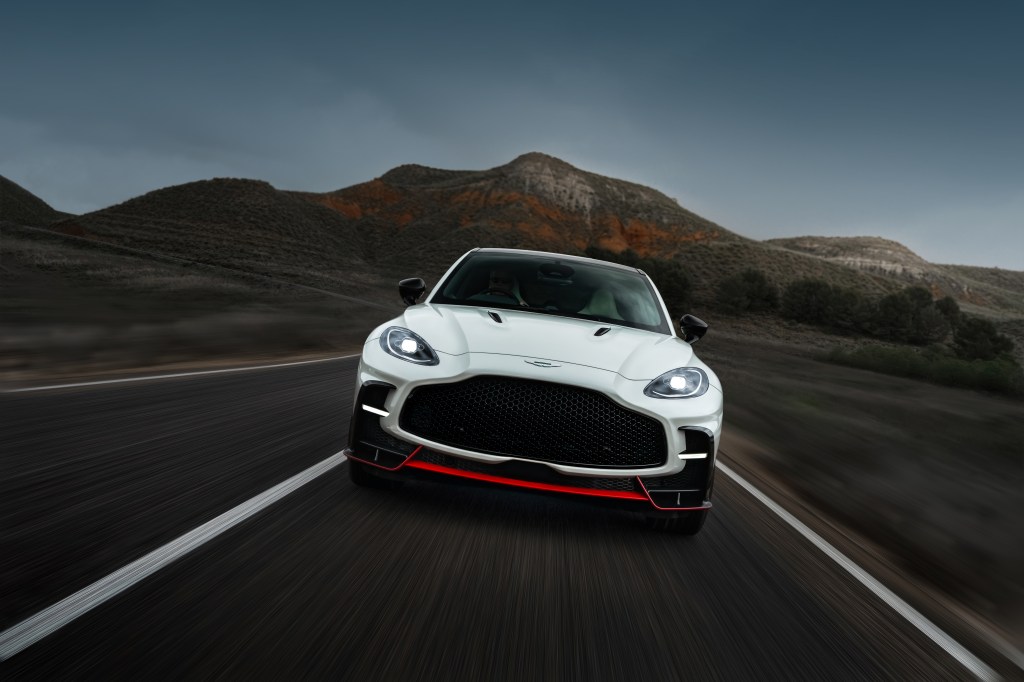
Visually, the Aston Martin design team have ensured that no one who sees DBX S will be left in any doubt they’re looking at the most sporting, dynamically capable and enthralling ultra-luxury SUV on the market.
From the front, the new DBX S is instantly recognisable by its pure black vaned grille, giving this edition immediate road presence, whilst the lightweight polycarbonate grille with a honeycomb design taking cues from DBS 770 Ultimate, is also available to specify as an option. A new splitter and diffuser further enhance the car’s naturally assertive presence alongside the distinctive wraparound daytime running light design.
Seen from the side, new sills boast highly distinctive up-turned air splitters which in typical Aston Martin fashion exist for function as much as form, helping channel and direct the airflow along the side of the car. Carbon fibre is available to specify for the wing mirrors, side strakes and lower door sill, while distinctive ‘S’ signature badging on the front fenders marks the true nature of this beast. Like the iconic Aston Martin wings, these badges are manufactured in solid metal, glass enamelled with the ‘S ‘infilled in red as it appeared on previous models such as the V12 Vantage S and the Rapide S. The badge surround is then chrome plated in either the bright or dark chrome to match the colour of the wings chosen by the customer.
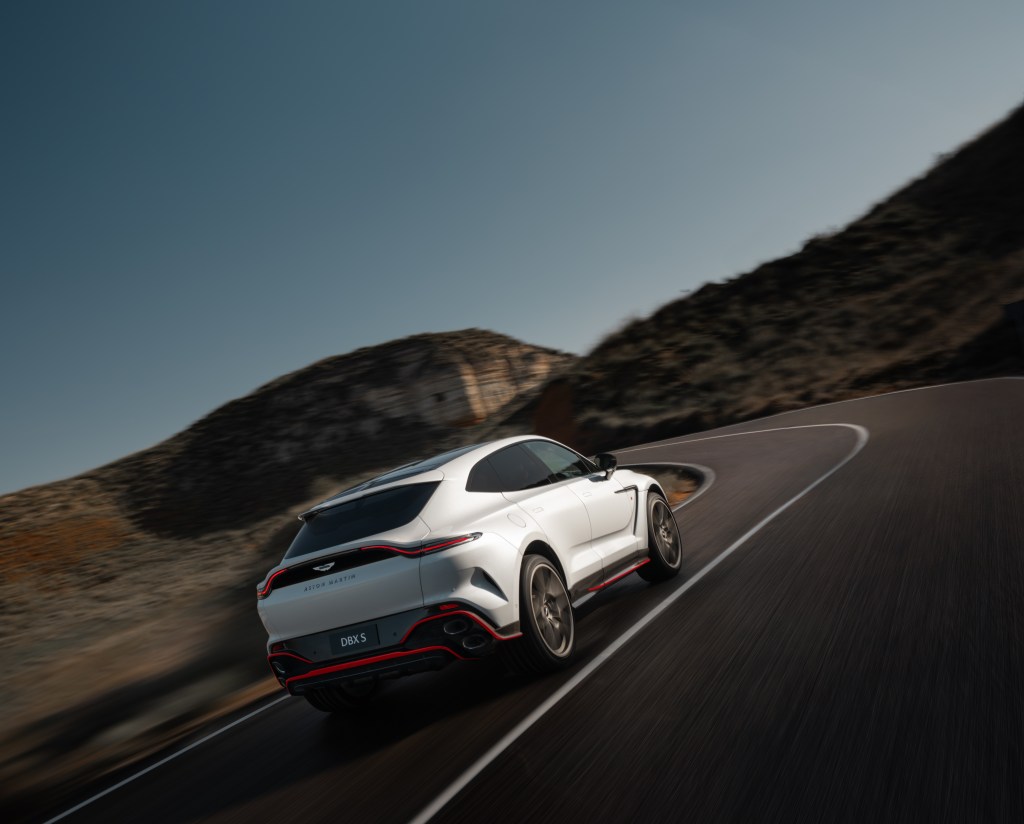
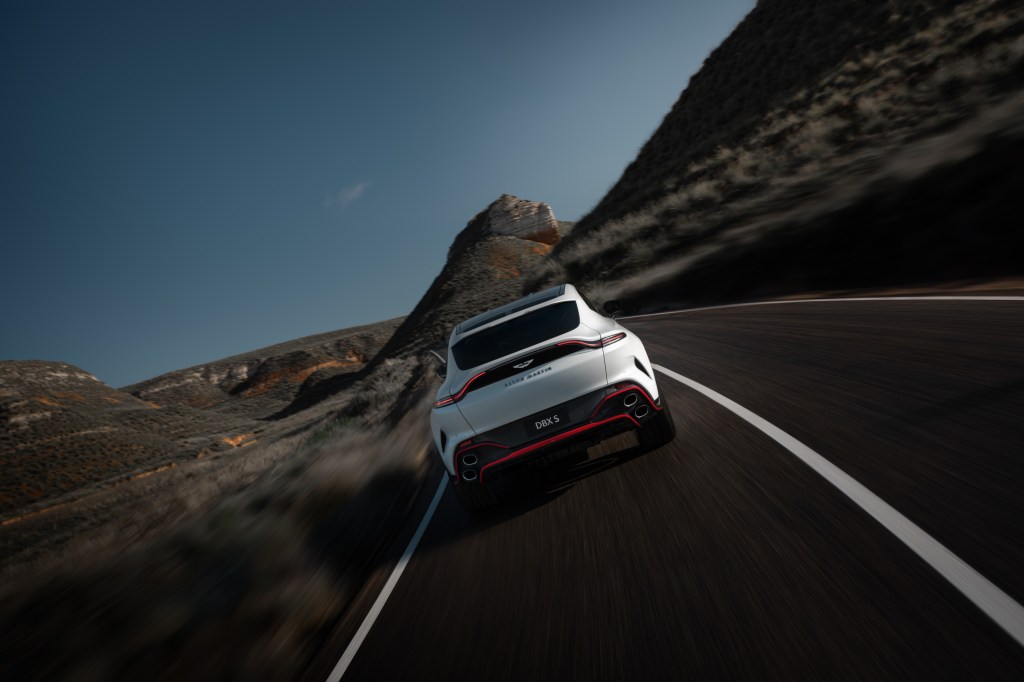
The most obvious visual changes to the new flagship DBX are at the rear, dominated by quad exhausts now vertically stacked and available in both gloss and matt finishes, giving full voice to the glorious sound of the V8 at maximum attack. The rear bumper and diffuser have been completely reprofiled and, along with the side sills and wing, can be specified with carbon to reduce overall vehicle mass by a further 7kg. DBX S also showcases a new lower livery design available to specify in 3 colours; Rosso Corsa Red, Trophy Silver and Podium Green. The sporting livery highlights the front splitter, diffuser and side sills continuing to the rear, framing the new stacked quad exhausts.
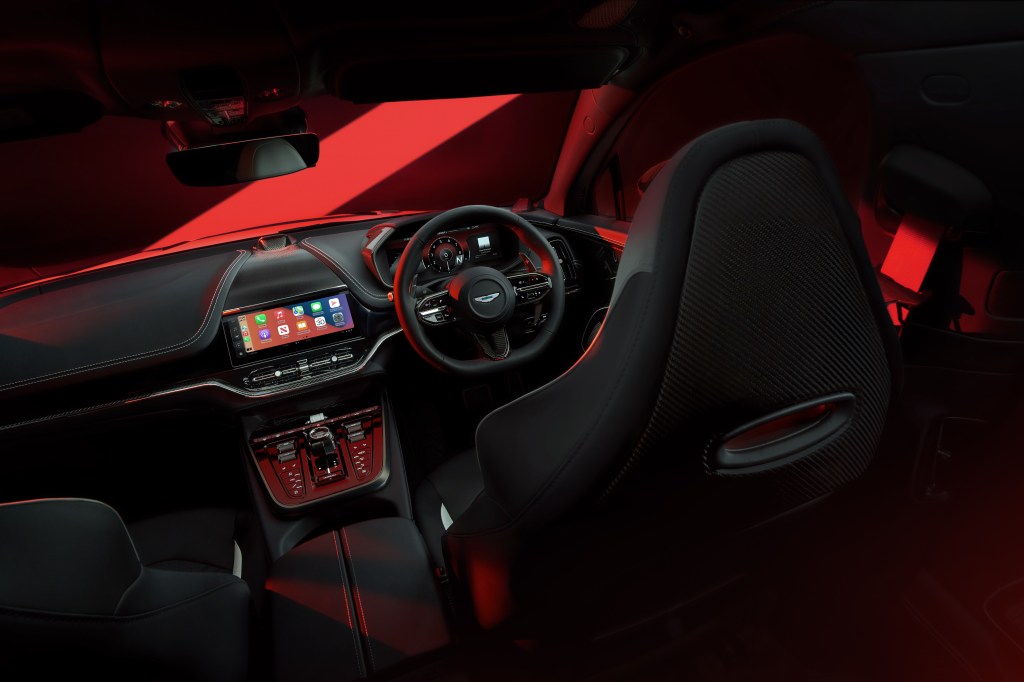
The interior of DBX S displays a bespoke ‘S’ theme; the most notable feature being the distinctive herringbone design which comes as standard on the seats, but which is also extended to the headlining if the optional Carbon roof is chosen. The herringbone lines become increasingly wider as they progress up the seat, giving an unmistakeable impression of speed; fitting for the highest performing SUV in the marques range.
DBX S is trimmed as standard in lightweight sporting Alcantara, which can be seen on the seats, headlining, centre console, lower instrument panels and upper trim. In areas of high wear such as the seat bolsters, the Alcantara is seamlessly blended with semi-aniline leather. For those who prefer an even greater sense of luxury, DBX S can be trimmed entirely in semi-aniline leather. Red seatbelts can also be specified to bring additional ‘S’ identification inside the car.
The ‘S’ suffix is embroidered onto the seat, complimented by the Aston Martin wings that are emblazoned on the headrests with an industry-first technique using both embossing and debossing with extreme pressure (1.5 tonnes) and heat to sculpt the wings into the leather in sub-millimetre precision and detail. Furthermore the ‘S’ appears on the treadplates and engine plaque to complete the picture.
DBX S continues the adoption of Aston Martin’s state-of-the-art in-house developed infotainment system with a striking new cabin architecture. This transformative enhancement showcases exemplary deployment of craft and innovation combining immaculate design and indulgent luxury with a formidable suite of connected car technology.
It is also fitted with the Aston Martin Premium Audio 800w 14 speaker audio system as standard. Developed utilising advanced hardware, this system features a surround sound mode with QuantumLogic® surround sound processing for a totally immersive soundscape. However, true audio enthusiasts will delight in the optional system developed with Aston Martin’s audio partner, Bowers & Wilkins. Acoustically engineered to the interior volume and shape of DBX S, this exceptional system uses technologies and innovations found in Bowers & Wilkins acclaimed world-class loudspeakers. Aluminium Double Dome tweeters and Continuum® midrange speakers give this 23-speaker, double amplified 1,600W surround sound system a balanced and accurate sound. Dedicated 3D headline speakers, bass speakers and a powerful subwoofer deliver a powerful and dynamic sound experience, reflecting the characteristics of DBX S itself.
‘S’ has long had an association with Aston Martin, and DBX S proves that lighter variants with more power and performance are still very much part of the marque’s story, and are set to last into the foreseeable future. DBX S is available to order now, with deliveries expected in Q4 2025.
Hyundai Motor Company continues to push the boundaries of automotive design with the unveiling of its visionary design concept car, INSTEROID, today in Seoul, Korea. INSTEROID embodies Hyundai Motor’s bold approach, merging gaming influences with extensive customization to captivate a new generation of drivers.
Based on the successful Hyundai INSTER electric sub-compact urban SUV, which launched last year and quickly became a global hit, INSTEROID takes the concept of sporty design and user experience to new heights. INSTER’s acclaim, including its selection as a top three finalist for the 2025 World Car of the Year award, sets a solid foundation for this radical ‘What if?’ project.
Crafted in secrecy by Hyundai Motor’s European design team, INSTEROID is a true concept car. Its name cleverly fuses the playful essence of ‘INSTER’ with the dynamic energy of ‘STEROID’, reflecting its spirited nature and muscular look.
Much like the off-road-inspired INSTER CROSS derivate shown at INSTER’s debut in 2024, INSTEROID is another step in the hot-selling production model’s journey. Its mission is clear: to challenge conventions, create emotions and redefine what a sporty EV can be.
“INSTEROID is a celebration of pure fun – a journey where we explored new ways to ignite emotion and imagination in every detail,” said Simon Loasby, Senior Vice President and Head of Hyundai Design Center. “It’s not just about how it looks, but also how it sounds and how makes you feel. From its bold visual language to the immersive sound experience, it’s a concept that invites everyone to dream a little louder and smile a little longer.”
More than just a car, INSTEROID represents a limitless vision of automotive innovation and imagination. It is engaging users on new levels of interaction through shape, light and sound.
“INSTEROID represents a modern take on the idea of a dream car. It is designed to inspire and create enthusiasm,” said Eduardo Ramírez, Chief Designer at Hyundai Design Europe. “This project allowed us to fully embrace unrestrained creativity, drawing inspiration from video games to create an emotional and engaging vision of Hyundai’s brand.”
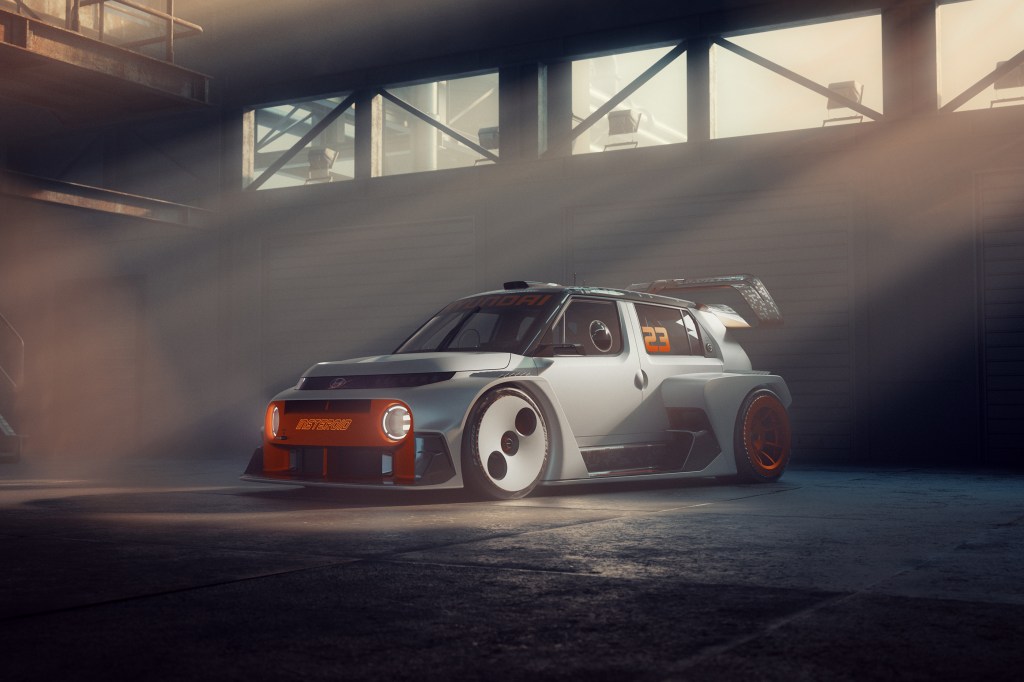
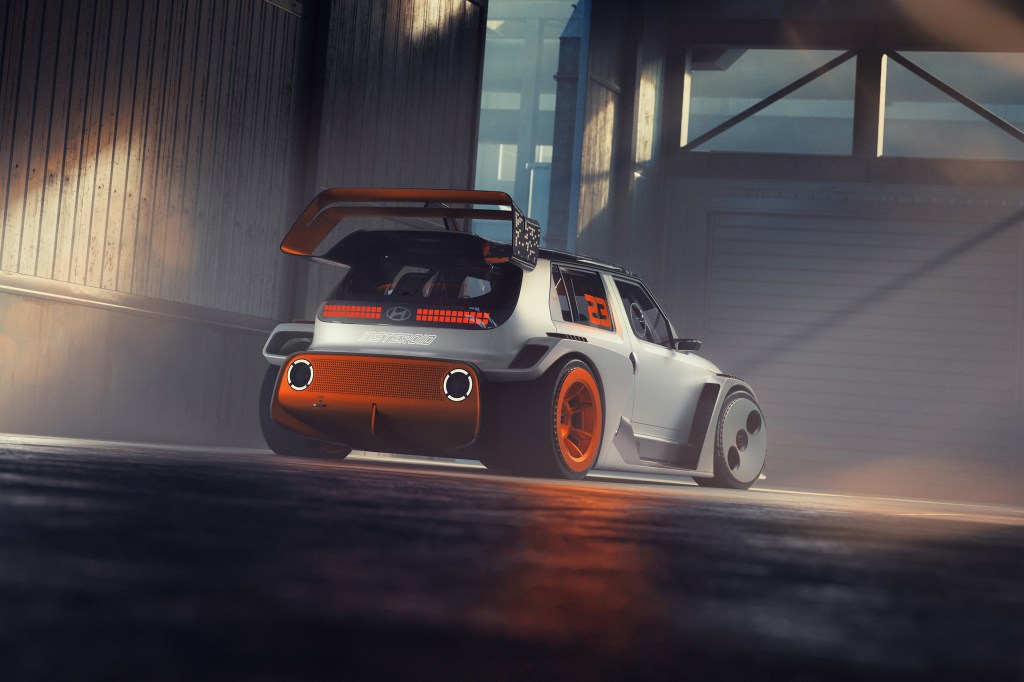
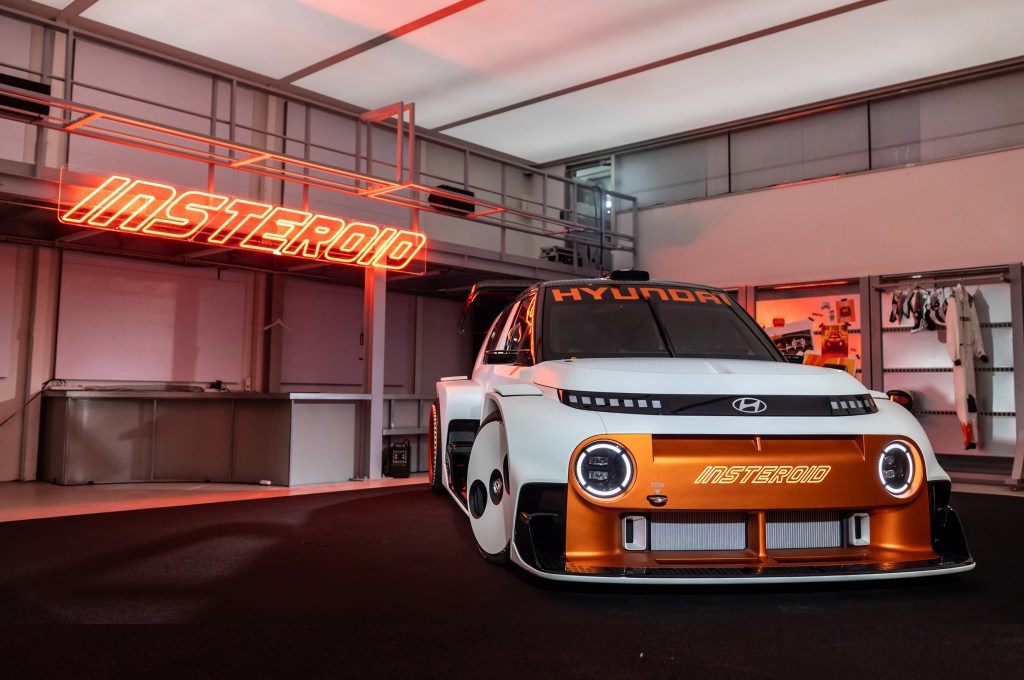
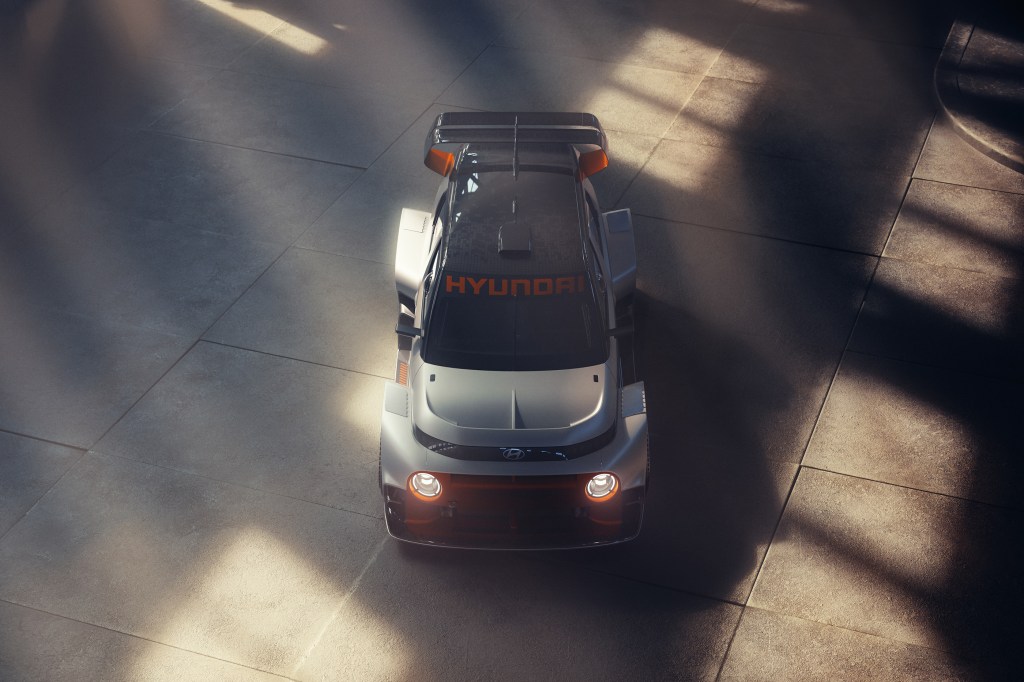
Gamified design concept boasts sporty styling and eco-conscious materials INSTEROID takes the INSTER production model to the next level with sporty, gaming-inspired features that include an extended, widened body, track-optimized wheels, and a prominent wing spoiler, diffuser and wheel arch air vents delivering advanced aerodynamics.
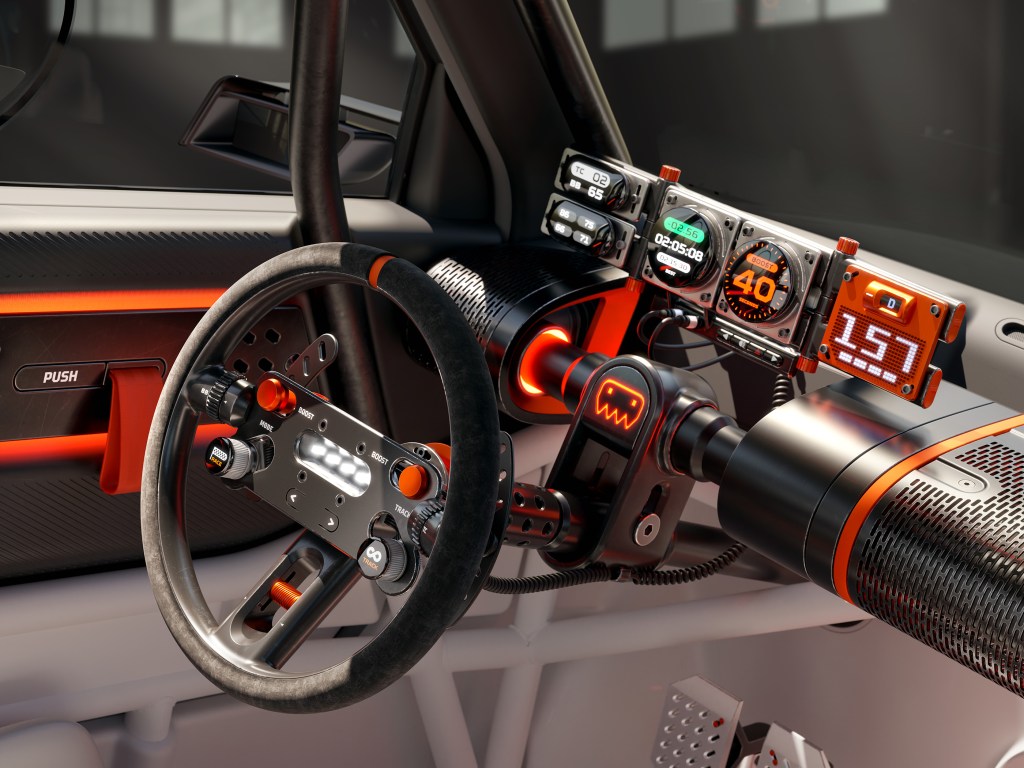
Inside, the cockpit offers a stripped-down layout, with bucket seats, a roll cage and a specialized instrument cluster creating an immersive driving experience. Every element is fully adjustable, reflecting the user-centered spirit of a garage-built machine true to the motto: “Build it, play it, break it, repeat.” Adding to its multisensory experience, INSTEROID produces a unique sound signature, leaving an unforgettable impression.
Building upon INSTER’s charismatic design, INSTEROID aims to transform the driving experience with its Drift Mode, promising competitive thrills paired with light-hearted driving enjoyment. Playful details, such as the integrated Beat House sound system and Message Grid, enable personalized interactions, further enhancing driver engagement. Located throughout the design, the Boost icon represents multiple unique personas, reinforcing the deep emotional connection between car and driver.
To optimize performance and reduce overall weight, lightweight lattice structures are seamlessly integrated. The striking exterior, finished in soft white shade, is punctuated by a single bold orange highlight – an unmistakable visual statement. Completing the vision, a reflective race suit with prominent INSTEROID lettering captures the fusion of car culture and youthful expression.
INSTEROID also embodies Hyundai Motor’s commitment to sustainability by pioneering innovative approaches to eco-conscious materials. The interior showcases 3D knit fabric crafted from recycled yarns, using a single-piece, made-to-measure process.
INSTEROID generates buzz on the way to Seoul Mobility Show Hyundai Motor unveiled INSTEROID during a launch event for media and content creators at the Peaches D8NE(Dowon) cultural and retail space in Seoul’s Seongsu neighborhood, culminating with a private ‘Night Garage Party’ on April 1. The exhibition space also featured INSTER and the rugged, outdoor-focused INSTER CROSS, allowing for discussions with product and design specialists.
A dedicated space was established at the event venue, allowing visitors to experience a variety of games featuring INSTEROID. One of these games, developed by Hyundai Motor, is a time attack-style challenge where players collect ‘steroid’ items in INSTER, enabling the car to evolve into INSTEROID. This game is set to be unveiled to the public in April via a URL, eliminating the need for app downloads. Additionally, Hyundai Motor revealed the INSTEROID Kart, which will be released later as a powerful tool in ‘Kartrider Rush+.’
This collaboration reflects Hyundai Motor’s growing partnerships in the gaming industry. Following successful ventures with platforms like Roblox and ZEPETO, this initiative aims to connect with younger audiences through authentic engagement.
The concept car will be showcased from April 3 to April 13 at the Seoul Mobility Show, offering the public a chance to experience this innovative concept firsthand. Serving as a halo model for the INSTER lineup, INSTEROID is set to make a lasting impression at major auto events in key markets such as Korea and Europe, delivering a refreshed brand image while further boosting consumer interest in INSTER.
Hyundai INSTER has experienced high demand globally since its launch last year and continues to resonate with customers worldwide. Initially introduced in Korea and Europe, Hyundai Motor will further expand the rollout in 2025 to select markets across the Asia-Pacific, Middle East, and Central and South America regions.
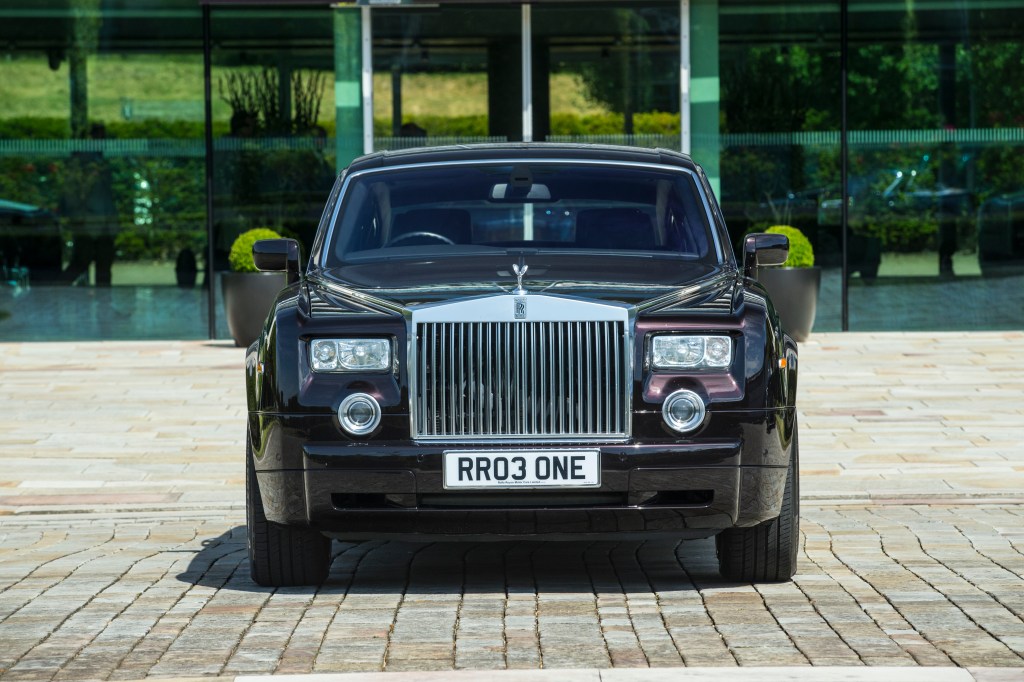
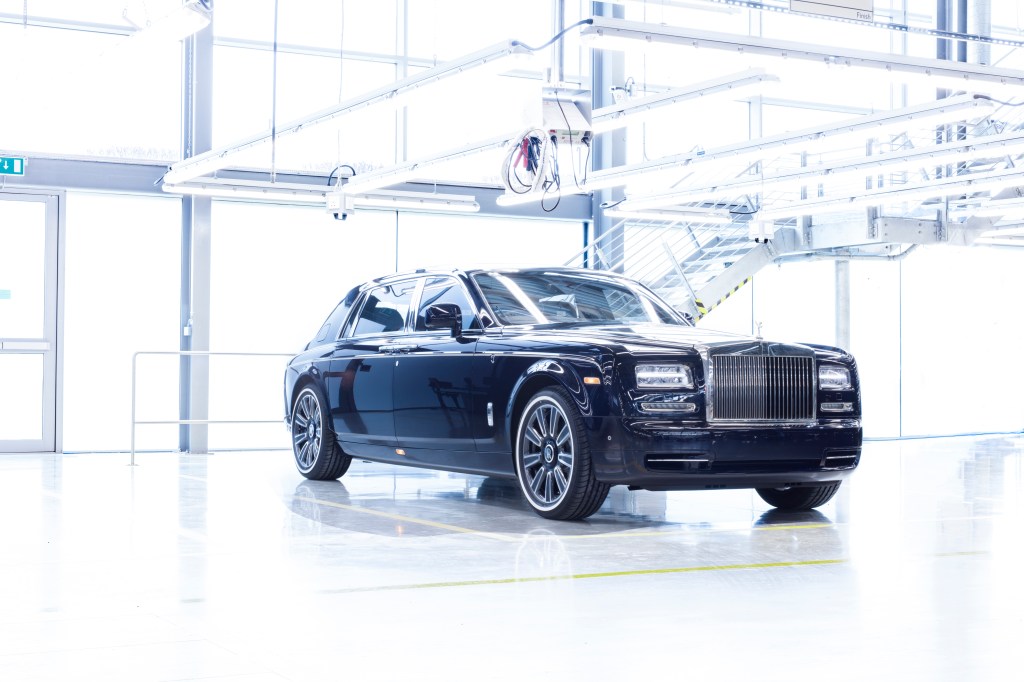
At one minute past midnight on 1 January 2003, the Chairman & Chief Executive of Rolls-Royce Motor Cars handed the keys of the first Phantom VII to its new owner. The moment marked the beginning of a new era for the brand and was the culmination of a process dubbed ‘the last great adventure in automotive history’.
In 1998, BMW Group acquired the rights to manufacture Rolls-Royce motor cars. In less than five years, it had designed and constructed a new head office and manufacturing plant, and designed, tested and built an entirely new motor car worthy of the Rolls-Royce name – a timescale almost unprecedented in the industry.
THE REBIRTH OF A LEGEND The design for Phantom VII was initially developed in a secret studio, discreetly located in a former bank building on the north side of London’s Hyde Park. For Chief Exterior Designer, Marek Djordjevic, the project was a dream come true. He was instructed to begin with a clean sheet of paper, and was given only three stipulations: the car, codenamed RR01, should have very large wheels; the famous radiator grille; and, of course, the Spirit of Ecstasy mascot.
To understand the essence of what a Rolls-Royce should be, and the characteristics that made it so special and identifiable, Djordjevic turned to designs from the past for inspiration. Three in particular caught his eye: the classically elegant Silver Cloud; the contemporary, understated Silver Shadow; and above all, a coachbuilt Phantom II of the early 1930s.
The heritage Phantom provided him with classic Rolls-Royce signature elements that would profoundly inform the new model’s design: a roofline just over twice the height of the wheels; a long wheelbase, with the front wheels well to the fore and a minimal front overhang; a long bonnet, visually linked to the passenger cabin by an accent line of brightwork; and an imaginary line drawn rising from rear to front along the lower edge of the body, reminiscent of a motor yacht at speed – the famous ‘waft line’ still exhibited by every Rolls-Royce model today.
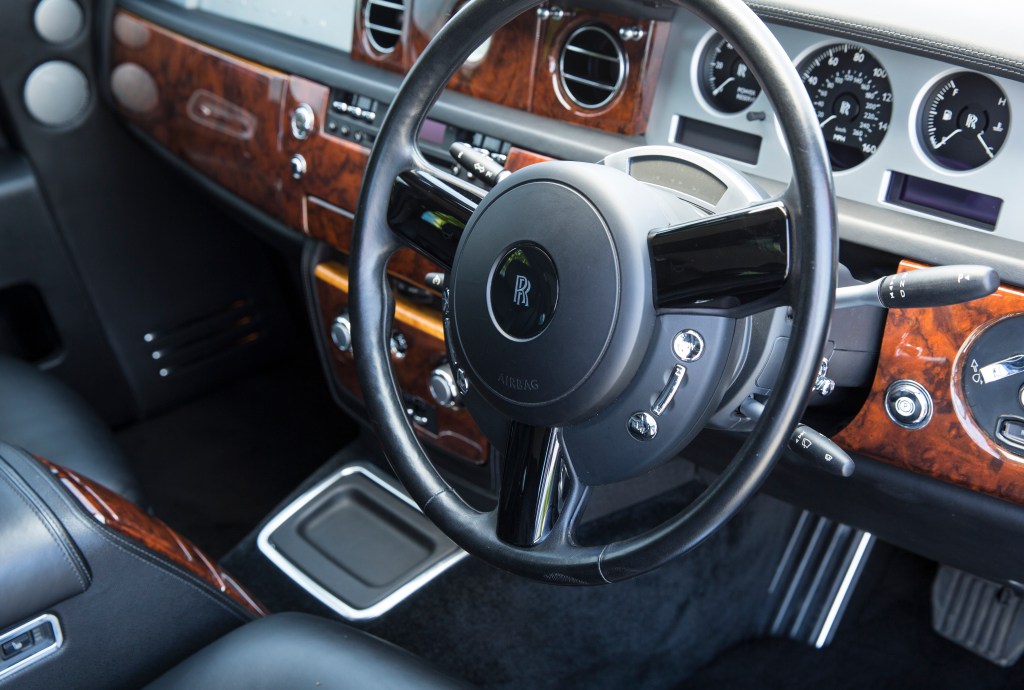
THE EPITOME OF COMFORT Phantom VII was designed first and foremost around the comfort of its occupants – an overarching design approach known as the Authority Concept. The driving position provided a commanding view of the road ahead, with the primary controls intuitively positioned, in groups and shapes to make them operable by touch alone so the driver could keep their eyes on the road. Secondary controls were either concealed in compartments, such as the centre armrests, or operated by the Controller. A solid metal cylindrical dial, exposed by opening part of the front-seat armrest, the Controller took care of functions including communication, navigation, entertainment and the motor car’s setting configuration, all displayed on a rotating central fascia screen.
For rear-seat passengers, the Authority Concept manifested itself in wide, rear-hinged coach doors allowing them to enter and exit the cabin easily and decorously. Once inside, the doors closed with the touch of a button. The seats themselves were offered in a choice of configurations: ‘Individual’ with a fixed centre armrest and console; or ‘Theatre’ with a raisable armrest and angled side-bolsters permitting occupants to sit at a slight angle towards one another to aid conversation. The seats were also slightly higher than the front seats, so the passengers could see through the windscreen more easily – and admire the Spirit of Ecstasy proudly crowning the long sweep of the bonnet ahead.
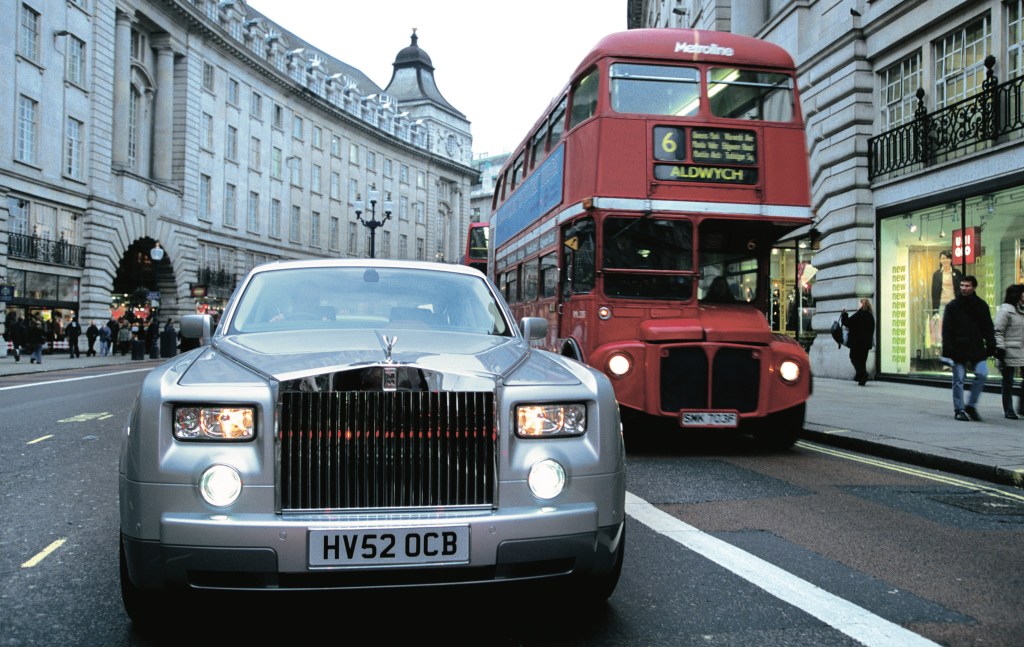
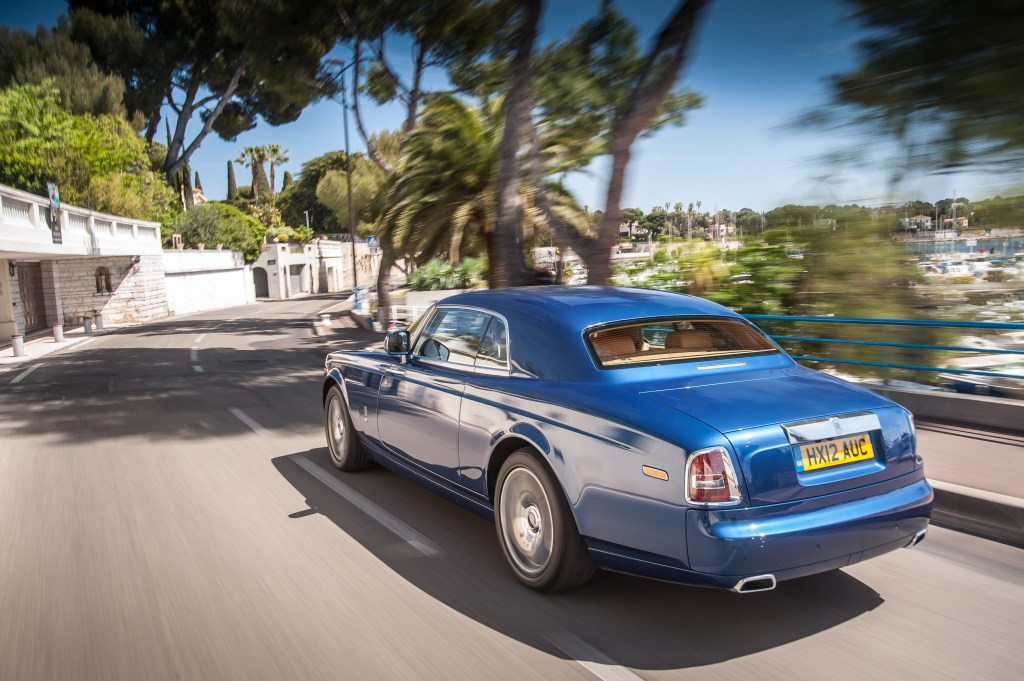
Rolls Royce Series II Phantom Coupe
WHERE PAST AND PRESENT MEET While Phantom VII’s overall silhouette reflected traditional Rolls-Royce proportions, and its interior upheld the marque’s reputation for peerless comfort, its engineering and construction were at the leading edge of 21st Century technology.
Of all the engineering innovations introduced by Phantom VII, the most enduringly important was its construction method. Instead of the usual monocoque structure, in which the bodywork and frame are integrated into a single shell, Phantom VII was built on an aluminium spaceframe – a skeletal framework of some 200 extruded sections to which the suspension, engine and body panels are attached. This method is often used in racing and high-performance vehicles, owing to its superior strength-to-weight ratio. The Rolls-Royce version was also designed around the marque’s requirement for hand-built perfection; when measured from bumper to bumper, the length of every motor car built on it would be accurate to within 0.5mm. Achieving this precision required skilled craftspeople to hand-weld 150 metres of seams in 2,000 separate locations. The Phantom VII spaceframe provided the foundations for the contemporary Architecture of Luxury, which underpins every model built at the Home of Rolls-Royce today.
EXTENDING ITS INFLUENCE The Architecture of Luxury harnesses another key benefit of the spaceframe. Infinitely scalable and modifiable, it gives Rolls-Royce engineers and designers the freedom to create motor cars of different shapes and dimensions on the same underpinnings. Today, that remarkable flexibility is demonstrated in models as diverse as Spectre and Cullinan; but the original Phantom VII spaceframe provided the first example of this adaptability.
At the 2004 Geneva Motor Show, Rolls-Royce unveiled an experimental car, 100EX. Four inches shorter than Phantom VII, it was a two-door drophead coupe, with a V16 cylinder engine and a fabric hood concealed by marine-style bleached teak decking, inspired by the classic J-Class racing yacht of the 1930s. It was so well received that a production version, with a V12 engine, was approved; Phantom Drophead Coupé, as it was known, is now one of the rarest and most desirable motor cars of the entire Goodwood era.
The following year, Rolls-Royce launched Phantom VII Extended Wheelbase (EWB), in which the chassis was lengthened by 250mm (9.8in) to create additional space in the rear cabin.
In 2006, another experimental Phantom, 101EX, appeared at Geneva. This was a fixed-head coupé based on the Drophead, and was the first to feature the Starlight Headliner now seen on almost every Rolls-Royce motor car. The Phantom Coupé also became a series production car, again in extremely limited numbers.
A NEW POWER RISING Another link to the past was provided by the engine. Rolls-Royce had used a V12 engine with Phantom III in 1936, and again in Silver Seraph in the late 1990s. That Phantom VII should be similarly equipped was obvious and indisputable.
Rolls-Royce’s engineers were aware that the Phantom VII engine required a significant amount of power to deliver the effortless ‘waftability’ they wanted from their new model. Phantom VII was therefore fitted with a brand-new, specially designed engine with a capacity of 6.75 litres – the traditional displacement for a Rolls-Royce motor car engine. A derivative of this engine is still used in Rolls-Royce motor cars today – with the obvious exception of the all-electric Spectre and Black Badge Spectre.
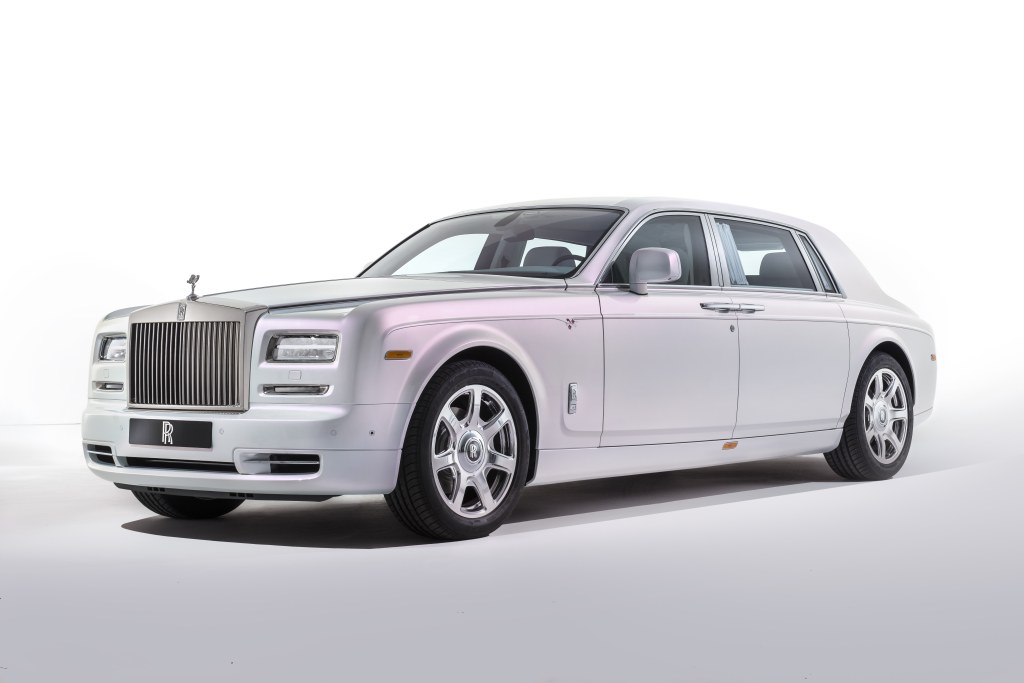
THE ULTIMATE CANVAS FOR BESPOKE Phantom has long been revered as the ultimate canvas for Bespoke, enabling clients to create truly singular expressions of their vision. Among the most notable Private Commissions and Collections were Phantom Aviator, which paid homage to the golden age of flight with aviation-inspired details and a cockpit-like interior; Phantom Serenity, a masterpiece of handwoven silk and delicate embroidery that redefined luxury craftsmanship; and the Art Deco Collection, which celebrated the bold geometric forms and opulent materials of the Roaring Twenties, translating the era’s glamour into a contemporary Rolls-Royce aesthetic. Each of these creations exemplified the boundless possibilities of Bespoke, reinforcing Phantom’s status as the pinnacle of individualisation.
A CRUCIAL LEGACY Phantom VII remained in production until 2017, when it was replaced by the current eighth generation. For 14 years, it was the marque’s pinnacle product and re-established, then reinforced Rolls-Royce’s long-cherished reputation as ‘the best car in the world’. As the first – and until the launch of Ghost in 2009, the only – motor car to be handmade at Goodwood, it was the foundation on which all Rolls-Royce’s subsequent growth and success was built.
Andrew Ball, Head of Corporate Relations and Heritage, Rolls-Royce Motor Cars said: “For those of us working at the Home of Rolls-Royce today, Phantom VII is where it all began. The first motor car ever to be built at our Global Centre of Luxury Manufacturing Excellence, it ushered in our modern era in 2003 and, in terms of design, engineering, craft and manufacturing, set the template for everything we’ve done since. Though it marked a decisive new beginning for the brand, echoes of earlier Rolls-Royce models are everywhere: from one angle you see Silver Shadow, from another Silver Cloud; and elsewhere an undeniable link to the coachbuilt limousines of earlier decades. Through these inherited traits, Phantom VII represented an up-to-the-minute interpretation of the traditional, formal British saloon. At the same time, it started completely new conversations in modern luxury, and the unlimited possibilities of Bespoke.”
Nissan Motor India has announced an all-new 7-seater B-MPV (multi-purpose vehicle) to their existing line-up. The company showcased two new products slated for India at their recently concluded Global Product Showcase Event held in Yokohama, Japan. This is in line with the company’s plans for the India business to reshape its new products to meet the rising aspirations of its customers and deliver products in all high-growth segments such as the B-MPV and C-SUV segments in addition to its existing share in the B-SUV segment led by the New Nissan Magnite.
Nissan will continue to strengthen its presence in India’s rapidly growing market, enhancing domestic performance and expanding exports. Nissan’s planned product offensive has begun with the first-time global reveal of an all-new 7- seater B-MPV scheduled to launch in FY25 as a brand new addition to the India product portfolio.
This will be followed by a previously announced 5-seater C-SUV (compact sports utility vehicle) in early FY26. The company has shared two brand new teasers for Indian audiences which confirm the developments and timelines for both vehicles. Nissan Motor India remains on track to have 4 products by FY26 for Indian customers across the B/C and D-SUV segments.
The C-SUV has been designed to disrupt the segment in India. It will be feature- packed and be delivered with state-of-the-art proprietary advanced technologies. Inspired by another iconic Nissan SUV, the new C-SUV takes its design cues from the Nissan Patrol. The C-SUV will deliver true Nissan SUV DNA and deliver the same robust reliability, premium craftsmanship and technology that Nissan is renowned for globally. The C-SUV with unmistakable presence will offer a high approach and departure angle making it the perfect companion for Indian road conditions.
The Nissan 7-seater B-MPV on the other hand aims to deliver unmatched value, quality and comfort to its core customer driven by value conscious customers seeking to maximize their purchase in the segment. The Nissan B-MPV will deliver muscular styling that is unique to Nissan’s distinct design philosophy. It has been designed to ensure comfort for passengers on all rows without compromising on driving pleasure.
Nissan is setting its sights on achieving an ambitious target of 1,00,000 units in both annual domestic sales and exports from India. To support this goal, the company will locally manufacture both new products at the Alliance JV plant in Chennai. This approach ensures that every vehicle manufactured here meets global standards, catering to both domestic and international markets.
Building on the success of the New Nissan Magnite, Nissan is introducing a new C- SUV that will also be made in India and exported globally. This 5-seater C-SUV will be the second model from the Chennai plant to follow the ‘One Car, One World’ strategy, reinforcing Nissan’s commitment to expanding its presence in both domestic and international markets.
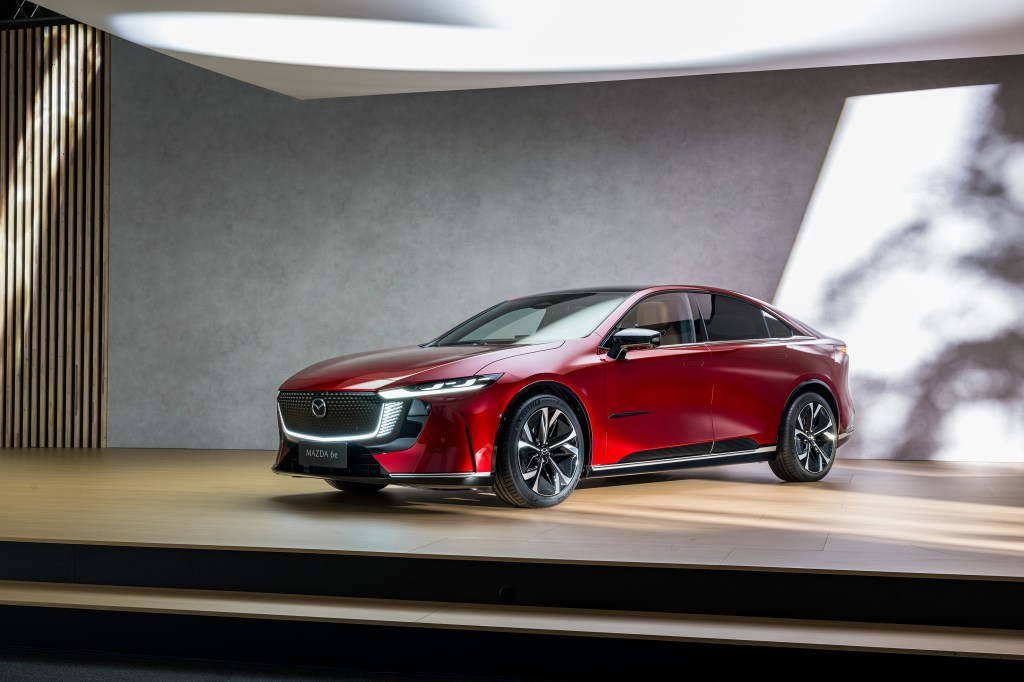
The all-new Mazda6e is the latest addition to Mazda’s fully electric lineup in Europe. A stylish electric hatchback with a fastback saloon style, the Mazda6e embodies a perfect balance between dynamic aesthetics and everyday practicality.
“The exterior is a true expression of its ‘Authentic Modern’ design philosophy,” explains Jo Stenuit, Director of Mazda’s European design studio in Oberursel, Germany. The vehicle’s sleek, coupé-inspired silhouette features a short rear deck, creating a sporty saloon-like appearance while maintaining the practicality of a five-door hatchback. It embodies harmony through contrast, balancing light and shadow, sharpness and roundness, to create a sense of dynamic motion even when stationary.
Mazda’s “Kodo – Soul of Motion” design language is brought to life through fluid surfaces and a low-slung profile, with parallel lines enhancing the car’s dynamic presence. This is further emphasised by the Aero-Fusiform shape—resembling a beautifully sculpted barrel, where all lines appear to converge at a single point. This seamless, flowing form reinforces the car’s aerodynamic elegance and sense of motion.
The sculpted door panels, inspired by the spray of a speedboat cutting through water, create a light-catching effect that further enhances the sense of movement. The rear end exudes power and stability, incorporating four distinct cylindrical taillight elements—a subtle homage to Mazda’s rich design heritage.
For the first time at Mazda, a glowing signature wing illuminates the Mazda6e’s front, featuring dynamic light animation as a visual charging indicator. The rear blends modern and classic design, with a horizontal line adding sleekness and width, while four cylindrical elements honour Mazda’s heritage.
Frameless doors and integrated handles enhance the seamless look, while an electrically extendable rear spoiler improves aerodynamics and stability at high speeds.
“The cabin of the Mazda6e is inspired by Japanese simplicity, built around the design principle of ‘ma’—the power of empty space,” says Jo Stenuit. “By intentionally creating emptiness, Mazda achieves a harmonious balance that enhances both aesthetics and functionality.”
A floating horizontal dashboard stretches across the cabin, creating a sense of openness and serenity, while the prominent centre console enhances driver focus and security. The interior design prioritises minimalism with depth, replacing excess buttons and screens with intuitive, thoughtful placement of controls.
The standard panoramic glass roof invites natural light into the cabin, reinforcing the expansive and airy feel. Tinted glass and heat insulation ensure comfort in all conditions. The sophisticated ambient lighting system, featuring 64 customisable colours, enhances the premium atmosphere with soft, indirect illumination.
The mono-form front seats, with their integrated headrests, deliver both modern elegance and exceptional comfort. Mazda offers a choice of high-quality upholstery: Beige or Black artificial leather in the Takumi trim, and luxurious Tan Nappa and Suede cloth woven fabric in the Takumi Plus trim. Subtle satin chrome accents and meticulous stitching complete the refined, sophisticated look.
The all-new Mazda6e is a masterclass in design, seamlessly blending form and function to create a vehicle that is as visually striking as it is practical. With its fluid exterior lines, cutting-edge lighting technology, and a minimalist yet luxurious interior, the Mazda6e represents the next chapter in Mazda’s design evolution.
Bridging tradition and innovation, the all-new Mazda6e marks a bold step into the electric future while staying true to the craftsmanship and aesthetic excellence that define the Mazda brand. Entering a new era, the Mazda6e is more than just a car—it is a statement of Mazda’s commitment to design, technology, and electrification.
The Mazda6e is the next chapter in Mazda’s EV story in Europe.
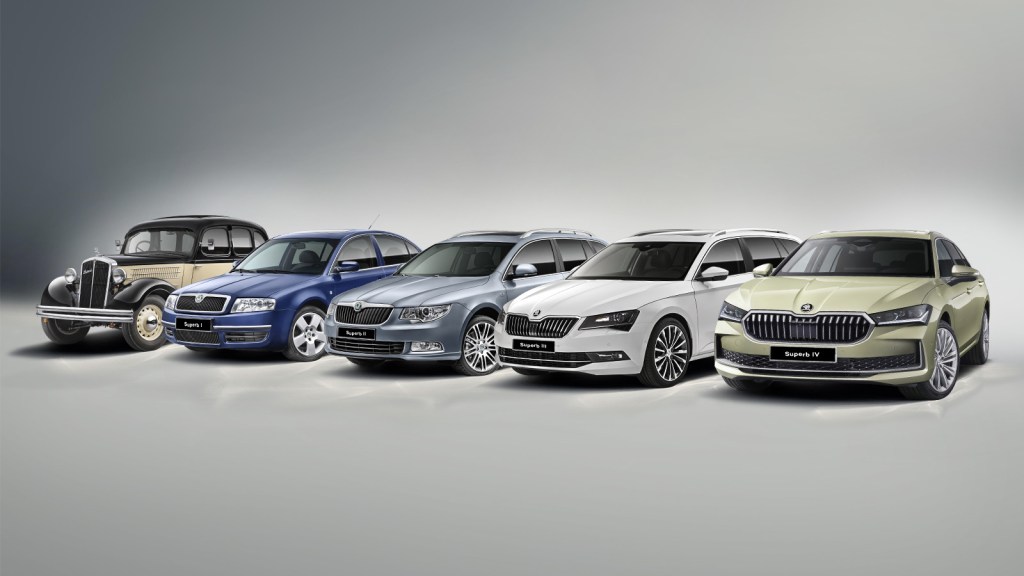
Ninety years ago, Škoda Auto began production of the Superb at its Mladá Boleslav plant. The model quickly became synonymous with a comfortable, refined, and dynamic driving experience, even on poor road surfaces. It impressed with its spacious interior – offering seating for up to seven passengers – generous equipment, and outstanding craftsmanship. Production continued until 1949. In 2001, the legendary name returned with the first modern-generation Škoda Superb. Now in its fourth generation, the Superb is available as a Hatch or Estate, featuring a choice of petrol and diesel engines, as well as mild-hybrid and plug-in hybrid powertrains. The plug-in hybrid variants, the Superb Estate iV and Superb Hatch iV, offer an electric range of more than 75 miles. Customers can also opt for front- or all-wheel drive.
Technical innovation and progress: 1934–1949 In the spring of 1934, Škoda introduced a new generation of vehicles featuring a backbone chassis frame and independent wheel suspension. By the October of that year, the company had decided to name its flagship model ‘Superb’, catering to the most demanding customers. Series production commenced in Mladá Boleslav in March 1935. The first model, the Škoda 640 Superb, was powered by a six-cylinder engine producing 55 hp (40.5 kW). Right from the start, the Superb featured hydraulic brakes and a state-of-the-art 12V electrical system. The highlight of the range was a 96 hp (70.7 kW) 4.0-litre V8 engine. Offering generous space for up to seven passengers and their luggage, the Superb was available with various wheelbase lengths and body styles, including open-top and bespoke designs. By the time production ended in 1949, approximately 890 passenger cars and 1,630 military derivatives had been built – including a unique 4×4 version.
The Superb legacy: Four generations of innovation The Superb reflects Škoda’s ongoing transformation over its 130-year history. After a 50-year hiatus, the name was revived in September 2001 with the introduction of the first modern-generation Škoda Superb. This saloon offered exceptional interior space and came with a range of engines producing between 85 kW and 142 kW (193 hp), including a range topping 2.8-litre V6 with Tiptronic automatic transmission and bi-xenon headlights for enhanced comfort and safety.
Subsequent generations, launched in 2008, 2015, and most recently in 2023, further developed the Superb’s legacy. The second generation introduced a more practical Hatch and, for the first time, an Estate version, offering more powerful yet efficient powertrains and extensive standard equipment. The third generation continued this trajectory, integrating advanced technologies and innovative design.
The Superb’s popularity has grown significantly across generations. The first modern generation, produced from 2001 to 2008, saw 137,000 units sold. Its successor, introduced in 2008 and available for the first time as both a saloon and an Estate, achieved 6,18,000 sales, with 65% of customers opting for the saloon. The third generation, launched in 2015, continued this strong growth course, with 805,000 units sold – 56% of which were Estate models.
Now in its fourth modern generation, the Superb continues to set new benchmarks. Customers can choose between Hatch and Estate body styles, with petrol, diesel, mild-hybrid, and plug-in hybrid powertrains and more than 65,000 have been sold at this time. The latest plug-in hybrid models offer an electric range of more than 75 miles (WLTP). Equipped with cutting-edge technologies, sustainable materials, and smart solutions like Smart Dials, the new Superb is designed for modern mobility.









 Power Drive