
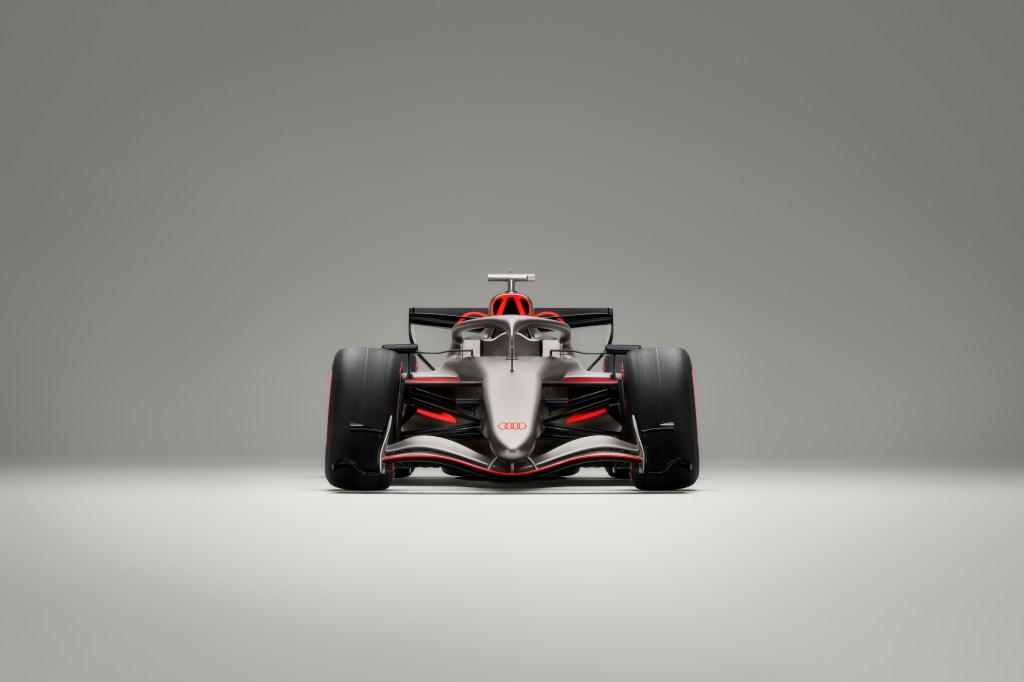
115 days before its first race in Formula 1, Audi provided a preview of the company’s presence in the pinnacle of motorsport at its Brand Experience Center in Munich. Just like in future production models, Audi will bring uncompromising clarity to the racetrack and beyond.
“By entering the pinnacle of motorsport, Audi is making a clear, ambitious statement,” says Audi CEO Gernot Döllner. “It is the next chapter in the company’s renewal. Formula 1 will be a catalyst for the change towards a leaner, faster and more innovative Audi.” According to Döllner, Audi is entering the racing series with an ambitious yet realistic roadmap: “We are not entering Formula 1 just to be there. We want to win. At the same time, we know that you don’t become a top team in Formula 1 overnight. It takes time, perseverance and tireless questioning of the status quo. By 2030, we want to fight for the World Championship title.”
The Formula 1 team will spearhead Audi’s new brand identity
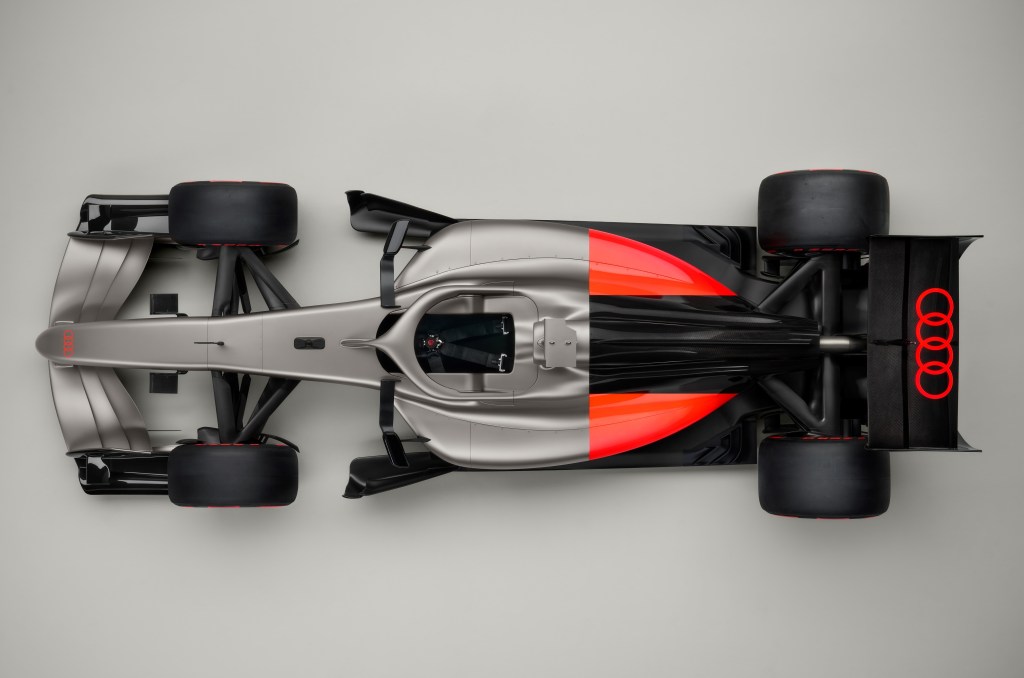
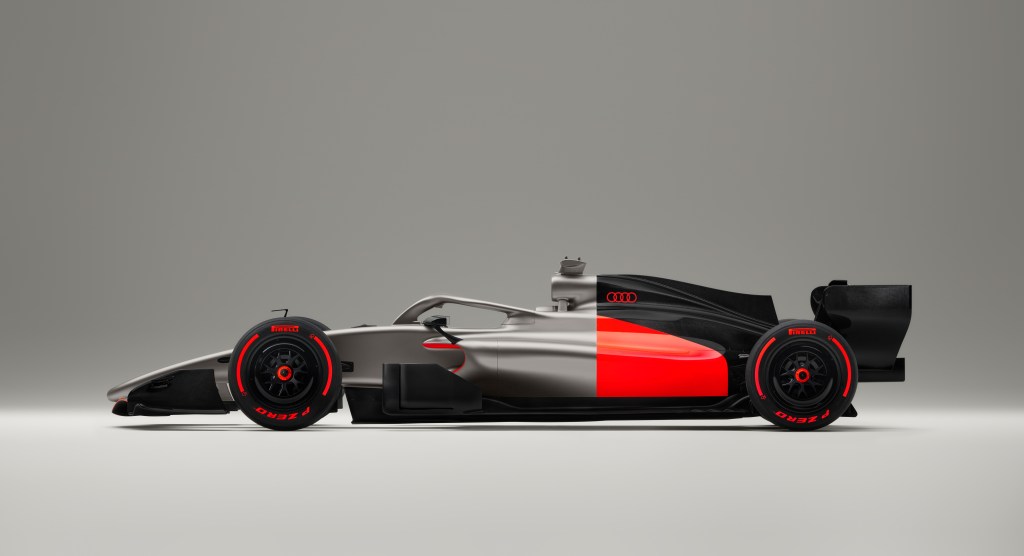
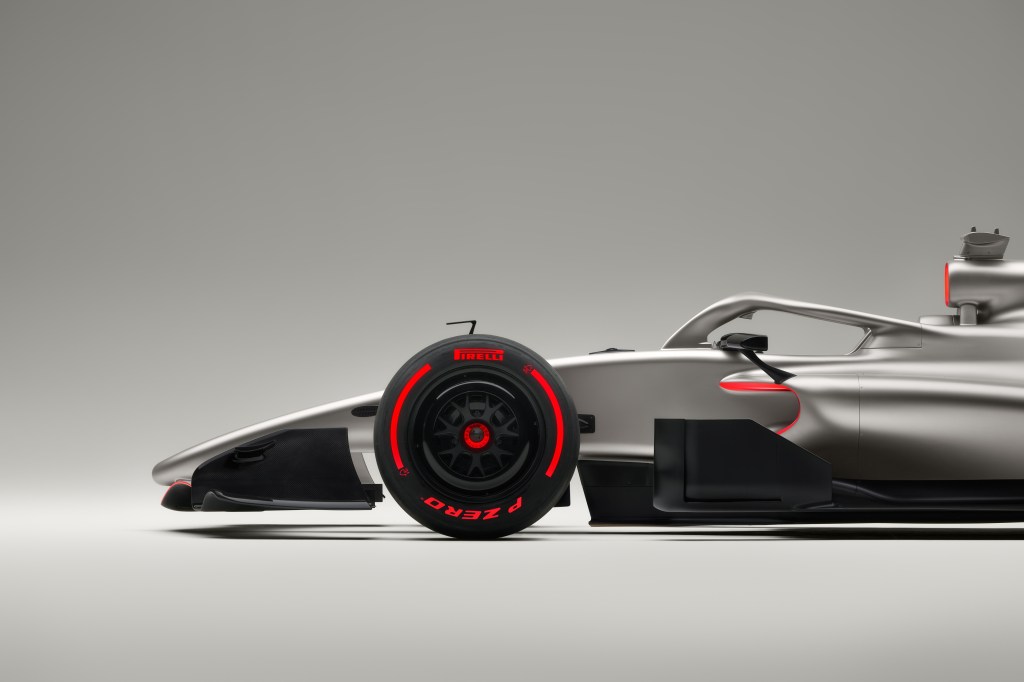
The Audi R26 Concept is a clear statement and provides a preview of the colour scheme and design of the brand’s first Formula 1 race car, which will be unveiled in January. This visual identity is based on the recently introduced design philosophy and its four design principles: clear, technical, intelligent and emotional. “We are implementing a unifying design language that draws together every aspect of our organization,” says Audi Chief Creative Officer Massimo Frascella. “This makes the Formula 1 project a pioneer for the new brand identity, which will be rolled out in the future both for the F1 team and Audi as a whole.”
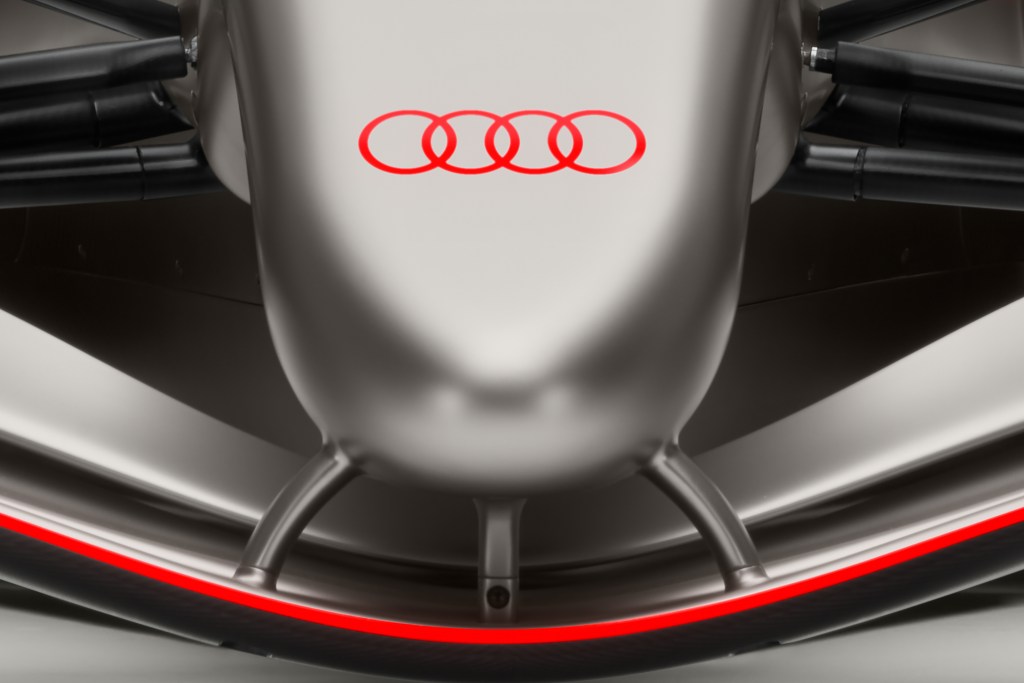
The R26 Concept is one of the first expressions of the brand’s new visual identity. Minimalist graphic surfaces, defined by precise geometric cuts, integrate seamlessly with the racing car’s geometry. The colour palette features titanium, carbon black and the newly introduced Audi red. As part of this identity, Audi will also sport red rings, used selectively to underscore its Formula 1 presence.
F1 as a global stage to demonstrate “Vorsprung durch Technik”
The Formula 1 project is a strategic flagship for Audi, reflecting the technological, cultural and entrepreneurial reinvention of the brand. It is intended to inspire customers and employees alike. Development and racing take place within an economically attractive framework: a cost cap applicable to all teams ensures a clearly defined budget and conditions, while the global reach of Formula 1 offers strong brand exposure and sponsorship opportunities.
Formula 1 has been a globally established sports platform for decades and, with more than 820 million fans, is the world’s most popular sports series. In 2024, around 1.6 billion TV viewers watched the races. The financial valuations of Formula 1 teams are in the billions. The future Audi F1 team already has three global corporations as partners – adidas, bp and future title partner Revolut – and there is great interest in supporting Audi in Formula 1.
To enter Formula 1, Audi acquired the Sauber Group in Switzerland in its entirety at the beginning of this year, thereby creating the conditions to bring Qatar’s sovereign wealth fund on board as an investor. At the helm of the Audi F1 Project are two experienced Formula 1 managers, former Ferrari Team Principal Mattia Binotto and Jonathan Wheatley (formerly Red Bull), who report directly to Audi CEO Gernot Döllner. In terms of drivers, the company is relying on a combination of experience and youthful energy with seasoned racing driver Nico Hülkenberg (Germany) and young talent Gabriel Bortoleto (Brazil).
“Formula 1 is more than just motorsport,” says Jürgen Rittersberger, CFO of AUDI AG. “It’s entertainment, emotion, technology – and also a challenge. But it is precisely this combination that takes us where we want to go: inspiring new customer groups for Audi. With the enormous reach of Formula 1, we have the opportunity to attract new customers for our brand – especially in the younger target group, where Formula 1 is experiencing rapid growth. Thanks to the cost cap, Formula 1 is also more financially sustainable than ever before. When we look at the development of sponsorship opportunities, team evaluations, and the overall revenue potential in Formula 1, one thing becomes clear: This path makes perfect sense for Audi – also economically.”

From motorsport heritage to Formula 1 newcomer
Motorsport is part of the Audi DNA and has always been a driving force for technological progress and innovation. From the first mid-engine Grand Prix car to quattro all-wheel drive in rallying, to diesel, hybrid and electric powertrains at Le Mans, in Formula E and at the Dakar Rally, Audi has led every motorsport project to success with determination, courage, perseverance and team spirit, always pioneering new ground. The Formula 1 involvement of Audi is intended to build on this.
The pinnacle of motorsport is considered the toughest test laboratory in the world. The short development cycles, minimal chain of command and quick decisions are intended to serve as a model for the entire company. At the same time, Audi is close to the latest technological developments and materials. Thanks to open competition, Formula 1 serves as a technology driver for both electric mobility and sustainable e-fuels – both topics that are also highly relevant for production models. In these two areas, the regulations offer great freedom and scope for innovation.
Far-reaching changes to the technical regulations of Formula 1 from 2026 onwards present an ideal opportunity for Audi, as a newcomer, to enter the pinnacle of motorsport. All competitors will have to familiarize themselves with new regulations and technologies at the same time, both in terms of the chassis and the drivetrain.
Milestones and the journey toward Formula 1
Since spring 2022, Audi has been developing the power unit for Formula 1 in Neuburg an der Donau – the only operational location of an F1 team in Germany. It consists of a V6 internal combustion engine (ICE) with a displacement of 1.6 litres and turbocharging, an energy recovery system (ERS) including energy storage (ES) and an electric motor generator unit (MGU-K), as well as an electronic control unit (CU-K). In addition to the power unit, the gearbox is also being developed in Neuburg. Together with the power unit, they form what is known as the powertrain. The new technical regulations for F1 powertrains focus on greater road-car relevance with a new hybrid concept. The output of the electric motor has been tripled and will in future be on a comparable level with the combustion engine, which will be powered by sustainable fuels from 2026. Audi has been working exclusively with the British company bp on this since 2022.
Concept development for the F1 powertrain ‘made in Germany’ began in 2022. Just two years later, the complete powertrain ran dynamically as a unit for the first time in a race simulation on the test bench. Virtual simulations and digital development tools are particularly important here, as regulations mean that it will not be possible to test the new powertrains on a racetrack until early 2026. As with product development at Audi, dynamic driving simulators, digital tools and methods play a significant role in the development process. The first power units for use on the racetrack have now been completed and will be shipped from Neuburg an der Donau to their respective locations starting in December.
The team develops and builds the race cars at the F1 Factory in Hinwil. The Swiss location is also responsible for planning and executing race operations. In addition, a technology office has been in operation in Bicester in the UK since summer 2025. The presence in the so-called ‘Motorsport Valley’ gives the team access to additional F1 expertise. There is intensive technical cooperation between the locations to fully exploit the advantages and opportunities of a factory team through the seamless integration of power unit and chassis.
First race in Formula 1
The future Audi F1 team will make its full public debut at the official team launch in January 2026. Shortly thereafter, the first official test drives with the new-generation Formula 1 cars will take place at the end of January at Barcelona, Spain – still behind closed doors. During further tests in Bahrain (11–13 February and 18–20 February), the Audi factory team will test in Formula 1 in front of the public for the first time, before the brand’s eagerly awaited debut in the pinnacle of motorsport takes place in Melbourne (Australia) from 6–8 March.
 Power Drive