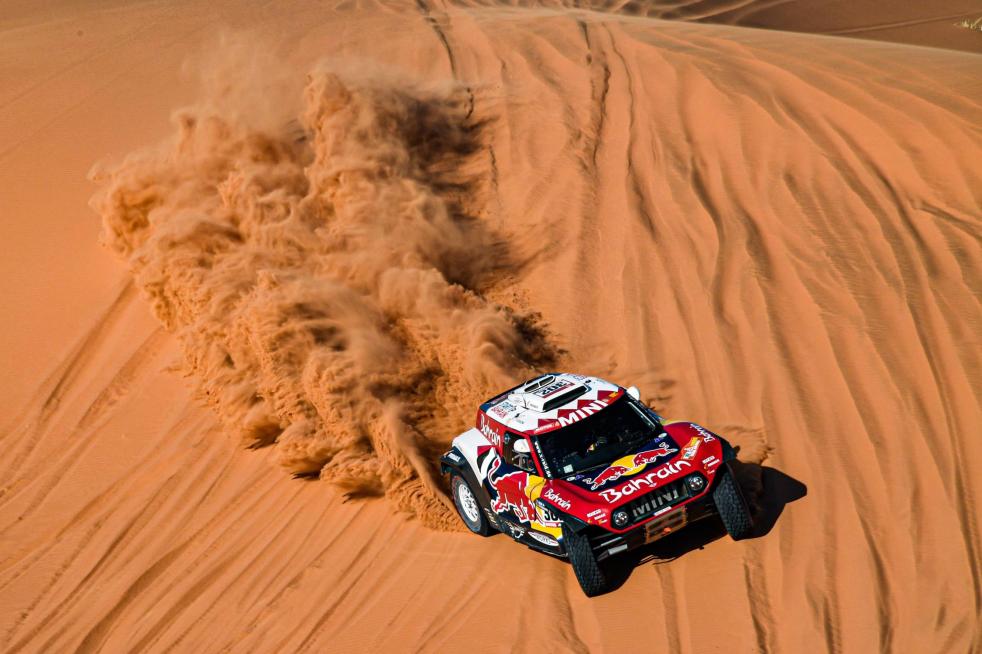
Carlos Sainz Wins Dakar Rally 2020 With MINI

1844356_P90380367-highRes

Carlos Sainz (ESP) and his co-driver Lucas Cruz (ESP) have won the Rally Dakar for the third time, having previously triumphed in 2010 and 2018. In doing so, they presented MINI with its fifth overall victory at the iconic endurance rally. For MINI and MINI Motorsport partner X-raid, this was the first success since their winning run together, which lasted from 2012 to 2015. The Spanish pair, in the MINI John Cooper Works Buggy, finished 6:21 minutes ahead of last year’s winner Nasser Al-Attiyah (QAT) after roughly 7,500 kilometres through Saudi Arabia, which was hosting the Dakar for the first time.

Carlos Sainz said: “I am very, very happy. So much hard work, physical training and test work with the team has gone into getting this result. The race was fantastic for us drivers, but you had to work very hard, right from day one. It is hard to imagine, but it was a full-throttle rally from the word go. Right now, I just want to enjoy the success.”

Dakar record winner Stéphane Peterhansel (FRA) and his co-driver Paulo Fiuza (POR) finished third, 9:58 minutes behind Sainz and Cruz, to round off an impressive performance from the two MINI JCW Buggies. The two MINI JCW Buggy crews each won four stages, while MINI vehicles went fastest on a total of nine of the twelve days. Vaidotas Zala (LTU) / Saulius Jurgelenas (LTU), in a MINI JCW Rally, won the very first Dakar stage on Arabian soil on the opening day.

Stéphane Peterhansel commented: “That was a bit of an odd Dakar for me. We decided at the last minute to change co-drivers, and then went straight into the race with Paulo Fiuza. I am happy with the result. We finished third, which was more than we would have expected at the start. The guys out in front were very quick and did not make any mistakes with the navigation. We did as well as we could have done.”
1844345_P90380375-highRes

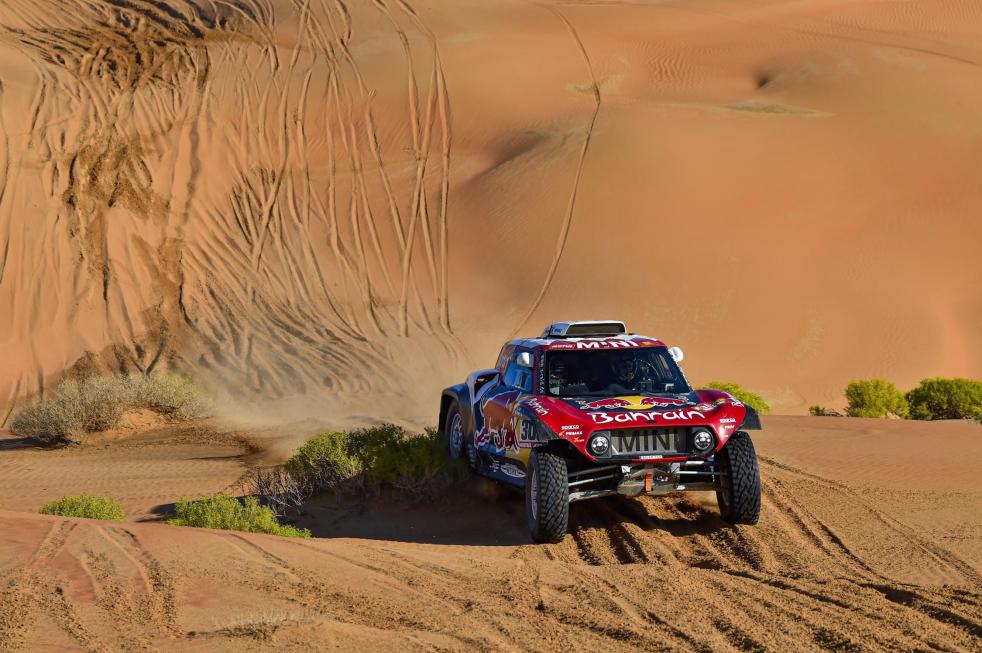
Seven of the nine MINI crews that started the rally reached the finish in Al-Quiddia (KSA), four of them in the top ten. Orlando Terranova (ARG) and Bernardo ‘Ronnie’ Graue (ARG) finished in the top three on three days on their way to sixth place overall in the four-wheel drive MINI JCW Rally. Local favourite Yasir Seaidan (KSA) and his co-driver Alexey Kuzmich (RUS) were ninth and finished an excellent second on the closing stage. Jakub ‘Kuba’ Przygonski (POL) and co-driver Timo Gottschalk (GER) had their hopes of a top result dashed on the opening day when a technical issue resulted in them losing six hours. They eventually finished in 19th place, 8:35.18 seconds off the lead.

Bernd Körber – Head of MINI said: “On behalf of the entire MINI family, I would like to congratulate Carlos Sainz, Lucas Cruz and the X-raid team on winning the 2020 Dakar Rally. At the same time, I also congratulate Stéphane Peterhansel and Paulo Fiuza on their podium finish. Unfortunately, this success is overshadowed by the tragic accidents involving Paulo Gonçalves and Edwin Straver, which have affected us all deeply. We wish the relatives every strength and Edwin Straver all the best for his recovery. Our drivers and the X-raid team performed superbly in Saudi Arabia, which was hosting the rally for the first time, and they were rewarded for the hard work they put in during preparations for the event. The MINI John Cooper Works Buggy proved to be fast and reliable on the very demanding and unfamiliar terrain. The fifth overall victory for MINI at the Dakar, and the first since 2015, is a very special moment for us all.”

MINI vehicles topped the overall standings after every one of the twelve legs at the 40th staging of the Dakar Rally. Zala and Jurgelenas got the ball rolling with victory on the opening stage, after which Terranova and Graue took the overall lead on day two. Sainz and Cruz claimed their first stage win on the third leg. That victory took them to the top of the overall standings – a position they held right through to the finish.

Sven Quandt – CEO X-raid commented: “We are absolutely overwhelmed by this superb team result. We did not expect to finish first and third. It has been a fantastic race, with many battles for the lead. Carlos and Stéphane did an outstanding job. The performance of our MINI JCW fleet was absolutely top-notch. We are delighted to have finally won another Dakar with our MINIs after so many years of trying. To have four MINIs in the top ten and seven in the top 20 shows how reliable we are. Thank you to our staff and to everyone who has believed in us and supported us – particularly MINI and our partners.”
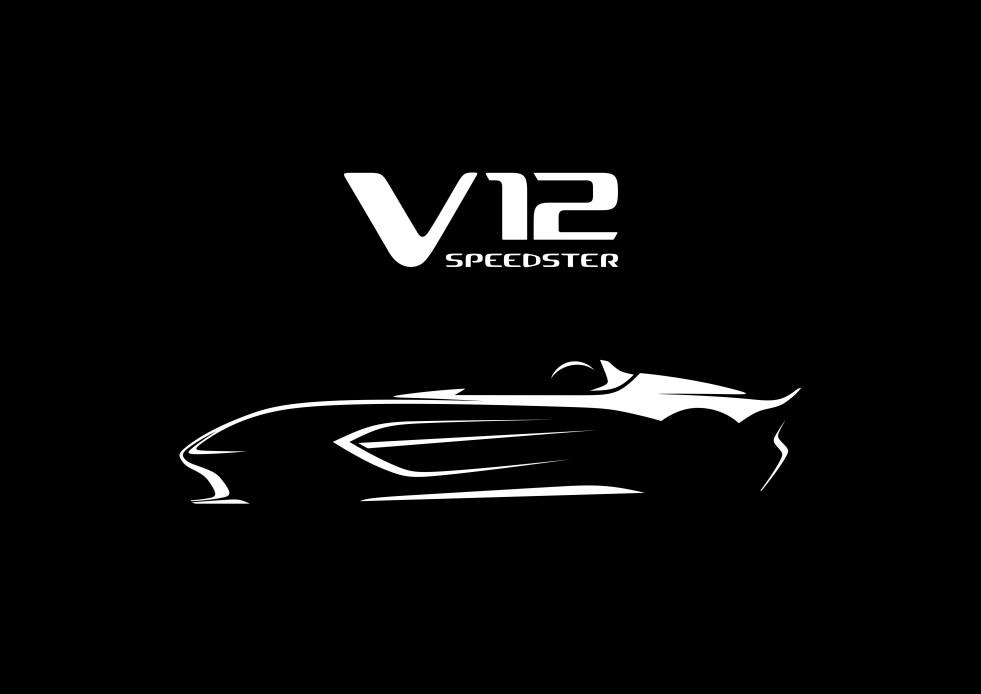
The Limited Edition Aston Martin V12 Speedster

V12 Speedster Announcement

Aston Martin today confirms production of a strictly limited number of the stunning new V12 Speedster. The car will make its global debut later this year, with discerning drivers around the world offered the opportunity to acquire this visceral celebration of the British sports car brand’s proud past and exciting future.

The V12 Speedster, created by in-house bespoke service Q by Aston Martin working with the brand’s talented team of designers and engineers, elegantly combines an authentic, driver-oriented sports car with the use of cutting-edge motorsport and aviation technology to deliver a stunning, two-seat, enthusiast driving machine.

The new car’s design, while modern and dynamic, also clearly nods to both Aston Martin’s legendary 1959 Le Mans 24 hours- and 1000 km of Nurburgring race-winning DBR1 and the marque’s Centenary CC100 Speedster Concept shown in 2013. It’s forward-looking features are shaped from the same advanced materials and expert engineering used throughout Aston Martin’s contemporary sports car range.

The Le Mans-winning DBR1, which in part inspired the V12 Speedster, delivered Aston Martin’s most high-profile motorsport triumph to date and, of course, needs no introduction. One of only three cars in the 1950s to win both the World Sports Car Championship and Le Mans 24 Hours in the same year, the DBR1 defined not only motorsport excellence but also exquisite design elegance – an enduring Aston Martin trademark.

The brand’s CC100 Speedster Concept, meanwhile, was produced in 2013 to celebrate Aston Martin’s centenary. It, too, helped to inspire the creation of the new V12 Speedster which is the product of more than 12 months of meticulous design and planning work by the teams from both Q by Aston Martin, and Aston Martin Design.

At the new car’s heart lies a high-performance variant of Aston Martin’s now iconic, 5.2-litre V12 Twin-Turbo engine, capable of generating an output of around 700 PS and 700 Nm. Offering a compelling breadth of performance, superb response and thrilling V12 soundtrack, the engine is mated to a ZF 8-speed automatic transmission mounted towards the rear of the car.

Naturally, the powertrain found in the Aston Martin V12 Speedster has an abundance of character, with the engine note and sound quality playing an important part in the undeniably invigorating driving experience delivered here.

Aston Martin Lagonda President and Group CEO, Dr Andy Palmer said: “The V12 Speedster we’re proud to confirm today once again showcases not only this great British brand’s ambition and ingenuity, but also celebrates our rich and unrivalled heritage.

“The 88 enthusiast drivers and collectors who secure the keys to these cars can be confident that in doing so, they are also securing an iconic new piece of Aston Martin history.”

Orders are now being taken for the 88 V12 Speedsters being hand built by the brand, with deliveries expected to begin in the first quarter of 2021.

Volkswagen Significantly Raises Electric Car Production Forecast For 2025

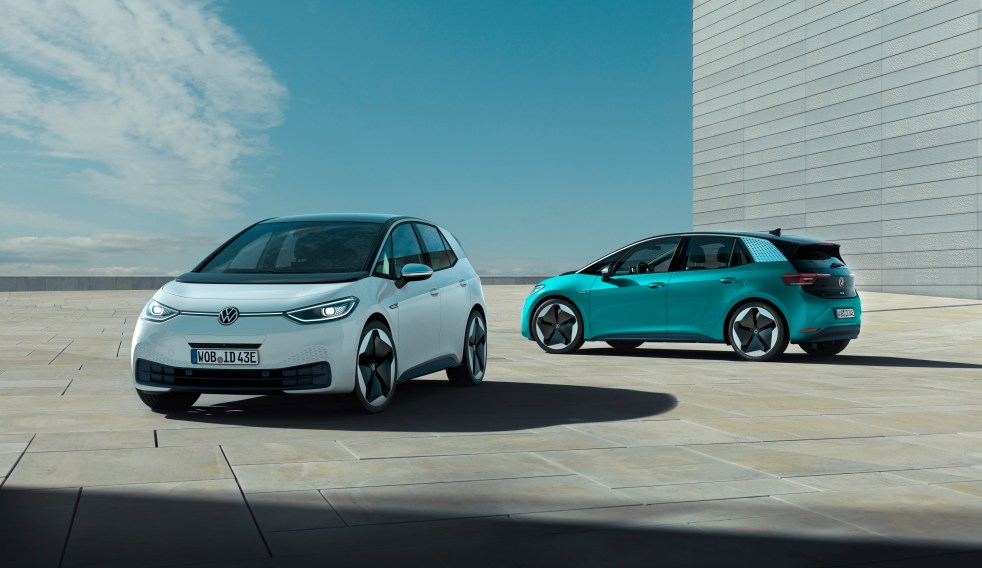
The new Volkswagen ID.3

Volkswagen’s electric offensive has picked up speed as planned. With the world premiere of the new all-electric ID.3 in September and the start of production at the Zwickau electric vehicle plant in November, the Volkswagen brand has already reached major milestones. 2020 will be dominated by the market introduction of the ID. family. The first ID.3 cars will appear on Europe’s roads in the summer. Over the next few years, Volkswagen intends to become the world market leader in e-mobility and is investing €33 billion in these efforts throughout the group by 2024, including €11 billion in the Volkswagen brand. Under the latest plans, the strategic target of one million electric cars is expected to be reached end of 2023, two years earlier than previously predicted. The Volkswagen brand expects 1.5 million electric cars to be produced in 2025.

“2020 will be a key year for the transformation of Volkswagen. With the market launch of the ID.3 and other attractive models in the ID. family, our electric offensive will also become visible on the roads”, says Thomas Ulbrich, Member of the Volkswagen brand Board of Management responsible for E-Mobility. “Our new overall plan for 1.5 electric cars in 2025 shows that people want climate- friendly individual mobility – and we are making it affordable for millions of people.”

With the world premiere of the ID.3 at the IAA 2019 International Motor Show in September, Volkswagen presented the first model in an entirely new generation of all- electric vehicles. The ID.3 is based on Volkswagen’s Modular Electric Drive Toolkit (MEB) and offers ranges from 330 to 550 kilometers (WLTP). The basic version of the model will cost less than €30,000. For the first time, Volkswagen also offered pre- booking for the ID.3. To date, over 37,000 customers have reserved an ID.3 and paid a pre-booking deposit.

Production of the ID.3 started in November in the presence of Federal Chancellor Angela Merkel. The vehicle is being produced at the Zwickau plant, which has been fully converted for this purpose. From 2021, up to 330,000 EVs will leave the assembly line each year, making Zwickau the largest and most efficient EV factory in Europe.

Internationally, preparations for the production start of the ID. family are well underway in China and the USA. Pre-production of the ID. family has already started at the Anting plant in China.

In connection with its electric offensive, Volkswagen has also moved into a number of strategic business areas. With its newly established subsidiary Elli, Volkswagen is forging ahead with the development of charging infrastructure. Elli already has more than 10,000 power customers. Together with its dealers, Volkswagen is also installing its own charging stations. By 2025, a total of 36,000 charging stations are to be developed throughout Europe at dealerships and plants.

The opening up of the Modular Electric Drive Toolkit (MEB) to other manufacturers is also a trailblazing approach. Ford will be one of the first automakers to use the MEB. From 2023, the company is to offer an MEB vehicle in Europe and expects to sell more than 600,000 cars within six years.

Volkswagen has also laid foundations for the development, testing and production of battery cells. A battery cell factory with a capacity of 16 gigawatt-hours is to be developed in Salzgitter from 2020. The start of production is planned for the end of 2023/beginning of 2024. For this purpose, Volkswagen has entered into a joint venture with the Swedish battery manufacturer Northvolt.

Over the coming year, Volkswagen will continue and step up its electric offensive. The ID.3 will appear on the market from summer 2020. Other members will also be added to the ID. family. The first all-electric SUV – the series production model of the ID. CROZZ2 – will celebrate its world premiere in the course of the year and production of this vehicle at the Zwickau electric car plant is expected to start in 2020, too. In Anting, China, the second Volkswagen plant worldwide will start production of electric cars based on the MEB.

McLaren Speedtail’s Dynamic Development Programme Concludes At Kennedy Space Center

1838810_McLaren Speedtail concludes high-speed testing_07

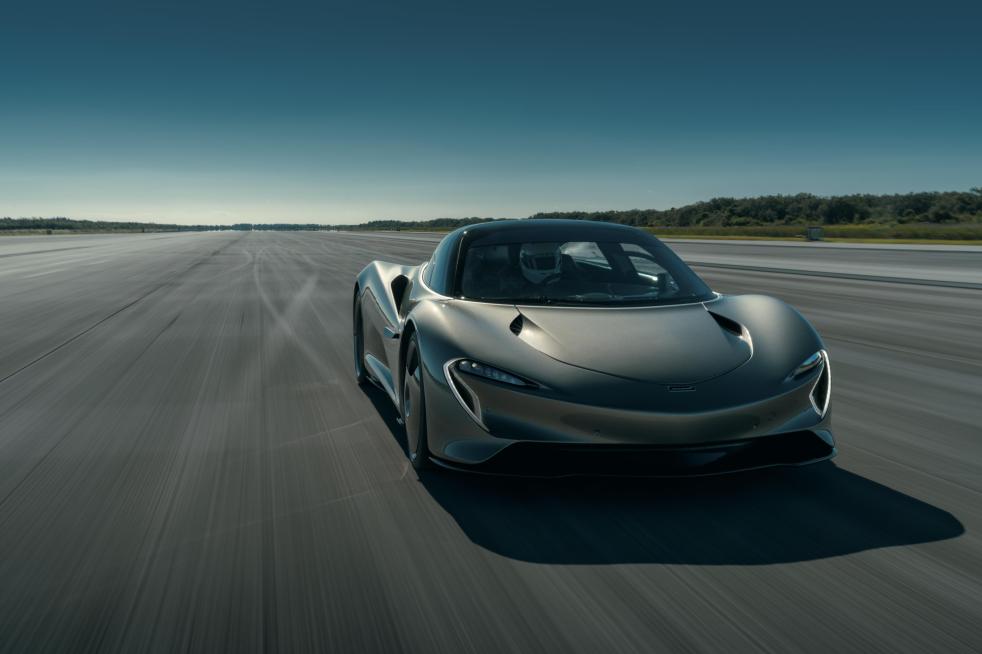
The dynamic development programme for the fastest and most technically advanced McLaren ever has concluded in fitting fashion with McLaren chief test driver, Kenny Brack, taking the new Speedtail up to its maximum speed of 403 kmph (250 mph) at the Kennedy Space Center in Florida, USA.

The final high-speed tests in the ground-breaking hypercar’s extensive engineering validation process saw Speedtail prototype ‘XP2’ reach its maximum speed more than 30 times on the space shuttle landing runway at the Johnny Bohmer Proving Grounds. The exercise concluded a programme of high-speed running carried out at multiple test facilities worldwide, including Idiada in Spain and Papenburg in Germany.

Build of the first of 106 Speedtails that will be hand-assembled to customer order has now commenced at the McLaren Production Centre in Woking, UK, with deliveries scheduled from February 2020.

“It’s fitting that the Speedtail’s high-speed test programme concluded with multiple maximum-speed runs at a location strongly associated with pushing the boundaries of extreme performance and engineering excellence,” commented McLaren Automotive CEO, Mike Flewitt. “The Speedtail is a truly extraordinary car that epitomises McLaren’s pioneering spirit and perfectly illustrates our determination to continue to set new benchmarks for supercar and hypercar performance.”

Blending sleek and seamless beauty with pioneering technologies and truly remarkable performance, the Speedtail sits at the pinnacle of the McLaren Ultimate Series. At almost 5200 mm long, the carbon-fibre-bodied three-seat Hyper GT is the most aerodynamically drag efficient McLaren ever and a showcase for the brand’s expertise in lightweight engineering.

The Speedtail’s petrol-electric hybrid powertrain delivers the greatest power and torque of any McLaren road car, with a combined 1,070PS (1,055bhp) and 1,150Nm (848lb ft). The straight-line acceleration and maximum speed of the car set new benchmarks for McLaren, with 0-300 kmph (0-186 mph) achieved in less than 13 seconds and the Speedtail able to reach 403 kmph (250mph).

The McLaren-developed battery pack has a power density of 5.2kW/kg, which is the best power-to-weight ratio of any automotive high voltage battery system. The batteries constantly self-charge when the Speedtail is driven – there is no ‘plug-in’ element – however, a wireless charging pad that trickle-charges and maintains the battery’s status when the vehicle is not in use is also included as standard.

Bridgestone Develops New Sensor Technology For Autonomous Vehicles

Bridgestone-logo

Bridgestone has announced the development of a technology capable of estimating a wheel axle load and tyre wear condition by using newly developed sensors attached inside tyres that measure the change in strain that occurs when a tyre makes contact with the road while in motion. This technology is unique to Bridgestone and the first of its kind in the world.

The Smart Strain Sensor technology developed by Bridgestone incorporates next-generation Internet of Things (IoT) technologies. In addition to tracking tyre inflation pressure and temperature, the Smart Strain Sensor is able to measure the dynamic change in strain that occurs when a tyre is in use. A proprietary algorithm is applied to convert data gathered by the Smart Strain Sensor into tyre load and wear information, which is then collected and sent to the cloud.

Bridgestone’s previously released sensing technology performs measurements based on accelerometer sensors, which require a certain amount of speed to acquire data. The new Smart Strain Sensor technology, however, measures strain, which is independent to speed. As such, the new technology is able to acquire highly reliable data even at low speeds. This is an important differentiator, as autonomous vehicles are expected to be operated at low speeds for enhanced safety. Furthermore, the proprietary algorithm contributes to substantial improvements in the battery lifespan of the Smart Strain Sensor, which is critically important for practical implementation.

Detecting a potential tyre-related issue before it occurs helps ensure that drivers and their vehicles are able to safely reach their destinations. Equipping tyres with Smart Strain Sensors allows vehicle managers to remotely monitor information such as tyre air pressure, along with metrics pertaining to load and wear in real time. By monitoring tyres and predicting maintenance issues before they occur, Bridgestone expects this technology to contribute to improved safety and productivity for fleets, as well as autonomous cars in the future society.

Maruti Suzuki Sells Over 6 Lakh Cars With AMT, AT & CVT Technology

maruti-suzuki-celerio

Maruti Suzuki India Limited has reached a new milestone with the sales of over 6 lakh automatic transmission passenger vehicles. Out of these 6 lakh automatics sold, over 5 lakh vehicles are equipped with Auto Gear Shift (AGS) technology. Sales of automatic vehicles accelerated in the last 5 years after the introduction of the AGS transmission technology in Celerio in 2014. In FY 2018-19 alone, the Company had sold over 2 lakh units of automatic vehicles.

The Company offers automatic options in 12 models and a choice of three different automatic transmissions – Auto Gear Shift (AGS), Automatic Transmission (AT) and Continuous Variable Transmission (CVT). The AGS is offered in Alto K-10, S-Presso, WagonR, Celerio, Ignis, Swift, Dzire and Vitara Brezza. The AT transmission is offered in Ertiga, Ciaz and XL6 while Baleno comes equipped with CVT technology.

Commenting on the achievement, Kenichi Ayukawa, Managing Director & CEO, Maruti Suzuki India Limited said, “Maruti Suzuki is committed to bring the best of automotive technology to the Indian market. This major milestone reflects the growing customer acceptance of new technologies that brings comfort and ease of driving. By offering multiple automatic options we are able to cater to diverse customers across segments.”

Skoda Vision IN Interior Sketch Revealed

VISION-IN-Sketch

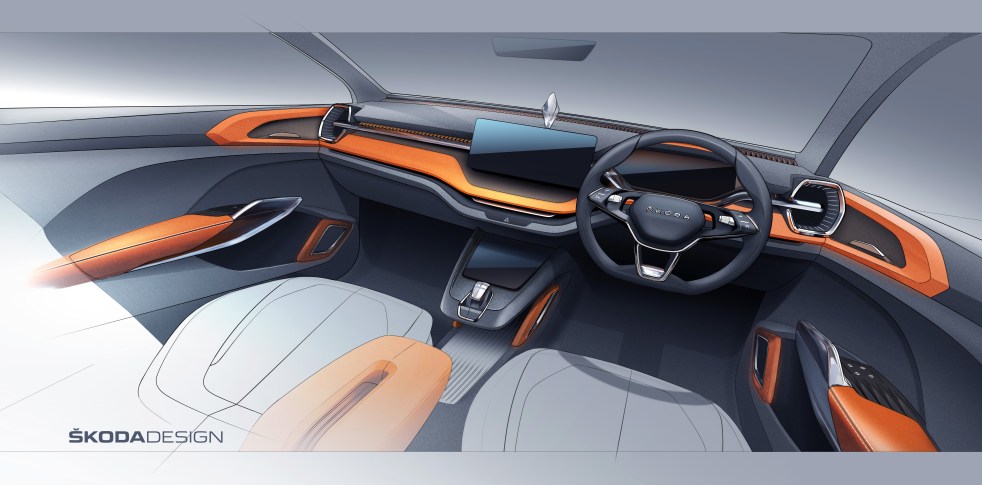
With the premiere of the Vision IN at Auto Expo 2020 in New Delhi (5 to 12 February 2020), Skoda presents an outlook of its SUV future in India. The 4260 mm long concept offers a preview of a compact SUV specially developed for the Indian market. A design sketch provides a first impression of the concept vehicle’s interior.

The sketch shows a wide dashboard arranged on several levels, which echoes the symmetrical contours of the Skoda grille in the centre. The colour orange, which inspires vitality and creativity, is used extensively throughout the interior, for example, on the centre armrest and door panels. The chrome-plated ventilation nozzles on the side are also eye-catching, with fine ventilation louvres spanning almost the entire width of the instrument panel. In addition to the large, free-standing central screen and virtual cockpit, a new crystalline element on the instrument panel creates an optical highlight. The three-spoke multi-function steering wheel features buttons and knurl wheels following Skoda’s new operating concept. The reduced and clearly structured centre console has a small control lever for gear selection.

The Skoda Vision IN is the first vehicle to be based on the new localised sub-compact platform of the MQB A0 IN modular transverse matrix, which also forms the inter-brand basis of various Skoda and Volkswagen models. In developing the model, the Czech manufacturer has explicitly focused on meeting the wishes and requirements of customers in the Indian market. As part of the India 2.0 project, Skoda Auto now manages the activities of the Volkswagen Group brands represented in the region.

Kia K5 Fastback Sedan Revealed


K5_1
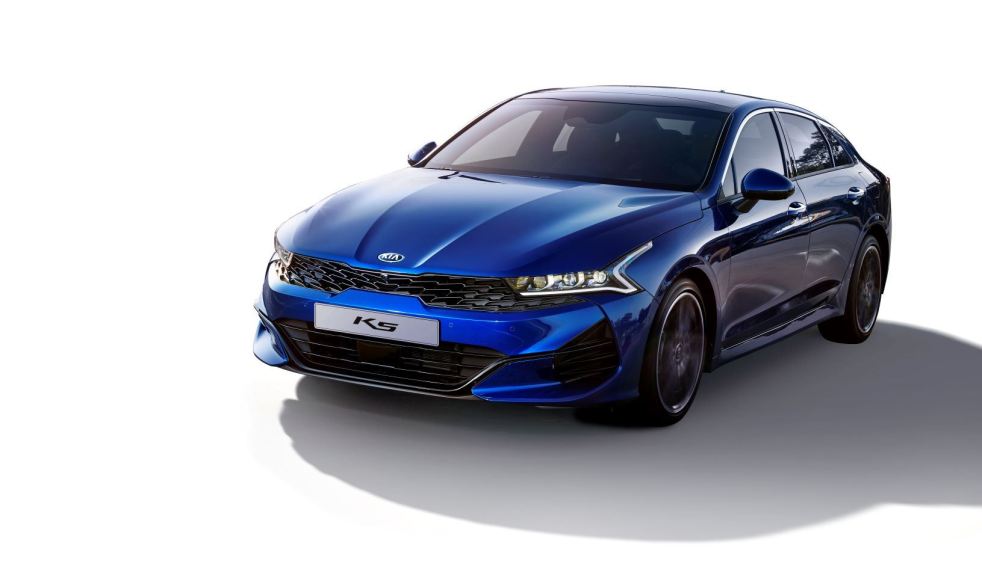
The all-new Kia K5 is a fastback evolution of Kia’s global best-selling sedan, combining a striking new design with a driver-focused interior, cutting-edge technologies, and all-new powertrain options.

In addition to showcasing Kia’s future design direction, the Kia K5 is available for the first time with an all-wheel drive (AWD) system, in addition the standard front-wheel drive system. Power is provided by a choice of efficient gasoline ‘Smartstream’ engines, with the company’s new eight-speed wet double-clutch transmission also making its debut in the K5.

Greater levels of cabin, high-tech safety features, and revised chassis characteristics mean the K5 is more relaxing, confidence-inspiring and engaging to drive than ever before.

Thomas Schemera, Head of Product Division at Kia Motors Corporation, commented: “When we launched the K5 in 2010, it marked the dawn of a new era for Kia, with a design which heralded a step change in how the brand was perceived in markets all over the world. Now, two generations later, we believe the new K5 will do the same. With a fastback design, the new K5 is one of the sportiest cars that we have ever created; with its comprehensive range of cutting-edge technologies, revised engines and transmissions, and a luxurious new interior, it’s also one of the most advanced.

“The K5 won’t just play a central role in strengthening Kia’s presence in the global sedan segment. Almost a decade on from its game-changing predecessor, it also represents the latest milestone in Kia’s transformation into a creator of desirable, world-class cars.”

The new Kia K5 will go on-sale in many of the brand’s markets during the first half of 2020.


In Conversation With Parag Satpute, MD, Bridgestone India

Bridgestone India MD Mr. Parag SatputeIn a candid conversation with Power Drive, Mr. Parag Satpute, Managing Director, Bridgestone India spoke about the present challenges being faced by the tyre industry, the recently inaugurated expansion plan in their Indore plant and how telematics will change the demand pattern in the tyre market. 
PD: How has Bridgestone been affected by the recent slump in the auto industry?

PS: The industry we operate in is cyclical in nature, therefore there are ups and downs. The auto sector has been affected and consequently, our business with them has been impacted. Our strong presence in the aftermarket has stood us in good stead during this time. We have also used this opportunity to introduce new products and solutions bringing value to our consumers. But with mid-term to long-term opportunities to grow, we believe India is a growth market.

PD: What are the challenges faced by the tyre industry as a whole?

PS: The Indian automotive sector is cyclic in nature. A cyclic downturn combined with weak consumer sentiments results in auto manufacturers reassessing their demand for tyres. This in turn does impact tyre industry. Radialization is one of the major challenge in the Indian tyre industry today that I see. While passenger car consumers have predominately taken to radial tyres, the switch in the commercial vehicles is somewhat slow. The challenge lies in convincing the commercial vehicle consumer the cost benefits of switching to radials. The tyre industry is also facing challenges due to high raw material prices especially the rising cost of the main ingredient, natural rubber. Another major concern is Chinese tyre manufacturers dumping tyres in India which affects the whole Indian tyre industry. Although the government has imposed anti-dumping duty, these cheap tyres are now making their way through illegal or illicit imports which is a cause for concern.

PD: Bridgestone India has inaugurated the expansion in its Indore plant earlier this year. To what extent is the capacity being utilised at present?

PS: Earlier in July this year, we announced about the capacity expansion at our plant in Madhya Pradesh. With this expansion, the capacity of the plant will go up to over 20,000 tyres a day by 2020. This will enable Bridgestone India to produce the entire Bridgestone India’s range of radial tyres serving the passenger car segment.

PD: Tell us how telematics will revolutionise the tyre market?

PS: For fleets, fuel is the major operating cost. Fuel consumption is largely driven by the condition of tyres as well. Telematics will help on this front as this technology will monitor tyre parameters like pressure, tread depth and temperatures. These directly impact fuel consumption and thereby impact fleet economics. Telematics will therefore change the demand patterns in the tyre market.

PD: Share with us the latest innovation at Bridgestone that will ensure superior products and improved performance of your tyres?

PS: We have a product called Ecopia which is a fuel efficient tyre. By moving from a standard tyre to Ecopia tyre the car or truck driver can save upto 7 -10 percent of fuel. We continue to work on next generation of fuel efficient tyres as well high technology tyres that offer durability, performance and safety.

PD: Tell us about Bridgestone’s association with the upcoming Olympics Games.

PS: Bridgestone is one of the thirteen companies globally who are top Olympic sponsors and the only one headquartered in Tokyo. This is a very significant commitment from our side as it’s a long term partnership. Our reason for this association is that we believe strongly that the ideals and values of the Olympic moment matches with Bridgestone’s values. We are trying to inspire people who come across Bridgestone through ‘Chase Your Dreams’. In each country where Bridgestone is present, we have formed what we call Team Bridgestone. In India, we have a set of five athletes namely Lalita Babar, PV Sindhu, Sakshi Malik, Mary Kom and Srikanth Kidambi who are members of team Bridgestone. By leveraging their popularity we want to inspire people to chase their dreams in all walks of life including in sports.

Nissan India To Increase Price From January 2020

Nissan Kicks 2

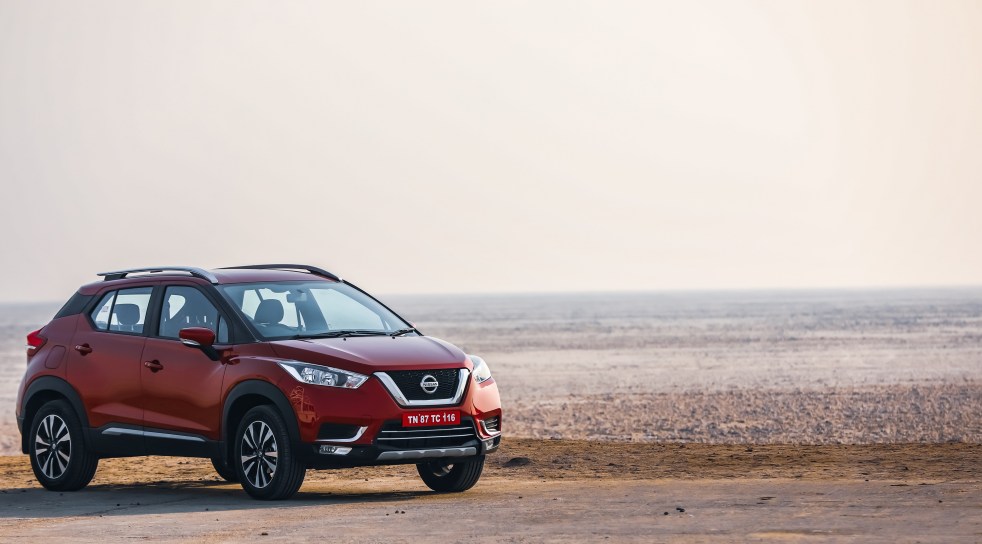
Nissan India has announced a price hike of up to 5 percent. The revised prices will be applicable across all available models for Nissan and Datsun, effective January 2020.

bk_MY18_K2_IND_EXT_360_EBB_31_Final_Red

Rakesh Srivastava, Managing Director, Nissan Motor India Pvt Ltd, said, “Nissan is committed to offer innovative and exciting products under the Nissan and Datsun brand with the best value proposition to its customers in India. In the current challenging market conditions, we are constrained to increase the price of all Nissan and Datsun models due to increased costs. The proposed price increase will be effective from January 2020.”