Datsun Launches New BS6-Compliant GO & GO+ In India

Datsun GO BS6

Datsun India has launched the BS6 compliant GO and GO+ cars in India. The new Datsun GO and GO+ are powered by a 1.2-litre petrol engine and offer a maximum power of 77 PS and peak torque of 104 Nm with 5-speed manual and CVT transmission.

With the new GO and GO+, Datsun India is also offering easy financial schemes, with flexibility to choose your start of EMIs with the launch of “Buy Now and PAY IN 2021”. Some of the other schemes include 100 per cent finance option, low EMI benefit and EMI assurance benefit.

Commenting on the launch, Rakesh Srivastava, Managing Director, Nissan Motor India, said, “With the new Datsun GO and GO+, we have introduced high-quality products that not only have a strong value proposition but are also future-ready. Built with Japanese technology, both cars are BS6-compliant and offer the most affordable CVT options in India. With innovative financial schemes, we want to extend support to our customers in these testing times. We aim to enhance the value propositions of our products in line with Datsun’s mission of enabling progressive mobility.”

Datsun GO+ BS6

Both models are fitted with diamond-cut R14 alloy wheels; LED DRLs (daytime running lamps); and have a ground clearance of 180 mm. Furnished with anti-fatigue seats on the inside, the Datsun GO and GO+ CVT offer several advantages over AMT transmission models – smooth shift of gear; superior hill-driving experience and control; low engine noise; and no lags while accelerating.

Both cars are equipped with a host of safety features such as vehicle dynamic control, dual front airbags, ABS, EBD, brake assist, and reverse parking assist. They also have a 7-inch smart touchscreen with Android Auto and Apple CarPlay connectivity. The new Datsun GO and GO+ are also available in “sports mode”.

The new Datsun GO is a five-seater and is available for a starting price of Rs 3,99,000 for manual variant and Rs 6,25,000 for CVT; while the seven-seater Datsun GO+ is priced upward of Rs 4,19,990 for manual and Rs 6,69,990 for CVT.

Both cars are available in a choice of six colors: Ruby Red, Bronze Grey, Amber Orange, Crystal Silver, Vivid Blue, and Opal White. Both have a standard warranty of two years, which can be extended up to five years. Both the cars come with a free road side assistance subscription for 2 years. Services can be availed in 1500+ cities.

Mazda At 100 | 60 Years Of Coupe

bg-100th-anniversary.ts.2003020049310000

A preferred layout for attractive and visionary car design since the 1930s, the traditional two-door coupe has long been seen as the most stylish model in a manufacturer’s line-up. From the elegant high-class appeal of early grand European coupes to the ostentatious size and extravagant design of big American coupes and the sleek sportiness of performance coupes, these vehicles tend to focus more on style than their saloon counterparts.

The best coupes also deliver performance-enhancing structures like rigidity, aerodynamics and weight reduction – all central elements of Mazda’s product philosophy. In fact, the Japanese carmaker has been setting coupe benchmarks since the beginning. Its very first passenger car was a coupe. Practical and affordable, the two door, 2960 mm long Mazda R360 was also stylish and, as the lightest vehicle in its class, fun to drive. The winning combination made it an immediate bestseller, capturing 65 per cent of Japan’s burgeoning microcar (“kei” car) segment and 15 per cent of the domestic market in 1960, the year of its launch. The Mazda Carol P360 coupe, which had a longer wheelbase and a four-cylinder engine, joined the line-up in 1962 with comparable success.

Mazda’s first performance car was also a coupe, unveiled at the 1964 Tokyo Motor Show, the Mazda Cosmo Sport 110S would arrive on the market in 1967 as the world’s first production model with a twin-rotor engine. With space-age looks matched by the powertrain’s turbine-like sound, it was the beginning of an illustrious age of unconventional rotary sports coupes at Mazda. The Cosmo Sport also launched the brand’s international motorsport career.

However, the big international sales breakthrough would come with the Familia/R100 and Capella/616/RX-2 series – the respective forerunners to the Mazda3 and Mazda6 – along with the Grand Familia/818/RX-3. Mazda took its rotary engine global with these models starting in 1968, and their Italo-design inspired looks electrified buyers, quickly driving overseas unit sales into six-figures.

Even more stunning was the Mazda Luce R130 coupe introduced in 1969. Designed at Bertone by Giorgetto Giugiaro (who had also styled the first Familia), it was Mazda’s only front wheel-driven rotary model and is now a sought-after collector’s item. Slotted above the RX-2 and RX-3, the Luce R130 would make way in 1972 for the Mazda RX-4. Marketed as luxurious and sporty, the hardtop coupe version was available with an “AP” (anti-pollution) rotary that improved emissions and fuel economy. The engine would also see service on the RX-3 and Mazda Cosmo/RX-5 launched in 1975 in coupe and fastback format. Performance of the 110-135PS rotary RX coupes, with kerb weights in the 900-1,100kg range, was very respectable for the time.

The Hiroshima carmaker took this recipe for driving fun up a level in 1978 with the Mazda RX-7, whose unique wedge-shaped design featured a wraparound glass rear window. Under the bonnet of Mazda’s first truly mass-market sports car was a completely redesigned rotary engine. Propelling a lightweight structure with near-perfect weight distribution, it was exceptional to drive. Successful on the racetrack and rally stage, the RX-7 developed over three model generations into a high-performance twin-turbocharged super-coupé on par with the best the competition had to offer. With some 811,000 produced, the RX-7 remains the most popular rotary powered car in history.

Less well known is the Eunos Cosmo, a Japan-only luxury sports coupe built from 1990 until 1995. It was the only production model with a three-rotor engine; the 300PS twin-turbo “20B-REW” was also the largest-ever production rotary. The Cosmo introduced many new cutting-edge technologies, like the first built-in GPS navigation system and a touchscreen display. Another domestic market model, the Autozam AZ-1, was remarkable in its own way. Weighing only 720kg, the exciting mid-engined kei coupe developed under Toshihiko Hira, MX-5 programme manager, had gullwing doors and a 9,000rpm redline – in a segment personified by utilitarian “boxes on wheels”.

This was typical Mazda, always seeking new ways of making its coupes look and feel special. The Mazda 929 coupe (1982-86), with its lowerable opera windows in the B-pillar, is yet another example. The stylish Mazda MX-6 (1987-97), meanwhile, had optional four-wheel steering. And the compact Mazda MX-3 (1992-98) was available with the 1.8-litre K8 engine, the world’s smallest mass-production V6.

Even back in those days, Mazda dabbled in crossover designs, widely considered a 21st-century phenomena. The Mazda 323F (1989-98) made a family friendly five-seater out of a wedge-shaped sports coupe with pop-up headlights, while the Mazda Xedos 6 (1992-99) walked the line between luxury coupe and mid-sized saloon. And the Mazda RX-8 (2003-12), a two-row ‘quad coupé’ with freestyle doors yet, again demonstrated the company’s sophistication when it came to refreshing coupe design.

Today Mazda continues to push design convention with models like the Mazda MX-5 RF (Retractable Fastback). As with the previous generation MX-5 Roadster Coupe, the RF’s one-of-a-kind power hardtop gives the world’s most popular roadster the comfort of an enclosed cabin, while concept cars like the Mazda RX-Vision and Vision Coupe demonstrate how stunning coupe design influences the Kodo: Soul of Motion design philosophy that delivers the award-winning styling you find across the whole Mazda range, something demonstrated by the 2020 World Car Design of the Year winning Mazda3.

Suzuki At 100

17435_02 Suzuki early years 01

2020 is Suzuki’s 100th Anniversary with Michio Suzuki having first started his business in March 1920 with the manufacture of textile looms. These became more advanced and very popular right through to the early 1950’s when there was a global decline in the Cotton industry.

Initial development of Suzuki’s first car began as far back as 1937 although this had to be shelved later with the outbreak of the second World War. The Suzulight was first introduced in 1955 and Suzuki experienced a rapid rise in production of mini vehicles after 1959, from an initial production goal of 200 units that year it climbed very sharply in FY 1960 to 5,824 units.

17435_02 Suzuki early years 02

The next major model to be introduced was the Suzulight Fronte FEA in March 1963. Immediately after its launch, the Fronte appeared in the first Japanese Grand Prix held at Suzuka International Racing Course, winning 1st, 2nd and 4th places in the mini vehicle category and proved the high level of Suzuki technology including a newly adopted separate lubrication system called SELMIX.

On 12 August 1968, a driving test was conducted on the Autostrada del Sol to prove the high performance capabilities of the recently launched Fronte SS and world famous racing driver Stirling Moss was chosen along with Mitsuo Ito, Suzuki’s own motorcycle rider who had won the Isle of Man TT 50cc class in 1963 and was the first Japanese Rider to have ever won a TT.

17435_02 Suzuki early years 03

The Autostrada del Sol spans 462 miles from Milan to Naples and had no speed limits at the time except on bends or in tunnels. Moss and Ito arrived at their first transit point in Rome and the news that “Suzuki’s mini-car had driven the 338 miles from Milan to Rome in 4 hours and 27 minutes at a remarkable average speed of 77mph” quickly became global news.

Then, they started towards Naples and drove the entire route at an average speed of 75mph, amply demonstrating the high performance and endurance capabilities of the new car and with an engine capacity of just 360cc, power output of 25PS and a kerb weight of only 420kg.

The Fronte SS 360 had arrived on the market as a new concept and featured a different approach to the Suzulight. The RR (rear engine, rear wheel drive) method was adopted for the first time and styling became uniquely rounded in shape, adopting a complex surface structure known as the ‘coke bottle’ line. The interior space was large enough for four passengers in response to increasing demands for family use.

65 years since delivery of its first car, Suzuki remains globally renowned as the ‘small car experts’ and produces three million units per year. Michio Suzuki’s original strategy of the design and production of lightweight vehicles lives on with platforms introduced for Ignis and Swift. The latest Swift Sport Hybrid weighs in at just 1,025kg.

Mahindra Reimagines Automotive Retail Through Own-Online


The_4_Step_Process

Mahindra & Mahindra Ltd. (M&M Ltd.), today announced the launch of ‘Own-Online’, an end to end, online vehicle ownership solution. A new way to own a Mahindra vehicle, Own-Online is a one-stop, 24×7 destination where the customer can finance, insure, exchange, accessorise and own a Mahindra vehicle in four simple steps, from the comfort of their homes. (www.mahindrasyouv.com/Own-Online).

The customer can now own a Mahindra vehicle in four easy steps:

1. Explore and Personalise – Explore Mahindra’s wide range of SUVs and personalise as per your needs.

2. Get instant exchange quote – Select a dealer of choice and get an instant, real-time quotation for your old car.

3. Choose finance and insurance – Choose from multiple finance and insurance options and get online approval.

4. Payment and delivery at doorstep – Make payment and get ‘contactless’ delivery at preferred location.

Speaking about the launch of Own-Online, Veejay Nakra, CEO – Automotive Division, Mahindra & Mahindra Ltd. said, “Today we are delighted to launch ‘Own-Online’ platform, India’s most complete, end-to-end, online car ownership solution. Its easy & convenient 4-step journey allows the customer to own a Mahindra vehicle in less time than it takes to get a pizza delivered! With our pre and post purchase online solutions already in place, reimagining the car purchase experience was a logical next step for us. In the recent times, online has been a preferred purchase channel across categories and going forward, the online purchase of vehicles is set to gain more traction. We are ready to lead this change in automotive retail by providing many industry-first experiences to our customers.”

Own-Online is a seamless solution where the customer can personalise their vehicles, instantly generate an exchange, finance and insurance quotations in a few clicks and make booking payment, making the car ownership journey end-to-end and online in the true sense.

Mahindra’s pan-India network of 270+ dealers and 900+ touchpoints is integrated with the Own-Online platform through robust back-end technology and process cohesion. This will enable a seamless and personalised end-to-end customer experience, offering convenience of online purchasing and comfort of local assistance. Dealerships have upgraded their procedures and processes and are trained to minimise physical contact. In fact, additional precautions are being taken across the customer interaction processes such as test drives, document collection and vehicle delivery to ensure high hygiene standards are maintained.

Two New Avatars Of The BMW 8 Series Now In India

The first-ever BMW 8 Series Gran CoupeBMW 8 Series Gran Coupe

Number 8 has always embodied what a dream car means. The two most luxurious models from BMW – the first-ever BMW 8 Series Gran Coupe and the first-ever BMW M8 Coupe were launched in India today. Both models are available to order at all BMW dealerships.

Building upon the dream car heritage, the first-ever BMW 8 Series Gran Coupe lives up to an uncompromising promise on every metre of asphalt. It is a sports car for four passengers. With its highly emotive, aesthetic design, superior dynamic ability and generous amount of interior space, this is the most luxurious sports coupe ever built by BMW.

The first-ever BMW M8 Coupe embodies a perfect fusion of exceptional performance and progressive luxury. Within BMW’s Luxury Class, this two-door four-seater sports car is the most powerful superlative – bold, audacious and uncompromising. Drawing on one of the most powerful engines from BMW M Gmbh, its M genes have been elegantly translated for everyday use. It offers luxurious ambience with the ultimate motorsport feeling, designed to challenge the limits of dynamic performance.

Arlindo Teixeira, acting President, BMW Group India said, “Pioneers who have reached a superior level of excellence only settle for the best. They seek perfection in whatever they do and inspire others to achieve greater heights. It is as much about substance of character as it is about sophistication of personality. For these connoisseurs, BMW is rewriting the definition of luxury and performance. The first-ever BMW 8 Series Gran Coupe is a creation between ambition and emotion, between presence and extravagance – an avantgarde choice for frontrunners who drive the future. On the other hand, with the first-ever BMW M8 Coupe, we are addressing our high performance-oriented customers. When they step inside the M8, they can measure acceleration, sense its power but for feelings, the only measuring instrument is still goosebumps – and that’s what an M8 supplies in abundance. These two top-of-the-line offerings in the uber-luxury segment define everything that captures one’s imagination.”

The standalone character of the first-ever BMW 8 Series Gran Coupe comes alive with a graceful elongated design, athletic proportions and an aura of sporting exclusivity. The two extra doors and impressive space combine with an extended wheelbase and exceptional ride comfort, making it an outstanding operator both in everyday driving and over longer journeys. For those who want an even sportier, bolder avatar of the first-ever BMW 8 Series Gran Coupe, the ‘M Sport’ Edition is on offer.

The first-ever BMW M8 CoupeBMW M8 Coupe

The first-ever BMW M8 Coupe provides maximum performance and a unique combination of racing flair with everyday usability. Excellent handling and supreme steering precision make it perfect for days when one wants to experience its sporting prowess.

The first-ever BMW 8 Series Gran Coupe and the first-ever BMW M8 Coupe adapt perfectly to an exclusive lifestyle and also to personal taste. A multitude of bespoke personalization options are presented right from the moment customers configure their car. In addition, BMW Individual presents the most luxurious choice of special paint finishes, hand-crafted leather, interior trims and other equipment details of the highest quality that are available in a diverse range. Each car becomes a unique reflection of the owner’s personal style statement.

The cars are available as CBU units in BS VI petrol variants. The ex-showroom prices are as follows:

BMW 840i Gran Coupe: INR 1,29,90,000

BMW 840i Gran Coupe ‘M Sport’ Edition: INR 1,55,00,000

BMW M8 Coupe: INR 2,15,00,000

‘Dial-A-Ford’ To Redefine Sales And Service Experience As Business Re-Opens

Customer Engagement Following Social Distancing Norms

Going beyond the basics of ensuring a safe and sanitized environment for customers, Ford India is going to prioritize convenience as its dealerships resume operations, in accordance to local guidelines.

Dial-A-Ford is what a customer would need to do to bring a Ford dealership to their doorstep. The new approach incorporates enhanced engagement processes and policies related to both sales and service and will be centrally controlled via the helpline 1800-419-3000.

Dial-A-Ford will allow customers to connect with a Ford team and undertake booking, test drive or even doorstep delivery of the new vehicle. For existing customers, Dial-A-Ford will organize pick-up and drop service along with online consultations using technology. Regular updates about vehicle servicing as well as digital payment are also part of the new roadmap.

Customers will be able to experience all this at the convenience of their home, preferred location.

The new approach puts special emphasis on industry best practices related to the sanitization of Ford facilities as well as strict guidelines for people and vehicle at dealerships.

All vehicles in the sales, as well as the service process, will be thoroughly disinfected at the time of delivery, pick-up or drop. Enhanced hygiene practices implemented at all Ford dealers will include:

  • Anyone entering a Ford dealership, including all dealer employees and customers, to have their temperature checked with no-touch infrared thermometers
  • Dealership layout/floor plan, including customer waiting areas, re-organized to ensure appropriate social distancing
  • All Ford dealer personnel and customers to wear face masks and gloves at all times; A hazardous waste container on site for disposal of all masks, gloves and other potentially contaminated items
  • Social distancing rules to be enforced in all customer interactions
  • All Ford dealerships to be thoroughly disinfected three times each day
  • Hand sanitizer dispensers available across the dealerships, in high visibility and traffic areas

“Dial-A-Ford is a manifestation of our Feels Like Family promise where we promise to deliver safe and hygiene standards of sales and service experience without compromising on convenience,” said Vinay Raina, Executive Director of Marketing, Sales & Service, Ford India.

As business look to resume, Ford is offering a three-month extension in availing all scheduled service benefits, including free service, till June 30, 2020, without impacting either factory-warranty or extended warranty.

Customers with vehicle warranties having expired or set to expire between March 15 and May 30, 2020, will be offered a free-of-cost extension until June 30, 2020.

Customers who missed purchasing extended warranty products in the lockdown can also do so until June 30. Also, customers who have booked a new Ford car until April 30 will get complete price protection at the time of delivery, whenever applicable.

Volvo Introduces ‘Volvo Contactless Program’

Mr Charles Frump - Managing Director Volvo Auto India

As leaders in safety and with a commitment to its promise of keeping people safe, Volvo Car India, has kick-started a unique customer centric approach – #SafestPlaceToBe. As part of this initiative, all Volvo dealer facilities are being disinfected and personnel working at the nationwide dealerships are provided with PPEs and sanitizers. Cars at dealerships as well as the demonstration cars are being disinfected in partnership with 3M.

Following expert solutions are offered to its customers to keep them safe during the post lock down period:

  • 3M Interior Germ Kleen which eliminates 99% microbes in a car from interior surfaces including plastics and upholstery.
  • 3M AC Vent Disinfectant provides sustained microbial protection by killing 99.99% Antigens.
  • 3M Air Refresher has deodorizing property that reduces microbial infections by 99%

As a special initiative towards the digitization of operations, Volvo Car India has also introduced ‘Volvo Contactless Program’ for its customers and also for the prospective buyers. The program aims towards providing the safest way to service and to buy Volvo cars in India. This new digital initiative enables Volvo owners to book their car services online with their nearest dealership location and also provides an interactive online buying process to a prospective buyer, a safe and secure test drive process (post relaxation of norms), digitized finance offers, online documentation and finally an online channel to buy the car and get a contactless delivery.

“Volvo cars is always known for safety technology in our cars and now we have raised the bar in safety by taking measures to disinfect our dealer’s facility and test drive cars. I am confident that the Indian economy will spring back to its pace very soon with the measures taken by authorities. Our Volvo Contactless Program emphasizes the need for businesses to adapt to the current environment with an assurance of safety.” said Charles Frump – Managing Director, Volvo Car India.

Rolls-Royce Reflects On Its 116-Year History

C S Rolls sitting at his desk, c 1902.Charles Rolls

Rolls-Royce Motor Cars records another chapter in its long story today. It was on this day in 1904 that The Hon Charles Rolls first met Henry Royce at the Midland Hotel, Manchester – an encounter after which the motor car, and the world of luxury, would never be the same again. It is with a fitting sense of historical symmetry that production resumes at the Home of Rolls-Royce today, 4th May, on the anniversary of Rolls first declaring of Royce, “I have met the greatest engineer in the World”.

Together, Rolls and Royce shared a vision to make the future of motoring extraordinary. Henry Royce, an engineer, had a desire for perfection and an innate work ethic that later became the pillar of Rolls-Royce philosophy; “Take the best that exists and make it better.” Charles Rolls, an aristocrat, was an accomplished motorist, experienced in selling imported foreign motor cars. His business partner, Claude Johnson, stepped into the role of Managing Director of Rolls and Royce’s venture and expanded the fledgling company’s reputation.

The company they founded has faced extraordinary challenges and difficulties throughout its 116‑year history. Though still in its infancy, Rolls-Royce endured in 1918 when the greatest pandemic of the 20th Century, Spanish Flu, swept the world. A decade later, it again stood firm when the Great Depression laid waste to the global economy. Over the years that followed, Rolls‑Royce has withstood the shocks of economic and political crises at home and overseas, embodying calm and constancy in a tumultuous, uncertain world.

In its more recent history, the company weathered the financial crash of 2008 and came out the other side more resilient and determined than ever. The marque has always risen to every challenge with ingenuity, commitment, courage and solidarity, so while Covid-19 is possibly the biggest test Rolls-Royce has ever faced, it’s certainly not the first.

For the current generation of the Rolls-Royce family, working from home has been a new experience. For Sir Henry Royce, however, it was entirely normal. Indeed, some of his most influential designs were produced in the private studio he maintained at his home – Elmstead – at West Wittering, just eight miles from the present-day manufacturing plant and global Head Office.

P90117945-highResHenry Royce

Royce clearly found inspiration and creative energy in the peace, quiet and solitude that working away from the bustle of the office and factory provided. Famously, while walking on the nearby beach one day, he sketched the initial design for the R-series aero engine in the sand with his walking-stick. A later development of that design, the Merlin, would earn everlasting acclaim as the engine which powered the legendary Supermarine Spitfire.

Royce’s home studio was also the birthplace of another, perhaps less storied engine that nevertheless occupies an important place in the annals of aviation achievement. In 1919, his Eagle VIII provided the power for the first-ever transatlantic flight, from St John’s, Newfoundland to County Galway in Ireland, by British adventurers Captain John Alcock and Lieutenant Arthur Brown. Rolls-Royce Motor Cars commemorated the centenary of their astonishing feat, and the engine that made it possible, in the spectacular Wraith Eagle VIII Collection Car, limited to just 50 examples, released in 2019.

Torsten Müller-Ötvös, Chief Executive Officer, Rolls-Royce Motor Cars, said, “We are living through historic times. Our primary focus is, of course, on safely resuming production at The Home of Rolls-Royce in Goodwood, West Sussex; but in marking this amazing anniversary, we are taking a moment to reflect on what 116 years have taught us.”

He added, “As a company, we can draw strength from the knowledge that although Rolls-Royce has faced uncertainty many times over the years, it has emerged more resilient and confident, with its fundamental principles unaltered. Our present challenges may be unprecedented, but as we look to the future, I am confident there is no company in the world better prepared to overcome them.”

Former Top Gear Presenter Quentin Willson Fondly Remembers Sir Stirling Moss

1882800_RS657_Lister_car_launch_41

Former Top Gear presenter and motoring authority, Quentin Willson, has kindly put together these fitting words below.

Stirling was one of those rare blokes who only talked about himself if you asked him to. Startlingly modest, he’d shrug off his stellar achievements and always swerve the conversation in a different direction. Thoroughly self-effacing he wasn’t remotely preoccupied with his own legacy but preferred talking about the skills of other drivers. Over the years he became a friend and across a crowded room would always flash his genial, trademark smile.

But I realised just how important preserving the legacy of his contemporaries was to him when I was on the Lister stand at the Race Retro show launching their continuation Knobbly in 2014. Stirling was in his element telling spell-binding anecdotes about driving for Lister in the 50s and regaling us with tales of its can-do team culture and shoe-string budgets. But I remember watching his eyes shine as he talked about the bravery and determination of Brian Lister and Archie Scott-Brown.

Stirling skirted over his pole-to-finish victory in the British Grand Prix in July ’58 in the magnesium bodied Knobbly and told us that disabled Archie Scott Brown, who had died at Spa earlier that year, was one of the most talented drivers of his generation and that Brian Lister was the nicest team boss in the world. I saw a real passion to fill in the gaps in the Lister story. To make sure these two significant faces of 1950s British motor sport were finally, and properly acknowledged. That day Stirling was on a mission for history.

And when we politely asked if he might be interested in putting his name to a limited-edition magnesium Knobbly, he hesitated for an entire nanosecond. No negotiations, no wrangling, no small print. This, he told us, was simply ‘the right thing to do’. For an unfeasibly small amount of money Stirling agreed to the deal with a single condition: that we’d sit with him at home with his scrap books to make sure every detail of the car along with Archie’s and Brian’s contributions were historically and absolutely correct.

Several weeks later Lawrence Whittaker, Lister’s CEO, and I sat with Stirling in his living room and spent a day surrounded by a cornucopia of yellowed newspaper and magazine cuttings. This was one of the most memorable days I’ve ever spent. This kindly, gentle motor sport legend animatedly explained Archie’s considerable disability, fearless skill and prodigious talent. His affection and respect for Brian Lister was clear too and not just because his tiny team was up against the factory back up of Mercedes, Ferrari and Aston Martin, but because he believed in Archie so much. Brian, Stirling explained, knew greatness when he saw it. Stirling inherited his drive in the magnesium Knobbly just two months after Archie’s death and graciously spoke at length of Archie’s ‘astonishing lap times’ in the ‘sweet handling Lister’. He also made it tragically clear that Brian Lister never forgave himself for Archie’s crash in May ’58 and that it haunted him forever.

A true gentleman racer he spent our day together praising others. For me, that day sums up everything you need to know about Sir Stirling Moss. A humble, honourable, charming legend still deeply respectful of the people he raced with all those years ago. Uniquely, he was a man more interested in talking about the victories of others than his own. Stirling we miss you. Rest in peace.

Maserati Celebrates 70 Years Since Historic ‘Same Day Double’ Win

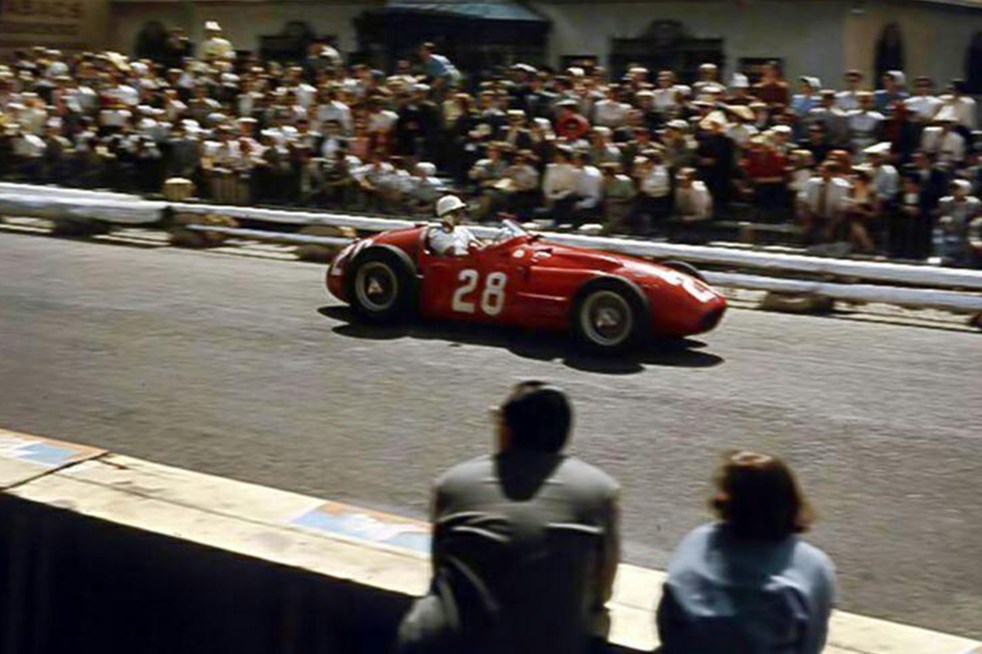
Maserati 250F and Stirling Moss

Whilst 2020 marks Formula One’s milestone 70-year anniversary, April has also featured an historic 70 years since Maserati not only competed in the first Formula One World Championship season, but also recorded a famous Formula One ‘double’ win – achieved by two different Maserati racing cars driven by two audacious racing drivers, on two different circuits, on the same day.

This feat began with the 1950 Pau Grand Prix – an official but non-championship Formula One motor race – held on 10 April 1950 at the Pau circuit, in France. In what was regarded as the first race of the 1950 Formula One season, the 110-lap race was won by none other than legendary driver Juan Manuel Fangio in his Maserati 4CLT.

On the very same day across the channel, Reg Parnell completed a Maserati double in his privately-owned Maserati 4CLT, to lift the Richmond Trophy at Goodwood Motor Circuit, marking a Formula One ‘same day double’ win.

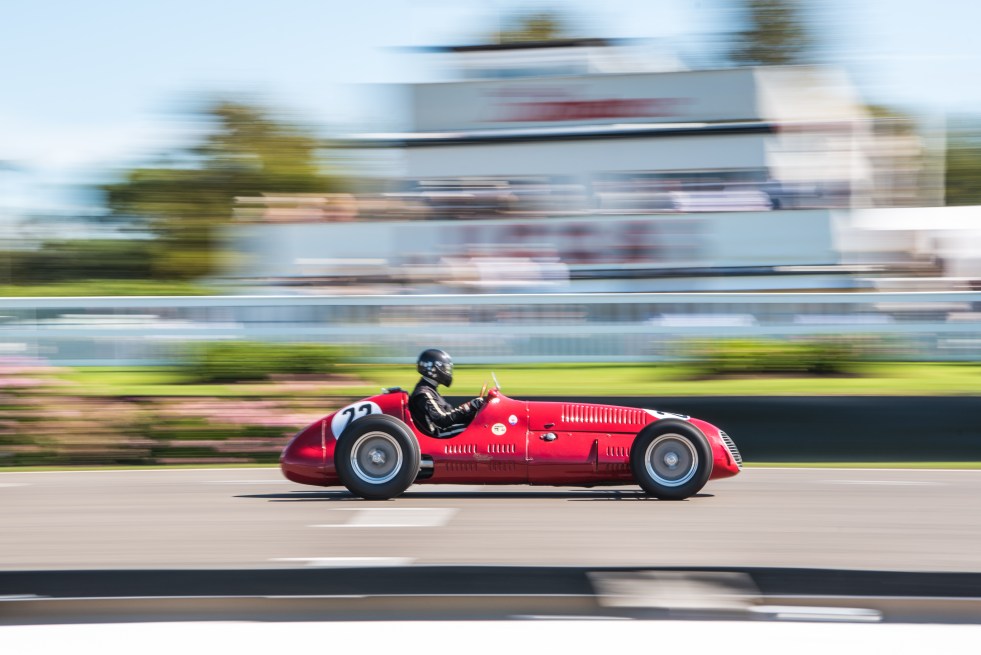
At the heart of both these extraordinary April 1950 wins, was the Maserati 4CLT. Developed in 1947, by Alberto Massimino, who became Maserati’s chief engineer, he evolved the Maserati 4CL-derived ‘sixteen-valve’ Formula One/A car to become the 4CLT. The additional letter ‘T’ stood for ‘Tubolare’, reflecting the car’s new tubular chassis frame.

Maserati 4CLT at Goodwood Revival 2019

The first pair of 4CLTs made their successful debut in June 1948 at San Remo. Alberto Ascari and Luigi Villoresi finished first and second, earning the model the name the ‘San Remo Maserati’, as they went on to complete an extremely successful season in the shapely new Fantuzzi-bodied cars.

British driver and private Maserati race car owner, Reg Parnell, a haulage contractor from Derby in the North Midlands, became one of England’s leading racing personalities in the 1940s, most notably behind the wheel of his pre-war Maserati 4CL. After acquiring his 4CLT in the years that followed, Parnell went on to win several Goodwood Trophies, as well as The Richmond Trophy both in 1949 and in April 1950.

Maserati went onto even greater success in future Formula One World Championship’s, especially with the 250F, which saw Sir Stirling Moss finish 2nd overall in the 1956 season, and Juan Manuel Fangio win his fourth consecutive, fifth in total, World Championship title in 1957.

To this day, Maserati’s racing DNA very much lives on, with the introduction of the high performance Levante Trofeo launched last year which celebrated Maserati’s racing heritage, to the recently announced Maserati MC20 super sports car which will be unveiled later this year and becomes the natural evolution of the highly successful MC12, which was launched in 2004 and marked the return of the Italian marque to GT racing.