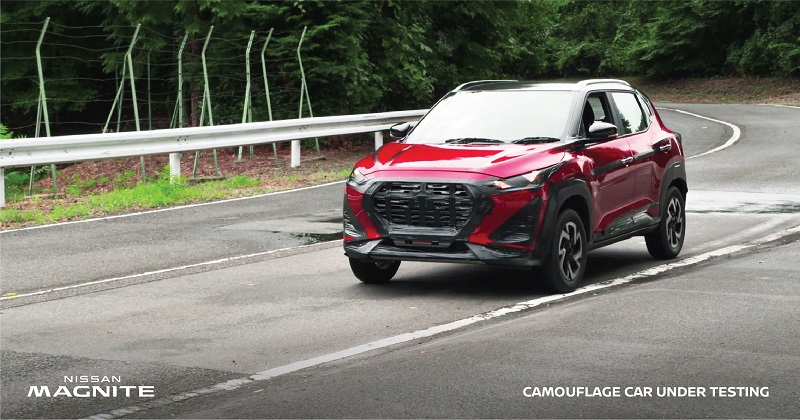
Nissan India will virtually unveil its much-awaited B-SUV, the Nissan Magnite, to the global audience on October 21, 2020. The Nissan Magnite is a feature-rich premium offering for the future, with stylish design and strong, dynamic road presence.
The Nissan Magnite has been tested at Nissan’s world-class testing facility, the Nissan Tochigi Proving Ground, where other models such as the Nissan GT-R and Nissan Ariya, have been tested.
“The Nissan Magnite has been specially designed in Japan, keeping in mind the requirements of our Indian customers. It is a bold offering in the sub-four-meter category, and we are confident that the Nissan Magnite will redefine the B-SUV segment by breaking boundaries. We are very excited to bring this game-changing product to India,” said Rakesh Srivastava, Managing Director, Nissan Motor India
Leveraging Nissan’s global SUV heritage and advanced Japanese technologies, the Nissan Magnite is a true reflection of the ‘Nissan-ness’ philosophy of empowering people through breakthrough products and technologies.
With an array of best-in-class and first-in-class features, the Nissan Magnite delivers on all four of Nissan’s key pillars – bold exteriors, interiors, technology and performance.
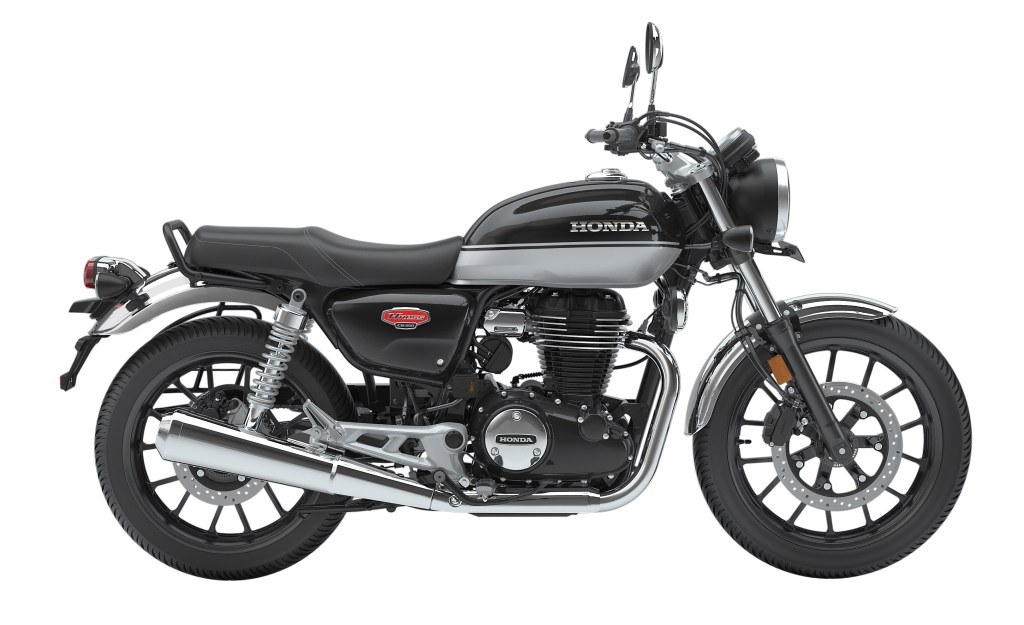
Ushering in the festive season, Honda 2Wheelers India launched the H’ness-CB350 at a special starting price of INR 1.85 lakh (ex-showroom, Gurugram, Haryana). Taking forward the legacy of CB brand, H’ness-CB350 comes with advanced new features and the classic old-world charm.
Elaborating on H’ness-CB350, Atsushi Ogata, Managing Director, President & CEO, Honda Motorcycle & Scooter India Pvt. Ltd. said, “We are overwhelmed with the love & appreciation H’ness-CB350 has received from customers. It demonstrates customer’s confidence in brand Honda and reinforces our commitment towards them. Refined performance, technology and unrivalled reliability – ‘CB’ is the answer to the aspirations and passion of young riders all across the globe.”
Honda H’ness-CB350 comes with a dual-tone fuel tank with bold Honda mark provides a heritage inspired look that attracts every eye on the road. The front 7 Y-Shaped alloy wheel of H’ness-CB350 gives a distinctive modern look. Wider tyres (19-inch front tyre & 18-inch rear tyre) of H’ness-CB350 improve stability in different road condition.
The specially designed exhaust system comes with a large tailpipe of 45mm that optimizes balance with the muffler capacity, producing an unforgettable roar every time you wind on the throttle. Exhaust pipes are double skinned to prevent heat discoloration and intact the visual appeal for long.
At the heart of H’ness-CB350 is the big powerful 350cc, 4 stroke OHC single-cylinder engine equipped with PGM-FI technology. The air cooling system in the engine maintains highly dense air intake to improve efficiency and keeps the engine temperature within ideal range. The piston cooling jet improves engines thermal efficiency which in return improves fuel efficiency.
The max torque of 30 Nm at 3000 rpm delivered from the engine makes it an easy going versatile motorcycle for daily city commute or longer weekend rides. The evolved sensors, developed through computer simulations, allow riders to tame the machine as per their wish without compromising with the comfort and controllability. Main shaft coaxial balancer placed on the cylinder eliminates both primary and secondary vibrations.
Dual channel ABS prevents wheels from locking when brakes are applied in emergency or when operated on slippery roads ensuring a greater sense of confidence. Anchoring the motorcycle is a large 310mm disc brake up front and 240mm rear disc providing adequate braking performance. Chrome plated dual horn not only add to rider’s convenience but also amplify the premium look.
Half-duplex cradle frame in steel pipe is used for a soft steering feel. Load allocated to the front is optimized by mounting the engine at low position to lower the centre of gravity, which immensely impacts the overall riding feel and maneuverability of the motorcycle. Engine Start/Stop Switch gives convenience to start/stop the engine with the flick of the same switch. For emergency stops and safety in low visibility conditions is hazard switch feature. Dual seat with superior cushioning provides a comfortable sitting to the rider on the go. Fuel tank capacity of 15 litres gives a sense of freedom from frequent pit-stops during long rides.
Honda Selectable Torque Control (HSTC) supports the rider to mitigate rear wheel slip caused by abrupt throttle grip operations providing the rider a sense of security while riding in different conditions. It can be switched ON/OFF through a switch on the left side of meter. A ‘T’ indicator in the digital display flickers when the system is engaging.
Honda Smartphone Voice Control system (HSVCS) allows riders to connect his smartphone with the motorcycle via Bluetooth through HSVCS application and toggle between the features such as navigation, music playback, phone calls, incoming messages and weather updates using buttons on the left side of the handlebar. To facilitate complete concentration on riding the information accessed will be communicated from the helmet headset speaker.
Assist and Slipper Clutch makes the gear shifts smoother while reducing clutch lever operation load ensuring less fatigue and more comfort during rides that involve frequent shifting.
The advanced digital-analogue speedometer presents intelligent information on the go. It integrates details like HSTC, ABS, Side stand indicator with engine inhibitor, ECO indicator, HSVCS, gear position indicator and battery voltage meter. Adding more to the whole riding experience are fuel efficiency details displayed in 3 modes – real time mileage, average mileage and distance to empty.
Full LED Setup (both front & back) allows to cut through the dark streets in a style.
Delighted by the response of customers for H’ness-CB350, Yadvinder Singh Guleria, Director – Sales & Marketing, Honda Motorcycle & Scooter India Pvt. Ltd. said, “Truly bringing in the festivities, we are happy to announce the attractive starting price of H’ness-CB350. The excellent response since the global premiere of this model is very encouraging and customers can look forward to the ultimate fun of riding the “Made in India” CB legacy this festival. With a special introductory price of INR 1.85 lac (ex-showroom, Gurugram), we are confident that H’ness-CB350 will attract the mid-size motorcycle enthusiasts.”
BMW Motorrad India launched the new BMW G 310 R and BMW G 310 GS. India is the first country to witness the launch of the new BMW G 310 R and BMW G 310 GS. Both motorcycles are available at BMW Motorrad India dealerships from today onwards.
The new BMW G 310 R and BMW G 310 GS have been developed in Munich, Germany by BMW Motorrad and are locally produced as per BS-VI standards in Hosur, India by cooperation partner TVS Motor Company.
Vikram Pawah, President, BMW Group India said, “Globally, BMW Motorrad has created a distinct position for itself in the fast-growing sub-500 cc segment with both BMW G 310 R and BMW G 310 GS. For thousands of riders and enthusiasts, the BMW G 310 R has redefined pure urban motorcycling for everyday life. For those looking for adventure and fun, BMW G 310 GS has provided the perfect reason to take the off-beat track. In their new avatar, both motorcycles feature striking design modifications, new technology and enhanced riding dynamics. We have launched both bikes at an extremely attractive pricing, incredible EMIs and reduced cost of ownership. It is an enthralling invitation to become part of the close-knit and passionate BMW Motorrad community. It doesn’t get better than this! So, go ahead and ‘Make Life a Ride’.”
The new BMW G 310 R embodies the pure essence of a BMW roadster. It offers precisely what is needed for performance and comfort in the city. It masters a range of disciplines; it’s just as happy winding its way nimbly and flexibly through the narrow city streets as it is travelling along country roads. The new BMW G 310 GS has a high level of versatility. Nimble and agile in traffic, yet supremely robust over tough terrain, its agility opens up a whole new world of riding experience. Extremely compact, yet mature and comfortable, it is the perfect companion for adventures of everyday riding.
The new BMW G 310 R and BMW G 310 GS now feature a full-LED headlight for even better visibility at night and LED flashing turn indicators and LED brake lights for increased visibility in traffic. This ensures particularly bright and homogeneous illumination of the road. The new LED headlight connections eliminate any light cone vibrations on uneven roads.
Both, the clutch lever and the handbrake lever are now adjustable in four stages. It provides ergonomic benefits, particularly for people with small hands. New high-end details such as the standard upside-down fork, quality materials, supplementary fittings and excellent workmanship all reflect the finest within the segment, clearly underscoring the premium aspiration of the BMW G 310 models.
The new BMW G 310 R features a ‘Style Sport’ colour scheme in which special Limestone metallic color combines with red rims and a red frame to create a bold, sporty appearance. Similarly, the new BMW G 310 GS features an exclusive colour scheme with ‘Style Rallye’ effect. Here, the red frame combines with Kyanite Blue metallic colour to showcase the dynamic GS genes. The new BMW G 310 GS has another special ‘40 Years GS’ edition color scheme. It is based on a famous historical model from BMW GS history – the R 100 GS. This edition comes with basic cosmic black color and yellow graphics on tank side panels.
In both bikes, the engine housing covers for the alternator, clutch and water pump are finished in new Titanium Grey metallic colour. In the BMW G 310 R, this further extends to the footrest plates and rear grab handle, enhancing the modern look.
The new BMW G 310 R and BMW G 310 GS have a newly developed BS-VI engine. It is a 313 cc water-cooled single-cylinder four-stroke engine with four valves and two overhead camshafts with electronic fuel injection. With an output of 34 hp at 9,500 rpm and a maximum torque of 28 Nm at 7,500 rpm, the engine is an ideal partner for dynamic riding pleasure. A remarkable feature of the engine is its backward-tilted cylinder in open-deck design with the cylinder head turned by 180 degrees, making it possible to position the intake tract at the front, viewed in the direction of travel. The motorcycles accelerate from 0 – 50 kmph in just 2.5 seconds and achieve a top speed of 143 kmph.
The 6-speed gearbox transfers the torque with an optimized transmission ratio. The slipper clutch with self-reinforcement provides precise actuation and smooth downshifts.
The newly introduced ‘Ride by Wire’ system passes on the rider’s commands directly from a sensor on the twist grip to the engine control system resulting in even finer control and improved throttle response. Thanks to the electromotive throttle controller, automatic idle speed increase when starting also prevents a possible sudden stalling of the engine.
The suspension has a torsionally stiff, highly robust tubular steel frame in grid structure with bolt-on rear frame. The front wheel suspension is taken care of by a solid upside-down fork while at the rear there is an aluminium swinging arm in conjunction with a directly mounted spring strut. The suspension geometry is designed for easy handling, stability and a neutral cornering response, which makes for an active riding character and maximum riding fun.
The high-performance brake system with 2-channel Anti-lock Braking System (ABS) ensures efficient deceleration and short braking distances. The standard multi-function instrument cluster has a large display that offers excellent clarity and a range of information.
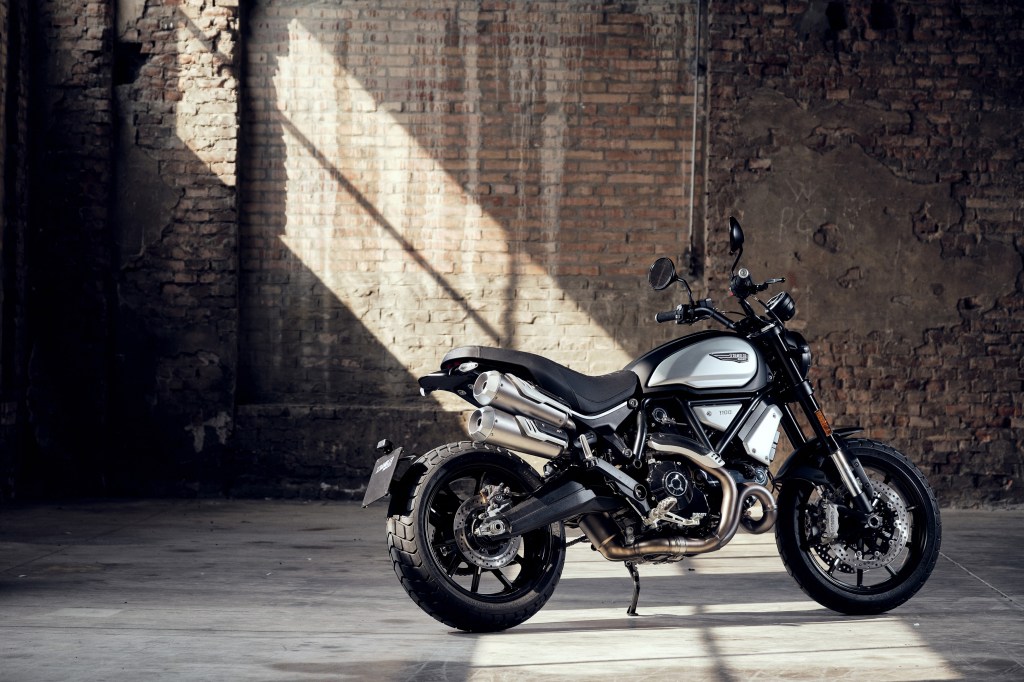
Ducati presents the new Ducati Scrambler 1100 Dark PRO, the entry model to the 1100 range of the “Land of Joy”. The 1100 Dark PRO model is available in Dark Stealth colour and constitutes a perfect starting point for a customization that indulges the creativity and personal taste of its owner.
The Ducati Scrambler 1100 range represents the ideal choice for those who love to travel not only in the city, but also outside urban centres, perhaps in the company of a passenger, thanks to the 1,079 cc engine characterized by a generous torque available from low revs and the 15-litre tank that allows you to tackle even the longest journeys with comfort.
The Ducati Scrambler 1100 Dark PRO has the same iconic and original design as the other two models in the range, the Ducati Scrambler 1100 PRO and Sport PRO, and stands out from its “big brothers” for its matt black colour with natural anodized aluminium parts, as well as its customization with classic style rear view mirrors.
In terms of electronics, the new entry of the “Land of Joy” is equipped – just like the other models of the 1100 PRO family – with Ducati Traction Control (DTC), specially calibrated for this model, and ABS Cornering, which guarantees maximum safety and agility in all types of turns. In addition, the three standard Riding Modes (Active, Journey and City) also help less experienced motorcyclists to find the right balance in the use of electronic components, choosing their own riding style.
Bridgestone has been selected as the exclusive tyre supplier for the MC20, Maserati’s new super sports car. This collaboration between two industry leaders conquers new ground, with Bridgestone enhancing the incredible capabilities of Maserati’s new MC20 through the development of premium, custom-engineered Potenza tyres.
In the development phase of its new MC20, Maserati required a premium sports tyre that could deliver exceptional performance. Bridgestone, Maserati’s long-term partner, answered the brief and transformed it into reality with tailor-made Potenza tyres.
The MC20 showcases Maserati’s latest technical and engineering innovations and marks a generational shift in performance over previous models. Bridgestone has played a significant role in improving the MC20’s high performance capacity with its bespoke Potenza tyres, which feature an asymmetric tread design for enhanced steering response and cornering stability, a newly developed tread compound that enhances grip, and an internal crown structure that distributes footprint pressure evenly when cornering. Combined, these elements provide a high-performance tyre which delivers an optimum mix of control, speed and stability that improves the supercar’s overall performance.
The long-term partnership between Bridgestone and Maserati has roots in motorsports racing history. Bridgestone’s Potenza tyres were born from a long association with Formula One racing, while the MC20 marks a return to Maserati’s racing roots. Achieving incredible results both on and off the track is part of both company’s pioneering DNA.
Both Bridgestone and Maserati used in-house R&D centres and ground-breaking virtual development technology to develop and test the new MC20 and its bespoke tyres. Through its proprietary virtual tyre modelling technology, Bridgestone also reduced the length of the development process, limiting its environmental impact by using less resources and cutting the project’s time to market. This contributed to a more efficient process, with the MC20 design produced in approximately 24 months. For both industry-leaders, incorporating innovative, sustainable technologies is a top priority, with an electric variant of the MC20 planned to go to market in the near future.
Speaking on this announcement was Steven De Bock, VP Consumer Replacement and OE at Bridgestone EMIA: “Fully developed, tested and manufactured in Europe, these custom-designed Potenza tyres have been designed to meet the high demands of Maserati. Collaborating once again with Maserati, we developed a specially engineered Potenza tyre that enables Maserati’s MC20 to deliver on its power, control and sporting capabilities.”
“The MC20 project is the latest chapter in the pioneering relationship between Bridgestone and Maserati. We both share the same passion for innovation and excellence, and want to offer to our customers premium products that deliver outstanding results. Both designed in Italy, the new Maserati MC20 and bespoke Bridgestone Potenza tyres are the perfect match for each other. Bridgestone engineered a sports tyre capable of supporting and enhancing the incredible performance of the MC20” said Federico Landini, Maserati Vehicle Line Executive sports cars.
Mahindra & Mahindra Ltd. today launched the eagerly awaited All-New Thar, on the very day that the Mahindra Group celebrates its 75th anniversary. In its all-new avatar the Thar will be available in two trims, namely AX and LX, with prices starting at Rs 9.80 lakh for AX series and Rs 12.49 lakh for LX series (Ex-showroom Price, All India).
Within the All-New Thar’s classic silhouette lies its contemporary styling, improvement in terms of performance, everyday comfort & convenience, technology and safety. It will not only attract die-hard Thar enthusiasts, but also appeal to all those who have always dreamt of owning an iconic vehicle, with all the bells and whistles of a contemporary SUV.
Speaking at the launch of the All-New Thar, Dr. Pawan Goenka, MD & CEO, Mahindra & Mahindra Ltd. said, “Over the years, the Thar has been a part of Mahindra’s rich history and has found its way into the hearts of many as an object of desire. On the occasion of the Group’s 75th anniversary, we have written another chapter in its glorious history. In its all new avatar, the Thar is a notch higher in its timeless appeal, owing to its ability of being as comfortable on paved roads, as it has always been off-road. We are confident that the Thar tribe will grow stronger as a new set of customers come into its fore, in addition to the traditionalists”.
According to Rajesh Jejurikar, Executive Director, Auto & Farm Sectors, M&M Ltd., “Brand Mahindra is tough, edgy, and unique and the All-New Thar is its flagship brand. It embodies the value of Exploring the Impossible with a greater level of refinement and sophistication. Since its unveil, the response has been phenomenal, clearly proving to be one of the most awaited launches this year. We believe our attractive pricing will appeal to the adventure lovers as also to the urban lifestyle seekers.”
Veejay Nakra, CEO – Automotive Division, M&M Ltd. said, “We are happy to announce the opening of bookings for this eagerly awaited, iconic SUV on the day of Mahindra Group’s 75th anniversary. The test drive for the All-New Thar will start in phases and the deliveries will commence from November 1, 2020. It has been a labour of love for everyone at Mahindra and we are confident that it will make a lasting imprint as India’s most desirable, yet affordable SUV.”
The All-New Thar is powered by the 2.0L mStallion TGDi petrol engine developing 150 bhp of power and 320 Nm of torque, and by the 2.2L mHawk Diesel engine producing 130 bhp of power and 320 Nm of torque. These engines are offered with a choice of 6-speed manual transmission or 6-speed torque converter automatic transmission, with a 4×4 manual shift transfer case with a low ratio.
Rough trips demand tough vehicles. The All-New Thar has been built on a rugged 3rd Generation chassis and tested extensively in some of the harshest terrain in India and across the world. It has an all-new suspension setup that delivers better off-roading capability, as well as superior on-road handling and drive quality. The All-New Thar is also equipped with advanced off-road hardware that seriously improves its capability to go wherever and do whatever the driver demands of it.
The All-New Thar has been designed to provide comfort and convenience in all driving conditions, be it off-road, on the highway or in the city. According to the carmaker, special focus has been given to making the interior design as ergonomic as possible for all passengers, not just the driver. Keeping in mind the sporty and adventurous lifestyle of its owners, the All-New Thar comes tech-loaded that keeps drivers connected with the Thar, their surroundings and friends no matter where they are, through multiple first-in-class features.
Booking for the All-New Thar open from today, October 2, 2020 and customers will have the option to book it by either booking online or contacting their nearest dealerships. The All-New Thar can be booked with an initial payment of Rs 21,000 and customers will have a plethora of options to choose from in terms of a wide range variants, colours and customization options.
Designed and engineered in India and manufactured out of Mahindra’s Nashik Plant, the All-New Thar will be available in six colours, namely – Red Rage, Mystic Copper, Galaxy Grey, Napoli Black, Rocky Beige and Aquamarine.
Test drives for the All-New Thar will begin in phases, starting with 18 cities from today. The company will add 100 more cities on October 10, 2020 and test drives for the rest of the county will be available from October 15, 2020. The deliveries for the All-New Thar will commence on November 1, 2020.
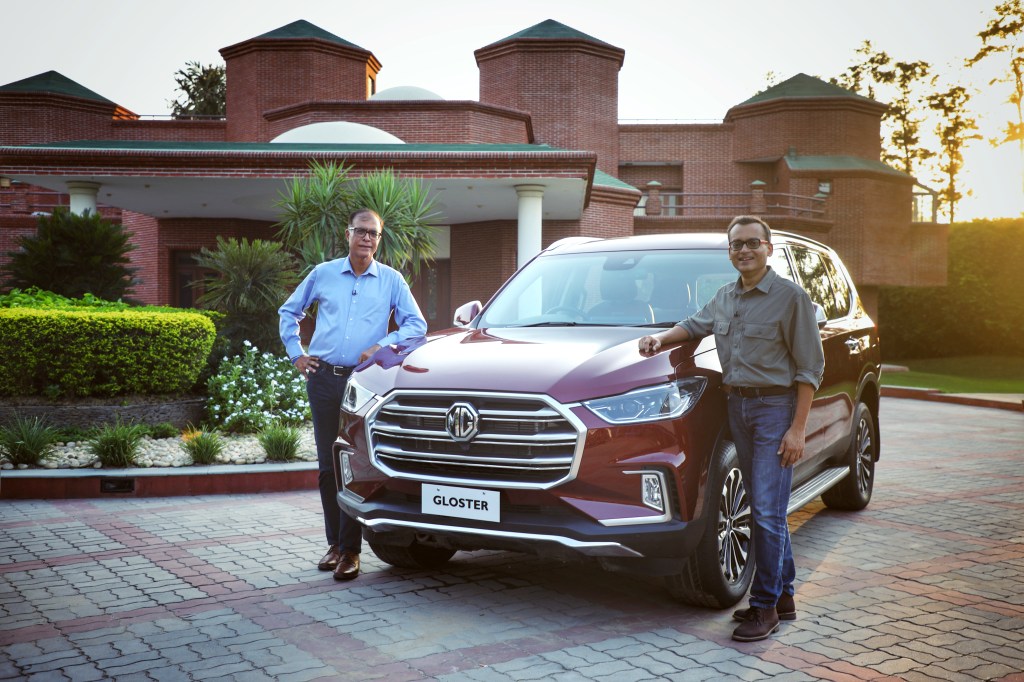
MG Motor India has today introduced India’s first Autonomous (Level 1) Premium SUV, MG Gloster. The much-awaited Gloster comes as the carmaker’s third product in India after the Hector and ZS EV.
The MG Gloster comes with first-in-segment Advanced Driver Assistance System (ADAS). Some of its pioneering features include Adaptive Cruise Control (ACC), Automatic Emergency Braking (AEB) and Automatic Parking Assist amongst others like Forward Collision Warning (FCW), Lane Departure Warning (LDW) and Blind Spot Detection (BSD).
MG has further come up with an on-demand Four-Wheel Drive that extends multiple driving modes in the Gloster. It is an Intelligent All Terrain System that provides enhanced control during vehicle off-roading with a dedicated rear differential and BorgWarner transfer case, a state-of-the-art electronic shift-on-the-fly technology. It comes with seven different drive modes, namely ‘Snow’, ‘Mud’, ‘Sand’, ‘Eco’, ‘Sport’, ‘Normal’ and ‘Rock’.
The pre-booking of the MG Gloster is now live on the MG Motor India website as well as its 200+ centres across India. Customers can book their Gloster for a booking price of Rs. 100,000. As part of its commitment to its customers, the marquee automaker also extends a contactless suite of services including MG VPHY (voice-guided demonstration of vehicles at retail touchpoints).
Speaking on the unveil of the MG Gloster SUV, Rajeev Chaba, President and MD, MG Motor India, said, “At MG, technology disruption has always been the key priority. We pioneered the first internet car in India – HECTOR, followed by the ZS EV, the first pure electric internet SUV. We are beginning a new chapter in India’s auto sector today with the launch of its First Autonomous (Level 1) premium SUV. There are multiple scenarios wherein Gloster can sense and make decisions to improve your overall driving experience with ADAS technology. In other words, Gloster is not just another car – it is a high-tech assistant that only thinks about you, your safety, and your comfort all the time. With best-in-class features, a towering road presence, powerful capability, and luxurious interiors, the all-new MG Gloster is designed to set new benchmarks.”
MG Gloster further features MG i-SMART technology that considerably adds to the vehicle’s overall experience. It includes several industry-firsts including Critical Tyre Pressure Voice Alert, Shortpedia App that gives short news summaries, and Anti-Theft Immobilization via Smartphone that remotely halts the engine ignition. It comes with 3D maps from MapMyIndia which includes COVID testing centre locations in maps apart from various alerts like potholes and speed alerts. In addition to these, Gloster customers will also get Apple Watch Connectivity and can operate their Gaana app with voice control, alongside personalized welcome and greeting messages.
ACC helps in maintaining a safe distance with other vehicles by adjusting speed and APA ensures automated parking, FCW alerts a driver about a possible collision via visual and acoustic signatures. Similarly, AEB activates braking intervention to prevent a collision with any four-wheeler or to decrease the speed of the same and LDW raises an alert upon departing from lanes. Besides powering Gloster with AI technology and Computer Vision, MG has also integrated 360o cameras and sensors to eliminate all blind spots with Blind Spot Detection. It further comes with PM 2.5 filter to help occupants breathe clean air.
Higher variants of the MG Gloster will be powered by the 2.0 Diesel Twin Turbo engine which develops 218 PS of power and 480 Nm of torque. It will also come with a 12.3 inch HD touchscreen along with segment-first captain seats, 64 colour ambient lighting and panoramic sunroof. The SUV will come in four colours – Agate Red, Metal Black, Metal Ash and Warm White.
MG Motor India will soon unveil the ‘Shield’ – an innovative ownership package for Gloster customers.
Donning bold, black exteriors, the Sport Edition of Ford Endeavour has been launched in India priced at Rs 35.10 lakh.
Featuring a dozen exterior changes, the Ford Endeavour Sport will be the new top-trim variant in the Ford Endeavour vehicle lineup, available only with an all-wheel-drive or 4X4 driveline.
“Ford Endeavour Sport in black makes a bold statement – whether it is your regular commute during the week or your off-road adventure during the weekend,” said Vinay Raina, Executive Director of Marketing, Sales & Service at Ford India. “We are thankful to our customers for their faith in Ford Endeavour & hope the special edition Sport will strengthen it further.”
The Ford Endeavour Sport’s impressive black and butch exterior is bound to turn heads on the go. The all-new ebony black front grille looks even more domineering and catches your attention first, as a symbol of raw power. The front fender as well as the front and rear bumper skid plates get an ebony black treatment to add to the SUVs imposing stance.
The special black edition smoked headlamps complete the Ford Endeavour Sport’s impressive look. Ford Endeavour features all-LED headlamp for both low and high-beam that provide up to 20 per cent greater lighting penetration for enhanced night-time visibility.
The black theme is carried through to the side with ebony black ORVMs, fender grille and dark inserts on side steppers. A smart sport decal will embellish the doors and tailgate. One of the most noticeable changes on the new Endeavour Sport is its ebony black premium alloy wheels and roof rails that make the SUV sporty yet elegant.
The Bharat Stage VI compliant 2.0-litre EcoBlue diesel engine on the Endeavour Sport delivers 170 PS peak power and 420 Nm peak torque. The special variant will only be offered with a 4X4 driveline that offers outstanding capabilities yet returning a decent fuel efficiency of 12.4 kmpl.
The engine is mated to a 10-speed automatic transmission that is responsive, faster and facilitates smoother acceleration in all driving conditions. Progressive Range Select or SelectShift on the Ford Endeavour is another first for the segment. The innovative feature gives drivers the ability to lock gears in the desired range to deliver an engaging and more controlled drive experience – especially in challenging driving situations such as slippery roads or steep off-roading conditions.
The Endeavour Sport will also offer Ford’s mobility and connectivity solution FordPassTM at no additional cost. Owners will be able to perform several vehicle operations — like starting, stopping, locking or unlocking the vehicle, know remaining fuel levels & distance to empty and locating their vehicle– remotely, via the FordPassTM app.
All variants of Ford Endeavour come with a factory-fitted, cloud-connected device that communicates with vehicle owners in real-time via the FordPassTM smartphone application.
Standard 3-year or 100,000 KM factory warranty, and scheduled maintenance cost as low as 73 paise per kilometre.
The Ford Endeavour Sport will be available in three colours – Absolute Black, Diffused Silver and Diamond White.
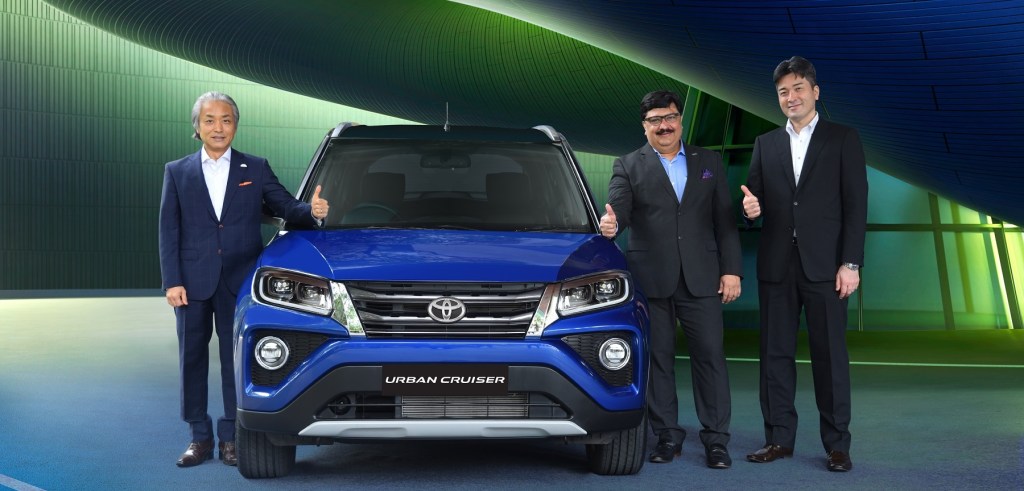
Toyota Kirloskar Motor (TKM) today launched the all-new Toyota Urban Cruiser aimed at catering to its growing number of young customers. The Toyota Urban Cruiser is the second model to be launched in India under the global Toyota-Suzuki alliance following the Toyota Glanza.
The Urban Cruiser compact SUV was launched in an event today in the presence of TKM Managing Director – Masakazu Yoshimura, Naveen Soni, Senior Vice President, Sales and Service and Tadashi Asazuma, Vice President, Sales and Marketing. Bollywood actor Ayushmann Khurrana also took part in the launch event and spoke about his inspiring journey from being a Radio Jockey to a successful actor.
The all-new Urban Cruiser will be powered by the new K-Series 1.5 litre four-cylinder petrol engine and will be available in a choice of Manual Transmission (MT) and Automatic Transmission (AT) with a superior fuel efficiency of 17.03 kmpl and 18.76 kmpl respectively.
In terms of safety, the Toyota Urban Cruiser offers Dual Front Airbags, ABS with EBD, Advanced Body Structure, Electrochromic IRVM, Hill Hold Control, Reverse Parking Camera with Display in Audio and ISOFIX Child Seat Restraint System.
Sharing his views on the launch of Toyota Urban Cruiser, Masakazu Yoshimura, Managing Director, TKM said, “Our entry into the compact SUV space comes at a time when the segment has gained much popularity due to its body type and superior road presence thereby garnering greater connect and appeal among today’s youth. At TKM, the focus is always on delivering the best products and services to our customers who have remained loyal to the brand over the years while looking for ways to welcome more customers, particularly the youth, to the Toyota family. The launch of the all-new Toyota Urban Cruiser is an important step in that direction. It is our ambition to enable more people to buy and experience a Toyota vehicle and our renowned after-sales service, which is a differentiator for us in this segment. We will continue to emphasize on introducing ever-better cars, better technologies and environment-friendly products and services. Our alliance with Suzuki allows us to surge ahead on that path while building a self-sustaining local ecosystem of suppliers and partners.”
Speaking on the new offering, Naveen Soni, Senior Vice President, Sales and Service, TKM, said, “We are truly humbled by the faith reposed by the customers who made the bookings without even knowing the price points and the full list of features. To demonstrate our gratitude and provide an early-movers advantage for customers who pre-booked the Urban Cruiser, we recently announced the ‘Respect Package’, no-cost periodic maintenance for up to two years (or 20,000 kms whichever is earlier), that our customers are appreciating. Further, we are confident that the all-new Toyota Urban Cruiser will exceed their expectations and delight them in every aspect, be it performance, comfort and convenience or safety. We are glad to bring our new offering in time for customers to make their festive season purchase decisions. We are anticipating increased demand for SUVs in the coming months and years ahead. The Toyota Urban Cruiser will play an important role in catering to this demand particularly from first-time Toyota buyers who are brand conscious and want to experience an international brand.”
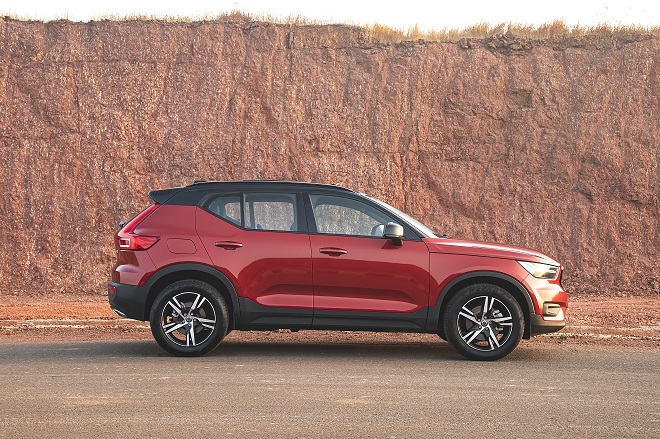
Volvo Car India today introduced Volvo Car Financial Services in collaboration with HDFC Bank to enable buyers receive easy finance for a Volvo car of their choice. The service facilitates finance of upto 100 per cent of ex-showroom price of the car and offers convenient repayment options, with no foreclosure charges under specific conditions.
Loans can be availed for upto 7 years. There is also an option to finance insurance, extended warranty, service package and accessories. Volvo Car Financial Services allows a faster loan approval and a uniform processing fee, giving a hassle-free finance experience to buyers.
Volvo Car India Managing Director Charles Frump said, “Volvo Car Financial Services is a faster, flexible and cost-optimised solution to finance a Volvo car. It is an extension of our people-centric approach that allows customers the ease of owning our cars. We are extremely happy to partner with HDFC Bank – a premier banking institution and we are confident that this partnership would certainly instil customer confidence in our brand even more .”
HDFC Bank Country Head, Retail Lending Mr. Arvind Kapil said,“We are excited to partner with Volvo Cars to bring this service across its dealerships in India. Our endeavour is to provide not just convenience but an experience to customers availing of our range of products and services. To this end, this partnership is a win-win for all concerned as it offers customized and cost effective offers to customers ”.