The New BMW 2 Series Coupé

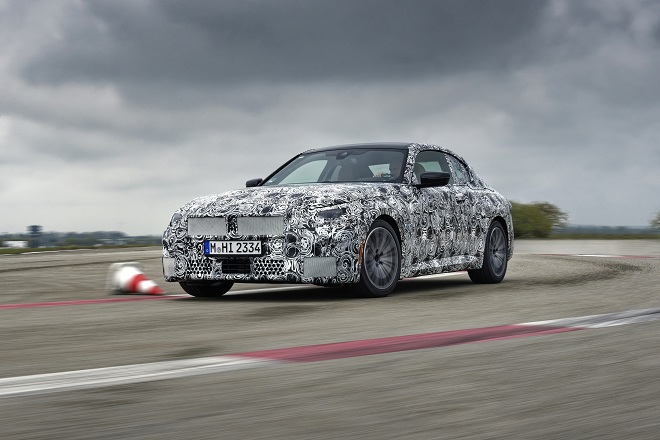
The new BMW 2 Series Coupé is on the final stretch as it heads to the front row of the grid. The final phase of the series development process for the new edition of the BMW 2 Series Coupé has begun with the dynamic testing and tuning of its drive and suspension systems under racetrack conditions. The two-door compact sports car features numerous hallmark ingredients that are unique in the premium compact segment for achieving a sporty and emotional driving experience, which are carefully coordinated during the test drives.

This is what underpins this car’s claim to taking pole position in its class. The unique selling points of the new BMW 2 Series Coupé in the competitive environment include the rear-wheel drive setup, an extremely powerful in-line 6-cylinder engine, the almost 50:50 balanced axle load distribution, an extremely torsionally stiff body and chassis technology consistently designed for agile and dynamic driving behaviour.

The new BMW 2 Series Coupé, which will be manufactured from late summer 2021, is designed for uncompromising sporty driving pleasure. It continues the tradition of the brand’s particularly driver-oriented, compact and powerful two-door models, which have been built since the legendary BMW 2002. In terms of power delivery, traction, cornering dynamics and handling precision, the new BMW 2 Series Coupé meets the needs of particularly discerning customers who are enthusiastic about unadulterated sportiness in a compact premium automobile.

During the development of the new BMW 2 Series Coupé, the test and tuning drives on the Nürburgring’s Nordschleife serve as the ultimate test for wheel suspension, chassis, damping, steering and braking system. In addition, testing on public country roads around Munich and at the BMW Group test site in Maisach ensure that the dynamic driving qualities of the new BMW 2 Series Coupé can also be experienced in everyday traffic and under different road conditions. By extensively testing all drive and chassis systems, the development and test engineers ensure that the engine’s performance characteristics go hand in hand with precisely controllable handling in every situation, fascinating cornering dynamics, optimised traction in all weather and road conditions and perfectly balanced ride comfort. At the same time, the car is fine-tuned to optimise self-steering behaviour and the dynamics when building up lateral acceleration forces. The power transmission to the rear wheels, which is unique in the segment of the new BMW 2 Series Coupé, is ideally suited to sporty, ambitious cornering including easily controllable drift manoeuvres.

The new BMW 2 Series Coupé’s focus on maximum driving dynamics in the segment is embodied particularly by the BMW M version at the top of the model range. The BMW M240i xDrive Coupé top model (fuel consumption combined: 34.45 mpg, combined CO2 emissions: 186 g/km; provisional value according to WLTP) draws its drive torque from an extremely powerful in-line 6-cylinder petrol engine with BMW TwinPower Turbo technology. The drive, which is as spontaneously responsive as it is powerfully thrusty, generates a maximum output of 374 hp and is combined with an 8-speed Steptronic Sport transmission.

The BMW M model puts its power to the road using the intelligent BMW xDrive all-wheel drive system. The system’s rear-wheel oriented design ensures hallmark BMW driving pleasure in conjunction with a power distribution that adapts perfectly to adverse road and weather conditions.

The driving dynamics tests also conducted on the Nürburgring, are ideally suited for refining the interaction of the all-wheel-drive system with the M sports differential in the rear-axle transmission. With a fully variable locking effect generated by an electric motor, the differential aids the new BMW 2 Series Coupé in optimising cornering performance with regard to traction and driving stability. The targeted distribution of power between the rear wheels enables significantly higher lateral acceleration and also a noticeable increase in dynamics when accelerating as you come out of bends.

Regardless of the engine, all model variants of the new BMW 2 Series Coupé benefit from a particularly torsion-resistant body structure. Static torsional stiffness has been increased by around 12 per cent compared to the predecessor model, for example through the use of dynamic driving struts in the rear of the vehicle, which contribute to the exceptionally high agility of the new BMW 2 Series Coupé. In addition, the vehicle concept, which is consistently designed for driving dynamics, offers significantly increased track width at the front and rear axles. This effectively reduces body roll and wheel load fluctuations during sporty cornering.

All model variants of the new BMW 2 Series Coupé are also equipped with stroke-dependent dampers as standard, the fine-tuning of which leads to a noticeably optimised balance between sportiness and ride comfort. They respond sensitively to slight road unevenness and compensate vibrations to optimise comfort.

When driving over large bumps, the movements of the body are controlled by correspondingly higher damper forces. An Adaptive M Chassis is offered as an option for the new BMW 2 Series Coupé. Its electronically controlled dampers offer the option of activating the appropriate mapping for both sporty and comfort-oriented driving.

The new BMW 2 Series Coupé is characterised by effortlessly controllable handling even in highly dynamic driving situations. In addition to the powerful and highly controllable brakes, the precise steering also characterises the handling of the two-door model. In addition to the balanced axle load distribution between the front and rear wheels, the model-specific design of the steering and the particularly high connection stiffness of the support bearings on the front axle contribute to this. Available as an option for the new BMW 2 Series Coupé, Variable Sports Steering combines further optimised precision when steering into bends with reduced steering effort when parking and manoeuvring.

The body design of the new BMW 2 Series Coupé not only reflects the brand’s modern, clear and reduced design language. Only visible at second glance, but immediately noticeable during the high-speed test drives at the Nürburgring, the measures that help optimise the aerodynamic properties of the BMW M car in particular. In addition to a model-specific front spoiler lip, front splitter and air curtains, air deflectors, a tank and a rear axle cover as well as the contours of the air-flow-optimised driving dynamics struts on the underbody ensure that lift on the front axle has been reduced by 50 percent compared to the predecessor model.

TVS Motor Company Signals Next Phase Of Norton Revitalisation

TVS Motor Company (TVS), owner of The Norton Motorcycle Co Ltd (Norton), is announcing the appointment of Dr Robert Hentschel as Chief Executive Officer (CEO) and Vittorio Urciuoli as Chief Technical Officer (CTO) of the historic Solihull-based motorcycle brand. The announcement forms the next key phase of the historic marque’s transformation, as it builds on its newly re-established foundations and prepares for the revitalisation of the brand for the future.

Hentschel and Urciuoli will take up their new positions as John Russell steps down from his role as Interim CEO. Dr Robert Hentschel joins Norton from Valmet Automotive Holding GmbH & Co KG, where he has served as Managing Director since 2017. Before that, he headed Ricardo Deutschland and Hentschel System and was also Director of Lotus Engineering. Vittorio Urcioli’s former key roles within the global automotive industry include Director of URVI LTD, Head of Powertrain at Lotus Cars and Project Leader at Ferrari and Aprilia Racing.

Sudarshan Venu, Joint Managing Director of TVS Motors, said: “TVS has created a plan for Norton to transform into the future. The brand will retain its core values which will be interpreted in a modern way for the customers of today and tomorrow. As part of this we are excited to welcome on board a new management team led by Robert to lead this next phase of the journey.

“His passion for customers, brands and the future of mobility will be of immense value to Norton. Vittorio has a tremendous commitment and track record of creating world class products, which is key to the future of the brand. Both of them are strong engineers with pedigree on the world stage. Along with the entire TVS team, I look forward to working together with them for the revitalisation of one of the world’s most storied brands.

“Over the last 12 months, we have ensured that our clear strategy for the transformation of Norton has been delivered with significant improvements to the product and the creation of a world class manufacturing facility in record time. Now, Norton is ready to move to the next phase of its journey.”

“I would like to take this opportunity to thank John Russell for his accomplished leadership, experienced judgement and clear vision that he has displayed during his time as interim CEO of Norton. Under John’s tenure, with investment and support from TVS, Norton has returned to a firm footing and made marked improvements to engineering and product quality, which will be seen in the updated V4SS that will be launched soon. In addition, we have established a new, state-of-the-art global design, engineering, manufacturing and sales and marketing HQ in Solihull. Thanks to John and many other colleagues’ exceptional endeavour, Norton is poised to move to the next stage of its rebirth and deliver significant growth.”

Shortly after TVS acquired Norton in April 2020, Russell was appointed to stabilise the company and create a platform that now enables Norton to begin making and delivering advanced technology motorcycles worthy of the iconic marque to a growing global customer base.

Dr Robert Hentschel said: “It is an honour to take over the stewardship of Norton at this exciting time in the company’s remarkable 123-year history. To help restore such an iconic and much-loved marque to its rightful place on the global stage is a once-in-a-lifetime career opportunity. Under the strategic direction of TVS Motor, Norton has already achieved incredible success which includes being rescued from administration and beginning the rebuilding process. A highly motivated team has been assembled, bringing around 100 new skilled jobs to the region, to which we will be adding more in the future as the business grows. Norton is once again poised to build the finest motorcycles in the world.”

Vittorio Urcioli said: “The Norton name has such a special place in the heart of every motorcycle enthusiast around the globe. Being the first manufacture to win the famous Isle of Man TT race in 1907, no other motorcycle has such an evocative name and superlative history. It’s every engineer’s dream to work for a company of such rich heritage. Now though, our sights are set firmly on the future. With the backing of TVS and the opening of the new state-of-the-art manufacturing process, everything is in place to take Norton to the next stage.”

John Russell, outgoing Interim CEO at Norton Motorcycles said: “I am thrilled to have had the opportunity to guide Norton into a new era, having long admired the historic brand as an icon of British motorcycles. In my time at Norton we have made many improvements including moving the company into a state-of-the-art new headquarters, which came as a result of the investment and support from TVS Motor Company. I wish the new leadership team well and am confident they will take Norton forward to future success.”

Suzuki Motor Corporation Achieves 25 Million Units of Japanese Domestic Sales

Suzuki Motor Corporation has achieved accumulated Japanese domestic mini vehicle sales of 25 million units as of 30 April, 2021.

Since launching the Suzulight, the first ever mass-production mini vehicle in Japan in October 1955, Suzuki has been providing distinctive products that meet customer needs, including mini vehicles such as the Jimny in 1970, the Alto in 1979, and the WagonR in 1993. In recent years, Suzuki has launched the Spacia in 2013, and the Hustler in 2014, achieving accumulated Japanese domestic mini vehicle sales of 25 million units in 65 years and 7 months.

Mini vehicles are favoured by many customers for their economically efficient and easy-to-drive characteristics. They are used as a “practical necessity” for everyday family usage such as commuting, school trips and shopping, as well as a useful work vehicle carrying people and goods of private stores, local workshops and farms.

Additionally, in rural areas where public transportation is difficult to use, mini vehicles have replaced buses and trains and serve a vital transport role in local communities.

Suzuki will continue providing value-packed products that exceed customer expectations.

The New Polo GTI In The Starting Blocks

Sharper, dynamic, power-packed: First flash of the new Polo GTI.

Just in time for the traditional GTI weekend meet on Lake Wörthersee, which is again unable to take place due to COVID-19, Volkswagen is offering a first peek at the new Polo GTI. The compact sports car is based on the new Polo that was recently presented, and will become the premium version of the product line. This GTI model also represents pure dynamism and expressive design – the success factors of the GTI concept. The official world premiere of the new Polo GTI will take place at the end of June 2021.

“Once a GTI, always a GTI” – that’s how fans of the sporty Volkswagen models with the “magic three letters” continually express their loyalty. GTI – pure fascination and excitement. The success story continues, with the new Polo GTI in the starting blocks. Traditionally, it is the sportiest model in the Polo series. With its high-torque front-wheel drive, dynamically tuned sports chassis and expressive design, it really stands out from the crowd. Moreover, it fulfils the promise of exceptional driving dynamics in combination with exceptional everyday usability.

The legendary GTI meet at Wörthersee Lake
The GTI meet can look back on a long history. GTI fans met for the first time in 1982 in the Austrian municipality of Reifnitz/Maria Wörth. Over the years, the event not only attracted car enthusiasts, but also became a true folk festival under the simple but powerful motto “GTI”. Each event lasts four days, from the Wednesday before Ascension Day to the following weekend.

Subaru Names New All-Electric SUV “Solterra”

Subaru Corporation today announced that Subaru’s all-new global battery electric SUV will be named “Solterra” and it is scheduled to go on sale in 2022.

Solterra is Subaru’s all-new, all-electric C-segment-class SUV and it will be the first Subaru vehicle to be built on the battery electric vehicle (BEV) dedicated e-Subaru Global Platform.

The e-Subaru Global platform, which has been jointly-developed by Subaru and Toyota, enables to roll out various types of EVs efficiently by combining multiple modules and components, such as the front, center and rear of a vehicle. While the two companies have brought together their knowledge to create a completely new platform, Subaru have aimed to realize superior passive safety and vehicle stability, which Subaru has always been pursuing, also in this BEV dedicated platform.

Not only the platform, the SUV “ Solterra” has also been jointly-developed by Subaru and Toyota, and wide range of collaboration includes product planning, design and performance evaluation. In this development, the two companies combine their respective strengths, such as Subaru’s long-accumulated all-wheel-drive technology and Toyota’s outstanding vehicle electrification technology, to create a new SUV with attributes that only an all- electric vehicle can offer.

The name “ Solterra” was created by joining the word “Sol” and “Terra”, the Latin words for the “Sun” and the “Earth” respectively. Subaru gave this name to the EV to appreciate mother nature and further advance the form of coexistence with it, together with our customers, and to represent our commitment to deliver traditional Subaru SUV’s go-anywhere capabilities in an all-electric vehicle.

Solterra will be joining the line of Subaru SUVs, Ascent, Outback, Forester and Subaru XV and go on sale by the middle of 2022 in the markets including Japan, the United States, Canada, Europe and China.

Nouvelle Vague, New Era – The Renault Brand Restates Its Ambitions

Luca de Meo, Renault Brand CEO, and the Renault brand team have participated in the first ever Renault Talk, a brand-new all-digital event during which they discuss their vision of the wider group.

The new direction, unveiled by the team, presents Renault Group as an energy transition leader, at the forefront of the latest technology and services, operating in a more sustainable and responsible manner as part of its ‘Nouvelle Vague’ (New Wave). A people-centric brand, Renault is entering a new era as it delivers enhanced modernity to the European automotive industry.

The ‘Nouvelle Vague’ will turn Renault into a brand focussed on technology, services and clean energy, by engineering smarter everyday vehicles and mobility solutions that are more sustainable. This is in line with the DNA as a company that changed with the times throughout the 20th century with innovative, modern vehicles. In 2021, more than ever, Renault strives to meet market expectations of responsible, carbon-free, safe and scalable mobility solutions that are in line with customer needs.

During Renault Talk #1, Luca de Meo restated the direction set for the brand, at the heart of the Group’s Renaulution plan:

  • As industry leader of the energy transition, the Renault brand will be the greenest brand in Europe as of 2030, with nine out of 10 cars on sale being electrified.
  • At the forefront of technology and services, the Renault brand is shaping the future of urban mobility, primarily via the ‘Software Republique’. More than 2,000 engineers from five industry-leading companies will bring their shared expertise in cyber security, artificial intelligence, data processing, software, and microelectronics, in order to deliver turnkey mobility solutions for cities and communities.
  • The Renault Re-Factory – Europe’s first circular-economy hub – marks a move towards a more sustainable and responsible model, with up to 120,000 vehicles (EV included) recycled or upcycled every year. Nearly 80 per cent of strategic recycled materials will be reused in new batteries. By 2030, Renault will become the world’s best automotive manufacturer when it comes to the percentage of recycled materials in new vehicles.
  • Renault is taking its ‘voitures à vivre’ to upper segments: Seven models will be released in the C and D segments by 2025, all of them electrified, with the All-New Arkana marking the beginning of this offensive. The next generation Megane E-TECH Electric, a vehicle that embodies the future of connected and full-electric cars, is also set be launched in the near future. Lastly, ongoing improvements to E-TECH hybrid technology will continue to provide upcoming C- and D-segment vehicles with the very best in efficiency and dynamic driving experiences.

NEW ERA, NEW LOGO
Throughout its history, the Renault brand has undergone several changes to its visual identity. But one thing has remained unchanged since 1925: the instantly recognisable Renault diamond, a true brand icon.

The latest version of the Renault logo was created in 1992 before being slightly refreshed and reworked in 2015. As a brand deeply rooted in a modern, international market, this all-new logo brings a more modern and vibrant feel and serves a key purpose of portraying the Renault brand as more relatable and built on people-centric values. A streamlined design without typography or brand signature, the logo is an open-ended shape, reflecting the brand’s openness and transparency.

The new logo was co-designed with Landor & Fitch consultants and will be phased in as of next year on all Renault brand vehicles and throughout the Renault network. By 2024, the whole Renault range will bear the new logo.

During the Renault Talk, Gilles Vidal, Renault Brand Design Director, unveiled an image of the logo as it will appear on the back of the new Megane E-TECH Electric, which will come to market in 2022.

Gilles Vidal also presented two interior visuals that show a revisited and enhanced onboard experience, including:

High-tech onboard systems and the latest, most up-to-date screens
Increased space with more storage compartments for extra comfort and convenience
Redesigned lines, spaces, and materials that embody a new era

ALL-NEW BRAND EXPRESSION
According to Arnaud Belloni, VP of Global Marketing for the Renault brand, the ‘Nouvelle Vague’ is also reflected in the brand’s advertising.

Imbued with a creative and modern edge, they incorporate some of the brand’s most iconic pieces of memorabilia: the Renault Fuego, covers of cult classics like ‘Johnny & Mary’, or the Renault-Gitane cycling jersey featured in a recent advert for the Captur E-TECH Hybrid.

The new brand identity is already an underlying feature of Renault’s advertising campaigns and communications. It will be deployed across the brand’s websites from June.

THE RENAULT E-TECH HYBRID OFFENSIVE
With more than 10 years of experience and almost 400,000 vehicles sold to date, Renault is a leader in the European EV market. Building from its expertise in pure-electric vehicles, Renault has extended its EV range with hybrid and plug-in hybrid versions of its core market vehicles.

With more than 150 patents to its name and having leveraged the brand’s experience in Formula One, E-TECH hybrid technology is as unique as it is modular. In both hybrid and plug-in hybrid versions, it provides the best in energy efficiency and driving pleasure while also reducing CO2 emissions and fuel consumption.

This revolutionary piece of technology debuted on three of the brand’s core vehicles in 2020 as a way of making the EV experience something for everyone:

  • Clio E-TECH Hybrid
  • Captur E-TECH Plug-in Hybrid
  • Megane Sport Tourer E-TECH Plug-in Hybrid


In 2021, the E-TECH range is set to expand with the release of the All-New Arkana and Captur E-TECH Hybrid, plus the Megane E-TECH Plug-In Hybrid, totalling an electrified range of six E-TECH hybrid and plug-in hybrid vehicles.

Gilles Le Borgne, EVP, Engineering, Renault Group, has confirmed that the brand is preparing for the future by extending the scope of its E-TECH hybrid technology to future generations.

Upper segments – especially the C-SUV segment – will see the arrival of a brand-new 1.2-litre three-cylinder engine combined with an electric motor, for a 200hp hybrid vehicle in 2022 and a 280hp in plug-in hybrid four-wheel drive vehicle in 2024.

MG ZS EV Garners Strong Sales In Top EV Adopting Countries

Establishing a new product takes its own time, more so if we are talking about EVs. When it comes to the MG ZS EV, the connected EV has found many homes in European nations since it entered the continent in 2019. Not only UK, the ZS EV’s sales in the world’s top EV adopting nation – Norway have also been on a strong trajectory.

In April 2021, car sales in leading EV adoption nation Norway comprised of 55% EVs – the best ratio in the world. Including plug-ins, the figure exceeded 80%.

The top selling EVs in Norway during April 2021 (and YTD Jan-April 2021) are:

  1. Volkswagen ID.4 – 1,824 (2,684 YTD)
  2. Tesla Model 3 – 4 (2,570 YTD)
  3. Audi e-tron – 668 (2,450 YTD)
  4. Polestar 2 – 469 (1,730 YTD)
  5. Nissan LEAF – 313 (1,678 YTD)
  6. Mercedes-Benz EQC – 378 (1,591 YTD)
  7. MG ZS EV – 187 (1,047 YTD)
  8. BMW i3 – 225 (716 YTD)

The sales figures for MG ZS EV which notched 7th position overall in Norway so far this year are consistent across the European region. Similar trends were seen for the ZS EV’s sales in The Netherlands, Iceland, and Denmark alongside other regions. Europe has recently become the largest EV market across the globe. Sales of electric cars in Europe soared 137% year on year to 1.4 million units in 2020.

EV sales jumped 41% to 3 million electric cars in 2020 globally, revealed IEA’s Global Electric Vehicle Outlook 2021. The report suggests the cascading economic recessions, triggered by the pandemic did not have much impact on the electric car buyers even as the global automobile market contracted 16% in 2020.

The MG ZS EV turns out to be a truly affordable, family-friendly EV. It is also the first affordable EV to achieve a Five-Star Euro NCAP rating with its comprehensive safety equipment. The ZS EV can zoom from 0-100 kmph in as little as 8.5 seconds. You can further charge it up to 80% in 50 minutes at any of MG’s super-fast charging stations. The carmaker also provides a home charger for free to its customers. The internet-based EV also ensures that you can access MG’s next-gen technology suite i-SMART seamlessly. A panoramic sunroof and PM 2.5 filter further provide delight in the cabin. In India as well, the EV market has doubled in 2020. The MG ZS EV found 1,500 buyers during the financial year April 2020 – March 2021.

Rising Demand For Preowned Cars In The Rs 4-6 Lakh Price Range

Spinny has witnessed rising demand for preowned cars through its contactless digital modes. As a full-stack used-car platform, Spinny sold 9,100-plus used cars till 2020, with a 38% referral purchase rate. More than 70% of used cars are purchased by those under 40 years.

Out of the 1,200 used cars sold each month since January 2021, 70% have been via home test drives and deliveries – a testimony to the trust in the quality of its cars and the information available online. In Bengaluru, about 80% of cars were sold via home drives. While almost 70% are first-time car buyers who earlier relied on public transport and shared cabs, more than 20% of car buyers have been women.

Spinny was the first to offer a completely contactless car buying and selling experience via #WithExtraCare – an initiative with home test drives and home delivery. Spinny 360 is an industry-first feature providing a 360-degree, detailed view of every Spinny Assured vehicle available in each city’s inventory. For people selling cars, Sellright by Spinny offers an assurance of the best price, instant online quotes, free doorstep inspection and instant payment without middlemen.

The new normal has seen a rise in demand for pre-owned cars priced between Rs 4 lakh and Rs 6 lakh. Compared to 2020, there has been a 400% rise in queries and a 10% jump in sales from women car buyers. Going by the Company’s survey, 71% of buyers cited its contactless experience as the key reason to choose Spinny, besides the quality as well as its fair and fixed pricing of cars.

Presently, Spinny has hubs in Noida, Delhi (two), Gurgaon, Pune, Hyderabad, Bengaluru, Mumbai, Chennai, Ahmedabad and Kolkata. One report estimates that the used-car market will reach up to 7.2 million annual units by 2022. A recent survey by Deloitte notes that 77% of consumers wish to limit public transport usage while 70% seek to altogether avoid ride-hailing options and 79% intend to own a vehicle. But trust and transparency barriers need to be overcome in the used-car segment.

According to Spinny CEO & Founder Niraj Singh, as per a survey conducted earlier, barely 4% of people were satisfied with their used-car buying experience. Such revelations spurred Spinny to keep trust, transparency and simplicity as one of the hallmarks of their customer buying experience. Its full-stack model means the platform has end-to-end ownership of every step while buying or selling a car for each customer. Beginning with a customer’s first visit to its portal to the test drive and financing options, Spinny manages all processes.

Our top-of-mind concern as we foray into new cities is to maintain and indeed further the quality of our buying and selling experience. Our emphasis on quality and the extra mile we go as a customer-centric service brand has helped us earn credibility and consumer trust. With the ongoing pandemic, it is evident that every decision needs to be backed by strong safety and social distancing measures and Spinny sets the industry standard in safety and convenience to create an delightful car buying or selling experience for our customers.”

To address quality and trust issues plus pandemic-related concerns, Spinny launched many initiatives. These include Spinny 360, Fixed-price Assurance, Spinny BuyBack, 5-Day Money-Back Guarantee and 1-Year Warranty. These have set new industry benchmarks in safe, simple, contactless car buying and selling experiences, making ownership more economical and feasible than rental/subscription models.

Fixed Price Assurance eliminates needless price negotiations, limiting the number of interactions for buying a used car. This is a game-changer as worldwide negotiations are the norm in the segment. Spinny Buyback offers a guaranteed future resale value for 6, 12 or 18 months from the purchase date. Sellers also receive the best price for their old car. Buyback values are calculated as per the car year, make, fuel type and market trends.

While customers can get finance and have the car delivered home, the first step is choosing from more than 1,200 inspected, preowned cars (2012 make or later) listed online. A virtual tour helps them make an informed choice from their home. Next, the customer books the home test drive of a fully-sanitised car, which comes with a customer safety kit. A 200-point inspection check ensures transparency and quality in car details.

Once the decision is made, the requisite documents are uploaded along with payment details. After the payment is processed, the car is delivered to the buyer’s doorstep backed by a ‘no questions asked, 5-day money-back guarantee’.

Meanwhile, tailwinds in the used-car segment have grown stronger in recent years. The auto sector’s transition to BS-VI norms in April 2020 boosted the value proposition of preowned cars. Today, social distancing requirements continue driving greater demand for used cars.

330 LMB Project: Bell Sport & Classic Remasters The Rarest Of Ferrari Racing Cars

Bell Sport & Classic is proud to unveil the ultimate expression of its exceptional in-house restoration expertise, an authentic remastering of one of the rarest period Ferrari racing cars ever: the 330 LMB.

The result of a joint development programme between Bell Sport & Classic and the business’s owner, the project’s vision was to build an authentic 330 LMB, blending originality and the utmost attention to detail with the very latest restoration techniques and sympathetic enhancements in order to create the perfect, remastered machine.

Built to be used and enjoyed on the road, this one-off car is based on a Ferrari 330 GT 2+2, and pays respectful homage to the original 330 LMB – of which only four were built in period for competition purposes – with a bespoke alloy body hand-crafted using templates taken from Chassis 4725, the only right-hand-drive example ever made.

With all components either period-correct or made from scratch by Bell Sport & Classic’s expert team, 330 LMB Project represents the perfect showcase for the company’s skills, a case study that demonstrates the new benchmark-setting levels of finish for Bell Sport & Classic’s restorations.

Rarer than a 250 GTO
The Ferrari 330 LMB (Le Mans Berlinetta) was developed by British-born Ferrari racing driver and engineer Mike Parkes to compete at the 1963 Le Mans 24 Hours. Based upon the Ferrari 250 GTO but with a more powerful 390bhp, 4.0-litre, Colombo V12 engine, it also had a 20mm-longer wheelbase and redesigned aluminium body.

With just four examples made – three left-hand drive, one right-hand drive – the 330 LMB is a highly significant Ferrari, rarer even than the hallowed 250 GTO, of which almost 10 times as many were produced. A trio of 330 LMBs competed at Le Mans in 1963. However, the example entered by Colonel Ronnie Hoare’s British Maranello Concessionaires Ltd team was the only one to go the distance, with Mike Salmon and Jack Sears finishing fifth.

As Ferrari was preparing to transition to mid-engined configuration competition cars, the 330 LMB was destined to become Maranello’s last front-engined race car of the era and did little racing in period. Today, however, the highly prized and exceptionally valuable 330 LMB can often be found at the sharp end of the historic racing field.

An unfinished vision
The origins of this remastering project can be traced back more than a decade. “The story begins with Edward Carter, an Essex farmer who was a huge Ferrari enthusiast,” explains Bell Sport & Classic Managing Director Tim Kearns. “Ed wanted to add a 250 GTO recreation to his collection but was steered away by one of the pre-eminent 330 LMB experts, Terry Hoyle. Having intimate knowledge of Chassis 4725, the original right-hand-drive LMB, Terry had another idea: ‘There are many 250 GTO recreations – you should do an LMB instead’.”

In November 2010, a donor right-hand-drive 1964 Ferrari 330 GT 2+2 was purchased by Ed and a vision formed: make the recreation more use-able on the road, but with a racer’s character. Nuneaton-based RS Panels was tasked with shortening the chassis and creating a bodywork buck. In addition to a comprehensive set of photographs Terry Hoyle had of Chassis 4725, a trip was even taken to New York to capture cardboard body patterns, measurements and more images of the original 4725 car. Tragically, Ed Carter was never to see the project completed, losing his life in a road accident in September 2015, and for the next two years, the car lay dormant.

Bell Sport & Classic picks up the baton
In 2017, the owner of Bell Sport and Classic stepped in to rescue the project and the car found a new home at the company’s workshops in Markyate, Hertfordshire. It was here that a single overarching goal was set: use the project as a test case for Bell Sport & Classic’s restoration skills, establishing a new benchmark in the industry.

With restorations of period Ferrari, Lamborghini and Aston Martin being Bell Sport & Classic’s core business, it was also agreed that the 330 LMB project represented several unmissable opportunities. Firstly, to respectfully complete one man’s vision, creating what is thought to be the only 330 LMB remastering in the world – but to sympathetically enhance it, producing a unique one-of-one road car that blended originality, authenticity and the very latest restoration techniques, a machine as close to perfection as possible.

Given its collective knowledge, experience and enthusiasm of more than sixty years for the Ferrari marque, the Bell Sport & Classic team was perfectly placed to undertake the substantial amount of work required to complete the project to the highest possible standards.

The project has been headed-up by Elliot East, who has been restoring classic cars and classic Ferraris since the early 2000s working for many of the industry’s leading Ferrari specialists. Bell Sport & Classic’s engineering department is led by Attilio Romano, a former member of the Ferrari factory technical team in Maranello, who ran HR Owen’s Ferrari technical department for 22 years.

Building the body beautiful
When the car arrived at Bell Sport & Classic, the wings and roof were already attached; however, the dashboard was not fitted, and the door skins were incomplete. “As they were, the doors were spot-on for an original LMB. They felt super-light, but they lacked the more substantial road car weight we were looking for,” explains East. “So, we reworked them again and again, but very subtly, strengthening every single aspect including the hinges, the skins and the window frames until we got the perfect weight.”

Many of the parts required to complete the body simply could not be sourced anywhere in the world, at least not to the high quality demanded by Bell Sport & Classic. So, the only solution was to fabricate them in-house.

“We spent more than a year searching for window catches; in the end we made them ourselves to ensure we were happy with the fit and finish. Our engineering department also made the aluminium fuel filler cap from scratch,” reveals East.

Other numerous items fabricated by the Bell Sport & Classic team relating to the bodywork include the straps and the bonnet’s finishers. While an off-the-shelf Lusso windscreen was perfect for the front of the car, the rear Perspex screen had to be created in-house. As with the headlamp covers, the team first cut aluminium to shape, which was used to develop a former, via which the perfectly finished Perspex items were fashioned.

“Three years of work has been lavished on this car. And, as with all our customer restoration projects, we have applied painstaking detail to every aspect. Everything is hand-built and unique,” continues East. “It was a delicate balance to achieve, deploying modern restoration techniques to make the new LMB as comfortable and as road-useable as possible, without sacrificing any of its race-bred character.”

The project was subjected to a complete ‘dry build’. This process involved the team fitting all the trim pieces, such as door handles and windscreen surrounds along with glass, to the bare metal body to ensure that the fit of these components would be perfect after the car came back from the paint shop.

Once the team was happy with the level of quality achieved, the body was painted classic Rosso Corsa red over a painstaking ten-week period. Finally, white racing roundels were added, as they would have been in period at the Maranello factory before the assault on Le Mans back in 1963, and a pair of Scuderia Ferrari emblems painstakingly hand-painted on each front wing as they would have been in period.

The heart and soul of the 330 LMB
To take the Colombo V12 engine to full LMB specification, Bell Sport & Classic’s engineering department converted it to a dry-sump specification and increased the capacity from 2953cc to 3967cc. “An extraordinary level of work was required to complete the process. Items such as the camshafts, timing case, water pump, oil and fuel tanks, oil filler tubes and caps had to be specially created for the car,” explains Attilio Romano.

The six carburettors are bespoke commissions in place of the Weber 42s fitted to the engine in period. The fuel rail and linkages are also bespoke creations. Once complete, the fully rebuilt engine was run-in and tuned on the dyno, and the result is 390bhp at 7000 rpm and 300 lb/ft of torque at 6000 rpm – precisely the same as in period. The only specification change has been the addition of a cooling fan, a modification that reflects the car’s road-bias.

At the start of the project, a five-speed transmission from a Mk2 330GT in Switzerland had already been sourced. While the original race cars were equipped with four-speed gearboxes, Bell Sport & Classic retained the five-speed unit as a sympathetic enhancement to improve the car’s road manners and use-ability.

The transmission was fully rebuilt using specially-manufactured selector forks and fitting all new synchros and hubs while Bell Sport & Classic’s engineers have also equipped the car with a bespoke prop shaft. The entire suspension system was stripped down and fully refurbished. The configuration features upper and lower wishbones with coil springs and telescopic dampers at the front.

A more road-focused set-up is deployed at the rear, featuring a five-bar linkage with leaf springs and a coil-over ‘helper’ damper, compared with the Panhard rod and Watts linkage of the period competition car. A rebuilt limited-slip differential completes the package.

Competition Lusso interior
As the original LMB 330s were built to race twice around the clock at Le Mans, few concessions were made to comfort. Their functional cabins were bare-painted in silver Hammerite with a wrinkle finish dashboard and black Corduroy seats. In keeping with Ed Carter’s vision for a ‘GT version’ of the 330 LMB, Bell Sport & Classic’s team strove to create a correct interior that would still be authentic but provide a touch more comfort for road use.

“In the 1980s, the original 330 LMBs were retrimmed in ‘Competition Lusso’ style,” reveals East. “So, we selected this specification, keeping the black Corduroy seats and ‘wrinkle’ dash but adding carpets and trim detail. With race-focussed instruments and dials, the car retains a very period motorsport feel, while delivering a true GT experience on the road.”

The car’s beautifully fashioned aluminium gear lever turret, featuring the classic open-gate and tall gear lever, looks exactly as it would have when it left Maranello in 1963. However, like so many other components on the car, this exquisite cabin centrepiece was made entirely from scratch, on-site.

Sympathetic upgrades include a high torque starter motor, electronic ignition, electric fuel pumps and an electric cooling fan. The 330 LMB project also benefits from hidden modern voltage regulator and electric washer motor, along with a full fire system and welded, leak-free fuel tank inside an external riveted tank.

Tim Kearns, Managing Director of Bell Sport and Classic,said:“This remarkable 330 LMB remastering is an outstanding showcase for the incredible talent that lies within Bell Sport & Classic. The dedication they have put into this very special project over the last three years is outstanding, with every component either restored, rebuilt or created from scratch, blending the very latest restoration and engineering techniques with a selection of sympathetic upgrades.

“The result is a unique case study that pays homage to the original and demonstrates the new benchmark-setting levels of finish for Bell Sport & Classic restorations. I am also proud that we have, at long last, completed one man’s original vision. For us, this 330 LMB project is very much a one-off but it represents so much more than a remarkable car: it is a rolling showcase for the attention to detail and craftsmanship we put into every restoration, and one thing is for sure, we will be revealing many more of those in the coming months.”

Volvo Car India Announces Price Hike

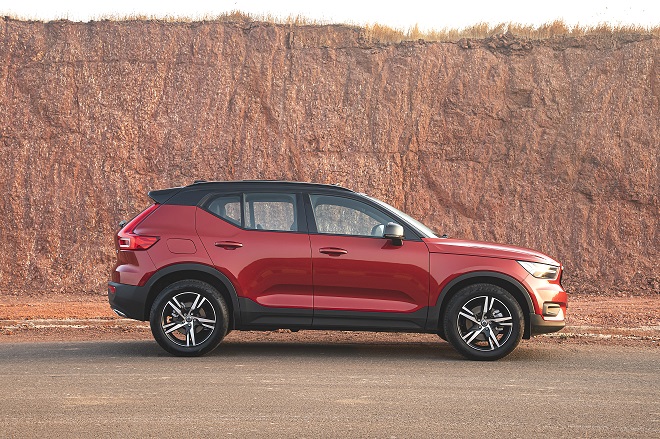
Swedish luxury car maker Volvo Car India today announced that it would be increasing the ex-showroom prices of its luxury sedan S90 and premium SUVs, XC40, XC60 and XC90. Effective May 3, 2021, these models will see an upward price change ranging from Rs. 1 lakh to Rs. 2 lakh.

The decision comes in the backdrop of rising input costs and weakening of the Indian currency. The last price hike by the company was announced in 2018 and thereafter it has maintained the price line for all its products. The decision comes as a result of increased cost in production, a volatile forex situation over the years and the impact of COVID-19 pandemic on the routine business set up.

Mr. Jyoti Malhotra, Managing Director, Volvo Car India “Our commitment to the Indian market and our customers is reflected in the fact that while the Indian auto industry went through price escalation across the spectrum, we at Volvo Cars maintained the prices of all our products for three years since 2018. We are however now faced with a situation where rising input costs leave us with no other option but to share some of these costs with the customer. We may have to relook at the prices and take further increase later in the year, depending on how input costs develop. As an organization focused on safety, we will continue to keep our promise towards our customers and prioritize their safety & well-being.”

Following are the new ex-showroom prices effective from May 3, 2021:

Volvo S90 D4 Inscription: Rs. 60,90,000

Volvo XC40 T4 R Design: Rs. 41,25,000

Volvo XC60 D5 Inscription: Rs. 60,90,000

Volvo XC90 D5 Inscription: Rs. 88,90,000

No change in price for the newly introduced compact luxury sedan S60 has been announced. The ex-showroom prices will continue to be as follows:

Volvo S60 T4 Inscription: Rs. 45,90,000