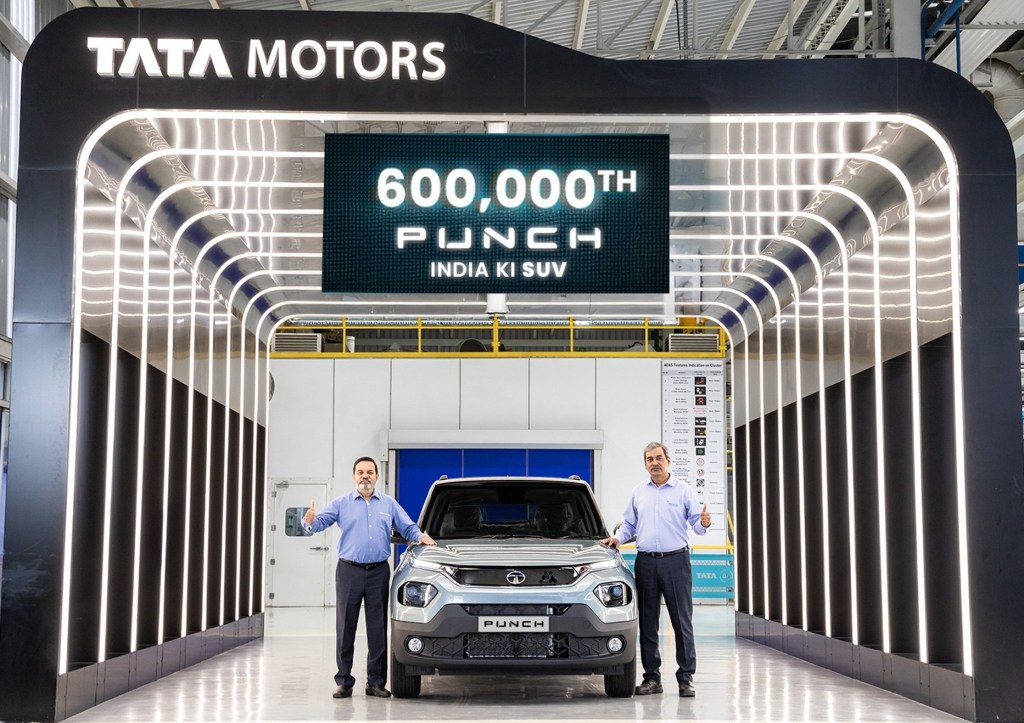
Tata Motors has announced a historic milestone for its compact SUV, Punch, which has surpassed 6 lakh production milestone in less than four years—a record-breaking feat that cements its position as one of India’s favorite SUV.
Launched in October 2021 with the vision of making the SUV experience accessible to every Indian, the Tata Punch pioneered an entirely new segment — the sub-compact SUV. Since then, it has struck a powerful chord with customers across the nation. From bustling metros to aspiring hinterlands, the Punch has emerged as a symbol of choice, reliability, and style, reshaping the contours of the Indian automotive landscape. It made history by becoming the highest-selling car in the country in CY2024. Whether navigating urban streets or rural trails, appealing to first-time buyers, young professionals, or growing families — the Punch has evolved into more than just a car.
Speaking about the Punch and its deep connection with the growing aspirations of a bold and confident India, Vivek Srivatsa, Chief Commercial Officer, Tata Passenger Electric Mobility Ltd., said, “The Punch embodies the spirit of a new India — bold, self-assured, and ready to forge its own path. Crossing the 6 lakh milestone is more than a production achievement; it’s a reflection of the immense trust that over 6 lakh Indians have placed in a vehicle that represents confidence, presence, and a fresh start to their journeys. It’s especially heartening to see how Punch has become the natural first choice for so many first-time car buyers. Punch is not just a car — it’s a breakthrough brand that has sparked a cultural shift and redefined what India expects from the first car in their family. With the launch of the ‘India Ki SUV’ campaign, we celebrate this extraordinary journey and the customers who made it possible. This is more than a celebration of numbers — it’s a tribute to a product that made SUV attitude accessible to all, without ever compromising on substance.”
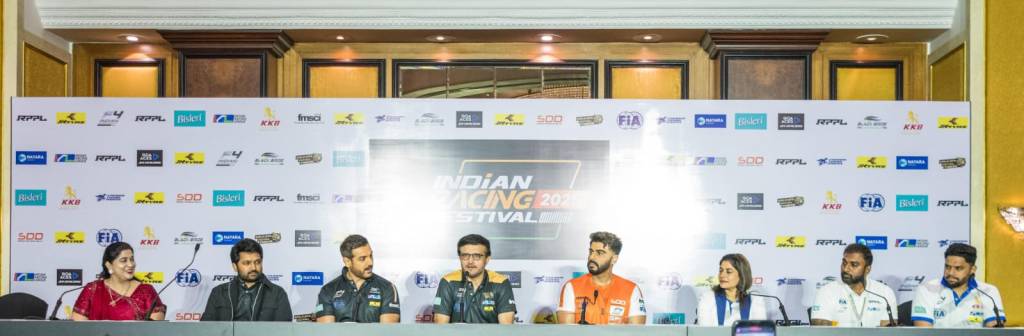
The 2025 season of the Indian Racing Festival (IRF) added another significant milestone to its journey, with the first-ever official Driver Draft for the Indian Racing League (IRL). Hosted at the iconic Taj Lands End in Mumbai, the event brought together franchise owners, league officials, and media to mark the formal beginning of a season that promises high-stakes competition, global talent, and deeper fan engagement. The event was designed to introduce greater structure and transparency to the process of building teams – a first for Indian motorsport and to reiterate IRF’s vision of creating a league that is both inclusive and performance-driven.
In a thrilling session earlier in the evening, 24 drivers were selected across six city-based franchises for the upcoming IRL season. Each team picked four drivers, creating a balanced and competitive lineup that includes an experienced international driver, an emerging international or Indian-origin talent, a domestic Indian driver, and a female driver. The selection was not only symbolic but also strategic, with teams building their rosters around driving styles, track experience, and data-backed performance indicators.
The final grid features accomplished names like Neel Jani – former Formula 1 test driver and Le Mans winner, Jon Lancaster – with a background in GP2 and endurance racing, and Raoul Hyman – a two-time IRL champion of Indian origin who returns with strong fan support. On the Indian side, young talents such as Ruhaan Alva, Sohil Shah, Sai Sanjay, and Akshay Bohra bring proven speed and sharp race craft, while female racers like Fabienne Wohlwend, Gabriela Jilkova, and Caitlin Wood round out the grid with international experience across W Series, F3, and GT formats.
The draft was followed by a joint press conference where all six team owners including public figures from Indian cinema and sport took the stage to reveal their teams and discuss their vision for the league. Team owners and key personnel from the franchises were present during the event, as teams finalised upon their picks. Each owner, along with their technical teams, worked closely to build a roster tailored to both competitive goals and regional identity. This high-engagement approach signals a new level of dedication and investment from franchise owners, not only in the sport but in shaping the narrative around their teams.
“This brings our collective vision to life when it comes to the Indian Racing Festival 2025,” said Mr. Akhilesh Reddy, Chairman and Managing Director of Racing Promotions Pvt. Ltd. (RPPL), the organisation behind IRF. “With this driver draft, we’re building a new foundation for motorsport in India – one that’s inclusive, structured, and deeply competitive. The Driver Draft for IRL 2025 celebrates talent, promotes competence, and builds serious anticipation for the racing season. What we’re doing here is building a sport for India, by India, with the world watching.”, he added.
Each franchise from Delhi’s Speed Demons to the newest entrant, Kichcha’s Kings Bengaluru now heads into the season with a race-ready lineup. The 2025 season will begin in August and will feature races across multiple cities, including permanent circuits and urban street tracks throughout India.
The evening concluded with an media interaction where the management, owners and the press engaged– a fitting end to a day that marked the beginning of a pivotal & memorable chapter in Indian motorsport.
IRL 2025 Driver Draft – Final Team Line-Ups
Speed Demons Delhi (Owner: Arjun Kapoor)
● Alister Yoong (Malaysia) – Regular in Asian single-seaters, son of former F1 driver Alex Yoong
● Sai Sanjay (India) – Consistent domestic performer across Indian circuit championships
● Shahan Ali Mohsin (India) – Former F4 SEA champion and one of India’s top karting graduates
● Caitlin Wood (Australia) – Experienced in W Series and GT World Challenge
Hyderabad Blackbirds (Owner: Naga Chaitanya)
● Jon Lancaster (UK) – Former GP2 winner and Le Mans podium finisher
● Akshay Bohra (India) – Promising Indian-origin driver with F4 experience in Europe and UAE
● Mohamed Ryan (India) – Young talent with strong sim-racing and F4 credentials
● Gabriela Jilkova (Czech Republic) – Sim and GT racing expert with international recognition
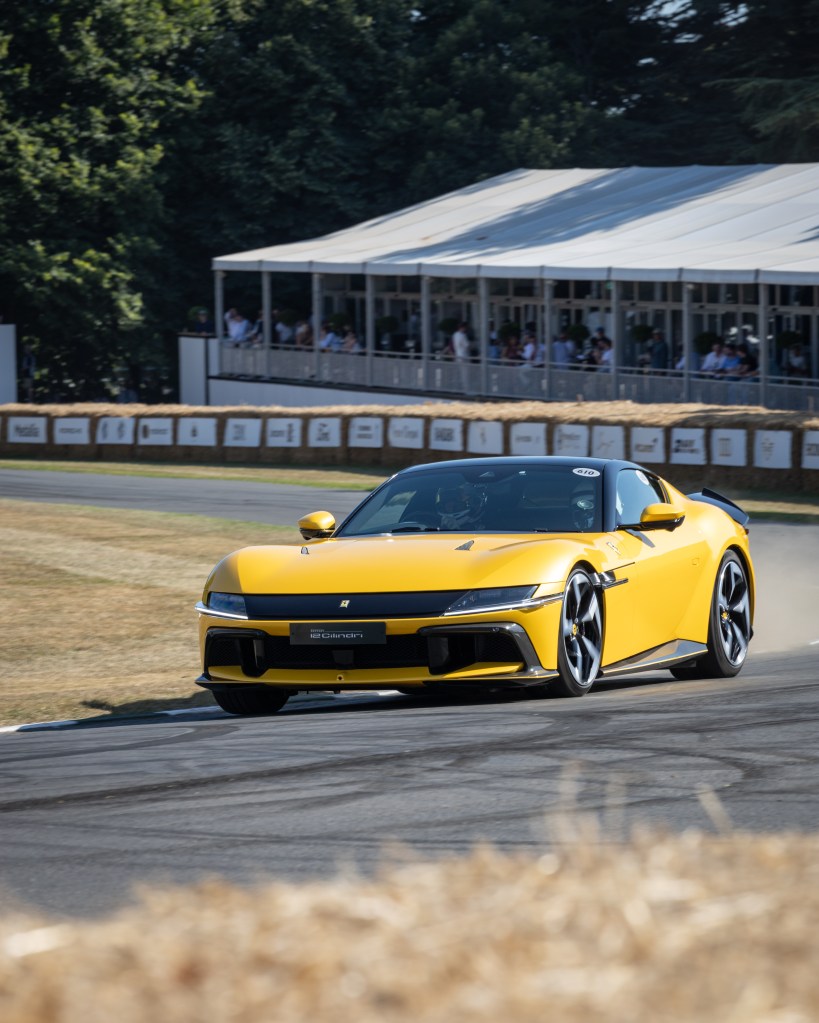
Ferrari delivered its most extensive presence to date at the Goodwood Festival of Speed, unveiling four model debuts and supporting the Festival’s celebration of ‘75 Years of Formula 1’ with a striking heritage line-up.
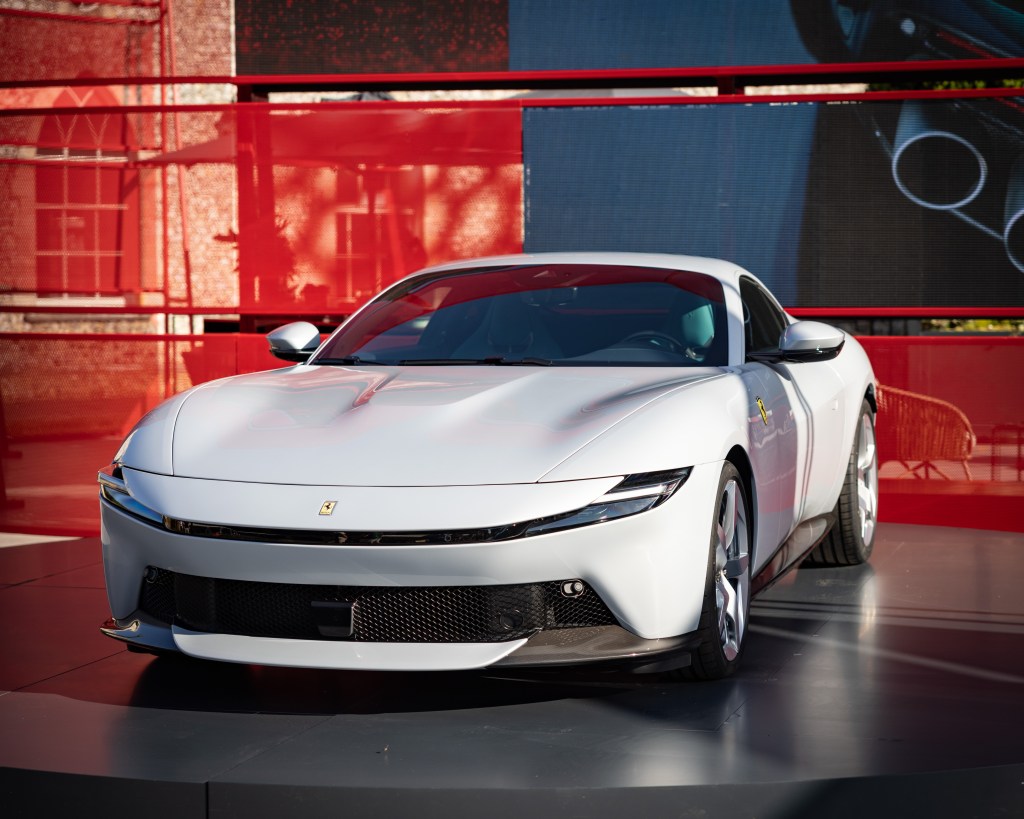
At the all-new Ferrari display, the spotlight was on the public debut of the Ferrari Amalfi. The new 2+ coupé redefines the Grand Tourer formula with a front-mid-mounted twin-turbo V8 delivering 640 cv, everyday usability, and sculptural styling. Inside, the Amalfi introduces Ferrari’s latest HMI system and a return to tactile, analog-inspired controls on the steering wheel – including the return of the iconic ‘Engine Start/Stop’ button.
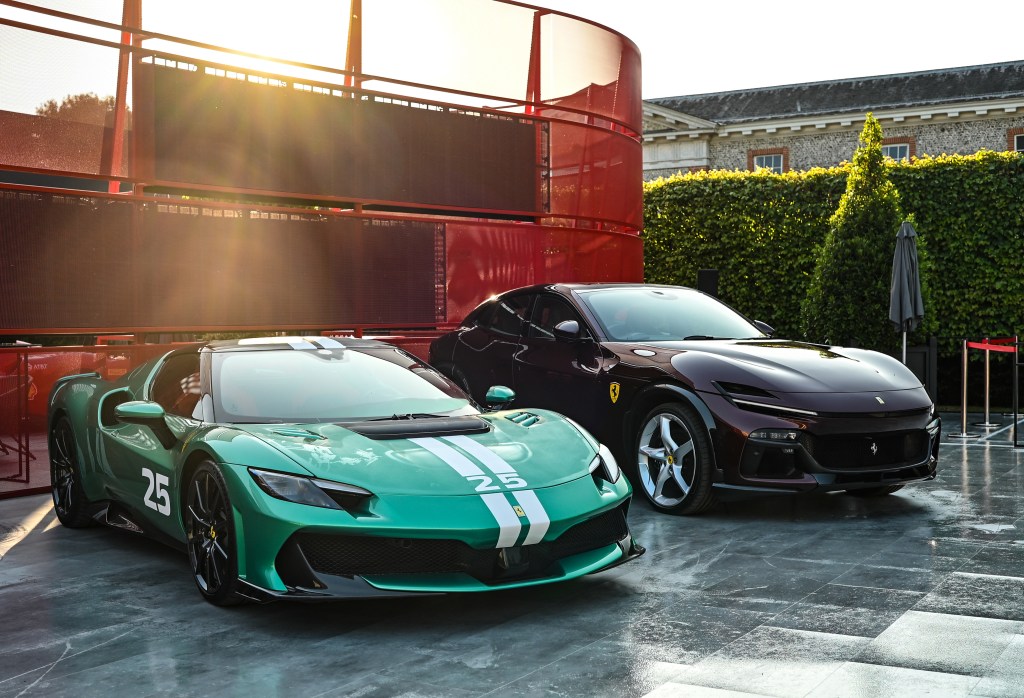
Debuting in the UK alongside the Amalfi was the Ferrari 296 Speciale. A lightweight, special-series evolution of the 296 GTB, it pairs a 120° twin-turbo V6 with an electric motor to produce 880 cv. Sharpened aerodynamics, reduced weight, and track-focused dynamics make it the most extreme interpretation of Ferrari’s hybrid berlinetta to date.
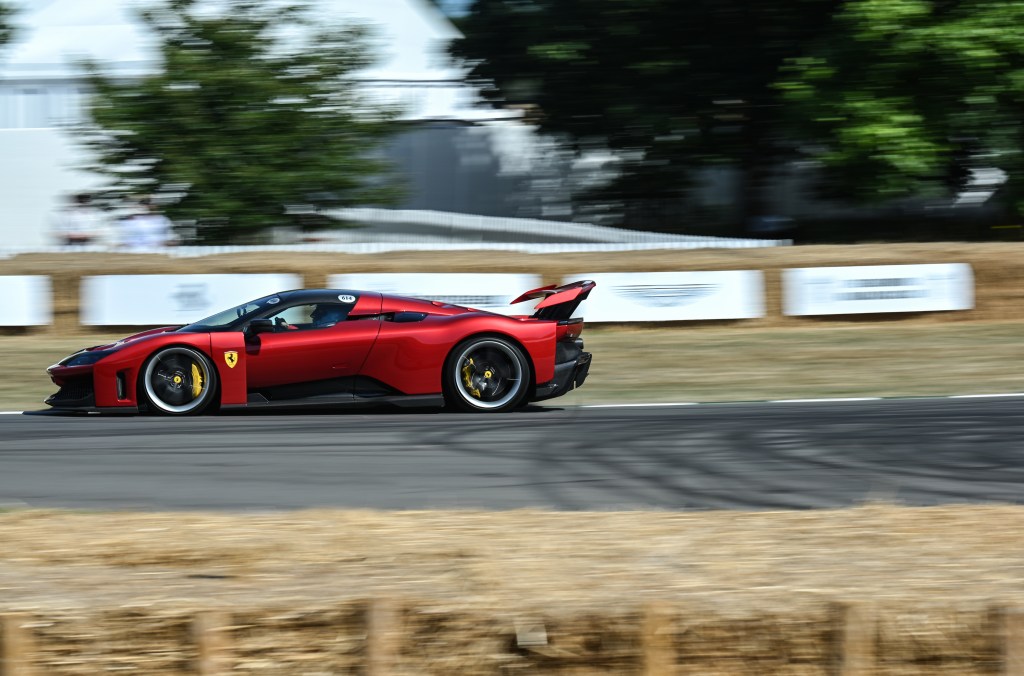
The Ferrari F80, Maranello’s latest limited-series supercar, stunned specators with its first worldwide dynamic debut following its global reveal at the Finali Mondiali in October 2024. Producing 1200 cv from a hybrid V6 powertrain derived from the 499P Le Mans Hypercar, the F80 introduces electric turbochargers, e-4WD, and generates 1050 kg of downforce at 250 kmph.
The final debut was the Ferrari 12Cilindri, which also made its UK dynamic debut. Powered by a naturally aspirated 830 cv V12, the front-engined two-seater Ferrari combines a blend of elegance, versatility, and performance – representing the latest evolution of this lineage, passing on an unique heritage and elevating it to new standards of performance, comfort, and design.
Complementing the four model debuts, Ferrari’s expanded presence included a F50 and a bespoke Purosangue from Ferrari Tailor Made, bridging heritage and personalisation in one of the brand’s most significant static displays to date. Guests also marvelled at the latest Ferrari 296 Challenge race car: which made its UK season debut earlier this year in the Ferrari Challenge UK Trofeo Pirelli race series.
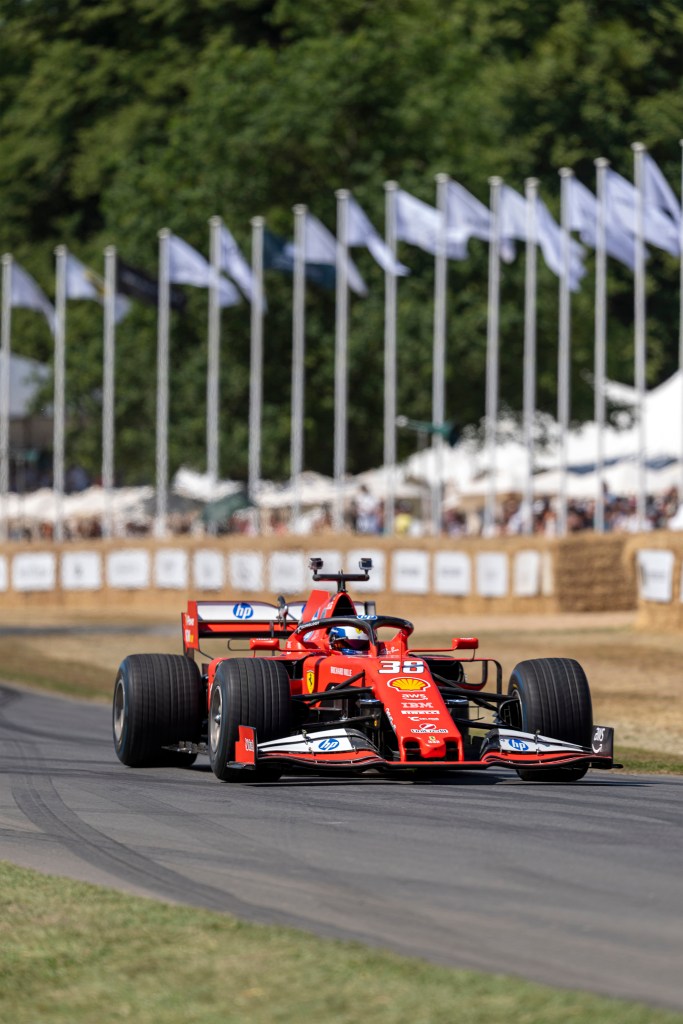
To support the Festival’s 75 Years of Formula 1, Scuderia Ferrari brought two modern F1 cars for dynamic demonstrations: the SF90 from 2019 and the SF21 from 2021, showcasing the latest Ferrari technological advancements on the Goodwood Hill. The celebrations were also supported by a collection of passionate Ferraristi, who contributed a remarkable selection of historic F1 cars, including the 312T, 640, and F2007.
A memorable edition of the Goodwood Festival of Speed draws to a close, and Maserati bids farewell to the British public after four days celebrating Italian excellence. Amidst the world-bests, the Trident captivated motorsport fans with a charismatic and high-adrenaline presence, track runs, world premieres, and a paddock showcasing the very best of luxury and performance.
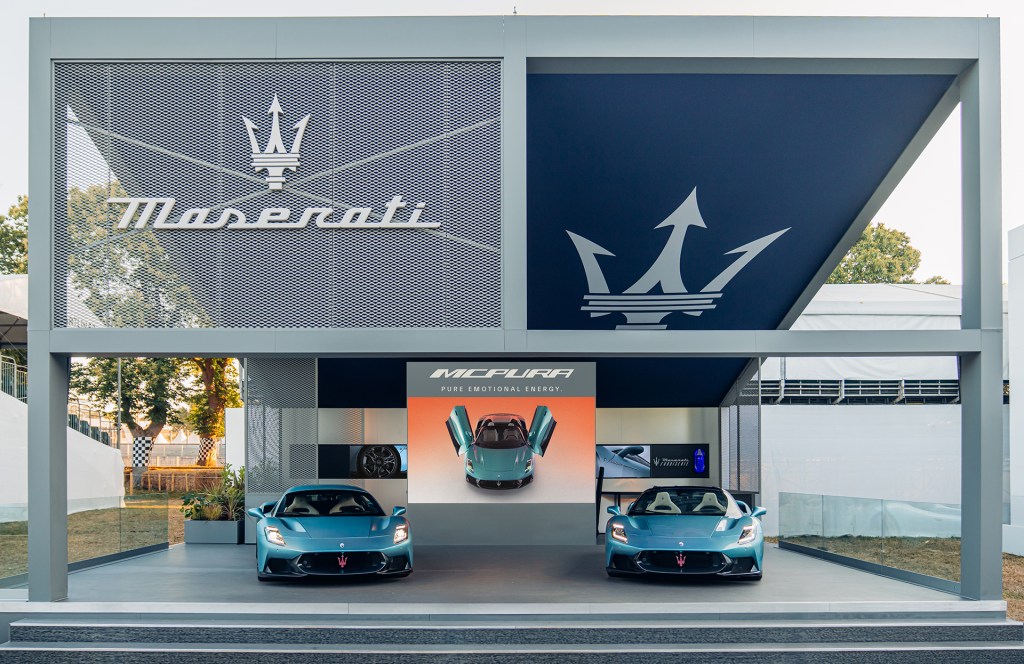
Among the standout highlights was the debut of the new MCPURA Super Sports Car, the purest expression of Maserati’s performance-driven philosophy, which was unveiled on Thursday, 10 July.
The MCPURA takes the spirit of the MC20 and elevates it, bringing it to its most intense and refined form. Available immediately in both coupé and convertible versions (the latter dubbed MCPURA Cielo) this new model features four defining elements: a carbon fiber monocoque, the iconic Nettuno V6 engine with a patented pre-chamber combustion technology, the “Butterfly” doors, and the retractable electrochromic glass roof for the cabrio version.
In terms of dynamics, it was the Maserati GT2 Stradale that stole the show, lighting up the legendary Hillclimb with its deep, magnetic sound—delivered by a brand-new racing exhaust system. Its mechanical symphony electrified the crowd, turning each run into a visceral experience. Born directly from Maserati’s expertise on international racetracks, the GT2 Stradale is the road-legal version of the iconic GT2 race car that marked Maserati’s return to victory in GT championships.
The extraordinary roar came from a new racing exhaust system developed by Maserati Corse in collaboration with TubiStyle, a benchmark in high-performance exhaust and supplier of the original system for the legendary MC12. Built exclusively for track use and crafted from high quality titanium, the new system reduces weight by 7 kilograms compared to the standard setup, enhancing the car’s dynamic capabilities even further.
Every component is welded by hand to the highest artisanal standards, reflecting Maserati’s commitment to technical and stylistic excellence. Created to amplify the performance of the engine, the new system delivers a direct and authentic sound that mirrors the GT2 Stradale’s sporty character and Maserati’s deep roots in motorsport. With this new system, Maserati Corse reaffirms its role in the development of high-performance solutions.
Moreover, on the same track as the legendary Hillclimb, two different interpretations of Maserati competed in a perfect alternation of dynamic refinement and extreme power. Under the spotlight, the new GranCabrio 490 hp, sporting a refined Verde Giada livery, with perforated Ice top grain leather interiors, powered by a 3.0 litres V6 Nettuno Twin Turbo engine, the GranCabrio reaches a top speed of 300 km/h and can sprint from 0 to 100 kmph in just 4 seconds.
Crowning the event, the exclusive MCXtrema made its debut at the event, showing a spectacular Blue Xtrema livery. Homologated for track use only and limited to just 62 units, the MCXtrema is a true racing beast, equipped with a V6 3.0-litre twin-turbo derived from Nettuno producing 740 hp of pure power for an extreme driving experience.
Goodwood 2025 thus comes to a close under the unmistakable sign of the Trident, which stole the show with the world premiere of MCPURA, the introduction of the new racing exhaust, and the presence of its most striking models both in the Super Paddock and on the challenging Hillclimb, defining Maserati’s unique interpretation of high-performance luxury.
It was an exclusive top-class stage perfectly aligned with the Year of the Trident celebrations for the famous logo designed 100 years ago: an enduring symbol of Maserati’s global excellence. A journey that will culminate in the centenary of Maserati’s first racing victory, when the Tipo 26 (the first car with a Trident on its hood) won the Targa Florio in 1926 with Alfieri Maserati behind the wheel. An anniversary that honours the brand’s glorious past while reaffirming Maserati’s ongoing commitment to a future of excellence, innovation, and authentic Italian spirit.
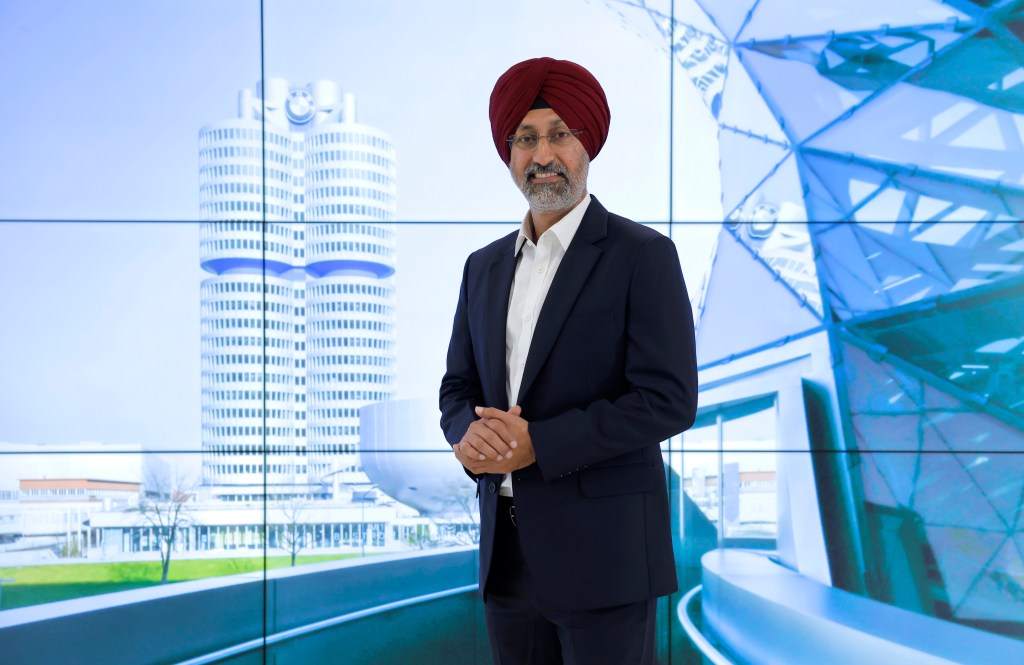
BMW Group India has announced a change in personnel at the helm with Mr. Hardeep Singh Brar being appointed as the President and Chief Executive Officer effective September 1, 2025.
Mr. Hardeep Singh Brar succeeds Mr. Vikram Pawah who is taking charge as Chief Executive Officer of BMW Group Australia and New Zealand.
Mr. Jean-Philippe Parain, Senior Vice President, Region Asia-Pacific, Eastern Europe, Middle East and Africa, BMW Group said, “India is among the fastest growing markets for BMW Group and an important pillar of our long-term success strategy for the region. Mr. Hardeep Singh Brar holds vast expertise and an intricate understating of Indian automotive industry to lead this dynamic market and strengthen BMW Group’s operations here. We would like to thank Mr. Vikram Pawah for his immense contribution towards strategic growth of BMW Group India and playing a decisive role in its recent development.”
Mr. Brar brings more than thirty years of rich experience in Indian automotive industry, having held numerous senior management positions. He most recently served as Senior Vice President of Sales and Marketing at Kia India. Prior to this, Mr. Brar’s diverse experience included leading core functions of sales, marketing, customer experience, network development and corporate strategy across several brands including Maruti-Suzuki, Volkswagen Passenger Cars, General Motors, Nissan Motor and Great Wall Motor Company. He holds a degree in Mechanical Engineering from Thapar Institute of Engineering and Technology, Punjab. He is an alumnus of Harvard Business School’s Senior Executive Leadership Program.
Mr. Vikram Pawah has been with the BMW Group since 2017 and has successfully led the company’s operations in both India (2017 – 2018 and 2020 – 2025) as well as Australia (2018 – 2020). In recent years, Mr. Pawah strongly fixed BMW Group India’s gaze on expanding market share through new opportunities and target groups, and taking electric mobility, digitalization, retail experience and customer centricity to the next level.
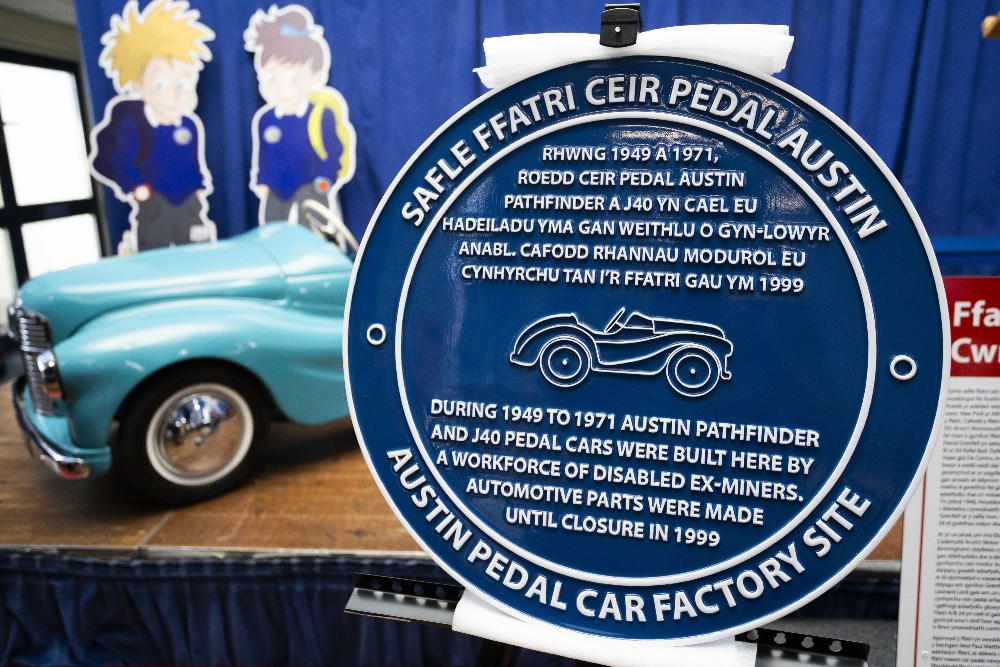
Austin Pedal Cars and Caerphilly County Borough Council are extremely proud to announce the unveiling of a Blue Plaque at the former site of the original Austin pedal car factory in Bargoed, Wales. The plaque, soon to be on permanent display outside of the Tir-y-Berth Primary School, is the closest landmark to the location of the factory where the historically significant Austin J40 and Pathfinder pedal cars were produced from 1949 until 1971.
The Blue Plaque was officially unveiled by Mike Sheehan, the first Trainee Manager at the site and David Hook, the longest serving and last employee at the factory. They were joined by Cllr Jamie Pritchard, Deputy Leader and Cabinet Member for Prosperity, Regeneration and Transformation, the Mayor of Bargoed, Howard Llewellyn, Jamie Burnett of Austin Pedal Cars, and David Whyley, renowned Austin J40 expert, Austin Pedal Cars historian and author of the company’s award-winning book, The Austin Pedal Car Story.
Other special guests at the unveiling event included Tony Osbourne, the last factory key holder, Margaret Fuller, Office Secretary, Gwyn Palmer, the factory nurse, Tudor Owen, the Press Shop Foreman and Alan Esau, the factory Tool Repairer.
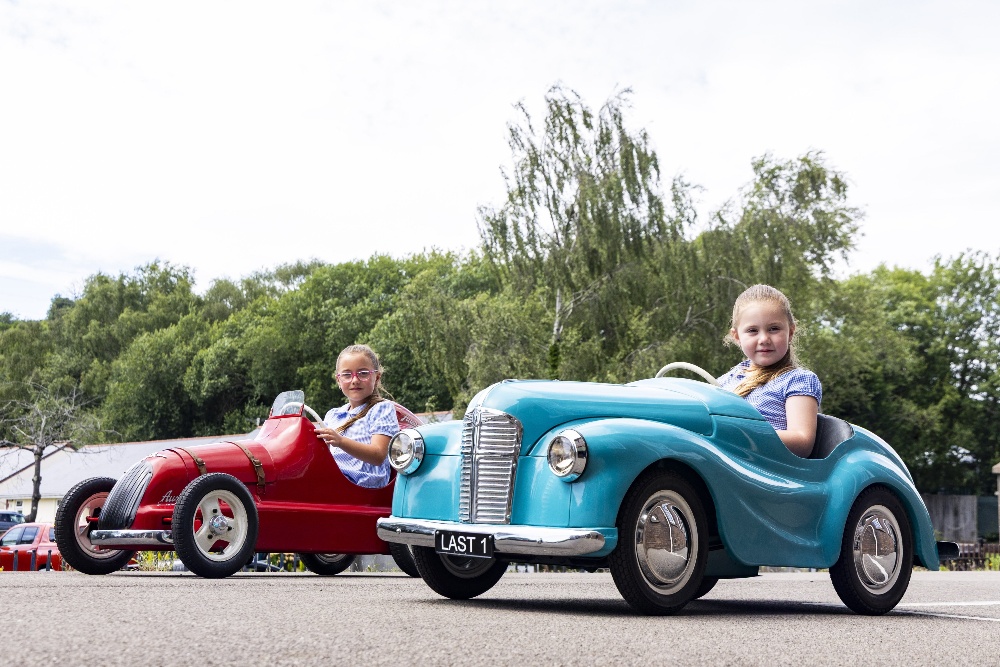
Two very special Austin pedal cars were also displayed. One was a Pathfinder driven to the entrance of the brand new Austin factory in 1949 by five-year-old Paul Matthews, who then handed the scissors to the Chairman of Gelligaer Urban Council for the official opening on the 5th July. The other was the last J40 to be pedalled off the production line in 1971, a sad moment in the factory’s history, and the end of a magnificent era of British car manufacturing.
This very special moment recognises the incredible history of the world famous pedal car based on the globally successful Austin A40 Devon and Dorset. It also celebrates a unique piece of British automotive manufacturing history and a factory that was an intrinsic part of the social fabric of Bargoed and South Wales. Originally called the Austin Junior Car Factory, the company was initially created to provide employment for disabled ex-miners from the region who had developed respiratory illness from working in the coal mines.
Following the demolition of the factory in the early 2000s there was nothing in place to mark where this innovative factory had once stood. Austin Pedal Cars Director, Jamie Burnett, and J40 expert David Whyley have wanted to mark the location for a number of years, David working for many months with David Hook and Caerphilly County Borough Council to agree a suitable location. The plaque itself was funded by Austin Pedal Cars.
“The unveiling of this Blue Plaque is a fitting tribute to the incredible heritage of the Austin pedal cars factory and its lasting impact on the local community. For decades, this factory was not just a place of innovative manufacturing, but a source of pride and opportunity for local families”, said Councillor Jamie Pritchard, Deputy Leader and Cabinet Member for Prosperity, Regeneration and Transformation. “Celebrating this legacy reminds us of our rich industrial history and the importance of preserving it for future generations. We are honoured to recognise the factory’s role in shaping both the local economy and the childhoods of so many.”
As part of Austin’s global manufacturing facilities, the factory was also instrumental in training many Austin employees in car production before they moved on to build full size Austin cars. Many senior Austin managers have passed through the doors of the Austin pedal cars factory in their early years, including Harold Musgrove, Mike Sheehan and Dick Perry.
Austin’s pedal car started off as a ‘little idea’ in the mind of then Austin Chairman, Leonard Lord, an idea turned into reality in secret by the J40’s designer, Jim Blaikie. He and his team at the Austin plant in Longbridge created a prototype that set the miniature car on a road to playing a significant role in thousands of childhoods.
Every J40 pedal car was made in the same way as the full-size Austin cars, produced from metal and parts transported from Longbridge. They even had similar features, including working headlights and horn, detachable wheels with Dunlop tyres, vinyl seats and an opening bonnet and boot to ensure authentic childhood motoring adventures.
When production came to an end in 1971, the factory at Bargoed had produced a total of 32,098 Austin J40 and Pathfinder pedal cars, many of which had found homes around the world. King Charles even received one as a present on his fourth birthday in 1952, a specially produced J40 Junior Roadster Special that remains in the Royal Collection.
The end of J40 production was not the end for the Bargoed factory though, as it continued to produce automotive parts until it finally closed its doors in 1999. It was eventually demolished a few years later.
Appreciation for the pedal cars continued and in 2012 the Goodwood Revival hosted the first Settrington Cup, a race exclusively for the Austin J40 with a Le Mans-style start and endearing competitive spirit. among the young racers. It has become a highlight of the famous historic event and is the most watched race of the weekend on the Goodwood live broadcasts.
In 2020, the company now known as Austin Pedal Cars was launched by Jamie and Mark Burnett as a division of Burlen in Salisbury, Wiltshire. The new company manufactures a full range of parts for the J40 and provides extensive restoration services as well as classic J40 sales. In 2022 it introduced the J40 Continuation, a modern interpretation of the original that is completely bespoke and produced to an exceptionally high standard with the latest in engineering expertise, style and luxury.
“This unveiling was a proud moment for all involved“, said Jamie Burnett, Director of Austin Pedal Cars. “The coveted Blue Plaque honours the history of the Austin pedal car and the vital role the factory played in the community of Bargoed and the wider British motor industry. Now it will be forever remembered by the local community and visitors alike. My thanks go to David Whyley for his tireless dedication to the Austin pedal cars legacy and for his work to officially recognise this historic site.“
The legacy of the unique J40 lives on with Austin Pedal Cars as they keep the classic J40 pedal car rolling, ready to be enjoyed by children and collectors for generations to come.
The Goodwood Festival of Speed this month will see McLaren Automotive celebrate its remarkable road cars and motorsports successes in line with the 2025 festival theme of, ‘Champions and Challengers’.
On public display for the first time and taking centre stage at ‘McLaren House’, the McLaren W1 combines real supercar attributes of sensational power delivery, authentic theatre and pure driver connection to deliver an incredible driving experience on road or track. Just 399 examples have been offered for customer specification, and all are allocated.
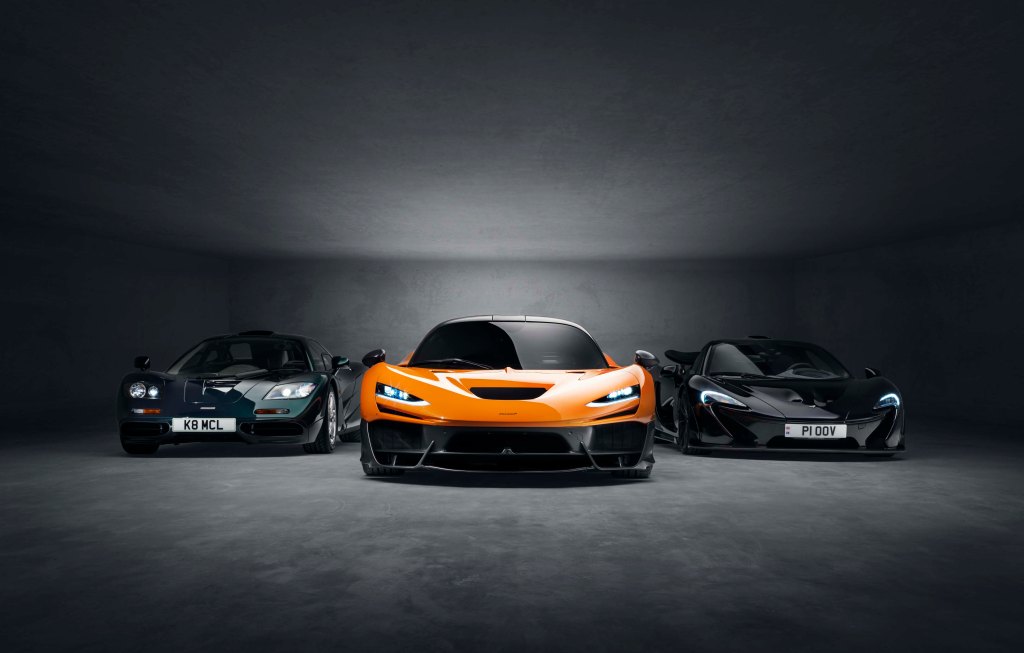
Featuring an all-new, 1275PS V8 hybrid powertrain driving the rear wheels and groundbreaking active aerodynamics – including Formula 1-inspired ground effect aero – the W1 is the third car in McLaren’s unique ‘1’ car lineage. It lines up at Goodwood alongside the legendary McLaren F1 and McLaren P1, showcasing how McLaren has challenged convention across multiple eras by delivering three truly phenomenal cars linked by their DNA, each with its own distinctive story.
McLaren will also mark 30 years since it won the 24 Hours of Le Mans – at its first attempt – with two distinctive celebrations at the 2025 Festival of Speed. The F1 GTR that took victory in the famous endurance race – and is recently returned from being displayed in the ‘McLaren a Name for Eternity’ exhibition at the Le Mans Museum – will make a rare dynamic appearance at the festival. The #59 car will be driven on the Goodwood Hillclimb by JJ Lehto, one of the three-driver team that achieved McLaren’s famed win.
The new 750S Le Mans is also rooted in the 1995 triumph. Announced in June, this highly exclusive supercar will be presented to McLaren customers and enthusiasts visiting McLaren House. Limited to 50 customer examples, the 750S Le Mans features a new McLaren Special Operations (MSO) High Downforce Kit that enhances downforce and circuit performance. It is a fitting homage to the legendary McLaren F1 LM road car, itself built in extremely limited numbers to celebrate our iconic Le Mans victory.
In each of the last two years at the Goodwood Festival of Speed, McLaren has delivered breathtaking moments with the track-only Solus GT. This fantasy-to-reality single-seat hyper-GT features an 840PS naturally aspirated 5.2-litre V10 engine and weighs less than 1,000kg.
The Solus GT demonstrated its extreme performance in 2023, when it won the Timed Shootout Final in an absorbing spectacle of noise and speed. And last year, it again appeared on the hillclimb with double Formula 1 World Drivers’ Champion Mika Häkkinen at the wheel of a customer car painted by MSO to precisely match his 1998 championship winning MP4/13 Formula 1 car. This year, McLaren will once again exhibit – and run – a customer example of this extraordinary supercar, which expresses the bespoke-to-customer possibilities and luxury craftsmanship inherent to McLaren Special Operations.
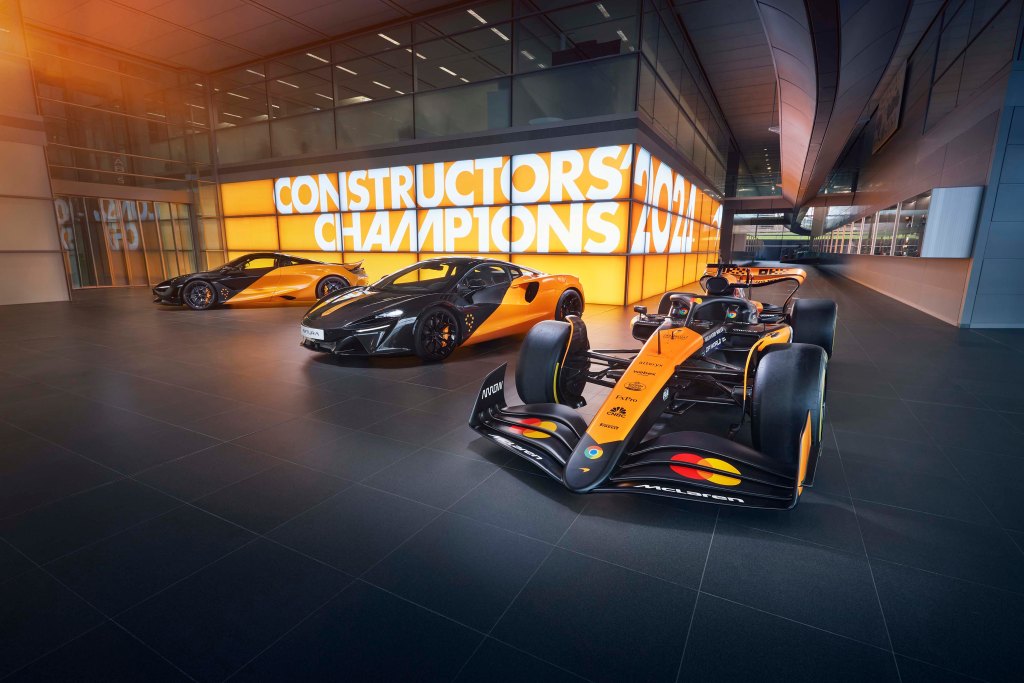
750S and Artura MCL38 Celebration Edition supercars will take part in Goodwood dynamic runs. Announced shortly after the McLaren Formula 1 team secured the 2024 Formula 1 World Constructors’ Championship, just nine each of 750S and Artura models will be produced. The Celebration Edition cars feature a livery curated by MSO, centred on the Papaya Orange and Anthracite colourways that distinguish McLaren within the motorsport world.
Additionally, 2025 sees McLaren marking a decade of its thrilling and unforgettable ‘LT’ cars. Introduced to owners and other enthusiasts in March of this year, the ‘Celebrate LT’ initiative has brought together the community of LT owners globally through retailer-led community events. LT models from McLaren’s own Heritage collection will be positioned in the Goodwood ‘Supercar Paddock’, venturing out to take part in dynamic displays.
Propelling its robust performance in the current year, BMW Group India has posted its highest-ever car deliveries in H1 2025. The company sold 7,774 BMW and MINI cars and 2,569 motorcycles between January to June 2025. BMW sold 7,477 units and MINI 297 units.
In the second quarter (April – June), each month recorded best-ever sales.
Mr. Vikram Pawah, President and CEO, BMW Group India said, “Carrying forward the impressive performance of Q1 into H1, BMW Group India is steering the success story for this year with tremendous fervour. We are on a fast track, posting +10% growth despite a challenging environment as we continue to unfold new opportunities in luxury segment. Changing the game with our thrust on electric mobility, we are the most preferred Indian luxury EV brand with phenomenal +234% growth. Among SAVs as well as sedans, our long wheelbase luxury models are in great demand due to their seamless blend of comfort and performance. Coupled with the ongoing RetailNext transformation and Relax.We Care customer support initiatives, we are redefining our customers’ journey with joy and complete peace of mind.”
BMW Group Electric Vehicles (EV)
For last three years, BMW Group India is the leader in luxury EV sales in India. In H1 2025, this lead continues with 1,322 BMW and MINI EVs sold. The company achieved enormous +234% growth in EV sales in the first half of the year. The BMW iX1 Long Wheelbase was the highest-selling electric car during this period, followed by the flagship BMW i7 in second spot. Electric cars now hold 18% share in total sales of BMW Group India.
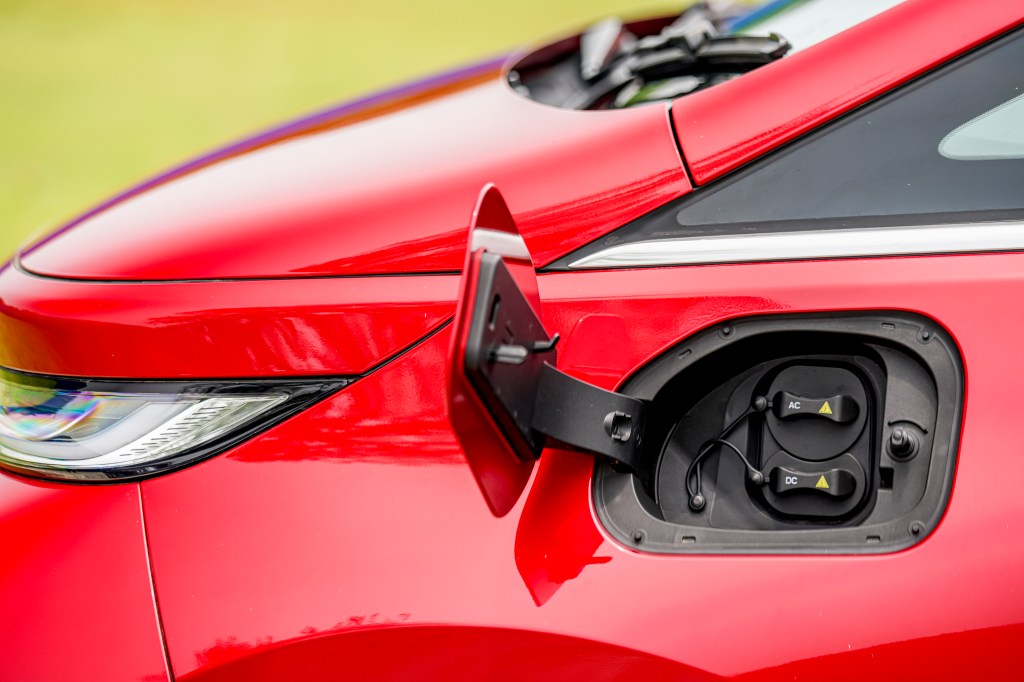
At the start of the year, BMW Group India announced many new initiatives for its EV customers including services like BMW Destination Charging, Smart E-Routing and Charging Concierge. Combined with complimentary Wallbox chargers and 24×7 open access to the company’s fast-charging dealership network across the country, customers are able to embrace progressive e-mobility with complete peace of mind. BMW Group India currently offers six electric cars and two scooters – BMW i7, BMW iX, BMW i5, BMW i4, BMW iX1 Long Wheelbase, MINI Countryman E, BMW CE 04 and BMW CE 02. Stunning performance and driving dynamics are hallmark of the entire EV portfolio and each model stands for next level digitalisation and sustainability.
BMW Long Wheelbase Range
The long wheelbase BMW models saw a massive growth of +159% in H1 2025. This includes the BMW 7 Series, BMW 5 Series, BMW 3 Series and BMW iX1. BMW long wheelbase models today account for 47% share in total sales. Strategically positioning these models across its portfolio, BMW Group India proactively ascertained customers’ needs and provided the ideal luxury product in each segment. The BMW 5 Series was the highest-selling BMW sedan in H1 with close to 20% share in sales. Meanwhile, the BMW 3 Series retained the class-leading position in Indian premium sedan segment.
BMW Luxury Class
BMW Luxury Class consists of flagship cars such as the BMW 7 Series, BMW i7, BMW X7 and BMW XM. Reigning at the absolute pinnacle of BMW’s luxury world, these bespoke sedans and SAVs are the subject of highest aspiration and admiration among Indian luxury clientele. The BMW 7 Series and BMW i7 are leading in their respective segments while the BMW X7 has crossed the notable milestone of over 5,000 deliveries since launch.
BMW Sports Activity Vehicles (SAV)
BMW SAVs recorded a double-digit growth of +17% in H1 2025. Compared to 56% in Q1, their share in sales increased to 59% in Q2. BMW X1 was the highest selling SAV not just for BMW (over 30% share in sales), but in the Indian premium compact segment. The next most admired BMW SAV in H1 was the powerful BMW X5.
MINI
MINI delivered 297 units in H1 2025. MINI Cooper S was the highest-selling model and saw growth of over +60% as compared to H1 2024. Both the MINI Cooper S and the MINI Countryman E enjoyed almost equal share in sales.
BMW Motorrad
BMW Motorrad delivered 2,569 motorcycles in H1 2025. The BMW G 310 RR was most popular smart-cc bike. In the GS adventure world, the BMW 900 GS / GSA and the BMW 1300 GS / GSA were the best-selling models. In the super sports segment, the BMW S 1000 RR commanded the top spot.
With more than 2.7 million cars sold, the Volvo XC60 has surpassed the iconic Volvo 240 as the best-selling Volvo model ever.
Since its debut in 2008, Volvo Cars’ mid-size SUV has remained a favourite among customers, appealing to a wide range of drivers who value safety, quality and a premium driving experience. Initially built exclusively in Europe, the XC60 later became the first global Volvo model to also be produced in China, supporting local sales. In 2018, it was named World Car of the Year.
The current generation XC60 introduced plug-in hybrid drivetrains to a broader audience, and it was the best-selling plug-in hybrid in Europe last year.
For the 2026 model year, the XC60 has undergone a significant refresh with a modernised design, more intuitive user experience, improved comfort, and a more responsive infotainment system.
“Growing up in Sweden in the 1980s, the Volvo 240 was the iconic family car – you could spot one in almost every driveway,” says Susanne Hägglund, head of Global Offer at Volvo Cars. “Today the XC60 has taken over that position in two ways. Not only as the family favourite, but also becoming our all-time top-seller, which in itself is the ultimate proof point of a successful car. And now, with the latest updates, it gets even better.”
The perfect family car The XC60 is the ideal all-rounder for families, effortlessly combining cutting-edge safety features, Scandinavian design and SUV practicality into one confident package. It has rightfully earned its position as a cornerstone in Volvo Cars’ proud tradition of building cars that families trust.
For years, the Volvo 240 estate was the most popular choice for families all over the world, loved for its safety qualities and fine driving characteristics. In many people’s eyes, it defined what an estate car should be. Today, the SUV has replaced the estate as the obvious family pick, and the XC60’s new status as Volvo Cars’ best-selling model of all time clearly reflects this shift in what customers want and need.
Many who grew up with the Volvo 240 are now choosing the XC60 for their own families. And just like the 240 helped shape their childhoods, today’s XC60 is creating memories for a new generation.
Two cars, one safety heritage When the Volvo 240 was introduced in 1974, it set safety benchmarks that would remain relevant for decades. For its time, it featured an advanced body design with front and rear crumple zones, along with a reinforced passenger compartment. This kind of safety cage continues to protect Volvo occupants on the road today.
The 240 was also among the first cars to incorporate enhanced side-impact protection, which later evolved into Volvo’s patented Side-Impact Protection System (SIPS). Additionally, the introduction of the Child Booster Cushion in 1978 marked a world-first innovation.
The Volvo XC60 has continued to introduce numerous advanced safety technologies, such as City Safety – the world’s first standard low-speed automatic emergency braking system designed to help avoid or mitigate a collision at speeds up to 30 km/h. Launched in 2008, this feature has since become commonplace on new cars around the world.
In another world-first, the XC60 introduced Oncoming Lane Mitigation in 2017 with a system capable of steering you back into your lane if you drift into oncoming traffic. These innovations have earned the car several independent safety awards.
Just as the 240 was at the time, the refreshed Volvo XC60 is one of the safest cars on the road. With its advanced safety cage and the latest active safety and driver support tech, it’s designed to help protect you and your passengers.
Bridging the gap to a fully electric future The refreshed XC60, along with other recent upgrades across the lineup, also play a key role in Volvo Cars’ electrification strategy, offering pure electric driving with the reassurance of a combustion engine for those not quite ready to go fully electric. Volvo Cars’ data shows that around half of the distance covered by the latest plug-in hybrid Volvo cars globally is powered purely by electricity.*
SAIC Motor, a global Fortune 500 company with a presence in over 100 countries and JSW Group, a revered Indian corporate with varied business interests entered into a joint venture – JSW MG Motor India Pvt. Ltd. in 2023.
At the time of formation of the joint venture, JSW MG Motor India announced that their goal will be to build a smart and sustainable automotive ecosystem while continuing to stay focused on developing a diverse portfolio of vehicles to give car buyers better access to advanced technologies and futuristic products with attractive value propositions.
In September 2024, JSW MG Motor India launched their first car since the formation of the JV – the MG Windsor EV. Launched at the price of a manual compact SUV, the Windsor, combining the comfort of a sedan and the expanse of an SUV, was offered with innovative aerodynamic design, spacious and premium interiors, smart connectivity, driving comfort, and many hi-tech features.
Built on a ‘Pure EV Platform’ with Battery as a Service (BaaS) – a unique ownership program introduced by a carmaker for the very first time in India, the MG Windsor EV immediately caught the imagination of the urban car buyer and became an overnight success. City roads, especially in the Indian metros are virtually filled with Windsor EVs wherever you look.
Fast forward to May 2025, JSW MG Motor India packed another punch by announcing the launch of Windsor PRO – the long-range stablemate of the Windsor EV. So, the million-dollar question is, what is new in the MG Windsor PRO? Recently, we were invited to participate in the national media drive where we got an opportunity to get up close, and personal with the MG Windsor PRO. Read on to find out what we discovered.
Design and Engineering
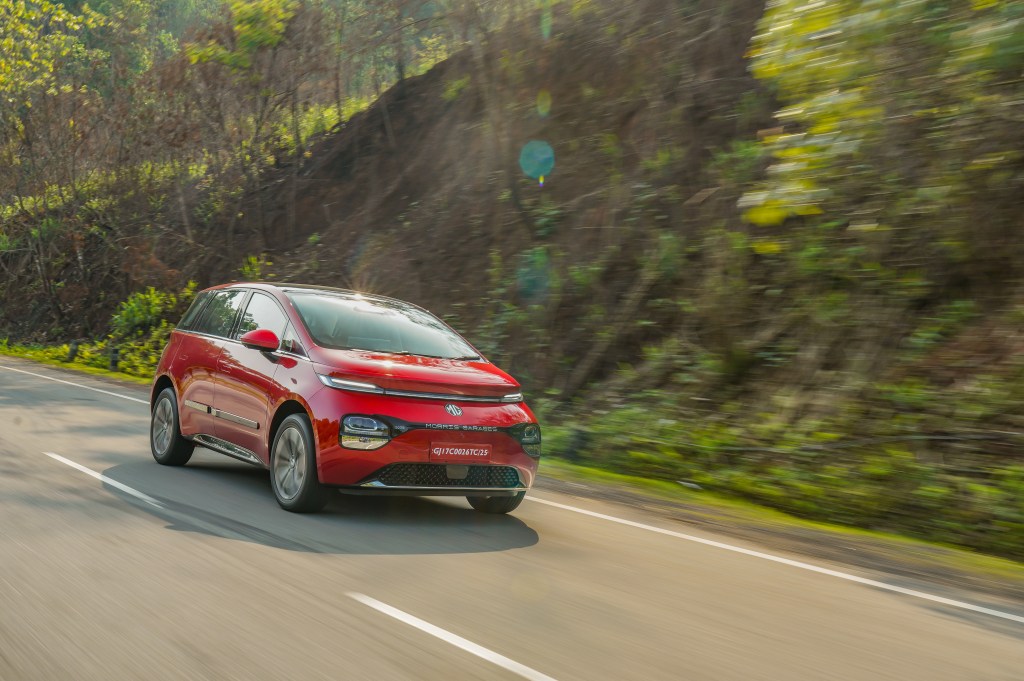
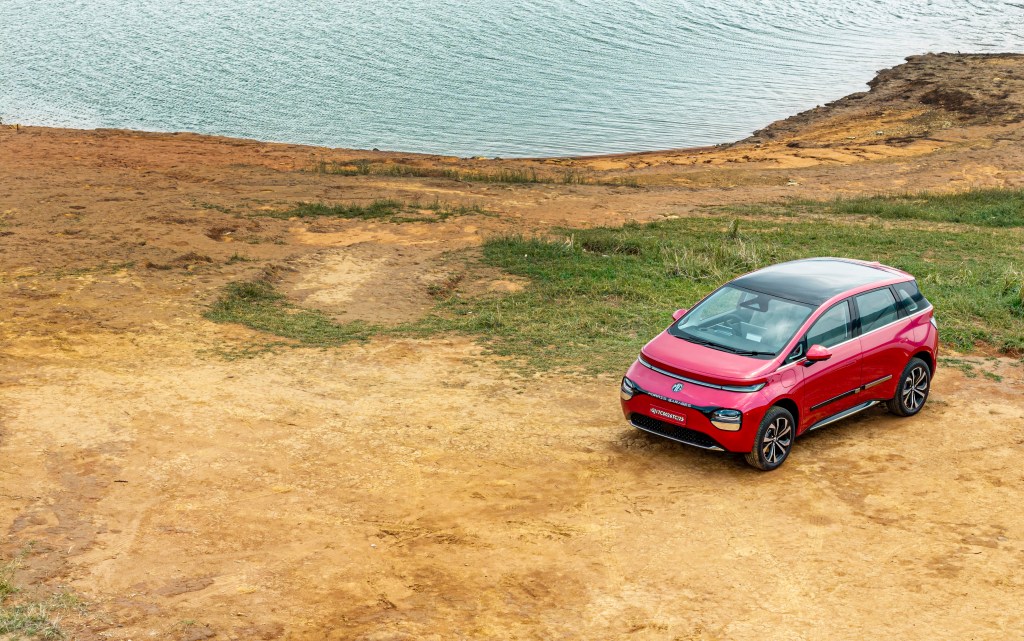
The MG Windsor is an interesting cross between a sedan and a compact SUV. Similar to its stablemate, the Windsor PRO measures 4,295mm in length, 2,126mm in width, and stands 1,677mm tall. The best-in-segment 2,700mm wheelbase ensures that the MG Windsor PRO offers a great balance between ride & handling and comes with a spacious passenger cabin.
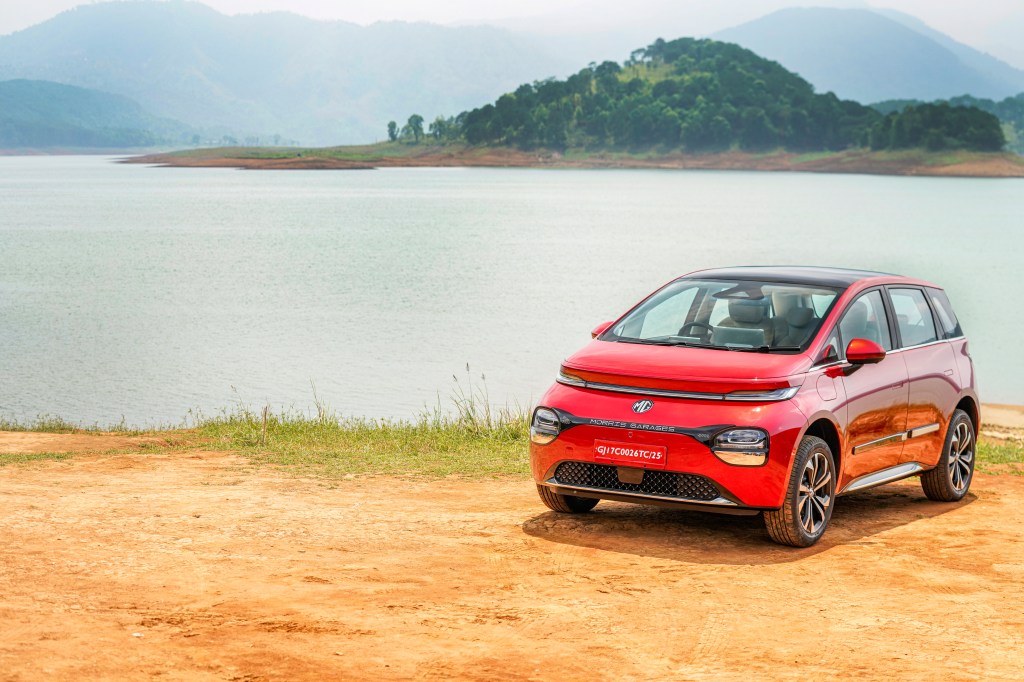
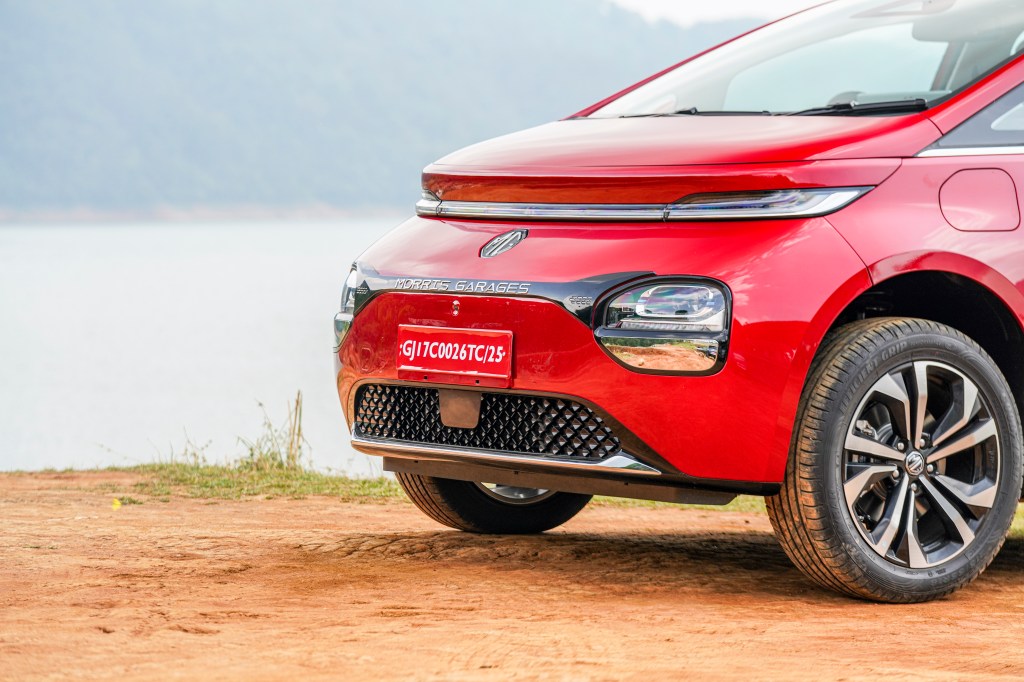
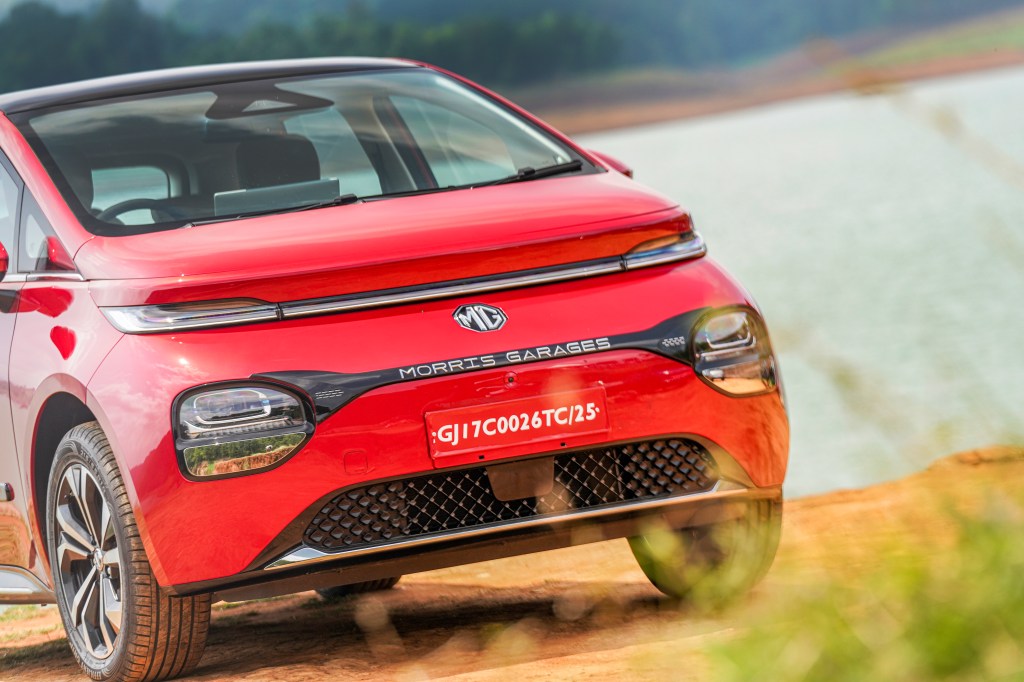
The MG Windsor PRO features an AeroGlide design language, which is futuristic and transcends the concept of traditional segmentation. The nose and bonnet have a distinct two-deck layout. The horizontal daytime running lamps strip forms the base of the bonnet, while the headlights sit below in the bumper. Integrated into the headlight area is a mirror-like panel that reflects images with clarity. MG has added some black trim bits bracketing the headlights, with the one inside connecting the two units and carrying the Morris Garages lettering, above which sits an illuminated MG logo.
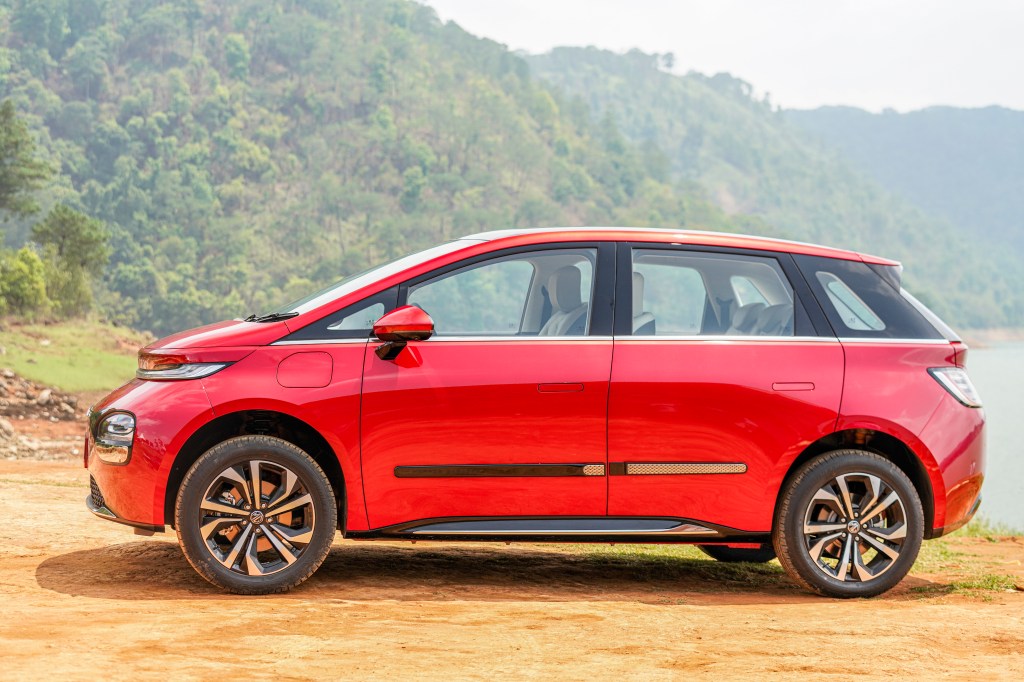
MG’s AeroGlide design language is more prominently visible when viewed from the side. The MG Windsor PRO features smart flush door handles which look very trendy. The R18 diamond cut alloy wheels further enhance the striking good looks of the MG Windsor. At the top, the roof rails add to the aesthetics.
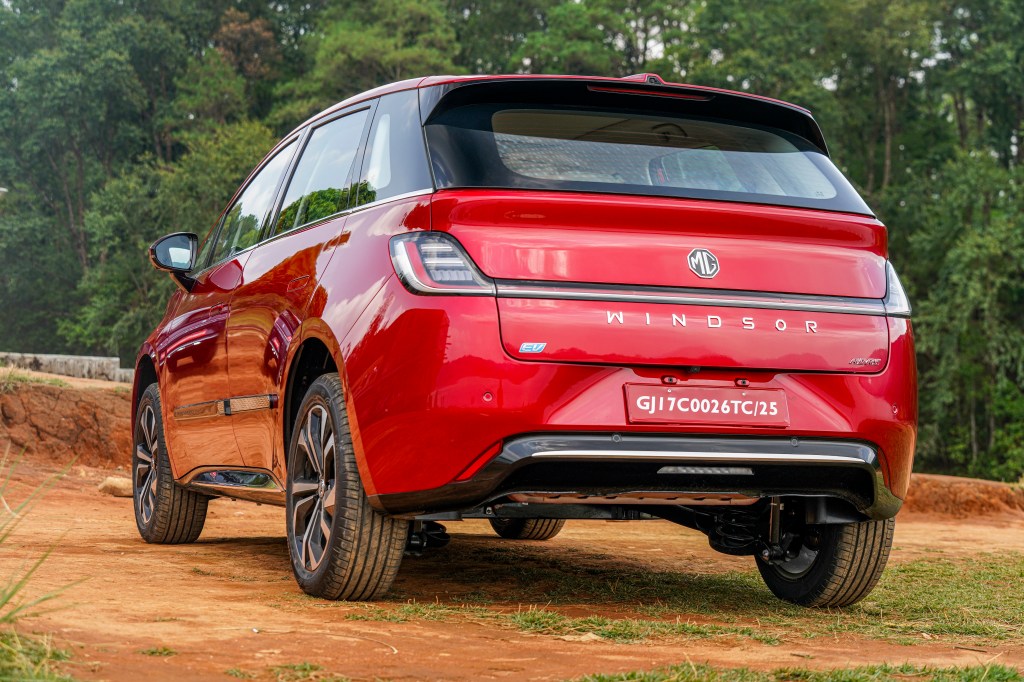
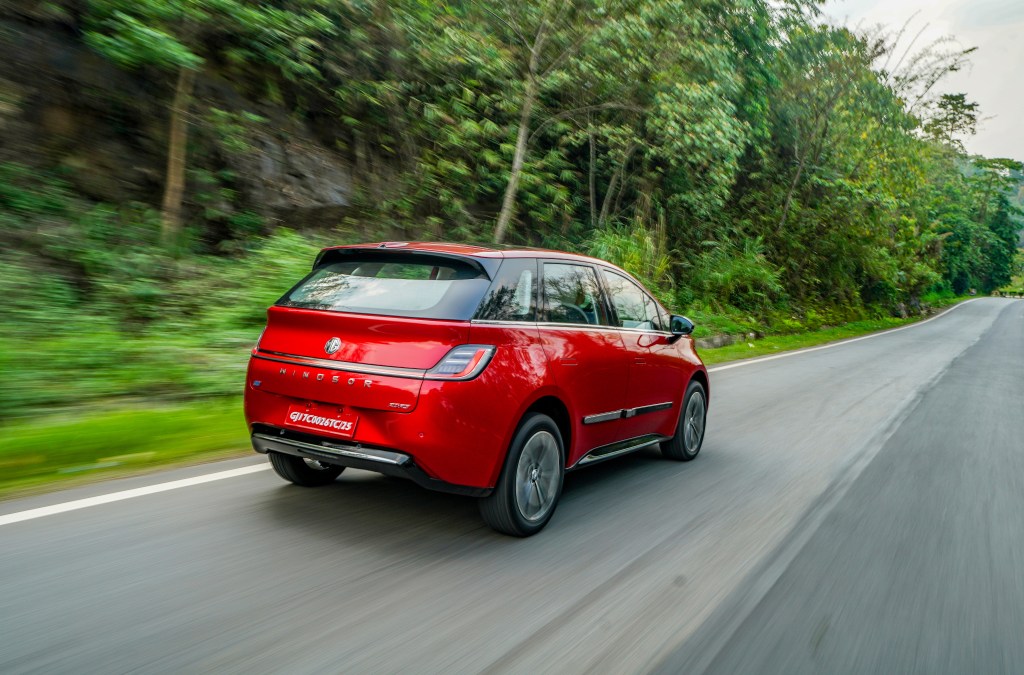
At the rear, the LED tail lights look sleek, and the lower bumper edge is finished off with a nice diffuser-style contrasting black panel. Topping the rear is a spoiler with an integrated stop light. In terms of design, the MG Windsor PRO remains largely unchanged from the standard Windsor EV barring its new diamond-cut alloy wheels and ADAS badging on the tailgate.
The MG Windsor PRO is being offered in only two variants: Exclusive PRO and Essence PRO; and three new colour schemes namely Celadon Blue, Aurora Silver and Glaze Red.
Interior and Comfort
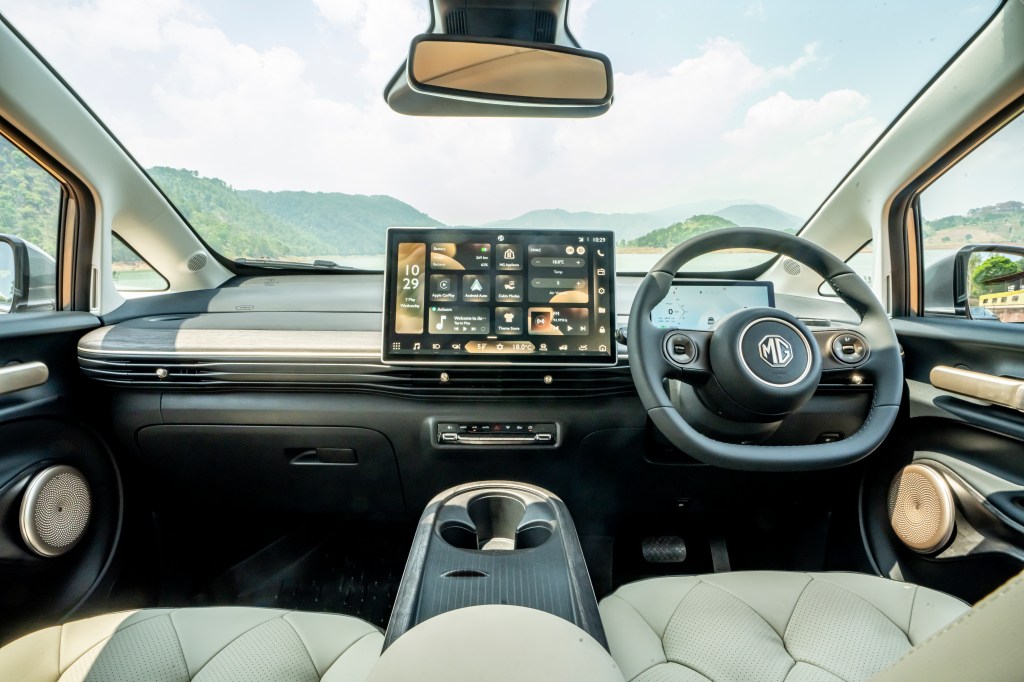
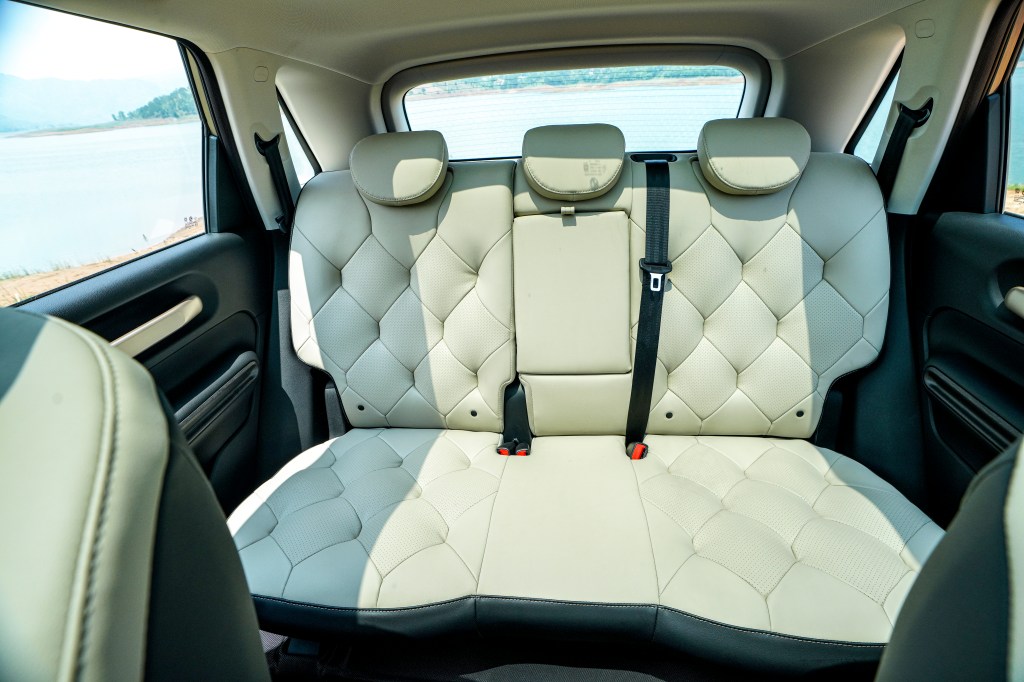
Step inside the MG Windsor EV PRO and you will be welcomed into a premium passenger cabin with aero lounge seats that can be reclined up to 135 degrees, coupled with the expansive infinity view glass roof, adding to the business class experience.
The cabin is spacious with adequate head, shoulder and knee room for both front and rear passengers along with easy ingress and egress. The seats are well bolstered & comfortable and wear an opulent look. The front seats are ventilated with the driver’s seat coming with a 6-way adjustable option.
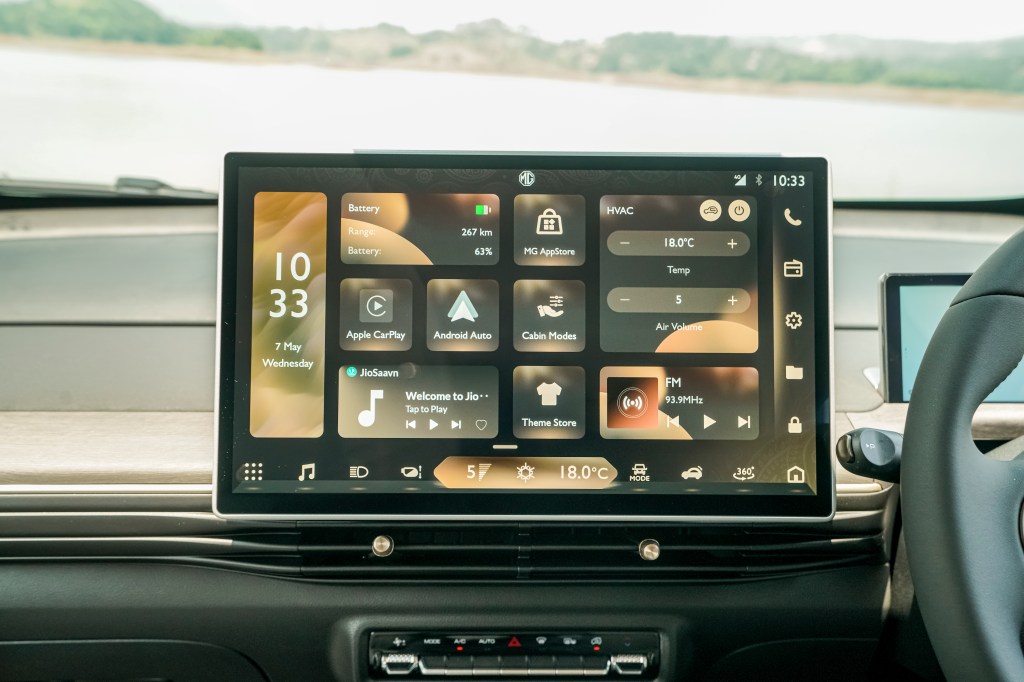
Immersive entertainment and smart connectivity features are powered by a massive 15.6-inch Grand View Touch Display in the central console. For music lovers, the MG Windsor PRO also comes equipped with nine speakers (4 speakers, 4 tweeters, 1 subwoofer) that make your listening experience more pleasurable.
The MG Windsor PRO also allows you to choose from an array of 256 ambient lighting options with auto change technology and make your drives express the way you feel. Other features in the MG Windsor PRO includes Wireless Android Auto & Apple CarPlay, multi-function steering controls, wireless smartphone charger, wooden finish highlights, driver armrest storage, and rear-centre armrest with cupholders – all of which makes the MG Windsor PRO an attractive proposition.
Over the standard MG Windsor EV, the Windsor PRO also gets additional features such as a powered tailgate and capabilities including vehicle-to-load (V2L enables you to use your vehicle to power appliances) and vehicle-to-vehicle (with V2V, your vehicle can juice up another EV).
Performance and Handling
The biggest update on the MG Windsor PRO is under the skin. The standard Windsor EV’s 38kWh battery makes way for a new 52.9kWh battery on the PRO. Consequently, the ARAI-tested range figure jumps to 449km on a single charge from 332km on the standard Windsor EV. Impressive performance is derived through four driving modes (Eco+, Eco, Normal and Sport) that deliver 100KW (136PS) power and 200Nm of instant torque, similar to the standard Windsor EV. The estimated charge time from 0-100% is around 9.5 hours. The prismatic cell battery meets the optimal safety standards and is certified to operate with durability and stability.
The throttle response is great with almost no power lag. Driving the Windsor PRO both within the city and on the highway feels like a breeze. The MG Windsor PRO stays firmly planted on the ground even while navigating tight corners. The engineers at MG have achieved a commendable balance between good ride and handling. The suspension set up featuring MacPherson strut in the front and torsion beam at the rear is well tuned for Indian road conditions and absorbs the undulation on the road with relative ease. Like the standard Windsor EV, the Windsor PRO promises to be a good city car while also proving its worthiness on the highway.
Safety
With growing awareness among consumers, safety has emerged as one of the top priorities of carmakers around the world. The MG Windsor PRO comes with 6 airbags (dual front, side & curtain) as standard across all variants. It also features 360° surround view cameras and rear parking sensors to ease your parking woes in tight spaces especially in the crowded neighbourhood within the city. Electronic stability programme, electric parking brake auto hold, hill-start assist control, auto dimming inside rear-view mirror, hill descent control, rain sensing wipers, and tyre pressure monitoring system are some of the other features in the MG Windsor PRO EV which assures you of great all-around safety. In addition to the aforementioned, the Windsor PRO builds on the standard Windsor EV with radar-based advanced driver assistance systems (ADAS). The ADAS suite includes intelligent light assist, lane keep assist, emergency braking and adaptive cruise control.
Battery-as-a-Service (BaaS)
For the first time in India’s passenger vehicle segment, JSW MG Motor India has introduced an innovative ownership plan through Battery-as-a-Service (BaaS) offering, which makes owning an electric CUV at the price of a manual engine-based compact SUV possible. This flexible ownership program eliminates the upfront cost of the battery, enabling customers to pay only for its usage. Essentially, buyers pay a nominal fee per kilometre driven, which is 40% of the fuel costs of conventional vehicles. This model significantly reduces the initial acquisition cost and lowers the per-kilometre expense, ensuring an economical and hassle-free ownership experience.
In addition, the company is offering a first-of-its-kind lifetime battery warranty to the first owner of MG Windsor. With the eHUB by MG app, the company is offering one year of free public charging, making it easier than ever for Windsor owners to power up anytime, anywhere. JSW MG Motor India is also introducing its 3-60 assured buyback plan for the Windsor which ensures that it will retain 60% of its value after 3 years/45,000kms.
Verdict
If you were attracted by MG Windsor PRO’s tempting INR 17.49 lakh launch price, you should know that you have missed the bus as the introductory price was only valid for the first 8,000 customers. JSW MG Motor India has hiked the Windsor PRO’s ex-showroom price to INR 18.10 lakh, which is INR 2.1 lakh higher than the standard Windsor EV. While the Windsor PRO gets a few additional features, however, the real hook is the enhanced 117km drive range over the standard Windsor EV which has got everyone talking. Therefore, for any car buyer intending to use their vehicle for intercity commutes or weekend getaways, the Windsor PRO is the natural choice.



 Power Drive