Volvo Cars To Radically Reduce Carbon Emissions As Part Of New Ambitious Climate Plan

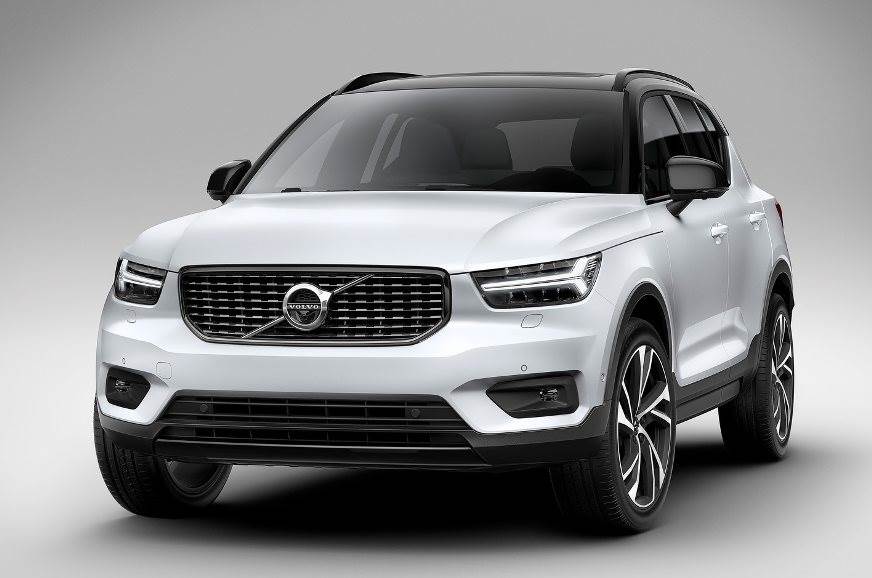
Volvo-XC40

Volvo Cars has launched one of the most ambitious plans in the automotive industry, aiming to reduce its lifecycle carbon footprint per car by 40 per cent between 2018 and 2025. This is the first, tangible step towards Volvo Cars’ ambition of becoming a climate neutral company by 2040.

The plan represents concrete actions in line with the global Paris climate agreement of 2015, which seeks to limit global warming to 1.5 degrees Celsius above pre-industrial levels.

Volvo Cars’ 2040 ambitions go beyond addressing tailpipe emissions through all-out electrification, another area in which the company is at the forefront. It will also tackle carbon emissions in its manufacturing network, its wider operations, its supply chain and through recycling and reuse of materials.

As a near term step towards its 2040 ambition, Volvo Cars is implementing a set of ambitious, immediate measures in its efforts to reduce the company’s lifecycle CO2 footprint per car by 40 per cent between 2018 and 2025. At that point in time, the company also aims for its global manufacturing network to be fully climate neutral.

“We are transforming our company through concrete actions, not symbolic pledges,” said Håkan Samuelsson, CEO. “So at Volvo Cars we will address what we control, which is both our operations and the tailpipe emissions of our cars. And we will address what we can influence, by calling on our suppliers and the energy sector to join us in aiming for a climate neutral future.”

To realise the significant 40 per cent reduction of its CO2 footprint per car by 2025, the company has devised a number of ambitions for different parts of its operations. The previously communicated goal of generating 50 per cent of global sales from fully electric cars by 2025 is a prominent one, which would result in a 50 per cent reduction in tailpipe carbon emissions per car between 2018 and 2025.

Other short-term ambitions include a 25 per cent reduction of CO2 emissions related to its global supply chain by 2025, a 25 per cent share of recycled plastics in new Volvo cars by 2025 and a 25 per cent reduction of carbon emissions generated by the company’s overall operations, including manufacturing and logistics.

Volvo Cars was the first conventional car maker to commit to all-out electrification and phasing out cars powered only by an internal combustion engine. As of this year, every new Volvo launched will be electrified and the company today also launches its first fully electric car, the XC40 Recharge. Starting with the XC40 Recharge, Volvo Cars will disclose the average lifecycle carbon footprint of each new model.

The XC40 Recharge is the first car in Volvo Cars’ new Recharge car line. Recharge will be the overarching name for all chargeable Volvos with a fully electric and plug-in hybrid powertrain. The Recharge car line aims to further boost sales of Volvo Cars’ electrified cars and encourage plug-in hybrid drivers via incentives to use Pure mode as much as possible.
Mercedes-Benz Introduces The Iconic G-Class In India

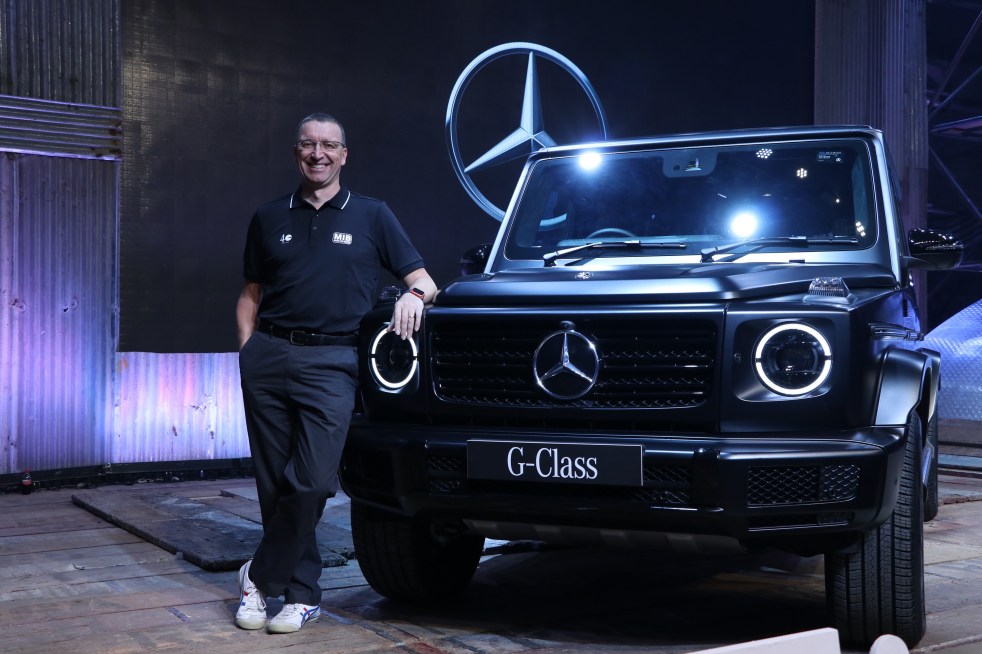
Mr. Martin Schwenk - MD & CEO - Mercedes-Benz India with the new G350d (1)Martin Schwenk, MD and CEO, Mercedes-Benz India launched the new Mercedes-Benz G 350 d in Mumbai.

German luxury car manufacturer Mercedes-Benz has further bolstered its strong SUV portfolio by adding the power of diesel to its iconic G-Class. The G-Class is a cult performance off-roader, which has set high benchmark for many vehicles. With the introduction of the new G 350 d, the off-roader becomes the most efficient “G” ever.

“The G-Class has been unparalleled and unrivalled around the world, since its inception in 1979. It is the benchmark amongst luxury off-road vehicles. Today, Mercedes-Benz offers the fans and customers in India the first ever diesel G-Class, the Mercedes-Benz G 350 d. The G 350 d with limitless customization possibilities is positioned as a lifestyle vehicle for aficionados, who want a highly personalized vehicle, which is an expression of their dynamic personality. The famed off-roading capabilities of the G-Class adds to the dynamic appeal of the vehicle. With a rich history of over 40 years, the G-Class has carved a niche for itself in a rather competitive market segment. We are sure the zealous fans of the G-Class will welcome their favourite luxury off roader in its new guise.” Martin Schwenk, MD and CEO, Mercedes-Benz India said at the much-awaited launch.

He added, “We start our product offensive for 2019 today, and there cannot be a better vehicle to make an impression other than with the iconic G-Class. With the new G 350 d, we are glad to offer over 15 specialty and AMG cars for our discerning customers. The G-Class is an outstanding vehicle that combines serious off-roading capabilities combined with daily driving pleasures. The launch of this vehicle further cement our ‘Top of pyramid’ product strategy for India. We have an exciting product offensive lined up for Q4 and we are confident of maintaining our leadership position in the luxury segment.” he added.

Over a million possible combinations of G-Class can be created by combining the series and G maufaktur options, resulting in a G-Class, which could be the only one of its kind. The G-Class’ individuality is reflected in the G manufaktur philosophy. The G manufaktur uses only the finest materials: care, craftsmanship and time. The design gene is particularly prominent in the DNA of the G-Class. Equipment varies exclusively for the new G-Class, in which everything is perfectly matched and tailored to the highest level. Over a million possible combinations of the G-Class can be created by combining the series and G maufaktur options.

• The G 350 d comes with special Nappa Leather

• Be it the exterior or interior, many details of the new G-Class are hand-crafted

• A total of at least 100 hours is required to build the G-Class

• Experienced artisans pay attention to every detail when making the seats. The result is highly exclusive collector’s items fashioned by the hands of craft masters

The G-Class is not the only passenger car model series with the longest production run in the history of Mercedes-Benz, but also the forefather of all SUVs bearing the three-pointed star. A torsional rigid ladder-type frame of high-strength steel and a mounted body of composite construction provides the basis for the enormous off-road capabilities of the new G 350 d. This design is considerably more robust and suitable for off-road operations than a uni-body construction. The body shell consists of various grades of steel while the wings, bonnet and doors are made of aluminium.

The new Mercedes-Benz G 350 d is priced starting at Rs 1.5 crores ex-showroom, India.

Datsun India Launches GO And GO+ With CVT Option

bk_MY18_K2_IND_EXT_360_EBB_31_Final_Red

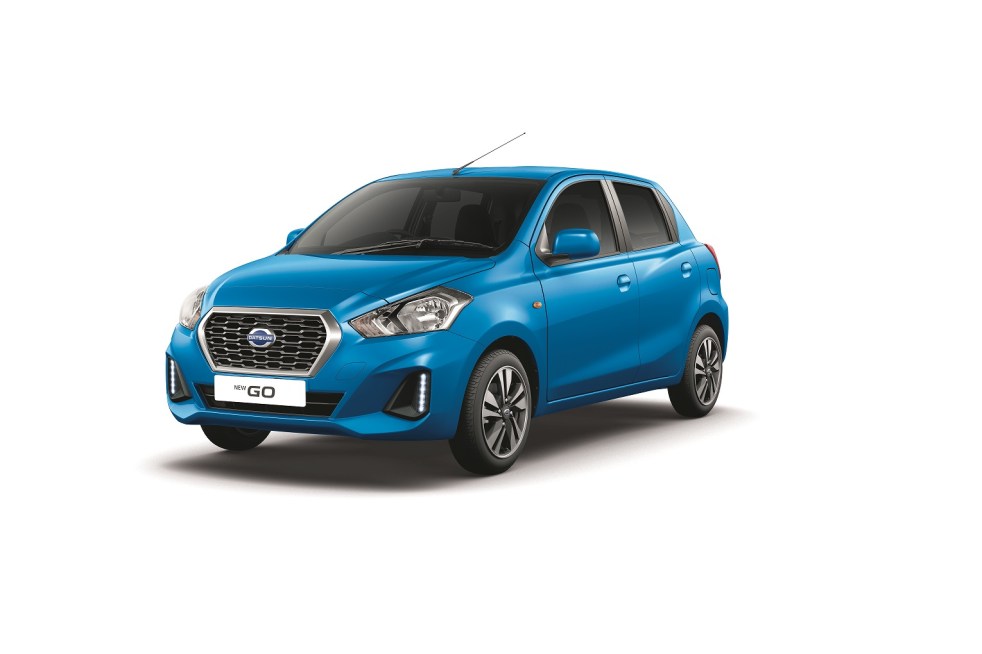
Nissan India has launched the CVT version of its Datsun GO and GO+ at an introductory price of Rs 5.94 lakh and Rs 6.58 lakh respectively. Datsun GO and GO+ are the first models in their respective segments introduced with CVT (continuously variable transmission) – Nissan’s globally acclaimed transmission technology. Deliveries to new owners will commence immediately at all Nissan and Datsun dealerships across the country.

“In line with our mission of progressive mobility, we are introducing Nissan’s proven CVT technology in Datsun GO and GO+ to cater to the demand of the customers looking for stress free drive experience. With host of first-in-class and best-in-class features, Datsun GO & GO+ offer the best value proposition in its segment”, said Rakesh Srivastava, Managing Director, Nissan Motor India Pvt. Ltd.

The new CVT in GO and GO+, offers smoother shifting of gears and better city, highway and hill driving. Unlike other automatic transmission technologies, there is no lag while accelerating providing better control. With improved insulation, the Datsun GO CVT and GO+ CVT give out low engine noise in the cabin, even during high acceleration.

bk_MY18_K2+_IND_EXT_360_CNA_32_Final_Blue

The Sports Mode is yet another first for an automatic transmission in this segment. This mode enhances the overall driving experience with more power specially during overtaking.

Datsun GO CVT and GO+ CVT now come with enhanced crash performance with front and pedestrian protection reinforcement, side crash performance and roof reinforcement. First in segment Vehicle Dynamic Control (VDC), dual bags, anti-lock braking system with EBD and BA, reverse parking sensors and follow-me-home headlamps make GO and GO+ one of the safest cars in the segment. An automatic speed sensing door lock has also been added, which is applicable to all variants.

The Datsun GO CVT and GO+ CVT models come in six colour schemes: Ruby Red, Vivid Blue, Bronze Grey, Amber Orange, Crystal Silver and Opal White.

Additionally, both Datsun GO CVT and GO+ CVT models will be available with a standard two-year warranty package. Datsun customers will have an option to extend the package up to five years with a nominal fee.

Price Range:

Model Variant
T T(O)
Datsun GO CVT  5,94,464 6,18,015
Datsun GO+ CVT  6,58,361  6,80,153

Heavy Motor Vehicle Drivers Conclude 45 Days Training Under Bridgestone India

sarthi

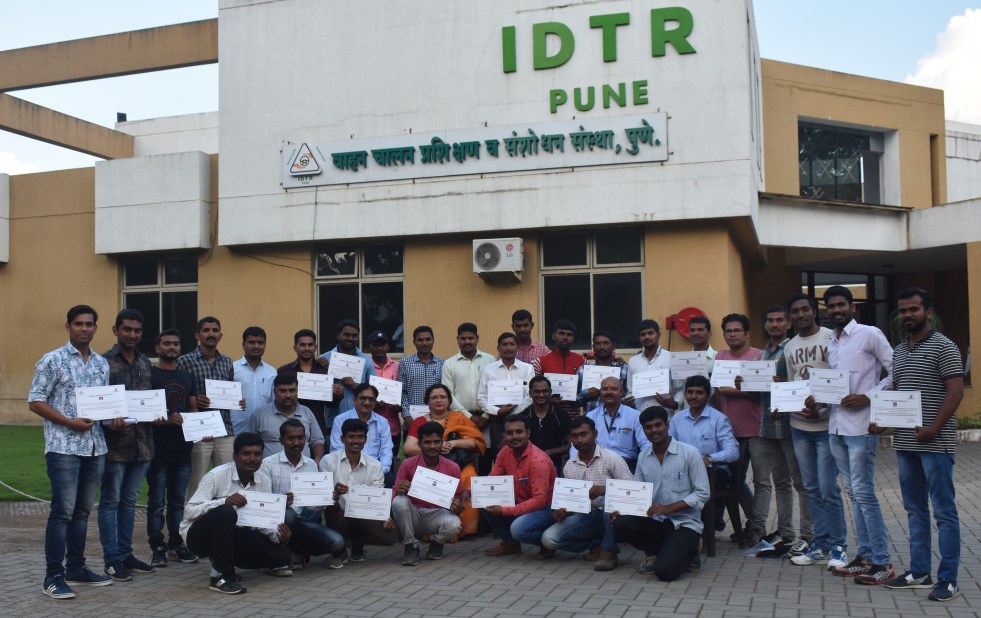
Bridgestone India in conjunction with Institute of Driver Training & Research (IDTR) Pune concluded the 13th residential programme to train Heavy Motor Vehicle Drivers. Ajay Sevekari – Member of the Board of Directors joined the ceremony on Bridgestone India’s behalf. The 45 day, fully sponsored training by Bridgestone India, is called Sarthi.

Sarthi is focused on giving better employment opportunities to drivers, enhancing their driving as well as soft skills and also educating them about safe driving practices while on the road. The program includes classroom and on track training, experience simulators and is designed to enhance driving skills and technical orientation. The program also coaches on first aid, road safety, meditation, financial literacy, and HIV/AIDS awareness. As of date Sarthi has trained over 308 drivers.

“India produced one million commercial vehicles in 2018-19. There is a growing demand for trained drivers who not only have proper driving skills but also the right attitude, while operating heavy vehicles on the highways. Through this initiative, we are able to create skilled workforce which will bridge the gap between demand and supply of skilled drivers and enable safer mobility on Indian roads. This is ‘Our Way to Serve’ our people and communities. We are glad to have a dedicated partner like Institute of Driver Training & Research working with us to contribute on this front”, commented Parag Satpute, Managing Director, Bridgestone India.

The training also includes two days session on tyre maintenance and safety at Bridgestone India Chakan campus, facilitated by subject expert employee volunteers of the company. Most of the successful trainees have been placed with renowned fleet owners and also with MSRTC.

This training program is fast gaining popularity amongst rural youth from some of the most under served and distant areas. Initially, most of the enrollments were from Vidarbha and Marathwada regions of Maharashtra, however, the recent batches have enrollments from UP and Rajasthan.

Congratulating the trainees Mukund Deo, Secretary IDTR said, “I am totally convinced, going by the records of skills developed and jobs provided to the needy that this CSR project has 100% acted consistent with the aim with which the government made this provision for corporates. This is really a great achievement, because, generally there is initial enthusiasm while starting any new project but it diminishes over a period of time, however, this partnership has been steady and consistent, Bridgestone and IDTR remain committed to work together in this partnership and increase our outreach.”

70 Years Ago, The United Kingdom Handed Over Trusteeship Of Volkswagen To The Federal Republic Of Germany

1803614_DB2019AL02214_large

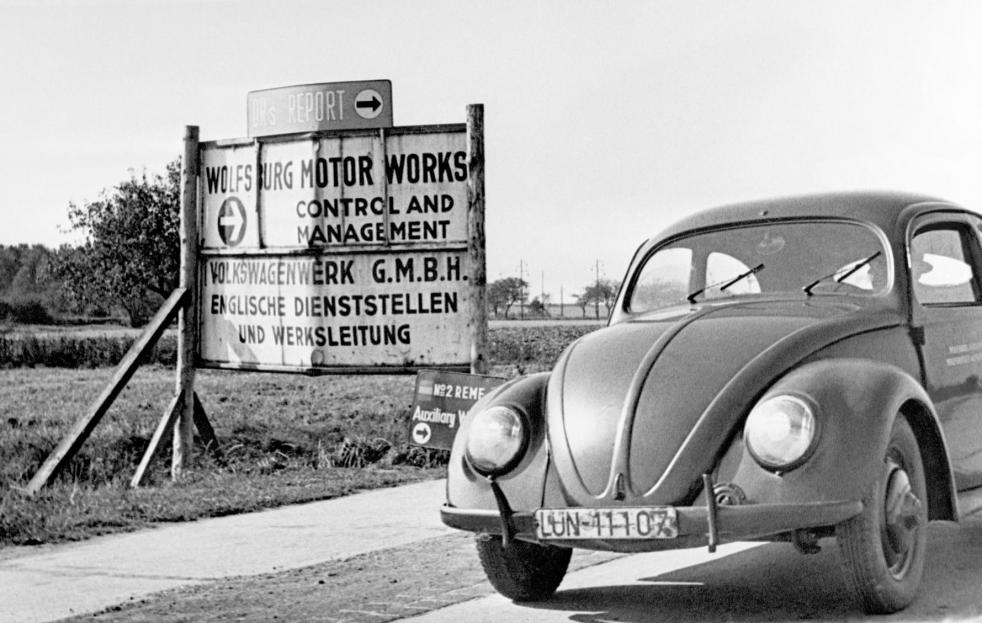
70 years ago, on October 8, 1949, the British Military Government handed over trusteeship of Volkswagenwerk GmbH to the Federal Republic of Germany. The young West German state, which had only been founded shortly before with the promulgation of the Basic Law on May 23, 1949, assigned responsibility for the administration of the company to the state of Lower Saxony.

The British had laid the essential foundations for the later global success of the Beetle and of Volkswagen itself when they transferred Volkswagenwerk GmbH and the Wolfsburg plant to German control precisely 70 years ago.

The British Royal Electrical and Mechanical Engineers (REME) were responsible for the Wolfsburg plant from June 1945. Senior Resident Officer Major Ivan Hirst came to the plant in August and immediately started to establish a functioning automobile plant for the VW Beetle (Type 1) with pragmatism and a farsighted approach.

1803620_DB2019AL02217_large

As a company under British military management, Volkswagenwerk was able to take a pole position from which it was able to start immediately in Germany’s nascent automobile society and to become a symbol of West German reconstruction and the German economic miracle.

The British are celebrating the successful mission in Wolfsburg of their predecessors headed by Major Hirst at the present REME headquarters in Lyneham, Wiltshire, in the south of England on October 8. About two weeks ago, Colonel Andy Thorne, CEng, Deputy Chief of Staff British Forces Germany, and Lieutenant Colonel Tony Maw, MBE CEng FSOE, Officer Commanding the Germany Enabling Office, were guests at the works meeting in Wolfsburg. At the meeting, the workforce, employee representatives and management commemorated the transfer of Volkswagen to German control 70 years ago together with Stephan Weil, Minister President of Lower Saxony.

Fully Electric Volvo XC40’s New Infotainment System To Be Powered By Android With Google Technologies Built-In

Fully electric Volvo XC40 introduces brand new infotainment system

Volvo Cars is fundamentally rethinking infotainment in the forthcoming fully electric Volvo XC40. Powered by Android, the new infotainment system offers customers unprecedented personalisation, improved levels of intuitiveness and new embedded Google technology and services.

Volvo Car Group is the first company to team up with Google on integrating an infotainment system powered by Android, with the Google Assistant, Google Maps and the Google Play Store built-in. The two companies have been development partners for the past several years.

The new system offers full integration of Android Automotive OS, Google’s open-source Android platform, with real-time updates to services such as Google Maps, Google Assistant and automotive apps created by the global developer community.

The electric XC40 is also the first Volvo that will receive software and operating system updates over the air, placing Volvo Cars at the forefront of automotive connected services. The fully electric XC40 will keep evolving and improving over time, rather than it being at its peak when it leaves the factory.

“We are finally giving you the same experience in your car that you’re used to on your phone, but adapted for safe interaction while driving,” says Henrik Green, Chief Technology Officer at Volvo Cars. “And by introducing over-the-air updates for everything from maintenance to completely new features, the car can stay as fresh as your other digital products, always with the latest and greatest features.”

One of the best features of Android Automotive OS is that it is an Android operating system familiar to millions of developers, tailored to run in the car. Technology and services created by Google and Volvo Cars developers are embedded in the car, while additional music and media apps optimised and adapted for cars will be available through the Google Play Store.

The Google Assistant allows customers to get things done using just their voice for in-car functions such as controlling temperature, setting a destination, playing their favourite music and podcasts on apps like Spotify, and keeping in touch by for example sending messages.

This integration contributes to reducing driver distraction, helping drivers keep their hands on the wheel and eyes on the road. The Google Assistant also allows you to interact with your smart-home devices from your Volvo car.

Google Maps will be able to provide refreshed map and traffic data in real time, keeping drivers informed about upcoming traffic situations and proactively suggesting alternative routes, as well as suggesting the nearest charging station en route.

This same rich and fresh map data will be used to improve the capabilities of the XC40’s Advanced Driver Assistance Systems (ADAS) by providing important information such as speed limits and curves in the road to the car.

Volvo Cars also continues to develop software and connected services, using its growing force of software engineers and its digital services platform Volvo On Call.

For example, the new infotainment system will be fully integrated with Volvo On Call, offering new features such as monitoring battery status and charging levels.

Volvo On Call classics such as pre-heating your car on a cold winter’s day, finding your car in a large parking lot, remote locking and unlocking and car sharing via a digital key are also included.

The fully electric XC40 will be first shown to the public on October 16.

Automotive Dealers Face Headwinds As Service Spend Declines, J.D. Power Finds

car-servicing-inside-workshop

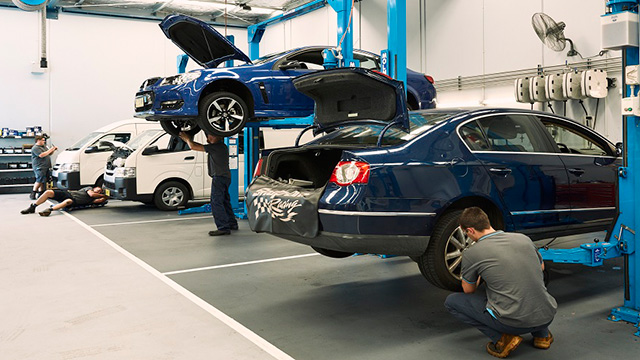
With India experiencing a decline in sales volume and a drop in average after-sales spend, automotive dealers are feeling the effects of a difficult year, according to the J.D. Power 2019 India Customer Service Index (Mass Market) Study, released today.

The study finds a 10 per cent drop in the average amount spent per service visit compared with 2018. On average, customers spend Rs 5,000 per service visit, compared with Rs 5,600 in 2018. The decline is greatest among after-sales customers who are 39 years or older, whose spend declined 17 per cent year over year. The decline in service revenue is significant for dealers as 31 per cent of their profits are generated from after-sales vs. 25 per cent from sales.

“Typically, dealers rely on service work to keep their businesses profitable especially during a downturn in new-vehicle sales,” said Kaustav Roy, Director and Country Head for India, J.D. Power. “A drop in average service spend bodes negatively for overall dealer profitability. More than ever, dealers need to focus on delivering an excellent service experience to retain customers and encourage loyalty and advocacy.”

For the customers who rate their experience in the top quartile of satisfaction (929 points and above on a 1,000-point scale), 89 per cent are more likely to return for post-warranty service work. Similarly, 90 per cent of customers in the top quartile will recommend the service centre to a friend or relative.

Following are additional key findings of the 2019 study:

  • Reluctance to go digital: After-sales customers rarely use digital channels to set appointments despite indicating higher satisfaction when used. Satisfaction is 875 among the 1 per cent of customers who use a manufacturers’ app and 868 for the 2 per cent who use a dealers’ website. For the majority (81 per cent) who still prefer to call a dealer, satisfaction is 831. Customers who walk in without an appointment (14 per cent) are the least satisfied (786) across all appointment types.

  • Fewer customers stay at the dealership: More than one-fifth (21 per cent) of customers stay at the service centre during their visit, a decline of 10 percentage points from 2018. However, satisfaction is typically higher among customers who wait for their vehicle service to be completed (837) vs. those who opt to leave and then return (821).

 Study Rankings

Hyundai ranks highest in overall service satisfaction with a score of 903. Tata (870) ranks second and Mahindra (863) ranks third.

The J.D. Power 2019 India Customer Service Index (Mass Market) Study is based on responses from 7,177 new-vehicle owners who purchased their vehicle between March 2016 and August 2018. The study was fielded from March through August 2019.

Now in its 23rd year, the study measures new-vehicle owner satisfaction with the after-sales service process by examining dealership performance in five factors (listed in order of importance): service quality (30 per cent); service initiation (18 per cent); service facility (18 per cent); service adviser (17 per cent); and vehicle pick-up (17 per cent). This study examines service satisfaction in the mass market segment.

The study also includes the Net Promoter Score (NPS) which measures new vehicle owners’ likelihood to recommend their vehicle brand on a 0-10 point-scale.

Nissan India To Increase Up To 5% Price On Datsun GO And GO+

New colour launched for Datsun GO range - ‘Vivid Blue’

Nissan India today announced a price increase on Datsun GO and GO+ up to 5 per cent.

”With safety at heart, Datsun is committed to offering accessible and value-for-money products powered by Japanese engineering. Owing to increase in multiple costs, we are making a planned price incerase to our Datsun GO and GO+ models.” commented Rakesh Srivastava, Managing Director, Nissan Motor India Pvt Ltd. 

Datsun GO and GO+ in T & T(O) grades now come with the first-in-segment Vehicle Dynamic Control (VDC).

Datsun India Opens Pre-Booking For The GO CVT And GO+ CVT

New colour launched for Datsun GO range - ‘Vivid Blue’

Nissan India has announced for its Datsun brand the bookings for the CVT variants of Datsun GO and GO+. Customers can pre-book their Datsun GO CVT and GO+ CVT with a fully refundable down payment of Rs 11,000 at any of the Nissan and Datsun dealerships across the country.

Rakesh Srivastava, Managing Director, Nissan Motor India Pvt. Ltd. said,” We are introducing Nissan’s proven CVT technology in Datsun GO and GO+ to cater to the demand of customers pan India. The new Datsun GO CVT and GO+ CVT is the first-in-segment with the USP of 5S – SPACE, SAFE, SMART, STYLE and SURE (Japanese technology). We are confident that these class leading offerings will surely delight the customers.”

Introducing New Datsun GO+ with Vehicle Dynamic Control technology

The Datsun GO and GO+ CVT also offers enhanced crash performance with front and side crash performance, roof and pedestrian protection reinforcement. The first-in-segment Vehicle Dynamic Control (VDC), dual airbags, anti-lock braking system with EBD and BA, engine immobilizer, reverse parking sensors and follow-me-home headlamps speed sensing auto door locks make Datsun GO CVT and GO+ CVT one of the safest cars in the segment.

Shell Ducati Riders’ Day Thrills Attendees At BIC

Image_01

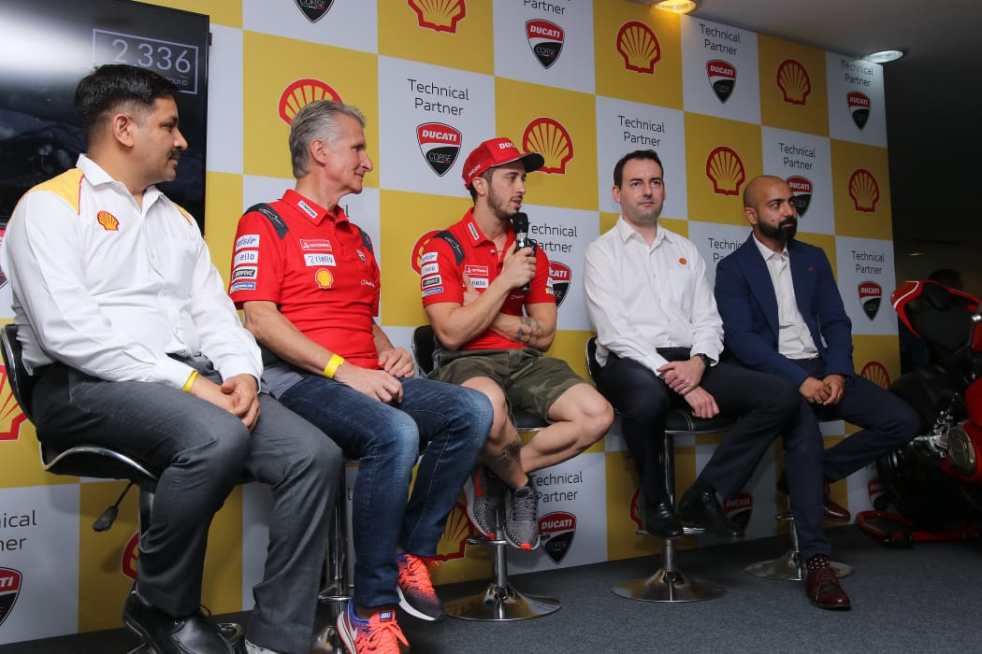
Celebrating their long-standing technical partnership, Shell Lubricants and Ducati, organised the first edition of Shell Ducati Riders’ Day, a thrilling experience for India’s passionate rider community. This came as the latest endeavour by the two brands to commemorate riders’ passion and establish a stronger connect with their customers.

With over 500 attendees, the event came as the final leg of Shell Lubricants India’s flagship ‘MotoSport Promo Campaign’. It also saw the company celebrate the culmination of its unique limited-edition Advance promo pack series with attractive packaging and  surprise prizes. Over 25 Shell Advance consumers got a chance to attend the event.

The event also witnessed Ducati India unveil its official riding team for the 2019 competitive season with Rajini Krishnan, the renowned multiple national and international championship winner, one of the brightest and youngest talent  Dilip Lalwani, and India’s only liter-class female rider Neharika Yadav. Additionally, Aakash Rajshakha and Bhumik Lalwani were also named as the official pilots for the North Star Automotive Ducati’s dealer partner team.

The event saw Ducati create a thrilling riding experiences with over 100 Ducati riders. Ducati DRE-Certified trainers provided exclusive training to participants for the Ducati Road Academy to improve riders’ skills, thereby ensuring safe riding. This was followed by the Ducati Open Track Day which provided all Ducati superbike owners, excluding the Scrambler range, an opportunity to ride on the track.

Facilitated by Shell Lubricants, MotoGP rider Andrea Dovizioso also made his first ever appearance in India at the event. Dovizioso spoke about his experiences with Ducati on intensely competitive tracks and the crucial role played by engine oils in maintaining a bike’s health. He further highlighted how Shell Advance Oils provide protection even in the most adverse conditions, thus providing riders the courage to ‘Outride Anything’.

The partnership between Shell and Ducati is one of the most successful technical collaborations since 1999 wherein both majors have been co-learning from extreme testing environments on and off the racetrack. The transfer of knowledge gained from the track to Shell’s products for the road is central to the technical partnership with Ducati.

Shell Advance, the only motorcycle oil recommended by Ducati, is essential to powering Ducati bikes on the track in extremely testing environments and this itself is a testament to its superior on-road performance. Ducati not only uses Shell products on the track, but also chooses Shell Advance oil and Shell V-Power fuel as the first fill for every Ducati bike that leaves its factory in Bologna, Italy.