Nissan India Rolls Out ‘Red Weekends’

Nissan Kicks 1

Nissan India has announced ‘Red Weekends’, consumer promotion initiative, featuring a host of lucrative offers on Nissan and Datsun models. During December, customers can visit any Nissan dealership and participate in exciting activities to win branded merchandise and more. During the ‘Red Weekends’, buyers can also win attractive gifts ranging from instant gift vouchers amounting to Rs 1 crore (total cumulative figure) across Nissan and Datsun models.

During the ‘Red Weekends’ on Nissan Kicks customers can avail attractive cash discounts up to Rs 40,000, exchange bonus up to Rs 40,000 and corporate discounts up to Rs 10,000.

‘Red Weekends’ also provide an opportunity to the first-time car buyers looking to upgrade from two-wheeler to a new Datsun redi-GO on an attractive upgrade without exchanging the two wheeler. Datsun GO and GO+ with CVT also come in with attractive offers including exchange bonus presenting the best value proposition to the customers in the segment.

Elaborating on these exciting offers, Rakesh Srivastava, Managing Director, Nissan Motor India Pvt. Ltd. shared, “Nissan as a customer centric brand is offering the highest value proposition to the customers through Red Weekends’ in a very innovative way to bring New Year festivities through Nissan and Datsun products with the first-time best finance offer of 6.99%.”

To ensure ‘Complete Peace of Mind’ to its customers, Nissan India is offering extended warranty up to Rs 20500 on the Nissan Kicks with 24*7 roadside assistance in 1500+ cities.

Claudio Domenicali Is The New President Of Motor Valley

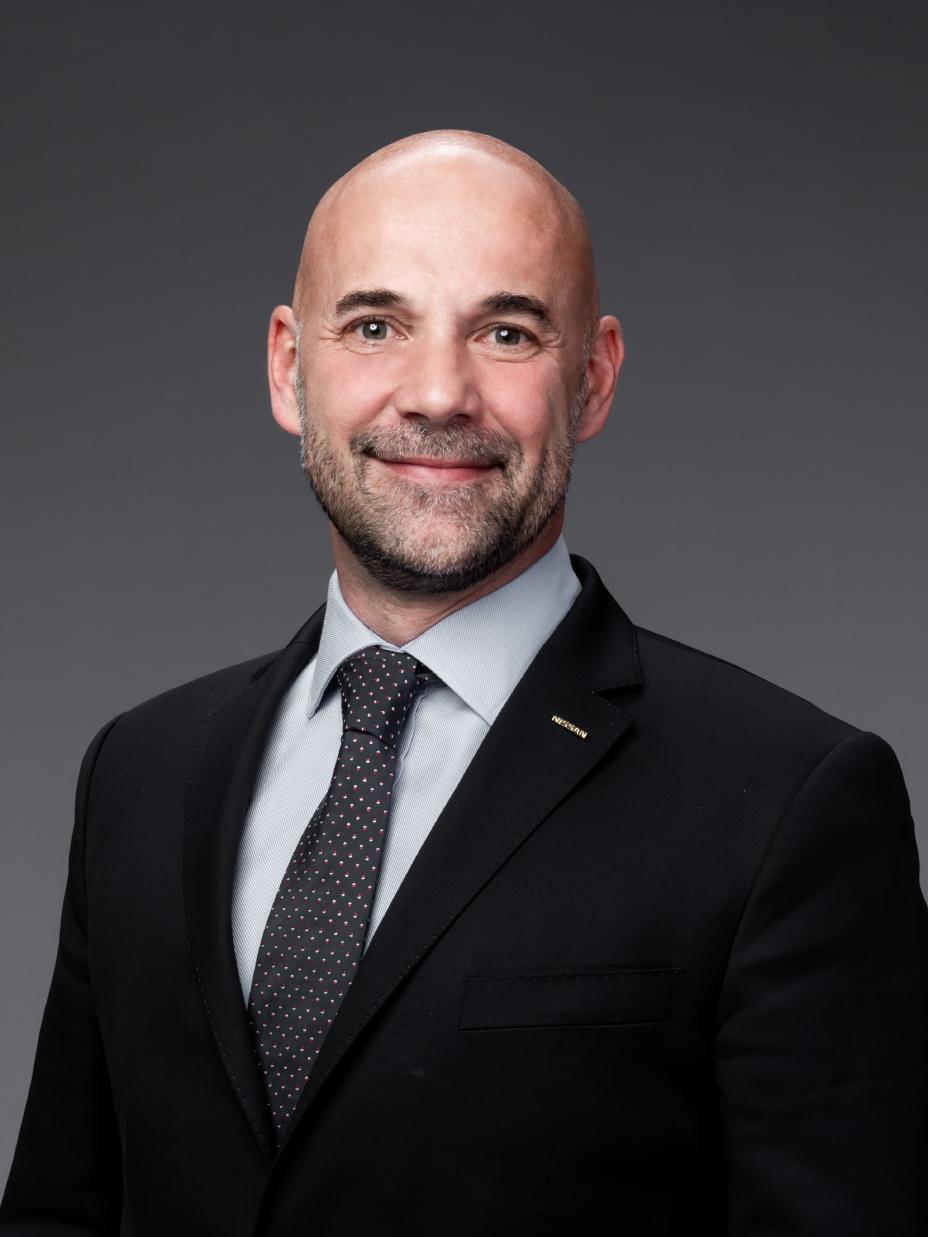
04_ClaudioDomenicali_UC125281_High

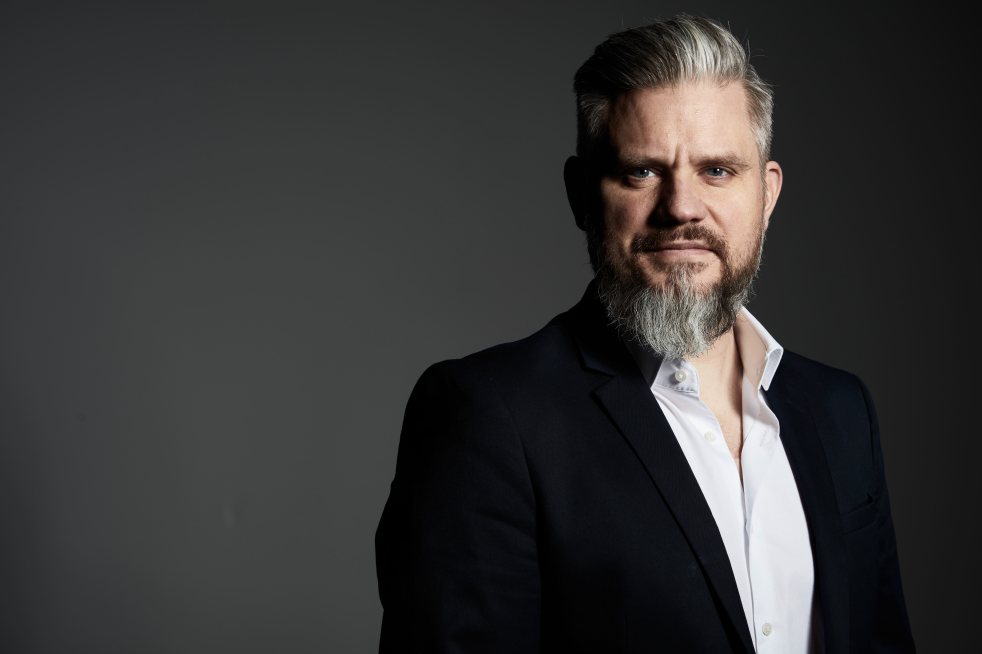
A press conference has been held at the Ducati Auditorium in Borgo Panigale to officially announce Ducati CEO Claudio Domenicali’s new role as President of the Motor Valley Association. The event was attended by delegates from the district’s companies and international race circuits, Regional Institutes and the media.

The Association unites all the car and motorcycle brands from Italy’s “Motor Valley”, in Emilia-Romagna. Motor Valley – a concentration of brands, private collections, international race circuits and specialised training centres like no other on the planet – works alongside the Region to make the very best of this heritage in terms of tourism.

“Motor Valley brings together a series of brands that are unique, renowned and appreciated around the world for their design, technology and performance, all of them located within a radius of just 150 km. As Ducati, we take pride in being part of this association, just as I am personally proud to take on the Presidency. For me, accepting this role is an act of responsibility and recognition towards an extraordinary part of Italy that has given me so much”, stated Claudio Domenicali, CEO of Ducati and President of Motor Valley. “This Region enjoys an unparalleled academic culture and unmatched motoring and technological skills. It’s also a magnet for enthusiasts, new talent and businesses and as such deserves our wholehearted support.”

Motor Valley encapsulates Made-in-Italy automotive and industrial excellence: it’s a project that highlights the area’s capacity to network and make the most of internationally unique qualities. It centres on the car and motorcycle industry, the beating heart of the Region’s economy, on its excellent universities and its truly global appeal.

Dallara, Ducati, Ferrari, Lamborghini, Maserati and Pagani are just a few of these Motor Valley brands, loved by fans all over the world. Motor Valley also includes 15 specialised museums (such as the Enzo Ferrari Museum in Modena, the Ferrari Museum in Maranello, the Automobili Lamborghini Museum, the Ferruccio Lamborghini Museum, the Ducati Museum in Borgo Panigale and the Horacio Pagani Museum in Modena), 16 private collections and 4 racetracks (the “Riccardo Paletti” circuit in Varano de’ Melegari, the Modena racetrack in Marzaglia, the “Enzo e Dino Ferrari” circuit in Imola and the Marco Simoncelli Misano World Circuit at Misano Adriatico).

“Emilia-Romagna’s Motor Valley is a concentrate of talent, know-how, flair, design, industrial prowess, craftsmanship, innovation and research, making it unlike anywhere else in the world”, points out the Region’s President, Stefano Bonaccini. “It’s dream brands fly our Region’s flag internationally, attracting visitors from all over the globe. It does so thanks to the effective teamwork between local institutions and private companies that has allowed us to build a fascinating association of 4 international racetracks, 6 specialised training centres, 6 world-leading car and motorcycle makers, 11 museums, 16 collections, 7 key industry players and 188 sports teams that combines culture, entrepreneurship and speed. It’s a district that – together with Food Valley, UNESCO World Heritage Sites and the beauty of the Apennine Mountains and the Po Delta – is a global magnet for tourists. It’s also a district that provides work for thousands. It’s intertwined with the Region’s higher education and university network, as highlighted by MUNER – the Motorvehicle University of Emilia-Romagna that offers international automotive-dedicated degree courses, co-organised by the four universities of Emilia-Romagna and its deep-rooted car and motorcycle manufacturers – which is attracting many motivated, exceptional young people to our region from all over Europe and, indeed, the world. Today we welcome an enlightened, forward-thinking entrepreneur to the Presidency, a man whose experience and vision will do much to enhance this unique concentration of passion and expertise even further”.

The Osservatorio Turistico of Motor Valley – a study run by Unioncamere Emilia Romagna, Trademark Italia and Mailander – shows how Motor Valley attracted, in 2018 alone, 1.2 million overnight visitors, injecting over 300 million euros into the local economy (through revenues generated by events at the Imola and Misano race circuits and visits to company museums). Total visitor numbers to the district were about 1.8 million, of whom 44 percent were Italian and 56 percent foreign, with 1,190,000 overnight stays by visitors to museums and collections and spectators at racetrack events.

In Emilia-Romagna – Italy’s third most important region in the national car and motorcycle industry, preceded only by Lombardy and Piedmont – the automotive supply chain involves 16,500 businesses and over 66,000 employees, or 10 percent of the entire national supply chain. Yet Motor Valley also – and above all – plays a strategic role. A role that sees companies and universities committed at every level. A role that focuses on technological innovation, specialisation, research and development, with project members working closely alongside each other.

A tangible example is the MUNER (Motorvehicle University of Emilia-Romagna No Profit per Education) project. In 2017, the four regional universities (Bologna, Parma, Ferrara and Modena-Reggio Emilia) and the industry’s eight top companies, including Ducati, Ferrari and Lamborghini, created the Università dell’Automotive. It holds two courses that aim to train the automotive engineers of the future.

“Global competition is no longer between individual businesses but regional systems” underlined Andrea Pontremoli, CEO of Dallara and President of MUNER, “and regional systems consist of businesses, training facilities and institutions”.

Motor valley simply has to be experienced. And next year will offer a golden opportunity to do so in the form of the second Motor Valley Fest, to be held from 14 to 17 May in the heart of Modena.

Ducati Dominates The JK Tyre FMSCI Indian National Superbike Racing Championship

Ducati India’s Rajini Krishnan and Dilip Lalwani bagged 1st & 2nd position at JK Tyre FMSCI Indian National Racing Championship 2019- Race 2 on Panigale V4Ducati India’s Rajini Krishnan and Dilip Lalwani bagged 1st & 2nd position at JK Tyre FMSCI Indian National Racing Championship 2019- Race 2 on Panigale V4

Luxury motorcycle brand Ducati, swept the 1st and 2nd position at the 23rd edition of JK Tyre FMSCI Indian National Racing Championship 2019 at the Buddh International Circuit (BIC), securing the championship it won in 2018.

Ducati India’s pilots Rajini Krishnan and Dilip Lalwani successfully bagged the 1st and 2nd position in race 2, in the superbike category aboard the Ducati Panigale V4 S with both bikes running on OEM stock fitments respectively. Also, Neharika Yadav, India’s only woman to race in the 1000cc category, successfully finished the race on her 899 Panigale.

This year’s championship races witnessed over 11 Ducati superbikes on the track making Ducati the biggest superbike manufacturer on the grid. Additionally, Bhumik Lalwani – official pilot of Ducati India’s dealer partner team, Ducati North Star Automotive, secured the championship on Ducati Panigale V4 S, finishing in P1 and P4 in race 1 and 2 respectively and Dilip Lalwani, riding for team Ducati India, came 2nd overall in the championship.

On this occasion, Sergi Canovas, Managing Director, Ducati India said, “We are extremely proud of our riders’ performance at this year’s JK Tyre National Racing Championships which is not only one of the biggest but also one of the most competitive racing events in the country. I heartily congratulate Rajini Krishnan, Dilip Lalwani and Bhumik Lalwani for a stellar performance with the supremely capable Panigale V4 S being their weapon of choice. Personally, it feels great to witness and interact with the growing motor-sporting community in India. I am confident that next year will be even bigger and we can’t wait!”

TVS Sells 266,582 Units In November 2019

TVS Radeon Commuter of the Year Edition

TVS Motor Company registered sales of 266,582 units in November 2019 as against sales of 319,965 units in the month of November 2018. Shifting of Diwali season to the earlier month and planned adjustment of BS IV stocks is reflecting in the sales growth difference between November 2018 and November 2019.

Total two-wheeler registered sales of 249,350 units in November 2019 as against sales of 307,142 units in the month of November 2018. Domestic two-wheeler registered sales of 191,222 units in November 2019 as against sales of 260,253 units in the month of November 2018.

Motorcycle registered sales of 105,963 units in November 2019 as against sales of 119,883 units in November 2018. Scooter sales of the Company registered 84,169 units in November 2019 as against sales of 111,763 units in November 2018.

The Company’s total exports grew by 27 percent increasing from 58,476 units in November 2018 to 74,060 units in November 2019. Two-wheeler exports grew by 24 percent increasing from 46,889 units in November 2018 to 58,128 units in November 2019.

Three-wheeler sales of the Company grew by 34 percent increasing from 12,823 units in November 2018 to 17,232 units registered in November 2019.

Ford Makes Vehicle Ownership Hassle-Free For Specially-Abled Customers

EcoSport Thunder Edition Exterior

“There is no failure except failure to serve one’s purpose.” Driven by Henry Ford’s vision and wisdom, Ford India on World Disability Day announced a first-of-its-kind goodwill initiative that will make personal mobility hassle-free for customers with special physical needs.

As a goodwill gesture, the company announced that it will respect and protect the warranty on its vehicles retrofitted with Regional Transport Office (RTO) approved driver assistance kits and owned by specially-abled customers.

“At Ford, we’re committed to having a positive impact on the world, while continuing to build a successful business,” said Vinay Raina, Executive Director – Marketing, Sales and Service, at Ford India. “With our announcement today, we look to not help but empower differently-abled people to get behind the wheel of their favourite Ford without worrying about warranty or the cost of service.”

Driver assistance kits are a necessity for customers with special needs. Apart from the goodwill gesture on vehicles with special kits, a host of additional benefits offered on the purchase will include – special interest rates on auto loans, assistance in documentation and securing excise tax waiver as well as insurance concession from relevant authorities.


Production Of The T-Roc Cabriolet Begins In Osnabrück

The new Volkswagen T-Roc Cabriolet

At the ceremonial start of production in front of staff at the plant today, Andreas Tostmann, Volkswagen Management Board Member for Production, said: “The vehicle was in large part developed in Osnabrück. Now it is being produced here too. It is a genuine child of the site. A site that in the process has been able to fully demonstrate its strengths.”

He continued: “The team did a lot of work to bring the T- Roc Cabriolet here and are now finally reaping the reward for their efforts. Production, assembly and logistics have been extensively modernised for a high double-digit million euro amount and are of an excellent standard.” Tostmann went on to stress Volkswagen’s ongoing commitment: “Over the next five years too we will be investing further in the site on a similar scale – predominantly in the production of the T-Roc Cabriolet.”

Jörg Müller, the management team spokesperson, said: “We’ve got a long tradition of making convertibles here at the Osnabrück site. It’s one of our core areas of expertise.” He continued: “The entire team is proud to have the privilege of making the Volkswagen brand’s only convertible. We worked hard for it.”

The T-Roc Cabriolet is the soft-top variant of the successful Crossover T-Roc, which was added to the Volkswagen brand product portfolio in November 2017. The new convertible with SUV genes offers a striking design, elevated seating position and high level of functionality. Open-air enjoyment starts at the press of a button, with the soft top opening in just nine seconds.

Hyundai Motor Unveils ‘Strategy 2025’

Diagram_Hyundai Strategy 2025

Hyundai Motor Company today announced a bold roadmap to secure its position as a frontrunner in the future mobility industry.

Under the new roadmap, named Strategy 2025, the company will foster Smart Mobility Device and Smart Mobility Service as two core business pillars, and the synergy between the two pillars is expected to facilitate the company’s transition into a Smart Mobility Solution Provider.

The Smart Mobility Device business will supply products optimized for the services and lay the groundwork to help foster the service business. On the other hand, the Smart Mobility Service business will provide personalized contents and services on the devices to help secure a broader customer base.

Hyundai’s plans for Smart Mobility Device include a wide range of product groups beyond automobiles such as Personal Air Vehicle (PAV), robotics, and last-mile mobility. Hyundai will reinforce its manufacturing capabilities to build products that offer customers a seamless mobility experience.

Smart Mobility Service is a new area of business for Hyundai that will be fostered as a key strategic pillar for future businesses. Services and contents will be personalized and offered through an integrated platform to maximize value for customers.

The two pillars sit atop three key directions that the company has defined: enhancing profitability in internal combustion engine (ICE) vehicles, securing leadership in vehicle electrification, and laying the groundwork for platform-based businesses.

To materialize Strategy 2025 on the Device side, Hyundai will aim for growth that is balanced and steady, seeking balance between markets as well as models while prioritizing long-term sustainability over short-term targets. The company also plans to boost profitability by simultaneously pursuing enhanced value for customers and innovations in cost structures.

In particular, Hyundai aims to secure leadership in electrification by selling 670,000 electric vehicles annually and become one of the world’s top three manufacturers of battery and fuel cell EVs by 2025.

On the Smart Mobility Service side, the company will aim for a business model that combines product and service and launch an integrated mobility platform to offer customers personalized contents and services.

To this end, Hyundai will earmark KRW 61.1 trillion of investment until 2025 for research and development (R&D) and further exploration of future technologies. In the same timeframe, the company will target an operating margin of 8 percent in its automotive business and aim for a 5 percent share of the global vehicle market.

Separately, Hyundai announced plans to conduct a KRW 300 billion share buyback by February 2020 as part of its continuous efforts to boost shareholder and stakeholder value and enhance transparent communication with the market.

Hyundai’s comprehensive mid- to long-term strategic direction was presented by the company’s President and CEO Wonhee Lee during the “CEO Investor Day” forum held today in Seoul, which was attended by various stakeholders including shareholders and investors.

“The key to our future strategy is to focus on customers and to present the most desirable products and services. We want to offer smart mobility experiences that meet shifting needs of our customers by leveraging advanced technology,” said President Lee. “Transforming into a Smart Mobility Solution Provider with comprehensive mobility solutions that combine devices and services will be the centerpiece of Hyundai’s future strategy”

Strategy 2025

Smart Mobility Device

In the Smart Mobility Device domain, Hyundai has set out strategies to maintain its competitiveness in the core manufacturing business by bolstering profitability in ICE vehicles and securing leadership in electrification.

The company plans to achieve balanced and steady growth with a portfolio that takes into account various regional and product needs.

In particular, Hyundai will address vehicle electrification by first targeting younger demographics and enterprise customers with affordable battery electric vehicles (BEVs) to achieve economies of scale. By 2025, the company aims to sell 670,000 electric vehicles annually, comprising 560,000 BEVs and 110,000 fuel-cell electric vehicles (FCEVs). The goal is to electrify most new models by 2030 in key markets such as Korea, US, China, and Europe, with emerging markets such as India and Brazil following suit by 2035.

The Genesis brand will launch its first fully-electric models in 2021, before expanding its electric lineup in 2024. The high-performance N brand also plans to launch SUVs and EVs, further boosting Hyundai’s competitiveness in electrification.

The company will also simultaneously implement quality and cost innovations to enhance customer value while innovating cost structures.

Quality innovations will maximize customer value based on three smart elements: innovative digital user experience (UX), artificial intelligence (AI) based connected services, and safety-first autonomous driving. With regards to autonomous driving technology, SAE Level 2 and 3, as well as Advanced Driver Assistance System (ADAS) for parking, will be available in all models by 2025, alongside the company’s aim to develop a full autonomous driving platform by 2022 and begin mass production by 2024. Hyundai’s plan to offer differentiated vehicle features to customers is expected to reduce incentive spending and improve customer perception of the brand.

For cost innovation, the company will adopt a new global modular EV architecture to enhance efficiency and scalability of product development, starting with vehicles being launched in 2024. The company also has plans to revamp its sales model through network optimization and new sales methods, to optimize production based on demand, and to expand partnerships with other OEMs.

Smart Mobility Service

Smart Mobility Service will be a key future growth driver for Hyundai, bringing together device and service to offer customers a personalized mobility lifestyle.

The company plans to leverage its existing customer base to provide services linked to vehicles, including maintenance, repair, financing, insurance, and charging. It will also make efforts to reach a broader group of customers with a more comprehensive range of services. Hyundai will build an integrated mobility platform that analyzes data from in and around the vehicle through car connectivity. Through an enhanced understanding of customers, the company will offer services tailored to the needs of customers in every aspect of their lives, including shopping, delivery, streaming, and multi-modal mobility services.

Strategy 2025 also details regional optimization for Smart Mobility Service. In the US, car sharing and robotaxi service demonstrations will capitalize on the anticipated commercialization of autonomous vehicles of SAE Level 4 or higher. In Korea, Asia, and Australia, Hyundai plans to enter the mobility service market by partnering with leading local players. In Europe and Russia, where the service industry is mature, the company will first focus on businesses that combine products and services.

Organization and management reform plans are also in place for the successful implementation of Strategy 2025. The company will adopt new systems for data-based decision making, employee performance management, process innovation, and next-generation enterprise resource planning (ERP). It will also create a more flexible organizational structure and foster a harmonious corporate culture centered around communication and collaboration.

Financial Targets

Hyundai also identified key financial targets required to achieve the goals outlined in Strategy 2025.

Over a six-year period from 2020 through 2025, the company will invest a total of KRW 61.1 trillion, or roughly KRW 10 trillion per year, in R&D and future core technologies to smooth its transition into a Smart Mobility Solution Provider. In particular, KRW 41.1 trillion will be allocated for product and capex to enhance competitiveness in existing businesses, while approximately KRW 20 trillion will be dedicated to future technologies including electrification, autonomous driving, AI, robotics, PAV, and new energy area.

The six-year investment plan has been refreshed and updated from the company’s existing plan – announced in February 2019 – under which the company disclosed a KRW 45.3 trillion spending plan in the 2019-2023 period.

Hyundai’s newly set target for operating profit margin in its automotive division stands at 8 percent by 2025, which rolls over from the previous target of 7 percent by 2022.

Supported by enhanced profitability and cost competitiveness, the company will increase the share of electrified vehicles in its product lineup and lay the groundwork for new mobility service businesses to reach this goal. The successful footprint of the Genesis brand in the global luxury vehicle market is also expected to further enhance the company’s profitability.

An array of cost innovation programs – such as platform integration, standardized vehicle architecture, and commonization of parts – will help boost efficiency in the company’s parts supply chain. Vehicle architecture processes will be optimized by region, and innovative manufacturing technologies will be implemented to further enhance efficiency and profitability.

An improved product mix, combined with competitive new models, will help reduce incentive spending, while pre-emptive quality control efforts will decrease quality-related costs. The company will also pursue increased investment efficiency for the Genesis brand.

Hyundai’s goal to achieve 5 percent market share in the global automotive industry by 2025 is a 1 percentage point increase from roughly 4 percent achieved in 2018. To meet this target, the company will address fluctuating demand in individual markets with regional flexibility and offer competitive mobility services.

Hyundai also announced plans to buy back KRW 300 billion worth of its own shares from the market by February next year as part of its continuous efforts to boost shareholder value and market-friendly policies.

Since first announcing plans to maximize shareholder return in 2014, the company’s dividend gradually increased to KRW 4,000 per share in 2015 compared to KRW 1,950 in 2013. In 2018, Hyundai executed a large-scale share buyback and cancel program, which applied to an equivalent of 3 percent of total outstanding shares.

“Hyundai will always prioritize its customers and strive to connect people’s lives with quality time,” said President Lee. “We will do our utmost to equip ourselves for the future, to lead the future mobility industry, and maximize shareholder value.”


Haldia Autocross 2019 Delivers A Thriller

_DSC9620

Haldia Autocross 2019, Indian National Autocross Championship East Zone Qualifier-1, thrilled the nearly 10,000 strong local crowd during this weekend 30th November- 1st December 2019. This was the second consecutive year of this championship being held in Haldia which witnessed stiff competition among the top driver of this zone.

The event was supported by Haldia Municipality, Haldia Development Authority and Indian Oil Haldia Refinery. This year the championship had nine categories, divided according to engine capacity and modification, to make the competition as fair as possible. There was a separate event planned for the amateur drivers and ladies as well. The total number of entries were 104 among which the number of lady participants were five.

IMG-20191202-WA0086

Haldia’s local lad Sk. Saddam Ali achieved the fastest time of the event clocking 1 minute 55.5 seconds followed by Abhijit Singh, Ibrahim Ali and Mazdeyer Vatcha. Among the known names Sourabh Chaudhuri and Nirav Mehta won in their respective categories. Veteran rallyist Subir Roy and his son Chandrasish, the youngest participant, also pushed very hard to get their place on the podium. Among the ladies, Deepshikha Bhaduri won the most accolades finishing first in class 9 and third in class 6.

IMG-20191202-WA0094

Speaking on the occasion, Saurav Chatterjee and Sk. Ajgar Ali, former National TSD Rally Champions and the key organisers of this event explained the aim of the event is to woo the youth away from road racing to regulated motorsports, where safety of the drivers is of paramount importance. They explained autocross is not only about raw speed; one has to match that with driving acumen and physical stamina as well. The goal of FMSCI Indian National Autocross Championship is to identify young budding talents from the
regional zones and thus Haldia Autocross is a big step forward to the eminent goal. Motor Sports Association of Eastern India and Calcutta Motor Sports Club, the organising motorsports clubs, wants to be the guiding force of many raw talents in the near future.

Tata Motors Rolls Out The First Altroz From Its Pune Plant

Image 2Guenter Butschek, CEO & Managing Director, Tata Motors flagging off  the first Tata Altroz from the company’s plant in Pune.

Tata Motors has rolled out the first unit of Altroz from its plant in Pune. With this, the company is all set for the launch of the premium hatchback in January 2020. The Altroz is the second vehicle designed under the Impact design 2.0 language and first one to be developed on the new Agile Light Flexible Advanced (ALFA) architecture.

Commenting on the roll-out, Mayank Pareek, President, Passenger Vehicle Business Unit (PVBU), Tata Motors said, “We are thrilled to roll-out  yet another class defining product from the plant today. The ALTROZ is our first product that will be launched on the all-new ALFA platform and we believe that it will raise the bar for vehicles across the premium hatchback segment, come 2020. Since the unveiling of the concept in 2018, the anticipation for ALTROZ has always been high. We hope that customers will appreciate the new futuristic design with host of smart features, many of which are one segment above.”

Tata Motors first showcased the 45X concept at the Auto Expo in February 2018, followed by a display at the Geneva International Motor Show in March 2018. Bringing concept to reality, Tata Motors unveiled the Altroz to the world at Geneva in March 2019.

Fabid, Dean-Gaurav Showdown Adds Spice To Round 4 Of INRC

Gaurav being flagged off at the ceremonial start of K-1000, Round 4 of the Indian National Rally Championship, here on Friday
Just like the good old days, a battle royale between the Reds and the Yellows is on the anvil as the Champions Yacht Club FMSCI Indian National Rally Championship enters its final stretch, with its Round 4, the K-1000 Rally, set to begin here on Saturday.

INRC Championship leader Fabid Ahmer and INRC 4 topper Vaibhav Marate, both supported by MRF, are comfortably placed in their categories and look poised to end the year on a high note. Fabid, the Team Champions ace, with Sanath G as his co-driver, is also leading his INRC 3 class, which will give the Reds a near sweep.

He will, however, be wary of the bunch of JK Tyre drivers snapping at his heels. Dean Mascarenhas, co-driven by Shruptha Padival, is just 7 points behind Fabid at 42 and has the speed and wherewithal to go all the way in the last two rounds.

Dean is anyway leading the INRC 2 class with 65 points and can hope to pocket this trophy for JK. He is followed by another of his stablemate, Younus Ilyas (42 points), which makes 1-2 a high possibility for them.

“We have a very strong field of 56 teams in this round too, creating a record in itself,” Vamsi Merla, the promoter of INRC, said. “Every category is very closely contested, with the backing of two very strong supporters. This is what motorsport is all about,” he added.

Fabid and Dean will, however, keep their eye on Mahindra Adventure’s Gaurav Gill. The JK ace, with Musa Sherif as co-driver, is trailing in the fifth position, 27 points behind the leader.

But after a forced break for nearly two months, the beleaguered driver will be keen to get back to his winning ways. Two good weekends and a little bit of luck can turn the tables on Fabid and catapult him or his teammate Dean to the top of the table.

“I have always enjoyed driving here in the K-1000. I am really looking forward to go out there and enjoying myself. Hopefully, things will turn in my favour this weekend,” Gill said.

PROVISIONAL POINTS TABLE:

INRC: 1. Fabid Ahmed & Sanath G 49 pts; 2. Dean Mascarenhas & Shruptha Padival 42 pts; 3. Chetan Shivram & Dilip Sharan 40 pts
INRC 2: 1. Dean Mascarenhas & Shruptha Padival 65 pts; 2. Younus Ilyas & Harish Gowda 42 pts; 3. Vinoth G Kumar & Krishna Charan Dasari 35 pts

INRC 3: 1. Fabid Ahmed & Sanath G 69 pts; 2. Chetan Shivram & Dilip Sharan 45 pts; 3. Arjun Rao & Rajit Kadian 30 pts

INRC 4: 1. Vaibhav Marate & Arjun SSB 74 pts; 2. Rakshith Iyer & Chadrashekar 58 pts; 3. Suraj Thomas & Shob George 41 pts

SUV Challenge: 1. Gagan Karumbaiah & Thimmu Uddapanda 78 pts; 2. Sanjay Agarwal & Smitha N 60 pts; 3. Nikhil J & Arjun Dheerendra 49 pts