Maserati Tipo 61: The 60th Anniversary Of Its Triumph At The Nürburgring

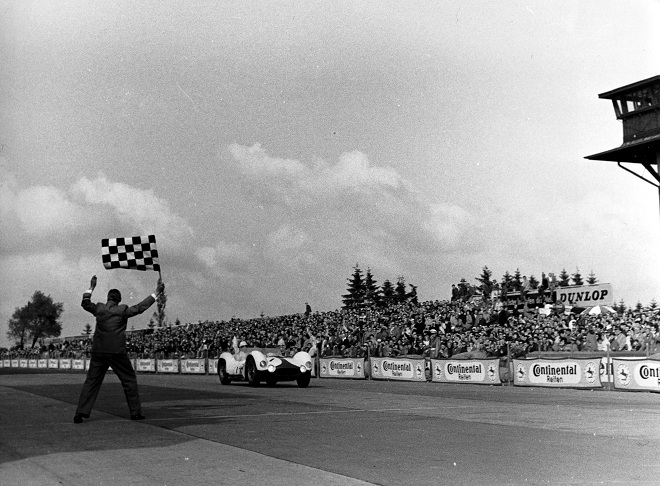
On 28th May, Maserati celebrates a significant anniversary; exactly 60 years ago, the Tipo 61 achieved an amazing victory at the seventh edition of the Nürburgring 1,000 kilometres, the great endurance classic held at the Nordschleife in Germany which reached the height of its splendour and popularity in those very years.

With this success, the Maserati Tipo 61 driven by Masten Gregory and Lloyd Casner recorded a memorable double, winning again just one year after the victory achieved in 1960, with Stirling Moss at the wheel alongside Dan Gurney.

The cars were customised with white and blue paintwork, the colours which inspired the Maserati MC12 Stradale, as a tribute to these victories. This supercar, which dominated the early 2000s, recently handed over the torch to the new MC20, renewing the racing spirit that has always been integral to Maserati’s DNA, and which is preparing the way for the Trident’s motorsports comeback.

The Tipo 61 was the best known of the series of five models designed by Giulio Alfieri, nicknamed “Birdcage” for its unusual chassis, an intricate structure containing about 200 tubes, combined in a complex assembly that resembled a birdcage. This construction method provided a more rigid chassis that was also lighter than the other racing cars of the time, making this two-seater barchetta the ultimate and best solution for front-engined, rear-wheel drive racers.

Maserati began building the Tipo 60 in March 1959, but by November of the same year it was already being transformed into the Tipo 61, to comply with the technical regulations required to compete in the Le Mans 24 Hours. The displacement of the four-cylinder engine was modified to 2,900 cc, while its power output became 250 hp at 7,000 rpm. Otherwise, the car retained the layout and solutions already adopted for the Tipo 60. Moreover, its weight increased from 570 to 600 kg and its top speed from 270 to 285 km/h.

In spite of its massive power output, fuel consumption was still fairly low, and this was vital in endurance races, where the Tipo 61 was able to reduce the number of refuelling stops.

In just three years of production, from 1959 to 1961, the Tipo 60 and the Tipo 61 reigned supreme on the international racing scene, with power and speed that led to a series of extraordinary wins, continuing the victorious tradition of Maserati which now, at the start of its new Era, is once again planning a future in motorsports, under the banner of the MC20.
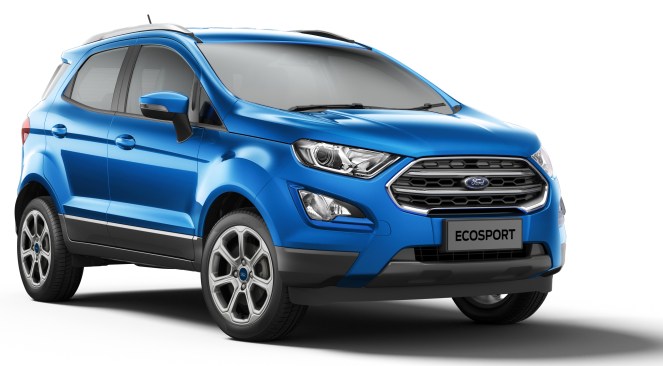
Ford Shares Tips On How To Maintain Your Car During Lockdown

The new normal of citywide lockdowns and working from home means that the cars spend more time in parking than being driven on the roads. To address this concern and keep your car in good shape during the lock-down, Ford bring to you some tips that can be followed.

1) PARK IN A CAR SHED OR USE A CAR COVER: When the car has to stand for a longer time, park it under a shed to keep it safer and cleaner. In absence of a shed, invest in a quality cover as it will keep the car from rusting and fading under the sun. Avoid using the cover indoors so that the moisture evaporates faster especially in humid weather.

2) CHECK THE TYRE PRESSURE: To maintain smooth contact between the vehicle and the road, the car tyres cannot be over or under-inflated. If the car is idle for a longer period, the pressure in the tyres tends to reduce. Hence, it’s important to check the tyre pressure regularly, especially during the lockdown. Also, keep a check on the valves and valve caps for leaks.

3) DON’T ENGAGE THE HANDBRAKE, PARK THE CAR IN GEAR: When parking the vehicle for a long time, find level ground and avoid engaging the handbrake as rust might form at the point of contact between the brake pads and the disc/drum, causing it to jam. Alternatively, be smart and use wheel chocks to keep it from rolling and leave the car in first gear.

4) FILL UP THE FUEL TANK: One of the major problems of leaving a car unused is rusting on the inside of the fuel tank. Low fuel level can have a detrimental effect on the fuel pump – it will wear the pump out faster. Low fuel level might also allow condensation to develop in an empty tank, inviting corrosion. So, fill the car to the brim with quality fuel and ensure the tank is sealed properly as well.

5) DISCONNECT THE BATTERY: Removing the battery if the car won’t be used for a long time is a good idea. Greasing the terminals and the wire ends prevents rusting. Alternatively, start the vehicle every fourth or fifth day and idle the engine for a few minutes to ensure that the battery is working normally.

6) CHANGE ENGINE OIL AT REGULAR INTERVALS: A car’s health is majorly determined by the quality and integrity of its engine oil which keeps all moving parts well lubricated and traps out all the dust, dirt and sediments keeping the wear and tear minimal.

7) KEEP THE INTERIOR CLEAN: Like the exterior, it is important to keep the interior of the car clean. For this, start the car every fourth or fifth day and start the AC and the blower – this helps in removing the dust or other particles present in the cabin. Don’t leave any eatables inside and ensure to close the car window.

FordPass app allows customers to check vehicle health as well as remote features like start/stop, lock/unlock, locate your vehicle etc. on their FordPass equipped vehicle.

Kia Motors India Changes Its Official Name To ‘Kia India’ As Part Of Its New Brand Identity

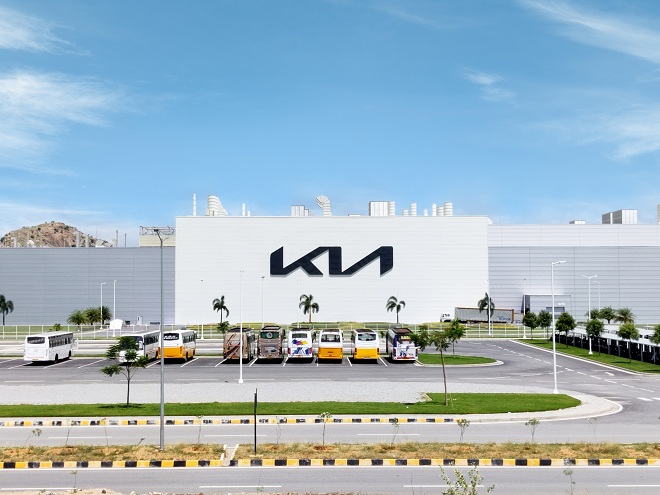
Kia India, a wholly-owned subsidiary of Kia Corporation, has announced its new corporate name – ‘Kia India’ as a part of its new brand identity and brand purpose of ‘Movement that Inspires’. The name change which symbolises Kia becoming an enterprise that invests in and produces more than just vehicles to offer a long range of sustainable mobility solutions. The brand has removed the word ‘Motors’ from its earlier name after ratification by the Ministry of Corporate Affairs and will now function under the corporate identity of Kia India Private Limited. The company has changed its logo and name at its Anantapur manufacturing facility and will carry out the same at its dealership in a phase-wise manner.

In line with its brand re-launch, Kia India is breaking away from its traditional manufacturing-driven structure to a more purpose-driven business. The new brand purpose – “Movement that inspires” signifies Kia’s ambitious plans of leading the future mobility revolution in India with premium products equipped with unique design and segment-first features, digitized services and complemented by one of the largest networks. As part of its new brand identity, Kia India has also changed the brand logo to compliment the new brand name, which signifies Kia’s bold and innovative approach and underscores the brand’s commitment to driving the change in the Indian automotive industry.  

Being India’s young automobile disruptor, Kia India has set new benchmarks in the Indian automobile industry and has been able to achieve several milestones in a very short period of time. In over one and a half years of sales operation in India, Kia has emerged as the 4th most sold car brand and the fastest carmaker to achieve 2,50,000 sales figures in the country. Along with leading the connected car revolution in India with over 1,40,000 connected Kia cars on Indian roads, Kia also aims at offering cutting-edge features with multiple specification choices for its customers to choose from.

Bentley Celebrates 75 Years Of Manufacturing Cars In Crewe

Bentley Motors marks 75 years of car production from the luxury marque’s iconic factory in Crewe, England. During this period, 197,086 luxury cars – 97 per cent of Bentley’s entire production – have been handcrafted, an extraordinary milestone when considered that just 38,933 were built before modern day models such as the Continental GT and Bentayga were introduced from the turn of the century.             

Remarkably, records show that 84 per cent of all cars built in Crewe for the UK market are still on the road today, with that number growing at unmatched levels. Bentley is currently building 85 cars per day; one month’s output, two decades ago.           

Commenting on the significant achievement, Peter Bosch, Bentley’s Member of the Board for Manufacturing, said: “For 75 years Crewe has been synonymous with luxury car manufacturing – a global showcase of craftsmanship and quality.  In that time, our colleagues have produced some of the world’s most iconic and desirable products, including cars for global royalty and unique personal commissions.

“Beyond bricks and mortar, this milestone pays homage to the colleagues who have built our brand in Crewe, and I’d like to express my thanks and admiration for their dedication over three quarters of a century.

“With our most recent investment we have transformed our historic factory into a collaborative modern campus; a carbon-neutral, innovative, low environmental impact site that retains the best of our heritage while looking strongly to the future.  In many factory areas, modern, digitised production systems complement traditional craftsmanship skills employed on our cars since 1946.

“As we cautiously emerge from the pandemic, we look forward to welcoming our customers back to Crewe to experience our unique factory and meet our colleagues in person.”

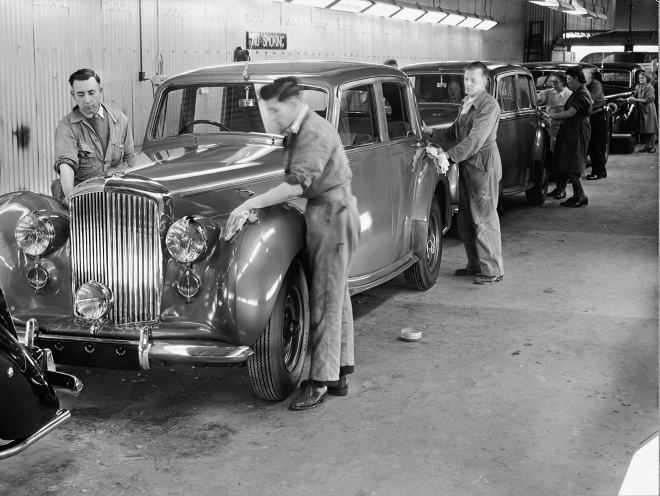
Although Bentley’s history dates back to 1919, Crewe became part of the luxury marque’s story in 1938; the Pyms Lane site transforming from potato fields to a significant manufacturing base for the Merlin aeroplane engines, a key pillar of the war efforts. Selected due to its strong transport links and ready supply of skilled labour, at peak in 1943, the Crewe factory employed over 10,000 colleagues.

With car production having ceased in the war years, the former home of the company in Derby was committed to building new-era jet engines in 1946, meaning a new location was required. Colleagues had to be retrained in techniques necessary for car manufacture, such as painting, anti-corrosion preparation, body mounting and woodwork.     

The Bentley Mark VI became the first car to be built entirely at Bentley’s Crewe works and the first to be offered with a pressed-steel body shell as standard. The 4.3-litre straight six engine used at launch was upgraded to a more powerful 4.6-litre unit in 1951. Coachbuilt cars were still available, but the Mark VI signalled the dawn of a new era in Bentley car production and became one of the marque’s biggest selling cars in history.         

What followed prior to the modern era were many iconic models of their time produced in Crewe, including the R-Type Continental, Turbo R, Arnage and Azure.  

Arguably the biggest change to Pyms Lane, Crewe, took place in 1998, following the acquisition of Bentley by the Volkswagen Group. The Group immediately invested significantly to modernise the factory and transformed the company into the one that exists today, creating a platform for an illustrious period in the history of Bentley Motors.          

Pyms Lane has remained the focal point for Bentley’s headquarters in Crewe since the company arrived in 1938. What stands today are industry-leading facilities that are fully carbon neutral, the first luxury car brand to achieve such a feat.       

Over the coming weeks, Bentley’s subsequent investment in Pyms Lane will be realised with the opening of an Engineering Test Centre and R&D building – both of which will further support Bentley’s journey towards electrification.

The ambitious plans Bentley has for car production were outlined as part of its ground-breaking Beyond100 strategy. The company aims to be end-to-end carbon neutral by 2030, with the Crewe factory climate positive thereafter.

Bentley will move to full electrification – PHEV or BEV only – by 2026, then switch the entire model range to battery electric vehicles by 2030. The industry-leading Beyond100 strategy will transform every aspect of the business as Bentley accelerates into its second century of luxury car production.

TVS NTORQ 125 Crosses The 1 Lakh Sales Milestone In International Markets

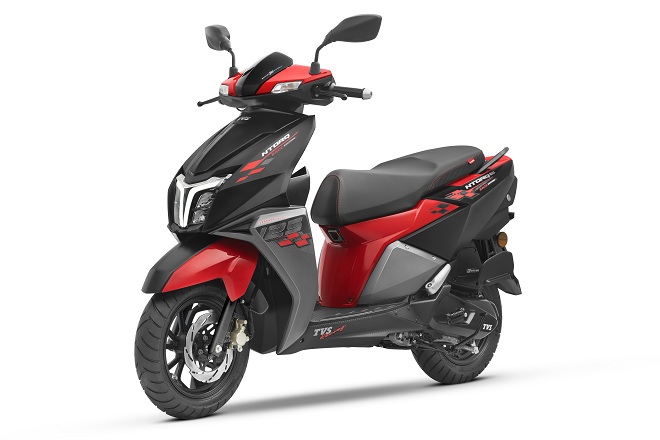
TVS Motor Company has announced that the TVS NTORQ 125 has crossed the sales milestone of 1 lakh units in international markets. 

In 2018, TVS NTORQ 125 was launched as the first Bluetooth connected scooter in India and has since secured its place like no other. Over the years, the brand has become synonymous with industry-first technology, style and performance in select international markets.  Today, TVS NTORQ 125 is present in 19 countries across South Asia, Latin America, Middle East, and ASEAN.

Speaking on the occasion, Mr. KN Radhakrishnan, Director & CEO, TVS Motor Company, said, “We are delighted that our smart scooter, TVS NTORQ 125, has achieved the 1 lakh sales milestone in international markets. Since its launch, the scooter has become a favourite among Gen Z customers globally. The scooter’s striking appearance, connected technology and superior performance have been a hallmark of the TVS NTORQ 125 brand experience.  This achievement is a reinforcement of our commitment to grow the TVS NTORQ brand by setting benchmarks in innovation and creating aspiration for customers.”

Rolls-Royce Motor Cars Appoints Anders Warming As New Design Director

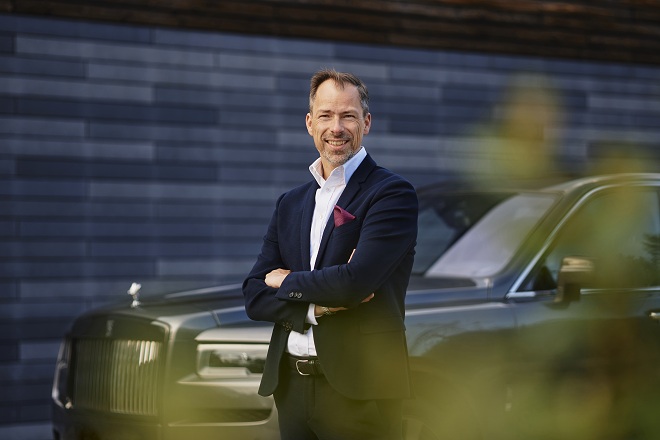
Rolls-Royce Motor Cars has announced that Anders Warming has been appointed Director of Design. He will join the company from 1 July.

Warming, 48, joins Rolls-Royce Motor Cars from Warming Design, the company he founded in 2019. His experience includes almost 20 years in senior positions in the BMW Group, including Head of Design at MINI and Exterior Chief Designer at BMW.

Outside of BMW, Warming held various senior design positions in companies including Borgward and Volkswagen.

Torsten Müller-Ötvös, Chief Executive Officer, Rolls-Royce Motor Cars said, “It is with great pleasure that I welcome a person with the depth of experience and creativity of Anders Warming to the Rolls-Royce family. As our Director of Design, he will have a key role in defining our future aesthetic direction and realising our clients’ dreams and aspirations. Anders joins us as we move forward to full electrification of our brand, which will shape Rolls-Royce for decades to come. He will face the challenge of upholding the fundamental design principles of Sir Henry Royce himself, which have guided us for over 100 years.”

He continued, “To become the Director of Design for Rolls-Royce Motor Cars is the most prestigious and challenging brief in the luxury industry. It offers unique opportunities for innovative creativity, imagination and exploration of new genres. I have no doubt that Anders, with his extraordinary wealth of experience and talent, will excel in his new role and we are all looking forward to working with him at Rolls-Royce.”

Adrian van Hooydonk, Senior Vice President, BMW Group Design, commented, “Anders Warming has a proven track record as an extremely creative and passionate designer with a keen eye for detail and craftsmanship and since he has spent most of his career in our design team, I am sure he will integrate very quickly.”

Anders Warming said, “It is a tremendous privilege and a humbling experience to be asked to take up this role. I am personally thrilled to be joining Rolls-Royce and am fully committed to the challenges presented by this great and historic brand as it moves into the future.”

Warming originates from Copenhagen, Denmark. He graduated in Major Transport Design at the Art Center College of Design, Vevey, Switzerland and Pasadena, USA.

Great British Car Journey Motors Into Derbyshire

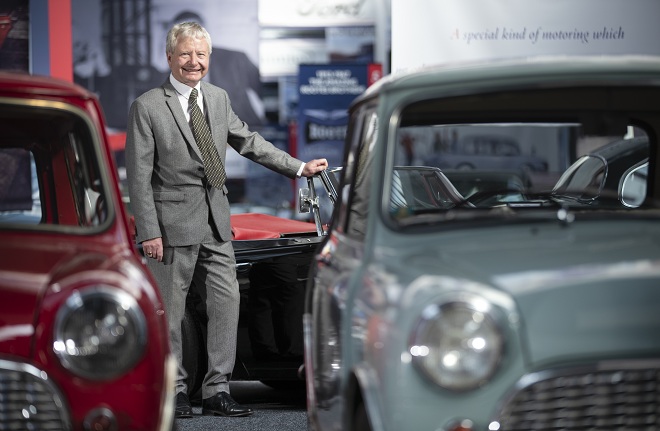
Richard Usher CEO of The Great British Car Journey

Born from an idea spawned by a 32-year-old Austin Maestro, and after four years in the making, the UK’s newest visitor attraction Great British Car Journey has opened its doors.

Making the once ordinary extraordinary, the Great British Car Journey is packed with British marques and models that dominated the roads for nearly a century.

More than 130 vehicles now fill a former wire works factory on the banks of the River Derwent in Ambergate, Derbyshire.

Richard Usher, CEO of Great British Car Journey explained: “Four years ago, when I owned and managed Blyton Circuit, a gentleman approached me asking if I’d like to buy his 1989 Austin Maestro in mint condition with just 10,000 miles on the clock. My first thought was ‘no’, but it then got me thinking about when I last saw an Austin Allegro, Metro, original Mini, or even a Ford Cortina on the road. These were cars that were once on virtually every street in Britain and sold in their millions.”

The seed was planted and Richard, together with four private investors, set about amassing one of the largest privately owned collections of British designed and manufactured cars in the country.

Visitors to Great British Car Journey will be guided round the exhibition with a unique handheld audio device which tells the fascinating story of individual vehicles as well as the development of the UK’s motor industry.

Starting with the Austin Seven in 1922, the Great British Car Journey chronicles car design and production in the UK through to the modern-day McLaren 650S, which has been lent to the attraction by the supercar manufacturer.

Mike Flewitt, CEO of McLaren Automotive said: “Richard and the team have done an amazing job bringing Great British Car Journey to life. I am delighted that McLaren is able to support the exhibition which celebrates Britain’s motoring history from Bruce McLaren’s Austin Seven, where our brand story began, through to modern day supercars such as our 650S.”

The collection of almost 150 cars has been brought together over the last four years. One of the most difficult cars to find for the exhibition was a Vauxhall Chevette. Only a handful of Chevettes in roadworthy condition are thought to exist in the world today, despite around half a million being sold in Britain between 1975 and 1984.

Explaining his vision in more detail, Mr Usher said: “I really wanted the cars to tell a story, so the journey charts the growth of car ownership from Austin’s Seven to the present day.”

“It has a motor show feel with cars grouped in the decades – or chapters – in which they were produced, with period adverts and graphics prominently displayed.

“The vehicles are easily accessible. We want people to smell the old car smell, marvel at the interiors and jog memories of trips in the family car, their first car or back seat fights with their siblings when they were growing up.

“Everyone who has been on the journey, whether a car nut like myself or not, doesn’t fail to have a smile on their face remembering days gone by. Great British Car Journey is the ultimate trip down Memory Lane,” added Richard.

And the cars aren’t purely for looking at; more than 30 of them can be driven.

For an authentic, hands-on trip down Memory Lane 32 cars, including the Maestro that started it all, are available to drive on a private road as part of the Drive Dad’s Car experience.

All the vehicles in both the exhibition and Drive Dad’s Car experience are in working order and fully maintained by Great British Car Journey’s own time-served technician and apprentice. Visitors are welcome to watch them at work in the onsite workshop within the exhibition hall.

“Great British car journey is very much a working attraction. We have a large collection of well-thumbed Haynes manuals which are regularly consulted when we need to locate a bonnet catch or various engine parts to ensure the maintenance of the collection,” added Mr Usher.

Visitors to Great British Car Journey are guided round the exhibition with the handheld audio device while an army of volunteers is on hand to explain the finer details of the vehicles, from hidden petrol caps masquerading as taillights to the split bumper on the Morris Minor and one car once owned by a British music icon.

London Concours 2021 Celebrates The 60th Anniversary Of The Jaguar E-Type

The London Concours has revealed that this year the event will celebrate one of the all-time great British cars, the Jaguar E-type. In 2021, the E-type celebrates its 60th anniversary, and to celebrate this milestone, nine of the finest E-types ever made will grace the lawns of the Honourable Artillery Company HQ from 8-10 June – including the first ever roadster and the last ever built.

Inspired by Jaguar’s racing D-type which won the Le Mans race three times between 1955 to 1957, the E-type was officially launched in 1961. Originally intended as a racing car, the E-type became a successful road-going sports and grand touring car, which then also distinguished itself in motor racing.

Among the cars on display at the show is one of the earliest Jaguar E-types. ‘1 VHP’ is the first right-hand drive coupé and the only surviving right-hand drive number one chassis car left in the world. Resplendent in its original opalescent dark blue, as it left the factory in 1961 this is one of four ‘outside bonnet’ coupés – and in 2015 the car was used to recreate the original 150mph E-type run. It reached 147mph on a German Autobahn.

Many will also recall the famous ‘77 RW’ numberplate, which belongs to the First production E-type Roadster ever made. This car was famously driven out to Geneva in a dramatic 17-hour overnight run by Jaguar’s then Test and Development Engineer, Norman Dewis to accompany the Fixed Head Coupé ‘9600 HP’ which had created such a demand for press drives that another car was needed. The car is being displayed by permission of Mr M Kilgannon and the Jaguar Daimler Heritage Trust.

Also in the class will be stunning examples of each of the E-types many faces, which will include the Jaguar E-type Series 1 Drop Head Coupé, the Series 2 Fixed Head Coupé, the Series 2 Drop Head Coupé and the Series 3 Fixed Head Coupé. Each one has an immaculate history and pedigree and is a true ambassador for the iconic car.

Another significant car on show is the 1961 Jaguar E-type 3.8-litre Fixed Head Coupé, ‘CUT 7’. This car is an ex-Dick Protheroe car modified for competition use. The engine was modified to run D-type specification wide-angle heads and Weber carburettors, and the car also featured uprated brakes and improved suspension.

A highlight of the car’s history was the 1962 Goodwood Tourist Trophy. Protheroe lined up on the grid amongst some of the toughest competition he had faced, including works Ferrari 250 GTOs, Aston Martin DB4 GT Zagatos and factory-run Jaguar E-types. The driver line-up included Innes Ireland, Graham Hill, Roy Salvadori and David Piper, and the Protheroe ‘CUT 7’ pairing finished in an impressive 6th place in the final standings.

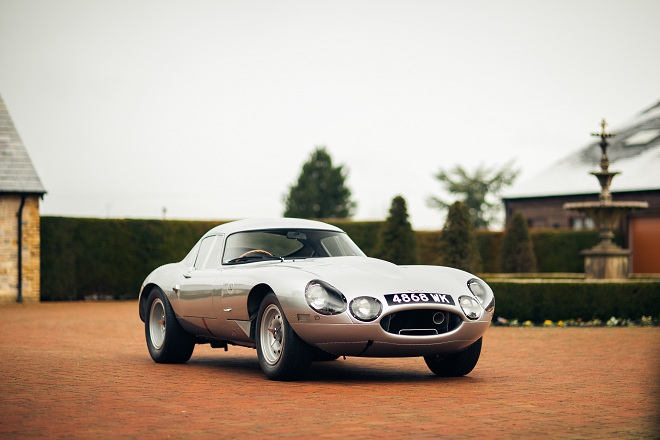
Alongside it will sit one of the most striking E-types of all time, a 1963 Jaguar E-type Lightweight – The Lindner Nocker Low Drag car. The only Low-Drag Lightweight that was designed and built by the Jaguar factory. The Lindner Nocker car features the most powerful 3.8-Litre XK engine Jaguar ever built in period, developing 344bhp.

The work was carried out for the car’s owner and renowned German Jaguar importer Peter Lindner, who requested the modification of the car for use at Le Mans. The car sadly claimed Lindner’s life during the 1000km of Paris race in 1974, and spent many years impounded in France. In 2007 the car was subject to one of the most complex vehicle restorations in history by Classic Motor Cars which invested over 5,000 hours removing, flattening and reshaping the body until the car was the exemplary example we see today.

Rounding out the history of the E-type, ‘HDU 555N’ is the last Jaguar E-type ever produced. Now owned by the Jaguar Daimler Heritage Trust ‘HDU 555N’ is a Series three Drop Head Coupé which was built on 12 June 1974 but not registered until 5 February 1975.

Production of the E-type came to an end in June 1974 with a special run of fifty cars. Forty-nine of these cars were painted black, while the second last car was British Racing Green and was supplied to a well-known private Jaguar collector. All of the fifty cars carried a commemorative plaque, bearing a facsimile of Sir William Lyons’s signature.

These cars are part of a nine-strong line-up of the most significant Jaguar E-types from the car’s colourful 60-year history, which itself is one of eleven classes and features that will grace this year’s London Concours, hosted 8-10 June at the Honourable Artillery Company HQ.

Andrew Evans, London Concours Director, said: “When we think of Iconic cars, they don’t come much more iconic than the Jaguar E-type. The phrase icon is used often in the classic car world, but in the case of the E-type that reputation is thoroughly deserved. As part of the London Concours this year, we are thrilled to welcome nine of the most significant Jaguar E-types to sit among the nearly 100 strong line up of cars. Each of these cars has incredible pedigree and history behind them and are worthy of being chosen as the vehicles which will commemorate the car’s 60th anniversary this year.”

Previously held over two days, the London Concours 2021 shifts to a three-day event to capitalise on visitor demand for more luxury brand content – from jewellery to bespoke suits – and modern supercars. The three days will be a VIP Preview Day, Style Edition and Supercar Day. At the heart of each day will remain the collection of nearly 100 rare and iconic luxury cars of all ages that has quickly cemented London Concours as one of the UK’s top motoring events.

Bentley Celebrates Centenary Of First Win

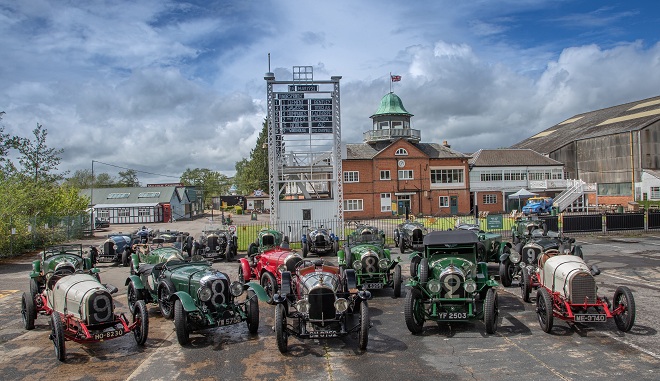
100 years to the day since the first race win for a Bentley, the winning car itself – known as EXP2 – returned to the famous Brooklands Racetrack in Surrey to lead a cavalcade of 3-Litre Bentleys to celebrate the centenary of its victory.

EXP2 is the oldest Bentley in the world, and only the second car ever built by W.O. Bentley’s fledgling company in 1921. EXP2 led a field of 24 3-Litres from across the country, which formed up on the remaining section of the banked Brooklands circuit where Bentley took its first win on 16 May 1921. On that day, the car took victory in the Whitsun Junior Sprint Handicap at the hands of ‘works’ driver Frank Clement, starting a series of race wins for the 3-Litre model that culminated in two victories at the 24 Hours of Le Mans – Bentley’s first in 1924, driven by Clement and John Duff, and again in 1927. Between those successes, in 1925 Duff also used a 3-Litre to secure a total of 21 world records over the course of 24 hours.

These early victories for the 3-Litre engrained motorsport in the foundations of Bentley, and paved for the way for more than 1,600 3-Litre models to be produced and sold.

The collection of 3-Litres and the event itself was organised by the Bentley Drivers’ Club, whose chairman Richard Parkinson comments: “Motorsport success is a huge part of Bentley’s heritage, as it is for the Bentley Drivers Club. We were therefore determined to mark the centenary of the first Bentley racing win on 16 May 1921 at Brooklands on the very same date this year with the actual car, EXP2 itself, kindly provided by Bentley Motors.

“We will continue as a Club to celebrate ‘100 years of Bentley Racing Success’ at our Annual Silverstone Meeting on 7 August which I am delighted to say Bentley Motors is supporting with a display of significant cars from the Heritage Collection.”

EXP2 – The Oldest Bentley in the World
After founding his company in 1919, it took two years for W.O. Bentley to develop the engine and chassis of his first production model – the 3-Litre, a car that he went on to produce 1,622 examples of between 1921 and 1929. Crucial to that development programme were the Experimentals – or EXPs for short. EXP1 came first, and was the very first car to wear the Bentley badge. EXP2 was next, and while EXP1 was lost to history (and may well have been cannibalised to create the other EXPs), EXP2 has survived for a century as the oldest Bentley in existence.

EXP2 was originally constructed with a plain two-seat body, to serve its function as a development testbed for the engine – incredibly advanced for its time – and chassis. It was later rebodied with dark red bodywork and an aluminium bonnet, crafted by coachbuilders JH Easter of Chagford Street.

It’s first race was only nine days before its first win. At the hands of Frank Clement, it competed at Brooklands on Saturday 7 May 1921 but failed to finish. Whatever gremlins had disturbed that first race were banished by the following weekend, and when the car took to the track again on Monday 16 it came home victorious for the first time.

EXP2 carried on with its split career of development testing and racing for two years, before being sold in September 1923. The car was completely rebuilt to its original specification around 25 years ago, and is now one of the most important members of the Bentley Heritage Collection.

The New BMW 2 Series Coupé

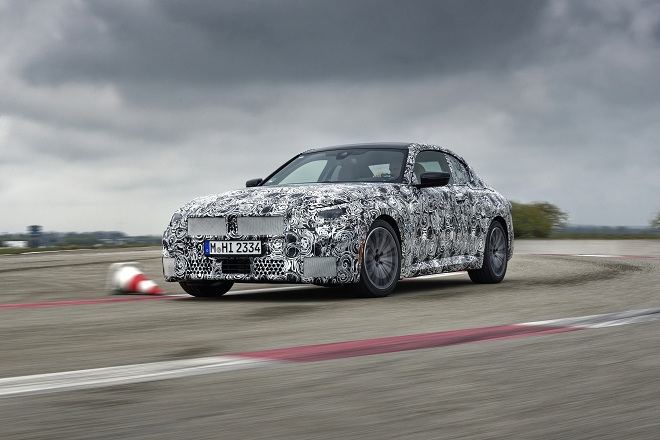
The new BMW 2 Series Coupé is on the final stretch as it heads to the front row of the grid. The final phase of the series development process for the new edition of the BMW 2 Series Coupé has begun with the dynamic testing and tuning of its drive and suspension systems under racetrack conditions. The two-door compact sports car features numerous hallmark ingredients that are unique in the premium compact segment for achieving a sporty and emotional driving experience, which are carefully coordinated during the test drives.

This is what underpins this car’s claim to taking pole position in its class. The unique selling points of the new BMW 2 Series Coupé in the competitive environment include the rear-wheel drive setup, an extremely powerful in-line 6-cylinder engine, the almost 50:50 balanced axle load distribution, an extremely torsionally stiff body and chassis technology consistently designed for agile and dynamic driving behaviour.

The new BMW 2 Series Coupé, which will be manufactured from late summer 2021, is designed for uncompromising sporty driving pleasure. It continues the tradition of the brand’s particularly driver-oriented, compact and powerful two-door models, which have been built since the legendary BMW 2002. In terms of power delivery, traction, cornering dynamics and handling precision, the new BMW 2 Series Coupé meets the needs of particularly discerning customers who are enthusiastic about unadulterated sportiness in a compact premium automobile.

During the development of the new BMW 2 Series Coupé, the test and tuning drives on the Nürburgring’s Nordschleife serve as the ultimate test for wheel suspension, chassis, damping, steering and braking system. In addition, testing on public country roads around Munich and at the BMW Group test site in Maisach ensure that the dynamic driving qualities of the new BMW 2 Series Coupé can also be experienced in everyday traffic and under different road conditions. By extensively testing all drive and chassis systems, the development and test engineers ensure that the engine’s performance characteristics go hand in hand with precisely controllable handling in every situation, fascinating cornering dynamics, optimised traction in all weather and road conditions and perfectly balanced ride comfort. At the same time, the car is fine-tuned to optimise self-steering behaviour and the dynamics when building up lateral acceleration forces. The power transmission to the rear wheels, which is unique in the segment of the new BMW 2 Series Coupé, is ideally suited to sporty, ambitious cornering including easily controllable drift manoeuvres.

The new BMW 2 Series Coupé’s focus on maximum driving dynamics in the segment is embodied particularly by the BMW M version at the top of the model range. The BMW M240i xDrive Coupé top model (fuel consumption combined: 34.45 mpg, combined CO2 emissions: 186 g/km; provisional value according to WLTP) draws its drive torque from an extremely powerful in-line 6-cylinder petrol engine with BMW TwinPower Turbo technology. The drive, which is as spontaneously responsive as it is powerfully thrusty, generates a maximum output of 374 hp and is combined with an 8-speed Steptronic Sport transmission.

The BMW M model puts its power to the road using the intelligent BMW xDrive all-wheel drive system. The system’s rear-wheel oriented design ensures hallmark BMW driving pleasure in conjunction with a power distribution that adapts perfectly to adverse road and weather conditions.

The driving dynamics tests also conducted on the Nürburgring, are ideally suited for refining the interaction of the all-wheel-drive system with the M sports differential in the rear-axle transmission. With a fully variable locking effect generated by an electric motor, the differential aids the new BMW 2 Series Coupé in optimising cornering performance with regard to traction and driving stability. The targeted distribution of power between the rear wheels enables significantly higher lateral acceleration and also a noticeable increase in dynamics when accelerating as you come out of bends.

Regardless of the engine, all model variants of the new BMW 2 Series Coupé benefit from a particularly torsion-resistant body structure. Static torsional stiffness has been increased by around 12 per cent compared to the predecessor model, for example through the use of dynamic driving struts in the rear of the vehicle, which contribute to the exceptionally high agility of the new BMW 2 Series Coupé. In addition, the vehicle concept, which is consistently designed for driving dynamics, offers significantly increased track width at the front and rear axles. This effectively reduces body roll and wheel load fluctuations during sporty cornering.

All model variants of the new BMW 2 Series Coupé are also equipped with stroke-dependent dampers as standard, the fine-tuning of which leads to a noticeably optimised balance between sportiness and ride comfort. They respond sensitively to slight road unevenness and compensate vibrations to optimise comfort.

When driving over large bumps, the movements of the body are controlled by correspondingly higher damper forces. An Adaptive M Chassis is offered as an option for the new BMW 2 Series Coupé. Its electronically controlled dampers offer the option of activating the appropriate mapping for both sporty and comfort-oriented driving.

The new BMW 2 Series Coupé is characterised by effortlessly controllable handling even in highly dynamic driving situations. In addition to the powerful and highly controllable brakes, the precise steering also characterises the handling of the two-door model. In addition to the balanced axle load distribution between the front and rear wheels, the model-specific design of the steering and the particularly high connection stiffness of the support bearings on the front axle contribute to this. Available as an option for the new BMW 2 Series Coupé, Variable Sports Steering combines further optimised precision when steering into bends with reduced steering effort when parking and manoeuvring.

The body design of the new BMW 2 Series Coupé not only reflects the brand’s modern, clear and reduced design language. Only visible at second glance, but immediately noticeable during the high-speed test drives at the Nürburgring, the measures that help optimise the aerodynamic properties of the BMW M car in particular. In addition to a model-specific front spoiler lip, front splitter and air curtains, air deflectors, a tank and a rear axle cover as well as the contours of the air-flow-optimised driving dynamics struts on the underbody ensure that lift on the front axle has been reduced by 50 percent compared to the predecessor model.