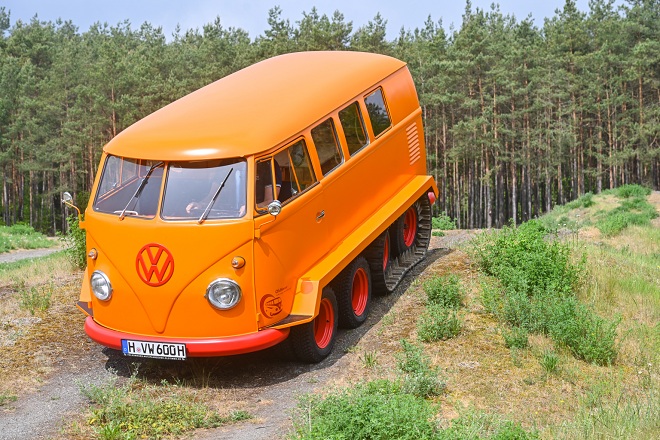
VWCV Classic Vehicles has just finished bringing a unique 60-year-old vehicle back to mint condition: the ‘Half-track Fox’. This T1 was produced in the Hannover plant in May 1962 and then sent off to its purchaser in Austria. After a short period of life as a normal T1, it was transformed there at the hands of a resourceful Viennese Volkswagen mechanic into an Alpine specialist. Kurt Kretzner converted the Bulli into a T1 with four axles – two of them fitted with a chain drive mechanism and two steering the vehicle using double tyres. And thus he created what is probably the most off-road-capable Bulli ever to be seen on the mountain slopes of this world.
Historic sources say he was a keen skier. He noted that in the mountainous regions of Austria there was a scarcity of vans with high standard off-road capabilities: ones that were easy for anyone to drive and yet could climb up to the highest Alpine meadow. “An ideal helper for everyone: mountain hut keepers, hunters, foresters, doctors, maintenance engineers for ski-lifts, TV and radio masts, pipelines and the like,” as Kretzner later wrote in the sales literature for the Half-track Fox. “At first, I had a look around, but couldn’t find the vehicle I was dreaming of. So, I decided to build it myself.” Just as Ferry Porsche once said and did, so too did Kurt Kretzner. The inventor spent over four years designing and building his mountain climber. Two ‘Foxes’, it seems, were built in the period up to 1968, but when it came to the third, production then ceased. What has survived, however, is at least one example of the Half-track Fox.
What the Viennese mechanic planted under the orange-painted Bulli body was, at the front, a steered double axle with dual rough-tread 14-inch tyres and, at the back, another double axle with chain drive. The chains were mounted on 13-inch wheels and a construction of his own design made of aluminium elements with rubber blocks two centimetres thick to spare the asphalt. As a result of the dual front-axle steering the turning circle was less than 10 metres – so it could almost turn within its own circumference. Each wheel was fitted with a brake. An automatic limited-slip differential ensured evenly distributed forward propulsion even in deep snow. The T1 drew its power for this from its standard 25 kW / 34 PS flat engine with a cubic capacity of 1,192 cc. The Half-track Fox reached a top speed of 35 km/h and was thus only slightly slower than the animal kingdom member from which it got its name.
Kurt Kretzner wanted to build a tracked vehicle that would be very easy to steer. It was precisely for this reason that the mechanic opted not for steering via chains on every axle as is found on a bulldozer, but instead for a half-track solution (with chains only on the drive axles) and an almost standard, albeit doubled-up front-wheel steering mechanism. And that’s also how the inventor used to promote the Half-track Fox: “The new, ideal, easy-to-drive Half-track Fox that lets you safely and comfortably master all difficult terrain. Snow, sand, stony ground, mountain meadows, small streams and woods can all be driven through in this vehicle.”
Over the years, the Half-track Fox was rarely seen. In 1985, the T1 turned up for a final time in Vienna, before in the early 1990s it was bought by the Porsche Museum in Gmünd. At some point, the Half-track Fox then passed into the possession of the ‘Bullikartei e.V.’ – a society of lovers of the first Bulli generation. In 2005, they began an initial attempt to restore the special Alpine vehicle. With the society’s members spread all over the country, however, it was unfortunately not possible for logistical reasons to complete the restoration.
At the end of 2018, the Half-track Fox came into the collection of VWCV Classic Vehicles. The aim: to get the Half-track Fox up and running again. Under their guiding principle of “Erinnern. Erleben. Erhalten.” (Remember – Experience – Preserve), the classic vehicle experts began a painstaking process of restoration. The 60-year-old bodywork was, as is the case for all factory restorations in Hannover, stripped of paint, repaired, given a cathodic dip coating and repainted in the largely original shade of orange. Matt orange, in fact. The intention being back in the day that the Half-track Fox should be immediately recognisable in the countryside.
The VWCV Classic Vehicles team also got the mechanics back into as-new condition. The interior, too. The team was able to give free rein to their creativity there, as there were no onerous specifications. Wood components in beech and pine were individually adapted to the space inside the Half-track Fox, and practical tool holders installed. In February 2022, the time had then finally come – the Half-track Fox again channelled its way through the snow. And did so, indeed, with unusually good uphill capability: following the extensive restoration of the four-axle T1, the team of VWCV Classic Vehicles could see for themselves that the driver was more likely to capitulate on steep climbs than the Half-track Fox!
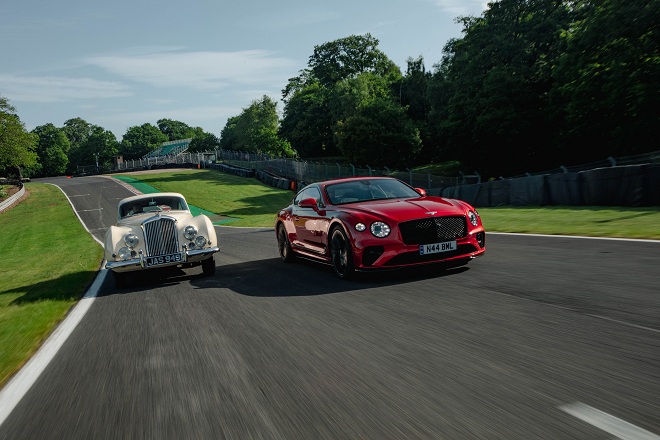
To celebrate the anniversary Bentley has released imagery of the GT Speed together with JAS 949, shot at Oulton Park in Cheshire.
Bentley is celebrating 70 years since the start of production of the R-Type Continental – one of the most celebrated cars in the company’s 103-year history, and the first Bentley to wear the Continental name. With only 208 examples produced, the R-Type Continental was as rare a sight in the 1950s as it is today – but it went down in history as a benchmark Bentley, and the embodiment of the brand’s grand touring DNA. Its ethos and its exterior design were the inspiration for the first Continental GT in 2003, and it has inspired Bentley Design teams ever since.
While the first prototype R-Type Continental (known as ‘Olga’ thanks to its OLG490 registration) was on the road in August 1951, it wasn’t until May 1952 that the car went into production, with customer deliveries starting in June. At the time, it was the fastest four-seat car in the world – a mantle that was picked-up by the modern-day Continental GT in 2003. It was also the most expensive, at £6,928 – nearly four times the 1952 average UK house price.
The Iconic R-Type Continental The brainchild of Chief Projects Engineer, Ivan Evernden and Chief Stylist, John Blatchley, the R-Type Continental was described in period by Autocar magazine as ‘a modern magic carpet which annihilates great distances.’
Two pre-war coachbuilt specials, the ‘Embiricos’ Bentley and Mk V Corniche, had shown the advantages of improved aerodynamics. In the early 1950s, Ivan Evernden took inspiration from these one-off creations to create a sleek coupé based on the R-Type Bentley saloon. The power of the 4,566cc, six-cylinder in-line engine was raised from 140 to 153 bhp, and the transmission featured a higher final drive ratio. The prototype averaged 118.75 mph over five laps (with a best lap of just under 120mph) at the banked Montlhèry track near Paris.
To keep down to the target weight, coachbuilders HJ Mulliner crafted the bodywork, window frames, windscreen surround, backlight, seat frames and bumpers in aluminium. Even at a pared-down weight, tyre choice was critical; no standard road tyre existed which could carry a two-ton car at speeds in excess of 115 mph, and Dunlop Medium Distance Track tyres were specified.
The first production model was delivered to its owner in June 1952 and by the time production ended in 1955, 208 R-Type Continentals had been made. Of these, 193 were bodied by HJ Mulliner. Others included Park Ward (four dropheads and two coupés), Franay (five), Graber (three) and Farina (one).
JAS 949 The Bentley Heritage Collection is the proud owner of R-Type Continental chassis BC16C, registration JAS 949. ‘JAS’ was built in 1953 and delivered to its first owner, Dr Rowland Guenin of Switzerland in December 1953. It was ordered in Ivory with Red interior and a manual gearbox, a specification it retains today along with the original 4.6-litre engine. Bentley Motors acquired JAS 949 in 2001 and has maintained it in excellent mechanical order while sympathetically preserving its patina. The car is driven regularly and appears frequently on display at the Bentley campus and at events around the world.
A Modern Interpretation All three modern generations of the Continental GT have an exterior design inspired by the R-Type Continental. The elegant ‘power line’ that traces backwards from the front wheel arch, the muscular and defined rear haunch and the gracefully sloping roofline are all modern interpretations of the same features from the R-Type Continental, giving the modern Continental GT the same balance of grace, beauty and powerful stance as its forebear. Likewise, the ability of the modern Bentley to carry four adults with luggage at high speed over long distance in exceptional comfort has its roots in this now 70-year-old masterpiece. The very latest iteration, the Continental GT Speed, adds even sharper dynamic performance to the wide and unrivalled Continental blend of abilities.
German luxury car manufacturer Audi in association with their dealer partner Audi Kolkata had brought its adrenaline rushing experiential driving program – the Audi Q drive to the City of Joy.
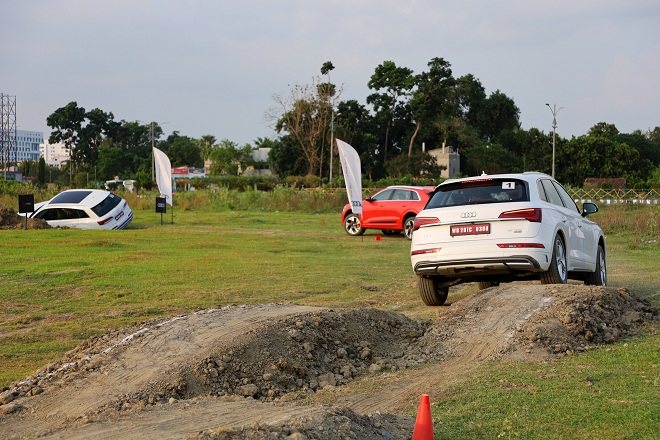
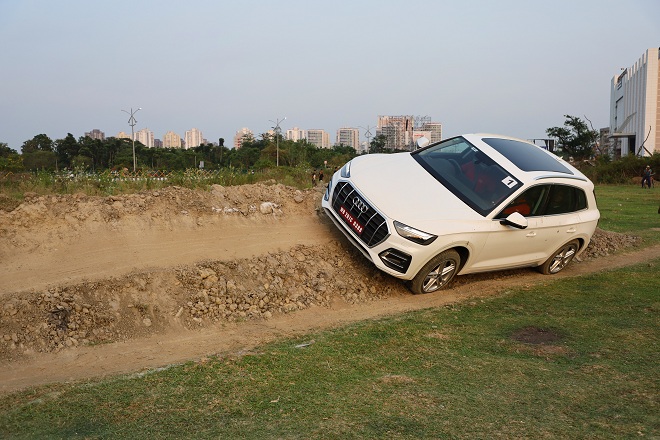
Audi Q Drive is the most widespread program under the Audi driving experience program. Travelling across the country, the Audi Q drive is executed on a custom-built off-roading track; designed keeping in mind the key attributes and features of the Audi Q range, including especially Audi’s legendary quattro system. Customers enjoy driving on specially made off-road track and maneuver obstacles such as hill climbing, hill descend, slush, acceleration, braking, rumblers, axle twister and articulation and tilt angle.
Audi India has a team of instructors responsible for supervising the build-process of these tracks. The Audi Q Drive gives the enthusiasts a chance to drive the Audi Q range under trained supervision to understand the prowess of its advanced technology. Over 15,000 customers have participated in this program since its inception in India.
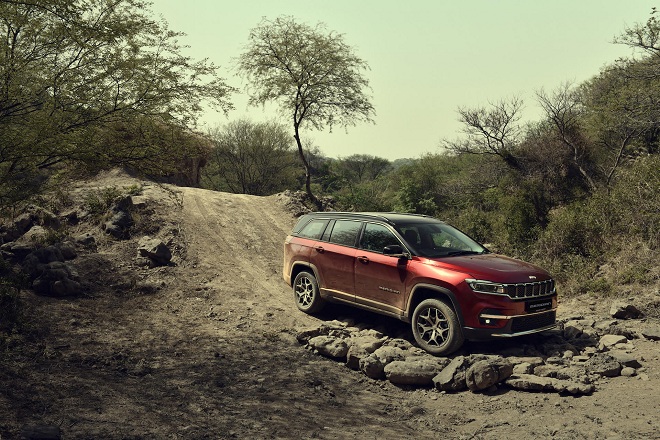
The new Jeep Meridian has been launched at an introductory price of INR 29.90 Lakhs (ex-showroom India). The highly anticipated all-new three-row Jeep SUV is designed to disrupt the segment. The Meridian leverages its globally proven engineering prowess coupled with Indian insights to deliver an authentic SUV experience with sophistication.
The vehicle’s design is inspired by the iconic Jeep Grand Cherokee as it aims to redefine the premium SUV segment with its many class leading features, including the fastest acceleration and highest power-to-weight ratio. The highly capable and agile SUV can go from 0-100 kmph in just 10.8 seconds and can attain a top speed of 198 kmph.
Commenting on the Jeep Meridian’s launch, Nipun J. Mahajan, Head of Jeep Brand India, said, “Brand Jeep believes it is time for Indian customers to kick-start a new adventure in the refined and capable Jeep Meridian. Our pricing reflects our intent to disrupt the segment and offer unmatched value for customers seeking a powerful, spacious, and sophisticated SUV.”
The new Jeep Meridian gets completely independent front and rear suspension setup. It comes equipped with Frequency Selective Damping (FSD) and Hydraulic Rebound Stopper (HRS) to ensure a smooth and comfortable ride on all kinds of roads and terrains.
The Jeep Meridian also promises the best steering control in the segment, thanks to the lowest parking torque of 2.2 Nm and a dynamic torque of 4.3 Nm. The low turning radius of 5.7 m further fortifies the new Jeep Meridian as an inspired choice for city driving.
The SUV’s credentials are further strengthened by the terrain-proven unibody SW platform which helps bring the authentic Jeep DNA to life and amplify the offering with the perfect blend of sophistication and performance.
Jeep Meridian is available across two trims, Limited and Limited (O). Both Limited and Limited (O) are available with the 4×2 front-wheel drive and a choice between a six-speed manual transmission and a nine-speed automatic transmission. A nine-speed automatic transmission with the 4×4 all-wheel drive is also available in the Limited (O) trim.
The Jeep Meridian is powered by a 2.0-litre turbocharged diesel engine that generates 172 PS (170 hp) at 3,750 rpm and a maximum torque of 350 Nm available between 1,750-2,500 rpm. The Jeep Meridian claims to delivers an ARAI-ratified fuel economy of up to 16.2 kmpl.
To further ensure comfort for the car’s occupants, the SUV gets 840 mm between the first and second row, and 780 mm between the second and third row, making the Jeep Meridian the most spacious vehicle in the segment.
Jeep Meridian is a spacious three row SUV with 481-litres of boot space while seating five people and 170-litres of boot space when all seven seats are occupied. Beside its spacious interior, the cabin offers easy accessibility thanks to provisions such as the one-touch fold-and-tumble seats in the second row and the 80-degree door opening angle to help passengers get in and out with ease.
It also offers the best cooling performance in its class: the SUV claims to cools up to 30 per cent faster than competitors, thanks to the multi-zone climate control system, dedicated third-row AC-evaporator unit, and the thermo-acoustic cabin insulation.
The Jeep Meridian features Emperador Brown leather seats, third-row cooling with controls, automatic headlamps, diamond cut dual-tone 18-inch alloy wheels, and several other such attractive features.
The all-new Jeep Meridian comes equipped with UConnect5 that offers a host of connectivity and class leading infotainment features.
The Jeep Meridian Limited (O) trim additionally gets a two-tone roof, a dual-pane sunroof, a 10.2-inch digital instrument cluster, a 360-degree camera, and a powered lift-gate with programmable height and obstruction detection.
The all-new Jeep Meridian is now available for booking on Jeep India’s website (jeep-india.com) and at Jeep dealerships across India with a small down payment of INR 50,000. Deliveries will begin in June.
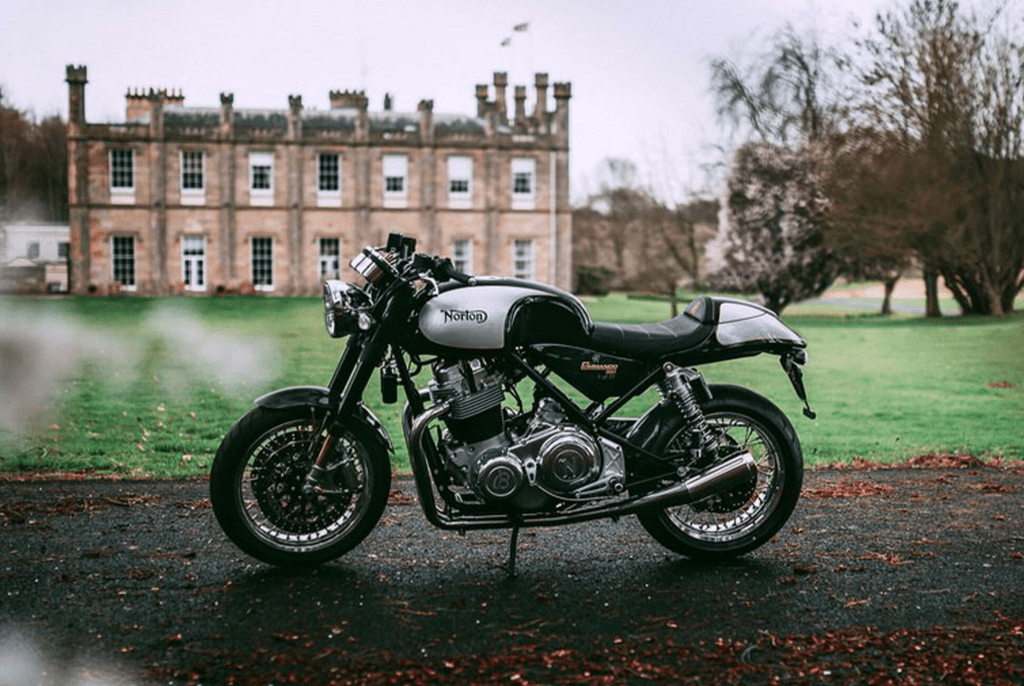
TVS Motor Company has announced an additional investment of £100 million in Norton Motorcycles which was acquired in April 2020. Norton recently opened its new manufacturing facility in Solihull, West Midlands, building British bikes in England using traditional hand-crafted techniques with modern-day machinery for consistently high quality.
Mr. Sudarshan Venu, Joint Managing Director, TVS Motor Company said, “TVS Motor Company is excited to announce an investment of about £100 million in Norton Motorcycle, the iconic British brand we had acquired in 2020. Some of these investments have already been made, leading to the creation of a world-class facility and the imminent launch of a re-engineered V4 SV and 961 Commando. A world-class team led by Robert Hentschel is working to bring Norton back to its rightful place. This investment will be towards electrification, cutting edge technology, world class vehicles, manufacturing, sustainability & the future of mobility. This is expected to create 250-300 direct jobs over the next 3 years and another 500-800 indirect jobs across the supply chain. The investments, spread over the next few years, will result in an exciting range of products for the global market. A brand-new facility has already been set up at Solar Park, Solihull, UK, which houses Norton’s state-of-the-art manufacturing capability and the company’s new global design and R&D hub.”
UK Prime Minister Boris Johnson said, “Trade and investment between the UK and India is creating good jobs and sustaining livelihoods in both of our countries. I’m very pleased that TVS Motor Company has decided to join the legions of Indian companies investing in the UK, boosting our future mobility sector and driving economic growth.”
Norton Motorcycles’ new global headquarters houses state-of-the-art manufacturing capability and the company’s new global design and R&D hub. It forms a key part of Norton’s strategic growth plan on its journey to becoming a leading player in luxury and high-performance motorcycles. The manufacturing facility has been engineered to be highly sustainable and minimise waste.
This new facility is supported by the West Midlands Growth partnership, and the UK Government, and is a shining example of Anglo-Indian cooperation. Focused on bringing a renowned British motorcycle marque back to world-class levels of global business performance, Norton Motorcycles has defined its new brand approach that prepares it for an exciting and sustainable future.
Rolls-Royce Motor Cars marks the 118th anniversary of the first meeting between its founders, Henry Royce and The Hon. Charles Stewart Rolls at the Midland Hotel, Manchester, England in 1904.
Through the combination of Royce’s engineering genius and Rolls’ talent for promotion, their company soon became recognised as the maker of ‘the best car in the world’ – a title that Rolls-Royce Motor Cars proudly retains more than a century later.
Today, the marque’s pinnacle product – Phantom – is the ultimate expression of Bespoke luxury designed and handmade at the Home of Rolls-Royce, Goodwood. As part of its annual reflections on its origins and unique heritage, Rolls-Royce looks back through Phantom’s lineage, exploring how its namesakes evolved over the years to remain consistently at the apex of the Rolls-Royce offering.
Torsten Müller-Ötvös, Chief Executive Officer, Rolls-Royce Motor Cars said, “As we reflect on Phantom’s remarkable heritage, I am struck by the unique place it occupies in the hearts and minds of our most demanding Rolls-Royce clients. Phantom is the beneficiary of the most ambitious forms of Rolls-Royce Bespoke, transforming into whatever our clients want it to be. Indeed, Phantom is not only the ‘best car in the world’, but the best car for them in their world.”
THE ORIGINS OF EXCELLENCE
In the automotive industry’s earliest days, luxury car makers produced only the mechanical components (engine, transmission, chassis and so on) known as a rolling chassis, which underpinned the car. The bodies were designed and constructed by independent coachbuilders to the customer’s specification.
For manufacturers, including Rolls-Royce, improvements in design and engineering were directed almost entirely towards technical aspects of the car’s performance. These included reliability, hill-climbing capability, ease of control and a set of ride quality attributes still known collectively as noise, vibration and harshness (NVH).
From the outset, Phantom earned the title ‘the best car in the world’ through the superior quality and designs of the rolling chassis – the finest platform on which coachbuilders could reach the very apex of their craft.
REDRAWING TECHNICAL BOUNDARIES
The Phantom family was born in 1925 when Rolls-Royce launched Phantom I. With its massive low-range torque, cutting-edge technology and ‘Magic Carpet Ride’, the new model immediately established the fundamental traits that would define the family for the next 100 years. Then, as now, Rolls-Royce declined to rest on its laurels, and by 1929, its successor was ready for the market.
Phantom II represented another step-change in engineering and technology. In 1930, the company unveiled the Phantom II Continental, which gave customers a choice of a more performance-orientated model for those who preferred to drive themselves. The ‘standard’ longer-wheelbase car was retained for chauffeur-driven use. This practice set the precedent for today’s Phantom and Phantom Extended.
THE NEED FOR SPEED
While the new Continental could attain speeds up to 95mph, it was still not as fast as some of its rivals. The company decided to resolve the matter once and for all. In 1934, applying its proven experience with aero engines, it developed a new 7.3-litre V12 engine, mounted on a new chassis. The resulting Phantom III, when fitted with lightweight coachwork, was capable of exceeding 100mph.
In 1939, Rolls-Royce produced an experimental car, nicknamed ‘The Scalded Cat’. In later years, this car was often loaned to influential individuals, including HRH Prince Philip, Duke of Edinburgh. The Duke was so impressed that he persuaded Rolls-Royce to build him a more formal version; the marque obliged with the first Phantom IV, delivered in July 1950. The car remains on front-line (albeit reduced) duty at The Royal Mews, under its pre-delivery codename, Maharajah. Though originally intended as a one-off, 18 Phantom IV cars were completed: 17 were sumptuously appointed commissions for other royalty and heads of state; the other, somewhat bizarrely, was built as a pick-up truck for use by Rolls-Royce as transport and on-the-road component testing.
A FINAL FLOURISH
In 1959, the marque launched Phantom V, equipped with its most up-to-date V8 engine. In 1967, the car underwent subtle technical changes that were deemed, at the very last minute, sufficient to justify its redesignation as Phantom VI.
By 1968 the only true coachbuilder left in Britain was Rolls-Royce’s own in-house company, Mulliner Park Ward. These magnificent cars soldiered on through the mid-1980s, until production dwindled to a mere two or three cars a year, and finally ceased altogether in 1992.
BRINGING VISIONS TO LIFE
Every generation up to Phantom VI was essentially a rolling chassis. The bodies were built to the owner’s individual requirements by some of the most famous and prestigious names in British and European coachbuilding.
While this was normal practice in the luxury automotive world, Phantom stood apart through its ability – thanks to Royce’s engineering genius and the excellence of the chassis’ components and construction – to carry coachwork of the very finest quality, weight and complexity.
At every stage in Phantom’s development, owners exploited its potential to the full, creating some of the most magnificent, eye-catching and radical motor cars ever to grace the road. And since the chassis and body were separate, it was possible for a subsequent owner to change the car’s appearance to suit their own taste and requirements.
Many Phantoms took on more than one guise over their long, often globe-trotting lives: in some cases, they were merely repainted; in others, the whole car was rebuilt from the chassis upwards, taking on an entirely new form and character. And for all their extraordinary diversity, every one of the examples shown below is a true Rolls-Royce in terms of its underlying engineering, materials and construction, performance, ride quality and comfort – and, above all, in being exactly as the owner wanted it.
1930 Phantom II (62GY) This handsome Phantom II was coachbuilt by Hooper of London with a Dual Cowl Tourer body. At the request of the owner, a wealthy timber merchant from Texas, 50 additions were specified with touring intentions. These include a larger fuel tank, louvered bonnet and radiator two inches taller than standard. The car was originally purchased for the owner’s honeymoon and went on to tour the Continent extensively until 1939. The present custodian acquired the car in 1998 and has since won prestigious awards including the Louis Vuitton Classic Parfums Givenchy Trophy pre-war tourers and Most Sporting Tourer in the Biarritz Concours.
1933 Phantom II Continental (55MW) This ‘concealed-head boat body’ was a speciality of coachbuilder Park Ward. Its main feature was the compact folding hood that, when fully retracted, was entirely concealed under the rear deck, giving the coachwork its distinctive uninterrupted line. The original upholstery was textured pigskin.
1933 Phantom Ill (3BT103) This rare two-door sedanca coupé was coachbuilt by HJ Mulliner for Apsley Cherry-Garrard, one of the surviving members of Captain Scott’s last, fateful expedition to the South Pole in 1912. The car was originally finished in Primrose Yellow with a dyed Vaulmol leather interior; in the late 1940s it was repainted in black. The car was briefly owned by the legendary actor Sir Ralph Richardson; it then spent time in Wales and the USA before returning to the UK in the late 70s / early 80s. It sat neglected in a barn until 2018 when it was bought by its present owner, and has now been painstakingly restored using many authentic components, including original numbered engine parts.
1937 Phantom III (3BT85) London coachbuilder Hooper & Co built several bodies in this striking saloon-with-division style, which looks fast even when standing still thanks to its semi-razor edge styling and swooping curves. The art-deco chrome-plated flashes to the body and wings simply enhance the sense of kinetic energy.
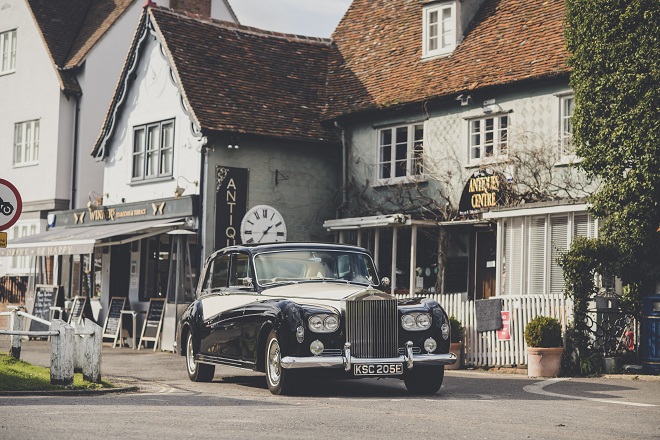
1965 Phantom V (5VD63) This Phantom was originally owned by Wing Commander Patrick Barthropp. In 1968, John Lennon purchased the car from Barthropp coinciding with the launch of The Beatles’ White Album. In September 1969 he sold the car to Allen Klein, an American businessman.
The car appeared in the Oscar-winning film Georgy Girl (1966), the classic Let It Be (1970), starring The Beatles, Performance (1970), featuring Mick Jagger, and then prominently featured in The Greek Tycoon (1978) starring Anthony Quinn.
In 2016 after extensive restoration, Jody Klein, a longtime Rolls-Royce Enthusiasts’ Club member brought the car to the Concurs d’Elegance, Lincolnshire, where it was awarded first place for ‘Best In Class’.
The car currently resides in the United Kingdom.
1966 Phantom VI (5LVF65) James Young, established in 1863, is renowned for creating some of the most elegant coachwork to ever grace a motor car chassis. Perhaps the pinnacle of their achievements was realised in their PV23 design, developed especially for the Rolls-Royce Phantom V chassis, with 22 such bodies being built.
This model was usually finished in black, but for 5LVF65 the lighter shade of Ivory further enhances the classic elegance of every curve and line from the pen of its acclaimed designer, A. F. McNeil.
The interior contains a remarkably spacious rear compartment, with the finest cabinetry work below the division glass. Champagne cloth to the rear compartment is chosen for greater comfort than the similarly coloured and more resilient leather that the chauffeur would enjoy.
2015 Phantom VII (Serenity Phantom) Rolls-Royce created this magnificent Bespoke Phantom VII Extended for its display at the 2015 Geneva Motor Show. Inspired by opulent motor cars made for international royalty in the early 1900s, the rear passenger cabin is finished in a unique Smoke Green raw silk, specially handwoven and decorated with hand-embroidered and hand-painted Chinoiserie blossom motifs that took up to 600 hours to complete. The design also appears in the fascia and marquetry inlays in the rear doors; smoked cherrywood and bamboo elements, and details echoing the raked gravel in Japanese gardens complete the interior’s calm, natural ambiance. At the time, the Mother of Pearl exterior paint finish was the most complex – and expensive – the marque had ever produced.
2021 Phantom VIII (Phantom Oribe) A unique collaboration saw the House of Rolls-Royce and the House of Hermès co-create a Bespoke Phantom for Japanese entrepreneur Yusaku Maezawa. Named Phantom Oribe, the motor car features a Bespoke two-tone exterior finish, inspired by the client’s world-class collection of ancient Japanese ceramics, Oribe ware. In an unusual move, the Rolls-Royce paint was made available for use on the client’s private jet that the Phantom is paired with.
The interior is finished predominantly in Hermès Enea Green leather. The Gallery features an artwork based on a design by the celebrated French artist and illustrator Pierre Péron (1905–1988), who created many of Hermès’ iconic scarves.
AN ICON REBORN
At one minute past midnight, on January 1, 2003, the first Phantom VII was handed over to its new owner – the first motor car to be produced at the brand-new Home of Rolls-Royce at Goodwood, West Sussex, England. A thoroughly modern interpretation of the marque’s signature lines and proportions, as first set down by Sir Henry Royce himself, it was built entirely in-house by Rolls-Royce, with monocoque bodywork to a standard design rather than coachbuilt. In one important sense, however, it retained a link with its heritage, in that every car was hand-built by a team of skilled craftspeople. Furthermore, the marque’s Bespoke programme meant Phantom was effectively a canvas upon which patrons could realise their own visions and desires.
Over its 13-year lifespan, Phantom VII cemented Rolls-Royce as the world’s pre-eminent superluxury motor manufacturer, and its own place as the marque’s pinnacle product. But just like their predecessors, Rolls-Royce’s designers and engineers understood that perfection is a moving target: that Phantom was never ‘done’.
In 2016, Rolls-Royce presented Phantom VIII. This was the first Rolls-Royce to be built on the marque’s proprietary Architecture of Luxury, an all-aluminium spaceframe designed to underpin every future motor car produced at Goodwood.
Phantom VIII was specifically designed to be the ultimate platform for Bespoke commissions. This has resulted in some of the most technically ambitious and challenging projects ever undertaken by the marque’s designers, engineers and specialist craftspeople. It is also the only Rolls-Royce model to feature the Gallery – an uninterrupted swathe of glass that runs the full width of the fascia, behind which the client can display a commissioned work of art or design.
Volvo Cars reports sales of 47,150 cars in April, down 24.8 per cent compared with the same month last year. Demand is still strong, especially for Volvo Cars’ electrified vehicles and the share of recharge models as part of total sales continues to increase.
In April Volvo Cars electrified recharge models grew 18.7 per cent compared with the same month in 2021 accounting for 38.4 per cent of total sales. The share of fully electric cars stood at 10 per cent.
For the January-April period, Volvo Cars’ sales reached 195,445 cars, down 21.3 per cent compared with the same period last year.
In April, Covid-19 lockdowns in eastern China impacted retail deliveries in China and added more challenges to already weakened global supply chains, resulting in additional loss of production.
As previously communicated at the end of the first quarter, Volvo Cars informed of a supplier shortage of a specific type of semi-conductor, which will impact production during the second quarter. The company considers this a temporary setback and expects the supply chain restraints related to semi-conductors to improve during the second half of the year.
European sales for April reached 19,822 cars, down 23.2 per cent compared with the same month last year. Volvo’s electrified Recharge sales accounted for 51.4 per cent of the total sales in the region during the month.
Volvo Cars’ US sales for the month reached 10,022 cars, down 9.2 per cent compared with April last year, with Recharge models making up 44.1 per cent of the total sales.
China sales declined 47.8 per cent in April to 8,579 cars compared to the same month last year.
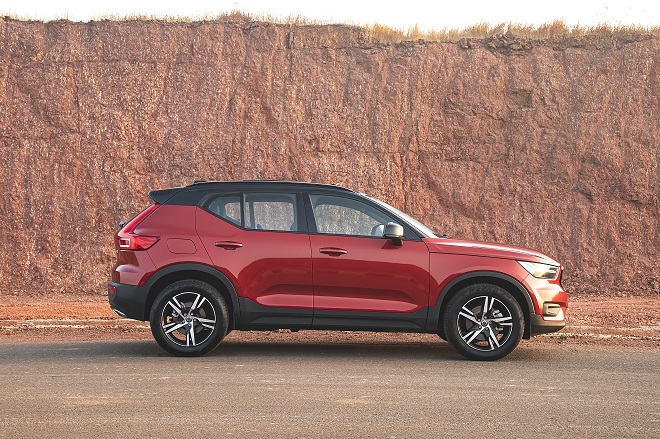
Volvo’s top selling model for the month was the XC60 with sales of 14,952 cars (2021: 17,925 units), followed by the XC40 at 13,876 cars (2021: 19,833) and the XC90 at 8,208 cars (2021: 9,371 units).
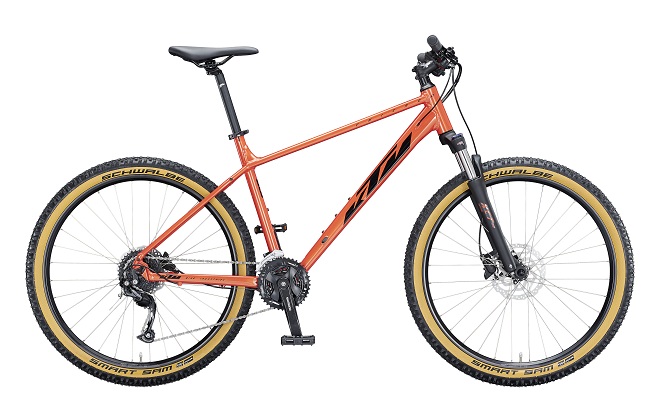
Ninety One Cycles, one of India’s fastest growing active lifestyle brands, has launched KTM’s brand new offering in India, the Chicago Disc 271. Ninety One Cycles has an exclusive partnership with KTM bicycles in India. Ninety One and KTM share a common vision of bringing in a revolution in one of India’s oldest mobility mediums – cycles, following an engineering-led, consumer-centric, disruptive approach.
A well-engineered MTB Bike Chicago Disc 271 is equipped with sturdy and durable TL Compatible Rims, KTM Line Rizer 680 mm handlebar mainly designed for mountain biking and SCHWABLE 27.5” tires that will provide the much-needed grip to cyclists on any terrain. Apart from boasting of its world-class KTM line stem, the bike will be available in three frame sizes, catering to the comfort of a diverse audience range, weighing approximately 15 kgs.
Speaking on the launch, Sachin Chopra, Co-Founder and CEO, Ninety One said, “Cycling in India is evolving at a tremendous pace with people from different age groups and economic backgrounds actively adopting bicycling as part of their daily commute and fitness regime. We are excited to bring KTM’s latest premium bike, Chicago Disc 271 to cater to users looking for a superior experience. Ninety One aims to deliver high quality well-engineered products to our consumers which is complimented by our successful association with KTM. We believe Chicago Disc 271 will set a benchmark in India, with best-in-class comfort, safety and convenience for the end user.”
Vishal Chopra, Co-Founder and Head of Digital, Ninety One said, “At Ninety One Cycles, we have played an active role in providing a seamless distribution infrastructure for KTM bikes, thereby meeting the robust demand from consumers across markets. Through our omni-channel model, customers can browse through and purchase the product directly online or through our countrywide offline network of retailers. We are confident that the Chicago Disc 271 will resonate with the varied needs and demands of cycling enthusiasts in India, further bolstering KTM’s brand salience in the country.”
The association of Ninety One and KTM makes for a powerful combination of two path breaking brands that collectively cater to both the leisure bicycle market and the performance bicycle market. The latest product offering, Chicago Disc 271 is priced at INR 62999/-. Through this association, the companies aspire to bring together the best of design, ergonomics and innovation in India’s bicycle industry.
British luxury supercar and hypercar maker McLaren Automotive announces the appointment of Michael Leiters as its new Chief Executive Officer from 1 July, 2022.
German-born Mr Leiters, 50, holds a doctorate in engineering and has held senior positions at Porsche AG and, more recently, was Chief Technology Officer at Ferrari.
Mr Leiters will be based at McLaren’s global-headquarters at the McLaren Technology Centre and the adjoining McLaren Production Centre in Surrey, England where all the company’s supercars and hypercars are hand-built.
Mr Leiters will lead the 3,000-strong workforce spanning all global activities, including the McLaren Composites Technology Centre, instrumental in innovating technology for the company’s ground-breaking high-performance hybrid series production supercar the McLaren Artura, deliveries of which are soon to commence.
McLaren now has more than 100 retailers in over 40 territories around the globe. Despite the pandemic, McLaren continues to see strong customer demand, particularly for its limited-production models with both the 765LT Coupe and Spider variants entirely sold out along with the Ultimate Series Elva.
Paul Walsh, Executive Chairman, McLaren Group said, “On behalf of everyone at McLaren, I am delighted to welcome Michael as the new CEO of McLaren Automotive. His extensive industry leadership experience combined with his passion for engineering and future technology will help guide and develop our team as we enter an exciting second decade.”
Michael Leiters, Chief Executive, McLaren Automotive commented, “I could not be more excited to be joining McLaren Automotive as CEO at this important moment in its journey. McLaren is already recognised as one of the world’s most admired luxury supercar companies. I look forward to growing that reputation for our loyal customers, employees, fans and partners as we write the next chapter in McLaren’s illustrious history.”
Showcasing the unique connection between art and automobiles, BMW Group India will exhibit the ‘Future of Mobility’ at the latest edition of India Art Fair being held in New Delhi from 28 April to 1 May 2022.
Mr. Vikram Pawah, President, BMW Group India said, “Art is a beautiful way of seeing the world as it was, is and will be tomorrow. More than ever, India Art Fair reflects a unique blend of art, creativity and a strong awareness of evolving socio-ecological sensibilities. In the same way, BMW Group’s pioneering vision is reflected through its vehicles. Our electric vehicles are an expression of a sustainable future. Just like an artist develops a work around a central theme, BMW Group develops its e-vehicles around the core of sustainability – in form, function and emotion. As Joy is reborn, we are excited to share our vision with the world. The BMW iX and MINI Cooper SE have already won the hearts of auto enthusiasts in India. We invite everyone to come and experience the face of progressive e-mobility at India Art Fair.”
As the ‘Presenting Partner’ of the India Art Fair, BMW India has supported the evolution and exposure of modern Indian art and artists since 2012. Through this year’s collaboration, BMW India will exhibit progressive e-mobility with an exclusive display of its all-electric range.
The BMW iX is the first electric all-wheel drive vehicle by BMW. As BMW Group’s new technology flagship, it presents hallmark ‘Sheer Driving Pleasure’ with commitment to sustainability. Born electric, the iX imbibes principles of sustainability throughout its lifecycle, right from production to usage to end-of-life, making comprehensive use of natural and recyclable materials.
MINI is displaying the first all-electric MINI 3-Door Cooper SE at India Art Fair. The MINI 3-Door Cooper SE combines MINI’s inventive spirit and iconic design with instant torque, zero emissions and legendary go-kart feeling. It will play a significant role in inspiring creative individuals and trendsetters to drive the silent revolution. In addition to the BMW iX and MINI Cooper SE, BMW Group India is displaying another much-awaited upcoming all-electric product.
BMW India will also showcase ‘The Future is Born of Art’ commission BMW iX car ‘Suno’ by artist Faiza Hasan. ‘The Future is Born of Art’ is an initiative by BMW India and India Art Fair which aims to propel emerging Indian artists and further BMW Group’s commitment to promote art, sustainability and innovation. The BMW iX served as a canvas and inspired artists to reflect on the philosophy of ‘Sustainable Circularity’. Four selected artists were asked to submit proposals reflecting their unique interpretations of the theme. The winning design by Faiza Hasan will be reflected on the BMW iX as a car wrap and shown at the Fair.




 Power Drive