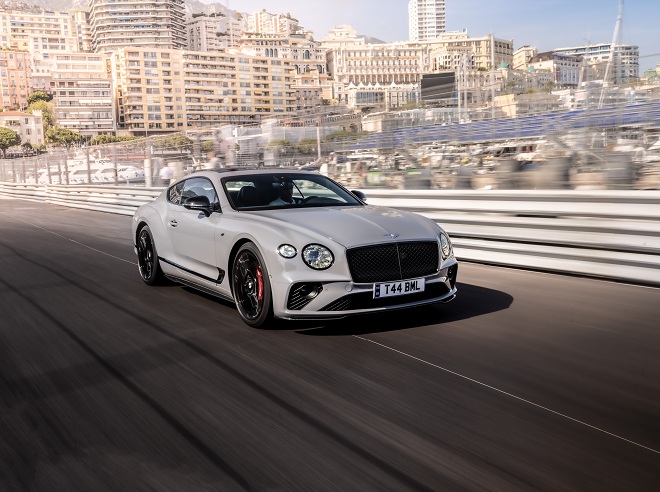
Bentley is bringing contrast and depth to its Continental GT family with the launch of a new S range, focused on driving performance and visual presence. Through a multitude of enhancements to the exterior design, interior specification and dynamic system, the new S range adjusts the Bentley grand touring recipe to center on the pleasure of driving – an opposing yet complementary emphasis to the “Wellbeing behind the Wheel” concept of the recent, comfort-centric Azure range launch.
Owners of Bentley’s two-door models long appreciated the breadth of choice available to them, from the towering performance of the 6.0-liter W12 Continental GT Speed to the characterful beat of the 4.0-liter Continental GT V8. Now, with the arrival of the Continental GT and GTC S, owners can choose to emphasize the sporting character of the 4.0-liter V8-powered Bentley Continental GT, thanks to a package of performance-focused design and engineering features.
Agile and Exhilarating The new S range retains the 542 bhp (550 PS) and 568 lb.ft (770 Nm) 4.0-liter V8 engine that’s proved incredibly popular with customers around the world, delivering a time of just 4.0 seconds for 0-62 mph (100 kmph). For the GT and GTC S, the engine is enhanced by the fitment as standard of a Sports Exhaust to amplify the crossplane V8 beat.
The eager, free-revving and lighter 4.0-liter V8 engine gives the Continental GT S models a responsive and agile character, and this is amplified by Bentley Dynamic Ride – the advanced 48 V electric active anti-roll control system first pioneered by Bentley. By generating up 959 lb.ft (1300 Nm) in 0.3 seconds, motors within the anti-roll bars actively compensate for cornering forces to minimise body roll under hard cornering, while also improving ride comfort at cruising speeds by decoupling the left- and right-hand wheels from each other.
Exterior Design: Assertive and Purposeful From the black gloss radiator grille and black brightware to distinctive S badging on the front fenders, the new S models make an instant and dramatic impact. Headlamps and rear lights are dark tinted, while all exterior brightware is specified in gloss black – with only the winged Bentley badge and lettering being finished in bright chrome. Gloss black wing build on the darker exterior look. The effect of these features is dramatic, giving the GT and GT S a more assertive stance regardless of the limitless choice of exterior colors they’re paired with.
The S range is offered with an all-new 22-inch wheel option, with five Y-shaped spokes finished in gloss black and also available in a new Pale Brodgar Satin finish. Red-painted brake calipers sit behind the wheels to provide a perfect sporting contrast.
A second wheel option for the S models is a 21-inch tri-spoke wheel design that combines gloss black and bright machined finishes – also unique to S.
Finishing touches for the exterior include S badging on the front fenders, quad exhaust tailpipes (in black, naturally) and sill extenders in black as featured on the Continental GT Speed.
Interior Design: Tactile, Dramatic and Individual Complementing the dynamic and purposeful exterior design is an interior that’s striking and performance-focused, with a two-tone colour split that’s unique to the S models.
In the early days of Bentley, competitors at Brooklands and Le Mans would wrap steering wheels in cord for extra cushioning and a more secure grip. Today’s sporting Bentley drivers are rather better served, with the suede-like properties of Dinamica proving ideal for the steering wheel, gear lever, seat cushion and seat backrest of the Continental GT and GTC S range. Leather hide is employed on the seat bolsters, door pads, along the instrument panel and around the console. The pairing of Dinamica with Bentley’s incomparable leather brings an interior that offers the tactile contrast of smooth hide and the soft napped finish of Dinamica.
Driver instrumentation continues the sporting theme with the same performance-focused graphics as the Continental GT Speed. The S design seats are fluted, with quilting available as an option, and the ‘S’ emblem is embroidered on the headrest of each seat; embroidered Bentley wings are a no-cost alternative. Finishing touches include a metal S signature badge on the fascia and illuminated Bentley treadplates with the ‘S’ device replacing the Bentley Motors Ltd plaque.
Customer Choice – Sports and Wellness in Differing Blends The combination of striking design, performance and agility gives the Continental GT S and Continental GTC S strong appeal for all those who love powerful, extrovert performance cars. With the recent launch of the wellness-focused Azure range alongside the S models, Bentley is providing customers with easier ways to choose the emphasis of their Bentley – centering on either onboard comfort and wellbeing through Azure, or dynamic performance and visual presence through the S and Speed options.
Volvo Car India today announced that its all-electric offering the XC40 Recharge will be assembled in India for the Indian market. The car with a range up to 418 kilometres per charge will be assembled at the company’s Hosakote plant near Bengaluru, Karnataka.
“We are committed to grow the Indian market and our plans to assemble our latest offering the XC40 Recharge at our plant in Bengaluru is a reflection of this resolute. The future of mobility is electric and as a company we have already stated that we will be an all-electric car company by 2030. Our focus on local assembly is a step in this direction. Our current range of internal combustion engine cars are already being rolled out from Hosakote plant to the exacting safety and quality global benchmarks that Volvo is known for.” said Mr. Jyoti Malhotra, Managing Director, Volvo Car India.
Volvo has recently showcased their first pure-electric vehicle XC40 Recharge in India and the launch is planned in July with expected deliveries starting in October this year. Volvo Car India is committed to introduce a new all-electric model every year commencing 2022. Globally the company has announced that by 2030 Volvo will produce only electric cars.
Last year, Volvo has introduced the XC60, S90, and XC90 petrol with a 48V mild-hybrid system in support to their transition to an all-petrol portfolio and phased out all diesel models. The Volvo XC40 SUV, Volvo XC60 SUV, Volvo S60 sedan and Volvo S90 sedan were among the bestselling models sold by Volvo Car India.
The company started the local assembly in India in 2017 and since then the focus has been to continue adding models in the locally assembled line-up. At present, the flagship SUV XC90, the mid-size SUV XC60, the compact luxury SUV XC40 and the luxury sedan S90 is being locally assembled at the Bangalore plant. XC40 Recharge pure electric becomes the latest one to join the locally assembled portfolio in India.
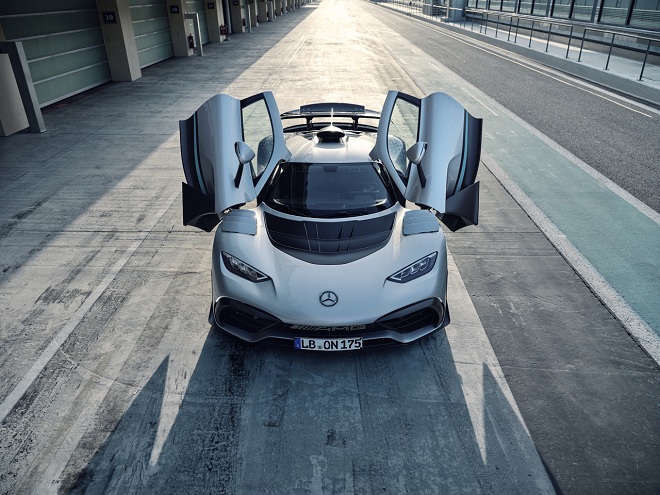
AMG’s foundation stone was laid back on 1st of June 1967. To mark the 55th anniversary of the performance and sports car brand, the production version of the Mercedes-AMG ONE (combined weighted fuel consumption: 8.7 l/100 km; combined weighted CO2 emissions: 198 g/km; combined weighted electrical consumption: 32 kWh/100 km)[1] is celebrating its world premiere. The two-seater super sports car brings the world’s most modern and efficient Formula 1 hybrid drive technology from the race track to the road for the first time. The performance hybrid produces a total output of 782 kW (1063 hp) from one combustion engine and four electric motors, with a top speed capped at 352 km/h. The extremely complex development was carried out in close cooperation with the Formula 1 experts at Mercedes-AMG High Performance Powertrains in Brixworth. The Mercedes-AMG ONE will also officially be seen in action for the first time in the UK, as part of the Festival of Speed at Goodwood (23 to 26 June 2022).
The unique hypercar inspires not only with its E PERFORMANCE Formula 1 hybrid drive, but also with further motorsport technology. This ranges from the carbon-fibre monocoque and carbon-fibre body to the load-bearing engine/transmission unit, active aerodynamics and the push-rod suspension. With its complex technology, the two-seater Mercedes-AMG ONE offers even more than a Formula 1 racing car in some cases. It features the AMG Performance 4MATIC+ fully variable all-wheel drive with hybrid-driven rear axle and electrically driven front axle with torque vectoring. It can also drive purely electrically.
“With the Mercedes-AMG ONE, we have more than pushed the envelope. The immense technical challenges of making a modern Formula 1 powertrain suitable for everyday road use have undoubtedly pushed us to our limits. Over the duration of the development period, many may have thought that the project would be impossible to implement. Nevertheless, the teams in Affalterbach and the UK never gave up and believed in themselves. I have the highest respect for all those involved and am proud of this team achievement. To put such a hypercar on wheels is certainly unique. This applies to us as Mercedes-AMG not only from a technical point of view, but also in terms of the close exchange with our loyal customers. Together with us, they have gone through ups but also downs in the course of development. They were an integral part of Project One from the very beginning and can now look forward to the highly exclusive and unique Mercedes-AMG ONE, which has now also been able to clear the next hurdle and passed all ECE certification tests”, says Philipp Schiemer, Chairman of the Board of Management of Mercedes-AMG GmbH.
“The performance data of the Mercedes-AMG ONE are ultimately only a small excerpt of what technology is in this vehicle. Apart from a Formula 1 powertrain that generates 1063 hp from a relatively small, highly efficient internal combustion engine in combination with four electric motors, the monumental task was above all the exhaust gas aftertreatment. The Mercedes-AMG and Mercedes-AMG High Performance Powertrains teams have really done a great job here. This project was partly a curse and a blessing at the same time. But we have walked the stony path, and as a technician you naturally get carried away with all the details. From the materials used, the exceptional chassis components to the aerodynamic refinements – in terms of complexity, the Mercedes-AMG ONE is hard to beat. In a Formula 1 car, a team of engineers with laptops makes sure that the powertrain starts. With our hypercar, all it takes is the push of a button. This also illustrates the immense software know-how that has gone into this vehicle”, says Jochen Hermann, Technical Managing Director of Mercedes-AMG GmbH.
Exceptional E Performance hybrid drive with 1.6-litre V6 engine and four electric motors The E Performance hybrid drive of the Mercedes-AMG ONE comes directly from Formula 1 and has been realised in close cooperation with the experts at Mercedes-AMG High Performance Powertrains in Brixworth. It consists of a highly integrated and intelligently networked unit comprising one hybrid, turbocharged combustion engine with a total of four electric motors. One has been integrated into the turbocharger, another has been installed directly on the combustion engine with a link to the crankcase and the two remaining motors drive the front wheels.
The 1.6-litre V6 hybrid petrol engine with electrically assisted single-turbocharging corresponds in its technology to the current Formula 1 power unit. The four overhead camshafts are driven by spur gears. To achieve high engine speeds, the mechanical valve springs have been replaced by pneumatic valve springs. The engine, mounted in mid-engine position in front of the rear axle, revs up to 11,000 rpm. However, for longer durability and the use of commercial super plus petrol, it deliberately stays below the F1 rev limit.
The high-revving power unit is boosted by a high-tech turbocharger. The exhaust gas turbine and compressor turbine are positioned at a distance from each other and connected by a shaft. This allows a lower installation position for the turbocharger. On the shaft is an approx. 90 kW electric motor. Electronically controlled, this drives the turbocharger shaft directly, accelerating the compressor wheel up to 100,000 rpm before the exhaust gas flow takes over. The Formula 1 designation for this unit is MGU-H (Motor Generator Unit Heat).
Lightning-quick response, faster than a naturally aspirated V8 engine The major advantage: the response improves significantly, immediately from idle speed (when the exhaust flow is still weak) across the entire rev range. The 1.6-litre V6 engine responds even more spontaneously to accelerator pedal commands, while the overall driving experience is highly dynamic. In addition, the electrification of the exhaust gas turbocharger enables higher torque at low engine speeds. This also increases agility and optimises acceleration. Even when the driver takes their foot off the accelerator or brakes, the technology is able to maintain boost pressure at all times. This ensures a continuously direct response.
The electric exhaust gas turbocharger in the Mercedes-AMG ONE has yet another advantage: it uses part of the surplus energy from the exhaust gas flow to generate electrical energy as a generator. This is either stored in the high-voltage lithium-ion battery or fed to the electric front axle or the electric motor (MGU-K = Motor Generator Unit Kinetic) on the combustion engine. The MGU-K has an output of 120 kW, is positioned directly on the combustion engine and is connected to the crankshaft via a spur gear system – another technology that ensures maximum efficiency and performance in Formula 1.
Turbocharging and direct injection with spray-guided combustion not only enable high power output, but also increase thermodynamic efficiency, thus reducing fuel consumption and exhaust emissions. The high-performance six-cylinder engine has two injection systems. Direct injection delivers the fuel into the combustion chambers at up to 270 bar pressure. This is a multiple process at times, and is controlled by the engine management system as required. The additional port injection is needed to achieve the high specific power of the engine and at the same time comply with the exhaust emission limits.
Added to this is the very complex and effective exhaust gas cleaning system with four preheated metal catalytic converters, two ceramic catalytic converters and two petrol particulate filters. The four heating elements with a combined output of 16 kW make it possible to comply with the EU6 exhaust emission limits under real driving conditions (RDE). The exhaust gas cleaning system is also backpressure-optimised to avoid power losses. This also applies to the large rear silencer made of lightweight titanium.
New all-wheel drive with purely electrically driven front axle The two 120 kW electric motors on the front axle reach rotor speeds of up to 50,000 rpm. They are each connected to the front wheels via a reduction gear. The front axle, which is thus driven purely electrically, operates wheel-selectively in each case and thus enables individual torque distribution for particularly high driving dynamics (“torque vectoring”). In addition, the two electric motors also allow the braking energy to be optimally used for recuperation – up to 80 percent under everyday driving conditions. This energy is stored in the battery and is available for a longer electric range or for more drive performance. Each electric motor is controlled by its own power electronics located in close proximity to the electric motors in the floor assembly.
High Performance Battery with Formula 1 technology The lithium-ion energy storage system is also a special Mercedes-AMG development. Its technology has already proven itself in the Mercedes-AMG Petronas F1 Team’s Formula 1 hybrid racing cars under the toughest conditions and can also be found in the battery of the Mercedes-AMG GT 63 S E PERFORMANCE. The AMG High Performance Battery combines high power that can be called up frequently in succession with low weight to increase overall performance. Added to this are the fast energy draw and the high power density. This means that during a brisk drive in hilly terrain, for example, drivers can immediately call on the full power potential on uphill stretches, while recuperation is strong when driving downhill.
The arrangement of the battery cells and the cell cooling mirror the Mercedes-AMG Formula 1 racing car. For everyday use, however, their number is many times greater in the Mercedes-AMG ONE. The capacity of 8.4 kWh is sufficient for a purely electric range of 18.1 kilometres. Charging is via alternating current and the integrated 3.7 kW on-board charger. In addition, the battery can be supplied with fresh energy via recuperation or from the combustion engine. The lithium-ion, high-voltage battery and the DC/DC converter supporting and charging the 12 V onboard electrical system are accommodated in space-saving configuration in the vehicle floor behind the front axle.
Innovative direct cooling of the high-voltage battery The basis for the high performance of the battery is the innovative direct cooling: A high-tech coolant flows around all the cells and cools them individually. Background: Every battery needs a defined temperature for optimum power delivery. If the battery becomes too cold or too hot, it noticeably loses power at times, or has to be regulated to avoid damage if the heat becomes excessive. The even temperature of the battery therefore has a decisive influence on its performance, service life and safety.
The coolant circulates from top to bottom through the entire battery past each cell with the help of a high-performance electric pump and also flows through a heat exchanger attached directly to the battery. The system is designed to ensure even heat distribution in the battery. The result is that the battery is always in a consistent, optimal operating temperature window of 45 degrees Celsius on average – no matter how often it is charged or discharged. It may well be that the average temperature is exceeded when driving at high speeds. The protection mechanisms are therefore configured so that the maximum performance can be obtained from the battery, with the temperature level subsequently lowered by direct cooling.
Only direct cooling makes it possible to use cells with very high power density. Thanks to this individual solution, the battery system is particularly light and compact. The low weight is also due to the material-saving busbar concept, and the lightweight yet strong crash structure of the aluminium housing. It ensures the highest level of safety. Another feature is the high voltage of the drive system, which operates at 800 volts instead of the usual 400 volts. Thanks to the higher voltage levels it is possible to significantly reducing the cable diameters, for example, thereby saving design space and weight.
Intelligent operating strategies for optimum output and efficiency All in all, the High Performance Plug-in Hybrid Drive System offers numerous intelligent operating strategies that are optimally adapted to different application scenarios. The drive programs range from purely electric operation to a highly dynamic mode (Strat 2), which corresponds to a setting used in Formula 1 qualifying for the best possible lap times. Despite the high system complexity, the driver will always receive the optimal combination of performance and efficiency – depending on the current requirement
Six drive programs – from purely electric driving to race track mode The Mercedes-AMG ONE starts silently at first by switching on the electric motors on the front axle. In parallel, the catalytic converters are preheated. The combustion engine will not start until the correct catalytic converter temperature is reached.
Race Safe: standard program with on-demand hybrid driving mode and all-electric start-up. Only when higher power is required does the combustion engine switch on. Race: hybrid driving mode with special charging strategy. The combustion engine runs continuously and can charge the high-voltage battery more so that full electric power is always available.
EV: all-electric driving.
Race Plus (race track only): active aerodynamics, chassis lowering by 37 mm (front)/30 mm (rear), firmer chassis tuning, special performance management. Strat 2 (race track only) active aerodynamics, even firmer suspension tuning and vehicle lowering by 37 mm (front)/30 mm (rear). Full power from all motors as in Formula 1 qualifying.
Individual: settings according to personal preferences for the road modes. Impressive acceleration values are possible with the RACE START function in the Race, Race Plus and Strat 2 drive programs: the sprint from a standstill to 200 km/h is completed in just 7.0 seconds.
Completely new, automated 7-speed manual transmission Power is transmitted to the rear wheels by means of a 7-speed manual transmission completely newly developed for the Mercedes-AMG ONE. The lightweight transmission design saves weight, while integration into the body-in-white enhances rigidity and takes up little space. It is specifically designed for the high torque and speed capacity of the powerful Formula 1 hybrid powertrain. Shift rods and the 4-disc carbon-fibre clutch are hydraulically controlled. The gear ratios are designed to minimise the power difference after upshifting and keep the combustion engine at high revs. The locking differential is integrated into the transmission.
Multi-link suspension with innovative pushrod suspension The basis for the outstanding driving characteristics of the Mercedes-AMG ONE is the lightweight and high-strength carbon-fibre monocoque, the technology of which also originates from Formula 1. The same applies to integration of the engine and transmission: both fulfil load-bearing functions and completely support the rear suspension.
The chassis is an aluminium construction at the front and rear, each with five links and two adjustable suspension struts. The coil-over suspension has several special features: both push-rod spring struts have been installed across the direction of travel. The innovative arrangement of the spring and damper unit replaces the function and use of a conventional tubular cross stabiliser. This solution reliably prevents rolling movements, even during very rapid directional changes, without being uncomfortable. Roll stiffness and roll damping are completely independent of lift stiffness and lift damping. Wheel bearings with ceramic ball bearings for less friction reflect the attention to technical detail.
The adaptive damping adjustment can be adapted via the drive program: the C (Comfort) and S (Sport) suspension settings are available in the EV, Race Safe, Race and Individual drive programs; the S (Sport) and S+ (Sport+) suspension settings are available in the Race Plus and Strat 2 drive programs. As part of the active aerodynamics, the chassis can be lowered hydraulically: by 37 millimetres on the front axle and by 30 millimetres on the rear axle. In addition, a lifter for the front axle (can only be activated in the road drive programs) prevents the Mercedes-AMG ONE from touching down on underground parking ramps, for example.
The overall tuning of springs and dampers has been designed for perfectly balanced, easily controllable and highly dynamic handling. This is also assisted by the all-wheel drive and torque vectoring. Unlike in Formula 1, ABS is on board as standard, while ESP® can be regulated in three stages, as is customary at Mercedes-AMG. ESP® ON stands for high safety and is always activated in “Highway” mode. ESP® SPORT HANDLING MODE allows higher yaw angles before system intervention for sporty driving. ESP® OFF switches the system off for extremely dynamic driving on closed-off circuits. All three settings are possible in “Track” mode.
Exclusive forged wheel with carbon-fibre partial cover A new development is the 10-spoke forged aluminium wheel with centre lock, which is exclusive to the Mercedes-AMG ONE. This has a radial carbon-fibre partial cover with an aerodynamically sophisticated shape: it improves the aerodynamic efficiency of the vehicle by enhancing the flow around the wheel. This is another example of how the AMG development team has paid the utmost attention to even the smallest aspects, so as to improve the efficiency of the hypercar.
Newly developed 9-spoke magnesium forged wheels designed exclusively for the Mercedes-AMG ONE are also available as an option. In addition to the centre-lock technology, they feature a patented bionic design to maximise lightweight construction and rigidity. The aerodynamically designed carbon-fibre partial cover is a good example of the combination of low weight, optimised brake cooling and aerodynamic efficiency. At the same time, nine air vanes per wheel ensure active ventilation of the wheel arch and thus improved heat dissipation from the brakes.
At the front, the Mercedes-AMG ONE runs on 10.0 J x 19 wheels with 285/35 ZR 19 Michelin Pilot Sport Cup 2R M01 tyres, which were developed exclusively for the hypercar, and at the rear on 12.0 J x 20 wheels, with Michelin Pilot Sport Cup 2R M01 tyres in size 335/30 ZR 20. The exclusivity of the tyres is reflected in the design of the sidewall, which incorporates the vehicle silhouette and the number 1.
A special, weight-optimised AMG carbon-fibre ceramic high-performance composite brake system is used for deceleration. The front axle sports 6-piston fixed callipers and also internally ventilated and perforated brake discs measuring 398 x 38 millimetres. The rear axle is fitted with 4-piston fixed callipers. In addition, it has internally ventilated and perforated brake discs measuring 380 x 34 millimetres. The low weight of the system reduces the unsprung masses and thus increases driving dynamics and agility. Furthermore, the ceramic brake features a longer service life, higher corrosion resistance and higher thermal stability. The “AMG Carbon Ceramic” lettering and the specially painted brake callipers visually distinguish this unique brake system.
Exterior design: fascination and function The design of the carbon-fibre body is inspired by the top class of motorsport. But above all, it embodies the Mercedes-AMG principle that fascination is always linked with function. Each component fulfils a task. The mid-engine concept based on a carbon-fibre monocoque plus a load-bearing engine/transmission unit provides the extremely muscular proportions: the cockpit is positioned far forward, as is typical for racing, combined with voluminous wheel arches, a wasp waist and a wide tail.
Designers and aerodynamics experts worked closely together on the design. Even the basic body has been aerodynamically designed for maximum downforce and balance. And this move has been a successful one: the Mercedes-AMG ONE generates downforce from as low as 50 km/h, which becomes increasingly stronger as the speed increases.
Front view: powerful and functional The front view is characterised by the large front apron, the various air intakes of which extend across the entire vehicle width. The trapezoidal centre section bears a large, white AMG logo. Above it, on the vehicle body, is the Mercedes star. It is designed in the form of an artistically and technically perfect airbrush motif – by a specialist in the UK. The AMG-typical A-wing under the centre section adds another characteristic highlight and merges seamlessly into the wings.
Large air intakes dominate on the left and right, framed by U-shaped air deflectors and each divided by two black transverse fins. Flat LED headlamps blend seamlessly into the body contours. The black air outlets in the bonnet guide the hot airflow around the sides of the driver compartment. This allows the flow of fresh air to pass unhindered across the driver compartment and into the intake tract on the roof. The active flaps on the front diffuser influence the aerodynamic performance at the front axle and ensure excellent aerodynamic balance. The active air vents (so-called louvres) in the front wheel arches also increase the downforce on the front axle.
Taut flanks, voluminous wheel arches The low, dynamic greenhouse has an unmistakable, spherical architecture with a distinctive window pattern. The large, dark area stands for important technical functions. These technical components form a visual contrast to the clean overall lines of the vehicle.
The roof is dominated by the air intake derived from Formula 1, through which the engine draws in fresh air as needed. The black intake transitions elegantly into the black, vertical shark fin: it prevents cross-flow and/or a breakaway of airflow at the rear and thus improves cornering stability. Overall, this also means more performance and safety at high speeds. The power unit is hidden under two removable carbon-fibre covers. Large NACA air intakes are integrated into each of these, guaranteeing optimum guidance of the airflow for the radiators placed below.
The side view shows a sensual and clear surface design, equally combined with functional features. The vehicle flanks are tautly recessed, with black carbon-fibre surfaces redirecting the airflow around the vehicle body as in motorsport. The airbrush design on the flanks was created by the same artist who designed the paintwork for the Formula 1 racing cars. Tight-fitting wheel arches stretch over all four wheels like muscles, ready to leap into action.
The doors open diagonally forwards and upwards. The fuel filler flap is at the rear right, and the charging socket for the plug-in hybrid battery is at the rear left.
Rear end: fascination and function The sharp spoiler lip and the two-part rear diffuser bring aerodynamic efficiency and performance advantages at high speeds. This also applies to the specially shaped underbody with longitudinal fins and openings for cooling ducts. The rear wing is a two-piece retractable blade plus integrated adjustable flap. The design of the exhaust tailpipe with its large, round outlet and two further small, round apertures has been adopted directly from the Formula 1 cars. The muscular appearance is further enhanced by the rear apron with its large, black mesh and carbon-fibre components. The tail lights each feature three diamond-shaped lighting elements to echo the graphic design of the AMG brand logo, and therefore also the design of the headlamps.
The high-tech materials and colour combinations of the outer skin are transferred directly from racing. Functional exterior components are presented in exposed carbon fibre and contrasted with sculpturally sensual paint surfaces.
Active aerodynamics: three interpretations to choose from The active, hydraulically controlled aerodynamics increase downforce on the front and rear axles and also improve aerodynamic efficiency. Depending on the driver’s preference and the selected drive program, three different aerodynamic setups are available:
“Highway” in the “Race Safe”, “Race”, “EV” and “Individual” drive programs: the louvres are closed, the active flaps on the front diffuser are extended and the rear wing including flap is retracted.
“Track” in the drive programs “Race Plus” and “Strat 2” (both only allowed on the race track): the front diffuser flaps fold up to shape the front diffuser contour to maximum efficiency. The rear wing extends fully, as does the rear wing flap. The louvres are opened to increase the downforce on the front axle and to increase the negative pressure in the wheel arches. The vehicle is lowered by 37 millimetres at the front axle and 30 millimetres at the rear axle. The consequence of all these measures: the total downforce increases up to five times compared with the road drive programs, depending on the speed.
“Race DRS” (Drag Reduction System), can be activated at the touch of a button as in Formula 1, in the race track drive programs: the rear wing flap retracts completely and the louvres are closed. Although this reduces downforce by around 20 percent, the Mercedes-AMG ONE reaches high speeds even faster. DRS can be deactivated manually or is automatically deactivated as soon as the driver brakes or lateral acceleration is measured.
Interior: Formula 1 for two The interior design concept follows function on the racetrack and is expressed in the radical design idiom. In this way, Formula 1 technology can be experienced authentically on the race track and on the road. Here, too, every detail has a function. “No styling” is the design consequence resulting from the requirements for this driving machine. The design is a synthesis of sculptural form language and uncompromising racing design. In the bold minimalism of the monocoque interior, the reduced components are emphasised and showcased in terms of design and function.
The ergonomically contoured interior has room for two occupants. The firmly fixed racing seat-pan sculpture combines aesthetically with the footwell to form a single unit. It also merges smoothly into the sill area at the side and becomes an integral part of the highly sculptural monocoque landscape. The backrests of the AMG Motorsport seat pans can be adjusted to two positions: 25o and 30o. The steering wheel is electrically adjustable and the pedal box mechanically adjustable (in eleven steps) so that the driver can adopt an optimal driving position. The passenger footrest is also individually adjustable.
The centre tunnel is also a functional part of the carbon-fibre support structure. It blends fully into the seat sculpture and follows the principle of minimalism with its gently rising contour. A high-quality stowage compartment, a reduced switch panel and the Engine Start button form a single unit. The compartment is designed with a transparent lid. Two mini-USB ports for external audio devices enhance everyday usability. The Start/Stop button is prominently positioned on the tunnel and forms the end of the controls towards the front. The cylindrical housing body, made of real metal, is held laterally by two lugs that protrude organically from the basic volume of the tunnel.
Interior with functional structural parts The slim wing profile of the instrument panel appears light as if floating. As a functional structural component, it also stiffens the monocoque of the hypercar. The two high-resolution, free-standing 10-inch displays with individual Mercedes-AMG ONE graphics are finished with high-quality real-metal parts and adapted to the instrument panel. The instrument cluster display is in a slightly raised position in front of the driver. The multimedia monitor on the right of the centre console is tilted towards the driver.
The double-nozzle ventilation unit is suspended under the centre screen like a gondola. Screen and nozzles merge into one unit and underline the purist design concept. The ventilation nozzles repeat the basic rectangular shape of the displays.
The door panels are in functional, high-grade carbon fibre, and integrate smoothly into the sporty interior. A cassette of solid metal combines the air vents and power window switches, which are integrated as deeply recessed rectangles. Like a muscle, a contour drawn far forward in the door runs out to the rear and creates space for the characteristic course of the exterior window line.
Formula 1-style steering wheel In the radically designed and high-quality race steering wheel, operating and functional elements are combined with original race car components to ensure safe operation in extreme driving situations. The “shift light” is displayed at the top of the steering wheel rim, as is usual in racing cars. The steering wheel, which is flattened at the top and bottom and has an integrated airbag, offers further motorsport trim elements: the two integrated AMG steering wheel buttons can be used to activate various functions without having to take your hands off the wheel. For example, the drive programs, the nine-stage AMG Traction Control, the activation of the DRS or the suspension settings.
Screen instead of interior mirror, colours and materials from the racing car The Mercedes-AMG developers have also thought about suitability for everyday use and further ease of operation: air conditioning and electric windows are on board as standard, and the infotainment system ensures seamless connectivity. The user interface is integrated as an autonomous concept. The most important information is displayed on the road in the line of vision above the steering wheel, so that the driver is not distracted. To ensure optimal rearward visibility despite the vertical wing on the rear, the interior mirror is replaced by a screen. It shows real-time footage from a MirrorCam integrated into the rear. The screen housing is fully integrated into the roof and accommodates further controls.
Inspired by the Formula 1 racing car, the material contrasts are also consistently and authentically continued in the interior. Here, too, the exposed carbon fibre of the monocoque forms a delightful contrast with the material/colour combination of the seat pans in magma grey nappa leather and black DINAMICA microfibre. With their special design, the seat inlays support air circulation at the driver’s back. Yellow contrasting topstitching adds further highlights as standard, but other colours are also available.
Material-appropriate and high-quality details, such as the ventilation nozzles in silver shadow and dark chrome, create further individual highlights. The seat belt straps and contrasting topstitching in the typical AMG yellow underscore the performance claim. Customers also have extensive options for very personal individualisation, which can be specified in close consultation with the experts at Mercedes-AMG.
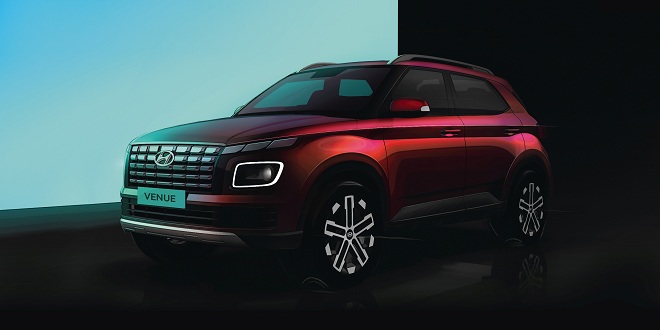
Hyundai Motor India Ltd, has announced that it will be launching the new Venue on June 16, 2022.
The new Hyundai Venue will feature a redesigned exterior. The facade has been designed to bring forth a wider and confident stance with the seamless integration of bold and dynamic styling elements. The rear section of the new Hyundai Venue features connecting LED tail lamps with vertical design elements. The connecting LED tail lamps stretch across the rear and compliment the overall design with a futuristic and distinctive appeal while the hexagonal cut crystal design creates a luxurious yet hi-tech appeal. The rear has been designed to give the new Hyundai Venue a distinctively tall and wide look.
Commenting on the announcement, Mr. Unsoo Kim, MD & CEO, Hyundai Motor India Ltd., said, “As the leading mobility solutions provider, Hyundai has been setting new benchmarks in India with the introduction of blockbuster products. Through our vision of ‘Progress for Humanity’ we have continued to elevate customer experiences and induced the rapid adoption of globally contemporary technologies. Indian customers have showcased their love and trust in Hyundai, making us the most sold SUV brand of 2020 and 2021. At Hyundai, we will continue to excite our most loved customers with unique and exciting products, and I am glad to announce the launch of the new Hyundai VENUE in June this year. I am sure, the new Hyundai VENUE will continue to thrill customers both in India as well as export markets.”
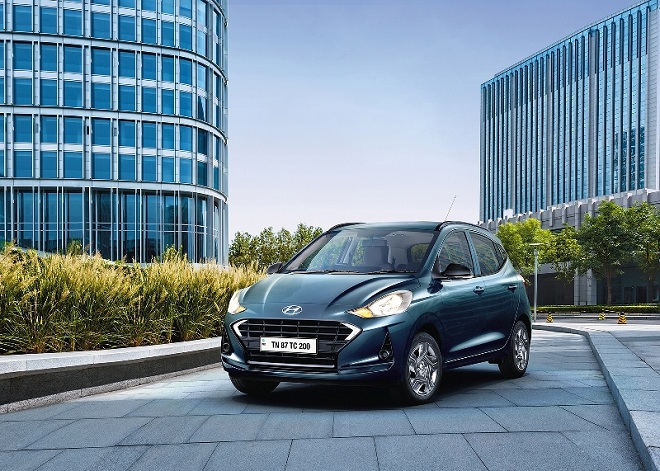
Hyundai Motor India Ltd., has announced the introduction of the Grand i10 NIOS Corporate Edition with prices starting at INR 6 28 900 (ex-showroom).
Commenting on the introduction of the GRAND i10 NIOS Corporate Edition, Mr. Tarun Garg, Director (Sales, Marketing & Service), Hyundai Motor India Ltd. said, “Hyundai conceptualized the GRAND i10 NIOS for progressive and young new age customers in India. Having witnessed a trailblazing sales run since its launch, we are glad to now introduce the Sporty and Hi-Tech focussed Corporate Edition on the GRAND i10 NIOS to induce delight and enhance the value offered to new age buyers. With unique and innovative aesthetic enhancements and technology, we are sure the Corporate Edition will captivate the aspirations of customers looking for a sporty, feature loaded and efficient hatchback.”
Grand i10 NIOS Corporate Edition has been based on the Magna trim with 5MT / AMT transmission options, mated to the fuel efficient 1.2 l Kappa Petrol engine. The exterior enhancements on Corporate Edition include:
· 175/60 R15 Gun Metal Styled Wheel
· Roof Rails
· Rear Chrome Garnish
· Corporate Emblem
· Black Painted ORVM
· Glossy Black Radiator Grill for All Body Colors
To lend a touch of sportiness and induce fun filled driving experiences, Grand i10 NIOS Corporate Edition will feature sporty all black interiors with red colour inserts (seats, AC vents and gear boot). To offer customers added hi-tech and convenience features, Corporate Edition will include:
· 17.14 cm (6.75-inch) Touch Screen Infotainment with Navigation through Smartphone Mirroring
· Electric Folding ORVM with LED Turn Indicator on Outside Mirror as standard
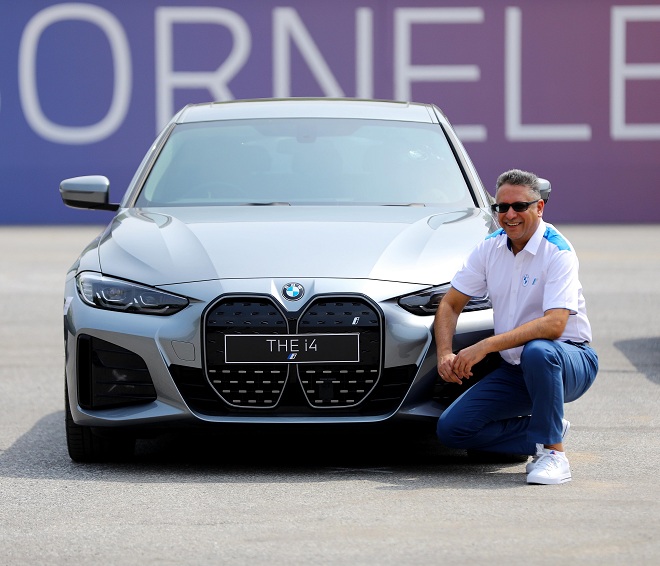
The first-ever BMW i4 has been launched in India at an introductory ex- showroom price of INR 69,90,000. The BMW i4 is BMW’s first purely electric model focused squarely on driving dynamics. The BMW i4 combines sporting prowess with a range that also convinces for long journeys with comfort, spaciousness and practical appeal. Deliveries will start by the beginning of July 2022.
Mr. Vikram Pawah, President, BMW Group India said, “With the launch of the BMW i4, I am excited to introduce the first electric mid-size sedan in the country. BMW i4 effortlessly combines sheer driving pleasure with sustainability as never experienced before. Thanks to its unique combination of BMW eDrive technology, extremely slim and high-voltage lithium-ion battery, rear wheel drive and advanced suspension kinematics, the BMW i4 gets an outstanding sporty feel. It is India’s longest range electric vehicle. Absolute luxury with class leading ambience, generous space, and rear axle air suspension ensures maximum comfort even for longer trips. Excitingly dynamic, comfortable and powerful in equal measure, the BMW i4 provides a truly electrifying experience that exceeds all expectations – every day, every trip. BMW Group today offers the most extensive and diverse portfolio of electric cars for Indian customers”.
The BMW i4 flawlessly showcases the trailblazing union of dynamism and sustainability in a pure electric form. It has a look that will set your pulse racing. The first-ever BMW i4 wears its innovative character on its sleeve like the sporty extrovert it is.
The car’s futuristic exterior design combines athletic aesthetics with a clear surface language and progressive precision. It is the most aerodynamic electric vehicle in its class. The front is characterised by expansive closed surfaces and precise lines. The Grey inlay in the front apron and vertical side openings emphasises the functional, modern character of the vehicle. The absolute highlights are concise reinterpretation of radiator grille and the blue ring around BMW badge. Flat, strikingly contoured headlights and Frozen Grey accents in richly detailed, slender form add to the emotional flair. Thrillingly progressive, the side view is characterised by a long wheelbase, doors with frameless windows, fluid lines of the roof and short overhangs. Expansive, gently modelled surfaces with precise character lines create a modern impression that exudes elegance of a true BMW. The rear showcases a sharp vertical rear spoiler and recessed surfaces that strengthen the sporty and wide effect. The concise L-shaped rear LED lights with slender contours and horizontal lines, highlight how the BMW i4 hugs the road. Lightweight aerodynamic wheels contribute to enhance driving range. Air suspension on the rear axle with automatic self-levelling function ensures maximum comfort and enhances stability on sharp turns.
Open, luxurious and fascinating, the interior brings a driver-focused cockpit and an ambience with generous space. The BMW Curved Display adds a high-quality, modern touch to the cockpit. The interplay of high-quality materials, a multimodal, intuitive operating concept, with sport seats and sport steering wheel, separated areas for the driver and front passenger and acoustic glazing create an atmosphere that is delightful for long journeys as it is during short drives. The sport seat gives an especially elegant boost with high-quality decorative stitching. Up to three passengers can enjoy the back seat with generous head and leg room. Ambient lighting with six selectable light designs creates an atmosphere for every mood. Three-zone automatic climate control with nanofiber filter optimises air quality.
The large tailgate with automatic opening function makes loading and unloading from the 470-litre luggage compartment particularly convenient. In addition, the functional rear bench seat folds down with 40/20/40 split to provide maximum storage space and increase boot capacity up to 1290 litres.
Rear wheel drive, 50/50 weight distribution and a low centre of gravity add superlative balance, responsiveness and deliver outstanding traction and directional stability in extremely dynamic driving manoeuvres.
Fifth generation BMW eDrive technology features a highly integrated drive unit within a single housing that is powered by an electric motor, single-speed transmission and power electronics. The i4 instantly accelerates from 0 to 100 kmph in 5.7 seconds with an output of 340 hp.
Making its debut, the extremely slim (110 mm) and high-voltage lithium-ion battery integrated in the floor has a capacity of 80.7 kWh providing a range of up to 590 kms. The BMW i4 has longest range than any other electric vehicle in India.
The first-ever BMW i4 ensures fast and hassle-free charging. Charging time is:
205 kW DC Charger: 10%-80% in 31 min / 164 kms added range in 10 min 50 kW DC Charger:10%-80% in 83 min / 100 kms added range in 18 min 11 kW AC Charger: 0%-100% in about 8.25 hrs
As an introductory offer, the BMW i4 will come with a complimentary BMW Wallbox charger with installation. It can be integrated at home to enable safe and convenient charging up to 11kW.
BMW Group India aims to build one of the best charging networks in luxury segment with fast chargers at BMW dealer network in 34 cities across India. BMW dealer network across India welcomes owners of electric vehicles of all brands for fast and convenient charging at nominal rates.
A host of BMW ConnectedDrive technologies continue to break the innovation barrier. BMW Live Cockpit Professional includes the freestanding BMW Curved Display with its connection between a 12.3-inch digital information display behind the steering wheel and a 14.9-inch Control Display with Navigation. The new generation iDrive display and control / operation system with new BMW Operating System 8 extends the interaction between driver and vehicle. Occupants can operate a number of functions simply by speaking to their BMW Virtual Assistant. The smartphone holder integrated into the centre console allows inductive, Wireless Charging. Wireless Apple CarPlay / Android Auto ensure seamless smartphone connection with the car to access several functions. Harman Kardon Surround Sound System with 17 speakers conjures an engrossing treat for the ears. Parking Assistant with reverse camera makes parking in tight spots easier. The Reversing Assistant provides unmatched support in reversing out of a parking spot or narrow driveways. It records the last 50 metres driven and assists by taking over the steering.
Sustainability is in the DNA of BMW long before Sheer Driving Pleasure begins. BMW principle of Circular Economy – ‘RE:THINK, RE:DUCE, RE:USE, RE:CYCLE’ cuts down use of primary raw materials and increases secondary materials. Reduction of carbon footprint is achieved throughout the value chain and at all stages of lifecycle by making comprehensive use of natural and recyclable materials and production with 100% green electricity. Even when the battery has reached the end of its useful life after many years, it is not the end by any means. In their second life, the battery cells on an average can be used for another ten years as an energy store. After the battery cells are shredded, raw materials can be completely recycled. The lifecycle is then complete and ready to begin again.
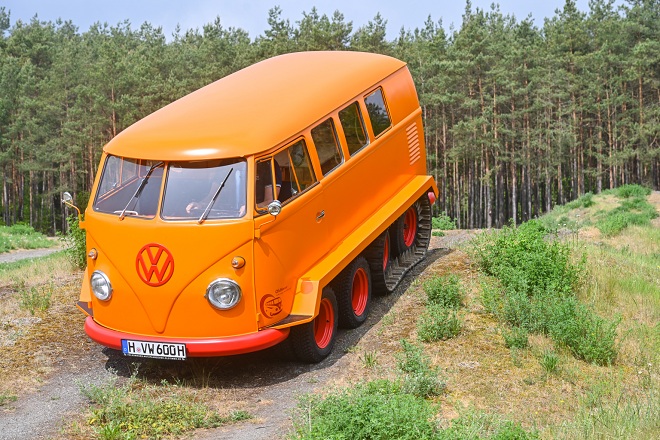
VWCV Classic Vehicles has just finished bringing a unique 60-year-old vehicle back to mint condition: the ‘Half-track Fox’. This T1 was produced in the Hannover plant in May 1962 and then sent off to its purchaser in Austria. After a short period of life as a normal T1, it was transformed there at the hands of a resourceful Viennese Volkswagen mechanic into an Alpine specialist. Kurt Kretzner converted the Bulli into a T1 with four axles – two of them fitted with a chain drive mechanism and two steering the vehicle using double tyres. And thus he created what is probably the most off-road-capable Bulli ever to be seen on the mountain slopes of this world.
Historic sources say he was a keen skier. He noted that in the mountainous regions of Austria there was a scarcity of vans with high standard off-road capabilities: ones that were easy for anyone to drive and yet could climb up to the highest Alpine meadow. “An ideal helper for everyone: mountain hut keepers, hunters, foresters, doctors, maintenance engineers for ski-lifts, TV and radio masts, pipelines and the like,” as Kretzner later wrote in the sales literature for the Half-track Fox. “At first, I had a look around, but couldn’t find the vehicle I was dreaming of. So, I decided to build it myself.” Just as Ferry Porsche once said and did, so too did Kurt Kretzner. The inventor spent over four years designing and building his mountain climber. Two ‘Foxes’, it seems, were built in the period up to 1968, but when it came to the third, production then ceased. What has survived, however, is at least one example of the Half-track Fox.
What the Viennese mechanic planted under the orange-painted Bulli body was, at the front, a steered double axle with dual rough-tread 14-inch tyres and, at the back, another double axle with chain drive. The chains were mounted on 13-inch wheels and a construction of his own design made of aluminium elements with rubber blocks two centimetres thick to spare the asphalt. As a result of the dual front-axle steering the turning circle was less than 10 metres – so it could almost turn within its own circumference. Each wheel was fitted with a brake. An automatic limited-slip differential ensured evenly distributed forward propulsion even in deep snow. The T1 drew its power for this from its standard 25 kW / 34 PS flat engine with a cubic capacity of 1,192 cc. The Half-track Fox reached a top speed of 35 km/h and was thus only slightly slower than the animal kingdom member from which it got its name.
Kurt Kretzner wanted to build a tracked vehicle that would be very easy to steer. It was precisely for this reason that the mechanic opted not for steering via chains on every axle as is found on a bulldozer, but instead for a half-track solution (with chains only on the drive axles) and an almost standard, albeit doubled-up front-wheel steering mechanism. And that’s also how the inventor used to promote the Half-track Fox: “The new, ideal, easy-to-drive Half-track Fox that lets you safely and comfortably master all difficult terrain. Snow, sand, stony ground, mountain meadows, small streams and woods can all be driven through in this vehicle.”
Over the years, the Half-track Fox was rarely seen. In 1985, the T1 turned up for a final time in Vienna, before in the early 1990s it was bought by the Porsche Museum in Gmünd. At some point, the Half-track Fox then passed into the possession of the ‘Bullikartei e.V.’ – a society of lovers of the first Bulli generation. In 2005, they began an initial attempt to restore the special Alpine vehicle. With the society’s members spread all over the country, however, it was unfortunately not possible for logistical reasons to complete the restoration.
At the end of 2018, the Half-track Fox came into the collection of VWCV Classic Vehicles. The aim: to get the Half-track Fox up and running again. Under their guiding principle of “Erinnern. Erleben. Erhalten.” (Remember – Experience – Preserve), the classic vehicle experts began a painstaking process of restoration. The 60-year-old bodywork was, as is the case for all factory restorations in Hannover, stripped of paint, repaired, given a cathodic dip coating and repainted in the largely original shade of orange. Matt orange, in fact. The intention being back in the day that the Half-track Fox should be immediately recognisable in the countryside.
The VWCV Classic Vehicles team also got the mechanics back into as-new condition. The interior, too. The team was able to give free rein to their creativity there, as there were no onerous specifications. Wood components in beech and pine were individually adapted to the space inside the Half-track Fox, and practical tool holders installed. In February 2022, the time had then finally come – the Half-track Fox again channelled its way through the snow. And did so, indeed, with unusually good uphill capability: following the extensive restoration of the four-axle T1, the team of VWCV Classic Vehicles could see for themselves that the driver was more likely to capitulate on steep climbs than the Half-track Fox!
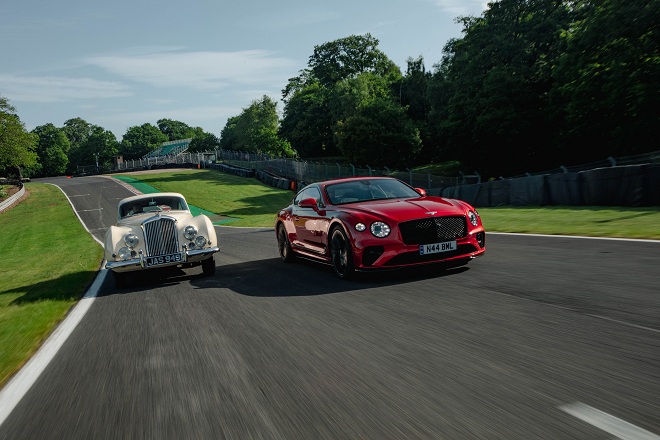
To celebrate the anniversary Bentley has released imagery of the GT Speed together with JAS 949, shot at Oulton Park in Cheshire.
Bentley is celebrating 70 years since the start of production of the R-Type Continental – one of the most celebrated cars in the company’s 103-year history, and the first Bentley to wear the Continental name. With only 208 examples produced, the R-Type Continental was as rare a sight in the 1950s as it is today – but it went down in history as a benchmark Bentley, and the embodiment of the brand’s grand touring DNA. Its ethos and its exterior design were the inspiration for the first Continental GT in 2003, and it has inspired Bentley Design teams ever since.
While the first prototype R-Type Continental (known as ‘Olga’ thanks to its OLG490 registration) was on the road in August 1951, it wasn’t until May 1952 that the car went into production, with customer deliveries starting in June. At the time, it was the fastest four-seat car in the world – a mantle that was picked-up by the modern-day Continental GT in 2003. It was also the most expensive, at £6,928 – nearly four times the 1952 average UK house price.
The Iconic R-Type Continental The brainchild of Chief Projects Engineer, Ivan Evernden and Chief Stylist, John Blatchley, the R-Type Continental was described in period by Autocar magazine as ‘a modern magic carpet which annihilates great distances.’
Two pre-war coachbuilt specials, the ‘Embiricos’ Bentley and Mk V Corniche, had shown the advantages of improved aerodynamics. In the early 1950s, Ivan Evernden took inspiration from these one-off creations to create a sleek coupé based on the R-Type Bentley saloon. The power of the 4,566cc, six-cylinder in-line engine was raised from 140 to 153 bhp, and the transmission featured a higher final drive ratio. The prototype averaged 118.75 mph over five laps (with a best lap of just under 120mph) at the banked Montlhèry track near Paris.
To keep down to the target weight, coachbuilders HJ Mulliner crafted the bodywork, window frames, windscreen surround, backlight, seat frames and bumpers in aluminium. Even at a pared-down weight, tyre choice was critical; no standard road tyre existed which could carry a two-ton car at speeds in excess of 115 mph, and Dunlop Medium Distance Track tyres were specified.
The first production model was delivered to its owner in June 1952 and by the time production ended in 1955, 208 R-Type Continentals had been made. Of these, 193 were bodied by HJ Mulliner. Others included Park Ward (four dropheads and two coupés), Franay (five), Graber (three) and Farina (one).
JAS 949 The Bentley Heritage Collection is the proud owner of R-Type Continental chassis BC16C, registration JAS 949. ‘JAS’ was built in 1953 and delivered to its first owner, Dr Rowland Guenin of Switzerland in December 1953. It was ordered in Ivory with Red interior and a manual gearbox, a specification it retains today along with the original 4.6-litre engine. Bentley Motors acquired JAS 949 in 2001 and has maintained it in excellent mechanical order while sympathetically preserving its patina. The car is driven regularly and appears frequently on display at the Bentley campus and at events around the world.
A Modern Interpretation All three modern generations of the Continental GT have an exterior design inspired by the R-Type Continental. The elegant ‘power line’ that traces backwards from the front wheel arch, the muscular and defined rear haunch and the gracefully sloping roofline are all modern interpretations of the same features from the R-Type Continental, giving the modern Continental GT the same balance of grace, beauty and powerful stance as its forebear. Likewise, the ability of the modern Bentley to carry four adults with luggage at high speed over long distance in exceptional comfort has its roots in this now 70-year-old masterpiece. The very latest iteration, the Continental GT Speed, adds even sharper dynamic performance to the wide and unrivalled Continental blend of abilities.
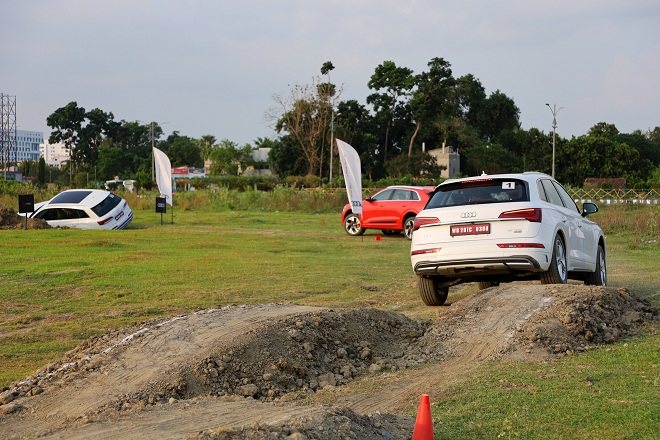
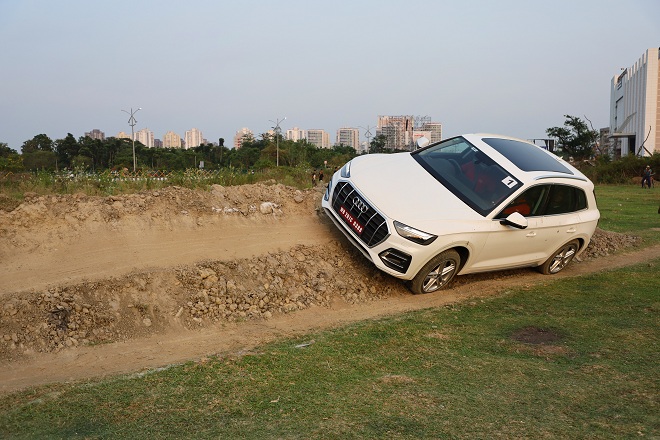
German luxury car manufacturer Audi in association with their dealer partner Audi Kolkata had brought its adrenaline rushing experiential driving program – the Audi Q drive to the City of Joy.
Audi Q Drive is the most widespread program under the Audi driving experience program. Travelling across the country, the Audi Q drive is executed on a custom-built off-roading track; designed keeping in mind the key attributes and features of the Audi Q range, including especially Audi’s legendary quattro system. Customers enjoy driving on specially made off-road track and maneuver obstacles such as hill climbing, hill descend, slush, acceleration, braking, rumblers, axle twister and articulation and tilt angle.
Audi India has a team of instructors responsible for supervising the build-process of these tracks. The Audi Q Drive gives the enthusiasts a chance to drive the Audi Q range under trained supervision to understand the prowess of its advanced technology. Over 15,000 customers have participated in this program since its inception in India.
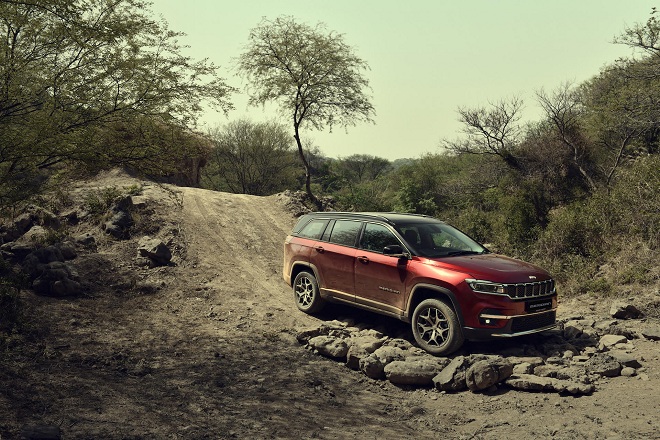
The new Jeep Meridian has been launched at an introductory price of INR 29.90 Lakhs (ex-showroom India). The highly anticipated all-new three-row Jeep SUV is designed to disrupt the segment. The Meridian leverages its globally proven engineering prowess coupled with Indian insights to deliver an authentic SUV experience with sophistication.
The vehicle’s design is inspired by the iconic Jeep Grand Cherokee as it aims to redefine the premium SUV segment with its many class leading features, including the fastest acceleration and highest power-to-weight ratio. The highly capable and agile SUV can go from 0-100 kmph in just 10.8 seconds and can attain a top speed of 198 kmph.
Commenting on the Jeep Meridian’s launch, Nipun J. Mahajan, Head of Jeep Brand India, said, “Brand Jeep believes it is time for Indian customers to kick-start a new adventure in the refined and capable Jeep Meridian. Our pricing reflects our intent to disrupt the segment and offer unmatched value for customers seeking a powerful, spacious, and sophisticated SUV.”
The new Jeep Meridian gets completely independent front and rear suspension setup. It comes equipped with Frequency Selective Damping (FSD) and Hydraulic Rebound Stopper (HRS) to ensure a smooth and comfortable ride on all kinds of roads and terrains.
The Jeep Meridian also promises the best steering control in the segment, thanks to the lowest parking torque of 2.2 Nm and a dynamic torque of 4.3 Nm. The low turning radius of 5.7 m further fortifies the new Jeep Meridian as an inspired choice for city driving.
The SUV’s credentials are further strengthened by the terrain-proven unibody SW platform which helps bring the authentic Jeep DNA to life and amplify the offering with the perfect blend of sophistication and performance.
Jeep Meridian is available across two trims, Limited and Limited (O). Both Limited and Limited (O) are available with the 4×2 front-wheel drive and a choice between a six-speed manual transmission and a nine-speed automatic transmission. A nine-speed automatic transmission with the 4×4 all-wheel drive is also available in the Limited (O) trim.
The Jeep Meridian is powered by a 2.0-litre turbocharged diesel engine that generates 172 PS (170 hp) at 3,750 rpm and a maximum torque of 350 Nm available between 1,750-2,500 rpm. The Jeep Meridian claims to delivers an ARAI-ratified fuel economy of up to 16.2 kmpl.
To further ensure comfort for the car’s occupants, the SUV gets 840 mm between the first and second row, and 780 mm between the second and third row, making the Jeep Meridian the most spacious vehicle in the segment.
Jeep Meridian is a spacious three row SUV with 481-litres of boot space while seating five people and 170-litres of boot space when all seven seats are occupied. Beside its spacious interior, the cabin offers easy accessibility thanks to provisions such as the one-touch fold-and-tumble seats in the second row and the 80-degree door opening angle to help passengers get in and out with ease.
It also offers the best cooling performance in its class: the SUV claims to cools up to 30 per cent faster than competitors, thanks to the multi-zone climate control system, dedicated third-row AC-evaporator unit, and the thermo-acoustic cabin insulation.
The Jeep Meridian features Emperador Brown leather seats, third-row cooling with controls, automatic headlamps, diamond cut dual-tone 18-inch alloy wheels, and several other such attractive features.
The all-new Jeep Meridian comes equipped with UConnect5 that offers a host of connectivity and class leading infotainment features.
The Jeep Meridian Limited (O) trim additionally gets a two-tone roof, a dual-pane sunroof, a 10.2-inch digital instrument cluster, a 360-degree camera, and a powered lift-gate with programmable height and obstruction detection.
The all-new Jeep Meridian is now available for booking on Jeep India’s website (jeep-india.com) and at Jeep dealerships across India with a small down payment of INR 50,000. Deliveries will begin in June.



 Power Drive