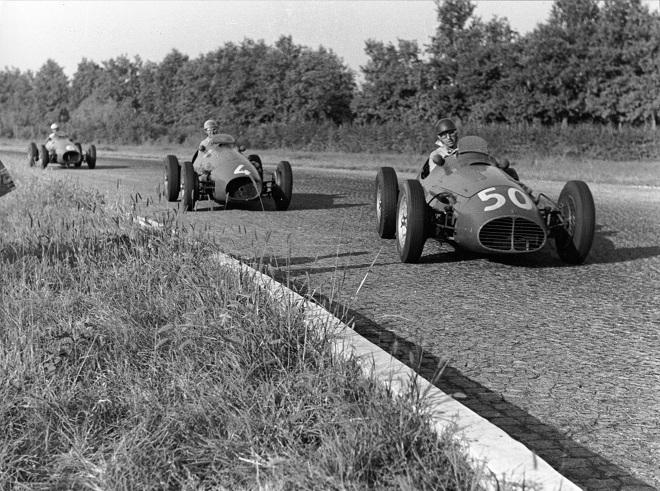
Ascari (n.4) su Ferrari 500 F2 e Farina (n.6) su Ferrari 500 F2 inseguono Fangio (n.50) Maserati A6GCM.
Seventy years have passed since the Italian Grand Prix on September 13, 1953, where Juan Manuel Fangio celebrated his first and only victory of the season in the final race at Monza, at the wheel of his Maserati A6GCM.
The Argentine ace, one of the greatest of all time together with colleagues of the calibre of Senna and Schumacher – Fangio ceded the crown of the most titled Formula 1 driver to the latter after almost 50 years, took the Trident to the Olympus of the brands in the highest class of motorsport in 1954 and 1957, the year of El Chueco’s fifth and final world championship.
Seventy years ago, on the Brianza circuit, the curves of the temple of speed lit up for one final race, to wipe away a subdued season for the Argentine world champion, who would go on from that victory to win his second world title the following year.
An anniversary to remember for Maserati, in the year in which it has once again become a big name in the annals of international motorsport, as a result of the significance of its return to the track and of the announcement of a major, carefully thought-out racing strategy.
After its first year in Formula E, where Maserati took three podiums and one victory in the 100 per cent electric series, the Modena-based brand announced its return to GT competitions: in July, at the 24 Hours of Spa, it unveiled its latest disruptive 621-hp creation, dedicated to private teams and gentleman drivers, due to take part in the Fanatec GT2 European Series from the 2024 season.
With its constant longing for kerbs and laurels, in summer Maserati also unveiled the surprising MCXtrema, a car for a select few – 62 to be precise – fans of uncompromising performance and outstanding design, made to channel unique emotions exclusively on the racetrack.
Since its debut in the racing world – back in 1926, with Alfieri Maserati first in class at the Targa Florio in his Tipo 26, excellence in motorsport has been the hallmark of Maserati’s DNA. Its history is repeating itself, in its aspiration to write major new chapters in the greatest classes in motorsport, where the Italian brand has been confirmed as one of the prestigious brands that can guarantee the most distinctive performance, in its road cars and those designed for the track.
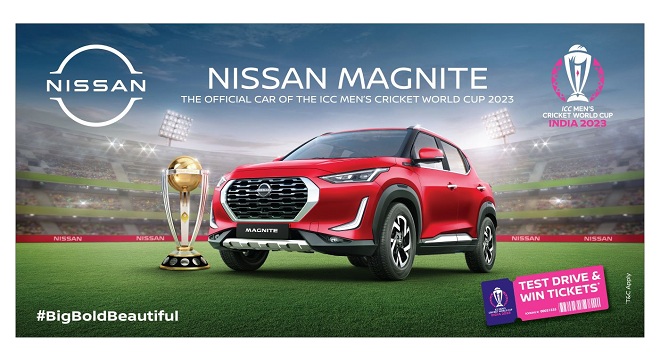
Nissan announced its 8th consecutive year of partnership with the International Cricket Council (ICC) as the Official sponsor for the ICC Men’s Cricket World Cup 2023. This highly anticipated event will take place in India from October 5 to November 19, 2023 and will feature the Nissan Magnite as the Official car of the World Cup.
To celebrate and commemorate its enduring partnership with the International Cricket Council (ICC) and embrace the festive cricket season with great enthusiasm, Nissan Motor India has introduced the all-new Nissan Magnite KURO Special Edition.
Commenting on the announcement Rakesh Srivastava, Managing Director, Nissan Motor India said, “Nissan is pleased to be the Official partner of all ICC tournaments and is delighted to have the Big, Bold, Beautiful Nissan Magnite as the Official car of the ICC Cricket World Cup 2023. It is a proud moment for Nissan to introduce the Nissan Magnite KURO Special Edition in commemoration of its 8th year partnership, for this tournament Nissan will engage with multiple activities with millions of cricket fans on their deep passion strengthening its bonds, especially in India where cricket is a festival.”
As the Official partner, Nissan will actively promote the ICC Men’s Cricket World Cup 2023, showcasing the Nissan car at the stadium, in addition to exciting on-ground engagement initiatives across the country.
As a significant contribution to the ICC Men’s Cricket World Cup 2023, Nissan is also promoting the tournament Trophy Tour, currently on a journey across multiple cities in India, with the introduction of a 3D trophy in malls.. This innovative initiative is designed to engage cricket enthusiasts by offering them exclusive access to the world cup trophy, allowing them to capture 360-degree images with this iconic symbol of cricket excellence. Nissan will introduce and display the ICC World Cup Nissan Magnite during the trophy tour. Customers can click selfies with the Nissan Magnite and share to win tickets.
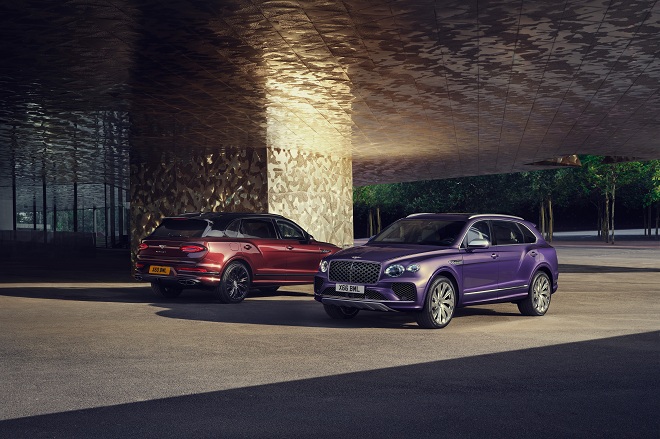
The launch of the Bentayga Extended Wheelbase Mulliner defines a new pinnacle for the Bentayga family and indeed the Bentley model range, adding a new level of modern craftsmanship to the already potent combination of supercar performance, go-anywhere ability, driving dynamics and limousine rear cabin of the Bentayga EWB. The flagship Bentayga EWB Mulliner offers more cabin space than any comparable luxury competitor and its bespoke enhancements make every journey an occasion to be savoured, equally as special from the driver’s seat or the expansive rear cabin, providing the world’s most luxurious SUV so far.
Unique design features inside and out make a striking statement, each one curated with painstaking care by the Mulliner team. The rear compartment, available in 4+1 and 4-seat configurations, features the Bentley Airline Seat specification – the most advanced automotive seating system in the world – as standard, to cosset occupants in unrivalled comfort. The Mulliner Harmony Diamond Quilt to the seats and doors demonstrates the craftsmanship that elevates the interior to a truly pinnacle position.
Using Bentley’s extremely potent 542 bhp (550 PS) and 568 lb.ft (770 Nm) 4.0-litre V8 engine, the Bentayga EWB Mulliner combines limousine comfort with exceptional performance for a car in this class – a 180 mph (290 km/h) top speed and 0-60 mph in 4.5 seconds (100 km/h in 4.6 seconds). A chassis that includes Bentley Dynamic Ride (48V active anti-roll control), rear wheel steering and three-chamber air springs gives the Bentayga EWB Mulliner all of the dynamic ability of the standard wheelbase Bentayga, making the EWB Mulliner an accomplished driver’s car as well as a luxurious SUV limousine.
Elegant and distinguished The lines of the Bentayga EWB convey style and presence, and Mulliner’s unique design features complement them perfectly. Exterior details include exclusive Mulliner 22-inch wheels in polished or grey painted and polished finishes, with self-levelling wheel caps that remain upright as the wheels rotate. Mulliner’s distinctive “Double Diamond” front grille and chrome front lower grille are complemented by Mulliner wing vents, with two-tone mirror caps in Satin Silver and body colour.
Customers can order the car from launch with Mulliner Blackline Specification, which applies a gloss back treatment to all exterior chromework and mirror caps, but excluding the Bentley badges. A gloss black 22” Mulliner wheel completes the darker look.
When opening the doors, a welcome illumination is projected on to the ground, one of many subtle details that go beyond the everyday into a higher level of luxury.
Curated three-colour combinations Mulliner illuminated three-dimensional treadplates and deep-pile Mulliner overmats welcome passengers into the cabin, which is offered in a choice of eight three-colour combinations curated by the Mulliner Design team. The tri-tone split of main hide, secondary hide and accent colour hide are a Mulliner design signature and only available for Bentley’s pinnacle models.
Each combination has its own title, from the fiery combination of Hotspur, Beluga and Linen that comprise ‘Flare’ to the deep blues and black of ‘Storm’ – the latter with an accent colour of White like a flash of lightning across a night sky. Customers can also specify their own Mulliner Bespoke Interior, using any three colours, producing nearly 4,000 tri-tone interior colour combinations.
Complementing the curated colours, Grand Black veneer trim showcases the mirror-finish polished surface achieved by Bentley’s wood shop, with overlays of silver Mulliner lettering and the Bentayga silhouette to the passenger fascia, the Bentley ‘B’ on door waistrails and Mulliner chrome patterning on the rear picnic trays. A three-dimensional diamond milled finish to the centre console provides another visual and tactile highlight.
On the seat uppers, Mulliner’s intricate Harmony Diamond Quilt patterning consists of alternate lines of the secondary hide and accent colour, with the Mulliner namestyle embroidered on each seat. For the doors, lines of main hide and accent colour are alternated.
As a further thoughtful touch, owners will receive a Mulliner presentation key box and key pouches matched to their Bentayga’s chosen three-colour combination.
Olive Tan Leather and other sustainable materials Olive Tan leather is used extensively throughout the cabin. The distinctive feature of this leather lies in a sustainable tanning process that uses an organic by-product of the olive oil industry. Derived from waste water extracted during the olive pressing procedure, the tanning agent remains free of harmful metals, minerals and aldehydes. The technique requires less water than a conventional tanning process and also offers a higher concentration of renewable chemicals. The resulting organic leather is incredibly soft and worthy of the world’s most sought-after luxury car brand. Bentley Motors is the first automotive manufacturer to use this industry-leading Olive Mill Wastewater (OMW) technology from the leather manufacture Pasubio SpA.
Olive Tan Leather is another milestone in Bentley’s sustainable leather strategy. The British marque already uses leather hides that are a by-product of the meat industry and highly traceable. Annually, global leather production recycles an estimated 270 million hides that would otherwise go to landfill. Leather manufacturing is regarded as a safe, compliant and heavily regulated means of recycling a sustainable product.
As standard for Mulliner models, new deep pile overmats are more luxurious than ever. Using 100 per cent pure wool, the deep pile Wilton carpets have an exceptionally luxuriant, velvety feel. A specially-selected wool variety is used due to its cleanliness and purity in colour which is tested to ensure quality standards are met before use. Colour is applied via the method of hank dyeing, which allows better control of the quality of the dye and ensures improved colour matching as required. During the manufacturing process no bleach is used and therefore the end result is a beautiful quality finished carpet from pure wool.
The standard cabin carpets have also been made more sustainable. The new cabin carpet is now 100 per cent recycled Nylon delivering the same level of comfort and feel of previous carpet which previously utilised 100 per cent virgin Nylon material.
Increased cabin comfort through innovation and technology Whether the owner chooses 4-seat or 4+1 seating, the Bentayga EWB Mulliner features Bentley’s Bentley Airline Seat specification. This is the most advanced seat ever fitted to a car, with 22-ways of adjustment and world-firsts in a new auto climate sensing system and postural adjustment technology.
In Relax mode the seat can recline to nearly 40 degrees, whilst the passenger seat simultaneously motors forwards and a beautifully leather-trimmed footrest deploys from the back of the front passenger seat. In Business Mode, the seat moves into its most upright position to make working on the move more comfortable.
The auto climate seat technology senses occupant temperature and surface humidity and then determines whether to apply heat, ventilation or both simultaneously to keep the occupant at optimum thermal wellbeing.
The Postural Adjustment function uses new thigh and shoulder pockets, plus additional lumbar massage pockets, to subtly yet continuously change the shape of the seat to ease pressure points around the body, preventing dead spots and fatigue build up. The system goes beyond the 2D motions typical of adjustable seats, able to employ a three-dimensional twist to relieve pressure points. Six independent pressure zones can provide 177 adjustments every three hours to ensure that seat comfort is never compromised, regardless of the length of the journey.
Bentley Diamond Illumination A further striking and elegant feature as standard for Bentayga EWB Mulliner is Bentley Diamond Illumination. The illumination effect is achieved using LEDs (12 on each of the front doors, 22 on each of the rear doors) that emit light through small perforations in the leather trim on the door panels. This is achieved by a combination of digital craftsmanship and precision technology.
Within each diamond, the flawless leather is perforated with holes of less than 1 mm diameter. Each hole has been digitally positioned with precision by one of Bentley’s interior designers to achieve a cohesive overall design – the ‘digital-crafting’ process. The finished result is a beautiful, elegant and unique design.
The intensity and colour of the illumination through the trim can be controlled by the customer through the infotainment system and Touch Screen Remote. The feature is linked with the mood lighting to ensure consistent colour and intensity of light throughout the car. This dramatic feature can transform the interior feel and look of the cabin, especially at night.
Beautiful instrumentation A Mulliner clock flanked by chromed bullseye air vents provides a focal point on the centre console, featuring a silvered face and a bezel in a technical knurled finish. This design is echoed in the driver’s digital instrumentation, which features the same silvered finish and typeface for the numerals. The clock and instrumentation style are unique to the pinnacle Mulliner models.
Effortless performance and dynamic capability The Bentayga EWB Mulliner is powered by Bentley’s 4.0-litre, 32-valve dual twin-scroll turbocharged V8 petrol engine. The design concept of the V8 engine has delivered a high level of power and torque, whilst still achieving lower emissions and the best possible efficiency. Mated to an eight-speed automatic gearbox and powering all four wheels, the V8 offers effortless performance, developing 542 bhp (550 PS) and 568 lb.ft (770 Nm) of torque, resulting in a top speed of 180 mph (290 km/h) and 0-60 mph in 4.5 seconds (100 km/h in 4.6 seconds).
The new Bentayga has won critical acclaim for its dynamic abilities, with its performance on the road and its ride and handling universally praised. The Bentayga EWB Mulliner continues this ethos with the inclusion of Electronic All Wheel Steering and Bentley Dynamic Ride as standard.
Secondary ride comfort is another key variable that affects onboard wellness – the smoother the ride, the more calming the journey. At typical road speeds and in the crucial frequency range of 5 Hz to 20 Hz, the Bentayga EWB has up 27 per cent lower secondary ride vibration than its competitors.
Electronic All Wheel Steering provides two highly desirable benefits and ensures no compromise between high-speed confidence and low speed convenience.
At faster speeds – above 37 mph (60 kph) – the system makes small adjustments to the direction of travel of the rear wheels, in tandem with the direct steering inputs from the driver to the front wheels. This increases high-speed stability – making overtaking and lane changing more assured – and improves handling when driving through sweeping bends.
At low speeds, – below 37 mph (60 kph) – the All Wheel Steering has the effect of ‘shortening’ the wheelbase, reducing the turning circle, and increasing agility in tight urban environments making parking noticeably easier. This is achieved by steering the rear wheels (upto +/- 4.8 degrees off centre) in the opposite direction to the front wheels. The system actually provides a turning circle which is smaller than that of the standard wheelbase Bentayga by 7 per cent.
Bentley Mulliner Bentley Mulliner is Bentley’s bespoke commissioning division and can trace its coachbuilding ancestry back to 1760. Synonymous with luxury, the new Bentayga EWB Mulliner joins the Flying Spur Mulliner, Continental GT Mulliner and Continental GT Convertible Mulliner – each at the very top of their model families.
In the world of Mulliner, anything is possible. Established to respond to the requirements of Bentley’s most discerning customers, the bespoke division is renowned throughout the automotive world for crafting some of the most individual Bentleys ever created.
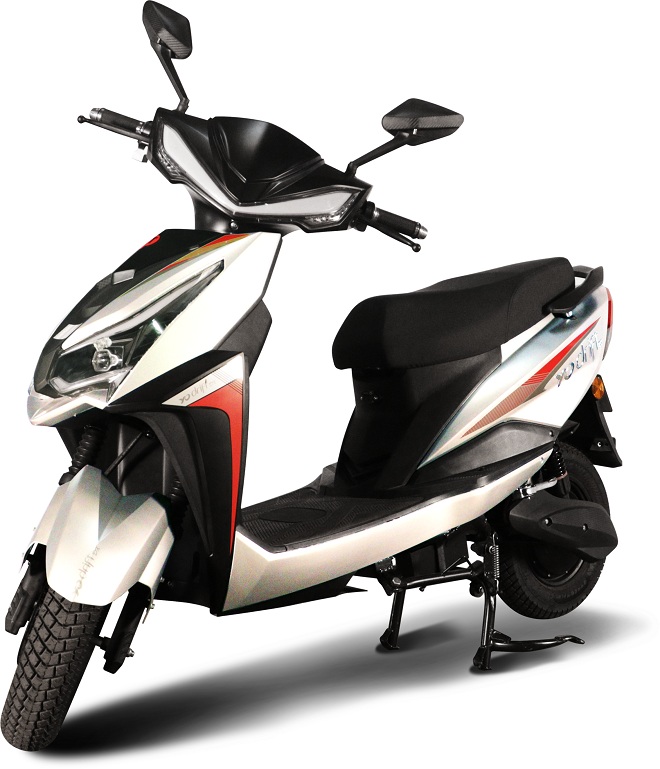
YoBykes has announced the scheduled launch of its high-speed electric scooter and electric bike in the Indian market. YoBykes claims to have sold more than one lakh products in India making them a dominant player in the two wheeler electric mobility space.
Under the leadership of Managing Director Shailesh Bhandari, YoBykes aims to provide hassle-free and eco-friendly transportation solutions to Indian consumers. With a steadfast commitment to ease of mobility and affordability, YoBykes embarks on a mission to reduce the nation’s dependence on fossil fuels and curb the alarming pollution levels caused by traditional automobiles. An in-house R&D facility further gives YoBykes a competitive advantage in the electric mobility space.
Recognising the urgency of addressing environmental concerns, YoBykes conceptualised its mission in the year 2000. The company subsequently assembled a team of industry stalwarts and established a state-of-the-art research and development facility in India in 2006, ushering in a new era for the Indian automobile industry. To reach out to our customers, YoBykes, have a wide network of dealers at strategic locations across India helping it to serve their requirement including delivering quick after sales services
Reflecting on their journey, Shailesh Bhandari, Managing Director, YoBykes stated, “We have relentlessly pursued our vision for over two decades. We initiated awareness campaigns to educate the masses about the benefits of electric vehicles, and today, after 17 years, our steadfast efforts have positioned us as trendsetters. Even now, major players are striving to achieve the market penetration that we achieved nearly two decades ago.”
As YoBykes looks to the future, the company remains committed to innovation and technological advancement. “Our plans include the activation of all our dealers with the introduction of newer technologies,” the company said in a statement. With a state-of-the-art Research and Development centre already in place, YoBykes is poised to launch a new range of high-speed scooters and motorcycles in the near future.
The brand’s achievements have not gone unnoticed on the global stage. YoBykes has received an invitation to lead the development of the EV business in the African subcontinent, showcasing its industry prowess and innovation. In addition, the company’s dedication to delivering on its promises is evident in its record of completing all orders ahead of schedule. With the electric vehicle revolution gaining momentum worldwide, YoBykes is poised to continue its legacy as a true pioneer in the industry.
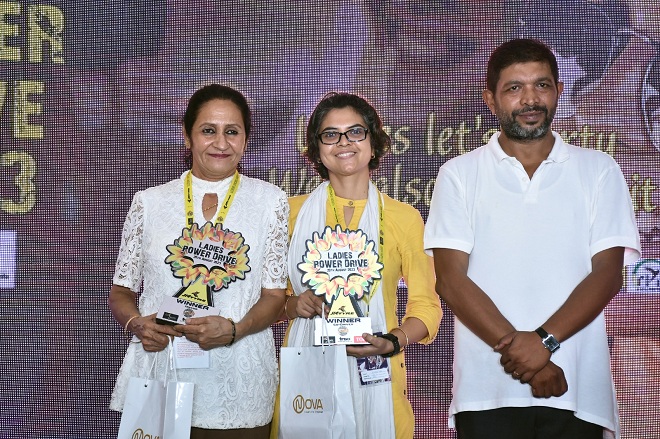
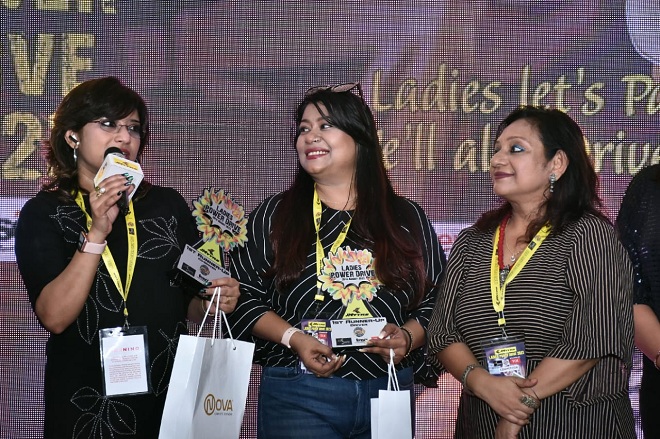
The city of joy was buzzing on Sunday evening as over 80 ladies took to the wheels to participate in the first ever all-women’s car rally held in the city- JK Tyre Ladies Power Drive. JK Tyre hosted this TSD (Time, Speed, Distance) event as part of its nationwide push to promote women in Motorsport. It was a landmark moment for the women drivers of Kolkata as they got to experience being part of an entry-level motorsport event for the first time in their home city.
Organised by Just Sportz & EMSAA (Eastern Motor Sports Automobile Associate) under the aegis of FMSCI, the event was flagged-off by Smt. Krishna Chakraborty, Hon’ble Mayor, Bidhannagar Municipal Corporation, along with Justice Rajarshi Bharadwaj, Hon’ble Judge, Kolkata High Court, Sri. Jag Mohan, IPS, Director General of Police, Civil Defence, and actress Trina Saha. The event started from Hotel Westin in Kolkata and took in the beautiful landscapes around the city, before culminating at the same point.
Actress Trina Saha said, “Hats off to JK Tyre for bringing in such an innovative concept to Kolkata and I look forward to participating in this event in the next edition. Women are multi-taskers and kudos to all of them who are participating.”
The event had participation from women across all age groups from 21 years to 75 years. Conducted in the FMSCI-approved Time, Speed, and Distance (TSD) format, JK Tyre Ladies Power Drive served as a platform for participants to champion various causes related to the empowerment of women.
Mr. Sanjay Sharma, Head-Motorsport, JK Tyre, said. “It’s a moment of pride for all of us at JK Tyre as we hosted the very first edition of the Women’s Rally in the city. The turnout we had was overwhelming and I’m confident that with events like these, we’ll see a broadening of the female motorsport fan base in the city. We hope to see this excitement spread to more and more enthusiasts in the upcoming editions.”
Following the rally, the winners were declared, and an elaborate celebration ensued. It has been a vital platform for women drivers to come out together to break the stereotypes and own the road.
Podium Finishers
Position
Participants
Winner
Saswati Nag Chowdhury (Driver) & Ipsita Das (Co-Driver)
First-Runner Up
Sumantika Choudury (Driver), Sanhita Ray (Co-Driver) & Suparna Dutta
Second-Runner Up
Poulomi Pramanik (Driver) & Poonam Das (Co-Driver)
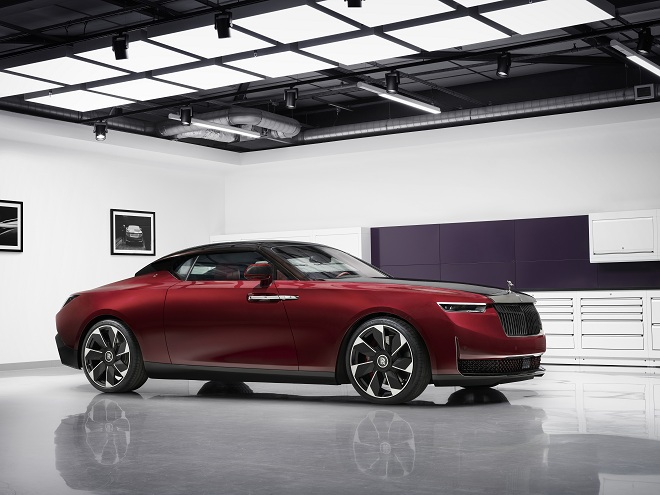
Rolls-Royce Motor Cars is privileged to present Rolls-Royce La Rose Noire Droptail, a dark, daring and dramatic coachbuilt masterpiece. This extraordinary motor car, presented to the clients who commissioned it at a private event close to Pebble Beach in California today, symbolises the distillation of experiences, significant moments and objets d’art cherished by its owners – an international family that exemplifies connoisseurship and luxury of the very highest order. Indeed, Coachbuild designers described the family’s talent for sensitive and informed curation in their homes and within their notable collection of motor cars and fashion icons, as an art form unto itself.
Rolls-Royce La Rose Noire Droptail is inspired by the allure of the Black Baccara rose, an intense, velvet-like flower that originates in France and is beloved by the mother of the commissioning family. The dark pomegranate colour of its petals appears almost black in shade, but in direct light, a red, pearlescent shimmer is revealed on the dark surface. These two colours form the primary palette of La Rose Noire Droptail. The first red shade is named ‘True Love’ in recognition of the romance the client wished to capture in this commission. The darker tone is named ‘Mystery’, inspired by the mysterious nature of the rose, which appears to change colour when viewed from different angles. Indeed, it was the essence of true love and the mystery of exploration and travel that captivated the clients throughout the commissioning process.
Torsten Müller-Ötvös, Chief Executive Officer, Rolls-Royce Motor Cars, said: “Rolls-Royce La Rose Noire Droptail is a love story, thoughtfully captured and stunningly projected onto the canvas of a Rolls-Royce motor car. It is an expression of the deep and passionate partnership between a husband and wife who are the heads of a prominent international family – to be part of their remarkable story is a privilege. Furthermore, La Rose Noire Droptail stands as a testament to our brand’s relentless pursuit of perfection, where artistry and the vision of a single client truly harmonise. In every detail of this historic commission, there are echoes of both Rolls-Royce’s rich heritage and the commissioning clients’ character, from its captivating yet formidable form to its flawless and elegant romantic gestures. La Rose Noire Droptail, like the remarkable clients who dared to make such a potent and contemporary statement, will be written into Rolls-Royce history forever.”
The exterior coachwork is finished in the lustrous and complex True Love red. Like the Black Baccara rose, the motor car also appears to change colour depending on the point it is examined from. To achieve this rich variation, surface finish specialists developed a completely new paint process, which was perfected over 150 careful iterations. A base coat, the colour of which is a closely guarded secret, was followed by five layers of clear lacquer, each blended with a slightly different tone of red.
The duotone theme extends into La Rose Noire Droptail’s brightwork. The dark finish, named Hydroshade due to its liquid quality, was developed specifically for this project. These pieces are not painted; rather, a specific chrome electrolyte is introduced in the chrome plating process and co-deposited on each stainless-steel substrate in a layer just one micron thick – roughly the same width as a strand of spider-web silk. This dark but reflective finish is continued on select metal details throughout the interior, each of which have been precision-polished by hand to achieve a high-gloss finish.
Anders Warming, Design Director, Rolls-Royce Motor Cars commented: “Rolls-Royce La Rose Noire Droptail stands as one of the most progressive expressions of Rolls-Royce Coachbuild ever conceived. In capturing the romantic and glamorous spirit of the commissioning clients, our design team explored bold new artisanal processes and highly complex creative gestures in their pursuit of a deeply personal language of luxury. The remarkable execution of the wood elements of La Rose Noire Droptail in particular are a clear statement that time-honoured exquisite crafts have a place at the pinnacle of modern design. Indeed, the ambition of the marque’s clients, and the peerless capabilities of its designers signal a long and exciting future for Rolls-Royce Coachbuild and its standing as the leading creative force in applied art at its highest level.”
The commissioning clients’ passion for detail is exemplified on La Rose Noire Droptail’s Pantheon grille vanes. In a discreet embellishment, True Love paint is hand-applied as an accent on the reverse surface of the vanes themselves – a refined detail that is only visible by way of indirect reflection.
This subtle flourish continues into the intricate lower front air intake. This highly detailed piece was digitally designed and 3D printed in a lightweight composite and incorporates 202 hand-polished stainless-steel ingots, each hand-painted in the True Love hue.
A significant exterior element is the treatment of the striking alloy wheels, which feature the dark Mystery paint finish. Like the flower itself, from afar the finish appears to be black, but upon closer examination, the sunlight reveals shimmering dark red undertones. The Mystery paint is applied to the entire surface of the rim and then, through a high-precision diamond milling process, areas of the paint are removed to expose accents of the base alloy material that are then polished. This treatment emphasises the directional nature of the wheel and its bold 22-inch size, underpinning this Droptail’s formidable personality.
A removable hard top has been designed to give Droptail two distinct characters: without its roof Droptail is a lithe, open-top roadster; with the roof installed, it becomes a formidable and dramatic coupé. Exclusively for La Rose Noire, the roof is uniquely low-slung, which is further exaggerated with a faster and longer rake to underpin its assertive, glamourous character. Behind it, an ingot with the motor car’s name is included – a first for Rolls-Royce. The completely Bespoke roof also features an electrochromic glass section, which instantly transitions to a near-translucent shade at the touch of a button, inviting patrons to explore the world above.
Alex Innes, Head of Coachbuild Design, Rolls-Royce Motor Cars said: “Rolls-Royce La Rose Noire Droptail is glamour distilled. The guiding inspiration for this dark, bold and powerful commission was the Black Baccara rose, which was a significant point of affection for the client and a source of fascination for the design team. Its rich and complex character informed our creative exploration, influencing the palette, composition, and intricate detailing of the motor car. It led us to blend radically modern design concepts with age-old exquisite craft techniques, while using materials that subtly reinforce the clients’ deep connection to France. Our shared commitment to shaping a meaningful and progressive design statement have culminated in a deeply significant expression of the patron’s character and a new pinnacle for contemporary craftsmanship.”
The most remarkable element of this extraordinary motor car is its cocooning interior. This reveals the most complex expression of parquetry ever created at Rolls-Royce – the product of nearly two years of development, intense experimentation and hand craftsmanship.
The artwork represents an abstract expression of falling rose petals, formed using 1,603 pieces of black wood veneer triangles. The highly complex pattern is formed with 1,070 perfectly symmetrical elements forming the background, and 533 asymmetrically positioned red pieces representing the rose petals. The asymmetry was requested by the clients to represent a natural, organic ‘scattering’ of petals.
Made from Black Sycamore wood sourced in France as a subtle tribute to the French provenance of La Rose Noire, each triangle is cut, sanded and precisely positioned by hand. The pieces that appear to be stained light and dark grey are in fact presented in their natural hue; the colour difference is achieved by using veneer from several logs with different ‘figures’ – the natural pattern on the veneer. Paint was used only to create the red pieces – to avoid the colour fading over time, the marque’s artisans spent a year developing a new lacquer formula to protect this extraordinary projection of contemporary craft.
This intricately detailed and embracing piece envelopes the motor car’s occupants, stretching from the rear shawl panel through the doors and onto the expansive fascia. Its assembly required such intense concentration that the single craftsperson tasked with creating it could only work in one-hour sessions for no more than five hours total per day, to ensure they maintained the focus required for perfect execution. The artisan, who has been with Rolls-Royce since their apprenticeship, spent weeks working in absolute silence in a sound-insulated space to mitigate against any potential distractions. To create what is unquestionably a work of art in its own right took more than nine months in total.
Resolving the interior, La Rose Noire Droptail’s two seats are decorated at the edges with both dark red Mystery leather, and light red True Love leather, each finished with a subtle copper shimmer, evoking the pearlescent texture of the Black Baccara rose petals.
The fascia of Rolls-Royce La Rose Noire Droptail is provisioned with an integrated one-off timepiece by Audemars Piguet, which was specially commissioned by the client. The 43mm Royal Oak Concept Split-Seconds Chronograph GMT Large Date is powered by a unique self-winding Calibre 4407 movement, featuring a flyback chronograph and a split-seconds mechanism. Masterfully matched to La Rose Noire’s colourway, it incorporates red counters and a red inner bezel, providing a bright contrast to the black ‘openworked’ dial highlighted with rhodium-toned bevels.
Integrating the timepiece presented a significant challenge: the clients requested that it should both be mounted in the motor car and also be removable, so that it can be attached to a strap and worn. This was realised with a powered clasp mechanism that gently presents the timepiece at the touch of a button.
Once the timepiece has been removed, the aperture in the fascia is covered with an elegant titanium openworked blank head watch highlighting a white-gold coin displaying a rose engraving, hand-sculpted by Audemars Piguet artisans. Subtle rose engravings on the motor car’s Bespoke Audio speaker frets mirror this motif. Each of the pieces were meticulously crafted by hand in the Swiss brand’s atelier and represent the only literal expressions of the Baccara Rose in the whole motor car.
A slim, soft leather pouch in the door paniers houses the strap and the blank head watch while the timepiece is displayed in the fascia.
To celebrate their Rolls-Royce La Rose Noire Droptail, the owners commissioned an exclusive vintage of Champagne de Lossy, one of their favourite wine properties. This is of particular significance given the special wine created for La Rose Noire Droptail is one of only a precious handful of vintages produced by the Chateau in its 160-year history.
As the perfect staging point, the commissioning family requested a unique Rolls-Royce Champagne Chest. Appointed with matching rose petal parquetry and coordinated to match the colour palette and materials of the motor car, it is the product of the same meticulous attention to detail as the clients’ coachbuilt Rolls-Royce.
At the press of a button, the Champagne Chest opens, revealing an intricate champagne set replete with hand-blown crystal champagne flutes. The exterior lid converts to a serving tray made of bookmatched open pore Black Sycamore wood with a design of the Chateau central to the brushed and laser-cut stainless-steel inlay.
The sides are adorned with the same intricate parquetry work as La Rose Noire Droptail. Once deployed, they reveal two hammocks cradling the clients’ special edition Champagne de Lossy, designed to match the motor car’s colour scheme. Stored thermal champagne coolers, made from black anodised aluminium and carbon fibre, are finished in the dark Mystery hue and ensure the champagne is maintained at the optimum drinking temperature.
This bold and historic motor car is a romantic celebration of the couple who created it, characterised by passion and a restless desire for meaningful experiences. In commissioning this extraordinary expression of Droptail, this remarkable family has not only shaped their own legacy but also participated in the legend of Rolls-Royce Motor Cars.
Aston Martin is proud to introduce the new DB12 Volante. Companion to the recently introduced DB12 Coupe – the first in the marques next generation of sports cars, this open-top model combines spectacular Super Tourer performance and handling with the irresistible sensory thrills of roof-down driving.
A class-defining car of unmatched elegance and sporting character, DB12 Volante is the latest addition to Aston Martin’s illustrious tradition of high-performance convertibles. Timeless qualities of style and craftsmanship have been revitalised by advanced technologies and state-of-the-art engineering, while the driving experience has been honed to its keenest possible edge.
Aston Martin Chief Executive Officer, Amedeo Felisa, said: “For many of our customers, roof down driving is the greatest pleasure. Aston Martin Volantes have captured that emotion and expressed it in unique style for more than six decades. With the new DB12 Volante we have changed the rules, creating a car that intensifies those feelings by preserving all the purity and exceptional sporting capabilities of the DB12 Coupe. A rare and true sporting convertible in every respect, this is a car to challenge preconceptions and find a new generation of Volante customer”.
Developed in parallel with its Coupe stablemate, DB12 Volante boasts the same game-changing design, engineering and technology advances made by this latest evolution of Aston Martin’s most distinguished nameplate. With class-leading power and performance and purebred sports car dynamics, it is a transformative evolution. One that unashamedly positions the DB12 Volante as a true driver’s car first and foremost.
The foundation of this focus on uncompromised performance and handling is the DB12’s exceptionally rigid bonded aluminium structure. Not only was this engineered to capably support the new level of dynamics on DB12 Coupe, but also to deliver the same unrivalled driving experience for DB12 Volante.
To match vehicle level capability, the focus was on the detail engineering and specification of all elements of the Volante’s underbody. Key structural elements, such as the rear suspension upper mounting points and lateral connections, as well as performance additions, including the engine cross brace, boost DB12 Volante global torsional stiffness by near 5%.
Of equal importance for vehicle integrity and dynamic performance, the mounting points for all suspension attachments were extensively upgraded laterally (140% on the front axle).
These changes, in line with the development of the DB12 Coupe, allowed the use of a non-isolated steering column and complementary steering and damper tuning to deliver precise on and off-centre steering connection with class-leading linearity of vehicle response.
Thanks to changes to underbody components, including the engine cross brace, DB12 Volante sees a 3.7% increase in global torsional stiffness, along with focussed improvement in lateral stiffness and gains in suspension performance and refinement. A non-isolated steering column and a stiffer front axle (+140%) contributes to improvements in on and off-centre steering feel and an overall sense of driver connection.
The Volante’s performance credentials speak for themselves. Best-in-class potency from its 4.0 Twin-Turbo V8 engine endows DB12 Volante with formidable performance and a fabulous soundtrack. Tuned by Aston Martin engineers to deliver class-leading 680PS/671bhp at 6000rpm and 800Nm/590lb ft between 2750-6000rpm, this exceptional hand-built engine features modified cam profiles, optimised compression ratios, larger turbos, and increased cooling to achieve an increase in output of 34% compared with the DB11. Accelerating from 0-60mph in 3.6 or 0-62mph in 3.7sec and powering on to a top speed of 202mph, the DB12 Volante’s performance is truly breathtaking.
Power is fed through a ZF 8-speed automatic transmission, which like the DB12 Coupe, features a range of shift strategies complimenting each of the dynamic driving modes. The Volante also uses the same shortened Final Drive Ratio to maximise in-gear punch and Electronic Rear Differential (E-Diff) for the perfect mix of agility when you want it and stability when you need it. With four-stage ESC and a choice of five pre-defined dynamic modes, the DB12 Volante allows the driver to precisely tailor its behaviour.
Other highlights include new generation intelligent adaptive dampers, which have a 500% increase in bandwidth of force distribution compared to previous generation hardware, giving the DB12 Volante a range of dynamic capability and character far in excess of class rivals. Indeed, the main difference between DB12 Coupe and Volante are detail revisions to rear spring rate and a dedicated damper tune.
Electric Power Assisted Steering (EPAS) with a non-isolated steering column and constant 13.09:1 ratio rack has pure and uncorrupted feel with a swift but natural-feeling rate of response. Standard 21in forged alloy wheels are fitted with ‘AML’ coded Michelin Pilot S 5 tyres made to Aston Martin’s precise requirements. Braking is provided by cast-iron 400mm front discs and 360mm rear discs as standard, with an optional Carbon Ceramic Brake (CCB) system offering increased braking performance, reduced brake fade and a 27kg weight saving in unsprung mass.
Aston Martin Chief Technical Officer, Roberto Fedeli said of the new DB12 Volante: “Volante possesses all the Super Tourer traits so successfully introduced in the DB12 Coupe. That we have preserved this class-leading performance and handling is testament to the underlying brilliance of the DB12 platform and the work we have done to maintain the advantage of its superb powertrain and chassis in an open-top version. No longer the ‘softer’ option, DB12 Volante offers the stimulation of a true sports car with the unique pleasure and satisfaction that only a convertible Aston Martin can deliver.”
The result is a convertible car with an extraordinary breadth of capability. Intense performance and pinpoint handling to enthrall the most demanding driver, combined with the intoxicating pleasure of roof-down driving and supported by the very latest connected technology and spectacular surround sound audio system. Together they deliver a truly contemporary ownership experience. In providing the finest of all things, DB12 Volante exemplifies the new age of ultra-luxury.
Central to the Volante experience is its electrically-operated ‘K-fold’ roof. Named due to the two-stage folding procedure engineered to achieve a class-leading 260 mm stack height, this exceptional design combines brilliant packaging solutions with maximised luggage capacity, swift operation and stunning aesthetics.
Featuring 8 layers of insulation the fabric roof canopy is acoustically enhanced for improved interior cabin comfort. When raised, the beautifully sculpted roof line maintains the DB12’s immaculate profile. When lowered K-fold mechanism sits low beneath a hard tonneau cover to create a beautifully elegant tail.
The roof operation takes 14 seconds to open and 16 seconds to close and can be used at speeds of up to 31mph and into a 31mph headwind. For additional convenience and pleasing theatre, the roof mechanism can be operated via the remote keys*, as long as you are within a two-metre radius of the car.
There are four different exterior hood colours to choose from. Black is standard, with a choice of Red, Blue and ‘Black and Silver’ as options. This palette allows for a wide variety of customisation and to ensure there’s a shade to compliment the near-endless choice of body and interior colours.
Visually the DB12 Volante puts its own unforgettable spin on the Coupe’s bold and assertive exterior design. Exploiting the lowline packaging made possible by the brilliant K-Fold roof mechanism, the Aston Martin design team have achieved a sleek and athletic form that looks sensational with the roof raised or lowered. The taut fabric hood lends the Volante a distinctive look denied to convertibles equipped with folding metal roofs. Once lowered and concealed beneath the sculpted hard tonneau the Volante plays its trump card, the sleek uninterrupted beltline giving a tantalizing glimpse of the opulent interior and culminating in a lithe and muscular tail that puts the lumpen efforts of package-compromised rivals to shame.
High-performance and high-style are intrinsic to the DB12 Volante, but so too is exceptional comfort, quality and craftsmanship. One delightful detail distinguishes the Volante interior differs from its Coupe counterpart; wood veneer or carbon fibre panels on the seatbacks matched to the door trim inlay to create an extra layer of visual interest and luxury when the roof is lowered.
This ultra-luxury environment delivers an all-encompassing experience for both driver and passengers throughout. Clean, contemporary design and the finest materials create a look and feel unique to Aston Martin, with the DB12’s bespoke infotainment, Bowers & Wilkins surround sound hi-fi and HMI systems immersing occupants in a fully connected state-of-the-art experience.
The DB12 range is the first to receive Aston Martin’s next-generation infotainment system. Entirely bespoke and developed from scratch with industry leading suppliers of hardware, UI, UX and audio systems, it is Aston Martin’s first in-house system. It also supplemented by a new Aston Martin customer connectivity app. Developed for iOS and Android it allows interaction, control and feedback to and from the customer’s DB12 via their personal device.
The new system is a fully integrated multi-screen system with full online connectivity and displayed using 10.25” Pure Black touchscreen technology with full capacitive single and multi-finger gesture control. Understanding the need for balance between touchscreen commands and the positive tactility of physical switches, buttons are retained for the key mechanical operations of gear selection, drive selection, heating and ventilation. There are also override switches for Chassis, ESP and Exhaust, Lane Assist and Park Distance Control, ensuring the most used controls are always conveniently to hand.
The all-new navigation system for DB12 features online connectivity for a smarter, quicker and more informative experience. The new 3D mapping gives intuitive, clear instruction with lane guidance and real time traffic overlays. Connected dynamic routing avoids unnecessary delays and satellite view is available for those who like to see details, dynamically downloaded to visualise the surrounding area as you drive. And for pinpoint accuracy anywhere in the world, DB12’s navigation system and the new Aston Martin connected app feature WHAT3WORDS destination input. With Wireless Apple CarPlay and Android Auto, occupants can also access their device applications seamlessly.
The DB12 Volante also offers a new experience in listening enjoyment thanks to Aston Martin’s new audio partners, Bowers & Wilkins. The standard-fitment 390w 11 speaker audio system offers a Surround sound mode and employs QuantumLogic® sound processing to create a soundscape and audio performance designed to match DB12 perfectly. For true audiophiles Aston Martin has developed an optional halo system taking technologies and innovations found in Bowers & Wilkins’ world-class domestic hi-fi.
Acoustically engineered for the DB12 interior volume and shape, this 15-speaker, double amplified 1,170W surround sound system features high-performance loudspeakers such as Aluminium Double Dome tweeters and Continuum® midrange speakers together with dedicated 3D headline speakers and a powerful subwoofer to immerse occupants in their favourite music.
Marek Reichman, Aston Martin Chief Creative Officer, said: “Creating open-air performance machines for drivers has always held a special place in hearts across Aston Martin, dating back to 1965, with our introduction of the first Volante model, the legendary Short Chassis. It has been, and always will be, a design beacon for us.
“The new DB12 Volante is again another emotional Aston Martin design form with a desire to be driven. We’ve sculpted a graceful, muscular exterior shape that reflects its immense capabilities, set atop very advanced structural elements, with a clean, contemporary interior. Crafted through performance design for those who share our joy and happiness for adventuring in cars in the open air, new DB12 Volante is certainly exhilarating to experience and one that adds to our distinctive history.”
Q by Aston Martin; the ultra-luxury personalisation service allows those who wish to put their own stamp on the DB12 Volante. By accessing the skills of Q’s designers and crafts people, customers enjoy a one-off personal commissioning journey that can encompass everything from a single small distinguishing detail to full-scale engineering and production of entirely bespoke components. With Q by Aston Martin on-hand to realise a customer’s vision for their ultimate DB12 Volante, the sky really is the limit.
Keydroid India, the pioneering brand specializing in car key upgrades, has announced a remarkable 90 percent growth over the past three months. Founded with a vision to revolutionize the way car accessories are upgraded, Keydroid India offers state-of-the-art smart key upgrades that transform regular car keys into touch screen-enabled keys.
Keydroid’s innovative approach to car key remotes has captured the attention of car enthusiasts and tech-savvy consumers alike, resulting in a surge of visitors to their website and a substantial increase in revenue. Over the last three months (April, May, and June 2023), Keydroid India has experienced a remarkable surge in website traffic, attracting a total of 48,000 visitors combined. July alone saw a staggering 64,000 visitors to their website.
In terms of revenue, Keydroid achieved total revenue of INR 26 lakhs in the quarter ending June 2023, while July’s target revenue of INR 14 lakhs is expected to be exceeded comfortably. The recent listing of Keydroid products on Amazon and the introduction of sub-brands like Nerve car perfumes are anticipated to contribute significantly to a projected 3x increase in revenue for the quarter ending September 2023.
Expressing his enthusiasm and gratitude, Rajat Jaiswal, Founder and CEO of Keydroid India, stated, “As we celebrate Keydroid India’s remarkable growth, I extend my heartfelt appreciation to our loyal customers, dedicated stakeholders, and the exceptional Keydroid team. Their unwavering support and trust have been the driving force behind our success. With the recent addition of our products on Amazon and the launch of our sub-brand, Nerve car perfumes, we embark on an even more ambitious journey. As we venture forward, we remain committed to delivering cutting-edge innovation and unmatched luxury car accessories, charting a path to global prominence for Keydroid India.”
In addition to its robust financial performance, Keydroid has also garnered significant attention and support from its customer base and social media followers. Over the past three months, the company’s social media following has grown from 14,000 to 18,500, with close to 11,000 subscribers on WhatsApp and 1,100 subscribers via email.
Going forward, Keydroid is projecting an unprecedented 5x increase in revenue for the upcoming financial year. Having achieved a consistent doubling of revenue month on month for the past three months, the company is confident in maintaining a similar growth rate for at least the next six months. To accommodate the increasing demand and interest from customers, Keydroid has invested in upgrading its website technology. With the continuous implementation of strategic marketing efforts and advertising as well as the deployment of automation tools such as Chat Bots, the company expects to welcome over 200,000 visitors to its website in the next three months.
Mahindra & Mahindra Ltd. has broadened the range of its XUV300 SUV, offering greater accessibility for enthusiasts. The introduction of the petrol-exclusive W2 variant provides an entry point into the XUV300 range, priced at INR 7.99 Lakh. This variant offers a blend of value and performance.
In a move to extend performance to a wider audience, Mahindra has also introduced the W4 TurboSport™ variant, equipped with the sporty, high-performance 1.2 L mStallion TGDi petrol engine. Previously, this powertrain was exclusive to variants from W6 onwards. Now, with the W4 TurboSport™, enthusiasts can experience the thrill of 0-60 km/h in 5 seconds, courtesy 230 Nm of torque and 96 kW of power.
In addition, Mahindra has enhanced the W4 variant line with a sunroof, available on both petrol and diesel models. This further solidifies the XUV300’s position as a sporty SUV offering maximum value, performance, and features to enthusiasts.
Unveiling an exciting enhancement to the W4 variant, the XUV300 now presents a wide range of choice between two robust engines – the 1.2 L Turbo Petrol and the sporty 1.2 L mStallion TGDi. This added selection grants customers the freedom to tailor their XUV300 according to their preferences and needs. Moreover, the XUV300 offers a diverse range of two distinctive exterior and interior options, allowing customers to create a personalized and stylish compact SUV that truly reflects their unique taste and lifestyle.
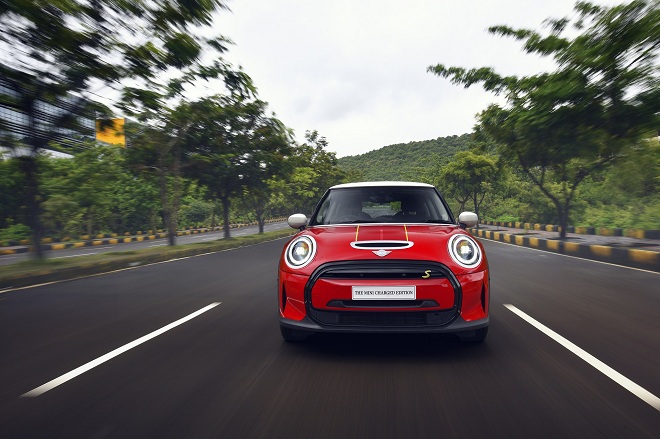
MINI India introduced the MINI Charged Edition, a limited edition of the all-electric MINI 3-door Cooper SE in India. Offered as a Completely Built-Up unit (CBU), only 20 units are available and can be booked exclusively on shop.mini.in.
Mr. Vikram Pawah, President, BMW Group India said, “MINI spreads BIG LOVE by bringing the MINI 3-door Cooper SE in Chili Red, for the first time in India. It celebrates the legendary Go-Kart feeling and instant torque, all with zero emissions. The MINI Charged Edition is a bold, energetic and expressive car that perfectly fits the MINI BIG Love spirit of a brave and daring brand which brings people and communities together. The MINI Charged Edition is your perfect partner for Urban Mobility. Every bit the original iconic MINI but powered for the roads of tomorrow.”
The ex-showroom price of the all-electric MINI Charged Edition is INR 55,00,000.
The MINI Charged Edition comes with one-time installation of the MINI Smart Wallbox charger and a portable DC charging cable.
The MINI Charged Edition is the first limited edition of the successful MINI 3-Door Cooper SE to be introduced in India. The limited edition features for the first time a Chili Red exterior colour with Multitone Roof in White, Aspen White Exterior Trim (headlight and tail light rings, door handles, logos, tailgate handle), Frozen Red Sports Stripes with Energetic Yellow highlights on the bonnet, sides and boot of the car and air inlet in chrome.
The car’s design blends modern aesthetic aerodynamic lines with eye-catching signature details. Dynamic lines and a crisp, clean style combine with the wide track, short overhangs and 17 inch / 43.66 cm MINI Electric Power Spoke alloy wheels to give the MINI Charged Edition its taut athletic presence. Striking ‘Energetic Yellow’ accents further enhance its unique appearance on the road. The all-electric MINI is designed to enhance Urban Mobility and maximise your driving experience.
Distinctive headlights are accompanied by side scuttles that house LED indicators and the Energetic Yellow ‘S’ logo. Mirror Caps in Aspen White along with Chili Red exterior colour lend an even more individual appearance. The exclusive 17 inch / 43.18 cm Electric Power Spoke alloy wheels outlined in Energetic Yellow add to complete the all-electric MINI’s bold design. The asymmetrical spokes lend them a unique appearance and are aerodynamically optimised to improve efficiency.
The interior comes with the exclusive MINI Electric Interior and sports seats with Leatherette Carbon Black upholstery. The multifunction steering wheel in Nappa Leather integrates more functions yet reduces the number of control surfaces. The 5-inch/ 12.7 cm digital Multifunction Instrument Display in a sleek Black Panel design provides key driving information. It is brilliantly complemented by the 8.8-Inch/22.35 cm high-resolution, full-colour touchscreen. In addition, the audio control unit and the function buttons for hazard warning lights and driver assistance systems are integrated harmoniously into the circular control unit. Innumerable, finely integrated lighting strips and spots create ambient lighting that sets the right mood for every drive. Striking accents in ‘Energetic Yellow’ extend to the start/stop toggle switch, gear lever and unique badging on door sills.
Dynamic yet gentle, the all-electric MINI offers an entirely new driving experience. Delivering 184 hp/135 kW and a maximum torque of 270 Nm, the car sprints from 0-100 km in 7.3 seconds, with no lag or gearshift interruptions. It is powered with a battery capacity of 32.6 kWh and a driving range of up to 270 km.
MINI 3-Door Cooper SE ensures fast and hassle-free charging.
50 kW DC Charger – 80% in 36 mins. 11 kW AC Charger – 80% in 2 hours 30 minutes. 2.3 kW AC Charger– 80% in 9 hours 43 minutes.
The MINI Charged Edition comes in a fully loaded feature rich fixed profile including MINI Wired Package with Navigation System, Wireless Charging, enhanced Bluetooth mobile preparation, Multifunctional Instrument Display, Apple CarPlay and Harmon Kardon Hi-Fi Speaker System.
MINI Driving Modes enable an individualised vehicle set-up focusing on ride comfort, enhanced sportiness, or efficiency according to driver’s preference. In addition to the standard MID mode there is a choice of SPORT and GREEN mode. Driver Assistance Systems include Cruise Control, Park Distance Control, Rear View Camera and Tyre Pressure Monitor.
The MINI Charged Edition features cutting-edge safety technology. The standard safety equipment comprises of front passenger Airbags, Brake Assist, 3-Point Seat Belts, Dynamic Stability Control, Crash Sensor, Anti-lock Braking System, Cornering Brake Control, Run-flat tyres, and Rear-View Camera. The standard MINIMALISM technology includes Auto Start/Stop function, Brake Energy Recuperation, Active Cooling Air Ducts and Electromechanical Power Steering.



 Power Drive