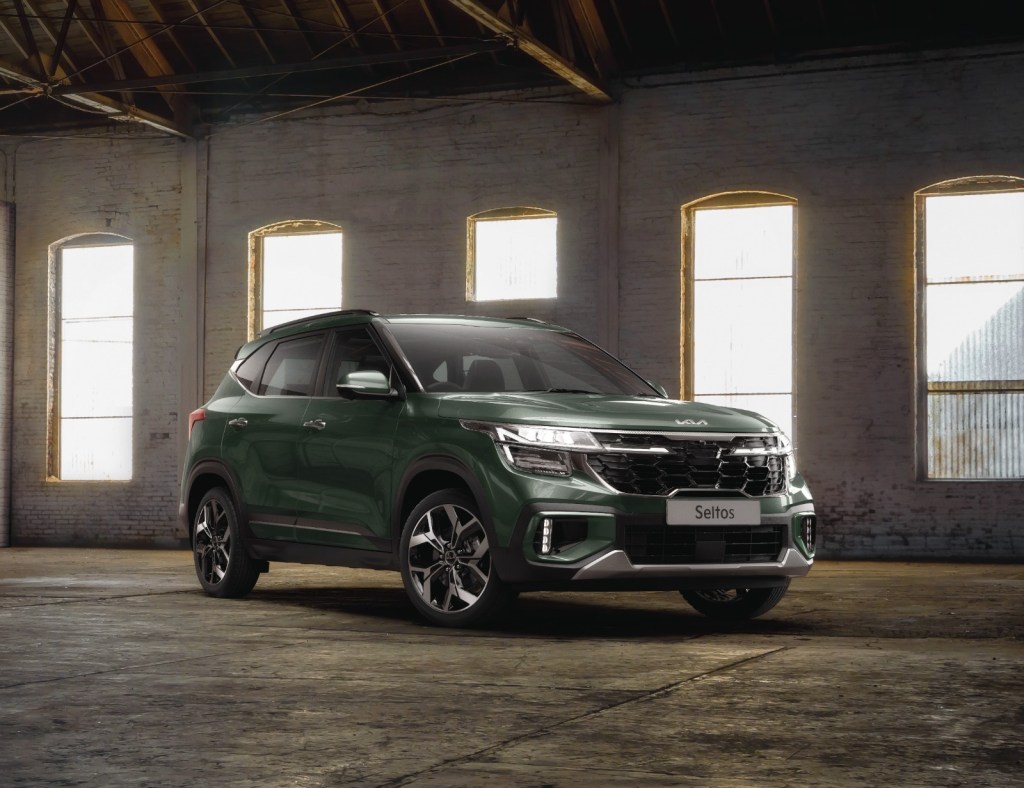
After setting a record for the highest first-day bookings in its segment, India’s Kia Seltos continues its winning streak, surpassing over 100,000 bookings since its launch in July 2023. During this period, the company has received 13,500 bookings (approximately) every month. The starting price for the New Seltos in India is INR 10.99 lakhs (ex-showroom). Since its initial launch in August 2019, Kia has manufactured over 6 lakhs Seltos units in India, with nearly 75% sold in the domestic market. In 2023, Kia sold a total of 1.04 lakhs units of the Seltos.
The automatics emerged as the top choices among Seltos’ new-age customers, comprising nearly 50% of the total bookings. With growing awareness of advanced Active Safety features, approximately 40% of buyers are expressing strong interest in variants equipped with ADAS. Seltos booking trends mirror the enduring preference for sunroofs among Indian customers, with 80% of Seltos buyers opting for this feature. The ratio of petrol to diesel bookings also remains healthy at 58:42. The premium appeal of the Seltos is evident in the booking preferences, with 80% of buyers inclined towards owning the top variants.
Commenting on Seltos success, Mr. Myung-sik Sohn, Chief Sales & Business Officer, Kia India, said, “We are excited about the market success of the new Seltos. Undoubtedly, it stands out as one of the smartest SUV choices available, and the response from our customers resonates with this sentiment. The New Seltos is helping us consolidate our market leadership consistently in the mid-SUV segment. We are actively realigning our manufacturing processes to ensure that our customers gain access to their favourite SUVs as swiftly as possible. We are thankful to all Seltos and Kia fans in India who support and inspire us to do better with every product.”
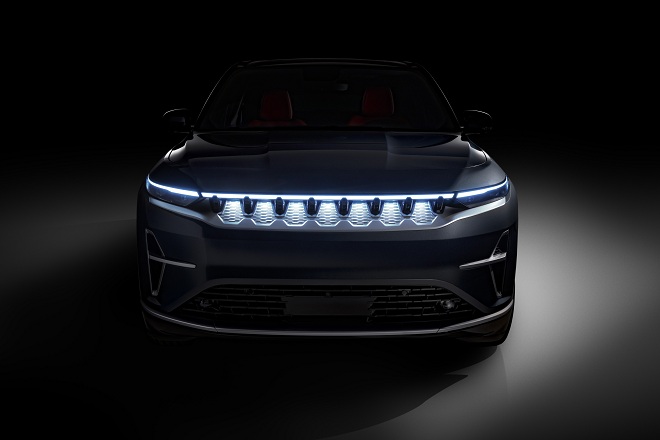
The Jeep brand is celebrating another year of firsts in 2024, preparing to launch its first global battery-electric vehicle (BEV) and expanding its lineup of legendary SUVs. Meet the all-new, all-electric premium Jeep Wagoneer S, which will be sold in the U.S. in the fall of 2024 and then in key markets around the world.
Offered exclusively as a BEV, the Jeep Wagoneer S offers standard 4xe capability with all-terrain management, advanced Jeep brand-focused technology and impressive performance credentials, including 600 horsepower and a lightning fast 0-60 mph time of around 3.5 seconds. Driven by aerodynamic efficiency, its sleek exterior design is uniquely marked by a reimagined LED-lit class- exclusive seven-slot Jeep brand grille.
The new Jeep Wagoneer S is part of the Jeep brand’s ongoing global electrification initiative that is transforming 4xe into the new 4×4 in pursuit of the brand’s vision of accomplishing Zero Emission Freedom. The plan is in full support of Stellantis’ ambition to become a carbon net zero corporation by 2038 as outlined in the company’s Dare Forward 2030 long-term strategic plan.
In 2021, Rolls-Royce Motor Cars made a historic announcement that would shape the marque’s history forever. Rolls-Royce Motor Cars declared its commitment to electric technology by both announcing Spectre, an all-electric car with first customer deliveries in the fourth quarter of 2023, and that by the end of 2030, the marque’s entire portfolio would be fully electric. Since this significant moment in the storied history of Rolls-Royce, Spectre has been on a remarkable journey, including completing a highly demanding testing programme, spanning 2.5 million kilometres. Last October, Spectre was unveiled to the world at the Home of Rolls-Royce in West Sussex, England, and response from across the globe has been overwhelmingly positive.
Now, ahead of first client deliveries later this year, Spectre made its India debut on January 19 in New Delhi. The world’s first ultra-luxury electric super coupé, on a regional tour, is being shown to clients and media alike, providing a look into Rolls-Royce’s electric future.
Spectre heralds the beginning of an exciting new chapter for Rolls-Royce Motor Cars and the start of the marque’s all-electric era. Spectre represents a promise made, a prophecy kept and a remarkable undertaking. Spectre demonstrates how perfectly Rolls-Royce is suited to electrification. By the end of 2030, its entire product portfolio will be fully electric.
The marque has a long-standing connection with electric technologies; in 1900, Rolls-Royce co-founder Charles Rolls prophesised an electric future for the motor car. Having experienced an electric vehicle named The Columbia Electric Carriage, he foresaw the technology’s suitability as a clean, noiseless alternative to the internal combustion engine – providing there was sufficient infrastructure to support it. In 2011, Rolls-Royce showcased a fully electric Experimental Phantom concept named 102EX. This was followed by 103EX, a dramatic design study that anticipated a bold electric future for the marque.
Yadur Kapur, Dealer Principal, Rolls-Royce Motor Cars New Delhi, “We are delighted to celebrate the debut of Rolls-Royce Spectre in North India, the most anticipated model in the history of the Rolls-Royce marque. There is excitement in India as its arrival is well timed to meet the needs of a growing, young, entrepreneurial customer base and continued demand for luxury. With its highly contemporary design and delightful Bespoke interior, combined with true engineering substance and innovation, there can be no doubt that Spectre is a true Rolls-Royce. Rolls-Royce’s Spectre is an all-electric super-coupé at the pinnacle of the luxury market. I am delighted to have the opportunity to showcase this remarkable motor car in New Delhi and to facilitate a new electric era for the brand.”
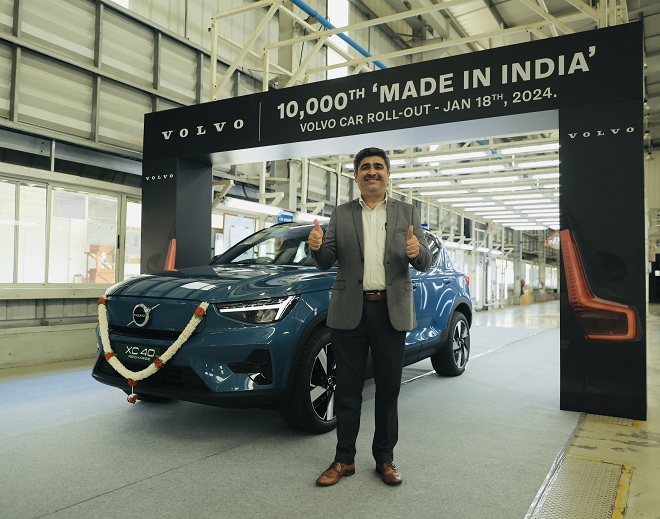
Volvo Car India has reached the milestone of having produced ten thousand cars in India at its Bangalore facility. It was in 2017 that the company commenced assembly operations with the ever-popular XC90 being the first car to be assembled and rolled out. Till date the highest production has been of the XC60 with 4000+ numbers. The honour of being the ten thousandth car goes to the company’s first Pure electric offering the “XC40 recharge”.
“It is indeed a matter of pride for the company to have reached this milestone in short span of time in spite of nearly three years of pandemic disruptions. The steady increase of capacities at Bangalore reflects our commitment to India’s luxury mobility segment. The honour of being the ten thousandth car goes to our first Pure electric offering, XC40 Recharge which continues to showcase consumer confidence. I am beholden to Volvo Car India’s entire ecosystem that has made this milestone possible” said Mr. Jyoti Malhotra, Managing Director, Volvo Car India
“Rolling out the ten thousandth car is indeed a major milestone for our plant. Since 2017 we have been increasing our capacities to meet customer demand and have also continuously undertaken skill upgradation leading to the successful assembly of EVs. Our plant also holds the proud distinction of having rolled out India’s first domestically assembled EV our XC40 Recharge” said Mr. Gao Feng, Production Head, Volvo Car India
The manufacturing facility in Hoskote near Bengaluru commenced assembly of Volvo cars in 2017. The company today locally assembles all its models in India namely XC90, XC60, S90, XC40 Recharge and the recently launched C40 Recharge.
As part of its commitment to encourage adoption of EVs, Volvo Car India has deferred the prices of its EV offerings –the XC40 Recharge and the C40 Recharge while effecting a 2% price increase on its other models.
The XC40 Recharge is priced at 57,90,000 while the C40 Recharge is priced at 62,95,000. The updated prices for the ICE models are as follows: the XC60 is now priced at ₹68,90,000, the S90 at ₹68,25,000, and the XC90 at ₹1,00,89,000.
“We are focused on sustainable luxury e-mobility and have committed that we will be an all-electric company by 2030. We encourage the adoption of EVs and as part of this endeavour have decided that as of now we will hold the prices of our EVs despite rising forex and input costs. Industry dynamics may however compel us to revise the EV prices at a later date. So it’s the best time to buy EVs from the Volvo stable before prices go up” said Mr. Jyoti Malhotra, Managing Director, Volvo Car India.
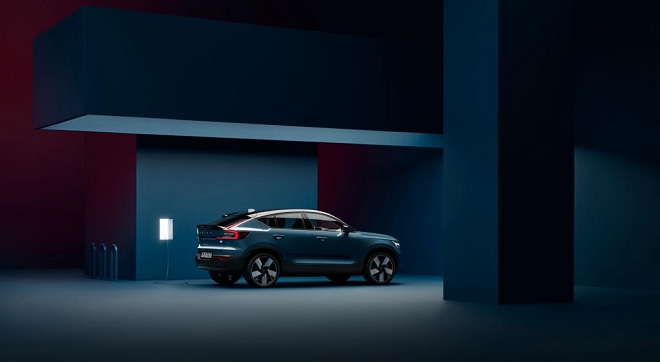
Volvo Car India’s EVs have had good response from customers and till date 580 units of XC40 Recharge have been sold. It would be recalled that 150 units of the XC40 Recharge were booked within two hours of the bookings opening in July, 2022. The born electric C40 Recharge was launched in September, 2023. Within a short span 180 units of C40 Recharge cars have been delivered to customers across India.
Volvo Car India is committed to grow the EV market with its commitment to launch one new EV model every year. Both XC40 Recharge and C40 Recharge are only sold online directly by the company. Customers can place orders online with a refundable deposit of Rs 1 lakh on Volvo Car India website. The assembly of both the XC40 Recharge and C40 Recharge for the Indian market takes place at Volvo Car India’s manufacturing facility in Hosakote, Bengaluru, Karnataka.
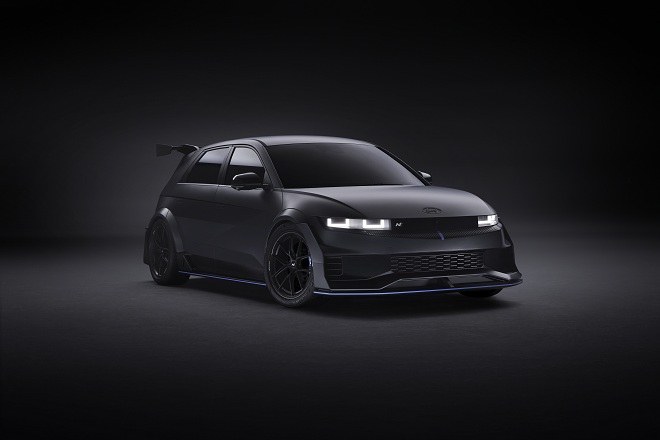
Hyundai Motor Company has unveiled the ‘IONIQ 5 N NPX1,’ a concept model equipped with prototype N Performance Parts, at the Tokyo Auto Salon 2024.
Hyundai Motor Company plans to enhance the high-performance electric vehicle (EV) ownership experience with N Performance Parts, which originally began in 2019 and continues to develop high quality tuning parts for customers. Continuing from internal combustion engine (ICE) vehicles, such as Elantra N, i30 N and i20 N, Hyundai N plans to offer specialized tuning components for all-electric N models including the IONIQ 5 N.
The ‘NPX1’ concept model previews an array of N-specific enhancements that will be available for purchase from a catalogue of N Performance Parts in the near future. It features a carbon front splitter, side skirts, rear diffuser, rear wing spoiler, lightweight hybrid carbon wheels, high-performance brake pads and lowering springs. The concept model’s interior is further enhanced with Alcantara material and racing bucket seats.
The prototype N Performance Parts applied to the NPX1 concept will be further developed for production in preparation for sales in 2024. Starting with the IONIQ 5 N, Hyundai N will expand the availability of N Performance Parts products for all N models.
“In 2024, Hyundai Motor Company will take a step forward as a leader in new tuning parts suitable for the high-performance EV era as demonstrated with the ‘NPX1’ concept model,” said Joon Park, Vice President of N Brand Management Group. “Not limited to tuning parts, we are also developing software customization such as sound and vehicle calibration by OTA updates which will open a completely new category of EV customization for an exciting future ahead for the tuning community.”
Now in its 24th edition, the survey of 1,041 senior executives in thirty countries and territories reveals a dip in optimism as the sector deals with concerns over the global economy and rising costs. However, auto executives hold a more realistic view of the EV transition.
EV penetration outlook is maturing – with less variation in estimates market share for 2030
Executive expectations about the shift to electric powertrains continue to mature. In the past, when KPMG asked executives across the industry about how they expected EV penetration to trend in their markets, the responses varied widely. Now the range of estimates has narrowed, a sign of greater realism. Even so, the mean estimates for penetration rose in this year’s survey. In India, respondents feel that 20% of new vehicles sales will be battery-powered (excluding hybrids) by 2030.
Customer experience is a key differentiator
While performance remains the most important selling point, a seamless and hassle-free customer experience has moved up to second place. The emphasis on a smooth customer experience extends from buying the car to having seamless operating software in it, but the latter is a challenge for manufacturers. The car’s hardware is usually reliable, the software less so.
The software-defined vehicle provides an opportunity to supply all sorts of driver applications. But consumers are not likely to sign up for software subscriptions if the products aren’t compelling. In this year’s survey, OEM executives in particular are less confident than in previous years that they can generate subscription revenue. How good is cybersecurity? Widely publicised breaches have raised concerns about automotive cybersecurity. In our survey, executives are still confident that auto makers provide adequate cybersecurity and customer data protection, but they may be over-confident.
Gary Silberg, Global Head of Automotive at KPMG International, said: “A year ago, we said that automotive executives sensed the future was theirs to seize. In the latest survey, more than 1,000 executives in 30 countries again said they see enormous opportunities. But they are becoming more sober in their assessment of market prospects. Having committed more than half a trillion dollars to the EV transition, the industry is asking when companies will see a return on the investment. Right now, almost all automakers are losing money on their battery-electric vehicles, possibly presaging a shakeout among EV manufacturers and suppliers.
Our 24th annual survey examines in detail how executive sentiment is changing and the concerns and challenges that make global automotive leaders more cautious. The upshot: to help ensure companies end up as winners, not losers, executives should rethink their strategies and ask themselves some difficult questions about potential shifting consumer habits, especially driven by a cost-of-living crisis, the possibility of fewer government subsidies, and how the industry can potentially vertically integrate, creating more efficient operating systems.
Finding the right answers to these and other strategic questions will help determine how companies succeed in the coming years. We believe that a dazzling future for the automotive business—with amazing products, more delighted consumers, and a positive impact on the planet—is still in view. But getting there will require overcoming near-term challenges.”
Vinodkumar Ramachandran, Partner, Head of Business Consulting, KPMG in India says, “Consumers are increasingly savvy and demanding about the technology in cars. Manufacturers should stay ahead of their competitors in offering the latest equipment in vehicles, advanced connectivity features, and enhanced safety technologies.”
Just in case is overtaking just in time
After the disruptions of the past few years the new norm in supply chain management is becoming “just in case,” rather than “just in time.” Companies are pursuing a wide range of strategies to build resilience and things are far better than two years ago. Still, there is a high level of concern about the continuity of supply for many commodities and components over the next five years.
The technology challenges grow more complex
In the latest survey, automakers indicated that they feel less prepared than in the previous year for advanced technologies, such as artificial intelligence, digital twins, and advanced robotics. Only 12 percent of auto executives said they felt extremely well prepared, down from 22 percent the year before. The change is likely associated with the rapid advances in artificial intelligence, particularly generative AI, which is expected to bring automation to white-collar jobs. Automakers are going to have to train more workers to take advantage of AI in all its forms and must compete with other industries to hire people with the requisite skills. When it comes to powertrain technology, this year more companies seem to be hedging their bets. Hybrid technologies have jumped from fourth to second place overall in technology.
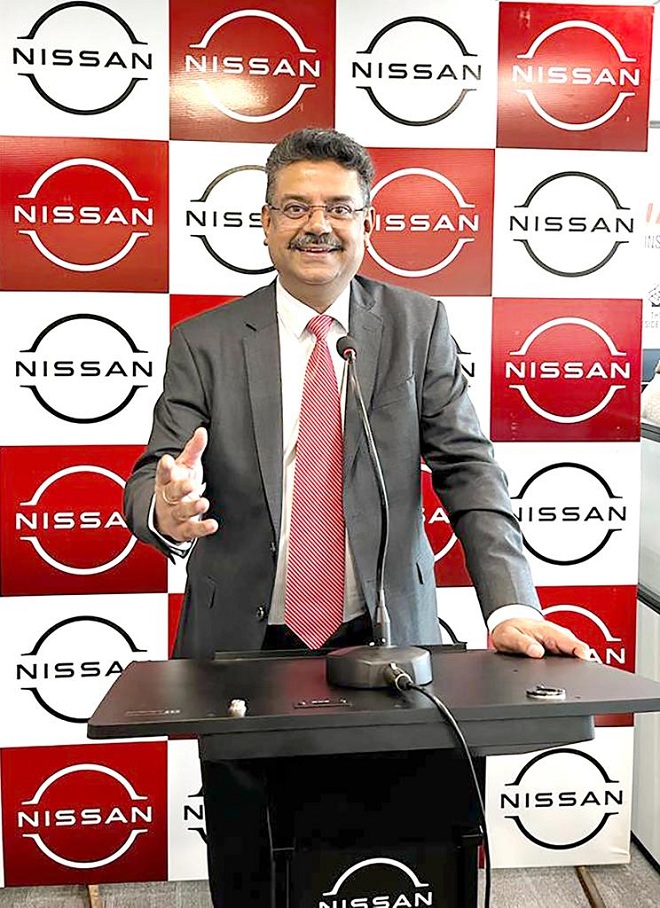
Nissan Motor India (NMIPL) has announced the appointment of Saurabh Vatsa as Deputy Managing Director effective January 15. Saurabh will report to Managing Director Rakesh Srivastava and will support in implementing the ongoing transformation roadmap for India as the company gets ready to deliver on the Mid Term Plan (MTP) and drive into our Ambition 2030 goals. This appointment is reflective of the company’s transformation plan to meet the opportunities and challenges ahead for the automotive industry in India.
Saurabh joins Nissan from Stellantis where he was a member of the Stellantis leadership team and was spearheading the Citroen brand since its inception in India and was responsible for all aspects of the business as Brand Head. Prior to Stellantis, Saurabh worked with General Motors (GM) for over two decades including long term assignments in South Korea among several key leadership roles within the company.
Saurabh comes with extensive experience across Asian markets along with deep knowledge of the automotive industry having worked within multiple strategic business functions such as, Product Planning, Program Management, Sales Planning, Marketing, Communications and Retail / Commercial Sales. Saurabh is a graduate of Delhi University, with an MBA from the International Management Institute and has completed an executive management program at the London Business School.
Speaking on the appointment, Frank Torres, President, Nissan India Operations said, “We are excited to on-board Saurabh at Nissan Motor India as Deputy Managing Director at this crucial juncture for the company as we head into 2024. His appointment underpins our commitment to invest $600m USD (5300 crores INR) in India as part of the Alliance and introduce more products for the Indian consumer as part of the transformation plan. We are certain, the next phase of growth for Nissan is going to be exciting for all of us as we build on the success of the Nissan Magnite.”
In this new role, he will support the leadership for Nissan’s transformation plan and prepare the company for its next phase as outlined by the company in 2023.
Volvo Cars is expanding its sustainability strategy, setting new ambitious goals for 2030 and 2040. The company is also boosting its focus on biodiversity, and by 2025 the company aims to have 100 per cent of its debt linked to its Green Financing Framework or in a sustainability-linked format.
“Taking actions to combat climate change is non-negotiable and going fully electric is an important step on our pioneering journey,” says Jim Rowan, CEO of Volvo Cars. “As we move to further reduce emissions throughout our value chain, we have a responsibility to do more and address our biodiversity footprint as well as help improve people’s lives. Our updated strategy has been designed to help us do just that.”
Volvo Cars’ new sustainability ambitions for 2030 in short:
Reduce its CO2 emissions per car by 75 per cent (compared to 2018 levels) Reduce energy usage in its operations per average car by 40 per cent (compared to 2018 levels)
Reach 30 per cent average recycled content across its fleet, with new car models having at least 35 per cent recycled content
Reduce water use in its operations by 50 per cent average per car (compared to 2018 levels)
At least 99 per cent of all waste from its operations to be either reused or recycled
Since the release of the sustainability strategy in 2019, Volvo Cars has made progress towards its climate action targets. For example, 69 per cent of company operations are now powered by climate-neutral energy compared with 55 per cent in 2019, and 100 per cent climate-neutral electricity is now used across its manufacturing plants globally compared with 80 per cent in 2019. Additionally, Volvo Cars has reduced its CO2 emissions per car by 19 per cent since 2018.
Net zero greenhouse gas emissions by 2040 Volvo Cars’ aim now is to reach zero greenhouse gas emissions by 2040. This expands upon our previous ambitions of being climate neutral by 2040, and clarifies the company’s intention to use carbon removals only to mitigate any unavoidable emissions. The company’s first priority remains to reduce real emissions before turning to carbon removals, and it encourages its suppliers to do the same.
This will be underpinned by an ambition to achieve 100 per cent green debt or sustainability-linked financing of assets by 2025 – in recognition of the fact that finance plays a critical role in advancing sustainable development.
2030 is a milestone year for the company. By then it plans to be a fully electric car company while also aiming to reduce CO2 emissions per car by 75 per cent compared with its 2018 baseline. The company believes that through a combination of selling only fully electric cars and reducing emissions by 30 per cent from both its supply chain and operations, it will be on track to meet the CO2 reduction goals.
Working towards becoming a circular business by 2040 At Volvo Cars, embracing the circular economy has been in focus since 2019. Recycled material already comprises a larger proportion of materials in newer Volvo cars than ever before. For example, nearly 25 per cent of all aluminium in the Volvo EX30 is recycled, while approximately 17 per cent of all steel and plastic in the car comes from recycled sources as well.
Volvo Cars aims to use 30 per cent average recycled content across its fleet by 2030, and for new car models released from 2030 to contain at least 35 per cent recycled content. The company is also striving to ensure that by 2030, 99 per cent of all its waste is either reused or recycled compared with recycling 94 per cent of global production waste in 2022.
Striving to be net positive and to contribute to a nature positive future Volvo Cars believes in taking a complete value chain approach to its impact on biodiversity. In addition to taking action to reduce impact, it will also pursue restorative actions.
To uncover how Volvo Cars’ actions affect biodiversity, the company conducted an impact assessment using production and sales data from 2021 to estimate its annual biodiversity footprint using the ReCiPe model. Using the findings as a baseline, Volvo Cars is now setting a long-term ambition to strive to be net positive across its value chain and to contribute to a nature positive future.
This will require a mixture of short-term and long-term measures that Volvo Cars is currently developing, such as avoiding and reducing the impacts of its value chain, designing a programme for restoration and conservation activities within ecosystems where it operates/sources from, and working together with supply chain partners to establish awareness on biodiversity issues.
Help protect people’s lives within and beyond the value chain Volvo Cars wants to have a positive impact on society. The company has, for example, taken steps to help protect people by focusing on its injury rate (LTCR). The current injury rate (LTCR) is 0.07, an industry-leading effort, but the goal is to further reduce the workplace injury rate to 0.02 by 2030. Throughout its value chain, Volvo Cars is also working hard to help safeguard human rights through risk-based due diligence processes to trace, identify, assess and address human rights risks.
Together with like-minded partners, Volvo Cars looks forward to unveiling new social and environmental initiatives in the year ahead, aimed towards helping protect people and the planet.
Kia India has announced the appointment of Mr. Gwanggu Lee as the new Managing Director and CEO, effective immediately. He will be the third Managing Director and CEO of Kia India, succeeding Mr. Kook Hyun Shim and Mr. Tae Jin Park. Kia India’s former MD & CEO – Mr. Tae Jin Park, is retiring after his remarkable 36-year journey with Kia Corporation and 4 years stint with Kia India.
With over 30 years of robust experience in the automotive sector, Mr. Gwanggu Lee will spearhead Kia’s transformative journey focusing on fostering sustainable business growth. Mr. Lee has held leadership positions in various capacities in both developed and developing economies, including roles in the US, Canada, Italy, Mexico, Kia Headquarters in Central and South America, and Kia Europe Headquarters in Germany. His recent role as President at Kia Mexico played a pivotal role in the company’s substantial growth and establishment as a production and export hub.
Commenting on his appointment, Mr. Gwanggu Lee, MD, and CEO – Kia India, said, “I am very excited to assume this responsibility as Kia India has become one of the most loved and trusted brands in just 4 years. With two segment-breaking updates – the new Seltos & the new Sonet and a host of more innovative products on the way, Kia India is surely on the right path to sustainable business growth. It’s a privilege to lead a team that has set industry benchmarks, and I shall be contributing towards achieving many more as one team. My vision is to unlock the next phase of growth through inspiring Kia brand experiences thereby creating more value and long-lasting impact for our customers, partners, and employees alike.”
With his experience within the industry and the brand, Mr. Gwanggu Lee will continue to grow Brand Kia’s strong position in India.




 Power Drive