78% Women Drivers Consider Aggression On The Roads To Be A Serious Problem

Women’s Worldwide Car of the Year celebrates June 24th, International Women Drivers’ Day by drawing attention to women drivers’ perspective concerning behaviour. A survey led by Czech online magazine Zena v aute.cz for women drivers contacted 1,485 female drivers worldwide in an online questionnaire. It revealed that 78% of women drivers consider aggression on the roads to be a serious problem and 69% respondents think that aggressive behaviour on the roads has been increasing.

The survey was carried out during May 2024 in 20 countries around the world (Australia, Austria, Belgium, Columbia, Czech Republic, Denmark, Estonia, Finland, France, Germany, India, Italy, New Zealand, Pakistan, Poland, Serbia, Spain, Switzerland, UK, and USA). The expert advisor of the survey was Platforma Vize0.

“Through a questionnaire we analyzed how women-drivers feel, what they fear, how they behave behind the wheel, and on roads. The results of the survey are remarkable,” says Sabina Kvášová, Jury of the Czech Republic and editor-in-chief of the magazine Zena v aute.cz, conductor of the survey.

Concerns while driving
What are women drivers afraid of when driving? According to the study, there are three main topics about which women drivers have concerns: aggressive drivers (22%), accidents (20%) and driving in reduced visibility (20%), followed by skidding (13%) and collision with animals (9%). About 16% of those interviewed think there is to worry about.

It is interesting to look at answers that vary from country to country. For example, aggressive drivers as a main concern while driving was mostly stated by respondents from USA (82%), Spain (31%) and Poland (38%). Accidents as a main fear was represented in answers from Italy (51%), Poland (35%) and Germany (31%). Driving in reduced visibility is a subject of concern mainly for women drivers from UK (52%), Germany (50%) and Poland (20%).

The survey revealed that 78% of women drivers consider aggression on the roads as a serious problem and 69% respondents think that aggressive behaviour on the roads has been increasing.

A survey organizer and member of the WWCOTY jury, Sabina Kvasova stated that the majority of women drivers worldwide sporadically encounter (55%) aggressive behaviour on the roads. Only 25% of respondents encounter aggressive behaviour every day, 20% several times a week.

What women drivers propose
When asked what measures should be taken against aggressors, women drivers worldwide support mainly strict penalties (45%), specialized psychological therapy program (27%), training of future drivers (20%) and prevention campaigns (6%).

Looking at specific countries, strict penalties against aggressive drivers are supported by women drivers profoundly in Denmark and Serbia (97%), followed by USA (54%) and Italy (50%). Obligation to undergo a specialised psychological therapy program for drivers and subsequent psychological assessment of a driver’s mental abilities have a strong support in Denmark a Serbia (97%), USA (54%) and in Poland as well as in Columbia (50%). Future drivers must be made aware of the risks associated with aggressiveness on the roads during their training – as a proposed measure is backed in the UK (43%), Italy (42%), Spain (30%). Prevention campaigns on the dangers of aggression were mainly stated in the answers of respondents from USA (45%), Poland (37%) and Germany (24%).

With this study, the Women’s Worldwide Car of the Year aims to publicize women driver’s perspective concerning driving behaviour. International Women Drivers’ Day, a day that vindicates mobility as an inalienable right that contributes to the freedom, dignity, and personal and professional development of women, is the perfect organization to highlight this survey. Driving opens the door to independence for millions of women around the world to seek a better future, to achieve fairer living conditions, and to pursue their passion for motorsports.

Today, women influence more than 80% of car purchases in advanced countries. This number will continue or grow in the coming years. “The percentage of young women university students is already higher in developed countries. Salary parity is beginning to be an achievable goal, Boards of Directors are no longer exclusively male, and in the lists of the richest people in the world, it is not unusual to see more and more women’s names,” says Marta García, executive president of WWCOTY.

International Women Drivers Day also celebrates amplifying the importance of women expressing their opinions and experiences about cars on social networks. The number of women globally on Instagram is 53.6%, Facebook 44%, LinkedIn 43.7% and TikTok 49.2%. For women, it’s not just about performance and safety, but also about saving the planet through environmental awareness without losing the right to the freedom to come and go where and when you want.

International Women Drivers’ Day is cause for reflection. Many women still feel scrutinized by their partners when they drive, use only the second family car, or feel little support in the world of motorsports. That’s why the celebration of International Women Drivers’ Day, an initiative promoted by Women’s World Car of the Year, is more important than ever. A future of sustainable mobility and equality is only possible with the contribution of women.

Times Are Changing – Preservation Beats Restoration At World-Class Concours

For the very first time, a ‘preserved’ car has won Best of Show at a world-class concours event – a moment of huge significance for the historic vehicle movement.

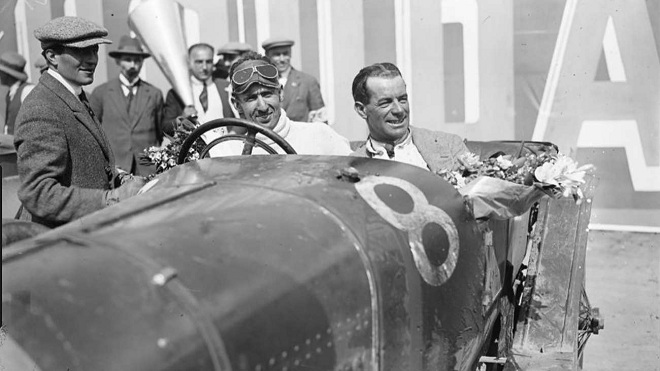
At last month’s Concorso d’Eleganza Villa d’Este 2024, the coveted Trofeo BMW Group – overall award for Best of Show – went to the 1932 Alfa Romeo 8C 2300 by Figoni, owned by 27-year-old Belgian collector Thibault De Meester.

“The huge significance of this moment is that a car which has been largely preserved, rather than restored, took the highest accolade,” says Tiddo Bresters, President of FIVA (the Fédération Internationale des Véhicules Anciens or international federation of historic vehicles).

“It clearly highlights the trend towards preservation over restoration, a shift that FIVA has long championed. We are proud to say that FIVA has been a frontrunner in the battle for preservation and authenticity, having launched our FIVA ‘Best Preserved Vehicle’ award at Pebble Beach in 1999. Nor is the Villa d’Este result a one-off. In 2023, a Duesenberg SJ that was last restored more than 20 years ago won Best of Show at Villa d’Este, and now this perfectly preserved 1932 Alfa Romeo has confirmed that attitudes have changed.”

Bresters concludes: “Looking ‘brand new’ isn’t the point – the importance of a car is in its history; its authenticity; its place in our automotive heritage. It’s extremely encouraging to see this appreciation of a well-preserved car spreading through the highest echelons of the historic vehicle world, as well as through the bedrock of the classics owned, maintained and enjoyed by the millions of enthusiasts we represent around the globe.”

FIVA now looks forward with great interest to Pebble Beach 2024. Whether or not a ‘preserved’ vehicle takes the top prize there in August, FIVA – in partnership with the Hagerty Drivers Foundation – will again be presenting trophies during Monterey Week, at both The Quail Motorsports Gathering and Pebble Beach, awards that have been renamed ‘in honour of Dr Frederick Simeone’, the preservation award judge and automotive historian who passed away in 2022.

Kia India Surpasses 250,000 Vehicle Exports Milestone

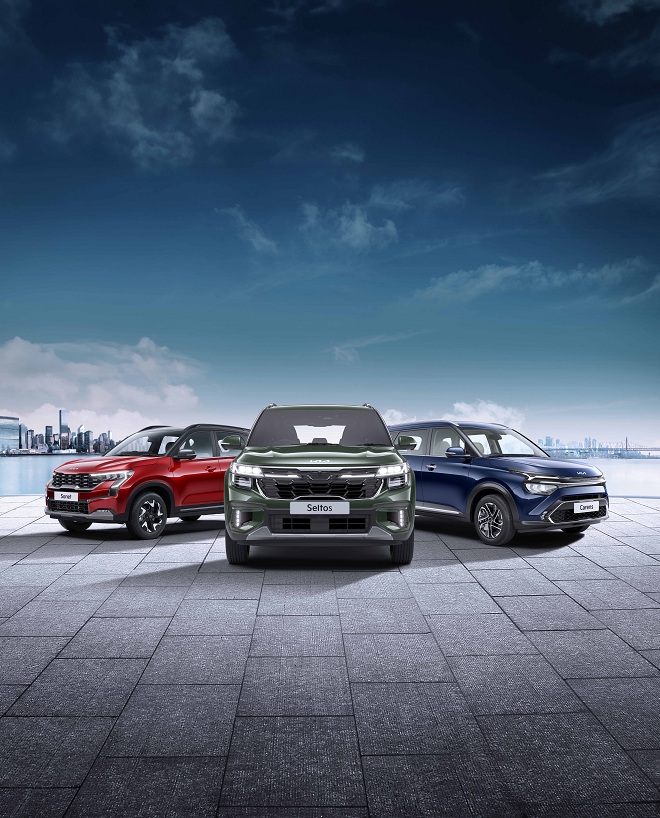
Kia India has announced the achievement of a significant milestone of surpassing 250,000 vehicle exports. Since 2019, the company has shipped 255,133 units internationally to over 100 markets from its Anantapur manufacturing facility. The Seltos has been the major contributor, accounting for 59% of the company’s overall overseas dispatches. Kia’s other innovations – Sonet and Carens follow in second and third places, contributing 34% and 7%, respectively.

Kia India is one of the key export hubs for the Kia corporation. However, in recent years, the company has focused more on selling its cars in the domestic markets and is now going to make 90% of products for India from this year. At present Kia India exports to over 100 international markets from its Anantapur facility. A few of the major markets for Kia India exports include South Africa, Chile, Paraguay and Latin America. Kia’s dedication to innovation and excellence has secured its place as a global leader in the automotive industry, both in India and globally.

Mr. Myung-sik Sohn, Chief Sales Officer, Kia India said, “Our dedication to quality and innovation has driven us to this milestone. The success of our Made in India vehicles internationally shows our commitment to quality. We’ve quickly become a major market for Kia Corporation and aim to maintain this momentum. While our focus is on the domestic market, we plan to keep our exports steady this year.”

Kia’s Anantapur plant, which commenced production around five years ago, has quickly become a crucial export hub within the company’s global network. The facility’s advanced production capabilities and adherence to the highest quality standards have enabled Kia to meet the demand for RVs worldwide.

Hyundai Motor Teases First Images Of All-Electric Inster

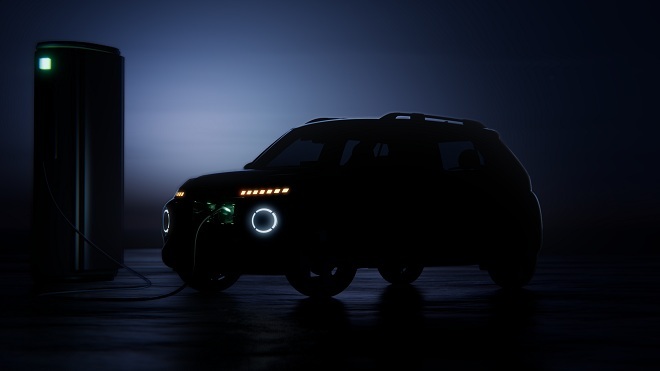
Hyundai Motor Company has unveiled the first official teaser images of its new A-segment sub-compact EV: Inster.

The name Inster is derived from “intimate” and “innovative”, with the name of Hyundai’s new sub-compact EV also reflecting the evolution from the Korea-only, petrol-powered Casper, introduced in 2021. Inster will set new standards in terms of driving range, technology, and safety features, redefining what buyers can expect from a vehicle in this class.

The images reveal a robust yet compact SUV profile with signature LED daytime running lights, plus pixel-graphic turn signals and tail lamps that define the new sub-compact EV’s design.

Hyundai is also outlining Inster’s projected maximum range of 355 km (WLTP) on a single charge.

Inster will make its global debut at the Busan International Mobility Show later this month.

Volvo Car India Surpasses 1000 EV Deliveries

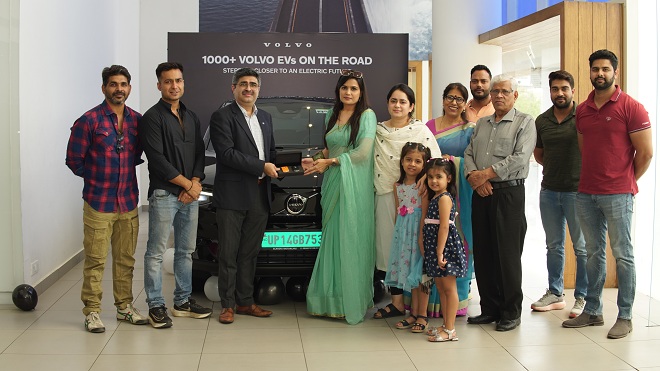
Volvo Car India has announced that the company has crossed the historic milestone of delivering over one thousand EVs. Volvo Car India’s EV journey started in November 2022 with the company delivering its first XC40 Recharge. The XC40 Recharge was also the first locally assembled luxury electric SUV in India. Volvo Car India offers three EV models in India, the XC40 Recharge, the born electric C40 Recharge and the single motor XC40 Recharge. All these are delivered under the company’s ambitious Online Direct Sales model through the Volvo Car India website. All Volvo EV customers also get an exclusive membership to the company’s ultimate luxury program called ‘Tre Kronor Experience’.

“On the occasion of World Environment Day, we are happy to announce that Volvo Car India has delivered over 1000 EV cars. This achievement is another milestone on our journey towards becoming an all-electric company by 2030. Our robust progress is a reflection of strong customer confidence our cars command as well as our commitment to grow the luxury EV market in India.” said Mr. Jyoti Malhotra, Managing Director, Volvo Car India.

Volvo Car India had a strong growth in 2023, with a remarkable 31% increase in overall sales compared to 2022. The Pure electric models XC40 Recharge & C40 Recharge together account for 28% of the total sales.

Volvo Car India is committed to launch one electric vehicle every year with an aim to turn its entire portfolio into electric vehicles ahead of 2030.

Bridgestone Develops Bespoke Potenza Sport Tyres For Maserati’s First All-Electric SUV

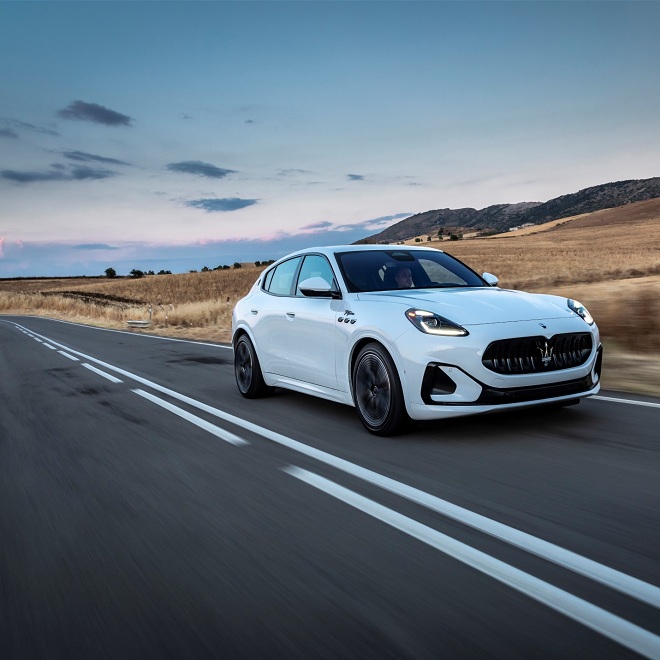
Bridgestone has been chosen by Maserati to develop bespoke 20-inch tyres for its first all-electric SUV, the Maserati Grecale Folgore.

After recent collaborations including fitments for the Maserati MC20 supercar and the Maserati Grecale, Maserati looked to its long-term partner for a tyre that could enhance the on-road capabilities of its first-ever all-electric SUV. Bridgestone responded with custom-developed Bridgestone Potenza Sport ENLITEN tyres, its flagship ultra-high performance tyre.

Providing top performance in dry conditions and supported by a premium wet package, the Bridgestone Potenza Sport ENLITEN has been custom engineered to keep Maserati Grecale Folgore drivers in control with superior handling performance in challenging conditions on both dry and wet surfaces.

The bespoke Bridgestone tyre delivers against the Maserati Grecale Folgore’s specific needs and enhances its performance thanks to the use of ENLITEN Technology, Bridgestone’s innovative approach to tyre development. This combination of multiple cutting-edge technologies provides maximum safety and outstanding tyre performance for Maserati Grecale Folgore drivers, while improving the sustainability characteristics of the tyre.

Alongside a successful, long-term partnership, Bridgestone and Maserati also share a strong commitment to electrification. The Bridgestone tyre specifically developed for the new Maserati Grecale Folgore delivers very low rolling resistance performance – achieving a best-in-class EU Label A-grade – to extend the Maserati Grecale Folgore’s 500km range.

Through a fully integrated approach, Bridgestone is investing to make electric mobility more efficient and accessible to drivers and fleets. The company is pioneering premium tyres and tyre technologies for EVs, as well as dedicated fleet and mobility solutions, while partnering with leading EV manufacturers and developing an EV-ready retail and service network. On its side, Maserati is the first Italian luxury brand to launch 100 percent electric vehicles, with a commitment to produce electric versions of all its models by 2025 and full-electric vehicles alone by 2028.

Consistent with Maserati’s deep-rooted Italian heritage, the Maserati Grecale Folgore was designed and produced in Italy, and so were its bespoke Bridgestone Potenza Sport ENLITEN tyres.

Bridgestone’s proprietary Virtual Tyre Development technologies was combined with Maserati’s driving simulator to ensure that the bespoke tyre could be created and tested in a digital environment – reducing physical prototyping and testing, cutting raw material consumption and carbon emissions, and enabling a faster time to market.

Speaking on this announcement was Steven De Bock, Vice President Original Equipment at Bridgestone EMEA: “The Grecale Folgore is a historic launch for Maserati on its pioneering electrification journey, and we’re very proud to help bring its performance to life with Bridgestone tyres. We both have a strong commitment to accelerate the transition to electric vehicles; it’s a great moment to see our collaboration break new ground in electric mobility.”

Rolls-Royce ‘Models of the Marque’: the 1910s – the Rolls-Royce 40/50 H.P. ‘Silver Ghost’

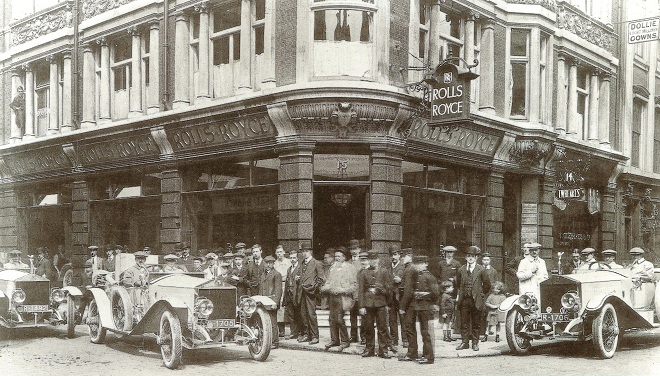
By 1906, just three years after its foundation, Rolls-Royce was already something of a victim of its own success. Demand for its motor cars was such that its line-up had quickly expanded from the original twin-cylinder 10 H.P. to include three-cylinder 15 H.P., four-cylinder 20 H.P. and six-cylinder 30 H.P. models. Henry Royce had even produced the first ever V8 passenger motor car, known as the ‘Legalimit’ since the 3.5-litre engine was governed to keep it below the 20mph speed limit then in force in Britain – only three of these were ever made, and it remains the only Rolls-Royce model of which no examples survive. This proliferation of models reflected a trend across the luxury automotive sector, as competing manufacturers chased an ever more finely segmented client base.

However, for Rolls-Royce, it caused major manufacturing headaches, since many parts were not interchangeable between models. The problem was compounded by Henry Royce’s entirely laudable policy of continuous improvement; his constant adjustments and refinements went all the way down to the smallest components. This created variations between – and even within – production series, to the extent that often only a handful of individual motor cars would be entirely identical.

As with almost any manufacturing process, more complexity and variability meant increased costs. This was anathema to the highly astute, commercially driven Managing Director, Claude Johnson. Having decided radical change was needed, he proposed the marque should focus all its energies on producing just one model. Charles Rolls enthusiastically agreed, but insisted it should be positioned at the top end of the market, where Rolls-Royce was already gaining a reputation as the very best motor car available.

Though a ruthless perfectionist and tireless innovator, Royce was also a pragmatist. He saw the logic of his colleagues’ single-model approach and duly produced a completely new motor car, the 40/50 H.P.

As with all Rolls-Royce models of the time – and indeed until the 1950s – the 40/50 H.P. was a rolling chassis, upon which the client commissioned bodywork from an independent coachbuilder. At its heart was a new six-cylinder, 7036cc engine (from 1910, the capacity was increased to 7428cc). Royce’s groundbreaking design effectively divided the engine into two units of three cylinders each; combined with a harmonic vibration damper on the crankshaft – a feature still used by modern manufacturers – he effectively eliminated the vibration problems caused by resonate frequencies that had bedevilled six-cylinder engines up to that point.

This technical achievement alone would have been sufficient to make the 40/50 H.P. a historically significant motor car. But it was the marketing genius of Claude Johnson that assured its immortality.

When the 40/50 H.P. was launched, new motor cars were taxed based on their horsepower. In general, this meant higher-value motor cars attracted heavier duties than lower-priced models. Since many of the more powerful motor cars on the market were imported, the tax also helped protect domestic British producers.

To provide a universal basis for these tax calculations, the Royal Automobile Club (RAC) developed the ‘tax horsepower rating’. This was derived not from actual engine output, but by an esoteric mathematical formula based on three engine measurements, all the more arcane when expressed in the prevailing imperial units: an assumed mechanical efficiency of 75%; a mean cylinder pressure of 90lbs per square inch; and a mean piston speed of 1,000 feet per minute. Since these differed from engine to engine, in reality, the resulting figure was almost entirely arbitrary, but could be applied by manufacturers and bureaucrats alike. Using this formula, the new Rolls-Royce was tax-rated by the RAC at 40 horsepower; in fact, it developed 50. Hence it was given the prosaic ‘40/50 H.P.’ designation on launch, so clients would know both the level of duty they would have to pay and how much power they could expect.

As an engineer, Royce was probably quite comfortable with this functional naming convention, but not so Claude Johnson. To his showman’s mind, it lacked distinction, resonance, romance and glamour; and it certainly failed to properly suggest the desirable, best-in-class motor car envisioned by Charles Rolls.

Accordingly, some 50 of the early motor cars were given suitably imposing names, either by Johnson or by their proud owners. In an inspired moment, Johnson dubbed the twelfth chassis, number 60551, the ‘Silver Ghost’, in homage to its almost supernatural quietness and smooth ride. Painted silver and adorned with silver-plated fittings, it was widely exhibited by Rolls-Royce at motor shows, and Silver Ghost would go on to become the name by which the 40/50 H.P. was generally known, as it is today.

But chassis 60551 was more than just a showpiece. Out on the road, it dominated the gruelling, high-profile reliability trials that represented the pinnacle of motoring endeavour at that time and were thus central to Johnson’s relentless promotional activities. In the process, it perhaps did more than any other early Rolls-Royce model to establish the marque’s international reputation for performance and engineering excellence.

Its extraordinary run of success began with the 1907 Scottish Reliability Trial, in which it covered some 2,000 miles without a single breakdown, the only delay being for a minute to re-open a closed fuel tap. Immediately afterwards, it covered 15,000 miles non-stop, driving day and night except for Sundays, setting a new world record for continuous travel.

In 1911, impelled by his own pursuit of perfection and Johnson’s insatiable appetite for publicity, Royce unveiled a new version of the Silver Ghost. Known as the ‘London to Edinburgh’ type, it was designed for the RAC’s flagship reliability trial, a return run of almost 800 miles between the two capitals. In an age long before motorways, the route consisted almost entirely of poorly surfaced A- and B-roads; to add to the challenge, cars were locked in top gear from start to finish.

Chassis number 1701 won the event at an average speed of 19.59mph, returning a then-unheard-of fuel efficiency of over 24 mpg. To prove it had not been modified in any way, it achieved 78.2mph on a half-mile speed test conducted soon after the Trial; later that year, fitted with a lightweight streamlined body, it attained 101.8mph at the fabled Brooklands circuit in Surrey, becoming the first Rolls-Royce in history to exceed 100mph.

But arguably the 40/50 H.P.’s greatest sporting triumphs came in 1913. A ‘works team’ of three Silver Ghosts, plus one privately entered car, all specially prepared to the same specification for the rigours of high-speed endurance motoring, gained first and third places in that year’s Alpine Trial, which started and finished in Austria. Customers immediately demanded a Silver Ghost offering similar performance, so Rolls-Royce released a production model of the competition cars; formally named the Continental, these were generally known as ‘Alpine Eagles’. The Continental itself then scored a landmark win in the inaugural Spanish Grand Prix, driven by the newly appointed Rolls-Royce agent for Spain, Don Carlos de Salamanca. His victory by three minutes helped Rolls-Royce break into a Spanish market that had long been dominated by French marques.

These faultless performances, together with the quietness and smoothness of operation implicit in its name, secured the Silver Ghost’s reputation as ‘the best car in the world’. It proved an enormous commercial success for Rolls-Royce, with 6,173 examples built in Britain, and a further 1,703 at the marque’s American factory in Springfield, Massachusetts, between 1907 and 1925.

Thanks to these relatively large volumes over a long production run, the Silver Ghost has one of the largest surviving populations of early Rolls-Royce models. This longevity is a testament to Royce’s engineering and the marque’s build quality. Even more impressive, however, is that some are still capable of the performances they achieved when new. In 2013, 47 Silver Ghosts, including one of the original team, retraced the 1,800-mile route of the 1913 Alpenfahrt, while in 2021, chassis 1701 repeated its record-breaking London-Edinburgh run; locked in top gear, just as it had been 110 years earlier.

Andrew Ball, Head of Corporate Relations and Heritage, Rolls-Royce Motor Cars, said: “Of all the famous nameplates borne by Rolls-Royce motor cars since 1904, few are as celebrated, significant, evocative and enduring as the ‘Silver Ghost’. Formally launched in 1906 as the 40/50 H.P., it was the first model to be awarded the soubriquet of ‘the best car in the world’ that Rolls-Royce retains to this day, setting unmatchable standards for performance and reliability, proven in the era’s toughest road trials. It was also a stupendous commercial success, with almost 8,000 examples built in the UK and US over an 18-year period – an unimaginable product lifespan in the modern age. That so many Silver Ghosts still survive in full working order – and, indeed, regularly perform the same feats they achieved more than a century ago – is a lasting monument to Henry Royce’s engineering genius.”

Le Mans First Winner Returns 100 Years On

100 years ago, John Duff set off from Brooklands Circuit destined for Le Mans in the Bentley 3 Litre Sport. Alongside teammate Frank Clement, they would go on to triumph in the 24-hour endurance race, becoming the first Bentley to do so.

Fast forward to the present day and that same journey in that very same car is to be reinacted. Alongside the Automobile Club de L’Ouest (ACO), Vintage Bentley are thrilled to be driving the 1924 Bentley 3 Litre Sport Le Mans winning car from Brooklands to Le Mans to mark the beginning of her centenary celebrations.

Setting off from Brooklands circuit, the Bentley 3 Litre Sport will cross over to France and navigate south travelling through, Boulogne, Berck, Dieppe, Rouen, Evreux, Mortagne, and Mamers before reaching Le Mans.

This historic return will culminate in the 1924 Bentley 3 Litre Sport leading the procession at the end of Saturdays scrutineering session. Featuring nine Hypercars, one LMP2 and seven LMGT3s, the Bentley 3 Litre Sport will lead the cars through the streets of Le Mans City Centre before remaining in Le Mans as an exhibit at the 24 Hours of Le Mans Museum (from June 9).

The Bentley 3 Litre will feature across the Le Mans race weekend (June 14-16) with further details being announced imminently.

As the world’s leading specialist in W.O Bentleys, Vintage Bentley are proud to be supporting the ACO in these celebrations. A small yet well-established business with over 25 years knowledge and experience, Vintage Bentley offer workshop services, parts, sales, and event support across the world. Vintage Bentley are a verifiable nature positive organisation that are leading the way for sustainability within the classic car world.

Hyundai N Unveils IONIQ 5 N TA (Time Attack) Spec At Nürburgring 24 Hours

Hyundai N returns to the Nürburgring Nordschleife aiming for its fourth consecutive TCR class victory at the Nürburgring 24 Hours (N24) race.

At the event, the company has also unveiled its IONIQ 5 N TA (Time Attack) Spec variant for the upcoming The Broadmoor Pikes Peak International Hill Climb (hereafter Pikes Peak International Hill Climb or PPIHC) and shared its collaboration plans with Gran Turismo, the popular sim-racing video game franchise made for PlayStation consoles.

“We are thrilled to return to the Nürburgring 24 Hours with drivers from Europe, North America and China, showing the growth of our motorsport program around the world,” said Till Wartenberg, Vice President and Head of N Brand and Motorsport at Hyundai Motor Company. “We are investing in the future of motorsport with our first ever electric Pikes Peak racer and collaboration with Gran Turismo. Motorsport passion continues to be at Hyundai N’s core as we move into the future.”

Hyundai N to run three-car TCR team at Nürburgring 24 Hours
Hyundai N heads back to the Nordschleife with three ELANTRA N TCR cars, chasing a fourth consecutive class win.

Drivers from three continents, including defending class winners and champion Hyundai Motorsport customer drivers from the competitive TCR series, are competing in the #830, #831 and #832 cars. The #830 crew of Mikel Azcona, Marc Basseng and Manuel Lauck return after claiming TCR-class victories in 2022 and 2023. Basseng and Lauck also won the TCR class at the 2021 N24 during the ELANTRA N TCR’s debut.

The Bryan Herta Autosport team, supported by Hyundai Motor America, achieved a third straight one-two finish in class for Hyundai Motorsport in 2023. The #831 team returns in 2024 with drivers Mason Filippi, Harry Gottsacker, Mark Wilkins and Bryson Morris.

The #832 entry for 2024 is driven by TCR China stars Martin (Hongwei) Cao, Rainey He, Andy Yan and Zhang Zhen Dong. Cao is the reigning 2023 national series champion.

Hyundai N’s entrants into the 2024 N24 also includes the Hyundai Driving Experience i30 Fastback N in the VT2 Front-Wheel-Drive class. In 2023, this team secured a class victory by nine laps despite a late technical issue. The 2024 crew features last year’s winners, including Marcus Willhardt and Michael Bohrer, journalist-racer Jens Dralle, and Korean Junior driver Gyumin Kim, who demonstrated his talent by winning the Hyundai N Festival and helping his team achieve podium finishes in their class at the first two NLS races of the season.

IONIQ 5 N TA Spec showcases award-winning high-performance EV prowess
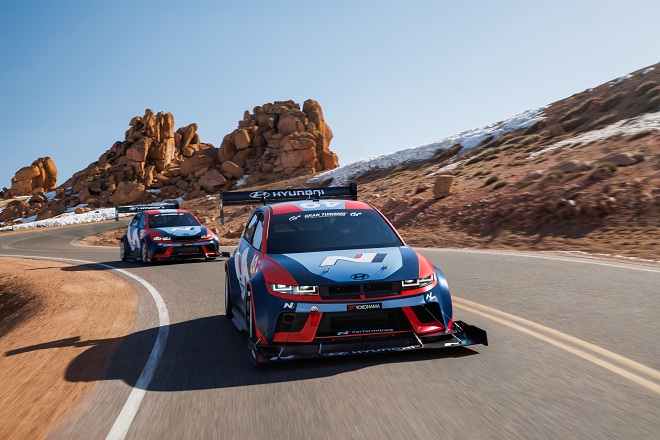
At its N24 showcase, Hyundai Motor today unveiled the IONIQ 5 N TA Spec. Two of these specially equipped models will join two IONIQ 5 N production vehicles as part of an all-electric four-car effort at the 102nd running of America’s legendary Pikes Peak International Hill Climb in Colorado Springs, CO, on June 23, 2024. The team is targeting Electric Production SUV/Crossover and Electric Modified SUV/Crossover records.

The 687 PS IONIQ 5 N TA Spec is designed to highlight the production-spec IONIQ 5 N’s strengths without fundamentally altering the car. Notably, the production IONIQ 5 N’s standard high-performance power electric (PE) system is carried over. The IONIQ 5 N TA Spec’s maximum output has been increased through software tuning to maximize performance. This was implemented by increasing the output of the rear motor by 37 horsepower (27 kW).

In addition, Hyundai N has chosen to utilize N Active Sound+ with modified speakers (over 120 dB) to both enhance feedback for the driver and replace sirens typical of electric Pikes Peak race cars.

To adapt the car for Pikes Peak, new shock absorbers, motorsport-spec brakes, 18-inch Yokohama ADVAN 005 slick tires, and a unique high-downforce aerodynamic package have been specially applied. Additional safety enhancements include a Recaro Pro Racer SPA Hans seat, Sabelt six-point Hans safety harness, a PPIHC specification roll cage and an EV fire suppression system.

At PPIHC, the two IONIQ 5 N and two IONIQ 5 N TA Spec entrants will make the grueling ascent along a twisting 12.42-mile (20 km) course that climbs over 4,700 feet (1,438 meters) to the summit of Pikes Peak. They will face 156 turns, rapidly changing weather and high-altitude conditions that can affect both drivers and vehicles.

The IONIQ 5 N TA Spec models — wrapped in a special ‘N’ design livery — will be driven by Robin Shute, a four-time overall winner at Pikes Peak and current ‘King of the Mountain’ title holder, and Dani Sordo, a Spanish World Rally Championship driver for Hyundai Motorsport. The IONIQ 5 N production models — wrapped in a special N performance colour livery — will be driven by Paul Dallenbach, 11-time PPIHC winner and three-time ‘King of the Mountain,’ and Ron Zaras, a PPIHC rookie and automotive media personality.

Hyundai Motor first competed in the PPIHC in 1992. Rod Millen won the 2-Wheel Drive Showroom Stock division with a time of 13:21.17, driving a Hyundai Scoupe equipped with the company’s then-new turbocharged dual overhead camshaft Alpha engine. Another highlight of Hyundai’s history at Pikes Peak came in 2012 when the brand set a course record of 9:46.164 with a Hyundai Genesis Coupe driven by Rhys Millen.

Hyundai N plans to collaborate with Gran Turismo
Hyundai N also announced today that it plans to collaborate with Gran Turismo (GT), the popular sim-racing video game franchise made for PlayStation consoles.

Hyundai N has a long history with Gran Turismo with the Hyundai N 2025 Vision Gran Turismo released back in 2015. And this time, Hyundai N and Gran Turismo will collaborate again for various sim-racing activities including Pikes Peak International Hill Climb (PPIHC) participation. More details will come later in this year.

In the meantime, visitors to Hyundai’s N24 booth can also experience 10 Gran Turismo simulators. Hyundai will also be holding an on-site competition event for visiting customers during the N24 period.

The BMW 220i M Sport Shadow Edition Debuts In India

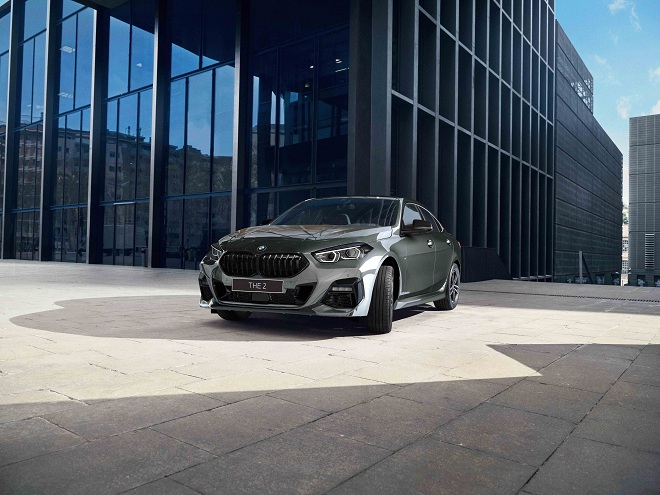
The BMW 220i M Sport Shadow Edition has been launched in India at an ex-showroom price of INR 46,90,000. Locally produced at BMW Group Plant Chennai, the limited edition is exclusively available at the BMW Online shop effectively immediately.

Enhanced exterior of the BMW 220i M Sport Shadow Edition provides a distinctive visual appeal with the blacked-out kidney grille. The standout characteristic is its stretched silhouette, four frameless doors and prominent shoulders with side taper at the C-pillar which gives it a sporty, low and broad-set stance. The newly introduced adaptive LED headlights ensure consistent illumination of the road ahead, even when cornering. The adaptive LED headlights are also available with M Lights Shadow Line specification with darkened inlays. The all-black rear spoiler adds to the sporty visual appeal of the car. The BMW floating hub cap features the BMW logo, which remains leveled at all times.

Despite its sporty appearance, the interior is designed to accentuate cabin spaciousness and the driver-focused cockpit with exquisite materials. The sport seats with electrical memory function and generous cabin space offer rear passengers an ample knee room for greater long-distance comfort. The exclusive interior trim ‘Illuminated Berlin’ adds to the overall aesthetic feel. The carbon gear selector elevates the feeling of sportiness inside the cabin. The large 430 litres luggage compartment can be expanded by folding down the 40/20/40 split rear seat backrest. The rear seat can be folded down completely to create more space. Ambient lighting with six dimmable designs creates an atmosphere for every mood.

The car has front-wheel-drive architecture in which the engine is positioned transversely, thereby saving space without compromising on the driving dynamics. To reduce understeering, an ARB technology (actuator contiguous wheel slip limitation system) works in combination with DSC (Driving Stability Control). The BMW performance control system increases the stability of the car by targeted braking of the wheels.

BMW TwinPower turbo petrol engine melds maximum power with exemplary efficiency and offers spontaneous responsiveness even at low engine speeds. The two-litre four-cylinder petrol engine produces best-in-class power output of 190 hp and a maximum torque of 280 Nm at 1350-4600 rpm. The car accelerates from 0 -100 kmph in just 7.1 seconds.

The eight speed steptronic sport automatic transmission performs smooth, almost imperceptible gearshifts. At any time, in any gear, the transmission collaborates perfectly with the engine, enabling it to develop its full power and efficiency. For even greater driving pleasure, it comes with steering wheel paddle shifters and cruise control with braking function. Using the driving experience control switch, the driver is able to choose between different driving modes to suit the driving conditions – ECO PRO, Comfort and Sport.

A host of BMW ConnectedDrive technologies continue to break the innovation barrier in automotive industry. Modern cockpit concept BMW Live cockpit professional includes 3D navigation, a 12.3 inch digital instrument display behind the steering wheel and a 10.25 inch control display. The occupants can operate a number of car functions simply by speaking to their BMW virtual assistant. Hands do the talking with BMW gesture control that recognises six pre-defined hand movements for control of a number of functions. The smartphone holder integrated into the centre console allows inductive, Wireless charging for mobile phones. Parking assistant with rear view camera makes parking in tight spots easier. The reversing assistant provides unmatched support in reversing out of a parking spot or through narrow driveways. It keeps a record of the last 50 metres driven and assists by taking over the steering. Wireless Apple CarPlay ensures seamless smartphone connection with the car to access several functions.

BMW EfficientDynamics includes features such as 8-speed steptronic sport automatic transmission, auto start-stop, brake-energy regeneration, electronic power steering, 50:50 weight distribution and ECO PRO mode in driving experience control.

BMW safety technologies include six airbags, attentiveness assistance, Anti-lock Braking System (ABS) with brake zssist, ARB technology (actuator contiguous wheel slip limitation system), Dynamic Stability Control (DSC) including Dynamic Traction Control (DTC) and Electronic Differential Lock Control (EDLC), Cornering Brake Control (CBC), electric parking brake with auto hold, side-impact protection, electronic vehicle immobiliser and crash sensors, ISOFIX child seat mounting and integrated emergency spare wheel under the load floor.