Škoda Auto entered the highly dynamic Indian market 25 years ago: In January 2000 the Czech car manufacturer laid the foundation stone for its plant in Chhatrapati Sambhajinagar (formerly Aurangabad until 2022) and was the first Volkswagen Group brand to establish a presence on the local market. The Škoda Octavia became the first model assembled locally. To date, India has become a key market in Škoda’s internationalisation plans, helping the company to effectively leverage existing sales potential in the ASEAN region, Middle East, Australia and New Zealand. On behalf of the Volkswagen Group, Škoda Auto has been spearheading all activities in the region jointly since 2018. Today, the brand developed and produces three models locally in India for India, based on the localised MQB A0–IN platform: the Kushaq, the Slavia, and, most recently, the Kylaq compact SUV, which expands the line-up into the popular sub-4-metre segment.
Klaus Zellmer, CEO of Škoda Auto: “We have built on 25 years of experience in India to make this thriving market the cornerstone of our international growth strategy. With its tremendous talent pool, growing consumer demand, and access to other markets, India is becoming our second pillar outside Europe and helping leverage further sales potential in ASEAN, the Middle East, and the Indo-Pacific region. Škoda has been a notable brand in India since we entered the market with the Octavia in 2001. We now produce in two plants. We have launched three all-new models specifically for India, achieving localization of up to 95 per cent: the Škoda Kushaq, Slavia, and just recently the Kylaq compact SUV, which complement the Octavia and Superb we also sell through a growing dealer network. In the last two years, we have increased customer touchpoints across the country by 35%. India also contributes to the global sustainability goals of Škoda Auto. One plant already runs entirely on green energy, while the plant in Pune expanded its photovoltaic system to deliver up to 30% of its electricity needs. I want to thank all our Indian colleagues for helping power the next stage of our growth, and especially our customers for their trust in our products. With this passion, we can achieve even greater things in the next 25 years!”
The first Škoda model introduced to Indian customers was the first generation of the modern Octavia, assembled from imported parts in rented facilities alongside the construction of the plant in Chhatrapati Sambhajinagar. Over time, other Škoda models, such as the Fabia, Rapid, and later the Superb and Kodiaq, also attracted the attention of Indian customers.
A decisive step for Škoda in India came in 2018 when the Volkswagen Group entrusted the brand with jointly spearheading all Group activities on the market. As part of this, Škoda was tasked with developing the MQB-A0-IN platform, designed exclusively for the Indian market. The first vehicle built on this platform was the Kushaq, which entered production in Pune in 2021. Just a year later, the Slavia sedan was launched, with its development and manufacturing also carried out in Pune. The latest addition to Škoda’s portfolio for the Indian market is the Kylaq SUV, Škoda’s first model in the popular sub-4-metre segment, accounting for nearly 50% of car sales in the Indian market. The new model received 10,000 orders within just ten days of its launch and will contribute to the brands annual sales target of 100,000 cars in India by 2026.
The quality and reputation of Škoda’s vehicles in India is reflected not only in strong customer interest but also in numerous prestigious awards. For instance, the Škoda Slavia was named India’s Sedan of the Year in 2022 and won Car of the Year 2023 at the Acko Drive Awards.
In the meantime, the Indian market has developed into one of the key markets for Škoda and a strategic hub for the wider ASEAN region, the Middle East, Australia, and New Zealand. In addition to its assembly lines in Chhatrapati Sambhajinagar and manufacturing plant in Pune, Škoda has established a Technology Centre there. Moreover, in October 2023, Škoda opened a modern logistics facility for the export of components to Vietnam, a market the company entered in 2023.
Sustainable production is a major priority for Škoda, also in its Indian plants: The facility in Chhatrapati Sambhajinagar operates entirely on green energy, while the Chakan plant in Pune is on track to achieve CO2 neutrality by 2030. On top of that, this 500-hectare plant site provides a habitat for more than 300 species of plants, trees and animals. Furthermore, the company is involving local suppliers in India and plays an active role in infrastructure development, supporting education and social initiatives. At its plant in Pune, Škoda expanded its photovoltaic system which is now capable of producing up to 26.6 GWh of electricity annually, covering up to 30% of the site’s electricity consumption.
TVS Motor Company has announced the launch of its connected passenger electric three-wheeler, TVS King EV MAX. The vehicle has best-in-class features including bluetooth connectivity through TVS SmartXonnect. The TVS King EV MAX combines innovative technology with eco-friendly solutions, catering to the growing demand for sustainable urban mobility.
Speaking at the launch, Mr. Rajat Gupta, Business Head, Commercial Mobility, TVS Motor Company, said, “The launch of TVS King EV MAX is a significant step forward in our commitment to providing sustainable solutions for last-mile connectivity. As urban areas continue to grow, the demand for clean mobility options has never been more critical. The TVS King EV MAX combines advanced electric propulsion with superior comfort and connectivity. The distinctive blend of long-range, impressive acceleration and quick charging time guarantees high uptime, enabling more trips and increased earning potential for customers, including fleet operators. The vehicle is being launched in UP, Bihar, J&K, Delhi and West Bengal, right away. It will be available across the country in the coming months.”
With a range of 179 kilometres on a single charge, quick charging in just two hours and 15 minutes for 0 – 80% charge and 3.5 hours for 100% charge; smart features like TVS SmartXonnect, the King EV MAX offers users real-time navigation, alerts and vehicle diagnostics through their smartphones. It combines excellent performance, comfort and connectivity, making it a standout choice for modern urban mobility.
The TVS King EV MAX is powered by a high-performance 51.2V lithium-ion LFP battery enabling making it perfect for urban commuting. With a top speed of 60 kmph (ECO Mode: 40 kmph; City: 50 kmph; Power: 60 kmph), the vehicle ensures efficient travel while maximising passenger comfort through its spacious cabin and ergonomic seating design.
The TVS King EV MAX is now available across select dealerships in UP, Bihar, J&K, Delhi and West Bengal, at a price of INR 2,95,000 (ex-showroom). It also comes with a warranty of 6-years / 150,000 kilometres (whichever is earlier), along with 24/7 road-side-assistance for the first three years.
The World Pickleball League (WPBL) fever is gripping the country ahead of its inaugural day. Volvo Car India has announced its partnership with the league as the Official Luxury Mobility Partner.
The WPBL, conceptualised and created by Gaurav Natekar and Arati Ponnappa Natekar, aims to be a premier sporting and entertainment property that captivates audiences across demographics. The league will feature six teams competing in 48 matches over 10 days, alongside performances from some of India’s most celebrated artists.
Gaurav Natekar expressed his excitement, saying, “We are extremely proud to welcome Volvo Car India to the WPBL family. This partnership is a strong testament to the league’s wide appeal. The promise of high-octane action backed by entertainment makes the WPBL appealing to brands across the board.”
Jyoti Malhotra, MD- Volvo Car India said, “We are stoked to be the Luxury Mobility Partners for the much-awaited WPBL. I am confident that the WPBL will not only captivate Indian audiences but also contribute significantly to the growth and popularity of this dynamic sport in the country. For Volvo Cars, this is a unique platform to connect with discerning individuals who appreciate the blend of performance, luxury, and a passion for life.”
The inaugural edition of the World Pickleball League kicks off on January 24.
Time stood still as The Lake Club – EIMG Concours d’Elegance 2025 cast a magic spell on the City of Joy with nearly 90 scintillating exotic and rare vehicles which took part in this annual heritage show. Now in this fourth edition, the event was organised by Eastern India Motoring Group (EIMG) in collaboration with The Lake Club and in association with ACE Commercial.
With the majestic Rabindra Sarobar in the backdrop and clear blue sky above, the sprawling green lawn of The Lake Club made for the perfect setting for a memorable rendezvous with motoring heritage. The icing on the cake was the line-up of eight beautiful and rare Rolls-Royces which adorned the club lawns like spectacular jewels. Keeping them company was a century-old 1925 AC Royal owned by Yogesh Agarwalla; a very popular Kolkata car which has been participating in rallies since 1968 and won the Oldest Car Award at this year’s EIMG Concours.
A 1938 Rolls-Royce 25/30 owned by Tamalika Naha made its second consecutive appearance at the EIMG Concours d’Elegance. This stunningly beautiful car won The Best of Show at last year’s Concours. This year, Naha’s 1948 Buick Super 8 which once belonged to the Jhargram Rajbari bagged the Best-In-Class Award for Cars Built from 1941 to 1950.
A rare 1948 Bentley Mark VI owned by Azam Monem made its Concours debut this year. A marvelous car which deservedly took home the Epitome of Elegance Award at this year’s EIMG Concours.
Saurjya Pratim Mitra’s brilliantly restored 1937 Ford 7W10 returned to the EIMG Concours this year inviting both admiration and envy in equal measure. The Ford befitting bagged the Best-In-Class Award for Vintage Two Door Cars.
A 1963 Triumph Spitfire which was once owned by Bollywood actor Jackie Shroff has always been a very popular car in the Kolkata circuit, much like its debonair owner Saikat Dutta. This car is a hot favourite among the young brigade, especially the ladies, and was awarded the Best-In-Class in the Classic Two Door Cars category.
The 1928 Ford Model A owned by Surendra Kumar Dugar took home the trophy for the Best-In-Class for Cars Built Upto 1930; Harjit Singh Dhanjal’s 1947 Ariel Red Hunter won the Best-In-Class in the Two Wheelers category; and the 1961 Ambassador Mark I owned by Baladev Mazumdar was awarded the Best-In-Class in the Indian Heritage Cars category.
An immaculately restored 1958 Mercedes-Benz 180 A owned by Prithvi Nath Tagore bagged the Best-In-Class award for Cars Built from 1951 to 1975 and was also bestowed with The Momen Sahab Memorial Trophy for Third of Show at the Lake Club – EIMG Concours d’Elegance 2025.
A very elegant 1937 Rolls Royce 25/30 owned by the Karnani Family was not only awarded the Best-In-Class for Cars Built From 1931 To 1940 but was also presented with The Sanjay Ghosh Memorial Trophy for the Second of Show at this year’s EIMG Concours.
A very special 1948 Plymouth Special Deluxe once driven by legendary singer & composer Hemanta Mukhopadhyay and now owned by Swapan Kumar Lahiri was another beautiful car competing in the EIMG Concours this year. The Lahiri family bought this car in the early 1970s and thoroughly restored it. Fondly referred to as ‘Nilu’, this car is meticulously maintained by its owner himself. This beauty won big at The Lake Club – EIMG Concours d’Elegance 2025 by not just bagging the Special Car Award but also taking home The Shashi Kanoria Memorial Trophy for the Best of Show.
The 1923 Panther Sloper owned by Afzal Hossain was awarded the Oldest Two Wheeler Award; Raja Mookerjee’s 1947 Buick Super 8 bagged the Preservation Award; the Restoration Award was presented to the 1951 Austin A70 owned by Subhodeep Ghosh; the 1937 Opel Cabrio owned by Debaprem Chatterjee won the Resurrection Award; Siddharth Swarup’s took home the Admirable Award for his 1947 Wolseley 14; the Judges Choice Award was presented to 1934 Rolls-Royce owned by Krish Ajmera; and Partha Banik’s 1934 Ford Model A was bestowed with the Touring Delight Award at The Lake Club – EIMG Concours d’Elegance 2025.
This year’s Sporty Playboy Award was bagged by the 1947 MG TC owned by Himanshu Ajmera and Rupak Ghosh’s 1948 MG TC claimed the Hot Ride Award at The Lake Club EIMG Concours d’Elegance 2025.
Other praiseworthy heritage vehicles which competed at this year’s EIMG Concours included the 1940 Triumph owned by Terrence Lobo, M. A. Moin’s 1936 James, 1953 BSA A7 Star Twin owned by Chandan Basu Mallik, the 1959 Ford Zephyr owned by Sarojesh Mukerjee, the 1965 Hilman Imp owned by Sarmistha Hazra, Amritendu Roy’s 1964 Ford Anglia, the 1964 Standard Herald owned by Subhajit Kumar, Saikat Dutta’s 1947 Chevrolet Fleetmaster, the 1937 Austin Big Seven owned by Deb Kumar Pal, the 1926 Studebaker Erskine owned by Kunal Banerji, Sarojesh Mukerjee’s 1947 Rover P2, the 1935 Ford Model C owned by Ranajit Gooptu and Debaprem Chatterjee’s 1951 Austin A40.
Few immaculately restored Rolls-Royces along with an ultra-rare 1934 SS1 Tourer belonging to the Shrivardhan Kanoria Collection were also displayed at the EIMG Concours. While these beauties were not entered in the competition, however, they undoubtedly added a touch of elegance and aristocracy to the event.
The Lake Club has been successfully hosting the Concours d’Elegance in collaboration with EIMG for their respective members and guests. This event witnessed a huge turnout of exotic heritage cars, as well as a humungous footfall of both members and outsiders, making it the Best Vintage Motoring Event of Kolkata.
Shrivardhan Kanoria, Founder & President, EIMG, said: “I would like to thank The Lake Club President, Mr. Tamal Mukherjee, The Joint Secretaries, Mr. Subrata Guha, Mr. Debabrata Dutta, and all the Committee Members of The Lake Club for the breathtaking venue, cocktail brunch, outdoor hoardings and the wonderful hospitality. This gesture of The Lake Club in collaborating with EIMG has been a big step towards preserving the Motoring Heritage of Eastern India.
“A special shout out to the EIMG Secretary Mr. Subhajit Kumar for being instrumental in bringing The Lake Club and EIMG together to host this memorable venue. Many thanks to EIMG Committee Member Mr. Avik Naha for hosting the fabulous EIMG Concours Dinner and the EIMG Treasurer Mr. Sumit Periwal for arranging these stunning trophies. My deepest gratitude to ACE Commercials for sponsoring the beautiful crystal trophies of The Lake Club EIMG Concours d’Elegance 2025 which the participants and winners absolutely treasure”.
Eastern India Motoring Group (EIMG), is a group of serious Heritage Vehicle collectors and restorers, founded by Shrivardhan Kanoria (himself an eminent Vintage Car Collector/Restorer), of which he is the President. He has inducted Subhajit Kumar (a veteran high speed Rallyist) as the Secretary of EIMG.
The Lake Club EIMG Concours d’Elegance 2025Winners:
1. CARS BUILT UPTO 1930 – Third In Class – 1927 Dodge Brothers owned by Mr. Surendra Kumar Dugar
2. CARS BUILT UPTO 1930 – Second In Class – 1926 Studebaker Erskine owned by Mr. Kunal Banerji
3. CARS BUILT UPTO 1930 – Best In Class – 1928 Ford Model A owned by Mr. Surendra Kumar Dugar
4. CARS BUILT FROM 1931 TO 1940 – Third In Class – 1937 Austin Big Seven owned by Mr. Deb Kumar Pal
5. CARS BUILT FROM 1931 TO 1940 – Second In Class – 1937 Plymouth P4 owned by Mr. Arpan Dey
6. CARS BUILT FROM 1931 TO 1940 – Best In Class – 1937 Rolls Royce 25/30 owned by the Karnani Family
7. VINTAGE TWO DOOR CARS – Third In Class – 1935 Ford Model C owned by Mr. Ranajit Gooptu
8. VINTAGE TWO DOOR CARS – Second In Class – 1935 Austin 10 owned by Mr. Subrata Roy
9. VINTAGE TWO DOOR CARS – Best In Class – 1937 Ford 7W10 owned by Mr. Saurjya Pratim Mitra
10. CARS BUILT FROM 1941 TO 1950 – Third In Class – 1947 Rover P2 owned by Mr. Sarojesh Mukerjee
11. CARS BUILT FROM 1941 TO 1950 – Second In Class – 1947 Chevrolet Fleetmaster owned by Mr. Saikat Dutta
12. CARS BUILT FROM 1941 TO 1950 – Best In Class – 1948 Buick Super 8 owned by Ms. Tamalika Naha
13. CARS BUILT FROM 1951 TO 1975 – Third In Class -1951 Austin A40 owned by Mr. Debaprem Chatterjee
14. CARS BUILT FROM 1951 TO 1975 – Second In Class – 1959 Ford Zephyr owned by Mr. Sarojesh Mukerjee
15. CARS BUILT FROM 1951 TO 1975 – Best In Class – 1958 Mercedes Pontoon owned by Mr. Prithvi Nath Tagore
16. CLASSIC TWO DOOR CARS – Third In Class – 1965 Hilmam Imp owned by Ms. Sarmistha Hazra
17. CLASSIC TWO DOOR CARS – Second In Class – 1964 Ford Anglia owned by Mr. Amritendu Roy
18. CLASSIC TWO DOOR CARS – Best In Class – 1963 Triumph Spitfire owned by Mr. Saikat Dutta
19. INDIAN HERITAGE CARS – Third In Class – 1964 Standard Herald owned by Mr. Subhajit Kumar
20. INDIAN HERITAGE CARS – Second In Class – 1968 Fiat Delight owned by Mr. Sudipto Ray
21. INDIAN HERITAGE CARS – Best In Class – 1961 Ambassador Mark I owned by Mr. Baladev Mazumdar
22. TWO WHEELERS – Third In Class – 1936 James owned Mr. M. A. Moin
23. TWO WHEELERS – Second In Class – 1940 Triumph owned by Mr. Terrence Lobo
24. TWO WHEELERS – Best In Class – 1947 Ariel Red Hunter owned by Mr. Harjit Singh Dhanjal
25. OLDEST CAR AWARD – 1925 AC Royal owned by Mr. Yogesh Agarwalla
26. OLDEST TWO WHEELER AWARD – 1923 Panther Sloper owned by Mr. Afzal Hossain
27. PRESERVATION AWARD – 1947 Buick Super 8 owned by Mr. Raja Mookerjee
28. RESTORATION AWARD – 1951 Austin A70 owned by Mr. Subhodeep Ghosh
29. RESURRECTION AWARD – 1937 Opel Cabrio owned by Mr. Debaprem Chatterjee
30. ADMIRABLE AWARD – 1947 Wolseley 14 owned by Mr. Siddharth Swarup
31. JUDGES CHOICE AWARD – 1934 Rolls-Royce owned by Mr. Krish Ajmera
32. SPECIAL CAR AWARD – 1948 Plymouth Deluxe owned by Mr. S. K. Lahiri
33. TOURING DELIGHT AWARD – 1934 Ford Model A owned by Mr. Partha Banik
34. SPORTY PLAYBOY AWARD – 1947 MG TC owned by Mr. Himanshu Ajmera
35. EPITOME OF ELEGANCE AWARD – 1946 Bentley Mark VI owned by Mr. Azam Monem
36. HOT RIDE AWARD – 1948 MG TC owned by Mr. Rupak Ghosh
37. The Momen Sahab Memorial -THIRD OF SHOW – 1958 Mercedes Pontoon owned by Mr. Prithvi Nath Tagore
38. The Sanjay Ghosh Memorial -SECOND OF SHOW – 1937 Rolls-Royce 25/30 owned by The Karnani Family
39. The Shashi Kanoria Memorial – BEST OF SHOW – 1948 Plymouth Special Deluxe owned by Mr. S. K. Lahiri
Photographs courtesy Sourish Meryson and Adnan Aslam
On the 10th year anniversary of receiving its 1st ever order, Droom has new category – Droom Rental. Droom Rental is tech and AI driven and offers the widest selection of automobiles from bicycles to planes, covering 25,000+ automobiles across 9+ categories – cars, buses, coaches, helicopters, planes, yachts, ambulances, scooters, bikes, and bicycles.
Spanning over 25 cities, Droom Rental offers flexible rental options, from daily rentals (local, intercity, airports) to weddings rental, corporate rental, employee transportation solution, event rentals and self-drive. Within just 1st week of launch, Droom Rentals secured over 1,500 listings from 100+ rental suppliers across 25+ cities, making it one of the top 12 largest rental companies in India.
At present, the automobile rental market is highly unorganised, with serious trust deficit, lack of transparent pricing and non-standard experience with limited adoption of technology and AI for a $23bn automobile rental market in India. While the ride-hailing segment has successfully integrated advanced technology and streamlined operations, other rental categories such as daily rental, corporate rental, wedding rental, employee transportation solution and event rental etc. remain largely unorganised, inefficient and full of fragmented providers.
Commenting on the announcement, Sandeep Aggarwal, Founder & CEO of Droom said, “automobile rental has been a long-standing pain-point for me as the sector lacks trust, transparency, standardization, large/diverse fleet or premium fleet option and technology played no role. I have heard similar experiences from my friends and family. We saw an opportunity that by leveraging Droom.in as our AI and tech driven marketplace platform for automobiles buying & selling and our tech and E-Commerce DNA, we could also disrupt automobile rental market in India. Very soon we will add highly advanced technology stack for corporate rental, employee transportation solution and all other rental types, brining India’s automobile rental market at par with global standards, if not better.”
Droom brings its rich legacy and advanced tech in the vehicle rental segments. Its fleet include top-quality, well-maintained vehicles, luxury and premium options, and also EVs that help earn carbon credits. With professional, courteous, and verified drivers, consumers get a premium experience for daily rentals, weddings, or special occasions.
Droom Rentals has over 25,000 automobiles, spread across 9 categories in 25+ cities. Customers can choose diverse fleet options, like Value, Mid, Premium & Luxury Cars, Bikes, Scooters, Bus/ Coaches. For the discerning users, there is also option to select luxury cars, super cars, vintage vehicles, limousines, helicopters and aircraft. With Droom Rentals, customers can also experience delightful & top-notch services with automobiles in mint-conditions, accompanies by trained professionals & courteous drivers. For eco-conscious consumers, EV option is also made available, while Droom Rentals, furthermore, gives offers complete transparency, no hidden fees and legitimate invoicing.
JSW MG Motor India’s newly launched luxury brand channel, MG Select, has unveiled the name of the second car from its portfolio – ‘MG M9’. An exclusive sanctuary, the M9 is a luxurious limousine designed for the discerning few. Its spacious cabin adorns opulent interiors and is equipped with advanced technology to offer supreme comfort and sophistication. The majestic limousine is set to premiere at the Bharat Mobility Global Expo 2025.
The MG M9 limousine is conceptualised to provide ultimate comfort and luxury on wheels. The Limousine is built with a charismatic blend of signature styles, from its touchscreen handrail on reclining ottoman seats in the second row to the trapezoidal front grills on the exterior. With 8 massage modes in the ottoman seats and the 3-zone climate control, it ensures an elevated sense of comfort, all of which can be controlled from the touchscreen panel on the handrail. This majestic limousine is for the discerning few who long to travel with the best amenities and can comfortably seat seven passengers across three rows.
Talking about the MG M9 EV, Gaurav Gupta, Chief Growth Officer, JSW MG Motor India, said, “A personalised masterpiece, the MG M9 offers bespoke interiors, meticulous craftsmanship, and cutting-edge technology. It is the epitome of comfort and refined luxury for those who wish to immerse themselves in the world of elegance. We envision a future where luxury mobility is a norm, and M9 is a step in that journey.”
JSW MG Motor India, known for its commitment to excellence and innovation, is redefining accessible luxury with the launch of MG Select, its luxury brand channel. It is designed for discerning customers who value purposeful experiences. With exclusive experience centres in 12 cities in phase 1, this channel blends innovation, sustainability, and curated experiences to set new benchmarks in luxury and is rooted in the rich legacy of Morris Garages.
Audi CEO Gernot Döllner, the Premium Platform Electric and with it the Audi Q6 e-tron model series are the next technological leap towards electric premium quality.
Audi delivered around 1.7 million vehicles worldwide in 2024. More than 164,000 of those were fully electric models. Reasons for this overall decline of almost 12 percent (8 percent for fully electric models) compared to the previous year included the challenging economic conditions, an intensely competitive market, and limited availability of parts. In addition, the new product portfolio is only gradually having an impact on global sales volumes.
“We have a clear vision of how we are redefining Vorsprung durch Technik. Our ongoing model initiative shows the direction Audi is taking. The year 2024 was part of a transitional phase as we move towards our new product portfolio,” says Audi CEO Gernot Döllner. “Global economic uncertainties and intensified competition also shaped the past year. Despite these challenges, we are convinced that we will achieve our long-term goals. With a clear product and technology road map, Audi is systematically rejuvenating its product portfolio with over 20 new models in 2024 and 2025.” Last year, Audi already presented more than half of these, including the new battery-electric vehicles Audi Q6 e-tron and Audi A6 e-tron, plus combustion-engine vehicles such as the Audi A5 and Audi Q5. “In 2025, we will continue our model initiative and renew key model families such as the Audi A7 and the Audi Q3. Customers can look forward to numerous new plug-in hybrids as well.”
After a record year in 2023, geopolitical and industrial conditions impacted delivery figures in 2024. A general economic environment characterized by stagnation and structural problems as well as a tense political situation posed major challenges for the entire automotive industry and influenced consumer behaviour on an international scale.
“From the beginning, 2024 was considered a transitional year. We have strong models entering the markets, but they will only gradually become significant in terms of sales volume. At the same time, some models have been phased out. Challenging economic conditions and the intransparency in terms of government incentive structures are currently causing a certain reluctance to buy affecting the entire industry, especially when it comes to fully electric vehicles,” says Marco Schubert, Board Member for Sales and Marketing.
“With our three-pronged approach of electric cars, plug-in hybrids, and combustion-engine vehicles, we are positioned flexibly and robustly for the coming years and offer our customers a diverse range of premium vehicles. With our clear strategy and the strong commitment of our retail partners and international teams, we are setting ourselves up for the future.”
Sales performance in Europe, North America, and China Audi delivered more than 164,000 fully electric models to customers worldwide (–8 percent) in 2024. Demand was notably strong for the Audi Q4 e-tron, with almost 108,000 units delivered globally. Since its market launch in the third quarter, the new Audi Q6 e-tron recorded almost 15,000 deliveries.
In addition to the all-electric models, the Audi Q5 (298,000 units), the Audi A6 (244,000 units), and the Audi Q3 (215,000 units) sold particularly well.
Audi Sport delivered more than 41,000 high-performance vehicles worldwide, a decrease of roughly 14 percent. In the USA, Audi Sport models recorded over 9,000 deliveries – their best result ever (+4 percent).
With around 466,000 vehicles, the number of deliveries in Europe (excluding Germany) was almost 6 percent below the previous year. The number of electric vehicles was just below 81,000 units (+6 percent). The most popular models in Europe were the Audi A3 (84,000 units), Audi Q3 (79,000 units), and Audi Q4 e-tron (57,000 units).
In Germany, Audi delivered over 198,000 cars (–21 percent). This figure includes roughly 22,000 fully electric vehicles (–33 percent).
In the UK, the number of deliveries was around 123,000 units (–11 percent), in France around 48,000 units (–3 percent). For electrically powered models, Audi recorded an increase of 24 percent in France compared to 2023. Audi also showed a solid result in Italy, delivering more than 67,000 units (+1 percent), including roughly 3,000 electric vehicles (+7 percent). In Spain (incl. Canary Islands), Audi delivered over 39,000 units (–4 percent) to customers.
In North America, Audi sold just below 241,000 vehicles (–13 percent) in 2024 – almost 29,000 of those were fully electric (–6 percent).
In the intensely competitive market of China, Audi delivered a total of more than 649,000 cars to customers. This represents a decline of around 11 percent compared to the previous year.
In the overseas and emerging markets, Audi delivered over 116,000 vehicles (–18 percent) in 2024.
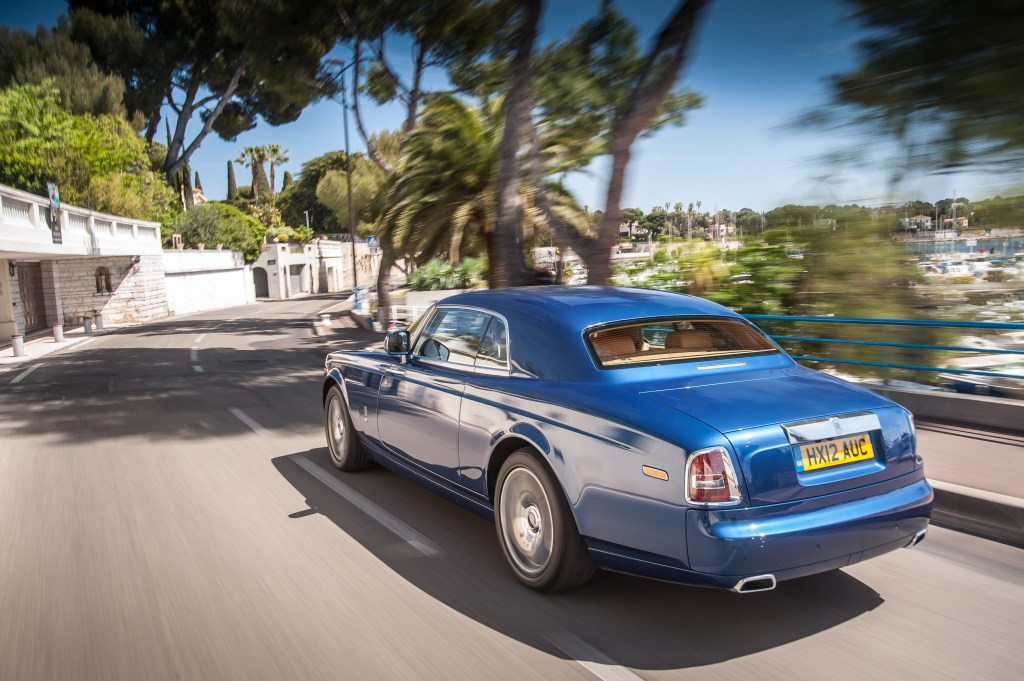
In 2025, Rolls-Royce Motor Cars marks the centenary of the launch of the first Phantom. Throughout its long history, the Phantom nameplate has been reserved for the pinnacle model in the marque’s portfolio – the very apex of excellence.
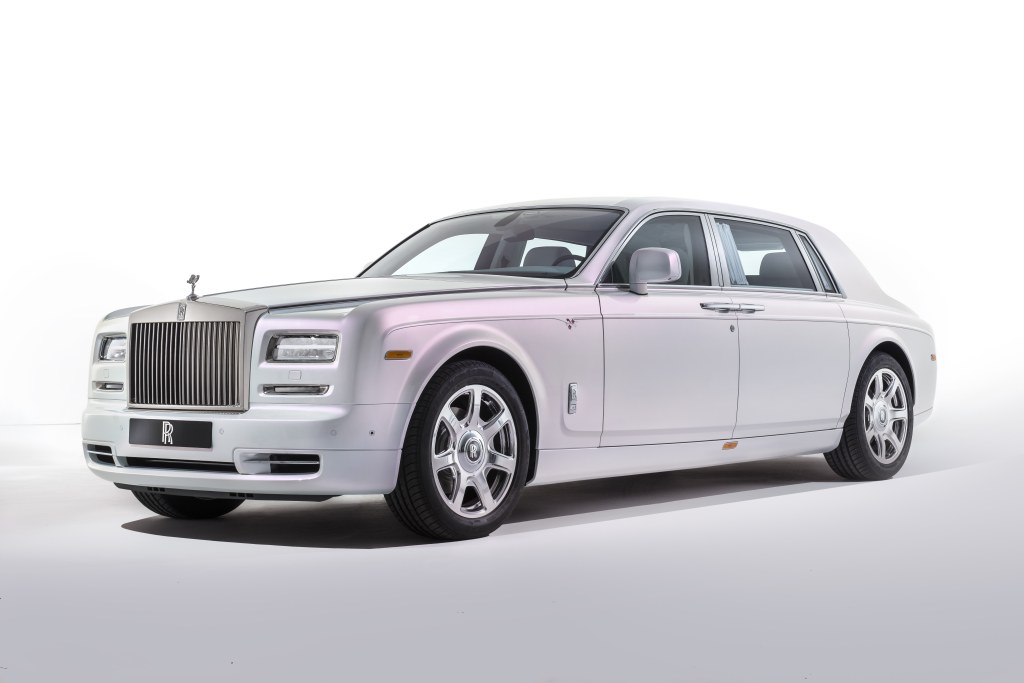
Each iteration, up to and including the eighth generation currently being handcrafted at the Home of Rolls-Royce at Goodwood, has seen advances in design, engineering, materials and technology. Today, Phantom is the ultimate blank canvas for Bespoke commissions, where clients can bring their most elaborate, imaginative and personal visions to life. Inspiration for Bespoke commissions is everywhere, and Phantom’s scale, elegance, presence and adaptability enable it to be whatever its owner wishes it to be. Recent inspirations include haute couture (Phantom Syntopia), famous films (Phantom Goldfinger), Chinese culture (Phantom Extended ‘Year of the Dragon’) and the marque’s own Spirit of Ecstasy Mascot (Phantom Scintilla).
Phantom has always had the same fundamental aim: to provide the most magnificent, desirable and, above all, effortless motor car in the world – the very best of the best. At the start of Phantom’s anniversary year, Rolls-Royce reveals the fascinating story behind its pinnacle product, and how it earned – and maintained – that reputation through a century of constant, often profound change.
Chris Brownridge, Chief Executive, Rolls-Royce Motor Cars said, “One hundred years ago, Rolls-Royce launched the first motor car to bear what would become the most evocative and enduring nameplate in its history: Phantom. Through eight generations, Phantom’s fundamental role as the pinnacle Rolls-Royce motor car has always been the same: to be the most magnificent, desirable and above all, effortless motor car in the world – the very best of the best. In many respects, the history of Phantom is the history of Rolls-Royce: always moving with the times and its clients’ needs and requirements, transcending fleeting trends and providing the setting for the most remarkable executions of craft and artistry, all while resolutely refusing to compromise its core engineering and design principles. We’re proud to continue this tradition of excellence, elegance and serenity into the next 100 years.”
A NEW BEGINNING Rolls-Royce first earned the accolade of ‘the best car in the world’ with the 40/50 H.P., universally known as the Silver Ghost, launched in 1906. The key to its legendary reputation was Henry Royce’s principle of constant improvement to its underlying engineering, which he conducted on an almost chassis-by-chassis basis.
By 1921, Royce realised the Silver Ghost’s design was reaching the point where no further developments would be possible without compromising either smoothness or reliability – both by now essential elements of the Rolls-Royce character and legend. He therefore began work on its replacement.
Original Advertisement from The Times Newspaper, Saturday 2 May 1925 read: “Rolls-Royce Ltd beg to announce that, after prolonged tests, they can now demonstrate and accept orders for a new 40/50 H.P. chassis. The 40/50 H.P. chassis hitherto manufactured by them will be sold as before… The original chassis of this type was the famous Silver Ghost, and to prevent confusion such chassis will be known as the Silver Ghost model, whereas the new chassis will be known as the New Phantom.”
Despite being couched in terms that today seem rather quaint and stilted, this advertisement made history. It was the first public acceptance by Rolls-Royce that the outgoing model would be called Silver Ghost officially, rather than as a byname. More significantly, it was the first recorded use of the Phantom name.
COPYRIGHT JAMES LIPMAN
THE GAME OF THE NAME Although there is no specific documentary evidence, it seems safe to assume that the Phantom name was coined by Rolls-Royce’s energetic and ever-inventive Commercial Managing Director, Claude Johnson. It was he who recognised that naming the company’s products could act as a sales device, and it was his fertile imagination that produced the inspired sobriquet ‘Silver Ghost’ for the otherwise prosaically titled 40/50 H.P. in 1907. That same year, he christened another 40/50 H.P. ‘Green Phantom’, before bestowing the rather more evocative ‘Silver Phantom’ on two examples in 1909.
Johnson clearly understood the power of names like Phantom, Wraith and Ghost to convey the products’ supernatural quietness and ethereal grace; all have graced Rolls-Royce motor cars in the modern era for precisely the same reason. How different history would have been had one of his more fanciful efforts – The Dreadnought, The Cookie, Yellow Bird, The Elusive Pimpernel – been adopted instead.
THE BASIS FOR GREATNESS The Times advertisement also assured readers the New Phantom would retain the “sweet running qualities always associated with Rolls-Royce products”. At this time, Rolls-Royce supplied only rolling chassis, with the form, styling and appointment of the motor car itself in the hands of independent coachbuilders, who created bespoke bodywork to the owner’s specification. Rolls-Royce offered the New Phantom in long-wheelbase form, suitable for formal saloon and limousine designs, and with a shorter wheelbase ideal for owner-driver motor cars with closed, open and ‘sportier’ coachwork.
Then as now, Phantom’s generous proportions enabled owners to specify almost any detail or indulgence they wished. Some clients asked for concealable writing desks or swiveling occasional seats in their long-wheelbase limousines, while owner-drivers are known to have requested safes, dedicated spaces to stow golf clubs and even, in one famous instance, a secret compartment in which to carry diamonds.
On 8 May 1925, The Autocar magazine published its review of the new model. “Few are the firms engaged in the manufacture of motor cars who enjoy quite such a reputation as Rolls-Royce Ltd,” it enthused. “Almost the conjoined names have become the household word for luxury, and every novelist worthy of the name imparts a distinguished air to any character by crediting him or her with the possession of one of the firm’s cars.” With Phantom, Rolls-Royce had clearly succeeded in not only maintaining, but furthering the qualities established and made famous by the Silver Ghost.
ONWARDS AND UPWARDS Though undoubtedly gratifying, such encomiums did not distract Henry Royce. The design of the original New Phantom had closely followed that of its predecessor, Silver Ghost – so closely, in fact, that some modern enthusiasts refer to it as a ‘Super Ghost’. Over the next four years, Royce continued to refine his design until, in 1929, The Times carried a fresh advertisement announcing the arrival of Phantom II. The advertisement listed all the engineering improvements and upgraded components that justified its designation as an entirely new model.
VIVE LA DIFFÉRENCE Somewhat ironically, the only person who remained unimpressed was Royce himself, who insisted that even the short-wheelbase Phantom II was irritatingly oversized for his personal use. He therefore instructed his design team to develop a more compact, sporting Phantom II variant which he could enjoy driving across France to his winter home at Le Canadel on the Côte d’Azur.
The designers dutifully produced a close-coupled car, 26EX – ‘EX’ standing for ‘Experimental’ – on an adapted short Phantom II chassis. Records show that neither the Rolls-Royce sales department nor the factory were keen on the concept; indeed, had it not been intended as Royce’s personal transport, it might not have been built at all.
As it transpired, a highly successful continental sales tour demonstrated there was, in fact, great demand for a car capable of high-speed touring over long distances on the smooth, straight roads of Europe. Rolls-Royce successfully met this demand with the now highly prized Phantom II Continental – perhaps the only pre-Goodwood Phantom variant in which weight, wind resistance and other performance-related factors were afforded equal consideration with out-and-out passenger comfort.
Montgomery Rolls-Royce Phantom 2
Photo: James Lipman / jameslipman.com
A NEW POWER RISING By the time of Royce’s death in 1933, the company was already only too aware that luxury car customers were seeking models that offered more power without sacrificing comfort or excellence. American competitors including Cadillac, Lincoln and Packard were responding with straight-8, V12 and even V16-cylinder engines, which were rapidly eclipsing the large-horsepower, in-line six-cylinder units that had served Rolls-Royce so well for so long.
Given this commercial pressure and the company’s proven experience in designing and building aero-engines, it was inevitable that the next Phantom would have a V12 engine. In accordance with tradition, Phantom III’s arrival in 1936 was announced in The Times, which informed the public that “many outstanding features distinguish this car from its famous predecessor the Phantom II”.
Chief among these was the new engine, with 12 cylinders “giving greater engine smoothness, flexibility, silence and acceleration” – all key requirements for Rolls-Royce’s fabled effortless progress. The new V12 engine was also more compact than the old straight-6, allowing a shorter bonnet and larger passenger compartment. Most importantly, however, it delivered the increased power customers demanded – 165 H.P. against the 120 H.P. of Phantom II, rising to 180 H.P. in later cars.
Comfort was further improved with independent front wheel suspension. “This is particularly noticeable in the back seats under all road conditions and is further enhanced by remarkable road holding qualities and stability on corners even at high speeds”, the advertisement noted, while Phantom III’s new chassis frame allowed for wider, more comfortable back seats.
And it wasn’t just passengers who benefited. As the advertisement pointed out, Phantom III made life more relaxing for owner-drivers and chauffeurs, too, explaining: “A modification in the position of the change-speed [gear lever] and brake levers gives easy entrance to the driver’s seat from the offside… the steering is lighter in operation, has a larger steering lock and the car is more easily manoeuvred by reason of the shorter wheelbase.”
Phantom III was suited to all manner of coachwork styles, and both owner-driver and chauffeured use. And while it was never able to beat its American rivals on price, such was Rolls-Royce’s reputation that it remained the only choice for those who wanted to experience the greatest possible comfort and be seen to be driving the very best.
A CHANGING WORLD The Phantom name had graced the very best of the best cars in the world for some 14 years when war broke out in 1939. Rolls-Royce ceased all motor car production, and when peace returned in 1945, the company found itself in an entirely different world – but one it had anticipated and prepared for.
Rolls-Royce had correctly foreseen that under post-war austerity, it would need to make its motor cars less complex, easier to service, much less expensive to produce and able to use common parts. At the same time, it was adamant that there would be no reduction in quality.
Its solution was the Rationalised Range, which debuted in 1946 with Silver Wraith. Its new straight-6-cylinder engine was a backward step from the V12 engine of Phantom III, but relevant in straitened times. There seemed to be no place in the modern world for Phantom.
A ROYAL INTERVENTION The Phantom story might well have ended there, but for two serendipitous events.
As part of the ongoing development process for the Rationalised Range, engineers produced four experimental EX cars on a 229.5-inch chassis with a straight-8 engine. One of these, fitted with a Park Ward & Co limousine body, was officially named Silver Phantom (and unofficially known as Big Bertha). A smaller, lighter saloon version, known as the Scalded Cat, followed.
At the same time, the Royal Household was seeking to replace its ageing fleet of Daimlers – the marque it had favoured since the motor car was invented – but was unhappy with the range then on offer.
In 1950, Rolls-Royce was asked to supply a formal limousine for Royal duties. The company had long been keen to usurp Daimler in the Royal Mews, and gladly produced a ‘one-off’ straight-8 long-chassis limousine with coachwork by H J Mulliner. During manufacture, the car was given the codename Maharajah, and remains in active service at the Royal Mews under that name to this day.
When requests for similar motor cars followed from other Royalty and Heads of State, Rolls-Royce was happy to oblige. The company decided it would be fitting that for such prestigious cars to resurrect the Phantom name. Over the next seven years, the marque produced just 18 examples of Phantom IV, including a second motor car for the Royal Mews, a landaulette named Jubilee, delivered in 1954.
THE LAST HURRAH The pinnacle Rolls-Royce experience became somewhat more widely available once again in 1959 with the launch of Phantom V – a splendid limousine fitted with coachwork by both the marque’s in-house coachbuilder, Park Ward & Co., and other independent companies, including James Young Ltd and H. J. Mulliner & Co. (Rolls-Royce would go on to acquire the latter, merging it with their own coachbuilder to form Mulliner Park Ward). Two motor cars, known as Canberra I and Canberra II, were built for Royal service, featuring transparent Perspex cupolas over the rear compartments and concealed lighting to better view the occupants on formal occasions.
After 13 years and 832 examples, Phantom V had received enough technical upgrades to be designated as Phantom VI. As with all its forebears, this new iteration prioritised comfort, with separate air conditioning systems for the front and rear compartments. Most of the 374 examples were limousines with coachwork by in-house Mulliner Park Ward Ltd., or James Young Ltd.: the last Phantom VI, a landaulette, was delivered to the Sultan of Brunei in 1993.
Phantom VI was the final body-on-chassis model Rolls-Royce ever produced, and its discontinuation effectively ended the tradition of coachbuilding until it was revived at Goodwood in 2017 with ‘Sweptail’.
PHANTOM REBORN When the marque was relaunched at the new Home of Rolls-Royce at Goodwood, a ‘Phantom-type’ model quickly emerged as the natural and obvious choice for its inaugural motor car. The design concept, for which legendary Rolls-Royce designer John Blatchley was consulted and of which he approved, included signature elements inherited from previous generations. These included a long wheelbase with the front wheels well to the fore and a minimal front overhang of the bodywork, a long bonnet comprised of a massive expanse of metal along the side, and a rising sweep of the door edge towards the front windscreen pillars.
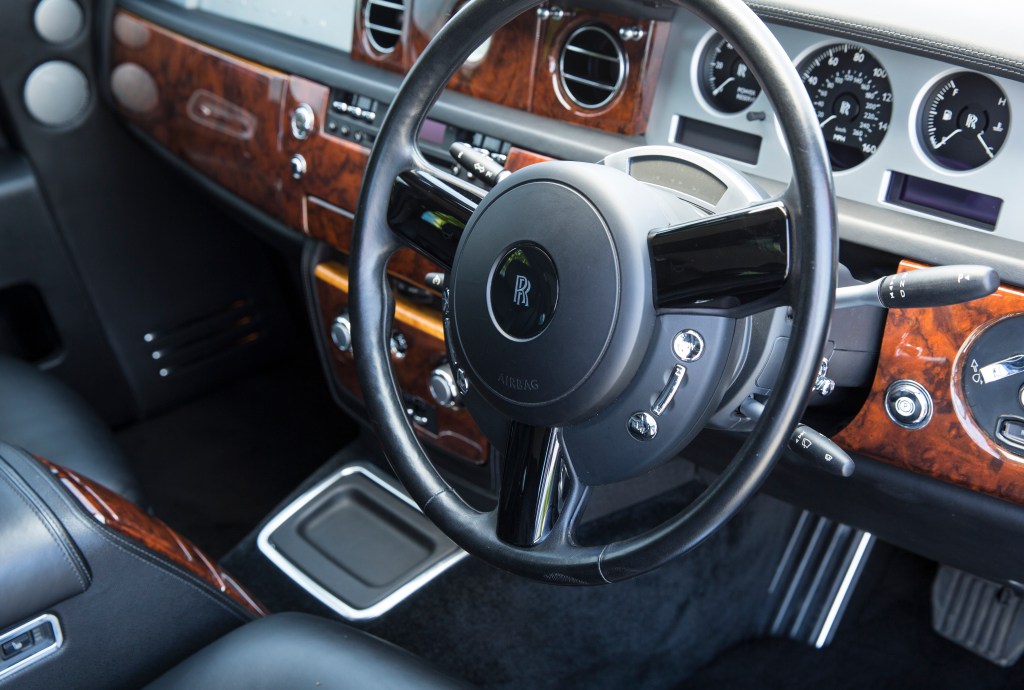
Rolls-Royce Motor Cars’ first Design Director of the Goodwood era, Ian Cameron, formed a specific team to create the interior design for the much-anticipated new model. Their remit was to express the ambience of past Phantoms and the traditional high-quality materials of coachbuilding – leather, wood, deep-pile carpeting – in a totally up-to-date way.
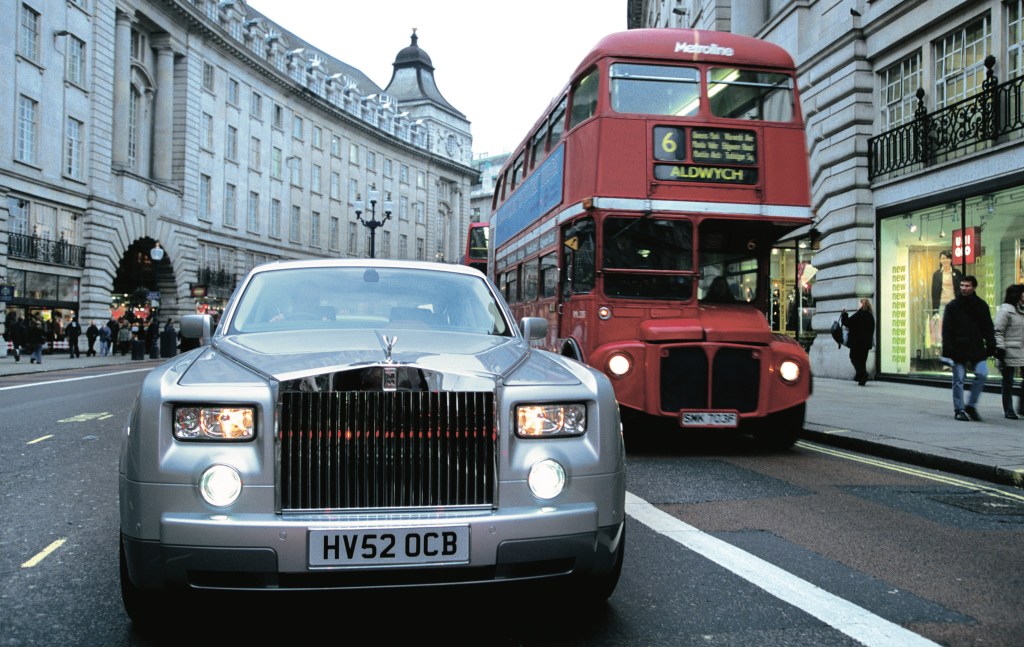
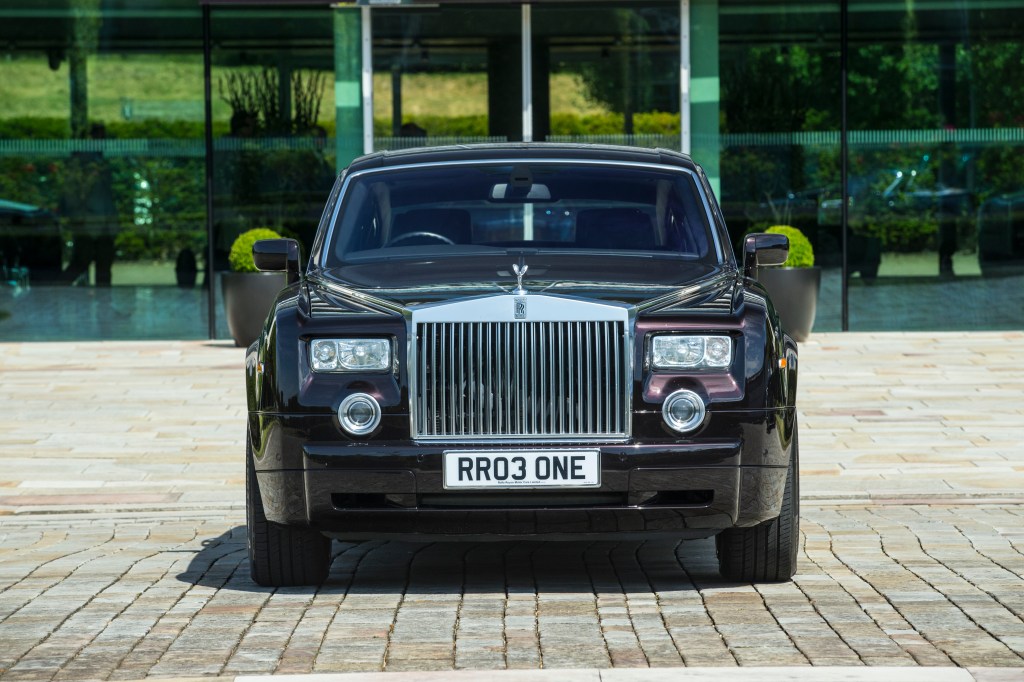
At one minute past midnight, on 1 January 2003, the first Phantom VII was handed over to its new owner. Unlike every Phantom that had gone before, it was built entirely in-house by Rolls-Royce Motor Cars, with spaceframe bodywork to a single design rather than coach built. In one important sense, however, it retained a link with its heritage, in that every car was hand-built by a team of skilled craftspeople. Furthermore, the marque’s Bespoke programme meant Phantom was effectively a blank canvas on which patrons could realise their own visions and desires.
THE EVOLUTION CONTINUES Over its 13-year lifespan, Phantom VII cemented Rolls-Royce as the world’s pre-eminent super luxury motor manufacturer, and its own place as the marque’s pinnacle product. But just like their predecessors, Rolls-Royce’s designers and engineers understood that perfection is a moving target: that Phantom was never ‘finished’.
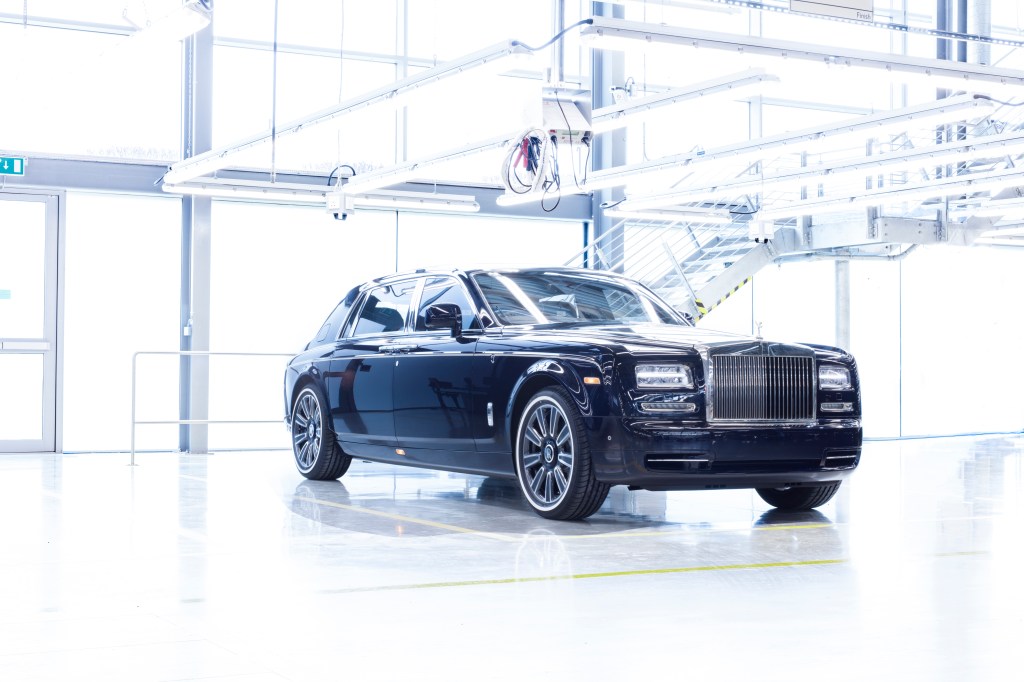
In 2017, Rolls-Royce presented Phantom VIII. This was the first Rolls-Royce to be built on the Architecture of Luxury, an advance on the all-aluminium spaceframe used on Phantom VII, and designed to underpin every future motor car produced at Goodwood.
Phantom VIII was specifically designed to be the ultimate canvas for Bespoke commissions. With this in mind, it is the only Rolls-Royce model to feature the Gallery – an uninterrupted swathe of glass that runs the full width of the fascia, behind which the client can display a commissioned work of art or design.
This singular focus has made Phantom the subject of some of the most technically ambitious and challenging Bespoke projects ever undertaken by the marque’s designers, engineers and specialist craftspeople. Commissions such as Phantom Syntopia, Phantom Oribe, Phantom Koa and Phantom ‘Inspired by Cinque Terre’ all incorporate features, materials and engineering innovations never seen before in a Rolls-Royce or any other motor car. Each is a unique, one-of-one creation that will never be repeated, echoing the very first Phantoms that were individually hand-built for their commissioning owners.
THE ESSENCE OF PHANTOM For 100 years, the Phantom name has occupied a unique position in the Rolls-Royce product family and story. While the standards of quality, engineering and design are consistent across all Rolls-Royce motor cars, Phantom has always been the grandest, most impressive and, above all, most effortless motor car being built in series production by the marque at any given moment.
Through all its eight generations, Phantom has never been compromised by existing engineering orthodoxy, fleeting trends or development costs. From Henry Royce’s original New Phantom to today’s Phantom VIII, the essential purpose behind Phantom has always remained the same: to build the motor car that offers owner-drivers and passengers alike the most comfortable, satisfying experience available in the world at that moment in time – the unassailable pinnacle of luxury and motoring excellence.
Škoda Auto is advancing its electrification strategy with the introduction of the new Enyaq family, one of Europe’s most successful all‑electric model series. Notably, both the Škoda Enyaq and the Škoda Enyaq Coupé now feature the brand’s new Modern Solid design language, reinforcing their visual appeal. The updated Enyaq boasts optimised aerodynamics, along with more sustainable materials and extensive standard equipment. Additionally, the new Enyaq family introduces enhanced digital capabilities and more advanced assistance systems.
Klaus Zellmer, CEO of Škoda Auto, says: “Since their launch in 2020, the Enyaq and Enyaq Coupé have made e-mobility a reality for over 250,000 customers, along with their families and friends. Now the new Enyaq series brings fresh options and improvements to the table, including an even more stylish design. I’m grateful to our customers for making the Enyaq one of Europe’s most popular fully electric vehicles. We want to excite the market further by building on our existing Enyaq strengths such as the generous amount of space, efficient drivetrains and excellent value proposition. Our new Modern Solid design language, more comprehensive standard equipment, and new digital features combine to make the Enyaq models even better everyday companions.”
The new Enyaq now comes with even more extensive equipment as standard, including heated front seats & steering wheel, tri-zone climate control, keyless entry with walk away function, predictive adaptive cruise control, blind spot detection, wireless charging with cooling function, rear USB-ports and an electric boot with kick activation (Virtual pedal). Remote Park Assist and Remote Trained Parking are new optional digital features. The new Enyaq offers two battery sizes and three powertrain options: the Enyaq 60 and Enyaq 85 each have one electric motor and rear-wheel drive, while the Enyaq 85x comes with an additional motor at the front and all-wheel drive.
For the interior, customers can choose between six distinct Design Selections. The new sustainable Lodge Design Selection, inspired by the Modern Solid design language, uses eco‑friendly materials and orange details that include the seat belts, whilst the new Lounge Design Selection is predominantly grey and combines artificial leather and microsuede with contrasting mint green stitching. There is also a Suite Cognac Design Selection with elegant cognac-coloured seats covered in leather that has been tanned using olive leaf extract.
Martin Jahn, Škoda Board Member for Sales and Marketing, adds: “The new Enyaq marks the next step in our e-campaign. Following its predecessor’s strong performance, surpassing overall BEV market growth in Europe in 2024, this second generation of our best-selling Enyaq series is set to build on that success. The new Enyaq charges from 10 to 80 per cent in just 28 minutes or less and features a completely new design as well as an enhanced user experience. Innovations such as Remote Park Assist and the improved functionality of the MyŠkoda app will make everyday life even more convenient for our customers.”
Honda today presented the world premiere of two prototype models at CES 2025 – Honda 0 Saloon and Honda 0 SUV – representing two Honda 0 Series models to be introduced to global markets from 2026. The company also introduced its original vehicle operating system (OS), the ASIMO OS, to be applied to its global EV series.
Honda 0 Saloon
By further advancing the concept model introduced last year at CES 2024, the Honda 0 Saloon prototype was developed in preparation for a market launch in 2026. While maintaining the exact styling design of the concept model, the prototype features both the low height and sporty styling that sets the Saloon apart from other EVs, and an interior space that is more spacious than people would expect based on the exterior dimensions.
The Honda 0 Saloon, the flagship model of the Honda 0 Series, will be based on the newly developed dedicated EV architecture and will feature a number of next-generation technologies that embody the “Thin, Light and Wise” development approach.
At CES 2025, Honda is focusing on introducing certain technologies and features that contribute to the “Wise” value of the Honda 0 Saloon. This includes the highly reliable Level 3 automated driving technology, which Honda put into practical use for the first time in the world, as well as “ultra-personal optimization” that will offer a mobility experience customized for each individual user, which will become possible with the ASIMO OS.
The production model of the Honda 0 Saloon is scheduled to be introduced first in the North American market in 2026, then in global markets, including Japan and Europe.
Honda 0 SUV
Based on the Space-Hub concept model unveiled at CES 2024, proposing the new value of EVs as a “space” for people that Honda will offer with its future EV models, the company has now presented the prototype of a mid-size EV SUV – which will be the first Honda 0 Series model. By applying the “Thin, Light, and Wise” approach to an SUV, the interior space was further increased, and a spacious cabin was achieved with an outstandingly clear and unrestricted field of view with great flexibility.
Alongside the wide variety of next-generation technologies, the Honda 0 SUV will apply high-precision attitude estimation and stabilization control. This is based on 3D gyro sensors, technology Honda has amassed through the development of its original robotics technologies, to enable dynamics at the will of the driver on various road surfaces.
The production model of the Honda 0 SUV is scheduled to be introduced first in North American market in the first half of 2026, then in global markets, including Japan and Europe.
ASIMO OS
Honda 0 Series models will be equipped with the ASIMO OS, an original vehicle OS developed by Honda, which will be the core technology to achieve the ‘Wise’ value of the global EV series.
ASIMO was a humanoid robot capable of autonomous walking, developed as part of Honda fundamental technology research with the aim of helping people while coexisting with those in society. Honda began robotics research and development in 1986, and introduced ASIMO in 2000, becoming an icon in the field of robotics from the 2000s through 2010s and loved by people all over the world.
Even after concluding development of ASIMO, Honda has been further advancing its robotics technologies, including those that recognize external environments and autonomous behavior control enabling ASIMO to understand the intentions of people around it. By combining such robotics technologies with advanced intelligence technologies for the Honda 0 Series, the company strives to offer a unique value for software defined vehicles (SDVs).
As a software platform, ASIMO OS will apply integrated control of electronic control units (ECUs) for vehicle systems such as automated driving / advanced driver assistance systems (AD/ADAS) and the in-vehicle infotainment (IVI) system.
By constantly updating the in-vehicle software through over the air (OTA) updates even after the purchase of the vehicle, functions and services will be continuously advanced in accordance with the preferences and needs of each user. The functions and services subject to constant updates include those which enhance the value of “space” and the digital UX, that ensures a fun and comfortable mobility experience. Also, integrated control of dynamics unique to Honda, that determines the joy of driving, enabling the driver to feel at one with the vehicle.
Automated driving (AD) technology
In 2021, Honda became the world’s first automaker to put Level 3 automated driving equipment into practical use with the launch of the all-new Legend equipped with Honda SENSING Elite, which qualified for Level 3 automated driving (eyes-off), and conditional driving automation in limited areas.
Honda developed Honda SENSING Elite to put this AD technology into practical use by anticipating all driving conditions and scenarios based on the premise that, in addition to reducing the number of traffic collisions in society, Honda AD must completely eliminate traffic accidents that people think a “human driver could avoid.”
Honda believes that the widespread use of eyes-off technology will lead toward the realization of zero traffic collision fatalities in the future. Based on this belief, Honda will strive to offer affordable automated driving vehicles to more customers around the world through the Honda 0 Series.
To this end, Honda has applied an original Honda AI technology that combines the unsupervised learning*1 technology of Helm.ai and the behavior models of experienced drivers, which enable AI to learn with smaller amounts of data, and efficiently expand the range of situations where automated driving and driver assistance can be available.
In addition, Honda will apply its original cooperative AI developed through research into people and mobility to further improve the precision of cooperative behavior, such as yielding the right of way to others on the road, which is difficult even for a human driver. By applying these advanced technologies, Honda will realize a highly reliable driver assistance system that can respond quickly and appropriately to unexpected situations, such as an animal darting into the lane or an object falling onto the road.
Honda 0 Series models will be equipped with a system that enables the expansion of the range of driving conditions where driver assistance and Level 3 automated driving will be available. This expansion will start with eyes-off technology available in traffic congestion on highways, and will continue through OTA updates.
With Level 3 automated driving, the vehicle will be in charge of driving, which will enable a human driver to perform a “second task” while en route to their destination, whether watching a movie or remotely joining a meeting. Honda will further advance its technologies and become the first automaker to expand the application of eyes-off functions to all driving situations, opening up new possibilities for mobility.
Development of SoC dedicated to Honda 0 Series
Honda and Renesas Electronics Corporation (Renesas) have announced an agreement to develop a high-performance system-on-chip (SoC) to realize the future SDVs the company aims to achieve with Honda 0 Series models.
For next generation models, which will be launched in the late 2020s, Honda will adopt a centralized E&E architecture that combines multiple ECUs, responsible for controlling vehicle systems, into a single, core ECU. This will serve as the heart of the SDV and manage various vehicle systems, such as AD/ADAS, powertrain control, and comfort features. To achieve this, the ECU requires a SoC that provides higher processing performance than traditional systems, while minimizing any increase in power consumption.
To fulfill such requirements, Honda and Renesas will realize a system that utilizes multi-die chiplet technology*2 to combine the Renesas generic fifth generation (Gen 5) R-Car X5 SoC series with an AI accelerator optimized for AI software developed independently by Honda. With this combination, the two companies aim to develop a system that achieves one of the industry’s top class AI performances of 2,000 TOPS*3 (Sparse) with 20 TOPS/W power efficiency.
*1 Unsupervised learning is one of the methods of machine learning, which supports AI. Unlike supervised learning through which AI learns the correct answers to derive from labeled input data, unsupervised learning lets AI learn without being provided with the correct answers and derives the patterns and unique characteristics of the unlabeled data on its own. *2 Technology to build a system by combining multiple chips (dies) with different functions *3 Tera Operations Per Second (TOPS) is a metric of AI processing performance and measures the number of operations that can be performed per second. Based on a sparse AI model.