Japanese Journalists Yumi Kawabata Joins WWCOTY

The Women’s Worldwide Car of the Year (WWCOTY), the only international automotive award judged exclusively by female automotive journalists, is pleased to announce the addition of Yumi Kawabata to its panel of judges.

With Kawabata’s participation, WWCOTY, which now consists of 81 judges from 55 countries, will further strengthen its role in Asia, where the award is already well recognized in China, India, the Philippines, Vietnam, Pakistan, Japan, and other nations.

Yumi Kawabata is one of Japan’s leading automotive journalists. With her extensive knowledge of the automotive industry, she is frequently sought after by both domestic and international media for articles and expert opinions.

She earned a master’s degree in engineering from Gunma National University and has served as an expert committee member in key governmental bodies, including the Cabinet Office, Cabinet Secretariat, Ministry of Land, Infrastructure, Transport and Tourism (MLIT), and the Digital Agency.

Kawabata specializes in cutting-edge automotive technologies and environmental issues. Her coverage spans a wide range of topics, from global discussions on environmental and energy policies to everyday aspects of sustainable living, such as organic lifestyles.

She is also widely recognized as a mobility commentator on Japanese television and online platforms. In addition, she has contributed to various media, ranging from automotive magazines to business publications, and has authored several books, including Can Japanese Cars Survive?, published by Kodansha.

Hyundai Motor’s Gaming-Inspired Concept Car ‘INSTEROID’ Debuts In Seoul

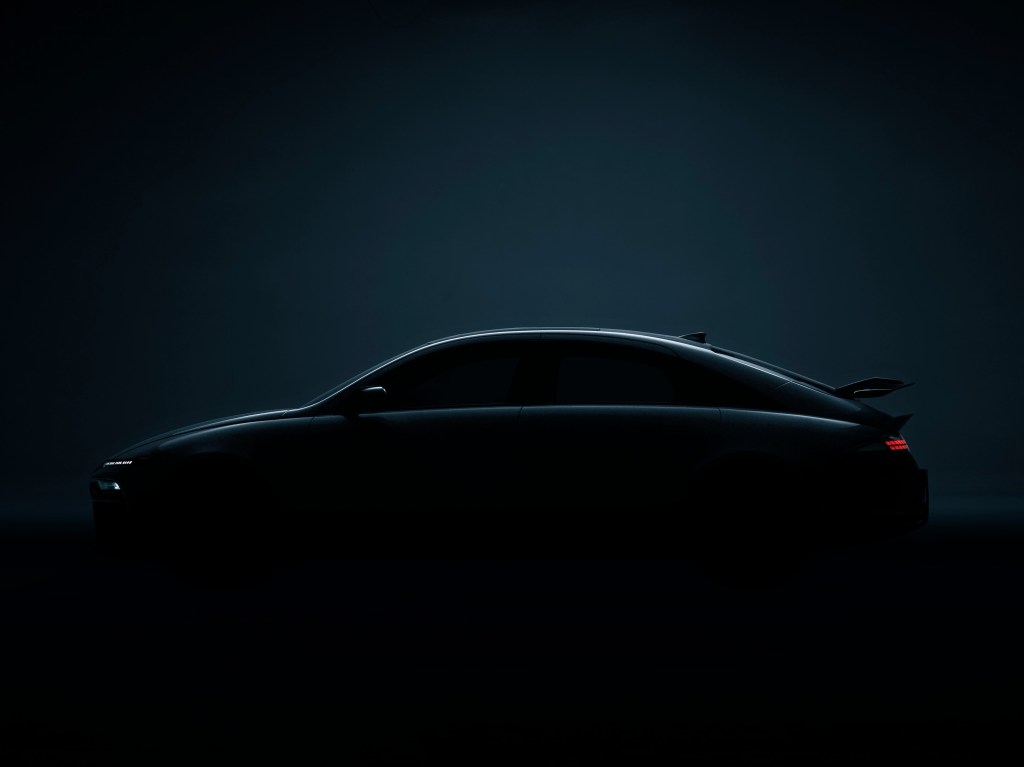
Hyundai Motor Company continues to push the boundaries of automotive design with the unveiling of its visionary design concept car, INSTEROID, today in Seoul, Korea. INSTEROID embodies Hyundai Motor’s bold approach, merging gaming influences with extensive customization to captivate a new generation of drivers.

Based on the successful Hyundai INSTER electric sub-compact urban SUV, which launched last year and quickly became a global hit, INSTEROID takes the concept of sporty design and user experience to new heights. INSTER’s acclaim, including its selection as a top three finalist for the 2025 World Car of the Year award, sets a solid foundation for this radical ‘What if?’ project.

Crafted in secrecy by Hyundai Motor’s European design team, INSTEROID is a true concept car. Its name cleverly fuses the playful essence of ‘INSTER’ with the dynamic energy of ‘STEROID’, reflecting its spirited nature and muscular look.

Much like the off-road-inspired INSTER CROSS derivate shown at INSTER’s debut in 2024, INSTEROID is another step in the hot-selling production model’s journey. Its mission is clear: to challenge conventions, create emotions and redefine what a sporty EV can be.

“INSTEROID is a celebration of pure fun – a journey where we explored new ways to ignite emotion and imagination in every detail,” said Simon Loasby, Senior Vice President and Head of Hyundai Design Center. “It’s not just about how it looks, but also how it sounds and how makes you feel. From its bold visual language to the immersive sound experience, it’s a concept that invites everyone to dream a little louder and smile a little longer.”

More than just a car, INSTEROID represents a limitless vision of automotive innovation and imagination. It is engaging users on new levels of interaction through shape, light and sound.

“INSTEROID represents a modern take on the idea of a dream car. It is designed to inspire and create enthusiasm,” said Eduardo Ramírez, Chief Designer at Hyundai Design Europe. “This project allowed us to fully embrace unrestrained creativity, drawing inspiration from video games to create an emotional and engaging vision of Hyundai’s brand.”

Gamified design concept boasts sporty styling and eco-conscious materials
INSTEROID takes the INSTER production model to the next level with sporty, gaming-inspired features that include an extended, widened body, track-optimized wheels, and a prominent wing spoiler, diffuser and wheel arch air vents delivering advanced aerodynamics.

Inside, the cockpit offers a stripped-down layout, with bucket seats, a roll cage and a specialized instrument cluster creating an immersive driving experience. Every element is fully adjustable, reflecting the user-centered spirit of a garage-built machine true to the motto: “Build it, play it, break it, repeat.” Adding to its multisensory experience, INSTEROID produces a unique sound signature, leaving an unforgettable impression.

Building upon INSTER’s charismatic design, INSTEROID aims to transform the driving experience with its Drift Mode, promising competitive thrills paired with light-hearted driving enjoyment. Playful details, such as the integrated Beat House sound system and Message Grid, enable personalized interactions, further enhancing driver engagement. Located throughout the design, the Boost icon represents multiple unique personas, reinforcing the deep emotional connection between car and driver.

To optimize performance and reduce overall weight, lightweight lattice structures are seamlessly integrated. The striking exterior, finished in soft white shade, is punctuated by a single bold orange highlight – an unmistakable visual statement. Completing the vision, a reflective race suit with prominent INSTEROID lettering captures the fusion of car culture and youthful expression.

INSTEROID also embodies Hyundai Motor’s commitment to sustainability by pioneering innovative approaches to eco-conscious materials. The interior showcases 3D knit fabric crafted from recycled yarns, using a single-piece, made-to-measure process.

INSTEROID generates buzz on the way to Seoul Mobility Show
Hyundai Motor unveiled INSTEROID during a launch event for media and content creators at the Peaches D8NE(Dowon) cultural and retail space in Seoul’s Seongsu neighborhood, culminating with a private ‘Night Garage Party’ on April 1. The exhibition space also featured INSTER and the rugged, outdoor-focused INSTER CROSS, allowing for discussions with product and design specialists.

A dedicated space was established at the event venue, allowing visitors to experience a variety of games featuring INSTEROID. One of these games, developed by Hyundai Motor, is a time attack-style challenge where players collect ‘steroid’ items in INSTER, enabling the car to evolve into INSTEROID. This game is set to be unveiled to the public in April via a URL, eliminating the need for app downloads. Additionally, Hyundai Motor revealed the INSTEROID Kart, which will be released later as a powerful tool in ‘Kartrider Rush+.’

This collaboration reflects Hyundai Motor’s growing partnerships in the gaming industry. Following successful ventures with platforms like Roblox and ZEPETO, this initiative aims to connect with younger audiences through authentic engagement.

The concept car will be showcased from April 3 to April 13 at the Seoul Mobility Show, offering the public a chance to experience this innovative concept firsthand. Serving as a halo model for the INSTER lineup, INSTEROID is set to make a lasting impression at major auto events in key markets such as Korea and Europe, delivering a refreshed brand image while further boosting consumer interest in INSTER.

Hyundai INSTER has experienced high demand globally since its launch last year and continues to resonate with customers worldwide. Initially introduced in Korea and Europe, Hyundai Motor will further expand the rollout in 2025 to select markets across the Asia-Pacific, Middle East, and Central and South America regions.

The Rolls-Royce Phantom VII

At one minute past midnight on 1 January 2003, the Chairman & Chief Executive of Rolls-Royce Motor Cars handed the keys of the first Phantom VII to its new owner. The moment marked the beginning of a new era for the brand and was the culmination of a process dubbed ‘the last great adventure in automotive history’.

In 1998, BMW Group acquired the rights to manufacture Rolls-Royce motor cars. In less than five years, it had designed and constructed a new head office and manufacturing plant, and designed, tested and built an entirely new motor car worthy of the Rolls-Royce name – a timescale almost unprecedented in the industry.

THE REBIRTH OF A LEGEND
The design for Phantom VII was initially developed in a secret studio, discreetly located in a former bank building on the north side of London’s Hyde Park. For Chief Exterior Designer, Marek Djordjevic, the project was a dream come true. He was instructed to begin with a clean sheet of paper, and was given only three stipulations: the car, codenamed RR01, should have very large wheels; the famous radiator grille; and, of course, the Spirit of Ecstasy mascot.

To understand the essence of what a Rolls-Royce should be, and the characteristics that made it so special and identifiable, Djordjevic turned to designs from the past for inspiration. Three in particular caught his eye: the classically elegant Silver Cloud; the contemporary, understated Silver Shadow; and above all, a coachbuilt Phantom II of the early 1930s.

The heritage Phantom provided him with classic Rolls-Royce signature elements that would profoundly inform the new model’s design: a roofline just over twice the height of the wheels; a long wheelbase, with the front wheels well to the fore and a minimal front overhang; a long bonnet, visually linked to the passenger cabin by an accent line of brightwork; and an imaginary line drawn rising from rear to front along the lower edge of the body, reminiscent of a motor yacht at speed – the famous ‘waft line’ still exhibited by every Rolls-Royce model today.

THE EPITOME OF COMFORT
Phantom VII was designed first and foremost around the comfort of its occupants – an overarching design approach known as the Authority Concept. The driving position provided a commanding view of the road ahead, with the primary controls intuitively positioned, in groups and shapes to make them operable by touch alone so the driver could keep their eyes on the road. Secondary controls were either concealed in compartments, such as the centre armrests, or operated by the Controller. A solid metal cylindrical dial, exposed by opening part of the front-seat armrest, the Controller took care of functions including communication, navigation, entertainment and the motor car’s setting configuration, all displayed on a rotating central fascia screen.

For rear-seat passengers, the Authority Concept manifested itself in wide, rear-hinged coach doors allowing them to enter and exit the cabin easily and decorously. Once inside, the doors closed with the touch of a button. The seats themselves were offered in a choice of configurations: ‘Individual’ with a fixed centre armrest and console; or ‘Theatre’ with a raisable armrest and angled side-bolsters permitting occupants to sit at a slight angle towards one another to aid conversation. The seats were also slightly higher than the front seats, so the passengers could see through the windscreen more easily – and admire the Spirit of Ecstasy proudly crowning the long sweep of the bonnet ahead.

Rolls Royce Series II Phantom Coupe

WHERE PAST AND PRESENT MEET
While Phantom VII’s overall silhouette reflected traditional Rolls-Royce proportions, and its interior upheld the marque’s reputation for peerless comfort, its engineering and construction were at the leading edge of 21st Century technology.

Of all the engineering innovations introduced by Phantom VII, the most enduringly important was its construction method. Instead of the usual monocoque structure, in which the bodywork and frame are integrated into a single shell, Phantom VII was built on an aluminium spaceframe – a skeletal framework of some 200 extruded sections to which the suspension, engine and body panels are attached. This method is often used in racing and high-performance vehicles, owing to its superior strength-to-weight ratio. The Rolls-Royce version was also designed around the marque’s requirement for hand-built perfection; when measured from bumper to bumper, the length of every motor car built on it would be accurate to within 0.5mm. Achieving this precision required skilled craftspeople to hand-weld 150 metres of seams in 2,000 separate locations. The Phantom VII spaceframe provided the foundations for the contemporary Architecture of Luxury, which underpins every model built at the Home of Rolls-Royce today.

EXTENDING ITS INFLUENCE
The Architecture of Luxury harnesses another key benefit of the spaceframe. Infinitely scalable and modifiable, it gives Rolls-Royce engineers and designers the freedom to create motor cars of different shapes and dimensions on the same underpinnings. Today, that remarkable flexibility is demonstrated in models as diverse as Spectre and Cullinan; but the original Phantom VII spaceframe provided the first example of this adaptability.

At the 2004 Geneva Motor Show, Rolls-Royce unveiled an experimental car, 100EX. Four inches shorter than Phantom VII, it was a two-door drophead coupe, with a V16 cylinder engine and a fabric hood concealed by marine-style bleached teak decking, inspired by the classic J-Class racing yacht of the 1930s. It was so well received that a production version, with a V12 engine, was approved; Phantom Drophead Coupé, as it was known, is now one of the rarest and most desirable motor cars of the entire Goodwood era.

The following year, Rolls-Royce launched Phantom VII Extended Wheelbase (EWB), in which the chassis was lengthened by 250mm (9.8in) to create additional space in the rear cabin.

In 2006, another experimental Phantom, 101EX, appeared at Geneva. This was a fixed-head coupé based on the Drophead, and was the first to feature the Starlight Headliner now seen on almost every Rolls-Royce motor car. The Phantom Coupé also became a series production car, again in extremely limited numbers.

A NEW POWER RISING
Another link to the past was provided by the engine. Rolls-Royce had used a V12 engine with Phantom III in 1936, and again in Silver Seraph in the late 1990s. That Phantom VII should be similarly equipped was obvious and indisputable.

Rolls-Royce’s engineers were aware that the Phantom VII engine required a significant amount of power to deliver the effortless ‘waftability’ they wanted from their new model. Phantom VII was therefore fitted with a brand-new, specially designed engine with a capacity of 6.75 litres – the traditional displacement for a Rolls-Royce motor car engine. A derivative of this engine is still used in Rolls-Royce motor cars today – with the obvious exception of the all-electric Spectre and Black Badge Spectre.

THE ULTIMATE CANVAS FOR BESPOKE
Phantom has long been revered as the ultimate canvas for Bespoke, enabling clients to create truly singular expressions of their vision. Among the most notable Private Commissions and Collections were Phantom Aviator, which paid homage to the golden age of flight with aviation-inspired details and a cockpit-like interior; Phantom Serenity, a masterpiece of handwoven silk and delicate embroidery that redefined luxury craftsmanship; and the Art Deco Collection, which celebrated the bold geometric forms and opulent materials of the Roaring Twenties, translating the era’s glamour into a contemporary Rolls-Royce aesthetic. Each of these creations exemplified the boundless possibilities of Bespoke, reinforcing Phantom’s status as the pinnacle of individualisation.

A CRUCIAL LEGACY
Phantom VII remained in production until 2017, when it was replaced by the current eighth generation. For 14 years, it was the marque’s pinnacle product and re-established, then reinforced Rolls-Royce’s long-cherished reputation as ‘the best car in the world’. As the first – and until the launch of Ghost in 2009, the only – motor car to be handmade at Goodwood, it was the foundation on which all Rolls-Royce’s subsequent growth and success was built.

Andrew Ball, Head of Corporate Relations and Heritage, Rolls-Royce Motor Cars said: “For those of us working at the Home of Rolls-Royce today, Phantom VII is where it all began. The first motor car ever to be built at our Global Centre of Luxury Manufacturing Excellence, it ushered in our modern era in 2003 and, in terms of design, engineering, craft and manufacturing, set the template for everything we’ve done since. Though it marked a decisive new beginning for the brand, echoes of earlier Rolls-Royce models are everywhere: from one angle you see Silver Shadow, from another Silver Cloud; and elsewhere an undeniable link to the coachbuilt limousines of earlier decades. Through these inherited traits, Phantom VII represented an up-to-the-minute interpretation of the traditional, formal British saloon. At the same time, it started completely new conversations in modern luxury, and the unlimited possibilities of Bespoke.”

Ashok Leyland Defence Business Secures Multiple Orders Worth INR 700 Crore

Ashok Leyland, the Indian flagship of the Hinduja Group, and the largest supplier of logistics vehicles to the Indian Army, has announced that its Defence business has won multiple orders valued more than INR 700 crore.  The vehicles to be supplied under these orders are to fulfil Defence sector needs of troop transportation, logistics, and other specialised mobility requirements under the Close-in Weapon Systems (CIWS) program. With these new orders, Ashok Leyland further solidifies its position as a leader in advanced land mobility solutions for the Armed and Paramilitary Forces.

The recently awarded contracts encompass a diverse range of specialised vehicles, including the Stallion 4×4, Stallion 6×6, Short Chassis Bus, and Mobility System Travelling Platform. These vehicles combine superior reliability with exceptional off-road capability, ensuring seamless manoeuvrability across country’s most demanding terrains, meeting a variety of operational requirements.

Mr. Shenu Agarwal, MD & CEO, Ashok Leyland said, “For decades, Ashok Leyland has been a trusted partner in Defence mobility. We are immensely proud to have secured these new orders, which reinforce Ashok Leyland’s leadership in the sector and reaffirms our commitment to deliver cutting-edge solutions for the armed forces. The defence business remains a key pillar of Ashok Leyland’s future growth.”

Mr. Amandeep Singh, President – Defence Business, Ashok Leyland said, “As a proud proponent of ‘Atmanirbhar Bharat,’ we are committed to strengthening India’s defence capabilities through indigenous design and manufacturing in the Defence mobility sector. Our vehicle platforms ranging from 4×4 to 12×12, packed with contemporary Defence specific requirements, including armouring, known for their versatility and durability, remain the backbone of logistics and specialist needs of Armed Forces. As the largest supplier of logistics vehicles to the Indian Army, we take immense pride in supporting our forces and remain committed to delivering these orders on time. Our future Defence order and tender pipeline is also quite robust.”

Ashok Leyland remains committed to developing indigenous mobility solutions that not only fulfill the operational needs of the armed forces but also advance India’s self-reliance in defence. With a legacy of excellence and a spirit of innovation, the company continues to power the Indian Army’s logistics backbone, reinforcing its position as a trusted partner in strengthening the nation’s defence capabilities.

EIMG WHEELS Indian Heritage Car & Bike Rally 2025 Dazzle The City

In the summer of ’24, Eastern India Motoring Group (EIMG), a community of heritage vehicle collectors and restorers organised the inaugural edition of the EIMG Indian Heritage Car Rally. The event made history by becoming India’s first Indian Heritage Car Rally in the Time-Speed-Distance (TSD) format organised under the guidance of the Federation of Motor Sports Clubs of India (FMSCI) – the apex body of motor sports in the country.

Fast forward to March 2025, as EIMG jointly with Kolkata on Wheels organised the Softovac EIMG WHEELS Indian Heritage Car & Bike Rally, for the first time introducing the Indian Heritage two wheeler category, yet again making this unique rally, a first-of-its-kind. The rally was flagged off from the Town Hall on Sunday, March 16, 2025 at 10 AM. The prize distribution was held the same evening at the Dalhousie Institute.

Time stood still as the immaculately restored Contessa, Hindustan Landmaster, Fiat 1100, Fiat Select, Standard 10, Fiat Super Select, Hindustan Ambassador Mark 3, Fiat Millecento, Contessa Classic, Maruti 800, Yamaha RX100, Rajdoot 350, Yezdi, Jawa, and Royal Enfield among several other notable Indian heritage cars & bikes participated in India’s first and only Indian Heritage Car & Bike Rally to be run in the TSD Format under FMSCI.

This rally is the brainchild of EIMG Secretary Shubhajit Kumar and has been specifically conceived to address the general apathy displayed by other motoring organisations towards the Indian Heritage Cars. This rally aimed to not only celebrate the timeless charm of Indian heritage automobiles but also pay homage to the enduring spirit of Indian motoring culture. As participants navigated through the scenic route, they not only reminisced about the glory days of automotive design but also embraced the camaraderie that unites enthusiasts of all generations.

“This year, around 40 Indian heritage cars & bikes participated in this rally making this the biggest event of its kind. In essence, this rally was much more than just a showcase of Indian heritage cars & bikes; it was a tribute to passion, perseverance, and the enduring bond between man and machine”, said Mr. Shubhajit Kumar, Secretary, Eastern India Motoring Group, the organisers of the Softovac EIMG WHEELS Indian Heritage Car & Bike Rally 2025.

And as the engines roared and the wheels turned, the Softovac EIMG WHEELS Indian Heritage Car & Bike Rally 2025 left an indelible mark on the annals of Kolkata’s motoring history, reminding us all of the timeless allure of Indian heritage automobiles and the joy of the open road.

Hereunder are the results of the Softovac EIMG WHEELS Indian Heritage Car & Bike Rally 2025:

Cars Manufactured Upto 1974:

1st –  Pushpak Ghosh & Soham Pal

2nd – Sudip Kumar Ghosh & Suvrajit Dutta

3rd – Aritrya Sanyal & Vikramjit Kumar

Bikes Manufactured Upto 1974:

1st – Uday Ganguly

2nd – Syeed Bin Noman

3rd – Bapi Mondal

Cars Manufactured Between 1975 And 1995:

1st – Souradeep Dutta & Sekhar Choudhury

2nd – Anirban Mukherjee & Chandrasish Roy

3rd – Debaprem Chatterjee & Prasenjit Roy

Bikes Manufactured Between 1975 And 1995:

1st – Nirav Mehta

2nd – Mubaraq Maseeh & Rajkumar Mundra

3rd – Hero Sen

Oldest Car To Complete The Route:

Satrajit Mukherjee

Oldest Bike To Complete The Route:

Bapi Mondal

Best All Lady Team:

Sreerupa Sirkar, Dipasree Ganguly, Anuja Kumar

Nissan Motor India To Launch Two New Products Starting FY25

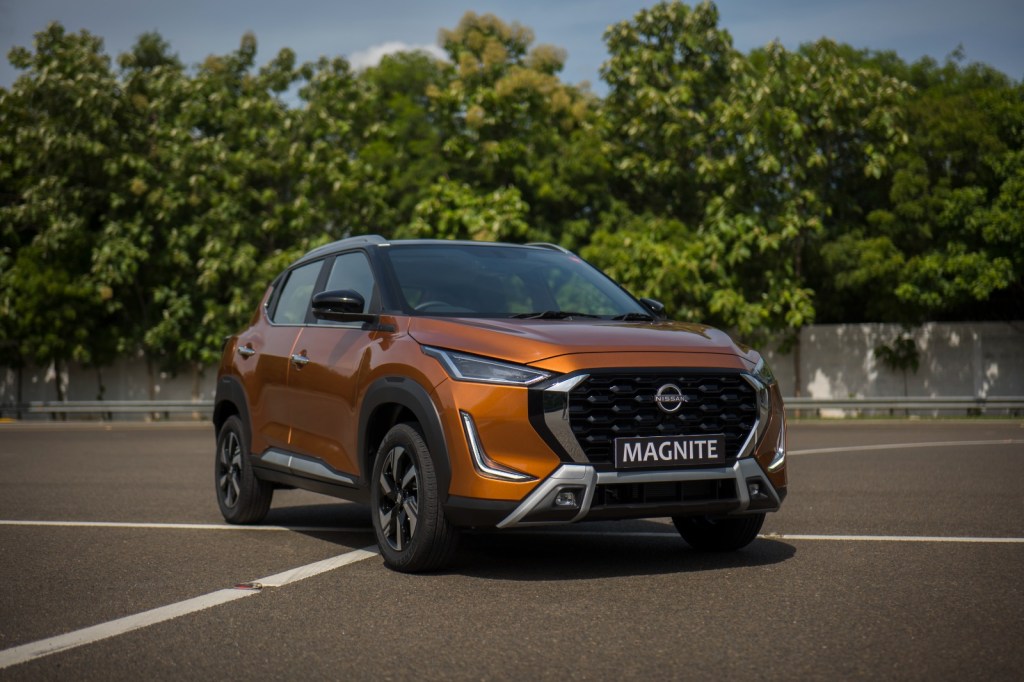
Nissan Motor India has announced an all-new 7-seater B-MPV (multi-purpose vehicle) to their existing line-up. The company showcased two new products slated for India at their recently concluded Global Product Showcase Event held in Yokohama, Japan. This is in line with the company’s plans for the India business to reshape its new products to meet the rising aspirations of its customers and deliver products in all high-growth segments such as the B-MPV and C-SUV segments in addition to its existing share in the B-SUV segment led by the New Nissan Magnite.

Nissan will continue to strengthen its presence in India’s rapidly growing market, enhancing domestic performance and expanding exports. Nissan’s planned product offensive has begun with the first-time global reveal of an all-new 7- seater B-MPV scheduled to launch in FY25 as a brand new addition to the India product portfolio.

This will be followed by a previously announced 5-seater C-SUV (compact sports utility vehicle) in early FY26. The company has shared two brand new teasers for Indian audiences which confirm the developments and timelines for both vehicles. Nissan Motor India remains on track to have 4 products by FY26 for Indian customers across the B/C and D-SUV segments.

The C-SUV has been designed to disrupt the segment in India. It will be feature- packed and be delivered with state-of-the-art proprietary advanced technologies. Inspired by another iconic Nissan SUV, the new C-SUV takes its design cues from the Nissan Patrol. The C-SUV will deliver true Nissan SUV DNA and deliver the same robust reliability, premium craftsmanship and technology that Nissan is renowned for globally. The C-SUV with unmistakable presence will offer a high approach and departure angle making it the perfect companion for Indian road conditions.

The Nissan 7-seater B-MPV on the other hand aims to deliver unmatched value, quality and comfort to its core customer driven by value conscious customers seeking to maximize their purchase in the segment. The Nissan B-MPV will deliver muscular styling that is unique to Nissan’s distinct design philosophy. It has been designed to ensure comfort for passengers on all rows without compromising on driving pleasure.

Nissan is setting its sights on achieving an ambitious target of 1,00,000 units in both annual domestic sales and exports from India. To support this goal, the company will locally manufacture both new products at the Alliance JV plant in Chennai. This approach ensures that every vehicle manufactured here meets global standards, catering to both domestic and international markets.

Building on the success of the New Nissan Magnite, Nissan is introducing a new C- SUV that will also be made in India and exported globally. This 5-seater C-SUV will be the second model from the Chennai plant to follow the ‘One Car, One World’ strategy, reinforcing Nissan’s commitment to expanding its presence in both domestic and international markets.

The All-New Mazda6e Unveiled

The all-new Mazda6e is the latest addition to Mazda’s fully electric lineup in Europe. A stylish electric hatchback with a fastback saloon style, the Mazda6e embodies a perfect balance between dynamic aesthetics and everyday practicality.

“The exterior is a true expression of its ‘Authentic Modern’ design philosophy,” explains Jo Stenuit, Director of Mazda’s European design studio in Oberursel, Germany. The vehicle’s sleek, coupé-inspired silhouette features a short rear deck, creating a sporty saloon-like appearance while maintaining the practicality of a five-door hatchback. It embodies harmony through contrast, balancing light and shadow, sharpness and roundness, to create a sense of dynamic motion even when stationary.

Mazda’s “Kodo – Soul of Motion” design language is brought to life through fluid surfaces and a low-slung profile, with parallel lines enhancing the car’s dynamic presence. This is further emphasised by the Aero-Fusiform shape—resembling a beautifully sculpted barrel, where all lines appear to converge at a single point. This seamless, flowing form reinforces the car’s aerodynamic elegance and sense of motion.

The sculpted door panels, inspired by the spray of a speedboat cutting through water, create a light-catching effect that further enhances the sense of movement. The rear end exudes power and stability, incorporating four distinct cylindrical taillight elements—a subtle homage to Mazda’s rich design heritage.

For the first time at Mazda, a glowing signature wing illuminates the Mazda6e’s front, featuring dynamic light animation as a visual charging indicator. The rear blends modern and classic design, with a horizontal line adding sleekness and width, while four cylindrical elements honour Mazda’s heritage.

Frameless doors and integrated handles enhance the seamless look, while an electrically extendable rear spoiler improves aerodynamics and stability at high speeds.

“The cabin of the Mazda6e is inspired by Japanese simplicity, built around the design principle of ‘ma’—the power of empty space,” says Jo Stenuit. “By intentionally creating emptiness, Mazda achieves a harmonious balance that enhances both aesthetics and functionality.”

A floating horizontal dashboard stretches across the cabin, creating a sense of openness and serenity, while the prominent centre console enhances driver focus and security. The interior design prioritises minimalism with depth, replacing excess buttons and screens with intuitive, thoughtful placement of controls.

The standard panoramic glass roof invites natural light into the cabin, reinforcing the expansive and airy feel. Tinted glass and heat insulation ensure comfort in all conditions. The sophisticated ambient lighting system, featuring 64 customisable colours, enhances the premium atmosphere with soft, indirect illumination.

The mono-form front seats, with their integrated headrests, deliver both modern elegance and exceptional comfort. Mazda offers a choice of high-quality upholstery: Beige or Black artificial leather in the Takumi trim, and luxurious Tan Nappa and Suede cloth woven fabric in the Takumi Plus trim. Subtle satin chrome accents and meticulous stitching complete the refined, sophisticated look.

The all-new Mazda6e is a masterclass in design, seamlessly blending form and function to create a vehicle that is as visually striking as it is practical. With its fluid exterior lines, cutting-edge lighting technology, and a minimalist yet luxurious interior, the Mazda6e represents the next chapter in Mazda’s design evolution.

Bridging tradition and innovation, the all-new Mazda6e marks a bold step into the electric future while staying true to the craftsmanship and aesthetic excellence that define the Mazda brand. Entering a new era, the Mazda6e is more than just a car—it is a statement of Mazda’s commitment to design, technology, and electrification.

The Mazda6e is the next chapter in Mazda’s EV story in Europe.

Continental Bags Award For “Tire Manufacturer of the Year” And Recognized For Environmentally Friendly Tire Production

Continental has been awarded “Tire Manufacturer of the Year” at this year’s Tire Technology International Awards for Innovation and Excellence. The premium tire manufacturer received a further honour for its tire plant in Lousado, Portugal, which has produced tires CO2-neutrally since last year. This makes Continental the only tire manufacturer to win two of the prestigious awards, outperforming the competition as “Tire Manufacturer of the Year” as well as in the category “Environmental Achievement of the Year – Manufacturing”. The awards were bestowed as part of the Tire Technology Expo on March 4 at the exhibition center in Hanover. They are regarded as some of the top honours in the industry.

“We are especially proud to be the only manufacturer to be honored twice at the Tire Technology Awards in an extremely competitive field,” says Edwin Goudswaard, Head of Research and Development at Continental Tires. “Both awards highlight our strong commitment to sustainable tire development and manufacturing. In such a highly competitive market, this success demonstrates our innovative prowess and our ability to actively shape the future of the industry.”

Competition in both categories was fierce. As “Tire Manufacturer of the Year,” Continental outperformed competitors from the USA, Italy, and France. This marks the fourth time Continental has received this title – most recently in 2022.
Sustainability efforts are becoming an increasingly important focus for the industry, and therefore for the awards. By naming Continental “Tire Manufacturer of the Year” for 2024, the jury of 27 independent industry experts acknowledged Continental’s ongoing achievements on the road to greater sustainability. The projects considered in their deliberations included increasing the share of sustainable materials through recycled PET bottles at further Continental plants, expanding the plant in Rayong, Thailand, according to the highest energy-efficiency standards, obtaining the international sustainability certification ISCC-PLUS for its plants in Lousado, Portugal, Puchóv, Slovakia, and Hefei, China, as well as upgrading the tire plant in Hefei with automation technology in line with state-of-the-art sustainability standards.

Continental has also repeatedly impressed the jury in award categories that specifically recognize environmentally friendly development and production measures. In 2024, for example, the company took top spot in the category “Environmental Achievement of the Year – Tire Design” with its sustainable production of the tire UltraContact NXT. This year, Continental won the prize in the “Manufacturing” category for the sustainability measures at its tire plant in Lousado, Portugal. Since 2024, the plant has been testing a CO2-neutral production process that advances the company’s ambition to achieve carbon neutrality. Thanks to a fully electric steam boiler, Continental generates the steam using both in-house produced solar power and renewable energy from the grid. Steam is needed to heat the rubber compound for the tires during the so-called vulcanization. During this process, raw rubber is turned into a flexible, elastic form. In the tire industry, a large proportion of the consumed energy is used for generating steam. Previously, the Lousado tire plant relied exclusively on natural gas for steam generation. With an annual production capacity of 18 million tires, the plant in Lousado is considered a mega plant. Continental is aiming to switch all of its tire plants to fully carbon-neutral production processes by 2040 at the latest.

The Tire Technology International Awards for Innovation and Excellence have been bestowed since 2008 as part of the Tire Technology Expo in Hanover each spring. The prizes span 13 categories honoring the latest innovations in tire technology and major advances on the road to a more sustainable tire industry. The award ceremony is coordinated by the industry magazine “Tire Technology International.”

90 Years Of Škoda Superb

Ninety years ago, Škoda Auto began production of the Superb at its Mladá Boleslav plant. The model quickly became synonymous with a comfortable, refined, and dynamic driving experience, even on poor road surfaces. It impressed with its spacious interior – offering seating for up to seven passengers – generous equipment, and outstanding craftsmanship. Production continued until 1949. In 2001, the legendary name returned with the first modern-generation Škoda Superb. Now in its fourth generation, the Superb is available as a Hatch or Estate, featuring a choice of petrol and diesel engines, as well as mild-hybrid and plug-in hybrid powertrains. The plug-in hybrid variants, the Superb Estate iV and Superb Hatch iV, offer an electric range of more than 75 miles. Customers can also opt for front- or all-wheel drive.

Technical innovation and progress: 1934–1949
In the spring of 1934, Škoda introduced a new generation of vehicles featuring a backbone chassis frame and independent wheel suspension. By the October of that year, the company had decided to name its flagship model ‘Superb’, catering to the most demanding customers. Series production commenced in Mladá Boleslav in March 1935. The first model, the Škoda 640 Superb, was powered by a six-cylinder engine producing 55 hp (40.5 kW). Right from the start, the Superb featured hydraulic brakes and a state-of-the-art 12V electrical system. The highlight of the range was a 96 hp (70.7 kW) 4.0-litre V8 engine. Offering generous space for up to seven passengers and their luggage, the Superb was available with various wheelbase lengths and body styles, including open-top and bespoke designs. By the time production ended in 1949, approximately 890 passenger cars and 1,630 military derivatives had been built – including a unique 4×4 version.

The Superb legacy: Four generations of innovation
The Superb reflects Škoda’s ongoing transformation over its 130-year history. After a 50-year hiatus, the name was revived in September 2001 with the introduction of the first modern-generation Škoda Superb. This saloon offered exceptional interior space and came with a range of engines producing between 85 kW and 142 kW (193 hp), including a range topping 2.8-litre V6 with Tiptronic automatic transmission and bi-xenon headlights for enhanced comfort and safety.

Subsequent generations, launched in 2008, 2015, and most recently in 2023, further developed the Superb’s legacy. The second generation introduced a more practical Hatch and, for the first time, an Estate version, offering more powerful yet efficient powertrains and extensive standard equipment. The third generation continued this trajectory, integrating advanced technologies and innovative design.

The Superb’s popularity has grown significantly across generations. The first modern generation, produced from 2001 to 2008, saw 137,000 units sold. Its successor, introduced in 2008 and available for the first time as both a saloon and an Estate, achieved 6,18,000 sales, with 65% of customers opting for the saloon. The third generation, launched in 2015, continued this strong growth course, with 805,000 units sold – 56% of which were Estate models.

Now in its fourth modern generation, the Superb continues to set new benchmarks. Customers can choose between Hatch and Estate body styles, with petrol, diesel, mild-hybrid, and plug-in hybrid powertrains and more than 65,000 have been sold at this time. The latest plug-in hybrid models offer an electric range of more than 75 miles (WLTP). Equipped with cutting-edge technologies, sustainable materials, and smart solutions like Smart Dials, the new Superb is designed for modern mobility.

A Spectacular Sunday At The DI EIMG Heritage Vehicle Display

The Dalhousie Institute (DI) and Eastern India Motoring Group (EIMG) in association with Concourz Restorations joined hands to organise the third edition of THE DI EIMG HERITAGE VEHICLE DISPLAY on Sunday, March 9, 2025.

The event was held at the lawn and the courtyard of The Dalhousie Institute where a bevy of 75 heritage vehicles including four and two wheelers were displayed.

The member of DI along with their guests were in for a visual treat as some rare and exotic heritage wheels made the onlookers drool in admiration and envy.

Established in 2020, EIMG has since been anchoring the revival of the heritage motoring movement in Kolkata. Under the leadership of Founder & President Mr. Shrivardhan Kanoria (himself a collector & restorer of national repute) and his team, EIMG has been instrumental in organising some of the most widely appreciated and admired heritage motoring events in the city.

These stellar events has provided the much needed impetus to heritage vehicle owners and restorers to pursue their passion with added zest to ensure that these beauties turn up at each event looking their best.

Founded in 1859, The Dalhousie Institute is a venerable social club with a rich legacy and heritage of its own. It was just a matter of time that these two organization – DI and EIMG – came together to create an evening of automobile magic.

This collaboration was made possible with the effort of Mr. Shubhajit Kumar, EIMG Secretary and a collector himself – who acted as the bridge between DI and EIMG.

Kanoria had handpicked 75 heritage vehicles which was part of this grand display. The vehicles were segmented into four different categories namely Vintage Cars, Classic Cars, Indian Heritage Cars and Two Wheelers.

All the vehicles selected for this event were spectacular in their own right with significant historical importance.

Eight vintage Rolls-Royces including a rare Bentley graced the display, which included three Rolls-Royces from the Shrivardhan Kanoria Collection itself.

Other notable cars on display included an ultra rare 1934 SS1 Sports, 1948 Plymouth Special Deluxe, 1931 Chevrolet Big 6, 1937 Opel Cabrio, 1947 MG TC, 1950 Austin 8, 1958 Mercedes Ponton, and 1965 Hillman Imp.

The Thanksgiving Ceremony was conducted by EIMG President Mr. Shrivardhan Kanoria wherein the beautiful mementos sponsored by Concourz Restorations were presented to the heritage vehicle owners and other important stakeholders.

In his thanksgiving address Mr. Kanoria said, “I would like to express my gratitude to the committee members of The Dalhousie Institute for their support and cooperation for making this event possible. Special mention to the Club President and Club Secretary. Heartfelt gratitude to Mr. Shubhajit Kumar for being instrumental for this collaboration between DI and EIMG. Lastly thank you to Telegraph T2 and Exide for supporting this event.”

The thanksgiving ceremony was followed by a sumptuous dinner hosted by EIMG President Mr. Shrivardhan Kanoria.

Photographs by Mohammed Adnan Aslam