Exciting Times Ahead For Nissan As The Company Gears Up To Launch New Products Backed By Best Single Year Performance In FY 24-25

Nissan Motor India has announced an all-new 7-seater B-MPV (multi-purpose vehicle) to their existing line-up. The company showcased two new products slated for India at their recently concluded Global Product Showcase Event held in Yokohama, Japan. This is in line with the company’s plans for the India business to reshape its new products to meet the rising aspirations of its customers and deliver products in all high-growth segments such as the B-MPV and C-SUV segments in addition to its existing share in the B-SUV segment led by the New Nissan Magnite.

Nissan will continue to strengthen its presence in India’s rapidly growing market, enhancing domestic performance and expanding exports. Nissan’s planned product offensive has begun with the first-time global reveal of an all-new 7- seater B-MPV scheduled to launch in FY25 as a brand new addition to the India product portfolio.

This will be followed by a previously announced 5-seater C-SUV (compact sports utility vehicle) in early FY26. The company has shared two brand new teasers for Indian audiences which confirm the developments and timelines for both vehicles. Nissan Motor India remains on track to have 4 products by FY26 for Indian customers across the B/C and D-SUV segments.

The C-SUV has been designed to disrupt the segment in India. It will be feature- packed and be delivered with state-of-the-art proprietary advanced technologies. Inspired by another iconic Nissan SUV, the new C-SUV takes its design cues from the Nissan Patrol. The C-SUV will deliver true Nissan SUV DNA and deliver the same robust reliability, premium craftsmanship and technology that Nissan is renowned for globally. The C-SUV with unmistakable presence will offer a high approach and departure angle making it the perfect companion for Indian road conditions.

The Nissan 7-seater B-MPV on the other hand aims to deliver unmatched value, quality and comfort to its core customer driven by value conscious customers seeking to maximize their purchase in the segment. The Nissan B-MPV will deliver muscular styling that is unique to Nissan’s distinct design philosophy. It has been designed to ensure comfort for passengers on all rows without compromising on driving pleasure.

Building on the success of the New Nissan Magnite, Nissan is introducing a new C- SUV that will also be made in India and exported globally. This 5-seater C-SUV will be the second model from the Chennai plant to follow the ‘One Car, One World’ strategy, reinforcing Nissan’s commitment to expanding its presence in both domestic and international markets.

Nissan Motor India Pvt. Ltd. (NMIPL) continued consistent and sustainable growth in India, delivering best single year performance for FY 2024-25 in the last seven years despite multiple headwinds faced by the domestic auto industry. The year was marked by the continued success of the New Nissan Magnite, which remains a key pillar of Nissan’s domestic business plan and a vital part of the company’s global export operations. In FY 2024-25 Nissan Motor India recorded total domestic volume of 28,000+ units led by the New Nissan Magnite introduced in October 2024. This strong performance was delivered despite the rising consumer preference for alternate fuel vehicles in the B-SUV segment in India.

On the export front, the company expanded its operations from 20 markets to 65+ international markets and registered an unprecedented and historic export sales of 71,000+ units further reinforcing India’s role as a growing manufacturing and export hub for Nissan globally. This brings the consolidated sales of the company to 99,000+ units for FY 2024-25.

Nissan is setting its sights on achieving an ambitious target of 1,00,000 units in both annual domestic sales and exports from India. To support this goal, the company will locally manufacture both new products at the Alliance JV plant in Chennai. This approach ensures that every vehicle manufactured here meets global standards, catering to both domestic and international markets.

Commenting on the performance, Frank Torres, Divisional Vice President of AMIEO Region Business Transformation & President of Nissan India Operations said, “India remains a strong pillar of growth for Nissan driven by the continued success of the Nissan Magnite. The export of the new Nissan Magnite expanded to over 65 international geographies including LHD markets this year.

On the restructuring of the India business operations as a part of the global turnaround actions, he said “Nissan remains committed to the Indian market, customers, dealer partners, employees & stakeholders. Nissan & its dealer partners will continue to provide Sales & Service to customers of existing and future new models. Nissan’s stated India product offensive remains intact, including the plan to introduce 1 all-new B-MPV & 2 new C-SUVs. We will continue our plans to export vehicles to other parts of the world as per our One Car, One World plan. This restructuring is part of our efforts worldwide to become a leaner and more agile company, as part of our global turnaround actions.”

Saurabh Vatsa, Managing Director, Nissan Motor India said, “This year has been a challenging one for the auto industry. Despite this, the New Magnite has shown and has proven that it remains a strong favorite amongst the B-SUV customers. The continued expansion of our dealership network reflects our commitment to improving accessibility and customer service. As we move forward, with the recent announcement of the additions of an All-New 7-seater B-MPV and 5-seater C-SUV and we are focused on offering an exciting product portfolio and expanding our dealer network further for enhancing customer experience.”

Nissan Motor India also announced that it will increase the price of New Nissan Magnite across all trims by up to 3 per cent from 1st April 2025 onwards. This price hike will be done to offset the rising input costs and operational expenses.

The Nissan Magnite has consistently performed well in its segment. In August 2024, the Nissan Magnite crossed a cumulative sale of 150,000 units. October 2024 marked the launch of the New Nissan Magnite after which it gained an even stronger momentum and global appeal, surpassing 10,000+ bookings milestone within three
months of the launch. The New Nissan Magnite also achieved an export milestone of 50,000 units, embodying Nissan’s ‘One Car, One World’ philosophy by exporting to 65+ LHD and RHD markets.

Manufactured at the Chennai plant, the new Magnite includes 20+ Segment-first features in India and a bold new design. Strengthening its sustainability commitment, it is now fully E20 fuel compliant. The new Magnite’s success was amplified by its recent debut in Saudi Arabia as the first left-hand-drive (LHD) market.

Aston Martin DBX S Unveiled

Aston Martin is proud to announce the arrival of a new DBX flagship, DBX S. With the dynamic appeal of DBX707 and an engine enhanced by technology transferred directly from the forthcoming Valhalla supercar, DBX S offers one of the most engaging and responsive driving experiences delivering even more power, reduced weight and more assertive design. With a suite of exterior and interior enhancements to match, the DBX S certainly has its own undeniable identity.

DBX S continues a long tradition of Aston Martin’s utilising the ‘S’ suffix to denote a special, high-performance version of an existing model; the first being Vanquish S which made its public debut at the Paris Motor Show in 2004. DBX S proves that lighter variants with more power and performance are still very much part of Aston Martin’s core production offering and looks to continue a lineage of notable high performing models.

Aston Martin CEO, Adrian Hallmark, said ‘Over the last two years, Aston Martin have introduced an entire core collection of next generation sports cars as well as a new DBX; all with a new, entirely bespoke infotainment system designed in-house. The marque continues its focus on class leading performance, ultra-luxury design and innovation, broadening the range of products under each core model. The introduction of DBX S not only reaffirms our commitment to producing the most exciting, rewarding and beautiful cars, it also sends a powerful statement of intent about our ambitions not just for DBX, but for the Aston Martin brand.”

At the heart of the new DBX S lies an upgraded version of the acclaimed Aston Martin 4.0-Litre Twin-Turbo V8 powerhouse. By using turbo technology transferred directly from the upcoming Valhalla supercar including its larger compressor wheel diameters and other internal improvements, power is raised by a further 20PS to 727PS and provides even greater urgency at the very top of the rev range, making DBX S’s performance even more memorable. The result is a 0-62mph time of just 3.3 seconds and reduction in acceleration time from 0-124mph (200km/h) of 0.3 seconds. Top speed remains unchanged at an impressive 193mph.

Further enhancing both performance and its perception is a modified exhaust system amplifying even more character to the natural voice of the thunderous V8 engine and exploiting the full the opportunity presented by the engine’s turbo enhancements.

As with its DBX707 stablemate, DBX S distributes its power between the front and rear wheels in variable proportion – including an ability to send 50 per cent of its torque to the front and up to 100 per cent of its torque to the rear wheels alone – through an innovative 9-speed ‘wet clutch’ transmission, which removes the need for a conventional torque converter, delivering extreme performance on launch from standstill. However, the DBX S gearbox has been further modified to provide an even more memorable driving experience. Change up points are adjusted to reflect the car’s extended rev range, while downshifts in Sport and Sport + modes when the car is in automatic are even more aggressive.

In addition to the power upgrade, a number of measures have been taken not only to significantly reduce the kerb weight of DBX S, but to do so in an intelligent and highly selective fashion that ensures that mere weight loss is just one of attributes resulting from these actions. A prime example is the new optional carbon fibre roof presented in a glorious single weave pattern which, at almost three metres square, is by far the largest such carbon element ever fitted to an Aston Martin. Specification of the carbon roof sees the removal of the roof rails, and as a combination not only saves 18kg of mass, but does so from the very highest point of the car, reducing its centre of gravity and therefore enhancing both stability and agility further.

Magnesium wheels are also now available as an option for the first time on any car in the SUV segment. Magnesium is not only robust, but an incredibly lightweight material, some 75 per cent lighter than steel; half the weight of titanium and a third less even than aluminium. In selecting this 23” optional wheel, a further 19kg of unsprung mass is saved, delivering improvements in ride quality, steering precision and feel, as well the car’s more immediate reaction to direction input. DBX S is also available to order with 23” forged aluminium wheels as standard.

Specifying the magnesium wheels also sees the deletion of roof rails, offering a further weight savings. Additionally, customers can also specify a bespoke a lightweight polycarbonate honeycomb grille, intricately designed with over 25,000 individual facets which all helps shift the weight distribution rearward, aiding both handling and the car’s traction capabilities.

Steering ratio on DBX S is also faster by only 4 per cent but noticeably improves agility making the car feel even more sporting and responsive while stopping well short of introducing any sense of nervousness into its handling. It also reduces the turning circle by almost half a metre to just 12.0 metres, improving the urban driving experience.

DBX S benefits from the full suite of suspension enhancements introduced last year, which saw a revised calibration of both the air springs and electronic dampers, increasing transient body control in order to reduce weight transference and therefore improve primary ride quality and overall stability. Even right at the limit, its standard electronic roll control means the DBX S rolls by no more 1.5 degrees; enough to create the natural feel of the car cornering but still keeping the car flatter than many purpose built, two seat sports cars. The spring rate also changes depending upon selected drive mode, actively moving the roll stiffness balance through a corner to enhance grip and steering response. Near inexhaustible braking performance is provided by mighty carbon ceramic disc brakes at each corner, measuring no less than 420mm at the front and 390mm at the back.

Visually, the Aston Martin design team have ensured that no one who sees DBX S will be left in any doubt they’re looking at the most sporting, dynamically capable and enthralling ultra-luxury SUV on the market.

From the front, the new DBX S is instantly recognisable by its pure black vaned grille, giving this edition immediate road presence, whilst the lightweight polycarbonate grille with a honeycomb design taking cues from DBS 770 Ultimate, is also available to specify as an option. A new splitter and diffuser further enhance the car’s naturally assertive presence alongside the distinctive wraparound daytime running light design.

Seen from the side, new sills boast highly distinctive up-turned air splitters which in typical Aston Martin fashion exist for function as much as form, helping channel and direct the airflow along the side of the car. Carbon fibre is available to specify for the wing mirrors, side strakes and lower door sill, while distinctive ‘S’ signature badging on the front fenders marks the true nature of this beast. Like the iconic Aston Martin wings, these badges are manufactured in solid metal, glass enamelled with the ‘S ‘infilled in red as it appeared on previous models such as the V12 Vantage S and the Rapide S. The badge surround is then chrome plated in either the bright or dark chrome to match the colour of the wings chosen by the customer.

The most obvious visual changes to the new flagship DBX are at the rear, dominated by quad exhausts now vertically stacked and available in both gloss and matt finishes, giving full voice to the glorious sound of the V8 at maximum attack. The rear bumper and diffuser have been completely reprofiled and, along with the side sills and wing, can be specified with carbon to reduce overall vehicle mass by a further 7kg. DBX S also showcases a new lower livery design available to specify in 3 colours; Rosso Corsa Red, Trophy Silver and Podium Green. The sporting livery highlights the front splitter, diffuser and side sills continuing to the rear, framing the new stacked quad exhausts.

The interior of DBX S displays a bespoke ‘S’ theme; the most notable feature being the distinctive herringbone design which comes as standard on the seats, but which is also extended to the headlining if the optional Carbon roof is chosen. The herringbone lines become increasingly wider as they progress up the seat, giving an unmistakeable impression of speed; fitting for the highest performing SUV in the marques range.

DBX S is trimmed as standard in lightweight sporting Alcantara, which can be seen on the seats, headlining, centre console, lower instrument panels and upper trim. In areas of high wear such as the seat bolsters, the Alcantara is seamlessly blended with semi-aniline leather. For those who prefer an even greater sense of luxury, DBX S can be trimmed entirely in semi-aniline leather. Red seatbelts can also be specified to bring additional ‘S’ identification inside the car.

The ‘S’ suffix is embroidered onto the seat, complimented by the Aston Martin wings that are emblazoned on the headrests with an industry-first technique using both embossing and debossing with extreme pressure (1.5 tonnes) and heat to sculpt the wings into the leather in sub-millimetre precision and detail. Furthermore the ‘S’ appears on the treadplates and engine plaque to complete the picture.

DBX S continues the adoption of Aston Martin’s state-of-the-art in-house developed infotainment system with a striking new cabin architecture. This transformative enhancement showcases exemplary deployment of craft and innovation combining immaculate design and indulgent luxury with a formidable suite of connected car technology.

It is also fitted with the Aston Martin Premium Audio 800w 14 speaker audio system as standard. Developed utilising advanced hardware, this system features a surround sound mode with QuantumLogic® surround sound processing for a totally immersive soundscape. However, true audio enthusiasts will delight in the optional system developed with Aston Martin’s audio partner, Bowers & Wilkins. Acoustically engineered to the interior volume and shape of DBX S, this exceptional system uses technologies and innovations found in Bowers & Wilkins acclaimed world-class loudspeakers. Aluminium Double Dome tweeters and Continuum® midrange speakers give this 23-speaker, double amplified 1,600W surround sound system a balanced and accurate sound. Dedicated 3D headline speakers, bass speakers and a powerful subwoofer deliver a powerful and dynamic sound experience, reflecting the characteristics of DBX S itself.

‘S’ has long had an association with Aston Martin, and DBX S proves that lighter variants with more power and performance are still very much part of the marque’s story, and are set to last into the foreseeable future. DBX S is available to order now, with deliveries expected in Q4 2025.

Ferrari 296 Speciale A Unveiled

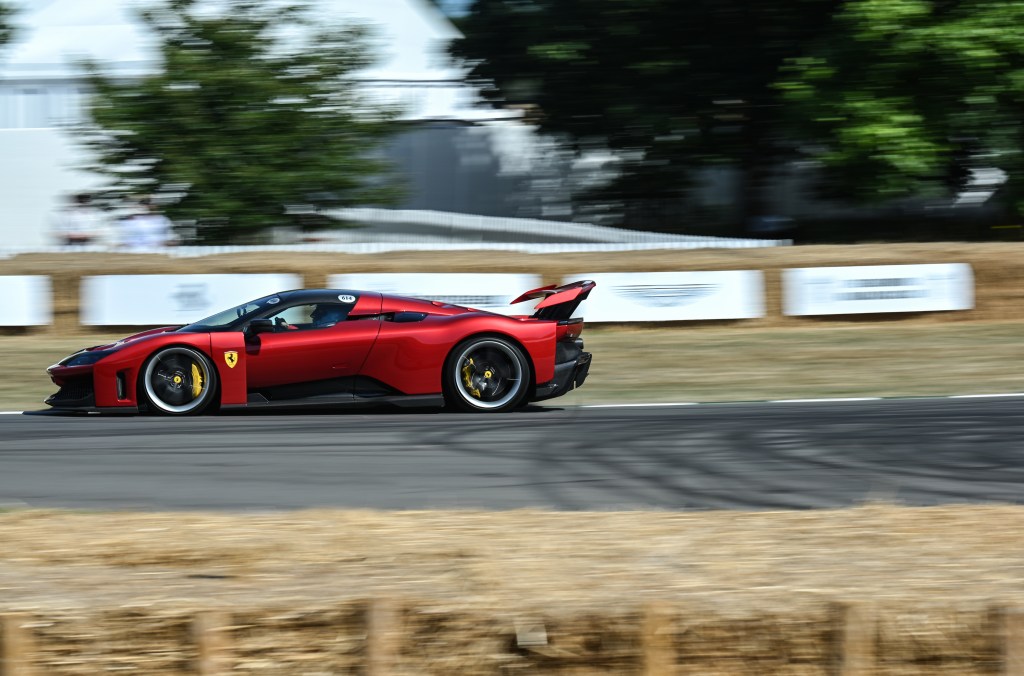
Ferrari has presented its latest special version model, the 296 Speciale A, a mid-rear engined plug-in hybrid spider. The car joins the Scuderia Spider 16M, the 458 Speciale A, and the 488 Pista Spider, an ultra-exclusive dynasty of special versions of Ferrari’s berlinetta-derived spiders, and aims to become the new benchmark of the range – as well as the market – in terms of top-down driving thrills.

The 296 Speciale A adds the retractable hardtop (RHT) to the coupé’s incredible qualities of agile handling, responsiveness and stability, qualities that, together with the additional appeal of being able to drive in the open air, make it unrivalled. This special version not only multiplies the already extraordinary performance of the 296 GTS but also introduces a sense of predictability and intuitiveness that makes this a car unlike any other. Conceived for the Ferrarista who demands an unrivalled driving experience, the 296 Speciale A represents the new pinnacle for this model type and is dedicated to owners in search of that special feeling of being at the wheel of a car with extraordinary performance.

The 296 Speciale A takes the agility and responsiveness of the 296 GTS to extreme new heights by exploiting the full potential of its plug-in hybrid architecture, consisting of a rear-mid 120° V6 twin turbo engine and an electric motor, a short wheelbase and innovative dynamic control systems. The drivetrain delivers an astonishing combined power output of 880 hp, 50 more than the 296 GTS and a record for a rear-wheel-drive production Ferrari.

To make these results possible, Ferrari drew extensively from its experience in motor sports: the internal combustion engine borrows from the powerplant of the 296 Challenge in terms of engine management maps and boost strategy, and boasts titanium connecting rods, reinforced pistons and a lightened crankshaft. All these elements, together with a knock control system derived from Formula 1, have raised the power output of the V6 to 700 cv, 37 more than the model this special version is based on. The V6 engine of the 296 Speciale A maintains its distinctive timbre, a sound consisting of the pure harmonics of the 3rd, 6th, and 9th combustion orders which, in this application, have gained in quality, intensity and volume.

The electric motor has also been uprated and is now capable of delivering 180 cv in the new extra boost mode. This increase in power has also made it possible to introduce a new strategy for the eight-speed DCT transmission, which makes use of additional torque during shifts to shorten shift times and increase both performance and driver engagement.

The 296 Speciale A generates 435 kg of downforce at 250 km/h with the roof up – 20% more than the 296 GTS – thanks to innovative solutions developed and tested on the 296 Challenge. These include the aero damper integrated into the front bonnet and the vertical fins on the rear bumper which incorporate new side wings that work in synergy with the active rear spoiler to generate additional downforce. The spoiler is now managed by a new actuator control strategy that not only shortens the transition time between Low Drag (LD) and High Downforce (HD) configurations by 50% but also introduces a new Medium Downforce (MD) configuration, which improves rear-end stability at high speeds.

A great deal of attention was dedicated to saving weight, which is crucial for increasing driving thrills. Overall weight has been reduced by 50 kg compared with the 296 GTS by using materials such as carbon fibre for some of the bodyshell parts and titanium for components in the engine. The resulting weight/power ratio is just 1.69 kg/cv, a record for a rear-wheel-drive Ferrari berlinetta spider.

To accentuate the dynamic capabilities of the 296 Speciale A and ensure that the car behaves predictably when driven at the limit, Ferrari’s engineers also worked on fine-tuning the electronic control systems, suspension set-up and tyres. The 296 Speciale A is equipped with the latest generation of the ABS Evo dynamic control system, which improves braking precision and repeatability in all surface and grip conditions. The spring and damper settings have been revised – the car now rides 5 mm lower than the 296 GTS – reducing maximum roll angle when cornering by 13% and improving the behaviour of the car at the limit.

POWERTRAIN
The heart of the powertrain of the 296 Speciale A is an evolution of the Ferrari V6 unit equipping the 296 GTS and 296 GTS. The V6 works in conjunction with the electric motor of the plug-in hybrid system, which is installed between the internal combustion engine itself and the 8-speed DCT gearbox. An additional clutch decouples the engine and electric motor to enable full-electric driving mode. Completing the system are the high voltage battery and the inverter. As a result of the new extra boost strategy introduced for the electric motor, the combined power of the system is now an astonishing 880 hp, a remarkable 50 cv more than the output of the 296 GTS.

INTERNAL COMBUSTION ENGINE
The twin-turbo six-cylinder Ferrari engine which debuted on the 296 GTB now boasts an even more enthralling sound and class-beating performance. The engine retains its innovative 120° V6 architecture and the Hot-V configuration, which places the turbos in the middle of the vee. The development work focused on increasing torque and power and introducing weight-saving solutions.

The peak power output of 700 cv from the internal combustion engine (37 more than the 296 GTS engine) sets a new specific power record for this class of 234 cv/l. The weight-saving measures introduced for this car have also touched on the powertrain, with new solutions for a number of components such as castings, connecting rod/piston assemblies and engine studs, all drawing extensively from Ferrari’s experience in racing. The result is a weight reduction of approximately 9 kg for the engine of the 296 Speciale A compared with the 296 GTS, and that alone accounts for 15% of all the weight savings achieved for this car.

Combustion chamber pressure has been raised by 7% compared to the 296 GTS’ engine with the introduction of a new boost management strategy. The Formula 1-inspired knock control strategy uses statistical abnormal combustion event monitoring to extract the maximum performance possible from every cycle without compromising the reliability of the components.

The engine uses strengthened pistons and the same connecting rods as the F80 to withstand the increased combustion chamber pressures, while specific new oil jets are used to improve cooling. The titanium connecting rods are approximately 35% lighter than the steel components used in previous iterations of this engine. The nitrided steel crankshaft has also been lightened, contributing to an overall saving of 2.2 kg in mass for the piston-crankshaft-connecting rod assembly, improving engine response times.

Employing the same approach used for the engine of the 499P, which won the 2023 and 2024 editions of the 24 Hours of Le Mans, both the engine block and crankcase were machined to trim excess metal, offering a weight saving of 1.2 kg over previous iterations of this engine. An additional 1.9 kg has been saved by introducing titanium fastener screws and stud bolts for the cylinder blocks and cylinder heads. This is a solution usually reserved for race engines and debuts here for the first time ever in a road-going application.

Thermal management in the engine bay has been optimised in particular by employing the turbine housing insulation solution first introduced on the 296 Challenge and subsequently adopted on the F80. The turbocharger has been lightened by approximately 1.2 kg, while the optional lightweight exhaust tailpipe in titanium alloy developed specifically for this car offers customers a further opportunity to save weight.

ENGINE SOUND
The symphony of the 296 Speciale A inherits and evolves the already highly acclaimed sound of the 296 GTS, retaining the distinctive timbre and the same firing order as the car it is based on.

While maintaining the same 120° V architecture, equal length exhaust headers, and single tailpipe configuration as the model it is based on, the 296 Speciale A takes the engine sound to a whole new level, with accentuated volume and an even richer harmony evident in the higher frequencies. The possibility of traveling with the roof open and the greater acoustic permeability improve the sound in all conditions, and there’s also a new shift sound.

New acoustic ducts were designed for this car with sophisticated 3D acoustic simulation systems: the 296 Speciale A features twice as many of these ducts as the 296 GTS, while their positions have been redefined to hone the spatial quality of the sound. All of this is complemented by a patented system of tubes which carry sound directly from the heart of the V6 into the cabin: each one of these tubes is tuned individually for a mid-high frequency band to express the rich harmony of the engine to the full.

ELECTRIC MOTOR
In addition to delivering additional torque and power, the electric motor working in synergy with the internal combustion engine is also used to charge the high voltage battery, start the internal combustion engine and provide a full-electric driving mode with a range of up to 25 km.

The MGU-K electric motor situated between the V6 and the gearbox is a dual-rotor, central-stator axial-flux motor. Completing the hybrid system is a clutch for decoupling the electric motor and internal combustion engine, which is used to manage electric and hybrid modes, a 7.45 kWh high voltage battery installed in the underfloor of the car, and an inverter for managing the flow of electrical power.

The electric system delivers 315 Nm of torque and up to 180 cv of power between 6000 and 8500 rpm in the new extra boost mode with the eManettino set to ‘Qualify’. The 13 cv increase in performance over the 296 GTS was achieved by optimising the operating and cooling strategies of the electric motor. The flow of energy to and from the high voltage battery and the wheels is managed according to the following four different modes, which are selected with the eManettino on the left-hand side of the steering wheel:

eDrive: the internal combustion engine is off, and drive is provided by the MGU-K only. This mode offers a range of up to 25 km. This mode is suitable for driving in urban zones or situations where the driver prefers not to unleash the potent sound of the Ferrari V6 engine. A top speed of 135 km/h makes the car fully usable in this mode even on extra-urban roads.

Hybrid: this mode, which is selected by default at ignition-on, manages energy flows to optimise the overall efficiency of the system. The management logic decides whether to keep the internal combustion engine running or shut it off. When on, it can unleash the engine’s full power, ensuring high performance capability. In ‘Hybrid’ mode, while electric drive performance is limited to a top speed of 125 km/h and offers less acceleration than in ‘eDrive’ mode, it is still adequate for urban and extra-urban use.

Performance: this mode keeps the internal combustion engine always running and prioritises battery charge over efficiency so that power is available instantaneously when requested. This is the ideal mode for spirited driving and fun behind the wheel.

Qualify: this control strategy uses the extra boost function of the electric motor, allowing it to deliver 180 cv from speeds of 6000 rpm upwards, for maximum performance from the powertrain.

GEARBOX
The new 296 Speciale A retains Ferrari’s eight-speed dual-clutch gearbox. However, a new upshift management profile for all gears from 1st to 7th has been developed for this specific application, which improves performance by shortening shift times, and maximises driver engagement with faster response times to the paddle input. This has been achieved by synchronising the electric motor with the 8-speed DCT gearbox to compensate for the dip in acceleration occurring during gear shifts. Moreover, the engine sound of the V6 during both upshifts and downshifts has been recalibrated and accentuated to offer an even more thrilling driving experience.

AERODYNAMICS
The downforce generated by the 296 Speciale A with the roof up equates to 435 kg at 250 km/h, 20% more than the 296 GTS. Designing the 296 Speciale A in parallel with the coupé allowed the different body configurations to be taken into consideration from the beginning of the project, ensuring not only unchanged aerodynamic performance but also an aerodynamic comfort level with the roof open equivalent to that of the 296 GTS. To reduce buffeting in the cockpit, an in-depth CFD study focused on analysing the flow patterns from both an aerodynamic and thermal perspective. The possible interactions between the flows exiting the aero damper and the louvres and how turbulence is generated inside the cockpit were assessed in detail. Thanks to this study, the design of every aerodynamic detail of the front bonnet openings was refined, adding driving comfort with the roof down to the performance target parameters, thus avoiding the generation of annoying turbulence and hot air flows entering the cabin.

The main difference inside the 296 Speciale A compared to the coupé is the headrest flap, which is optimised to facilitate the air flow towards the tonneau cover, and the trim behind the seats. In particular, the pair of nolders integrated into the finish at the back of the seats prevent turbulence from reaching the central tunnel area, improving comfort in the lower tunnel area.

From the aerodynamic development perspective, two fundamental principles were followed: on the one hand, the evolution and refinement of the 296 GTS, reinterpreting its original spirit and extreme performance in areas such as the front bumper and underbody; on the other hand, the transfer of aerodynamic concepts developed for the world of competition, particularly from the 296 Challenge, in an unprecedented form for a road car. This combination of evolution and technological transfer was the guiding thread that led to the definition of the technical base of the 296 Speciale A, thanks to meticulous CFD optimisation and wind tunnel testing aimed at seeking the best integration between aerodynamics and styling.

Among the most distinguishing features at the rear of the car are the side wings, which merge two concepts derived from motor sports – namely the vertical fins and small wings featured on the FXX K and the vertical external profile of the bumper of the 296 Challenge – into a single element. The curved geometry of these wings, which embrace the rear corners, serves two functions: the vertical fin optimises wake management to reduce drag, while the profile of the horizontal surface generates downforce. The positions of these side wings on the tail also allows them to interact with the cooling air flow from the rear radiators, improving the cooling efficiency of the radiators themselves. The side wings complement the functions of the active spoiler, which is derived from the one on the 296 GTS but features a completely revised actuator management strategy that minimises the transition time to High Downforce and also introduces a new intermediate Medium Downforce configuration to improve rear-end stability at high speeds.

Other solutions developed for the aero package of the rear include the new diffuser, which works in concert with the underbody to improve transverse expansion of the air flow to exploit the full potential of the three extractor venturis even when the active spoiler is in Low Drag configuration. The vortex generators on the rear undertray have been optimised to split the air flow between the centre and the lateral venturis which, combined with the effect of the upwash generated by the side wings, contribute not only to increasing rear downforce compared to the 296 GTS but also to ensuring the correct aerodynamic balance of the car in all spoiler configurations.

The development of the front of the car focused primarily on integrating the aero damper concept borrowed from the 296 Challenge, a feature which links the front undertray to the front bonnet with a duct channelling part of the air flow from the underbody to the upper body. This solution increases the maximum downforce generated by the undertray and improves the efficiency of the ground effect of the vortex generators. As a result, front downforce remains more constant even as ride height varies due to longitudinal acceleration, ensuring more linear, predictable aerodynamic behaviour.

Also on the front bonnet, and echoing the aerodynamic language package of the 296 GT3, are two pairs of louvres situated at the sides: these features exploit the powerful depression generated in the vicinity of the wings to reduce pressure in the wheel housing and improve both drag and downforce.

The entire front undertray has been optimised to maximise downforce. The centre intake channel feeding air to the aero damper is specifically contoured to increase air flow towards the undertray itself. In the lateral zones, improved thermal management solutions have made it possible to extend the width of the front diffusers and clean up the air flows towards the system of vortex generators to extract as much downforce as possible from these features.

The external profile of the front bumper is designed to maximise the outwash effect and interact closely with the vortices generated by the front undertray. The innermost zone is scalloped with a curvature designed to generate downforce by compressing the air flow and directing it towards the exterior of the front wheel, with the outer wall of this structure serving as a fully functional lateral duct. The splitter has three lateral slits to facilitate the evacuation of hot air vented from the front radiators.

In the front wheel arch zone, even the sill cover contributes to improving the lateral evacuation of air from the front undertray driven by the vortex generators. At the rear of the sill is an air intake that provides a blown effect for the rear wheel housing, cleaning up the air flow in a particularly crucial zone for wake management.

HEAT MANAGEMENT
The increased power output of the powertrain of the 296 Speciale A necessitated an increase in cooling performance, especially for the internal combustion engine. The goals for the thermal management solutions developed for this car were to maximise cooling efficiency and ensure that the systems involved would operate at full capacity without changing the layout of the radiators or increasing their size. This allowed the engineers to maintain the perfect balance achieved with the 296 GTS in the thermal interference between cold cooling air flows and the hot air flows vented from the radiators.

The thermal management development focused on maximising air flow to the radiating masses to minimise the need for apertures venting heat into the zone under the aerodynamic underfloor. The frontal cross section of the front radiator ducts has been increased by 12%: the geometry of the intake is integrated perfectly into the new design of the bumper, with a more uniform shape between the nose line and the splitter. The hot air vents in the underbody feature a new, optimised configuration which contributes to cleaning up the air flows along the underbody itself. The central aperture in the front undertray of the 296 GTS has been eliminated, while the lateral louvres have been relocated further to the sides to take advantage of, and interact with, the three slots in the splitter. These changes have increased the air flow towards the front radiators, ensuring the augmented cooling performance necessary for the more powerful internal combustion engine.

The increased power output, downforce, and tyre grip – which make the car capable of faster turn-in and cornering speeds – mean that the braking system is also subjected to greater thermal loads than on the 296 GTS. To improve brake cooling, the flow of air to the contact zone between the disc and pad has been maximised to more effectively dissipate the heat generated under braking and avoid overheating the fluid in the calliper.

For this purpose, at the front of the car the cross section of the inlet duct integrated in the headlamp has been increased and an additional duct, inspired by the F80, has been included, which collects air from the undertray and channels it directly to the calliper. Work was done to optimise the undertray zones corresponding to the diffuser and the outermost vortex generator, which now works in conjunction with a deflector situated under the suspension arm to direct air to the inner side of the disc. At the rear of the car, the cross section of the duct has been increased by 50% and the configuration of the air intake in the undertray has been revised to include a new duct. These solutions have doubled the cooling air flow compared with the 296 GTS.

VEHICLE DYNAMICS
For Ferrari, the concept of driving thrills, which was key for the entire development of the 296 Speciale A, can be described with five quantifiable parameters: lateral and longitudinal acceleration, shifting, braking and sound. “Lateral” refers to the car’s characteristics in terms response to steering input – such as the sensation of turn-in speed and of a firmly planted rear end – coupled with how easy it is to drive at the limit. “Longitudinal” indicates the car’s response to throttle input and a sense of longitudinal acceleration which keeps building as engine speed increases. “Shifting” is a measure of the sensations perceived by the driver during each gear shift, in other words, rapid shift times and the impression of perfectly spaced gear ratios for acceleration. “Braking” defines how the brake pedal feels in terms of travel and response, which are decisive factors in braking efficiency and precision. “Sound” is a combination of the quality of the engine sound and how it builds progressively in volume in the cockpit with rising engine speed.

Reducing weight was a priority in the development of the 296 Speciale A to improve its performance in each of these parameters over the car it is derived from. Ferrari’s engineers put all the know-how gained in motor sports to work to introduce weight-saving solutions and implement special materials such as titanium and carbon fibre (one example of this is the option offered to customers to configure their 296 Speciale A with bumpers and the engine compartment cover in carbon fibre) to cut the weight of the 296 Speciale A by over 50 kg compared with the 296 GTS, and the outcome of these measures are clearly perceivable in terms of agility and responsiveness. Solutions to minimise mass touched on every aspect of the car, from the engine to the bodyshell and the interior.

The chassis of the 296 Speciale A, designed in parallel with that of the 296 Speciale, has been optimised to ensure maximum torsional rigidity and bending stiffness. The areas that received treatment were primarily the A-pillar, the B-pillar, and the sill area.

The 296 Speciale A is equipped with the ABS Evo controller system co-developed by Ferrari with its supplier. This uses parameters acquired from the 6D sensor in conjunction with a vehicle dynamics estimator function to determine the effective speed of the car with extreme precision. This more precise speed estimate can therefore be used to determine a target slippage value for each wheel and optimise brake force distribution more effectively. This increased precision also makes it possible to manage the longitudinal force generated by the four tyres under braking even more precisely, whether on a straight or in a combination of straights and bends. This in turn maximises braking repeatability and keeps braking performance closer to the target value, reducing deviations attributable to component tolerances and variables in driving conditions, such as the temperature of the road surface.
The 296 Speciale A features the extra boost control strategy introduced on the SF90 XX Stradale, which takes full advantage of the capabilities of the electric drive system to deliver a performance boost for a limited period of time. The purpose of the extra boost function, which is only available in the ‘Qualify’ eManettino setting, is to deliver a power boost when exiting corners to help reduce lap times. The control logic continuously monitors the thermal stress of the components of the system and, if necessary, lowers the deliverable power to a value that can be maintained stably without thermally overloading the vehicle’s subsystems.

A specific curved indicator on the instrument cluster, placed on the right-hand side of the tachometer, lets the driver know when boost power is available and displays how many extra boost bursts are left. The control strategy optimises the function to ensure enough boost bursts to complete at least one whole lap of the circuit the car is on. This is made possible by a heuristic approach which considers the circuit as a whole and allows the strategy to determine where boost power will be most effective and exclude sections of the track where it would offer no benefit. At the Fiorano circuit, for instance, the extra boost function can be used 14 times over two laps, while at Mugello, the function allows for a total of 15 boost bursts over a single lap.

The 296 Speciale A has a retractable spoiler which completes the aerodynamic profile of the tail of the car. The control strategy is capable of setting the wing into a number of different wing positions: Low Drag (LD), with the wing fully retracted; an intermediate position, which partially deploys the wing so that it is ready to transition into the High Downforce (HD) configuration more rapidly, while still remaining flush to the profile of the bumper; the Medium Downforce (MD) position, which is used solely at high speed to increase the stability of the rear end without penalising top speed, and the High Downforce (HD) position, which is employed in the case of high lateral acceleration or under hard braking to maximise rear downforce and further increase the stability of the car.

The suspension setup of the 296 Speciale A features specifically calibrated spring stiffness settings and linkage geometries to optimise the behaviour of the system as a whole. With this dedicated suspension setup, combined with the car’s lower mass and lower centre of gravity, the 296 Speciale A is capable of 4% higher lateral acceleration than the 296 GTS. The maximum roll angle is now 13% lower, ensuring better body control while maximising the benefits of the aero package and optimising dynamic camber control. The 296 Speciale A is equipped with Multimatic® adjustable shock absorbers derived from the 296 GT3 and titanium springs to minimise overall weight. The characteristics of the shock absorbers were fine-tuned over many virtual test sessions which allowed the engineers to define the most effective damping behaviour for both track and road use.

TYRES
A dedicated version of the Michelin Pilot Sport Cup2 tyre has been developed for the 296 Speciale A, which benefits from experience gained with the F80. The design process made extensive use of virtual simulation, which helped reduce development times from 18 to 12 months. This tyre was conceived to optimise the dynamics and usability of the car in a wide variety of conditions with a specific casing structure that increases the tyre wall stiffness and lateral rigidity and a new tread compound and pattern to improve grip. These characteristics contribute to improving both yaw control and response times. The result is perfect balance and extraordinarily rapid response in all driving conditions. Drawing on development for the F80, the tread compound ensures superlative consistency and extends the usability of the tyre to encompass an even broader window of operating conditions.

EXTERIOR
The 296 Speciale A is characterised by the clean and refined lines of the 296 Speciale. With the top open, it represents an even more exclusive version of the concept of an open-air berlinetta. Preserving the main features of the 296 Speciale required an intense phase of technical analysis, with the aim of minimising the impact of exterior modifications.

The Ferrari Styling Centre team led by Flavio Manzoni managed to combine the proportions of the rear area of the 296 Speciale with the need to store the retractable hardtop (RHT) inside the engine compartment. On the 296 Speciale A the engine cover is more recessed, thanks to the alternation between solids and voids achieved by subtracting volumes, so the rear area of the car takes on a completely unique appearance, while the most distinctive feature of the central part is the aero damper derived from the 296 GT3.

The theme of the flying bridge, already present on the 296 GTS, is further highlighted on the 296 Speciale A by the dark chromatic treatment of the roof; the flying buttresses are integrated in a secondary reading, thus not distorting the architectural theme. Thanks to this expedient, the cabin also takes on a more aggressive appearance, as if it were a bubble embedded in the body of the car. The overall effect is one of greater sportiness and novelty, even with the top open.

Launched in Rosso Dino, the 296 Speciale A is available with a new livery, which is now also offered for the first time ever in a white variant, consisting of one or two longitudinal stripes extending over the entire length of the car. Customers can also complement the livery with a number of their choice from 00 to 99.

INTERIOR
The interior design of the 296 Speciale A follows the same philosophy applied in all latest generation Ferrari special versions. The changes with respect to the 296 GTS include solutions to simplify the interior, with fewer elements in total, and save weight, with an even more extensive use of carbon fibre and Alcantara©. In addition to the widespread use of carbon fibre and aluminium, the more pared-down design language also contributes to the overall effect of a much more race-focused cabin.

A specific door panel was created for the 296 Speciale A consisting of a single block of carbon fibre with a minimalist design. The grab handle consists of a raised section of a functional zone which terminates in a distinctive, clean-cut surface. Creating a sense of continuity with the material of the rest of the panel, the speakers of the Hi-Fi system are incorporated into this zone, with sound from the woofers passing through holes cut directly into the carbon fibre.

The bare fasteners are perfectly in tune with the racing atmosphere pervading the cockpit. The centre tunnel consists of a structure entirely in carbon fibre, into which the console is set. The console itself is a raised surface carrying the controls, chief among which the iconic ‘shift gate’ element that has taken pride of place in the interiors of all recent Ferrari models.

This element draws inspiration from the gear shift gate in Ferraris of the past, where it stood proud from the central tunnel as a distinct, separate block. This theme has been reinterpreted for the 296 Speciale A to give shape to a contemporary and sporty feature. The design of the tunnel and the masterfully aligned weave patterns of the carbon fibre of its individual elements draw attention to the ‘gate’ feature, making it the undisputed centre of attention of the interior as a whole.

7-YEAR MAINTENANCE
Ferrari’s unparalleled quality standards and increasing focus on client service underpin the extended seven-year maintenance programme offered with the 296 Speciale A. This programme, for the whole range of models, covers all routine maintenance for the first seven years of life of the car. The scheduled maintenance programme for Ferraris is an exclusive service that allows clients the certainty that their car is being kept at peak performance and safety over the years. This very special service is also available to owners of pre-owned Ferraris.

Regular maintenance (at intervals of either 20,000 km or once a year with no mileage restrictions), original spares and meticulous checks by staff trained directly at the Ferrari Training Centre in Maranello using the most modern diagnostic tools are just some of the advantages of the Genuine Maintenance Programme. The service is available on all markets worldwide and from all Dealerships in the Official Dealership Network.

The Genuine Maintenance programme further extends the wide range of after-sales services offered by Ferrari to meet the needs of clients wishing to preserve the performance and excellence that are the signatures of all cars built in Maranello.

Rolls-Royce Presents Black Badge Cullinan Daisy

Rolls-Royce Motor Cars presents its latest Bespoke commission, Black Badge Cullinan Daisy – a striking one-of-one Black Badge Cullinan Series II reflecting the commissioning client’s love of hiking and the outdoors. Drawing inspiration from a field of daisies on the client’s favourite trail in the High Tatras mountains, Black Badge Cullinan Daisy represents resilience and perseverance – much like a daisy that thrives in a variety of conditions. Commissioned by an individual who built their success in the outdoor and adventure equipment sector, Black Badge Cullinan Daisy symbolises their path to success.

EXTERIOR: BALANCING POTENCY AND RESILIENCE
The daisy flower appears as a Coachline motif, meticulously hand-painted to complement the single Coachline applied over the Powder Blue Exterior. The subtle colour palette provides a striking contrast to the darkened Black Badge Pantheon Grille, Spirit of Ecstasy and exterior brightwork.

INTERIOR SUITE: ELEGANCE AND COMPLEXITY
Inside, the daisy motif adorns the front fascia and the waterfall section between the rear seats. The design is meticulously applied to the Blackwood surface using a sandblasting technique. To create the design, the wood is subjected to a precision blasting process in which a stream of fine mineral particles is directed at the veneer, which delicately etches away microscopic layers of the surface. The interplay of light and shadow across the sculpted surface creates a three-dimensional effect, adding visual interest to the finished piece.

The Blackwood veneers are complemented by a subtle three-colour interior palette. The main leather hue is Fleet Blue, which extends to the Rotary Controls and B and C pillars. It is complemented by Selby Grey and Black leathers, with Fleet Blue seat piping and Selby Grey contrast stitching and headrest monograms. The interior is completed with Bespoke Illuminated Treadplates with a daisy design.

BESPOKE UMBRELLAS: FLOWERS IN THE RAIN
The daisy motif also graces the inside of the Bespoke umbrellas concealed in Cullinan’s rear Coach Doors. The playful pattern can only be seen on the interior of the umbrellas, recalling the ambience of a daisy field in full bloom on a rainy day.

BESPOKE STARLIGHT HEADLINER: A WINDOW INTO THE HEAVENS
Black Badge Cullinan Daisy is fitted with a Bespoke Starlight Headliner, capturing four of the great constellations that dominate the night sky in northern latitudes: Ursa Major, also known as the Great Bear, the Plough, and the Big Dipper; Ursa Minor, which includes Polaris, or the North Star; Gemini, clearly distinguished by the bright stars, Castor and Pollux; and Taurus, ‘the Bull’, identified by the red giant Aldebaran and the Pleiades star cluster.

RECREATION MODULE: ADVENTURES AWAIT
Black Badge Cullinan Daisy is completed with a Recreation Module – an automatically-deployable storage compartment mounted on the luggage compartment floor, designed to house the client’s favourite hiking equipment.

Commissioning Client, Black Badge Cullinan Daisy said, “My love for the outdoors has been a driving force behind both my personal passions and professional success. The inspiration for this commission came from a field of daisies on my favourite trail in the High Tatras mountains – a place I return to when I need to clear my thoughts. I’m continuously amazed not only by the beauty but the resilience of this flower that seems to thrive in the face of nature’s challenges. I envisioned Black Badge Cullinan Daisy as a symbol of perseverance – balancing strength with serenity”.

Martina Starke, General Manager, Bespoke Design, Rolls-Royce Motor Cars commented: “This commission challenged us to explore how natural motifs can be translated through craft and materiality. From the delicately etched Blackwood to the daisy detail hidden inside the umbrellas, we told the client’s remarkable story through unexpected textures and an entirely new palette. Black Badge Cullinan Daisy is quietly confident, rich in symbolism, yet modern in execution. It also represents a different kind of Bespoke language where emotion is captured through restrained and thoughtful contrasts.”

Bentley Motors Debuts New Continental GT And Flying Spur Models At Auto Shanghai 2025

Bentley Motors has presented three brand new models for the Continental GT, Continental GT Convertible and Flying Spur line-ups at Auto Shanghai 2025. Each car now includes a benchmark model identified simply by its nameplate, an Azure variant, prioritising wellness and comfort, and a Speed model, with its absolute focus on performance.

The new Azure models mark the arrival of Bentley’s new High Performance Hybrid powertrain, which unites an advanced 4.0-litre V8 engine and powerful electric motor to develop a maximum power output of 680 PS and a maximum torque output of 930 Nm. Completing the stand display is a pinnacle Bentayga EWB Azure, finished in a Mulliner bespoke colour, Nila Blue. Far more than just a luxury car, this extended wheelbase SUV is a showcase of advanced, wellbeing technology.

Commenting from the press conference, Dr. Frank-Steffen Walliser, Chairman and CEO of Bentley Motors, said: “Positioned alongside the acclaimed Speed variants, with the introduction of Azure, Bentley customers can now choose the model that most closely reflects their aesthetic values and driving priorities. Our China customers and the luxury market here continues to inspire and push us to explore new boundaries, so we are excited and motivated by the future opportunities in this market with these new options.

“Being at the forefront of progress and innovation is part of our DNA and now as we transform our organisation as part of our Beyond100+ strategy, we commit to being always, relentlessly extraordinary.”

New Continental GT Azure and GT Convertible Azure
Elegant design, a lavish specification and a strong focus on wellbeing are the distinguishing features of the new Azure models. This is apparent from the very first impression of the exterior’s new gloss black matrix grille with its bright chrome surround and vertical vanes, displayed on stand by the Breeze finished Continental GT Convertible. Beneath this, a gloss black front splitter provides a contrast to bright grilles on the front bumper and lower intakes. A new silver and bright machined 22” Azure wheel design, and Azure badging on the front fender, complete the exterior package. Inside, the seats and door inners feature new 3D Harmony diamond quilting with the Azure namestyle embroidered on the seat headrests.

An extensive specification includes Wellness seating, open pore crown cut walnut veneer trim, Azure interior treadplates with illuminated Bentley namestyle and contrast stitching on the leather upholstery. The Touring, Comfort and Lighting Specification packages are also standard. The Continental GT Azure, finished on stand in Light Windsor Blue, includes a panoramic sunroof, while the Continental GT Convertible Azure is equipped with the neck warmer for comfortable roof-down motoring in cooler weather.

New Flying Spur Azure
As with the stand-displayed Continental GT Azure, the new Flying Spur Azure features a new chrome matrix grille with 11 vertical vanes. Other distinguishing features include Azure fender badging, bright chrome lower grilles, chrome brightware and the new 22” Azure wheel, which is finished in a combination of silver and bright machined metal.

All Azure models focus on reducing stress and promoting wellbeing, complemented by driver assistance technologies for smoother, safer journeys. Accordingly, both the two front seats and the two outer rear seats of the Flying Spur Azure feature Bentley’s Wellness seating, with heating and ventilation to maintain the occupant’s optimum temperature for comfort and alertness. A massage function with six programmable settings promotes the constant micro-adjustments in muscle and posture that are essential in preventing fatigue.

Other tactile and visual delights include mood lighting, Harmony quilting to the door inners and seats, Azure embroidered headrests, open pore crown cut walnut trim and the Touring, Comfort and Mood Lighting specification packages. As a finishing touch, illuminated Bentley treadplates feature the Azure namestyle.

Bentayga EWB Azure
The Bentayga Extended Wheelbase Azure prioritises your wellbeing, offering a carefully curated selection of features for ‘wellbeing behind the wheel’ that enhance comfort as a driver or passenger.

Developed with the help of wellbeing experts and neuroscientists, the Bentayga EWB Azure includes the Touring Specification of advanced driver assistance technologies for safer, more relaxing journeys. The stress-free interior ambience is enhanced by reduced levels of NVH, or Noise, Vibration and Harshness.

The relaxing and re-energising environment of the Azure cabin, that reduces driver fatigue, through its multisensory and science-informed design, only further helps to enhance the safety of the car. Studies have shown that in 20 per cent of all road collisions, tiredness has played a role. The Bentayga EWB Azure will keep you alert, but comfortable and rested in the safe hands of your cabin.

As well as a wide range of technologies incorporated in this suite, the Bentayga EWB Azure also offers elegant and timeless design tailored specifications including unique 22” ten-spoke directional wheels, bright lower bumper grilles, an exceptionally spacious interior offering a cosseting experience, unique quilted seats, mood lighting, a heated steering wheel, and increased driver’s assistance aids.

Displayed at Auto Shanghai in new bespoke colour, Nīla Blue, the exterior paint colour is available exclusively to Mulliner customers. Deeply inspired by acclaimed British fashion designer, Supriya Lele’s Indian heritage, Nīla Blue draws its name from the Sanskrit word for “sapphire” and represents a seamless blend of personal history and artisanal craft. This distinctive hue, infused with personal and cultural significance, represents the seamless fusion of automotive luxury and high fashion, reflecting the ultimate in craftsmanship, innovation, and personalised expression.

Additionally, as all Bentley Azure models, the EWB features the Front Seat Specification which includes 22-way adjustable seats for passengers of all heights and weights, and heating and ventilation functions that help to maintain the body’s optimum temperature for comfort and alertness. Customers also have the opportunity to choose from 24 billion different trim combinations, with finer sewing threads creating Bentley’s softest quilt to date.

Goodwood Revival To Celebrate Jim Clark’s Life And Career

Goodwood is honoured to announce that this year’s Revival will celebrate the extraordinary life and career of Jim Clark – the Scottish farmer who is widely regarded as the most naturally gifted driver of all time.

2025 marks the 60th anniversary of Clark’s greatest season – indeed, arguably the greatest season by any driver in history. As well as winning six Grands Prix en route to his second World Championship, he also became the first driver to win the Indy 500 in a rear-engined car, and the first to do so at an average speed of more than 150mph. He remains the only driver to win the F1 World Championship and Indy 500 in the same season. Not only that, but he won the Tasman Cup (a single-seater series in Australia and New Zealand, run during the European winter and contested by the leading F1 teams and drivers), the French and British Formula 2 Championships, and races in everything from touring cars to sports prototypes.

Alongside these achievements, Jim Clark also won the final Formula 1 race at Goodwood, on Easter Monday 1965. This Saturday (19 April) marks the 60th anniversary, to the day, of that race, during which Clark, in a Lotus 25, also shared the lap record of 1m20.4 with his fellow Scot Jackie Stewart, in a BRM P261. Their joint time was never beaten, before the circuit closed to racing in July 1966, and so stands in perpetuity as the classic Goodwood lap record. Remarkably, on the same day he won the Sunday Mirror Trophy Formula 1 race, Clark also won the St Marys Trophy (a round of the British Saloon Car Championship) in a Lotus Cortina, and the Lavant Cup sports prototype race in a Lotus 30! His driving that day epitomised the virtuosity and versatility he exhibited across the whole season.

Jim Clark, who tragically died in an accident during a Formula 2 race at Hockenheim on 7 April 1968, ended his career with a then-record 25 victories and 33 pole positions from just 72 Grands Prix. Even now, six decades later, he still holds the record for the most ‘Grand Slams’ in Formula 1, when a driver takes pole position, victory, fastest lap, and leads every lap. Clark’s record of eight is two more than his nearest rival, Lewis Hamilton, whose score of six has come from 361 races!

Despite his extraordinary achievements as a driver, Jim Clark remained a humble farmer at heart, and liked nothing more than spending time on his farm, Edington Mains, near the village of Chirnside in the Scottish Borders, where he grew up. Even as he was winning World Championships and the Indy 500, and appearing on the cover of Time Magazine (as he did after his Indy win in 1965), he would return to Edington between races.

We look forward to celebrating all aspects of the remarkable achievements and legacy of Jim Clark – “farmer and world champion motor racing driver”, as the inscription on his gravestone reads – which, to this day, remain at the heart of motorsport at Goodwood.

Sir Jackie Stewart, three-time World Champion and joint Goodwood lap record holder said: “Jim Clark was not only a first-class racer, but he was a first-class friend. Jimmy and I enjoyed so much camaraderie both on and off the track and I am personally so pleased that Goodwood are choosing to celebrate this great man in this way”.

Dario Franchitti, four-time IndyCar Champion and three-time Indy 500 winner, said: “As a fellow Scot, Jim Clark has always been an inspiration to me, and following in his footsteps at the Indianapolis 500 was the highlight of my career. I have had the honour of driving a number of his cars over the years, and am proud to be a patron of the Jim Clark Trust. I’m looking forward to joining Goodwood in celebrating the life and achievements of a true legend of our sport and will also be attending the Jim Clark Trust event at Duns Castle in June.”

The Duke of Richmond CBE DL said: “It’s such a privilege to celebrate Jim Clark at the Goodwood Revival this year. His achievements in 1965 are the stuff of legend, including uniquely winning the Formula 1 World Championship and Indy 500 in the same season. I vividly remember watching him win the final F1 race at Goodwood, on Easter Monday 1965, in which he and Jackie Stewart set the ultimate Goodwood lap record. Having such strong links to Goodwood, and in a year that marks several significant anniversaries, we are hugely proud to be paying tribute to Jim Clark – considered by some to be the greatest driver of all time– over the Revival weekend.”

Doug Niven, Jim Clark’s cousin, and a family trustee of the Jim Clark Trust, said: “The Jim Clark Trust is delighted to support the Jim Clark tribute at the Goodwood Revival in September. Along with my fellow family trustee Ian Calder (Jim’s nephew) I attended the Revival in 2013, when the Duke of Richmond formally launched the Jim Clark Trust – of which he is still a patron. 1965 was such a special year for Jim, and we look forward to celebrating his life and career at Goodwood in September, as well as at our own event, at Duns Castle on 28-29 June.”

Kia Introduces AI Voice Assistant To Enhance Connectivity And Driver Experience

Kia has announced the rollout of its new, generative AI-powered voice recognition system, called AI Assistant, across Europe, following its introduction in the Korean and US markets last year.

The AI Assistant transforms the user experience by enabling customers to engage in smooth and natural conversations with their Kia. It also enables them to quickly and easily learn more about their vehicle’s advanced features to make the user experience easier and more convenient.

What are the key advantages of Kia’s AI Assistant?
Kia’s AI Assistant features enhanced intelligence, enabling it to listen to users’ voice commands and queries, providing the information they need. The system understands users’ intent and context, enabling them to converse with the vehicle in a relaxed, natural, and smooth manner.

If a user gives more context and a greater level of detail when asking a question, Kia’s AI Assistant will provide a smarter and more accurate response.

Continual Over-the-Air (OTA) updates will enhance the AI Assistant over time, making the system more intelligent and adding greater functionality, while this OTA technology also allows Kia’s voice recognition system to be upgraded to the latest AI Assistant for EV3s using the connected car Navigation Cockpit (ccNC) system.

How do users engage with Kia’s AI Assistant?
Users can engage with Kia’s AI Assistant by simply pressing the voice recognition button on the car’s steering wheel, or by saying: “Hey Kia.”

What questions can users ask Kia’s AI Assistant?
Users can ask Kia’s AI Assistant virtually anything. They can even start by asking the system exactly what services it can provide, by saying: “Hey Kia, tell me what you can do.”

The services provided by Kia’s AI Assistant go far beyond those offered by previous-generation voice recognition systems. This technology could, for example, enable users to ask for the location of restaurants selling specific foods.

Now, users can ask Kia’s AI Assistant open-ended questions that can further enhance their experiences beyond their car, such as:

“I am going camping tomorrow, what items should I take?”
“What are the advantages of an EV compared with an ICE car?”
“I am going to meet a Spanish friend tomorrow – are there any important table manners or customs I should be aware of?”
The possibilities are endless. If driving through an unfamiliar city, users can ask Kia’s AI Assistant where the best place is to park to enjoy the sunset or a night view of the cityscape. They can even ask the AI Assistant to suggest some music to suit a relaxed city vibe.

The more specific conditions the user sets, the more able Kia’s AI Assistant is to provide responses best suited to the situation. For example, users could say: “Hey Kia, can you tell me why the sky is blue and explain it in a way that a child will understand?” That way, everyone in the car can comprehend and enjoy the answer.

How can Kia’s AI Assistant make driving more convenient?
Drivers can ask Kia’s AI Assistant for help on how to use various in-car features (where fitted) to enjoy a more pleasant and comfortable ride. For example, if the road becomes congested, they can say: “Hey Kia, let me know about any driving assistance systems that can make driving easier in heavy traffic.”

Kia’s AI Assistant can then recommend Highway Driving Assistant (when fitted) to the driver and tell them how to engage it, as well as explaining how it works and how to get the most from the system to make their journey smoother and more relaxing.

Which models will feature Kia’s AI Assistant?
Kia’s AI Assistant has previously been fitted as standard to the Kia K4 in the US and the Kia EV3 in Korea, and it is now being offered on the European-specification EV3. The rollout of AI Assistant will later be expanded to other models fitted with Kia’s ccNC system (currently EV3, EV6, EV9 and Sorento in the UK).

Which markets will receive Kia’s AI Assistant, and when?
Kia’s AI Assistant was introduced in Korea in July 2024 and in the United States in November 2024. European EV3 models built from March 2025 onwards will feature Kia’s AI Assistant as standard, and vehicles already produced will receive it through the latest OTA update.

Nissan Motor India Celebrates ‘Poila Boishakh’ With First-Ever Heritage Night Drive For Women Customers

Nissan Motor India celebrated Poila Boishakh, the beginning of the Bengali New Year, by organizing India’s first-ever ‘Heritage Night Drive’ exclusively for women customers. Championing the spirit of women empowerment, this first-of-its-kind initiative brought together over 70 spirited women Nissan Magnite owners and their families for an enthralling night drive through the historic and cultural landmarks of Kolkata.

Starting from the iconic Taj Bengal’s Mandarin Hall, the convoy of 25 Nissan Magnite SUVs drove across the city’s iconic landmarks – Victoria Memorial, Prinsep Ghat Park, Eden Gardens, Park Street and more. Renowned heritage expert and historian Tuhina Chatterjee accompanied the convoy, sharing stories and anecdotes about Kolkata’s rich history and legacy through the decades.

Saurabh Vatsa, Managing Director, Nissan Motor India said, “At Nissan Motor India, we believe in creating memorable brand experiences that go beyond the drive. This unique and first of its kind ‘Heritage Night Drive’ is a tribute to the empowered and resilient women who are redefining the Indian auto landscape. There couldn’t have been a better occasion than Poila Boishakh, and no better canvas than the City of Joy, to bring this experience to life. The state of West Bengal has been an important market for Nissan Motor India, and we intend to expand rapidly here to serve our customers better.”

Participants also received professional driving lessons from certified experts, who shared advanced techniques and safety tips tailored to urban driving conditions. Through this initiative, Nissan Motor India reinforces its commitment to inclusive innovation and customer-first engagement, with each participant receiving a certificate of participation to commemorate the memorable night drive experience.

Nissan Motor India continued its consistent and sustainable growth in India with consolidated sales of 99,000+ units for FY2024-25, delivering its best single-year performance in the last seven years. The year was marked by the continued success of the New Nissan Magnite, which remains a key pillar of Nissan’s domestic business, selling 28,000+ units annually, and by the expansion of export operations from 20 markets to 65+ international markets, resulting in unprecedented export sales of 71,000+ units, further strengthening India’s position as a global export hub for Nissan.

Mahindra Delivers 3000 All-Electric Origin SUVs Across India

Mahindra today announced a major milestone in its electric mobility journey, with over 3000 customer deliveries of its all-electric Origin SUVs—the XEV 9e and BE 6—completed since the commencement of deliveries on March 20, 2025.

The response to Mahindra’s new electric SUV portfolio has been overwhelming. Both the XEV 9e and BE 6 continue to witness strong booking momentum, with majority of the customers opting for the fully loaded Pack Three variant. Current booking trends indicate 59% demand for the XEV 9e and 41% for the BE 6. The waiting period currently extends up to six months in select regions, and Mahindra is actively scaling up deliveries nationwide to reduce wait times and ensure a seamless ownership journey.

In line with its commitment to delivering a customer-first EV experience, Mahindra has introduced an intuitive new ‘Default’ drive mode. Designed especially for first-time EV adopters, this mode offers a driving feel akin to internal combustion vehicles—making the transition to electric smoother, more natural, and instantly comfortable.

Each vehicle delivery is accompanied by a curated set of video guides that walk customers through best practices for EV ownership. These include tips on efficient charging, driving techniques to optimise range, and a walkthrough of the vehicle’s advanced connected technologies—empowering owners to unlock the full potential of their electric SUVs from day one.

As Mahindra continues to redefine the future of mobility, this milestone underscores the growing trust and excitement among customers towards sustainable and intelligent transportation.

Ultraviolette Makes A Grand Showcase of Design And Technology With Its Exclusive Product Line; Unveils World’s Most Advanced Electric Scooter ‘Tesseract’

Ultraviolette, makers of the ‘Fastest Indian Motorcycle’, proudly announced the debut of its cutting-edge product range in Kolkata. With a strong presence across thirteen cities, this showcase marks yet another milestone in Ultraviolette’s remarkable journey and underscores its dedication to serving customers across India.

Kolkata will now be able to experience Ultraviolette’s technologically advanced and performance-driven two-wheelers that have long captivated customers across the country. As part of its commitment to enhancing customer service, Ultraviolette is also set to establish its state-of-the-art experience centre in Kolkata this year. The 3S Experience Centre will offer comprehensive ownership services, ensuring an unparalleled experience for customers in Kolkata and its surrounding regions in West Bengal.

Narayan Subramaniam, CEO & Co-founder of Ultraviolette, said “Kolkata has always stood out with its passion for cutting-edge design and its embrace of future-forward technology. Over the years, we have seen a strong and growing interest in high-performance, next-generation two-wheelers here. Today marks a significant milestone as we launch our full product portfolio in this dynamic city – underscoring our commitment to pushing the boundaries of innovation, design excellence, and user experience. With the launch of our Electric Scooter Tesseract, which boasts several world-first features, we are not just introducing a new product – we are ushering in a new era of intelligent and connected mobility. This is a bold step towards reshaping the urban mobility narrative, not only for Kolkata but for the wider West Bengal region.”

The F77 MACH 2 and F77 SuperStreet redefine electric performance, accelerating from 0 to 60 kph in just 2.8 seconds. Equipped with a 10.3 kWh battery pack and delivering a peak power output of 30 kW (40.2 hp), the motorcycles offer a staggering 100 Nm of peak torque. It accelerates swiftly from 0 to 60 km/hr in just 2.8 seconds and reaches a top speed of 155 km/hr with an impressive IDC range of 323 kms. Ultraviolette’s ongoing optional packages are also available to all F77 customers, aimed at magnifying the riding experience further.

F77 Mach 2 and F77 SuperStreet are priced at ₹ 2,99,000. Bookings for F77 Mach 2 and F77 SuperStreet are open on the company website- http://www.ultraviolette.com.

The company also unveiled two new mainstream products – The World’s Most Advanced Electric Scooter -‘Tesseract’ and a Disruptive Electric Motorcycle- ‘Shockwave’. The Tesseract features a segment first integrated radar and dashcam, seamlessly coupled with Omnisense mirrors, providing advanced safety technologies such as Blindspot Detection, Lane Change, Overtaking Assist, and Collision Alerts. It is also equipped with Traction control and Dynamic regen for enhanced safety and optimizing energy consumption. In addition, Tesseract boasts a 7″ touchscreen TFT display, and multi-colour LED displays embedded in the ORVMs.

Shockwave – a meticulously designed and engineered motorcycle that meets the demands of riders who seek an exhilarating riding experience and reigniting the joy in riding. It promises the same iconic thrill of the ‘2-stroke’ motorcycling era that represented the lightweight, fun, and accessible motorcycles.

The Tesseract is priced at ₹ 1,45,000 and the Shockwave is priced at ₹ 1,75,000. Pre-bookings for Tesseract and Shockwave are open on the company website for ₹ 999.

“Kolkata represents a fascinating blend of heritage and forward-looking innovation, making it a compelling destination for our next-generation mobility solutions. The city’s rapid advancements in technology and its growing inclination toward smart infrastructure reflect a strong appetite for intelligent, sustainable transportation. We are excited to bring our performance two-wheeler portfolio to this evolving landscape – designed with cutting-edge engineering and a deep commitment to redefining mobility”, said Niraj Rajmohan, CTO & Co-founder of Ultraviolette.

By FY 2026, the company aims to extend its reach to fifty cities across India, with a strategic focus on fast-paced global markets such as UK, Germany, Spain, Portugal, and France.